Toyger Cat
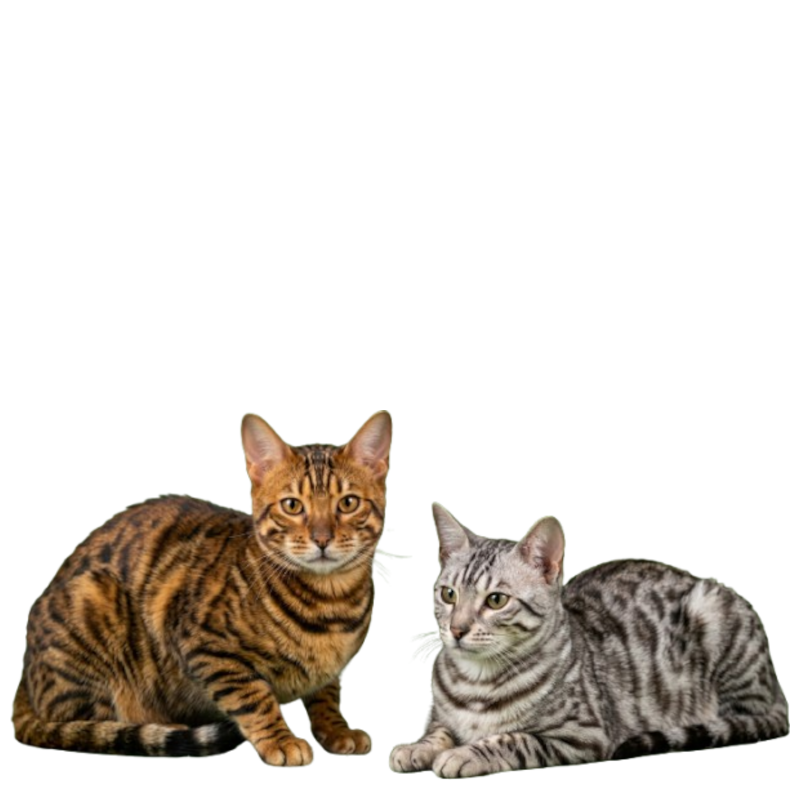
appearance
The physical blueprint of Toygers reflects a carefully sculpted domestic cat engineered to echo the powerful, graceful contours of a wild jungle predator. Beyond the striking visual impression, the structure relies on strong bones, well-defined muscle groups, and a low‐slung, athletic build that creates a distinct rolling gait. Every physical attribute—from the geometric balance of the head to the substantial thickness of the tail—works in harmony to deliver a powerful yet fluid presence without sacrificing domestic agility.
Overall Body Frame and Silhouette
The body frame of Toygers is long, deep‐chested, and distinctly rectangular when viewed from the side. Strength and substance define the torso, which features robust muscle development without appearing coarse or stocky.
- Torso Depth: Deep and substantial through the rib cage, giving the chest a broad, sturdy base.
- Flank Line: The belly line remains relatively parallel to the spine, showing minimal tuck‐up behind the ribs.
- Muscularity: Well‐defined, long muscle sheets cover the shoulders and thighs, yielding a muscular, athletic appearance.
- Bone Substance: Mid‐to‐heavy bone structure ensures every movement carries visible weight and stability.
Toyger Body Proportion Ratio Model
- : The calculated structural proportion metric evaluating the rectangular body frame.
- : The total length measurement of the torso from the point of the shoulder to the base of the tail.
- : The vertical height measurement from the ground to the top of the shoulder blades.
A feline conformation judge calculates the body proportion ratio for an adult Toyger using a torso length of 45.0 centimeters and a shoulder height of 30.0 centimeters. Dividing the torso length of 45.0 centimeters by the shoulder height of 30.0 centimeters results in a body proportion ratio of 1.5. This calculated result of 1.5 provides Toyger’s morphological evaluation program with a quantitative measure to confirm the long, deep‐chested, and distinctly rectangular body frame where strength and substance define the robust athletic build.
Head Structure and Geometric Contours
The head design of Toygers balances inverted triangular planes with softly rounded edges, creating a long, sculpted facial architecture. When viewed in profile, the nose line appears nearly straight with a very soft, subtle dip at the eye line.
| Head Feature | Physical Structure & Alignment | Visual Impression |
|---|---|---|
| Overall Shape | Medium‐sized, inverted heart plane | Long, sculpted facial structure |
| Muzzle | Broad, long, and deep with defined whisker pads | Leather‐like, square‐fronted muzzle |
| Nose Bridge | Wide and slightly convex along the center line | Substantial nose with broad nostrils |
| Chin | Deep and wide, forming a perpendicular line with the upper lip | Strong, firm lower jaw plane |
Ear Placement and Eye Conformation
Ears on Toygers are noticeably small and rounded, set widely apart on the outer corners of the skull to maintain a wild contour. They are fully furred on the interior and feature thick leather.
The eyes are small‐to‐medium in size, circular in outline, and set deeply within the skull beneath a prominent brow ridge. This deep placement, combined with a slight bias toward the base of the ears, creates a focused, intense expression.
Limb Mechanics and Stance
The legs of Toygers are medium in length, maintaining equal proportions between the front and rear limbs to keep the spine level during motion.
- Forelimbs: Straight, heavy‐boned legs set wide apart to support a broad chest structure.
- Hindlimbs: Thick, muscular thighs with moderately bent hocks, allowing for powerful propulsion.
- Paws: Large, round paws with thick, firm pads that absorb impact and broaden the foundation.
- Gait: A purposeful walk characterized by flexible shoulder movement and a low‐slung torso profile.
Tail Architecture and Plush Coat Structure
The tail is a critical structural element for Toyger’s balance, acting as a visual balance to the long body frame. It is unusually long, low‐slung, and maintains a uniform thickness from the base all the way to a blunt, rounded tip. It is carried low to the ground during movement, reinforcing the low‐slung outline.
The coat texture of a Toyger is remarkably dense, soft, and plush to the touch. The fur stands slightly away from the body due to a rich undercoat, creating a thick, velvety layer that reveals the clean, muscular contours beneath without hiding the underlying bone structure.
Appearance of Toygers
The structural silhouette of Toygers presents a remarkable study in athletic balance, combining heavy bone substance and deep chest depth with fluid agility. From the small, rounded ears set low on a sculpted head to the long, heavy tail tracking behind a level spine, every element contributes to a powerful, wild‐inspired frame wrapped in a soft, domestic form.
behavior
Daily routines for Toygers revolve around high energy, purposeful environmental manipulation, and structured social engagement. These cats navigate domestic spaces with intent, systematically investigating vertical perches, door thresholds, and dynamic household objects. Rather than remaining passive observers, Toygers interact continuously with their surroundings through tactile investigation, interactive play cycles, and close proximity to human activity throughout the day.
Social Dynamics and Human Interaction
Interaction patterns in Toygers show a clear preference for active engagement over solitude. They shadow household members from room to room, participating in daily tasks by observing from elevated vantage points or resting directly adjacent to work areas.
- Companion Tracking: Follows human movement across living areas, establishing rest spots near ongoing activity.
- Interpersonal Greeting: Approaches returning household members with a raised tail, head‐rubbing against legs or hands to exchange scents.
- Multi‐Pet Dynamics: Integrates readily into multi‐animal homes, using cooperative play tactics like gentle chasing and shared resting spots with other cats or cat‐friendly dogs.
- Stranger Readiness: Greets guests after a brief visual assessment rather than retreating to hidden spaces.
Toyger Engagement Probability Model
- : The calculated cumulative probability that the cat initiates active social engagement or follows human movement.
- : The mathematical constant representing Euler number base approximately equal to 2.71828.
- : The behavioral responsiveness rate parameter governing how quickly social interest converts into action.
- : The duration of human presence measured in minutes within the immediate living space.
A feline behavioral analyst calculates the engagement probability for a Toyger using a behavioral responsiveness rate of 0.2 and a human presence duration of 10.0 minutes. Multiplying the responsiveness rate of 0.2 by the duration of 10.0 minutes yields an exponent product of 2.0, evaluating e to the negative power of 2.0 gives approximately 0.135, and subtracting this factor from 1.0 results in an engagement probability score of 0.865. This calculated result of 0.865 provides Toyger’s behavioral tracking program with a quantitative measure to model active companionship tracking and interpersonal greetings when household members move across living areas.
Play Style and Problem‐Solving Actions
Play for a Toyger is focused, methodical, and physical. Their hunting sequences combine calculated stalking with sudden bursts of speed, often targeting moving objects or puzzle feeding units.
| Play Behavior | Mechanical Action | Practical Example |
|---|---|---|
| Pouncing & Tracking | Visual locking followed by rapid low‐slung charges | Chasing feather wands or rolling balls across open flooring |
| Object Manipulation | Active usage of forepaws to bat, scoop, or retrieve | Reaching into cabinets or under furniture to pull out hidden items |
| Puzzle Navigation | Systematic pawing and nudging at treat dispensers | Solving multi‐chamber puzzle feeders within 5–10 minutes |
| Fetch Fetching | Retrieval of thrown items back to the handler | Carrying small soft toys in the mouth back to the starting point |
Vocalization Profiles and Communication Signals
The vocal frequency of Toygers falls into a moderate, quiet range. Communication relies more heavily on body posture, tail positioning, and low‐volume trills than persistent loud meowing.
- Quiet Chirps and Trills: Used during greetings or when soliciting play from humans or companion pets.
- Targeted Meows: Expressed primary during meal preparation time or when doors impede access to desired rooms.
- Purring Signals: Rhythmic, low‐frequency vibration emitted during close physical contact, resting, or gentle handling.
- Tail and Ear Posturing: Erect tail with a slight curve indicates open curiosity—while pinned ears signal momentary frustration during failed play attempts.
Daily Activity Cycles and Water Interest
The activity schedule of Toygers shows distinct peaks during morning and evening hours, reflecting natural crepuscular energy rhythms. Between 06:00–09:00 and 18:00–21:00, these cats actively patrol their territory, utilize scratching posts, and engage in vigorous play.
Water exploration forms a unique subset of their daily habits. A Toyger frequently inspects running faucets, dips forepaws into water bowls to create ripples before drinking, or sits along the edge of tubs and sinks during human water usage.
Behavior of Toygers
The behavioral portfolio of Toygers highlights an active, highly engaged domestic cat that thrives on interactive play, environmental curiosity, and close social bonds. From their quiet chirp greetings to their routine pawing at water fountains and puzzle toys, Toygers bring a dynamic, watchful presence to every home environment.
color
Coat coloration in Toygers is engineered around high contrast, deep pigment saturation, and precise pattern separation across the hair shaft. The visual presentation hinges on a rich ground color overlaid with dark, sharply defined markings that create a bold visual break. Each individual hair follicle contributes to this depth through targeted banding, where dark melanin concentrates at the tips while warm or cool ground pigments fill the lower shaft, establishing a vibrant, multi-layered coat effect.
Ground Tone Saturation and Undercoat Shading
The base coloration of a Toyger serves as the background canvas, ranging from warm pumpkin-orange to cool shimmering silver. Depth of color varies from the dorsal spine down to the ventral underbelly, where pigment intensity softens into pale or near-white shades.
- Primary Backing: Rich orange-gold or bright copper tones along the back and upper flanks, providing high contrast against dark markings.
- Ventral Inversion: Gradual lightening along the chest, underside, and inner legs to pale cream or soft ivory.
- Hair Shaft Banding: Individual ground hairs feature a light root transitioning into saturated pigment near the tip, resembling toasted amber.
- Undercoat Uniformity: Dense under-layer of fur that holds consistent base tone without muddy gray casting.
Toyger Coat Contrast Index Model
- : The calculated coat contrast index representing the visual distinction between dark markings and the background canvas.
- : The light intensity measurement reflecting the dark pigment saturation of the stripes.
- : The light intensity measurement reflecting the warm background canvas tone ranging from pumpkin-orange to shimmering silver.
A feline coat color specialist calculates the coat contrast index for a Toyger using a stripe light intensity score of 90.0 and a ground color light intensity score of 10.0. Subtracting the ground intensity of 10.0 from the stripe intensity of 90.0 yields 80.0, and dividing this difference by the sum of 100.0 results in a coat contrast index score of 0.80. This calculated result of 0.80 provides Toyger’s phenotypic analysis program with a quantitative measure to evaluate the high contrast against dark markings and the warm background canvas ranging from rich orange‐gold to bright copper tones.
Marking Saturation and Dark Pigment Breakdown
Markings on Toygers rely on maximum dark pigment density to ensure crisp outline separation from the surrounding ground color. The dark areas range from deep jet black to dark seal brown, covering both linear vertical bars and circular head markings.
| Marking Type | Color Saturation & Depth | Visual Expression |
|---|---|---|
| Vertical Body Bars | Jet black to midnight brown | High‐contrast vertical bands running down the torso |
| Facial Rings & Masks | Concentrated black shading | Circular eye‐rim linings and dark nose leather outlines |
| Paw Pad Pigmentation | Deep charcoal or dark leather brown | Solid, uniform dark pads grounding the leg coloring |
| Tail Tip Saturation | Solid black terminus | Complete dark coverage encompassing the final tail tip |
Head Markings and Facial Contrast Zones
Facial coloration on Toygers showcases intricate contrast framing, often referred to as temple and forehead striping. Deep black lines trace around bright white or pale cream zones surrounding the eyes and muzzle.
- Circular Eye Framing: Pale cream or white patches encircling the eyes, bordered by thick black lining.
- Whiskered Muzzle Inversion: White or off-white whisker pads contrasting sharply against darker cheek striping.
- Forehead Ringing: Concentrated dark bars forming circular patterns across the crown of the head.
- Nose Bridge Shading: Deep terracotta red or dark cinnamon nose leather outlined in coal-black pigment.
Silver Variations and Shimmer Effects
In silver variants of Toygers, phaeomelanin (warm orange pigment) is completely suppressed, replacing gold tones with an icy silver-white ground color. The contrast in silver Toygers remains exceptionally sharp, pairing jet-black vertical stripes against a cool, metallic background.
Additionally, a subtle translucent sheen—often called glitter—can occur along the tips of ground hairs. This hollow, clear hair tip refracts natural light, casting a luminous sparkle across the cat's top coat without diluting the underlying stripe darkness.
Color of Toygers
The visual beauty of Toygers lies in the balance between intense ground warmth and dense, crisp dark markings. Whether showcasing brilliant pumpkin-gold hues or glistening metallic silver, the stark pigment separation and lighter underside shading create an instantly recognizable, high-contrast coat profile.
compatibility
Ease of Maintenance
Rating: 4/5
Child Friendly
Rating: 4/5
Annual Cost
Rating: 3/5
Lifetime Cost
Rating: 3/5
Adaptability
Rating: 4/5
Velcro Factor
Rating: 4/5
Quietude
Rating: 3/5
Apartment Suitability
Rating: 2/5
Hypoallergenic
Rating: 2/5
Handling Tolerance
Rating: 3/5
Hardiness/Longevity
Rating: 4/5
Prey Drive
Rating: 2/5
genetics
The underlying genomic structure of Toygers functions as a precise blueprint of dominant modifiers, polygenic complexes, and specific locus combinations. Key traits in Toyger’s DNA rely on the interaction between major single-gene loci that control base pigment production and complex polygenic networks that modify pattern alignment and hair shaft structure. Understanding these genetic mechanisms provides clear insight into how traits pass predictably from one generation to the next.
Major Pigment and Pattern Loci
The primary genetic switches governing coat development in a Toyger operate at distinct, well-characterized loci. These genes dictate whether base pigments are fully expressed, altered in intensity, or arranged in specific physical formations across the body.
- Agouti Locus (): Dominant allele () enables band development along individual hairs, providing the warm ground background necessary for pattern contrast.
- Tabby Locus (): Modifies spatial pigment placement; Toygers rely on specialized mackerel or modified tabby alleles () to produce vertical alignment rather than blotched formations.
- Dense/Dilute Locus (): Dominant full-color allele () ensures intense pigment concentration, preventing dilution to pastel or gray shades.
- Inhibitor Locus (): Recessive wild-type () maintains warm rufous ground tones, whereas the dominant silver inhibitor () suppresses phaeomelanin to create silver variants.
Toyger Homozygous Dominant Probability Model
- : The calculated frequency of individuals carrying two dominant alleles at a given coat development locus.
- : The frequency of the dominant allele in the breeding population.
- : The frequency of the recessive allele in the breeding population.
- : The frequency of heterozygous individuals carrying both dominant and recessive alleles.
A feline geneticist calculates the homozygous dominant probability for a Toyger population using a dominant allele frequency of 0.7 and a recessive allele frequency of 0.3. Squaring the dominant allele frequency of 0.7 yields a homozygous dominant probability score of 0.49. This calculated result of 0.49 provides Toyger’s breeding and genetic preservation program with a quantitative measure to model primary genetic switches governing coat development and pigment intensity across generations.
Genotype to Phenotype Expression
Combinations across primary gene loci dictate the precise physical traits expressed in individual cats. The interaction between dominant and recessive alleles establishes the baseline expression for every offspring.
| Locus Name | Genotype Combinations | Observable Phenotypic Result |
|---|---|---|
| Agouti (A) | A/A or A/a | Banded hair shafts with clear background ground color |
| Non‐Agouti (a) | a/a | Solid melanistic expression suppressing background ground tones |
| Silver Inhibitor (I) | I/I or I/i | Complete suppression of warm base pigment, producing silver ground color |
| Dense (D) | D/D or D/d | Deep, full‐strength black and dark brown pigment saturation |
Polygenic Modifiers and Complex Inheritance
Beyond single-gene inheritance, many distinctive traits in Toygers depend on polygenic inheritance—multiple background genes working in unison to fine-tune a physical feature. These polygenes act like cumulative volume knobs rather than simple on/off switches.
- Rufous Polygenes: Accumulations of warmth-enhancing polygenic traits boost reddish-orange pigment intensity in brown variants.
- Band Modification Polygenes: Complex gene networks that break continuous vertical stripes into branched, randomized, or vertically elongated markings.
- Wide-Band Polygenes: Expand the pale or yellow band area on individual hair shafts, creating cleaner spacing between dark pattern areas.
- Glitter Hair Structure Modifiers: Recessive polygenic traits causing hollow, light-refracting hair tips that create a metallic sheen.
Inheritance Probabilities in Breeding Pairings
Calculating inheritance outcomes between parent cats relies on basic Mendelian distribution laws. When evaluating traits governed by simple dominant-recessive allele pairs, predictable ratios emerge in expected litter outcomes.
When pairing two heterozygous carriers for a recessive trait (such as silver inheritance or non-agouti status, represented as ), probability modeling projects the distribution across future generations:
Toyger Mendelian Inheritance Ratio Model
- : The expected probability of offspring inheriting two dominant alleles yielding homozygous dominant status.
- : The expected probability of offspring inheriting one dominant and one recessive allele yielding heterozygous carrier status.
- : The expected probability of offspring inheriting two recessive alleles yielding homozygous recessive status.
A feline geneticist calculates the expected litter distribution for a mating between two heterozygous carrier Toyger parents, totaling 4 kittens in the litter. Multiplying the total litter size of 4 by the probability ratios of 0.25 for homozygous dominant, 0.50 for heterozygous carriers, and 0.25 for homozygous recessive results in an expected outcome of 1 homozygous dominant kitten, 2 heterozygous carrier kittens, and 1 homozygous recessive kitten. This calculated result provides Toyger’s breeding and genetic preservation program with a quantitative measure to model predictable inheritance ratios across future generations when evaluating traits governed by simple dominant‐recessive allele pairs.
A pairing of this nature yields a 1–2–1 ratio: 25% homozygous dominant (), 50% heterozygous carriers (), and 25% homozygous recessive ().
Genetics of Toygers
The genetic blueprint of Toygers represents a harmonious blend of fundamental Mendelian loci and subtle polygenic complexes. By balancing major gene expressions like agouti and full-color density with cumulative polygenes for warmth, striping, and sheen, Toyger’s DNA predictably preserves the distinctive traits that define the breed.
health
Maintaining long‐term vitality in Toygers requires systematic monitoring of cardiac function, joint mechanics, and metabolic balance. While these robust domestic cats generally enjoy resilient health, their heavy muscularity and specific structural lineage introduce key physical considerations. Proactive wellness management relies on routine diagnostic screenings, weight supervision, and early detection of hereditary vulnerabilities to ensure peak functional well‐being throughout every stage of life.
Cardiovascular Function and Screenings
Cardiovascular health in a Toyger demands primary attention due to potential predispositions toward hypertrophic cardiomyopathy, a condition where the heart muscle thickens over time and reduces pumping efficiency. Regular cardiac screening helps detect early structural changes before clinical symptoms appear.
- Echocardiographic Evaluation: Annual ultrasound scans measure left ventricular wall thickness to identify abnormal muscular enlargement.
- Auscultation Monitoring: Routine stethoscope checks detect subtle heart murmurs or irregular rhythms during annual veterinary visits.
- Circulatory Efficiency: Healthy cardiac output maintains optimal tissue perfusion, preventing exercise intolerance or sudden lethargy.
- Biomarker Screening: Blood tests measuring cardiac stress proteins provide supplemental data between imaging appointments.
Toyger Left Ventricular Mass Index Model
- : The calculated cardiac metric evaluating left ventricular enlargement relative to body size.
- : The total mass of the left ventricle measured in grams determined through echocardiographic evaluation.
- : The calculated total surface area of the cat measured in square meters.
A veterinary cardiologist calculates the left ventricular mass index for an adult Toyger using a left ventricular mass of 15.0 grams and a body surface area of 0.25 square meters. Dividing the ventricular mass of 15.0 grams by the body surface area of 0.25 square meters results in a left ventricular mass index of 60.0. This calculated result of 60.0 provides Toyger’s cardiac screening program with a quantitative measure to detect early structural changes and monitor potential predispositions toward hypertrophic cardiomyopathy before clinical symptoms appear.
Orthopedic Mechanics and Joint Integrity
The substantial bone mass and deep chest structure of Toygers place continuous mechanical demand on hip joints, elbows, and knee caps. Maintaining joint cartilage health prevents secondary degenerative changes.
| Health Area | Potential Vulnerability | Clinical Assessment & Care |
|---|---|---|
| Hip Joints | Hip dysplasia (poor socket fit) | Radiographic imaging to check joint alignment and smoothness |
| Patellar Stability | Luxating patella (slipping kneecap) | Manual palpation during physical exams to verify kneecap seating |
| Spinal Alignment | Intervertebral disc stress | Monitoring gait fluidity and leaping confidence over uneven surfaces |
| Weight Pressure | Secondary osteoarthritis | Dietary calorie management to minimize unnecessary load on joints |
Ocular Health and Metabolic Considerations
Ocular wellness and metabolic stability form essential pillars of preventive care for Toygers. Progressive retinal atrophy, a slow degeneration of light‐sensitive retinal cells, can affect visual acuity if unmonitored in breeding lines.
- Ophthalmic Exams: Specialized retinal evaluations check for early thinning of photoreceptor layers or altered vascular patterns.
- Pyruvate Kinase Deficiency: Monitoring red blood cell enzyme levels prevents hidden hemolytic anemia, ensuring normal energy and oxygen transport.
- Renal Screening: Regular urine specific gravity checks and blood chemistry panels track kidney filtration health.
- Dental Prophylaxis: Routine cleaning limits tartar accumulation, preventing systemic bacterial load on internal organs.
Health of Toygers
The overall health profile of Toygers highlights a resilient, muscular cat whose physical well‐being is strongly supported by routine cardiac imaging, joint care, and metabolic screening. By pairing proactive veterinary evaluations with attentive weight management, owners and preservation breeders alike can protect vitality, mobility, and long‐term comfort across the cat’s lifespan.
longevity
Lifespan progression in Toygers follows a predictable aging trajectory characterized by extended physical maturation and prolonged adult vitality. A healthy Toyger typically achieves full physical development gradually, maintaining peak physical conditioning through the middle years before subtle physiological changes mark the transition into senior status. Understanding these life‐stage milestones allows for timely adjustments in care that support physical endurance and quality of life across the entire lifespan.
Life Expectancy Expectations and Survival Metrics
On average, Toygers enjoy a typical lifespan ranging from 12–16 years when raised in well‐managed indoor environments. With optimal care, steady activity, and thoughtful life‐stage management, individual cats frequently reach their late teens.
- Developmental Maturation: Physical maturation completes around 2–3 years of age, representing a slower growth curve than smaller domestic breeds.
- Adult Vitality Window: Stable physical conditioning remains consistent between 3–10 years of age with minimal loss in mobility.
- Senior Transition: Age‐related changes begin emerging around 11–12 years, marking the shift into late‐life care protocols.
- Geriatric Horizon: Advanced age milestones occur past 15 years, requiring focused supportive measures to maintain comfort.
Toyger Survivorship Function Model
- : The calculated survival probability that a cat survives up to age .
- : The mathematical constant representing Euler number base approximately equal to 2.71828.
- : The baseline scale parameter governing the overall mortality rate of the population.
- : The age of the cat measured in years.
- : The shape parameter representing how mortality acceleration changes as the cat ages.
A feline geriatrician calculates the survivorship probability for a Toyger at age 12.0 years using a baseline scale parameter of 0.0001 and an aging acceleration shape parameter of 3.0. Raising the age of 12.0 years to the power of 3.0 yields 1728.0, multiplying by the scale parameter of 0.0001 gives an exponent product of 0.1728, evaluating e to the negative power of 0.1728 gives approximately 0.841, resulting in a survivorship probability score of 0.841. This calculated result of 0.841 provides Toyger’s life stage management and senior care program with a quantitative measure to model late life survival and transitions into geriatric care protocols.
Physical Aging Progression Across Life Stages
The life cycle of Toygers breaks down into distinct phases, each defined by observable physical markers and changing physiological demands.
| Life Stage | Age Range | Physical Aging Markers |
|---|---|---|
| Kitten & Junior | 0–2 Years | Rapid skeletal growth, steady muscle mass accumulation, high metabolic rate |
| Prime Adult | 3–7 Years | Peak muscle density, stable metabolism, maximum joint flexibility |
| Mature Adult | 8–10 Years | Subtle reduction in muscle tone, slight slowing of metabolic rate |
| Senior | 11–14 Years | Gradual loss of lean muscle volume, stiffening movements, altered sleep cycles |
| Geriatric | 15+ Years | Visible muscle wasting, reduced sensory sharpness, delicate joint function |
Environmental Factors Influencing Longevity
While baseline lifespan expectations for Toygers are strong, several key physical and environmental factors directly influence how individual cats progress along the aging curve.
- Activity Maintenance: Sustaining regular movement during adult years helps preserve lean muscle mass and joint fluidity into senior age.
- Body Condition Balance: Preventing excessive weight accumulation in middle age directly reduces structural strain on joints during the senior years.
- Indoor Lifestyle Protection: Housing a Toyger indoors eliminates external hazards—such as territory fights, vehicle traffic, and extreme weather—which significantly increases life expectancy metrics.
- Stress Minimization: Maintaining consistent daily routines and peaceful living environments reduces chronic physiological stress, supporting metabolic longevity.
Longevity of Toygers
The longevity curve of Toygers reflects a resilient domestic breed capable of thriving well into its mid‐to‐late teens under attentive care. From an extended physical development phase in youth to a stable adult period and a gradual senior transition, recognizing these life‐stage shifts ensures that Toygers remain comfortable, mobile, and supported throughout every phase of their lives.
maintenance
Maintaining the physical conditioning and dense plush coat of Toygers requires a structured routine centered around high‐protein nutrition, consistent grooming maintenance, and a stimulated living space. Because Toygers possess heavy muscle development and active, exploratory dispositions, their daily care demands robust home infrastructure and precise caloric oversight. Establishing predictable feeding times, grooming habits, and environmental enrichment prevents boredom, protects physical health, and maintains coat resilience year‐round.
Nutritional Guidelines and Hydration Baselines
Dietary planning for a Toyger must focus on high‐quality animal proteins to support dense muscle mass without encouraging excess fat deposition. Feeding schedules should be split into distinct morning and evening meals to match natural energy spikes.
- Protein Concentration: Diets should prioritize meat‐based proteins as the primary ingredient to sustain muscle maintenance.
- Essential Fatty Acids: Dietary Omega‒3 and Omega‒6 fatty acids maintain natural skin oil production and plush fur texture.
- Controlled Portions: Measure food out per meal rather than free‐feeding to prevent gradual, unnecessary weight gain.
- Hydration Infrastructure: Provide multiple circulating water fountains, as moving water encourages higher daily fluid intake.
Calculations for daily resting energy requirements (RER) depend on the cat’s body mass ( in kilograms), modified by an activity factor () for moderately active domestic cats:
Toyger Resting Energy Requirement Model
- : The calculated daily resting energy requirement measured in kilocalories per day.
- : The activity factor multiplier accounting for lifestyle activity levels in moderately active domestic cats.
- : The standard metabolic body weight constant.
- : The total body mass of the cat measured in kilograms.
A feline nutritionist calculates the daily resting energy requirement for an adult Toyger using an activity factor multiplier of 1.3 and a body mass of 5.0 kilograms. Raising the body mass of 5.0 kilograms to the power of 0.75 yields approximately 3.3437, multiplying by the metabolic constant of 70 gives 234.059, and multiplying by the activity factor of 1.3 results in a total daily resting energy requirement of 304.28 kilocalories per day. This calculated result of 304.28 kilocalories per day provides Toyger’s dietary planning and controlled portion management program with a quantitative measure to support dense muscle mass and maintain proper daily caloric intake.
Grooming Maintenance and Coat Care Schedules
The short, dense coat of Toygers requires minimal low‐stress maintenance, but regular brushing helps distribute natural skin oils across the hair shafts and removes loose undercoat fur.
| Care Task | Frequency | Functional Purpose & Tool Used |
|---|---|---|
| Coat Brushing | 1–2 times weekly | Rubber curry brush or fine‐toothed comb to lift loose fur and distribute skin oils |
| Nail Trimming | Every 2–3 weeks | Heavy‐duty claw clippers to prevent snagging on vertical scratching posts |
| Ear Inspection | Weekly | Soft cotton pad with mild cleanser to wipe away minor wax accumulation |
| Dental Hygiene | 3–4 times weekly | Enzymatic feline toothpaste and soft brush to reduce plaque accumulation |
Environmental Enrichment and Housing Setup
Living spaces for Toygers must accommodate vertical exploration and physical engagement. Lightweight or flimsy furniture will not hold up to dynamic jumping or climbing routines.
- Heavy‐Duty Scratching Posts: Solid, sisal‐wrapped posts attached to broad bases allow full body stretching and nail shedding.
- Elevated Climbing Platforms: Wall‐mounted shelves and sturdy cat trees accommodate vertical territorial monitoring.
- Interactive Foraging Toys: Puzzle feeders extend meal times and satisfy natural investigative drives.
- Sanitation Protocols: Large, open litter boxes cleaned daily maintain hygiene and prevent elimination issues in multi‐pet homes.
Maintenance of Toygers
Providing comprehensive daily care for Toygers centers on delivering balanced, protein‐rich nutrition, managing consistent weekly grooming habits, and setting up a durable, engaging indoor environment. By combining measured meal portions and routine coat brushing with sturdy climbing structures and interactive play tools, owners and preservation breeders establish an ideal foundation for every cat’s daily well‐being.
measurements
| Measurement | Female | Male | ||
|---|---|---|---|---|
| Metric | Imperial | Metric | Imperial | |
height | 20 – 25 centimeters | 8 – 10 inches | 23 – 30 centimeters | 9 – 12 inches |
length | 36 – 43 centimeters | 14 – 17 inches | 41 – 48 centimeters | 16 – 19 inches |
weight | 3.2 – 5 kilograms | 7 – 11 pounds | 4.5 – 6.8 kilograms | 10 – 15 pounds |
• Height: Refers to the measurement at the withers (shoulders).
• Length: Measured from the tip of the nose to the base of the tail.
origin
The historical timeline of Toygers traces back to late twentieth‐century North America, emerging from a intentional effort to capture the distinct structural and visual essence of wild jungle felids within a fully domestic lineage. Early breeders began selecting domestic cats that exhibited unique physical attributes—such as elongated head contours, prominent circular facial markings, and distinct vertical alignment across the torso. By combining specific domestic foundation stock from North America and South Asia, early visionaries established a structured breeding program designed to consistently reproduce these wild‐inspired traits across successive generations.
Foundations and Geographical Roots
The geographic foundation of Toygers rests primarily in North American domestic lines, supplemented by key imported foundation stock from regional Asian populations. The intent was not to create a hybrid incorporating wild felid species, but rather to work exclusively within the domestic feline gene pool.
- North American Foundation: Domestic shorthairs showing unusual head geometry and vertical stripe alignment formed the initial structural framework.
- Asian Import Contributions: A notable street cat imported from Jammu and Kashmir, India, brought unique circular forehead markings into the founding gene pool.
- Domestic Selective Breeding: Lineage development relied entirely on domestic felids, avoiding direct wild felid hybridization.
- Pedigree Consolidation: Systematic selection established uniform heritage lines capable of passing distinct physical markers predictably to progeny.
Toyger Lineage Contribution Ratio Model
- : The calculated proportion metric evaluating the exclusive use of domestic felid genetics within the pedigree.
- : The count of domestic foundation cats contributing to the established heritage lines without wild felid hybridization.
- : The total count of registered pedigree lines tracked within the founding population database.
A feline pedigree registrar calculates the lineage contribution ratio for a Toyger heritage line using 50 domestic foundation ancestors and 50 total registered pedigree lines. Dividing the domestic foundation ancestor count of 50 by the total registered pedigree line count of 50 results in a lineage contribution ratio of 1.0. This calculated result of 1.0 provides Toyger’s historical preservation program with a quantitative measure to confirm that lineage development relied entirely on domestic felids rather than incorporating wild felid species.
Chronological Development Timeline
The historical progression of Toygers moved systematically from informal selection to official recognition across major feline registration registries.
| Historical Era | Timeline Milestone | Lineage Development Focus |
|---|---|---|
| Late 1980s | Initial Concept & Pairings | Identification of founding domestic cats showing elongated facial contours and vertical stripe alignment |
| 1990s | Registration & Registration Entry | Early recognition under evaluation classes, establishing initial pedigree recording protocols |
| 2000s | Advanced Lineage Refinement | Integration of imported Asian foundation lines to enhance circular head patterns and broad muzzle structures |
| 2007–2020 | Full Championship Status | Achievement of full championship recognition across international feline organizations |
Migratory Expansion and Global Heritage Networks
From their initial development hubs in the United States, Toygers gradually expanded to preservation breeders across Europe, Australia, and East Asia. This global migration required international collaboration to maintain genetic diversity while preserving the fundamental structural traits established by the founders.
- North American Establishment: The initial foundation kennels established standardized pedigree books and early breeding goals.
- European Introduction: Preservation breeders in the United Kingdom and continental Europe imported foundation stock to build distinct, healthy lineage branches.
- Australasian Integration: Catteries in Australia and New Zealand further broadened the international genetic pool through controlled import programs.
- Global Registry Uniformity: International pedigree standards aligned to ensure that Toygers worldwide maintain a consistent historical lineage.
Origin of Toygers
The historical journey of Toygers represents a remarkably focused chapter in modern feline breeding. Originating from domestic cats in North America and augmented by regional imports from South Asia, the breed evolved through systematic selection into a globally recognized domestic feline line. Today, preservation breeders around the world continue to safeguard this rich heritage, ensuring that the visionary roots of Toygers remain preserved for generations to come.
temperament
The psychological architecture of Toygers is characterized by exceptional emotional stability, high environmental curiosity, and a confident social baseline. Rather than exhibiting the skittishness or aloofness common in some domestic lines, a Toyger typically approaches new spaces, unfamiliar people, and daily household disruptions with calm interest. This balanced nervous system makes them highly adaptable across diverse domestic settings, allowing them to integrate smoothly into multi‐pet homes and busy family routines without displaying signs of territorial stress or chronic anxiety.
Social Bonding and Affection Styles
Social interactions in Toygers are marked by active, interactive companionship rather than passive distance or excessive clinginess. They form deep, lasting bonds with human family members while maintaining an easygoing independence.
- Interactive Companioning: Prefers resting in close proximity to human activity, observing household tasks with keen visual engagement.
- Low‐Anxiety Socialization: Greets visitors at the door with relaxed curiosity rather than retreating to hiding spaces.
- Affection Expression: Shows devotion through soft head‐bunting, quiet purring, and steady eye contact rather than persistent vocal demanding.
- Multi‐Pet Compatibility: Integrates readily with other domestic cats and cat‐friendly dogs, establishing balanced group dynamics with minimal conflict.
Toyger Social Interaction Index Model
- : The calculated social interaction index evaluating the proportion of positive responses toward household and visitor stimuli.
- : The counted number of amicable responses including head-bunting, relaxed curiosity, and close proximity resting.
- : The total number of recorded social stimuli events involving household members, visitors, or multi-pet interactions.
A feline behavioral researcher calculates the social interaction index for a Toyger using 45 recorded positive interactions out of 50 total stimuli events. Dividing the positive interaction count of 45 by the total stimuli event count of 50 results in a social interaction index of 0.90. This calculated result of 0.90 provides Toyger’s behavioral monitoring program with a quantitative measure to confirm active interactive companionship and low‐anxiety socialization across daily household environments.
Environmental Curiosity and Cognitive Engagement
Mental engagement drives much of the daily temperament of Toygers. Their sharp cognitive processing creates an innate desire to investigate changes within their territory, requiring regular problem‐solving opportunities.
| Temperament Attribute | Expression Spectrum | Household Manifestation |
|---|---|---|
| Environmental Confidence | Bold to Moderate | Swiftly explores new rooms or reconfigured furniture arrangements |
| Cognitive Drive | High Problem‐Solver | Figure out simple latches, puzzle feeders, and cabinet openings |
| Sensory Tolerance | Moderate‐High Sound Tolerance | Remains unbothered by typical household noise like vacuums or televisions |
| Emotional Resilience | Rapid Recovery Rate | Bounces back quickly from sudden unexpected noises or strange scents |
Stress Responses and Behavioral Thresholds
Understanding the emotional thresholds of Toygers helps maintain a harmonious living environment. Their high stress tolerance means they rarely react with defensive aggression, preferring calm withdrawal if overstimulated.
- Overstimulation Thresholds: High tolerance for handling, though prolonged forced restraint prompts a polite, firm attempt to step away.
- Vocal Expression Profiles: Quiet communication style, utilizing soft chirps and subtle trills rather than loud, continuous vocalizations.
- Change Adaptation: Adjusts smoothly to travel, veterinary visits, or moving house when provided with consistent human presence.
- Frustration Resolution: Redirects excess mental energy toward interactive toys or elevated perches rather than destructive behaviors.
Temperament of Toygers
The inherent disposition of Toygers balances confident curiosity with a warm, steady affection style. Their resilient emotional makeup, gentle vocal tendencies, and keen interest in human companionship make Toygers delightful partners in everyday life, offering preservation breeders and owners alike a remarkably adaptable and grounded domestic companion.