Tonkinese Cat
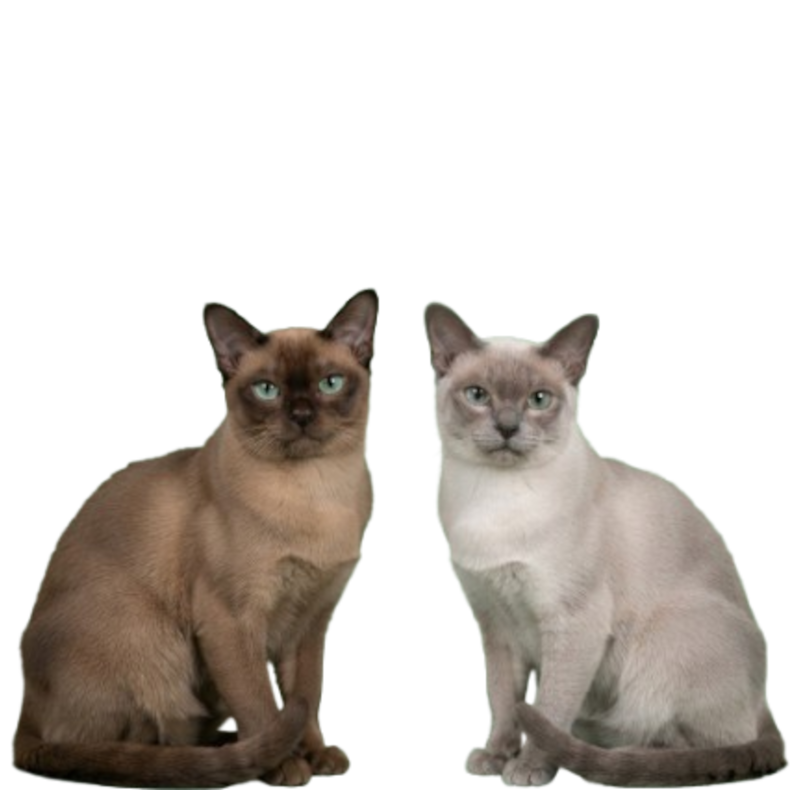
appearance
The domestic Tonkinese presents a striking study in structural harmony, bridging the gap between two iconic feline body types. When you look at Tonkineses, you see an animal that effortlessly combines medium‐weight power with sleek elegance, offering a physique that is neither overly cobby nor radically slender. Their entire conformation relies on smooth, flowing lines and an unexpected density that surprises anyone who picks them up for the first time. Every component of Tonkinese’s anatomy‐from the modified wedge of the head to the balanced length of the tail‐works together to create a cohesive, athletic silhouette.
Overall Body Frame and Substance
The body framework of the Tonkinese is defined by a firm, muscular torso that feels noticeably heavier than it looks. This physical heft is supported by a medium‐length body frame that displays a solid, tubular elegance.
- Bone Substance: The bone structure is medium‐scale‐neither delicate nor heavy‐providing robust foundational support for their well‐developed musculature.
- Muscular Build: Muscle tone is firm and hard to the touch, giving the Tonkinese a sense of athletic readiness and energetic vitality without appearing bulky.
- Torso Proportions: The back slopes slightly downward from the shoulders to the rump, showcasing a lithe, graceful line that highlights their active heritage.
Head Conformation and Facial Structure
| Facial Feature | Structural Description | Visual Comparison |
|---|---|---|
| Muzzle | Gently rounded with a slight dip at the whisker break | A soft, tapering oval shape |
| Profile | A distinct slight rise from the bridge of the nose to the brow | A gentle, rolling wave contour |
| Chin | Firm and well‐developed, aligning neatly with the nose tip | A solid, balanced baseline for the lower jaw |
To better understand the geometric balance of the head profile, breeders often analyze the proportional relationship between the upper cranial plane and the muzzle taper. This equilibrium ensures the characteristic soft wedge shape remains distinct from overly sharp or completely rounded extremes.
Tonkinese Wedge Ratio Model
- : The calculated proportional balance metric representing the geometric head shape equilibrium.
- : The length of the upper cranial plane measured from the brow line to the back of the skull.
- : The length of the muzzle taper measured from the whisker break to the tip of the nose.
A feline phenotypic evaluator calculates the wedge ratio for an adult Tonkinese using a cranial plane length of 6.0 centimeters and a muzzle length of 3.0 centimeters. Dividing the cranial length of 6.0 centimeters by the muzzle length of 3.0 centimeters results in a wedge ratio of 2.0. This calculated result of 2.0 provides Tonkinese’s morphological assessment program with a quantitative measure to analyze the proportional relationship between the upper cranial plane and the muzzle taper, ensuring the characteristic soft wedge shape remains distinct from overly sharp or completely rounded extremes.
Ears and Eye Characteristics
Facial expression in this breed is heavily influenced by the placement of the ears and the captivating shape of the eyes, which together impart an alert and intelligent look.
- Ear Placement: Ears are set wide apart on the head, tilted slightly forward, and are medium in size with oval tips that soften their overall outline.
- Eye Shape: Eyes feature a modified walnut shape‐opening slightly wider than an almond shape, with the upper lid curving downward and the lower lid meeting in a rounded sweep.
- Eye Slant: They are set at a slight oblique angle, contributing to an expressive, watchful gaze that feels deeply engaged with its surroundings.
Limbs, Paws, and Tail Architecture
The lower framework of the Tonkinese matches the sturdy elegance of the upper body, ensuring seamless mobility and balance.
- Leg Proportions: Hind legs are noticeably longer than the front legs, creating a subtle spring‐loaded stance reminiscent of a runner poised for action.
- Paws: Paws are oval‐shaped and compact, resting firmly on the ground with five toes in front and four in the back.
- Tail Structure: The tail is medium in length, tapering gracefully from a moderate base to a slightly rounded tip, maintaining absolute equilibrium with the length of the torso.
Coat Texture and Physical Markers
The outer covering of the Tonkinese plays a vital role in defining its tactile profile and silhouette definition.
- Coat Density: The fur lies close to the body with a fine, silky texture that feels exceptionally plush beneath the hands.
- Hair Length: Short to medium in length, the coat provides a close‐fitting sheath that accentuates every underlying contour of the muscular frame.
- Lustre: The fur possesses a natural, healthy sheen that catches the light, enhancing the fluid appearance of Tonkinese’s movements.
Appearance of Tonkineses
The physical presence of the Tonkinese is an exercise in graceful moderation. These cats balance strength and refinement‐delivering a solid, muscular body wrapped in a sleek, silky coat‐making them an enduring example of balanced feline architecture.
behavior
The domestic Tonkinese displays a dynamic and highly interactive behavioral profile that keeps every household continuously engaged. When observing Tonkineses, you notice a cat that actively participates in daily human routines rather than merely sharing a living space. Their actions reveal a persistent drive to investigate, communicate, and connect with everyone around them. From greeting you at the door to shadowing your every move through the house, these cats orchestrate a daily routine built entirely around shared presence and constant exploration.
Social Dynamics and Interaction Patterns
The social life of the Tonkinese revolves around close physical proximity and active inclusion in household activities. When guests arrive, Tonkineses routinely march right up to investigate, sniffing shoes and inspecting bags rather than retreating under the furniture.
| Social Scenario | Observable Action | Behavioral Meaning |
|---|---|---|
| Human Arrival | Trotting to the door with an upright tail | Anticipating immediate interaction |
| Seated Human | Leaping into a lap and kneading rhythmically | Seeking direct tactile connection |
| Multi‐Cat Setting | Initiating mutual grooming and group naps | Fostering strong colony cohesion |
To understand the probability of interactive engagement when multiple family members are present, behaviorists often look at social distribution formulas. This equation models how Tonkinese’s attention divides among available people in a room, factoring in movement and voice proximity.
Tonkinese Social Engagement Probability Model
- : The calculated probability score reflecting the likelihood of interactive social engagement with a human companion.
- : The evaluated movement level score of the person in the room.
- : The verbal communication frequency score or sound proximity metric associated with the person.
- : The physical distance measured in meters between the cat and the available family member.
A feline behaviorist calculates the social engagement probability for a Tonkinese using a human activity score of 4.0, a vocalization score of 3.0, and a physical distance of 1.0 meter. Adding the human activity score of 4.0 to the vocalization score of 3.0 yields 7.0, and dividing this sum by the adjusted distance denominator of 2.0 results in a social engagement probability score of 3.5. This calculated result of 3.5 provides Tonkinese’s behavioral tracking program with a quantitative measure to model how attention divides among available people in a room when guests arrive or family members gather.
Vocalization Habits and Communication
Communication in Tonkineses is rich, varied, and deployed with clear intentionality to influence human behavior. Unlike silent observers, these cats use sound as a primary tool to express their immediate desires and opinions.
- Pitch Range: They utilize a moderate‐toned voice that carries easily without grating on the ears, ranging from soft trills to insistent chirps.
- Contextual Meowing: Tonkinese’s vocalizations spike predictably during food preparation hours or when a preferred toy gets trapped under a heavy piece of furniture.
- Conversational Exchanges: When spoken to, Tonkineses frequently respond with short, melodic answers‐effectively mimicking a back‐and‐forth dialogue with their owners.
Play Styles and Daily Activity Cycles
The daily rhythm of the Tonkinese balances high‐octane bursts of physical play with periods of deep, contented resting. Their play style is fiercely athletic and deeply collaborative rather than solitary.
- Object Manipulation: Instead of batting a toy casually, Tonkineses pick objects up in their front paws, kick at them with their hind legs, and carry their “prey” proudly across the room.
- Vertical Exploration: They routinely scale bookshelves and door frames, preferring high vantage points that allow them to monitor the entire territory‐though they descend rapidly whenever human activity shifts to the floor level.
- Activity Cycles: Their day operates on a distinct rhythm of intense morning exploration, a quiet afternoon recharge, a frantic evening game session, and a night spent sleeping as close to your head as possible.
Environmental Investigation and Problem Solving
Curiosity drives the day‐to‐day actions of every Tonkinese, transforming mundane household items into complex puzzles. Every closed door represents an immediate challenge that must be investigated, pawed at, or opened if the latch allows.
- Cabinet Inspections: Tonkineses regularly slip into open cupboards, inspecting storage spaces and examining newly brought‐in grocery bags with intense scrutiny.
- Water Interaction: Many of Tonkinese’s members display a unique fascination with running water, frequently batting at faucets or splashing in drinking bowls.
- Object Retrieval: They often initiate games of fetch spontaneously, dropping small items at your feet and waiting expectantly for you to throw them again.
Behavior of Tonkineses
The everyday actions of the Tonkinese highlight a cat driven by intense curiosity and a profound need for social connection. These cats integrate themselves completely into human routines‐turning every room into a stage for active engagement‐making them lively, communicative companions in any home.
color
The domestic Tonkinese displays a captivating and nuanced spectrum of coloration that defines its unique visual identity. When examining Tonkineses, you encounter a sophisticated interplay of pigment distribution where darker extremities gracefully melt into a warmer, luminous body shading. This signature presentation relies on temperature‐sensitive coloration, creating a dynamic gradient across the coat that shifts subtly throughout the cat’s life stages. Every millimeter of Tonkinese’s fur‐from the deepest mask points to the soft underbelly‐contributes to a harmonious and glowing chromatic canvas.
Pigment Density and Hair Shaft Gradient
The color expression on an individual hair shaft of the Tonkinese is a masterclass in controlled graduation. Pigment concentration is heavily concentrated at the extremities‐known as points‐while the main body of the hair exhibits a much softer, highly diffused hue.
- Tip Pigmentation: The outer tips of the guard hairs carry the fullest saturation of color, giving the face, ears, legs, and tail their rich, defining tone.
- Shaft Mid‐Section: Moving down toward the skin, the pigment density drops significantly, resulting in a warm, glowing undertone that illuminates the entire coat.
- Root Shading: The roots closest to the skin feature the lightest hue, creating a luminous halo effect that prevents the coat from ever looking heavy or flat.
To conceptualize how light refracts through these varying levels of pigment concentration along a single hair shaft, color specialists look at optical density ratios. This formula models how surface saturation interacts with internal light reflection to produce the signature Tonkinese glow.
Tonkinese Visual Color Density Model
- : The calculated visual color density metric representing the perceived coat richness and glow.
- : The measured pigment concentration at the outer tip of the guard hair.
- : The total length of the individual hair shaft measured in millimeters.
- : The evaluated saturation level of the softer hue along the mid-section and root.
A feline color specialist calculates the visual color density for a Tonkinese using a tip pigment concentration of 8.0, a hair shaft length of 12.0 millimeters, and an undercolor saturation score of 7.0. Multiplying the tip pigment concentration of 8.0 by the shaft length of 12.0 millimeters yields 96.0, and dividing this product by the adjusted undercolor denominator of 8.0 results in a visual color density score of 12.0. This calculated result of 12.0 provides Tonkinese’s phenotypic analysis program with a quantitative measure to model how surface saturation interacts with internal light reflection to produce the signature coat glow.
Coat Shading Categories and Variations
The Tonkinese is widely recognized for offering distinct variations in contrast and body shading, providing a spectrum of choices for enthusiasts and breeders alike.
| Shading Category | Point Color Saturation | Body Color Contrast |
|---|---|---|
| Platinum | Pale silvery‐grey to delicate lavender | Warm pale grey with subtle shading |
| Champagne | Rich honey‐beige to warm chestnut | Pale creamy buff shading gently to warm fawn |
| Natural | Deep medium‐brown with dark seal tones | Rich warm brown shading to a lighter hue |
| Blue | Deep slate‐blue with cool metallic undertones | Soft blue‐gray shading to a shimmering platinum |
Contrast and Point Definition
The visual hallmark of Tonkineses lies in the degree of contrast between their darker face masks, ears, limbs, and tail against the lighter torso. This transition is rarely abrupt; instead, it creates a seamless gradient.
- Mask and Facial Shading: The dark facial mask covers the entire face, extending from the whisker pads up to the eyes and merging smoothly into the crown without stark boundary lines.
- Leg and Tail Continuity: The limbs carry the deeper point color down to the paws, matching the deep saturation found on the tail‐which remains uniformly dark from base to tip.
- Body Blending: The transition from the dark shoulder area into the lighter back region occurs via a gradual softening of hue, ensuring the cat looks luminous rather than heavily patched.
Eye Color Integration and Hues
The luminous coat shades of the Tonkinese are invariably paired with striking eye colors that harmonize with the overall pigmentation profile. Rather than fixed primary colors, these eyes occupy a unique aqua or golden‐green spectrum.
- Aqua Radiance: Many Tonkineses display a brilliant blue‐green hue that shifts dynamically depending on the ambient indoor or outdoor lighting conditions.
- Chartreuse Depth: Other variations showcase a rich, glowing golden‐green that adds intense warmth to the facial expression.
- Lustre and Clarity: The eye color features exceptional depth and brilliance, acting as a vivid jewel‐toned focal point against the surrounding facial mask.
Color of Tonkineses
The coloration of the Tonkinese is a masterpiece of natural gradient art. These cats balance rich, saturated points with warm, luminous body shading‐complemented by striking, shifting eye colors‐providing an enduring visual spectacle that delights observers and challenges preservation breeders to perfect its subtle art.
compatibility
Ease of Maintenance
Rating: 5/5
Child Friendly
Rating: 5/5
Annual Cost
Rating: 3/5
Lifetime Cost
Rating: 3/5
Adaptability
Rating: 4/5
Velcro Factor
Rating: 5/5
Quietude
Rating: 2/5
Apartment Suitability
Rating: 3/5
Hypoallergenic
Rating: 2/5
Handling Tolerance
Rating: 4/5
Hardiness/Longevity
Rating: 5/5
Prey Drive
Rating: 2/5
genetics
The genetic foundation of the domestic Tonkinese is a fascinating study in allele interaction and codominance, anchoring the breed’s unique identity in molecular science. When looking at the genomic profile of Tonkineses, you find a distinct combination of genetic factors derived from ancestral foundational lines. This specific genetic architecture dictates everything from the signature temperature‐sensitive pigment distribution to the distinctive eye coloration. Understanding these underlying biological codes gives preservation breeders the exact predictive tools needed to manage lines successfully while offering cat lovers a deeper appreciation of what makes Tonkinese’s biology truly exceptional.
The Albino Locus and Allelic Interaction
The core genetic signature of the Tonkinese centers around the tyrosinase gene located at the albino locus, which governs melanin production across the body. Rather than being homozygous for a single temperature‐sensitive mutation like some related breeds, Tonkineses are defined by a heterozygous state where two different alleles interact.
- The Burmese Allele (): This allele produces a dense, rich melanin restriction that results in warmer, lower‐contrast points and a darker overall body hue.
- The Siamese Allele (): This allele introduces a stronger heat‐sensitive restriction, creating high‐contrast points with a much paler body background.
- The Tonkinese Allele Combination (): When a cat inherits one Burmese allele from one parent and one Siamese allele from the other, the resulting codominant interaction creates the characteristic intermediate expression unique to the Tonkinese.
To calculate the exact inheritance probabilities when breeding two heterozygous individuals, geneticists use standard Punnett square models. The expected genotypic ratio from a mating between two intermediate-coated cats () is modeled by the following probability formula:
Tonkinese Tyrosinase Allele Probability Model
- : The inheritance probability of homozygous Burmese allele offspring yielding solid, lower-contrast coats.
- : The inheritance probability of heterozygous Tonkinese allele offspring yielding the characteristic intermediate expression.
- : The inheritance probability of homozygous Siamese allele offspring yielding high-contrast points with paler bodies.
A feline geneticist calculates the expected litter distribution for a mating between two heterozygous Tonkinese parents carrying the codominant allele combination, totaling 4 kittens in the litter. Multiplying the total litter size of 4 by the probability ratios of 0.25 for homozygous Burmese, 0.50 for heterozygous Tonkinese, and 0.25 for homozygous Siamese results in an expected outcome of 1 solid Burmese‐type kitten, 2 intermediate Tonkinese‐type kittens, and 1 high‐contrast Siamese‐type kitten. This calculated result provides Tonkinese’s breeding and genetic preservation program with a quantitative measure to model the exact inheritance probabilities of the tyrosinase gene across generations.
Genotype and Phenotype Breakdown
Navigating the genomic combinations of the Tonkinese requires a clear mapping of how specific allele pairs translate into observable physical traits.
| Genotype Combination | Allele Interaction Type | Resulting Phenotypic Expression |
|---|---|---|
| cbcb | Homozygous Burmese | Dense point contrast with warmer body shading |
| cbcs | Heterozygous Tonkinese | Intermediate mink expression with moderate contrast |
| cscs | Homozygous Siamese | High‐contrast points with pale body background |
Modifier Genes and Polygenic Traits
Beyond the primary color locus, the genetic profile of the Tonkinese relies heavily on polygenic modifiers that shape secondary characteristics. These modifiers do not follow simple single‐gene inheritance patterns; instead, they operate through cumulative additive effects across multiple loci.
- Shading Modifiers: Polygenic networks influence the exact degree of pigment spread along the hair shaft, determining whether the intermediate coat leans closer to a high‐contrast presentation or a softer, blended gradient.
- Eye Color Loci: Separate genetic pathways control the reduction of red and yellow pigments in the eye stroma, interacting with the primary locus to produce the signature aqua or blue‐green spectrum.
- Structural Modifiers: While distinct from color genetics, independent polygenic complexes govern the moderate body length, ear set angles, and the characteristic modified wedge head conformation.
Inheritance Predictability in Preservation Breeding
Managing genomic diversity within Tonkineses requires an understanding of how heterozygous traits segregate across generations. Because the intermediate mink phenotype relies on the heterozygous pairing (), breeding two intermediate cats yields a statistically predictable distribution of three distinct coat expressions in the litter.
- Litter Distribution: Approximately fifty percent of offspring from an intermediate‐to‐intermediate mating will inherit the classic heterozygous combination, while twenty‐five percent will express the heavier Burmese style and twenty‐five percent will express the lighter point style.
- Stability of Selection: Preservation breeders utilize test matings and genomic tracking to maintain the stability of the intermediate expression without losing the breadth of the gene pool.
- Selective Purity: Strict adherence to pedigree tracking ensures that the foundational allele combinations remain robust and predictable over successive generations.
Genetics of Tonkineses
The genetics of the Tonkinese represent a masterclass in controlled codominance and multi‐locus interaction. By balancing the interplay of the albino locus alleles alongside complex polygenic modifiers, Tonkineses maintain their signature look‐giving breeders a reliable framework to preserve the structural and chromatic integrity of Tonkinese’s unique biological heritage.
health
The domestic Tonkinese presents a generally robust physical constitution, yet like all purebred lines, Tonkineses carry specific physiological sensitivities that require attentive veterinary oversight and proactive care. When evaluating the health of the Tonkinese, veterinarians and preservation breeders focus on monitoring a few targeted body systems‐particularly the oral cavity, urinary tract, and cardiac architecture‐to ensure lifelong vitality. Understanding these clinical vulnerabilities allows owners to spot early warning signs and implement preventative strategies long before minor issues escalate into complex medical concerns.
Oral Health and Dental Predispositions
Dental well‐being is a cornerstone of daily wellness for Tonkineses, as the breed exhibits a notable susceptibility to periodontal inflammation and early plaque accumulation. Without consistent dental care, the gums can become vulnerable to chronic irritation.
- Gingivitis Vulnerability: The margins of the gums frequently react strongly to bacterial plaque buildup, leading to localized redness and discomfort during chewing.
- Tooth Resorption: Like many cats with similar ancestral backgrounds, Tonkinese’s teeth can occasionally experience internal structural breakdown where the tooth root dissolves beneath the gumline.
- Preventative Protocols: Regular veterinary dental cleanings combined with home brushing routines are essential to protect Tonkinese’s long‐term oral integrity.
Urinary Tract and Renal Considerations
The lower urinary tract represents another physiological area that warrants careful management in the Tonkinese. Maintaining proper hydration and urinary pH balance helps mitigate common feline urinary challenges.
- Crystal Formation: Tonkineses can occasionally develop mineral precipitates in the bladder if fluid intake is insufficient or if dietary mineral ratios are unbalanced.
- Hydration Dynamics: Encouraging frequent drinking through moving water sources or incorporating high‐moisture diets helps flush the renal system effectively.
- Stress Influences: Environmental stressors can sometimes manifest as bladder wall irritation, making a calm, predictable living space a vital component of urinary health.
To quantify the relationship between daily water consumption and the maintenance of healthy urinary specific gravity ranges, veterinary clinicians utilize targeted fluid balance metrics. This ratio helps assess whether a cat’S hydration strategy is successfully protecting renal function.
Tonkinese Urinary Hydration Ratio Model
- : The calculated hydration ratio metric used to assess renal protection and fluid balance.
- : The total daily water consumption measured in milliliters.
- : The measured specific gravity value of the urine reflecting concentration levels.
- : The total body weight of the cat measured in kilograms.
A veterinary clinician calculates the urinary hydration ratio for an adult Tonkinese using a daily water intake of 240.0 milliliters, a urine specific gravity of 1.040, and a body weight of 4.0 kilograms. Multiplying the urine specific gravity of 1.040 by the body weight of 4.0 kilograms yields 4.16, and dividing the water intake of 240.0 milliliters by this product results in a hydration ratio of 57.69. This calculated result of 57.69 provides Tonkinese’s clinical wellness program with a quantitative measure to assess whether the hydration strategy is successfully protecting renal function and mitigating common feline urinary challenges.
Cardiac Evaluation and Screening Categories
While severe heart disorders are uncommon, responsible breeding practices require careful monitoring of cardiovascular health across Tonkineses bloodlines to catch early murmurs or structural variations.
| Condition Category | Clinical Manifestation | Recommended Screening Protocol |
|---|---|---|
| Heart Murmurs | Audible turbulence in blood flow through the chambers | Routine auscultation during annual wellness exams |
| Myocardial Tone | Subtle thickening of the left ventricular heart wall | Echocardiographic imaging by a veterinary cardiologist |
| Valvular Integrity | Minor leakage or inefficient closure patterns | Color Doppler ultrasound and blood pressure tracking |
Ocular and Respiratory Sensitivities
The facial conformation and mucous membranes of the Tonkinese introduce specific sensitivities around the eyes and upper respiratory passages that benefit from routine observation.
- Ocular Discharge: The unique shape of the eyes can occasionally lead to mild tear overflow, requiring gentle daily cleaning to prevent staining or skin irritation.
- Respiratory Resilience: While generally hardy, Tonkineses can be sensitive to environmental irritants like heavy cigarette smoke or harsh aerosol cleaners, which may trigger upper airway inflammation.
- Allergic Responses: Seasonal environmental allergens can occasionally manifest as mild skin itching or sneezing episodes, easily managed with veterinary guidance.
Health of Tonkineses
The physical health of the Tonkinese is managed most successfully through proactive veterinary partnerships and daily observation. By staying vigilant regarding dental upkeep, hydration, and periodic cardiovascular checks, owners and breeders can ensure Tonkineses enjoy long, vibrant lives filled with comfort and wellness.
longevity
The domestic Tonkinese is known for a resilient and enduring constitution, often enjoying a satisfyingly long lifespan that allows for many years of close companionship. When evaluating the aging timeline of Tonkineses, owners and preservation breeders observe a gradual, well‐balanced transition from kittenhood vitality into a graceful, active maturity. Their longevity is supported by an active physical frame and a robust baseline vitality that helps them navigate the decades with steady grace. Tracking these life‐stage progressions provides invaluable insights for anyone dedicated to maximizing the active, healthy years of Tonkinese’s life cycle.
Average Lifespan Expectations and Milestones
The typical life expectancy for Tonkineses generally spans a healthy range of twelve‐to‐sixteen years, with many individuals thriving well into their mid‐teens or beyond when provided with optimal care. This extended timeline unfolds through distinct developmental chapters.
- Youthful Vigor: The initial years are marked by high‐energy growth and rapid physical maturation, establishing the baseline strength of the adult cat.
- Prime Maturity: Spanning roughly from age three‐through‐ten, this stable period features consistent physical condition, steady activity cycles, and peak vitality.
- Senior Transition: Entering the geriatric phase past age twelve brings subtle shifts in daily routines, requiring a deeper focus on comfort and supportive environmental adjustments.
To evaluate the cumulative probability of survival across these successive years, feline longevity specialists utilize actuarial aging curves. This mathematical modeling helps predict life expectancy milestones based on baseline cohort data.
Tonkinese Survivorship Probability Model
- : The calculated cumulative probability of survival up to age .
- : The mathematical constant representing Euler number base approximately equal to 2.71828.
- : The baseline mortality scale factor representing environmental and genetic hazard rates.
- : The age of the cat measured in years.
- : The aging acceleration shape parameter accounting for the exponential rise in mortality during the senior transition.
A feline longevity specialist calculates the survivorship probability for a Tonkinese at age 10 years using a baseline hazard scale factor of 0.001, an aging shape parameter of 2.0, and Euler number base 2.71828. Raising the age of 10 to the power of the shape parameter 2.0 yields 100.0, multiplying by the hazard scale factor 0.001 gives an exponent product of 0.1, and evaluating e to the negative power of 0.1 results in a survivorship probability score of 0.905. This calculated result of 0.905 provides Tonkinese’s actuarial health tracking program with a quantitative measure to predict life expectancy milestones and evaluate the cumulative probability of survival across successive years.
Life‐Stage Breakdown and Physical Progression
Navigating the lifetime journey of the Tonkinese involves recognizing the distinct milestones that define each major age bracket.
| Life‐Stage Category | Age Range Equivalent | Observable Physical Transition |
|---|---|---|
| Kitten and Junior | 0‐2 Years | Rapid skeletal growth and high‐velocity muscle development |
| Prime Adult | 3‐10 Years | Peak muscular definition and stable body mass maintenance |
| Mature Senior | 11‐15+ Years | Gradual reduction in activity levels and subtle muscle softening |
Visible Markers of Mature Aging
As Tonkineses progress into their senior years, their physical form undergoes subtle, natural modifications that signal their advancing maturity. These visible changes serve as a helpful guide for adjusting daily care routines.
- Coat Texture Shifts: The fine, silky fur may occasionally display slight textural changes or subtle lightening around the face and extremities as systemic melanin production shifts over time.
- Muscular Contouring: While maintaining their core silhouette, senior Tonkinese’s frames may experience a slight loss of peak muscle mass along the spine and shoulders.
- Mobility Rhythms: Daily activity patterns evolve from frantic bursts of climbing into more deliberate, measured movements, reflecting a lifetime of accumulated physical experience.
Environmental and Lifestyle Longevity Factors
While hereditary baseline factors heavily influence overall lifespan, daily living conditions play a profound role in ensuring Tonkineses reach their full potential.
- Indoor Safety: Maintaining a secure indoor environment protects cats from external hazards, significantly reducing accidental risks during their senior years.
- Mental Engagement: Continuous mental stimulation through interactive play and puzzle toys keeps the nervous system active and agile throughout maturity.
- Nutritional Consistency: Providing high‐quality, balanced daily nourishment tailored to each life‐stage helps preserve internal organ efficiency and physical resilience.
Longevity of Tonkineses
The longevity profile of the Tonkinese highlights a rewarding span of companionship defined by graceful aging and sustained vitality. By understanding these natural life‐stage transitions, preservation breeders and devoted owners can better support Tonkineses through every chapter of their enduring lives.
maintenance
Maintenance of Tonkineses
measurements
| Measurement | Female | Male | ||
|---|---|---|---|---|
| Metric | Imperial | Metric | Imperial | |
height | 20 – 25 centimeters | 8 – 10 inches | 23 – 28 centimeters | 9 – 11 inches |
length | 33 – 41 centimeters | 13 – 16 inches | 38 – 46 centimeters | 15 – 18 inches |
weight | 2.7 – 4.1 kilograms | 6 – 9 pounds | 3.6 – 5.4 kilograms | 8 – 12 pounds |
• Height: Refers to the measurement at the withers (shoulders).
• Length: Measured from the tip of the nose to the base of the tail.
origin
The lineage of the domestic Tonkinese is a captivating narrative of intentional cross‐cultural development and modern feline preservation. When tracing the historical roots of Tonkineses, historians and breed enthusiasts uncover a deliberate effort in the mid‐twentieth century to bridge the gap between two distinct foundational types native to Southeast Asian and Western breeding programs. Rather than emerging as an isolated natural landrace‐meaning a population shaped entirely by local geography without human intervention‐these cats were purposefully crafted through structured breeding partnerships. This unique heritage blends elements from both sides of the globe into a distinct, recognized lineage.
Geographic Roots and Ancestral Foundations
The historical narrative of the Tonkinese traces its initial influences back to Southeast Asian regional populations‐specifically the borderlands of Thailand‐where medium‐sized cats with pointed markings and warm bodies lived for centuries. Early historical accounts from travelers often lumped these distinct regional cats together under broad descriptors before formal breed differentiation took place.
- The Burmese Connection: One primary ancestral pillar involves the dark, compact cats imported from Southeast Asia to the West during the early decades of the twentieth century.
- The Siamese Influence: The second major pillar stems from the slender, blue‐eyed pointed cats that shared the same native regions and early exhibition halls.
- The Convergence: Early breeders recognized that crossing these two distinct styles produced an intermediate physical type with a captivating balance of body conformation and coloration.
To model the historical growth of the early breeding population during these foundational decades, historians use demographic expansion formulas. This equation helps estimate how initial breeding pairs multiplied across successive generations within North America and Britain.
Tonkinese Population Expansion Model
- : The calculated total population count of the breed at time .
- : The initial foundational population count of breeding pairs at the start time.
- : The mathematical constant representing Euler number base approximately equal to 2.71828.
- : The intrinsic growth rate representing the multiplication speed across generations.
- : The time period measured in years elapsed since the foundational start.
A feline demographic historian calculates the population expansion for the Tonkinese over a period of 5 years using an initial foundational population of 10 cats, an intrinsic growth rate of 0.4, and Euler number base 2.71828. Multiplying the intrinsic growth rate of 0.4 by the time period of 5 years yields an exponent of 2.0, evaluating e to the power of 2.0 gives approximately 7.389, and multiplying this factor by the initial population of 10 cats results in a total population count of 73.89. This calculated result of 73.89 provides Tonkinese’s historical analysis program with a quantitative measure to estimate how initial breeding pairs multiplied across successive generations during foundational decades.
Chronological Timeline of Breed Establishment
The formal establishment of Tonkineses unfolded through a structured series of milestones during the 1960s and 1970s, moving from experimental crosses to official registry recognition.
| Historical Milestone | Timeframe Period | Significant Development Event |
|---|---|---|
| Initial Crossbreeding | Early 1960s | Deliberate pairing of Burmese and Siamese cats in North America |
| Name Standardization | Late 1960s | Adoption of the official breed title reflecting its geographic inspiration |
| Registry Acceptance | 1970s‐1980s | Formal championship status granted by major feline associations |
Cross‐Continental Migration and Development
Following the initial experimental crosses in North America, the development of Tonkineses quickly expanded across international boundaries, particularly finding passionate preservationists in the United Kingdom and other European nations.
- North American Foundations: Pioneers in Canada and the United States established the primary written standards, focusing on fixing the intermediate type and ensuring consistent physical traits across litters.
- British Convergence: Concurrently, British breeders worked with similar foundational crosses‐historically referencing them by alternative names‐before international standards aligned the global definition of the Tonkinese.
- Standardization Efforts: Collaborative efforts among global registries established clear breeding guidelines to safeguard the unique intermediate type against drifting back toward either extreme of its ancestral foundations.
Preservation and Modern Lineage Management
As the lineage matured past its initial experimental phase, preservation breeders shifted their focus toward maintaining robust genetic diversity while protecting the historical integrity of Tonkinese’s unique type.
- Outcrossing Protocols: Early registry rules occasionally permitted controlled outcrosses to the founding ancestral breeds to broaden the gene pool and prevent inbreeding depression.
- Closed Studbooks: Over subsequent decades, most major registries closed the studbooks, requiring all Tonkineses to trace their ancestry strictly back through certified multi‐generational pedigrees.
- Heritage Protection: Modern preservationists continue to study historical breeding records to ensure that contemporary lines maintain a direct connection to the original vision established by the pioneers of the breed.
Origin of Tonkineses
The historical journey of the Tonkinese is a testament to the art of deliberate feline development. By uniting the best traits of its foundational ancestors through careful documentation and international collaboration, Tonkineses carved out a permanent, respected place in feline history‐leaving a rich heritage for modern preservationists to cherish and protect.
temperament
The psychological baseline of the domestic Tonkinese is characterized by an extraordinary blend of emotional resilience, deep social orientation, and an insatiable desire for inclusion. When evaluating the temperament of Tonkineses, breeders and owners encounter a personality that is intensely people‐oriented and remarkably fearless when facing novel environmental stimuli. Unlike more aloof feline counterparts, these cats possess a profound emotional dependency on human companionship, viewing their human family members as indispensable partners in daily life. Their inherent disposition leans toward bold curiosity, affectionate loyalty, and a balanced confidence that allows them to adapt smoothly to dynamic household conditions.
Social Confidence and Human Bonding
The emotional core of the Tonkinese rests upon an exceptionally high degree of social confidence and an intense bonding drive. Rather than hiding when unfamiliar visitors enter the home, Tonkineses typically march forward to welcome guests with open‐ended enthusiasm.
- Attachment Styles: They form profound, dog‐like attachments to their preferred human companions, often tracking them from room to room to remain within direct line of sight.
- Tolerance for Handling: Their innate patience and emotional stability make them remarkably tolerant of gentle handling, rendering them well‐suited for households that value interactive companionship.
- Separation Sensitivity: Because of their deep relational orientation, Tonkinese’s emotional well‐being thrives best in environments where they are not left alone for extended daily periods.
To model the likelihood of social integration and bonding depth across different household structures, behavioral specialists utilize psychological adaptability indices. This formula estimates emotional compatibility based on environmental stimulation and human availability.
Tonkinese Social Integration Bonding Model
- : The calculated social integration bonding index representing emotional compatibility and attachment depth.
- : The evaluated baseline social confidence and outgoing behavioral score.
- : The human companionship availability score reflecting time spent with household members.
- : The duration factor representing hours spent alone in isolation daily.
A feline behavioral specialist calculates the social integration bonding index for a Tonkinese using a social confidence score of 8.0, a human availability score of 6.0, and an isolation duration of 2.0 hours. Multiplying the social confidence score of 8.0 by the human availability score of 6.0 yields 48.0, and dividing this product by the adjusted isolation denominator of 3.0 results in a bonding index score of 16.0. This calculated result of 16.0 provides Tonkinese’s behavioral tracking program with a quantitative measure to estimate emotional compatibility and explain why their emotional well-being thrives best in environments where they are not left alone for extended daily periods.
Personality Trait Spectrum and Behavioral Tendencies
Understanding the psychological makeup of the Tonkinese involves mapping their core dispositional tendencies across clear behavioral spectra.
| Trait Dimension | Psychological Expression | Behavioral Manifestation |
|---|---|---|
| Curiosity Index | High investigative drive | Fearless exploration of new objects, rooms, and packages |
| Affection Baseline | Intense relational need | Persistent seeking of physical contact, laps, and shoulder perches |
| Resilience Level | Strong stress tolerance | Rapid recovery from loud noises or sudden household changes |
Environmental Adaptability and Stress Response
The emotional framework of Tonkineses exhibits a remarkable capacity to process and adjust to environmental shifts without prolonged anxiety. When confronted with novel situations‐such as moving to a new home or rearranging furniture‐their baseline confidence helps them reorient quickly.
- Novelty Response: Instead of retreating into prolonged hiding, Tonkinese’s initial reaction to environmental changes is typically investigative and forward‐moving.
- Sensory Processing: They process household stimuli, such as vacuum cleaners or active children, with a balanced nervous system that prevents overreaction or chronic fright.
- Coping Mechanisms: When temporary stressors occur, they seek out human reassurance rather than defensive isolation, relying on tactile comfort to restore emotional equilibrium.
Emotional Intelligence and Empathy Markers
A defining psychological characteristic of the Tonkinese is an acute sensitivity to human emotional states, reflecting a high level of inter‐species empathy.
- Mood Mirroring: Tonkineses intuitively detect shifts in human emotional tone, frequently offering close physical proximity or quiet presence when family members experience stress or illness.
- Interactive Attunement: They demonstrate a high capacity to read subtle human body language cues, adjusting their approach style depending on whether an owner is seeking high‐energy play or quiet relaxation.
- Group Harmony: Within multi‐pet households, they naturally assume a mediating or companionable stance, establishing peaceful coexistence with dogs and other cats alike.
Temperament of Tonkineses
The temperament of the Tonkinese represents an ideal synthesis of bold confidence and tender, unwavering affection. By combining fearless curiosity with a profound capacity for deep emotional bonding, Tonkineses offer owners a uniquely interactive and emotionally rewarding feline companion.