Tennessee Rex Cat
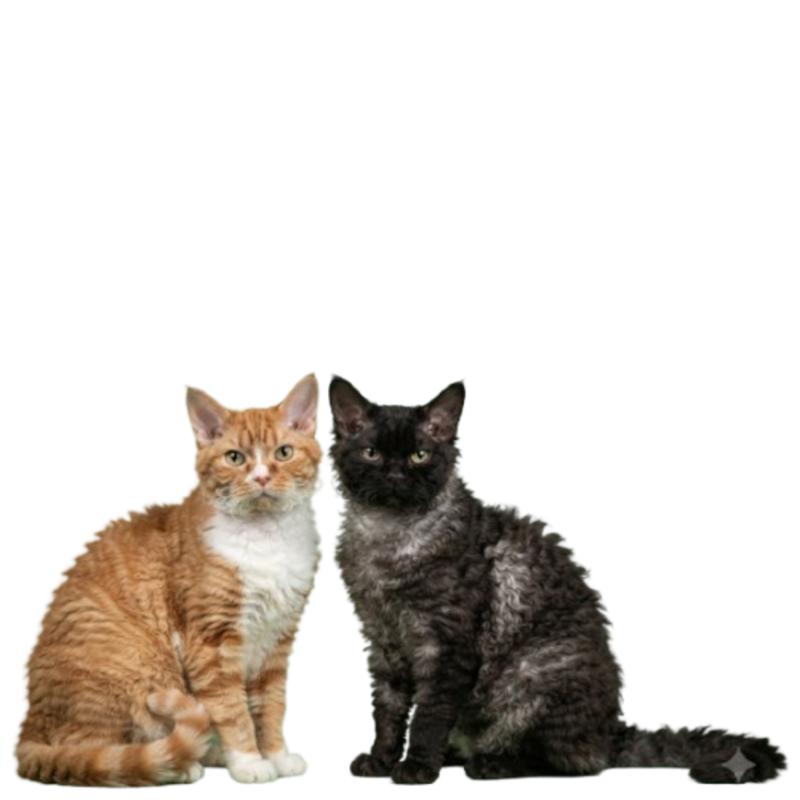
appearance
The Tennessee Rex is a striking natural mutation breed defined primarily by its exceptionally distinctive, rippled coat and harmonious, balanced physical structure. As you observe Tennessee Rex cats, you immediately notice how their unique tactile features blend with a sturdy, medium‐sized frame to create a silhouette unlike any other feline.
Overall Body Frame and Bone Substance
The structural foundation of the Tennessee Rex relies on a solid, muscular build that avoids any extreme exaggeration.
| Structural Feature | Conformation Detail | Real‐World Visual Comparison |
|---|---|---|
| Torso and Trunk | Medium‐length body with moderate width across the chest and back. | Built like a sturdy middle‐distance runner—athletic rather than bulky. |
| Bone Density | Substantial, heavy bone structure providing good weight and density without looking coarse. | Comparable to a solid oak branch‐strong and resilient. |
| Musculature | Well‐developed muscle tone throughout the shoulders and hindquarters. | Firm and powerful to the touch, lending an impression of active readiness. |
Head Shape and Facial Structure
The head of the Tennessee Rex presents a soft, modified wedge appearance with gently rounded contours that harmonize with the body.
- Skull Profile: The skull exhibits a gentle curvature from the brow to the bridge of the nose, avoiding flat planes or sharp angles.
- Muzzle: The muzzle is well‐defined with a slight pinch, giving it a rounded, friendly expression while maintaining adequate width for a strong jawline.
- Chin: The chin is firm and vertically aligned with the tip of the nose, completing a balanced lower profile.
- Cheekbones: High and prominent cheekbones frame the face, adding expression and depth to the overall facial structure.
Ears and Eye Conformation
Facial features on the Tennessee Rex accentuate alertness and curiosity through strategic placement and shape.
- Ear Placement: Ears are medium in size, broad at the base, and set slightly apart‐neither too high on the head nor overly low—giving the cat an attentive expression.
- Ear Tips: Tips are slightly rounded rather than sharply pointed, often featuring soft tufts of rippled fur.
- Eye Shape: Eyes are large, expressive, and oval‐shaped, angled slightly upward toward the outer base of the ears.
- Eye Setting: Set moderately wide apart, giving the gaze an open, intelligent, and inquisitive quality.
Coat Texture and Unique Physical Markers
The defining hallmark of the Tennessee Rex lies entirely in its specialized coat texture and associated tactile markers.
- Coat Wave: The fur features distinct waves, ripples, and curls that affect the guard hairs, awn hairs, and down hairs simultaneously.
- Coat Density: The hair shaft itself possesses a crinkled quality, creating a plush, springy texture that feels remarkably resilient under the hand—much like a soft, high‐pile wool rug.
- Whiskers and Vibrissae: Even the facial whiskers and eyebrow hairs display a notable curl or crinkle, serving as an immediate tactile marker of the Rex mutation.
- Tail Structure: The tail is proportional to the body, tapering gradually from a sturdy base to a rounded tip, and is completely covered in the same rippled, wavy fur that flows along the torso.
Appearance of Tennessee Rexs
Tennessee Rex cats present a captivating union of robust, athletic form and exquisite, tactile charm. Their sturdy framing, balanced facial proportions, and uniquely rippled, wavy coats combine to create an unforgettable physical presence that appeals deeply to anyone who appreciates distinct feline architecture.
behavior
The Tennessee Rex exhibits a distinct repertoire of daily actions, social habits, and interactive dynamics that reflect high physical engagement and environmental awareness. When observing Tennessee Rexs navigate their surroundings, you quickly notice how their active lifestyle influences every aspect of their routine, from how they investigate household changes to how they communicate with human family members and other animals.
Social Dynamics and Human Interaction
The social conduct of Tennessee Rexs is characterized by constant involvement in household activities and a strong preference for close proximity to their human companions.
| Social Scenario | Observable Action | Real‐World Behavioral Translation |
|---|---|---|
| Room Entry | Following handlers from room to room and positioning themselves directly in the path of ongoing activities. | Acting as an active supervisor rather than a passive observer. |
| Greeting Rituals | Trotting toward returning owners with an upright tail, rubbing against ankles, and emitting short trills. | Initiating immediate physical contact to re‐establish social bonds. |
| Multi‐Cat Interaction | Engaging in mutual grooming sessions followed immediately by high‐speed chase games with cohabitating pets. | Balancing cooperative social maintenance with high‐energy play competition. |
Play Styles and Environmental Exploration
Physical interaction with objects and space forms a major portion of the waking hours for Tennessee Rexs, driven by sharp curiosity and high agility.
- Object Manipulation: Instead of merely batting at stationary toys, Tennessee Rexs use their paws to scoop, roll, and carry objects across different floor surfaces.
- Vertical Investigation: Daily routines invariably include scaling high vantage points—such as the tops of doors, refrigerators, and tall shelving units—to survey their territory from above.
- Problem Solving: When confronted with closed doors or novel barrier setups, Tennessee Rexs systematically paw at handles, slide underneath gaps, or vocalize until the obstacle is removed.
Vocalization Patterns and Communication Frequency
Communication in Tennessee Rexs relies on a diverse range of auditory signals matched closely to specific daily triggers and human interactions.
- Vocal Modulations: Rather than relying solely on standard meows, Tennessee Rexs frequently use chirps, soft grunts, and melodic trills when approaching food bowls or requesting attention.
- Demand Signaling: During meal preparation times, vocal frequency increases significantly, accompanied by rhythmic pacing back and forth between the food station and the owner.
- Contentment Expressions: When resting near human companions, Tennessee Rexs produce steady, low‐pitched purrs combined with slow‐blinking visual cues.
Daily Activity Cycles and Rest Rhythms
The temporal organization of rest and activity in Tennessee Rexs follows a distinct pattern that punctuates the household routine.
- Crepuscular Peaks: Energy levels spike dramatically during early morning hours and right around dusk, manifesting as rapid sprints across open rooms.
- Intermittent Resting: Afternoon hours are typically dedicated to extended periods of deep sleep, often chosen in sunlit patches or elevated resting baskets.
- Nighttime Behavior: While capable of sleeping through the night, Tennessee Rexs frequently maintain a light monitoring watch, occasionally waking to patrol familiar household perimeters.
Behavior of Tennessee Rexs
Tennessee Rex’s daily habits reveal an energetic, highly communicative, and deeply involved feline companion. Through constant physical engagement, deliberate social tracking, and dynamic play routines, Tennessee Rexs maintain an active presence that transforms everyday home environments into lively, interactive spaces.
color
The Tennessee Rex presents an extensive spectrum of coat colors and pigment arrangements that highlight its distinctive rippled structure. As light interacts with the crinkled hair shafts of Tennessee Rexs, the unique distribution of melanin creates striking variations in depth, shading, and overall tone. This interplay between pigment concentration and wave structure gives every individual coat a dynamic visual dimension.
Pigment Distribution Across the Hair Shaft
The visual density of color on individual hairs depends heavily on how pigment granules deposit from the root to the tip.
| Pigment Zone | Color Concentration | Visual Effect on the Coat |
|---|---|---|
| Root Level | Often lighter or softly muted compared to the outer tips. | Creates a subtle halo effect beneath the surface waves. |
| Mid‐Shaft | Reaches maximum saturation and uniform color depth. | Establishes the primary background hue visible across the body. |
| Tip Layer | May show light‐catching frosting or deeper tip shading depending on the pattern. | Enhances the shimmering appearance as the fur ripples in motion. |
Solid and Bi‐Color Expression
Solid colors and contrasting bi‐color patterns display distinct boundaries and saturation levels across the body frame of Tennessee Rexs.
-
Solid Hues: Pigmentation remains entirely uniform from head to tail, ensuring that single‐color coats maintain deep, consistent saturation without unwanted fading or shading.
-
White Spotting Integration: In bi‐color expressions, bright white patches contrast sharply against rich pigmented areas, creating clean divisions along the chest, belly, and paws.
The perceived surface brightness of a given hue can be modeled relative to melanin density and light scattering factor through the relation:
Tennessee Rex Surface Brightness Model
- : The perceived surface brightness and color saturation of the coat.
- : The melanin density and concentration within the hair fibers.
- : The light scattering factor accounting for coat texture and wave patterns.
A feline color genetics researcher calculates the perceived surface brightness for an adult Tennessee Rex using a melanin density of 4.5 and a light scattering factor of 0.5. Adding 1 to the light scattering factor of 0.5 yields 1.5 in the denominator, and dividing the melanin density of 4.5 by 1.5 results in a surface brightness score of 3.0. This calculated result of 3.0 provides Tennessee Rex’s breeding and phenotypic assessment program with a quantitative measure to evaluate how solid hues and bi‐color patterns maintain uniform pigmentation and contrast across the body frame despite wave‐induced shadows softening the raw color depth.
This calculation accounts for how wave‐induced shadows soften the raw color depth.
Tabby and Agouti Markings
Agouti banding and distinct tabby patterns interact uniquely with the rippled texture of Tennessee Rex’s coats, altering how markings appear to the eye.
- Agouti Banding: Individual hairs feature alternating bands of dark and light pigment, creating a warm, frosted ticking effect across the upper body.
- Tabby Contrasts: Classic and mackerel tabby patterns display bold, dark contrast stripes against a lighter ground color, though the waves soften the sharp edges of each stripe into a more blended appearance.
- Facial Markings: Distinct "M"‐shaped markings on the forehead and delicate pencil lines around the eyes remain sharp and well‐defined despite the surrounding coat texture.
Shaded and Dilute Variations
Softer tones and tipped colorations introduce a delicate spectrum of lighter pigments that emphasize the nuanced dimension of the coat.
- Dilute Expression: Dense black transforms into soft blue, and rich red transitions to warm cream, offering a muted pastel aesthetic across the entire body.
- Shaded Effects: Only the upper portion of the hair shaft carries heavy pigmentation, leaving the undercoat glowing with a pale, luminous contrast.
- Smoke Variations: Deeply pigmented tips contrast against a stark, pale undercoat that becomes fully visible whenever the cat moves and the ripples part.
Color of Tennessee Rexs
The Tennessee Rex’s color palette ranges from deeply saturated solids to delicately shaded and patterned varieties, all enhanced by the unique way their rippled fur catches and reflects light. Whether evaluating a bold tabby or a soft dilute tone, Tennessee Rexs offer a vibrant canvas of colors that make every individual coat visually captivating.
compatibility
Ease of Maintenance
Rating: 3/5
Child Friendly
Rating: 5/5
Annual Cost
Rating: 3/5
Lifetime Cost
Rating: 4/5
Adaptability
Rating: 4/5
Velcro Factor
Rating: 5/5
Quietude
Rating: 4/5
Apartment Suitability
Rating: 3/5
Hypoallergenic
Rating: 2/5
Handling Tolerance
Rating: 5/5
Hardiness/Longevity
Rating: 5/5
Prey Drive
Rating: 4/5
genetics
The genetic architecture of the Tennessee Rex centers around a primary spontaneous mutation responsible for its signature rippled coat structure. When preservation breeders map the genomic profile of Tennessee Rexs, they track specific loci and allele combinations that dictate how structural protein instructions are expressed across generations. Understanding these underlying DNA mechanics allows breeders to protect the core traits of Tennessee Rex’s lines while maintaining healthy genetic diversity.
Mutation Mechanics and Structural Loci
The unique physical texture found in Tennessee Rexs stems from a distinct genetic variation affecting keratin development in the hair follicles.
| Genetic Component | Allele Classification | Biological Impact on the Hair Shaft |
|---|---|---|
| Rex Mutation Locus | Autosomal dominant or recessive variant (depending on lineage expression). | Alters the protein framework within the growing hair shaft, causing it to curl and bend. |
| Follicular Matrix | Modified cellular proliferation rate. | Generates uneven growth cycles that result in rippled guard and undercoat fibers. |
| Vibrissa Modifier | Linked structural allele. | Influences keratin alignment in facial whiskers, producing a matching crinkled formation. |
Inheritance Patterns and Probability Modeling
Predicting the transmission of the core Tennessee Rex coat trait requires analyzing how dominant and recessive alleles segregate during meiotic cell division.
When two heterozygous carriers are bred together, the probability of producing an offspring with the homozygous dominant genotype can be calculated using standard Mendelian inheritance ratios through the expression:
Tennessee Rex Mendelian Dominant Inheritance Model
- : The expected probability of an offspring inheriting the homozygous dominant genotype.
A feline geneticist calculates the inheritance probability for a litter produced by two heterozygous carrier Tennessee Rexs, where the expected Mendelian ratio dictates that one‐fourth of the progeny will inherit two copies of the dominant mutation allele. Multiplying or evaluating the fraction yields a probability of 0.25, or twenty‐five percent. This calculated result of 0.25 provides Tennessee Rex’s breeding and genetic research program with a quantitative tool to predict how dominant and recessive alleles segregate during meiotic cell division to produce offspring with the homozygous dominant genotype.
This mathematical expectation dictates that approximately twenty‐five percent of a given litter will inherit two copies of the dominant mutation allele.
Allelic Interaction and Expression Variability
The manifestation of the primary mutation can experience minor modifications based on secondary modifier genes operating elsewhere in the genome of Tennessee Rexs.
- Expressivity Range: Minor genetic modifiers can intensify or soften the tightness of the wave pattern—ranging from deep, crisp ripples to a looser, more open wave.
- Penetrance Rates: The mutation exhibits full penetrance, meaning any individual possessing the required allele combination will display the characteristic coat structure without exception.
- Heterozygous Advantage: Heterozygous carriers often display optimal coat resilience and springiness, balancing structural durability with soft texture properties.
Preservation Breeding and Genetic Diversity
Maintaining the genomic health of Tennessee Rexs requires strategic management of the gene pool to prevent inbreeding depression while preserving target mutations.
- Outcrossing Protocols: Controlled introduction of non‐mutant domestic cats helps expand the genomic baseline, reducing the frequency of unintended homozygous recessive faults.
- Locus Tracking: Breeders utilize pedigree documentation and genomic screening panels to monitor allele frequencies across multiple generations.
- Diversity Indexing: Maintaining high genome‐wide heterozygosity ensures that the foundational vitality of Tennessee Rex’s lines remains robust over time.
Genetics of Tennessee Rexs
The genetics of Tennessee Rexs revolve around a powerful structural mutation that dictates coat morphology through predictable inheritance pathways. By balancing precise locus management with broad genetic diversity, preservation breeders can safeguard the long‐term health and authentic genomic identity of Tennessee Rex’s lines for generations to come.
health
The overall health profile of the Tennessee Rex involves monitoring specific structural sensitivities and physiological traits unique to this wavy‐coated population. When evaluating the physical well‐being of Tennessee Rexs, veterinary professionals and preservation breeders look closely at how their distinctive coat and robust physical conformation influence clinical care needs. Understanding these biological considerations ensures that Tennessee Rex’s health remains stable, active, and well‐supported throughout every stage of life.
Physiological Vulnerabilities and Clinical Risk Factors
Maintaining optimal wellness in Tennessee Rexs requires an awareness of potential physiological sensitivities associated with their specialized skin and coat structures.
| Health Category | Clinical Focus Area | Practical Management Approach |
|---|---|---|
| Dermatological Health | Follicular sensitivity and skin barrier maintenance. | Routine skin checks to prevent accumulation of natural oils within tight curls. |
| Cardiac Evaluation | Baseline cardiovascular monitoring during routine wellness exams. | Periodic auscultation by a veterinarian to ensure normal heart rhythm and murmur absence. |
| Joint and Structural Support | Preservation of musculoskeletal mobility in active frames. | Maintaining appropriate body condition through balanced nutrition and controlled exercise. |
Dermatological and Follicular Care Considerations
The specialized structure of the rippled coat introduces unique skin management requirements that directly impact the physical comfort of Tennessee Rexs.
- Sebum Regulation: Because the hair shaft is tightly curled, natural skin oils can occasionally accumulate close to the epidermis rather than distributing evenly down the hair length.
- Skin Hydration Balance: Maintaining skin moisture without causing heavy residue buildup is vital‐preventing dryness or irritation beneath the dense wave layers.
- Irritation Threshold: The delicate skin beneath the rippled coat can react sensitively to environmental allergens, requiring prompt identification of any localized redness or scratching.
Diagnostic Screening and Preventive Protocols
Proactive veterinary care for Tennessee Rexs relies on structured screening timelines designed to catch subtle physiological shifts early.
The metabolic efficiency index relating nutrient absorption to tissue maintenance can be expressed relative to basal caloric intake and activity factor through the relation:
Tennessee Rex Metabolic Efficiency Index Model
- : The metabolic efficiency index representing nutrient absorption relative to tissue maintenance.
- : The basal caloric intake measured in kilocalories per day.
- : The activity factor representing daily energy expenditure and physical exertion.
A feline veterinarian calculates the metabolic efficiency index for an adult Tennessee Rex using a basal caloric intake of 300 kilocalories and an activity factor of 2.0. Adding 1 to the activity factor of 2.0 yields 3.0 in the denominator, and dividing the basal caloric intake of 300 by 3.0 results in a metabolic efficiency index score of 100.0. This calculated result of 100.0 provides Tennessee Rex’s veterinary care program with a quantitative tool to support structured screening timelines, formulate targeted nutritional profiles, and ensure proper skin barrier health and physical vigor.
This formula assists clinicians in formulating targeted nutritional profiles that support skin barrier health and overall physical vigor in active individuals.
Monitoring and Wellness Maintenance Strategies
Consistent observation at home and in clinical settings forms the backbone of long‐term health management for Tennessee Rex’s populations.
- Palpation Checks: Regular tactile inspections of the skin and underlying muscle tone help identify any unusual lumps, skin thickening, or localized tenderness early.
- Cardiorespiratory Audits: Routine veterinary checkups should include thorough listening evaluations of both heart and lung fields to track baseline organ function.
- Hydration and Nutrition Tracking: Ensuring consistent intake of high‐quality proteins supports the continuous cellular regeneration required for healthy coat and skin physiology.
Health of Tennessee Rexs
The physical well‐being of Tennessee Rexs depends on attentive care tailored to their unique skin biology and active physical framework. Through proactive dermatological monitoring, structured veterinary screenings, and balanced daily support, Tennessee Rex’s long‐term health and vitality can be securely preserved for years to come.
longevity
The Tennessee Rex demonstrates a robust lifespan trajectory characterized by steady physical development and graceful aging milestones. When tracking the lifecycle of Tennessee Rexs, preservation breeders and owners observe consistent patterns of maturation that reflect the natural vitality of Tennessee Rex’s bloodlines. Understanding these distinct temporal phases helps caregivers provide targeted support as individuals transition from lively youth into their senior years.
Life‐Stage Milestones and Timeline Breakdown
The developmental journey of Tennessee Rexs unfolds across clear structural phases, each marked by specific physiological transitions and aging benchmarks.
| Life Stage | Chronological Window | Observable Aging Markers |
|---|---|---|
| Growth and Development | Birth‐2 years | Rapid skeletal maturation and full development of the characteristic adult coat structure. |
| Prime Maturity | 3‐6 years | Peak physical conditioning, sustained energy levels, and stable body weight distribution. |
| Mature Adulthood | 7‐10 years | Subtle shifts in daily activity rhythms and early signs of slowing metabolic pace. |
| Senior Milestone | 11+ years | Gradual whitening around the muzzle area, reduced jump heights, and extended resting durations. |
Lifespan Expectancy Modeling
The statistical probability of a given individual surviving to age (measured in years) can be evaluated relative to baseline population mortality factors using the survival function:
Tennessee Rex Cohort Survival Function Model
- : The statistical probability of an individual surviving to age .
- : The mathematical constant representing the base of the natural logarithm.
- : The underlying annual hazard rate for the cohort.
- : The age of the cat measured in years.
A feline demographer calculates the survival probability for an adult Tennessee Rex at age 12 years, assuming a constant annual hazard rate of 0.08. Multiplying the annual hazard rate of 0.08 by the target age of 12 years yields an exponent value of 0.96. Evaluating the negative exponential of 0.96 results in a survival probability of approximately 0.3829. This calculated result of 0.3829 provides Tennessee Rex’s longevity research program with a quantitative measure to track how the survival curve remains stable through prime adulthood before seeing a natural descent during advanced senior years, helping many individuals thrive well into their mid‐teens.
Where represents the underlying annual hazard rate for the cohort. For Tennessee Rexs, this curve typically remains stable through prime adulthood before seeing a natural descent during the advanced senior years, with many individuals thriving well into their mid‐teens.
Physical Indicators of Aging Progression
As Tennessee Rexs advance through their lifecycle, several external and physiological indicators become visible to attentive observers.
- Coat Texture Shifts: The tight waves and ripples may gradually loosen over time, and individual guard hairs can exhibit subtle changes in springiness.
- Activity Modulation: High‐velocity sprints transition into measured, purposeful movements, with a noticeable preference for lower resting perches over extreme vertical heights.
- Muscular Tone Transition: Muscle mass along the shoulders and spine undergoes a natural softening process as senior metabolic changes take effect.
Factors Influencing Lifespan Variability
While genetic baseline plays a primary role in determining longevity, environmental and lifestyle factors heavily shape how gracefully Tennessee Rexs age.
- Nutrition and Energy Balance: Providing appropriate caloric density during each life stage prevents excessive weight fluctuations that can strain joints during mature adulthood.
- Environmental Enrichment: Maintaining safe, stimulating spaces encourages ongoing physical movement, preserving joint mobility well into senior milestones.
- Routine Observation: Regular tactile and visual checkups allow owners to catch early physical signs of aging, ensuring timely adjustments to daily routines.
Longevity of Tennessee Rexs
The Tennessee Rex’s longevity reflects a harmonious balance of steady biological development and resilient aging patterns. By recognizing the unique physical transformations that occur across each life‐stage, breeders and owners can effectively support Tennessee Rexs throughout long, active, and healthy lives.
maintenance
Proper daily management of the Tennessee Rex centers on protecting its unique coat structure and satisfying its high activity needs through balanced husbandry practices. When setting up a care routine for Tennessee Rexs, owners and preservation breeders must balance specialized skin and fur upkeep with dynamic environmental enrichment. Establishing consistent nutritional, grooming, and housing protocols ensures that Tennessee Rex’s daily quality of life remains high and trouble‐free.
Nutritional Guidelines and Feeding Schedules
Providing a balanced diet supports the sustained energy demands and specialized coat physiology inherent to Tennessee Rexs.
| Life Stage / Status | Feeding Frequency | Nutritional Focus |
|---|---|---|
| Growing Kitten | Three to four times daily | High‐protein formulas for active skeletal and tissue development. |
| Adult Maintenance | Twice daily | Balanced micronutrients supporting skin barrier function and weight control. |
| Senior Support | Twice daily (moistened if needed) | Highly digestible proteins with added joint support supplements. |
To calculate the daily resting energy requirement (RER) in kilocalories for Tennessee Rexs, use the standard metabolic scaling formula:
Tennessee Rex Resting Energy Requirement Model
- : The resting energy requirement measured in kilocalories per day.
- : The standard metabolic body weight coefficient.
- : The total body weight of the cat measured in kilograms.
- : The metabolic scaling exponent used to account for body surface area relative to mass.
A feline nutritionist calculates the resting energy requirement for an adult Tennessee Rex with a body weight of 4.5 kilograms. Raising the body weight of 4.5 to the power of 0.75 yields approximately 3.102, and multiplying this value by 70 results in a resting energy requirement of 217.15 kilocalories per day. This calculated result of 217.15 kilocalories per day provides Tennessee Rex’s care provider with a quantitative baseline to determine total target caloric intake for maintaining lean muscle mass when multiplied by the appropriate daily activity factor.
Multiply this baseline value by the appropriate daily activity factor to determine total target caloric intake for maintaining lean muscle mass.
Grooming Routines and Coat Preservation
The specialized rippled coat of Tennessee Rexs requires targeted maintenance to preserve texture integrity and prevent oil accumulation near the skin.
- Gentle Hand Stroking: Instead of deep‐tooth wire brushes that can pull or straighten the delicate waves, use soft rubber grooming mitts or light hand‐smoothing to distribute natural sebum.
- Bathing Frequency: Periodic baths using gentle, moisturizing feline shampoos help clear out excess skin oils without stripping the natural springiness from the hair shafts.
- Ear and Claw Care: Routine weekly checks of the ears and nail trims prevent debris buildup in the folds and maintain overall physical comfort.
Environmental Enrichment and Housing Standards
Designing an engaging home habitat keeps Tennessee Rexs mentally stimulated and physically content within indoor spaces.
- Vertical Space Allocation: Provide multi‐tiered cat trees and secure wall perches to satisfy natural climbing and surveying instincts.
- Interactive Toy Rotation: Offer puzzle feeders and active chase toys to prevent boredom and encourage daily physical exertion.
- Resting Microclimates: Create warm, draft‐free sleeping baskets lined with soft, breathable fabrics where the cat can rest undisturbed.
Maintenance of Tennessee Rexs
Effective maintenance of Tennessee Rexs relies on thoughtful attention to coat care, precise nutritional management, and stimulating environmental design. By keeping these daily husbandry practices consistent, breeders and owners alike can ensure Tennessee Rex’s living spaces remain clean, comfortable, and endlessly engaging.
measurements
| Measurement | Female | Male | ||
|---|---|---|---|---|
| Metric | Imperial | Metric | Imperial | |
height | 20 – 25 centimeters | 8 – 10 inches | 23 – 28 centimeters | 9 – 11 inches |
length | 36 – 41 centimeters | 14 – 16 inches | 38 – 46 centimeters | 15 – 18 inches |
weight | 3.2 – 5 kilograms | 7 – 11 pounds | 4.5 – 6.8 kilograms | 10 – 15 pounds |
• Height: Refers to the measurement at the withers (shoulders).
• Length: Measured from the tip of the nose to the base of the tail.
origin
The history of the Tennessee Rex traces back to specific regional foundations in the American South, where natural mutation gave rise to an entirely unique feline population. When charting the historical timeline of Tennessee Rexs, researchers and preservation breeders examine the geographic roots, initial local discoveries, and the steady steps taken to establish a recognized lineage. Understanding this heritage reveals how a localized rural trait developed into a distinct, carefully preserved breed.
Geographic Roots and Native Regional Development
The earliest chapters of Tennessee Rex’s existence unfolded within specific rural environments that shaped their initial population growth.
| Historical Phase | Geographic Focus | Key Milestones |
|---|---|---|
| Initial Discovery | Rural Tennessee farmlands | Identification of the first foundation cats displaying spontaneous wavy coat mutations. |
| Local Preservation | Regional southern breeding networks | Initial documentation and selective pairing of cats with matching structural coat traits. |
| Lineage Consolidation | Broader American registry tracking | Establishment of formal pedigree records to secure foundational bloodlines. |
Chronological Timeline of Breed Establishment
The chronological evolution of Tennessee Rexs reflects a deliberate path from accidental discovery to structured preservation stewardship.
- Early Sightings (Late 20th Century): The first documented cats featuring the distinctive crinkled coat structure appeared unexpectedly in local farm environments, capturing the attention of regional cat enthusiasts.
- Foundation Selection (2004–2010): Dedicated breeders began acquiring and studying these unique cats, initiating targeted breeding programs to determine how the structural trait passed down through generations.
- Registry Recognition (2012–Present): Collaborative efforts among early preservationists led to formal breed descriptions, studbook creation, and growing recognition within alternative feline associations.
Population Modeling and Lineage Expansion
To analyze how the foundational gene pool expanded over time, historians can model the estimated active breeding population size relative to initial founder contributions using the demographic growth relation:
Tennessee Rex Population Growth Model
- : The estimated active breeding population size at time .
- : The initial foundation population size discovered in Tennessee.
- : The mathematical constant representing the base of the natural logarithm.
- : The regional growth rate of the breeding pool across successive decades.
- : The elapsed time measured in years.
A feline historian calculates the population size of Tennessee Rexs after 20 years, using an initial foundation population size of 8, a regional growth rate of 0.12, and an elapsed time of 20 years. Multiplying the growth rate of 0.12 by the 20 elapsed years yields 2.4. Evaluating the exponential of 2.4 and multiplying by the initial population size of 8 results in a population size of approximately 88.08. This calculated result of 88.08 provides Tennessee Rex’s historical research program with a quantitative measure to track how the foundational gene pool expanded over time, allowing the breed to transition from a localized curiosity into a stable, multi‐generational heritage breed.
Where represents the initial handful of foundation cats discovered in Tennessee, and accounts for the regional growth rate of the breeding pool across successive decades. This steady expansion allowed Tennessee Rexs to transition from a localized curiosity into a stable, multi‐generational heritage breed.
Migration and Preservation Stewardship
As interest in Tennessee Rexs expanded beyond their original regional boundaries, dedicated preservationists took active steps to protect the core lineage.
- Geographic Spread: Early breeding stock gradually migrated to other parts of North America as specialized catteries adopted the preservation protocol.
- Studbook Integrity: Strict record keeping ensured that historical lineage connections back to the original Tennessee foundation cats remained intact and verifiable.
- Heritage Awareness: Ongoing documentation efforts continue to preserve the oral and written histories of the breed‐keeping the foundational narrative alive for future generations of fanciers.
Origin of Tennessee Rexs
Tennessee Rex’s historical journey highlights a remarkable path from accidental rural discovery to structured preservation. Through careful tracking of geographic roots, foundational milestones, and steady population growth, breeders ensure that the rich heritage of Tennessee Rexs remains safely anchored for years to come.
temperament
The psychological landscape of the Tennessee Rex is defined by an even‐tempered disposition, high emotional intelligence, and a deep, intrinsic desire for human companionship. When evaluating the personality baseline of Tennessee Rexs, preservation breeders and owners observe a remarkable blend of playful curiosity and steady, affectionate stability. Understanding these inherent dispositional traits allows caregivers to foster environments where Tennessee Rex’s emotional well‐being can thrive safely and happily.
Personality Spectrum and Behavioral Tendencies
The psychological framework of Tennessee Rexs exhibits predictable emotional responses across diverse social and domestic settings.
| Dispositional Trait | Behavioral Manifestation | Practical Implication for Owners |
|---|---|---|
| Social Confidence | Approachable posture and eager engagement with unfamiliar visitors. | Adapts quickly to household guests and changing human dynamics. |
| Environmental Curiosity | Investigative exploration of new rooms and novel objects. | Requires engaging mental challenges to prevent indoor boredom. |
| Affection Attachment | Strong bonding preference with core family members. | Thrives best in homes where human companionship is consistently present. |
Social Adaptability and Household Integration
The emotional resilience of Tennessee Rexs enables smooth integration into dynamic households filled with varied daily routines and multi‐pet structures.
- Inter‐Species Compatibility: Their balanced emotional baseline allows them to coexist peacefully with other domestic animals, provided introductions are handled with patience and mutual respect.
- Stress Recovery Rate: When faced with sudden household changes, Tennessee Rexs typically display a rapid bounce‐back period, returning quickly to a calm baseline state.
- Human Alignment: They possess an intuitive capacity to match the emotional energy of their human companions‐offering playful engagement during active hours and quiet comfort during rest.
Psychological Indexing and Behavioral Modeling
To measure the social adaptability index of Tennessee Rexs relative to stimulus exposure and environmental familiarity factor , researchers apply the evaluation formula:
Tennessee Rex Social Adaptability Index Model
- : The social adaptability index score representing emotional resilience and behavioral stability.
- : The stimulus exposure level and frequency of environmental encounters.
- : The environmental familiarity factor reflecting recognition of surroundings.
A feline behaviorist calculates the social adaptability index for an adult Tennessee Rex using a stimulus exposure level of 6.0 and an environmental familiarity factor of 2.0. Adding 1 to the environmental familiarity factor of 2.0 yields 3.0 in the denominator, and dividing the stimulus exposure level of 6.0 by 3.0 results in an adaptability index score of 2.0. This calculated result of 2.0 provides Tennessee Rex’s behavioral research program with a quantitative measure to quantify how well their nervous systems process novel surroundings, ensuring that breeding selections continue to favor stable, calm temperaments.
This calculation helps animal behaviorists quantify how well Tennessee Rex’s nervous systems process novel surroundings, ensuring that breeding selections continue to favor stable, calm temperaments.
Affection Styles and Communication Dynamics
The way Tennessee Rexs express emotion and communicate their needs relies heavily on subtle behavioral cues and consistent bonding rituals.
- Vocal Nuance: Communication is typically expressed through soft, melodic tones rather than demanding calls‐used primarily to signal meal times or request attention.
- Tactile Bonding: They display affection through close physical proximity, often seeking out laps or shoulders for extended resting periods.
- Sensitivity to Tone: Tennessee Rexs respond exceptionally well‐ and gently‐to calm, reassuring human voices, while harsh environments can induce unnecessary emotional withdrawal.
Temperament of Tennessee Rexs
The inherent temperament of Tennessee Rexs reflects a harmonious balance of affectionate devotion, adaptable confidence, and inquisitive charm. By respecting their emotional sensitivities and supporting their need for meaningful social connection, owners and breeders ensure that Tennessee Rex’s natural disposition remains a source of enduring joy and stability.