Sphynx Cat
appearance
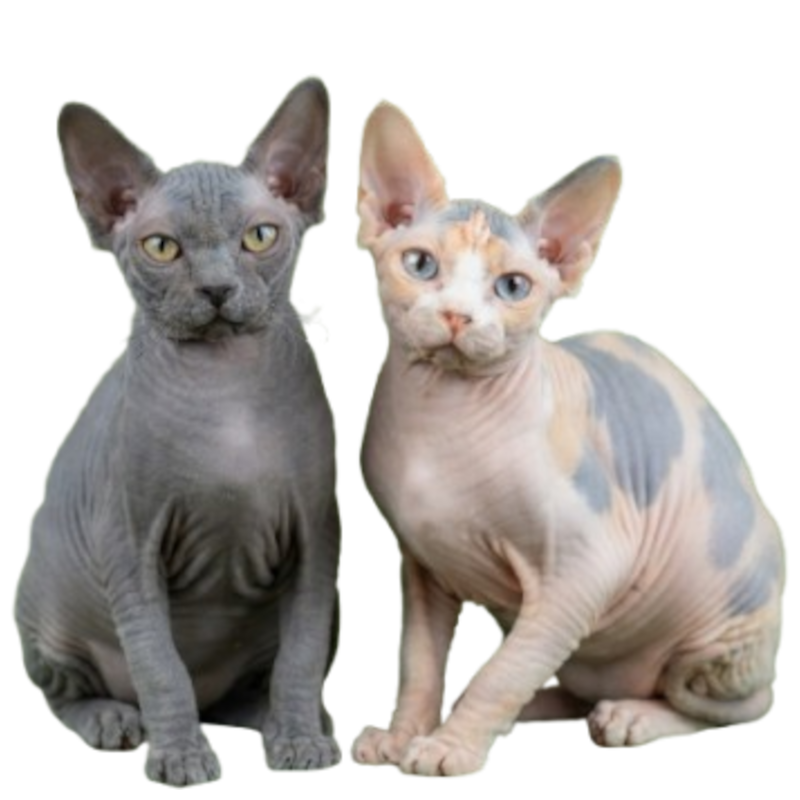
The Sphynx cat possesses a striking and unmistakable physical silhouette that immediately sets it apart in the feline world. Characterized by its seemingly hairless appearance, robust weight-to-size ratio, and distinctively warm, suede-like skin texture, this breed presents a harmonious blend of strength and sculptural elegance. Every aspect of its conformation—from its prominent cheekbones to its heavy, pear-shaped torso—contributes to an athletic and highly specialized physical form.
Overall Body Frame and Substance
The body of the Sphynx is medium in size, featuring a surprisingly heavy, dense bone structure coupled with a muscular build that feels much heavier than it looks. The torso is firm and hard, with a distinct barrel-chested appearance and a rounded abdomen that gives the impression the cat has just finished a hearty meal.
| Structural Feature | Morphological Description |
|---|---|
| Torso & Chest | Medium‐long, hard, and muscular with a full, round chest and deep rib cage. |
| Back Line | Rises slightly behind the shoulders, showcasing a firm and level contour. |
| Bone Substance | Heavy and dense, providing a solid weight‐bearing foundation without coarseness. |
| Musculature | Well‐developed and powerful, particularly across the shoulders and hindquarters. |
Head Shape and Facial Conformation
The head of the Sphynx is a modified wedge with rounded contours, presenting a distinct lemon shape when viewed from the front. The skull is slightly rounded with a flat plane in front of the ears. A prominent, well-defined whisker break accentuates prominent, high cheekbones and a strong, squared muzzle.
- Muzzle: Strong and well-rounded, featuring a distinct, firm whisker break and a slight pad giving the whisker area a cushioned look.
- Profile: Shows a slight-to-moderate stop at the bridge of the nose, avoiding any straight or dished extreme.
- Chin: Firm, strong, and perpendicular to the lip, aligning cleanly with the tip of the nose in profile.
Ears and Eyes
The ears are the defining crown of the head, exceptionally large, broad at the base, and set open. They feature a slight outward tilt, resembling the ears of a bat, with minimal-to-no internal furnishings, though a light dusting of fine down may be present on the outer base.
The eyes are large, lemon-shaped, and set wide apart at an angle toward the outer edges of the ears. Their generous size and slight oblique placement impart an intense, expressive, and watchful gaze that complements the unique facial geometry.
Skin Texture and Tactile Markers
While appearing hairless to the naked eye, the Sphynx skin is actually covered by a very fine, microscopic down that feels akin to a warm peach or a piece of fine suede. The skin possesses a high degree of elasticity, creating distinct, soft wrinkles around the head, between the ears, and around the shoulders and legs.
- Wrinkling: Prominent folds of skin cluster around the muzzle, brow, and neck, enhancing the ancient, meditative expression.
- Tactile Quality: Warm to the touch due to high metabolic body heat transfer, lacking a traditional fur coat to insulate.
- Vibrissae: Whiskers and eyebrows may be entirely absent, or present as sparse, broken, and stubby remnants.
Limbs and Paws
The legs are sturdy and well-muscled, with the hind legs noticeably longer than the front legs, contributing to a slight natural bounce in movement. The chest width creates a stance where the front legs are spaced moderately apart.
- Paws: Oval-shaped with long, slender toes, often described as monkey-like due to their dexterity and ability to grasp.
- Pads: Exceptionally thick paw pads create a cushioned, springy stride, noticeably deeper than those of standard coated breeds.
- Tail: Long, slender, and whiptail-like, tapering gradually from the body to the tip. A tuft of hair at the end of the tail—often called a lion-tail—is a frequent trait.
Appearance of Sphynxs
The Sphynx is a masterclass in feline sculpture, balancing substantial, heavy-boned muscle with an exotic, hairless skin envelope. Its unique combination of barrel-chested power, oversized bat-like ears, and heavily wrinkled, suede-textured skin creates a profile that is both unmistakably distinct and functionally built for agility and warmth.
behavior
The Sphynx exhibits an exceptionally dynamic and interactive daily behavioral repertoire that sets it apart from many typical feline counterparts. Because of its lack of a traditional insulating coat, Sphynx’s daily actions are heavily driven by the pursuit of warmth, social proximity, and active environmental exploration. These cats do not merely inhabit a space; they constantly patrol, investigate, and integrate themselves into every movement and activity occurring within their household.
Social Dynamics and Human Interaction
Sphynxs display an intensely social engagement style, routinely seeking direct physical contact with humans and household animals. Rather than observing from a distance, Sphynxs will actively climb onto shoulders, burrow under bedcovers, and crowd into laps during stationary activities.
| Social Action | Behavioral Manifestation |
|---|---|
| Physical Proximity | Constant shadowing of human movement and seeking body‐to‐body contact for thermal regulation. |
| Interspecies Engagement | Initiative-taking in mutual grooming and wrestling games with resident dogs or cats. |
| Greeting Rituals | Direct, vocal approaches at doorways accompanied by deliberate head‐butting and body-rubbing. |
Vocalization Patterns and Communication
The communicative repertoire of Sphynxs involves a wide spectrum of sound production, ranging from soft chirps to persistent, demanding meows. These vocalizations are rarely random; they serve as explicit functional tools used to request food, demand open doors, or solicit immediate physical interaction.
- Auditory Range: Employs high‐pitched trills when greeting humans and deep, resonant meows during meal preparation times.
- Purring Intensity: Produces a loud, vibrating purr that begins almost instantly upon physical contact or anticipation of food.
- Postural Signaling: Utilizes exaggerated tail carriage, slow blinking, and direct eye contact to signal contentment or readiness for play.
Daily Activity Cycles and Play Styles
The daily schedule of Sphynxs alternates between intense bursts of acrobatic movement and prolonged periods of deep, heat-seeking sleep. Their play style is highly tactile and manipulative, frequently involving the use of paws to bat, roll, and examine objects in a manner reminiscent of primates.
Sphynx Activity Probability Model
- : The calculated probability of active, acrobatic movement versus resting behavior.
- : The mathematical constant representing the base of the natural logarithm.
- : The regression coefficient associated with ambient temperature.
- : The ambient environmental temperature measured in degrees Celsius.
- : The regression coefficient associated with social stimuli.
- : The measure of active engagement and interaction from humans or other household pets.
A feline behavioral researcher calculates the activity probability for an adult Sphynx using a temperature coefficient of negative 0.2, an ambient temperature of 22 degrees Celsius, a social stimuli coefficient of 0.5, and a social stimuli measure of 4.0. Multiplying negative 0.2 by 22 yields negative 4.4, and multiplying 0.5 by 4.0 yields 2.0, with their sum resulting in negative 2.4. Evaluating the exponential of negative 2.4 yields approximately 0.0907, and dividing by 1 plus 0.0907 results in a calculated activity probability of approximately 0.083. This calculated result of 0.083 provides Sphynx’s behavioral research program with a quantitative measure to model how alternating phases between intense bursts of acrobatic movement and prolonged periods of deep, heat-seeking sleep respond to environmental conditions.
- Acrobatic Exploration: Leaping onto high door frames, refrigerators, and shelving units with calculated precision.
- Object Manipulation: Carrying small toys, bottle caps, or crumpled paper through the house while emitting muffled hunting calls.
- Thermal Seeking Sleep: Clustering in tight piles with other household pets or burrowing deep beneath blankets during resting phases.
Behavior of Sphynxs
The daily life of Sphynxs revolves around constant engagement, tactile exploration, and an unyielding drive for warmth and companionship. Their combination of high‐energy play, vocal persistence, and relentless shadow‐tracking creates a lively, highly communicative presence in any home environment.
color
The coloration of Sphynxs presents a fascinating optical display, because pigment is expressed directly on the skin rather than hidden beneath a dense fur blanket. While Sphynxs may appear hairless at a glance, their microscopic down and pigmented epidermis showcase the exact same rich palette of solid hues, intricate tabbies, and striking color points found in traditional coated breeds. Evaluating Sphynx’s pigment requires looking past the absence of hair to appreciate how color maps directly across the contours of the skin, deepening over points exposed to warmth and sun.
Pigment Distribution and Skin Shading
Because Sphynxs lack long guard hairs, color density is concentrated entirely within the outer layer of skin and the ultra-fine peach fuzz covering the body. The resulting visual effect is often more intense and velvety than standard coats, as light hits the skin surface directly without distortion from heavy fur length.
| Color Characteristic | Visual Manifestation |
|---|---|
| Epidermal Pigment | Direct coloration of the skin canvas matching the underlying color designation. |
| Point Shading | Darker pigment concentration on extremities like the face, ears, paws, and tail. |
| Micro Shading | Tiny, microscopic down hairs carrying secondary pigment tones that soften skin contrast. |
Color Categories and Common Hues
The spectrum of colors seen across Sphynxs encompasses virtually every recognized feline shade. From dense, saturated blacks to warm reds and delicate pastels, the skin mirrors traditional feline pigment classes with striking clarity.
Sphynx Total Pigmentation Spectrum Model
- : The cumulative total pigment and texture score across the body frame.
- : The upper bound of the integrated body surface domain.
- : The measured concentration and density of melanin pigmentation across the skin.
- : The micro-textural contribution of microscopic down hair density across the epidermis.
- : The differential element of the body surface integration domain.
A feline geneticist calculates the total pigmentation spectrum score for an adult Sphynx over a normalized surface domain from 0 to 5, assuming a constant skin pigment contribution of 3.2 and a down hair density contribution of 0.8 per unit length. Summing the constant values of 3.2 and 0.8 yields 4.0, and integrating this constant sum across the interval from 0 to 5 results in a total pigmentation spectrum score of 20.0. This calculated result of 20.0 provides Sphynx’s dermatological research program with a quantitative measure to map the spectrum of colors across the body frame, encompassing dense shades and traditional feline pigment classes with striking clarity.
- Solid Colors: Deep blacks, warm chocolates, intense reds, and dilute blues or lilacs spread evenly across the entire body frame.
- Tabby Patterns: Distinct mackerel or classic tabby stripes visible as pigmented patterns directly on the skin, often accompanied by a visible "M" marking on the forehead.
- Bi-Color and Calico: Large, defined patches of white skin juxtaposed against rich blocks of black, red, or diluted patches, creating high‐contrast visual arrangements.
Environmental Influence on Color Intensity
The color expression of Sphynxs is uniquely dynamic throughout the year, shifting in response to external factors such as sunlight exposure and ambient temperature. Because melanin production is sensitive to warmth, cooler body regions—such as the face and feet—often develop deeper coloration than warmer core areas of the torso.
- Solar Tanning: Skin pigment intensifies noticeably after exposure to natural daylight or warm environments, temporarily darkening the overall hue—much like a human suntan.
- Seasonal Shifts: Winter coats of microscopic down grow thicker and slightly lighter, while summer months bring a sleek, hyper‐pigmented skin finish.
Color of Sphynxs
The coloration of Sphynxs is a vibrant, living canvas where pigment is displayed directly on the skin and ultra‐fine down. From rich solid tones to intricate point markings that shift with the seasons, Sphynx’s distinct coat color layout offers an extraordinary window into feline pigmentation.
compatibility
Ease of Maintenance
Rating: 1/5
Child Friendly
Rating: 4/5
Annual Cost
Rating: 2/5
Lifetime Cost
Rating: 2/5
Adaptability
Rating: 4/5
Velcro Factor
Rating: 5/5
Quietude
Rating: 3/5
Apartment Suitability
Rating: 4/5
Hypoallergenic
Rating: 4/5
Handling Tolerance
Rating: 5/5
Hardiness/Longevity
Rating: 3/5
Prey Drive
Rating: 3/5
genetics
The genetic architecture of Sphynxs centers around a specific, spontaneous natural mutation that alters normal hair follicle development. Understanding the molecular blueprint behind this unique look allows preservation breeders to map out litter projections with precision while ensuring the long‐term genetic health of their lines. The distinct hairless phenotype is governed by a well‐documented autosomal recessive gene, meaning both parents must contribute specific genetic instructions for the trait to manifest visibly in their offspring.
The Core Mutation and Locus Mechanics
The defining physical trait of Sphynxs traces back to a mutation within the keratin gene locus, specifically affecting how the hair shaft forms and anchors within the follicle. Unlike dominant coat mutations found in some other species, this particular variant requires a double copy of the altered allele to disrupt normal fur growth completely.
| Genetic Component | Biological Function and Expression |
|---|---|
| Target Locus | The HR gene locus on chromosome ‒ controlling hair follicle structure. |
| Allelic Behavior | Autosomal recessive inheritance pattern requiring two copies for full expression. |
| Cellular Impact | Alters structural keratin production, resulting in microscopic down rather than long guard hairs. |
Inheritance Probability and Breeding Math
Predicting the outcome of matings involving Sphynxs relies on standard Mendelian inheritance principles. Because the hairless trait is recessive, carriers who possess only one copy of the mutation will maintain a normal coated appearance while still passing the variant down to fifty percent of their progeny.
Sphynx Mendelian Hairless Inheritance Model
- : The predicted genotypic distribution and probability across offspring classes.
- : The frequency of homozygous normal coated offspring.
- : The frequency of heterozygous carrier offspring.
- : The frequency of homozygous recessive hairless offspring.
A feline geneticist calculates the genotypic probability distribution for a mating between two carrier Sphynxs where the recessive allele frequency is 0.5 and the dominant allele frequency is 0.5. Squaring 0.5 yields 0.25 for the homozygous normal frequency, multiplying 2 by 0.5 and 0.5 yields 0.50 for the heterozygous carrier frequency, and squaring 0.5 yields 0.25 for the homozygous hairless frequency. Combining these proportions results in twenty-five percent homozygous normal kittens, fifty percent carrier kittens, and twenty-five percent visibly hairless kittens. This calculated result of twenty-five percent hairless kittens provides Sphynx’s breeding and genetic research program with a quantitative tool to predict the outcome of matings involving standard Mendelian inheritance principles.
- Homozygous Hairless (): Mating two hairless individuals yields one hundred percent hairless kittens, as both parents pass down the recessive variant exclusively.
- Carrier to Hairless (): Results in a statistically split litter where fifty percent of the kittens express the hairless phenotype and the remaining fifty percent act as coated carriers.
- Coated Carrier Mating (): Produces twenty‐five percent visibly hairless kittens, fifty percent carriers, and twenty‐five percent completely clear of the mutation.
Genetic Diversity and Population Structure
Preservation breeding programs for Sphynxs place a heavy emphasis on maintaining broad genetic diversity to avoid the pitfalls of narrow gene pools. Because early foundation breeding relied on outcrosses to other established breeds to introduce vigor and diverse alleles, modern genomic profiles show a healthy mix of background genetic markers alongside the primary hairless mutation.
- Outcrossing Impact | Periodic integration of outcross lines broadens the overall gene pool and reduces inbreeding coefficients.
- Allele Tracking | Molecular testing allows breeders to identify hidden carriers of various coat color and metabolic traits with absolute accuracy.
Genetics of Sphynxs
The genetics of Sphynxs offer a fascinating look at how a single recessive allele can alter an entire physical profile. By understanding the predictable mathematics of locus inheritance and maintaining careful pedigree records, breeders can successfully preserve the distinct characteristics of Sphynxs while safeguarding overall genomic health.
health
The unique physiological makeup of Sphynxs introduces specific health considerations that require proactive veterinary management and attentive daily monitoring by owners and breeders alike. Because Sphynxs lack a traditional fur coat to shield their skin and regulate environmental exposure, their physical well-being depends heavily on supportive care, routine cardiovascular evaluations, and specialized dermatological oversight. Understanding these clinical predispositions allows caregivers to catch potential issues early and maintain a high quality of life for each animal.
Cardiac Health and Screening Protocols
The primary hereditary health focus for Sphynxs centers on cardiac function, specifically a condition known as hypertrophic cardiomyopathy—a thickening of the heart muscle walls that can restrict efficient blood circulation. Routine screening through echocardiograms performed by veterinary cardiologists is an essential practice for breeding lines and pet wellness alike.
| Cardiac Condition | Clinical Manifestation and Management |
|---|---|
| Hypertrophic Cardiomyopathy | Progressive thickening of the left ventricle wall, monitored via annual ultrasound scans. |
| Subclinical Screening | Detecting heart murmurs or abnormal rhythms before physical symptoms appear. |
| Therapeutic Monitoring | Utilizing specialized medications to manage heart efficiency and prevent clotting risks. |
Dermatological Care and Physiological Vulnerabilities
Without fur to absorb natural skin oils, Sphynxs accumulate a waxy sebum layer across their entire body surface. This protective secretion requires regular management to prevent skin irritation, clogged pores, and secondary bacterial infections.
Sphynx Skin Residue and Protection Model
- : The net accumulation level of waxy sebum and residue on the skin surface.
- : The natural rate of skin oil secretion measured in milligrams per day.
- : The routine grooming and bathing frequency measured in cleaning events per week.
- : The protective barrier index accounting for external climate and maintenance adjustments.
A feline dermatologist calculates the net skin residue level for an adult Sphynx using a daily sebum production rate of 14.0 milligrams, a surface cleaning frequency equivalent to 4.0 cleanings per week, and an environmental protection factor of 2.0. Subtracting 4.0 from 14.0 yields 10.0, and dividing by the protective factor of 2.0 results in a net skin residue level of 5.0. This calculated result of 5.0 provides Sphynx’s dermatological care program with a quantitative measure to monitor waxy sebum accumulation across the body surface and prevent skin irritation, clogged pores, and secondary infections.
- Cutaneous Sebum Accumulation: Natural oils build up rapidly on the skin, requiring routine wiping or bathing to maintain epidermal balance.
- Thermal and UV Sensitivity: Lacking coat insulation makes Sphynxs highly susceptible to sunburns, heat stress, and hypothermia during extreme weather shifts.
- Periodontal Predispositions: Dental health requires consistent monitoring, as some lines show an increased vulnerability to gingivitis and resorptive lesions.
Respiratory and Ocular Considerations
The facial structure and lack of guard hairs also influence respiratory and ocular health in Sphynxs. Without eyelashes or dense fur filters around the face, dust and environmental debris can directly contact sensitive eye tissues, leading to routine discharge or irritation.
- Ocular Secretions: Excessive tearing is common due to the absence of protective eyelashes, requiring gentle daily cleaning of the eye corners.
- Upper Airway Warmth: The lack of nasal hair filtering means inhaled air is less warmed and filtered before reaching the lungs, necessitating indoor climate control during cold seasons.
Health of Sphynxs
Maintaining the health of Sphynxs relies on a proactive partnership between veterinarians, breeders, and owners. By focusing on regular cardiac evaluations, attentive skin care management, and environmental protection, caregivers can safeguard the physical well-being and longevity of Sphynxs throughout their lives.
longevity
The life expectancy and aging trajectory of Sphynxs span a rewarding multi‐year journey that requires an understanding of distinct developmental milestones. Typically enjoying a robust lifespan ranging from twelve–fifteen years—and frequently extending further with optimal care—Sphynxs transition through predictable physiological chapters from kittenhood to their senior years. Monitoring these natural life stages enables preservation breeders and dedicated owners to support vitality and comfort throughout the entire life course.
Life‐Stage Breakdown and Progression
The maturation timeline of Sphynxs unfolds across clear developmental brackets, each marked by unique metabolic shifts and visible physical transitions. Recognizing these distinct epochs helps caregivers tailor daily routines to meet the changing needs of growing and aging animals.
| Life Stage | Age Bracket | Primary Physiological Milestones |
|---|---|---|
| Kittenhood | 0‐12 months | Rapid skeletal growth, high metabolic output, and skin pigment stabilization. |
| Adulthood | 1‐7 years | Peak physical conditioning, stable body mass index, and consistent activity cycles. |
| Mature Adult | 7‐11 years | Gradual slowdown in metabolic rate, requiring closer monitoring of weight and joints. |
| Senior | 11+ years | Advanced age milestones, reduced skin elasticity, and increased need for environmental warmth. |
Aging Metrics and Probability Modeling
Analyzing the survival probability of Sphynxs involves tracking how age‐related factors interact with overall longevity. Statistical models help breeders assess line vitality over multiple generations without relying on guesswork.
Sphynx Survival Probability Model
- : The survival probability of the cat reaching or exceeding age .
- : The mathematical constant representing the base of the natural logarithm.
- : The age-dependent hazard rate function representing mortality risk at age .
- : The target age of the cat measured in years.
- : The differential element of the age integration domain.
A feline demographer calculates the survival probability for an adult Sphynx at age 10 years, assuming a constant hazard rate of 0.05 per year over the interval from 0 to 10. Integrating the constant hazard rate of 0.05 across 10 years yields an integrated exponent value of 0.5. Evaluating the negative exponential of 0.5 results in a survival probability of approximately 0.6065. This calculated result of 0.6065 provides Sphynx’s demographic research program with a quantitative measure to track how age-related factors interact with overall longevity and assess line vitality over multiple generations.
- Baseline Expectancy: The standard longevity curve projects a stable survival probability through the first decade of life before encountering natural geriatric declines.
- Environmental Modifier Impact: Indoor housing, consistent ambient temperature control, and premium nutrition significantly shift the survival curve upward toward the upper end of the age spectrum.
Physical Indicators of Advanced Maturation
As Sphynxs progress into their senior years, their outward appearance undergoes subtle shifts that reflect internal aging processes. These visible markers offer clear clues regarding the cat’s current life stage and evolving comfort requirements.
- Skin Textural Shifts: The skin becomes slightly thinner and less elastic, often developing deeper facial wrinkling around the brow and muzzle.
- Activity Level Adjustments: Long bursts of acrobatic play gradually give way to extended periods of deep rest, with a heightened preference for sunlit spots and warm resting zones.
- Metabolic Rate Changes: Caloric efficiency decreases over time, necessitating careful dietary adjustments to maintain proper body condition without placing strain on internal organs.
Longevity of Sphynxs
The longevity of Sphynxs is characterized by a resilient lifespan that often reaches well into the mid‐teens when supported by attentive care and optimal environmental conditions. By understanding each life stage—from high‐energy youth to the specialized comfort needs of senior years—breeders and owners can ensure a high quality of life from kittenhood onward.
maintenance
The daily care regimen required for Sphynxs involves specialized routines centered on managing skin oil accumulation, maintaining high metabolic energy demands, and providing a carefully regulated indoor environment. Because Sphynxs lack a protective coat, their maintenance needs differ significantly from traditional coated breeds, requiring consistent hygiene practices and deliberate temperature control to ensure optimal comfort and vitality. Implementing a structured husbandry schedule allows breeders and owners to manage these unique physiological traits effortlessly.
Nutritional Guidelines and Feeding Schedules
Due to their elevated metabolic rate and higher internal body temperature, Sphynxs require calorie-dense nutrition to maintain their body condition. Food intake must be carefully monitored to provide sufficient energy without placing undue stress on the digestive system.
Sphynx Resting Energy Requirement Model
- : The resting energy requirement of the cat measured in kilocalories per day.
- : The standard metabolic body weight coefficient.
- : The total body weight of the cat measured in kilograms.
- : The metabolic scaling exponent used to account for body surface area relative to mass.
A feline nutritionist calculates the resting energy requirement for an adult Sphynx with a body weight of 4.0 kilograms. Raising the body weight of 4.0 to the power of 0.75 yields 2.828, and multiplying this value by 70 results in a resting energy requirement of 197.99 kilocalories per day. This calculated result of 197.99 kilocalories per day provides Sphynx’s care provider with a quantitative baseline to account for their elevated metabolic rate and higher internal body temperature, ensuring calorie-dense nutrition is properly monitored without placing undue stress on the digestive system.
| Life Stage / Status | Feeding Frequency | Nutritional Focus |
|---|---|---|
| Growing Kitten | Four times daily | High protein and fat ratios to support rapid metabolic growth. |
| Active Adult | Two to three times daily | Calorie‐dense maintenance diets tailored for high thermal output. |
| Senior Adult | Two meals daily | Highly digestible nutrients supporting joint and organ wellness. |
Skin Care and Grooming Routines
Managing the natural sebum production of Sphynxs is the cornerstone of everyday hygiene. Without fur to absorb body oils, secretions accumulate directly on the skin surface, requiring regular bathing and targeted cleaning routines.
- Bathing Schedule: Routine baths every one‐to‐three weeks using gentle, moisturizing feline shampoos to clear away excess oils without stripping the skin barrier.
- Ear Maintenance: Weekly cleaning of the outer ear canals using a veterinarian‐approved solution to safely remove the dark waxy buildup common to the breed.
- Nail Hygiene: Regular claw trimming and cleaning of the nail beds, where sebum and lint naturally accumulate over time.
Environmental Enrichment and Temperature Control
Creating an optimal living space for Sphynxs means prioritizing warmth, security, and tactile stimulation. Since their skin is exposed directly to ambient temperatures, living areas must be carefully regulated to prevent chilling.
- Thermal Management: Maintaining indoor climate controls consistently between twenty‐one and twenty‐four degrees Celsius, complemented by heated bedding and sun‐drenched perches.
- Vertical Exploration: Providing sturdy climbing frames, multi‐level cat trees, and secure shelving units to satisfy active exercise drives.
- Surface Enrichment: Supplying soft, washable blankets and flannel fabrics throughout resting zones to fulfill their instinctive need for warm nesting spots.
Maintenance of Sphynxs
The daily maintenance of Sphynxs centers on disciplined skin hygiene, energy‐dense nutritional support, and a warm, carefully controlled living environment. By establishing reliable routines for bathing, ear care, and temperature regulation, caregivers can ensure Sphynx’s everyday well‐being remains exceptionally high throughout their lives.
measurements
| Measurement | Female | Male | ||
|---|---|---|---|---|
| Metric | Imperial | Metric | Imperial | |
height | 18 – 23 centimeters | 7 – 9 inches | 20 – 25 centimeters | 8 – 10 inches |
length | 33 – 38 centimeters | 13 – 15 inches | 36 – 43 centimeters | 14 – 17 inches |
weight | 2.7 – 4.1 kilograms | 6 – 9 pounds | 3.6 – 5.4 kilograms | 8 – 12 pounds |
• Height: Refers to the measurement at the withers (shoulders).
• Length: Measured from the tip of the nose to the base of the tail.
origin
The historical lineage of Sphynxs unfolds across a fascinating narrative of spontaneous mutation, localized discovery, and dedicated selective breeding programs across North America and Europe. While hairless felines have occasionally captured human interest through ancient accounts and historical records, the modern iteration of Sphynxs traces its direct roots back to a pivotal birth event in Ontario, Canada, during the mid‐twentieth century. Unraveling this heritage reveals how a single genetic anomaly transformed into a globally recognized and carefully preserved breed through the perseverance of visionary breeders.
Geographic Roots and Foundation Events
The foundational chapters of the modern Sphynx began in 1966 in Toronto, Canada, when a domestic shorthair cat gave birth to a hairless male kitten named Prune. This spontaneous natural mutation captured the attention of local breeders and geneticists, initiating the first intentional efforts to isolate and reproduce the hairless trait.
| Historical Milestone | Timeline and Location | Key Developmental Event |
|---|---|---|
| Initial Mutation | 1966, Toronto, Canada | Birth of the foundational hairless kitten, sparking early interest in isolation breeding. |
| Minnesota Discovery | 1975‐1976, Wadena, USA | Discovery of additional hairless cats (Epidermis and Dermis) on a local farm, adding vital genetic diversity. |
| European Integration | Early 1980s, Netherlands | Introduction of Dutch foundation lines crossed with Devon Rex cats to strengthen breed health. |
Chronological Timeline and Population Expansion
Following the initial Canadian discovery, breeding programs experienced several early setbacks due to limited gene pools and fragile health in the first generation lines. However, subsequent discoveries of hairless kittens in Minnesota provided the critical genetic reinforcement needed to establish a stable breeding foundation.
Sphynx Population Growth Model
- : The population size at time .
- : The initial foundation population size.
- : The mathematical constant representing the base of the natural logarithm.
- : The intrinsic growth rate of the breeding population.
- : The elapsed time measured in years.
A feline historian calculates the population size of Sphynxs after 15 years, using an initial foundation population size of 10, an intrinsic growth rate of 0.1, and an elapsed time of 15 years. Multiplying the growth rate of 0.1 by the 15 elapsed years yields 1.5. Evaluating the exponential of 1.5 and multiplying by the initial population size of 10 results in a population size of approximately 44.82. This calculated result of 44.82 provides Sphynx’s historical research program with a quantitative measure to track how strategic outcrossing programs and new bloodlines revitalized preservation efforts following early experimental setbacks and limited gene pools.
- The 1966‐1970 Foundation Phase: Early experimental litters faced challenges with fertility and high kitten mortality, causing the initial Canadian breeding lines to stall temporarily.
- The 1975‐1980 Rescue Era: The discovery of farm‐born hairless cats in the United States provided new bloodlines that revitalized preservation efforts.
- The 1980s‐Present Global Recognition: Strategic outcrossing programs in Europe and North America cemented the breed’s standard conformation, leading to official championship status across major cat fancier associations.
Migration and Lineage Divergence
As interest in Sphynxs spread internationally, breeding philosophies diverged slightly between North American and European lines. North American programs frequently utilized specific outcrosses to refine head wedge type and ear set, while European breeders leaned toward incorporating other rex breeds to enhance body substance and skin wrinkling.
- North American Refinement: Focused heavily on creating a distinct lemon‐shaped head profile, prominent cheekbones, and an expressive, open gaze.
- European Structuring: Emphasized a heavier bone substance, a more rounded abdomen, and pronounced skin folding across the shoulders and limbs.
Origin of Sphynxs
The heritage of Sphynxs is a testament to the dedication of preservation breeders who transformed a rare genetic mutation into a stable, thriving population. From its modest beginnings on a Canadian farm to its widespread global presence today, the Sphynx’s historical journey highlights the delicate balance between protecting rare traits and maintaining robust genetic health.
temperament
The inherent psychological makeup of Sphynxs is characterized by an extraordinary degree of social confidence, emotional intelligence, and an intense, unwavering orientation toward human companionship. Unlike more independent feline counterparts, Sphynxs possess a deeply extroverted disposition driven by a striking lack of feline reticence and an insatiable curiosity about their environment. This unique psychological baseline creates a remarkably affectionate, emotionally attuned companion animal that forms profound, adhesive bonds with its human caretakers.
Social Bonding and Affection Dynamics
The emotional core of Sphynxs revolves around relentless social connection and tactile inclusion. They do not merely tolerate human presence; they actively seek to integrate themselves into every facet of household life, demonstrating a distinct preference for physical contact and emotional synchronization with their owners.
| Temperament Trait | Psychological Manifestation |
|---|---|
| Social Attachment | Extreme adhesive bonding, treating preferred humans as permanent safety anchors and thermal havens. |
| Confidence Index | High fear‐less exploratory drive when facing novel human visitors or unfamiliar domestic settings. |
| Empathic Tuning | Acute sensitivity to human emotional shifts, responding to distress with immediate physical comfort. |
Environmental Adaptability and Curiosity
The inquisitive nature of Sphynxs shapes how they process environmental changes and new stimuli. Their cognitive profile leans heavily toward investigation rather than withdrawal, allowing them to navigate household disruptions with remarkable emotional resilience and composure.
Sphynx Adaptability Index Model
- : The calculated adaptability index score representing the emotional resilience of the cat.
- : The behavioral measure of investigative enthusiasm toward new objects, sounds, and spaces.
- : The behavioral measure of social malleability and confidence in multi-pet or human households.
- : The intensity and frequency of new environmental stimuli and household disruptions.
A feline behaviorist calculates the adaptability index for an adult Sphynx using a curiosity drive score of 4.5, a social confidence score of 3.5, and an environmental novelty measure of 2.0. Adding the curiosity drive of 4.5 and social confidence of 3.5 yields 8.0 in the numerator, and dividing by the environmental novelty measure of 2.0 results in an adaptability index score of 4.0. This calculated result of 4.0 provides Sphynx’s behavioral research program with a quantitative measure highlighting how their investigative enthusiasm and emotional composure allow them to navigate household disruptions with remarkable resilience.
- Novelty Response: Approaches new objects, sounds, and spaces with investigative enthusiasm rather than defensive caution.
- Cattery Harmony: Displays high social malleability when integrated with multi‐pet households, frequently establishing cooperative relationships with dogs and cats alike.
- Cognitive Engagement: Requires constant mental stimulation and interactive problem‐solving toys to prevent boredom‐induced mischief.
Emotional Sensitivity and Resilience
Beneath their outgoing exterior, Sphynxs possess a tender emotional constitution that requires a balanced, secure household atmosphere. Their deep reliance on human interaction means they are acutely perceptive of perceived isolation or household tension, which can directly influence their daily mood and confidence.
- Isolation Vulnerability: Prone to intense emotional distress if left alone for extended periods without adequate companionship or environmental engagement.
- Coping Mechanisms | Bounces back rapidly from minor stressors when provided with immediate reassurance, physical holding, and secure resting spots.
Temperament of Sphynxs
The temperament of Sphynxs is a vibrant blend of fierce social extroversion, profound emotional loyalty, and unyielding curiosity. Their inherent need for affectionate connection and active engagement makes them deeply rewarding companions for those prepared to offer a truly participatory, interactive home environment.