Somali Cat
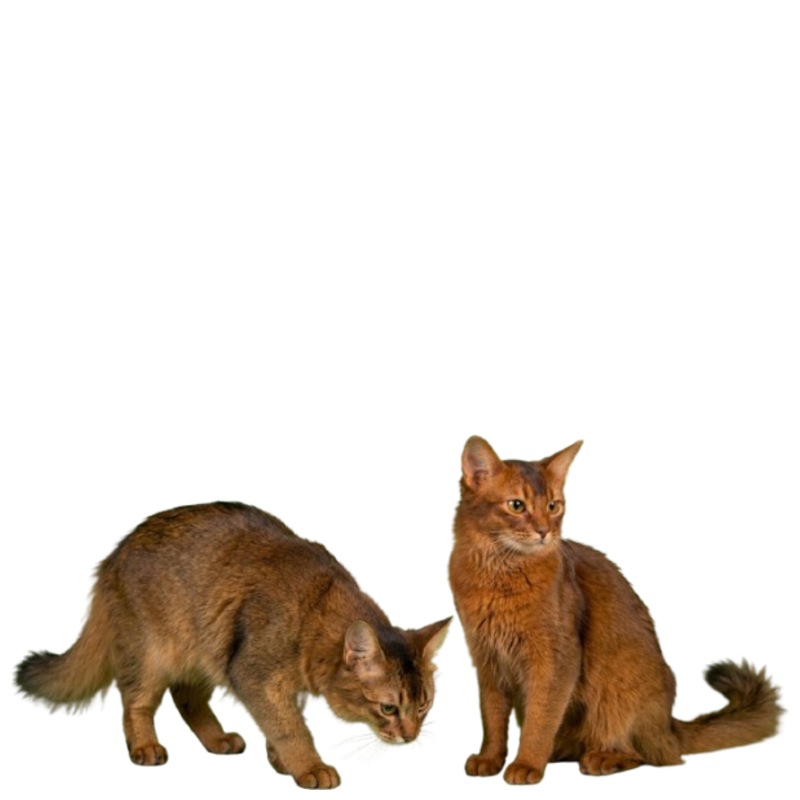
appearance
The overall physical conformation of Somalis strikes a balance between athletic grace and firm, supple strength. Often described as having the lithe agility of a wild forest cat combined with a refined domestic balance, Somalis display a medium-sized frame with well-developed musculature. Their stance is light on their feet, giving the immediate impression of readiness, poise, and fluid movement. Every element of Somali’s frame, from the moderate boning to the arch of the neck, contributes to a harmonious, athletic silhouette that avoids both extreme heavy bulk and fragile delicacy.
Head Structure and Facial Architecture
The head of Somali forms a modified, gently rounded wedge, presenting soft contours without flat planes or sharp angles. The overall facial structure forms a subtle curve from the bridge of the nose to the brow, creating an alert and expressive countenance.
- Skull Profile: Broad between the ears, gently contouring down to a firm, well-developed chin. The muzzle is neither sharply pointed nor square, maintaining a soft transition that avoids a pinched appearance.
- Eye Shape and Placement: Large, almond-shaped, and set widely apart. The eyes are framed by dark lid rims, giving them an expressive, highlighted appearance similar to natural eyeliner.
- Ear Carriage: Prominent, large, and moderately pointed. The ears are broad at the base, cupped, and set wide, tilted slightly forward as if perpetually listening to subtle surroundings.
Body Frame, Musculature, and Boning
Somalis possess a torso of medium length, flexible and torso-muscular without appearing cobby or overly elongated. The ribcage is rounded, and the back line rises slightly toward the hindquarters, giving the cat a springy, dynamic posture.
| Feature | Anatomical Description | Visual & Functional Impact |
|---|---|---|
| Torso Frame | Medium length, lithe, and muscular | Provides fluid flexibility and a graceful, athletic contour |
| Bone Substance | Firm, moderate boning; neither heavy nor fine | Maintains agility while supporting dense, lean muscle tissue |
| Legs & Paws | Long, slender legs with small, oval paws | Creates an elevated, elegant stance where the cat stands high on its toes |
| Neck | Arched and moderately long | Elevates the head with an alert, regal carriage |
To evaluate the balance between the length of the torso and the overall height of the body, breeders often observe the visual frame ratio:
Somali Frame Ratio Model
- : The visual proportion metric evaluating the balance between torso length and body height.
- : The linear measurement from the tip of the shoulder to the base of the tail.
- : The vertical measurement from the ground to the top of the shoulder blade.
A feline conformation judge calculates the frame ratio for an adult Somali with a torso length of 36.0 centimeters and a shoulder height of 28.0 centimeters. Dividing the torso length of 36.0 by the shoulder height of 28.0 yields a frame ratio of approximately 1.29. Comparing the result confirms that 1.29 falls within the ideal target range of 1.2 to 1.35. This calculated result of 1.29 provides Somali’s breeding evaluation team with a quantitative measure to confirm a slightly longer torso relative to height, which supports fluid athletic movement.
In a balanced specimen of Somali, this visual ratio approaches , reflecting a slightly longer torso relative to height, which supports fluid athletic movement.
Coat Texture and Structural Markers
While not heavy-coated like arctic breeds, Somali’s coat has a distinct, soft density. The hair length is medium across the body, with specific areas exhibiting fuller, softer growth that creates classic breed markers.
- Coat Density: Very soft to the touch, fine, and double-layered with a dense undercoat that provides body without standing stiffly away from the skin.
- Ruff and Breeches: Hair is naturally longer around the neck, forming a gentle ruff, and along the back of the thighs, forming plush breeches.
- Tail Structure: Exceptionally full and plume-like. The tail is thick at the base, tapering slightly toward the tip, and carried like a waving banner in motion.
Appearance of Somalis
The physical build of Somalis is a study in functional elegance. With a lithe, medium-boned torso, expressive almond eyes set within a softly contoured wedge head, and a lush, plumed tail, Somali’s silhouette is instantly recognizable. The combination of muscular agility and a soft, medium-length coat endows Somalis with a poised, wild grace that remains robust, balanced, and perfectly proportioned.
behavior
Observing Somalis throughout a typical day reveals an energetic, highly curious domestic feline constantly engaged with its surrounding environment. Rather than lounging for extended intervals, Somalis actively investigate changes in their living space, follow human housemates from room to room, and routinely seek out elevated perches to monitor household movement. Their routines are characterized by frequent bursts of athletic play, rapid problem‐solving attempts, and consistent social check‐ins. Every action reflects a deeply inquisitive orientation toward both human companions and companion animals.
Daily Movement, Vertical Exploration, and Play Dynamics
The daily routine of Somali revolves around physical agility, object manipulation, and three‐dimensional territory utilization. Rather than remaining ground‐bound, these cats seek high vantage points to survey their domain.
- Vertical Space Utilization: Somalis regularly leap onto door tops, high shelving, and tall cat trees, using their momentum to clear large vertical gaps in a single fluid movement.
- Tactile Object Manipulation: Unlike breeds that primarily chase moving toys, Somalis frequently use their forepaws like small hands—opening cabinet doors, batting open drawers, and catching tossed items mid‐air.
- Interactive Play Engagement: Play behavior involves complex hunting sequences including stalking, pouncing, and carrying toys in their mouths while chirping or trilling to signal success.
Social Dynamics, Vocalization, and Communication Patterns
Communication in Somalis is subtle, frequent, and heavily tied to physical proximity rather than loud vocal demands. They maintain active connections with household members through gentle physical contact and quiet sound making.
| Behavioral Category | Primary Expression Method | Household Context & Frequency |
|---|---|---|
| Human Interaction | Shadowing footsteps, cheek‐rubbing, perched shoulder resting | High; stays within visual or physical range of occupants throughout waking hours |
| Vocalization Type | Soft trills, quiet chirps, and low purring | Moderate to High frequency, but kept at a low, non‐intrusive volume |
| Multi‐Pet Relations | Parallel play, cooperative chasing, mutual head‐bumping | High; readily engages with friendly dogs and other energetic felines |
To evaluate the probability of an active social response from Somali based on human presence and environmental novelties , behaviorists can express the interaction as:
Somali Social Engagement Probability Model
- : The calculated probability of an active social response from the cat.
- : The mathematical constant representing the base of the natural logarithm.
- : The positive weight factor associated with human presence and social bonding.
- : The measure of human presence and interaction within the environment.
- : The positive weight factor associated with environmental novelties and stimulation.
- : The measure of environmental novelty and enrichment.
A feline behavioral scientist calculates the social engagement probability for an adult Somali using a human presence weight factor of 0.8, a human presence measure of 3.0, an environmental novelty weight factor of 0.5, and an environmental stimulation measure of 2.0. Multiplying 0.8 by 3.0 yields 2.4, multiplying 0.5 by 2.0 yields 1.0, and their sum results in 3.4. Taking the negative exponential of negative 3.4 and adding 1 to the denominator yields a calculated engagement probability of approximately 0.97. This calculated result of 0.97 provides Somali’s behavioral researcher with a quantitative measure demonstrating that high human engagement alongside an enriched environment reliably yields high activity levels.
Where and represent positive weight factors for social bonding and environmental stimulation, demonstrating that high human engagement alongside an enriched environment reliably yields high activity levels.
Environmental Reactivity and Rest Cycles
While active during peak morning and evening household hours, Somalis adapt their activity cycles around the presence of their family.
- Resting Patterns: Short, intense activity sessions (lasting 15–30 minutes) are punctuated by brief periods of light resting in elevated or sunlit spots.
- Response to Household Routines: Somalis anticipate regular household schedules, often waiting by doors prior to arrival times or inspecting opened grocery bags and packages immediately upon entry.
Behavior of Somalis
Life with Somalis is defined by ongoing motion, interactive partnership, and lively curiosity. From acrobatic leaps onto high perches to gentle, trilling greetings at the door, Somali’s daily actions demonstrate a profound commitment to exploring their home and participating in daily domestic routines. This combination of athletic play and attentive social companionship provides a dynamic and engaging presence in any active home.
color
The hallmark visual feature of Somalis lies in the warm, luminous quality of their coat, produced by intricate bands of dark and light pigmentation along each individual guard hair. Rather than presenting solid patches or bold stripes across the body, Somali’s fur creates a shimmering, radiant effect as the cat moves through light. The overall tone is grounded in a rich, warm ground color that brightens along the chest, belly, and undersides, contrasted sharply by darker accent tones along the spine, tail tip, and paw pads.
Mechanics of Hair Shaft Ticking and Pigment Bands
The defining hallmark of Somali’s coat pattern is the rhythm of alternating light and dark bands along every hair strand, commonly referred to as ticking. Each individual guard hair begins at the skin with a clear, warm base color and progresses through distinct dark and light color shifts toward a dark tip.
- Base Coloration: The hair root starts with a warm, clear, unbanded tone that sets the fundamental background warmth for the coat.
- Alternating Bands: Moving outward toward the tip, each hair shaft displays 3–5 distinct alternating bands of dark pigment and lighter ground tone.
- Hair Shaft Termination: Every ticked hair finishes with a dark tip matching the darkest pigment tone of the specific color variety.
Primary Color Variations and Visual Characteristics
While the structural arrangement of ticking remains consistent across all Somalis, the specific pigment combinations yield distinctly recognizable color variations.
| Color Variety | Base Ground Color | Ticking & Accent Pigment | Distinctive Visual Markers |
|---|---|---|---|
| Ruddy (Usual) | Burnt sienna or warm terracotta | Dark brown or intense black | Dark spine line ending in a solid black tail tip; black heel extension |
| Sorrel (Cinnamon) | Warm apricot or clear copper | Chocolate or rich warm brown | Warm reddish accenting without black tones; pinkish paw pads |
| Blue | Warm oatmeal or soft fawn | Deep slate blue or steel gray | Soft bluish haze over a warm, sandy background |
| Fawn | Pale cream or soft rose‐beige | Cocoa brown or warm oatmeal | Subtle, soft contrast with delicate rose tones |
To quantify the visual density of dark pigment relative to light refraction across the surface of a ticked hair shaft, specialists observe the light contrast index:
Somali Ticked Pigment Density Model
- : The quantified visual density of dark pigment relative to light refraction across the surface of a ticked hair shaft.
- : The total length of the ticked hair shaft.
- : The local pigment concentration along the shaft at distance from the base.
- : The variable representing the position along the hair shaft from zero to length .
- : The angle of incident light scattering across the soft, textured fur layer.
A feline coat texture specialist calculates the pigment density for a ticked hair of a Somali with a total hair length of 2.0 millimeters, assuming a uniform local pigment concentration of 1.5 units per millimeter along the shaft and a light incidence angle where the cosine of theta is 0.8. Integrating a constant value of 1.2 across the length from 0 to 2.0 millimeters yields a visual pigment density of 2.4. This calculated result of 2.4 provides Somali’s coat evaluation program with a quantitative measure to assess the visual density of dark pigment relative to light refraction across the surface of the ticked hair shaft.
Where represents total hair length, is the local pigment concentration along the shaft at distance , and accounts for the angle of incident light scattering across the soft, textured fur layer.
Surface Markings and Contrast Accents
In addition to individual hair ticking, Somalis feature specific surface accent markings that define their facial expressions and outline their athletic silhouette.
- Facial Accent Lines: Dark mascara lines extend from the outer corners of the eyes toward the ears, flanked by lighter, pale fur around the eye rims and muzzle.
- Dorsal Stripe: A deeper concentration of dark pigment runs along the spine from the shoulders to the base of the tail, creating a continuous dark accent.
- Tail and Paw Accents: The plume-like tail terminates in a solid dark tip, while the backs of the hind legs display dark shading extending up toward the hocks.
Color of Somalis
The coat of Somalis represents a masterclass in subtle contrast and luminous warmth. From the delicate, alternating bands of pigment on every single hair strand to the rich, dramatic shading along the spine and tail, Somali’s coloration produces an unmistakable, glowing radiance. Whether viewing a deep ruddy or a soft fawn specimen, the harmonious blend of warm ground tones and crisp ticking gives Somalis a truly vibrant, shimmering presence.
compatibility
Ease of Maintenance
Rating: 2/5
Child Friendly
Rating: 4/5
Annual Cost
Rating: 3/5
Lifetime Cost
Rating: 3/5
Adaptability
Rating: 4/5
Velcro Factor
Rating: 4/5
Quietude
Rating: 3/5
Apartment Suitability
Rating: 1/5
Hypoallergenic
Rating: 2/5
Handling Tolerance
Rating: 3/5
Hardiness/Longevity
Rating: 4/5
Prey Drive
Rating: 1/5
genetics
The unique genetic blueprint of Somalis governs the precise biological machinery behind their coat length, ticking density, and pigmentation depth. At its core, the genetic profile of Somali is defined by specific recessive mutations working in tandem with dominant pattern genes. Understanding these genomic interactions allows breeders and enthusiasts to trace how foundational traits are passed down through generations with predictable, mathematical accuracy.
Core Genetic Loci and Allelic Variations
Every trait in Somali’s genome is governed by paired alleles located at specific chromosomal positions, known as loci. The interaction between dominant and recessive variants across these primary loci dictates the expressed phenotype.
- FGF5 Gene (Longhair Locus, M4 / L Locus): Controlled by the fibroblast growth factor 5 gene. The longhair trait in Somalis is an autosomal recessive gene mutation (). A cat must inherit two copies () to express the full medium‐long coat and plumed tail.
- Agouti Locus (A): The dominant Agouti allele () governs the distribution of pigment along the hair shaft, producing the signature ticking effect by switching melanocytes on and off during hair growth.
- Dense/Dilute Locus (D): Controls pigment granule density. The dominant allele () produces intense black and brown pigments, while the recessive dilute allele () clusters pigment granules together, lightening the coat to blue or fawn.
Genotypic Combinations and Expressed Traits
The interaction between primary coat genes yields distinct genetic outcomes that define Somali’s hereditary blueprint.
| Trait Locus | Allele Combination | Genetic Status | Expressed Phenotype |
|---|---|---|---|
| Hair Length (L) | l/l | Homozygous Recessive | Longhair coat profile characteristic of Somalis |
| Ticking (A) | A/A or A/a | Dominant (Agouti) | Ticked hair shafts across the body |
| Black/Cinnamon (B) | B/B or B/bl | Dominant (Black) | Black/brown pigment base (Usual/Ruddy/Blue) |
| Cinnamon (B) | bl/bl | Homozygous Recessive | Reddish/cinnamon pigment base (Sorrel/Fawn) |
| Dilution (D) | d/d | Homozygous Recessive | Diluted pigment density (Blue or Fawn) |
To model the probability of offspring inheriting the homozygous recessive longhair genotype () from two heterozygous short-haired carrying parents (), the Mendelian inheritance ratio can be calculated as:
Somali Longhair Genotype Probability Model
- : The probability of offspring inheriting the homozygous recessive longhair genotype.
- : The probability that the paternal parent transmits the recessive longhair allele.
- : The probability that the maternal parent transmits the recessive longhair allele.
- : The individual probability of a heterozygous carrier parent passing on the recessive allele.
- : The combined probability of an offspring inheriting the homozygous recessive longhair genotype from two carrier parents.
A feline geneticist calculates the expected inheritance probability for a mating between two heterozygous carrier Somalis where the total litter size is 4 kittens. Multiplying the litter size of 4 by the longhair probability of 0.25 yields an expected count of 1 kitten inheriting the homozygous recessive longhair genotype. This calculated result of 1 kitten provides Somali’s breeding program with a quantitative measure illustrating the classic recessive inheritance pattern governing coat length.
This probability (‒in‒ chance per kitten) illustrates the classic recessive inheritance pattern governing coat length in Somalis.
Polygenic Modifiers and Banding Expression
Beyond simple single‐gene Mendelian traits, Somalis carry polygenic modifiers—complex groups of minor genes working collectively to influence pigment intensity and band count.
- Rufousing Polygenes: Modulate the warm, reddish-orange undertones in the base coat. A high concentration of rufousing modifiers increases warmth, while a low concentration creates cooler, sandier tones.
- Ticking Intensity Modifiers: Regulate the number of alternating light and dark bands along each hair shaft, determining whether a hair exhibits – distinct pigment shifts.
Genetics of Somalis
The genetics behind Somalis demonstrate a captivating interplay between dominant pattern genes and recessive coat traits. By combining the homozygous recessive longhair gene with dominant agouti ticking and complex polygenic warmth modifiers, Somali’s genome creates a remarkably consistent yet intricate biological pattern. A clear understanding of these loci empowers owners and breeders alike to appreciate the subtle hereditary science behind every kitten.
health
Maintaining the long‐term physical vitality of Somalis requires proactive monitoring of a few well‐documented physiological vulnerabilities. While generally robust, athletic felines, Somalis possess specific hereditary and anatomical predispositions that affect their red blood cells, ocular health, dental tissue, and renal function. Early veterinary screening and consistent lifestyle management allow owners and preservation breeders to identify potential health risks before they impact quality of life, ensuring these active cats maintain their natural vigor.
Primary Physiological Vulnerabilities and Clinical Conditions
Certain conditions occur with notable frequency in Somalis, requiring routine monitoring to catch early clinical markers and implement preventative care plans.
- Pyruvate Kinase Deficiency (PK Deficiency): An inherited enzyme insufficiency in red blood cells that leads to their premature destruction, causing intermittent lethargy, weakness, and chronic anemia.
- Progressive Retinal Atrophy (PRA): A gradual degeneration of the light‐sensitive retinal tissue at the back of the eye, initially presenting as night blindness and slowly progressing to reduced daytime vision.
- Periodontal Disease and Gingivitis: Somalis display a marked sensitivity to dental plaque accumulation, leading to severe gum inflammation, tooth resorption, and secondary oral tissue changes if left unmanaged.
- Renal Amyloidosis: A condition characterized by abnormal protein deposits in organ tissues, particularly the kidneys, which can impair filtration performance over time.
Clinical Screening Protocols and Diagnostic Tracking
Preventative wellness for Somali hinges on structured health assessments that track metabolic, blood, and organ markers throughout maturity.
| Health Focus Area | Diagnostic Method | Target Screening Timeline | Primary Clinical Marker |
|---|---|---|---|
| Enzyme & Blood Health | Complete blood count (CBC) & targeted assay | Baseline at 1 year; annual checkups | Hematocrit level and red cell turnover |
| Ocular Integrity | Ophthalmoscopic exam | Annual routine veterinary visit | Retinal vascular thinness and reflectivity |
| Dental Hygiene | Oral cavity probe & dental radiographs | Every 6–12 months | Gingival inflammation index and pocket depth |
| Renal Function | Blood chemistry & urine specific gravity | Bi‐annually past age 7 | Protein‐to‐creatinine ratio and blood urea levels |
To monitor red blood cell stability in relation to cellular enzyme activity levels, veterinary clinicians evaluate the relative oxygenation capacity using the following function:
Somali Relative Oxygenation Capacity Model
- : The relative oxygenation capacity of the red blood cells.
- : The hemoglobin concentration measured in grams per deciliter.
- : The oxygen saturation percentage or fraction.
- : The mathematical constant representing the base of the natural logarithm.
- : The cellular decay constant across metabolic stress tests.
- : The active enzyme units measured during evaluation.
- : The baseline enzyme threshold reference value.
A veterinary clinician calculates the relative oxygenation capacity for an adult Somali with a hemoglobin concentration of 12.0 grams per deciliter, an oxygen saturation fraction of 0.98, a cellular decay constant of 0.5, an active enzyme units value of 5.0, and a baseline enzyme threshold reference value of 3.0. Multiplying 12.0 by 0.98 yields 11.76 in the numerator. For the denominator, subtracting 3.0 from 5.0 and multiplying by 0.5 yields 1.0, and adding 1 to the exponential of negative 1.0 results in approximately 1.368. Dividing 11.76 by 1.368 yields a relative oxygenation capacity of approximately 8.60. This calculated result of 8.60 provides Somali’s veterinary team with a quantitative measure to monitor red blood cell stability in relation to cellular enzyme activity levels.
Where represents hemoglobin concentration, indicates oxygen saturation, reflects active enzyme units, and represents the cellular decay constant across metabolic stress tests.
Preventative Care and Wellness Management
Supporting Somali’s physical resilience involves direct daily habits focused on high‐risk areas.
- Oral Care Strategy: Establishing daily brushing routines alongside professional cleaning prevents aggressive gingival inflammation and loss of bone structure around tooth roots.
- Hydration and Kidney Support: Encouraging high fluid intake through wet food nutrition and circulating water fountains supports kidney flushing and urinary tract health.
Health of Somalis
The overall health of Somalis is best safeguarded through attentive, preventative partnership between owners, breeders, and veterinary clinicians. By tracking red blood cell health, maintaining rigorous dental hygiene, and keeping a watchful eye on visual and renal wellness, Somali’s resilient athletic nature can flourish. A proactive approach to health screening ensures that Somalis enjoy long, vibrant, and active lives.
longevity
The expected lifespan of Somalis reflects that of a resilient, energetic, and durable domestic cat, with many individuals comfortably living well into their mid‐teens. On average, Somalis maintain a lifespan range between years, with well‐cared‐for indoor individuals frequently reaching years or beyond. Their path through maturity is marked by sustained athletic vigor through early and mid‐life, followed by a gradual, subtle shift into senior years. Tracking these distinct physical milestones helps owners and preservation breeders support optimal vitality across every phase of life.
Physical Aging Progression Across Life Stages
The journey from kittenhood to senior status in Somalis follows a predictable chronological trajectory, marked by distinct shifts in muscle tone, coat density, and daily mobility.
| Life Stage | Age Span | Physical Characteristics & Aging Markers |
|---|---|---|
| Kittenhood | 0‐12 months | Rapid skeletal growth; coat density increases while full adult ruff and ticking finish developing |
| Young Adult | 1‐3 years | Reaches full physical maturity, peak muscular density, and final coat length development |
| Prime Adult | 3‐10 years | Steady physical condition; high athletic stamina and stable metabolic requirements |
| Mature Senior | 10‐14 years | Subtle loss of lean muscle mass; slight dulling of coat texture and reduced leaping height |
| Geriatric | 15+ years | Noticeable softening of muscle contours, lighter weight, and increased preference for warmth and rest |
Mathematical Modeling of Survival Probabilities
To evaluate the probability of Somali reaching or exceeding a specific age in years, feline demographers often apply a modified survival function:
Somali Modified Survival Function Model
- : The probability of the cat reaching or exceeding a specific age in years.
- : The mathematical constant representing the base of the natural logarithm.
- : The age-related vitality loss factor.
- : The target age of the cat measured in years.
- : The median population longevity baseline measured in years.
A feline demographer calculates the survival probability for an adult Somali at age 14 years, using a median population longevity baseline of 13.5 years and an age-related vitality loss factor of 0.8. Subtracting 13.5 from 14.0 yields 0.5, and multiplying by 0.8 results in 0.4. Adding 1 to the exponential of 0.4 yields a denominator of approximately 2.492, which results in a survival probability of approximately 0.40. This calculated result of 0.40 provides Somali’s demographic research program with a quantitative measure demonstrating that survival rates remain exceptionally high throughout early and mid-life before experiencing a natural downward curve in late senior years.
In this model, represents the median population longevity baseline (typically years for indoor Somalis), while represents the age‐related vitality loss factor. This demonstrates that survival rates remain exceptionally high throughout early and mid‐life before experiencing a natural downward curve in late senior years.
Key Factors Influencing Senior Vitality
Transitioning into advanced age involves observable physical shifts that indicate how well a cat is navigating the aging process.
- Muscle and Mobility Maintenance: As Somalis pass their first decade, regular low‐impact activity helps maintain functional hindquarter strength and joint flexibility.
- Metabolic and Digestive Efficiency: Older individuals often experience changes in nutrient absorption, making digestible protein intake vital to preserve lean body frame balance.
- Sensory and Thermal Adjustment: Geriatric Somalis may show subtle decreases in auditory or visual acuity, seeking out draft‐free, warm resting spots to compensate for natural thinning of the insulating undercoat.
Longevity of Somalis
The life trajectory of Somalis is defined by long‐lasting vitality, sustained agility, and a graceful transition into senior years. From the energetic development of early adult frame structure to the calm, gentle rhythms of geriatric life, Somali’s longevity highlights the breed’s underlying physical resilience. Understanding these natural aging stages allows owners and breeders to provide thoughtful support throughout every chapter of a cat’s life.
maintenance
Providing optimal daily care for Somalis involves a balanced routine of dietary management, structured coat grooming, and vertical space enrichment. Because Somali’s high activity levels demand steady energy expenditure and their soft, medium‐length coats require regular shedding maintenance, establishing clear husbandry habits is essential. Aligning nutritional intake with daily movement while maintaining skin health and environmental stimulation ensures that both cattery environments and household settings keep these active cats in peak physical condition.
Nutritional Guidelines and Caloric Requirements
Feeding Somalis requires a high‐protein, moisture‐rich diet that fuels their energetic lifestyle while supporting a soft, healthy coat layer. Free‐feeding dry food can lead to overeating; structured meal times are strongly recommended.
- Protein & Moisture Baseline: Prioritize wet food formulas rich in animal proteins to supply essential amino acids and maintain optimal hydration levels.
- Meal Frequency: Divide the daily food allotment into 2–3 distinct meals to sustain even energy levels throughout the day.
- Essential Fatty Acids: Incorporate omega‐3 and omega‐6 oil supplements to preserve skin moisture barrier integrity and coat softness.
| Life Stage | Dietary Focus | Daily Feeding Structure |
|---|---|---|
| Kitten (0‐12 months) | Growth‐dense, high‐protein wet food | 3‐4 meals daily |
| Active Adult (1‐10 years) | Balanced lean protein with moderate fats | 2‐3 meals daily |
| Senior (10+ years) | Highly digestible protein with joint & kidney support | 2‐3 smaller meals daily |
To calculate the Resting Energy Requirement () in kilocalories per day based on a cat’s body mass () in kilograms, care providers use the metabolic formula:
Somali Resting Energy Requirement Model
- : The resting energy requirement of the cat measured in kilocalories per day.
- : The standard metabolic body weight coefficient.
- : The total body mass of the cat measured in kilograms.
- : The metabolic scaling exponent used to account for body surface area relative to mass.
A feline nutritionist calculates the resting energy requirement for an adult Somali with a body mass of 3.5 kilograms. Raising the body mass of 3.5 to the power of 0.75 yields approximately 2.551, and multiplying this value by 70 results in a resting energy requirement of 178.58 kilocalories per day. This calculated result of 178.58 kilocalories per day provides Somali’s care provider with a quantitative baseline to support the nutritional and metabolic health of the cat.
For an active adult specimen of Somali, multiply the calculated by an activity factor factor of 1.2–1.4 to determine the target Daily Energy Requirement ():
Somali Daily Energy Requirement Model
- : The target daily energy requirement of the cat measured in kilocalories per day.
- : The resting energy requirement of the cat measured in kilocalories per day.
- : The activity factor multiplier used for an active adult cat.
A feline nutritionist calculates the daily energy requirement for an adult Somali with a resting energy requirement of 178.58 kilocalories per day. Multiplying the resting energy requirement of 178.58 by the activity factor of 1.3 yields a daily energy requirement of 232.15 kilocalories per day. This calculated result of 232.15 kilocalories per day provides Somali’s care provider with a quantitative target to support the active lifestyle characteristic of the breed.
Coat Grooming and Hygiene Schedules
Although Somali’s medium‐long coat does not mat as easily as denser, heavy‐coated breeds, a consistent grooming schedule prevents loose fur buildup and supports natural skin oil distribution.
- Brushing Routine: Use a stainless steel comb or slicker brush 2–3 times weekly to remove dead undercoat hairs, increasing to daily brushing during seasonal shedding periods.
- Bathing Frequency: Occasional baths every 6–8 weeks using a gentle, hypoallergenic cat shampoo help remove accumulated skin oils and keep the plumed tail fluffy.
- Dental Care: Daily or bi‐weekly toothbrushing using feline‐safe enzymatic toothpaste prevents plaque accumulation along the gumline.
- Nail & Ear Maintenance: Trim claw tips every 2–3 weeks, and inspect inner ear folds weekly for debris or excess wax build‐up.
Environmental Setup and Enrichment Standards
Because Somalis thrive on active environmental interaction, their living space must accommodate vertical movement and tactile problem‐solving.
- Vertical Climbing Structures: Install sturdy, floor‐to‐ceiling cat trees or wall‐mounted shelving runs to allow full aerial exploration of the living area.
- Interactive Toy Rotation: Provide puzzle feeders, feather wands, and small retrieving balls, rotating items weekly to prevent environmental boredom.
- Scratching Surfaces: Position both vertical sisal posts and horizontal cardboard scratchers near sleeping zones to facilitate full‐body stretching.
Maintenance of Somalis
Daily care for Somalis is a straightforward, highly rewarding routine centered on interactive enrichment, proper dietary balance, and regular coat grooming. By providing adequate vertical territory, calculating precise nutritional portions, and maintaining a consistent weekly comb‐through, care providers ensure that Somali’s physical environment supports their active lifestyle. A structured husbandry approach guarantees that Somalis remain healthy, well‐groomed, and fully engaged in their everyday home surroundings.
measurements
| Measurement | Female | Male | ||
|---|---|---|---|---|
| Metric | Imperial | Metric | Imperial | |
height | 18 – 23 centimeters | 7 – 9 inches | 20 – 25 centimeters | 8 – 10 inches |
length | 33 – 41 centimeters | 13 – 16 inches | 36 – 46 centimeters | 14 – 18 inches |
weight | 2.7 – 4.1 kilograms | 6 – 9 pounds | 3.6 – 5.4 kilograms | 8 – 12 pounds |
• Height: Refers to the measurement at the withers (shoulders).
• Length: Measured from the tip of the nose to the base of the tail.
origin
The history of Somalis is intrinsically tied to the lineage of the Abyssinian, emerging initially as a long‐haired variant within short‐haired breeding lines across North America, Europe, and Australia. While early short‐haired import cats were brought to Great Britain from the Horn of Africa and Indian Ocean ports during the late 19th century, long‐haired kittens periodically appeared in litters decades later. Initially quietly placed into pet homes, visionary breeders in the mid‐20th century recognized the beauty of this long‐coated expression, systematically establishing Somalis as a distinct, registered breed with a rich heritage.
Geographic Roots and Early Lineage Development
The foundational ancestors of Somalis originated in coastal trading routes connecting the Indian Ocean and the Red Sea to British ports. Over decades of domestic breeding, hidden long‐haired traits quietly persisted across international bloodlines.
- Native Landrace Roots: Ancestral foundation stock traces back to cats of the Afro‐Asian coastal trade corridors, which were transported aboard merchant vessels to Great Britain in the mid–19th century.
- The Longhair Recessive Persistence: During the late 19th and early 20th centuries, outcrosses to domestic longhairs were occasionally introduced into Abyssinian lines to rebuild breeding populations post‐war, embedding the longhair trait across generations.
- North American Emergence: In the 1960s, dedicated breeders in North America began intentionally pairing Abyssinian carriers of the longhair trait, formally developing the distinct Somali lineage.
Historical Timeline of Breed Establishment
The chronological journey of Somali spans over a century of gradual recognition, progressing from an overlooked variant to a fully recognized global breed.
| Era / Year | Historical Milestone | Regional & Lineage Impact |
|---|---|---|
| 1860s‐1890s | Arrival of foundation African & Indian Ocean cats to Great Britain | Establishes the core ticked short‐haired bloodlines in Western Europe |
| 1930s‐1940s | Outcrossing events during wartime population bottlenecks | Introduces and disperses longhair genetic factors across established registries |
| 1967 | First intentional breeding program initiated in North America | Shifts focus from discarding long‐coated kittens to intentionally developing Somalis |
| 1979 | Major international registry championship recognition | Formally grants full championship status to Somali as a distinct breed |
To calculate the cumulative growth factor of registered breeding lineages across a development timeline in years following formal breed establishment (), lineage historians utilize the growth function:
Somali Lineage Growth Factor Model
- : The cumulative growth factor of registered breeding lineages at year .
- : The initial foundation pair count at the start of establishment.
- : The mathematical constant representing the base of the natural logarithm.
- : The rate of global cattery adoption and population expansion.
- : The current target year along the development timeline.
- : The baseline year of formal breed establishment set at 1967.
A feline lineage historian calculates the cumulative growth factor for Somalis in the year 2017, using an initial foundation pair count of 2, a global cattery adoption rate of 0.1, a target year of 2017, and a baseline establishment year of 1967. Subtracting 1967 from 2017 yields 50 elapsed years, and multiplying by the adoption rate of 0.1 results in 5.0. Multiplying the foundation count of 2 by the exponential of 5.0 yields a cumulative lineage growth factor of approximately 296.83. This calculated result of 296.83 provides Somali’s historical research program with a quantitative measure to track the expansion of registered breeding lineages across the development timeline.
Where represents the initial foundation pair count, indicates the rate of global cattery adoption, and ‒ measures the elapsed years since structured breeding began.
Naming Heritage and Institutional Recognition
The naming of Somali reflects a deliberate historical tribute to its ancestral lineage rather than a direct geographic origin.
- The Name Origin: Named after Somalia to honor the neighboring region of Abyssinia (modern‐day Ethiopia), symbolically denoting the close hereditary relationship between the two breeds.
- Global Registry Acceptance: Breed pioneers worked through the 1970s and 1980s to establish unified standards, securing full acceptance across major global feline organizations.
Origin of Somalis
The historical evolution of Somalis is a story of appreciation, patience, and selective preservation. From the early merchant ships of the Indian Ocean to the mid‐20th century catteries where breeders championed their distinct long coats, Somali’s heritage reflects a rich tapestry of feline history. Today, Somalis stand as a testament to the dedicated breeders who recognized their unique beauty, preserving a remarkable historical lineage for generations to come.
temperament
The inherent disposition of Somalis combines intense environmental curiosity with a deeply social, human‐oriented nature. Rather than displaying passive independence or aloof detachment, Somalis maintain a highly engaged psychological baseline that seeks out interaction and intellectual stimulation. Their temperament is defined by high social confidence, emotional resilience in busy households, and a strong desire to participate actively in everyday human routines. Understanding these core personality drivers allows breeders and owners to foster a balanced, emotionally fulfilling home environment.
Social Bonding, Affection Style, and Emotional Dynamics
The emotional expression of Somali is active, present, and collaborative rather than lap‐bound or needy. They form intense bonds with their human companions, choosing to express affection through physical proximity and shared activity.
- Bonding Tendencies: Somalis generally form strong social attachments with the entire household rather than fixating exclusively on a single person, greeting visitors with curious openness.
- Affection Expression: Rather than resting passively for hours on a lap, Somali’s affection is participatory—sitting on keyboards, perching on shoulders, or nudging hands to stay involved in ongoing tasks.
- Emotional Resilience: They possess high social adaptability, adjusting smoothly to household commotion, frequent visitors, and changes in living space without retreating into prolonged stress.
Dispositional Trait Matrix and Environmental Responsiveness
The temperament of Somalis falls along a vibrant spectrum of high curiosity and social confidence, requiring consistent mental stimulation to maintain balance.
| Temperament Dimension | Trait Level | Behavioral Manifestation & Environmental Fit |
|---|---|---|
| Social Confidence | Extremely High | Approaches new people and unfamiliar situations with bold, open interest |
| Curiosity Drive | High to Very High | Continually investigates novel smells, opened doors, and household changes |
| Solitary Tolerance | Moderate to Low | Thrives best with companion pets or human family members nearby throughout the day |
| Sensory Sensitivity | Balanced & Alert | Highly responsive to visual and auditory cues without showing skittishness |
To evaluate the overall social engagement index of Somali as a function of environmental enrichment and human interaction time , behaviorists can model the psychological state as:
Somali Social Engagement Index Model
- : The overall social engagement index reflecting the psychological state of the cat.
- : The human interaction time measured in hours per day.
- : The measure of environmental enrichment and stimulation.
- : The mathematical constant representing the base of the natural logarithm.
- : The positive social receptivity coefficient inherent to the psychological makeup of the breed.
A feline behavioral scientist calculates the social engagement index for an adult Somali with a human interaction time of 2.0 hours per day, an environmental enrichment measure of 3.0, and a social receptivity coefficient of 0.5. Multiplying human interaction time of 2.0 by environmental enrichment of 3.0 yields 6.0 in the numerator. For the denominator, adding 2.0 and 3.0 yields 5.0, multiplying by 0.5 yields 2.5, and adding 1 to the exponential of negative 2.5 results in approximately 1.082. Dividing 6.0 by 1.082 yields a social engagement index of approximately 5.55. This calculated result of 5.55 provides Somali’s behavioral research program with a quantitative measure highlighting that active interaction paired with an enriched space yields maximum emotional well-being.
Where represents a positive social receptivity coefficient inherent to Somali’s psychological makeup, highlighting that active interaction paired with an enriched space yields maximum emotional well‐being.
Curiosity Drivers and Cognitive Needs
Mentally, Somalis operate with a persistent need to solve environmental puzzles and explore surrounding space.
- Intellectual Curiosity: Unstimulated Somalis will invent their own entertainment, opening cabinet doors or exploring hidden nooks to satisfy their cognitive drive.
- Response to Stimuli: High visual and auditory acuity means they react swiftly to subtle movements, bird activity outside windows, or novel sounds around the home.
Temperament of Somalis
The temperament of Somalis is a captivating mix of bold social confidence, boundless curiosity, and warm partnership. Neither aloof nor passive, Somali’s dynamic presence enlivens any household with shared companionship and inquisitive charm. By offering ongoing engagement, interactive opportunities, and warm social inclusion, owners and breeders can ensure that Somalis maintain their vibrant, confident, and joyful disposition throughout their lives.