Snowshoe Cat
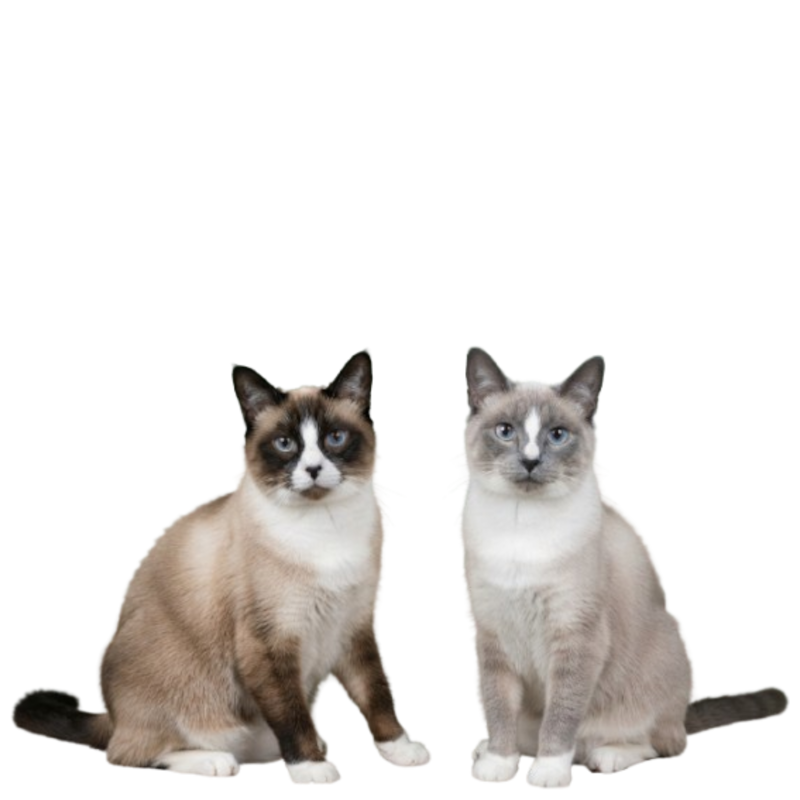
appearance
The Snowshoe is a striking athletic feline that successfully bridges the gap between substantial power and sleek elegance. Built with a medium‐to‐large body frame, Snowshoes possess a deceptively muscular build that feels surprisingly heavy when lifted, defying their graceful outward appearance. This physical profile outlines the definitive structural markers that give the breed its unique, balanced silhouette and distinct aesthetic signature.
Head Structure and Facial Conformation
The head of the Snowshoe is a modified wedge with slightly rounded contours, avoiding both extreme sharpness and heavy-set blockiness. When viewed from the front, the lines taper smoothly toward a well‐defined muzzle that features a gentle break in profile.
- Skull Shape: The forehead exhibits a slight, graceful rounding before transitioning into a straight, medium‐length nose.
- Muzzle: Neither overly pointed nor blunt, providing a solid foundation that balances the overall wedge shape of the head.
- Chin: Firm and strong, aligning neatly with the tip of the nose in a clean vertical plane.
Ear Placement and Eye Architecture
Ears and eyes work in tandem to create the alert, expressive gaze characteristic of the breed.
- Ear Form: Medium to medium‐large in size, broad at the base with slightly rounded tips. They are set somewhat wide apart, following the outer lines of the facial wedge.
- Eye Shape: Large, expressive, and slightly oval, tilted marginally toward the base of the ears rather than set straight horizontally.
- Gaze Dynamics: The eye placement contributes to an open, curious expression that reflects the breed‐s intelligent disposition.
Body Frame and Muscular Conformation
The underlying skeletal structure provides strength and agility without ever appearing coarse or bulky.
| Structural Region | Conformation Detail | Visual Description |
|---|---|---|
| Torso | Long and substantial | Firmly muscled, striking a balance between length and compact power |
| Chest | Moderately broad | Full and well‐rounded, giving an impression of athletic readiness |
| Back | Level to slightly sloping | Straight along the topline, with the croup curving gently into the hip structure |
| Bone Substance | Medium to substantial | Solid bone density that supports a heavy, athletic weight without bulk |
Limbs and Paws
Mobility and balance rely heavily on the proportional development of the legs and feet.
- Legs: Medium in length, perfectly proportioned to the body frame. The hind legs are slightly longer than the front legs, providing a natural spring in movement.
- Bone and Muscle: Legs feature sturdy bone structure wrapped in dense, powerful muscle.
- Paws: Oval and compact, featuring firm knuckle development. The signature feature is the neat white mitts that encase the toes, creating a sharp contrast against the lower limb structure.
Tail Structure
The tail serves as a natural rudder and counterweight for the breed‐s active movements.
- Length and Taper: Moderate in length‐proportional to the torso‐and tapering gracefully from a sturdy base toward a rounded tip.
- Carriage: Held upright or in a relaxed curve when moving, maintaining structural balance with the spine.
Coat Texture and Physical Markers
While color distribution is secondary to structure in pure physical typing, the tactile quality of the coat remains a vital component of the breed‐s physical presentation.
- Coat Quality: Short to medium‐short in length, lying close to the body with a smooth, glossy finish. It lacks a dense undercoat, giving it a sleek feel that highlights the musculature beneath.
- Tactile Experience: Silky and fine‐textured, reflecting light readily across the surface of the body frame.
Appearance of Snowshoes
The Snowshoe presents a harmonious picture of power and refinement. From the modified wedge head and alert, oval eyes down to the solid, well‐boned limbs and distinctive white paws, every structural element speaks to an agile, balanced feline designed for both strength and fluid grace.
behavior
The Snowshoe is a highly active and deeply engaged feline that constantly monitors household activities through deliberate action rather than passive observation. Moving with purposeful strides from room to room, Snowshoes integrate themselves directly into daily human routines, tracking movements and investigating every environmental change. This behavioral profile outlines the definitive action patterns and interaction styles that shape the everyday life of Snowshoe’s daily routine.
Social Dynamics and Human Engagement
Interaction with family members defines much of the waking cycle for Snowshoes, who actively seek physical proximity and direct contact.
- Room‐to‐Room Tracking: Snowshoes routinely follow household members from space to space, positioning themselves nearby to oversee chores, cooking, or computer work.
- Doorway Monitoring: Rather than hiding away, a typical Snowshoe waits by thresholds or sits elevated near entry points to observe everyone entering or leaving a room.
- Physical Contact Seeking: Snowshoes frequently initiate contact by pressing their heads against human legs, climbing into laps, or reaching out a paw to touch an arm during rest periods.
Vocalization Patterns and Communication Styles
Vocalization serves as a primary tool for Snowshoes to express desires, announce arrivals, or comment on environmental shifts.
| Vocalization Type | Behavioral Context | Acoustic Quality |
|---|---|---|
| Melodic Chirp | Greeting family members or signaling excitement | Soft, musical, multi‐toned cadence |
| Direct Demand | Requesting food, open doors, or toy retrieval | Mid‐range, persistent meow with varied inflection |
| Acknowledgment | Responding to human speech or sudden noises | Short, breathy purr‐chirp combination |
Play Styles and Daily Activity Cycles
Energy distribution follows distinct peaks and valleys throughout a standard twenty‐four‐hour cycle, characterized by intense investigative play.
- Stalking and Pouncing: Snowshoes regularly engage in calculated stalking behavior, crouching low behind furniture before executing rapid vertical leaps at moving objects.
- Object Retrieval: It is common for Snowshoes to pick up small toys or crumpled paper in their mouths, carry them across the floor, and drop them at human feet to initiate a game of catch.
- Water Interaction: Unlike many cats, Snowshoes frequently investigate running faucets, patting at the stream with a paw or dipping their feet directly into standing water bowls.
Exploration Strategies and Environmental Control
Curiosity dictates how Snowshoes navigate physical spaces, prioritizing elevated viewpoints and tight security checks of new items.
- Vertical Ascents: Snowshoes utilize high shelving, refrigerator tops, and door frames as primary observation posts, leaping fluidly from the floor to high perches.
- Package Investigation: Whenever bags, boxes, or parcels enter the home, Snowshoes immediately crawl inside, inspect flaps, and bat at internal corners.
- Supervised Pacing: Snowshoes establish set pacing routes across the home during morning and evening hours, inspecting windowsills and checking perimeter doors for changes in the outdoor environment.
Behavior of Snowshoes
The Snowshoe exhibits an interactive and dynamic lifestyle that keeps household members constantly engaged. From persistent room‐to‐room tracking and musical vocalizations to high‐energy play sessions and deliberate toy retrieval, every daily action reflects an alert, highly social feline deeply wired into its shared living space.
color
The Snowshoe presents a striking visual contrast built upon a classic pointed color distribution, where warmer body tones fade seamlessly into deep, saturated mask, ear, limb, and tail hues. Across Snowshoe’s coat, pigment is temperature sensitive, concentrating heavily on the cooler extremities while leaving the core body significantly lighter. This comprehensive color profile details the specific pigment depths, shading transitions, and distinctive marking patterns that define the aesthetic layout of Snowshoes.
Point Color Depths and Variations
The extremities‐known as the points—display the deepest concentration of pigment across the entire body, dictating the primary color classification of the individual.
- Seal Point: Features a rich, dark espresso brown that extends deeply across the face mask, ears, legs, and tail, creating a high‐contrast look against the body.
- Blue Point: Displays a cool, steely grey‐blue pigment with silvery undertones, offering a softer, more muted contrast compared to the darker seal variation.
- Chocolate Point: Exhibits a warm, milk‐chocolate hue across the extremities, maintaining a lighter and warmer tone than its darker seal counterpart.
- Lilac Point: Showcases a pale, frosty grey tinged with delicate pinkish or silver tones, representing the lightest and most ethereal end of the point color spectrum.
Body Shading and Pigment Distribution
As the hair shafts move away from the cooler extremities toward the warmer core of the torso, pigment concentration shifts significantly according to local skin temperature.
| Body Region | Pigment Density | Visual Appearance |
|---|---|---|
| Torso and Flanks | Low pigment concentration | Pale fawn, creamy white, or soft platinum that warms subtly along the back |
| Underbelly and Chest | Minimal pigment concentration | Lighter shade, often approaching a clean ivory or ghost‐white tone |
| Mask and Ears | Maximum pigment concentration | Deeply saturated color matching the limb extremities, framing the facial structure |
Facial Markings and Contrast Boundaries
The face exhibits a distinct pattern where pigment interacts with white spotting factors, creating balanced symmetry around the focal points of the head.
- Inverted White Blaze: A striking white marking shaped like an inverted “V” spans downward from the forehead across the muzzle, breaking up the dense dark pigment of the facial mask.
- Muzzle Boundary: The white coloration must remain contained within the whisker pads and lower jaw, creating a crisp boundary against the darker point color of the cheeks.
- Transition Softness: The shading along the edges of the facial mask blurs gently into the lighter body fur rather than ending in a harsh, abrupt line.
Extremity Shading and White Mitt Distribution
The limbs and tail showcase a careful interplay between rich point coloration and clean white accents that ground the lower portion of the silhouette.
- Lower Leg Gradation: The upper portions of the legs carry full point color before transitioning abruptly into pristine white paws, creating the signature “shoe” effect.
- Paw Siting: The white pigment on the front paws typically stops at the ankle joint, while the rear white markings extend slightly higher up the hock in a balanced manner.
- Tail Gradient: The tail maintains an even, fully saturated hue from base to tip, showing minimal shading variation along its length.
Color of Snowshoes
The Snowshoe showcases a masterclass in controlled pigment distribution and contrast. From the deep saturation of the facial mask and extremities to the creamy warmth of the torso and the crisp, defining white of the paws and facial blaze, every color element on Snowshoe’s coat contributes to an unmistakable and harmonious visual signature.
compatibility
Ease of Maintenance
Rating: 4/5
Child Friendly
Rating: 4/5
Annual Cost
Rating: 3/5
Lifetime Cost
Rating: 3/5
Adaptability
Rating: 4/5
Velcro Factor
Rating: 5/5
Quietude
Rating: 2/5
Apartment Suitability
Rating: 3/5
Hypoallergenic
Rating: 2/5
Handling Tolerance
Rating: 4/5
Hardiness/Longevity
Rating: 4/5
Prey Drive
Rating: 2/5
genetics
The genetic framework of the Snowshoe relies on the careful interaction of specific temperature‐sensitive pigment mutations and white spotting alleles. Understanding these underlying genomic mechanics allows preservation breeders to map out predictable inheritance patterns for future generations. This technical guide outlines the fundamental loci, allele combinations, and inheritance probabilities that dictate the genetic blueprint of Snowshoes.
The Himalayan Acromelanic Locus
The distinct pointed pigmentation pattern found across Snowshoe’s coat is governed by the tyrosinase gene located at the extension locus, commonly known as the Himalayan or point allele ().
- Allele Interaction: The Snowshoe inherits two copies of the point mutation (), which produces a heat‐sensitive enzyme that fails to create dark pigment in warmer areas of the body while activating color synthesis in cooler extremities.
- Base Pigment Modifiers: Additional modifier alleles at the black locus () determine whether the restricted point pigment appears as dense black (seal) or is modified by the dilution gene () to manifest as blue, chocolate, or lilac.
White Spotting and The Piebald Allele
The signature white mitts and facial blaze characteristic of Snowshoes are controlled by the white spotting gene, which introduces localized areas where pigment production is completely blocked during embryonic development.
| Locus and Allele | Genetic Combination | Phenotypic Result on {breed} |
|---|---|---|
| Piebald Locus (S) | Heterozygous (Ss) | Moderate white spotting restricted to paws, chest, and facial blaze |
| Solid Locus (s) | Homozygous recessive (ss) | Absence of white spotting factors resulting in full point coverage |
| Extreme White (Si) | Interacting modifiers | Potential expansion of white foot markings into higher leg areas |
Inheritance Probability Modeling
When breeding Snowshoes, predicting the transmission of the key white spotting and point alleles involves standard Mendelian ratios. Assuming a mating between two heterozygous piebald carriers (), the mathematical probability of offspring genotypes can be modeled as follows:
Snowshoe White Spotting Mendelian Probability
- : The probability of offspring inheriting homozygous dominant genetics resulting in increased white spotting.
- : The probability of offspring inheriting heterozygous genetics necessary for ideal mitt expression.
- : The probability of offspring inheriting homozygous recessive genetics leaning toward solid points.
A feline geneticist calculates the expected litter distribution for a mating between two heterozygous piebald carrier Snowshoes where the total litter size is 4 kittens. Multiplying the litter size of 4 by the heterozygous probability of 0.50 yields an expected count of 2 kittens inheriting the targeted heterozygous white‐spotting combination necessary for ideal mitt expression. This calculated result of 2 kittens provides Snowshoe’s breeding program with a quantitative probability distribution to evaluate white spotting and point allele transmission accurately.
This distribution means that fifty‐percent of the resulting kittens will inherit the targeted heterozygous white‐spotting combination necessary for ideal mitt expression, while twenty‐five‐percent will lean toward solid points and twenty‐five‐percent will express increased white spotting.
Short Hair Gene Dynamics
Coat length in Snowshoes is regulated by the fibroblast growth factor gene, which dictates hair follicle development cycles across the body frame.
- Dominant Short Hair Allele (): Snowshoes carry a homozygous dominant genotype () or dominant‐recessive combination ensuring the short, flat‐lying coat texture without long‐hair interference.
- Absence of Recessive Long‐Hair Alleles: Preservation breeders actively screen against the recessive long‐hair allele () to maintain the sleek, close‐fitting coat standard inherent to the lineage.
Genetics of Snowshoes
The genetic profile of the Snowshoe represents a precise combination of temperature‐dependent pigment suppression and controlled piebald white spotting. By managing the interaction between the Himalayan point alleles and heterozygous white‐spotting factors, breeders can successfully preserve the distinct genomic markers that define Snowshoe’s unique heritage.
health
The overall physical well-being of the Snowshoe is characterized by a robust constitution, though responsible management requires an awareness of specific physiological vulnerabilities inherited through foundation bloodlines. Maintaining clinical wellness in Snowshoes involves proactive monitoring, routine veterinary screenings, and an understanding of how minor physical anomalies can occasionally manifest. This technical guide outlines the primary health considerations, screening protocols, and physiological care strategies essential for preserving Snowshoe’s long-term vitality.
Cardiac Health and Auscultation Protocols
Heart health remains a key area of clinical focus for preservation breeders and veterinary practitioners managing Snowshoes.
- Hypertrophic Cardiomyopathy: A common cardiac condition in pointed breeds where the heart muscle thickens over time, reducing internal chamber efficiency and blood-pumping capacity.
- Auscultation Screenings: Routine veterinary listening checks help detect early heart murmurs or irregular rhythms, which prompt further diagnostic imaging like echocardiograms.
- Early Detection Signs: Breeders and owners watch for subtle indicators such as sudden lethargy, reduced exercise tolerance, or rapid breathing patterns during rest.
Dental and Periodontal Vulnerabilities
Oral health requires consistent attention due to a structural predisposition toward plaque accumulation and gingival inflammation.
| Condition Type | Clinical Manifestation | Management Strategy |
|---|---|---|
| Gingivitis | Inflammation of the gum line causing redness and discomfort | Regular veterinary cleanings and daily home dental hygiene |
| Tooth Resorption | Progressive breakdown of dental structures beneath the gum line | Annual dental radiographs and prompt extractions when necessary |
| Periodontal Disease | Bacterial buildup leading to tissue degradation and systemic strain | Preventive dental scaling and specialized plaque‐control diets |
Ocular and Visual Considerations
The specialized pigment pathways shared by pointed cats occasionally link to minor visual or structural eye variations that require routine observation.
- Strabismus Tendency: A mild internal squint or eye convergence can occasionally present within specific family lines, though it rarely impacts functional vision.
- Nystagmus Monitoring: Involuntary rapid eye movements are monitored during routine wellness exams to rule out underlying neurological or developmental sensitivities.
- Retinal Health Evaluations: Routine veterinary ophthalmologic checks ensure that light perception and retinal blood vessel structures remain stable across Snowshoe’s life stages.
Musculoskeletal Integrity and Joint Care
The active, athletic lifestyle of Snowshoes places continuous demands on their skeletal framework and joint systems.
- Patellar Luxation: A structural condition where the kneecap slips out of its normal groove, causing occasional joint locking or intermittent skipping during movement.
- Weight Management: Maintaining an optimal body mass ratio is critical to minimize excess mechanical stress on weight‐bearing joints and prevent early wear.
- Mobility Assessments: Regular checks of gait fluidity and jumping mechanics ensure that minor joint discomfort is caught and addressed swiftly through conservative care.
Health of Snowshoes
Snowshoes enjoy a sturdy and resilient constitution when supported by proactive veterinary care and mindful breeding practices. From regular cardiac evaluations and dental maintenance to joint management and ocular monitoring, staying attentive to Snowshoe’s clinical needs ensures a vibrant, active, and healthy life.
longevity
The life expectancy of the Snowshoe reflects a hardy and balanced constitution, allowing Snowshoes to maintain active, vibrant routines well into their teenage years. Tracking life‐stage transitions helps owners and preservation breeders anticipate physical changes and provide tailored care as time progresses. This technical guide outlines the typical lifespan ranges, developmental milestones, and visible aging progressions that characterize Snowshoe’s journey through life.
Lifespan Expectations and Probabilities
The baseline expectancy for Snowshoes generally spans a healthy multi‐year window, influenced by robust physical structure and moderate vitality reserves.
- Average Lifespan Range: Most healthy Snowshoes thrive for anywhere from twelve–fifteen years, with many well‐cared‐for individuals stretching comfortably into their upper teens.
- Probability Modeling: Assuming standard environmental care and proactive wellness support, the mathematical survival probability function over time can be represented as:
Snowshoe Survival Probability Model
- : The survival probability of the cat at a given time .
- : The mathematical constant representing the base of the natural logarithm.
- : The baseline hazard rate parameter governing mortality risk.
- : The time measured in years representing the age of the cat.
- : The aging acceleration parameter reflecting how risk changes over time.
A feline veterinarian calculates the survival probability for an adult Snowshoe at age 10 years, using a baseline hazard rate parameter of 0.03 and an aging acceleration parameter of 1.3. Raising the age of 10 to the power of 1.3, multiplying by 0.03, and taking the negative exponential yields a survival probability of approximately 0.50. This calculated result of 0.50 provides Snowshoe’s owner with a quantitative measure of vitality retention through the first decade of life before a gradual shift into senior milestones.
This statistical projection indicates a high retention of vitality through the first decade of life, followed by a gradual shift into senior milestones.
Real‐World Life Stages and Progression
The maturation of Snowshoes unfolds across distinct phases, each marked by subtle shifts in physical energy and everyday rhythm.
| Life Stage | Age Bracket | Primary Physical Milestones |
|---|---|---|
| Kitten and Junior | 0–2 years | Rapid skeletal growth, high muscle definition, and peak daily activity levels |
| Prime Adult | 3–6 years | Stabilization of body mass, steady energy distribution, and peak physical conditioning |
| Mature Adult | 7–10 years | Subtle slowing of metabolic pace, minor shifts in rest‐to‐play ratios |
| Senior and Geriatric | 11+ years | Decreased muscle mass density, lighter coat frosting around muzzle areas, and increased sleep duration |
Visible Indicators of Aging
As Snowshoes cross into their senior years, several natural external changes signal the ongoing passage of time.
- Coat and Skin Textures: The fur may lose some of its youthful sheen, and white hairs can occasionally appear more prominent around the face or point boundaries.
- Muscle Tone Shifts: The firm, heavy‐set musculature gradually softens, particularly along the topline and shoulders, reflecting a less intense daily activity cycle.
- Mobility Adjustments: Jumping arcs become more calculated, with cats opting for intermediate steps or furniture stops rather than direct leaps to high perches.
Longevity of Snowshoes
The Snowshoe offers a rewarding, long‐term companionship window supported by a naturally resilient physical design. From the high‐energy leaps of youth to the dignified pacing of senior years, understanding Snowshoe’s life stages ensures that owners can provide an accommodating, supportive environment across every chapter of existence.
maintenance
Proper daily husbandry for the Snowshoe ensures that physical vitality and high activity levels remain supported through balanced nutrition, straightforward coat care, and targeted environmental setup. Managing Snowshoe’s routine effectively involves a structured approach to daily feeding, low‐maintenance grooming, and dynamic space enrichment. This technical guide outlines the everyday maintenance requirements, feeding schedules, and environmental standards necessary for keeping Snowshoes thriving in any home or cattery environment.
Nutritional Guidelines
Providing consistent, high‐quality nutrition supports the lean muscle mass and active lifestyle characteristic of Snowshoes.
- Daily Energy Intake: Active adult cats require a steady caloric baseline to sustain their energetic routines, which can be estimated using the standard resting energy requirement formula (see Snowshoe Daily Energy Requirement)
- Portion Management: Dividing daily food allotments into two or three controlled meals prevents overeating and maintains stable metabolic energy throughout the day.
- Hydration Access: Providing multiple fresh water stations‐including flowing fountains‐encourages regular fluid intake, which supports overall metabolic wellness.
Snowshoe Daily Energy Requirement
- : The estimated daily energy requirement of the cat measured in kilocalories per day.
- : The standard metabolic body weight coefficient.
- : The total body mass of the cat measured in kilograms.
- : The metabolic scaling exponent used to account for body surface area relative to mass.
A feline nutritionist calculates the daily energy requirement for an adult Snowshoe with a body mass of 4.0 kilograms. Raising the body mass of 4.0 to the power of 0.75 yields approximately 2.828, and multiplying this value by 70 results in a daily energy requirement of 197.96 kilocalories per day. This calculated result of 197.96 kilocalories per day provides Snowshoe’s owner with a quantitative caloric baseline to sustain their energetic routines and maintain stable metabolic energy throughout the day.
Feeding Schedules
| Life Stage / Status | Feeding Frequency | Nutritional Focus |
|---|---|---|
| Growing Kitten | Three to four times daily | High‐protein formulas tailored for rapid structural development |
| Active Adult | Twice daily | Balanced proteins and controlled fats to maintain lean muscle mass |
| Senior Adult | Twice daily (or smaller, frequent meals) | Highly digestible nutrients supporting joint comfort and stable weight |
Grooming Routines and Coat Upkeep
The short, close‐lying coat requires minimal yet consistent maintenance to remove loose hairs and distribute natural skin oils.
- Weekly Brushing Sessions: Running a soft‐bristle brush or rubber grooming mitt across the coat once a week removes dead hairs and maintains a glossy finish.
- Skin Oil Distribution: Gentle brushing stimulates the skin, evenly spreading natural oils to keep the short fur smooth and weather‐resistant.
- Bathing Frequency: Routine baths are rarely necessary unless the cat gets into something sticky, as Snowshoes manage their own daily hygiene effectively.
Dental Hygiene and Maintenance Habits
Preventive dental care protects against tartar buildup and maintains oral comfort across all life stages.
- Tooth Brushing: Introducing a feline‐safe enzymatic toothpaste and a soft‐bristled brush several times a week minimizes plaque accumulation.
- Dental Treats: Utilizing textured, veterinary‐approved chew treats provides mechanical abrasion that helps keep teeth clean between brushings.
- Routine Checks: Inspecting the gums and teeth monthly ensures early detection of any minor irritation or plaque buildup.
Environmental Enrichment and Home Setup
Creating an engaging living space satisfies the active, investigative nature of Snowshoes and prevents boredom‐related stress.
- Vertical Perching Spaces: Installing tall cat trees or secure wall shelves allows Snowshoes to survey their territory from elevated vantage points.
- Interactive Toy Rotation: Providing a mix of puzzle feeders, feather wands, and small rolling toys keeps daily play sessions stimulating and physically demanding.
- Secure Rest Zones: Offering cozy, enclosed beds in quiet corners gives cats a secure retreat when they want to rest away from high‐traffic areas.
Maintenance of Snowshoes
Managing the daily needs of the Snowshoe is a straightforward and rewarding endeavor. From structured feeding schedules and simple weekly brushing to active environmental enrichment and consistent dental care, providing a well‐rounded husbandry routine ensures Snowshoe’s everyday life remains healthy, balanced, and deeply engaging.
measurements
| Measurement | Female | Male | ||
|---|---|---|---|---|
| Metric | Imperial | Metric | Imperial | |
height | 20 – 25 centimeters | 8 – 10 inches | 23 – 28 centimeters | 9 – 11 inches |
length | 33 – 41 centimeters | 13 – 16 inches | 38 – 46 centimeters | 15 – 18 inches |
weight | 3.2 – 4.5 kilograms | 7 – 10 pounds | 4.1 – 5.9 kilograms | 9 – 13 pounds |
• Height: Refers to the measurement at the withers (shoulders).
• Length: Measured from the tip of the nose to the base of the tail.
origin
The historical lineage of the Snowshoe traces back to the mid‐twentieth century in the United States, born from a deliberate effort to blend the striking point patterns of traditional pointed cats with distinct white foot markings. Through careful, selective crossing of foundation stock, early breeders carved out a brand‐new visual identity that captured the public imagination. This technical guide outlines the geographic roots, foundational milestones, and chronological timeline that established Snowshoe’s unique place in feline history.
Geographic Roots and Foundation Stock
The development of Snowshoes began in Philadelphia, Pennsylvania, during the 1960s, driven by visionary breeders who wanted to produce a pointed cat with white feet resembling pristine snow boots.
- Foundational Crosses: Early breeding programs utilized traditional pointed Siamese cats crossed with domestic shorthairs carrying piebald white spotting factors to introduce the targeted white mitts.
- Initial Challenges: Early generations often lost the precise point conformation or struggled to lock in the symmetrical white foot markings reliably, requiring strict selective breeding.
- Lineage Stabilization: Dedicated preservationists worked systematically through the late‐1960s and 1970s to establish true‐breeding lines that consistently exhibited both the point coloration and the defining white paws.
Chronological Timeline of Breed Recognition
The journey from initial experimental litters to formal registry recognition spans several decades of organized development.
| Era / Year Range | Historical Milestone | Breed Impact |
|---|---|---|
| 1960s | Initial experimental breeding programs in Pennsylvania | Foundation stock established through Siamese and white‐spotted domestic crosses |
| 1970‐1980 | Formation of early enthusiast groups and provisional standards | Establishing breeding guidelines to fix the white mitts and facial blaze |
| 1980s‐1990s | Acceptance by minor associations and regional clubs | Gradual expansion of the breeding pool across North America |
| 2000‐Present | Full championship status recognition by major international registries | Stabilization of global bloodlines and preservation of breed type |
Lineage Migration and Global Expansion
Following initial establishment in the United States, the heritage of Snowshoes spread gradually across international borders as preservationists imported foundation lines to Europe and beyond.
- European Introductions: Breeders in the United Kingdom and continental Europe began importing foundation stock during the late twentieth century, setting up independent breeding pools.
- Outcrossing Strategies: Occasional controlled outcrosses to foundation breeds were utilized historically to broaden the gene pool and improve bone substance while protecting the core white‐spotting traits.
- Global Preservation: Modern preservation programs rely on international cooperation to maintain genetic diversity while strictly adhering to the historic standard established by early founders.
Origin of Snowshoes
Snowshoes represent a successful mid‐century American creation built on careful observation, selective crossing, and dedicated preservation. From its humble beginnings in Pennsylvania catteries to formal global recognition, Snowshoe’s historical journey showcases how meticulous breeding shaped a distinctive and enduring feline legacy.
temperament
The emotional architecture of the Snowshoe centers on deep social connection, high confidence, and an intuitive responsiveness to human moods. Rather than maintaining aloof independence, Snowshoes forge profound interpersonal bonds, positioning themselves as central participants in the emotional life of the household. This profile maps out the core psychological tendencies, social boundaries, and baseline dispositional traits that define Snowshoe’s innate character.
Social Confidence and Bonding Preferences
Interpersonal relationships form the foundation of Snowshoe’s psychological well‐being, characterized by intense loyalty and a strong desire for inclusion.
- Attachment Security: Snowshoes develop deep, enduring attachments to their chosen humans, often selecting a primary companion while remaining affectionate toward the entire household.
- Social Courage: Possessing a naturally high level of social confidence, Snowshoes generally approach unfamiliar visitors with calm curiosity rather than immediate suspicion or flight.
- Exclusion Sensitivity: Because of their intense bonding preferences, Snowshoes experience noticeable stress if left isolated for extended periods, preferring environments where they feel actively included.
Adaptability and Environmental Resilience
Handling shifts in routine or spatial dynamics requires a stable psychological baseline, which varies across emotional spectra.
| Dispositional Trait | Behavioral Spectrum | Psychological Expression |
|---|---|---|
| Environmental Novelty | Moderate to High | Investigates new items or room layouts with eager curiosity rather than panic |
| Routine Disruption | Moderate | Adapts well to schedule shifts provided social interaction remains consistent |
| Sensory Sensitivity | Balanced | Aware of environmental sounds and sights, but recovers quickly from sudden stimuli |
Affection Style and Emotional Expressiveness
The expression of affection in Snowshoes is direct, persistent, and deeply intertwined with clear communicative intent.
- Proximity Maintenance: Emotional closeness translates into a constant physical presence, with cats preferring to occupy the exact room or seat occupied by their human companions.
- Affectionate Persistence: When seeking interaction, Snowshoes use gentle persistence‐such as soft nudges or direct eye contact—to capture attention and invite emotional engagement.
- Empathic Responsiveness: Snowshoes display a remarkable sensitivity to human emotional states, frequently altering their proximity and demeanor in response to stress or illness in their companions.
Curiosity Drivers and Cognitive Engagement
An active, inquiring mind underpins the psychological makeup of Snowshoes, requiring continuous mental stimulation to maintain emotional equilibrium. The psychological urge to investigate cabinets, doors, and complex objects runs deep, reflecting a high cognitive engagement capacity.
To evaluate this drive, the behavioral probability scale () representing a cat‐s drive toward interactive exploration versus passive resting can be mathematically expressed as:
Snowshoe Exploratory Behavior Index
- : The behavioral probability scale representing the drive toward interactive exploration versus passive resting.
- : The innate score reflecting the psychological urge to investigate complex objects and spaces.
- : The score measuring the willingness to interact socially within the home environment.
- : The factor quantifying ambient tension or insecurity within the habitat.
A feline behavioral scientist calculates the exploratory behavior index for an adult Snowshoe with a curiosity drive score of 8.0, a social engagement score of 7.5, and an environmental stress factor of 2.0. Multiplying the curiosity score of 8.0 by the social engagement score of 7.5 yields 60.0, and dividing by the environmental stress factor of 2.0 results in an exploratory behavior index of 30.0. This calculated result of 30.0 provides Snowshoe’s behaviorist with a quantitative measure to demonstrate how high social security directly amplifies the cat’s willingness to explore and engage with new experiences.
This ratio highlights how high social security directly amplifies the cat’s willingness to explore and engage with new experiences. Furthermore, mental engagement remains playful and sharp well into adulthood, ensuring a youthful curiosity that persists across life stages.
Temperament of Snowshoes
The Snowshoe embodies a harmonious blend of emotional depth, social courage, and eager curiosity. From profound interpersonal loyalty and intuitive empathy to an unwavering interest in household activities, Snowshoe’s inherent disposition ensures a deeply connected, loving companionship experience for breeders, owners, and cat lovers alike.