Siamese Cat
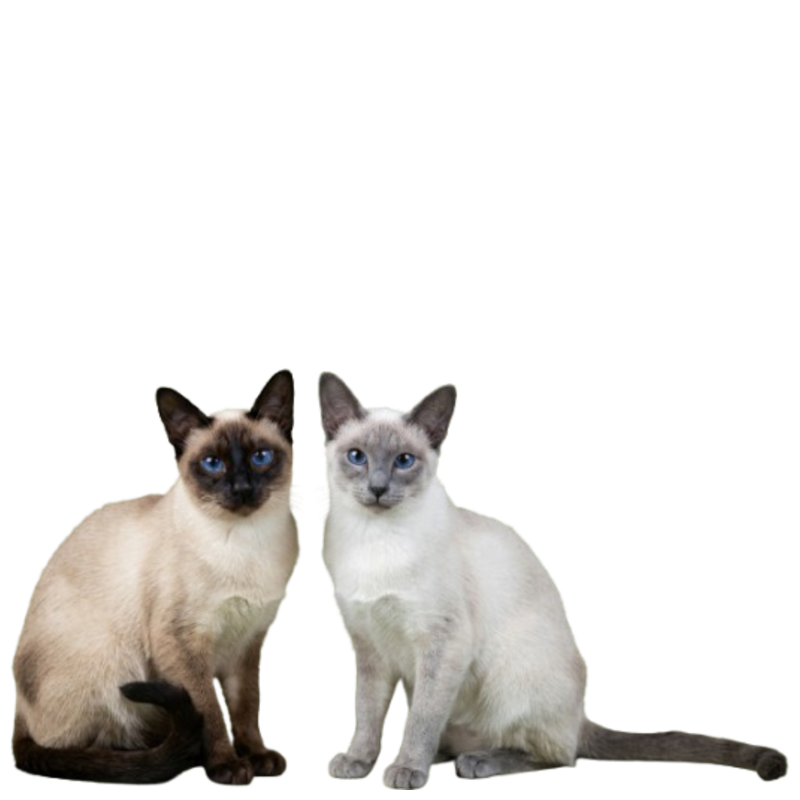
appearance
The physical architecture of domestic Siamese cats showcases a remarkable study in sleek geometry, lithe athletic power, and delicate refinement. Every line of the body emphasizes length, clean angles, and fluid grace, creating an unmistakable outline that balances delicate elegance with deceptive muscular strength. From their distinctive facial wedge to the long, tapering whip of the tail, these felines embody a harmonious balance of form where no single feature overwhelms the overarching silhouette.
Head and Facial Structure
The head forms a long, finely chiseled wedge that radiates outward from the muzzle toward the tips of the ears. When viewed in profile, a straight line extends from the top of the skull down to the tip of the nose, completely free of any break, dip, or pronounced stop at the bridge.
| Facial Feature | Anatomical Description | Visual & Geometric Profile |
|---|---|---|
| Head Outline | Equilateral triangle | The lines from the nose tip to each outer ear base form an unbroken, straight boundary. |
| Skull Profile | Flat forehead and crown | Smooth, continuous plane uninterrupted by cranial bulges. |
| Muzzle | Fine and pointed | Sharp, clean taper without pinch or coarseness. |
| Chin | Firm and aligned | Forms a vertical line with the tip of the upper lip; neither receding nor projecting. |
Eye Shape and Placement
The eyes are almond‐shaped and set at a distinct, elegant slant toward the base of the ears. They are neither protruding nor recessed, fitting smoothly within the flat planes of the facial wedge. The expression is alert, intensely focused, and intelligent.
Ear Conformation
Strikingly large and wide at the base, the ears continue the outer lines of the facial triangle. They are set low on the head, maintaining a wide, flared posture that completes the overall wedge geometry without tilting forward or collapsing inward.
Body Frame and Musculature
The torso is classic oriental type—long, svelte, and tubular. A fine, light bone structure supports a surprisingly firm and dense muscular system, giving the animal a lithe, athletic appearance without any heaviness or bulky mass.
Siamese Structural Balance Ratio
- : The numerical proportion comparing overall body length to limb elevation reflecting the sleek oriental type.
- : The distance measured along the long, svelte, and tubular spine of the cat.
- : The vertical elevation measured from the ground to the torso base supported by fine, light bone structure.
A feline conformation judge evaluates the structural balance of an adult Siamese with a torso length of 40 centimeters and a leg height of 40 centimeters. Dividing the torso length of 40 by the leg height of 40 yields a structural balance ratio of 1.0. This calculated result of 1.0 confirms the classic oriental type and lithe, athletic appearance, providing Siamese’s evaluator with a precise quantitative metric for breed standard compliance.
The chest is narrow and tight, flowing smoothly into a long, straight back and lean, tucked abdomen. The neck is long and slender, elevating the head with poised, arching grace.
Extremities and Tail Conformation
The legs are remarkably long, slim, and fine‐boned, yet strong enough to support high, graceful leaps. The hind legs are slightly longer than the forelegs, subtly lifting the rear quarters while preserving a level topline.
- Paws: Small, neat, and distinctly oval in shape, creating a weightless, toe‐tip stance.
- Tail: Long, thin, and tapering gradually to a fine point, resembling a flexible whip. It shows no kinks or structural defects along its length.
Coat Texture and Density
The coat is short, extremely fine, and satin‐smooth to the touch. It lies tight against the body frame, acting like a sleek second skin that accentuates every muscular contour beneath. The coat possesses a natural, glossy sheen, lacking any woolly undercoat or coarse guard hairs.
Appearance of Siameses
The domestic Siamese cat presents a striking study in lengthened proportions, crisp geometric angles, and dense, wiry muscle wrapped in a short, glossy coat. The combination of a triangular head, wide‐based ears, long tubular body, fine legs, and whiplike tail creates a uniquely refined physical profile that is as functional as it is visually captivating.
behavior
Daily life with domestic Siamese cats centers around continuous interaction, high vertical engagement, and complex vocal feedback. These felines exhibit an unusually persistent drive to participate in household activities, tracking human movement and routinely intervening in tasks that require hand or arm motion. Their behavioral repertoire features rapid problem‐solving, structured ritual routines, and intense social bonding that translates into near‐constant proximity seeking.
Vocalization Profiles and Communication Mechanisms
Vocal interaction forms the cornerstone of daily behavior for domestic Siamese cats. Rather than relying on simple, isolated meows, they utilize a varied array of modulated calls to convey specific requirements or signal changes in their environment.
| Vocal Type | Acoustic & Behavioral Profile | Typical Context |
|---|---|---|
| Low‐Pitched Rasp | Prolonged, resonant vocalization with a raspy tone | Demanding entrance to closed rooms or immediate meal presentation. |
| Trilling Chirp | Short, rising vocal sequence produced with a closed mouth | Greeting familiar humans or initiating joint movement toward a toy. |
| Repetitive Chatter | Rapid, rhythmic vocalization accompanied by tail flicks | Observing prey outside windows or tracking high‐reaching movement. |
| Soft Murmur | Low‐volume, gentle vibration from the throat | Settling into contact resting positions alongside a companion. |
Conversational Patterning
These cats routinely engage in back‐and‐forth vocal exchanges with humans. When spoken to directly, domestic Siamese cats respond with an immediate vocalization, maintaining eye contact and adjusting the pitch of their reply based on the tone of the human voice.
Activity Cycles and Environmental Engagement
The daily schedule of domestic Siamese cats displays high movement density, characterized by short bursts of intense physical activity interspersed with alert resting periods. They prioritize high elevated vantage points, routinely leaping onto door frames, refrigerators, and tall shelving units to monitor room activity from above.
Siamese Interaction Probability
- : The calculated statistical likelihood of engagement and social communication with human household members.
- : The baseline constant representing the inherent vocal and social nature of the cat.
- : The base of the natural logarithm utilized in behavioral modeling.
- : The quantified closeness or spatial nearness of the cat to active household members.
A behavioral researcher calculates the interaction probability for an adult Siamese positioned at a proximity value of 1.5 relative to active household members. Evaluating the natural exponential of 1.5 yields approximately 4.4817, and multiplying this factor by the baseline constant of 1 produces an interaction probability score of approximately 4.48. This calculated result of 4.48 indicates a high statistical likelihood of vocal engagement and social contact, reflecting Siamese’s preference for close human companionship.
Problem‐Solving and Object Manipulation
Exploration is highly tactile. domestic Siamese cats use their forepaws like small hands—prying open cabinet doors, scooping water out of bowls, and batting small objects out from beneath furniture.
- Opening Mechanisms: Turning lever doors or nudging cabinet doors open with a combination of snout pressure and paw traction.
- Fetching Actions: Carrying lightweight toys in their mouths, bringing them directly to humans, and waiting for a toss to repeat the cycle.
- Water Manipulation: Patting standing water to create motion before drinking, or sitting near faucets to catch falling drops.
Social Structure and Cohabitation Dynamics
When living alongside other domestic animals, domestic Siamese cats establish a prominent role within the group. They consistently initiate physical contact, sleeping in shared clusters to exchange body warmth and engaging in mutual grooming around the neck and head areas.
When left isolated from social contact for long spans, domestic Siamese cats express distress through systemic actions. They will open closets, relocate soft household items like socks or towels to central living spaces, or sit near entry doors while vocalizing steadily until household members return.
Behavior of Siameses
Domestic Siamese cats inhabit their spaces through active participation, rich vocal dialogues, and energetic physical play. They thrive on structured daily routines, high vantage points, and deep, physical involvement in human activity, creating a vibrant, dynamic presence in any home setting.
color
The striking visual presentation of domestic Siamese cats relies on a stark, elegant contrast between a pale torso and intensely pigmented extremities. This point‐restricted pattern creates a dramatic visual effect where pigment concentrates heavily on the cooler outer points of the body—the face, ears, paws, and tail—while the warmer central trunk remains luminous and pale. Understanding the nuanced shading, depth of tone, and edge transitions between these zones reveals the intricate beauty of their coat coloration.
Primary Coloration Categories
The point distribution on domestic Siamese cats manifests in distinct primary hue variations. Each variation features a specific contrast dynamic between the foundation body tone and the deep coloration of the points.
| Color Category | Body Shade | Point Tone | Eye Color Visual |
|---|---|---|---|
| Seal | Warm cream fading to pale fawn | Deep brown‐black, rich and dense | Vivid, deep royal sapphire |
| Chocolate | Ivory white with warm undertones | Warm milk chocolate, reddish-brown | Bright, glowing cobalt |
| Blue | Cool platinum silver‐white | Slate grey with soft blue sheen | Deep violet‐tinged blue |
| Lilac | Glacial frosty white | Frosty grey with warm pinkish hue | Clear, pale ice blue |
Point Boundaries and Shading Transitions
The transition where the dark points meet the pale body coat should be clean, defined, and harmonious. On the facial mask, pigment covers the entire face, including the whisker pads, and connects to the ears via subtle tracings, while remaining clearly demarcated from the throat and chest.
Siamese Visual Contrast Index
- : The calculated proportional measure comparing extremity coloration to body coat coloration.
- : The concentration of melanin and color granules clustered tightly across the dark points such as the facial mask and ears.
- : The concentration of pigment granules across the pale body coat, remaining significantly lower to ensure clear demarcation.
A feline conformation judge evaluates the visual contrast index of an adult Siamese with a point pigment density rating of 9.5 and a body coat pigment density rating of 1.2. Dividing the point pigment density of 9.5 by the body coat pigment density of 1.2 yields a visual contrast ratio of approximately 7.92. This calculated result significantly exceeds 1, confirming a clean, defined, and harmonious transition between the dark points and pale body coat that meets Siamese’s standard.
Hair Shaft Pigment Mechanics
Examining individual hair shafts reveals how color spreads across the body surface. On the dark extremities, pigment granules cluster tightly from the root to the tip of each hair strand, yielding a solid, opaque block of color.
- Body Hair Distribution: Pigment is sparse and concentrated near the outer tip of the hair shaft, leaving the lower length near the skin virtually white or ivory.
- Point Hair Distribution: Pigment granules pack densely along the entire length of the hair shaft, creating saturated, solid tones.
- Eye Color Luminescence: Deep blue eye coloration results from light refracting through clear surface layers over a dark backdrop, acting much like clear water over dark lake bed stones.
Shading Progression Across the Body Frame
As domestic Siamese cats mature, the warmth of the central body creates subtle, soft shading along the flanks and back. This shading mirrors the primary hue of the points, appearing as a gentle, dusty wash across the spine while the belly and chest stay noticeably lighter.
Color of Siameses
The coloration of domestic Siamese cats relies on a captivating interplay between deep, saturated points and a pale, glowing body ground. The crisp definition where dark extremities meet creamy fur, paired with radiant blue eyes, establishes a vivid, high‐contrast visual harmony across every variation of the breed.
compatibility
Ease of Maintenance
Rating: 4/5
Child Friendly
Rating: 4/5
Annual Cost
Rating: 3/5
Lifetime Cost
Rating: 3/5
Adaptability
Rating: 4/5
Velcro Factor
Rating: 5/5
Quietude
Rating: 1/5
Apartment Suitability
Rating: 3/5
Hypoallergenic
Rating: 3/5
Handling Tolerance
Rating: 4/5
Hardiness/Longevity
Rating: 5/5
Prey Drive
Rating: 2/5
genetics
The genetic architecture of domestic Siamese cats revolves around a fixed, recessive mutation that dictates their defining temperature‐sensitive pigment expression. Every member of the breed carries a specific set of homozygous alleles at key genetic loci, which control pigment production, base color intensity, and pattern inhibition. By examining how these specific gene combinations interact, breeders and enthusiasts can trace the exact hereditary mechanics that dictate their molecular makeup.
The Primary Point Locus and Temperature Sensitivity
The primary genetic signature of domestic Siamese cats resides at the Color locus (). The breed is defined by a specific recessive allele, , which encodes a modified version of the tyrosinase enzyme responsible for producing dark pigment.
| Locus Name | Symbol | Allele Combination | Genetic Function & Expression |
|---|---|---|---|
| Color Locus | C | cs cs | Homozygous recessive; creates a heat‐sensitive enzyme active only at cool body extremities. |
| Black Locus | B | BB, Bb, or bb | Determines base pigment density (dense seal black versus warm chocolate brown). |
| Dilution Locus | D | DD, Dd, or dd | Controls pigment distribution within the hair shaft (dense vs. diluted expression). |
| Non‐Agouti Locus | A | aa | Recessive non‐agouti; suppresses banding to ensure a solid background pattern. |
Molecular Functioning of
The allele produces a altered enzyme that denatures and fails to function at normal internal body temperatures. At core body heat, pigment synthesis remains switched off, leaving the torso light. At cooler peripheral extremities—such as ears, paws, tail, and muzzle—the enzyme operates correctly, allowing full pigment synthesis to take place.
Loci Interactions and Genotype Combinations
The interaction between the primary point locus (), the primary pigment locus (), and the dilution locus () dictates the precise genetic profile for each underlying base variation.
Siamese Recessive Expression Probability
- : The statistical probability of offspring inheriting the homozygous recessive allele combination required for point coloration.
- : The probability of the maternal parent passing down the recessive point allele.
- : The probability of the paternal parent passing down the recessive point allele.
A feline geneticist calculates the recessive expression probability for a litter where both parents are homozygous for the point allele with genotype . Multiplying the maternal transmission probability of 1.0 by the paternal transmission probability of 1.0 yields a recessive expression probability of 1.0. This calculated result of 1.0 guarantees that 100 percent of the offspring will inherit the homozygous recessive condition, providing Siamese’s breeder with absolute genetic predictability for point coloration.
Primary Genotypic Matrices
Because the point gene is autosomal recessive, two copies of are necessary to express the point pattern. The combinations across major loci yield distinct genomic foundations:
- Dense Seal Foundation: — Homozygous point, carrying at least one dominant black allele and one dominant non‐dilute allele.
- Chocolate Foundation: — Homozygous point, carrying two recessive brown alleles alongside dominant non‐dilute alleles.
- Blue Foundation: — Homozygous point, carrying dominant black alleles paired with two recessive dilute alleles.
- Lilac Foundation: — Double homozygous recessive at both the primary pigment and dilution loci.
Inheritance Patterns and Breeding Probabilities
When pairing individuals with known genotypes, standard Mendelian inheritance models dictate the distribution of traits in offspring. For example, crossing two heterozygous carriers for dilution () yields predictable genotypic ratios across the litter.
Siamese Genotypic Ratio for Dilution
- : The proportion of offspring inheriting homozygous dominant non-dilute alleles from both parents.
- : The proportion of offspring inheriting heterozygous alleles representing carriers of the dilution trait.
- : The proportion of offspring inheriting homozygous recessive dilute alleles resulting in color dilution.
A feline geneticist calculates the expected litter distribution when crossing two heterozygous carrier cats with genotype D d. The resulting Mendelian ratio of 1 to 2 to 1 indicates that 25 percent of the offspring will be homozygous non-dilute DD, 50 percent will be heterozygous carriers Dd, and 25 percent will be homozygous dilute dd. This calculated genetic breakdown provides Siamese’s breeder with precise predictability for coat color trait inheritance across the litter.
Because domestic Siamese cats are fixed for the recessive genotype, mating any two domestic Siamese cats results in point‐patterned offspring, as neither parent can contribute a dominant full‐color allele ().
Genetics of Siameses
The genetic blueprint of domestic Siamese cats relies on a recessive, temperature‐sensitive gene at the locus operating alongside base coat alleles at the and loci. This precise combination of homozygous traits forms a reliable, predictable hereditary system that defines the molecular foundation of domestic Siamese cats.
health
Managing the long‐term physical health of domestic Siamese cats requires a proactive understanding of their unique physiological predispositions and hereditary health markers. While generally robust, their distinct biological makeup renders them susceptible to specific metabolic, ocular, respiratory, and organ‐system vulnerabilities. Monitoring these conditions through regular clinical screenings and early intervention allows both breeders and caretakers to maintain optimal physical well‐being across every stage of life.
Key Health Concerns and Clinical Risk Profiles
Certain health conditions show a higher incidence rate in domestic Siamese cats compared to the general feline population. Identifying early physical signs and implementing targeted screening protocols helps manage these conditions effectively.
| Health Condition | Affected System | Primary Clinical Manifestation | Recommended Screening |
|---|---|---|---|
| Amyloidosis | Hepatic / Renal | Protein accumulation in organs leading to liver failure | Annual blood chemistry panel and abdominal ultrasound |
| Progressive Retinal Atrophy | Ophthalmic | Gradual degeneration of light‐sensing eye cells causing vision loss | Ophthalmic examination and DNA screening |
| Asthma & Bronchial Disease | Respiratory | Chronic airway inflammation leading to coughing or wheezing | Chest radiographs and routine lung auscultation |
| Progressive Dental Lesions | Oral / Dental | Painful breakdown of enamel along the gumline | Biannual oral health examinations and dental imaging |
Organ Systems and Amyloid Accumulation
Systemic amyloidosis is a primary organ concern where abnormal protein fragments deposit within vital tissue, particularly the liver. Over time, these deposits displace functional liver tissue, making early detection via liver enzyme monitoring and imaging vital for supporting metabolic function before significant liver stress occurs.
Ocular and Neurological Vulnerabilities
The visual system in domestic Siamese cats exhibits unique structural pathways between the eye and the brain. While their striking eye structure is central to their identity, it comes with specific neurological and structural considerations.
Siamese Retinal Function Index
- : The calculated numerical score representing overall visual health and neural pathway integrity.
- : The concentration of active light-sensitive cells located within the central region of the retina.
- : The velocity at which photoreceptors experience breakdown or loss due to aging or genetic factors.
A veterinary ophthalmologist calculates the retinal function index for an adult Siamese with a central photoreceptor density score of 8.5 and a photoreceptor degradation rate of 0.5 per year. Dividing the central density of 8.5 by the degradation rate of 0.5 yields a retinal function index score of 17.0. This calculated result of 17.0 provides Siamese’s veterinarian with a quantitative benchmark for monitoring visual health and assessing potential progressive retinal changes over time.
- Convergent Strabismus: A inward turning of the eyes resulting from altered visual wiring between the retina and the brain. While largely benign, it requires monitoring to differentiate from sudden-onset neurological conditions.
- Nystagmus: Involuntary, rapid horizontal eye drifting that occurs as the brain compensates for visual pathway variations.
- Progressive Retinal Atrophy: A slow breakdown of photoreceptors that begins with night blindness and progresses to reduced daylight vision, detectable early through retinal mapping.
Respiratory and Gastrointestinal Health Dynamics
The narrow facial structure and delicate airway geometry of domestic Siamese cats make them notably sensitive to airborne irritants and environmental triggers. Respiratory sensitivity often presents as feline asthma, where bronchial tubes constrict, resulting in open‐mouth breathing or persistent dry coughing.
Additionally, gastrointestinal sensitivities can arise, particularly involving severe food intolerances or pica—the compulsion to ingest non‐food items such as wool or fabric. Screening living spaces for ingestible items and maintaining low‐dust environments significantly reduces physical strain on both the digestive and respiratory tracts.
Health of Siameses
Maintaining the lifelong physical health of domestic Siamese cats centers on proactive organ monitoring, ocular evaluations, and careful respiratory management. Through vigilant routine veterinary care, environmental awareness, and early diagnostic screening, breeders and owners can ensure these fine‐boned, active felines enjoy long, comfortable, and vibrant lives.
longevity
The domestic Siamese cat is renowned for an exceptionally long life expectancy compared to many other domestic felines. Their physical aging process unfolds gradually, marked by distinct physical transitions across structured developmental phases. From extended kittenhood through to late senior years, tracking how these animals mature allows caregivers and breeders to anticipate key physical shifts, ensuring high vitality throughout every stage of life.
Life Stage Classifications and Physical Markers
The life trajectory of domestic Siamese cats progresses across four primary developmental stages. Each phase brings identifiable physical markers that signal shift in metabolic speed, tissue elasticity, and sensory acuity.
| Life Stage | Age Range | Primary Physical Milestones | Vitality & Movement Indicators |
|---|---|---|---|
| Developmental | 0–2 years | Rapid skeletal maturation and deepening pigment distribution | Peak physical flexibility, rapid reflex speed, high stamina |
| Prime Adult | 3–10 years | Fully mature muscular density and stable metabolic balance | Consistent physical agility, sustained stamina, steady metabolism |
| Senior | 11–14 years | Gradual loss of lean muscle mass and subtle coat darkening | Slightly reduced jumping height, increased resting preference |
| Geriatric | 15+ years | Muscle wasting along spine, clouding eye lenses, skin thinning | Measured physical movements, prolonged sleep cycles, sensory decline |
Typical Lifespan Expectations
Under ideal indoor conditions, domestic Siamese cats regularly achieve lifespans ranging from 15–20 years, with many individuals exceeding two decades. Their structural resilience keeps them remarkably active well into their senior years.
Siamese Survival Probability
- : The statistical probability that the cat will reach or exceed age in years.
- : The base of the natural logarithm utilized in exponential survival modeling.
- : The base mortality rate parameter representing age-related risk over time.
- : The target age of the cat measured in years.
A feline longevity researcher calculates the survival probability for an adult Siamese at age 15 years using a base mortality rate parameter of 0.08. Multiplying 0.08 by 15 years yields an exponent of 1.2. Evaluating the negative exponential of 1.2 produces a survival probability of approximately 0.3012. This calculated result of 30.12 percent indicates the statistical likelihood of reaching 15 years of age, providing Siamese’s owner with a quantitative baseline for long-term health planning.
Aging Progression and Physical Indicators
As domestic Siamese cats transition into their mature and geriatric years, visible physical cues reflect the internal biological aging process. Recognizing these natural shifts helps distinguish normal physical maturation from sudden systemic changes.
Coat Density and Shading Changes
The coat undergoes progressive darkening as metabolic circulation slows with age. Body heat gradually decreases across central regions, causing broader pigment coverage across the flanks and back in older individuals.
Joint and Skeletal Mobility
While domestic Siamese cats maintain a lithe frame throughout life, late-stage aging brings subtle structural changes in joint flexibility and muscle tone.
- Muscle Mass Retention: Senior individuals experience a natural reduction in backline muscle thickness, making the spine and hip structures more prominent to the touch.
- Flexibility Adjustments: Gait becomes more deliberate, with longer periods spent stretching before leaping onto elevated surfaces.
- Ocular Clarity Shifts: Lenses develop a soft, transparent bluish haze in geriatric years, a natural age-related density change that does not indicate blindness.
Longevity of Siameses
Domestic Siamese cats boast a long, resilient lifespan marked by gradual aging stages that extend well into their late teens and early twenties. By understanding their distinct life-stage progression—from early adult vitality to predictable senior physical shifts—breeders and owners can provide tailored support that ensures maximum well‐being across every phase of life.
maintenance
Establishing an effective care and husbandry routine for domestic Siamese cats requires a structured combination of balanced nutrition, targeted coat care, and thoughtful environmental enrichment. Their active metabolism and fine, single‐layer coat demand consistent dietary management and low‐maintenance yet regular grooming protocols. By aligning daily care schedules with their high operational energy levels and environmental needs, breeders and owners maintain peak physical condition and optimal living environments.
Dietary Management and Caloric Requirements
Providing correct daily nutrition relies on fueling an active, high‐energy metabolic rate while preventing unnecessary weight gain on a light frame. High‐protein, low‐carbohydrate formulations preserve lean muscle mass and support ongoing vitality.
| Care Parameter | Frequency & Target | Functional Objective |
|---|---|---|
| Feeding Schedule | 2–3 small meals daily | Maintains steady blood sugar and prevents gorge‐and‐vomit habits. |
| Hydration Setup | Multiple circulating fountains | Encourages fluid intake to support renal and urinary tract clearance. |
| Dental Care | 3–4 times weekly | Removes plaque build‐up along tight gumlines to prevent buildup. |
| Claw Trimming | Every 2–3 weeks | Prevents sharp tip snagging on climbing structures and bedding. |
Caloric Calculation Model
Determining daily energy requirements depends on body mass and baseline activity levels. Resting Energy Requirement (RER) can be calculated using standard mass modeling:
Siamese Resting Energy Requirement
- : The resting energy requirement expressed in kilocalories per day required to sustain vital organ function at rest.
- : The standard feline metabolic scalar constant used for body weight scaling.
- : The ideal body mass or weight of the cat measured in kilograms.
- : The metabolic body size exponent accounting for non-linear metabolic scaling relative to mass.
A feline nutritionist calculates the resting energy requirement for an adult Siamese with an ideal body mass of 4 kilograms. Raising 4 to the power of 0.75 yields approximately 2.8284. Multiplying this result by the metabolic scalar constant of 70 produces a resting energy requirement of approximately 197.99 kilocalories per day. This calculated baseline gives Siamese’s caregiver an exact foundation for determining daily feeding requirements and managing caloric intake to support the lithe, athletic appearance of Siameses.
To account for high activity levels, multiply the resulting RER by an activity factor of to for total daily caloric intake.
Coat Care and Hygiene Routines
Because domestic Siamese cats possess a short, fine coat without a dense undercoat, grooming demands remain minimal but require regular execution to distribute natural skin oils and clear loose hair.
- Rubber Curry Brushing: Once weekly, use a soft rubber brush or grooming hound glove to gently collect loose dead hair without scratching skin surfaces.
- Chamois Buffing: Wipe the coat down with a damp microfiber or chamois cloth after brushing to remove lingering dander and restore a natural shine.
- Skin Oil Balance: Avoid frequent bathing; bathe only when necessary using a mild, unfragranced feline shampoo to prevent stripping protective cutaneous lipids.
Environmental Design and Enrichment Standards
Living spaces for domestic Siamese cats must accommodate high vertical exploration and complex problem‐solving opportunities. Inadequate environmental stimulus can lead to destructive household foraging or vocal repetition.
Vertical Space Optimization
Incorporate tall cat trees, wall‐mounted shelving, or window perches reaching heights of meters. Vertical elevation provides safe observation posts and satisfies natural climbing drives.
Tactical Task Enrichment
Utilize puzzle feeders and foraging mats for daily meal distribution. Forcing active physical manipulation of food containers extends feeding time, providing mental engagement alongside physical exertion.
Maintenance of Siameses
Maintaining domestic Siamese cats involves a balance of high‐protein nutrition, simple weekly coat buffing, and an elevated, mentally stimulating indoor environment. Adhering to these practical daily protocols ensures that both breeders and dedicated caretakers keep these sleek, energetic felines in prime condition throughout every stage of life.
measurements
| Measurement | Female | Male | ||
|---|---|---|---|---|
| Metric | Imperial | Metric | Imperial | |
height | 20 – 25 centimeters | 8 – 10 inches | 23 – 28 centimeters | 9 – 11 inches |
length | 33 – 41 centimeters | 13 – 16 inches | 38 – 46 centimeters | 15 – 18 inches |
weight | 2.3 – 3.6 kilograms | 5 – 8 pounds | 3.6 – 5.4 kilograms | 8 – 12 pounds |
• Height: Refers to the measurement at the withers (shoulders).
• Length: Measured from the tip of the nose to the base of the tail.
origin
The historical lineage of domestic Siamese cats traces back to the river basins and royal centers of Southeast Asia, specifically the ancient kingdom of Siam, known today as Thailand. Developed originally as a naturally occurring landrace—a localized population of cats that adapted naturally to their regional environment without artificial human breeding—these felines were revered within royal households and monastic sanctuaries. Over centuries, their distinct lineage transitioned from protected temple companions in their native habitat to globally recognized pedigree foundation stock.
Historical Documentation and Early Chronology
The earliest recorded evidence of domestic Siamese cats appears in historic manuscript collections created in the former capital city of Ayutthaya. These illuminated manuscripts illustrate pale, point‐patterned cats alongside poetic descriptions celebrating their presence in sacred and noble spaces.
| Historical Era | Geographical Focus | Key Heritage Milestone |
|---|---|---|
| 14th–18th Century | Ayutthaya Kingdom, Siam | Earliest literary illustrations documenting landrace pointed cats in Southeast Asia. |
| Late 19th Century | London, United Kingdom | Initial importation of foundational breeding stock to Europe and premier exhibition appearances. |
| Early 20th Century | United States & Western Europe | Establishment of formal breed registries, dedicated breed clubs, and standardized pedigree tracking. |
Population Lineage Modeling
Estimating historical population retention during early intercontinental transport can be represented through classic demographic models:
Siamese Historical Population Retention
- : The estimated population size or lineage retention remaining after a given number of generations.
- : The original imported foundation stock size representing the starting breeding population.
- : The base of the natural logarithm used in continuous growth and decay demographic modeling.
- : The historical lineage retention rate parameter governing population attrition or preservation over time.
- : The number of generations elapsed across regional migration and historical development.
A feline historian calculates the lineage retention for an imported Siamese foundation stock starting with an original population size of 12 individuals over 4 generations, utilizing a lineage retention rate parameter of 0.15. Multiplying 0.15 by 4 generations yields an exponent of 0.6. Evaluating the negative exponential of 0.6 produces a retention multiplier of approximately 0.5488. Multiplying the original foundation stock of 12 by this factor yields an estimated retained population of approximately 6.59 individuals. This calculated result gives Siamese’s researcher a quantitative insight into historical genetic bottleneck effects during early breed establishment.
Where represents the original imported foundation stock, indicates generations elapsed across regional migration, and represents the historical lineage retention rate.
Intercontinental Migration and Foundation Stock
The movement of domestic Siamese cats from Southeast Asia to Western nations began in the late nineteenth century. Diplomatic gifts from the Siamese royal court brought the first documented foundation pairs to Britain, where they immediately captured public attention at major early feline exhibitions.
- Early Importation Pairs: Foundation cats imported during the 1880s provided the direct genetic bedrock for all modern pedigree bloodlines outside of Thailand.
- Formal Registry Recognition: Major cat associations formally cataloged domestic Siamese cats during the early decades of the twentieth century, establishing official studbooks to track ancestral lines.
- Structural Divergence: Over decades of Western selective breeding, lineages divided into traditional foundation types and modern refined types, both sharing identical historical root stock.
Origin of Siameses
Domestic Siamese cats carry a rich heritage rooted in the natural landrace populations of historic Siam. From their early documentation in sacred royal manuscripts to their late nineteenth‐century journey across oceans, their transition into global pedigree stock highlights one of the most remarkable histories in domestic cat heritage.
temperament
The inherent disposition of domestic Siamese cats is defined by high emotional intensity, pronounced social dependence, and relentless curiosity. Unlike independent or aloof breeds, these felines possess an extroverted temperament that demands ongoing interaction and cognitive engagement. Their internal psychological organization centers around forming strong attachments to human companions, exhibiting an energetic drive to participate in household dynamics, and maintaining a heightened sensitivity to their emotional and sensory surroundings.
Personality Trait Spectrums and Social Dynamics
Evaluating the psychological baseline of domestic Siamese cats across key temperament dimensions highlights their unique social orientation. Their disposition is characterized by low emotional reserve and high social approachability.
| Temperament Dimension | Trait Level | Dispositional Expression |
|---|---|---|
| Social Dependence | High | Seeks constant companionship; prone to distress if emotionally isolated. |
| Curiosity & Exploration | High | Driven to investigate novel stimuli, open spaces, and altered environments. |
| Territorial Confidence | Moderate–High | Bold in familiar spaces; asserts presence quickly with new family members. |
| Environmental Adaptability | Moderate | Thrives in active homes but sensitive to sudden changes in household routine. |
Bonding Preferences and Attachment Styles
Domestic Siamese cats frequently develop hyper‐focused social bonds, often selecting a single primary individual within a household as their main attachment figure while maintaining secondary relationships with others.
Siamese Attachment Intensity Index
- : The calculated numerical score representing the strength of social bonding and emotional dependence toward a primary caregiver.
- : The frequency of shadow-like accompanying behavior and persistent desire for physical touch near the primary person.
- : The frequency of communicative exchanges and vocal responses directed toward the attachment figure.
- : The duration of isolation experienced by the cat, acting as an inverse scalar on attachment metrics.
A feline behavioral researcher calculates the attachment intensity index for an adult Siamese with a proximity seeking score of 8.0, a vocal reciprocity score of 6.0, and a daily time spent alone score of 2.0 hours. Summing the proximity seeking score of 8.0 and vocal reciprocity score of 6.0 yields 14.0. Dividing this sum by the isolated time of 2.0 hours produces an attachment intensity index score of 7.0. This calculated result of 7.0 provides Siamese’s owner with a quantitative measure of hyper-focused social bonding and relational dependence.
This attachment style manifests as a persistent desire for physical touch, shadow‐like accompanying behavior, and active emotional seeking when their preferred person is present.
Emotional Sensitivity and Environmental Responsiveness
The emotional state of domestic Siamese cats is closely tuned to human mood and environmental energy levels. They absorb household stress quickly, often reflecting emotional tension through heightened vigilance or amplified vocal demands.
Response to Novel Stimuli
When introduced to new individuals, scents, or objects, domestic Siamese cats bypass passive retreat in favor of active investigation.
- New Household Guests: Rather than hiding, they typically approach unfamiliar visitors directly to conduct close‐range visual and olfactory evaluations.
- Environmental Modifications: Rearranging furniture or introducing new items prompts immediate thorough inspection rather than cautious avoidance.
- Acoustic and Visual Sensitivity: They process sharp sounds or raised voices intensely, seeking reassuring contact from trusted companions when startled.
Social Boundaries with Companion Animals
In multi‐pet settings, the social confidence of domestic Siamese cats leads them to seek active, central positions within the animal group. They prefer interactive cohabitation—sharing sleeping piles, engaging in energetic play, and initiating group activities—rather than passive coexistence. When paired with passive or solitary pets, their persistent social overtures can occasionally overwhelm less extroverted companions.
Temperament of Siameses
The temperament of domestic Siamese cats is vibrant, deeply affectionate, and socially demanding. Their outgoing nature, intense emotional attachment, and active curiosity make them intensely engaged companions who thrive best in environments where they are fully integrated into daily human life.