Selkirk Rex Cat
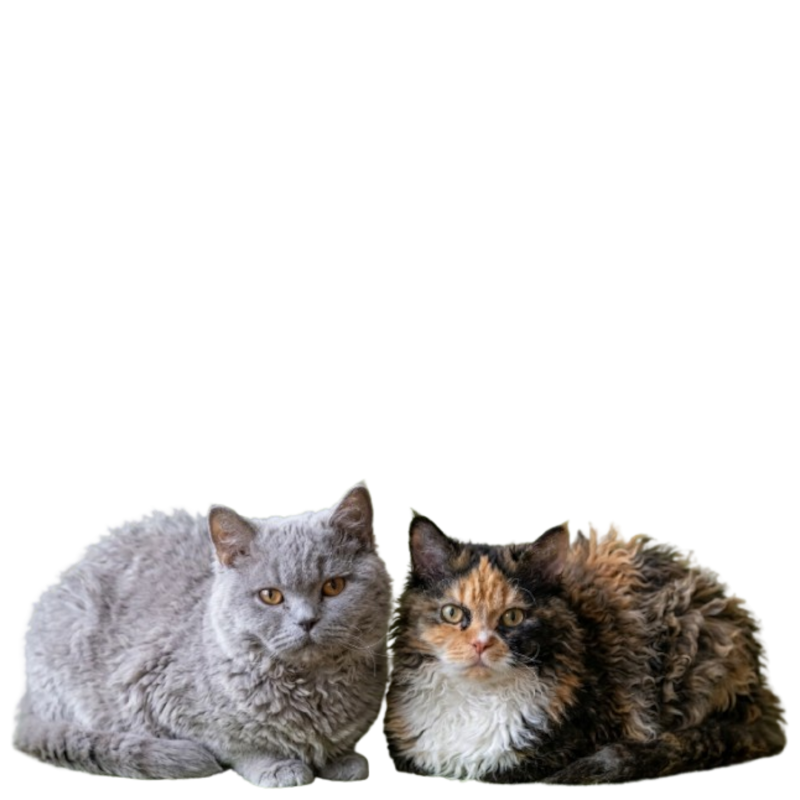
appearance
The physical presence of the Selkirk Rex is defined by substantial bone structure and a distinctly rounded, heavy‐set frame. Unlike more delicate or extreme feline silhouettes, Selkirk Rexs present a balanced, semi‐cobby conformation that feels dense and powerful to the touch. Their hallmark feature is undeniably the dense, untidy curls covering their entire body, but beneath this remarkable coat lies a rugged, muscular feline with a remarkably broad, expressive head. Every element of the Selkirk Rex’s physical makeup points to a robust, sturdy animal, characterized by gentle, curving structural lines rather than sharp angles.
Head Geometry and Facial Structure
The head of the Selkirk Rex is a study in circular geometry and prominent underlying bone. When viewed from the front, the skull presents a full, round shape supported by wide, powerful underlying cheekbones, giving it the solid, rounded feel of a softball. The muzzle is a defining characteristic, built on a strong, square foundation that projects noticeably from the curvature of the cheeks. This projection forms a distinct stop or indentation where the muzzle meets the primary skull.
To visualize the facial proportions mathematically, the muzzle width and length follow a specific anatomical ratio to ensure the structural squareness required of the Selkirk Rex:
Selkirk Rex Muzzle Proportion Ratio
- : The structural proportion index ensuring the muzzle maintains the required squareness.
- : The horizontal measurement across the breadth of the muzzle pad structure in centimeters.
- : The vertical measurement from the nasal bridge down to the tip of the chin in centimeters.
A feline breed judge evaluates the facial proportions of an adult Selkirk Rex during a standard conformation assessment. Measuring a muzzle width of 4.5 centimeters and a muzzle length of 3.0 centimeters, the judge divides 4.5 by 3.0 to yield a muzzle proportion ratio of 1.5. This calculated result of 1.5 confirms that the muzzle is significantly wider than it is long, satisfying the breed standard and avoiding any pointed appearance.
This mathematical relationship ensures the muzzle is significantly wider than it is long, avoiding any fine or pointed appearance. The whisker pads are exceptionally full and fleshy, often causing the whiskers themselves to kink or curl outward. The chin is firm, aligning perfectly vertically with the tip of the nose to complete the strong, blunt profile.
Ear Placement and Eye Conformation
The ears are medium in size and set well apart on the broad skull, fitting seamlessly into the rounded contours of the head. They feature wide bases that taper slightly to rounded tips. The Selkirk Rex’s eyes are large, exceptionally round, and set wide apart, further accentuating the overall breadth of the face. The slight upward tilt to the outer corners of the eyes lends an open expression without compromising the structural roundness.
Body Frame and Musculature
Beneath the curls, Selkirk Rexs are heavily built and substantial. The torso is semi‐cobby—meaning it is robust and muscular but slightly longer than a purely square frame, much like a solidly built wrestler. The back is straight, with the shoulders and hips displaying equal, significant width. The chest is broad, deep, and fully developed, anchoring a skeletal structure built upon thick, dense bone.
The legs are medium in length but heavy‐boned and intensely muscular, perfectly proportional to support the thick torso. The paws are large, firmly planted, and distinctively round. The tail is thick at the base, medium in length, and tapers gently to a rounded tip.
Coat Texture and Formation
The Selkirk Rex’s coat is its most visibly distinct structural feature, presenting an unruly, dense mass of curls. It’s a profoundly plush and thick texture, lacking any flat or sparse areas. The curls arrange themselves in loose, individual clumps rather than tight waves or structured ringlets, giving the cat a beautifully tousled appearance—often described as “structured chaos” by conformation judges. The coat density is so substantial that the hair stands away from the body, significantly expanding the visual volume of the Selkirk Rex. Even the ruff around the neck and the hair on the tail are heavily curled, with the tail often resembling a thick, textured plume.
Structural Breakdown
| Feature | Structural Description |
|---|---|
| Skull | Round, broad, heavy‐boned, lacking flat planes. |
| Muzzle | Short, square, prominent whisker pads, distinct stop. |
| Torso | Semi‐cobby, heavy muscling, broad chest. |
| Legs | Medium length, substantial bone density, round paws. |
| Coat | Dense, plush, random unkempt curls, significant volume. |
Appearance of Selkirk Rexs
The Selkirk Rex represents a perfect marriage of heavy‐duty structural engineering and soft, plush finishing. From the dense, rounded skull and uniquely squared muzzle to the broad, semi‐cobby torso and thick limbs, every physical element speaks to strength and substance. The defining mass of random, plush curls serves to amplify this inherent physical volume, resulting in a cat that is as visibly sturdy as it is deeply textured.
behavior
Observing the daily routine of the Selkirk Rex reveals a grounded, methodical approach to interaction and environmental navigation. Unlike breeds prone to hyperactive darting or nervous pacing, Selkirk Rexs navigate human households with a deliberate, confident presence. Their behavioral profile revolves around high social proximity‐seeking, measured physical play, and a steady, patient curiosity. They process changes in their surrounding environment through calm observation rather than reactive hiding, making their day‐to‐day actions predictable and stable.
Social Interaction and Human Proximity
The Selkirk Rex exhibits an intense desire for physical contact and companion proximity, often functioning as a shadow to human activity. When family members move from room to room, the Selkirk Rex’s instinct is to follow at a steady pace and establish a roosting spot within direct sight or touch.
Rather than demanding attention through loud disruptive actions, their social approach relies on physical contact initiation—leaning their flank against ankles, resting a paw on a human hand, or curling into an open lap the moment an owner sits down. In multi‐animal households, Selkirk Rexs routinely initiate social grooming and physical pile‐sleeping with other cats or cat‐friendly dogs, showing high tolerance for communal living space.
To model the likelihood of a Selkirk Rex seeking immediate physical proximity when a human enters a room, we can look at social proximity probability () across time elapsed () in minutes:
Selkirk Rex Social Proximity Probability
- : The statistical probability that the cat will seek out and initiate immediate physical proximity after time has elapsed.
- : The base of the natural logarithm utilized for exponential decay and approach modeling.
- : The behavioral approach rate constant representing the speed at which the cat closes physical distance.
- : The time elapsed in minutes since a human entered the room or settled into a location.
A feline behaviorist calculates the social proximity probability for an adult Selkirk Rex exactly 4 minutes after an owner settles onto a living room couch. Multiplying the approach rate constant of 0.35 by 4 minutes yields an exponent of 1.4. Evaluating negative exponential of 1.4 gives approximately 0.2466, and subtracting this value from 1 produces a proximity probability of approximately 0.7534. This calculated result of 75.34 percent indicates a high likelihood of physical contact within minutes of settling, confirming Selkirk Rex’s affectionate social approach.
This relationship illustrates how rapidly the Selkirk Rex moves to close the physical gap between itself and its human companions, reaching near‐certain interaction within minutes of an owner settling into a location.
Play Mechanics and Environmental Exploration
Play habits in the Selkirk Rex favor tactile manipulation and problem‐solving over high‐speed aerial acrobatics. While they participate enthusiastically in interactive play, their hunting mechanics focus on tracking, pouncing, and batting objects across floor surfaces.
- Paw Dexterity: Selkirk Rexs frequently use their front paws like small hands, scooping toys out from under furniture, tapping human arms to solicit attention, or opening cabinet doors.
- Vertical vs. Horizontal Exploration: They prefer mid‐level perches—such as sofas, sturdy chairs, and low tables—over extreme vertical heights, thoroughly examining household items at eye level before settling.
- Toy Engagement: Wand toys with feathers or ribbons trigger slow, calculated stalking sequences followed by sudden, heavy‐footed pounces rather than frantic leaping.
Vocalization Habits and Communication Cues
Vocalization in Selkirk Rexs is infrequent and quiet. They rarely use loud or persistent vocal demands to express desires. Instead, their acoustic communication consists of low, trilling chirps during greeting moments and soft, quiet squeaks when requesting food or access to a closed room.
Their primary language is physical and non‐vocal:
- Slow Blinking: Used constantly as a peaceful acknowledgement when eye contact is made.
- Tail Positioning: The tail is routinely carried in a confident, upright “question mark” curve when walking toward companions.
- Head‐Bunting: Forceful rubbing of the cheeks and forehead against human hands, furniture corners, and companion animals to mark shared territory.
Behavioral Action Matrix
| Behavioral Category | Observed Action Pattern | Frequency / Intensity |
|---|---|---|
| Vocalization | Soft chirps, quiet squeaks, low purring | Low frequency, gentle intensity |
| Physical Proximity | Lap‐sitting, ankle‐leaning, tailing owners | Very high frequency, sustained duration |
| Play Style | Ground‐based pouncing, paw manipulation, wand‐tracking | Moderate frequency, deliberate intensity |
| Adaptability | Calm observation of new scents, sounds, or visitors | High tolerance, low stress reactivity |
Behavior of Selkirk Rexs
color
The visual presentation of color in the Selkirk Rex is profoundly influenced by the physical structure of its characteristic plush, curling coat. Because the individual guard hairs, awn hairs, and undercoat wave and twist, light refracts differently across the Selkirk Rex’s torso compared to straight‐coated breeds. Dense pigments often appear softer or shimmering as the curls separate, while shaded or tipped hair shafts reveal dramatic depth when the coat parts with movement. In Selkirk Rexs, every recognized color phase and pattern manifests with unique visual richness created by the interplay of pigment density and curling hair shafts.
Pigment Concentration and Hair Shaft Shading
The way color fills each hair strand determines the overall visual depth observed across the coat. In solid color presentations, pigment granules pack tightly from the follicle base to the outermost tip, creating a uniform, rich hue from head to tail. In shaded, tipped, or smoked variations, the pigment shifts dramatically along the length of the shaft.
To model how light reflectance () changes based on pigment concentration () along the length of a curled hair shaft, the following relationship illustrates the optical softening effect:
Selkirk Rex Coat Light Reflectance
- : The resulting light reflectance of the coat factoring in pigment concentration and structural curl scattering.
- : The baseline light reflectance of an unpigmented hair shaft before pigment absorption.
- : The base of the natural logarithm used to model exponential optical decay.
- : The light scattering coefficient unique to the curled structure of the hair shaft.
- : The concentration of pigment distributed along the length of the hair shaft.
A feline coat color specialist calculates the light reflectance for a Selkirk Rex featuring a baseline reflectance of 80, a light scattering coefficient of 0.2, and a pigment concentration of 3. Multiplying the scattering coefficient by the pigment concentration yields an exponent of 0.6. Evaluating the negative exponential of 0.6 gives approximately 0.5488, and multiplying this factor by the baseline reflectance of 80 produces a final coat reflectance of approximately 43.90. This calculated result of 43.90 quantitatively captures how the unique curled hair structure softens optical sheen and alters perceived color depth.
Where represents the baseline reflectance of an unpigmented shaft and represents the light scattering coefficient unique to the curled structure.
When pigment is restricted to only the outermost tip of the hair, the pale or silver undercoat creates a striking halo effect. As the Selkirk Rex moves, the curling locks open to reveal the contrasting base layer beneath, giving the appearance of shifting light across the coat surface.
Pattern Expression Across Curled Lock Sets
Pattern definition in Selkirk Rexs presents a distinct visual quality due to the broken surface texture:
- Tabby Patterns: Classic, mackerel, and spotted patterns feature bold contrast, though the curling hair shafts break sharp lines into slightly diffused, tapestry‐like motifs.
- Pointed Variations: Pigment concentrates densely at the cooler extremities—the ears, mask, paws, and tail—creating a stark, elegant contrast against a significantly paler, warm‐toned body coat.
- Tortoiseshell and Calico: Patches of rich reddish pigment intermingle with dark or pale slate hues. The tight clustering of curls mixes these colors into vibrant, marbled mosaics.
- Bi‐Color and Parti‐Color: Crisp patches of pure white intersect with colored areas, with the white portions often displaying intense brightness alongside shaded or solid locks.
Color and Shading Categorization
| Color Category | Pigment Distribution Pattern | Visual Surface Impression |
|---|---|---|
| Solid | Uniform, heavy pigment distribution from root to tip. | Deep, saturated hue with subtle light shimmering on curl crests. |
| Smoke | Dark pigment on upper two‐thirds, pale or white root base. | Dramatic, glowing contrast exposed when curls part during motion. |
| Tabby | Alternating light and dark bands along individual hair shafts. | Rich, textured markings with softened, broken line boundaries. |
| Pointed | Heavy pigment restricted to face, ears, feet, and tail base. | High‐contrast focal points anchoring a soft, pale torso body. |
Color of Selkirk Rexs
Coat coloration in the Selkirk Rex is a dynamic interaction between pigment placement and coat geometry. From dense, saturated solids to intricate tabbies and dramatic smoke phases, the wave and twist of the locks amplify color depth across the entire body. Whether viewing a single shaded hair shaft or an entire multi‐colored coat in motion, Selkirk Rexs display a extraordinarily rich and luminous spectrum of shade and pattern.
compatibility
Ease of Maintenance
Rating: 2/5
Child Friendly
Rating: 5/5
Annual Cost
Rating: 3/5
Lifetime Cost
Rating: 3/5
Adaptability
Rating: 4/5
Velcro Factor
Rating: 5/5
Quietude
Rating: 4/5
Apartment Suitability
Rating: 5/5
Hypoallergenic
Rating: 2/5
Handling Tolerance
Rating: 5/5
Hardiness/Longevity
Rating: 4/5
Prey Drive
Rating: 4/5
genetics
The underlying genomic architecture of the Selkirk Rex centers around a single, highly influential gene that dictates hair shaft structure and follicle behavior. Unlike many other curled‐coated feline breeds whose trait inheritance operates in a simple, hidden recessive manner, Selkirk Rexs possess an autosomal dominant trait with incomplete dominance. This means the curly gene actively overrides the straight‐hair baseline gene with a single copy, but carrying two copies alters the structural output even further. Understanding how this specific locus functions allows breeders and owners to predict coat structure outcomes across generations with mathematical precision.
The Selkirk Curly Locus and Incomplete Dominance
The gene responsible for the Selkirk Rex’s unique hair form sits at a specific genetic address (locus) designated as the Selkirk Rex () gene. Because it exhibits incomplete dominance, the gene acts like a light dimmer rather than a basic on/off switch: inheriting one copy turns the curl on moderately, while inheriting two copies turns the structural curl up to its maximum intensity.
- Heterozygous (): A cat carrying one curly allele () and one straight allele (). This combination yields the classic, plush, soft, loose curly coat that defines typical Selkirk Rexs.
- Homozygous Curly (): A cat carrying two curly alleles (). This combination results in tighter, denser curls, a slightly smaller hair shaft diameter, and a leaner overall coat outline during early developmental stages.
- Homozygous Straight (): A cat carrying two straight alleles (). These offspring lack the curly gene entirely, producing a smooth, straight coat.
Inheritance Probabilities Across Breeding Pairings
When pairing Selkirk Rexs, predicting offspring outcomes follows straightforward Mendelian distribution models based on parent genotypes. The probability () of producing curly offspring from a heterozygous () to heterozygous () mating scenario is calculated using standard genomic inheritance ratios:
Selkirk Rex Mendelian Curly Inheritance Probability
- : The total probability of producing offspring with the curly coat phenotype from a specific mating pair.
- : The Mendelian probability of offspring inheriting two dominant curly alleles resulting in a homozygous curly genotype.
- : The Mendelian probability of offspring inheriting one dominant curly allele and one recessive straight allele resulting in a heterozygous curly genotype.
A feline genetics researcher calculates the offspring phenotype probabilities when breeding two heterozygous Selkirk Rexs with the genotype Se/se. The probability of producing a homozygous curly kitten is 0.25 and the probability of producing a heterozygous curly kitten is 0.50. Adding these two probabilities together yields a total curly inheritance probability of 0.75, confirming a 75 percent chance of curly offspring alongside a 25 percent chance of straight-coated offspring. This calculated result gives Selkirk Rex’s breeder precise statistical insight for litter planning.
This means a heterozygous pairing yields a chance of curly offspring ( homozygous curly, heterozygous curly) and a chance of straight‐coated offspring ().
For a cross between a homozygous curly cat () and a straight‐coated cat (), the mathematical distribution guarantees curly offspring:
Selkirk Rex Homozygous Mating Inheritance
- : The statistical probability of offspring inheriting the heterozygous genotype resulting in a curly coat phenotype.
- : The absolute certainty value indicating that every individual in the litter will receive the required genetic combination.
A feline geneticist evaluates a breeding pair consisting of a homozygous curly Selkirk Rex and a straight-coated cat. Because the homozygous parent transmits a dominant curly allele to every offspring and the straight-coated parent transmits a recessive allele, the resulting probability evaluates to 1.0. This calculated result of 1.0 guarantees that 100 percent of the kittens in the litter will possess the heterozygous genotype, ensuring a uniform curly coat across the entire litter and giving Selkirk Rex’s breeder absolute predictability for litter traits.
In this scenario, every kitten in the litter inherits exactly one copy of the dominant gene, ensuring a uniform heterozygous coat across the entire litter.
Genotype to Expressed Trait Matrix
| Genotype | Allele Combination | Genetic Classification | Structural Expressed Trait |
|---|---|---|---|
| Se/Se | Dominant / Dominant | Homozygous Curly | Tight, compact curls; lighter hair volume during youth. |
| Se/se | Dominant / Recessive | Heterozygous Curly | Full, plush, loose curls with maximal body and density. |
| se/se | Recessive / Recessive | Homozygous Straight | Completely smooth, straight hair shaft without structural waves. |
Genetics of Selkirk Rexs
The genetic landscape of the Selkirk Rex is elegant, powerful, and exceptionally predictable. The dominant nature of the allele allows the curly trait to express itself clearly in a single generation, while its incomplete dominance creates distinct structural variations between cats carrying one copy versus two. By understanding these straightforward genetic rules, breeders and enthusiasts can look past the surface coat and see the exact DNA blueprint guiding every curly lock on the Selkirk Rex.
health
Maintaining optimal physiological health in the Selkirk Rex requires an understanding of both its heavy‐boned structural frame and specific inherited conditions shared with related foundational breeds. While Selkirk Rexs are generally robust and resilient, their thick muscular build and unique fur distribution create distinct anatomical and clinical considerations. From monitoring vital organ systems to managing skin fold microclimates, active veterinary oversight helps preserve systemic health and athletic mobility throughout the Selkirk Rex’s life.
Renal and Cardiac Health Monitoring
The most significant internal health vulnerabilities in Selkirk Rexs affect the kidneys and heart muscle, tracing back to foundational outcrossing lines. Regular screening protocols allow early detection and management of these conditions long before clinical signs manifest.
- Polycystic Kidney Disease (PKD): A condition where fluid‐filled sacs develop within the kidney tissue, slowly displacing healthy filtering structures over time. Routine abdominal ultrasound imaging enables early visualization of cyst formation.
- Hypertrophic Cardiomyopathy (HCM): A structural heart condition characterized by the abnormal thickening of the left ventricular wall, which reduces the heart‐s ability to pump blood efficiently. Echocardiographic evaluation measures muscle wall thickness directly.
To evaluate left ventricular wall mass thickness () relative to body surface area () during cardiac assessment, clinicians track cardiac muscle density ratios:
Selkirk Rex Cardiac Muscle Density Ratio
- : The calculated cardiac muscle density ratio reflecting left ventricular wall mass relative to body surface area.
- : The left ventricular wall mass measured in grams during echocardiographic assessment.
- : The total body surface area of the cat calculated in square meters.
A feline cardiologist evaluates the cardiac health of an adult Selkirk Rex during a routine screening. Measuring a left ventricular mass of 14 grams and a body surface area of 0.2 square meters, the cardiologist divides 14 by 0.2 to yield a cardiac muscle density ratio of 70 grams per square meter. This calculated result of 70 helps clinicians determine whether wall thickness falls within normal physiological limits or requires targeted management, ensuring optimal cardiac output and supporting Selkirk Rex’s overall health and quality of life.
When wall thickness exceeds standard thresholds relative to body size, targeted therapeutic management helps maintain steady cardiac output and baseline quality of life.
Auditory and Dermatological Vulnerabilities
The unique hair follicle development in the Selkirk Rex extends inside the ear canals and skin folds, creating specialized care needs:
- Inner Ear Wax Accumulation: Dense, curly guard hairs lining the auditory canal can trap normal cerumen (ear wax) and skin oils. Without periodic flushing, trapped debris fosters bacterial or fungal overgrowth.
- Skin Fold Dermatitis: The heavy, curly coat combined with dense skin folds around the neck and chest can trap moisture, leading to localized inflammation or mild surface skin infections.
- Incurved Whiskers and Facial Sensitivity: Extremely curled facial vibrissae (whiskers) can occasionally grow toward the skin surface or eye margins, requiring routine visual checks to prevent localized corneal or facial irritation.
Clinical Health Assessment Matrix
| Health Parameter | Physiological Target Area | Clinical Screening Strategy |
|---|---|---|
| Renal Function | Kidney tissue structure and filtration performance. | Annual blood chemistry panel and routine abdominal ultrasound. |
| Cardiac Health | Left ventricular muscle thickness and valve function. | Annual auscultation and periodic screening echocardiograms. |
| Ear Canal Hygiene | Auditory canal clear of trapped cerumen and debris. | Routine otoscopic evaluation and gentle cleaning protocols. |
| Joint Alignment | Hip and stifle joint mobility supporting heavy bone structure. | Palpation during routine wellness exams and weight management. |
Health of Selkirk Rexs
Ensuring long‐term physical health in the Selkirk Rex relies on proactive organ screening, attentive skin and ear hygiene, and structural joint support. By identifying potential cardiac or renal shifts early and keeping delicate ear canals and skin clear of buildup, breeders and owners provide Selkirk Rexs with the sturdy foundation required for a vibrant, comfortable, and energetic life.
longevity
The life expectancy of the Selkirk Rex reflects a sturdy, well‐balanced natural lifespan typical of medium to large domestic cats. On average, Selkirk Rexs live between and years, with well‐managed individuals routinely reaching years or beyond. Because of their heavy build, physical maturation proceeds at a slower, more gradual pace compared to lighter breeds. Understanding the distinct physical progression across each phase of maturity allows breeders and owners to monitor physiological transitions and support structural vitality as the cat moves from active adulthood into its senior years.
Physical Maturation and Life‐Stage Milestones
The physical journey of the Selkirk Rex follows four distinct chronological developmental blocks. Unlike rapidly maturing domestic breeds, Selkirk Rexs take longer to achieve full structural mass and coat maturity.
- Kittenhood and Growth Phase (0–1 Year): Development focuses on steady skeletal lengthenings and early coat development. The dense frame builds rapidly during this period, requiring steady structural support.
- Young Adult and Maturation Phase (1–3 Years): The physical frame broadens and achieves its full density. Full coat mass, texture, and density stabilize during this extended period, marking true physical maturity at approximately years of age.
- Mature Adult Phase (3–10 Years): Physical condition stabilizes. Muscle volume and coat density remain at peak levels throughout this period, with minimal structural shifts observed year over year.
- Senior and Geriatric Phase (11+ Years): Gradual physical changes appear, including subtle thinning of muscular mass over the hindquarters, minor reductions in coat density, and reduced daily energy expenditure.
To model the cumulative probability () of a Selkirk Rex reaching or exceeding a given age () in years within typical domestic environments, the survival curve can be represented by a standard Weibull distribution function:
Selkirk Rex Cumulative Survival Probability
- : The cumulative statistical probability that the cat will reach or exceed age in years.
- : The base of the natural logarithm utilized in exponential survival modeling.
- : The target age of the cat measured in years.
- : The characteristic scale parameter representing the median expected lifespan of approximately 14.2 years.
- : The shape factor constant of approximately 4.8 dictating the rate of age-related decline during senior years.
A feline longevity researcher calculates the cumulative survival probability for a Selkirk Rex reaching 12 years of age. Dividing 12 by the scale parameter of 14.2 yields approximately 0.8451. Raising this value to the power of the shape factor 4.8 gives approximately 0.4497. Evaluating the negative exponential of 0.4497 produces a cumulative survival probability of approximately 0.6378. This calculated result of 63.78 percent indicates a strong statistical likelihood of the cat reaching 12 years of age, providing Selkirk Rex’s owner with a quantitative baseline for long-term health planning.
Where represents the characteristic scale parameter (median expected age) and represents the shape factor dictating the typical rate of age‐related decline in senior years.
Structural Signs of Physiological Aging
As Selkirk Rexs navigate the transition into senior milestones, noticeable structural indicators mark the natural aging process:
- Muscle Mass Distribution: Senior cats show subtle muscle loss along the spine and hips, shifting from a heavy, solid contour to a slightly leaner silhouette.
- Coat Density and Texture Shifts: The plush thickness of earlier adult years naturally thins, and the coat may feel slightly softer or less dense to the touch as oil production and follicle density adjust with age.
- Flexibility and Movement Alterations: Jump height gradually decreases, with senior cats favoring step‐stool style climbs over direct leaping to higher elevated surfaces.
Life‐Stage Timeline Breakdown
| Life Stage | Age Range (Years) | Key Physical Development Indicators |
|---|---|---|
| Kitten / Adolescent | 0–1 | Rapid bone growth, developmental coat shifts. |
| Young Adult | 1–3 | Gradual broadening of torso frame; coat density stabilizes. |
| Mature Adult | 3–10 | Peak structural mass, muscular stability, and coat volume. |
| Senior / Senior Plus | 11+ | Subtle muscle loss, thinning coat density, lower activity levels. |
Longevity of Selkirk Rexs
The Selkirk Rex enjoys a robust and sustained lifespan characterized by gradual physical maturation and a steady, resilient adult phase. By recognizing the extended physical development window that lasts until age three and tracking the gentle structural changes of the senior years, owners and breeders can anticipate every life stage and support a long, vibrant life for Selkirk Rexs.
maintenance
Providing everyday management for the Selkirk Rex requires a balanced approach to coat preservation, skin health, and calorie regulation. Because of their unique curly coat, dense skin oils, and heavy frame, Selkirk Rexs demand a grooming routine that prevents matting without stripping essential oils or frizzing the natural curl structure. Simultaneously, their substantial physical build necessitates tailored dietary protocols and an enriched domestic environment designed to keep joints active and minds engaged. Establishing a structured daily and weekly maintenance rhythm ensures optimal physical condition across every life stage.
Coat Care and Hygiene Routines
Grooming the Selkirk Rex’s unique plush coat requires a specialized hands‐off technique compared to traditional smooth‐coated cats. Over‐brushing or using fine‐toothed wire slicker brushes separates the natural curl clusters, creating an unintended frizzy appearance and irritating the skin.
- Combing Techniques: Use a wide‐toothed metal comb once or twice weekly. Focus gently on friction‐prone zones such as behind the ears, under the armpits, and around the groin to untangle loose undercoat without breaking hair shafts.
- Bathing and Drying: Bathing should occur every weeks using a gentle, moisturizing cat shampoo to lift sebum oil buildup. Avoid rubbing the coat vigorously with a towel; instead, pat the fur dry with a micro‐fiber towel and allow the coat to air‐dry in a warm room to preserve natural curl grouping.
- Ear and Facial Hygiene: Due to dense hair growth near facial folds and ear canals, inspect and wipe ear interiors weekly using a damp cotton pad moistened with an isotonic ear cleaner to prevent wax accumulation.
Caloric Baselines and Hydration Management
Managing energy intake is critical to support the sturdy muscular structure of Selkirk Rexs without causing excess weight gain. Daily energy requirements are calculated using the resting energy requirement () multiplied by a life‐stage activity factor ().
To determine baseline resting calories () based on body mass () in kilograms:
Selkirk Rex Resting Energy Requirement
- : The resting energy requirement expressed in kilocalories per day required to sustain vital organ function at rest.
- : The standard feline metabolic scalar constant used for body weight scaling.
- : The ideal body mass or weight of the cat measured in kilograms.
- : The metabolic body size exponent accounting for non-linear metabolic scaling relative to mass.
A feline nutritionist calculates the resting energy requirement for an adult Selkirk Rex with an ideal body mass of 5 kilograms. Raising 5 to the power of 0.75 yields approximately 3.3437. Multiplying this result by the metabolic scalar constant of 70 produces a resting energy requirement of approximately 234.06 kilocalories per day. This calculated baseline gives Selkirk Rex’s caregiver an exact foundation for determining daily feeding requirements and managing energy intake to support the sturdy muscular structure of Selkirk Rexs.
For an adult Selkirk Rex with a moderate activity factor (), total daily energy requirement () is expressed as:
Selkirk Rex Daily Energy Requirement
- : The total daily energy requirement expressed in kilocalories per day needed to maintain weight and support daily physical activity.
- : The life-stage activity factor multiplier set to 1.2 for moderate activity levels.
- : The resting energy requirement expressed in kilocalories per day calculated from body mass.
- : The standard feline metabolic scalar constant used for body weight scaling.
- : The ideal body mass or weight of the cat measured in kilograms.
- : The metabolic body size exponent accounting for non-linear metabolic scaling relative to mass.
A feline nutritionist calculates the daily energy requirement for an adult Selkirk Rex with a previously computed resting energy requirement of 234.06 kilocalories per day. Multiplying 234.06 by the moderate activity factor of 1.2 yields a total daily energy requirement of approximately 280.87 kilocalories per day. This calculated result gives Selkirk Rex’s caregiver an exact daily caloric target to support the sturdy muscular structure of Selkirk Rexs while managing weight and maintaining systemic fluid balance.
Hydration is equally essential, particularly to support urinary tract wellness. Providing circulating water fountains encourages regular drinking, while feeding high‐moisture wet food diets helps maintain systemic fluid balance.
Environmental Enrichment and Housing Standards
The physical setup of the home environment should cater to the Selkirk Rex’s desire for ground‐based play, comfortable resting spaces, and tactile engagement.
- Scratching and Climbing Systems: Provide heavy, broad‐based scratching posts wrapped in natural sisal or carpet. Low to mid‐height cat trees with broad platforms accommodate their substantial frame without forcing risky jumps.
- Litter Station Setup: Utilize large, open‐top litter pans with low entry thresholds to accommodate their broad body outline easily. Unscented, low‐dust clumping litters prevent particle accumulation in curling paw fur.
- Resting Zones: Position plush, washable orthopedic beds in quiet, draft‐free corners to support heavy joints during sleep cycles.
Care and Maintenance Schedule
| Task Category | Care Action / Focus Area | Recommended Frequency |
|---|---|---|
| Coat Care | Wide‐toothed metal combing in high‐friction areas. | 1–2 times per week. |
| Hygiene | Gentle ear canal wiping and eye corner cleaning. | Weekly inspection and cleaning. |
| Bathing | Degreasing bath with air‐drying process. | Every 4–6 weeks. |
| Nutrition | Calorie‐controlled feeding based on body mass calculation. | Daily split meals. |
Maintenance of Selkirk Rexs
Day‐to‐day maintenance for the Selkirk Rex centers on gentle coat management, targeted nutrition, and a sturdy, accessible home environment. By prioritizing wide‐toothed combing over harsh brushing, monitoring caloric intake relative to body size, and keeping clean, comfortable resting areas, breeders and owners can ensure Selkirk Rexs thrive in complete health and comfort.
measurements
| Measurement | Female | Male | ||
|---|---|---|---|---|
| Metric | Imperial | Metric | Imperial | |
height | 20 – 25 centimeters | 8 – 10 inches | 23 – 28 centimeters | 9 – 11 inches |
length | 36 – 41 centimeters | 14 – 16 inches | 38 – 46 centimeters | 15 – 18 inches |
weight | 2.7 – 5.4 kilograms | 6 – 12 pounds | 5 – 7.3 kilograms | 11 – 16 pounds |
• Height: Refers to the measurement at the withers (shoulders).
• Length: Measured from the tip of the nose to the base of the tail.
origin
The historical trajectory of the Selkirk Rex stands out as a unique chapter in modern feline history, tracing back to a spontaneous natural mutation in the late th century. Unlike ancient natural breeds that evolved across centuries in isolated geographical pockets, Selkirk Rexs originated from a specific rescue litter in the Pacific Northwest region of the United States. The swift recognition and deliberate development of this lineage transformed an accidental shelter discovery into a globally recognized pedigree. Through carefully planned outcrossing programs designed to broaden the gene pool while preserving structural integrity, the lineage established a permanent footprint in international feline registries.
Discovery and Foundational Lineage Roots
The foundational story of the Selkirk Rex began in in Sheridan, Montana. A unique kitten featuring an unusual curly coat and wavy whiskers was discovered in an animal shelter litter born to an otherwise ordinary domestic cat. This single kitten, named “DePesto,” became the matriarch of the entire Selkirk Rex’s lineage.
Recognizing the potential for a novel trait, an experienced cat breeder in Wyoming adopted DePesto and initiated a structured breeding program. To test the dominant nature of the trait and build a sturdy structural baseline, DePesto was mated with a black Persian male. This foundational pairing produced a litter of six kittens, three of which inherited the characteristic wavy coat. This proven transmission marked the birth of the line as a distinct domestic breed rather than an isolated biological anomaly.
To model the early growth rate of the registered breed population () over time ( in years) following the initial foundation year (), historical growth can be described using a standard exponential growth function:
Selkirk Rex Population Growth Model
- : The projected number of registered breed individuals at a specific time in years.
- : The initial foundational stock size represented by the original foundational matriarch.
- : The base of the natural logarithm utilized for exponential growth modeling.
- : The historical rate of global pedigree expansion during the early development phase.
- : The number of years elapsed since the initial foundation year of 1987.
A feline population historian models the growth of the registered Selkirk Rex population over 10 years following the initial foundation year of 1987, starting with an initial stock of 1 foundational matriarch and a historical expansion rate of 0.28. Multiplying the expansion rate of 0.28 by 10 years yields an exponent of 2.8. Evaluating the natural exponential of 2.8 gives approximately 16.4446, and multiplying this factor by the initial stock of 1 produces a projected population size of approximately 16 registered cats. This calculated result illustrates how early Selkirk Rex’s bloodlines expanded during their foundational development phase.
Where represents the original foundational matriarch and represents the historical rate of global pedigree expansion during the early development phase ().
Strategic Outcrossing and Global Registry Acceptance
To avoid the genetic bottlenecks common in newly established breeds, early developers implemented a thoughtful, multi‐breed outcrossing program. By introducing carefully selected outcross partners, breeders fortified the line’s vitality while establishing the heavy‐boned, robust physical type desired for the breed.
- Foundational Outcross Lines: Persian, Exotic Shorthair, and British Shorthair lineages were strategically integrated to build substance, broad head structure, and coat density.
- Early Registry Recognition: The International Cat Association () officially accepted the Selkirk Rex into registration status in , followed by full championship advancement in .
- Global Dispersion: By the early s, pedigree lines had expanded into Europe, Australia, and Asia, securing championship status across major international registering bodies like the Cat Fanciers’ Association () and .
Chronological Heritage Timeline
| Year / Era | Heritage Milestone | Historical Significance |
|---|---|---|
| 1987 | Discovery of DePesto in Sheridan, Montana. | Birth of the foundational matriarch for all Selkirk Rexs. |
| 1988 | First test cross with a Persian male. | Confirmed the dominant nature of the curly coat trait. |
| 1992 | Official registration with TICA. | First major registry recognition of the newly named breed. |
| 1998–2000 | Full championship status granted across registries. | Expansion into international show halls and global breeding programs. |
Origin of Selkirk Rexs
The Selkirk Rex represents a remarkably swift and successful transition from a chance shelter rescue to a cherished global breed. Rooted in the American West through a single foundational matriarch and fortified by strategic outcrossing with established European and American shorthair lines, Selkirk Rexs boast a clear, well‐documented lineage. This rich history provides breeders and owners alike with a profound appreciation for the breed’s modern heritage.
temperament
The emotional foundation of the Selkirk Rex is grounded in a remarkably stable, placid, and tolerant psychological baseline. Exhibiting an easygoing temperament, Selkirk Rexs combine the calm, relaxed confidence of their shorthair ancestry with a gentle, curious engagement with their surrounding household. They possess a high threshold for environmental disruption, making them emotionally resilient in busy domestic settings. Rather than displaying high‐strung or aloof tendencies, their disposition leans heavily toward patient companionship, social openness, and a steady, predictable emotional cadence.
Social Confidence and Bonding Architecture
The bonding style of the Selkirk Rex is affectionate, inclusive, and non‐exclusive. Unlike breeds that form an intense single‐person allegiance to the exclusion of others, Selkirk Rexs spread their attachment evenly across all household members, accepting guests with immediate curiosity rather than fearful avoidance.
- Emotional Receptivity: They display a high degree of empathy toward human mood shifts, settling near distressed companions without pushing for intrusive interaction.
- Tolerant Thresholds: Their high sensory tolerance makes them well‐suited to homes with children or other pets, as they rarely react with fear‐based defensiveness when handled or approached unexpectedly.
- Affection Style: Attachment is expressed through gentle, low‐pressure proximity—choosing to curl up on an available lap or lean against an owner’s leg rather than making demanding vocal entreaties.
To quantify the emotional stability index () of a Selkirk Rex based on social adaptability () and stress reactivity (), the baseline dispositional formula can be expressed as:
Selkirk Rex Emotional Stability Index
- : The calculated emotional stability index score reflecting how well the cat maintains composure and adapts across varying environments.
- : The quantified social adaptability score representing willingness to interact and adjust to social environments.
- : The stress reactivity parameter indicating sensitivity to environmental stressors and sudden changes.
A feline behaviorist evaluates the emotional stability of an adult Selkirk Rex using a social adaptability score of 8 and a stress reactivity parameter of 1. Adding 1 to the stress reactivity parameter yields 2. Dividing the social adaptability score of 8 by 2 produces an emotional stability index score of 4.0. This calculated result of 4.0 confirms that high social adaptability and low stress reactivity successfully maintain composure, providing Selkirk Rex’s caregiver with a quantitative measure of reliable emotional balance.
Where social adaptability () scales high due to their confident social nature and stress reactivity () remains consistently low, resulting in a significantly elevated stability rating across varying environments.
Environmental Adaptability and Stress Resilience
The psychological response of Selkirk Rexs to novel stimuli or territorial shifts is marked by calm investigation rather than anxious retreat. When introduced to new living spaces, unfamiliar scents, or foreign sounds, their instinct is to observe quietly from a comfortable position before slowly approaching to inspect the novelty.
- Novel Stimulus Response: Loud household noises or visiting strangers trigger mild curiosity rather than a flight‐or‐freeze response.
- Separation Resilience: While profoundly social, they possess a balanced internal emotional reserve that prevents severe distress during standard periods of solitude, provided adequate resting spots and toys are available.
- Multi‐Pet Dynamics: Their non‐confrontational nature allows them to integrate smoothly into multi‐animal households without establishing aggressive territorial claims.
Dispositional Trait Spectrum
| Dispositional Trait | Psychological Expression | Trait Level / Index |
|---|---|---|
| Sociability | Inclusive bonding across household members and visitors. | High |
| Emotional Stability | Low reactivity to household noise or routine changes. | High |
| Independence | Content with quiet rest while remaining socially open. | Moderate |
| Frustration Tolerance | Exceptional patience during handling and environment shifts. | Very High |
Temperament of Selkirk Rexs
In practical summary, the temperament of the Selkirk Rex is defined by gentle warmth, psychological fortitude, and effortless adaptability. Their patient, friendly nature and low‐reactivity baseline make Selkirk Rexs steady, comforting companions capable of thriving in diverse, active households while offering consistent, easygoing companionship.