Scottish Straight Longhair Cat
appearance
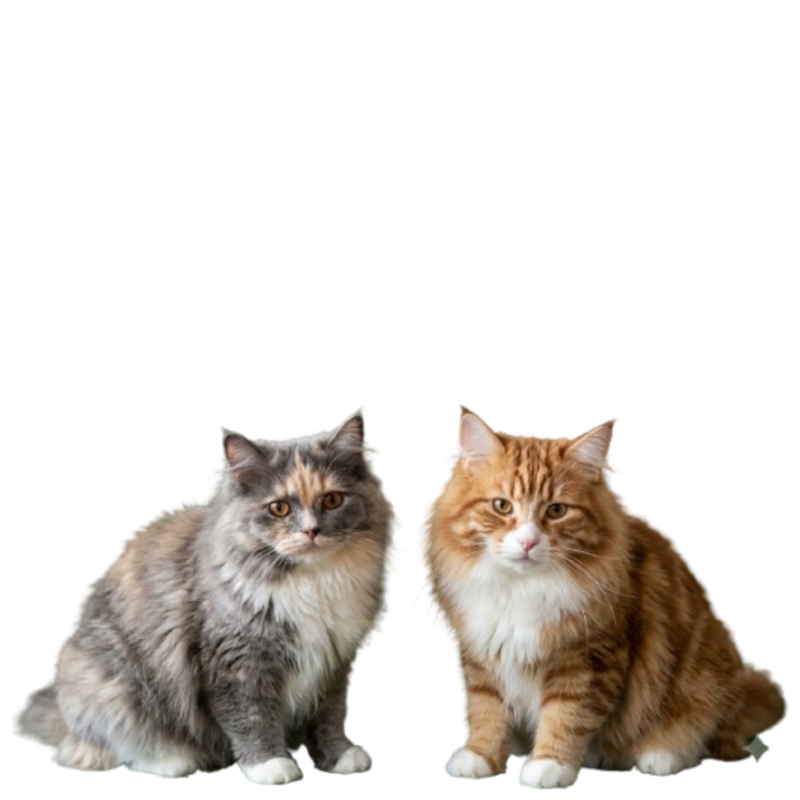
The overall physical frame of Scottish Straight Longhairs presents a seamless balance between sturdy, semi‐cobby substance and soft, rounded contours. Characterized by prick ears that stand erect and open, these cats share the signature rounded head and plush physique of the broader Scottish lineage without the folded ear gene. Their semi‐long coat amplifies their rounded silhouettes, giving them a substantial, well‐padded visual presence that is both elegant and robust.
Head and Facial Structure
The head forms a full, circular foundation with well‐rounded skull contours from every angle. Prominent whiskered cheek pads contribute to a sweet, open expression, seamlessly blending into a short, broad muzzle.
- Overall Head Shape: Broad, round, and cradled by a short, sturdy neck.
- Ears: Medium to small with rounded tips, standing upright and set wide apart to preserve the head’s circular outline.
- Eyes: Large, broad, and remarkably round, set wide apart to create a bright, attentive gaze.
- Profile: A gentle stop is visible in profile, transitioning smoothly from the forehead down to a short, straight nose.
Body Frame and Bone Substance
Underneath the dense fur, Scottish Straight Longhair’s torso displays a medium‐sized, muscular build with a level backline and broad chest.
| Feature | Anatomical Description | Visual Marker |
|---|---|---|
| Torso | Medium, well‐muscled, semi‐cobby frame | Broad, solid, and sturdy without appearing overweight |
| Legs | Medium length with heavy bone structure | Straight, strong posts supporting a low center of gravity |
| Paws | Neat, round, and compact | Neat, cushioned “snowshoe” appearance |
| Tail | Flexible, medium‐to‐long, tapering slightly | Plumed and proportional to body length |
Coat Texture and Density
The semi‐long coat of Scottish Straight Longhair features a double‐layer structure, consisting of a dense undercoat paired with longer guard hairs.
Scottish Straight Longhair Coat Depth Ratio
- : The estimated structural ratio determining how plush and voluminous the semi-long double coat appears on the body.
- : The measured length of the outer protective guard hairs in centimeters.
- : The quantitative measure of undercoat thickness and packing density per unit area.
A feline groomer evaluates the coat structure of an adult Scottish Straight Longhair to assess grooming requirements and breed standards compliance. Measuring an average guard hair length of 6 centimeters against an undercoat density score of 4, the groomer divides 6 by 4 to yield a coat depth ratio of 1.5. This calculated ratio of 1.5 confirms the presence of a well-balanced semi-long double-layer coat that stands properly off the body, validating Scottish Straight Longhair’s plush physical outline.
This structural density keeps the coat standing off the body rather than lying flat. Rich tufting between the toe pads, an abundant neck ruff, and full breeches along the hindquarters complete the plush outline of Scottish Straight Longhairs.
Appearance of Scottish Straight Longhairs
Scottish Straight Longhairs combine a well‐boned, muscular body with remarkably soft, circular facial features. Their distinctive upright ears, wide, expressive eyes, and lavish semi‐long coat create a well‐balanced silhouette that highlights both strength and visual softness.
behavior
The daily activity cycle of Scottish Straight Longhairs revolves around steady, companionable participation in household routines rather than high‐intensity physical outbursts. These cats monitor their surroundings from low to mid‐level vantage points, moving between resting spots and active areas without creating disruption. Their behavioral repertoire emphasizes quiet observation, methodical environmental exploration, and clear, low‐volume vocal signals when seeking attention or food.
Social Dynamics and Human Interaction
Rather than demanding direct physical handling, Scottish Straight Longhairs express social attachment by maintaining constant proximity to family members. They prefer shadowing humans from room to room, settling on nearby furniture or floor cushions to keep household activities within view.
- Proximity Seeking: Following caretakers closely without insisting on lap occupancy.
- Handling Reactions: Remaining calm during routine lifts while preferring to keep all four paws grounded.
- Interaction with Other Animals: Coexisting smoothly with dogs and other cats through non‐confrontational body language, such as slow blinking and soft head‐bunting.
- Vocalization Patterns: Communicating through quiet, chirping trills rather than persistent, loud meows.
Daily Activity Cycles and Play Styles
Scottish Straight Longhair’s activity follows predictable morning and evening peaks, interspersed with long periods of relaxed resting. During play, they engage in grounded hunting behaviors rather than high‐flying acrobatics.
| Action Type | Observed Behavior | Daily Frequency |
|---|---|---|
| Paws‐On Tracking | Batting at floor toys, rolling balls, or puzzle feeders | High |
| Vertical Exploration | Resting on sturdy armchairs or low window perches | Moderate |
| Vocal Signaling | Soft trills during feeding preparation or greeting | Low to Moderate |
| Territorial Patrol | Walking room perimeters and scent‐marking corner furniture | Regular Routine |
Mathematical Model of Social Interaction
The probability that a Scottish Straight Longhair will actively engage in social interaction during a household event can be modeled based on environmental stability and caretaker proximity:
Scottish Straight Longhair Social Engagement Probability
- : The statistical probability that the cat will actively engage in social interaction during a household event.
- : The measured environmental stability score reflecting low noise levels and minimal sudden movement.
- : The measured proximity score representing closeness to a familiar human caretaker.
- : The baseline individual preference parameter accounting for intrinsic social temperament variation.
A feline behaviorist calculates the social engagement probability for an adult Scottish Straight Longhair during a family gathering. Using an environmental stability score of 8, a caretaker proximity score of 6, and a baseline individual preference parameter of 2, the behaviorist multiplies stability and proximity to get 48, and adds stability, proximity, and preference together to get 16. Dividing 48 by 16 yields a social engagement probability of 3.0. This calculated result indicates high active involvement, providing Scottish Straight Longhair’s caregiver with clear quantitative insight into the cat{"\u2019"}s expected social participation under stable conditions.
Where represents environmental stability (low noise, minimal sudden movement), represents proximity to a familiar human, and accounts for baseline individual preference.
Behavior of Scottish Straight Longhairs
Scottish Straight Longhairs demonstrate a grounded, calm approach to household life, balancing independent resting with consistent, quiet companionship. Their low‐vocalization habits, measured play styles, and affinity for floor‐level or mid‐level social presence make their daily patterns predictable and easy to integrate into any living environment.
color
The lush coat of Scottish Straight Longhairs displays a wide spectrum of shades, ranging from deep, solid tones to intricate patterned and tipped variations. Because the plush undercoat elevates the longer guard hairs away from the body, colors take on an added sense of depth and luminosity. Pigment intensity varies across individual hair shafts, creating distinctive light‐reflecting effects that define the visual richness of Scottish Straight Longhair’s fur.
Primary Color Categories and Visual Expression
Coat variations in Scottish Straight Longhairs span several primary color families, each exhibiting distinct depth, root‐to‐tip distribution, and surface saturation.
| Color Category | Visual Appearance | Pigment Distribution |
|---|---|---|
| Solid Tones | Uniform color from root to tip, including deep black, blue, red, and cream | Even, dense pigment saturated along the entire length of each hair shaft |
| Tabby Patterns | Distinct stripes, swirls, or spots set against a lighter ground shade | Alternating bands of light and dark pigment along individual guard hairs |
| Silver and Smoke | Sparkling white roots beneath rich, dark tips | Pale, unpigmented bases with dark color concentrated on the outer layer |
| Pointed Shades | Deep color localized to the ears, mask, paws, and tail | Temperature‐dependent depth, with pale body coats contrasting against dark points |
Pigment Banding and Tipping Mechanics
In tipped and shaded variations, pigment concentration shifts along the length of the individual guard hairs. The percentage of hair shaft saturation determines whether the coat appears as a light, shimmering veil or a deep, smoky shade.
- Shell Tipping: Color occupies only the outermost tip of the hair shaft.
- Shaded Depth: Dark pigment extends roughly halfway down the guard hair, creating a soft gradient.
- Smoke Effect: Deep pigment covers most of the hair length, revealing a contrasting white undercoat only when the fur parts during movement.
Light Reflection Ratio in Semi‐Long Fur
The visual perception of color depth in dense undercoats can be represented by the relationship between surface coat coverage and base pigment concentration :
Scottish Straight Longhair Color Depth Model
- : The quantified visual color depth score representing the richness and intensity of the coat shade.
- : The surface coat coverage score representing the density and distribution of hair across the body.
- : The base pigment concentration parameter measuring melanin saturation levels within the hair shafts.
A feline coat genetics researcher evaluates the visual color depth of an adult Scottish Straight Longhair with a dense semi-long coat. Using a surface coat coverage score of 8 and a base pigment concentration parameter of 3, the researcher multiplies coverage and pigment concentration to get 24, and adds 1 to the pigment concentration to get 4. Dividing 24 by 4 yields a color depth score of 6.0. This calculated result indicates a rich and intense solid tone, providing the breeder with quantitative confirmation of Scottish Straight Longhair’s pigment expression under standard evaluation conditions.
Higher values of yield deep, velvet‐like solid tones, whereas lower values of combined with high produce shimmering silver and smoke effects.
Coloration of Scottish Straight Longhairs
In summary, Scottish Straight Longhairs showcase an extraordinarily versatile palette of shades, where deep root‐to‐tip saturation and delicate surface tipping are enhanced by a double‐layered coat. Whether displaying solid hues, bold tabby patterns, or soft silver shading, the interaction of dense undercoat fur and pigmented guard hairs produces a vibrant, dimensional visual presentation across all color lines.
compatibility
Ease of Maintenance
Rating: 2/5
Child Friendly
Rating: 5/5
Annual Cost
Rating: 3/5
Lifetime Cost
Rating: 4/5
Adaptability
Rating: 4/5
Velcro Factor
Rating: 5/5
Quietude
Rating: 4/5
Apartment Suitability
Rating: 5/5
Hypoallergenic
Rating: 2/5
Handling Tolerance
Rating: 5/5
Hardiness/Longevity
Rating: 4/5
Prey Drive
Rating: 4/5
genetics
The underlying genomic profile of Scottish Straight Longhairs is defined by a distinct combination of recessive structural genes and normal wild‐type ear cartilage alleles. Unlike their folded‐ear relatives, these cats carry two copies of the non‐mutated ear gene, ensuring naturally upright, straight ears. Simultaneously, their plush, full coat relies on double copies of recessive longhair alleles, which alter hair follicle growth cycles to produce elongated guard hairs and a dense undercoat.
Key Genetic Loci and Allelic Variations
The defining physical traits of Scottish Straight Longhair’s lineages stem from specific loci across the feline genome, operating under predictable Mendelian inheritance patterns.
| Gene Locus | Allele Symbol | Dominance Pattern | Genetic Phenotype |
|---|---|---|---|
| Fold Locus (Fd) | fd | Recessive (Wild‐Type) | Homozygous fd/fd produces standard upright ear cartilage |
| Longhair Locus (L) | l | Recessive Mutation | Homozygous l/l produces semi‐long, plush coat length |
| Agouti Locus (A) | A or a | Dominant / Recessive | A produces banded, tabby hairs; a/a produces solid coat colors |
| Dense Locus (D) | D or d | Dominant / Recessive | D yields full pigment; d/d dilutes black to blue or red to cream |
Ear and Coat Inheritance Mechanics
Understanding the interaction between ear cartilage alleles and coat length alleles enables predictable outcomes in breeding programs.
- Ear Integrity (): Because the folded ear trait () is dominant, Scottish Straight Longhairs must inherit two copies of the normal allele. Inheriting even a single copy of would cause the ear cartilage to fold forward.
- Coat Elongation (): The longhair gene acts as an off switch for hair follicle termination signals. Both parents must contribute an allele for kittens to display the full, semi‐long coat structure.
Probability Model for Straight-Eared, Longhaired Offspring
When crossing two cats heterozygous for both coat length () and carrying straight ear alleles (), the probability of producing a Scottish Straight Longhair kitten is governed by standard segregation:
Scottish Straight Longhair Mendelian Transmission Probability
- : The combined probability of producing a kitten expressing the complete target breed genetic profile.
- : The homozygous recessive probability for the straight ear allele.
- : The homozygous recessive probability for the longhair allele resulting from parental heterozygous pairings.
A feline geneticist calculates the expected progeny distribution from a pairing of two cats heterozygous for coat length while homozygous for the straight ear allele. Multiplying the fixed straight ear probability of 1.0 by the longhair segregation probability of 0.25 yields a combined transmission probability of 0.25. This calculated result of 0.25 indicates that exactly 25 percent of the resulting litter will express the complete Scottish Straight Longhair genetic profile, providing Scottish Straight Longhair’s breeder with precise litter prediction metrics.
Exactly 25% of the resulting progeny from a double‐heterozygous coat pairing will express the complete Scottish Straight Longhair genetic profile.
Genetics of Scottish Straight Longhairs
Scottish Straight Longhairs represent a precise genetic pairing of standard, non‐mutated ear cartilage genes () with recessive longhair mutations (). This reliable DNA blueprint guarantees naturally upright ears alongside an abundant, double‐layered coat, providing a predictable foundation for both preservation breeding and lifelong ownership.
health
The structural health profile of Scottish Straight Longhairs is generally robust, benefiting directly from the absence of the osteochondrodysplasia gene that affects cartilage in folded‐ear lineages. Because they inherit standard ear cartilage alleles, these cats develop normal joint and skeletal structures throughout their limbs and spine. However, maintaining long‐term physical wellness requires proactive monitoring of feline conditions shared across heavy‐boned, semi‐cobby breeds, specifically cardiac function, renal health, and hairball digestive management.
Primary Health Concerns and Clinical Markers
Veterinary care for Scottish Straight Longhairs centers on routine screening for cardiac changes, kidney cyst development, and weight management to protect structural joints.
| Condition | Clinical Description | Monitoring Strategy |
|---|---|---|
| Hypertrophic Cardiomyopathy (HCM) | Thickening of the muscular heart walls, reducing pumping efficiency | Annual cardiac auscultation and periodic echocardiograms |
| Polycystic Kidney Disease (PKD) | Fluid‐filled cysts forming in renal tissue that compromise kidney function | Abdominal ultrasound screening and blood chemistry panels |
| Trichobezoar Accumulation | Hairballs forming in the digestive tract from dense, ingested undercoat | Monitoring digestive regularity and stool consistency |
| Joint Stress and Obesity | Excess body weight placing strain on hips and lower back joints | Quarterly body condition scoring and controlled portioning |
Physiological Screening and Diagnostic Recommendations
Preventative care pathways for Scottish Straight Longhair’s health rely on routine diagnostic evaluations to catch subtle organ changes before outward symptoms appear.
- Cardiac Evaluations: Routine ultrasound scans of the heart ensure early detection of wall thickening, allowing for early therapeutic support if structural changes occur.
- Renal Function Monitoring: Diagnostic imaging coupled with standard blood and urine tests tracks kidney integrity as cats mature.
- Gastrointestinal Support: Because their double coat sheds continuously, routine fiber balance in diet helps prevent painful hairball impactions in the intestine.
Mathematical Model of Body Condition Impact
The relative joint stress index in solid‐bodied cats can be calculated using the ratio between current weight and ideal structural weight :
Scottish Straight Longhair Relative Joint Stress Index
- : The calculated relative joint stress index percentage reflecting mechanical load on joints and skeletal structures.
- : The current body weight of the cat measured in kilograms.
- : The ideal structural body weight of the cat measured in kilograms based on breed standards.
A feline veterinarian evaluates the joint health and structural load of an adult Scottish Straight Longhair with a current body weight of 5 kilograms against an ideal structural weight of 4 kilograms. Dividing 5 by 4 yields 1.25, which squared gives 1.5625. Multiplying this result by 100 produces a relative joint stress index of 156.25 percent. This calculated result of 156.25 exceeds the baseline threshold of 115, indicating elevated mechanical load and confirming Scottish Straight Longhair’s requirement for strict calorie monitoring to preserve long-term mobility and spinal alignment.
When , joint stress increases significantly above baseline, reinforcing the need for strict calorie monitoring to preserve mobility and spinal alignment.
Health of Scottish Straight Longhairs
Scottish Straight Longhairs enjoy sound skeletal integrity without the cartilage disorders found in folded lines. By establishing routine cardiac ultrasounds, tracking kidney health, managing hairball elimination, and maintaining an optimal weight, owners and breeders can support robust physical well‐being throughout every stage of life.
longevity
The baseline lifespan of Scottish Straight Longhairs typically spans from 12–16 years, with well‐cared‐for indoor individuals frequently reaching late senior status near 18 years. Their physical progression follows a steady maturation path, where full skeletal frame density and coat plushness stabilize between 2–3 years of age. Understanding how Scottish Straight Longhair’s physiological vitality evolves across distinct life stages allows for targeted management as their metabolic efficiency and mobility shift over time.
Lifespan Stages and Physical Progression
The aging journey of Scottish Straight Longhairs transitions through four primary physical phases, each marked by noticeable changes in energy output, muscle mass retention, and tissue recovery.
| Life Stage | Age Span | Physiological Milestones |
|---|---|---|
| Kitten and Young Adult | 0–2 Years | Rapid skeletal growth followed by coat filling and full physical maturation |
| Prime Adult | 3–6 Years | Peak physical condition, optimal muscle density, and maximum coat fullness |
| Mature Adult | 7–10 Years | Subtle decrease in basal metabolic rate; gradual shift toward quiet resting |
| Senior and Geriatric | 11+ Years | Thinning of muscle over hips, reduced jumping agility, and lighter coat density |
Physical Markers of Maturation and Aging
Tracking vitality across a cat’s lifetime involves observing observable physical cues that signal transitions between life phases.
- Developmental Maturation: Full coat depth and complete physical substance take up to 36 months to fully develop.
- Middle‐Age Metabolism: Activity levels naturally taper around age 7, requiring careful calorie adjustments to preserve mobility.
- Senior Physical Cues: Senior individuals show gradual loss of lean muscle mass along the spine alongside changes in sleeping depth and routine pacing.
Mathematical Model of Feline Aging Curve
The human‐equivalent age for a Scottish Straight Longhair after reaching adulthood ( years) can be modeled using a logarithmic scaling function:
Scottish Straight Longhair Human Equivalent Age
- : The calculated human equivalent age corresponding to the maturity stage of the cat.
- : The baseline human equivalent age representing rapid physical maturity reached during the first two years of life.
- : The conversion factor representing the human years accumulated per calendar year after reaching adulthood.
- : The chronological age of the cat measured in years, applicable for adults aged 2 years or older.
A feline veterinarian calculates the human equivalent age for an adult Scottish Straight Longhair with a chronological age of 10 years. Subtracting 2 from the chronological age of 10 yields 8 years of adult aging. Multiplying this result of 8 by the conversion factor of 4 gives 32 additional human years, and adding the baseline of 24 yields a human equivalent age of 56 years. This calculated result of 56 years provides Scottish Straight Longhair’s caregiver with clear developmental context for senior healthcare planning.
Longevity of Scottish Straight Longhairs
Scottish Straight Longhairs possess a strong potential for a long, vibrant lifespan, routinely reaching their mid‐to‐late teens when kept in safe indoor environments. Recognizing their slow initial maturation and monitoring physical shifts during their senior years ensures that owners and breeders can support continuous vitality across every stage of life.
maintenance
Sustaining the physical condition and plush coat of Scottish Straight Longhairs requires a structured daily regimen focused on coat maintenance, precise nutritional monitoring, and routine hygienic care. Because their double coat traps loose hair and retains natural skin oils, regular grooming prevents matting while supporting skin health. Paired with controlled feeding plans and an engaging indoor space, these preventive husbandry habits ensure optimum day‐to‐day wellness across all living environments.
Grooming Schedules and Coat Care Protocols
Managing the dense undercoat and semi‐long guard hairs of Scottish Straight Longhairs requires targeted grooming tools and regular attention to prevent painful tangles and skin irritation.
| Routine Task | Frequency | Primary Objective | Key Tools Used |
|---|---|---|---|
| Undercoat De‐Shedding | 3–4 times weekly | Remove loose undercoat fur and prevent matting | Wide‐toothed steel comb and slicker brush |
| Sanitary Trimming | Every 4–6 weeks | Keep rear breeches clean and hygienic | Curved grooming shears or electric hygiene clippers |
| Nail Trimming | Every 2–3 weeks | Prevent claw overgrowth and furniture snagging | Standard guillotine or scissor‐style nail clippers |
| Dental Hygiene | Daily or 3 times weekly | Prevent tartar accumulation and gum inflammation | Enzymatic feline toothpaste and soft finger brush |
Caloric Intake and Nutritional Guidelines
To maintain an ideal body condition without encouraging unwanted weight gain, daily caloric allocation for Scottish Straight Longhair must match their body mass and activity profile.
- High‐Protein Diets: Prioritize animal‐based protein sources to maintain lean muscle tissue and coat strength.
- Hydration Management: Incorporate wet food portions daily or utilize circulating water fountains to encourage consistent fluid intake.
- Omega Fatty Acids: Supplement meals with omega‐3 and omega‐6 fatty acids to keep skin hydrated and reduce coat shedding.
Daily Resting Energy Requirement Formula
The base Resting Energy Requirement (RER) in kilocalories per day for an adult Scottish Straight Longhair is calculated using ideal body mass in kilograms:
Scottish Straight Longhair Resting Energy Requirement
- : The resting energy requirement expressed in kilocalories per day needed to sustain vital organ function at rest.
- : The standard feline metabolic scalar constant used for body weight scaling.
- : The ideal body mass or weight of the cat measured in kilograms.
- : The metabolic body size exponent accounting for non-linear metabolic scaling relative to mass.
A feline nutritionist calculates the resting energy requirement for an adult Scottish Straight Longhair with an ideal body mass of 4 kilograms. Raising 4 to the power of 0.75 yields approximately 2.828. Multiplying this result by the metabolic scalar constant of 70 produces a resting energy requirement of approximately 197.97 kilocalories per day. This calculated baseline gives Scottish Straight Longhair’s caregiver an exact foundation for determining daily feeding requirements.
For a typical adult neutered Scottish Straight Longhair with a light activity profile, total daily energy requirement (DER) is adjusted using a activity multiplier:
Scottish Straight Longhair Daily Energy Requirement
- : The total daily energy requirement expressed in kilocalories per day needed to maintain weight and support daily physical activity.
- : The activity multiplier scaling factor tailored for a typical neutered adult cat with a light indoor activity profile.
- : The resting energy requirement expressed in kilocalories per day required to maintain basic physiological functions at rest.
A feline nutritionist calculates the daily energy requirement for an adult Scottish Straight Longhair with a previously computed resting energy requirement of 197.97 kilocalories per day. Multiplying 197.97 by the light activity multiplier of 1.2 yields a total daily energy requirement of approximately 237.56 kilocalories per day. This calculated result gives Scottish Straight Longhair’s caregiver an exact daily caloric target to maintain optimal weight and lean body mass.
Environmental Setup and Living Requirements
Indoor spaces for Scottish Straight Longhair’s housing should feature accessible scratching posts, low‐barrier resting platforms, and proper litter box setups.
- Scratching Stations: Vertical sisal posts and horizontal cardboard scratchers encourage natural claw shedding and stretching.
- Environmental Perches: Low to mid‐level window seats provide mental stimulation without forcing high‐impact jumping landing routines.
- Litter Box Maintenance: Utilize extra‐large boxes to accommodate their semi‐long coat and tail, cleaning daily to keep fur clear of waste.
Maintenance of Scottish Straight Longhairs
Proper maintenance of Scottish Straight Longhairs centers on consistent coat combing, controlled caloric intake matched to frame size, and well‐planned indoor perches and scratching posts. Establishing a predictable grooming and care routine maintains skin and coat vitality while ensuring a safe, hygienic environment throughout the cat’s life.
measurements
| Measurement | Female | Male | ||
|---|---|---|---|---|
| Metric | Imperial | Metric | Imperial | |
height | 18 – 23 centimeters | 7 – 9 inches | 20 – 25 centimeters | 8 – 10 inches |
length | 33 – 38 centimeters | 13 – 15 inches | 36 – 43 centimeters | 14 – 17 inches |
weight | 2.7 – 4.1 kilograms | 6 – 9 pounds | 4.1 – 5.9 kilograms | 9 – 13 pounds |
• Height: Refers to the measurement at the withers (shoulders).
• Length: Measured from the tip of the nose to the base of the tail.
origin
The lineage of Scottish Straight Longhairs traces its historical roots to the central agricultural valleys of Perthshire, Scotland, where regional farm cats interbred with longhair domestic cats. While early attention focused heavily on folded‐ear mutations discovered in the mid–twentieth century, straight‐eared and semi‐longhaired progeny were present in those foundational litters. These straight‐eared, long‐coated siblings served as vital genetic anchors, preserving structural vigor and line health as breeding programs expanded globally across Western Europe and North America.
Historical Milestones and Breed Development
The formalization of Scottish Straight Longhair’s heritage developed through key historical milestones, moving from rural Scottish barnyards to structured registry listings.
| Period | Historical Event | Lineage Impact |
|---|---|---|
| 1961 | Discovery of Susie in Perthshire, Scotland | Foundational mother of the Scottish line, carrying genes for straight and folded ears |
| 1970s | Export of lines to North American registries | Crosses with American and British Shorthairs, alongside Persians, established coat plushness |
| 1990s | Formal distinction of Straight lineages | Recognition of straight‐eared offspring as essential breeding stock for line stability |
| 2000s | Universal recognition of Scottish Straight Longhairs | Formal acceptance in major international cat registries as an independent pedigree class |
Geographic Migration and Lineage Diversity
The journey of Scottish Straight Longhairs reflects strategic outcrossing practices aimed at maintaining genetic diversity while preserving the signature rounded body frame.
- Scottish Foundations: Local agricultural landraces provided robust physical builds and dense coats adapted to cold northern climates.
- North American Refinement: Selective pairings with longhaired breeds enhanced the length and density of the double coat while stabilizing straight‐ear morphology.
- Global Recognition: Formal classification established Scottish Straight Longhairs as full participants in championship show classes rather than secondary breeding stock.
Historical Population Growth Model
The growth rate of registered Scottish Straight Longhairs breeding stock over time in decades following formal recognition can be modeled by the following exponential growth function:
Scottish Straight Longhair Population Growth Model
- : The projected number of registered breeding stock individuals at a specific time .
- : The initial foundational stock size at the start of formal registration.
- : The decadal registration expansion rate representing growth per decade interval.
- : The number of decades elapsed following formal breed recognition.
A feline population geneticist models the growth of registered Scottish Straight Longhairs breeding stock starting from an initial foundational stock of 100 cats over 2 decades with a decadal registration expansion rate of 0.50. Adding 1 to the expansion rate yields 1.50, which raised to the power of 2 gives 2.25. Multiplying this result by the initial foundational stock of 100 yields a projected population size of 225 registered cats. This calculated result illustrates how early Scottish Straight Longhair’s regional populations successfully expanded into globally recognized bloodlines.
represents the initial foundational stock and denotes the decadal registration expansion rate, thus illustrating how straight‐eared variants grew from small regional populations into globally recognized bloodlines.
Origin of Scottish Straight Longhairs
Scottish Straight Longhairs possess a rich heritage rooted in rural Scottish farms, where they emerged alongside their folded‐eared kin. Through thoughtful international development and integration with longhaired domestic stock, these cats transitioned from essential regional breeding partners into a celebrated, distinct pedigree breed cherished around the world today.
temperament
The baseline disposition of Scottish Straight Longhairs is characterized by an even‐tempered, calm, and highly adaptable psychological orientation. Known for their mild reactivity and emotional stability, these cats maintain a serene composure even in dynamic household environments. Rather than displaying intense demanding behaviors or high anxiety during routine changes, their innate temperament inclines them toward steady observation, steady affection, and quiet loyalty to their chosen family members.
Core Personality Dimensions and Social Boundaries
Evaluating Scottish Straight Longhair’s emotional profile reveals a harmonious balance between independent self‐sufficiency and gentle companionable attachment.
| Personality Trait | Trait Intensity | Psychological Manifestation |
|---|---|---|
| Adaptability | High | Adjusts smoothly to new living spaces, visitors, or household routine shifts |
| Emotional Equanimity | High | Low stress reactivity; rarely shows sudden fear responses or nervous startles |
| Affectionate Bonding | Moderate to High | Prefers non‐intrusive presence and side‐by‐side companionship over lap restraint |
| Social Demand | Low | Patiently awaits attention without expressing demanding vocalizations or distress |
Environmental Adaptation and Stress Resilience
The psychological resilience of Scottish Straight Longhair allows them to navigate diverse social settings while maintaining emotional equilibrium.
- Affection Style: Expressing deep warmth through constant physical proximity, gentle eye contact, and restful companionship rather than constant physical holding.
- Stimulus Sensitivity: Processing loud sounds or unfamiliar visitors with calm curiosity rather than sudden retreat, relying on their steady internal confidence.
- Cohabitation Temperament: Thriving alongside children, dogs, and other feline companions due to their non‐aggressive, tolerant social boundaries.
Mathematical Model of Adaptability Index
The emotional adaptability index of a Scottish Straight Longhair across environmental changes can be modeled using social confidence , environmental familiarity , and baseline reactivity :
Scottish Straight Longhair Emotional Adaptability Index
- : The calculated emotional adaptability index score reflecting how smoothly the cat adjusts to novel environments and changes.
- : The quantified social confidence score representing trust and willingness to interact with humans and other pets.
- : The environmental familiarity score measuring the degree of comfort with surroundings and household routines.
- : The baseline reactivity parameter indicating sensitivity to stress triggers and sudden startle stimuli.
A feline behaviorist evaluates the emotional adaptability of an adult Scottish Straight Longhair entering a new household. Using a social confidence score of 7, an environmental familiarity score of 3, and a baseline reactivity parameter of 1, the behaviorist adds social confidence and environmental familiarity to get 10, and adds 1 to the reactivity parameter to get 2. Dividing 10 by 2 yields an emotional adaptability index score of 5.0. This calculated result of 5.0 confirms that high social confidence and low reactivity successfully support smooth integration into new homes, providing Scottish Straight Longhair’s caregiver with quantitative peace of mind.
Because Scottish Straight Longhairs exhibit low baseline reactivity () alongside high social confidence, their overall adaptability index remains consistently elevated, allowing smooth integration into new homes.
Temperament of Scottish Straight Longhairs
In summary, Scottish Straight Longhairs possess a remarkably stable, gentle, and forgiving disposition that suits both quiet homes and active family settings. Their balanced mix of affection, independence, and calm adaptability ensures a peaceful, enduring companionship built on mutual respect and quiet harmony.