Scottish Straight Cat
appearance
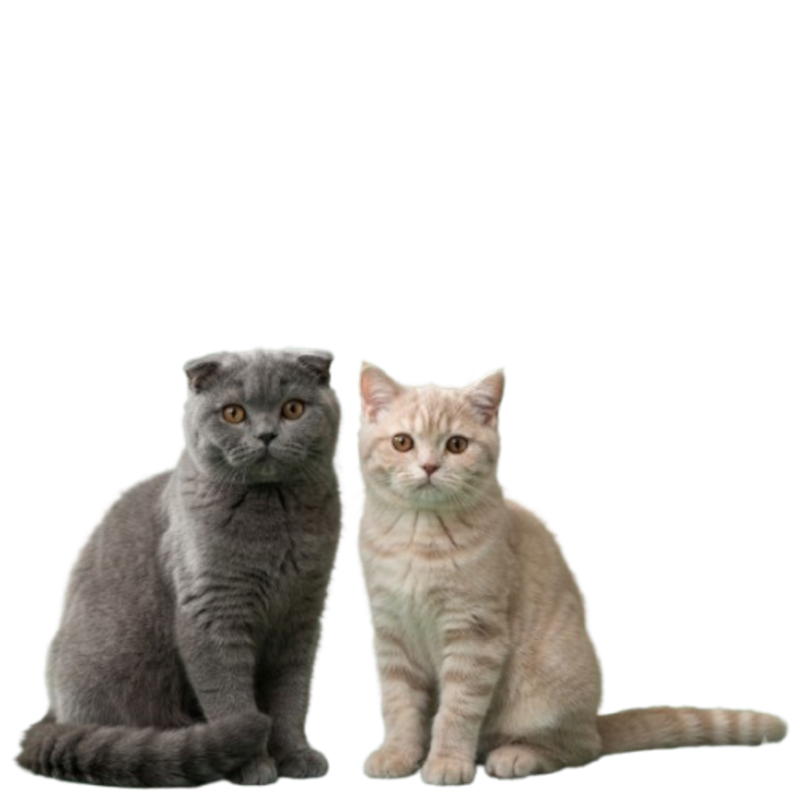
The Scottish Straight is a medium-sized cat characterized by a robust, well-rounded structure and a distinctively sweet expression. While closely related to its folded-ear counterpart, this variant possesses straight, alert ears that accentuate its wide-eyed, owl-like visage. Every aspect of the Scottish Straight reflects balance and solid construction, presenting a sturdy frame wrapped in a dense, resilient coat without appearing overly heavy or cobgy.
Overall Body Frame and Substance
The physical foundation of the Scottish Straight relies on a substantial, medium-sized body that feels uniformly powerful rather than delicate. The underlying bone structure is medium-to-heavy, contributing to a solid, grounded stance.
| Body Region | Structural Description | Visual Comparison |
|---|---|---|
| Torso | Cased in a firm, muscular cylinder with an even width from shoulders to pelvis. | Built like a sturdy, compact barrel. |
| Chest | Broad and well‐rounded, giving the front half of the torso an expansive look. | Resembles a sturdy chest plate. |
| Back | Level from the shoulders to the lower back, curving smoothly into a rounded rump. | Maintains a uniform, balanced plane. |
| Legs | Medium in length, perfectly proportioned to the body with heavy bone density and firm musculature. | Resembles sturdy pillars supporting a solid structure. |
| Paws | Large, round, and compact, with five toes in front and four in the back. | Gives the impression of firmly planted pedestals. |
Head and Facial Conformation
The head of the Scottish Straight is famously rounded, featuring a series of circular contours that soften its overall look. The skull is high and domed, transitioning seamlessly into a short, broad neck.
- Muzzle and Chin: The muzzle is short and well-rounded, punctuated by prominent, puffy whisker pads that give the face a distinct cushion effect. The chin is firm and full, aligning vertically with the tip of the nose to complete the circular profile.
- Cheeks: High and prominent cheekbones contribute heavily to the round, cherubic appearance of the face.
- Profile: A gentle curve rises from the bridge of the nose up to the forehead, avoiding any abrupt stops or sharp angles—the transition is smooth and flowing.
- Eyes: Large, round, and widely spaced, giving the cat an open, expressive gaze. The eye color corresponds harmoniously with the coat type, enhancing the sweet, wide-eyed expression.
Ear Placement and Structure
Unlike their folded counterparts, Scottish Straights carry ears that stand firmly upright, adding a sense of alertness and height to the head.
- Placement: Set far apart on the skull, following the natural outer curve of the round head shape rather than flaring outward.
- Size and Shape: Medium in size with slightly rounded tips. The base is moderately broad, tapering gracefully toward the apex.
- Cuppage: The ear leather has normal firmness, allowing the ears to swivel independently and react dynamically to environmental sounds.
Tail Structure
The tail is a vital extension of the cat’s balanced geometry, functioning as a fluid counterweight to the heavy body frame.
- Length: Medium to long, generally in proportion to the body length.
- Taper: Thick at the base, tapering gradually toward a rounded tip.
- Flexibility: Highly flexible and pliable along every vertebra, showing zero stiffness, kinks, or rigidity—an essential indicator of structural integrity.
Coat Textures and Physical Markers
The outer covering of the Scottish Straight acts as a protective shield, varying slightly between two recognized length categories while maintaining core density.
- Short-Haired Variant: The coat is dense, plush, and resilient, standing out slightly from the body due to a thick undercoat rather than lying completely flat. The texture is crisp yet soft to the touch.
- Long-Haired Variant: The fur is semi-long to long, featuring a profuse ruff around the neck, feathering on the hind legs, and a full, plumed tail. The undercoat provides substantial volume, lifting the outer coat away from the skin.
- Coat Feel: Neither overly silky nor woolly, the fur possesses a springy quality that rebounds quickly when pressed—giving the cat a well-insulated, cushion-like appearance.
Physical Profile of Scottish Straights
The Scottish Straight presents a harmonious picture of balanced curves and substantial build. From its round, open face and alert ears to its dense, springy coat and powerful frame, every physical characteristic works together to create a cat that is undeniably solid, expressive, and structurally unified.
behavior
The Scottish Straight exhibits a distinct and engaging pattern of everyday actions that bridges active environmental exploration with quiet domestic companionship. These cats navigate their daily routines through calculated movements, deliberate social interactions with humans and animals, and moderate activity cycles. Rather than relying on frantic bursts of energy, Scottish Straights approach their surroundings with steady curiosity, balancing moments of playful engagement with hours of relaxed, observant stillness.
Daily Activity Cycles and Movement Patterns
The routine of Scottish Straights follows a predictable cadence that alternates between periods of quiet observation and bursts of moderate physical participation. They do not typically scale high vertical spaces with reckless abandon, preferring instead to anchor themselves closer to ground level or mid‐level perches.
| Activity Phase | Frequency and Duration | Observable Action |
|---|---|---|
| Morning Arousal | High–moderate activity across 1–2 hours | Patrolling room perimeters, rubbing against furniture legs, and initiating human contact via soft head‐butting. |
| Midday Rest | Extended blocks lasting 4–6 hours | Relocating to sunlit patches on rugs or low sofas, adopting stretched‐out or curled sleeping postures. |
| Evening Engagement | Moderate activity across 2–3 hours | Tracking moving shadows, chasing ground‐level toys, and closely following human movement from room to room. |
| Night Rest | Intermittent resting interspersed with brief self‐grooming | Settling near or on human sleeping furniture, maintaining stationary positions for long stretches. |
Social Dynamics and Human Interaction
Interaction patterns for Scottish Straights revolve around constant physical proximity and inclusive observation of household activities. When humans move through a space, these cats typically trail closely behind rather than leading the charge.
- Proximity Seeking: Rather than sitting directly in a lap for hours, Scottish Straights frequently choose to occupy the exact same piece of furniture or room as their human companions, maintaining a close spatial buffer.
- Greeting Rituals: Upon a human entering a room, these cats routinely lift their tails into a vertical question‐mark posture, trot forward, and trace figure‐eight patterns around human ankles while emitting low‐pitch chirps.
- Multi‐Cat Dynamics: When housed with other pets, Scottish Straights display cooperative rather than competitive actions. They frequently engage in mutual grooming sessions and share resting zones without enacting territorial standoffs.
Vocalization Frequency and Communication Types
Communication in Scottish Straights relies heavily on soft, modulated sounds rather than demanding, high‐decibel cries. Their vocal toolkit consists of subtle noises tied directly to immediate physical requests.
- Chirping and Trilling: When anticipating food preparation or acknowledging a human returning home, they emit brief, melodic trills that originate deep in the throat with a closed mouth.
- Muted Meowing: Standard meows are remarkably quiet, often sounding breathy or truncated. They reserve these for direct appeals, such as requesting a closed door to be opened.
- Silent Appeals: Frequently, they rely entirely on visual signaling instead of vocalizing—sitting squarely in front of an empty food bowl or staring intently at a toy shelf while moving only their ears.
Play Styles and Environmental Exploration
Play routines for Scottish Straights are characterized by deliberate stalking, precise paw swats, and calculated ambush tactics rather than frantic aerial leaps.
- Stalking Postures: During play sessions involving feathered wands or rolling objects, these cats lower their chest flat to the floor, flatten their ears slightly backward, and twitch the very tip of their tail before executing a controlled pounce.
- Object Manipulation: They frequently use individual paws to bat objects across hard floors, watching the trajectory closely before executing a secondary run‐and‐catch maneuver.
- Vertical Investigation: While they do navigate cat trees, they favor the lower and middle platforms, often using them as observation decks to monitor household activity rather than launch pads for high‐speed acrobatics.
Behavioral Profile of Scottish Straights
The everyday behavioral profile of the Scottish Straight highlights a cat that is deeply attuned to its environment and human companions. From quiet tracking walks and low‐volume vocalizations to deliberate, ground‐anchored play styles, every action underscores a balanced, steady approach to domestic life.
color
The coat coloration of the Scottish Straight spans an extraordinarily diverse spectrum, ranging from dense, single‐tone solids to intricate, multi‐layered patterns. Pigment distribution along each individual hair shaft determines how rich and saturated a color appears on the surface, creating an interplay of light and shadow across the cat’s plush fur. Whether displaying the classic warmth of tabby markings or the stark elegance of solid hues, Scottish Straights present a visual feast of colors that accentuates their plush, rounded contours.
Solid and Self Color Categories
Solid colored Scottish Straights feature pigment that is evenly distributed from the root to the tip of every single hair, creating a uniform, unbroken sheet of color across the entire body.
| Color Category | Visual Appearance | Pigment Distribution on Hair Shaft |
|---|---|---|
| Dense Black | Deep, carbon‐like darkness with a glossy surface sheen. | Continuous heavy pigmentation from root to tip without fading. |
| Warm Blue | Soft slate‐grey—often called gray—with a cool, smoky overcast. | Evenly diluted pigment granules packed uniformly along the shaft. |
| Rich Red | Vibrant, deep ginger hue displaying minimal structural shading. | Intense warm pigment saturation completely filling the hair structure. |
| Pure White | Immaculate, snow‐bright finish reflecting absolute pigment absence. | Total absence of pigment granules across the entire hair length. |
Tabby and Agouti Pattern Distribution
Tabby patterns on Scottish Straights rely on the agouti phenomenon, where individual hairs feature alternating bands of dark and light pigment, creating an optical illusion of depth and movement.
- Classic Tabby: Features bold, sweeping patterns including distinct bullseye markings on the flanks and butterfly motifs across the shoulders. Each hair shaft displays distinct banding of dark pigment against a lighter background hue.
- Mackerel Tabby: Displays narrow, parallel vertical lines running down the body like fish bones, accompanied by a continuous dark spine stripe. The pigment contrast between the stripes and the ground color is sharp and well‐defined.
- Ticked Tabby: Each individual hair shaft exhibits multiple alternating bands of dark and light pigment, culminating in a dark tip. This imparts an iridescent, shimmering appearance across the coat, reminiscent of wild rabbits.
Shaded, Chinchilla, and Pointed Expressions
Advanced pigment restriction creates ethereal, glowing coats where color is isolated primarily to the very tips of the hair strands, leaving the undercoat pale or luminous.
- Shaded and Chinchilla: In shaded variants, dark pigment covers only the top third of the hair shaft, while chinchilla variants restrict the dark pigment to an even lighter dusting on the extreme tips (less than one‒eighth of the shaft), creating a frosted, silver‐tipped illusion.
- Colorpoint Variations: Pigment production is restricted to the warmer extremities—face mask, ears, limbs, and tail—while the main body remains a pale, neutral cream or ivory due to temperature‐sensitive pigment development.
- Bicolor and Calico Distributions: White spotting factors create clean breaks of solid or patterned color patches against a pristine white base, requiring balanced distribution across the head, body, and limbs for visual harmony.
Coloration Profile of Scottish Straights
The chromatic range of the Scottish Straight enhances its already striking physical presence. From the dramatic depth of solid pigments and the intricate striping of tabby coats to the glowing frost of tipped varieties, every color expression highlights the rich texture and visual warmth of the breed’s luxurious fur.
compatibility
Ease of Maintenance
Rating: 3/5
Child Friendly
Rating: 5/5
Annual Cost
Rating: 3/5
Lifetime Cost
Rating: 4/5
Adaptability
Rating: 4/5
Velcro Factor
Rating: 5/5
Quietude
Rating: 4/5
Apartment Suitability
Rating: 5/5
Hypoallergenic
Rating: 2/5
Handling Tolerance
Rating: 5/5
Hardiness/Longevity
Rating: 4/5
Prey Drive
Rating: 4/5
genetics
The genomic architecture of the Scottish Straight centers on a fundamental relationship with the incomplete dominant gene responsible for ear cartilage modification in its ancestral lineage. While the fold mutation determines ear conformation across related populations, Scottish Straights represent the homozygous or wild‐type expression that preserves standard ear cartilage development. Understanding these genomic mechanics allows preservation breeders to map inheritance pathways accurately, ensuring that selective matings maintain the foundational blueprint of the Scottish Straight.
Core Loci and Allelic Configurations
The genetic foundation of Scottish Straights relies on specific gene loci that dictate structural and developmental pathways across generations. Each locus contains alternative forms called alleles, which interact through dominance and recessivity to establish the observable genomic profile.
| Genomic Locus | Functional Role | Allelic Variations and Expression |
|---|---|---|
| Fd Locus | Cartilage development and ear structure anchoring | Homozygous recessive (fd/fd), resulting in the straight ear phenotype characteristic of Scottish Straights. |
| Mc Locus | Coat length determination and follicular cycling | Recessive long‐hair allele (l) versus dominant short‐hair allele (L). |
| W Locus | Pigment cell migration and distribution | Complete masking dominant allele (W) overriding base coloration versus wild‐type pigmented allele (w). |
Inheritance Modeling and Probability
Predicting the outcome of strategic preservation matings involves standard Mendelian transmission probabilities. Because Scottish Straights possess two copies of the recessive wild‐type allele at the primary ear‐conformation locus (), their contribution to offspring is mathematically uniform regarding this specific trait.
Mating with Homozygous Straight ():
Scottish Straight Straight Ear Transmission Probability
- : The definitive statistical probability that a resulting offspring will inherit the homozygous straight eared genetic configuration from a matching parental cross.
- : The absolute certainty value representing a 100 percent transmission rate of the recessive wild-type allele combination when both parents are homozygous straight.
A preservation breeder plans a strategic mating between two homozygous straight Scottish Straight adults to preserve standard ear conformation within the lineage. Because both parents carry two copies of the recessive wild-type allele, the transmission probability evaluates to a fixed 1.0. For a planned litter of four kittens, multiplying the total count by this probability yields exactly 4 kittens projected to inherit the homozygous straight-eared genomic type. This absolute certainty provides the breeder with a reliable framework for maintaining Scottish Straight’s foundational breed standards safely and effectively.
Every resulting offspring inherits two recessive alleles, guaranteeing a 100% continuation of the straight‐eared genomic type.
Mating with Heterozygous Fold ():
Scottish Straight Heterozygous Mating Offspring Probability
- : The statistical probability that an offspring will inherit the homozygous straight-eared configuration from a heterozygous cross.
- : The statistical probability that an offspring will inherit the heterozygous folded ear mutation from the mating pair.
- : The exact decimal probability representing a 50 percent split or equal Mendelian distribution for each phenotypic outcome.
A geneticist calculates the expected phenotypic distribution for a planned litter resulting from a mating between a heterozygous fold and a homozygous straight Scottish Straight. For a litter consisting of 4 kittens, multiplying the total count by the respective probability of 0.5 yields 2 kittens expected to display the straight-eared phenotype and 2 kittens expected to inherit the folded ear configuration. This even 50 percent distribution provides the breeder with a clear mathematical expectation for managing Scottish Straight’s diverse structural phenotypes safely.
This pairing yields an even statistical distribution, where half the litter inherits the heterozygous fold mutation and the other half inherits the homozygous straight configuration typical of Scottish Straights.
Coat Length and Density Alleles
Beyond basic structural considerations, the genomic profile of Scottish Straights encompasses genes controlling coat architecture, governed by simple recessive inheritance patterns.
- Short‐Haired Genotypes: Carrying at least one dominant short‐hair allele (), these individuals display dense, plush single‐layered or double‐layered follicle structures without requiring two identical copies.
- Long‐Haired Genotypes: The expression of semi‐long fur relies entirely on a homozygous recessive pairing (). When two carriers or long‐haired variants are bred, the genetic transmission dictates that all offspring will similarly manifest the long‐hair genomic profile.
Pigment and Color Loci Interaction
The color expression mapped across Scottish Straight’s DNA relies on classic feline gene series, including the extension (), agouti (), and dilution () loci, which operate independently of the structural conformation genes.
- Melanin Production: The extension locus determines whether eumelanin (black pigments) or phaeomelanin (red pigments) is produced, while modifying alleles like dilution () transform dense black pigments into soft blue phenotypes.
- Pattern Distribution: The agouti signaling protein dictates whether individual hair shafts exhibit banded pigment distribution or solid, unbroken color saturation from root to tip.
Genomic Profile of Scottish Straights
The genomic makeup of the Scottish Straight represents a carefully preserved balance of wild‐type structural alleles and diverse coat modifiers. By tracking locus interactions and understanding inheritance probabilities, breeders ensure the continuous preservation of Scottish Straight’s distinct genetic identity.
health
The overall physical well-being of the Scottish Straight centers on managing joint health, cardiac function, and structural vitality across its lifespan. While Scottish Straights lack the severe cartilage modifications seen in their folded-ear relatives, they still require careful clinical oversight to monitor for secondary musculoskeletal developments and age‐related vulnerabilities. Proactive veterinary care and routine diagnostic screenings allow breeders and owners to safeguard Scottish Straight’s long‐term health, ensuring each cat maintains an active and comfortable quality of life.
Primary Physiological Vulnerabilities and Risk Factors
Monitoring the clinical profile of Scottish Straights involves understanding specific physiological conditions that can impact mobility, organ systems, and overall comfort over time.
| Health Condition | Clinical Description and Impact | Monitoring and Screening Strategy |
|---|---|---|
| Osteochondrodysplasia | A developmental cartilage and bone disorder that, while primarily affecting folded cats, can occasionally manifest with milder skeletal changes in straight variants. Causes joint stiffness and discomfort. | Regular orthopedic evaluations, palpation of the tail and limbs, and baseline veterinary physical checks. |
| Hypertrophic Cardiomyopathy | A common feline heart condition characterized by the abnormal thickening of the left ventricular wall, which restricts efficient blood pumping. | Periodic echocardiograms and auscultation by a veterinary cardiologist to detect murmurs or gallop rhythms. |
| Polycystic Kidney Disease | An inherited condition causing fluid‐filled cysts to form slowly within renal tissues, gradually impairing kidney function. | Genetic screening of bloodlines and routine renal ultrasound imaging during early adult life stages. |
Joint Preservation and Musculoskeletal Tracking
Because Scottish Straights share ancestry with cats carrying cartilage‐altering traits, tracking the structural integrity of their limbs and spine remains a central focus of veterinary management.
- Tail Flexibility Monitoring: Veterinarians and breeders routinely examine the caudal vertebrae‐the tail bones‐checking for natural suppleness and flexibility to ensure there is no abnormal skeletal fusion or stiffness.
- Gait and Mobility Observation: Routine checks look for subtle changes in movement, such as a reluctance to jump, shortened stride lengths, or stiff hock joints‐indicators that early‐stage joint discomfort may be developing.
- Weight Management Ratios: Maintaining optimal body mass index through balanced nutrition prevents excess physical load on weight‐bearing joints.
The physiological (weight management) ratio can be expressed simply as:
Scottish Straight Body Condition Score
- : The numerical ratio evaluating the current structural mass balance relative to the ideal physical target.
- : The measured current muscle and body mass of the cat in kilograms.
- : The ideal healthy weight benchmark recommended for the cat to minimize joint stress.
A feline veterinarian evaluates the physical condition of an adult Scottish Straight during a routine checkup. Finding a current lean mass of 4.2 kilograms against an optimal mass target of 4.0 kilograms, the veterinarian divides 4.2 by 4.0 to yield a body condition score of 1.05. This calculated score of 1.05 indicates a slight positive deviation from the target mass, providing Scottish Straight’s caregiver with precise guidance to adjust daily nutrition and protect vulnerable skeletal junctions.
Keeping this score balanced reduces unnecessary mechanical strain across all skeletal junctions.
Cardiac and Metabolic Surveillance
Proactive clinical oversight extends beyond the musculoskeletal system, targeting internal organ health through routine diagnostics and scheduled veterinary assessments.
- Auscultation Protocols: Regular listening sessions with a stethoscope help catch early heart murmurs or abnormal rhythms, which serve as initial triggers for advanced cardiac imaging.
- Renal Function Panels: Routine blood chemistry and urinalysis track kidney filtration markers, allowing early identification of age‐related renal decline long before clinical symptoms appear.
- Nutritional and Supplement Support: Integrating targeted joint protective compounds‐such as omega‐3 fatty acids‐into daily nutrition helps maintain cartilage matrix health and reduces systemic inflammation.
Clinical Health Profile of Scottish Straights
The clinical well-being of the Scottish Straight relies on a foundation of proactive monitoring, early diagnostics, and attentive daily management. By keeping a close watch on joint mobility, cardiac performance, and renal health, preservation breeders and dedicated owners can ensure Scottish Straights enjoy long, vibrant lives characterized by comfort and vitality.
longevity
The life expectancy and aging progression of the Scottish Straight span a rewarding multi‐year journey, typically seeing individuals thrive well into their mid‐teens. Because Scottish Straights possess a robust and balanced physiological framework, their natural lifespan reflects a steady, graceful progression through distinct developmental milestones. Understanding these life‐stage transitions helps preservation breeders and devoted owners anticipate changing needs, ensuring optimal care and vitality from youth through the senior years.
Life‐Stage Progression and Milestones
The life path of Scottish Straights unfolds across clear developmental brackets, each characterized by unique physical shifts and maturation patterns.
| Life Stage | Age Range | Observable Maturation and Aging Markers |
|---|---|---|
| Kitten and Junior | 0–2 years | Rapid skeletal and muscular development, high activity levels, and attainment of full adult body size and density. |
| Prime Adult | 3–6 years | Peak physical conditioning, stable weight ratios, and consistent energy distribution across daily routines. |
| Mature Adult | 7–10 years | Subtle shifts in metabolic pace, slight decreases in daily activity bursts, and the onset of early aging indicators. |
| Senior and Geriatric | 11 years and beyond | Progressive slowing of movement, changes in sleep‐wake cycles, and increased need for environmental adjustments. |
Lifespan Expectancy Metrics and Survival Probability
Calculating life expectancy involves tracking the typical survival curve for the Scottish Straight, where standard domestic longevity averages fall between 12–15 years, with many healthy individuals reaching 15‐18 years under optimal conditions.
Survival Probability Function
The mathematical estimation of an individual reaching age can be modeled conceptually to understand cohort longevity:
Scottish Straight Survival Function
- : The survival function representing the probability that the cat survives beyond a specific chronological age or time .
- : The mathematical operator denoting statistical probability.
- : The random variable representing the lifetime duration or age at death.
- : The specific chronological age threshold being evaluated, measured in years.
A feline longevity researcher evaluates the cohort survival function for a population of Scottish Straight cats to determine the statistical probability of individuals surviving beyond an age of 15 years. By evaluating the probability that the lifetime duration exceeds the 15-year threshold based on longitudinal cohort records, the researcher calculates a survival function value of 0.35. This calculated probability of 0.35 indicates a 35 percent likelihood that a given Scottish Straight will surpass this advanced age milestone, providing vital quantitative insights for Scottish Straight’s long-term lineage planning.
This standard metric helps researchers and preservation breeders evaluate overall vitality trends across familial bloodlines over time.
Milestone Longevity Benchmarks
Reaching the double‐digit threshold (10 years) marks the transition into senior care management, where proactive environmental adjustments‐such as lower perches and accessible bedding‐help maintain high quality of life.
Physical Indicators of Aging
As Scottish Straights advance through their senior years, visible and functional markers emerge to signal the natural progression of time across their physical form.
- Coat and Skin Transitions: The plush fur may experience subtle changes in texture or density, sometimes showing minor lightening around the muzzle or increased dryness in the skin layers.
- Muscular and Skeletal Shifts: A gradual reduction in muscle mass over the spine and shoulders becomes apparent, accompanied by a slower, more deliberate pacing during daily movement.
- Sensory Adaptation: Noticeable changes in ocular clarity or auditory response indicate normal sensory aging, prompting cats to rely more heavily on tactile and olfactory navigation within their homes.
Longevity Profile of Scottish Straights
The longevity profile of the Scottish Straight highlights a resilient and enduring companion animal. By recognizing the specific needs associated with each life stage‐from the energetic growth of kittenhood to the gentle pace of senior years‐preservation breeders and owners can ensure that Scottish Straight’s years are marked by sustained comfort, vitality, and health.
maintenance
Proper daily husbandry and maintenance for the Scottish Straight involve structured nutritional management, consistent coat care, and targeted environmental enrichment tailored to its robust physical frame. Because Scottish Straights possess a dense, plush coat and a solid body build, establishing predictable routines helps preserve skin oils, prevent hair matting, and maintain ideal body condition. Whether managing a bustling cattery or a family home, implementing precise everyday care protocols ensures Scottish Straight’s daily life remains healthy, comfortable, and balanced.
Nutritional Guidelines and Feeding Schedules
Providing optimal nutrition requires balancing daily energy intake with Scottish Straight’s moderate activity levels to prevent unwanted weight gain, which can place unnecessary stress on weight‐bearing joints.
| Life Phase | Feeding Frequency | Nutritional Focus and Portion Strategy |
|---|---|---|
| Growing Kitten | 3–4 meals daily | High‐protein formulas supporting rapid bone and muscle development with controlled calcium ratios. |
| Prime Adult | 2 meals daily | Maintenance diets balanced for moderate activity, measuring portions strictly to control body mass. |
| Mature and Senior | 2 meals daily | Lower‐calorie formulas enriched with joint‐support supplements and highly digestible proteins. |
Calculating daily caloric intake relies on estimating the Resting Energy Requirement (RER) and applying an appropriate activity multiplier. The baseline caloric requirement can be expressed mathematically as:
Scottish Straight Daily Caloric Requirement
- : The total daily energy expenditure required in kilocalories to sustain body weight and activity levels.
- : The standard metabolic scalar constant utilized for feline metabolic weight scaling.
- : The total body mass of the cat measured in kilograms.
- : The metabolic body size exponent accounting for non-linear scaling of metabolic rate relative to mass.
- : The scaling factor reflecting the lifestyle and activity level of the cat.
A feline nutritionist calculates the daily caloric requirement for an adult Scottish Straight with a body weight of 4 kilograms living an indoor lifestyle. Raising 4 to the power of 0.75 yields approximately 2.828. Multiplying this by 70 gives a resting energy requirement of approximately 197.97 kilocalories, and further multiplying by the indoor activity multiplier of 1.2 results in a total daily caloric target of approximately 237.56 kilocalories. This computed target gives Scottish Straight’s caregiver an exact daily feeding baseline to maintain optimal lean mass.
For typical indoor adults, an activity multiplier of 1.2 provides an accurate target to maintain lean mass without inducing surplus fat storage.
Coat Grooming and Skin Maintenance Routines
The dense, plush texture of the Scottish Straight coat demands regular maintenance to manage shedding, distribute natural skin oils, and prevent dead undercoat accumulation.
- Weekly Brushing Sessions: Utilizing a slicker brush followed by a metal comb twice weekly removes loose hairs from the dense undercoat, preventing tangles before they form.
- Long‐Haired Variant Care: Semi‐long variants require daily attention around the ruff, breeches, and plumed tail to prevent matting in areas prone to friction.
- Skin Oil Regulation: Regular brushing stimulates superficial blood flow and helps distribute natural sebum evenly along each hair shaft, protecting the skin barrier from dryness without requiring frequent bathing.
Environmental Enrichment and Home Setup
Creating an ideal indoor ecosystem for Scottish Straights involves configuring spaces that accommodate their ground‐anchored preferences while providing safe, accessible stimulation.
- Low‐Level Perches: Providing sturdy, easily accessible platforms and low‐profile window seats allows them to observe household activities without forcing high‐impact vertical jumps.
- Interactive Toy Rotation: Engaging Scottish Straights with ground‐based stalk‐and‐chase toys stimulates natural predatory instincts and supports healthy muscle tone.
- Hydration Stations: Because maintaining kidney and urinary tract health is paramount, placing multiple wide‐rim ceramic water bowls or flowing fountains throughout the living space encourages consistent daily water consumption.
Maintenance and Husbandry Profile of Scottish Straights
The everyday maintenance of the Scottish Straight thrives on consistency, attention to detail, and a structured approach to nutrition and grooming. By keeping Scottish Straight’s coats well‐brushed, feeding balanced portions, and tailoring the home environment for safe, comfortable engagement, preservation breeders and owners can ensure a high quality of life for years to come.
measurements
| Measurement | Female | Male | ||
|---|---|---|---|---|
| Metric | Imperial | Metric | Imperial | |
height | 18 – 23 centimeters | 7 – 9 inches | 20 – 25 centimeters | 8 – 10 inches |
length | 33 – 38 centimeters | 13 – 15 inches | 36 – 43 centimeters | 14 – 17 inches |
weight | 2.7 – 4.1 kilograms | 6 – 9 pounds | 4.1 – 5.9 kilograms | 9 – 13 pounds |
• Height: Refers to the measurement at the withers (shoulders).
• Length: Measured from the tip of the nose to the base of the tail.
origin
The heritage of the Scottish Straight is intimately bound to a single farm in the Scottish highlands, tracing back to a spontaneous natural mutation in the mid‐twentieth century. While recognized today as a distinct and vital branch of the Scottish breed family, Scottish Straights began as the essential outcross partners, anchoring the foundation of a lineage that would eventually spread from rural barns to international registries. Their history is a fascinating study of agricultural landraces evolving into deliberately preserved pedigrees.
Geographic Roots and Foundation Lineage
The geographical genesis of the breed occurred in the Tayside region of Scotland. In 1961, a local shepherd named William Ross noticed a unique white barn cat named Susie at a farm near Coupar Angus in Perthshire. Susie possessed a folded ear structure, but when she reproduced, her litters contained both folded and straight‐eared kittens. The straight‐eared offspring represented the very first Scottish Straights, carrying the identical regional bloodlines and robust farm‐cat heritage as their siblings. These foundational cats were integral to establishing the lineage, providing the stable anchor needed for a sustainable breeding program.
Chronological Timeline of Breed Establishment
The transition from undocumented farm cats to a globally recognized lineage involved careful outcrossing with British Shorthairs and local domestic populations. The development of Scottish Straights can be tracked through key milestones in feline registry history.
| Era | Milestone Event | Impact on Lineage |
|---|---|---|
| 1961 | Discovery of Susie in Perthshire, Scotland. | Established the original root stock for both folded and Scottish Straight lines. |
| 1966 | Initial registration efforts with the Governing Council of the Cat Fancy. | Marked the transition from rural landrace to documented pedigree. |
| 1970s | Exportation of founding stock to North America. | Broadened the heritage base and shifted development to international breeders. |
| 2000s | Formal championship recognition for Scottish Straights in major registries. | Validated the Scottish Straight as a complete, independent historical class. |
Population Expansion and Lineage Modeling
As the foundation stock migrated from Scotland to the United States, breeders relied on careful population modeling to ensure the lineage did not become bottlenecked. By crossing the original Scottish descendants with established shorthair lines, early pioneers created a branching family tree. We can express the theoretical lineage expansion during the first decade of structured breeding using a basic geometric growth model:
Scottish Straight Lineage Growth Model
- : The projected population size of the breed lineage at a specific generation or time step .
- : The initial foundation population size at the start of the breeding program.
- : The fractional growth rate representing expansion per generation interval.
- : The number of generation steps or time periods elapsed.
A feline historian models the expansion of the early Scottish Straight population starting from an initial foundation stock of 5 cats across 4 generation steps with a controlled growth rate of 0.20 per generation. Adding 1 to the growth rate yields 1.20, which raised to the power of 4 gives approximately 2.0736. Multiplying this result by the initial foundation population of 5 yields a projected population size of approximately 10.37 cats. This calculation illustrates how early Scottish Straight’s structured breeding pools successfully expanded from rural origins into a stable international lineage.
In this model, the initial Scottish foundation population () multiplied over generations at a controlled growth rate (), demonstrating how a handful of rural farm cats quickly diversified into a stable international breeding pool.
Migratory Paths and International Recognition
The journey of the Scottish Straight from a localized Scottish phenomenon to a globally documented lineage required strategic migration. In 1971, the first notable exports arrived in the United States, landing at research centers and private catteries. Because early breeders quickly realized that breeding two folded cats together caused unsustainable complications, the straight‐eared descendants—the ancestors of today’s Scottish Straights—became an absolute necessity for the survival of the entire Scottish breed group. For decades, they were treated purely as foundation breeding stock. It was not until the early twenty‐first century that international registries formally acknowledged Scottish Straights for their own historical and intrinsic value, granting them distinct championship status.
Historical Lineage and Origins of Scottish Straights
Ultimately, the origins of the Scottish Straight represent a journey of survival and adaptation, beginning in a humble Scottish barn and culminating in global recognition. By understanding their roots as the essential stabilizing force of the Scottish lineage, breeders and enthusiasts can deeply appreciate the historical legacy that every Scottish Straight carries forward into the modern era.
temperament
The emotional architecture of the Scottish Straight centers on an innate sense of emotional stability, quiet confidence, and a deeply affectionate disposition toward human companions. Unlike high‐strung or hyper‐vigilant cat types, Scottish Straights approach their emotional world with remarkable equilibrium, remaining serene amidst the typical fluctuations of a bustling household. This even‐tempered nature allows Scottish Straight’s psychological profile to blend seamlessly into diverse home environments, offering steady companionship without demanding perpetual, high‐intensity stimulation.
Dispositional Trait Spectrums and Social Baselines
The internal personality structure of Scottish Straights can be mapped across distinct psychological vectors, illustrating how they process social interaction, novelty, and environmental change.
| Psychological Trait | Behavioral Manifestation | Spectrum Index |
|---|---|---|
| Social Confidence | Willingness to welcome unfamiliar visitors and integrate into multi‐pet households. | Moderately High |
| Environmental Adaptability | Resilience when confronted with layout adjustments or household routine shifts. | Balanced and Steady |
| Affection Orientation | Preference for close spatial companionship and consistent, low‐stress bonding. | Highly Relational |
| Emotional Reactivity | Tendency to remain calm versus startling under sudden acoustic or visual stimuli. | Low Reactivity Index |
Bonding Preferences and Attachment Styles
The emotional attachment style of the Scottish Straight is characterized by a steady, non‐demanding devotion that values quiet presence just as much as physical contact.
- Distributed Affection: Rather than forming an intense attachment to a single individual and ignoring all others, Scottish Straights typically extend an equal measure of warmth to all household members, acting as a unifying social anchor for the family.
- Companionship Over Clinging: Their psychological need for connection is fulfilled by occupying the same room or sharing furniture space, demonstrating an emotional reliance on nearness rather than continuous physical restraint like lap confinement.
- Emotional Resilience: When left alone for standard working hours, Scottish Straight’s mental stability prevents destructive separation anxiety, allowing them to rest calmly until human companions return.
Response to Novelty and Environmental Adaptation
Navigating new experiences requires a psychological balance of curiosity and caution, a balance that Scottish Straights manage with characteristic composure.
- Curiosity‐Driven Exploration: When introduced to a novel object or a rearranged room, these cats approach with measured steps, sniffing and evaluating calmly rather than bolting or hiding.
- Acoustic Tolerance: Their baseline emotional index allows them to process moderate household noise‐such as vacuum cleaners or falling objects‐with minimal panic, recovering their equilibrium swiftly if startled.
- Adaptation Probability Modeling: The cognitive elasticity of the Scottish Straight can be expressed conceptually via a behavioral adjustment scale, where adaptation speed () relative to environmental stimuli () ensures the least amount of stress.
The Adaptation Probability Model can be described like so:
Scottish Straight Adaptation Probability Model
- : The computed adaptation score representing cognitive elasticity and ease of adjusting to novel environmental stimuli.
- : The quantitative score reflecting the degree of investigative drive and interest shown toward new objects or changes.
- : The baseline measure of sensitivity or stress trigger intensity when encountering unfamiliar environmental changes.
A feline behaviorist evaluates the environmental adaptability of an adult Scottish Straight encountering a rearranged living room. By recording a curiosity index score of 8 for calm investigative sniffing and a reactivity threshold score of 4 for mild startle response, the behaviorist divides 8 by 4 to yield an adaptation score of 2.0. This calculated result of 2.0 indicates that investigative curiosity successfully outweighs stress reactivity, providing Scottish Straight’s caregiver with quantitative confirmation of the cat{"\u2019"}s balanced emotional resilience.
This balanced ratio ensures that change is processed as an interesting event rather than an existential threat.
Innate Stress Regulation and Emotional Stability
The psychological fortitude of Scottish Straights stems from an internal regulatory system that dampens panic responses and favors thoughtful observation.
- Conflict Avoidance: In multi‐cat hierarchies, Scottish Straights instinctively avoid aggressive confrontations, choosing instead to retreat temporarily or yield space rather than escalate territorial disputes.
- Self‐Soothing Capacities: During stressful veterinary visits or grooming sessions, they utilize steady breathing and passive posture adoption to process anxiety internally, rarely resorting to aggressive scratching or biting.
Temperament and Dispositional Profile of Scottish Straights
The inherent disposition of the Scottish Straight reflects a harmonious blend of emotional stability, affectionate loyalty, and relaxed adaptability. From their unwavering social confidence and balanced bonding preferences to their low‐stress response to change, every psychological trait ensures that Scottish Straights remain exceptionally comforting, predictable, and rewarding companions for any household.