Scottish Fold Longhair Cat
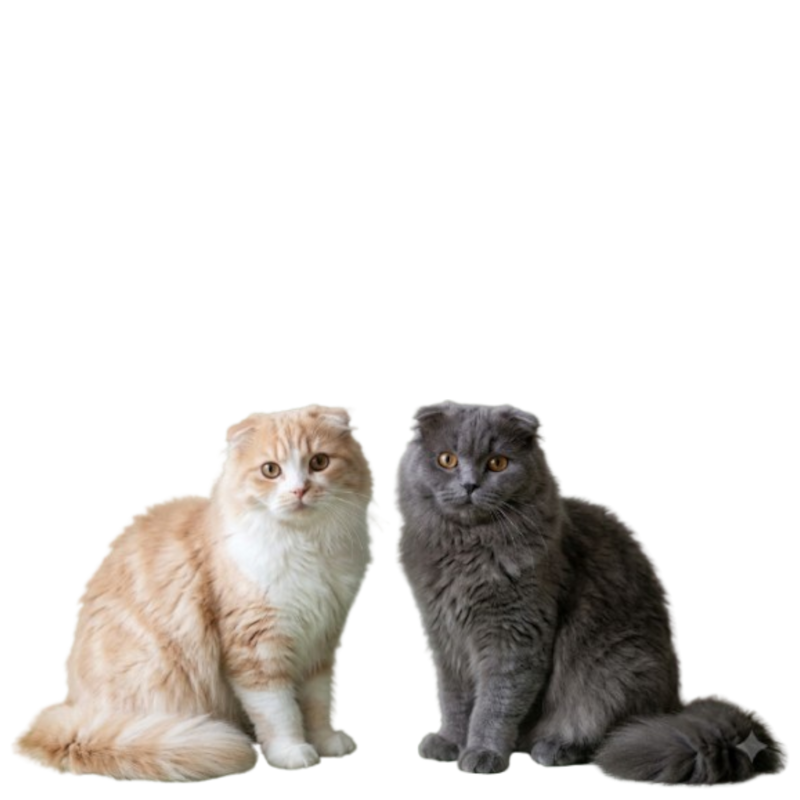
appearance
The overall impression of Scottish Fold Longhairs is one of soft, rounded contours paired with a sturdy, medium‐sized frame. Often described as resembling a plush owl or a sweet‐faced teddy bear, Scottish Fold Longhairs combine a solid, well‐padded bone structure with a lavish, flowing coat. Every physical attribute—from the curve of the skull to the sweep of the plume‐like tail—contributes to a balanced, harmonious silhouette without sharp angles or harsh planes.
Overall Body Architecture and Frame
Scottish Fold Longhairs possess a sturdy, well‐muscled body frame that feels solid and substantial when handled. The torso is medium in size, exhibiting a rounded, well‐sprung rib cage and a level back line that conveys strength rather than agility.
- Bone Substance: Medium to sturdy boning throughout, providing a firm, well‐grounded foundation.
- Muscularity: Smooth, firm muscle tone beneath a dense, cushioned body layer.
- Torso Outline: Broad, padded chest and broad shoulders creating a uniform, barrel‐like midsection.
- Proportions: A balanced ratio where body depth, leg height, and neck length form a compact, cohesive unit.
Head Structure and Facial Geography
The head of Scottish Fold Longhairs is fundamentally round, setting the foundation for Scottish Fold Longhair’s signature expression. The skull curves smoothly from the top of the head down through the muzzle, blending seamlessly into a short, well‐developed neck.
Scottish Fold Longhair Head Symmetry Ratio
- : The calculated proportionality metric evaluating the structural balance of the head.
- : The measured breadth across the skull of the cat.
- : The measured vertical dimension of the muzzle structure.
- : The ideal ratio indicating a balanced, round structural conformation characteristic of the breed.
A feline conformation judge evaluates the head structure of an adult Scottish Fold Longhair during a standard breed assessment. The judge measures a cranium width of 10 centimeters and a muzzle depth of 10 centimeters. Dividing the cranium width by the muzzle depth () yields a head symmetry ratio of exactly 1.0. This calculated result confirms that the cat exhibits the signature round head conformation and balanced structural proportions required by the breed standard.
| Head Feature | Physical Structure | Visual Impression |
|---|---|---|
| Skull Contour | Well‐rounded dome with broad, well‐developed cheeks | Smooth, circular silhouette from any angle |
| Muzzle & Chin | Short, broad muzzle with rounded whisker pads; firm, aligned chin | Soft, gentle muzzle contours without fox‐like sharpness |
| Nose & Profile | Short, broad nose with a gentle profile curve | Smooth transition with no harsh break or stop |
| Eyes | Large, broad, circular apertures set wide apart | Wide‐eyed, sweet, and open expression |
Ear Conformation and Folding Mechanism
The defining characteristic of Scottish Fold Longhairs is the uniquely folded ear, which sits like a tightly fitted cap against the rounded skull. The fold is created by a natural cartilage bend that directs the ear forward and downward.
- Ear Placement: Set in a wide, sweeping cap‐like position to preserve the circular skull outline.
- Fold Types: Varies from a single loose forward bend to a tight, double‐ or triple‐folded appearance resting flush against the head.
- Ear Tips: Rounded, small tips that point toward the center of the face rather than outward.
- Furnishings: Tufts of fur extending from the ear aperture, softening the line where the fold meets the head.
Limb Mechanics and Tail Structure
The limbs and tail of Scottish Fold Longhairs must be evaluated for flexibility and proper structural proportion, ensuring effortless, free‐flowing movement.
Legs and Paws
The legs are medium in length, proportional to the body frame, and supported by heavy‐duty boning. Paws are neat, compact, and well‐rounded with well‐tufted toes, giving the impression of sturdy, cushioned pads.
Tail Alignment and Flexibility
The tail is a vital structural indicator in Scottish Fold Longhairs. It should be medium to long in proportion to the body, tapering gently from a sturdy base to a supple tip.
Structural Note: The tail must remain fully flexible, showing no signs of rigidity, fusion, or stiffness along its vertebrae when handled gently from base to tip.
Coat Texture, Density, and Plumbing
The longhair coat variant transforms Scottish Fold Longhair’s silhouette, adding softness and volume to every contour. The coat stands away from the body due to a rich, dense undercoat combined with longer, resilient guard hairs.
- Coat Length: Semi‐long to long, flowing naturally along the contours of the torso.
- Ruff and Apron: Full, plush ruff around the neck and throat, framing the circular face.
- Britches & Tail Plume: Heavy, dense britches on the hind legs and a full, magnificent plume tail.
- Texture: Soft, silky, and deeply padded to the touch, offering natural resilience.
Structural Conformation of Scottish Fold Longhairs
Scottish Fold Longhairs stand out as a masterclass in rounded symmetry and plush texture. From the tightly folded ears nestled against a circular skull to the broad, sturdy torso draped in a soft, flowing coat, every structural detail works in tandem. The result is a balanced, medium‐framed Scottish Fold Longhair whose supple tail, firm boning, and plush, feather‐like coat create an unmistakable, captivating presence.
behavior
Observing Scottish Fold Longhairs throughout a typical day reveals a distinct balance of quiet observation and deliberate interaction. Rather than patrolling territorial boundaries with restless energy, these cats choose strategic resting locations that afford clear views of household movement. Their daily habits center on remaining close to human activity, adopting peculiar sitting positions, and engaging in low‐impact, methodical play.
Daily Activity Cycles and Resting Postures
The activity pattern of Scottish Fold Longhairs follows a steady, predictable rhythm. Peaks of playfulness occur in brief bursts, usually during early morning or evening hours, while the majority of the day is spent lounging near their chosen companions.
Scottish Fold Longhair Interaction Likelihood
- : The cumulative probability that the cat will initiate or engage in social interaction over a given timeframe.
- : The maximum normalization boundary representing a 100 percent certainty of interaction.
- : The mathematical constant representing the base of the natural logarithm, approximately equal to 2.71828.
- : The social engagement rate parameter reflecting the breed{"\u2019"}s underlying affinity for human companionship.
- : The time elapsed measured in hours since the last significant social engagement or feeding period.
An owner observes the daily routine of a Scottish Fold Longhair during the evening hours to determine when the cat is most likely to seek social engagement. Using a social engagement rate parameter of 0.4 and an elapsed time of 3 hours since the last resting period, the owner multiplies lambda by time () to get 1.2. Evaluating the negative exponential expression () results in approximately 0.3012, and subtracting this from 1 yields an interaction likelihood of approximately 0.70. This calculated result indicates a 70 percent probability that Scottish Fold Longhair will actively approach family members and initiate social interaction at this point in the daily cycle.
- The Buddha Sit: Resting flat on their lower back with hind legs stretched straight out, a stance that relaxes their hindquarters while keeping their front legs resting on their belly.
- The Prairie Dog Stance: Standing up on their hind legs with paws tucked forward to gain a higher vantage point when an intriguing sound occurs.
- Perch Selection: Choosing low‐ to mid‐level surfaces—such as sofas, low tables, or floor cushions—rather than high ceiling perches.
- Proximity Habits: Following family members from room to room and settling within a few feet, maintaining a supportive presence without demanding direct physical handling.
Social Dynamics and Interaction Style
In multi‐pet households or busy family environments, Scottish Fold Longhairs demonstrate a low‐conflict approach to social encounters. They communicate boundaries through subtle body shifts rather than overt vocalizations or aggressive displays.
| Social Interaction | Behavioral Response | Primary Communication Signal |
|---|---|---|
| New Household Members | Slow approach after initial observation | Slow blinks and relaxed ear positioning |
| Other Domestic Pets | Peaceful co‐existence with minimal territorial friction | Parallel lounging and shared space usage |
| Unfamiliar Visitors | Calm monitoring from a brief distance | Gentle tail flicking followed by approach |
| Direct Handling | Passive acceptance and soft leaning | Relaxed limb muscle tone |
Vocalization Patterns and Auditory Signals
Communication in Scottish Fold Longhairs is noticeably quiet compared to many other domestic cat breeds. They rarely use loud or persistent vocal demands to express their needs.
- Soft Trills: Utilizing low‐volume, chirping sounds when greeting familiar individuals or announcing arrival in a room.
- Muted Meows: Expressing hunger or requesting door openings with short, quiet vocalizations.
- Purring Frequency: Sustained, low‐frequency purring activated easily through gentle chin scratches or proximity to humans.
Play Mechanisms and Toy Engagement Styles
Play sessions with Scottish Fold Longhairs are characterized by calculated pouncing and floor‐based pursuit rather than high‐flying acrobatic leaps.
Ground‐Level Hunting Movements
Scottish Fold Longhairs prefer toys that mimic small ground prey. They stalk feather wands or rolling balls from a crouching position, wiggling their hindquarters before executing a short, controlled pounce.
Problem‐Solving and Object Manipulation
Interactive food puzzles and kick toys engage Scottish Fold Longhairs effectively. They use their front paws like hands to scoop toys out from under furniture or manipulate puzzle compartments, demonstrating deliberate, focused problem‐solving.
Behavioral Profiles and Actions of Scottish Fold Longhairs
Everyday actions of Scottish Fold Longhairs reflect a calm, grounded, and observant animal. From their unique sitting postures and ground‐focused play habits to their soft, infrequent vocalizations, Scottish Fold Longhairs navigate their environment with a steady, quiet presence that integrates effortlessly into domestic life.
color
The full visual impact of Scottish Fold Longhair’s coloration is heavily influenced by the interplay between rich hair shaft pigmentation and a plush, voluminous coat. Because the fur is long and layered, color present in Scottish Fold Longhairs often exhibits a dimensional quality, where light penetrates the top guard hairs and reflects off the lighter undercoat beneath. From deep, solid tones to intricate patterned coats, color distribution across the body presents a vibrant, continuous spectrum without unwanted white ticking or uneven fading unless called for by the specific pattern.
Base Pigment Density and Hair Shaft Dynamics
Understanding how color saturates each individual strand of hair clarifies why certain hues appear intense while others look soft and muted. In solid coats, pigment extends continuously from the root tip down to the skin surface, whereas shaded or tipped coats restrict intense pigment to the outer tips of the hair shaft.
Scottish Fold Longhair Visual Color Depth
- : The total accumulated color intensity perceived across the entire strand of hair.
- : The mathematical integral representing the continuous accumulation of pigment along the length of the hair shaft.
- : The starting boundary located at the root of the hair shaft near the skin surface.
- : The upper boundary representing the total physical length of the individual hair strand.
- : A function describing the density of melanin granules at any given point along the hair strand.
A feline coat color specialist analyzes a hair sample from a Scottish Fold Longhair to evaluate how pigment distribution influences coat appearance. By integrating a constant pigment concentration function of 2 units across a hair length of 5 centimeters from root to tip ( to ), the specialist calculates the definite integral of 2 with respect to , which evaluates to 10. This resulting visual color depth score of 10 indicates a dense, solid melanin loading from root to tip, confirming that the cat exhibits a deep, uniform coloration across Scottish Fold Longhair’s plush coat rather than a tipped or shaded distribution.
- Solid Color Saturation: Dense, uniform pigment loading from the hair root to the far tip, creating an even tone across the head, back, and tail plume.
- Tipped and Shaded Distribution: Pigment is concentrated exclusively on the outer portion of the hair shaft, leaving the lower undercoat a pale, silvery white that glimmers as the cat moves.
- Agouti Banding: Alternating bands of dark and light pigment along a single hair strand, forming the foundational contrast seen in tabby markings.
- Undercoat Interplay: A slightly paler or softer undercoat hue that provides visual volume, giving the outer coat a plush, luminous quality.
Color Categories and Pattern Expressions
Scottish Fold Longhairs display a wide array of recognized coat patterns and tonal combinations. The long, flowing coat diffuses sharp lines, resulting in soft, sweeping transitions between contrasting colors or intricate tabby ribboning.
| Color Category | Pigment Distribution Style | Visual Characteristics |
|---|---|---|
| Solid Hues | Uniform, tip‐to‐root saturation across all guard hairs | Deep, unbroken color from face to tail plume |
| Tabby Patterns | Agouti ground color with dense, contrasting markings | Bold stripes, swirls, or spots softened by coat length |
| Parti‐Color & Calico | Patchwork of solid hues paired with crisp white | Distinct, well‐defined patches across a plush backdrop |
| Colorpoint Expressions | Thermal pigment concentration on extremities | Rich tone on face, ears, paws, and tail over a pale body |
Pointed Coloration and Temperature‐Dependent Pigment
In pointed variants of Scottish Fold Longhairs, pigment distribution is governed by body heat. Cooler areas of the body—such as the facial mask, folded ear tips, paws, and tail plume—develop deeper, more concentrated color, while the warmer torso maintains a pale, creamy contrast.
- Facial Mask Bounds: Pigment covers the muzzle, cheeks, and eye area, creating a framed centerpiece against the lighter head fur.
- Ear Tip Accentuation: The folded cartilage area displays full point saturation, drawing subtle focus to the unique ear placement.
- Limb Contrast: Paws and legs show a gradual darkening toward the digits, matching the depth of the tail plume.
Color Expression Across Special Coat Effects
Beyond primary hues, specialized light‐refracting effects create striking visual dimension in longhaired coats. Smoke variants feature a dark, solid surface color that parts to reveal a stark, snow‐white undercoat when the cat turns or stretches.
Smoke and Silver Variations
In smoke coats, the top two‐thirds of the hair shaft carry intense pigment, while the remaining root area remains completely unpigmented. When the cat rests, the coat appears dark and solid, but as movement opens the outer fur, the hidden white undercoat creates a dramatic, shimmering effect.
Bi‐Color Patching and White Insertion
When white patching is present, it appears as clear, unpigmented regions free from stray colored hairs. The division between dark pigment and pure white fur remains distinct, creating clean color blocks along the chest, belly, legs, and facial blaze.
Coat & Pigment Overview of Scottish Fold Longhairs
Color in Scottish Fold Longhairs is defined by depth, richness, and the subtle softening effect of a long, double coat. Whether observing an unbroken solid tone, a sparkling silver smoke, or a sharply defined point pattern, the distribution of pigment along the hair shaft works in tandem with the coat structure. The end result is a vibrant, dimensional visual presentation that highlights every curve and contour of Scottish Fold Longhair’s unique frame.
compatibility
Ease of Maintenance
Rating: 2/5
Child Friendly
Rating: 5/5
Annual Cost
Rating: 3/5
Lifetime Cost
Rating: 1/5
Adaptability
Rating: 4/5
Velcro Factor
Rating: 5/5
Quietude
Rating: 4/5
Apartment Suitability
Rating: 5/5
Hypoallergenic
Rating: 2/5
Handling Tolerance
Rating: 5/5
Hardiness/Longevity
Rating: 2/5
Prey Drive
Rating: 4/5
genetics
The genetic blueprint of Scottish Fold Longhairs is defined by a specific interplay between structural mutation alleles and coat length genes. Every aspect of Scottish Fold Longhair’s unique genomic profile stems from how discrete DNA variations are passed down from parent to offspring. Understanding these underlying hereditary mechanisms allows preservation breeders to predict litter outcomes accurately while maintaining broad genetic diversity within their breeding programs.
The Fold Mutation and Dominant Inheritance
The hallmark feature of Scottish Fold Longhairs is governed by an autosomal dominant gene mutation affecting cartilage development across the body. When a cat carries a single copy of this folding allele, the ear cartilage softens and bends forward.
Scottish Fold Longhair Fold Probability
- : The fixed statistical probability that an individual kitten will inherit the folded ear phenotype from a heterozygous mating pairing.
- : The exact Mendelian ratio representing a 50 percent likelihood of inheritance per offspring when crossing a heterozygous folded cat with a straight eared partner.
A preservation breeder reviews the expected outcomes for an upcoming litter involving a heterozygous Scottish Fold Longhair and a straight eared partner. Because the inheritance follows a predictable autosomal dominant pattern with a fixed probability of 0.5, the breeder calculates that out of four expected kittens, exactly 2 are statistically projected to inherit the folded ear phenotype. This foundational probability provides the breeder with a reliable baseline for managing Scottish Fold Longhair’s breeding program safely and effectively.
- Heterozygous State: Carrying one copy of the fold allele coupled with one normal straight‐ear allele, resulting in the characteristic folded ear phenotype.
- Homozygous State: Carrying two copies of the dominant fold allele, which intensifies cartilage and bone modifications throughout the skeletal matrix.
- Straight‐Eared Variants: Cats receiving two standard straight‐ear alleles from their parents, which naturally retain standard unfolded ears while remaining genetically vital for breeding programs.
Coat Length Genetics and Recessive Expression
The longhair variation found in Scottish Fold Longhairs is controlled by an autosomal recessive gene. Unlike the dominant fold trait, a cat must inherit two copies of the longhair allele‐one from each parent‐to display the flowing, plush coat structure.
| Genotype State | Allelic Combination | Physical Coat Expression |
|---|---|---|
| Homozygous Longhair | Two recessive alleles (l/l) | Full longhair expression with rich undercoat |
| Heterozygous Carrier | One dominant shorthair and one recessive longhair allele (L/l) | Appears shorthaired but carries the hidden longhair gene |
| Homozygous Shorthair | Two dominant standard alleles (L/L) | Standard short coat with no recessive longhair transmission |
Punnett Modeling for Fold and Coat Combinations
When planning matings between heterozygous folded longhairs and straight‐eared carriers, breeders track multiple loci simultaneously to anticipate kitten phenotypes.
Scottish Fold Longhair Multi-Locus Offspring Phenotype Ratio
- : The predicted statistical distribution of distinct phenotypic combinations in a resulting litter.
- : The independent quarter probability assigned to each unique combination of ear type and coat length traits under Mendelian segregation.
- : The phenotypic outcome combining the dominant ear fold allele with two copies of the recessive longhair allele.
- : The phenotypic outcome combining the dominant ear fold allele with the dominant shorthair allele.
- : The phenotypic outcome combining standard upright ears with two copies of the recessive longhair allele.
- : The phenotypic outcome combining standard upright ears with the dominant shorthair allele.
A preservation breeder plans a mating between a heterozygous folded longhair and a straight eared carrier. By applying the multi-locus offspring ratio formula, the breeder calculates that each of the four distinct phenotypic combinations has an identical quarter chance of occurring. For a planned litter of four kittens, multiplying the total count by one quarter yields an expected distribution of exactly 1 folded longhair, 1 folded shorthair, 1 straight longhair, and 1 straight shorthair. This calculation provides the breeder with a precise genetic blueprint to manage Scottish Fold Longhair’s litter outcomes safely and effectively.
- Independent Assortment: The gene responsible for ear folding resides on a completely different chromosome from the gene governing coat length, meaning they segregate independently during meiosis.
- Selective Outcrossing: Responsible breeding relies on pairing folded cats exclusively with straight‐eared partners to avoid compounding dominant cartilage mutations in a single offspring.
Pigment Loci Interaction and Color Inheritance
While structural genes dictate form, separate chromosomal loci manage color distribution and pigmentation pathways across Scottish Fold Longhair’s genomic map.
The Extension and Agouti Loci
The foundational black pigment production is regulated at the extension locus, while the agouti locus determines whether hairs feature solid distribution or banded tabby patterns.
- Dense Pigment Alleles: Direct full‐strength melanin creation along the hair shaft.
- Dilution Modifiers: Recessive gene pairs that alter dense black or orange pigments into soft blue or cream variations by clustering pigment granules unevenly within the hair structure.
Genomic Foundations and Inheritance Patterns of Scottish Fold Longhairs
The genetic architecture of Scottish Fold Longhairs relies on a careful balance between dominant structural mutations and recessive coat traits. By understanding how the dominant fold allele and the recessive longhair allele operate independently across generations, breeders can effectively manage genomic diversity. This focused approach ensures the preservation of Scottish Fold Longhair’s distinct traits while maintaining optimal health and vitality within future lines.
health
Managing the physical well‐being of Scottish Fold Longhairs requires targeted focus on skeletal structure, joint mobility, cardiac function, and renal health. Because the physical traits of Scottish Fold Longhairs involve systemic cartilage alterations, routine clinical evaluation is essential to monitor joint flexibility and maintain long‐term comfort. Understanding the primary physiological vulnerabilities enables owners and preservation breeders to institute proactive monitoring routines and preventative clinical protocols early in the animal‐s life.
Cartilage and Skeletal Health Dynamics
The primary clinical focus in Scottish Fold Longhairs centers on osteochondrodysplasia, a developmental bone and cartilage condition that alters how skeletal structures grow and repair. This structural anomaly primarily affects the distal limb bones and tail vertebrae, leading to progressive joint stiffness and altered mobility if unmanaged.
Scottish Fold Longhair Joint Stress Load
- : The calculated mechanical pressure and physical strain experienced by peripheral joint structures.
- : The total mass of the cat measured in kilograms.
- : A clinical metric representing the operational flexibility and functional range of motion of the joints.
A veterinarian assesses the orthopedic health of an adult Scottish Fold Longhair to monitor potential joint stress related to skeletal development. The clinician records a body weight of 5 kilograms and evaluates a joint mobility index score of 2. Dividing the body weight by the joint mobility index () yields a joint stress load of 2.5. This numerical output helps the veterinarian quantify the physical pressure on Scottish Fold Longhair’s skeletal system, guiding targeted weight management and cartilage support interventions to preserve long term mobility.
- Tail Vertebrae Rigidity: Progressive thickening and fusion of tail joints, causing a reduction in natural flexibility or causing the tail to feel stiff to the touch.
- Distal Limb Exostoses: Abnormal bone growth around the ankles (tarsi) and wrists (carpi), which can lead to reduced joint range of motion and altered gait mechanics.
- Cartilage Cushions: Softened cartilage tissue throughout peripheral joints, increasing susceptibility to secondary osteoarthritis over time.
Cardiovascular and Renal Considerations
Like many domestic feline breeds with broad physical frames, Scottish Fold Longhairs show specific clinical predispositions toward organ Systems, particularly the heart and kidneys.
| Health Domain | Potential Condition | Clinical Marker & Management |
|---|---|---|
| Cardiac System | Hypertrophic Cardiomyopathy (HCM) | Thickening of the heart muscle walls; monitored via routine echocardiography |
| Renal Function | Polycystic Kidney Disease (PKD) | Fluid‐filled cysts in kidney tissue; evaluated using abdominal ultrasound screening |
| Auditory Health | Otitis Externa | Fluid build‐up in tight ear canals; managed via regular visual ear examinations and gentle cleansing |
Joint Mobility and Mobility Screening Protocols
Maintaining joint integrity in Scottish Fold Longhairs involves routine physical monitoring to catch early indicators of joint discomfort or skeletal changes before they alter normal daily movement.
Radiographic Evaluation
Breeding stock and companion animals benefit from periodic orthopedic X‐rays of the hind limbs, forelimbs, and spine. Visualizing the joint spaces allows veterinarians to evaluate bone density and detect early arthritic changes around the hocks and paws.
Physical Palpation Routine
Regular examination of tail suppleness and tarsal flexibility helps monitor ongoing structural comfort. Gentle, non‐forceful manipulation along the length of the tail ensures early identification of vertebrae stiffness.
Clinical Care Note: Any observed stiffness along the spine, resistance during tail palpation, or sudden changes in jumping height warrant immediate veterinary evaluation to establish appropriate joint support protocols.
Preventive Wellness and Clinical Monitoring
Proactive health management for Scottish Fold Longhairs focuses on weight control, tailored physical exercise, and consistent organ health screenings to preserve overall vitality.
- Weight Management: Keeping body condition scores in an optimal range reduces unnecessary physical load on compromised limb cartilage.
- Routine Ultrasound Diagnostics: Periodic cardiac and abdominal ultrasounds assist in early detection of muscle wall thickening in the heart or tissue alterations in the kidneys.
- Auditory Care: Because the folded ear cartilage creates a closed ear flap environment, routine visual checks prevent wax accumulation and maintain canal health.
Physiological Health and Clinical Profile of Scottish Fold Longhairs
Ensuring optimal physical health in Scottish Fold Longhairs relies on vigilant monitoring of joint integrity, cardiac wellness, and organ function. By combining regular orthopedic assessments and cardiac screenings with tailored weight management, owners and breeders provide a supportive framework that maintains physical comfort and long‐term structural vitality in Scottish Fold Longhairs.
longevity
The natural lifespan of Scottish Fold Longhairs reflects a gradual maturation curve typical of sturdy, medium‐framed domestic cats. With appropriate care and supportive living environments, Scottish Fold Longhairs generally reach 12–15 years of age, with some individuals reaching their late teens. Tracking their progression through distinct biological milestones allows owners and preservation breeders to adjust daily routines, ensuring comfort and vitality as the cat transitions from early development into senior maturity.
Lifespan Probability Metrics and Expectations
Quantifying the life expectancy of Scottish Fold Longhairs helps establish clear horizons for long‐term lineage planning and household care. Aging follows a predictable mathematical progression where metabolic activity stabilizes in early adulthood and slowly decelerates in mature age.
Scottish Fold Longhair Survival Probability
- : The statistical probability that the cat will survive beyond a specific chronological time or age.
- : The mathematical constant representing the base of the natural logarithm, approximately equal to 2.71828.
- : The constant hazard rate representing age-related mortality risk over time.
- : The chronological time elapsed, typically measured in years.
A feline gerontologist evaluates the long term survival probability of a Scottish Fold Longhair reaching an age of 12 years under controlled indoor conditions. Using a constant hazard rate parameter of 0.1, the clinician multiplies lambda by time () to get 1.2. Evaluating the negative exponential expression () results in approximately 0.3012. This calculated survival probability of approximately 0.30 indicates a 30 percent statistical likelihood of Scottish Fold Longhair surviving past this advanced age milestone, providing quantitative guidance for Scottish Fold Longhair’s senior health planning.
- Average Life Expectancy: Standard domestic lifespans fall squarely between 12–15 years under controlled indoor conditions.
- Extended Longevity Potential: Well‐maintained individuals often reach 15–18 years, showing remarkable resilience in their late senior stages.
- Maturation Rate: Slower development phase compared to smaller breeds, taking up to 3 years to reach full physical and skeletal maturity.
Progressive Life Stages and Aging Milestones
Understanding the physical shift from one biological stage to the next clarifies how Scottish Fold Longhairs age over time. Each milestone brings observable shifts in energy distribution, metabolic requirements, and bodily resilience.
| Life Stage | Age Range | Physiological Characteristics & Aging Indicators |
|---|---|---|
| Kitten & Developmental | 0–12 Months | Rapid skeletal elongation, initial coat development, high energy output |
| Young Adult | 1–3 Years | Full frame expansion, peak muscular density, stabilization of metabolic baseline |
| Mature Adult | 4–10 Years | Maintenance of peak body condition, gradual shift toward sedentary routines |
| Senior & Super Senior | 11+ Years | Softening muscle mass, reduced activity cycles, subtle graying around muzzle |
Visible Factors Influencing Lifespan Potential
Multiple external and environmental elements directly shape how Scottish Fold Longhairs navigate their aging curve. Monitoring these elements ensures that physical decline is cushioned effectively throughout the cat’s late years.
Environmental Stability and Activity Adaptation
Indoor living safeguards Scottish Fold Longhairs from external environmental hazards and extreme weather fluctuations, directly extending their potential lifespan. As activity levels naturally dip during mature adulthood, adjusting household layouts to support lower‐impact movement helps preserve joint health and mobility.
Metabolic Shifts in Senior Years
As Scottish Fold Longhairs enter their second decade, their basal metabolic rate decreases. Body composition shifts from firm muscle density toward a softer body condition if caloric intake remains unchanged.
Aging Observation Note: Subtle shifts in jumping frequency and longer resting periods are normal indicators of senior transition—though sudden drops in vitality warrant close attention.
Lifespan Expectations and Aging Trajectories of Scottish Fold Longhairs
The journey of Scottish Fold Longhairs across their lifespan is marked by a steady, long‐lasting maturation cycle. By recognizing each physical phase—from the extended developmental years through the quiet senior milestones—owners and breeders can foster an environment that maximizes vitality. With attentive long‐term care, Scottish Fold Longhairs gracefully navigate their aging years, offering over a decade of continuous presence and companionship.
maintenance
Establishing an effective daily husbandry routine for Scottish Fold Longhairs requires targeted focus on coat maintenance, precise nutritional scheduling, and an accessible living environment. Because the dense, semi‐long coat trap dander and skin oils, regular grooming prevents matting while supporting overall skin hygiene. Pairing systematic physical care with an enriched, easy‐to‐navigate home layout ensures that Scottish Fold Longhairs thrive across all life stages.
Nutritional Guidelines and Caloric Calculations
Proper nutrition for Scottish Fold Longhairs hinges on balancing protein density with strict portion control to prevent excess weight gain. Caloric needs should be calculated using the cat’s resting energy requirement (RER), adjusted for general daily activity levels.
Scottish Fold Longhair Resting Energy Requirement
- : The resting energy requirement expressed in kilocalories per day required to sustain basic metabolic functions at rest.
- : The standard metabolic scalar constant utilized for feline metabolic weight scaling.
- : The total body mass of the cat measured in kilograms.
- : The metabolic body size exponent accounting for non-linear scaling of metabolic rate relative to mass.
A feline nutritionist calculates the daily resting energy requirement for an adult Scottish Fold Longhair with a body weight of 4 kilograms. Raising 4 to the power of 0.75 yields approximately 2.828. Multiplying this value by the scalar constant of 70 gives a resting energy requirement of approximately 197.97 kilocalories per day. This computed daily caloric baseline allows the nutritionist to establish a precise dietary maintenance plan tailored to Scottish Fold Longhair’s unique metabolic needs.
- Protein & Moisture Baseline: Prioritize high‐protein wet food formulations to support hydration and maintain firm, healthy muscle tone.
- Feeding Frequency: Divide daily caloric intake into two to three small, scheduled meals rather than free‐feeding to monitor daily appetite accurately.
- Hydration Management: Provide multiple clean water stations or circulating fountains to encourage consistent fluid intake, which aids kidney function and digestive health.
Grooming Routines and Coat Maintenance
The longhair double coat of Scottish Fold Longhairs requires structured, routine maintenance to distribute natural cutaneous lipids (skin oils) and eliminate dead hair from the undercoat.
| Care Task | Frequency | Primary Objective & Equipment |
|---|---|---|
| Coat Brushing | 3–4 times weekly | Removes loose undercoat fur using a wide‐toothed comb and slicker brush |
| Ear Inspections | Weekly | Checks for debris build‐up in folded ear flaps; cleaned with soft cotton balls |
| Nail Trimming | Every 2–3 weeks | Prevents overgrown claws using specialized feline nail clippers |
| Dental Hygiene | 2–3 times weekly | Reduces plaque accumulation using feline‐safe enzymatic toothpaste |
Hygiene Protocols for Facial and Ear Care
Because the ear cartilage folds forward in Scottish Fold Longhairs, reduced airflow within the ear canal can allow wax and moisture to accumulate if left unmanaged.
Ear Cleaning Procedures
Gently lift the folded ear flap and inspect for dark wax or moisture. Moisten a cotton pad with a veterinarian‐approved ear cleansing solution, wiping away visible debris from the outer ear flap. Avoid inserting cotton swabs directly into the canal.
Facial and Sanitary Maintenance
Regularly wipe the eye area with a damp, soft cloth to remove minor tearing accumulation. Additionally, keeping the long fur around the hindquarters neatly trimmed prevents stray litter or waste from clinging to the britches.
Care Note: Routine grooming sessions should double as a gentle physical check—monitoring coat softness, skin clarity, and ear cleanliness to detect minor maintenance needs early.
Environmental Setup and Lifestyle Enrichment
Designing a supportive indoor space allows Scottish Fold Longhairs to engage in natural hunting and lounging behaviors without putting undue strain on their bodies.
- Low‐Profile Perches: Position sturdy scratching posts, window hammocks, and low climbing structures at accessible heights (under 4 feet) for safe jumping.
- Floor‐Level Interactive Toys: Supply puzzle feeders, feather wands, and rolling balls to encourage daily exercise and mental engagement.
- Litter Box Accessibility: Choose large, open‐top litter trays with low entry lips, ensuring smooth access without requiring high steps or awkward maneuvering.
Maintenance and Environmental Protocols for Scottish Fold Longhairs
Maintaining Scottish Fold Longhairs revolves around structured grooming routines, measured feeding practices, and a thoughtfully arranged living environment. By maintaining a regular combing schedule, tracking daily energy intake, and offering accessible enrichment, owners and breeders provide a practical husbandry framework that promotes long‐term comfort and wellbeing in Scottish Fold Longhairs.
measurements
| Measurement | Female | Male | ||
|---|---|---|---|---|
| Metric | Imperial | Metric | Imperial | |
height | 18 – 23 centimeters | 7 – 9 inches | 20 – 25 centimeters | 8 – 10 inches |
length | 33 – 38 centimeters | 13 – 15 inches | 36 – 43 centimeters | 14 – 17 inches |
weight | 2.7 – 4.1 kilograms | 6 – 9 pounds | 4.1 – 5.9 kilograms | 9 – 13 pounds |
• Height: Refers to the measurement at the withers (shoulders).
• Length: Measured from the tip of the nose to the base of the tail.
origin
The lineage of Scottish Fold Longhairs traces back to a localized genetic mutation discovered on a farm in Perthshire, Scotland, during the early 1960s. The foundational matriarch, a white barn cat named Susie, possessed uniquely folded ears that captured the attention of local cat enthusiasts. Through deliberate crossbreeding with local domestic short‐haired cats and longhaired breeds such as the British Shorthair and Persian, a distinct longhaired variant emerged alongside the shorthaired population, establishing the dual‐coat lineage known today.
Geographic Foundation and Initial Matriarch Line
The historical trajectory of Scottish Fold Longhairs began in 1961 in Coupar Angus, a small town in Perthshire, Scotland. The spontaneous cartilage modification observed in Susie marked the starting point of the entire breed lineage.
Scottish Fold Longhair Lineage Expansion Rate
- : The average metric quantifying how rapidly the ancestral bloodline grows across successive breeding stages.
- : The aggregate number of documented descendants recorded across lineage milestones.
- : The total number of developmental generation transitions or breeding cycles evaluated.
A feline historian analyzes the early registry records of the Scottish Fold Longhair to measure how quickly the foundational bloodline expanded. Recording a total of 120 registered offspring across 4 distinct generation steps from Susie's initial lineage, the historian divides 120 by 4 to yield a lineage expansion rate of 30. This calculated result of 30 registered offspring per generation step demonstrates a steady, manageable growth pace during the early establishment of Scottish Fold Longhair’s historical registry.
- Foundational Matriarch: Susie, an unpedigreed white barn cat whose unique forward‐folded ears provided the primary genetic template for the entire breed.
- First Generation Offspring: Snooks, a white female kitten born to Susie, who inherited the folded ear trait and was acquired by local shepherd William Ross.
- Early Outcrossing Strategy: Systematic pairings with domestic shorthairs and British Shorthairs to broaden the narrow ancestral gene pool.
- Emergence of the Longhair Variant: The introduction of longhaired British Shorthairs and Persians into early breeding programs introduced the recessive longhair trait into the folded bloodlines.
Chronological Milestones and International Migration
Following initial registration efforts in the United Kingdom during the 1960s, breeding programs expanded across North America, where the longhair phenotype was standardized and formally recognized.
| Year Range | Historical Event | Lineage Impact |
|---|---|---|
| 1961 | Discovery of Susie in Perthshire, Scotland | Identification of the founding matriarch of Scottish Fold Longhairs |
| 1966 | Initial registration with the Governing Council of the Cat Fancy (GCCF) | First formal recognition of the folded ear lineage in the United Kingdom |
| 1970 | Migration of bloodlines to North America | Exportation of founding stock to geneticists and breeders in the United States |
| 1978 | CFA Championship Status Granted | Broad recognition of folded lineage; longhaired variants refined through targeted selective breeding |
Structural Development of the Longhaired Gene Pool
The integration of the longhair trait into the folded ear heritage required careful, multi‐generational selection. Early breeders preserved the structural integrity of the folded lineage while establishing a stable longhair coat type.
The Role of Persian and British Outcrosses
To secure both the long coat and sturdy frame, breeders utilized Persian and British Shorthair outcrosses during the 1970s. These pairings enriched the genetic baseline, introducing hidden recessive longhair genes () into the previously shorthaired folded population.
Differentiation from Shorthaired Counterparts
Initially exhibited together with shorthaired variants, longhaired folded cats gained distinct breed category recognition as heritage registries established specific coat guidelines in the late 20th century.
Historical Heritage Note: The development of Scottish Fold Longhairs reflects a transatlantic effort, combining rural Scottish landrace roots with structured North American breed preservation.
Chronological Timeline of Registry Recognition
The official acceptance of longhaired folded cats unfolded across major international feline registries as breeding programs standardized the longhaired coat characteristics.
- GCCF Registry Era (1966–1971): Initial UK registry acceptance, which was later suspended due to concerns surrounding cartilage health in homozygous pairings.
- CFA Incorporation (1973–1978): Importation to North American breeding programs, leading to full championship status for the folded phenotype.
- TICA Longhair Standardization (1980s–1990s): The International Cat Association (TICA) formally granted separate classification status for longhaired folded variants, solidifying Scottish Fold Longhair’s modern lineage standing.
Historical Origins and Lineage Establishment of Scottish Fold Longhairs
The historical journey of Scottish Fold Longhairs highlights a remarkable transition from a chance discovery on a Scottish farm to a globally recognized pedigree. By pairing the natural cartilage mutation of Susie with established longhair lineages, early enthusiasts successfully preserved and refined a distinct feline heritage. Today, Scottish Fold Longhairs carry a rich history that bridges rural Scottish origins with decades of international breeding history.
temperament
The baseline temperament of Scottish Fold Longhairs is characterized by an even, composed emotional profile and a high degree of social adaptability. Exhibiting a tranquil yet observant nature, Scottish Fold Longhairs process sensory stimuli with measured calm rather than reactive urgency. This balanced disposition allows them to form steady, lifelong attachments to human household members while remaining receptive to multi‐pet domestic dynamics.
Social Bonding Preferences and Affection Style
The affection style of Scottish Fold Longhairs is quiet, steady, and non‐demanding. Rather than seeking continuous intense physical contact or vocalizing for attention, they prefer consistent physical proximity to their primary human companions.
Scottish Fold Longhair Social Orientation Index
- : The numerical ratio evaluating the balance between quiet companionship seeking and vocal or intrusive demands.
- : The frequency score representing how often the cat chooses to stay close to human companions.
- : The frequency score representing intrusive, vocal, or high-intensity attention-seeking actions.
- : The comparative threshold indicating whether passive, quiet companionship outweighs demanding behavioral patterns.
A behavioral researcher evaluates the interpersonal dynamics of an adult Scottish Fold Longhair within a household setting. By recording a proximity seeking score of 8 for staying close in the same room and a demanding behavior score of 4 for vocalizations, the researcher divides 8 by 4 to yield a social orientation index of 2.0. Because 2.0 is strictly greater than the 1.0 threshold, the calculation confirms that Scottish Fold Longhair exhibits a balanced, quiet companionship style characterized by steady proximity rather than persistent demands, aligning perfectly with Scottish Fold Longhair’s gentle behavioral expectations.
- Companionship Proximity: Choosing to settle in the immediate vicinity of their owners—often on adjacent seating or nearby rugs—to maintain passive connection throughout the day.
- Balanced Independence: Comfortable remaining alone for moderate daily intervals without developing heightened separation distress, provided environmental stimulation is available.
- Selective Affection: Expressing warmth through gentle head‐rests, soft eye‐blinks, and quiet presence rather than persistent lap‐sitting.
Temperament Trait Spectrums
The psychological breakdown of Scottish Fold Longhairs demonstrates a high tolerance for routine shifts paired with a low inclination toward territorial aggression or hyperactive arousal.
| Behavioral Dimension | Trait Placement | Emotional Manifestation |
|---|---|---|
| Environmental Adaptability | High | Adjusts smoothly to new furniture, home changes, or family travel |
| Reactivity Threshold | Low | Low sensitivity to sudden loud sounds or bustling household activity |
| Social Openness | Moderate to High | Warm toward familiar members; politely curious with new visitors |
| Intraspecific Harmony | High | Readily accepts co‐existence with other resident felines and canine companions |
Curiosity Drivers and Cognitive Engagement
While generally serene, Scottish Fold Longhairs maintain a focused, methodical curiosity about their environment. They engage with novel stimuli through systematic observation rather than impulsive exploration.
Sensory Processing in New Environments
When introduced to unfamiliar rooms or new objects, Scottish Fold Longhairs evaluate their surroundings from a grounded position. They observe subtle movements and scent cues before initiating a slow, methodical inspection.
Play Motivation and Problem‐Solving Focus
Cognitive engagement in Scottish Fold Longhairs is driven by reward‐based discovery and tactile manipulation. They prefer puzzle games that challenge their persistent problem‐solving abilities over high‐speed chase games.
Dispositional Note: The gentle, composed nature of Scottish Fold Longhairs makes them particularly adept at handling multi‐pet households—provided their quiet boundaries are respected by more assertive animals.
Emotional Resilience and Environmental Stress Response
The emotional stability of Scottish Fold Longhairs provides a strong buffer against everyday household stressors, enabling them to maintain their calm baseline across diverse living situations.
- Patience Under Handling: Exceptional physical tolerance during routine touch, making them agreeable companions during social interactions.
- Low Frustration Reactivity: Unlikely to display defensive clawing or vocal protest when boundaries are established or when play sessions conclude.
- Steady Recovery Time: Rebounds quickly from temporary frights or disruptions, returning to an even emotional state within minutes.
Psychological Baseline and Dispositional Traits of Scottish Fold Longhairs
The intrinsic temperament of Scottish Fold Longhairs blends grounded serenity with quiet, devoted companionship. Their high emotional stability, polite social curiosity, and low reactivity make them exceptionally adaptable family members. Whether living in quiet single‐person homes or lively multi‐pet environments, Scottish Fold Longhairs offer a reassuring, calm presence that defines their true dispositional heritage.