Scottish Fold Cat
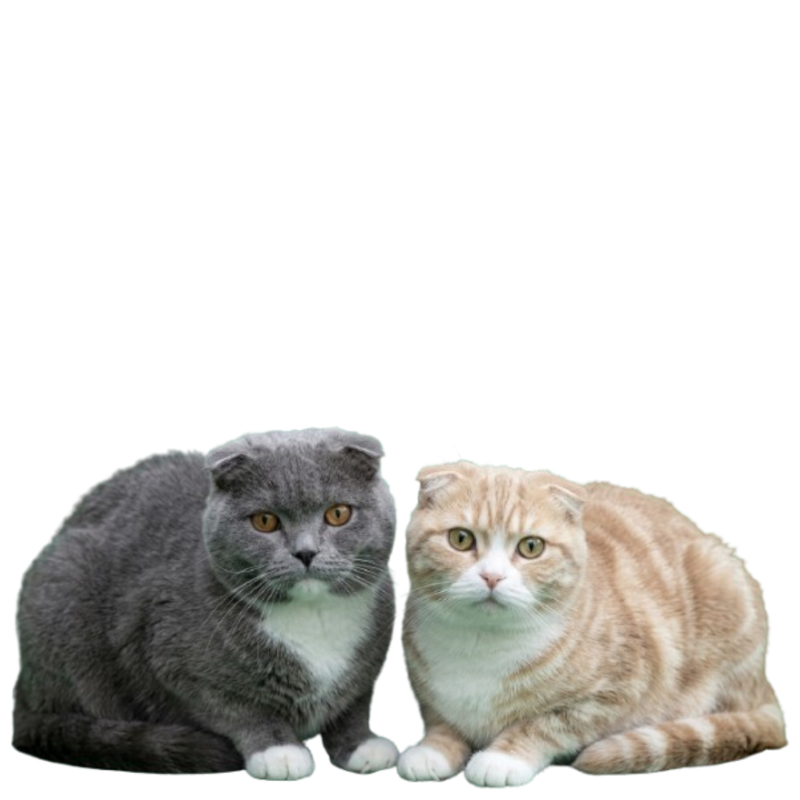
appearance
The physical signature of Scottish Folds centers on a unique balance of rounded contours, sturdy bone structure, and distinctive folded ears that hug the skull. Designed with a well‐padded, medium‐sized frame, Scottish Folds exhibit an overall impression of softness and symmetry without any hint of frailness. Every aspect of Scottish Fold’s body structure—from the expansive broad chest to the rounded paw pads—reinforces a compact, robust silhouette that sets Scottish Folds apart from longer, more slender feline breeds.
Head Structure and Facial Architecture
The head of Scottish Folds presents a smoothly rounded shape when viewed from any angle, resting on a short, sturdy neck. The cheeks are full and prominent, providing a broad foundation for large, round, expressive eyes that sit wide apart.
| Facial Feature | Physical Profile | Structural Impact |
|---|---|---|
| Head Contour | Well‐rounded skull with prominent cheekbones | Creates a circular, open facial impression |
| Muzzle | Short, broad, and gently padded | Enhances the smooth, curving lines of the face |
| Profile | Moderate nose dip in gentle curve | Avoids sharp breaks or flat planes |
| Eye Shape | Large, fully circular, and wide‐set | Delivers a distinctive, inquisitive expression |
Ear Folding and Carriage
The most striking physical marker of Scottish Folds is the forward‐and‐downward folding of the ears. The ear fold is created by natural cartilage creasing, causing the tips to point toward the jawline.
- Fold Tightness: Ears fold tight against the skull, fitting like a cap and preserving the round outline of the head.
- Ear Size: Small, forward‐leaning ears with rounded tips.
- Spatial Placement: Set wide apart to accentuate the rounded top of the skull.
The geometry of the ear fold can be visually mapped by the relation of ear alignment to head width, where the ratio of the visible skull width to total head height emphasizes a circular profile:
Scottish Fold Cranial Symmetry Ratio
- : The horizontal distance measured across the widest part of the head, incorporating the tight placement of the folded ears.
- : The vertical measurement from the crown of the skull down to the lower jawline.
- : The geometric benchmark indicating a balanced, circular facial profile characteristic of the breed.
A feline judge evaluates the head conformation of an adult Scottish Fold during a breed standard assessment. Using a specialized caliper, the evaluator measures a visible skull width of 12 centimeters and a total head height of 12 centimeters. Dividing the skull width by the head height (12 / 12) results in a cranial symmetry ratio of 1. Because the resulting ratio approximates 1, the measurement confirms that the cat exhibits the ideal rounded facial contour and balanced proportions outlined in Scottish Fold’s official breed standard.
Body Frame and Muscularity
Scottish Folds possess a firm, medium‐sized body frame that feels solid and well‐muscled throughout. The torso is well‐rounded, maintaining an even width from the shoulders down to the hips.
Limb and Paw Formation
- Leg Stance: Medium‐length legs with strong bone structure, proportional to the overall body size.
- Paws: Neat, round, and firm, featuring tightly set toes.
- Movement Balance: Low‐to‐the‐ground stability with an agile, flexible stride.
Tail Structure and Proportions
The tail of Scottish Folds is a critical indicator of structural balance. It should be flexible, tapering evenly from a sturdy base to a rounded tip.
- Tail Length: In proportion to the torso length, extending at least to the shoulder blades when gently laid along the back.
- Flexibility: Supple and free‐moving along the entire column without stiffness.
Coat Texture and Density
Scottish Folds occur in both short‐haired and long‐haired coat varieties. Regardless of length, the coat stands out from the body due to its rich density.
- Shorthair Variety: Plush, dense, and soft to the touch, rising off the body in a thick cushion.
- Longhair Variety: Full, flowing hair featuring longer fur around the neck ruff, leg britches, and tail plume.
Scottish Folds display an unmistakable combination of roundness, strength, and distinctive ear structure. The solid frame, full cheeks, expressive eyes, and dense coat of Scottish Fold come together to form a balanced, harmonious look that gives Scottish Folds their enduring visual appeal.
behavior
The daily routines of Scottish Folds revolve around steady observation, close human companionship, and low‐impact play styles. Scottish Folds interact with their environment through calm, methodical exploration rather than high‐energy leaps or rapid sprints across living spaces. From sit‐and‐watch monitoring strategies to distinctive resting postures—such as sitting upright on their hindquarters or stretching flat on their backs—their actions reflect an attentive, composed demeanor that integrates smoothly into multi‐pet and busy households.
Social Interaction and Human Attachment Strategies
Scottish Folds develop strong visual and physical ties with household members, showing a preference for shadowing human movement from room to room. Rather than demanding immediate attention, Scottish Folds position themselves within direct sightlines of daily activities.
| Interaction Type | Observed Behavior | Household Application |
|---|---|---|
| Proximity Seeking | Settles within 1–3 meters of primary caregivers | Maintains continuous line of sight without physical intrusion |
| Greeting Rituals | Approaches doorways with raised tail and soft head‐rubs | Signals acknowledgment upon human return |
| Co‐Sleeping Habits | Rests at the foot of beds or adjacent furniture | Prefers side‐by‐side presence over direct lap settling |
| Multi‐Pet Dynamics | Non‐confrontational sharing of communal areas | Avoids territorial blocking around feeding or resting stations |
Sitting and Resting Postures
Scottish Folds frequently adopt resting positions that differ from typical domestic felines. Caregivers frequently observe the “Buddha position,” where Scottish Fold sits upright on its lower back with hind legs extended forward and front paws resting on its abdomen. Additionally, flat‐backed belly‐up sleeping is common during deep rest phases.
Vocalization Patterns and Communication Signals
Vocal communication in Scottish Folds remains exceptionally muted. Instead of loud or persistent vocal demands, Scottish Folds utilize subtle auditory signals combined with expressive facial orientation.
- Soft Chirps and Trills: Used primarily during meal preparation or when requesting access to closed rooms.
- Low‐Volume Meows: Rare, soft vocalizations reserved for moments of direct social greeting or physical discomfort.
- Tactile Signaling: Gentle paw taps on human legs or arms to request interaction or food.
The probability of a vocal response during human interaction can be modeled relative to environmental stimulation intensity on a normalized scale from to :
Scottish Fold Vocal Response Probability
- : The estimated probability that the cat will use a vocal signal during human interaction, expressed on a scale from zero to one.
- : The mathematical constant representing the base of the natural logarithm, approximately equal to 2.71828.
- : The environmental stimulation intensity measured on a normalized scale from zero to one.
- : The threshold parameter representing the high stimulation baseline required to trigger a vocal response due to the breed{"\u2019"}s inherently muted communication style.
A behavioral researcher analyzes the communication habits of an adult Scottish Fold in a controlled environment. The investigator records an environmental stimulation intensity score of 0.9. Subtracting the threshold parameter of 0.8 from 0.9 yields 0.1, which when multiplied by -5 results in -0.5. Evaluating the exponential expression with -0.5 and solving the logistic equation yields a vocal response probability of approximately 0.62. This calculation indicates a 62 percent likelihood that the cat will transition from silent tactile signaling to soft chirps or low-volume meows, accurately modeling Scottish Fold’s subtle vocal behavior under high stimulus conditions.
Play Styles and Environmental Exploration
Play behaviors in Scottish Folds focus on ground‐level tracking, batting at soft objects, and solving food puzzles rather than vertical climbing.
Play Preferences and Activity Distribution
- Ground‐Level Hunting: Pouncing on toy mice, chasing rolling balls, and batting at feather wands kept near floor level.
- Vertical Space Usage: Preference for mid‐level perches such as chairs and sofas over ceiling‐high cat trees or door tops.
- Problem‐Solving Tasks: High engagement with treat‐dispensing puzzle toys that reward deliberate paw manipulation.
Scottish Folds exhibit a grounded, quiet, and highly observant behavioral pattern. Their unique posture habits, gentle vocal tendencies, ground‐focused play, and constant yet unobtrusive presence create an easygoing daily routine that adapts seamlessly to modern living environments.
color
The coat variations in Scottish Folds display a remarkable range of intensity, shading, and surface patterns. From deep, uniform solid tones to intricate silver‐tipped hair shafts, Scottish Fold’s fur structure holds color with notable depth due to the dense undercoat. Color presentation across Scottish Folds ranges from stark, solid saturation extending from root to tip, to complex gradient bands where pigment rests primarily on the outer hair tips, creating shimmering or dramatic contrast effects as the cat moves.
Primary Color Categories and Pigment Density
Visual coat variations in Scottish Folds can be classified into distinct foundational categories based on how pigment saturates each individual hair shaft and spreads across the body.
| Color Category | Pigment Characteristics | Visual Appearance |
|---|---|---|
| Solid Division | Deep, even color saturation from skin to tip | Crisp, uniform tone free from ghost markings or rusting |
| Tabby Division | Alternating light and dark bands along hair shafts | Defined body striping, blotches, or ticking with an “M” forehead mark |
| Silver and Smoke | Pure white roots with dark pigment concentrated on tips | Luminous, shimmering contrast exposed when the coat parts |
| Parti‐Color & Bi‐Color | Crisp patches of primary color interspersed with white | Bold, clean visual boundaries between colored and white areas |
| Pointed Division | Heavy pigment restricted to extremities (mask, ears, tail, paws) | Pale body coat contrasting sharply with rich, dark points |
Hair Shaft Pigment Mechanics
The visual richness of a given hue depends on pigment distribution along the individual hair strand. In solid varieties, pigment granules are tightly packed along the entire length (). In tipped or shaded coats, pigment concentration () varies as a function of the distance () from the hair root:
Scottish Fold Pigment Concentration Distribution
- : The concentration of pigment granules measured at a specific distance along the hair strand.
- : The maximum pigment concentration found at the extreme outer tip of the hair strand.
- : The distance measured along the hair strand from the root.
- : The total length of the individual hair strand.
- : The exponent greater than 1 representing a steep increase in color density near the tip, producing a shaded outer surface over a lighter undercoat.
A feline geneticist examines a shaded silver Scottish Fold coat to understand color distribution along the hair strand. The specialist measures a total hair length of 30 millimeters and evaluates pigment density at a distance of 30 millimeters from the root, where the maximum pigment concentration reaches a value of 100 units. Setting the exponent to 2, dividing the distance by the total length (30 / 30) yields 1, which squared remains 1 and multiplies by 100 to result in a pigment concentration of 100 units at the tip. This calculation mathematically confirms the shaded coat pattern, illustrating how Scottish Fold’s distinct silvered undercoat transitions into a heavily pigmented outer surface.
Where represents a steep increase in color density near the tip, producing a light, silvered undercoat beneath a distinctly shaded outer surface.
Surface Patterning and Color Contrast
- Agouti Patterning: Individual hair strands display alternating bands of dark and warm ground color, creating a rich, textured backdrop for tabby markings.
- Tipping Intensity: Tipped variants display color restricted to the top 1/8th of the hair shaft, while shaded varieties carry pigment down 1/4th of the hair length, creating a heavier, mantle‐like wash.
- White Patching Sharpness: In bi‐color and parti‐color patterns, the separation between white areas and colored patches remains distinctly defined without intermingling hairs.
Eye Color Harmony with Coat Pigmentation
Eye color in Scottish Folds corresponds closely to the primary pigment intensity present in the coat. Deep solid coats typically pair with brilliant gold or copper irises, silver variants display green or blue‐green tones, and pointed coats feature intense blue eyes.
Scottish Folds exhibit an extraordinary palette of coat hues and patterns. Whether showing fully saturated solid shades, crisp tabby bands, or silver‐tipped gradients, the interaction between dense fur structure and pigment placement endows Scottish Fold coats with vibrant, multi‐dimensional clarity.
compatibility
Ease of Maintenance
Rating: 3/5
Child Friendly
Rating: 5/5
Annual Cost
Rating: 3/5
Lifetime Cost
Rating: 1/5
Adaptability
Rating: 4/5
Velcro Factor
Rating: 5/5
Quietude
Rating: 4/5
Apartment Suitability
Rating: 5/5
Hypoallergenic
Rating: 2/5
Handling Tolerance
Rating: 5/5
Hardiness/Longevity
Rating: 2/5
Prey Drive
Rating: 4/5
genetics
The remarkable appearance of Scottish Folds traces back to a single spontaneous genetic mutation that alters cartilage development throughout the body. Understanding this genomic foundation is essential for anyone interested in the inheritance patterns and DNA traits that define the breed. Rather than dealing with complex laboratory terminology, breeders and owners can look directly at how specific genetic instructions pass from parents to offspring, shaping the unique physical traits we see today.
The Core Mutation and Locus Dynamics
At the heart of the breed’s genetics is a specific gene locus responsible for cartilage formation. When a cat inherits the mutation associated with Scottish Fold, the cartilage throughout the body undergoes a subtle structural shift. This genetic change prevents the ear cartilage from remaining rigid, causing the ear flap to fold forward and downward.
- The Dominant Allele (): The mutated allele responsible for the folded ear phenotype exhibits an incomplete dominant inheritance pattern. This means that inheriting just a single copy of the variant from one parent is enough to produce the folded ear trait.
- The Wild‐type Allele (): The normal, non‐mutated allele inherited from a straight‐eared ancestor governs standard cartilage development and normal upright ear placement.
Inheritance Patterns and Genotypic Combinations
Breeding Scottish Folds requires careful management of allele combinations to predict offspring traits accurately. Because the mutation acts dominantly, understanding how these genes pair up determines whether kittens will have folded or straight ears.
| Genotype | Allele Combination | Phenotypic Result | Inheritance Behavior |
|---|---|---|---|
| Heterozygous | Ff | Folded Ears | Exhibits the characteristic folded ear phenotype with minimal structural complication. |
| Homozygous | FF | Folded Ears with Severe Osteochondrodysplasia | Results from two copies of the dominant allele, causing severe developmental issues in cartilage and bone. |
| Wild‐type | ff | Straight Ears | Standard upright ear placement with normal cartilage density. |
To prevent the debilitating bone and cartilage disorders associated with homozygous individuals (), ethical breeding practices strictly prohibit mating two folded‐eared cats together.
Probability Modeling in Breeding Programs
When planning a litter, preservation breeders use probability calculations to determine the expected distribution of ear types in kittens. Mating a heterozygous folded‐eared cat () with a straight‐eared cat () follows a predictable Mendelian ratio.
Scottish Fold Ear Type Probability
- : The statistical probability that an individual kitten will inherit the folded ear phenotype from a specific mating pair.
- : The number of possible outcomes resulting in the heterozygous genotype carrying one dominant fold allele and one recessive straight allele.
- : The complete set of genetically possible offspring combinations resulting from the cross.
- : The fixed mathematical ratio indicating an even split between folded and straight ear outcomes.
A preservation breeder plans a mating between a heterozygous folded eared Scottish Fold and a straight eared partner to maintain the breed standard safely. The breeder identifies that out of four possible genetic combinations in the Punnett square, two represent heterozygous folded offspring and two represent straight eared offspring. Dividing the number of heterozygous outcomes by the total possible outcomes (2 / 4) simplifies to , resulting in an ear type probability of 50 percent. This calculation gives the breeder reliable statistical confidence that half of the litter will inherit Scottish Fold’s characteristic folded ear phenotype.
This mathematical certainty ensures that every mating between a folded cat and a straight cat yields an expected 50–50 distribution, giving breeders a reliable method to maintain the breed standard safely.
Coat and Color Genetics
Beyond ear architecture, the genomic profile of Scottish Folds encompasses a wide array of coat colors and patterns inherited independently from the ear folding locus.
- Pigmentation Loci: Standard feline color genes‐such as the black locus (), dense versus dilution genes (), and agouti banding patterns ()—segregate independently on separate chromosomes.
- Independent Assortment: Because the ear folding gene is not linked to coat color genes, Scottish Folds can display virtually any color or pattern found in domestic cats‐ranging from solid white and deep black to complex silver shaded and tabby variations.
Scottish Fold’s underlying genetics represent a fascinating interplay between a single dominant mutation and careful, responsible stewardship. By understanding allele combinations, inheritance probabilities, and independent assortment, breeders and enthusiasts can protect the health of Scottish Folds while preserving their iconic appearance for generations to come.
health
Maintaining long‐term physical health in Scottish Folds requires attentive monitoring of joint mobility, cardiac function, and renal efficiency. The unique structural trait that defines Scottish Fold’s folded ears stems from a systemic cartilage variation that also affects joint surfaces throughout the body, particularly in the lower limbs and tail. Proactive clinical management focuses on maintaining optimal joint flexibility, managing body mass to reduce stress on weight‐bearing skeletal structures, and establishing early health screening routines to safeguard overall vitality.
Skeletal and Cartilage Vulnerabilities
The primary physical condition requiring clinical attention in Scottish Folds is osteochondrodysplasia, a developmental disorder that influences how bone and cartilage form across the entire skeleton.
| Health Area | Affected Structure | Clinical Manifestation | Management Strategy |
|---|---|---|---|
| Distal Extremities | Hocks, wrists, and paws | Reduced joint flexibility, thickened paws, and altered gait | Joint supplements, low‐impact environments, and regular mobility checks |
| Caudal Spine | Tail vertebrae | Progressive tail stiffness, fusion of spinal bones, or shortened movement | Gentle, regular tail palpation during routine physical exams |
| Weight Bearing | Hips and knees | Accelerated joint wear from structural misalignment | Strict weight management to minimize load stress |
Joint Health and Mobility Metrics
Structural flexibility in joints can be tracked clinically by observing range of motion. The risk factor for joint stiffness and secondary osteoarthritis increases as body mass index rises relative to joint cartilage density :
Scottish Fold Joint Stiffness Risk Factor
- : The calculated risk factor for joint stiffness and secondary osteoarthritis, representing relative mechanical strain on skeletal structures.
- : The body mass index or relative mass metric of the cat.
- : The density of the joint cartilage, representing structural resilience against physical stress.
A veterinarian assesses the orthopedic health of an adult Scottish Fold during a routine wellness examination. The clinician records a body mass index metric of 6 and evaluates a joint cartilage density score of 2. Squaring the cartilage density score () results in 4, and dividing the body mass index by this squared density (6 / 4) yields a joint stiffness risk factor of 1.5. This numerical output helps the veterinarian evaluate the mechanical strain on Scottish Fold’s skeletal system, prompting the recommendation for targeted weight management and joint supplements to preserve long term mobility.
Regular monitoring of tail suppleness and leg agility allows caregivers to detect early shifts in joint comfort and introduce environmental modifications before mobility decreases.
Cardiac and Renal Monitoring
Beyond cartilage considerations, Scottish Folds require routine monitoring for secondary systemic health conditions that can affect medium‐sized domestic cats.
Cardiac Wellness
- Hypertrophic Cardiomyopathy (HCM): A condition where the muscular walls of the heart thicken, reducing pumping efficiency. Routine echocardiograms help assess heart wall thickness and chamber volume.
- Routine Screening: Annual cardiac auscultation during wellness checkups assists in detecting early heart murmurs or irregular rhythms.
Renal Health
- Polycystic Kidney Disease (PKD): A condition characterized by the formation of fluid‐filled sacs within the kidney tissue, which can impair kidney function over time.
- Screening Protocol: Routine abdominal ultrasound examinations or kidney biomarker blood panels provide accurate baseline tracking of renal health.
Preventive Healthcare and Mobility Support
Establishing a supportive routine ensures that Scottish Folds maintain high physical comfort throughout their lives.
- Weight Control: Keeping a lean body condition score prevents excess strain on developing or modified joint surfaces.
- Environmental Ergonomics: Providing ramps or low steps near elevated surfaces allows easy navigation without high‐impact landings.
- Routine Joint Support: Incorporating omega‐3 fatty acids and glucosamine into dietary plans helps support smooth joint movement.
Supporting the long‐term physical well‐being of Scottish Folds centers on early screening and preventative joint care. Through consistent mobility checks, proactive heart and kidney monitoring, and a carefully managed weight profile, caregivers can ensure that Scottish Fold maintains optimal comfort, vitality, and quality of life.
longevity
The lifespan of Scottish Folds typically spans between 11–15 years, with well‐cared‐for individuals frequently reaching into their late teens. Scottish Fold’s aging trajectory follows a steady progression from rapid youthful development to a extended, stable mature period, eventually shifting into senior years where mobility and metabolic rates naturally slow. Recognizing these developmental shifts across each phase of life allows caregivers and breeders to track natural age‐related milestones and support vitality at every stage.
Life Stages and Physical Progression
The life journey of Scottish Folds breaks down into distinct developmental eras, each characterized by specific physical markers and changing physiological needs.
| Life Stage | Age Range | Physical Aging Indicators | Care Focus |
|---|---|---|---|
| Kittenhood | 0–12 months | Rapid skeletal growth and full coat development | Supporting uniform growth and joint flexibility |
| Young Adult | 1–6 years | Peak muscular tone and full physical maturity | Maintaining optimal body weight and active movement |
| Mature Adult | 7–10 years | Subtle drops in daily activity; gradual metabolic slowing | Routine wellness checks and body condition tracking |
| Senior | 11–14 years | Stiffness upon waking; thinning coat density | Environmental accessibility and comfort adjustments |
| Geriatric | 15+ years | Muscle mass loss; cloudy eye lenses; deeper sleep cycles | Specialized senior care and gentle mobility support |
Aging Metrics and Survival Curves
The survival probability of Scottish Folds beyond a given age (measured in years) can be modeled using a standard biological aging curve where represents the baseline mature age of 12 years and reflects the rate of senior vitality decay:
Scottish Fold Survival Probability
- : The estimated survival probability of the cat surviving beyond a specific chronological age , expressed on a scale from zero to one.
- : The current chronological age of the cat measured in years.
- : The mathematical constant representing the base of the natural logarithm, approximately equal to 2.71828.
- : The aging parameter reflecting the rate of senior vitality decay over time.
- : The baseline mature age threshold set at 12 years where senior transitions typically begin.
A feline gerontologist evaluates the senior vitality and life expectancy of an aging Scottish Fold during a wellness checkup. The clinician observes a cat at the age of 14 years and applies an aging decay parameter of 0.5. Subtracting the baseline mature age of 12 from 14 years () yields 2, which multiplied by 0.5 results in 1. Evaluating the exponential expression with 1 and solving the logistic equation yields a survival probability of approximately 0.27. This calculation indicates a 27 percent statistical likelihood of surviving past this advanced age milestone, providing quantitative guidance for Scottish Fold’s palliative care and senior comfort management.
Understanding this curve helps caregivers anticipate natural physical transitions as Scottish Folds cross from their mature prime into their senior years.
Physical Indicators of Aging
As Scottish Folds mature, visible signs indicate their transition through life stages:
- Coat and Skin Changes: Senior coats may lose some plushness or display light silvering around the muzzle and eyes.
- Movement Adaptation: Older Scottish Folds trade rapid floor movements for deliberate, measured strides, taking fewer high steps.
- Metabolic Shifts: Caloric needs drop noticeably as activity levels decrease, requiring adjustments to maintain ideal body mass.
Scottish Folds enjoy a robust and long life when provided with steady care through every phase of development. By understanding the distinct physical milestones from energetic kittenhood through the tranquil geriatric years, caregivers can ensure that Scottish Fold experiences a fulfilling, comfortable, and well‐supported life.
maintenance
Providing optimal care for Scottish Folds requires a consistent routine that integrates balanced nutrition, targeted coat maintenance, and tailored environmental setups. Due to their dense coat structures and moderate activity levels, managing daily caloric intake and maintaining skin hygiene are essential for ongoing vitality. Establishing clear husbandry protocols—ranging from weekly grooming habits to low‐impact indoor enrichment—ensures that Scottish Fold’s daily needs are fully met in both cattery and home settings.
Nutritional Guidelines and Hydration Requirements
Nutritional planning for Scottish Folds centers on high‐protein, moisture‐rich diets formulated to support lean body mass without encouraging excess weight gain.
| Life Stage | Primary Feeding Routine | Daily Water Management |
|---|---|---|
| Kitten | 3–4 meals daily of high‐protein, growth‐focused wet food | Circulating water fountain plus added broth toppers |
| Adult | 2 portion‐controlled meals daily balancing wet and dry rations | Fresh water stations placed in multiple quiet locations |
| Senior | 2–3 small, easily digestible meals enhanced with joint supplements | High‐moisture diet focus to optimize overall hydration |
Caloric Calculation Model
Daily Resting Energy Requirements (RER) in kilocalories can be calculated based on the cat’s body mass () in kilograms using the standard metabolic energy formula:
Scottish Fold Resting Energy Requirement
- : The resting energy requirement representing the daily caloric energy expended by the cat at complete rest in a thermoneutral environment.
- : The standard metabolic scalar constant applied across feline physiological calculations.
- : The total body mass of the cat measured in kilograms.
- : The allometric exponent reflecting metabolic scaling relative to body surface area across mammalian species.
A feline nutritionist calculates the baseline nutritional requirements for an adult Scottish Fold during a weight management consultation. The clinician weighs the cat and records a body mass of 4 kilograms. Raising 4 to the power of 0.75 yields approximately 2.8284, which when multiplied by the metabolic constant of 70 results in a resting energy requirement of approximately 198 kilocalories per day. This foundational caloric baseline allows the nutritionist to apply specific activity multipliers, ensuring precise dietary control tailored to Scottish Fold’s daily energy needs.
To determine total daily energy requirements, multiply the RER by a factor ranging from for low‐activity adults to for active or younger cats, ensuring precise weight control.
Coat Hygiene and Grooming Schedules
The dense coat of Scottish Folds requires systematic maintenance to distribute natural skin oils, remove loose undercoat fur, and prevent matting.
Grooming Protocols by Coat Type
- Shorthair Care: Brush 1–2 times weekly using a fine‐toothed steel comb or soft slicker brush to remove loose undercoat hairs.
- Longhair Care: Brush 3–4 times weekly, paying special attention to friction zones under the forelegs, hind legs, and behind the ears.
- Ear and Facial Cleaning: Gently wipe outer ear folds and eye corners weekly with soft, damp cotton pads to prevent wax accumulation and tear staining.
- Nail and Dental Habits: Trim claws every 2–3 weeks and introduce daily or bi‐weekly toothbrushing using feline‐safe toothpaste.
Environmental Setup and Lifestyle Enrichment
Designing a safe, comfortable living space for Scottish Folds involves balancing accessible vertical territory with engaging floor‐level enrichment.
- Low‐Impact Vertical Access: Install wide, staggered shelving, sturdy scratching posts, or ramp‐assisted perches so Scottish Folds can climb without needing steep jumps.
- Litter Box Accessibility: Provide low‐entry litter boxes with generous dimensions to ensure effortless entry and exit.
- Interactive Toys: Keep puzzle feeders, soft batting balls, and ground‐chase toys accessible to stimulate mental engagement during daily activity cycles.
Maintaining Scottish Folds involves a harmonious balance of controlled nutrition, routine grooming, and accessible living spaces. By maintaining consistent feeding schedules, addressing coat hygiene weekly, and providing thoughtful home enrichment, breeders and owners can easily establish an environment where Scottish Fold thrives.
measurements
| Measurement | Female | Male | ||
|---|---|---|---|---|
| Metric | Imperial | Metric | Imperial | |
height | 18 – 23 centimeters | 7 – 9 inches | 20 – 25 centimeters | 8 – 10 inches |
length | 33 – 38 centimeters | 13 – 15 inches | 36 – 43 centimeters | 14 – 17 inches |
weight | 2.7 – 4.1 kilograms | 6 – 9 pounds | 4.1 – 5.9 kilograms | 9 – 13 pounds |
• Height: Refers to the measurement at the withers (shoulders).
• Length: Measured from the tip of the nose to the base of the tail.
origin
The documented history of Scottish Folds traces back to the rural agricultural landscapes of Perthshire, Scotland, where a naturally occurring spontaneous structural mutation laid the foundation for the lineage. Unlike ancient landraces—cats whose identities developed naturally over centuries of isolation in specific geographic regions—Scottish Folds descend from a single foundation matriarch discovered working on a farm in 1961. This local occurrence attracted the attention of regional cat enthusiasts, initiating a deliberate crossbreeding program using local domestic short‐haired cats and established British Shorthair stocks to secure and preserve the newly observed structural trait across generations.
Chronological Timeline of Lineage Development
The journey from a rural Scottish barn cat to a globally recognized breed involved key milestones across Europe and North America, establishing foundational bloodlines and formal register entries.
| Era / Year | Historical Event | Lineage Impact |
|---|---|---|
| 1961 | Discovery of foundation matriarch “Susie” in Perthshire, Scotland | Establishes the original ancestral source of all modern Scottish Folds |
| 1966 | Initial registration with British cat governing bodies | Marks the first official recognition of the lineage in the United Kingdom |
| 1970 | Migration of foundation stock to North American breeding programs | Expands the genetic base through deliberate outcrossing with American Shorthairs |
| 1978 | Full championship recognition by major international registries | Solidifies the global standing and standardized lineage criteria for Scottish Folds |
Foundation Population Growth Model
The early expansion of the foundation population can be represented by a simplified exponential growth function during the initial outcrossing decade (), where the breeding individual count at time years after initial discovery follows:
Scottish Fold Foundation Population Growth
- : The estimated number of breeding individuals in the population at a specific time years after initial discovery.
- : The original foundation matriarch representing the starting population count at year zero.
- : The annual rate of outcross lineage retention reflecting population expansion over time.
- : The time elapsed measured in years from the initial foundation point.
A breed historian analyzes the early expansion records of the Scottish Fold during the initial outcrossing decade. Starting with an original foundation matriarch count of 1 and an annual lineage retention rate of 0.45, the researcher calculates the population size after 3 years. Adding 1 to the retention rate gives 1.45, which raised to the power of 3 and multiplied by 1 yields a population count of approximately 3.05 individuals. This quantitative model illustrates how early breeding efforts scaled over time, providing historical insight into Scottish Fold’s population development.
Where represents the original foundation matriarch, and reflects the average annual rate of outcross lineage retention.
International Migration and Lineage Outcrossing
The preservation of Scottish Folds required deliberate international migration and controlled outcrossing to build a sustainable, healthy population structure.
- Scottish Roots: Early breeding efforts remained centered in Scotland and England, focusing on crossing folded‐eared offspring with local straight‐eared farm cats and British Shorthairs.
- Transatlantic Crossing: In the early 1970s, key specimens were transported to genetic research facilities and dedicated preservation breeders in North America, where the line flourished.
- Outcross Standardization: To maintain structural health and broaden the gene pool, breeders systematically integrated American Shorthairs and British Shorthairs into Scottish Fold’s developmental pedigree.
Scottish Folds possess a unique, well‐documented history originating from a single Perthshire farm in the mid†20th century. Through careful transatlantic collaboration, controlled outcrossing with established domestic breeds, and dedicated registry work, Scottish Fold transitioned from an isolated Scottish farm occurrence into a globally cherished feline lineage.
temperament
The core temperament of Scottish Folds is characterized by an even, composed emotional balance, high social tolerance, and an unflappable nature. Scottish Folds process sensory stimuli and household activity through quiet observation rather than reactive avoidance or heightened arousal. Scottish Fold’s psychological style relies on building steady, non‐demanding bonds across entire family units, displaying an adaptable mindset that handles environmental shifts—such as moving furniture, visitor introductions, or household travel—with relaxed curiosity rather than anxiety.
Core Personality Spectrum and Social Dynamics
The dispositional traits of Scottish Folds can be mapped across primary social and psychological dimensions to illustrate how they navigate daily human and multi‐pet interactions.
| Dispositional Trait | Baseline Intensity | Operational Manifestation |
|---|---|---|
| Social Confidence | High | Unfazed by household noise; approaches visitors without hesitation |
| Adaptability Index | Exceptionally High | Transitions smoothly into new living spaces and altered daily routines |
| Affection Dynamics | Moderate to High | Prefers close physical presence over intense, demanding tactile contact |
| Sensory Reactivity | Low | Filters out sudden sounds or abrupt movements without startle responses |
| Affiliation Breadth | Broad | Spreads social attachment across all household members rather than a single person |
Adaptability and Stress Resiliency Modeling
An individual Scottish Fold’s psychological comfort level () when exposed to environmental novelty () can be modeled using an inverse exponential decay function relative to baseline resilience ():
Scottish Fold Psychological Comfort Level
- : The calculated psychological comfort level of the cat when exposed to a specific degree of environmental novelty.
- : The maximum attainable normalization factor representing complete baseline comfort.
- : The mathematical constant representing the base of the natural logarithm, approximately equal to 2.71828.
- : The baseline resilience factor reflecting the emotional stability and adaptability of the cat.
- : The magnitude of environmental novelty or situational change introduced to the cat.
An animal behaviorist evaluates the psychological comfort of an adult Scottish Fold encountering a moderately novel environment with a novelty value of 2, utilizing a high baseline resilience factor of 1.5. Multiplying the resilience factor by the environmental novelty () yields 3. Evaluating the negative exponential decay () results in approximately 0.0498, and subtracting this value from 1 yields a psychological comfort level of approximately 0.95. This mathematical output indicates a 95 percent comfort capacity, demonstrating Scottish Fold’s ability to maintain emotional stability and recover rapidly from stressful situations.
Because Scottish Folds exhibit a high baseline resilience factor (), their psychological comfort remains near maximum even during elevated environmental changes, ensuring rapid recovery from novel or stressful situations.
Affection Style and Human Bonding Mechanics
The affection style of Scottish Folds is centered on quiet companionship rather than high‐intensity interaction demands.
- Companion Orientation: Prefers sharing space by sitting adjacent to caregivers, maintaining visual connection without requiring continuous physical contact.
- Low Emotional Volatility: Maintains an even emotional baseline, showing neither sharp frustration during altered routines nor frantic excitement during social reunions.
- Interactive Patience: Demonstrates remarkable tolerance during handling, making them exceptionally forgiving in environments with young children or active domestic pets.
Curiosity Drivers and Environmental Orientation
- Observation‐Based Exploration: Investigates new objects or altered rooms through calm, methodical inspection rather than rapid, frantic pacing.
- Low Frustration Threshold: Reacts to blocked access or delayed rewards with patient waiting instead of vocal distress or destructive redirection.
- Multi‐Pet Harmony: Integrates smoothly with other domestic animals, exhibiting neutral, non‐confrontational body language during territory sharing.
Scottish Folds possess an inherently placid, flexible, and trusting disposition. Their balanced combination of gentle affection, low reactivity, and high environmental tolerance makes Scottish Fold a steadfast, emotionally grounded companion in virtually any household setting.