Savannah Cat
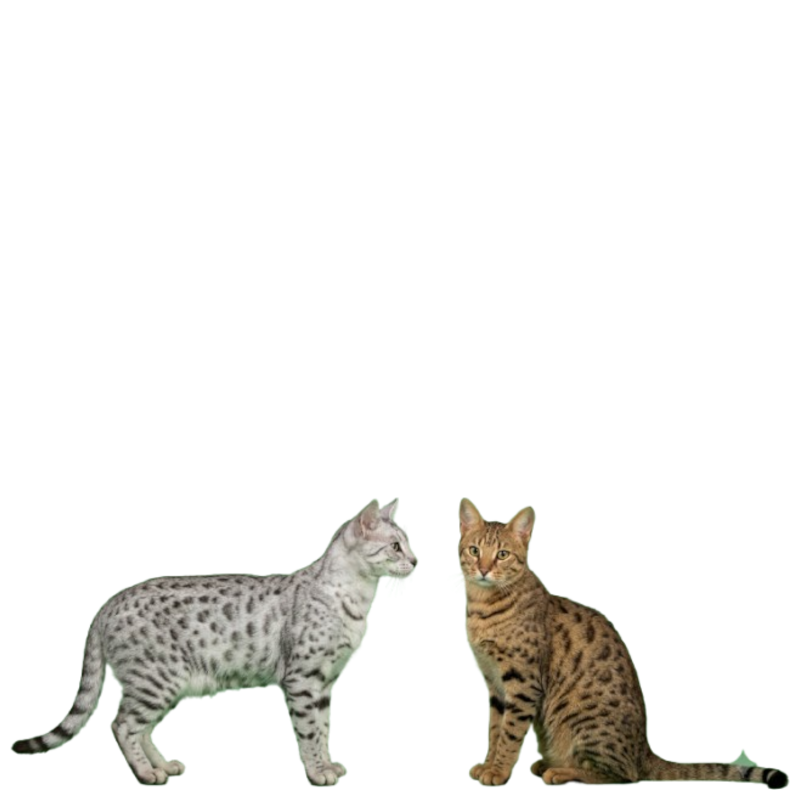
appearance
Striking a balance between exotic grandeur and domestic athletic frame, Savannahs possess a distinctive silhouette defined by extreme leg length, lean muscle, and extraordinary verticality. Unlike heavy‐boned, low‐slung breeds, Savannahs present a modified wedge outline where every line emphasizes height, alertness, and powerful flexibility. From their tall, upright ear placement down to their concise, thick tails, these felines exhibit a refined structural harmony built for swift, effortless movement.
Facial Features and Head Structure
The head of Savannahs forms a distinct equilateral triangle when viewed from the front, measured from the outer base of the ears down to the tip of the chin. This geometric symmetry creates a striking frame for their expressive facial attributes, enhanced by broad, tall ears perched high on the skull.
Savannah Head Geometric Balance
- : The calculated ratio representing the proportional symmetry and equilateral triangular alignment of the facial structure.
- : The linear measurement taken across the skull from the outer base of one ear to the outer base of the opposite ear.
- : The targeted measurement or proportional distance spanning down to the tip of the chin to complete the triangular contour.
- : The target proportional benchmark indicating ideal geometric symmetry matching an equilateral triangle.
A breed judge evaluates the head conformation of an adult Savannah by taking precise biometric measurements. The judge records an ear base distance of 6 centimeters and a corresponding muzzle point measurement of 6 centimeters. Dividing the ear base distance by the muzzle point (6 / 6) yields a head geometric balance ratio of 1.0. This exact numerical outcome confirms that the Savannah’s head structure achieves the ideal equilateral triangular symmetry, maintaining the breed standard{"\u2019"}s distinctive appearance.
- Ear Carriage: Remarkably large, broad at the base, and rounded at the tips. They sit high and upright on the skull with deep, wide bases that signal constant environmental awareness.
- Eye Shape and Set: Medium to large, set deep beneath a prominent brow. The top eye line forms an almond sweep, while the lower line creates a rounded curve, producing a piercing, hooded gaze.
- Muzzle and Chin: A strong, tapered muzzle seamlessly continues the triangular contour of the head without severe pinch. The chin is firm and deep, forming a vertical line with the nose leather in profile.
- Profile: A slight, gentle stop occurs at the bridge of the nose, leading to a long, straight nasal plane with prominent nose leather.
Frame, Bone Structure, and Posture
The body architecture of Savannahs favors maximum length and slender agility over bulk. Their frame is remarkably deep through the chest, yet narrow and streamlined overall.
| Anatomical Zone | Structural Characteristic | Visual Appearance |
|---|---|---|
| Torso & Spine | Extended, lithe, and flexible | Long, lean, and athletic with a slightly elevated hindquarter posture |
| Bony Frame | Moderate to refined bone density | Long, dense bones supporting heavy muscle without adding clumsy mass |
| Chest & Shoulders | Deep, narrow chest cavity | Well‐sprung ribs tapering to a tight, high tuck at the flank |
| Musculature | Lean, firm, and sinewy | Long muscle fibers creating smooth, defined contours under the coat |
Limb Architecture and Stance
The legs of Savannahs are exceptional in length, elevating the body high above the ground. The hind legs sit slightly higher than the forelegs, creating a sloped back line that conveys immediate springing potential.
- Forelegs: Long, straight, and slender, ending in oval, compact paws with well‐knuckled toes.
- Hind Legs: Exceptionally elongated with long thighs and powerful hocks, giving Savannahs extraordinary jumping capability.
- Tail Structure: Moderate in length, thick, and plush. The tail extends down to approximately the hock joint, tapering gently to a blunt end without reaching the floor.
Coat Texture and Density
The pelt of Savannahs offers a unique tactile experience, combining a soft, dense undercoat with firmer, coarser guard hairs.
- Density: Thick and plush, standing slightly off the skin rather than lying completely flat.
- Texture: A crisp, resilient hand with short to medium length overall, offering natural weather resistance.
- Undercoat: Dense and soft, providing structural support to keep the outer guard hairs elevated.
Savannahs stand as a masterpiece of feline engineering—defined by incredible leg height, an elongated torso, and a striking triangular head crowned by towering ears. Their firm, lean musculature and crisp, plush coat complete a powerful yet graceful form that is instantly recognizable to enthusiasts and preservation breeders alike.
behavior
Driven by high physical energy and sharp cognitive focus, Savannahs interact with their surroundings through continuous exploration and physical problem‐solving. Unlike sedately lounging felines, Savannahs maintain an active daily cycle characterized by vertical movement, object manipulation, and intense visual tracking. Their daily actions reflect an extraordinary drive to investigate household changes, opening doors or turning on water fixtures through repeated observation and trial‐and‐error maneuvers.
Activity Patterns and Environmental Navigation
The physical routine of Savannahs revolves around high‐elevation perching and vigorous interactive play. Their navigation strategies consistently utilize vertical space to observe room dynamics from above.
Savannah Vertical Space Engagement
- : The calculated ratio representing the proportion of active time spent utilizing elevated spaces versus total active hours.
- : The duration measured in hours that the cat spends perched on high surfaces like cabinetry, shelving, or doorframes.
- : The cumulative number of hours the cat spends engaged in active waking behavior throughout the day.
- : The benchmark proportion indicating a high reliance on vertical territory and environmental surveillance from above.
An ethologist monitors the daily behavior of a captive Savannah over a 4-hour active observation window. The researcher records that the cat spends 3 hours positioned above eye level on high shelving units and doorframes. Dividing the time spent above eye level by the total active hours (3 / 4) yields a vertical space engagement ratio of 0.75. This numerical result confirms that the Savannah’s behavioral routine strongly aligns with high-elevation perching standards, matching the expected preference for vertical spatial navigation.
- Vertical Seeking: Routinely leaping onto doorframes, high cabinetry, and tall shelving units without needing intermediate stepping platforms.
- Problem Solving: Manipulating door handles, opening cabinet latches, and investigating running water sources by splashing or submerging paws.
- Retrieval Play: Fetching small objects repeatedly, bringing items back to human companions, and dropping objects into water dishes to observe floating dynamics.
- Object Investigation: Nosing open bags, turning over light items, and systematically tracking subtle movements across visual boundaries.
Vocalizations and Communication Repertoire
Savannahs employ a complex vocal repertoire that differs markedly from standard domestic vocal patterns. Their vocalizations range from subtle chirps during tracking to sharp warning signals when startled.
| Vocalization Type | Acoustic Character | Typical Behavioral Context |
|---|---|---|
| Chirps & Trills | Short, high‐pitched rhythmic sounds | Greeting familiar companions or initiating play sequences |
| Chirp‐Meow Hybrids | Expressive, multi‐tonal vocal demands | Indicating desire for access to closed rooms or high places |
| Hiss‐Chirp Blend | Sudden, forceful exhalation | Signaling surprise or establishing space boundaries during play |
| Low Murmurs | Soft, guttural vocal vibrations | Expressing contentment during close physical contact or rest |
Social Interactions and Group Dynamics
When interacting with human households or companion animals, Savannahs establish active, shadow‐like companionship patterns rather than passive cohabitation.
- Companion Tracking: Following familiar individuals from room to room, sitting on elevated surfaces adjacent to active work, and monitoring daily routines.
- Inter‐Animal Dynamics: Engaging in energetic chase games with dogs or other high‐energy cats, often taking the role of the initiator during play pursuits.
- Greeting Rituals: Approaching familiar humans with an upright, quivering tail, performing head‐rubs against legs, and inspecting hand gestures closely.
- Boundary Testing: Pushing objects off elevated counters to observe acoustic feedback and test environmental responses.
Daily Routine and Energy Cycles
The day‐to‐day rhythm of Savannahs oscillates between intense bursts of physical play and deeply relaxed periods of high‐perch resting.
- Morning Exploration: Immediate perimeter sweeps of the home upon waking, inspecting closed doors, window views, and feeding areas.
- Midday Rest Cycles: Curling into tight positions on elevated, sunlit perches, maintaining auditory awareness with rotating ear movements while sleeping.
- Evening Burst Phase: Engaging in high‐speed running, vertical jumping, and toy chasing during dusk hours (18:00–21:00).
Savannahs offer an unparalleled display of feline intelligence and physical drive—marked by relentless curiosity, vertical agility, and rich vocal communication. Their preference for active involvement in daily household routines makes their presence felt across every corner of their environment, leaving owners and breeders with an endlessly engaging animal companion.
color
The visual tapestry of Savannahs relies on a dramatic interplay between high‐contrast markings and distinct ground shading. Pigment intensity varies across individual hair shafts, creating a vibrant, luminous depth across the torso and limbs. From warm golden tones to icy silver surfaces, the coat presents clearly defined markings that stand out sharply against lighter background fur, creating a vivid, multi‐layered visual effect.
Primary Coat Categories and Ground Hues
The background shade of Savannahs establishes the foundation for pattern contrast. Ground tones range from rich, warm ochre hues to stark, bright silver surfaces.
| Primary Color Class | Ground Tone Appearance | Marking Intensity & Shade |
|---|---|---|
| Brown Spotted Tabby | Warm golden, tawny, or honey yellow | Deep brown to ink‐black solid spots |
| Silver Spotted Tabby | Pure, icy silver-white with minimal tarnishing | Jet‐black markings with high contrast |
| Black Smoke | Deep charcoal undercoat revealing dark roots | Inky black markings blended into dark fur |
| Solid Black | Uniform, rich raven black throughout | Subtle “ghost” markings visible under direct light |
Hair Shaft Pigmentation and Light Interaction
Individual hair shafts in Savannahs demonstrate specific pigment distribution patterns. Ground hairs often exhibit banded warmth, whereas spot hairs absorb light uniformly from root to tip.
Savannah Visual Pattern Contrast Ratio
- : The quantitative measure evaluating how sharply the dark spots stand out against the lighter background coat.
- : The measured value representing the density and light-absorbing quality of the solid dark spots and markings.
- : The measured value representing the light reflection and warmth of the banded agouti ground hair coat.
- : The minimum threshold benchmark indicating high-contrast distinction required to maintain the breed standard{"\u2019"}s wild appearance.
A feline coat evaluator measures the optical properties of an adult Savannah coat using specialized densitometry equipment. The evaluator records a pigment absorption score of 8 for the dark markings and a reflectance score of 3 for the ground coat. Dividing the pigment absorption by the ground coat reflectance (8 / 3) yields a visual pattern contrast ratio of approximately 2.67. This numerical output successfully meets the minimum threshold requirement of 2.5, confirming that the Savannah’s spot markings exhibit the required high-contrast clarity against the agouti background.
- Agouti Banding: Ground hairs feature alternating bands of lighter and darker pigment along the shaft, giving the background coat a shimmering, warm texture.
- Solid Spot Hair Pigmentation: Individual hairs within spots contain dense, uninterrupted dark pigment from base to tip, preventing a washed‐out appearance.
- Ocelli Markings: The backs of the ears feature prominent light‐colored central thumbprints bordered by dark pigment, creating a vivid visual focal point from behind.
- Facial Tear Lines: Bold dark streaks extend from the inner corners of the eyes down toward the whisker pads, framing the muzzle and enhancing eye clarity.
Marking Distribution and Pattern Expression
The surface markings of Savannahs consist of distinct, non‐connected dark shapes distributed evenly across the torso, neck, and limbs.
- Torso Markings: Round, oval, or series‐like elongated spots that remain clear and separate without merging into swirl patterns.
- Limbs and Paw Markings: Spots transition into distinct stripes or smaller dotted clusters down the legs, ending near the paws.
- Tail Ringing: Bold, dark rings encircle the length of the tail, culminating in a solid dark tip.
- Underbelly Shading: The underside, chin, and throat display lighter ground tones—often near‐white—highlighted by crisp, dark belly spots.
The coat of Savannahs is a study in brilliant contrast and rich pigment depth—characterized by sharp dark spots set against warm golden, icy silver, or deep charcoal ground shades. Whether observing the dramatic ocelli on the backs of the ears or the intense facial tear markings, every element of their coloration contributes to a striking, highly recognizable visual profile for breeders and owners alike.
compatibility
Ease of Maintenance
Rating: 3/5
Child Friendly
Rating: 2/5
Annual Cost
Rating: 1/5
Lifetime Cost
Rating: 2/5
Adaptability
Rating: 3/5
Velcro Factor
Rating: 4/5
Quietude
Rating: 2/5
Apartment Suitability
Rating: 1/5
Hypoallergenic
Rating: 3/5
Handling Tolerance
Rating: 2/5
Hardiness/Longevity
Rating: 4/5
Prey Drive
Rating: 1/5
genetics
The underlying genomic profile of Savannahs combines foundational feline coat genetics with distinct locus variations governing pigment distribution and pattern formation. Understanding how specific alleles interact at key gene sites allows for predictable outcomes when mapping generational pairings. By tracking primary color loci, silver modifiers, and agouti expressions, breeders and enthusiasts gain a clear blueprint of the underlying DNA mechanisms that define the genomic traits of Savannahs.
Primary Loci and Allelic Interactions
The phenotypic traits observed across Savannahs trace back to interactions across several well‐documented gene locations (loci). Each locus acts as an instructional switch that dictates pigment production or structural hair banding.
| Locus Name | Key Alleles | Dominance Hierarchy | Functional Impact on DNA Expression |
|---|---|---|---|
| Agouti (A) | A (Agouti), a(Non‐Agouti) | A > a | Controls pigment banding on hair shafts; a/a produces solid black |
| Tabby (T) | Ts (Spotted), Tm (Mackerel), tb (Blotched) | Ts > Tm > tb | Dictates pattern arrangement; Ts breaks stripes into distinct spots |
| Inhibitor (I) | I (Silver), i (Non‐Silver) | I > i | Suppresses phaeomelanin (yellow/red pigment) to yield silver hair bases |
| Dense (D) | D (Dense), d (Dilute) | D > d | Manages pigment granule packing; d/d dilutes black pigment to blue |
Inheritance Probability and Punnett Mechanics
When calculating the outcome of specific pairings, simple Mendelian inheritance models help predict the probability of dominant versus recessive trait expressions. For instance, pairing two heterozygous agouti parents () yields a predictable ratio of agouti to non‐agouti offspring.
Savannah Agouti Offspring Probability
- : The calculated likelihood that a kitten resulting from a specific parental pairing will express the dominant agouti coat phenotype.
- : The total probability of offspring receiving at least one dominant agouti allele, displaying the banded hair shaft pattern.
- : The Mendelian probability of an offspring inheriting two recessive non-agouti alleles, resulting in a solid or masked coat profile.
- : The fixed probability of homozygous recessive inheritance when crossing two heterozygous parents.
- : The final predictive probability indicating a 75 percent chance for each kitten to inherit the agouti trait.
A feline geneticist calculates the expected phenotypic ratio for a litter born from two heterozygous agouti Savannah parents carrying the recessive non-agouti gene (). By subtracting the homozygous recessive probability of 0.25 from 1, the calculation yields an agouti offspring probability of 0.75. This numerical result indicates a 75 percent probability that any given kitten in the litter will exhibit the characteristic banded agouti ground hair necessary for clear spot pattern contrast, confirming Savannah’s expected Mendelian distribution ratios.
- Dominant Agouti Expression ( or ): Ensures individual hair shafts exhibit banded pigment, allowing spotted background contrast to form clearly.
- Recessive Non‐Agouti Expression (): Eliminates shaft banding, producing solid black or smoke coat profiles where underlying patterns are masked or subtly shadowed.
- Silver Inhibitor Dominance ( or ): Actively strips warm yellow tones from the hair root, leaving a striking, light‐reflecting background structure.
- Dense Pigment Maintenance ( or ): Preserves rich, full‐strength dark pigment granules along the hair shaft rather than allowing pigment clumping (which results in diluted gray tones).
Pattern Loci and Polygenic Modifiers
Beyond single‐gene Mendelian traits, Savannahs rely on complex polygenic networks—collections of multiple small modifier genes working in tandem—to refine pattern sharpness and contrast integrity.
- Spotted Tabby Modification: The presence of dominant spotted modifiers breaks continuous mackerel striping into isolated, clearly separated markings.
- Rufousing Polygenes: Variable polygenic factors influence the intensity of warm yellow and golden tones in the background coat, ranging from deep tawny hues to pale sand tones.
- Smoke Expression ( with ): Combines the non‐agouti recessive trait with the dominant inhibitor gene, causing the base of the hair shaft to remain silver while the top remains dark.
The DNA framework of Savannahs represents a fascinating interplay of dominant pattern modifiers, agouti banding mechanisms, and pigment density controls. By understanding the underlying loci—from the dominant agouti allele to the polygenic influences on spot separation—breeders and owners obtain a comprehensive, predictable guide to the genetic inheritance traits of Savannahs.
health
Maintaining optimal vitality in Savannahs requires targeted awareness of their cardiovascular, metabolic, and musculoskeletal systems. While generally robust, their elongated frame and active physiology introduce specific clinical considerations that benefit from proactive monitoring. By establishing regular diagnostic baselines and observing key physical health indicators, breeders and owners can effectively support long‐term physical wellness and athletic longevity across all life stages.
Cardiovascular Health and Screenings
Cardiovascular wellness remains a primary focus during routine examinations for Savannahs. Hypertrophic cardiomyopathy (HCM)—a condition where the heart muscle walls thicken abnormally and reduce pumping efficiency—represents the main cardiac concern requiring ongoing observation.
Savannah Stroke Volume Index
- : The normalized volumetric measurement of blood pumped by the left ventricle per heartbeat, adjusted for body surface area.
- : The volume of blood in the ventricle immediately before contraction, representing maximum filling capacity.
- : The volume of blood remaining in the ventricle at the end of contraction, indicating pumping efficiency.
- : The total surface area of the cat measured in square meters, used to normalize cardiac output across different body sizes.
A veterinary cardiologist evaluates the cardiovascular health of an adult Savannah during an echocardiographic screening. The clinician records an end-diastolic volume of 15 milliliters, an end-systolic volume of 6 milliliters, and a body surface area of 0.25 square meters. Subtracting the end-systolic volume from the end-diastolic volume () yields a stroke volume of 9 milliliters. Dividing this value by the body surface area () results in a stroke volume index of 36 milliliters per square meter. This quantitative output helps the veterinarian assess cardiac pumping efficiency and screen for early signs of hypertrophic cardiomyopathy, ensuring optimal Savannah’s heart health monitoring.
- Echocardiographic Screening: Regular ultrasound scans of the heart allow veterinarians to measure chamber dimensions and wall thickness directly, detecting subtle tissue thickening before clinical symptoms appear.
- Auscultation & Murmur Detection: Careful listening during physical exams helps identify subtle heart murmurs or irregular rhythms, serving as early indicators for further cardiac workups.
- Anesthesia Considerations: Due to distinct physiological responses, individualized monitoring during surgical procedures ensures stable blood pressure and heart rate management.
Hematologic and Metabolic Vulnerabilities
Certain blood parameters and metabolic pathways in Savannahs display unique characteristics that necessitate specific screening approaches.
| Health Focus Area | Potential Condition / Variation | Clinical Impact | Recommended Monitoring |
|---|---|---|---|
| Red Blood Cells | Pyruvate Kinase (PK) Deficiency | Impaired red blood cell energy production leading to intermittent anemia | Routine blood panels and metabolic screening |
| Hepatic System | Drug Sensitivity & Clearance | Altered liver enzyme processing rates for specific medications | Pre‐medication liver panels and tailored dosing |
| Renal Function | Progressive Kidney Strain | Gradual loss of kidney filtration efficiency over time | Annual urinalysis and blood chemistry evaluation |
Structural and Musculoskeletal Health
The extended limb length and high‐impact leaping abilities of Savannahs place unique mechanical forces on their joints and spinal column.
- Patellar Luxation: Occurs when the kneecap slips out of its natural groove, causing temporary lameness or a skipping gait after intense jumping.
- Hip Joint Dynamics: Extended hip sockets require strong surrounding musculature to maintain stability and prevent early joint wear or inflammation.
- Gastrointestinal Foreign Bodies: Intense physical curiosity can lead to accidental ingestion of non‐food items, requiring swift veterinary intervention if digestive blockages occur.
Proactive health management for Savannahs centers on routine cardiac ultrasound screenings, careful medication protocols, and attentive monitoring of joint and metabolic function. With consistent preventive veterinary care, clear diagnostic baselines, and prompt attention to physical changes, Savannahs can enjoy a resilient, active, and thriving quality of life.
longevity
The natural lifespan trajectory of Savannahs reflects an extended, resilient aging curve characterized by a protracted developmental period and remarkable vitality into their senior years. Unlike domestic breeds that reach full structural and physical maturity within their first twelve months, Savannahs mature at a gradual pace, maintaining athletic stamina well past their first decade. Understanding the distinct phases of their life cycle allows owners and preservation breeders to recognize normal age‐related shifts and optimize physical care across every stage.
Life Expectancy Parameters and Aging Metrics
Overall longevity in Savannahs generally surpasses standard domestic averages, with many individuals thriving well into their mid‐to‐late teens under stable living conditions.
Savannah Life Stage Completion Index
- : The proportional percentage representing how far a cat has progressed through its expected overall lifespan.
- : The chronological age of the cat measured in years.
- : The anticipated upper limit of years the breed is expected to live under optimal conditions, typically benchmarked around twenty years.
A veterinarian assesses the geriatric healthcare requirements of an adult Savannah during a routine wellness checkup. The clinician notes that the cat is currently 10 years old and references an expected maximum lifespan of 20 years for the breed. Dividing the current age by the expected maximum lifespan (10 / 20) yields , which when multiplied by 100 results in a life stage completion index of 50 percent. This percentage indicates that the cat has reached the midpoint of its anticipated lifecycle, guiding the veterinarian to initiate proactive age-related wellness screenings and joint support strategies tailored to Savannah’s advancing maturity.
| Life Stage Phase | Chronological Age Range | Physical Maturation & Aging Indicators |
|---|---|---|
| Kitten & Junior | Birth–2 Years | Rapid frame extension followed by steady muscle development |
| Prime Adult | 3–10 Years | Peak muscular density, vibrant coat resilience, and stable metabolic equilibrium |
| Mature Adult | 11–14 Years | Subtle softening of muscle tone, gradual decrease in jumping frequency |
| Senior & Geriatric | 15+ Years | Visible thinning of body mass, reduced coat sheen, and deliberate physical movements |
Developmental Progression and Physical Maturation
The path to full physical maturity in Savannahs is a prolonged process that spans several years, influencing how physical strength and endurance develop over time.
- Extended Growth Phase: Frame development continues steadily through 2–3 years of age, during which bone structure and muscular volume gradually fill out to their full capacity.
- Peak Athletic Years: Between 3–10 years, Savannahs exhibit consistent physical endurance, maintaining high metabolic output and physical flexibility.
- Mid‐Life Stability: Physical vigor remains exceptionally stable throughout their first decade, with minimal visible signs of aging under consistent daily routines.
Physical Manifestations of Senior Transition
As Savannahs move into their mature and senior years, physical changes manifest gradually across their muscular and sensory systems.
- Musculoskeletal Shifts: Subtle reduction in muscle mass along the spine and hindquarters, leading to a leaner contour in cats past 12 years of age.
- Coat and Skin Changes: The coat texture may soften slightly, with occasional gray or white fur appearing around the muzzle and eyes in senior individuals.
- Activity Regulation: High‐speed physical movements naturally transition into more deliberate, low‐impact exploration and extended resting periods in sunlit perches.
- Sensory Awareness Shifts: Gradual changes in visual and auditory acuity occur in geriatric years, accompanied by deeper sleep cycles.
Savannahs enjoy an impressive lifespan marked by a slow, multi‐year developmental phase and prolonged adult vitality. With an average life expectancy extending well into 12–20 years, their aging process is a gradual, graceful transition that allows breeders and owners to support their well‐being through every memorable milestone of life.
maintenance
Supporting the active lifestyle and high energy levels of Savannahs requires a structured care regimen centered around optimal nutrition, regular grooming maintenance, and strong physical stimulation. Due to their lean build and high activity output, these felines thrive when provided with protein‐rich nutrition, accessible hydration stations, and robust vertical environments. Implementing consistent daily routines prevents unnecessary boredom, maintains skin health, and ensures long‐term physical condition across every life stage.
Nutritional Guidelines and Hydration Requirements
The daily dietary requirements of Savannahs depend directly on their body mass and activity output. Calculating resting energy requirements helps establish an accurate baseline intake.
Savannah Resting Energy Requirement
- : The daily caloric energy expended by an animal at complete rest in a thermoneutral environment, expressed in kilocalories per day.
- : The standard metabolic scalar constant used in feline physiological equations.
- : The total mass of the cat measured in kilograms, representing active metabolic tissue size.
- : The allometric exponent reflecting metabolic scaling relative to body surface area across mammalian species.
A feline nutritionist calculates the baseline nutritional intake for an adult Savannah during a weight management consultation. The clinician weighs the cat and records a body mass of 8 kilograms. Raising 8 to the power of 0.75 yields approximately 4.7578, which when multiplied by the metabolic constant of 70 results in a resting energy requirement of approximately 333 kilocalories per day. This foundational caloric baseline allows the nutritionist to precisely layer activity multipliers and tailor a daily feeding plan suited to Savannah’s active lifestyle.
Savannah Daily Energy Requirement
- : The total daily caloric intake required by a cat to maintain its current weight, accounting for baseline metabolic processes and daily physical activity.
- : The resting energy requirement representing the baseline kilocalories burned at complete rest.
- : The activity factor multiplier corresponding to a moderately active lifestyle typical of the breed.
A feline nutritionist calculates the total daily food intake for an active adult Savannah during a dietary planning session. Using a previously calculated resting energy requirement of 333 kilocalories per day, the clinician multiplies this baseline figure by the activity factor of 1.4. This multiplication yields a daily energy requirement of approximately 466 kilocalories per day. This target metric allows the owner to portion daily meals accurately, ensuring optimal energy balance and support for Savannah’s high activity levels.
| Feeding Component | Daily Requirement | Functional Management Goal |
|---|---|---|
| Protein Content | 40%–50% dry matter basis | Supports lean muscle mass and active metabolic output |
| Fat Ratio | 15%–20% dry matter basis | Delivers concentrated energy and promotes healthy skin oils |
| Water Intake | 50–60 ml per kg of body weight | Maintains kidney function and proper systemic hydration |
| Fiber Ratio | 2%–5% crude fiber | Aides gastrointestinal motility and reduces hairball formation |
- Diet Composition: Focus on high‐protein, low‐carbohydrate formulations using real meat sources as primary ingredients to support active metabolism.
- Hydration Management: Provide circulating water fountains alongside standard bowls to encourage natural drinking behaviors.
- Feeding Schedule: Divide daily rations into 2–3 structured meals to prevent overeating while keeping energy levels stable throughout the day.
Grooming Routines and Hygiene Standards
The dense coat of Savannahs requires low to moderate maintenance, though regular care preserves natural sheen and minimizes shed fur accumulation.
- Coat Brushing: Utilize a rubber curry brush or soft bristle brush 1–2 times weekly to remove loose guard hairs and distribute natural skin oils evenly.
- Nail Trimming: Clip outer nail tips every 2–3 weeks using heavy‐duty clippers to prevent snagging on climbing structures.
- Dental Care: Brush teeth 2–3 times weekly with feline‐safe toothpaste to minimize plaque buildup and maintain gum health.
- Ear Inspection: Wipe the outer ear canal weekly with a damp cloth or specialized cleaner to remove dirt buildup without disrupting deep tissues.
Environmental Setup and Spatial Enrichment
Creating a suitable indoor environment for Savannahs involves offering sturdy vertical structures and puzzle toys that encourage physical activity.
- Vertical Climbing Towers: Install heavy‐duty floor‐to‐ceiling cat trees or secure wall shelving rated for dynamic weight capacity.
- Heavy‐Duty Scratchers: Provide sisal‐wrapped posts at least 90 cm tall, allowing full physical stretching during claw conditioning.
- Interactive Puzzle Feeders: Integrate food‐dispensing toys during mealtime to encourage cognitive engagement and natural foraging motions.
- Secure Windows: Ensure window screens are reinforced with heavy‐duty mesh to handle physical leaning and visual tracking of outdoor activity.
Everyday husbandry for Savannahs revolves around balanced, nutrient‐dense feeding, routine weekly coat care, and a dynamic living environment rich in vertical space. By establishing a stable daily schedule that fulfills their nutritional needs and physical drive, breeders and owners provide Savannahs with the perfect environment to flourish.
measurements
| Measurement | Female | Male | ||
|---|---|---|---|---|
| Metric | Imperial | Metric | Imperial | |
height | 28 – 41 centimeters | 11 – 16 inches | 33 – 48 centimeters | 13 – 19 inches |
length | 41 – 51 centimeters | 16 – 20 inches | 46 – 56 centimeters | 18 – 22 inches |
weight | 3.6 – 7.3 kilograms | 8 – 16 pounds | 5.4 – 11.3 kilograms | 12 – 25 pounds |
• Height: Refers to the measurement at the withers (shoulders).
• Length: Measured from the tip of the nose to the base of the tail.
origin
The chronological origin of Savannahs represents a unique chapter in late twentieth‐century feline history, bridging African wild cat heritage with domestic lineage development. Beginning in North America during the mid‐1980s, dedicated breeders sought to preserve the striking structural markers of sub‐Saharan servals within a fully domestic breeding program. Through systematic multi‐generational pairings and careful registry documentation, early pioneers successfully established a distinct, stable domestic breed identity that honors its African ancestral roots.
Chronological Milestones and Development Timeline
The historical development of Savannahs progressed rapidly from an initial chance pairing to formal registry recognition across major international feline organizations.
| Year / Period | Historical Development Milestone | Key Lineage Event |
|---|---|---|
| 1986 | Initial Foundation Pairing | Birth of the first recorded cross between a male serval and a domestic female |
| 1989–1990 | Second Generation (F2) Expansion | Early breeding programs establish successful second‐generation offspring |
| 1996 | Uniform Standard Drafting | Pioneer breeders collaborate to write the initial breed standard documentation |
| 2001 | Official Registry Acceptance | Formal registration status granted by major feline registries |
| 2012 | Championship Status Achieved | Full championship status granted for competitive exhibition |
Geographical Roots and Ancestral Lineages
The heritage of Savannahs traces back to the savanna regions of sub‐Saharan Africa, where wild serval populations developed extreme leg length and tall ear placement tailored for tall grassland hunting.
Savannah Heritage Representation Ratio
- : The proportional genetic contribution comparing wild serval ancestry to domestic outcross foundations across specific breeding tiers.
- : The quantifiable genetic influence derived directly from the wild African serval progenitor.
- : The quantifiable genetic contribution supplied by domestic outcross breeds utilized during the development of the breed.
- : The variable status reflecting how filial generation tiers determine the precise mathematical proportion of wild versus domestic ancestry.
A genetic researcher analyzes the pedigree records of an early filial generation Savannah to determine its genetic composition. The lineage tracing indicates a high proportion of ancestral African serval background balanced against foundational domestic outcrosses. Because the ratio is generation dependent, tracking the precise tier reveals that an F1 individual carries approximately 50 percent serval heritage, whereas later generations scale downward systematically. This quantitative ratio helps breeders understand pedigree placement, phenotypic expression, and Savannah’s legal ownership classification requirements.
- Sub‐Saharan Ancestral Roots: The native African serval provided the foundation for tall ear carriage, elongated limbs, and distinctive spotted marking distribution.
- Domestic Foundation Outcrosses: Early breeders utilized select domestic breeds—including the Siamese, Oriental Shorthair, Egyptian Mau, and Domestic Shorthair—to broaden the domestic gene pool while preserving structural height.
- Lineage Stabilization: Subsequent generational breeding ( down through and beyond) systematically stabilized domestic traits while maintaining the ancestral silhouette.
Early Registry Documentation and Breed Establishment
Formal documentation of Savannahs required meticulous pedigree tracking to demonstrate consistent lineage inheritance across successive generations.
- Pioneer Breeder Collaboration: Key early breeders drafted comprehensive health, structural, and pedigree guidelines during the late 1990s to guide future breeding programs.
- Pedigree Code Tracking: Registries established clear generational designations ( indicating first generation, second generation, down to or Stud Book Traditional status) to track domestic lineage purity.
- Global Lineage Dispersal: From initial breeding programs in the United States, foundation lines were exported worldwide, establishing stable international breeding hubs across Europe, Australia, and the Americas.
The story of Savannahs is a testament to careful feline lineage preservation—tracing a clear path from the wild savannas of sub‐Saharan Africa to modern domestic homes around the globe. Through structured generational breeding and dedicated registry documentation, breeders successfully created a lasting legacy that honors ancestral roots while providing a distinct, thriving domestic companion.
temperament
Defined by intense mental alertness, high environmental confidence, and strong social attachment, the innate personality of Savannahs combines bold curiosity with intense loyalty. Rather than displaying passive, detached tendencies, these felines possess an inquisitive nature that seeks active involvement in daily household dynamics. Their emotional balance relies on consistent mental engagement, social interaction, and clear boundaries, making their psychological profile both deeply rewarding and uniquely dynamic for companions and breeders alike.
Psychological Trait Index and Social Disposition
The baseline temperament of Savannahs reflects a highly focused, confident mindset that responds actively to environmental stimulation and social bonds.
Savannah Environmental Engagement Index
- : The behavioral ratio quantifying an active, high-stimulus lifestyle relative to restful observation periods.
- : The total duration of active physical movement, toy interaction, and problem-solving behaviors measured in minutes per day.
- : The total duration of resting, stationary watching, or inactive downtime measured in minutes per day.
- : The behavioral benchmark threshold indicating that active exploration should triple passive observation time for optimal psychological wellness.
A feline behaviorist evaluates the daily activity patterns of an adult Savannah during a behavioral consultation. The specialist tracks the cat and records 300 minutes of curiosity driven exploration against 80 minutes of passive observation time. Dividing the exploration time by the passive observation time (300 / 80) yields an environmental engagement index of 3.75. Because 3.75 is greater than or equal to the required threshold of 3.0, the assessment confirms that the cat maintains a healthy, highly stimulated lifestyle, successfully fulfilling Savannah’s active behavioral needs.
| Temperament Dimension | Trait Level & Intensity | Dispositional Expression |
|---|---|---|
| Social Confidence | Exceptionally High | Approached novel stimuli and visitors with curious inspection rather than fear |
| Affection Style | Companion‐Focused | Prefers side‐by‐side presence and interactive contact over lap‐lounging |
| Adaptability | Moderate to High | Thrives on novel tasks, though requires structured introductions to new spaces |
| Sensory Sensitivity | High Reactivity | Highly responsive to auditory and visual shifts in the immediate environment |
Bonding Preferences and Human Interaction
The attachment style of Savannahs is centered on active, presence‐based companionship rather than distant independence.
- Primary Companion Attachment: Often forms an exceptionally strong, focused bond with one or two primary household members, tracking their presence throughout the day.
- Interactive Expression of Affection: Expresses emotional closeness through head‐bunting, resting nearby on elevated perches, and participating directly in human activities.
- Response to Visitors: Typically greets guests with bold visual inspection and curious approaches once initial environmental assessment is complete.
Curiosity Drivers and Cognitive Orientation
The intellectual drive of Savannahs shapes how they perceive and process daily surroundings, requiring constructive channels for their problem‐solving tendencies.
- Intense Environmental Problem‐Solving: Driven by a persistent desire to figure out closed doors, cabinets, and moving mechanisms through active investigation.
- High Stimulus Seeking: Psychological well‐being is maintained through novel challenges, object manipulation, and interactive cognitive play.
- Persistence of Intent: Demonstrates strong focus when intrigued by a target stimulus, maintaining attention until satisfied or redirected.
Multi‐Pet Dynamics and Environmental Tolerance
In multi‐animal environments, Savannahs establish confident, social relationships when social boundaries are clearly defined.
- Inter‐Species Compatibility: Integrates exceptionally well with energetic dogs and active domestic cats that match their social intensity and play pace.
- Territorial Boundaries: Prefers clearly established vertical retreats where they can process household activity from a secure, high vantage point.
- Sensory Processing: Rapidly processes acoustic and movement changes, displaying quick orienting responses while maintaining emotional composure under routine conditions.
Savannahs possess a vibrant, highly intelligent temperament defined by deep social loyalty, persistent curiosity, and unwavering confidence. Their active emotional presence and desire for meaningful interaction make them intensely engaging companions, rewarding breeders and owners with a deeply loyal and intellectually responsive feline partner.