Russian Blue Cat
appearance
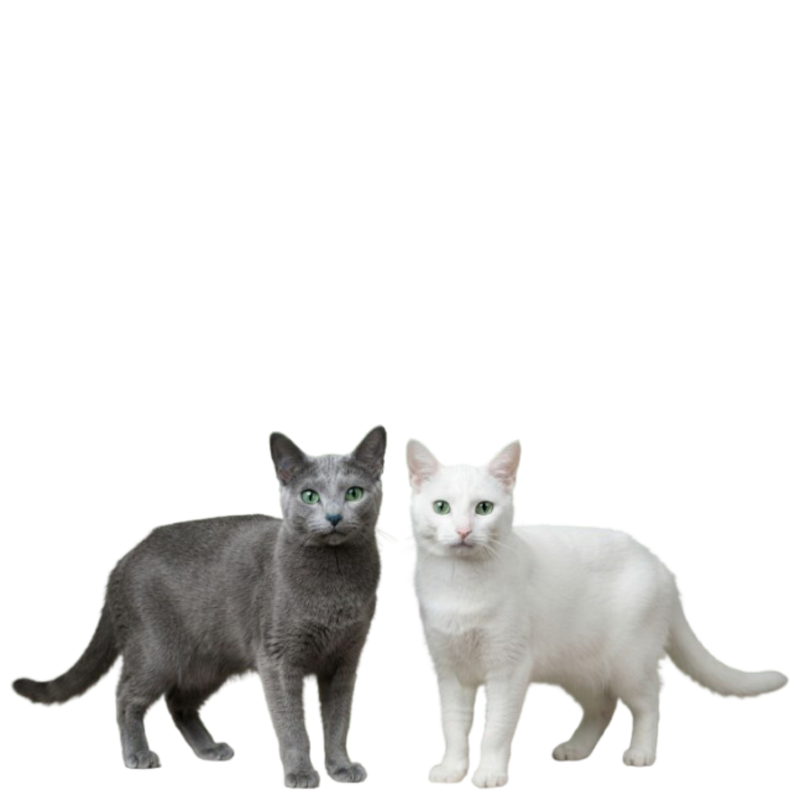
The Russian Blue possesses a striking silhouette defined by a harmonious blend of sleek elegance and powerful, lithe musculature. Unlike heavy, cobgy breeds, the Russian Blue strikes a distinct foreign profile characterized by fine-boned refinement, high-stepping grace, and an unmistakable wedge-shaped head that gives the animal an alert, perpetual expression of intelligent curiosity. Every physical attribute flows seamlessly into the next, creating a balanced and aerodynamic physique that speaks to both speed and agility.
Overall Body Frame and Bone Substance
The structural conformation of the Russian Blue relies on a foreign body type—longer, slender, and fine-boned, yet remarkably solid to the touch.
| Structural Feature | Conformation Description | Visual Comparison |
|---|---|---|
| Torso | Long, hard, and muscular without any trace of clumsiness or bulkiness | Built like a middle-distance runner—lean and athletic |
| Legs | Long and fine-boned, maintaining proportionality with the torso | Standing high on the paws with a delicate yet sturdy stance |
| Paws | Small and slightly oval in shape, adding to the cat’s floating gait | Resembling neat, compact ovals |
| Bone Density | Fine-boned structure coupled with dense, heavy muscle tone | Feeling deceptively heavy and solid when lifted |
Head Shape and Facial Structure
The head of the Russian Blue is one of its most defining markers, featuring a smooth, modified wedge with distinct planes.
- Skull Structure: The skull is flat on top with a profile that shows a straight line from the upper forehead down to the top of the eye ridge.
- Muzzle: The muzzle is medium in length, blunt, and transitions smoothly from the cheek structure, avoiding any pinched or snipey appearance.
- Whisker Pads: Prominent whisker pads create a sharp, distinct break in the profile, lending the face a characteristic, gentle, and contented smile.
- Chin: The chin is strong and firm, aligning perpendicularly with the tip of the nose to complete the balanced lower jaw profile.
Ear Placement and Eye Conformation
Ears and eyes work in tandem to create the breed’s alert expression and characteristic facial geometry.
- Ear Set: Large, wide at the base, and set far apart on the outer corners of the skull, giving the impression that the cat is perpetually listening to distant sounds.
- Ear Shape: The tips are slightly rounded, with skin that is thin and translucent, covered by a sparse layer of fur on both the inner and outer surfaces.
- Eye Shape: Vividly set, wide-open eyes that are nearly round in contour, though distinctly almond-shaped at the outer margins to enhance the exotic look.
- Eye Placement: Set wide apart, adding an expression of intense, piercing alertness to the face.
Coat Texture and Unique Physical Markers
The coat is an exceptional physical marvel—a dense, double coat that sets the breed apart from almost all other shorthaired cats.
- Coat Structure: Composed of an exceptionally plush, thick undercoat cushioned by an equally soft, fine outer guard hair.
- Coat Feel: Standing out distinctly from the body due to its density, the fur has a crisp texture that feels remarkably soft and thick—often compared to the feel of a dense sealskin.
- Tail Structure: Thick at the base and tapering gradually toward a rounded tip, the tail is long and well-proportioned, extending comfortably to the shoulders without any kinks.
The Russian Blue is a masterclass in feline refinement, where length, sleek lines, and dense muscular substance converge. From the high-set, wide ears and striking facial planes to the dense, plush double coat and long, graceful limbs, every physical element reflects a harmonious balance of strength and aristocratic elegance.
behavior
The Russian Blue navigates daily life through a precise routine marked by calculated observation, quiet efficiency, and selective social engagement. Rather than moving in a constant blur of hyperactivity or remaining entirely aloof, these cats observe their environments with intense focus before choosing how to act. Their daily actions reveal a calculated blend of athletic capability and reserved caution, preferring predictable environments where they can track movement, manage their interactions, and master their physical space with quiet grace.
Daily Activity Cycles and Exploration Strategies
The daily rhythm of Russian Blues follows a predictable pattern of high‐energy bursts balanced by long stretches of strategic rest and perimeter monitoring.
| Behavioral Phase | Observable Action | Environmental Interaction |
|---|---|---|
| Perimeter Patrol | Systematic walking along high vantage points to inspect territory boundaries | Surveying rooms from the tops of bookshelves or refrigerators |
| Calculated Ambush | Crouching low behind furniture corners before executing vertical leaps | Tracking moving shadows or human ankles with silent precision |
| Strategic Rest | Sleeping in enclosed, elevated, or semi‐hidden sleeping quarters | Curled tightly in designated quiet zones away from heavy household traffic |
Social Dynamics and Human Interaction Patterns
When interacting with humans and multi‐species households, Russian Blues display distinct behavioral protocols that favor routine and trusted companions.
- Greening Rituals: Approaching household members returning home by executing figure‐eight rubs around human legs accompanied by soft, vertical tail lifts.
- Selective Attachment: Choosing one or two primary humans to follow room‐to‐room while maintaining a safe, watchful distance from unfamiliar visitors.
- Inhibition and Withdrawal: Retreating silently under furniture or into high perches when loud noises or sudden household disruptions occur, rather than reacting with open aggression.
Social Harmony Model
The social stability and peaceful coexistence of Russian Blues within multi‐pet households can be effectively analyzed through structured mathematical modeling. This dynamic interaction balances environmental territory against unpredictable household stimuli.
Russian Blue Multi-Pet Social Harmony Index
- : The resulting index or probability score representing the level of peaceful coexistence and social stability within a multi-pet household.
- : The total amount of elevated resting areas, cat trees, or vertical territory available for animals to occupy and survey their environment.
- : A factor representing sudden environmental disruptions or erratic movements from other household pets that can challenge stability.
- : A measured value reflecting any underlying friction or competitive stress between different animals sharing the home.
An owner evaluates the multi-pet environment for their Russian Blue by assigning values to the social harmony factors. They measure the available shared vertical space at a score of 12, divide it by an unpredictable stimuli factor of 3, and then subtract an inter-species tension score of 2 (12 / 3 - 2). This calculation results in a harmony index of 2. This positive numerical outcome confirms that the Russian Blue’s household maintains a stable and peaceful environment, demonstrating how adequate vertical territory successfully counterbalances routine disruptions and tension.
By maintaining control over elevated perches and minimizing sudden disruptions, the resulting probability remains high for a peaceful domestic environment.
Play Styles and Predatory Expression
Play sessions for Russian Blues highlight their strong natural predatory instincts, executed with remarkable economy of movement.
- Aerial Tracking: Leaping vertically into the air to intercept feather wands or tossed toys, often catching objects with both paws simultaneously.
- Object Manipulation: Using individual paws to bat small crinkle balls or rolled paper across hard flooring, practicing precise strike mechanics.
- Stalking Posture: Flattening their bodies entirely against the carpet while creeping forward in slow motion before launching into a brief, high‐speed sprint.
Vocalization Frequency and Communication Types
Russian Blues utilize a specific, understated vocal range to communicate their daily needs and observations to human observers.
- Chirp and Trill: Issuing short, melodic sounds when greeting family members or drawing attention to an empty food bowl.
- Soft Meow: Using low‐decibel, breathy vocalizations rather than persistent loud crying when requesting door access or interactive play.
- Silent Meowing: Opening the mouth wide in a meow motion without producing audible sound, a frequent communicative gesture directed at trusted human companions.
The daily life of the Russian Blue unfolds as a series of deliberate, graceful actions governed by routine and keen observation. From their methodical patrol of elevated territory and calculated hunting play to their quiet vocalizations and selective social bonding, these cats demonstrate a deeply structured approach to navigating their home environments.
color
The Russian Blue coat features a mesmerizing interplay of light and dark pigment distribution that creates its legendary appearance. Rather than a flat, uniform block of dark paint, the color comes alive through subtle tonal shifts across the individual hair shafts and a distinctive silver tipping effect. This optical illusion gives the fur an ethereal, shimmering quality, making the cat look as though it has been lightly dusted with powdered silver frost over a deep, slate‐grey foundation.
Color Categories and Shading Breakdown
The overall hue of Russian Blues relies on distinct variations in shade depth and pigment spread from the skin outward to the tip of each hair.
| Color Category | Visual Appearance | Pigment Distribution |
|---|---|---|
| Foundation Blue | Deep, rich slate‐grey running through the middle and lower portions of the coat | Dense eumelanin concentration packed tightly within the hair cortex |
| Silver Tipping | A brilliant, translucent frosty sheen shining across the absolute tips of the guard hairs | Absence of pigment granules at the very distal tip, allowing light to reflect freely |
| Undercoat Hue | A slightly softer, muted tone of blue near the root adjacent to the skin | Lighter concentration of pigment granules closest to the follicle base |
Pigment Concentration and Light Refraction Formula
The unique metallic sheen characteristic of the Russian Blue coat can be understood through the way light interacts with densely packed microscopic pigment granules along the hair shaft.
Russian Blue Metallic Coat Sheen
- : The resulting quantitative measure of the distinctive shimmering silver halo effect produced by the coat.
- : The degree to which light bends and reflects as it strikes the microscopic structure of the individual hair shafts.
- : The proportional lack of pigmentation at the very outer extremities of the guard hairs, allowing light to pass through clearly.
- : The concentration of dark grey melanin granules located along the lower sections of the hair shaft.
A feline geneticist evaluates the coat characteristics of a Russian Blue by assigning numerical values to the physical properties of the fur. The light refraction is measured at 8 and tip transparency is measured at 5, while the pigment granule density is recorded at 4. Evaluating the equation yields (8 5) / 4, which results in a silver sheen score of 10. This clear numerical output demonstrates how the absence of pigment at the hair tips combined with structured light interaction creates the Russian Blue’s signature metallic appearance.
When the outer tips lack pigment entirely while the lower shaft holds a dense concentration of dark grey, light bounces off the surface to create that signature shimmering silver halo effect.
Hair Shaft Color Distribution
Examining an individual hair under magnification reveals a precise, deliberate gradient of color that dictates the rich visual texture of Russian Blues.
- Root Zone: The base of the hair shaft starts in a lighter, softer shade of grey, providing a subtle contrast against the darker mid‐section.
- Central Shaft: The color deepens significantly into a rich, dark slate‐grey that forms the primary body color and visual weight of the coat.
- Distal Tip: The very end of the hair abruptly loses its dark pigmentation, creating the signature silver tipping that catches the light during movement.
Nose Leather and Paw Pad Pigmentation
The supporting pigment markers on the exterior anatomy of Russian Blues provide a harmonious visual frame for the overall coat color.
- Nose Leather: Features a distinct, deep charcoal shade with a subtle bluish hue, matching the cool tones of the surrounding fur seamlessly.
- Paw Pads: Ranging from a dark mauve to a rich slate‐grey, the paw leather mirrors the cool undertones present throughout the body coat.
The coloration of the Russian Blue is an intricate masterpiece of pigment distribution and light manipulation. From the deep slate‐grey foundation and the lighter root zones to the brilliant silver‐tipped guard hairs and matching cool‐toned leather, every element works together to produce an unmistakable, shimmering aura of aristocratic elegance.
compatibility
Ease of Maintenance
Rating: 4/5
Child Friendly
Rating: 3/5
Annual Cost
Rating: 4/5
Lifetime Cost
Rating: 5/5
Adaptability
Rating: 2/5
Velcro Factor
Rating: 4/5
Quietude
Rating: 5/5
Apartment Suitability
Rating: 5/5
Hypoallergenic
Rating: 4/5
Handling Tolerance
Rating: 3/5
Hardiness/Longevity
Rating: 5/5
Prey Drive
Rating: 2/5
genetics
The genetic architecture of the Russian Blue relies on a tightly managed pool of specific recessive alleles and structural modifiers that dictate its uniform presentation. Preservation breeding relies on understanding how these core genetic loci interact across generations to fix uniform traits. Every aspect of the genomic blueprint governs specific developmental pathways, ensuring that hereditary traits pass predictably from parent to offspring when standard mating protocols are applied.
Loci and Genotype Breakdown
The predictable expression of the breed’s traits depends on specific homozygous gene combinations fixed across foundational chromosomes.
| Locus Name | Genotype Expression | Hereditary Function |
|---|---|---|
| Agouti Locus | aa (Non‐agouti) | Suppresses the banded tabby pattern, resulting in a solid, non‐striped coat canvas |
| Dense Locus | dd (Dilution) | Converts the black pigment foundation into an even slate‐grey tone |
| Extension Locus | EE (Full pigmentation) | Ensures normal production and distribution of eumelanin without restriction |
Inheritance Probability Modeling
The probability of offspring inheriting a specific homozygous recessive trait from carrier parents can be calculated using standard Mendelian inheritance equations. For any given autosomal recessive locus, the probability of an individual receiving two copies of the recessive allele from heterozygous parents is modeled as:
Russian Blue Homozygous Recessive Inheritance Probability
- : The statistical probability that an individual offspring will inherit two copies of the recessive allele from carrier parents.
- : The Mendelian probability fraction, equivalent to 25 percent, representing the fixed likelihood of inheriting the recessive genotype per kitten in carrier-to-carrier matings.
A breeder plans a mating between two carrier Russian Blue parents, both carrying the recessive coat dilution allele. Using the Mendelian inheritance equation, the breeder determines the probability for each individual kitten in the litter to inherit the homozygous recessive condition. Multiplying the expected litter proportion by the probability fraction yields or 25 percent chance per kitten. This calculation allows the Russian Blue’s breeder to accurately anticipate phenotype distributions within the breeding program, confirming that approximately one quarter of the offspring are statistically expected to display the recessive dilution trait.
When both parents carry the recessive dilution allele (), each mating carries a fixed statistical likelihood of producing offspring that display the target recessive phenotype.
Inheritance Patterns and Allelic Combinations
The transmission of core traits through generations follows strict autosomal recessive inheritance rules, requiring both parents to contribute identical recessive alleles.
- Dilution Mechanism: The recessive dilution allele alters the microscopic clumping of pigment granules, causing them to cluster unevenly along the hair shaft rather than distributing in a solid, dense line.
- Solid Color Fixation: The absence of the dominant agouti gene ensures that the underlying tabby markings remain entirely switched off, allowing the modified pigment to express uniformly across the entire body frame.
- Coat Density Modifiers: Polygenic modifiers influence the extreme plushness of the double coat by regulating hair follicle density and the ratio of guard hairs to undercoat fibers during embryonic development.
Chromosomal Stability and Diversity Management
Maintaining the genetic integrity of Russian Blue bloodlines requires careful monitoring of coefficients of inbreeding to protect genomic health.
- Allelic Fixation: Preservation programs intentionally select for fixed homozygous states at key loci to lock in structural uniformity across litters.
- Heterozygosity Preservation: Breeders utilize outcrossing strategies where permitted, or carefully select lines to maintain baseline genetic diversity and avoid expression of unintended hereditary faults.
The genetic blueprint of the Russian Blue is a masterclass in managing specific recessive alleles and structural modifiers. From the homozygous dilution and non‐agouti combinations to the polygenic controls governing coat texture, understanding these underlying DNA mechanics provides breeders with the exact tools needed to preserve the historic integrity of the line.
health
The Russian Blue is generally recognized as a robust and healthy breed with a naturally sound physiological constitution. However, maintaining optimal wellness requires a proactive understanding of potential medical vulnerabilities and breed‐specific health predispositions. Preservation breeders and dedicated owners must collaborate closely with veterinary professionals to implement regular clinical screenings, ensuring that subclinical conditions are identified early and managed effectively throughout the cat’s life.
Clinical Risk Factors and Screening Considerations
Monitoring specific physiological systems allows veterinarians and breeders to catch early indicators of disease before clinical signs impact daily comfort.
| Physiological System | Potential Condition | Recommended Screening Protocol |
|---|---|---|
| Cardiac Function | Hypertrophic Cardiomyopathy (thickening of the heart muscle walls) | Periodic echocardiograms and auscultation by a veterinary cardiologist |
| Urinary Tract | Calcium Oxalate Urolithiasis (formation of mineral stones in the bladder) | Routine urinalysis, bladder imaging, and targeted dietary management |
| Metabolic Health | Obesity and Associated Joint Stress | Regular body condition scoring and strict caloric regulation |
Physiological Index Modeling
The metabolic efficiency and body mass index of Russian Blues can be tracked using standard clinical ratios to evaluate overall nutritional status and prevent excess weight‐induced strain on skeletal joints. The body condition score index is calculated based on fat distribution versus lean muscle mass:
Russian Blue Body Condition Index
- : The Body Condition Index, representing the numerical ratio used to evaluate overall nutritional status and physical conditioning.
- : A measured value representing the layer of fat directly beneath the skin, indicative of energy storage.
- : A quantified metric assessing the development and density of underlying skeletal muscle tissue.
A veterinarian performs a physical assessment on an adult Russian Blue to check for weight-related joint strain. The veterinarian records a subcutaneous fat thickness measurement of 4 and a lean muscle mass index score of 8. Calculating the ratio results in 4 / 8, which equals a body condition index of 0.5. This numerical result confirms that the Russian Blue’s muscle mass adequately outweighs fat accumulation, ensuring the cat maintains a healthy physical balance without placing excessive stress on its skeletal structure.
Maintaining an optimal balance ensures that the cat‐s delicate bone structure does not suffer unnecessary stress from excess body weight.
Common Health Vulnerabilities and Management Strategies
Addressing specific medical sensitivities requires targeted care protocols focused on prevention, early detection, and environmental management.
- Cardiac Surveillance: Hypertrophic cardiomyopathy represents an inherited heart muscle thickening that reduces pumping efficiency. Routine heart scans help monitor wall thickness and left atrium size over time.
- Urinary Tract Care: The predisposition toward mineral stone formation requires careful monitoring of urine pH and adequate hydration strategies to prevent crystal aggregation in the bladder.
- Weight Management: Because of their dense double coat, subtle weight gain can easily go unnoticed visually. Regular hands‐on checks of the ribcage and spine are essential to catch early fluctuations.
Preventive Healthcare and Veterinary Protocols
Implementing a structured preventive medicine schedule ensures long‐term physical stability across all life stages.
- Annual Diagnostics: Comprehensive blood panels and urinalyses provide baseline data for kidney and liver function, catching age‐related shifts early.
- Dental Evaluations: Regular oral examinations help prevent periodontal disease, which can otherwise trigger secondary systemic inflammation.
- Vaccination and Parasite Control: Tailored immunization schedules protect against common viral pathogens, while routine preventative measures shield against external and internal parasites.
The physical well‐being of the Russian Blue relies on a foundation of proactive veterinary care, diligent body condition monitoring, and regular screenings for cardiac and urinary health. By staying vigilant against common breed‐specific vulnerabilities like heart muscle changes and stone formation, owners and breeders can ensure these cats maintain a high quality of life throughout their years.
longevity
The Russian Blue is renowned for exceptional vitality and a remarkably long natural lifespan, frequently accompanying its human companions well into their mid‐teens or early twenties. This impressive longevity stems from a robust physiological foundation and a balanced developmental tempo that allows the animal to mature gradually. Understanding the distinct chronological milestones and physical aging transitions helps owners and breeders provide optimal care across every phase of the cat’s life.
Life‐Stage Breakdown and Chronological Data
The lifespan of Russian Blues unfolds across distinct developmental periods, each characterized by unique physical shifts and vitality markers.
| Life‐Stage | Chronological Age Range | Observable Milestone |
|---|---|---|
| Kitten and Adolescent | Birth–2 years | Rapid skeletal growth, muscle definition development, and boundless energy |
| Prime Adult | 3‐6 years | Peak physical condition, stable weight, and consistent activity patterns |
| Mature Adult | 7‐10 years | Gradual slowdown in metabolic rate and early minor shifts in daily resting habits |
| Senior and Geriatric | 11‐20+ years | Silvering around the muzzle, reduced jumping agility, and increased sleep duration |
Aging Probability and Survivorship Modeling
The probability of survivorship over time can be evaluated using standard actuarial formulas to map the aging progression across a cohort. The cumulative survival probability at a given age (measured in years) is modeled as:
Russian Blue Cumulative Survival Probability
- : The cumulative survival probability at a specific age , representing the likelihood that an individual will be alive at that time.
- : Mathematical constant approximately equal to 2.71828, serving as the base of the natural exponential function.
- : The baseline aging factor representing initial mortality risk.
- : The age of the cat measured in years.
- : The acceleration factor that accounts for how vulnerability increases as the cat transitions into senior life.
A researcher analyzes the aging progression of a Russian Blue cohort using an actuarial survival model with a baseline aging factor and an acceleration factor at an age years. Calculating the exponent yields , which is . Evaluating results in a cumulative survival probability of approximately 0.607, or 60.7 percent. This numerical output indicates that there is a 60.7 percent chance for members of the Russian Blue population to survive past 10 years of age, illustrating the breed’s typical extended lifespan under favorable conditions.
In this formula, represents the baseline aging factor while accounts for the accelerating rate of vulnerability as the cat transitions into its senior years, mapping out the typical extended lifespan associated with the breed.
Physical Indicators of Aging Progression
As Russian Blues advance through their adult years, several visible physical markers denote the natural passage of time.
- Coat Texture and Tone Shifts: The dense double coat may gradually show minor softening of texture or subtle shifts in silver tipping contrast as the cat enters late seniority.
- Muscular and Skeletal Transitions: Prime muscle mass begins a very gradual redistribution, with subtle bone prominence appearing along the shoulder blades and spine during the geriatric stage.
- Activity Level Adaptation: High‐intensity sprinting phases transition into more deliberate, calculated movements, with a preference for lower resting perches over extreme vertical heights.
Environmental Support Across Life Stages
Optimizing the living environment to match the changing physical needs of aging cats ensures maximum comfort during their senior years.
- Access Modifications: Introducing low‐profile steps or ramps helps older cats reach high resting surfaces without placing undue stress on their joints.
- Thermal Comfort Zones: Providing warm, draft‐free sleeping areas accommodates the changing metabolic thermoregulation common in mature felines.
- Sensory Adaptations: Maintaining consistent room layouts supports cats experiencing age‐related shifts in visual or auditory acuity.
The longevity profile of the Russian Blue reflects a resilient, long‐lived companion animal capable of thriving for nearly two decades when provided with proper environmental support. From the energetic bounds of kittenhood to the dignified grace of the senior years, tracking these predictable life‐stage transitions allows breeders and owners to honor the natural rhythm of the breed’s lifecycle.
maintenance
Proper care of the Russian Blue centers on managing its unique double coat, meeting precise nutritional baselines, and setting up an engaging home environment that respects the breed’s preference for vertical space and structural order. Because the dense coat texture requires specific upkeep to maintain its crisp, plush finish, and because the slender frame thrives on controlled energy intake, establishing a reliable daily husbandry routine is essential. Dedicated owners and preservation breeders alike benefit from a structured approach to nutrition, coat maintenance, and environmental enrichment.
Nutritional Guidelines and Feeding Schedules
Maintaining optimal body condition requires a disciplined feeding schedule tailored to the cat’s age, activity level, and metabolic needs.
| Life‐Stage | Feeding Frequency | Nutritional Focus |
|---|---|---|
| Growing Kitten | Three to four times daily | High protein density and balanced fats for skeletal and muscle development |
| Prime Adult | Twice daily portion‐controlled meals | Maintenance of lean muscle mass and strict prevention of surplus weight gain |
| Senior Adult | Twice daily structured meals | High‐quality, easily digestible proteins with targeted joint support nutrients |
Caloric Requirement Modeling
Calculating the daily resting energy requirement helps owners portion meals accurately to prevent overfeeding and subsequent joint stress. The daily caloric intake can be estimated using the cat’s body weight in kilograms:
Russian Blue Resting Energy Requirement
- : The Resting Energy Requirement, representing the daily caloric baseline needed to maintain basic physiological functions at rest, measured in kilocalories.
- : A scaling constant used to relate metabolic body mass to energy expenditure.
- : The total body weight of the cat measured in kilograms.
- : An allometric power factor accounting for the non-linear scaling of metabolic rate relative to body size in felines.
An owner calculates the daily energy baseline for their 4-kilogram Russian Blue. First, the owner evaluates the body weight raised to the power of 0.75 (), which equals approximately 2.83. Multiplying this value by 70 () results in an RER of 198.1 kilocalories per day. Applying a standard indoor maintenance activity factor to this baseline gives the Russian Blue’s owner an accurate daily feeding target to prevent overfeeding and avoid excess weight-induced strain on skeletal joints.
Multiplying this baseline figure by an appropriate activity factor ensures the Russian Blue receives precisely enough fuel for its daily maintenance without accumulating excess body fat.
Grooming Routines and Coat Care Protocols
The plush double coat requires specialized maintenance techniques to preserve its texture and prevent damage to the individual hairs.
- Weekly Brushing Sessions: Utilize a rubber grooming brush or a fine‐toothed metal comb once a week to gently lift loose undercoat fibers without flattening the crisp outer guard hairs.
- Shedding Season Management: Increase brushing frequency to twice weekly during seasonal coat changes to safely remove dead hair before it becomes trapped within the dense underlayer.
- Bathing Protocols: Avoid frequent water baths, as they can strip natural skin oils and soften the characteristic crisp texture of the double coat; use dry grooming methods unless a bath is strictly necessary.
Environmental Enrichment and Home Setup
Creating an ideal indoor habitat involves designing spaces that accommodate the breed’s high‐energy bursts and desire for safe observation points.
- Vertical Territory Setup: Install tall, sturdy cat trees and wall‐mounted perches to give the cats secure observation decks overlooking their living areas.
- Interactive Play Stations: Provide a rotating selection of feather wands, puzzle feeders, and small rolling toys to stimulate natural stalking and hunting reflexes daily.
- Quiet Retreat Zones: Designate private, low‐traffic resting spots away from household noise where the cat can retreat to rest undisturbed.
Maintaining a Russian Blue involves a balanced routine of portion‐controlled nutrition, careful weekly coat care, and thoughtful environmental enrichment. By attending to the specific needs of the dense double coat and providing structured outlets for physical and mental activity, owners and breeders can ensure these cats live comfortable, vibrant, and well‐adjusted lives.
measurements
| Measurement | Female | Male | ||
|---|---|---|---|---|
| Metric | Imperial | Metric | Imperial | |
height | 20 – 25 centimeters | 8 – 10 inches | 23 – 28 centimeters | 9 – 11 inches |
length | 33 – 41 centimeters | 13 – 16 inches | 38 – 46 centimeters | 15 – 18 inches |
weight | 2.3 – 4.1 kilograms | 5 – 9 pounds | 3.2 – 5.4 kilograms | 7 – 12 pounds |
• Height: Refers to the measurement at the withers (shoulders).
• Length: Measured from the tip of the nose to the base of the tail.
origin
The history of the Russian Blue stretches back into the mist-shrouded ports of northern Russia, where hardy native feline populations evolved naturally to withstand harsh sub-polar climates. According to maritime lore, these distinct cats were carried aboard merchant ships sailing out of the White Sea port of Arkhangelsk directly to Great Britain and continental Europe during the mid‐nineteenth century. This natural regional development forged a resilient, independent lineage that eventually captured the fascination of early cat fanciers in Victorian Europe, transforming a local seafaring survivor into a globally cherished pedigree icon.
Chronological Timeline of Breed Establishment
The formal evolution and recognition of the breed progressed through pivotal historical milestones across Europe and North America.
| Historical Era | Milestone Event | Geographic Location |
|---|---|---|
| Mid‐19th Century | Initial arrival of Arkhangelsk cats via British merchant vessels | Great Britain and Northern Europe |
| 1875 | Public exhibition of the breed under the name “Archangel Cat” | Crystal Palace, London |
| Post‐World War II | Reconstruction of European lines using cross‐breeding programs | Britain, Sweden, and/or Norway |
| Mid‐20th Century | Introduction and formal foundational breeding development | North America |
Historical Population and Migration Modeling
The geographic dispersion and bottleneck recovery of early populations can be examined through mathematical modeling of lineage survival. The effective population size during post‐war reconstruction phases is represented as:
Russian Blue Effective Population Size
- : The effective population size, representing the number of breeding individuals in an idealized population that would show the same amount of genetic drift as the actual population.
- : The number of breeding males contributing to the gene pool during the reconstruction phase.
- : The number of breeding females contributing to the gene pool during the reconstruction phase.
- : A constant factor derived from population genetics models for diploid organisms to account for the sex ratio contribution to genetic variance.
A conservation geneticist analyzes the post-war reconstruction records of the Russian Blue, noting that breeders utilized 5 breeding males () and 15 breeding females () to revive the lineage. Applying the effective population size formula, the numerator is calculated as , which equals 300, and the denominator is calculated as , which equals 20. Dividing 300 by 20 yields an effective population size () of 15. This specific numerical result helps the Russian Blue’s historian understand how genetic diversity was preserved despite the small number of founders.
In this formula, and track the number of breeding males and females utilized to rebuild the European lines after wartime depletion, ensuring the long‐term preservation of the historic gene pool.
Geographic Roots and Native Regional Development
The foundational roots of the breed trace back to the extreme environments of northern Russia, shaping the early structural traits of the native landrace population.
- Arkhangelsk Port Roots: The maritime hub served as the primary departure point where local cats boarded trading ships, leading to early historical monikers such as the Archangel Blue.
- Climatic Adaptation: Natural selection in sub‐polar regions favored dense, protective double coats capable of resisting freezing winds and moisture.
- Regional Isolation: Northern geographic isolation helped fix the distinct physical profile and muted tone long before formal breeding registries existed.
Post‐War Lineage Reconstruction
World War II devastated feline breeding programs across Europe, requiring strategic outcrossing initiatives to save the lineage from extinction.
- British and Scandinavian Fusion: Breeders in the United Kingdom crossed surviving stock with blue‐pointed and self‐blue cats from Scandinavian lines to restore body type and coat density.
- The Blueprint Shift: Early British programs emphasized a heavier, cobbier build with deep plush coats, while subsequent international efforts refined the sleeker, foreign head type.
- Global Expansion: Post‐war imports into North America established distinct breeding pools that eventually merged into the modern unified standard.
The historical journey of the Russian Blue spans from rugged northern Russian ports to international show benches and modern preservation catteries. Through natural adaptation, maritime migration, and dedicated post‐war reconstruction efforts, the breed has maintained its core heritage, leaving a rich historical legacy that continues to captivate enthusiasts today.
temperament
The Russian Blue possesses a calm, deeply sensitive, and emotionally nuanced temperament that balances quiet reserve with intense loyalty to chosen companions. Rather than exhibiting chaotic or overwhelming energy, these cats navigate their social worlds with measured thoughtfulness and a strong preference for predictable, tranquil environments. Their psychological baseline is characterized by a gentle emotional depth, a keen sensitivity to human moods, and an innate discretion when encountering unfamiliar people or environments.
Personality Trait Spectrums and Social Dynamics
The psychological disposition of Russian Blues can be mapped across specific emotional and social spectrums that dictate how they respond to their environment.
| Trait Category | Behavioral Tendency | Social Expression |
|---|---|---|
| Environmental Adaptability | High preference for routine; sensitive to sudden household disruptions | Adapts well to change when introduced gradually with secure retreat options available |
| Social Selectivity | Deep devotion to primary household members combined with initial caution toward strangers | Retires to observation points when unfamiliar visitors arrive, warming up only on their own terms |
| Emotional Sensitivity | Acute awareness of human vocal tones and emotional stress in the home | Seeks proximity to distressed companions, offering quiet physical presence rather than demanding attention |
Dispositional Index Modeling
The psychological resilience and social confidence of Russian Blues within dynamic household settings can be evaluated using a conceptual index. The emotional stability index is modeled as a function of environmental predictability versus sensory stress:
Russian Blue Emotional Stability Index
- : The Emotional Stability Index, representing the quantitative measure of psychological resilience and social confidence in dynamic environments.
- : A scored factor reflecting the consistency of daily routines, feeding schedules, and household stability.
- : A quantified metric assessing the strength of the attachment and trust between the cat and its primary human caregivers.
- : A measured value representing loud noises, sudden disruptions, or chaotic environmental stimuli that can cause stress.
An owner assesses the psychological well-being of their Russian Blue by assigning numerical values to the stability factors. They record an environmental predictability score of 8 and a bond security score of 9, while the sensory overload factor is measured at 3. Calculating the numerator () yields 72, and dividing by the sensory overload factor of 3 results in an emotional stability index of 24. This high numerical score confirms that the Russian Blue’s secure attachment and predictable routine successfully outweigh environmental stress, ensuring the cat maintains high psychological resilience and social confidence.
Maintaining a stable, low‐conflict environment ensures that the emotional stability index remains high, allowing the cat’s natural affectionate nature to flourish safely.
Affection Style and Bonding Preferences
The way Russian Blues express affection reflects a profound, understated loyalty that values quality connection over constant physical demand.
- Selective Attachment: Forming intense, lifelong bonds with one or two preferred humans, often shadowing them quietly from room to room like a dedicated guardian.
- Subtle Affection Cues: Expressing love through gentle head‐butts, soft nose touches, and quiet, deliberate snuggles during designated relaxation periods rather than chaotic leaping.
- Reserved Greeting Protocols: Welcoming trusted companions with quiet serenity, patience, and a calm demeanor that reflects deep emotional security.
Response to Sensory Stimuli and Stress
Understanding how these cats process environmental stimuli helps explain their cautious nature and need for peaceful surroundings.
- Acoustic Sensitivity: Reacting strongly to sudden or high‐decibel noises by seeking immediate cover, highlighting their delicate auditory processing and preference for calm.
- Cautious Novelty Assessment: Observing new objects or layout changes from a safe vantage point for extended periods before choosing to investigate up close.
- Emotional Mirroring: Absorbing the emotional climate of the home; a tranquil household produces an exceptionally serene and contented cat, whereas chaotic tension can induce visible withdrawal.
The temperament of the Russian Blue is a masterclass in quiet grace, emotional intelligence, and steadfast loyalty. From their deep, selective bonds with trusted humans and high sensitivity to environmental harmony to their calm, measured approach to novelty, these cats offer a deeply rewarding companionship for owners who appreciate a gentle, thoughtful feline spirit.