Ragdoll Cat
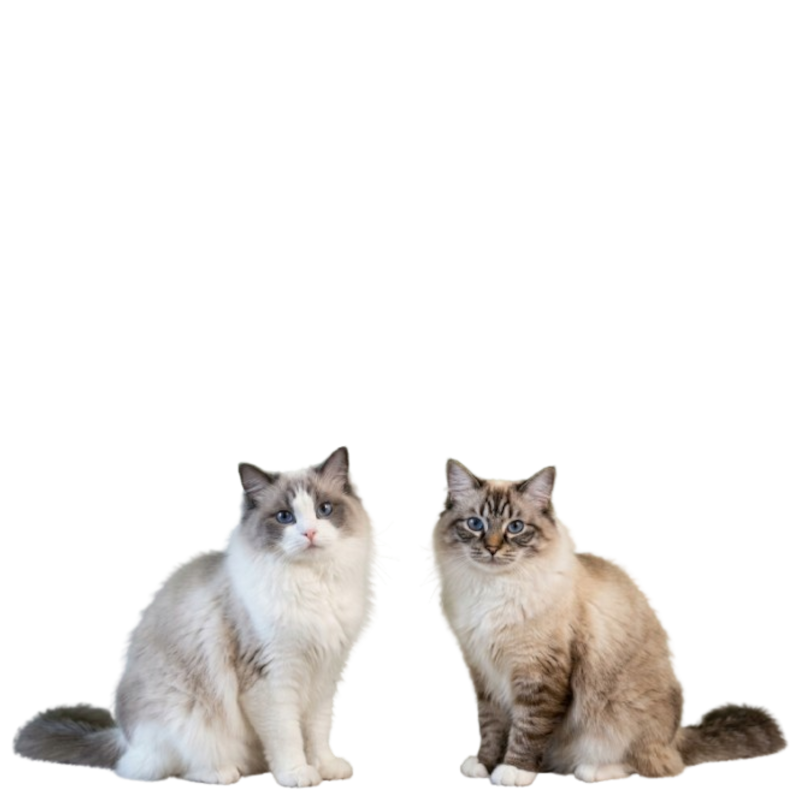
appearance
The Ragdoll is a large, substantial feline defined by its slow‐maturing body, heavy bone structure, and remarkably plush coat. Unlike many high‐style breeds that favor extreme angles, this cat is a masterclass in moderate, fluid lines. Every physical attribute contributes to an overall impression of strength, softness, and power—a large‐framed cat that carries its weight with a relaxed, low‐slung elegance.
Head Structure and Facial Geometry
The head forms a broad, modified wedge where all sides are of equal length when measured from the outer base of the ears to the tip of the muzzle. This geometric balance can be represented by a simple equilateral relationship where the facial width equals the facial length :
Ragdoll Facial Geometry Index
- : Facial Width, the distance measured across the head from the outer base of one ear to the outer base of the other.
- : Facial Length, the distance measured from the outer base of the ears to the tip of the muzzle.
- The equals sign indicates the ideal equilateral balance, where the width of the face is perfectly proportional to the length of the muzzle, creating the breed’s characteristic broad, modified wedge shape.
A judge examines the head structure of a Ragdoll. They measure the width () from the outer base of the ears and find it to be 12 centimeters. They then measure the length () from the base of the ears to the tip of the muzzle, which is also 12 centimeters. Because 12 equals 12, the Ragdoll’s facial geometry satisfies the standard for a perfectly balanced wedge, confirming the structural harmony expected for this breed.
Tophead and Profile
The area between the ears appears flat, providing a solid foundation for the overall head shape. When viewed from the side, the profile reveals a gentle, continuous curve that leads to a slight concave scoop at the bridge of the nose. This is not a sharp, right‐angled stop like that of a Persian, but rather a soft transition akin to a gentle ski slope.
Muzzle, Chin, and Eyes
- Muzzle: The muzzle is rounded and moderately long, tapering gently to harmonize with the overall wedge shape without looking pinched or sharp.
- Chin: Strong and well‐developed, the chin forms a straight vertical line with the nose and upper lip, giving the lower jaw a firm, solid appearance.
- Eyes: Large, vivid blue, and distinctly oval‐shaped, the eyes are set wide apart and slightly slanted. The outer corner aligns gracefully with the outer base of the ear, creating an expression of sweet, open curiosity.
Ear Placement and Carriage
The ears are medium in size and set as much on the side of the head as on the top, beautifully continuing the outer lines of the modified wedge. This placement ensures the ears frame the upper face without disrupting the balanced symmetry of the head.
- Base: Broad and open, providing an active, alert look despite the cat’s calm demeanor.
- Tips: Rounded, softening the triangular profile of the ear.
- Tilt: Carried with a slight forward tilt, making the cat look perpetually interested in its surroundings.
Body Frame and Skeletal Substance
The torso is long, broad, and exceptionally muscular, possessing a solid, heavy‒set feel. The skeletal framework is substantial, featuring a deep chest and equal width across the shoulders and hindquarters.
| Anatomy Feature | Physical Description | Visual Comparison |
|---|---|---|
| Chest & Torso | Broad, deep, and heavily muscled; rectangular profile from shoulder to hip. | Solid and blocky, reminiscent of a well‐built small bulldog. |
| Bone Substance | Exceptionally heavy; thick legs with large, round, tufted paws. | Sturdy, thick pillars that support the massive frame effortlessly. |
| Abdominal Fat Pad | A natural, soft accumulation of fat on the lower abdomen. | A soft, built‐in cushion that accentuates the breed’s low‐slung look. |
The hindquarters are slightly higher than the shoulders, creating a powerful, forward‐leaning stance when the cat is in motion. The neck is short, thick, and robust, blending seamlessly into the heavy shoulders.
Coat Texture and Layering
The coat is one of the most defining tactile characteristics of the breed. It consists primarily of long, soft guard hairs with a minimal undercoat, which prevents the fur from easily matting or tangling.
- Texture: Soft, silky, and incredibly dense, feeling much like combed rabbit fur under the hand.
- The Ruff: The fur around the neck is notably longer, framing the face in a magnificent, dense collar or ruff.
- Leg Shading: The coat transitions from shorter lengths on the front legs to medium–long lengths on the hind legs, creating a full‐pantaloon effect on the thighs.
Tail Structure
The tail is long, thick at the base, and tapers slightly toward the tip. When measured against the body, the length of the tail should be exactly equal to the distance from the shoulders to the base of the spine:
Ragdoll Tail Length Proportionality
- : The total length of the tail, measured from the base where it meets the body to the very tip.
- : The measurement of the cat’s back, defined as the distance from the point of the shoulders to the base of the spine.
- The equality sign represents the ideal breed standard, indicating that a harmonious physical structure is achieved when the tail length perfectly matches the length of the back.
A breeder assesses the physical proportions of a 2-year-old Ragdoll. They measure the distance from the shoulders to the base of the spine () and find it to be 30 centimeters. They then measure the tail length () from base to tip, which also measures 30 centimeters. Because 30 equals 30, the Ragdoll’s tail length is in perfect accordance with the breed standard, demonstrating the correct balance and anatomical proportions expected for the breed.
It is carried high and proudly when the cat is walking, decorated with abundant, plume‐like fur that flows freely with every step.
Physical Summary
Ultimately, the Ragdoll presents an image of soft power—a large, rectangular cat draped in a dense, silky coat, balanced by a sweet and open facial expression. The substantial bone structure and deep chest provide an undeniable presence, while the gentle curves of the profile and the roundness of the muzzle soften its overall silhouette. It is this unique harmony between a rugged, heavy‒set frame and an ultra‐soft, luxurious exterior that gives the breed its unmistakable and enduring appeal.
behavior
The daily routine of the Ragdoll is defined by a distinct preference for low‐altitude exploration, quiet companionship, and a remarkably cooperative manner when interacting with human family members. While many felines prioritize vertical territory—often seeking out the highest shelves or door frames—the Ragdoll organizes its life around the floor, sofas, and low furniture. This grounded approach influences everything from their hunting play styles to their daily navigation of the household environment.
Social Dynamics and Proximity Seeking
A core observable action of Ragdolls is their consistent choice to remain within the same room as their human counterparts. Rather than demanding constant, active attention, their social habits focus heavily on positive proximity.
Human Interactions and Handling
When lifted, members of this breed routinely demonstrate a reduction in muscle tension. This physical relaxation—a distinct, loose‐limbed posture—occurs without the typical stiffening or defensive shifting seen in more reactive breeds. They frequently follow family members from room to room, positioning themselves on the floor a few feet away from human activity, a behavior commonly referred to as shadowing.
Multi‐Animal Environments
In households with other companion animals, Ragdolls generally show minimal territorial aggression. When introduced to a new pet, their primary response is a cautious, low‐posture approach rather than a defensive hiss or elevated spine. They often engage in social grooming with friendly dogs and other cats, showing a high threshold for chaotic household environments.
Vocalization Patterns and Communication Style
The communication style of the Ragdoll is notably reserved. They utilize physical presence and subtle shifts in body posture far more frequently than loud vocal demands.
| Vocalization Type | Observable Frequency | Functional Context |
|---|---|---|
| Soft Chirp / Trill | High | Greeting a human at the door or initiating low‐impact play. |
| Muted Meow | Medium | Requesting access to a closed room or indicating a delayed mealtime. |
| Loud Caterwaul | Very Low | Typically restricted to sudden distress or profound environmental changes. |
| Vocalization Type | Observable Frequency | Functional Context |
|---|---|---|
| Soft Chirp / Trill | High | Greeting a human at the door or initiating low‐impact play. |
| Muted Meow | Medium | Requesting access to a closed room or indicating a delayed mealtime. |
| Loud Caterwaul | Very Low | Typically restricted to sudden distress or profound environmental changes. |
Their physical requests for interaction are equally quiet; a Ragdoll will more commonly rest a single paw against an owner’s ankle or simply stare intently with half‐closed eyes to signal readiness for handling, rather than vocalizing persistently.
Play Styles and Prey Drive
The predatory play of the Ragdoll reflects their grounded physical nature. Their hunting techniques are rarely airborne, focusing instead on horizontal pursuits and tactile manipulation of small items. When engaging with moving targets, the behavioral sequence transitions smoothly from a focused floor‐level stalk, to a rapid horizontal dash, concluding with a controlled paw‐capture rather than an overhead vertical leap.
- Ground-Level Chasing: When presented with a wand toy, they prefer to track it along the rug rather than leaping into the air. They will crouch low and slide forward on their bellies to secure the target.
- Toy Fetching and Carrying: Many individuals naturally engage in retrieving actions, picking up soft toys in their mouths, carrying them across the room, and dropping them near their owners to repeat the cycle.
- Controlled Paws: During play, they routinely keep their claws retracted, utilizing the soft pads of their large paws to pat or trap moving objects.
Daily Activity Cycles and Environmental Exploration
The Ragdoll adheres to a predictable circadian rhythm that balances long periods of rest with brief, intense bursts of low‐impact exercise. Their exploration strategy is systematic but entirely floor‐bound.
Sleep and Wakefulness Ratios
An analysis of their daily movement reveals that a significant portion of their day is spent in relaxed, belly‐up sleeping positions on broad surfaces. The probability of active engagement versus restful lounging during standard daylight hours can be modeled to show their strong bias toward energy conservation:
Ragdoll Daily Sleep and Wakefulness Probability
- : The probability of restful lounging, representing the high likelihood of the cat being in a relaxed, sleep-oriented state during daylight hours.
- : The probability of active engagement, representing the smaller portion of time the cat spends moving, playing, or interacting with its environment.
- and : The statistical values that quantify the breed’s energy conservation behavior, showing that for every unit of time observed, they are three times more likely to be resting than active.
An owner tracks the daily behavior of their Ragdoll over an 8-hour observation period during the day. Based on the established model, the owner calculates the expected time spent in each state. By multiplying the total time (8 hours) by the probability of active engagement (), the result is 2 hours of active time. Similarly, multiplying the total time by the probability of restful lounging () results in 6 hours of rest. This 6-to-2 ratio confirms the Ragdoll’s strong preference for energy conservation, validating that the cat spends the majority of its daylight hours in a state of calm, relaxed repose.
Horizontal Mapping
When navigating an unfamiliar room, a Ragdoll will map the perimeter by walking slowly along the baseboards and sniffing low furniture legs. They rarely look upward toward high shelves or curtains, preferring to locate secure hiding spots beneath beds or behind low chairs if startled.
Behavioral Summary
Observing the Ragdoll on a day‐to‐day basis reveals a companion that moves through life with low intensity and high social awareness. Their actions are characterized by a quiet presence—marked by soft trills, relaxed handling postures, and low‐altitude play patterns that keep them safely close to the floor. By prioritizing proximity to their human companions over high‐flying antics or territorial vocalizations, they integrate seamlessly into the rhythm of the modern household, leaving a clear impression of steady, cooperative companionship.
color
The definitive visual hallmark of the Ragdoll is its striking pointed coloration, characterized by a stark contrast between a pale body coat and significantly darker extremities. This pigmentation strategy concentrates intense color on the mask, ears, legs, and tail, while the main torso remains shaded in lighter, muted tones. The depth of this contrast relies on an exquisite environmental interaction where pigment production intensifies at the cooler thermal boundaries of the feline body, creating a beautifully graded silhouette.
Pigment Concentration along the Hair Shaft
The distribution of melanin‐the natural microscopic granules that create coat color—varies dynamically depending on where the individual hair resides on the cat’s body. This creates a multi‐layered effect within the coat structure.
Extremity Point Pigmentation
On the points, color density reaches its maximum concentration. The pigment granules are packed tightly from the root to the very tip of each hair shaft, much like charcoal particles compressed into a solid block. This produces deep, opaque hues that absorb light cleanly, ensuring crisp definition along the edges of the ears, facial mask, and paws.
Torso Shading and Gradient Effect
Across the shoulders, back, and flanks, the hair shafts exhibit a completely different pigment profile. The root of the hair starts almost entirely white or cream, with color granules gently gathering and becoming more concentrated as the hair grows toward the tip. The density of pigment concentration relative to the total length of the hair shaft from root to tip can be expressed as a function of the distance :
Ragdoll Torso Pigment Gradient
- : The density of pigment concentration at any specific point along the hair shaft.
- : The relative distance from the root () to the tip () of the hair shaft.
- : The quadratic function describing how the pigment density increases from the nearly white root to the more deeply colored tip, creating the characteristic soft shading effect.
To analyze the color depth of a Ragdoll coat, a researcher examines a hair shaft by measuring its pigment density at different points. At the root (), the concentration is , resulting in 0 pigment density. At the midpoint (), the concentration is , resulting in 0.25 density. At the tip (), the concentration is , resulting in a full 1 unit of pigment density. These results quantify the Ragdoll’s gradual shift in color, showing how the pigment concentration accelerates toward the tip to create the cat’s signature shadowed gradient effect.
This architectural layout means that when the coat parts during movement, a lighter undercoat is revealed, softening the overall color depth of the body.
Classification of Base Hues and Dilutions
The coat colors found within Ragdolls split cleanly into two major categories: rich, heavy traditional tones and their soft, dilute counterparts where the pigment granules are spaced farther apart along the hair fibers.
| Traditional Base Tones | Visual Presentation | Dilute Transformations | Visual Presentation |
|---|---|---|---|
| Seal | Rich, deep brown akin to dark espresso beans or wet walnut bark. | Blue | Cool, slate‐gray with a soft, silvery sheen like winter mist. |
| Chocolate | Warm, milk‐chocolate hue with distinct, golden–tan undertones. | Lilac | Pale, frosty gray with delicate pinkish or lavender highlights. |
| Cinnamon | Warm, reddish‐brown resembling ground cinnamon or toasted copper. | Fawn | Warm, soft beige reminiscent of a young deer’s summer coat. |
In addition to these structural lineages, the red series introduces vibrant, golden‐orange tones and pale cream variations, which can appear as solid point highlights or intermingle with the dark base tones to form intricate mottled patterns.
Pattern Formatting and White Distribution
Beyond the base coloration, the distribution of white overlay determines how the points are framed and presented across the body through highly structured pattern classifications.
The Pointed Layout
This configuration exhibits no white spotting whatsoever. The progression of color moves from a pale body directly into dark, unblemished extremities. The body remains pale, shading gently into the back, while the points are fully colored and uniform, providing the ultimate expression of contrasting values.
The Mitted Layout
This presentation adds precise white accents to the pointed blueprint. The chin must show a clean white stripe that flows down through the chest and underbelly, creating a sharp boundary against the colored mask. The front paws are capped with symmetrical white mittens, while the hind legs are covered in white boots extending up toward the hock joint.
The Bi‐Color Layout
The most graphic pattern displays an inverted, symmetrical white letter “V” across the mask of the face, surrounded by deep point coloration on the cheeks and ears. The white coloration completely isolates the facial points from the body, and the entire chest, stomach, and all four legs remain pristine white, creating a brilliant canvas that elevates the depth of the darker points on the tail and ears.
Thermal Shading Shifts and Maturity
The final color state of a Ragdoll is not static, as the concentration of pigment responds continuously to the environment over time. Kittens are born completely white because the uniform warmth of the maternal environment prevents early pigment synthesis.
As the young cat grows and encounters cooler ambient temperatures outside the nest, color begin to develop on the ears and tail first, followed by the muzzle and legs. This thermal coloration curve operates within standard temperature zones, typically stabilizing between 18–24°C in the domestic home. As an individual matures into its senior years, the core body temperature slightly shifts, causing a slow, creeping migration of darker pigment across the saddle of the back, which deepens the richness of the body coat.
Coloration Summary
Mastering the color spectrum of the Ragdoll requires looking past simple color names to understand the complex interplay of pigment density, hair shaft shading, and structural patterns. Whether looking at the heavy espresso depth of a traditional seal point or the delicate lavender frosting of a lilac bi‐color, the breed relies on a crisp balance between pale background tones and deeply saturated extremities. This layered distribution of melanin ensures that every movement of the coat reveals a subtle, shifting harmony of color values, giving these felines their unmistakable, softly glowing luminescence.
compatibility
Ease of Maintenance
Rating: 2/5
Child Friendly
Rating: 5/5
Annual Cost
Rating: 3/5
Lifetime Cost
Rating: 3/5
Adaptability
Rating: 4/5
Velcro Factor
Rating: 5/5
Quietude
Rating: 4/5
Apartment Suitability
Rating: 5/5
Hypoallergenic
Rating: 2/5
Handling Tolerance
Rating: 5/5
Hardiness/Longevity
Rating: 4/5
Prey Drive
Rating: 4/5
genetics
The underlying genomic profile of the Ragdoll dictates its entire physical presentation, relying on a series of predictable, naturally occurring mutations at specific chromosomal locations known as loci. Unlike random‐bred cats whose traits are highly unpredictable, this purebred population carries fixed recessive traits that must be carefully managed through planned pairings. By understanding how dominant and recessive alleles interact within the DNA, breeders can map out lineage blueprints with exceptional precision, while companion owners gain insight into how microscopic biological codes establish the foundational traits of their pets.
The Colorpoint Locus and Thermal Sensitivity
At the very heart of the Ragdoll’s genetic identity is the Colorpoint locus, which regulates how pigment is distributed across the hair fibers. This specific mutation alters the tyrosinase enzyme—the primary biological catalyst responsible for creating melanin dark pigment granules.
The Temperature‐Sensitive Mutation
The mutated allele, designated as , renders the enzyme unstable at standard body temperatures. In the core of the cat, the enzyme misfolds and becomes inactive, preventing color from developing. However, at the cooler peripheral extremities of the body—such as the ears, tail, paws, and mask—the enzyme functions normally, packing the hair shafts with rich pigment.
Inheritance Matrix
Because the wild‐type full‐color allele () is completely dominant over the pointed allele, a cat must inherit two copies of the mutation to show the signature look. The inheritance model follows a straightforward recessive structure:
| Parent Genotypes | Offspring Probability Model | Resulting Trait Expression |
|---|---|---|
| cscs × cscs | P(cscs) = 1.00 | 100% Pointed coat across the entire litter. |
| Ccs × cscs | P(Ccs) = 0.50 and P(cscs) = 0.50 | 50% Full color (carriers) and 50% Pointed. |
| Ccs × Ccs | P(CC) = 0.25, P(Ccs) = 0.50, P(cscs) = 0.25 | 75% Full color and 25% Pointed. |
White Spotting and Pattern Distribution Modifiers
The intricate white patterns seen across the breed are controlled by the White Spotting locus (). This gene dictates how melanoblasts—the specialized precursor cells that travel from the developing spinal cord to deposit color across the embryo—migrate during early development. White regions occur where these cells fail to arrive before the skin completely forms.
Allelic Interactions
The Ragdoll utilizes variable expressions of this co‐dominant allele to produce distinct, repeatable markings. When a dominant spotting allele () pairs with a non‐spotting recessive allele (), the cells migrate partially, resulting in restricted white zones.
Genotype to Pattern Mapping
The specific layout of the white fur can be calculated based on the precise combination of alleles present at this locus:
- Homozygous Recessive (): Complete cell migration. This results in the traditional Pointed pattern, which contains zero white markings across the body.
- Heterozygous (): Restricted or modified cell migration. This produces the Mitted pattern or lower‐expression patterns, creating precise white gloves on the paws and a clean white chin.
- Homozygous Dominant (): Severely restricted cell migration. This yields the classic Bi‐Color pattern, leaving a large inverted white triangle on the face and completely white legs.
Pigment Density and Dilution Loci
The richness of the base coloration depends heavily on the Dense locus (), which acts as a master volume switch for coat intensity. This gene codes for a transport protein that moves pigment granules into the growing hair shaft.
The Dilution Shift
The traditional deep brown tone is controlled by the dominant allele (). When an individual inherits two copies of the recessive dilute allele (), a cellular bottleneck occurs. The pigment granules clump together unevenly within the hair shaft rather than distributing smoothly. This clumping changes how light refracts off the hair fiber, shifting a deep espresso tone down into a muted slate‐gray appearance.
Statistical Probability of Dilution
If two parents are heterozygous carriers of the dilute trait (), the probability of producing a dilute kitten () within that pairing can be modeled mathematically using standard Mendelian distribution:
Ragdoll Dilute Trait Inheritance Probability
- : The statistical probability that a kitten will inherit two copies of the recessive dilute gene and display a diluted coat color.
- : The Mendelian ratio representing the expected outcome of a cross between two heterozygous carrier parents.
- : The decimal representation of the 25 percent probability that any individual kitten in a litter will exhibit the diluted phenotype.
A breeder pairs two Ragdoll cats who are both known carriers of the recessive dilute gene. The resulting litter contains 4 kittens. By applying the probability model, the breeder calculates the expected number of dilute kittens by multiplying the litter size by the probability value (), resulting in an expectation of 1 dilute kitten. This calculation provides the Ragdoll’s breeder with a statistical baseline for anticipating coat color distribution within the litter, acknowledging that while each kitten has a 25 percent chance of being dilute, the actual expression in any given litter may vary due to random segregation.
This means there is a static chance for each individual kitten in the litter to express a dilute coat value.
Genetic Summary
Navigating the genomic matrix of the Ragdoll reveals a beautifully logical framework where complex physical outcomes are dictated by a few critical DNA switches. By managing the fixed recessive colorpoint mutation (), observing the co‐dominant migration patterns of the white spotting locus (), and tracking the structural distribution of density modifiers (), breeders can safeguard the structural uniformity of their lines. For owners and enthusiasts alike, this genetic clarity transforms the breed’s presentation from a visual marvel into a predictable, masterfully organized product of evolutionary biology.
health
The physical well‐being of the Ragdoll is closely tied to its large muscular frame, slow metabolic development, and specific structural pathways. Managing the health of this population requires a proactive focus on routine diagnostic screening, weight management, and targeted clinical monitoring. By identifying physical vulnerabilities early, preservation breeders can selectively remove structural risks from their bloodlines, while companion owners can implement everyday care strategies that support a highly stable and comfortable quality of life for their felines.
Cardiac Health and Myocardial Thickening
The primary cardiovascular focus in Ragdolls centers on Hypertrophic Cardiomyopathy—a structural condition where the muscular walls of the heart abnormally thicken over time. This thickening decreases the internal volume of the heart chambers, forcing the cardiac muscle to work significantly harder to pump blood throughout the body.
Clinical Manifestations
As the heart walls thicken, the muscle tissue loses its natural elasticity. This can lead to sluggish blood circulation, fluid accumulation in the lungs, or the formation of internal blood clots. Because felines are experts at masking physical discomfort, this condition frequently remains silent until it reaches advanced stages.
Diagnostic Tracking and Screening
Regular echocardiograms—specialized ultrasound scans of the heart—allow veterinarians to physically measure the thickness of the left ventricular wall. A maximum wall thickness exceeding a specific physiological threshold indicates clinical hypertrophic change, which can be expressed mathematically:
Ragdoll Left Ventricular Wall Threshold
- : Left Ventricular Wall, the measured thickness of the heart’s left ventricular wall in millimeters.
- : The greater-than-or-equal-to symbol, signifying the diagnostic threshold.
- : The physiological limit in millimeters used by veterinarians to assess for potential clinical hypertrophic change in the heart structure.
A veterinarian performs an echocardiogram on an adult Ragdoll to assess heart health. Upon measuring the left ventricular wall, the diagnostic equipment displays a value of 6.3 millimeters. Because 6.3 is greater than the 6.0 threshold, the condition is met, alerting the clinician to the presence of potential hypertrophic changes. This measurement is a critical diagnostic step in managing the Ragdoll’s long-term cardiac wellness, as it identifies when proactive monitoring or intervention is required.
| Diagnostic Tool | Target System | Screening Frequency | Purpose |
|---|---|---|---|
| Echocardiogram | Cardiac Muscle | Annual – Bi‐annual | Measures ventricular wall thickness and blood flow velocity. |
| ProBNP Blood Test | Cardiac Stretch | Annual | Detects elevated proteins released when heart tissue is strained. |
Renal Dynamics and Fluid Filtration Risks
The renal system of the Ragdoll can be susceptible to the formation of structural cysts or gradual tissue degradation, commonly presenting as chronic kidney disease. This condition involves the slow, irreversible loss of the kidney’s filtering units, which normally cleanse the bloodstream of metabolic waste.
Cystic Development
In some bloodlines, fluid‐filled sacs or cysts can develop within the kidney tissue from birth. As the cat ages, these cysts expand in size and volume, slowly compressing and displacing the surrounding healthy tissue. This progressive reduction in functional kidney mass compromises the organ’s capacity to concentrate urine and filter out toxins.
Biomarker Monitoring
Veterinarians track renal health by monitoring specific waste products in the blood, such as Symmetric Dimethylarginine (SDMA) and creatinine. The ratio of waste elimination can be evaluated alongside the urine specific gravity to catch early filtration failures before clinical signs appear. A healthy, fully functioning feline kidney typically maintains a concentration ratio within a specific range:
Ragdoll Renal Filtration Baseline
- : Urine Specific Gravity, a measure of the kidney’s ability to concentrate urine by assessing the density of solutes relative to pure water.
- : The greater-than-or-equal-to symbol, denoting the standard threshold for healthy renal filtration performance.
- : The minimum value that indicates efficient kidney function in cats, serving as the benchmark for normal concentrated urine.
A veterinarian examines a 7-year-old Ragdoll during a routine check-up. They perform a urinalysis to check for signs of early renal filtration issues. The laboratory result for the cat’s urine specific gravity is 1.028. Since 1.028 is less than the 1.035 benchmark, the condition is not met. This result prompts the veterinarian to initiate further testing and begin dietary modifications, ensuring that the Ragdoll’s renal health is managed before more severe clinical signs of kidney inefficiency manifest.
Values falling consistently below this baseline signal that the kidneys are losing their filtering efficiency, requiring immediate dietary adjustments and fluid support.
Structural Mass and Joint Equilibrium
Because the Ragdoll possesses an exceptionally large skeletal framework, the physical load placed on its joints is substantially higher than that of an average‐sized domestic cat. This structural mass creates specific vulnerabilities within the skeletal system.
- Osteoarthritis: The continuous weight load can cause accelerated wear and tear on the cartilage lining the elbows, hips, and hocks, leading to chronic joint inflammation and stiffness.
- The Weight‐to‐Stress Ratio: Any excess body fat exponentially increases the mechanical stress placed on the joint matrices. Managing food intake to maintain a lean silhouette is the most effective preventative measure against mobility loss.
- Subtle Mobility Indicators: Owners can spot joint discomfort not by watching for an obvious limp, but by noticing a reluctance to jump onto low sofas or a subtle shift toward spending more time resting on the floor.
Lower Urinary Tract and Crystal Formation
The slow‐moving, relaxed physical nature of the Ragdoll can occasionally contribute to a lower rate of daily water consumption, which directly impacts the urinary bladder environment.
When a cat drinks infrequently, its urine becomes highly concentrated. This concentrated environment allows microscopic mineral crystals—most commonly struvite or calcium oxalate—to precipitate out of the fluid. These crystals can irritate the bladder wall, causing painful inflammation, or clump together to form stones that risk creating a life‐threatening physical blockage in the narrow urinary tract. Increasing moisture intake through a diet focused on wet food helps keep the bladder continuously flushed, preventing these minerals from binding together.
Health and Well-Being Summary
Maintaining optimal physical health in the Ragdoll requires a balanced combination of clinical vigilance and attentive day‐to‐day management. By utilizing annual ultrasound screenings to monitor the cardiac muscle and tracking blood biomarkers to safeguard renal filtration, breeders and owners can stay well ahead of hidden physiological changes. When these clinical safeguards are paired with strict weight management to protect the joints and an emphasis on hydration to keep the urinary system clear, Ragdolls can successfully maintain their signature relaxed vitality, ensuring a comfortable, active, and robust life cycle.
longevity
The maturation timeline and life expectancy of the Ragdoll follow a gradual, slow‐paced trajectory that sets them apart from faster‐developing domestic felines. Because these cats require an extended period to fully reach their structural peak, their physical baseline remains remarkably stable throughout their middle years. Understanding this prolonged aging curve allows preservation breeders to select for sustained line vitality, while providing owners with a practical framework to identify the shifting physical needs of their companions as they transition from active youth into a lengthy senior phase.
Lifespan Expectations and Statistical Survival Ranges
The average lifestyle journey for a well‐maintained, indoor‐dwelling Ragdoll spans a significant number of years, with many individuals routinely advancing well into their mid‐teens. The typical operational survival range can be tracked across several distinct probability bands.
Baseline Survival Probability
When analyzing a standard population under optimal home conditions, the probability of an individual successfully maintaining vitality past a specific year threshold can be modeled to demonstrate the breed’s inherent structural resilience. For instance, the probability of reaching 12 years of age or older is generally high, which can be expressed mathematically as:
Ragdoll Senior Survival Probability
- : The statistical probability that an individual cat will reach or exceed the age of 12 years.
- : The age milestone used to distinguish the transition into the senior life phase.
- : The decimal representation of the 80 percent probability, reflecting the high resilience of the population in reaching this age bracket under optimal care.
A researcher conducts a longitudinal study on a group of 100 Ragdoll cats living in stable, optimal home environments. Using the established survival model, the researcher estimates how many members of this group are likely to reach their 12th birthday. By multiplying the total population of 100 by the survival probability (), the calculation yields 80 individuals. This result helps the researcher quantify the Ragdoll’s inherent structural resilience, highlighting that a large majority of the population maintains sufficient vitality to reach the senior stage before natural age-related decline becomes the primary health factor.
This indicates that approximately of the population safely navigates into their senior years before exhibiting pronounced, age‐related physical decline.
Lifespan Distribution Tiers
The actual progression of longevity within the breed breaks down into distinct survival brackets based on optimal environmental support and constitutional vitality:
| Lifespan Tier | Age Range in Years | Vitality Profile |
|---|---|---|
| Standard Baseline | 12–15 | Typical survival bracket for indoor individuals with routine wellness monitoring. |
| Optimal Longevity | 15–18 | Extended aging phase frequently achieved by cats maintaining ideal muscle mass. |
| Exceptional Vitality | 18–20+ | Maximum aging boundaries observed in lineages with exceptional metabolic efficiency. |
The Four Key Life Stages of Development and Aging
The life cycle of the Ragdoll is defined by four distinct operational phases, each marked by specific physiological transitions and visible adjustments in physical maturity.
Extended Youth (Birth to 4 Years)
Unlike standard domestic felines that achieve full structural maturity by 12–18 months, the Ragdoll remains in an active developmental stage for up to 4 years. During this prolonged youth, growth occurs in rhythmic spurts. Energy levels remain consistently high, and the physical framework continues to expand slowly, accumulating mass and density before settling into its final adult equilibrium.
Mature Equilibrium (4 to 10 Years)
This stage represents the physical plateau of the breed. Growth has fully ceased, and the metabolic rate stabilizes into a steady, predictable routine. The primary focus during these middle years is the maintenance of optimal muscle tone and the prevention of slow, creeping weight gain, which can accelerate stress on the skeletal matrix.
Senior Transition (10 to 14 Years)
As felines enter their second decade, the physical aging curve begins to manifest visibly. The body’s metabolic efficiency begins to decelerate, often resulting in a noticeable reduction in elasticity across the soft tissues.
- Physical Markers: The coat may lose a degree of its dense, springy texture, looking flatter or parting more easily.
- Mobility Adjustments: The smooth, fluid gait of maturity subtly transitions into a more careful, deliberate step, particularly when stepping down from low perches.
Geriatric Phase (14 Years and Beyond)
In this final stage, the aging process becomes the dominant factor in daily life. The body undergoes a natural thinning process where muscle mass slowly recedes, causing the shoulder blades and spine to feel more prominent to the touch. The senses become less acute, and the cat relies heavily on a highly predictable, climate‐controlled environment to conserve its core energy reserves.
Visible Variables Influencing Mature Aging Patterns
As Ragdolls advance through their natural aging timeline, several observable environmental and physical variables directly dictate the velocity of their decline.
The Muscle‐to‐Fat Ratio
Maintaining a balanced muscle mass is the single most critical factor in extending the functional longevity of a senior cat. As felines age, their ability to process proteins lessens, which can lead to muscle wasting. A steady, well‐toned physical mass acts as a metabolic buffer, protecting the skeletal structure and ensuring that the senior cat retains the strength needed for low‐impact mobility.
Hydration Efficiency and Tissue Elasticity
The efficiency of daily fluid intake plays a vital role in how cleanly the body eliminates metabolic waste as it ages. Senior felines naturally experience a decrease in their thirst drive. Ensuring constant, easy access to moisture maintains the elasticity of cellular walls and supports optimal fluid circulation throughout the internal organs, effectively slowing down the outward physical signs of aging.
Longevity Summary
The lifelong journey of the Ragdoll is a testament to slow, measured development, offering a lengthy window of stable maturity before entering the senior years. By tracking their progress through the extended four‐year developmental phase, maintaining a vigilant eye on muscle mass retention during middle age, and supporting tissue elasticity past the ten‐year mark, breeders and owners can maximize the natural survival probabilities of these felines. This thorough understanding of the breed’s aging characteristics ensures that each life stage is met with appropriate environmental adjustments, allowing these large, magnificent companions to navigate their twilight years with grace and physical comfort.
maintenance
The daily upkeep of the Ragdoll centers on managing their unique physical scale, low‐intensity activity cycles, and dense plush coat. Because these felines lack a traditional thick, insulating undercoat, their grooming needs differ significantly from other long‐haired breeds, focusing heavily on surface friction removal and natural oil distribution. Structurally, their substantial weight demands specialized environmental accommodations, while their relaxed internal metabolism requires precise nutritional tracking. Establishing a structured, predictable care routine ensures that cattery operations run efficiently and companion environments remain optimally aligned with the breed’s physical needs.
Nutritional Guidelines and Caloric Modeling
Proper husbandry for the Ragdoll requires a calculated approach to dietary energy intake to support their large frame without allowing excess fat accumulation. Their tendency toward a relaxed lifestyle means their daily caloric expenditure is lower than that of highly active breeds.
Resting Energy Requirements
To establish a baseline, a caretaker must calculate the Resting Energy Requirement (RER)—the minimum number of calories a cat needs to perform basic life functions like breathing and digestion while resting. For a typical adult Ragdoll weighing kilograms, this daily caloric baseline can be modeled mathematically:
Ragdoll Resting Energy Requirement
- : The Resting Energy Requirement, representing the daily caloric intake needed to support essential bodily functions at rest, measured in kilocalories.
- : A scaling constant used to relate metabolic weight to energy output.
- : The body weight of the cat, measured in kilograms.
- : An allometric power factor that adjusts for the non-linear relationship between metabolic rate and body mass in felines.
An owner wants to calculate the daily energy baseline for their 5-kilogram Ragdoll. First, the owner raises the body weight to the power of 0.75 (), which is approximately 3.34. Multiplying this by 70 () results in an RER of 233.8 kilocalories per day. If the owner then applies a maintenance activity factor of 1.2, the total daily requirement becomes 280.6 kilocalories. This calculation provides the Ragdoll’s owner with a reliable metric to ensure the cat receives appropriate nutrition to maintain a healthy weight while supporting its calm indoor lifestyle.
Once the RER is calculated, the number is multiplied by an activity factor ranging from 1.0–1.2 for altered, inactive indoor adults to determine the total daily energy requirement.
Structured Feeding Schedules
Free‐feeding is highly discouraged within this population due to their low metabolic drive. Instead, a strict, multi‐meal schedule should be enforced:
| Life Stage | Daily Meal Frequency | Focus Area |
|---|---|---|
| Developing Kitten | 3–4 Meals | High protein density to sustain continuous growth spurts. |
| Adult Maintenance | 2 Meals | Moisture‐rich formulas to manage weight and support hydration. |
| Senior Phase | 2–3 Meals | Highly digestible proteins to protect muscle mass retention. |
Coat Care and Structural Grooming Routines
The Ragdoll’s coat is soft, silky, and relatively easy to maintain compared to other long‐haired felines, as it consists primarily of slick guard hairs with minimal woolly undercoat. However, systematic mechanical maintenance remains necessary to prevent friction matting in high‐movement areas.
Weekly Friction Management
Grooming efforts must focus heavily on localized friction zones—specifically the armpits, the groin area behind the hind legs, and the dense ruff around the neck. A long‐toothed steel greyhound comb is the preferred tool, as it slides cleanly through the top layer to clear away loose, dead fibers before they can twist into knots. This routine should be executed 2–3 times per week under standard conditions.
Seasonal Shedding Cycles
During seasonal temperature shifts, Ragdolls undergo a significant coat drop. During these cycles, daily combing is required.
- Skin Oil Distribution: Grooming should always begin with a wide‐spaced comb to detangle, followed by a soft, natural bristle brush. This secondary action lifts loose dander and sweeps the cat’s natural skin oils evenly down the entire length of the hair shaft, keeping the coat smooth and reducing static.
- Sanitary Trimming: To maintain optimal hygiene, a light trimming of the fur around the hindquarters—often called a sanitary clip—prevents waste from adhering to the long breeches of the hind legs.
Essential Hygiene and Dental Routines
A comprehensive husbandry program must address the critical boundary points of the feline body, specifically the ears, claws, and oral cavity.
Ear and Claw Maintenance
Because of their large size, the physical pressure exerted by their claws during natural scratching behavior is significant. Trimming the tips of the claws every 10–14 days using heavy‐duty, guillotine‐style clippers prevents snagging and splitting. Simultaneously, the ears should be inspected; any light wax buildup should be cleared using a dry cotton pad, avoiding liquid flush solutions unless explicitly recommended for a specific environmental issue.
Oral Health Habits
Periodontal maintenance should be integrated directly into the weekly care schedule. Soft plaque accumulates easily along the upper molars; brushing the teeth with an enzymatic veterinary paste twice a week breaks down this film before it solidifies into hard tartar, preserving gum integrity and overall systemic wellness.
Environmental Setup and Lifestyle Enrichment
Designing a home or cattery space for the Ragdoll requires a structural shift away from the high, narrow vertical trees typically used for average domestic felines. Because their significant body mass alters how they interact with physical structures, their environment must be configured around heavy, low‐altitude stability.
Structural Support and Perch Design
Traditional, lightweight cat trees are entirely unsuitable for this breed, as the kinetic force of a large cat shifting its weight can easily tip the structure over. Environmental furniture must possess wide, weighted wooden bases and extra‐thick support pillars that keep the center of gravity low. Perches and resting platforms must be wide enough to support a large torso completely, ensuring that the limbs do not hang awkwardly over the edges and destabilize the cat.
Ground‐Level Enrichment Standards
Because their play and exploration style is primarily horizontal rather than vertical, enrichment items should be kept close to the floor to match their natural patterns.
- Heavy Scratching Units: Instead of tall, unstable posts, use horizontal scratching mats or extra‐wide vertical posts bolted directly to the wall. This allows them to stretch their entire body length securely without the post shifting, sliding, or pulling away from its anchor points.
- Litter Box Proportions: Open, extra‐large litter pans measuring at least 60 cm by 45 cm are mandatory. Enclosed, standard‐sized boxes restrict their ability to turn around comfortably, which can lead to accidental soiling of the long tail and breech fur.
Maintenance Summary
The daily care framework for the Ragdoll emphasizes structural safety, calculated portions, and targeted surface grooming. By relying on precise RER caloric equations to govern their two‐meal daily schedule, caretakers can maintain lean body mass and protect vital joints. When this nutritional vigilance is paired with a bi‐weekly steel‐comb routine across high‐friction zones and an environment configured with broad, low‐altitude, heavy‐duty furniture, the breed thrives seamlessly. This structured husbandry blueprint removes environmental stress, allowing these substantial, magnificent felines to enjoy optimal physical well‐being within a highly functional domestic landscape.
measurements
| Measurement | Female | Male | ||
|---|---|---|---|---|
| Metric | Imperial | Metric | Imperial | |
height | 25 – 30 centimeters | 10 – 12 inches | 28 – 33 centimeters | 11 – 13 inches |
length | 43 – 51 centimeters | 17 – 20 inches | 48 – 56 centimeters | 19 – 22 inches |
weight | 4.5 – 6.8 kilograms | 10 – 15 pounds | 6.8 – 9.1 kilograms | 15 – 20 pounds |
• Height: Refers to the measurement at the withers (shoulders).
• Length: Measured from the tip of the nose to the base of the tail.
origin
The historical foundation of the Ragdoll represents a modern, highly documented chapter in North American feline heritage, emerging from a specific mid‐twentieth‐century geographic locus. Unlike ancient landrace breeds—cats that developed through geographic isolation and natural selection within a specific region over centuries—the Ragdoll was engineered through a deliberate, localized selection process. The lineage owes its inception to a small cluster of free‐roaming domestic felines in Southern California, whose selective pairing created a distinct structural divergence from traditional established lines. This structured foundation laid the groundwork for a rapid chronological migration across international registries, anchoring the breed permanently in feline show history.
The Foundation Matings of Riverside, California
The initial synthesis of the breed occurred during the early 1960s in Riverside, California, utilizing non‐pedigreed domestic cats that possessed distinct, observable physiological traits.
The Key Ancestral Lines
The cornerstone of the entire lineage was a free‐roaming, white domestic long‐haired female named Josephine. Following an injury and subsequent recovery period, Josephine produced litters that exhibited unique physical characteristics. From these litters, specific individuals were chosen to solidify the genetic foundation. A dark, seal‐pointed female named Buckwheat and a bi‐color female named Raggedy Ann Fugianna became the maternal anchors of the expanding line.
Development of the Light and Dark Lines
The paternal foundation was established primarily by Daddy Warbucks, a seal‐pointed male with distinct white socks, also sired by Josephine. The early lineage split cleanly into two distinct operational branches designed to preserve diversity:
- The Light Line: Formed by pairing Daddy Warbucks back to Fugianna, focusing on maximizing white distribution across the extremities.
- The Dark Line: Formed by pairing Daddy Warbucks to Buckwheat, emphasizing dense point saturation with minimal to no white overlay.
Chronological Timeline of Breed Recognition
The transition of the Ragdoll from a private, controlled cattery program into an internationally recognized show feline followed a strict, often turbulent chronological path.
| Chronological Era | Milestone Event | Registry Significance |
|---|---|---|
| 1960–1963 | Initial outcross matings of Josephine and Daddy Warbucks. | First tracking of the foundation phenotype in California. |
| 1971 | Creation of the International Ragdoll Cat Association (IRCA). | Private registry established to enforce strict structural franchising. |
| 1975 | Separation of the traditionalist faction from the original program. | Formation of the Ragdoll Fanciers Club to seek mainstream acceptance. |
| 1981–1985 | First international export of breeding stock to the United Kingdom. | Expansion of the lineage boundaries outside North America. |
| 2000 | Advancement to full Championship recognition status. | Complete acceptance across the Cat Fanciers’ Association (CFA). |
Mathematical Representation of Early Lineage Consolidation
During the foundational decade of the breed, the coefficient of relationship between early generations was exceptionally tight due to the repeated integration of Josephine’s immediate descendants. To understand how the genetic influence of a single foundation ancestor, such as Daddy Warbucks (), was maintained across subsequent generations (), early breeders relied on standard kinship calculations. The genetic coefficient of relationship between the foundation sire and a given generation can be modeled based on the number of steps separating them in the pedigree tree:
Ragdoll Genetic Relationship Coefficient
- : The coefficient of relationship, which quantifies the genetic similarity between the foundation ancestor and a descendant.
- : The mathematical symbol for summation, used here to aggregate the genetic contributions across all paths in a pedigree.
- : The constant representing the proportion of genetic material passed from a parent to its offspring.
- : The number of generational steps or links separating the ancestor from the specific descendant in the pedigree.
A historian mapping the early development of the Ragdoll analyzes the relationship between the foundation sire Daddy Warbucks and a specific kitten in a third-generation pedigree. In one particular path, there are 3 generational steps () separating the kitten from the sire. The genetic contribution for this path is calculated as , which equals or 0.125. By summing these values across all relevant paths in the pedigree, researchers determine the total value, which provides the Ragdoll’s breeder with a precise numerical understanding of how the sire’s unique traits were concentrated within the lineage to ensure consistent physical and behavioral characteristics.
By keeping this structural correlation high during the initial 1965–1971 breeding window, the uniform characteristics of the population became highly predictable, preventing the line from reverting to standard random‐bred variations.
Geographic Migration and Global Dispersal
Once the traditionalist breeders broke away from the original franchised system in the mid‐1970s, the geographic footprint of the Ragdoll expanded rapidly. This migratory phase moved the cats from their localized West Coast origins into a global network.
Domestic Expansion
The initial domestic migration pattern flowed from California eastward toward the midwestern and northeastern United States. These regional hubs established independent breeding programs that prioritized the multi‐patterned white distribution system, validating the breed’s structural stability in open competition.
International Integration
The critical turning point for global lineage preservation occurred in 1981, when a small group of cats was exported to Great Britain. The British quarantine records from the 1981–1982 window document the successful introduction of the primary lines into Europe. This external population acted as a vital reservoir, securing the lineage against regional bottlenecks and establishing a foundational blueprint that European registries utilized to draft their formal classification standards.
Heritage Summary
The historical journey of the Ragdoll is a compelling example of swift, highly organized lineage development within the modern era. From the initial accidental discovery of Josephine’s unique litters in Riverside, California, to the methodical execution of the light and dark breeding matrices, each stage of the breed’s history was shaped by deliberate selection. By tracking the chronological progression through early registry battles and analyzing the tight kinship coefficients that fixed their traits, preservationists and owners gain a profound appreciation for the breed. This historical clarity reveals a legacy built on careful documentation and strategic global migration, ensuring the breed’s permanent position as a distinct icon of North American feline heritage.
temperament
The psychological architecture of the Ragdoll is distinguished by an inherently steady, low‐reactivity baseline that fundamentally shapes how they perceive and interact with their world. Unlike many domestic felines that maintain a high state of environmental alertness—perpetually prepared for a flight‐or‐fight response—this breed possesses a naturally high threshold for emotional arousal. This means it takes a significantly more intense sensory disruption to startle or stress them. Their internal disposition prioritizes social connection over territorial defense, resulting in an accessible, highly cooperative personality structure that integrates smoothly into complex, busy domestic households.
Social Confidence and Affection Styles
The primary psychological driver for the Ragdoll is a strong, non‐demanding desire for human proximity. Their affection style is passive and companionable rather than assertive or hyper‐active.
Bonding Preferences
Rather than establishing a intense, exclusive bond with a single member of the household, Ragdolls exhibit a distributed social preference. They view the human family unit as a collective source of security and interaction, offering their presence impartially to children, adults, and frequent visitors alike.
Handling and Trust Thresholds
The defining internal trait of the breed is their profound degree of tactile trust. When lifted or held, they experience a rapid reduction in defensive inhibition. This lack of resistance is not a sign of submission or apathy, but rather an active expression of psychological comfort and a low territorial mindset, allowing them to remain calm during close physical handling.
Environmental Adaptability and Stress Calibration
The internal calibration of a Ragdoll’s nervous system handles changes in routine and environment with unusual stability, making them highly resilient to lifestyle adjustments.
| Temperament Attribute | Placement on Spectrum | Behavioral Manifestation in Everyday Life |
|---|---|---|
| Noise Resilience | High | Minimally affected by vacuums, loud chatter, or dropping objects. |
| Territorial Defense | Low | Rarely patrols boundaries or displays aggressive guard tendencies. |
| Novelty Acceptance | High | Approaches unfamiliar objects or new furniture without prolonged hiding. |
| Social Openness | High | Views strange humans as potential sources of low‐intensity interaction. |
Low Neophobia Responses
Neophobia—the clinical term for an intense, persistent fear of anything new or unfamiliar—is exceptionally rare within this breed. For example, when a typical cat might spend hours hiding under a bed after a living room rearrangement, a Ragdoll will casually walk into the modified space, sniff the newly positioned items once, and immediately use the area for a resting spot.
Curiosity Drivers and Interactive Intelligence
The intellectual profile of the Ragdoll operates on a plane focused heavily on social problem‐solving rather than solitary predatory exploration. Their curiosity is driven by what the human family is doing rather than a desire to hunt hidden moving objects.
Social Mimicry and Learning
Their curiosity manifests as a desire to participate in human tasks. If an owner is working at a desk or assembling a package, the cat’s internal drive impels them to sit directly alongside the project. They learn household schedules and door openings by observing human traffic patterns, choosing to decode domestic life through a cooperative lens.
Evaluation of Interaction Probabilities
The likelihood of a Ragdoll choosing active engagement over calm, stationary observation when presented with an interactive stimulus can be modeled to reflect their balanced, unflappable nature:
Ragdoll Interaction and Observation Probability
- : The probability of the cat choosing calm, stationary observation when a stimulus occurs, reflecting their naturally composed demeanor.
- : The probability of the cat choosing active engagement, representing the smaller likelihood of the cat initiating high-energy play or investigation.
- and : The statistical values that quantify the breed's disposition, showing that they are more than twice as likely to remain in a state of quiet watchfulness than to actively engage with environmental stimuli.
An owner introduces a new toy to their Ragdoll and tracks the cat's response across 10 individual sessions. Applying the probability model, the owner expects the cat to choose stationary observation () in 7 of the sessions, while choosing active engagement () in 3 of the sessions. This predictable ratio helps the Ragdoll’s owner understand that the cat's primary response to new stimuli is one of relaxed appraisal, confirming that the breed’s characteristic gentle and unflappable nature is mathematically consistent even during play.
This mathematical split demonstrates that while they are fully aware of environmental shifts, their baseline disposition favors peaceful observation over high‐energy investigation.
Emotional Boundaries and Multi‐Pet Dynamics
The social boundaries of the Ragdoll are remarkably fluid, particularly when communicating with other companion animals within the same living space.
- Absence of Dominance Trailing: They rarely display the psychological drive to establish a strict hierarchy or dominate other household pets, choosing instead to share resources like food stations and resting perches without friction.
- Passive Coping Strategies: When confronted by an assertive or vocal animal, their default internal coping strategy is peaceful avoidance. Rather than matching aggression with an elevated spine or a defensive hiss, they simply walk away to find a quiet space, de‐escalating the tension naturally.
- Sensory Overload Recovery: On the rare occasions when their high sensory threshold is exceeded—such as during a chaotic family gathering with multiple active children—their internal recovery rate is swift. They will withdraw quietly to a low shelf or under an open chair, settle their emotional baseline within 10–14 minutes, and calmly re‐enter the social space.
Temperament Summary
The core disposition of the Ragdoll centers on an unshakeable emotional stability, exceptional social confidence, and a gentle approach to human interaction. By prioritizing a calm, non‐territorial viewpoint over defensive alertness, they navigate the complexities of modern household life without experiencing the chronic anxiety or neophobic stress responses common to more reactive felines. Whether interacting with young children, adjusting to a new home layout, or sharing a room with another companion animal, their baseline temperament remains predictable, cooperative, and deeply grounded. This gives breeders total confidence when placing them into new homes and provides owners with a reliable, serene companion perfectly tailored for shared domestic life.