Pixiebob Longhair Cat
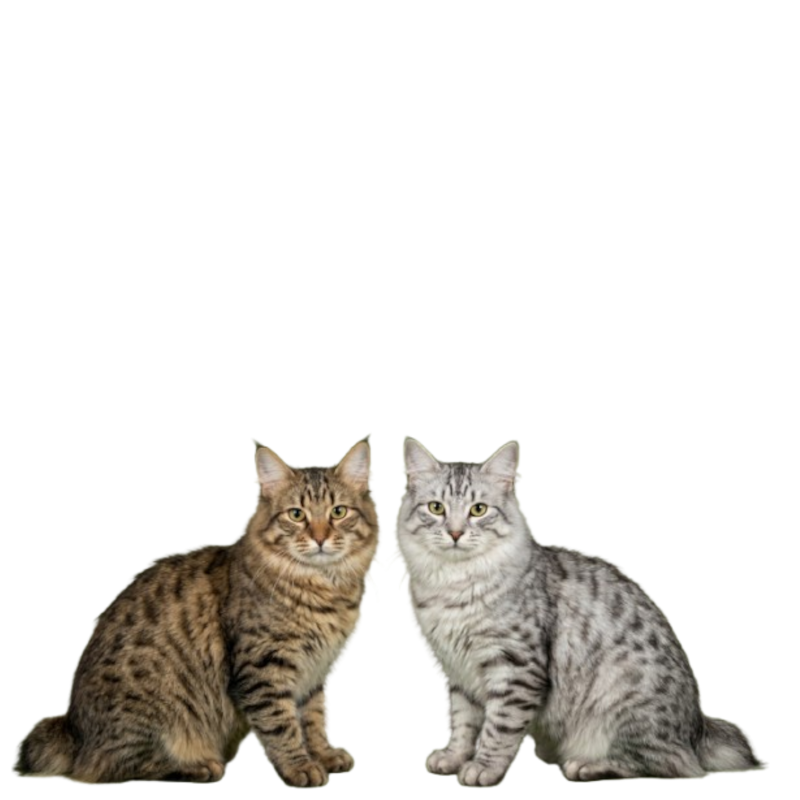
appearance
The Pixiebob Longhair possesses a powerful, substantial frame designed to convey the rugged aesthetic of a wild forest cat. Its physical composition prioritizes robust bone structure and a balanced, athletic build that suggests readiness for agility and strength. Every aspect of the Pixiebob Longhair, from the set of its ears to the length of its coat, works in harmony to present a feline that is both substantial and physically impressive, characterized by a wild-looking expression and a distinctive, sturdy silhouette.
Structural Frame and Musculature
The body of the Pixiebob Longhair is defined by its heavy, dense bone structure and muscular development. It presents a rectangular, slightly long-backed shape that is neither overly elongated nor cobby.
| Feature | Description |
|---|---|
| Body Frame | Substantial, firm, and rectangular with a deep chest. |
| Musculature | Heavy, well-developed, and firm to the touch throughout. |
| Bone Substance | Heavy and substantial, contributing to an overall sense of power. |
| Shoulders | Broad and prominent, often higher than the hindquarters. |
Head, Muzzle, and Facial Features
The head of the Pixiebob Longhair is arguably its most defining feature, characterized by a modified pear shape that is broader across the eyes and tapers down to a full, fleshy muzzle.
- Head Shape: Often described as an inverted pear, the head exhibits a slight prominence at the brow, which adds to the wild appearance.
- Muzzle: The muzzle is full, broad, and fleshy, with pronounced whisker pads that create a boxy look from the front profile.
- Ears: Set wide apart, the ears are medium-to-large in size, with rounded tips. Ideally, they exhibit a slight forward tilt and often feature lynx-like tufting at the apex.
- Eyes: The eyes are medium-to-large, deep-set, and possess a heavy, hooded upper lid that gives the Pixiebob Longhair a pensive or “wild” expression.
Coat Texture and Length
The coat of the Pixiebob Longhair is distinct from its short-haired counterparts, defined by a semi-long, weather-resistant texture that stands slightly away from the body.
- Texture: The coat consists of a soft, silky undercoat protected by a slightly coarser, yet still soft, topcoat. It should not be overly dense or woolly.
- Length: The fur is typically shorter over the shoulders and gradually increases in length toward the hindquarters, where it may form a slight “britches” or pantaloons effect on the rear legs.
- Ruff: A noticeable ruff—longer fur encircling the neck—is highly desirable and adds to the rugged, untamed visual appeal of the Pixiebob Longhair.
Tail and Extremities
The tail structure is a key hallmark of the breed, requiring specific attention to length and carriage.
- Tail: While not always completely absent, a tail is present and should reach at least to the hock—the joint on the back leg that acts like an ankle. It is often thick at the base and may exhibit kinks or curves, though these are structural variations rather than flaws.
- Feet: The paws are large, rounded, and possess heavy bone structure, often described as “snowshoe” feet due to their size, which provides stability.
- Polydactylism: It is common and acceptable for the breed to exhibit extra toes—a condition known as polydactylism—which often results in broad, substantial feet.
Summary of Appearance
The Pixiebob Longhair is a feline built for endurance and a wild appearance, balancing heavy musculature with a graceful, functional structure. Its broad, pear-shaped head and hooded eyes create a uniquely intense gaze, while the semi-long, weather-resistant coat and substantial, deep-chested frame reinforce its rugged nature. Whether in motion or at rest, the Pixiebob Longhair carries itself with a grounded, powerful presence that sets it apart as a sturdy, well-proportioned, and visually striking cat.
behavior
The Pixiebob Longhair demonstrates a specific set of daily actions characterized by high engagement with household activity and a strong propensity for observation. These cats frequently occupy themselves by monitoring human movement, often positioning themselves to watch domestic routines from a vantage point. Their day-to-day behavior combines focused exploration with periods of intense play, reflecting a strategy that balances investigative curiosity with domestic integration.
Social Dynamics and Human Interaction
Pixiebob Longhairs participate actively in household life rather than retreating to isolated areas. They often mirror the locations of their human companions, settling nearby while remaining alert to environmental shifts.
| Social Action | Typical Frequency | Behavioral Context |
|---|---|---|
| Shadowing | High | Following humans from room to room to observe activity. |
| Co-occupancy | Moderate | Choosing to sit or rest in the same room as their owners. |
| Alertness | Moderate | Reacting to novel sounds or movements with immediate visual focus. |
Social interaction is often initiated by the cat through soft vocalizations or direct physical proximity. When humans are present, Pixiebob Longhair’s habit is to wait for engagement rather than constantly demanding attention, showing a preference for structured inclusion in ongoing tasks.
Communication and Vocalization
Communication in Pixiebob Longhairs relies less on high-volume meowing and more on a variety of subtle, functional sounds. They utilize a range of chirps, chitters, and quiet trills to signal intent or reaction to their surroundings.
- Chirping: Frequently employed when Pixiebob Longhair identifies a point of interest, such as an insect or a moving toy, often serving to focus their concentration.
- Trilling: Used as a common greeting or a soft acknowledgment when a human enters the room.
- Chittering: Observed when watching birds or other stimuli through a window—a rapid, rhythmic clicking of the teeth that indicates high prey-drive arousal.
These vocalizations are rarely used to demand food or space; instead, they function as markers of the cat’s internal state regarding its environment.
Exploration and Play Strategies
Play for Pixiebob Longhairs is an exercise in simulated hunting and puzzle-solving. They frequently manipulate objects using their front paws, demonstrating a high degree of manual dexterity when engaging with toys.
Pixiebob Longhair Play Engagement Probability
- : The likelihood or intensity with which the cat commits to active play.
- : The level of cognitive complexity and physical stimulation provided by the play session.
- : The degree of unpredictable motion or prey-like behavior exhibited by the toy.
- : External factors in the household that compete for the cat’s attention and decrease the probability of focused play.
An owner evaluates the engagement of a Pixiebob Longhair with an interactive puzzle toy. The toy provides an activity depth score of 8 and exhibits a movement factor of 6. Meanwhile, the household environment is relatively calm, with a low distraction score of 2. Calculating the engagement probability () results in a score of 24. This high value indicates that the Pixiebob Longhair’s focus will be strongly directed toward the play activity, confirming that minimizing environmental distractions while increasing object movement maximizes their engagement during simulated hunting play.
- Object Manipulation: Pixiebob Longhairs will often bat, roll, and carry small items in their mouths, treating household objects as potential prey to be investigated.
- Vertical Exploration: These cats favor elevated positions. They regularly navigate furniture and shelving to gain a comprehensive view of the household, which satisfies their need for environmental control.
- Reaction to Stimuli: When presented with a new item, Pixiebob Longhair will often sniff, touch with a single paw, and circle the object before full engagement occurs. This methodical approach ensures the cat has assessed the environment before committing to active play.
Daily Activity Cycles
The daily rhythm of Pixiebob Longhairs is marked by distinct phases of high-intensity movement followed by deep, restorative rest. They do not maintain a constant state of activity, but rather burst into play sessions—often synchronized with early morning or late evening human activity—before retreating to a quiet spot for grooming or sleeping. During these rest periods, Pixiebob Longhair’s habit is to keep one ear swiveled toward environmental sounds, indicating a high level of situational awareness that persists even in sleep.
Summary of Behavioral Habits
The behavior of Pixiebob Longhairs centers on purposeful engagement with their surroundings and their human companions. By utilizing subtle vocalizations like chirps and trills, they communicate their interest in daily tasks while maintaining a vigilant, observational stance from elevated perches. Their play style is methodical and paw-oriented, reflecting a natural inclination toward investigation. Ultimately, Pixiebob Longhairs operate as observant, integrated household members who balance an active, curious nature with long stretches of quiet, watchful rest.
color
The coat of the Pixiebob Longhair is defined by a specific interplay between warm earthy tones and rhythmic pattern distribution. The primary objective of its coloration is to emulate the appearance of wild forest felines, emphasizing camouflage through complex pigment layering. Every hair shaft reflects a graduation of color, often beginning with a lighter base tone near the skin and transitioning into darker bands of pigment that define the overall pattern. This intentional color structure creates a visual depth that gives the coat its characteristic wild-looking texture and multi-dimensional appearance.
Pattern Expression and Markings
Pixiebob Longhairs predominantly exhibit a spotted tabby pattern, which serves as the canvas for their color distribution. These spots are not merely surface markings but are influenced by the density of pigment along the hair shaft.
| Pattern Element | Visual Description |
|---|---|
| Ground Color | The background tone, often ranging from light fawn to deep taupe. |
| Spotting | Distinct, darkened pigment clusters that may be rounded or elongated. |
| Mackerel Influence | Faint, dark striping sometimes present on the legs and tail. |
| Pigment Bands | Alternating dark and light segments on the hair shaft, known as ticking. |
The spots on Pixiebob Longhair’s coat are ideally varied in size and distribution rather than uniform. This lack of strict symmetry enhances the untamed aesthetic of the cat, as the spots may appear scattered or slightly blurred at the edges, particularly against the longer, softer guard hairs.
Hair Shaft Composition and Color Depth
The visual impact of Pixiebob Longhair’s color is determined by the concentration of dark eumelanin and lighter phaeomelanin pigments. As light hits the hair, these pigments refract to produce the characteristic warm, brown-based palette.
Pixiebob Longhair Coat Color Intensity
- : The qualitative depth and richness of the coat’s color palette.
- : The density of dark brown or black pigment granules present in the hair shaft.
- : A factor representing how much light is absorbed by the hair structure, influencing the perceived darkness of the pigment.
- : The concentration of lighter, reddish-yellow pigments that provide the characteristic warm, brown-based tones.
A breeder assesses the color intensity of a Pixiebob Longhair coat. The cat exhibits an eumelanin concentration of 12 units and a light absorption factor of 3, combined with a phaeomelanin saturation level of 5 units. Calculating the intensity using the formula results in an intensity score of 9. This value represents the total depth of the Pixiebob Longhair’s coloration, confirming that the balance between dark eumelanin and warm phaeomelanin pigments produces the rich, wild-toned appearance distinctive of the breed.
- The Roots: The base of the hair shaft near the skin is typically lighter, often showing a buff or silvery-white tone.
- The Mid-section: This area often contains the most intense pigment bands, where the dark spots manifest in shades of chocolate, warm brown, or cool charcoal.
- The Tips: The very end of the hair may feature a dark tip, which contributes to the overall “frosted” or shadowed appearance of the long-haired coat.
Facial and Extremity Shading
Specific areas of Pixiebob Longhair’s anatomy, such as the face, legs, and tail, demonstrate unique pigment concentrations that contrast with the body color.
- Facial Markings: Dark, distinctive “mascara” lines often track from the outer corner of each eye toward the cheek, framing the face. The bridge of the nose is typically colored by a solid, lighter pigment that stands out against the darker surrounding muzzle.
- Legs and Tail: These areas frequently feature “barring,” where horizontal stripes of deep pigment wrap around the limbs and tail. The tip of the tail is almost exclusively a solid, dark shade, acting as a visual anchor to the cat’s frame.
- Paw Pads: The pigment on the paw pads and the area between the toes is typically dark, often appearing charcoal or near-black, which provides a stark contrast to the lighter leg coloration.
Summary of Coat Coloration
The Pixiebob Longhair is defined by a sophisticated color palette that mirrors natural, wild-inspired themes. Through the combination of a lighter, neutral ground color and darker, erratic spots, Pixiebob Longhairs present a coat that feels grounded and earthy. The technical precision of their color lies in the ticking of individual hairs and the intentional, uneven distribution of pigment, which breaks up the cat’s silhouette. Whether observed in the deep, warm browns or the cooler, charcoal-toned variations, the coloration of Pixiebob Longhair’s coat remains a defining element of its wild-looking, multi-faceted aesthetic.
compatibility
Ease of Maintenance
Rating: 2/5
Child Friendly
Rating: 5/5
Annual Cost
Rating: 3/5
Lifetime Cost
Rating: 4/5
Adaptability
Rating: 5/5
Velcro Factor
Rating: 5/5
Quietude
Rating: 4/5
Apartment Suitability
Rating: 3/5
Hypoallergenic
Rating: 2/5
Handling Tolerance
Rating: 5/5
Hardiness/Longevity
Rating: 4/5
Prey Drive
Rating: 2/5
genetics
The Pixiebob Longhair carries a complex genetic architecture that prioritizes unique structural markers and a specific semi‐long coat length. Its genetic makeup is the result of selective breeding focusing on the preservation of dominant traits that dictate physical development and developmental morphology. By understanding the inheritance of these markers, breeders can better anticipate the expression of specific traits within their lines, ensuring the stability of the breed’s foundational characteristics through informed pairing decisions.
Coat Length and Texture Genetics
The semi‐long coat of the Pixiebob Longhair is controlled by the recessive long‐hair allele, commonly denoted at the FGF5 locus. For a cat to exhibit the long‐haired phenotype, it must be homozygous recessive for this trait, meaning it inherits the mutation from both parents.
- Locus: FGF5 (Fibroblast Growth Factor 5).
- Expression: The recessive genotype results in the semi‐long coat length, whereas the presence of at least one dominant allele will result in the short‐haired phenotype.
Inheritance of Polydactylism
One of the most notable genetic features in certain Pixiebob Longhairs is the presence of polydactylism, characterized by the inheritance of an autosomal dominant mutation. Unlike many other traits that require a copy from both parents, this mutation typically requires only one copy to be passed down for the cat to exhibit extra digits.
| Genotype | Phenotype | Inheritance Probability |
|---|---|---|
| PP | Homozygous Polydactyl | 100% chance to pass to offspring |
| Pp | Heterozygous Polydactyl | 50% chance to pass to offspring |
| pp | Normal Digit Count | 0% chance to pass polydactylism |
In practice, this means that even if only one parent is polydactyl, there is a significant statistical likelihood that a portion of the litter will inherit the trait.
Modeling Inheritance Probability
To calculate the probability of specific trait expression, such as the inheritance of a heterozygous dominant trait, we utilize basic Mendelian models. If we consider a cross between a heterozygous polydactyl parent (Pp) and a parent with a normal digit count (pp), the probability () is modeled as follows:
Pixiebob Longhair Polydactyl Trait Inheritance Probability
- : The statistical probability that a kitten will express the polydactyl phenotype.
- : The number of kittens in a litter that inherit the dominant polydactyl allele and display the trait.
- : The total count of kittens in the litter being observed.
- : The expected ratio of inheritance, representing a 50 percent chance per kitten when crossing a heterozygous polydactyl parent with a homozygous normal-digit parent.
A breeder pairs a heterozygous polydactyl Pixiebob Longhair with a standard cat having normal digit counts. The resulting litter consists of 8 kittens. Applying the probability model, the breeder multiplies the total number of kittens by 0.5 (), resulting in an expected 4 kittens that will display the polydactyl trait. This calculation confirms the genetic distribution within the Pixiebob Longhair’s litter and provides a clear expectation of how the polydactyl trait is passed down through generations.
This probability demonstrates why the trait can appear to skip a generation if it is not present in the phenotype of the parent, even if the genetic potential exists within the broader line.
Genetic Markers for Structure
The structural frame of the Pixiebob Longhair is influenced by polygenic inheritance, meaning it is controlled by the interaction of multiple genes rather than a single locus. These genes regulate bone density, musculoskeletal development, and growth rates. Because these traits are polygenic, they are more sensitive to environmental factors and selective breeding pressure, requiring breeders to consistently monitor structural outcomes over several generations to maintain the breed’s specific physical standards.
Summary of Genetic Characteristics
The genetic profile of the Pixiebob Longhair relies on a balance between recessive traits, like coat length, and dominant markers, such as polydactylism. By managing the FGF5 locus, breeders can ensure the consistent expression of the semi‐long coat, while the inheritance patterns of polydactylism allow for the monitored inclusion of extra digits within a line. Ultimately, understanding these core genetic mechanics provides a clear roadmap for the preservation of the breed, emphasizing the importance of tracking both the observable phenotype and the underlying genotype to maintain the integrity of Pixiebob Longhair’s unique genetic identity.
health
The Pixiebob Longhair is a robust breed, yet like any domestic feline, it requires proactive monitoring of specific physiological systems to ensure long‐term vitality. Understanding the breed’s health profile involves a focus on cardiac function, renal health, and joint integrity, particularly as the cat matures. By prioritizing early screening and consistent veterinary oversight, owners and breeders can effectively manage these potential vulnerabilities, fostering a supportive environment that allows Pixiebob Longhairs to thrive throughout their lives.
Cardiac and Renal Health Monitoring
As with many sturdy, medium–to–large cat breeds, there is a clinical focus on monitoring heart and kidney health. Early detection through routine diagnostic imaging and blood work is essential for identifying subclinical issues before they manifest as overt symptoms.
| Health Focus | Screening Consideration | Clinical Goal |
|---|---|---|
| Cardiac Health | Echocardiograms for wall thickness | Monitor for hypertrophic cardiomyopathy (thickening of the heart muscle). |
| Renal Function | Blood chemistry and urinalysis | Evaluate kidney filtration efficiency over time. |
Cardiac screening is particularly vital, as thickening of the heart walls can sometimes progress silently. Similarly, renal health should be monitored via regular blood tests to track markers like creatinine and SDMA, which provide a snapshot of kidney performance.
Joint Integrity and Musculoskeletal Support
The structural power of the Pixiebob Longhair puts natural demand on its skeletal system. While the breed is typically agile, managing the physical stress placed on joints, especially in those with polydactylism (the presence of extra toes), is a practical health consideration.
- Polydactylism Management: While generally a benign anatomical variation, extra digits can occasionally lead to issues such as ingrown nails or increased stress on the paw structure if not monitored for proper nail hygiene and gait.
- Joint Mobility: Maintaining a healthy weight is the most effective way to minimize mechanical stress on joints. Overweight cats are prone to decreased mobility and potential discomfort in the hips and knees.
- Screening: Routine check‐ups should include a physical evaluation of range of motion in the limbs to detect early signs of stiffness.
Physiological Formulas for Wellness
The impact of weight on joint health can be modeled by the load‐bearing ratio on the stifle joint (the knee). If we let represent the load on the joint and represent the cat’s body mass, the relationship is:
Pixiebob Longhair Stifle Joint Load-Bearing Index
- : Load, the mechanical force exerted on the stifle joint during physical movement.
- : Body Mass, the total weight of the cat, which acts as the base force on the joints.
- : A multiplier reflecting the intensity and frequency of the cat’s movement, which increases the impact force on the joint.
- : The proportionality symbol, indicating that the load on the joint scales directly with both body mass and the intensity of movement.
A veterinarian is assessing the joint stress on a Pixiebob Longhair that weighs 7 kilograms and has a high activity level, assigned a factor of 2. Applying the logic of the relationship, the joint load () is proportional to , resulting in an index of 14. If the cat were to lose weight and reach a healthier mass of 6 kilograms, the load () would drop to a proportional index of 12 (), even while maintaining the same high activity level. This 14 percent reduction in load demonstrates why maintaining a lean body mass is critical for preserving the long-term musculoskeletal health of the Pixiebob Longhair’s stifle joints.
This demonstrates that even small, incremental increases in body mass significantly escalate the mechanical force exerted on the limbs, reinforcing the importance of weight management as a cornerstone of Pixiebob Longhair’s musculoskeletal health.
Screening and Preventative Care
Proactive care is the best strategy for maintaining the health of Pixiebob Longhairs. Beyond breed‐specific considerations, routine preventative measures remain the gold standard for long‐term wellness.
- Annual Screenings: Comprehensive wellness exams should include blood pressure monitoring, heart auscultation (listening to the heart for murmurs), and abdominal palpation.
- Dental Hygiene: Like all cats, Pixiebob Longhairs are susceptible to dental disease. Regular oral check‐ups help prevent systemic issues related to chronic inflammation in the mouth.
- Environmental Monitoring: Providing safe, stimulating environments that encourage moderate exercise helps keep the cat’s cardiovascular and musculoskeletal systems in peak condition.
Summary of Breed Health
The health of the Pixiebob Longhair is best managed through a combination of regular veterinary screening and vigilant monitoring of key physiological markers. By focusing on cardiac, renal, and joint health, owners can address potential vulnerabilities before they impact the cat’s daily comfort. Ultimately, Pixiebob Longhair’s well‐being is safeguarded by a proactive approach to care, where balanced nutrition, appropriate exercise, and consistent diagnostic tracking create the foundation for a healthy and active life.
longevity
The Pixiebob Longhair typically enjoys a robust and active lifespan, often reaching well into its mid–teens with proper care and attention to its changing needs. As these cats move through various life stages, they exhibit predictable shifts in energy, metabolism, and physical responsiveness. Understanding these transitions allows owners and breeders to provide targeted support that aligns with the specific aging phase of the cat, ensuring its long‐term comfort and continued vitality throughout its later years.
Life Stages and Development
The progression of a Pixiebob Longhair through its life is characterized by three distinct phases: early development, mature adulthood, and the senior years. Each stage carries different requirements for environmental adjustment and monitoring.
| Life Stage | Age Range | Primary Aging Characteristic |
|---|---|---|
| Juvenile–to–Young Adult | 0–3 years | Rapid growth and establishment of skeletal maturity. |
| Mature Adult | 4–10 years | Period of peak physical stability and consistent activity levels. |
| Senior | 11+ years | Gradual reduction in metabolic rate and activity frequency. |
During the transition into the senior stage, Pixiebob Longhair’s physiological needs become more refined, often requiring adjustments to their living space to accommodate changes in agility.
Aging Metrics and Probability
The aging curve for Pixiebob Longhairs can be modeled by tracking the likelihood of continued vitality over time. If we let represent the probability of reaching a certain age (), we observe that the slope of the survival curve remains relatively gentle until the final stages of the senior phase.
Pixiebob Longhair Vitality Index
- : A percentage-based value representing the proportion of the typical lifespan reached by the individual.
- : The current chronological age of the cat in years.
- : The statistical middle-ground age expectancy for the breed, serving as a baseline reference point.
- : A conversion constant used to express the ratio as a percentage.
An owner wishes to calculate the life cycle status of their 9-year-old Pixiebob Longhair. Given the median breed lifespan is estimated at 15 years, the owner divides 9 by 15, which equals 0.6. Multiplying this by 100 results in a Vitality Index of 60. This result indicates that the Pixiebob Longhair’s individual has reached 60 percent of the typical life trajectory, helping the owner understand that while the cat is transitioning into the senior phase, it still maintains significant vitality relative to its expected lifespan.
This index helps owners estimate where their cat stands in its life cycle relative to the breed’s typical trajectory, providing a practical way to anticipate upcoming changes in physical care.
Observable Milestones of Aging
As Pixiebob Longhairs advance in age, certain physical markers become apparent, indicating the transition between stages. These markers are natural aspects of the aging process and should be monitored to ensure the cat remains comfortable.
- Metabolic Shift: In the senior years, Pixiebob Longhair’s activity levels naturally taper off, which is often reflected in a decreased caloric need and a tendency to spend more time in restorative rest.
- Sensory Acuity: While subtle, senior cats may show decreased responsiveness to environmental stimuli, such as high‐pitched sounds or fast‐moving visual targets, which were once points of intense focus.
- Resting Patterns: An increase in total daily sleep time is common, as the cat’s body requires more time to recover from activity compared to its younger years.
Supporting Longevity through Life Stages
Longevity is influenced by the proactive management of the environment across the cat’s lifetime. While genetics provide the blueprint, the physical implementation of support—such as providing easier access to preferred resting perches as the cat ages—plays a significant role in maintaining the quality of Pixiebob Longhair’s life. Observing these shifts allows for timely adjustments that keep the cat integrated and active within the household.
Summary of Breed Longevity
The Pixiebob Longhair is recognized for a stable, long‐term lifespan that typically extends into the mid–teens. Aging in Pixiebob Longhairs is a gradual, manageable progression characterized by predictable shifts in metabolism and activity. By recognizing these life stages and responding to the physical transitions that occur from adulthood into the senior years, owners and breeders can ensure the best possible support for these cats, fostering long‐term health and a high quality of life throughout their natural journey.
maintenance
The Pixiebob Longhair requires a structured care routine designed to support its semi‐long coat and maintain its physical condition throughout its active life. Effective husbandry for Pixiebob Longhairs centers on balancing high‐quality nutritional intake with consistent grooming and an enriched living environment that encourages physical engagement. By adhering to a steady maintenance schedule, owners and breeders can ensure the cat remains in peak physical form, reducing the potential for coat matting and supporting optimal metabolic function.
Nutritional Guidelines and Hydration
Providing a balanced diet is essential for sustaining the robust physical build of Pixiebob Longhair’s frame. Nutritional management should prioritize protein‐dense meals tailored to the cat’s activity level and life stage.
| Life Stage | Feeding Frequency | Nutritional Emphasis |
|---|---|---|
| Growing Kitten | 3–4 meals daily | Higher calorie density for structural development. |
| Adult | 2 meals daily | Maintenance‐focused calories to prevent weight gain. |
| Senior | 2 meals daily | Easily digestible proteins with joint support. |
To calculate the Resting Energy Requirement (), which is the baseline caloric need for a cat at rest, use the following formula where is body weight in kilograms:
Pixiebob Longhair Resting Energy Requirement
- : The baseline metabolic energy in kilocalories required by the cat each day to maintain vital functions while at rest.
- : A constant coefficient derived from established feline metabolic studies to calculate baseline energy.
- : Body Weight, the total mass of the cat measured in kilograms.
- : An allometric exponent used to adjust caloric requirements to account for the non-linear relationship between metabolic rate and body size.
An owner of a 6-kilogram Pixiebob Longhair wants to determine the baseline caloric needs for their cat. First, they raise the body weight to the power of 0.75 (), which is approximately 3.79. Multiplying this by the metabolic coefficient of 70 () results in an of 265.3 kilocalories per day. This result provides the Pixiebob Longhair’s owner with a foundational figure to help balance the cat’s nutrition, ensuring the intake adequately supports their robust frame and healthy coat maintenance.
Hydration is equally critical; ensuring consistent access to clean, fresh water encourages kidney health and supports the skin’s natural oil production, which contributes to the luster of the semi‐long coat.
Grooming Routines for Semi‐long Fur
The coat of Pixiebob Longhairs is susceptible to tangling, particularly in areas like the ruff, britches, and under the armpits. A consistent grooming schedule is necessary to remove loose hair and prevent the formation of mats.
- Routine Brushing: A minimum of twice‐weekly brushing with a stainless‐steel comb or a slicker brush is recommended. This helps distribute natural skin oils through the coat, maintaining its weather‐resistant texture.
- Targeted De‐matting: During seasonal changes, the undercoat may shed more heavily, requiring daily attention to prevent hair accumulation near the skin.
- Nail Maintenance: Given that some Pixiebob Longhairs may possess polydactyl feet, regular nail inspection is vital. Extra digits often feature tight spaces that require cleaning and careful nail trimming to prevent overgrowth or discomfort.
Environmental Enrichment and Home Setup
The domestic environment for Pixiebob Longhairs should facilitate both vertical exploration and opportunities for simulated hunting. Because they are observant and active, Pixiebob Longhair’s home environment benefits from features that challenge their physical capabilities.
- Vertical Space: Providing high perches or cat trees allows the cat to monitor its surroundings from an elevated position, satisfying the natural instinct for environmental oversight.
- Puzzle Feeding: Using food-dispensing toys or puzzles encourages the cat to use its paws for manipulation, which provides both mental stimulation and physical exercise.
- Claw Care: Durable, sturdy scratching surfaces are necessary to allow for natural claw maintenance and to support the muscle engagement required for healthy limb function.
Summary of Breed Maintenance
Maintenance of the Pixiebob Longhair is a straightforward commitment that centers on high‐quality nutrition, dedicated coat care, and an engaging environment. By managing daily caloric intake through precise calculation, ensuring regular brushing sessions to keep the semi‐long fur free of mats, and providing vertical structures for exercise, owners can foster a healthy and thriving household companion. This consistent, practical approach to husbandry ensures that Pixiebob Longhair’s needs are met, allowing the cat to remain physically comfortable and mentally satisfied.
measurements
| Measurement | Female | Male | ||
|---|---|---|---|---|
| Metric | Imperial | Metric | Imperial | |
height | 23 – 28 centimeters | 9 – 11 inches | 25 – 33 centimeters | 10 – 13 inches |
length | 33 – 43 centimeters | 13 – 17 inches | 38 – 48 centimeters | 15 – 19 inches |
weight | 3.6 – 6.8 kilograms | 8 – 15 pounds | 5.4 – 10 kilograms | 12 – 22 pounds |
• Height: Refers to the measurement at the withers (shoulders).
• Length: Measured from the tip of the nose to the base of the tail.
origin
The development of the Pixiebob Longhair is deeply rooted in the coastal wilderness of the Pacific Northwest, specifically within the Cascade mountain range of Washington State. These cats emerged from localized populations of barn cats that occupied the rural, forested regions of the area. The lineage was established through the identification of cats that possessed a distinct physical morphology, which suggested an ancestral connection to the wild bobcats native to the same terrain. This historical convergence of domestic stock and native wild populations provided the foundation for the unique physical traits that define the breed today.
Chronological Lineage and Development
The establishment of Pixiebob Longhairs as a recognized domestic line occurred in the late twentieth century, driven by an interest in preserving the unique structure that had naturally developed within these isolated regional populations.
| Timeline Era | Historical Milestone | Focus of Development |
|---|---|---|
| Late 1980s | Discovery of foundational individuals | Identifying local barn cats with distinct physical traits. |
| Early 1990s | Intentional breeding programs | Establishing consistent physical markers through selective pairing. |
| Late 1990s | Formal breed recognition | Achieving status within major cat registries for show and preservation. |
During these formative decades, early breeders carefully documented the lineages of the initial cats found in Washington. By selecting pairs that retained the desired structural consistency, they successfully transitioned these formerly free‐roaming, native‐range cats into a stable domestic breed.
Population Dynamics and Migration
The formation of the Pixiebob Longhair can be visualized through population modeling that accounts for the interaction between domestic cats and the surrounding wild ecosystem. The establishment of the lineage is often represented by a divergence from the general domestic population, where unique structural traits were favored by the localized environment and subsequent selective pressure.
Pixiebob Longhair Founder Population Density
- : The relative density or concentration of cats that initially formed the foundation of the breed.
- : A value representing the environmental pressures that favored specific, adaptive structural traits in the original rural population.
- : A factor representing the degree of human intervention or selective breeding applied to manage the population’s traits and characteristics.
A researcher examines the foundation of the Pixiebob Longhair by assigning values to its population dynamics. If the natural selection pressure that originally shaped the cats is valued at 12, and the human selection coefficient applied to formalize the line is 3, the resulting density calculation () equals 4. This numerical result helps the researcher understand the balance between the wild, adaptive origins of the Pixiebob Longhair’s population and the subsequent managed breeding efforts that helped establish the lineage while preserving its foundational heritage.
This dynamic underscores that Pixiebob Longhair’s origins were not the result of laboratory creation but rather a managed adaptation of a naturally occurring, regional population. The migration of these cats from their rural, mountainous roots to established catteries allowed for the expansion of the line while maintaining the integrity of their foundational heritage.
Regional Heritage and Preservation
The historical significance of Pixiebob Longhairs lies in their role as a bridge between the domestic feline and the rugged landscape of their origin. As the breed expanded beyond the Pacific Northwest, the focus shifted toward ensuring that the foundational traits observed in the original Washington populations remained consistent across successive generations. This effort preserved the link between the contemporary Pixiebob Longhair and its historical ancestors, which had survived and thrived for years in the foothills and forests of the Cascade range.
Summary of Breed Origins
The journey of the Pixiebob Longhair is one of natural adaptation meeting human stewardship. Beginning in the remote, forested areas of Washington State, these cats developed within a localized landrace population before being identified and brought into formal breeding programs during the late twentieth century. By focusing on the preservation of the physical markers observed in these native barn cats, breeders successfully transitioned Pixiebob Longhairs from regional inhabitants into a globally recognized breed. Their heritage remains firmly anchored in the rugged geography of the Pacific Northwest, a testament to the enduring influence of their origins on their modern‐day form.
temperament
The Pixiebob Longhair exhibits a temperament characterized by high levels of social confidence and an innate sense of focus. These cats possess an emotional baseline that is steady and resilient, allowing them to remain calm in diverse environments. Their disposition is marked by a unique blend of independent curiosity and strong domestic loyalty, resulting in a feline that is comfortable observing its household from a distance while remaining deeply attuned to the presence and emotional state of its human companions.
Dispositional Traits and Social Spectrum
Pixiebob Longhairs generally demonstrate an outgoing and inquisitive nature. They are often described as having an adaptable personality, capable of adjusting to new routines and environmental changes without significant distress.
| Trait | Dispositional Spectrum | Behavioral Implication |
|---|---|---|
| Social Confidence | High | Often the first to greet guests or investigate novel items. |
| Adaptability | Moderate–to–High | Generally transitions well into changing household dynamics. |
| Bonding Preference | Inclusive | Tends to form strong ties with the entire family unit. |
| Sensory Sensitivity | Moderate | Alert to environmental shifts but rarely prone to skittishness. |
The emotional stability of Pixiebob Longhair allows it to integrate well into homes with multiple pets or varying activity levels. They tend to approach social interactions with a sense of assurance rather than anxiety.
Bonding and Affection Style
The affection of Pixiebob Longhair’s nature is displayed through consistent presence rather than intrusive demands. They prefer to be involved in the daily rhythm of the household, mirroring the movements of their owners.
Pixiebob Longhair Disposition Index
- : A numerical representation of the breed’s overall temperament, reflecting their balanced approach to companionship.
- : A value representing the cat’s desire to participate in household activities and interact with family members.
- : A factor quantifying the cat’s consistent presence and devotion to their chosen human counterparts.
- : A measure of the cat’s ability to remain calm and comfortable while spending time alone.
An owner evaluates the disposition of their Pixiebob Longhair by assigning values based on observed behavior. The cat shows high social engagement with a score of 8 and strong loyalty with a score of 9, while maintaining a healthy emotional independence score of 6. Calculating the disposition index () results in a score of 12. This positive result quantifies the Pixiebob Longhair’s balance, confirming that while they possess high levels of devotion and engagement, their capacity for independent calm makes them a well-adjusted and non-intrusive companion.
This balance suggests that Pixiebob Longhairs are comfortable spending time on their own, yet they actively choose to be near their human counterparts when given the opportunity. They rarely express frustration through vocal demands, preferring instead to signal their needs through steady, calm proximity.
Response to Stimuli and Environmental Change
Pixiebob Longhairs possess a curious and investigative mindset. When presented with a new stimulus—such as a new person, pet, or household object—they typically exhibit a methodical, rather than impulsive, approach. They tend to survey the environment and assess the situation before engaging. This deliberate nature is not a sign of fear, but rather a reflection of their observant personality. They are typically unbothered by moderate levels of household noise or activity, maintaining a grounded and composed demeanor even during busy times.
Summary of Breed Temperament
The temperament of the Pixiebob Longhair is defined by its composed, confident, and observant nature. They are cats that offer companionship through steady presence, forming deep bonds without becoming overly reliant or demanding. With a disposition that handles change with ease and a curiosity that remains well‐regulated, Pixiebob Longhairs represent a balance of independent thought and social connection. Owners and breeders alike find that this reliable, stable personality makes Pixiebob Longhair’s inclusion in the home both seamless and deeply rewarding.