Ocicat Cat
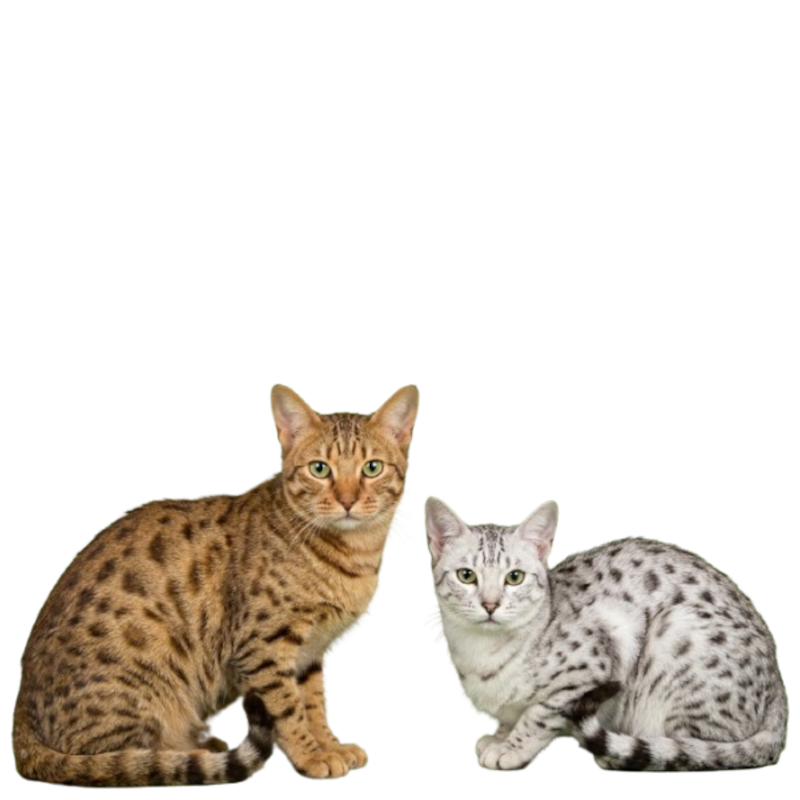
appearance
The domestic Ocicat presents a striking physical profile characterized by an athletic, wild‐looking conformation paired with the structural integrity of a dedicated agility athlete. Observing the feline from an anatomical perspective reveals a harmonious balance between substantial bone structure and lean, defined muscular hypertrophy. This combination gives Ocicats a powerful yet graceful presence, where every physical element is optimized for fluid movement and structural balance. The entire somatic framework is wrapped in a sleek, closely adhering integumentary system that highlights the precise muscular definition underneath, creating a distinctive silhouette that sets Ocicat’s morphology apart from more heavily built or overly delicate domestic felines.
Cranial Conformation and Facial Architecture
The cranial region of the Ocicat exhibits a modified wedge configuration, presenting a soft, curved flowing contour rather than sharp, angular planes. When viewed in profile, the facial architecture shows a gentle rise from the nasal bridge to the brow, maintaining a slight dip without a pronounced stop.
- Maxillary Framework: The muzzle is broad and well‐defined, displaying a distinct suggestion of squareness when viewed from an anterior perspective. The structural alignment of the jaw reveals a firm, strong bite with well‐developed mandibular depth.
- Pinna Orientation: The ears are a prominent feature of the cranial architecture, moderately large and set alertly on the corners of the skull. The pinna orientation follows the upward flow of the modified wedge, neither sitting too high on the crown nor dropping too low on the lateral sides of the head.
- Ocular Cavities: The orbital apertures are large, almond‐shaped, and angled slightly upward toward the lateral base of the ears. The interocular distance is wide, typically measuring equivalent to the width of a single ocular opening, providing an open and expressive facial mask.
Skeletal Realignment and Muscular Hypertrophy
The postcranial skeleton of Ocicats is engineered for power and flexibility. The torso is solid, long, and deep‐chested, avoiding any tendency toward a cobby or overly elongated, svelte conformation.
The relationships of thoracic and pelvic alignment can be structurally balanced as follows:
Ocicat Thoracic-Flank Balance
- : The vertical measurement of the chest at the deepest point, indicating the capacity for heart and lung volume.
- : The vertical measurement of the abdominal area, specifically where the body tapers toward the rear.
- : The Equilibrium Ratio, a target proportion for the Ocicat that indicates an optimal distribution of body mass for agility and strength.
A show judge is assessing the physical conformation of a young Ocicat. They measure the thoracic depth at 18 centimeters and the flank depth at 15 centimeters. Dividing the thoracic depth by the flank depth () results in a value of 1.2. This exact match to the equilibrium ratio confirms that the Ocicat possesses the ideal athletic build, supporting its capacity for powerful movement and balanced posture. If the result were significantly higher, it might suggest a top-heavy, disproportionate frame, whereas a lower result would indicate a frame that lacks the depth required for the signature explosive energy of the Ocicat’s heritage.
Ocicat Skeletal Proportionality
- : The vertical distance from the ground to the top of the shoulder blades, representing the elevation of the forequarters.
- : The vertical distance from the ground to the highest point of the pelvis, representing the elevation of the hindquarters.
- : The Balance Inequality, a geometric constraint ensuring that the front of the body is either level with or slightly lower than the rear, which is critical for the characteristic Ocicat gait.
A breeder is evaluating the development of an adult Ocicat to ensure it meets the standard for athleticism. They measure the scapular height at 24 centimeters and the pelvic height at 25 centimeters. Because 24 is less than or equal to 25, the condition holds true, resulting in a balanced anatomical state. This structural alignment confirms that the Ocicat is built to shift its weight effectively toward the hindquarters, providing the necessary leverage for the powerful, explosive leaps and agile movements that define the Ocicat’s unique athletic profile.
This geometric proportion ensures that the center of gravity remains low and balanced, facilitating explosive leaping ability and stable locomotion.
Appendicular Anatomy and Caudal Vertebrae Structure
The appendicular skeleton supports the robust torso with medium‐long, well‐boned limbs that are heavily muscled.
Anatomical Specification Sheet
Appendicular Anatomy of the Ocicat
I. Shoulder / Scapular Segment
The scapula is a flat, triangular bone providing the foundational anchor for the forelimb assembly. In the Ocicat, it is highly mobile, connected to the thoracic wall strictly by strong muscular attachments (synsarcosis) rather than a bony collarbone joint.
Musculature
Deep anchorage for the trapezius and latissimus dorsi.
Functional Impact
Elevates the cranial platform, permitting maximum vertical movement and stable impact dampening.
The caudal vertebrae structure consists of a moderately long, tapering tail that is relatively thick at the base. The coccygeal vertebrae decrease uniformly in diameter toward the distal tip, maintaining complete flexibility and skeletal alignment without any kinks or deviations.
Architectural Breakdown of Physical Features
| Anatomical Region | Structural Characteristic | Morphological Impact |
|---|---|---|
| Cervical Spine | Arched and elongated | Elevates the cranial platform, enhancing visual scanning capabilities. |
| Thoracic Cage | Broad, deep, and well‐rounded | Accommodates substantial lung capacity and vital organ spacing. |
| Pelvic Girdle | High, strong, and slightly sloping | Synthesizes forward propulsion via the pelvic limbs. |
| Integument / Coat | Short, tight, and lustrous | Fits close to the musculature like a glove, revealing every fiber of hypertrophy. |
| Metatarsal Pads | Compact and oval | Distributes impact forces evenly during high‐velocity deceleration. |
Summary of Breed Appearance
The Ocicat displays a beautifully synchronized morphology where substantial bone structure meets dense, defined muscular hypertrophy. From the gently curved cranial conformation and alert pinna orientation to the robust thoracic cage and tapering caudal vertebrae structure, every aspect of this feline speaks to structural balance. The combination of its medium‐long limbs, deep chest, and tight, closely fitting coat creates an impression of a powerful, agile, and wild‐looking animal built entirely upon the anatomical soundness of a refined domestic cat.
behavior
The Ocicat exhibits a highly active and goal‐oriented behavioral profile, characterized by sustained periods of environmental exploration and high‐intensity play sequences. When observing Ocicats, one notices a distinct focus on manipulating their surroundings through active discovery and complex problem‐solving attempts. This behavior is rooted in a robust prey‐drive manifestation that dictates their daily activity cycles, leading them to engage frequently in predatory mimicry and vertical locomotion. Their social dynamics are equally dynamic, marked by consistent attempts at social facilitation and active seeking of multisensory feedback from their environment. By analyzing these observable actions, we can gain a clearer understanding of how Ocicat’s instinctual drives translate into a persistent and communicative behavioral style.
Exploration Strategies and Prey‐Drive Manifestation
The Ocicat utilizes advanced environmental exploration strategies to assess and engage with new objects or locations. Unlike felines that rely on passive observation, Ocicats employ a proactive methodology, utilizing tactile investigation and paw‐driven manipulation of items.
- Exploratory Sequence: Typically begins with visual fixation, followed by a low‐profile approach, and concluding with directed paw contact.
- Prey‐Drive Expression: This manifests as a cycle of stalking, chasing, and pouncing behaviors, even in the absence of biological prey. These sequences are frequently interspersed with bursts of locomotive intensity.
- Problem‐Solving: Ocicat’s engagement with puzzle feeders or complex environments shows a high probability of persistence until the object is manipulated or accessed.
Social Dynamics and Tactile Communication
Social interaction in Ocicats is characterized by high levels of social facilitation, where the behavior of one individual frequently mirrors or initiates a parallel action in a companion. Tactile communication is used as a primary tool for establishing and maintaining social bonds.
We can model the probability of successful social engagement using the frequency of specific interaction markers:
Ocicat Social Engagement Probability (Revised)
- : The frequency of successful social bonding events per unit of time.
- : The individual counts for Grooming, Nosing, and Body Rubbing events observed.
- : Total Observation Time, the duration used to normalize the frequency of these interactions.
The summation symbol used previously is mathematically redundant because the objective is to calculate the total sum of distinct interaction categories rather than iterating over a set of data points. By simplifying the formula to , we maintain precision while improving clarity. In a 60-minute observation period where a Ocicat exhibits 15 instances of Grooming (), 5 of Nosing (), and 10 of Body Rubbing (), the calculation becomes . This results in a final value of 0.5 interactions per minute, which accurately represents the Ocicat’s high frequency of tactile social engagement.
- Vocalization Patterns: Vocal communication is frequent and varied, functioning as a method to influence the focus of those around them. This ranges from soft chirps during exploration to demanding calls during social solicitation.
- Tactile Solicitation: Ocicat’s method of initiating interaction often involves direct body contact or rhythmic pawing, ensuring they receive auditory or tactile responses.
Behavioral Frequency and Interaction Matrix
| Behavioral Marker | Primary Context | Ethological Significance |
|---|---|---|
| Locomotive Bursts | Active‐play cycles | High‐energy expenditure; territorial mapping. |
| Pawing / Object Manipulation | Environmental exploration | Tactile assessment of new spatial stimuli. |
| Social Facilitation | Group interactions | Synchronization of activity cycles within a social unit. |
| Persistent Vocalization | Solicitation | Attempt to regulate or influence environmental variables. |
Summary of Breed Behavior
Ocicats demonstrate a behaviorally engaged existence defined by high‐frequency interaction with their environment and social partners. Their ethogram is dominated by proactive exploration strategies, a strong prey‐drive that fuels structured play sequences, and a reliance on vocal and tactile signals to manage social dynamics. Whether through the persistent manipulation of objects or the initiation of social facilitation with others, Ocicats act as consistent, communicative participants in their surroundings, exhibiting a behavioral architecture that prioritizes active discovery and interactive connectivity.
color
The Ocicat exhibits a sophisticated display of pigment distribution, characterized by a complex interplay between eumelanin and phaeomelanin throughout the coat. The primary visual hallmark of Ocicat’s phenotype is the agouti‐based pattern, where each hair shaft undergoes systematic banding, creating a layered effect of alternating light and dark pigments. This precise spatial arrangement of color, combined with varying densities of pigment granules, creates a depth of field within the coat that is visually vibrant and structurally balanced. Whether observing the darker, concentrated eumelanin or the warmer, diffused phaeomelanin, the overall effect is a highly refined coloration that emphasizes the contrast between the spotted patterning and the lighter ground‐color base.
Biochemistry of Hue and Pigment Density
The coloration in Ocicats is fundamentally determined by the concentration and structural orientation of pigment granules within the keratin fibers of the hair. Eumelanin provides the darker, cooler tones, while phaeomelanin contributes to the warmer, golden or reddish‐toned ground colors.
- Agouti Banding: Each hair shaft is characterized by a multi‐banded appearance. The degree of pigment expression is concentrated at the tip of the hair, with lighter sub‐bands creating the overall background luminosity.
- Rufism: Many individuals exhibit a varying degree of rufism, which is a qualitative shift that intensifies the warmer phaeomelanin components, effectively pushing the ground color from a pale cream toward a deep, rich gold or bronze.
The intensity of the coat color is influenced by how light interacts with the hair follicle. We can model the effective perception of color saturation () using the ratio of eumelanin density () to phaeomelanin diffusion ():
Ocicat Coat Color Saturation Perception
- : Perceived Color Saturation, the intensity or richness of the coat color as observed by the human eye.
- : Eumelanin Density, the concentration of dark, cool-toned pigment granules within the hair shaft.
- : Logarithmic Eumelanin Factor, a mathematical adjustment that represents how the human eye perceives darker tones, where saturation increases rapidly at low concentrations but levels off at higher densities.
- : Phaeomelanin Diffusion, the spread and concentration of warm-toned pigments across the hair shaft, which acts as a divisor to moderate the overall darkness of the coat.
A breeder is analyzing the coat of an Ocicat to determine its saturation level. The cat has a moderate eumelanin density () of 7 and a phaeomelanin diffusion () of 4. First, calculating the natural logarithm of gives approximately 2.079. Next, the square root of (4) is 2. Finally, dividing 2.079 by 2 results in a saturation value () of 1.04. This result helps quantify the Ocicat’s unique appearance; a higher value would indicate a darker, more intensely colored coat, whereas a lower value would reflect a lighter, more luminous coat, allowing for precise tracking of how traits like rufism impact the Ocicats final phenotype.
Distribution and Patterning Markers
Pigment distribution in Ocicats is not uniform; it is organized into discrete, rhythmic patterns defined by the restriction of dark pigment areas.
- Spotting Logic: Darker spots are essentially areas of high eumelanin density. These spots are consistently surrounded by a lighter, agouti‐banded field, creating sharp definition.
- Ghost Markings: While the primary pattern is distinct, minor spectral variations or ghost markings may appear in the pigment‐dense areas. These are faint echoes of underlying patterns, often visible only under specific light‐angle conditions.
- Contrast and Edge Definition: The clarity of the spot borders is a direct result of how effectively the melanocytes have been restricted during the developmental phase. A higher restriction results in a crisp, high‐contrast edge.
Pigmentation Category Breakdown
| Color Category | Pigment Composition | Visual Expression |
|---|---|---|
| Dark Eumelanin | High granule concentration | Solid, rich, and deeply saturated spots. |
| Light Phaeomelanin | Diffused pigment particles | Warm, luminous, and varied ground shading. |
| Banded Agouti | Alternating pigment density | Textured appearance with high color depth. |
| Clearance Zones | Minimal pigment presence | Light, bright white or ivory accents around the muzzle and eyes. |
Summary of Breed Coloration
Ocicat’s coloration is a masterful demonstration of agouti‐based banding and strategic pigment restriction. By layering varying intensities of eumelanin and phaeomelanin, Ocicats achieve a look that is both deeply saturated and remarkably clear. From the intense pigment density of the spots to the warm, light‐filled agouti ground, the overall coloration of the Ocicat serves to accentuate the distinct spotted pattern through constant, high‐contrast pigment oscillation.
compatibility
Ease of Maintenance
Rating: 5/5
Child Friendly
Rating: 5/5
Annual Cost
Rating: 4/5
Lifetime Cost
Rating: 4/5
Adaptability
Rating: 5/5
Velcro Factor
Rating: 5/5
Quietude
Rating: 3/5
Apartment Suitability
Rating: 2/5
Hypoallergenic
Rating: 2/5
Handling Tolerance
Rating: 5/5
Hardiness/Longevity
Rating: 4/5
Prey Drive
Rating: 1/5
genetics
The Ocicat possesses a distinct genomic framework defined by specific allelic combinations that regulate the structural expression of its physical traits. When analyzing Ocicat’s genetic foundation, we see a complex interplay between monogenic markers and polygenic inheritance, which dictates the consistency of the breed‐wide morphology. By examining the segregation of specific loci, researchers can understand how various alleles are passed through generations to maintain the breed’s characteristic profile. This scientific exploration into the Ocicat genome provides a blueprint for understanding the stability of its traits and the mechanisms by which they are inherited within the population.
Fundamental Loci and Allelic Expressions
The inheritance of traits in Ocicats is largely managed by a series of specific loci. Each locus functions as a site on a chromosome where different alleles interact to produce observable characteristics.
- Autosomal Inheritance: A majority of the defining traits observed in Ocicats are transmitted through autosomal pathways, meaning these genes are located on non‐sex chromosomes. This allows for equal probability of trait transmission across both sexes.
- Incomplete Dominance: Certain traits within the genome exhibit incomplete dominance, where the heterozygous genotype results in a phenotype that is an intermediate blend of the homozygous dominant and recessive states.
We can model the probability of offspring inheriting a specific dominant trait from two heterozygous parents () using the standard Mendelian square:
Ocicat Dominant Phenotype Inheritance Probability
- : The statistical probability that an offspring will express the dominant physical trait when both parents are carriers of the recessive gene.
- : The fixed Mendelian ratio derived from a Punnett square crossing two heterozygous parents, where the genotypic outcomes are 25% homozygous dominant, 50% heterozygous, and 25% homozygous recessive, with the first two categories expressing the dominant phenotype.
A breeder is planning a mating between two Ocicats that are both heterozygous carriers for a specific spot-pattern trait, represented as . The breeder wants to determine the likelihood that a resulting kitten will display the dominant spot pattern. According to the formula, there is a probability of 3/4, or 0.75. This means that for any kitten born from this pair, there is a 75% chance it will show the dominant phenotype. If the breeder produces a litter of 4 kittens, they can statistically expect 3 of them to exhibit the dominant Ocicat pattern, while 1 kitten will likely express the recessive trait, illustrating how Mendelian inheritance dictates the distribution of characteristics in the Ocicat gene pool.
Ocicat Recessive Phenotype Inheritance Probability
- : The statistical probability that an offspring will express a recessive physical trait when both parents are heterozygous carriers of that trait.
- : The fixed Mendelian ratio representing the homozygous recessive genotype () that occurs when a heterozygous pair () is crossed, resulting in 25% of the offspring inheriting two copies of the recessive allele.
A breeder is investigating the inheritance of a specific recessive coat pattern in their Ocicats. Both parent cats are heterozygous (), meaning they express the dominant phenotype but carry the recessive gene. By applying the formula , the breeder identifies a 0.25 probability for the recessive phenotype. If a litter consists of 8 kittens, the breeder can statistically predict that 2 of them () will express the recessive trait. This calculation is essential for managing the Ocicat’s genetic diversity and understanding how recessive characteristics persist within the population despite being less frequently observed than dominant ones.
Polygenic Inheritance and Trait Stabilization
Beyond simple Mendelian alleles, many complex characteristics in the Ocicat are influenced by polygenic inheritance. This involves the cumulative effect of multiple genes at various loci, which work in concert to define the degree and expression of morphological traits.
- Quantitative Trait Loci (QTL): These regions of the genome are responsible for the subtle variations in structure that define Ocicat’s physical form.
- Stabilizing Selection: Genetic markers in Ocicats have been refined through selection processes that minimize extreme variance, effectively clustering the population around a narrow band of structural expression.
Genomic Interaction Breakdown
| Genetic Mechanism | Regulatory Impact | Inheritance Pattern |
|---|---|---|
| Monogenic Loci | Defines discrete structural features | Mendelian (Dominant/Recessive) |
| Polygenic Clusters | Modulates trait intensity and refinement | Additive (Polygenic) |
| Heterozygous Variation | Maintains adaptability within the gene pool | Mendelian (Co‐dominance) |
| Chromosomal Mapping | Determines linkage groups for specific markers | Linkage Equilibrium |
Summary of Breed Genetics
The Ocicat is a testament to the power of structured selection acting upon a balanced genomic landscape. By leveraging both simple autosomal inheritance for core markers and polygenic mechanisms for structural refinement, Ocicat’s genetic profile remains consistent yet diverse. Understanding the interplay between these specific loci and the additive effects of quantitative trait loci reveals how Ocicats successfully maintain their distinct phenotype across successive generations, balancing structural uniformity with long‐term genetic health.
health
The Ocicat presents a unique clinical profile, necessitating a focused understanding of specific physiological vulnerabilities and inherited health predispositions. When evaluating Ocicat’s health status, clinicians must account for several systemic conditions that appear with higher frequency within the population. These conditions often relate to metabolic, cardiovascular, or renal system functionality, requiring regular monitoring and proactive screening to manage potential risks effectively. By analyzing these clinical patterns, we can better identify the early biomarkers of disease, allowing for interventions that improve the physiological stability of the individual. This diagnostic perspective is essential for the ongoing medical oversight of Ocicats, ensuring that common health challenges are addressed with evidence‐based clinical rigor.
Cardiovascular and Renal Pathophysiology
Cardiovascular health remains a primary area of concern in Ocicats, with particular attention paid to the structural integrity of the myocardium. Furthermore, renal function requires careful monitoring throughout the life cycle of the Ocicat due to known susceptibilities.
- Hypertrophic Cardiomyopathy (HCM): This condition involves the thickening of the ventricular walls, which can lead to reduced cardiac output and potential heart‐failure events. Early detection via echocardiography is critical for assessing ventricular wall thickness.
- Renal Insufficiency: Some members of the Ocicat population are predisposed to progressive renal decline. Clinical management focuses on monitoring blood‐urea nitrogen (BUN) and serum creatinine levels to evaluate glomerular filtration rates.
The relationship between systolic blood pressure () and the risk of chronic renal damage () can be estimated through the following clinical model:
Ocicat Chronic Renal Damage Risk Estimation
- : Chronic Renal Damage Risk, a calculated score representing the relative likelihood of progressive kidney tissue deterioration.
- : Sensitivity Coefficient, an individual factor unique to the cat that accounts for their specific physiological vulnerability to elevated blood pressure.
- : Systolic Blood Pressure, the measured pressure in the arteries during the heart’s contraction, typically recorded in millimeters of mercury.
- : Baseline Arterial Pressure Threshold, the normal physiological limit for blood pressure above which the renal system begins to experience detrimental stress.
A veterinarian monitors a senior Ocicat for signs of renal decline. The cat’s systolic blood pressure () is measured at 160 mmHg, while the baseline threshold () for the breed is established at 140 mmHg. With a clinical sensitivity coefficient () of 0.05 determined from the patient’s history, the calculation is . This results in a renal damage risk score () of 1.0. This score provides a quantifiable basis for the veterinarian to initiate hypertension management, helping to protect the Ocicat’s long-term kidney function by mitigating the physiological strain caused by sustained high blood pressure.
Metabolic and Systemic Vulnerabilities
Beyond organ‐specific risks, Ocicats are susceptible to metabolic imbalances that require dietary and medical oversight. These systemic vulnerabilities often manifest as disruptions in homeostasis that can impact overall organ system health.
- Amyloidosis: A complex metabolic disturbance wherein abnormal protein aggregates deposit in tissues, specifically affecting the liver or kidneys, and impairing normal cellular function.
- Periodontal Pathology: While common across all feline populations, Ocicats show a notable clinical predisposition to severe gingivitis and oral inflammation, which may systemicly increase the burden on the immune response.
Clinical Data and Risk Matrix
| Condition | Primary System | Clinical Significance |
|---|---|---|
| Hypertrophic Cardiomyopathy | Cardiovascular | Myocardial hypertrophy and risk of congestive failure. |
| Renal Insufficiency | Urogenital | Decline in glomerular filtration and waste excretion. |
| Amyloidosis | Metabolic | Protein deposition leading to potential organ failure. |
| Periodontitis | Oral / Systemic | Chronic inflammation causing local and systemic stress. |
Summary of Breed Health
The clinical landscape for Ocicats is defined by a specific set of cardiovascular and renal predispositions that necessitate structured surveillance. By prioritizing early echocardiographic screening and routine metabolic monitoring, it is possible to mitigate the physiological impact of conditions such as hypertrophic cardiomyopathy and amyloidosis. Although these vulnerabilities present meaningful medical challenges, proactive identification of clinical markers and targeted management strategies remain the most effective methods for maintaining the physiological homeostasis of the Ocicat, ensuring they continue to function optimally within their biological constraints.
longevity
The Ocicat exhibits a statistically robust life expectancy, characterized by a gradual rate of senescence that aligns with broader domestic feline population trends. When analyzing the survivorship data for Ocicats, researchers observe a consistent survival curve that suggests a well‐distributed mortality rate throughout the middle years, followed by a predictable increase in mortality during the later geriatric stages. By evaluating the actuarial data associated with Ocicat’s demographic, we can establish reliable benchmarks for their life stages and identify the age‐dependent transitions that define their long‐term survival. This statistical approach provides a clear overview of how Ocicats navigate their lifespan, offering insights into the average longevity expected within a controlled environment.
Statistical Modeling of Senescence
The aging process in Ocicats can be modeled through survival probability, which quantifies the likelihood of an individual reaching a specific age increment. The rate of senescence is defined by the Gompertz‐Makeham law of mortality, which describes the increase in the force of mortality as a function of age.
The probability of survival at a given time can be expressed as:
Ocicat Survival Probability Over Time
- : Survival Probability, the likelihood that a Ocicat will remain alive from birth until a specific age .
- : Euler number, the mathematical constant representing the base of the natural logarithm, essential for modeling continuous exponential decay.
- : Cumulative Hazard, the integral of the mortality rate over the time interval from birth to age , representing the total accumulated physiological stress.
- : Age-Specific Mortality Rate, the instantaneous likelihood of death at a specific age , which increases as the cat enters its geriatric years.
A researcher is calculating the survival probability for a Ocicat at age 15 (). By analyzing population health data, they determine the integrated mortality rate () up to age 15 to be 0.51. To find the survival probability, they calculate . Using the value of approximately 2.718, the result is approximately 0.60. This indicates a 60% probability that an individual Ocicat will survive to reach 15 years of age. This model is vital for understanding the Ocicat’s longevity trends and providing owners with realistic expectations regarding the aging process and the onset of geriatric health transitions.
As Ocicat individuals enter the geriatric transition, the value of accelerates, reflecting the cumulative physiological decline associated with advanced age.
Demographic Life‐Stage Breakdown
The progression through the lifespan of Ocicats is categorized into four distinct stages, each marked by shifting survival probabilities and specific physiological markers. The Early Maturity phase (ages 1–5) represents the period of peak physiological stability, where mortality rates are at their lowest baseline. This advances into Middle Age (ages 6–10), a phase of sustained survival where early‐life environmental factors begin to influence the long‐term trajectory. As individuals move into the Senior years (ages 11–15), survival probability begins a steady decline, eventually leading to the Geriatric Transition (ages 16+), the point at which the force of mortality increases exponentially, signaling the onset of significant senescence.
The quantitative relationship between these stages is summarized in the table below:
| Life Stage | Age Range (Years) | Survival Probability |
|---|---|---|
| Young Adult | 1–5 | High (0.95–0.99) |
| Mature Adult | 6–10 | Moderate‐High (0.90–0.95) |
| Senior | 11–15 | Moderate (0.70–0.85) |
| Geriatric | 16+ | Declining (<0.50) |
Factors Influencing Rate of Senescence
While biological constraints set the upper limit for the lifespan of Ocicats, the actual rate of senescence observed within the population is significantly modulated by external and internal variables. Primary among these are cumulative stressors, which represent the lifelong accrual of cellular damage that directly correlates with the shift in the survival curve during the senior years. Furthermore, environmental variance plays a critical role, as diverse living conditions act as modifiers to the force of mortality by effectively shifting the transition point between middle age and the onset of the geriatric phase.
Summary of Breed Longevity
The longevity of Ocicats is defined by a predictable and stable survival trajectory, with most individuals maintaining high survival probabilities through their first decade of life. The geriatric transition, occurring typically after 15 years, marks the period of increased senescence and statistical decline in survival probability. By utilizing actuarial models such as the Gompertz‐Makeham law, we can accurately chart the life expectancy of Ocicats and understand the underlying demographic forces that dictate their long‐term survival patterns. The combination of early‐stage resilience and a gradual increase in mortality rates during the senior years remains a hallmark of the Ocicat demographic profile.
maintenance
The Ocicat thrives when provided with a precision‐based maintenance regimen that addresses their high metabolic demands and need for structured environmental engagement. Because Ocicat’s physiological processes require consistent nutrient intake and regular tactile grooming to manage sebum production levels, an optimized husbandry strategy is essential. By aligning nutritional output with their daily energy expenditure and integrating complex environmental enrichment, we ensure the structural and biological needs of the Ocicat are met. This comprehensive approach to husbandry fosters stability in their physical condition—emphasizing that consistent, analytical management is the most effective way to uphold the standards of care for Ocicats.
Nutritional Engineering and Hydration
Optimizing the diet for Ocicats requires calculating the Resting Energy Requirement (RER) to avoid caloric surplus while ensuring high‐quality protein availability. Given their active lifestyle, their nutritional strategy should prioritize lean protein sources that support muscle integrity without overloading the system.
The RER for an individual Ocicat is determined by their body weight () in kilograms:
Ocicat Daily Caloric and Hydration Requirements
- : Resting Energy Requirement, the number of kilocalories the cat needs daily to support basic physiological processes at rest.
- : Species-Specific Metabolic Constant, a standardized value reflecting the heat production rate of the domestic cat.
- : Body Weight, the total mass of the Ocicat measured in kilograms.
- : Allometric Scaling Exponent, a factor that adjusts for the non-linear relationship between body mass and metabolic rate.
A dedicated Ocicat owner wants to ensure their cat, weighing 6 kilograms (), receives the correct amount of nutrients and hydration. First, calculating the metabolic weight by raising 6 to the power of 0.75 results in approximately 3.79. Multiplying 3.79 by the constant 70 () gives an of 265.3 kcal/day. Additionally, to support hydration based on the requirement of 50 ml per kilogram, the owner should provide 300 ml of filtered water () daily. This combination of 265.3 kcal and 300 ml of water ensures the Ocicat’s metabolic needs are met while maintaining optimal renal health.
To ensure proper renal function and prevent dehydration, Ocicats should have access to filtered water that meets daily intake requirements, often calculated as 50–60 ml per kilogram of body weight.
| Feeding Stage | Frequency | Nutrient Emphasis |
|---|---|---|
| Growth Phase | 3–4 daily portions | High‐density protein; amino acid profile. |
| Adult Maintenance | 2 daily portions | Balanced macronutrient ratio; fiber for digestion. |
| Senior Support | 2–3 small portions | Bioavailable proteins; omega fatty acid supplementation. |
Grooming Protocols and Integumentary Care
Integumentary maintenance for Ocicats is primarily focused on the regulation of sebum production and the removal of loose keratinized fibers. Consistent grooming prevents the buildup of lipids that can affect the quality of the coat and the health of the skin barrier.
- Surface Stimulation: Weekly sessions using a soft‐bristle implement help redistribute natural oils, which promotes healthy sebum production and minimizes the risk of follicular blockage.
- Periodontal Prophylaxis: A vital aspect of grooming involves daily or bi‐weekly dental care to prevent the accumulation of biofilm and tartar, ensuring that oral health does not compromise systemic wellness.
Environmental Enrichment Standards
The Ocicat requires a habitat that provides verticality and tactile complexity to mirror the functional needs of their physiology. Environmental enrichment should be viewed as a mandatory utility rather than an optional component of their care.
- Vertical Architecture: Ocicat’s habitat must include multi‐level platforms that facilitate complex climbing and jumping, which are essential for maintaining proper musculoskeletal tone.
- Sensory Stimulation: The inclusion of diverse textures and scent‐based environmental puzzles ensures the cognitive and sensory needs of the Ocicat are engaged, preventing stagnation.
Summary of Breed Maintenance
The successful maintenance of Ocicats relies on a tripartite approach: precise caloric management based on RER, proactive grooming to regulate sebum production and oral hygiene, and the provision of a dynamic environment that supports active physical engagement. By strictly adhering to these husbandry standards, we create a stable, structured lifestyle that caters to the metabolic and physiological requirements of Ocicats, ensuring they remain in peak condition throughout their lives.
measurements
| Measurement | Female | Male | ||
|---|---|---|---|---|
| Metric | Imperial | Metric | Imperial | |
height | 23 – 30 centimeters | 9 – 12 inches | 25 – 36 centimeters | 10 – 14 inches |
length | 36 – 46 centimeters | 14 – 18 inches | 41 – 51 centimeters | 16 – 20 inches |
weight | 2.7 – 5 kilograms | 6 – 11 pounds | 4.1 – 6.8 kilograms | 9 – 15 pounds |
• Height: Refers to the measurement at the withers (shoulders).
• Length: Measured from the tip of the nose to the base of the tail.
origin
The Ocicat represents a fascinating intersection of modern anthropogenic selection and intentional breeding programs designed to synthesize specific ancestral clades. Unlike landrace populations that emerge through natural geographic isolation and prolonged environmental adaptation, Ocicats were brought into existence through deliberate, documented cross‐breeding initiatives during the twentieth century. The development of Ocicat’s lineage is a prime example of human‐led phylogenesis, where researchers targeted the intersection of divergent feline types to manifest a unique, stable population. By analyzing the historical timeline of this development, we gain insight into the methods used by breeders to artificially accelerate the divergence of this population from its foundational ancestors, effectively creating a new branch in the domestic feline tree.
Chronological Establishment of the Lineage
The establishment of Ocicats occurred during a brief but highly influential period of feline experimentation. The lineage was initiated not by natural migratory routes or evolutionary drift, but through a calculated hybridization program that spanned the mid–twentieth century.
| Phase | Time Period | Key Developments |
|---|---|---|
| Initial Hybridization | 1964 | Intentional cross‐breeding of established domestic lineages. |
| Lineage Refinement | 1965–1975 | Focused selection to isolate specific phenotypic markers. |
| Population Standardization | 1976–1986 | Formal recognition and establishment of a closed breeding pool. |
Anthropogenic Selection and Population Modeling
The development of Ocicats can be modeled as a controlled divergence event. While natural evolution relies on vast timescales for phylogenetic divergence, Ocicat’s origins were constrained by human oversight, concentrating the selection pressure within a singular, accelerated timeframe.
We can model the probability () of a successful trait fixation within a closed breeding population of size () over time () using a modification of the neutral theory of molecular evolution:
Ocicat Trait Fixation Probability
- : Probability of Trait Fixation, the statistical likelihood that a specific desired trait becomes uniform across the entire population at time .
- : Euler number, the base of the natural logarithm used to describe exponential growth or decay processes in population genetics.
- : Time, the number of generations elapsed since the selective breeding program began.
- : Breeding Population Size, the number of individuals within the closed breeding group, representing the genetic bottleneck that accelerates trait fixation.
A breeder managing a closed population of 25 Ocicats () wants to determine how likely it is that a specific desired coat pattern will become fixed in the population after 50 generations of controlled breeding (). First, the exponent is calculated as , which equals . Calculating yields approximately 0.368. Finally, subtracting this from 1 () results in a fixation probability () of 0.632. This indicates a 63.2% probability that the trait will be fully established in the Ocicat’s population by the 50th generation, demonstrating how rapidly selective breeding can alter a population compared to natural evolutionary processes.
This formula highlights how, in a restricted population like that of the Ocicat, selective pressures are exponentially more effective at fixing traits than in larger, wild‐type populations.
Ancestral Clades and Lineage Divergence
The formation of the Ocicat was specifically designed to utilize existing feline clades, rather than drawing from feral or isolated ancestral stocks.
- Intentional Hybridization: The founders of the Ocicat employed selective breeding between distinct domestic lineages to produce a hybrid foundation. This methodology intentionally bypassed the slow process of landrace adaptation in favor of immediate phenotypic synthesis.
- Geographic Consolidation: The breed‐forming efforts were localized, ensuring that the initial population remained insulated from external domestic cat influences. This spatial restriction was essential to maintain the integrity of the nascent lineage during its early years of establishment.
Summary of Breed Origins
Ocicats do not share the deep‐time evolutionary history of naturally occurring landrace populations, but rather occupy a unique position as a product of targeted anthropogenic selection. Their lineage establishment is a testament to the efficacy of twentieth‐century breeding programs in creating stable populations through the intentional hybridization of divergent ancestral clades. By concentrating selection pressures and utilizing closed breeding pools, developers were able to finalize the Ocicat as a distinct entity within a remarkably short, documented timeframe, successfully separating it from its contributing domestic ancestors through active, human‐directed evolution.
temperament
The Ocicat exhibits a psychological profile characterized by high levels of gregariousness and a notably low threshold for environmental neophobia. When evaluating Ocicat’s temperament, one observes a distinct dispositional bias toward novelty‐seeking and social engagement, which distinguishes them from lineages displaying higher levels of caution or aloofness. Their internal psychological state is consistently marked by moderate emotional reactivity and a robust capacity for intra‐species sociability, making them well‐adapted for environments requiring frequent social and sensory interaction. By analyzing the intersection of these core dispositional traits, we can characterize Ocicats as fundamentally extroverted and responsive, with a temperament structured to prioritize connectivity and active environmental processing.
Emotional Reactivity and Sensory Thresholds
The temperament of Ocicats is underpinned by specific neurological sensitivities that dictate how they perceive and process stimuli. Their sensory thresholds are calibrated to allow for rapid recognition of environmental changes, which facilitates their outgoing disposition.
- Emotional Reactivity: This is characterized by a quick, balanced recovery from mild stressors. Ocicats generally show a high degree of adaptability, avoiding the prolonged states of internal conflict often seen in less resilient lineages.
- Sensory Processing: Ocicat’s threshold for external stimuli is relatively low, meaning they are easily engaged by auditory, tactile, or visual inputs. This enhances their receptivity to environmental enrichment and social intervention.
We can model the relationship between stimulus intensity () and the resulting internal arousal level () using a linear response function:
Ocicat Internal Arousal Response
- : Internal Arousal Level, the measurable state of excitement or engagement experienced by the cat in response to an environmental trigger.
- : Sensitivity Coefficient, a constant specific to the Ocicat that determines how intensely they react to stimuli exceeding their baseline.
- : Stimulus Intensity, the objective strength of an external input, such as the volume of a sound, the movement of a toy, or the duration of a tactile touch.
- : Baseline Sensory Threshold, the level of input below which the cat remains at a resting state of neutral alertness.
A behaviorist studies the response of a Ocicat to a new interactive toy. The toy has a stimulus intensity () of 10, and the cat has a baseline sensory threshold () of 2. Given the Ocicat’s known sensitivity coefficient () of 0.8, the equation is . This results in an internal arousal level () of 6.4. This value quantifies the cat’s heightened engagement, showing that because the stimulus intensity significantly exceeds the threshold, the Ocicat will exhibit a strong, enthusiastic response, confirming its outgoing and highly receptive nature toward environmental enrichment.
Gregariousness and Intra‐Species Sociability
A defining facet of Ocicat’s temperament is a strong predisposition toward gregariousness, which manifests as a persistent desire to participate in social units. This is not merely a preference for proximity, but an active psychological need for engagement.
- Intra‐Species Sociability: Ocicats consistently demonstrate a high capacity for cohabitation and social cohesion, displaying minimal tendencies toward territorial aggression or extreme resource guarding.
- Environmental Neophobia: Unlike lineages characterized by high neophobia, Ocicats exhibit a positive, curious response to new environmental contexts. They are predisposed to treat unfamiliarity as an opportunity for interaction rather than a perceived threat.
Temperament Spectrum Matrix
| Trait Cluster | Dispositional Focus | Psychobiological Significance |
|---|---|---|
| Gregariousness | High | Strong drive for social participation and connectivity. |
| Neophobia | Low | High curiosity and adaptability in novel settings. |
| Emotional Reactivity | Moderate | Balanced internal response to environmental change. |
| Sociability | High | Facilitates harmonious interactions with peers. |
Summary of Breed Temperament
The Ocicat temperament is defined by a consistent, extroverted disposition that prioritizes social integration and low‐latency responses to novelty. Their psychobiological profile is characterized by high gregariousness, low environmental neophobia, and a balanced reactivity that promotes rapid adaptation to changing social and spatial conditions. By maintaining a temperament that favors engagement over withdrawal, Ocicats operate as highly responsive and socially connected individuals, well‐suited for complex environments that reward an active, curious, and deeply gregarious psychological nature.