Norwegian Forest Cat
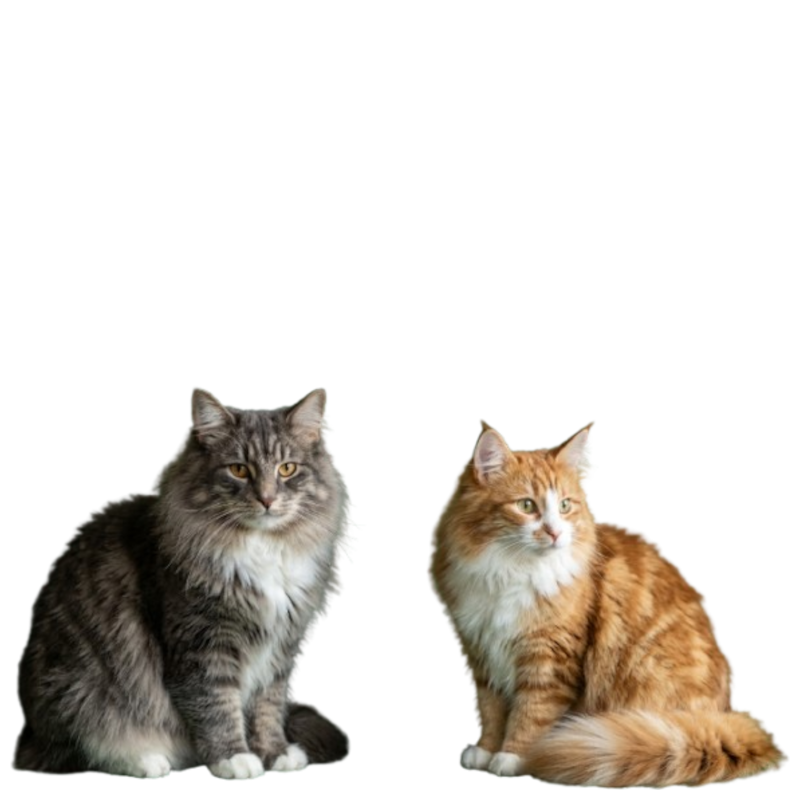
appearance
The Norwegian Forest is defined by a rugged, substantial physiology designed for high‐altitude survival and environmental resilience. Unlike many domesticated felines that prioritize sleekness, Norwegian Forests exhibit a robust skeletal framework and a specialized, multi‐layered insulation system. Every anatomical feature—from the reinforced cranial structure to the hyper‐developed musculature of the hindquarters—serves a functional purpose in navigating complex, vertical terrain.
Cranial Conformation and Facial Markers
The Norwegian Forest’s head is characterized by a distinct equilateral triangularity. This geometric precision is measured from the outer base of the ear to the tip of the chin, forming an nearly perfect ratio of .
- Frontal Profile: The forehead is slightly rounded, leading into a long, straight nasal bridge. There is an absence of a functional “break” or stop in the profile, creating a seamless transition from the brow to the rhinarium.
- Muzzle and Chin: The muzzle follows the lines of the triangle without pinched whisker pads. The chin is firm and aligned vertically with the nose, providing a strong anchor for the mandibular muscles.
- Pinna Orientation: The ears are large and set high on the cranium. They feature significant interior tufting and prominent lynx‐like tips that extend the visual verticality of the head.
Axial and Appendicular Skeletal Alignment
The Norwegian Forest possesses a long, substantial torso with a deep chest and a powerful rib cage. This skeletal volume supports significant muscular hypertrophy, particularly in the thighs and shoulders.
| Anatomical Zone | Physical Characteristic | Functional Marker |
|---|---|---|
| Thoracic Cavity | Broad and deep | Supports high oxygen capacity |
| Hind Limbs | Longer than forelimbs | Enables superior jumping leverage |
| Caudal Vertebrae | High flexibility; long length | Acts as a counter‐balance |
| Paws | Large, round, and tufted | Increases surface area for traction |
Specialized Fur Texture and Insulation
The Norwegian Forest’s integumentary system is a sophisticated dual‐layer structure. The primary purpose is moisture repulsion and thermal regulation.
1. The Guard Coat: Long, coarse, and glossy hairs that are naturally water‐repellent. These hairs drape over the body to shield the delicate interior layers. 2. The Undercoat: A dense, woolly layer that provides a thermal barrier against extreme cold. 3. Distinctive Furniture: Norwegian Forests develop a prominent frontal ruff, consisting of a short neck collar, side mutton‐chops, and a long frontal bib. Additionally, the hind legs are covered in thick fur known as “britches.”
Summary of Appearance
Norwegian Forests present a powerful, large‐scale silhouette marked by a straight profile and a triangular head. The body is long and muscular—supported by hind legs that sit higher than the front—culminating in a bushy tail that typically matches the body length. The overall impression is one of substantial physical power and weather‐proof density, encased in a shimmering, double‐layered coat that emphasizes their rugged, wild heritage.
behavior
The behavioral repertoire of the Norwegian Forest is defined by high‐functioning environmental exploration and a sophisticated suite of arboreal motor patterns. While many domestic felines exhibit ground‐biased activity, Norwegian Forests display a clear preference for verticality, utilizing specialized descending techniques that differentiate them from other breeds. Their social dynamics are characterized by low‐intensity vocalizations and a high reliance on tactile communication, suggesting an evolutionary adaptation to environments where acoustic signals might be dampened by heavy weather or dense foliage.
Environmental Exploration and Vertical Displacement
The Norwegian Forest exhibits a unique environmental exploration strategy centered on vertical dominance. This is not merely a preference for height but a functional necessity for their behavioral homeostasis.
- Arboreal Motor Patterns: Norwegian Forests often descend vertical surfaces head‐first in a spiral pattern. This behavior utilizes their skeletal alignment to maintain visual contact with the ground while moving downward—a significant departure from the standard feline method of backing down.
- Object Manipulation: They demonstrate high levels of tactile investigation, often using their paws to manipulate latches, containers, or toys with a degree of dexterity that suggests a complex prey‐drive manifestation involving both stalking and retrieval.
Communication and Social Facilitation
Social interaction in Norwegian Forests is largely governed by subtle postural changes and specific vocal signatures. Their acoustic ethogram is notably different from the typical domestic cat’s standard meow.
| Communication Mode | Behavioral Manifestation | Functional Analysis |
|---|---|---|
| Acoustic | Chirping or trilling | Used for social facilitation and maternal calling. |
| Tactile | Allorubbing and head‐butting | Reinforces group scent and social bonds. |
| Visual | Tail carriage and ear positioning | High sensitivity to environmental stimuli. |
The probability of a social interaction leading to a positive affiliative outcome can be modeled by the presence of shared resources and the absence of territorial stressors :
Norwegian Forest Social Affiliation Probability
- : Probability of Social Interaction, the statistical likelihood that two individuals will engage in positive, affiliative behaviors such as allogrooming or communal resting.
- : Shared Resources, the availability of high-value environmental assets including food, vertical territory, and human attention that encourage social proximity.
- : Territorial Stressors, the presence of environmental pressures such as overcrowding, unfamiliar scents, or competition that trigger defensive or agonistic responses.
A multi-cat household introduces a new adult Norwegian Forest to an existing resident. The owner ensures high resource availability () by providing 8 distinct climbing levels and feeding stations. However, the introduction occurs in a small room, creating a territorial stressor () value of 2. By applying the formula , the probability of a positive social outcome () is 0.8. This result of 80% suggests that the Norwegian Forest’s naturally gregarious but independent nature will likely lead to a successful affiliation, provided the owner continues to prioritize abundant resources to outweigh the inherent stress of shared territory.
Activity Cycles and Prey‐Drive Manifestation
As a breed with a history of survival in harsh climates, their energy expenditure is highly regulated. They often exhibit long periods of restful vigilance followed by explosive bursts of activity.
- Crepuscular Rhythms: Norwegian Forests typically peak in activity during dawn and dusk. During these windows, their prey‐drive manifestation is most visible through stereotypic behaviors like “chattering” at birds or insects.
- Problem‐Solving Behavior: When faced with an environmental barrier, the Norwegian Forest tends to apply a persistent, iterative approach to overcoming it rather than displaying immediate frustration‐based vocalization.
Summary of Behavior
Norwegian Forests are characterized by an exceptional mastery of vertical space and a calm, methodical approach to environmental exploration. Their social interactions are defined by quiet, trill‐like vocalizations and a strong inclination toward tactile social bonding. The hallmark of their ethogram remains their specialized climbing and descending ability, reflecting a deep‐seated functional adaptation to high‐elevation, arboreal habitats.
color
The visual identity of the Norwegian Forest is a result of complex melanocyte activity within the hair follicles, producing a vast array of saturated and dilute hues. Because Norwegian Forests possess a double‐layered integument, the way light interacts with the pigment granules varies significantly between the coarse, glossy guard hairs and the soft, woolly undercoat. This creates a depth of color where the outer shield often appears more vibrant and optically dense than the muted, light‐diffusing insulating layer beneath.
Biochemical Pigment Foundations
All coloration in the Norwegian Forest is derived from two primary types of melanin. The ratio and density of these granules determine the observed phenotype.
- Eumelanin: This produces the darker spectrum, appearing as black or its dilute counterpart, blue. High concentrations of eumelanin create a deep, light‐absorbent surface.
- Phaeomelanin: This provides the red and cream spectrum. The intensity of this pigment is often modified by rufism, which influences the richness or “warmth” of the red tones.
The intensity of light reflected from the hair surface can be modeled by the density of pigment granules and the refractive index of the hair shaft:
Norwegian Forest Hair Surface Light Reflectance
- : Reflected Light Intensity, the amount of light that bounces off the hair shaft, determining how bright or matte the coat appears to the eye.
- : Refractive Index, a constant representing how light bends as it enters the translucent keratin structure of the hair shaft.
- : Pigment Granule Density, the concentration of eumelanin or phaeomelanin within the hair; higher density leads to more light absorption and less reflection.
- : Transparency Coefficient, the proportion of the hair shaft that remains clear or unoccupied by pigment, allowing light to pass through or reflect.
A researcher compares the coat of a solid black Norwegian Forest to a pale cream one. For the black cat, the pigment density () is very high at 0.9. With a standard hair refractive index () of 1.55, the formula becomes , which simplifies to , resulting in a low reflectance () of 0.19. In contrast, a cream Norwegian Forest with a low pigment density of 0.3 results in , which is , yielding a much higher reflectance of 12.05. This explains why the lighter colored Norwegian Forests appear to glow or radiate light, while the darker individuals have the deep, light-absorbent quality characteristic of high-density eumelanin.
Distribution and Patterning Phenotypes
The Norwegian Forest’s coat exhibits diverse spatial distributions of pigment, ranging from solid saturation to intricate white spotting and agouti patterning.
| Category | Pigment Distribution | Visual Effect |
|---|---|---|
| Agouti | Banded pigment granules on individual hair shafts | A “ticked” or camouflage appearance |
| Non$‐Agouti | Uniform eumelanin or phaeomelanin throughout the shaft | Solid colors like black, blue, or red |
| Epistatic White | Complete absence of pigment granules in the hair | A pure white, high‐reflectance surface |
| Particolor | Regional melanocyte migration failure | Distinct white patches interspersed with pigment |
Advanced Pigment Effects
Dilution and Shading
Dilution occurs when pigment granules are clumped together rather than evenly distributed, allowing more light to pass through the hair shaft. In Norwegian Forests, this transforms black into a cool blue and red into a soft cream.
Tipping and Inhibitor Expression
The silver and smoke varieties are caused by a pigment inhibitor that restricts the production of melanin to the distal portion of the hair. This results in a vibrant, white root with a pigmented tip. In kittens, this can sometimes lead to ghost markings—faint, temporary patterns that appear before the final pigment density is achieved.
Summary of Pigmentation
Ultimately, Norwegian Forests display a nearly limitless palette of colors, with the exception of pointed patterns or non‐traditional feline hues. Their coloration is characterized by a high degree of contrast and saturation, particularly in the agouti and bicolored varieties. Whether the coat is dominated by the deep absorption of eumelanin or the warm reflectance of phaeomelanin, the breed remains a primary example of how pigment density and structural hair properties combine to create a resilient, visually complex exterior.
compatibility
Ease of Maintenance
Rating: 2/5
Child Friendly
Rating: 5/5
Annual Cost
Rating: 3/5
Lifetime Cost
Rating: 4/5
Adaptability
Rating: 5/5
Velcro Factor
Rating: 4/5
Quietude
Rating: 4/5
Apartment Suitability
Rating: 3/5
Hypoallergenic
Rating: 2/5
Handling Tolerance
Rating: 3/5
Hardiness/Longevity
Rating: 5/5
Prey Drive
Rating: 1/5
genetics
The genomic profile of the Norwegian Forest is a complex tapestry of ancestral alleles that have been preserved through selective pressures. Unlike many modern breeds that result from recent hybridization, Norwegian Forests exhibit a high degree of genetic stability within specific loci responsible for their specialized coat and skeletal structure. Their genomic makeup is characterized by a high frequency of wild‐type alleles at various points, particularly those governing thermal regulation and predatory efficiency. By examining the interaction between dominant and recessive alleles, we can map the precise inheritance patterns that define this unique feline lineage.
Core Genetic Loci and Allelic Variation
The primary phenotypic traits of the Norwegian Forest are governed by a handful of critical loci. These follow standard Mendelian inheritance patterns, though many are influenced by polygenetic modifiers that create a spectrum of expression.
| Locus | Allele Symbol | Inheritance Pattern | Functional Role |
|---|---|---|---|
| Long Hair | l | Autosomal Recessive | Controls the length of the hair shaft |
| Agouti | A | Autosomal Dominant | Regulates the distribution of eumelanin |
| Dilution | d | Autosomal Recessive | Influences pigment granule density |
| White Spotting | S | Incomplete Dominance | Dictates melanocyte migration patterns |
The Mechanics of Longhair Inheritance
The semi‐longhair trait in Norwegian Forests is primarily attributed to a mutation in the Fibroblast Growth Factor 5 (FGF5) gene. Because this is an autosomal recessive trait, a kitten must inherit the allele from both parents to express the longhair phenotype.
The probability of a specific genotype appearing in a litter can be modeled using a Punnett square, where the frequency of the recessive allele in the population is :
Norwegian Forest Longhair Phenotype Probability
- : Phenotypic Probability, the statistical chance that an individual kitten will express the longhair trait by inheriting two copies of the recessive allele.
- : Recessive Allele Frequency, the prevalence of the mutated FGF5 gene within the specific breeding population.
- : Homozygous Recessive Frequency, the product of the allele frequencies representing the expected proportion of long-haired offspring in a randomly mating population.
A geneticist is verifying the stability of a localized Norwegian Forest population. In a standard breeding scenario where the longhair trait is the fixed standard, the frequency of the recessive allele () is 1.0. By calculating , the result for is 1.0. This confirms that 100% of the kittens born to these parents will possess the signature thick, water-repellent double coat. However, if a carrier from an outcrossed lineage with a value of 0.5 were introduced, the probability of a long-haired kitten would drop to , or 0.25, demonstrating how the Norwegian Forest’s distinct appearance relies on the total fixation of this specific recessive gene.
In Norwegian Forests, the fixation of this allele means within the breed pool, ensuring the trait remains stable across generations.
Epistatic Interactions and Polygenetic Modifiers
Beyond simple Mendelian traits, the Norwegian Forest exhibits complex epistatic interactions where the expression of one gene is masked or modified by another.
- The Inhibitor Gene (): This autosomal dominant gene suppresses phaeomelanin production in the hair shaft, resulting in silver or smoke variants. It is a classic example of dominant epistasis over the agouti locus.
- Rufism Polygenes: The richness of red tones is not controlled by a single locus but by a series of polygenetic modifiers. These genes accumulate to enhance or dilute the saturation of phaeomelanin via additive inheritance.
- Size and Structure: Unlike coat traits, the substantial frame of the Norwegian Forest is the result of polygenetic inheritance, where multiple genes on different chromosomes contribute to the overall muscular hypertrophy and skeletal volume.
Summary of Genetics
The genetics of Norwegian Forests are defined by a fixed autosomal recessive mutation at the FGF5 locus and a diverse array of dominant and recessive alleles at pigmentation loci. Their genomic integrity is maintained through a combination of stable wild‐type alleles and specific selective mutations that allow for a wide range of phenotypic expression while preserving the breed’s underlying structural blueprint. The interaction of these loci—ranging from simple dominance to complex polygenetic systems—ensures a robust and varied biological profile.
health
The health profile of the Norwegian Forest is generally characterized by robust physiological resilience, yet the breed is clinically predisposed to several distinct metabolic and cardiovascular conditions. Because Norwegian Forests are large‐framed felines, their skeletal and muscular systems experience unique mechanical stresses that can exacerbate certain degenerative joint pathologies. Furthermore, specific inherited enzyme deficiencies and cardiac structural abnormalities require vigilant monitoring to prevent the onset of systemic failure or acute clinical crises. Understanding these vulnerabilities involves an analysis of cellular metabolism and hemodynamic efficiency.
Metabolic Pathophysiology: Glycogen Storage Disease IV
A significant clinical concern for the Norwegian Forest is Glycogen Storage Disease IV (GSD IV), a fatal metabolic disorder caused by a deficiency in the glycogen branching enzyme (GBE).
- Mechanism of Action: In affected Norwegian Forests, the body is unable to properly branch glycogen molecules. This leads to the accumulation of abnormal polyglucosan bodies within the myocytes, hepatocytes, and neurons.
- Clinical Progression: The accumulation eventually triggers progressive muscular atrophy and multi‐organ failure. While many affected individuals suffer from perinatal death, those who survive birth typically show neuromuscular degeneration within several months.
Cardiovascular and Renal Dynamics
Like many large domestic felines, Norwegian Forests exhibit a heightened risk for structural cardiac remodeling and age‐related filtration decline.
| Condition | Pathophysiological Hallmark | Clinical Indicator |
|---|---|---|
| Hypertrophic Cardiomyopathy (HCM) | Thickening of the left ventricular wall | Reduced stroke volume and diastolic dysfunction |
| Renal Insufficiency | Progressive nephron loss | Elevated blood urea nitrogen (BUN) and creatinine |
| Polycystic Kidney Disease (PKD) | Development of fluid‐filled cysts | Disruption of normal renal parenchyma |
In cases of HCM, the ejection fraction is often maintained initially, but the stroke volume decreases as the end‐diastolic volume is compromised by ventricular wall hypertrophy:
Norwegian Forest Cardiac Ejection Fraction and Stroke Volume Ratio
- : Ejection Fraction, the percentage of blood the left ventricle pumps out with each contraction; it serves as a primary indicator of how well the heart is functioning.
- : Stroke Volume, the actual amount of blood in milliliters pumped out of the ventricle during a single heartbeat.
- : End-Diastolic Volume, the total volume of blood in the ventricle just before it contracts; in the Norwegian Forest, this volume may decrease as the heart wall thickens.
A veterinary cardiologist evaluates a Norwegian Forest showing early signs of heart wall thickening. The echocardiogram shows an end-diastolic volume () of 10.0 milliliters. Despite the thickening, the heart is still pumping out 6.5 milliliters of blood () per beat. By dividing 6.5 by 10.0, the cardiologist calculates an ejection fraction () of 0.65, or 65%. While this percentage appears healthy, the specialist notes that the total is lower than expected for a large Norwegian Forest, meaning the heart is pumping a high percentage of a smaller total volume, which helps identify the condition before the cat shows outward symptoms.
Orthopedic and Skeletal Considerations
The sheer physical scale of the Norwegian Forest places considerable strain on the appendicular skeleton, leading to specific orthopedic vulnerabilities.
- Hip Dysplasia: This condition involves a malformation of the coxofemoral joint. In Norwegian Forests, the lack of a tight fit between the femoral head and the acetabulum leads to chronic inflammation and degenerative joint disease.
- Patellar Luxation: While less frequent than in smaller breeds, the mechanical alignment of the quadriceps and the patellar ligament can sometimes result in lateral or medial displacement, causing intermittent lameness.
Summary of Breed Health
The health of Norwegian Forests is primarily defined by their susceptibility to GSD IV, hypertrophic cardiomyopathy, and various orthopedic challenges related to their substantial body mass. While they are physiologically hardy, the potential for enzyme deficiencies and cardiac remodeling necessitates proactive screening. Clinical outcomes for the Norwegian Forest are most favorable when metabolic and hemodynamic parameters are monitored early, ensuring that mechanical or biochemical imbalances are identified before they progress into irreversible systemic pathologies.
longevity
The demographic profile of the Norwegian Forest is characterized by a robust survival curve that typically exceeds the median life expectancy observed in many large‐frame pedigreed felines. While biological senescence is an inevitable transition, Norwegian Forests often maintain a high functional status well into their geriatric years. Statistical analysis of mortality rates suggests that their aging process is not a linear decline but rather a series of distinct physiological phases. Understanding these temporal milestones requires a data‐driven approach to life expectancy and the probability of survival across various age cohorts.
Statistical Life Expectancy and Survival Probability
The median life expectancy for the Norwegian Forest is generally observed within the range of 14–16 years. However, a significant portion of the population reaches the late‐geriatric stage, surviving beyond 18 years. The probability of an individual reaching age can be expressed through a survival function , which represents the likelihood that the feline survives from birth to at least time :
Norwegian Forest Survival Probability Function
- : Survival Function, the probability that a specific Norwegian Forest will live longer than the age defined by .
- : Probability, the statistical likelihood of an event occurring within a given population.
- : Actual Age at Death, the random variable representing the point in time when the cat’s life naturally ends.
- : Specified Age Threshold, the target age in years for which you are calculating the probability of survival.
An insurance provider analyzes a large dataset of the Norwegian Forest to set health premiums. Based on their actuarial tables, they want to find the probability that a kitten will survive to its 15th year. Here, the age threshold () is 15. If the historical data shows that 60% of the population reaches this milestone, then is 0.60, resulting in a survival function value of 0.60. This result helps owners understand that while the 14–16 year range is the median, the Norwegian Forest’s robust genetic heritage provides a 60% chance of reaching a late-geriatric stage, provided they receive regular screenings for breed-specific cardiac and renal health.
In the Norwegian Forest, the mortality rate tends to remain relatively low during the prime adult years, with a sharp increase in the hazard function occurring after the first decade of life.
Gerontological Stages and Transitions
The aging process in Norwegian Forests is categorized into four primary developmental and geriatric phases based on physiological markers of cellular senescence.
| Life Stage | Age Range (Years) | Senescence Profile |
|---|---|---|
| Prime Adult | 2–6 | Peak metabolic efficiency; minimal cellular damage. |
| Mature Adult | 7–10 | Early biochemical shifts; maintenance of high functional reserves. |
| Senior Transition | 11–14 | Acceleration of systemic senescence; increased mortality risk. |
| Geriatric | 15+ | Significant decline in organ reserve; late‐stage physiological aging. |
Factors Influencing the Rate of Senescence
The velocity of aging in Norwegian Forests is influenced by several biological and environmental variables that impact the rate of molecular attrition.
- Metabolic Rate and Mass: As a larger breed, the Norwegian Forest’s metabolic scaling can influence the accumulation of oxidative stress, a primary driver of the aging clock.
- Environmental Optimization: Indoor survivability significantly shifts the survival curve to the right, as it mitigates external mortality factors and environmental stressors that would otherwise accelerate physical wear.
- Cellular Maintenance: The efficiency of DNA repair mechanisms and telomere preservation plays a critical role in determining which individuals transition into the geriatric phase without catastrophic systemic failure.
Summary of Breed Longevity
Norwegian Forests exhibit a favorable actuarial profile with a life expectancy that frequently reaches into the mid‒teens. Their survival patterns are defined by a durable mature phase followed by a predictable geriatric transition starting around age 11. While individual longevity varies, the breed is statistically recognized for its resilience, with many individuals maintaining a high quality of life through the final stages of biological senescence.
maintenance
Proper maintenance of the Norwegian Forest requires a specialized approach that accounts for their significant body mass and unique integumentary system. Because Norwegian Forests possess a water‐repellent double coat and a high muscular density, their husbandry must prioritize follicular health and precise metabolic fueling. Failure to address their hygroscopic needs or resting energy requirements can lead to rapid physiological decline. A successful management protocol integrates high‐protein nutritional engineering with mechanical grooming interventions to ensure systemic homeostasis and optimal sebum distribution.
Nutritional Engineering and Metabolic Calibration
The Resting Energy Requirement (RER) for a Norwegian Forest is the baseline caloric intake needed to maintain essential physiological functions. For a Norwegian Forest with a body mass () in kilograms, the formula is:
Norwegian Forest Resting Energy Requirement
- : Resting Energy Requirement, the foundational number of kilocalories a cat needs to perform basic life functions like breathing and circulation while completely at rest.
- : Species-Specific Constant, a standard value used in feline nutrition to represent the metabolic heat production of a domestic cat.
- : Body Mass, the weight of the Norwegian Forest measured in kilograms.
- : Metabolic Scaling Exponent, a mathematical power used to account for the fact that metabolic rate does not increase linearly with body size; instead, it scales with the cat’s surface area and lean tissue.
A veterinarian needs to determine the base diet for a large male Norwegian Forest that weighs 8 kilograms (). First, the metabolic weight is calculated by raising 8 to the power of 0.75, which equals approximately 4.757. Multiplying this value by the constant 70 () results in an of 333. This means the cat requires 333 kilocalories per day just to maintain its basic biological functions. To find the actual amount of food needed for daily life, the vet might then multiply this by an activity factor of 1.4, resulting in a total daily requirement of 466.2 calories to support the Norwegian Forest’s active nature and heavy bone structure.
To determine the Total Daily Energy Requirement (TDEE), this base value is multiplied by an activity factor ranging from to , depending on the individual’s metabolic rate and environmental enrichment levels.
| Nutrient Category | Requirement Rationale | Clinical Focus |
|---|---|---|
| Crude Protein | High amino acid turnover for muscle mass | Muscular hypertrophy maintenance |
| Omega$‐3/6 Fatty Acids | Support for lipid layer and sebum production | Follicular health and moisture repulsion |
| Fiber (Prebiotics) | Assistance with trichobezoar passage | Gastrointestinal motility |
| Oral Substrates | Mechanical periodontal prophylaxis | Prevention of calculus accumulation |
Integumentary Management and Grooming Protocols
The Norwegian Forest’s coat is a complex thermal barrier. Maintenance must focus on the woolly undercoat to prevent compaction, which can impede thermal regulation.
- Sebum Distribution: The glossy guard hairs require natural oils to remain water‐repellent. Over‐bathing can strip these essential lipids, leading to brittle hair shafts.
- Mechanical Extraction: A bi‐weekly grooming cadence is necessary to remove necrotic hair follicles from the dense undercoat, particularly during the biannual shedding cycles.
- Hygroscopic Needs: Maintaining an indoor humidity level of 40%–50% prevents the coat from becoming excessively static or dry, which protects the cuticle of the hair.
Environmental Enrichment Standards
Due to the innate drive for vertical exploration, the Norwegian Forest requires an environment that supports complex motor patterns.
- Vertical Stratification: Access to climbing structures with a minimum height of 2 meters to allow for natural head‐first descent maneuvers.
- Hydration Stations: As Norwegian Forests often have a low thirst drive, the use of flowing water sources (fountains) is recommended to increase voluntary hydration and support renal health.
- Thermal Zones: Providing a variety of micro‐climates within the home ensures the Norwegian Forest can regulate its core temperature effectively despite its heavy insulation.
Summary of Breed Maintenance
Maintaining Norwegian Forests involves a strict adherence to high‐protein nutritional standards and a consistent mechanical grooming schedule. Owners must calibrate caloric intake based on precise calculations and provide an environment that facilitates vertical movement. By balancing lipid‐heavy nutrition with proactive periodontal prophylaxis and coat management, the Norwegian Forest can sustain its robust physical frame and specialized thermal defenses throughout its developmental stages.
measurements
| Measurement | Female | Male | ||
|---|---|---|---|---|
| Metric | Imperial | Metric | Imperial | |
height | 23 – 30 centimeters | 9 – 12 inches | 25 – 33 centimeters | 10 – 13 inches |
length | 30 – 41 centimeters | 12 – 16 inches | 36 – 46 centimeters | 14 – 18 inches |
weight | 3.6 – 6.4 kilograms | 8 – 14 pounds | 5.4 – 9.1 kilograms | 12 – 20 pounds |
• Height: Refers to the measurement at the withers (shoulders).
• Length: Measured from the tip of the nose to the base of the tail.
origin
The history of the Norwegian Forest is a fascinating study of how geographic isolation and environmental pressures shape landrace populations into distinct biological entities. Unlike many modern feline lineages that result from intensive anthropogenic selection, the Norwegian Forest developed primarily through a process of natural selection within the high‐latitude regions of Northern Europe. The establishment of this lineage is inextricably linked to human migratory routes, particularly those of seafaring cultures, which facilitated the movement of ancestral clades from the Near East and Central Europe into the isolated ecosystems of the Scandinavian Peninsula.
The Timeline of Lineage Establishment
The emergence of the Norwegian Forest is not the result of a single event but rather a protracted period of environmental adaptation and genetic stabilization.
| Era | Historical Development | Evolutionary Significance |
|---|---|---|
| 8th$–11th Century | Viking Age maritime expansion | Initial introduction of Near Eastern short‐haired cats to Northern Europe. |
| 11th$–14th Century | Geographic isolation | Adaptation to subarctic climates through natural selection. |
| 16th Century | First documented literary mentions | Recognition of the Norwegian Forest as a distinct landrace in Norwegian folklore. |
| 1930s$–1970s | Transition to formal breed status | Implementation of pedigree registries to preserve the native landrace. |
Migratory Routes and Phylogenetic Divergence
The phylogenetic divergence of Norwegian Forests suggests a complex ancestry involving multiple waves of feline migration. While their exact progenitor remains a subject of academic debate, carbon‐dating of archaeological remains in Norse settlements suggests that small felines were present as early as the late Iron Age.
One prevalent theory posits that Norwegian Forests descended from the Turkish Angora or similar long‐haired populations brought back by Viking explorers from the Byzantine Empire. Over centuries of isolation, the population reached a state of Hardy‐Weinberg equilibrium, where the frequency of alleles favored traits suitable for the harsh Norwegian climate:
Norwegian Forest Hardy-Weinberg Genetic Equilibrium
- : Homozygous Dominant Frequency, representing the proportion of the population with two dominant alleles, such as those for a short coat.
- : Heterozygous Frequency, representing individuals carrying one dominant and one recessive allele, acting as carriers for specific traits without necessarily expressing them.
- : Homozygous Recessive Frequency, representing the proportion of the population expressing recessive traits like the long, water-repellent coat of the Norwegian Forest.
- : Dominant Allele Frequency, the relative proportion of the dominant gene variant within the total gene pool.
- : Recessive Allele Frequency, the relative proportion of the recessive gene variant, which became dominant in the Norwegian Forest’s isolated northern environment.
A researcher studies an isolated population of cats in a remote Norwegian valley to determine the prevalence of the longhair gene (). In this population, 64% of the cats express the longhair phenotype, meaning . Taking the square root, the researcher finds the frequency of the recessive allele () is 0.8. Since must equal 1, the frequency of the dominant shorthair allele () is 0.2. Plugging these into the formula, equals , which totals 1. This result shows that while only 64% of the cats have long hair, 32% of the population are shorthaired carriers of the gene, illustrating how the Norwegian Forest’s signature traits remained resilient in the gene pool long before formal breed recognition.
In this model, the survival of the Norwegian Forest was dependent on its ability to thrive in a niche environment where human intervention was minimal, but the symbiotic relationship with agricultural settlements provided a stable prey base.
Summary of Breed Origins
The Norwegian Forest originated as a naturally occurring landrace that emerged from the intersection of human maritime trade and severe environmental selection. From their probable roots in the Near East to their eventual stabilization in the forests of Norway, these felines represent a lineage forged by the elements rather than the laboratory. The modern Norwegian Forest is the biological descendant of these ancient populations, representing a successful evolutionary transition from a diverse migratory stock to a highly specialized, geographically distinct population.
temperament
The dispositional profile of the Norwegian Forest is a study in high environmental confidence paired with a remarkably stable emotional baseline. While many domestic felines exhibit high emotional reactivity to auditory or spatial stimuli, Norwegian Forests generally maintain a low arousal threshold, allowing them to process novel information without immediate stress responses. This psychological resilience is likely a byproduct of their evolutionary history as an autonomous landrace, where environmental neophobia would have been a maladaptive trait. In a domestic setting, this translates to a feline that is psychologically present and observant but rarely hyper-vigilant.
Core Dispositional Traits and Sensory Thresholds
The Norwegian Forest’s temperament can be mapped across several psychological axes, moving from solitary independence to a measured gregariousness.
- Low Environmental Neophobia: Norwegian Forests typically exhibit a high tolerance for changes in their immediate surroundings. Their exploratory drive is fueled by curiosity rather than anxiety, leading to a calm, methodical investigation of new objects or individuals.
- Affiliative Gregariousness: While they are deeply bonded to their primary social group, they do not typically manifest the high-intensity separation anxiety seen in more demanding breeds. Their sociability is steady and persistent rather than intrusive.
- High Sensory Integration: They possess a high threshold for tactile and auditory stimulation. This makes the Norwegian Forest notably resilient in multi-species or high-activity households where sensory input is frequent and unpredictable.
Behavioral Modeling of Social Interaction
The probability of affiliative engagement in the Norwegian Forest can be modeled as a function of social familiarity and current environmental stability , weighted against a baseline of independent autonomy :
Norwegian Forest Social Affiliation Probability
- : Probability of Affiliative Engagement, the likelihood that the cat will choose to interact socially or seek affection rather than remaining solitary.
- : Social Familiarity, a value representing the history of positive interactions with the specific human or animal present.
- : Environmental Stability, a measurement of the current surroundings, where a calm and predictable space increases the value and a chaotic one decreases it.
- : Independent Autonomy, a baseline psychological constant for the Norwegian Forest that represents their inherent self-reliance and need for personal space.
A behaviorist observes an adult Norwegian Forest in a familiar living room. The cat has a strong bond with its owner, providing a social familiarity () of 0.9. The room is quiet and stable, giving an environmental stability () of 0.8. Because the Norwegian Forest is naturally self-directed, its independent autonomy () is measured at a high 1.5. Applying the formula , the result is , which equals 0.48. This indicates a 48% probability of the cat initiating social contact. This result demonstrates that even with high familiarity and comfort, the Norwegian Forest’s high autonomy constant means it is just as likely to choose a period of independent observation as it is to seek direct social engagement.
In this model, remains a significant constant, ensuring that even in high-stress environments, the Norwegian Forest retains a core sense of self-directed agency.
Intra-species and Interspecific Sociability Spectrum
The Norwegian Forest occupies a specific niche in the feline sociability spectrum, characterized by a non-confrontational but assertive presence.
| Trait Axis | Position | Psychobiological Rationale |
|---|---|---|
| Aggression | Very Low | High confidence reduces the perceived need for defensive posturing. |
| Social Dependence | Moderate | Prefers presence within the social radius without constant physical contact. |
| Play Drive | High | Persistent curiosity and cognitive engagement throughout adult life stages. |
| Vocal Expressivity | Low | Relies more on subtle body language than high-frequency acoustic signaling. |
Summary of Breed Temperament
The Norwegian Forest possesses a temperament defined by emotional stability, high environmental confidence, and a companionable but independent nature. Their psychological profile is one of a “gentle observer”—a feline that is deeply integrated into its social environment but remains unmoved by the minor stressors that often disrupt the homeostasis of more reactive breeds. This balanced disposition makes Norwegian Forests exceptionally adaptable, provided their need for cognitive engagement and vertical autonomy is respected.