Nebelung Cat
appearance
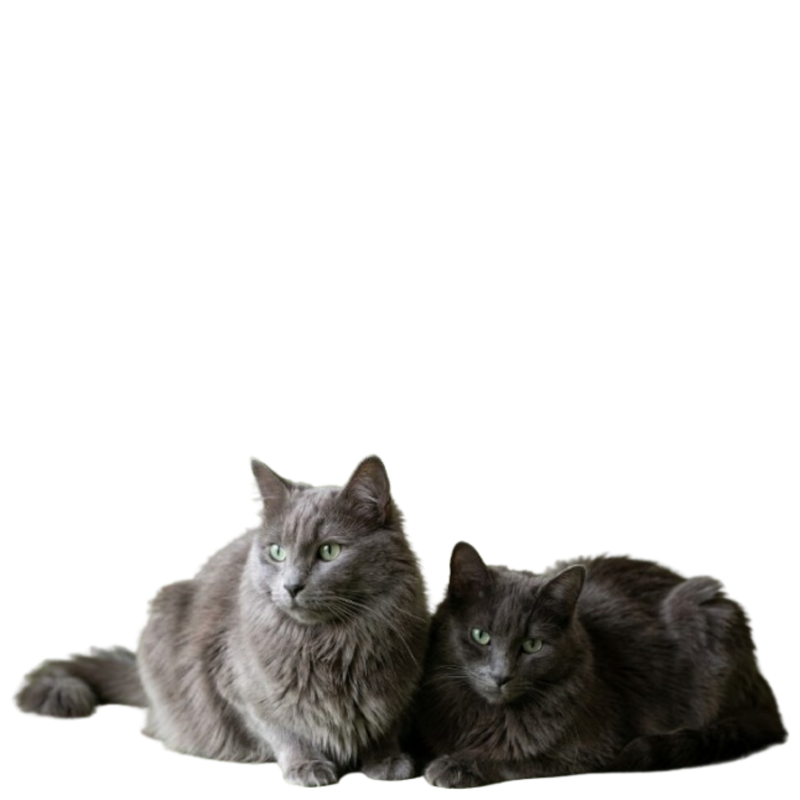
The domestic Nebelung presents a striking silhouette defined by a long, semi‐foreign body type that balances elegance with sturdy muscularity. Unlike the compact cobby frame or the extreme svelte nature of oriental types, Nebelung’s skeletal alignment emphasizes a graceful, elongated geometry. This structural foundation is enveloped in a unique double‐layered integument, where the interplay between the dense undercoat and the longer guard hairs creates a soft, hazy outline that characterizes the feline’s external form.
Cranial Conformation and Facial Geometry
The head of Nebelung follows a modified wedge shape, characterized by seven distinct flat planes. This geometric precision is most evident when viewing the cranial structure from a profile or superior perspective.
- Frontal Bone and Profile: The forehead is notably flat, leading to a straight nasal bridge that meets the brow at a gentle angle. This creates a profile with two distinct planes connected by a slight rise at the eye level.
- Muzzle and Mandible: The muzzle is medium in length, featuring a prominent whisker break that accents the underlying maxillary structure. The chin is strong and vertically aligned with the tip of the nose, completing a firm mandibular profile.
- Eye Aperture: The eyes are large and aperture‐like, shaped as wide almonds or nearly circular globes. Their placement is slightly slanted toward the outer base of the pinnae.
- Pinna Orientation: The ears are large and noticeably pointed. The pinnae are set fairly wide apart, continuing the lines of the modified wedge. They possess a thin, translucent cartilage structure, often with light tufting on the interior margins.
Skeletal Framework and Torso
The Nebelung possesses a medium‐sized, long torso that facilitates a fluid, athletic range of motion. The overall balance of the skeletal framework reflects a feline designed for agility.
| Feature | Anatomical Description |
|---|---|
| Skeletal Type | Semi–foreign, emphasizing length over mass. |
| Pectoral Girdle | Narrow and elegant, leading into a firm, muscular chest. |
| Vertebral Column | Elongated and flexible, showing a slight upward curve toward the hindquarters. |
| Muscular Hypertrophy | Lean muscle mass that is well‐distributed, providing a firm feel without appearing bulky. |
Appendicular Structure
The limbs of Nebelungs are long and slender, providing a significant height to the standing silhouette.
- Forelimbs and Hindlimbs: The legs are finely boned but supported by firm musculature. The hindlimbs are slightly longer than the forelimbs, a skeletal trait that aids in leaping and rapid acceleration.
- Paw Conformation: The paws are small and oval‐shaped, often appearing to have a “tiptoe” stance due to the density of the interdigital fur tufts.
- Caudal Vertebrae Structure: The tail is exceptionally long, often equal to or exceeding the length of the torso from the scapula to the base of the tail. The vertebrae taper gradually toward the tip.
Integument and Coat Architecture
The most distinctive physical marker of Nebelung is the specialized coat architecture. This is a medium‐long double coat that exhibits a high degree of silkiness.
- Primary Guard Hairs: These are fine and water‐resistant, extending significantly beyond the undercoat.
- Secondary Undercoat: Provides a dense, insulating layer that adds volume to the overall silhouette.
- Specific Accumulations: Longer hair is concentrated in several areas:
- The Ruff: A distinct thickening of fur around the cervical region.
- The Breeches: Significant plumage on the posterior of the thighs.
- Caudal Plume: The tail fur is full and thick, creating a plume effect.
Anatomical Ratios
The visual harmony of Nebelung can be described through the relationship between cranial and corporal length. If we define the length of the head as and the length of the body (excluding the tail) as , the ratio typically follows:
Nebelung Anatomical Proportionality Index
- : Proportional Ratio, the numerical index that determines if a cat fits the semi-foreign body type standard.
- : Body Length, the measurement from the base of the neck to the base of the tail, representing the overall length of the torso.
- : Head Length, the measurement from the back of the skull to the tip of the nose.
- : Breed Standard Constant, the specific range of values that characterizes the elegant, elongated silhouette of the Nebelung.
A cat show judge evaluates a Nebelung to ensure it meets the semi-foreign structural requirement. The judge measures the cat’s head length () at 12 centimeters and its body length () at 54 centimeters. By dividing 54 by 12, the judge calculates a ratio () of 4.5. Because this result falls directly in the center of the 4 to 5 range, the judge confirms the cat possesses the correct elongated body type and visual harmony required for the Nebelung standard.
This ensures the feline maintains its characteristic semi‐foreign, elongated appearance rather than a compact one.
Summary of Appearance
Nebelungs are defined by a refined, elongated skeletal structure and a distinctive seven‐planed cranial wedge. The physical form is characterized by a balance of lean muscularity and fine bone structure, supported by long limbs and an exceptionally long, plumed tail. The hazy, voluminous silhouette provided by the dense double coat softens the underlying athletic geometry, resulting in a feline of significant elegance and structural poise.
behavior
Observing Nebelungs in a domestic setting reveals a sophisticated behavioral repertoire characterized by high environmental sensitivity and selective social facilitation. These felines exhibit a structured approach to their surroundings, often employing a strategy of cautious observation before engaging in active exploration. Their behavioral architecture is not merely reactive but involves a complex series of anticipatory actions, particularly regarding the routines of their human cohabitants, which suggests a high level of cognitive mapping and associative learning within their daily activity cycles.
Environmental Exploration and Spatial Navigation
The Nebelung utilizes a verticalized exploration strategy, often prioritizing high‐altitude vantage points to monitor the terrestrial environment. This behavior is a form of risk assessment that allows the individual to observe social and physical changes from a position of security.
- Olfactory Investigation: Upon encountering novel objects, Nebelungs engage in prolonged flehmen responses and cautious tactile investigation. They often utilize their paws to probe the density and stability of an object before making full contact.
- Territorial Marking: While primarily indoor felines, they maintain a rigorous schedule of facial rubbing (bunting) on prominent vertical edges. This tactile communication serves as a self‐soothing mechanism and a method of establishing a cohesive scent profile within the primary territory.
Social Dynamics and Interactive Communication
The social behavior of the Nebelung is marked by a clear distinction between intra‐species and inter‐species interactions. They often display a low threshold for sensory overload, which dictates their choice of social partners and the duration of interactive sessions.
| Interaction Type | Observed Behavior | Frequency/Intensity |
|---|---|---|
| Allogrooming | Mutual grooming of the head and cervical region with bonded conspecifics. | High in stable social groups. |
| Human Bondedness | Social facilitation via proximity; often remaining within a 1–3 meter radius of a preferred human without seeking direct contact. | Persistent and stable. |
| Reaction to Strangers | Immediate retreat to a predetermined safe zone (e.g., under furniture or high shelves). | High during novel auditory stimuli. |
| Tactile Solicitation | Soft head‐butting or leaning against the lower limbs of a known social partner. | Medium; typically ritualized. |
Vocalization and Auditory Signaling
Vocal manifestations in Nebelungs are notably subtle. Unlike more vocal breeds that utilize loud, repetitive meowing for solicitation, the Nebelung employs a low‐frequency trill or a soft chirrup.
- Solicitation Signals: To initiate feeding or play, the Nebelung may perform a silent meow—the jaw opens, but the sound is nearly inaudible to human ears. This is often paired with a specific visual signal: an upright tail with a slight twitch at the terminal end.
- Agonistic Vocalizations: Hissing and growling are rarely observed except in cases of extreme territorial violation or unexpected physical restraint, indicating a preference for flight over fight in their defensive hierarchy.
Prey‐Drive Manifestation and Play Cycles
The predatory sequence in Nebelungs is highly focused and characterized by long periods of motionless stalking.
- Stalking: Crouched posture with the ventral surface nearly touching the substrate.
- Visual Tracking: Intense focus with rapid pupillary dilation.
- The Pounce: A high‐velocity burst of kinetic energy, often followed by the use of the forepaws to manipulate the “prey” item.
The probability of a successful play pounce () as a function of the distance to the target () can be modeled as:
Nebelung Play Pounce Success Probability
- : Pounce Success Probability, the mathematical likelihood that a play strike will accurately reach the intended target.
- : Euler’s Number, the base of the natural logarithm used to model the exponential decay of success as distance increases.
- : Sensory Sensitivity Constant, a value representing the cat’s focus and environmental noise; a higher value in the Nebelung indicates a more calculated, short-range hunting strategy.
- : Target Distance, the physical measurement between the cat’s starting position and the play object or prey.
A researcher observes a Nebelung stalking a feather wand. The cat has a high sensory sensitivity () of 0.8 because the room is quiet and its focus is absolute. The feather is currently 2 meters away (). Using the formula , the result is , which equals approximately 0.20. This tells us that at 2 meters, the cat has a 20% chance of a successful pounce. However, if the Nebelung stalks closer to a distance of 0.5 meters, the probability rises to 67%, demonstrating why this breed utilizes its patient stalking phase to minimize distance before the final burst of energy.
In this formula, represents the feline’s individual sensory sensitivity and environmental noise. In Nebelungs, this value is often high, meaning they prefer a shorter, more calculated strike zone.
Summary of Breed Behavior
The behavioral ethogram of Nebelungs is defined by a preference for routine, a sophisticated system of subtle vocal and tactile signals, and a cautious approach to environmental changes. Their social interactions are characterized by deep, selective bonds and a reliance on vertical space for security. By maintaining a balance between quiet observation and structured play, Nebelungs display a functional adaptation to calm, predictable domestic environments where they can exert high control over their sensory input.
color
The chromatic profile of the Nebelung is a study in precise pigment dilution and light interaction. Unlike many domestic felines that display a wide array of phaeomelanin‐based (red/cream) hues, Nebelungs are defined by a singular, monochromatic expression of eumelanin. This pigment is distributed with a specific density that creates a shimmering, ethereal quality. The visual output is not merely a flat color but a dynamic interaction between the structural protein of the hair shaft and the specialized pigment granules within, resulting in a distinct luminous sheen that is a hallmark of the Nebelung’s phenotype.
Biochemical Pigment Distribution
In Nebelungs, the primary pigment is eumelanin, which is responsible for black and brown tones. In this specific phenotype, the melanocytes produce pigment granules that are smaller and more dispersed than those found in solid black cats.
- Dilution Effect: The pigment granules in the hair shaft are clumped in a way that allows more light to pass through and scatter, which shifts the visual perception from deep black to a medium blue–gray.
- Melanocyte Migration: During embryonic development, melanocytes migrate uniformly across the dermis, ensuring a complete absence of localized pigment inhibition (white spotting).
- Phaeomelanin Suppression: There is an absolute suppression of phaeomelanin, meaning any traces of rufism—the warm, reddish or brownish tones seen in some gray coats—are considered a deviation from the ideal chromatic standard.
The Phenomenon of Silver Tipping
The most technically complex aspect of Nebelung’s coloration is the silver tipping. This is a structural color effect rather than a chemical one. The very tip of each guard hair lacks pigment granules entirely, creating a translucent or “silver” cap.
| Color Component | Pigment State | Visual Effect |
|---|---|---|
| Base to Mid‐shaft | Evenly distributed blue‐gray eumelanin. | Deep, consistent ground color. |
| Terminal Tip | Depigmented (Clear). | Luminous, metallic sheen. |
| Ghost Markings | Inhibited; faint tabby patterns (agouti signaling) may appear in early development but usually fade. | Monochromatic uniformity. |
Light Refraction and Luster
The sheen seen on Nebelungs can be modeled by the way light interacts with the depigmented tips. The intensity of the luster () is proportional to the density of the silver tipping () and the angle of the incident light ().
Nebelung Light Refraction and Luster
- : Luster Intensity, the perceived brightness or silver shimmer reflecting off the surface of the coat.
- : Silver Tipping Density, the concentration of guard hairs that lack pigment at the tips, creating the characteristic frosted appearance.
- : Incident Light Coefficient, the cosine of the angle at which light hits the hair shaft; a smaller angle (light coming from directly above) results in a higher reflection value.
A cat show exhibitor positions a Nebelung under a bright overhead spotlight to maximize its silver sheen. The cat has a high silver tipping density () of 0.85. When the cat stands directly under the light at an angle () of 0 degrees, the cosine of the angle is 1.0. Multiplying 0.85 by 1.0 results in a luster intensity () of 0.85. If the cat moves away and the light angle increases to 60 degrees, the cosine drops to 0.5, reducing the perceived luster to 0.425. This explains why the Nebelung’s radiant glow is most dramatic when light hit the hair tips directly, revealing the shimmering contrast against the blue undercoat.
This means that in bright, direct light, the Nebelung’s coat appears significantly more silver or radiant due to the increased reflection from the clear hair tips.
Dermal and Ocular Pigmentation
Pigmentation in Nebelungs extends beyond the integument to the leather and the iris.
- Dermal Leather: The nose leather and paw pads exhibit a concentrated eumelanin profile, typically manifesting as a charcoal or slate gray.
- Ocular Pigmentation: The iris shows a high concentration of specific melanophores that transition during maturation. In adults, the pigment density produces a vivid green hue. This is a result of Tyndall scattering combined with the underlying yellow–green pigment granules.
Summary of Coloration
The coloration of the Nebelung is a refined monochromatic blue‐gray, resulting from the consistent dilution of eumelanin granules. The absence of white spotting, rufism, and tabby markings ensures a uniform ground color, while the unique depigmented guard hair tips provide a signature silver luster. This combination of chemical pigment suppression and structural light refraction defines the distinct, shimmering phenotype of Nebelungs.
compatibility
Ease of Maintenance
Rating: 2/5
Child Friendly
Rating: 3/5
Annual Cost
Rating: 4/5
Lifetime Cost
Rating: 5/5
Adaptability
Rating: 2/5
Velcro Factor
Rating: 5/5
Quietude
Rating: 4/5
Apartment Suitability
Rating: 5/5
Hypoallergenic
Rating: 2/5
Handling Tolerance
Rating: 4/5
Hardiness/Longevity
Rating: 5/5
Prey Drive
Rating: 3/5
genetics
The genetic foundation of the Nebelung is a fascinating study in recessive homozygosity and specific allelic fixations. While many domestic felines exhibit high genomic diversity, Nebelung’s profile is defined by the deliberate selection of specific loci that govern both the length of the hair shaft and the density of the pigment granules. To understand the genomic identity of the Nebelung, one must look at how these distinct autosomal traits interact within the feline genome, ensuring that every individual carries the specific mutations required to produce the characteristic phenotype.
The Primary Loci of Nebelungs
The Nebelung genome is defined by two critical homozygous recessive states. These mutations occur at different loci but work in tandem to create the breed’s signature look.
The Dense/Dilute Locus ()
At the Melanophilin (MLPH) gene, located on chromosome C1, the Nebelung must possess the dilute allele in a homozygous state (). This is an autosomal recessive mutation that affects the transport and distribution of pigment granules during the development of the hair.
- Mutation Mechanism: The mutation involves a single base pair deletion that results in a truncated protein. This protein is unable to properly anchor melanocytes within the hair shaft.
- Biochemical Result: Instead of a uniform spread, the pigment granules clump together, allowing more light to scatter and creating the perceived “blue” or gray hue.
The Longhair Locus ()
The Nebelung is genetically a longhair feline, a trait governed by the Fibroblast Growth Factor 5 (FGF5) gene.
- Allelic State: Like the dilute trait, this is an autosomal recessive condition ().
- Incomplete Dominance Note: While the allele is dominant (producing short hair), the allele must be inherited from both parents for the transition from the anagen (growth) phase to the catagen (regression) phase of the hair cycle to be delayed, resulting in longer fur.
Genetic Probability and Inheritance Tables
Because Nebelungs are fixed for these recessive traits, breeding two individuals results in a predictable genomic output for these specific loci.
| Locus | Possible Alleles | Required Nebelung Genotype | Inheritance Pattern |
|---|---|---|---|
| B (Black/Brown) | B (Full Black), b (Chocolate), b’ (Cinnamon) | BB | Autosomal Dominant |
| D (Density) | D (Dense), d (Dilute) | dd | Autosomal Recessive |
| L (Length) | L (Short), l (Long) | ll | Autosomal Recessive |
| A (Agouti) | A (Tabby), a (Solid/Non‐agouti) | aa | Autosomal Recessive |
Modeling Pigment Density and Hair Length
In Nebelungs, the interaction between pigment and length can be modeled through the probability of specific phenotypic expressions. If is the probability of the dilute phenotype and is the probability of the longhair phenotype, for a true Nebelung, the joint probability must be:
Nebelung Recessive Allele Fixation
- : Phenotypic Probability, the statistical certainty that an individual born within a closed breeding population will express the correct breed traits.
- : the intersection of two or more sets in mathematics and logic, elements that are members of both sets simultaneously.
- : Dilute Allele, the recessive gene responsible for turning black pigment into the signature blue-gray coloration.
- : Longhair Allele, the recessive gene at the FGF5 locus that produces the medium-long, silky coat.
- : Non-Agouti Allele, the gene that suppresses the tabby pattern to create a solid, self-colored coat.
- : Fixation Value, representing a 100% frequency where the recessive alleles are the only variants present in the gene pool.
A population geneticist studies a stable colony of Nebelungs to confirm genetic consistency. Because the breed is defined by three specific recessive traits—blue color (), long hair (), and solid pattern ()—the geneticist calculates the probability of a kitten possessing all three. In a population where these alleles have reached fixation, the probability , , and are each 1.0. Multiplying these probabilities () results in 1.0. This result confirms that every kitten in the lineage will reliably express the Nebelung’s elegant appearance, as there are no dominant alleles left in the closed gene pool to mask these signature recessive traits.
This signifies that within a closed gene pool of Nebelungs, the frequency of these recessive alleles () has reached fixation () according to the Hardy–Weinberg principle:
Nebelung Genetic Equilibrium and Allele Fixation
- : Homozygous Dominant Frequency, the proportion of the population carrying two dominant alleles, which is zero in a purebred Nebelung population for blue, longhair, and solid traits.
- : Heterozygous Frequency, the proportion of the population carrying one dominant and one recessive allele; this value is also zero when a trait is fixed.
- : Homozygous Recessive Frequency, the proportion of the population expressing the recessive trait, which reaches 1.0 or 100% in the Nebelung.
- : Dominant Allele Frequency, the rarity of the gene for short hair or black pigment within the specific gene pool.
- : Recessive Allele Frequency, the prevalence of the gene for long hair or dilute pigment.
A breeder examines a closed colony of Nebelungs to verify the stability of the shimmering blue coat. In this specific gene pool, the dominant black pigment allele has been entirely removed, meaning the frequency of the dominant allele () is 0. Consequently, the frequency of the recessive dilute allele () is 1.0. Plugging these into the equation, equals 1. This result of 1.0 for the term confirms that 100% of the offspring will mathematically and biologically express the signature blue-gray phenotype of the Nebelung, as no dominant alleles exist to disrupt the genetic equilibrium.
In Nebelungs, is the frequency of the dominant allele and is the frequency of the recessive allele. For Nebelungs, for the alleles.
Polygenetic Inheritance and Modifiers
Beyond the primary loci, Nebelungs are influenced by polygenetic modifiers. These are groups of genes that individually have a small effect but collectively determine the nuanced quality of the coat.
- Texture Modifiers: These genes control the diameter of the hair shaft and the ratio of guard hairs to undercoat.
- Tipping Modifiers: These govern the degree of silvering at the hair tips. Unlike the major color genes, these do not follow simple Mendelian inheritance but are instead a result of complex cumulative effects.
Summary of Breed Genetics
The Nebelung is a genomic specialist defined by the fixation of multiple recessive mutations. The core of their genetic profile is the genotype—representing a solid, non‐agouti, black‐based feline with dilute pigment and long fur. The stability of the Nebelung depends on the maintenance of these homozygous recessive states across the , , and ASIP (Agouti) genes, coupled with polygenetic modifiers that refine the structural and chromatic quality of the integument.
health
The clinical management of Nebelungs requires an understanding of their status as a relatively robust population with specific physiological vulnerabilities common to pedigreed domestic felines. While Nebelung’s health is largely defined by the absence of extreme morphological exaggerations that often lead to respiratory or skeletal distress, they remain susceptible to systemic conditions that affect the cardiovascular and renal systems. Veterinary oversight typically focuses on the early detection of subclinical pathologies through regular diagnostic screening, ensuring that metabolic and structural abnormalities are identified before they manifest as acute clinical crises.
Cardiovascular Health and Hemodynamics
One of the primary clinical concerns in Nebelungs is Hypertrophic Cardiomyopathy (HCM). This condition involves the pathological thickening of the left ventricular myocardium, which compromises the heart’s ability to fill and pump blood efficiently.
- Concentric Hypertrophy: The thickening typically occurs inward, reducing the volume of the ventricular chamber.
- Clinical Indicators: Diagnosis often relies on echocardiography to measure the ratio of the ventricular wall thickness to the internal chamber diameter.
- Secondary Complications: Chronic HCM can lead to feline aortic thromboembolism (FATE), where a clot formed in the enlarged left atrium enters the systemic circulation.
The ejection fraction (), a key metric for cardiac output, is calculated as:
Nebelung Cardiac Ejection Fraction
- : Ejection Fraction, the percentage of blood pumped out of the left ventricle with each contraction, serving as a primary indicator of heart function efficiency.
- : End-Diastolic Volume, the total amount of blood in the left ventricle just before the heart contracts, representing the maximum filling capacity.
- : End-Systolic Volume, the residual amount of blood remaining in the ventricle after the contraction is complete.
- : Scaling Constant, used to convert the decimal ratio into a percentage for standardized clinical comparison.
A veterinarian performs an echocardiogram on a senior Nebelung to screen for Hypertrophic Cardiomyopathy. The scan reveals an end-diastolic volume () of 8.0 milliliters and an end-systolic volume () of 2.8 milliliters. By subtracting the from the (), the vet finds the stroke volume. Dividing this by the () and multiplying by 100 results in an ejection fraction () of 65%. While this percentage is within a normal range, the vet notes the low absolute volumes, suggesting the Nebelung’s heart wall has thickened significantly and reduced the total space available for blood, requiring proactive management to prevent secondary complications.
For Nebelungs, represents the end‐diastolic volume and is the end‐systolic volume. In advanced HCM, while the may initially appear normal, the absolute stroke volume is often critically diminished.
Renal and Metabolic Vulnerabilities
Like many domestic cats, Nebelungs exhibit a predisposition toward chronic kidney disease (CKD) and lower urinary tract disorders.
| Condition | Physiological Marker | Clinical Presentation |
|---|---|---|
| Chronic Renal Insufficiency | Elevated Blood Urea Nitrogen (BUN) and Creatinine. | Gradual loss of nephron function and impaired glomerular filtration. |
| Urolithiasis | Presence of struvite or calcium oxalate crystals in urine. | Dysuria, hematuria, and potential urethral obstruction. |
| Periodontal Disease | Gingival inflammation and alveolar bone resorption. | Often secondary to systemic metabolic stress or local bacterial proliferation. |
Endocrine and Nutritional Pathophysiology
The metabolic rate of Nebelungs can lead to predispositions regarding body condition score and insulin sensitivity.
- Hyperthyroidism: Excessive production of (thyroxine) is a common geriatric condition that can exacerbate underlying cardiac or renal issues.
- Type II Diabetes Mellitus: Clinical obesity can lead to insulin resistance, requiring exogenous insulin therapy to maintain glycemic control and prevent ketoacidosis.
Diagnostic Monitoring and Preventative Screening
Effective clinical maintenance of Nebelungs relies on a schedule of specific diagnostic evaluations designed to catch asymptomatic progression.
- Biannual Biochemistry Panels: Monitoring of SDMA (Symmetric Dimethylarginine) as an early biomarker for declining glomerular filtration rates.
- Pro‐BNP Testing: A blood test used to detect high levels of a protein released when the heart is overstretched, serving as a screen for HCM.
- Urinalysis: Measuring the Urine Protein‐to‐Creatinine () ratio to assess the integrity of the renal filtration barrier.
Summary of Breed Health
The clinical profile of the Nebelung is that of a generally healthy feline with specific predispositions toward hypertrophic cardiomyopathy and chronic renal insufficiency. Their physiological management centers on cardiac monitoring and the preservation of nephron function through proactive diagnostic screening. By addressing these systemic vulnerabilities before they reach late‐stage clinical expression, the overall health and physiological stability of Nebelungs can be maintained within optimal parameters.
longevity
The demographic profile of Nebelungs reflects a robust survival curve often associated with medium‐sized domestic felines of stable genomic lineages. From a biostatistical perspective, life expectancy in this population is governed by a combination of cumulative environmental factors and the intrinsic rate of cellular senescence. By analyzing the longitudinal data of Nebelung’s cohorts, we can map the transition from physiological peak to the geriatric phase, allowing for a more precise understanding of how this specific population navigates the aging process and the statistical likelihood of reaching advanced chronological milestones.
Actuarial Life Table and Aging Stages
In the study of feline gerontology, the life cycle of the Nebelung is segmented into functional stages. Each stage represents a shift in metabolic efficiency and a change in the probability of mortality within that specific time interval.
| Life Stage | Age Range (Years) | Physiological Status | Mortality Risk Profile |
|---|---|---|---|
| Mature Adult | 7–10 | Peak physiological stability. | Low; baseline stochastic risk. |
| Senior | 11–14 | Initial markers of senescence. | Moderate; rising age‐specific hazards. |
| Geriatric | 15–18+ | Significant decline in reserve capacity. | High; exponential rise in mortality rate. |
Modeling Survival Probabilities
The survival function for Nebelungs can be modeled using the Gompertz–Makeham law of mortality. This model accounts for both age‐independent mortality () and age‐dependent senescence (), where is the rate of aging.
Nebelung Gompertz-Makeham Hazard Rate
- : Instantaneous Hazard Rate, the immediate risk of mortality for a Nebelung at a specific age .
- : Age-Independent Mortality, the baseline risk of death from external factors that do not change as the cat gets older, such as accidents or acute infections.
- : Senescence Constant, the initial vulnerability to age-related biological decline at the start of the cat’s life.
- : Euler’s Number, the mathematical constant (approximately 2.718) used to calculate exponential growth in the aging process.
- : Aging Rate Coefficient, the speed at which the risk of death increases as the cat grows older; a stable for the Nebelung indicates a predictable lifespan.
- : Current Age, the age of the cat in years at the time of the calculation.
An actuarial scientist calculates the health risk for a 14-year-old Nebelung. The breed-specific age-independent risk () is 0.002 and the senescence constant () is 0.0001. Given that the aging rate () for this lineage is 0.15, the calculation for age 14 () is . This simplifies to , resulting in a hazard rate () of 0.0028166. This result indicates that while the risk of death has increased since youth, the Nebelung’s stable aging coefficient keeps the mortality risk relatively low even as it approaches its 15th year, supporting the breed’s reputation for longevity.
In this formula, represents the instantaneous hazard rate at age . For Nebelungs, the value tends to remain stable relative to other domestic breeds, suggesting a predictable and uniform aging process rather than a premature onset of physiological decline.
Factors Influencing the Rate of Senescence
The transition into the geriatric phase for a Nebelung is influenced by several key variables that affect the velocity of biological aging.
- Metabolic Rate and Oxidative Stress: The efficiency of mitochondrial function plays a critical role in the accumulation of cellular damage over time.
- Environmental Hazard Mitigation: Indoor status acts as a primary suppressor of the (age‐independent) term in the mortality formula, significantly shifting the mean life expectancy upward.
- Cellular Repair Mechanisms: The rate at which Nebelungs can repair DNA damage and manage protein folding errors determines their relative resilience during the 12–15 year transition period.
Statistical Lifespan Milestones
Based on longitudinal observations of the Nebelung population, we can identify specific chronological milestones that define the breed’s longevity potential.
- Mean Life Expectancy: Most individuals fall within the 13–16 year range under optimal conditions.
- Upper Bound Longevity: It is not statistically anomalous for Nebelungs to exceed 18 years, with rare outliers reaching the early 20s.
- Geriatric Transition Point: Typically occurs around year 12, where the cumulative probability of age‐related physiological changes exceeds 0.50.
Summary of Breed Longevity
The longevity of Nebelungs is characterized by a stable survival curve with a mean life expectancy typically spanning 13 to 16 years. Their aging process follows a standard feline trajectory, with a well‐defined senior phase starting around age 11 and a geriatric transition occurring after year 15. The statistical probability of Nebelung’s individuals reaching advanced ages is high when environmental hazards are minimized, reflecting a robust biological capacity for managing long‐term cellular senescence.
maintenance
Successful husbandry of the Nebelung involves a precise orchestration of nutritional engineering and environmental management to support their unique physiological requirements. Because Nebelungs possess a specialized double coat and a lean muscular frame, their maintenance protocols must address specific metabolic flux and integumentary health. A structured approach to their environment ensuring high air quality and low acoustic stress is essential, as these factors directly impact their systemic homeostasis. By standardizing these variables, one can ensure that the biological demands of the Nebelung are met with clinical accuracy, preventing the onset of common husbandry‐related stressors.
Nutritional Bioengineering and Caloric Load
The nutritional strategy for Nebelungs centers on maintaining lean tissue mass while supporting the high protein turnover required for their dense pelage. Calculating the Resting Energy Requirement (RER) is the foundational step in establishing a precise feeding regimen.
The is calculated using the following metabolic formula:
Nebelung Resting Energy Requirement
- : Resting Energy Requirement, the baseline number of kilocalories needed daily to support life-sustaining functions like respiration and digestion while the cat is at rest.
- : Feline Metabolic Constant, a standardized coefficient representing the base energy expenditure of a domestic cat.
- : Body Weight in Kilograms, the actual or target mass of the Nebelung used as the primary input for metabolic scaling.
- : Kleiber’s Law Exponent, a biological scaling factor that accounts for the non-linear relationship between an animal’s body size and its metabolic rate.
A clinical nutritionist is establishing a baseline diet for an adult Nebelung weighing 5 kilograms (). To find the , the nutritionist first calculates the metabolic body size by raising 5 to the power of 0.75, which results in approximately 3.344. Multiplying this value by the metabolic constant of 70 () yields a result of 234.08. This calculation indicates that the Nebelung requires approximately 234 calories per day just to maintain its current weight while at rest, providing a precise starting point for the owner to adjust for activity levels and maintain the cat’s elegant, lean silhouette.
To determine the Maintenance Energy Requirement (MER), the is typically multiplied by a factor () ranging from to for a neutered adult:
Nebelung Maintenance Energy Requirement (MER)
- : Maintenance Energy Requirement, the total daily caloric intake required to maintain the cat’s current body weight and support daily physical activity.
- : Lifestyle Multiplier, a variable coefficient that accounts for the cat’s activity level and reproductive status; typically for an inactive neutered adult or for a more active one.
- : Resting Energy Requirement, the baseline energy expenditure calculated from the cat’s metabolic body weight.
A veterinarian is designing a weight-stability plan for a neutered Nebelung that lives entirely indoors and has a moderate activity level. After calculating the cat’s baseline Resting Energy Requirement () to be 234 calories, the vet selects a lifestyle multiplier () of 1.2 to reflect the cat’s neutered status and indoor lifestyle. By multiplying the by the multiplier (), the vet calculates a of 280.8 calories per day. This tailored result ensures the Nebelung maintains its lean, semi-foreign physique and dense blue coat without the risk of obesity, which could otherwise mask its elegant structural lines.
| Nutritional Component | Requirement Level | Functional Objective |
|---|---|---|
| Crude Protein | High (35–45%) | Supports keratin synthesis for the double coat. |
| Omega‐3 Fatty Acids | Supplemented | Regulates sebum production and dermal elasticity. |
| Hydration Source | Wet/Moisture‐rich | Prevents renal stress; facilitates hygroscopic balance. |
Integumentary Maintenance and Grooming Protocols
Nebelung’s unique hair architecture necessitates a rigorous grooming schedule to manage sebum distribution and prevent the formation of matting within the insulating undercoat.
- Mechanical Deshedding: Bi‐weekly sessions using a stainless‐steel comb are required to reach the dermal layer. This prevents the accumulation of dead fiber which can lead to trichobezoars (hairballs).
- Sebum Regulation: While Nebelungs are efficient self‐groomers, the length of the guard hairs can trap excess oils. Bathing is rarely indicated unless the lipid profile of the coat becomes imbalanced.
- Periodontal Prophylaxis: Daily mechanical plaque removal is a mandatory husbandry standard. Periodontal health is a critical determinant of systemic longevity in Nebelungs.
Environmental Enrichment Standards
The environmental requirements for Nebelungs are prescriptive, focusing on sensory regulation and vertical complexity.
- Acoustic Environment: Due to high auditory sensitivity, the ambient noise in the primary territory should remain below 50 decibels to prevent chronic cortisol elevation.
- Vertical Stratification: The enclosure must include elevated platforms that allow for a 360‐degree visual sweep of the environment. This satisfies the innate need for high‐vantage security.
- Sanitation Frequency: Litter substrate must be managed with high frequency to meet the breed’s fastidious hygiene requirements. A ratio of stations (where is the number of cats) is the clinical gold standard.
Summary of Breed Maintenance
Maintenance of Nebelungs requires a high‐investment protocol requiring precise caloric titration and consistent mechanical grooming. Their nutritional demands are characterized by high protein and fatty acid requirements to sustain a complex coat structure, while their environmental needs prioritize quiet, vertically optimized spaces. Adherence to these husbandry standards ensures that the Nebelung remains in peak physiological condition, minimizing metabolic and environmental stressors through proactive, data‐driven care.
measurements
| Measurement | Female | Male | ||
|---|---|---|---|---|
| Metric | Imperial | Metric | Imperial | |
height | 20 – 25 centimeters | 8 – 10 inches | 23 – 28 centimeters | 9 – 11 inches |
length | 25 – 33 centimeters | 10 – 13 inches | 28 – 35 centimeters | 11 – 14 inches |
weight | 2.7 – 4.5 kilograms | 6 – 10 pounds | 3.6 – 5.9 kilograms | 8 – 13 pounds |
• Height: Refers to the measurement at the withers (shoulders).
• Length: Measured from the tip of the nose to the base of the tail.
origin
The establishment of the Nebelung as a distinct lineage represents a fascinating intersection of modern anthropogenic selection and the deep phylogenetic history of Northern European landrace populations. While many established clades trace their ancestry to ancient geographic isolation, the Nebelung emerged through a deliberate reconstruction of a phenotype that mirrors descriptions of felines historically documented in the Victorian era. This process involved the strategic isolation of specific ancestral traits found within longhaired blue felines, effectively reviving a lineage that had long been obscured by the broader genetic drift of domestic populations. By analyzing the migratory routes and the timeline of this lineage’s formalization, we can map the transition from a spontaneous phenotypic occurrence to a stable, recognized population.
The Foundation of the Modern Lineage
The inception of the modern Nebelung was not a product of natural geographic isolation, but rather a targeted selection process that began in the late 20th century. However, the phylogenetic roots extend much deeper, drawing from ancestral populations that migrated through the trade routes of Northern Europe.
- Phylogenetic Divergence: The lineage was founded on the genetic pairing of two specific individuals—Siegfried and Brunhilde. These individuals were the result of a spontaneous expression of longhaired recessive traits within a population that shared significant ancestry with the Russian Blue clade.
- Geographic Influence: The ancestral clades contributing to the Nebelung’s foundation are believed to have originated in the Arkhangelsk (Archangel) region of Russia. These cats were historically distributed across Europe via maritime trade, leading to a wide geographic dispersal of the underlying genetic markers.
Chronological Timeline of Lineage Establishment
The formalization of Nebelungs as a distinct population followed a rigorous timeline of anthropogenic selection and registration within various feline genetic registries.
| Era | Historical Development |
|---|---|
| Pre$–1900 | Descriptions of longhaired blue cats, often termed “Foreign Longhairs,” appear in early Victorian feline literature. |
| 1984$–1985 | The birth of Siegfried (1984) and Brunhilde (1985) marks the functional starting point of the modern Nebelung lineage. |
| 1986 | The first litter resulting from the Siegfried and Brunhilde pairing occurs, establishing the consistency of the phenotypic expression. |
| 1987 | The Nebelung is formally recognized as a new lineage by the International Cat Association (TICA). |
| 1990s | Global expansion of the population, with breeding programs established across Europe and North America to stabilize the gene pool. |
Population Modeling and Lineage Purity
The development of the Nebelung can be modeled as a founder effect population, where a small number of individuals provided the genetic blueprint for the entire subsequent lineage. The probability of maintaining the lineage’s phenotypic integrity () across generations () can be represented by the retention of the specific founder alleles ():
Nebelung Phenotypic Integrity Probability
- : Phenotypic Integrity Probability, the statistical likelihood that a descendant in the -th generation will still perfectly express the foundational traits of the Nebelung.
- : Mutation or Outcrossing Rate, the frequency of genetic changes or the introduction of outside DNA that could deviate from the original breed standard.
- : Number of Generations, the generational distance from the original foundation cats.
- : Founder Allele Coefficient, a value representing the initial concentration of the breed’s signature genes—such as the shimmering blue coat and semi-longhair length—at the start of the lineage.
A researcher traces a lineage of Nebelungs over 10 generations (). The initial foundation cats had a perfect allele coefficient () of 1.0 for the required blue longhair traits. Because the breeding program is strictly controlled, the outcrossing rate () is a very low 0.01. By calculating , the researcher finds that is approximately 0.904. This result indicates a 90.4% probability that a kitten born ten generations later will still genetically and physically align with the original Nebelung standard, demonstrating how precise selection effectively combats the gradual drift of genetic traits over time.
For this breed, represents the rate of spontaneous mutation or outcrossing in the population. In the case of Nebelungs, the lineage has been maintained through highly controlled breeding, keeping the coefficient of inbreeding within parameters that ensure stability while avoiding the deleterious effects of extreme bottlenecking.
Summary of Breed Origins
The origins of the Nebelung are rooted in the strategic revival of a historical Northern European phenotype. While the lineage was formally established in the mid–1980s through the offspring of two specific founders, its ancestral markers tie it to the ancient blue felines of the Russian North. This anthropogenic selection successfully stabilized a spontaneously occurring mutation into a formal lineage, ensuring that the Nebelung serves as a modern biological bridge to the nearly lost longhaired blue cats of the 19th century.
temperament
The psychological profile of the Nebelung is defined by a high degree of emotional reactivity coupled with a sophisticated capacity for selective social bonding. Unlike more generalized domestic populations that may exhibit broad gregariousness, Nebelungs possess a nuanced temperament that prioritizes stability and predictability in their social environment. Their internal state is often characterized by a heightened sensitivity to sensory input, which dictates their engagement levels with both animate and inanimate stimuli. This dispositional framework is not merely a series of reactions but a consistent psychological baseline that emphasizes deep attachment to a limited social circle while maintaining a cautious, analytical distance from novel or high‐intensity environmental factors.
Psychometric Trait Analysis
When evaluating the temperament of Nebelungs through the lens of feline personality modeling, several key dimensions emerge as particularly prominent. These traits represent the core of the Nebelung’s dispositional nature.
| Trait Dimension | Spectrum Position | Clinical Description |
|---|---|---|
| Environmental Neophobia | High | A significant tendency to perceive novel stimuli or environmental changes as threatening rather than rewarding. |
| Social Gregariousness | Selective | High affinity for established social bonds with a marked avoidance of unfamiliar conspecifics or humans. |
| Sensory Threshold | Low | Heightened awareness of subtle changes in acoustics, scent, and visual movement within the territory. |
| Emotional Stability | High (in routine) | Exhibits profound calmness and predictability when environmental variables remain constant. |
Emotional Reactivity and Bond Formation
The emotional landscape of Nebelungs is deeply rooted in the concept of “secure attachment.” While they may appear aloof to outsiders, their internal psychological state is one of intense devotion to their primary social facilitators.
Attachment Dynamics
The Nebelung typically identifies one or two individuals as primary attachment figures. Once this bond is established, the cat exhibits high levels of social facilitation, seeking proximity to these figures to maintain emotional regulation. This is not a high‐demand social state but rather a quiet, persistent need for co‐presence.
Response to Novelty
Environmental neophobia in Nebelungs is a dominant dispositional trait. When faced with a change in household dynamics or a high‐energy stimulus (such as a large social gathering), the Nebelung’s natural inclination is withdrawal into a safe zone. This is an adaptive psychobiological strategy used to manage their low sensory thresholds and prevent physiological overstimulation.
Modeling Behavioral Consistency
The temperament of Nebelungs can be modeled by their consistency over time, particularly their reliance on habituation. The probability of social engagement () relative to the familiarity of a stimulus () can be conceptualized as:
Nebelung Social Engagement and Habituation Consistency
- : Probability of Social Engagement, the likelihood that the cat will emerge from hiding to interact with its owners or explore its immediate surroundings.
- : Familiarity Function, a variable representing how well the cat knows the current individuals or objects in the room; for a Nebelung, this value is highest with long-term residents and familiar routines.
- : Environmental Noise and Stimuli, the total volume of sound, speed of movement, or intensity of light in the room.
- : Unit Constant, the numerator used to establish the inverse relationship between environmental chaos and the cat’s comfort levels.
A behavioralist evaluates a Nebelung in a home setting. The cat is with its primary owner, resulting in a high familiarity function () value of 0.90. In a quiet room where the sensory intensity is low, measured at a value of 1.2, the probability of engagement () is , which equals 0.75 or a 75% chance of the cat being active and affectionate. However, if a loud vacuum cleaner is turned on, raising the sensory intensity to 10.0, the probability () drops to 0.09. This explains why the Nebelung will immediately retreat to a quiet space when the environment becomes overwhelming, as their psychological profile prioritizes calm, predictable surroundings for social expression.
In this model, the likelihood of a Nebelung engaging with their environment increases exponentially with the familiarity of the stimulus, but is inversely proportional to the intensity of that stimulus. This explains why a Nebelung may be incredibly playful and affectionate in a quiet, known environment, yet remain entirely hidden when that same environment becomes loud or chaotic.
Summary of Breed Temperament
The temperament of the Nebelung is a complex blend of selective gregariousness and high environmental sensitivity. They are psychologically predisposed to form profound, stable bonds with a trusted few while exhibiting a baseline of neophobia toward the unfamiliar. This results in a disposition that is tranquil, deeply loyal, and highly analytical—qualities that require a predictable, low‐sensory household to be fully expressed. The Nebelung’s personality is less about broad extroversion and more about the depth and quality of their established social and environmental connections.