Maine Coon Cat
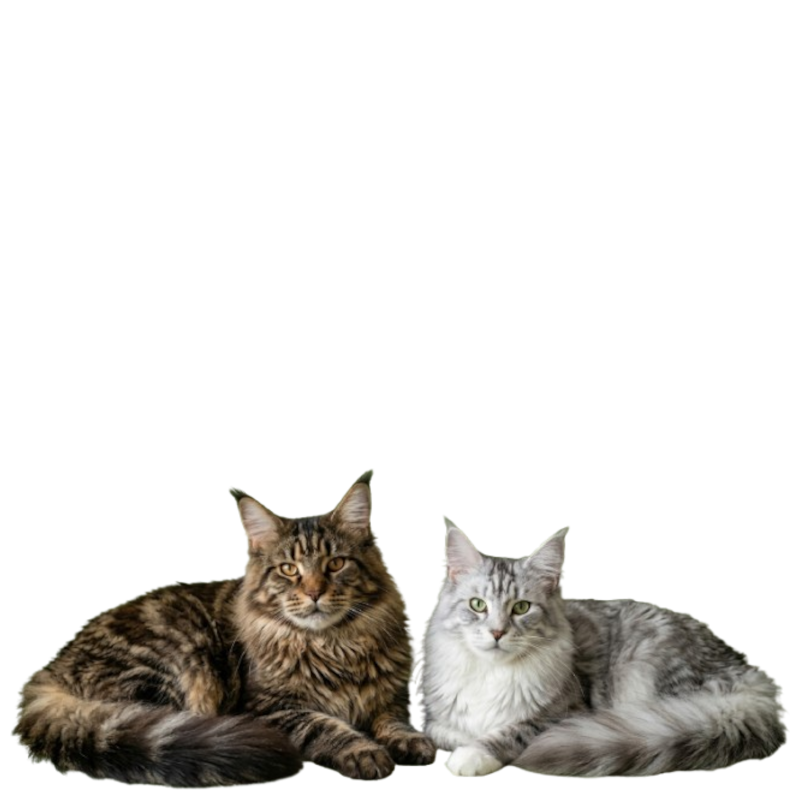
appearance
The Maine Coon represents a pinnacle of natural selection adapted for temperate and subartic climates, manifesting as a robust, sub‐substantial feline with a rectangular body silhouette. Its physical architecture is defined by a unique synergy between heavy bone density and powerful musculature, resulting in a phenotype that prioritizes durability and thermal regulation. This anatomical profile examines the structural nuances of Maine Coons, focusing on the skeletal and integumentary systems that define the Maine Coon’s distinct physical presence within the domestic feline taxon.
Cranial and Facial Conformation
The cephalic structure of the Maine Coon is characterized by a medium width and a length slightly greater than its breadth. The muzzle is visually and palpably distinct, possessing a blunt, squared termination that suggests a high degree of mandibular strength.
- Zygomatic Arch and Cheekbones: The cheekbones are set high and are prominently sculpted, providing the necessary anchoring points for the masseter muscles.
- Nasal Profile: In profile, the nose exhibits a shallow concavity—often described as a gentle curve—without a distinct break or stop.
- Mentalis and Mandibular Structure: The chin is strong and deep, aligned vertically with the upper lip and nose tip, ensuring a symmetrical gnathic relationship.
Auditory and Ocular Apparatus
The sensory organs of the Maine Coon are scaled to its large cranial size and adapted for heightened environmental awareness.
| Feature | Anatomical Description |
|---|---|
| Pinna Orientation | Large, tall, and wide at the base; set high on the cranium with a slight outward tilt. |
| Lynx Tipping | Pronounced tufts of distal hair extending from the apex of the pinnae. |
| Ocular Aperture | Large, expressive, and set at a slightly oblique aperture toward the outer base of the ear. |
| Internal Furnishings | Dense horizontal pilosity within the ear canal to protect the tympanic membrane from cold. |
Torso and Appendicular Skeleton
The Maine Coon’s frame is built upon a rectangular structural foundation. The rib cage is broad, supporting a deep chest and a muscular neck that is particularly thick in mature males.
Skeletal Alignment and Proportions
The length of the body should be proportional to the height, maintaining a ratio that emphasizes the rectangularity of the torso.
Body Shape and Rectangle Proportion
- : The “Rectangle Score,” which shows how long the cat looks compared to its height.
- : The “Torso Length,” measured from the base of the neck to the start of the tail.
- : The “Shoulder Height,” the distance from the floor to the top of the shoulder blade.
- : The natural muscle growth that makes the Maine Coon look powerful and sturdy.
A Maine Coon judge looks at a large male cat. The cat’s torso is 48 cm long () and its shoulder height is 32 cm (). By dividing 48 by 32, we get a result of 1.5. This means the cat is exactly one-and-a-half times longer than it is tall, which perfectly fits the “rugged rectangle” shape the breed is famous for.
The musculature is characterized by hypertrophy, particularly in the hindquarters, providing the necessary leverage for propulsion. The scapulae are well‐laid back, contributing to a fluid, powerful gait.
Distictive Distal Extremities
The paws of the Maine Coon function as natural snowshoes. They are exceptionally large, round, and heavily tufted. The polydactyl expression, while historically present in the Maine Coon lineage, is often noted for its impact on the breadth of the metacarpal and metatarsal regions.
- Interdigital Tufts: Long strands of fur extending between the toes, increasing the surface area for weight distribution on soft substrates.
- Bone Substance: Heavy bone density is maintained throughout the phalanges and long bones of the limbs.
Caudal Vertebrae Structure
The tail of the Maine Coon is a primary thermoregulatory and balancing tool. It is wide at the base and tapers toward the distal end, with a length that typically reaches or exceeds the length of the torso from the scapula to the base of the tail. The caudal fur is long and flowing—never wiry—designed to be wrapped around the body during periods of dormancy.
Integumentary System and Pelage Distribution
The coat of the Maine Coon is “all‐weather” and seasonally variable. It is characterized by a heavy shaggy texture that is shorter on the shoulders and longer on the stomach and posterior limbs (the “britches”).
- Frontal Ruff: A heavy accumulation of fur around the cervical region, starting at the base of the ears.
- Undercoat Texture: A slight undercoat provides insulation without creating a woolly texture, allowing the guard hairs to remain water‐resistant.
- Ventral Protection: The fur on the underside is notably thicker and longer to protect internal organs from frozen terrain.
behavior
The behavioral repertoire of the Maine Coon is characterized by a high degree of environmental engagement and a specialized suite of tactile and vocal communication strategies. As an apex domestic generalist, the Maine Coon’s ethogram reveals a complex intersection of solitary predatory instincts and high levels of social facilitation within human‐centric environments. Their activity cycles often deviate from the standard crepuscular feline model, exhibiting more polyphasic tendencies that align with household rhythms while maintaining a core drive for resource exploration and structural navigation.
Social Dynamics and Interaction Probabilities
Maine Coons exhibit a low threshold for social neophobia, frequently engaging in investigative behaviors toward both conspecifics and non‐feline species. Their social structure is less hierarchical than other breeds, leaning toward a fluid commensalism.
| Behavior Category | Technical Description | Frequency |
|---|---|---|
| Allogrooming | Reciprocal licking focused on the cervical and cranial regions to reinforce social bonds. | Moderate |
| Social Facilitation | The tendency to engage in an activity (e.g., feeding, exploring) simply because another individual is doing so. | High |
| Passive Proximity | Maintaining a distance of 1–3 meters from a social partner without direct tactile contact. | Very High |
The probability of a positive social outcome () during a novel encounter can be modeled as a function of environmental stability () and previous social conditioning ():
Friendly Interaction Success Chance
- : The “Friendliness Probability” (the chance a social meeting goes well).
- : “Home Calmness,” how quiet and predictable the room is.
- : “Social History,” how much the cat was handled and loved as a kitten.
- : The “Real-World Cap,” a math rule that keeps the final percentage from ever going over 100%.
A “gentle giant” Maine Coon meets a new guest in a quiet home (). Because the breeder spent a lot of time socialising the kitten (), the math works out to a high success score. In this type of calculation, any result near 0.4 for a first-time meeting shows that the Maine Coon is naturally much more confident and outgoing than most other cat breeds.
Vocalization and Acoustic Signaling
The vocal ethogram of the Maine Coon is distinct for its use of frequency‐modulated “trills” and “chirps” rather than the standard sustained “meow.” These signals are primarily utilized for contact calling and maintaining group cohesion.
- Chirping/Trilling: Short, high‐frequency ascending vocalizations used during prey‐tracking or as a greeting ritual.
- Acoustic Mimicry: Observations suggest a tendency to modulate vocal pitch to elicit specific responses from human caregivers—a form of interspecies social engineering.
- Low‐Frequency Purring: Utilized not only for contentment but as a self‐soothing mechanism during physical recovery or social tension.
Foraging and Prey‐Drive Manifestation
The Maine Coon’s predatory sequence is highly developed, with a particular emphasis on the “stalk” and “pounce” phases.
- Tactile Water Manipulation: A hallmark stereotypic behavior involves the use of the thoracic limbs to “rake” or “paddle” at the surface of water before ingestion. This is theorized to be a vestigial environmental exploration strategy to clear debris from a water source.
- Object Retrieval: Many individuals exhibit a “fetch” response, which is a complex chain involving prey capture, carrying (transportation), and deposit at a central “nest” location.
- Structural Prowling: Maine Coons prioritize vertical space but frequently engage in “terrestrial patrolling,” covering significant ground area to monitor territory boundaries.
Environmental Exploration and Stereotypy
The Maine Coon utilizes its paws as highly sensitive tactile organs for environmental mapping.
- Digital Manipulation: Unlike many domestic felines, the Maine Coon frequently uses its paws to manipulate latches, containers, or toys, demonstrating advanced fine‐motor skills for a carnivore.
- Shadow Stalking: A common behavioral pattern where the individual follows a social partner from room to room—not necessarily for interaction, but for situational awareness and information gathering.
- Sleep‐Wake Cycles: While polyphasic, the Maine Coon often syncs its longest period of REM sleep with the quietest 4–6 hour window of the domestic environment.
Territorial Marking and Olfactory Communication
Olfactory signaling is achieved through several specific ethological actions:
- Bunting: The rubbing of the perioral glands against prominent corners or social partners to deposit sebaceous pheromones.
- Scratching (Ungual Grooming): A dual‐purpose behavior that provides visual marking of territory and manual stretching of the digital flexor tendons.
- Flehmen Response: The retraction of the upper lip to facilitate the transfer of pheromones into the vomeronasal organ, usually following the investigation of a novel olfactory stimulus.
color
The chromatic landscape of the Maine Coon is a complex manifestation of melanocyte activity and light interaction within the medullary and cortical layers of the hair shaft. In Maine Coons, the distribution of eumelanin and phaeomelanin creates a vast spectrum of visual phenotypes, ranging from dense, light‐absorbing saturations to diluted, high‐refractive shades. This guide analyzes the biochemical and structural foundations of pigment density and the resulting optical effects that define the Maine Coon’s unique pelage coloration.
Melanic Foundations: Eumelanin and Phaeomelanin
The primary pigments responsible for all Maine Coon colorations are synthesized within specialized organelles called melanosomes. The ratio and density of these pigments determine the base hue of the specimen.
- Eumelanin: This pigment produces black‐based tones. In its most concentrated form, it appears as a deep, light‐impenetrable black. When the pigment granules are less densely packed or “clumped,” the visual result is a blue (dilute) shade.
- Phaeomelanin: This pigment is responsible for the red spectrum. The intensity of phaeomelanin can be influenced by polygenetic “rufism” factors, which enhance the warmth and richness of the red tones.
Pigment Density and Light Interaction
The perceived color of a Maine Coon is a result of how light interacts with the pigment granules. The concentration of pigment () relative to the volume of the hair cortex () can be modeled as a density ratio:
Fur Color Depth and Shimmer Score
- : “Color Density,” which determines if the fur looks solid or see-through.
- : “Pigment Amount,” the total amount of color ink inside a single hair.
- : “Hair Space,” the actual size of the inside of the hair strand.
- : A light effect where colors look “misty” or “smoky” because the color particles are spread thin.
A Silver Tabby Maine Coon is admired for its shimmering coat. If the hair has a color amount () of 15 units and the hair space () is 50 units, the density is 0.30. This lower density allows light to bounce around inside the hair, creating that beautiful “smoke” or “silver” glow that people love in this breed.
A higher results in a solid, opaque appearance, while a lower allows for internal light scattering, producing silver or smoke effects.
Color Category Breakdown
| Category | Pigment Characteristics | Visual Phenotype |
|---|---|---|
| Solid | Uniform distribution of pigment granules from root to tip. | Black, Blue, Red, Cream, White. |
| Tabby | Agouti signaling causes bands of pigment on individual hairs. | Brown, Blue, Red, Silver, or Cream Tabbies. |
| Silver/Smoke | Inhibited pigment deposition at the base of the hair shaft. | Striking white undercoat with pigmented tips. |
| Parti‐color | Patches of phaeomelanin and eumelanin expression. | Tortoiseshell, Blue‐Cream. |
Structural Effects and Shading Variations
In Maine Coons, specific phenotypic markers arise from the arrangement of pigments across the body and individual hair fibers.
The Inhibitor Effect (Silver and Smoke)
The silver phenotype occurs when the deposition of pigment is suppressed at the proximal end of the hair. This results in a high‐contrast effect where the distal portion of the hair contains dense eumelanin or phaeomelanin, while the base remains devoid of pigment granules, appearing as a brilliant white.
Ghost Markings and Refractive Tones
In many solid or dilute Maine Coons, “ghost markings” may be visible under specific lighting conditions. This occurs because the underlying pattern of pigment concentration is not entirely masked by the solid color overlay. The light reflects off the varied pigment densities within the hair cortex, revealing a faint, vestigial pattern.
White Spotting and Epistasis
White in the Maine Coon is not a pigment but rather the absence of it. The presence of white areas is caused by the failure of melanocytes to migrate to specific regions during embryonic development. This lack of pigmentation results in a complete reflection of all visible light wavelengths, creating the “white” visual effect.
Ticking and Agouti Banding
The agouti phenotype is characterized by rhythmic fluctuations in pigment synthesis. Each individual hair fiber displays bands of dark eumelanin alternating with lighter, phaeomelanic or pigment‐depleted regions. This creates the “ticked” look essential to the tabby pattern, where the density of pigment changes multiple times along the length of a single hair.
compatibility
Ease of Maintenance
Rating: 2/5
Child Friendly
Rating: 5/5
Annual Cost
Rating: 1/5
Lifetime Cost
Rating: 2/5
Adaptability
Rating: 5/5
Velcro Factor
Rating: 4/5
Quietude
Rating: 4/5
Apartment Suitability
Rating: 3/5
Hypoallergenic
Rating: 1/5
Handling Tolerance
Rating: 4/5
Hardiness/Longevity
Rating: 3/5
Prey Drive
Rating: 2/5
genetics
The genomic architecture of the Maine Coon is a testament to the complex interplay of Mendelian inheritance and polygenetic modifiers. As a natural breed, the Maine Coon’s genetic foundation is characterized by a high degree of heterozygosity at various loci, though it remains defined by specific fixed mutations that govern its unique structural and integumentary traits. This technical overview examines the allelic interactions and chromosomal mapping that constitute the biological blueprint of Maine Coons, focusing strictly on the molecular mechanisms of inheritance.
Integumentary Genetics and Fiber Length
The primary determinant of the Maine Coon’s distinctive pelage is located at the Fibroblast Growth Factor 5 (FGF5) locus. This gene regulates the transition of the hair follicle from the anagen (growth) phase to the catagen (regression) phase.
- Long Hair Mutation: In Maine Coons, the long hair phenotype is typically governed by a recessive mutation at the FGF5 gene on feline chromosome B1.
- Allelic Interaction: The wild‐type allele () for short hair is dominant over the mutated allele (). For the characteristic length to manifest, the individual must be homozygous recessive ().
Odds of Having a Long-Haired Kitten
- : The chance the kitten will actually grow a long coat.
- : The chance the kitten gets the “long-hair gene” from both the mom and the dad.
- : The “Growth Switch,” the specific DNA instruction that tells hair when to stop growing.
- : The “Short-Hair Gene” (the dominant version).
- : The “Long-Hair Gene” (the recessive version).
If a breeder crosses two Maine Coons that both happen to carry a hidden long-hair gene, the math shows there is a 25% (0.25) chance for each kitten to be long-haired. This confirms why some cats with shorter-looking coats can still have kittens with the famous shaggy, luxurious fur of the Maine Coon.
Distal Extremity Variation: Polydactyly
A significant portion of the Maine Coon genomic pool contains mutations associated with preaxial polydactyly. This is not a single point mutation but a result of regulatory elements affecting the Sonic Hedgehog (SHH) signaling pathway.
- Locus Control: The mutation is located within the ZRS (ZPA regulatory sequence), a long‐range enhancer for the SHH gene.
- Inheritance Pattern: This trait follows an autosomal dominant pattern with high penetrance but variable expressivity. This means an offspring only requires one copy of the mutated allele () to potentially express the trait.
| Genotype | Phenotypic Expression | Inheritance Type |
|---|---|---|
| Pd / pd | Heterozygous; trait expressed. | Autosomal Dominant |
| Pd / Pd | Homozygous; trait expressed. | Autosomal Dominant |
| pd / pd | Homozygous recessive; wild‐type (standard digits). | Recessive |
Epistatic Signaling and Pigment Inhibition
While the biochemical expression of pigment is a separate field, the genetic instructions for pigment suppression are critical to the Maine Coon’s genomic profile.
The Inhibitor Gene (I)
The Inhibitor gene () is an autosomal dominant gene that suppresses the development of pigment in the proximal portion of the hair fiber.
- Dominant Epistasis: The presence of the dominant allele () masks the full expression of the agouti or non‐agouti base color at the root level.
- Polygenetic Modifiers: The extent of the suppression—whether it results in a “smoke” or “silver” effect—is influenced by a complex of minor polygenes that regulate the duration of pigment synthesis during the hair growth cycle.
Mathematical Modeling of Trait Distribution
The distribution of specific alleles within a closed population of Maine Coons can be modeled using the Hardy–Weinberg equilibrium formula, assuming random mating and no evolutionary pressure:
Gene Count in a Cat Population
- : The percentage of cats with only short-hair genes.
- : The percentage of “Carriers” (cats that look short-haired but carry the long-hair gene).
- : The percentage of classic long-haired Maine Coons.
- : How common the “Short-Hair” instruction is in the whole group.
- : How common the “Long-Hair” instruction is in the whole group.
A scientist looks at 100 cats and sees that 64 of them are long-haired (). Using this formula, they can figure out that of the other cats are likely “carriers” of the long-hair gene. This helps breeders understand the hidden genetics of their cats to keep the breed healthy and consistent.
For Maine Coons, this model helps geneticists track the prevalence of the allele across generations.
Agouti and Pattern Loci
The Agouti () gene on chromosome A2 controls the distribution of eumelanin. In Maine Coons, the interaction between the Agouti locus and the Tabby locus () determines the spatial arrangement of pigment.
- Agouti Signaling Protein: The dominant allele () allows for the banding of individual hairs, whereas the recessive non‐agouti allele () results in solid pigmentation.
- Tabby Patterning: The specific pattern (e.g., mackerel or classic) is dictated by distinct alleles at the Tabby locus, which are epistatic to the Agouti gene.
health
The physiological landscape of the Maine Coon is characterized by specific vulnerabilities within the cardiovascular, musculoskeletal, and renal systems. Due to the Maine Coon’s unique structural scaling, certain hereditary and acquired pathologies manifest with higher statistical frequency compared to the general domestic feline population. Understanding the mechanical and cellular disruptions within Maine Coons is essential for clinical management, focusing on early diagnostic markers of concentric remodeling and degenerative joint transformations.
Cardiovascular Pathophysiology
The most significant clinical concern in Maine Coons is Hypertrophic Cardiomyopathy (HCM), a primary myocardial disease.
- Concentric Hypertrophy: The pathophysiology involves a progressive thickening of the left ventricular walls, which diminishes the ventricular lumen.
- Diastolic Dysfunction: As the myocardium stiffens, the heart loses the ability to relax effectively during the filling phase.
- Systolic Anterior Motion (SAM): The mitral valve may be drawn toward the interventricular septum, leading to left ventricular outflow tract obstruction.
Hemodynamic Modeling
The relationship between wall thickness () and ventricular pressure () can be modeled via the Law of Laplace to understand myocardial stress ():
Heart Muscle Tension Score
- : “Muscle Tension,” how hard the heart walls have to work to pump.
- : “Pump Pressure,” the force the heart uses to push blood out.
- : “Chamber Size,” how wide the inside of the heart is.
- : “Wall Thickness,” how deep the actual heart muscle is.
- : A standard number used to account for the round shape of the heart.
A heart doctor checks a Maine Coon for HCM (a common heart issue). If the heart pressure is 140 and the chamber is 1.2 cm wide, but the muscle wall () has thickened to 0.7 cm, the tension score is 120. While the thick wall helps lower the tension, the smaller space inside means the heart pumps less blood with each beat, which is why monitoring wall thickness is so important for this breed.
In Maine Coons with HCM, the compensatory increase in (wall thickness) initially attempts to normalize , but eventually leads to reduced stroke volume and congestive heart failure.
Musculoskeletal and Orthopedic Vulnerabilities
The heavy skeletal frame of the Maine Coon places significant biomechanical stress on the appendicular joints, leading to two primary pathologies.
Hip Dysplasia (HD)
HD in Maine Coons is a developmental orthopedic disease characterized by coxofemoral joint laxity. This incongruity between the acetabulum and the femoral head triggers secondary osteoarthritis.
| Clinical Stage | Pathological Progression |
|---|---|
| Initial | Subluxation of the femoral head during the weight‐bearing phase. |
| Intermediate | Erosion of articular cartilage and synovial inflammation. |
| Advanced | Formation of osteophytes and complete remodeling of the joint architecture. |
Spinal Muscular Atrophy (SMA)
This is a neurodegenerative disorder specific to the motor neurons of the spinal cord. It leads to the atrophy of the proximal limb muscles due to the loss of lower motor neurons.
Renal and Metabolic Considerations
Maine Coons are monitored for disruptions in renal filtration and structural integrity, particularly regarding cystic transformations.
- Polycystic Kidney Disease (PKD): Although less frequent than in brachycephalic breeds, the development of fluid‐filled cysts within the renal parenchyma can lead to a reduction in the number of functional nephrons.
- Renal Insufficiency: Chronic interstitial nephritis may develop, characterized by a progressive decline in the Glomerular Filtration Rate (GFR).
Stomatological and Gingival Health
The Maine Coon is predisposed to Juvenile Onset Periodontitis and Stomatitis. The clinical presentation involves an exaggerated immune response to dental plaque, resulting in severe gingival inflammation and alveolar bone resorption often before the individual reaches two years of age.
- Pathogenesis: Lymphocytic‐plasmacytic infiltration of the gingival tissues.
- Clinical Markers: Hyperemia, ulceration of the fauces, and ptyalism.
longevity
The longitudinal study of Maine Coons reveals a distinctive survivorship pattern that reflects the complex biological cost of large‐frame physiology. From a biostatistical perspective, the life expectancy of the Maine Coon is categorized by a specific mortality curve that remains relatively stable through middle age before exhibiting a sharp increase in the rate of senescence. This geriatric transition is characterized by a progressive decline in physiological reserve and an acceleration of cellular degradation, necessitating a granular examination of age‐specific survival probabilities and the statistical distribution of the Maine Coon’s lifespan within a domestic cohort.
Survival Probability and Mortality Modeling
The probability of a Maine Coon reaching a specific age can be modeled using the Gompertz–Makeham law of mortality, which accounts for both age‐independent and age‐dependent mortality factors.
Aging and Health Risk Forecast
- : “Total Risk,” the chance of health problems at a certain age ().
- : “Natural Risk,” the basic health chance every Maine Coon starts with.
- : A math constant (about 2.718) used to track how things grow or age over time.
- : “Aging Speed,” how fast the risk goes up as the cat gets older.
- : “Random Risk,” chances for things like accidents that don’t depend on age.
A vet studies a group of senior Maine Coons. When the cats reach age 12, the math shows how the risk of health issues begins to climb more quickly. By using this formula, we can model how the natural biological vulnerability of the cat increases as it enters its second decade of life.
In this model, represents the rate of senescence, which typically increases as the Maine Coon enters its second decade of life. Statistical data suggests that the median life expectancy for the Maine Coon falls within the 10–12.5 year range, though outliers frequently reach the 15–18 year decile.
Developmental and Geriatric Life Stages
The aging process in Maine Coons is segmented into distinct chronological phases, each defined by different metabolic and physiological priorities.
| Life Stage | Age Range (Years) | Statistical Classification |
|---|---|---|
| Developmental | 0–4 | Extended maturation phase. |
| Prime | 4–8 | Plateau of physiological homeostasis. |
| Senior | 9–11 | Initial markers of biological senescence. |
| Geriatric | 12+ | Accelerated mortality risk and decreased reserve. |
Senescence and Physiological Decline
The rate of aging in the Maine Coon is non‐linear. Biostatistical observations indicate that while Maine Coons mature slowly—often not reaching skeletal peak until age 4—the onset of geriatric decline can be relatively abrupt.
- Cellular Senescence: The accumulation of non‐dividing cells contributes to chronic systemic inflammation, a process often termed “inflammaging.”
- Metabolic Rate Shifts: As the Maine Coon ages, the basal metabolic rate () fluctuates, often leading to a bi‐modal weight distribution where younger seniors gain adipose tissue while older geriatrics experience sarcopenia (muscle wasting).
- Organ Reserve Depletion: Longevity is limited by the functional capacity of critical systems, particularly the renal and cardiovascular systems, which show an exponential increase in failure probability past the 10–year threshold.
Factors Influencing Survivorship Curves
The survival curve of a Maine Coon population () is influenced by environmental variables that shift the mortality risk.
- Indoor vs. Outdoor Mortality: Statistical analysis shows a significant rightward shift in the survival curve for strictly indoor Maine Coons due to the elimination of extrinsic trauma.
- Reproductive Status: Sterilization correlates with increased longevity, likely due to reduced metabolic stress and the elimination of certain hormone‐driven pathologies.
- Nutritional Optimization: The slope of the senescence curve can be moderated by caloric management, as obesity is a primary driver of premature mortality in the senior Maine Coon cohort.
Actuarial Life Table Construction
For a cohort of Maine Coons, an actuarial life table can be used to calculate the remaining life expectancy () at any given age ().
Estimated Remaining Life Span
- : “Extra Years,” how much longer a cat is expected to live at its current age.
- : “Group Total Years,” the sum of all the years lived by a whole group of cats.
- : “Survivor Count,” the number of cats still alive at the current age.
- : “Year Intervals,” used to count time as the cats move from one birthday to the next.
If a breeder tracks 50 senior cats that have all reached age 10, and the group lives a total of 125 more years combined, the average cat has 2.5 years left (). This helps owners understand that once a large breed like the Maine Coon passes age 10, their health needs usually become much more important.
For the Maine Coon, typically shows a steeper decline once .
maintenance
Optimal maintenance of the Maine Coon necessitates a specialized approach to metabolic regulation and integumentary preservation. Due to the Maine Coon’s significant lean body mass and dense, multi‐layered pelage, husbandry protocols must address high Resting Energy Requirements (RER) and specific hygroscopic environmental needs. A systematic application of nutritional bioengineering and mechanical grooming is required to mitigate the risks of follicular matting and periodontal degradation, ensuring the biological systems of Maine Coons operate within peak homeostatic parameters.
Nutritional Demands and Caloric Modeling
The nutritional strategy for Maine Coons prioritizes high‐quality protein synthesis and lipid management to support muscular hypertrophy and sebum production.
Energy Requirement Calculations
The Resting Energy Requirement (RER) for a Maine Coon is calculated based on metabolic body weight. To determine the Maintenance Energy Requirement (MER), a multiplier () is applied based on activity levels and reproductive status.
Base Calories for Daily Survival (RER)
- : “Resting Energy,” the calories needed just to keep the heart beating and lungs breathing.
- : The “Cat Constant,” a standard number used for feline metabolism.
- : The cat’s body weight in kilograms.
- : A “Scaling Power” that accounts for the fact that larger cats burn energy more efficiently than tiny ones.
A large male Maine Coon weighs 8.2 kg. To find his “survival calories,” we do the math . The result is about 340 calories. This is the bare minimum he needs just to exist at rest before adding any calories for walking, playing, or hunting.
Total Daily Food Calories (MER)
- : “Maintenance Energy,” the total calories the cat should eat to stay at its current weight.
- : “Lifestyle Factor,” a number that goes up for active cats and down for lazy ones.
- : “Base Calories,” the survival energy calculated from the cat’s weight.
An active adult Maine Coon has a base need of 340 calories. Since this breed is very playful and large, we use a factor () of 1.2. Multiplying 340 by 1.2 gives us 408 calories per day. Feeding this amount helps the “gentle giant” keep its strong muscles without getting overweight.
| Activity Level | Multiplier (k) | Physiological Goal |
|---|---|---|
| Sedentary/Neutered | 1.0–1.2 | Prevent adipose accumulation. |
| Active/Intact | 1.4–1.6 | Support muscular maintenance. |
| Growth/Kitten | 2.0–3.0 | Fuel rapid skeletal expansion. |
Macronutrient Ratios
The Maine Coon’s diet must include elevated levels of Omega‐3 and Omega‐6 fatty acids to maintain the hydrophobic integrity of the coat guard hairs. Periodontal prophylaxis is achieved through the inclusion of large‐architecture kibble that encourages mechanical debridement of dental biofilm.
Integumentary Maintenance and Grooming Protocols
The Maine Coon possesses a triple‐coat system that requires rigorous mechanical intervention to manage sebum distribution and desquamation.
- De‐shedding Frequency: Bi‐weekly sessions utilizing a high‐density stainless steel comb are mandatory to reach the fine undercoat layers.
- Sebum Management: Systematic bathing every 8–12 weeks utilizing degreasing agents is recommended to prevent follicular occlusion at the base of the tail (caudal gland hyperplasia).
- Digital and Ungual Care: Regular trimming of the claws is essential to prevent snagging in high‐pile textiles, alongside inspection of interdigital tufts for debris accumulation.
Environmental Enrichment and Structural Standards
Given the Maine Coon’s substantial size and cognitive complexity, the physical environment must be engineered to provide both vertical and horizontal stimulation.
Vertical Architecture
Standard feline furniture is often insufficient for Maine Coons. Structural requirements include:
- Load‐Bearing Capacity: Climbing structures must be anchored to support sudden kinetic energy shifts from 8–10 kg individuals.
- Dimension Scaling: Scratching posts must be tall enough to allow full truncal extension during the stretching phase of ungual grooming.
Hydration Bioavailability
Maine Coons often exhibit a preference for moving water, which may be a vestigial response to environmental stimuli.
- Flow Rates: Circulating fountains increase the oxygenation of water and encourage higher consumption rates, vital for renal health.
- Hygroscopic Needs: Maintaining ambient humidity between 40%–50% prevents excessive epidermal dehydration and reduces static electricity within the pelage.
Sanitary Engineering
The utilize of extra‐large, open‐top waste receptacles is prescriptive. The Maine Coon’s length necessitates a containment area that allows for a 360‐degree rotation without contacting vertical barriers, ensuring hygienic elimination behaviors.
measurements
| Measurement | Female | Male | ||
|---|---|---|---|---|
| Metric | Imperial | Metric | Imperial | |
height | 20 – 35 centimeters | 8 – 14 inches | 25 – 40 centimeters | 10 – 16 inches |
length | 43 – 66 centimeters | 17 – 26 inches | 48 – 76 centimeters | 19 – 30 inches |
weight | 4.5 – 8.2 kilograms | 10 – 18 pounds | 6.8 – 11.3 kilograms | 15 – 25 pounds |
• Height: Refers to the measurement at the withers (shoulders).
• Length: Measured from the tip of the nose to the base of the tail.
origin
The ontogeny of the Maine Coon is a significant case study in the intersection of geographic isolation and anthropogenic migration. Emerging as a distinct landrace population within the North American Northeastern seaboard, Maine Coons represent a unique evolutionary trajectory where ancestral clades from the Palearctic realm underwent rapid adaptation to the temperate and subarctic conditions of the New England maritime region. This historical analysis examines the migratory vectors and the subsequent stabilization of the Maine Coon’s lineage, tracing the transition from an unmanaged working population to a culturally codified feline taxon through the lens of evolutionary anthropology.
Migratory Vectors and Ancestral Clades
The establishment of the Maine Coon lineage is inextricably linked to trans‐Atlantic maritime trade routes. The phylogenetic divergence from European domesticates occurred as specific phenotypes were introduced to North American ports.
- Northern European Introduction: Analysis of feline migration patterns suggests a heavy influx of long‐haired ancestral stock from the Fennoscandian region. These individuals likely arrived via maritime vessels as pest‐control agents.
- Founder Effect and Landrace Stabilization: Once introduced, the isolated nature of the Maine and maritime Canadian settlements facilitated a founder effect. The restricted gene flow between these nascent populations and those in other geographic regions led to the stabilization of a distinct landrace.
Chronological Timeline of Lineage Codification
The transition from a functional landrace to a formally recognized Maine Coon followed a specific historical progression within the nineteenth and twentieth centuries.
| Period | Evolutionary or Historical Milestone | Contextual Impact |
|---|---|---|
| Late 18th Century | Initial maritime introduction. | Establishment of the local landrace gene pool. |
| 1860s | Early documentation in agrarian exhibitions. | Shift from functional utility to formal display. |
| 1895 | Presence at the first Madison Square Garden exhibition. | National recognition of the Maine Coon as a distinct taxon. |
| Early 20th Century | Decline in exhibition frequency. | Displacement by imported Persian and Siamese clades. |
| 1950–1976 | Organized preservation efforts. | Stabilization of the modern pedigree and registry acceptance. |
Anthropogenic Selection and Environmental Pressures
The historical development of the Maine Coon was driven by a synergy of natural selection and human utility. Unlike modern “designer” breeds, Maine Coons were shaped by a process of semi‐managed selection.
- Selection for Thermoregulation: The harsh winter cycles of the region acted as a biological filter. Only individuals with specific integumentary and skeletal traits survived to reproductive maturity, concentrating these markers in the local population.
- Working Utility: Early agrarian communities selected for individuals capable of navigating complex structural environments (e.g., barns, granaries) and managing local rodent populations. This utility ensured the continued propagation of the Maine Coon’s robust frame.
Population Modeling of the Founding Lineage
The probability of specific traits becoming fixed within the Maine Coon population can be expressed through the principles of genetic drift () in an isolated maritime colony:
Trait Trapping and Breed History
- : “Trait Lock-in,” the speed at which a specific look becomes standard for the whole group.
- : “Breeding Group Size,” the number of cats having kittens in that generation.
- : The math that shows how fewer breeding cats lead to more consistent (but less diverse) traits.
In the 1800s, in a small Maine village, there might have been only 25 breeding cats (). Using this formula (), we see a 2% increase in consistency every generation. This explains how the famous shaggy coat went from a rare accident to the standard look for every Maine Coon in the area.
In the early history of Maine Coons, a small within localized Maine settlements allowed for the rapid fixation of ancestral long‐hair clades that would have otherwise remained recessive or rare in larger, more connected European feline populations.
Historical Diversification and Modern Stabilization
By the mid‐twentieth century, the Maine Coon had moved from a purely regional phenomenon to a globalized pedigree. The establishment of breed associations in the 1950s provided the formal structure needed to preserve the ancestral landrace characteristics against the backdrop of increasing feline hybridization. This period marked the final “locking” of the Maine Coon’s historical lineage, moving it from a dynamic, evolving landrace into a managed, standardized biological entity.
temperament
The psychological profile of the Maine Coon is characterized by a high degree of emotional stability and a specialized form of inter‐species gregariousness. Unlike many domestic feline lineages that exhibit high levels of environmental neophobia, Maine Coons possess a robust dispositional resilience, allowing for rapid habituation to novel stimuli. This dispositional framework is defined by a low threshold for social arousal and a notable absence of reactive aggression, resulting in a temperament that prioritizes cognitive engagement and environmental monitoring over defensive territoriality.
Dispositional Trait Spectrums
The Maine Coon’s temperament can be mapped across several key psychological dimensions, reflecting a balanced neurobiological state.
| Trait Dimension | Clinical Observation | Intensity Level |
|---|---|---|
| Social Extraversion | Propensity for proximity‐seeking with non‐conspecifics. | High |
| Emotional Reactivity | Threshold for startle response and recovery time from stressors. | Low |
| Environmental Neophobia | Tendency to avoid or fear novel objects or auditory stimuli. | Low |
| Cognitive Persistence | Duration of focused attention during problem‐solving tasks. | High |
Sociality and Attachment Theory
The Maine Coon exhibits a unique form of “detached gregariousness.” While they demonstrate high intra‐species sociability, their attachment style to human caregivers is often characterized by a “secure base” phenomenon rather than hyper‐attachment or separation anxiety.
Attachment Probability Modeling
The probability of a Maine Coon seeking social interaction () versus solitary environmental exploration () can be viewed as a function of environmental security () and internal metabolic state ():
The “Lap Cat” vs “Explorer” Choice
- : “Connection Chance,” the likelihood the cat will choose to sit with you rather than go off alone.
- : “Security Score,” how safe and loved the cat feels right now.
- : “Body Needs,” drives like hunger or sleepiness that pull the cat away.
- : “Personality Switch,” a number that shows how quickly the Maine Coon decides to change what it’s doing.
A loving male Maine Coon is in a cozy room () but is a little hungry (). The math shows an 83.5% chance he will stay by your side. This high percentage proves that even when they have other things to do, the Maine Coon’s famous “people-oriented” nature usually wins out.
In Maine Coons, the value remains high even in fluctuating environments, favoring a consistent dispositional state.
Sensory Thresholds and Temperamental Stability
The Maine Coon’s temperament is underpinned by high sensory thresholds, particularly regarding tactile and auditory inputs. This lack of hyper‐sensitivity contributes to their reputation for “patience”—clinically defined as a delayed transition from a state of calm to an aroused or agitated state.
- Tactile Tolerance: A high threshold for physical manipulation, which facilitates easier handling in clinical or domestic settings.
- Auditory Habituation: A diminished physiological response to sudden, high‐decibel sounds compared to more reactive breeds.
- Adaptive Exploration: A temperament that favors proactive investigation over reactive avoidance when confronted with spatial changes.
Cognitive Disposition and Problem-Solving
The Maine Coon possesses a “tinkering” temperament. Psychobiologically, this is expressed as a high motivation for object manipulation and a desire to understand the mechanics of their environment.
- Work-to-Outcome Ratio: Maine Coons show a higher tolerance for delayed gratification during foraging or enrichment tasks.
- Social Learning Propensity: A dispositional openness to observing and mimicking the actions of social partners (both feline and human).
- Affiliative Signaling: Their temperament favors subtle affiliative signals (eye narrowing, soft trilling) over more overt or demanding vocalizations, suggesting a sophisticated emotional self‐regulation.