Lykoi Cat
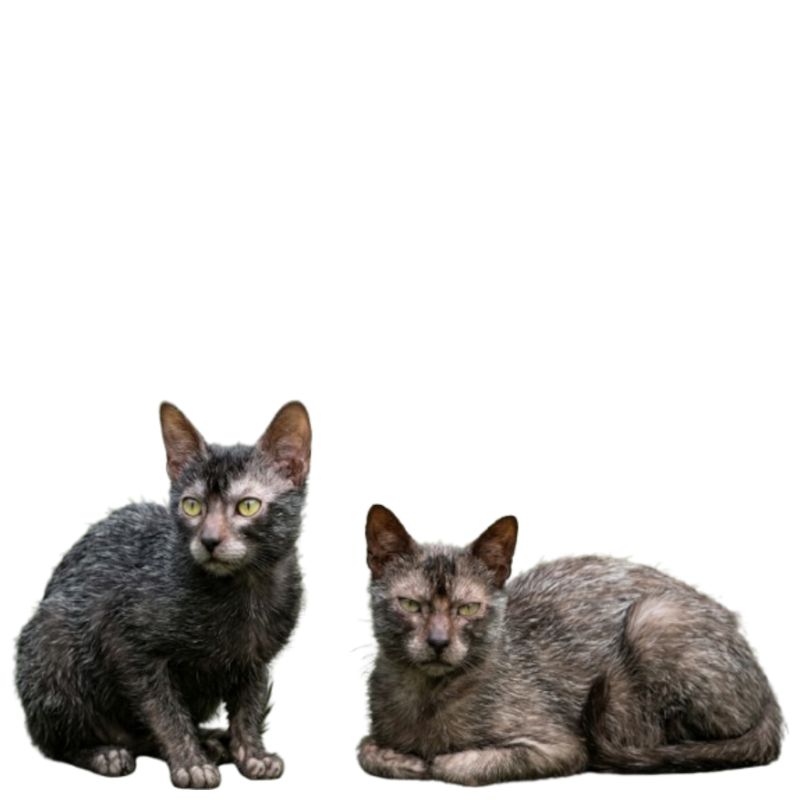
appearance
The Lykoi represents a unique phenotypical expression within the Felis catus lineage, characterized by a distinct combination of partial alopecia and a specialized coat texture. From an anatomical perspective, Lykois display a moderately foreign body type, where the skeletal frame provides a lithe yet muscular foundation. The most striking morphological feature of the Lykoi is the distribution of the pelage, which is dictated by a lack of undercoat and a reduced density of primary guard hairs. This structural deficiency results in a mask-like facial appearance and a rugged, sparse coverage across the torso and extremities, emphasizing the underlying musculoskeletal contours and the precision of the cranial architecture.
Cranial Conformation and Facial Architecture
The cephalic region of the Lykoi adheres to a modified wedge shape, characterized by rounded contours and a lack of sharp planar transitions. The muzzle is moderate in length, leading to a well-developed chin that aligns vertically with the nasal planum.
- Facial Masking: A defining trait of the Lykoi is the circumocular and circumoral alopecia. This lack of hair growth around the eyes, nose, and muzzle creates a stark, leathery mask that accentuates the underlying bony structures.
- Pinna Orientation: The ears are large, tall, and wide at the base. They are set high on the cranium and are characterized by a lack of internal furnishings, leaving the skin of the concha visible.
- Ocular Orbitals: The eyes are large and walnut‐shaped, positioned at a slight upward slant. The orbital margins are prominent due to the minimal hair density in the surrounding supraorbital and infraorbital regions.
Structural Osteology and Muscular Hypertrophy
The Lykoi exhibits a semi‐foreign physique, balancing elegance with functional strength. The ratio of limb length to axial length is approximately:
Lykoi Body Proportion Balance
- : The Structural Ratio, which defines the “semi-foreign” body proportions of the Lykoi.
- : The Limb Length, measured from the top of the shoulder (humerus) to the tip of the paw.
- : The Torso Length, representing the length of the spine from the neck to the base of the tail.
- : The target constant for functional strength, ensuring the cat is leggy enough for agility but sturdy enough for power.
An expert evaluates a Lykoi to confirm it meets the breed standard. The cat’s torso length () is cm. To find the ideal leg length (), we multiply by . The result is cm. This ratio confirms the cat has the balanced, athletic build necessary for the high-leaping behavior typical of the Lykoi’s family tree.
| Anatomical Region | Morphological Description |
|---|---|
| Torso | Elegant and elongated; the thoracic cavity is moderately narrow, transitioning into a firm, muscular abdominal region. |
| Shoulder Girdle | The scapulae are well—defined and tightly bound to the ribcage, allowing for a high degree of rotational mobility. |
| Pelvic Alignment | The hindquarters are slightly higher than the forequarters, creating a subtle incline in the dorsal line. |
| Extremities | The legs are of medium length and bone density, tapering to oval paws with long, slender digits. |
Pelage Texture and Integumentary Characteristics
The integument of the Lykoi is unique among domestic felines. The skin is pliable and may appear somewhat thickened in areas of total alopecia.
Coat Composition
The Lykoi’s coat is exclusively composed of guard hairs and lacks a secondary downy undercoat. This results in a texture that is coarse to the touch, despite its sparse appearance. The hair density varies across the body, often exhibiting the following distribution:
- Dorsal Region: Maximum density of guard hairs, following the spinal column.
- Ventral Region: Significant thinning or total alopecia along the chest and abdomen.
- Extremities: The distal portions of the limbs and the caudal vertebrae structure usually exhibit a progressive reduction in hair follicle activity.
Caudal Vertebrae Structure
The tail is medium in length and tapers to a blunt point. In accordance with the Lykoi’s specific alopecia patterns, the tail often displays a “bottle‐brush” appearance due to the absence of soft undergrowth, which would otherwise smooth the silhouette of the primary hairs. The articulation of the caudal vertebrae remains standard, providing the Lykoi with a balanced and expressive counterweight during high‐velocity locomotion.
behavior
The behavioral repertoire of the Lykoi is defined by high levels of environmental engagement and a specialized manifestation of social facilitation. Observational data suggests that Lykois exhibit an intensified prey‐drive compared to more sedentary domestic lineages, characterized by prolonged periods of focused stalking and rapid kinetic bursts. Their activity cycles are notably polyphasic, yet they maintain a heightened state of alertness during crepuscular windows. This profile examines the specific motor patterns and social signaling used by the Lykoi within a controlled ethological framework.
Social Dynamics and Conspecific Interaction
Lykois demonstrate a high propensity for group cohesion and allogrooming, suggesting a sophisticated hierarchical structure within multi‐cat environments. Their social interaction can be modeled by the probability of affiliative versus agonistic encounters:
Lykoi Group Friendliness Probability
- : The probability of a friendly interaction, representing how likely a social meeting will be peaceful rather than tense.
- : The total sum of all friendly acts observed, such as mutual grooming, head butting, or sleeping together.
- : The total sum of all social encounters recorded between cats in the group.
- : Specific social bonding behaviors that strengthen the group’s harmony.
- : The complete set of interactions used to calculate the final percentage.
A researcher monitors a group of Lykois. Over a weekend, the cats have total encounters (). Of these, are recorded as friendly acts (), like playing and nesting together. Dividing by gives a result of . This probability proves that the Lykoi is a highly social, “pack-oriented” breed.
- Tactile Communication: The Lykoi frequently engages in “head‐butting” and flank rubbing as a means of group scent consolidation.
- Social Facilitation: Observational evidence indicates that the presence of an active conspecific significantly increases the likelihood of the Lykoi initiating similar exploratory or predatory behaviors.
- Vocal Signaling: Vocalization patterns are diverse, ranging from low‐frequency trills during social approach to high‐intensity chirps during visual tracking of stimuli.
Environmental Exploration Strategies
The Lykoi’s approach to novel environments is characterized by a systematic, three‐stage exploration process.
| Phase | Behavioral Descriptor | Primary Sensory Modality |
|---|---|---|
| Initial Entry | Low‐posture scanning and perimeter sniffing | Olfactory/Visual |
| Vertical Assessment | Ascent to elevated vantage points | Proprioceptive/Visual |
| Active Engagement | Object manipulation and tactile testing | Tactile/Kinetic |
Prey‐Drive Manifestation and Motor Patterns
The predatory sequence in Lykois is often more persistent than in other domestic breeds. This sequence encompasses the following specific ethogram entries:
- Fixed Action Patterns: The rhythmic “chatter” of the mandible when viewing inaccessible prey.
- Stalking Mechanics: A calculated, slow‐motion gait where the center of mass is lowered significantly—often utilizing available cover with extreme precision.
- The Pounce: A high‐velocity kinetic transition from a stationary crouch to a direct strike.
Activity Cycles and Sleep–Wake Regulation
While Lykois are technically crepuscular, their domestic adaptation often results in a diurnal shifting of peak activity. These cycles are typically broken into intense bursts of energy lasting 15–30 minutes, followed by deep recuperative sleep. During periods of inactivity, the Lykoi often seeks out thermal sources to compensate for their specific metabolic requirements during rest.
Stereotypic and Repetitive Behaviors
In environments lacking sufficient enrichment, Lykois may develop stereotypic behaviors such as excessive self‐grooming or repetitive pacing. However, when provided with complex spatial challenges, these behaviors are replaced by productive environmental manipulation, such as the opening of latches or the retrieval of hidden objects. This indicates a high cognitive load requirement for the Lykoi to maintain psychological homeostasis.
color
The pigmentation of the Lykoi is distinguished by a specialized distribution of eumelanin and phaeomelanin within a unique coat structure. Unlike standard domestic felines, Lykois exhibit a salt‐and‐pepper effect resulting from the juxtaposition of fully pigmented guard hairs and those devoid of any melanocyte contribution. This intermingling of achromatic and chromatic fibers creates a visual texture that varies based on the concentration of pigment granules within individual hair shafts. The following analysis details the biochemical expression of these hues and the resulting visual phenotypes observed in the Lykoi.
Eumelanistic and Phaeomelanistic Expression
The primary pigment observed in Lykois is eumelanin, which provides the deep black or blue tones. Phaeomelanin contributes to the warmer, reddish, or cream‐based variations. The perceived saturation of the Lykoi’s coat is a function of the density of these pigment granules.
- Eumelanin Concentration: High concentrations of eumelanin result in a solid black base, which, when interspersed with white hairs, creates the signature “roan” appearance.
- Phaeomelanin Variation: In specific color morphs, phaeomelanin produces varying degrees of rufism, resulting in a spectrum from pale cream to deep red.
- Dilution Effects: When pigment granules are clumped or distributed less densely, the black eumelanin appears as a slate‐blue or grey.
Pigment Distribution Ratios
The visual appearance of the Lykoi is mathematically defined by the ratio of pigmented guard hairs () to unpigmented (white) hairs ():
Lykoi Salt-and-Pepper Coat Index
- : The Coloration Index, representing the visual “roan” or salt-and-pepper percentage of the coat.
- : Pigmented Hairs, which are the solid-colored hairs (usually black) that define the main color.
- : Unpigmented Hairs, representing the white hairs scattered throughout the coat to create the grizzled look.
- : The total hair sample, representing all hairs in a specific area of the skin.
A judge examines a Black Roan Lykoi. A small sample from the side reveals black hairs () and white hairs (). The calculation is divided by . The result is . This index of perfectly matches the breed standard for a “show-quality” grizzled appearance.
An index of 0.30–0.70 is typical for the breed standard, ensuring the characteristic grizzled effect remains prominent across the torso.
Color Categories and Shading Profiles
The coloration of the Lykoi can be categorized based on the dominant pigment type and the presence of residual markings.
| Category | Primary Pigment | Shading Description |
|---|---|---|
| Black Roan | Eumelanin | A high‐contrast mix of coal‐black hairs and pure white fibers. |
| Blue Roan | Dilute Eumelanin | A soft charcoal or slate appearance with muted white interspersions. |
| Red Roan | Phaeomelanin | Warm copper or orange hues blending with achromatic shafts. |
| Tortie Roan | Mixed Pigmentation | A complex mosaic of black and red eumelanin/phaeomelanin patches. |
Ghost Markings and Agouti Transitions
In juvenile Lykois, “ghost markings” or residual tabby patterns may be visible due to the uneven migration of melanocytes during early development. As the cat matures, these patterns often dissipate into a more uniform distribution.
- Dorsal Concentration: Pigment density is typically highest along the spinal column, where melanocyte migration is most robust.
- Ventral Fading: The abdominal region often shows a higher ratio of , leading to a lighter, more translucent appearance.
- Facial Depigmentation: The lack of hair in the mask area reveals the underlying skin tone, which itself may be pigmented with eumelanistic spots or “freckles” where pigment granules have accumulated in the epidermis.
Light Refraction and Optical Properties
The lack of a secondary undercoat in the Lykoi alters how light interacts with the pigmented fibers. Without the dense, light‐scattering properties of downy hair, the light penetrates deeper into the coat, reflecting off the white hairs to create a silvered sheen—a phenomenon that intensifies the perceived contrast of the base pigment.
compatibility
Ease of Maintenance
Rating: 2/5
Child Friendly
Rating: 4/5
Annual Cost
Rating: 3/5
Lifetime Cost
Rating: 4/5
Adaptability
Rating: 5/5
Velcro Factor
Rating: 5/5
Quietude
Rating: 3/5
Apartment Suitability
Rating: 3/5
Hypoallergenic
Rating: 1/5
Handling Tolerance
Rating: 4/5
Hardiness/Longevity
Rating: 5/5
Prey Drive
Rating: 1/5
genetics
The genetic profile of the Lykoi is a study in polygenetic complexity, primarily defined by the intersection of distinct mutations affecting follicular development and skeletal cartilaginous growth. Unlike breeds defined by a single point mutation, the Lykoi genomic landscape is characterized by the interaction of several loci that govern the development of the distal extremities and the axial skeleton. This analysis focuses on the inheritance patterns and the biochemical mechanisms of the primary alleles that distinguish the Lykoi from the standard Felis catus wild‐type.
Primary Morphological Loci
The most significant genetic markers within the Lykoi involve the Cu (Curled) locus and the Pd (Polydactyl) locus. These alleles demonstrate specific inheritance patterns that dictate the foundational structure of the breed.
- The Curled Ear Mutation (Cu): This is an autosomal dominant trait with high penetrance. The mutation affects the mineralization of the auricular cartilage during the first weeks of postnatal development. Unlike recessive traits, a single copy of the Cu allele is sufficient to express the characteristic phenotype.
- The Polydactyl Mutation (Pd): This trait is also inherited in an autosomal dominant fashion. It involves a limb‐specific enhancer of the Sonic Hedgehog (Shh) gene, located approximately 1 megabase upstream of the gene itself. This regulatory mutation causes ectopic expression of Shh in the anterior limb bud, leading to the formation of supernumerary digits.
Inheritance Modeling and Probability
The probability () of an offspring exhibiting both dominant traits from a dihybrid cross of heterozygous parents () can be modeled using the product rule of independent assortment:
Lykoi Double Trait Inheritance Chance
- : The combined probability of a kitten showing two different dominant traits at the same time.
- : The probability of inheriting at least one dominant gene () for a specific trait, like coat texture.
- : The probability of inheriting at least one dominant gene () for a second trait, like extra toes.
- : The standard chance for a dominant trait to appear when both parents carry one recessive gene.
- : The expected frequency (about ) of kittens displaying both unique characteristics.
A breeder crosses two Lykois that both carry genes for unique coat texture () and extra toes (). To find the chance of a kitten having both traits, we multiply the individual chances together: . The result is . In a litter of kittens, the breeder would expect of them to showcase both traits.
| Genotype | Phenotypic Expression |
|---|---|
| Cu / Cu | Homozygous dominant; fully curled auricular cartilage. |
| Cu / cu | Heterozygous; typical curled phenotype without deleterious skeletal effects. |
| cu / cu | Homozygous recessive; wild‐type straight ears. |
| Pd / pd | Heterozygous; presence of supernumerary digits. |
Follicular Genetics and Coat Density
While the Lykoi is not primarily an aphakic or hairless breed, its genomic profile includes polygenetic modifiers that influence the density and distribution of the guard hairs. These modifiers act on the KRT71 gene pathway, though they do not typically carry the specific mutations found in the Sphynx or Devon Rex. Instead, the Lykoi’s coat is influenced by:
- Variable Expressivity: The degree of hair density is subject to significant variation based on the accumulation of minor effect alleles.
- Modifier Genes: Secondary loci that regulate the transition from the anagen (growth) to the telogen (resting) phase of the hair follicle cycle.
Caudal Vertebrae and the M Locus Interaction
In certain lineages of the Lykoi, the presence of a shortened or “bobbed” tail suggests the involvement of the M (Manx) locus or similar T‐box gene mutations. This is characterized by an incomplete dominance pattern. In the Lykoi, this mutation is typically managed to avoid the homozygous lethal condition (), which results in severe neural tube defects during embryogenesis. The selective breeding for a “natural bobtail” focuses on maintaining the heterozygous state () to ensure viable offspring while achieving the desired caudal shortening.
Genetic Diversity and Heterozygosity
To maintain the structural integrity of the Lykoi, geneticists emphasize the importance of high heterozygosity across the MHC (Major Histocompatibility Complex). The use of outcrossing to domestic shorthair populations introduces “hybrid vigor,” preventing the fixation of deleterious recessive alleles that can occur in highly inbred genomic profiles—thereby ensuring the robust skeletal alignment required for the Lykoi’s unique locomotor patterns.
health
The clinical management of the Lykoi requires an understanding of their unique integumentary status and its implications for systemic homeostasis. While Lykois generally demonstrate a robust physiological constitution, their specific follicular dysplasia necessitates targeted monitoring of the epidermal barrier and associated adnexal structures. Furthermore, as with many established feline lineages, there are specific cardiovascular and metabolic parameters that merit clinical oversight to prevent the progression of degenerative pathologies. This guide outlines the primary health considerations and clinical predispositions observed within the Lykoi’s population from a veterinary perspective.
Integumentary Vulnerabilities and Dermatological Pathophysiology
The most significant clinical focus for the Lykoi involves the skin, as their partial alopecia alters the typical protective barrier provided by a dense pelage.
- Follicular Dysplasia: The primary characteristic of the Lykoi is a functional abnormality in the hair follicle. Histologically, this presents as a lack of undercoat and a reduced number of active terminal follicles.
- Sebum Accumulation: Without a full coat to wick away cutaneous secretions, Lykois are prone to the accumulation of excess sebum. This can lead to localized dermatitis or secondary Malassezia overgrowth if the epidermal microenvironment is not monitored.
- Ultraviolet Radiation Sensitivity: The reduced follicular density increases the risk of actinic keratosis and solar dermatitis. The rate of UV absorption () relative to skin surface area () can be expressed as:
Lykoi Sun Exposure and Skin Sensitivity
- : The total UV energy absorbed, representing the radiation load placed on the cat’s skin.
- : Solar Irradiance, which is the intensity of the sunlight hitting the cat’s environment.
- : Exposed Surface Area, which is much higher in the Lykoi because of its naturally thin or missing fur.
- : The absorption coefficient, representing how sensitive the bare skin is to UV light without a fur barrier.
A Lykoi is sunbathing where the sunlight intensity () is . Because of its thin coat, the exposed skin area () on its face and ears is square meters, and its skin sensitivity () is . Multiplying gives a result of Watts. This high energy load explains why the Lykoi is prone to sunburn and needs its outdoor time carefully monitored.
Cardiovascular and Systemic Monitoring
While not unique to the Lykoi, certain feline cardiac conditions are monitored within the breeding population to ensure long‐term systemic health.
| Condition | Clinical Presentation | Diagnostic Indicator |
|---|---|---|
| Hypertrophic Cardiomyopathy | Left ventricular wall thickening | Echocardiographic measurement of the interventricular septum |
| Renal Insufficiency | Reduced glomerular filtration rate | Elevated serum creatinine and symmetric dimethylarginine (SDMA) |
| Periodontal Disease | Gingival inflammation and alveolar bone loss | Radiographic evidence of tooth resorption |
Metabolic and Thermoregulatory Homeostasis
Due to the sparse nature of the Lykoi’s coat, these felines may exhibit a slightly elevated basal metabolic rate (BMR) to maintain a core body temperature of 38.1–39.2°C.
Thermoregulatory Compensation
Lykois utilize behavioral thermoregulation more frequently than more densely coated breeds. Clinically, this means that their caloric requirements may be higher to offset heat loss through the skin. In a clinical setting, ensuring a stable ambient temperature is critical for post‐surgical recovery or when managing neonates.
Endocrine Health
There is no current evidence to suggest that Lykois are more predisposed to hyperthyroidism or diabetes mellitus than the general Felis catus population; however, regular screening of blood glucose and thyroxine (T4) levels is recommended after age seven–eight years.
Clinical Considerations for Ocular and Aural Health
The anatomical openness of the Lykoi’s facial structure predisposes them to certain environmental exposures.
- Ceruminous Accumulation: The large, open pinnae allow for the collection of environmental debris and a higher rate of cerumen production. Routine otoscopic examinations are necessary to rule out otitis externa.
- Ocular Discharge: Due to the lack of protective facial hair (cilia), the Lykoi may experience increased lacrimation in response to dust or allergens. Veterinary assessment should distinguish between normal physiological drainage and pathological conjunctivitis.
longevity
From a biostatistical perspective, the Lykoi demonstrates a survival curve consistent with other robust domestic feline populations, characterized by a stabilized mortality rate following the juvenile developmental phase. The actuarial profile of the Lykoi is shaped by its metabolic efficiency and the rate of biological senescence, which appears to align with standard Felis catus benchmarks. Gerontological observation indicates that Lykois transition through life stages at a predictable velocity, with data suggesting that environmental factors significantly influence the plateau of the survival function. This profile examines the statistical life expectancy, the progression of cellular aging, and the demographic variables that define the longevity of the Lykoi.
Statistical Life Expectancy and Survival Probability
The life expectancy of the Lykoi is typically modeled using the Kaplan–Meier estimator to account for right‐censored data in longitudinal studies. Current biostatistical trends indicate a mean lifespan within the 12–15 year range, though outliers reaching the 18–20 year decile have been documented.
The probability of a Lykoi reaching age can be expressed by the survival function :
Lykoi Long-Term Health and Survival Chance
- : The Survival Function, representing the probability that a Lykoi will live longer than a specific age ().
- : The product symbol, used to multiply the survival chances of each year together.
- : Observed mortalities, representing the number of deaths recorded at a specific age.
- : Individuals at risk, which is the total count of cats alive and being tracked just before that age.
- : The yearly survival rate, calculating the portion of the group that survives a specific age bracket.
A study tracks senior Lykois as they approach age 15 (). During that year, deaths are recorded (). The chance of surviving that year is . If the previous survival chance was , the new calculation is . The result is . This probability shows that more than half the group successfully reaches age 15, demonstrating the natural hardiness of the Lykoi line.
Categorical Aging Stages
The gerontological progression of the Lykoi is partitioned into specific biological windows that reflect the rate of physiological decline.
| Life Stage | Chronological Range (Years) | Gerontological Status |
|---|---|---|
| Developmental | 0–1 | Peak cellular regeneration and growth. |
| Mature Adult | 1–7 | Plateau of physiological homeostasis. |
| Senior Transition | 7–11 | Onset of progressive senescence. |
| Geriatric Phase | 11–15+ | Accelerated decline in organ system reserve. |
Senescence and Mortality Dynamics
The mortality rate of Lykois follows a Gompertz distribution, where the hazard of death increases exponentially as the individual progresses through the geriatric transition.
Cellular Senescence Factors
The Lykoi’s aging process is influenced by the accumulation of oxidative stress and telomere attrition. While no breed‐specific acceleration of senescence has been identified, the following variables affect the hazard ratio ():
- Metabolic Expenditure: The high metabolic rate associated with maintaining core temperature may influence the rate of mitochondrial DNA damage.
- Environmental Shielding: Individuals kept in climate‐controlled, indoor environments show a significantly reduced mortality rate compared to those exposed to fluctuating thermal conditions.
- Nutritional Modulation: Actuarial data suggests that caloric restriction and high‐quality protein intake can shift the survival curve to the right, extending the mature adult phase.
Geriatric Transition Trends
As Lykois enter the senior and geriatric phases, biostatisticians observe a shift in the primary causes of mortality. Early life mortality is frequently associated with acute events, whereas geriatric mortality is dominated by chronic, degenerative conditions common to the feline genus.
- Survival Advantage: There is currently no statistically significant difference in life expectancy between male and female Lykois, provided the individuals are gonadectomized.
- Demorphic Impact: Population studies indicate that the Lykoi’s longevity is comparable to other outcrossed domestic breeds, suggesting that the unique phenotypic markers of the Lykoi do not impose a biological cost on overall life expectancy.
maintenance
The maintenance of the Lykoi is predicated on managing the unique physiological demands of its integumentary system and a potentially elevated metabolic throughput. Unlike standard domestic felines, Lykois require a specialized husbandry protocol that addresses higher rates of sebum accumulation and the resulting impact on epidermal hygiene. Furthermore, environmental management must account for reduced thermal insulation, necessitating precise control over ambient variables to ensure homeostatic stability. This technical guide outlines the prescriptive measures for nutritional bioengineering, grooming cycles, and environmental enrichment required for the long‐term maintenance of the Lykoi.
Nutritional Bioengineering and Energetic Requirements
The Lykoi’s nutritional profile must be formulated to support high follicular turnover and provide sufficient energy for thermoregulatory compensation. The Resting Energy Requirement (RER) serves as the baseline, typically calculated via the following power function:
Lykoi Daily Calories Needed at Rest
- : Resting Energy Requirement, the calories needed to keep basic life functions (like the heart and lungs) running while the cat is resting.
- : The standard calorie constant used in cat nutrition.
- : The body weight of the Lykoi measured in kilograms.
- : A scaling number that adjusts energy needs based on body size rather than just weight.
A male Lykoi weighs kg. To find its baseline energy needs, we calculate raised to the power of . The result is roughly calories per day. Because this breed often loses heat due to its thin coat, an active cat might need a multiplier of , bringing its total daily requirement to about calories.
To determine the Total Daily Energy Requirement (DER) for an active Lykoi, a multiplier () is applied, often ranging from 1.2 to 1.6 depending on the individual–specific activity level.
| Nutrient Component | Recommended Profile | Rationale |
|---|---|---|
| Crude Protein | 35%–45% (Dry Matter) | Supports keratin synthesis and muscle mass maintenance. |
| Omega‐3/6 Fatty Acids | High inclusion | Modulates sebum production and reinforces the skin barrier. |
| Hydration Source | Wet/Fresh Food focus | Mitigates hygroscopic deficiencies and supports renal health. |
Dermatological and Periodontal Grooming Protocols
Due to the sparse nature of the Lykoi’s pelage, sebum production levels are not adequately managed by natural hair absorption, necessitating human intervention.
- Sebum Management: A bathing frequency of every 4–8 weeks is recommended using pH‐balanced, soap‐free antimicrobial shampoos to prevent follicular occlusion.
- Aural Hygiene: The large, open pinnae require weekly inspection and cleansing with a non‐ototoxic ceruminolytic agent to manage wax buildup.
- Periodontal Prophylaxis: Daily mechanical debridement of the teeth is essential. The lack of certain protective facial furnishings may expose the oral cavity to higher bacterial loads, making regular dental prophylaxis critical.
- Ungual Maintenance: Frequent trimming of the claws is necessary, as sebum can accumulate in the nail folds, potentially leading to paronychia if left unaddressed.
Environmental Standards and Enrichment Strategies
Managing the physical environment is vital for a breed with limited thermal protection.
Thermal Regulation
The Lykoi should be maintained in an environment where the ambient temperature remains between 21°C–26°C. If temperatures fluctuate below this range, the provision of heated substrates or thermal bedding is mandatory to prevent metabolic stress.
Environmental Enrichment
To fulfill the cognitive and kinetic demands of the Lykoi, the environment must include:
- Vertical Complexity: Multi‐tiered shelving and climbing structures to encourage natural scansorial behavior.
- Tactile Stimuli: A variety of textures for environmental exploration, which also assists in natural sebum distribution during flank‐rubbing behaviors.
- Foraging Simulation: Use of puzzle feeders to align with the Lykoi’s high prey‐drive, ensuring that feeding sessions serve as both nutritional and cognitive enrichment events.
measurements
| Measurement | Female | Male | ||
|---|---|---|---|---|
| Metric | Imperial | Metric | Imperial | |
height | 18 – 23 centimeters | 7 – 9 inches | 20 – 25 centimeters | 8 – 10 inches |
length | 30 – 38 centimeters | 12 – 15 inches | 36 – 46 centimeters | 14 – 18 inches |
weight | 2.7 – 4.1 kilograms | 6 – 9 pounds | 3.6 – 5.9 kilograms | 8 – 13 pounds |
• Height: Refers to the measurement at the withers (shoulders).
• Length: Measured from the tip of the nose to the base of the tail.
origin
The establishment of the Lykoi as a distinct lineage represents a fascinating case study in anthropogenic selection acting upon spontaneous biological divergence within domestic landrace populations. Unlike many contemporary breeds that resulted from the hybridization of geographically isolated ancestral clades, the Lykoi emerged through the identification and subsequent stabilization of a specific phenotype found within the existing North American feline gene pool. This process involved a transition from a naturally occurring, sporadic biological event to a structured, documented population, marking a significant milestone in modern feline historical records. The following analysis details the chronological milestones and the migratory context that defined the official emergence of the Lykoi.
Phylogenetic Divergence and Ancestral Context
The Lykoi does not trace its origins to a specific ancient geographic isolate, but rather to the broader Felis catus population of the United States. Historically, the components of this gene pool arrived via various transatlantic migratory routes during the late 19th and early 20th centuries.
- Founder Population Identification: The formal lineage of the Lykoi began with the discovery of two unrelated sets of kittens in Virginia and Tennessee.
- Landrace Origins: These founder individuals were part of the non‐pedigreed “feral” or “community” landrace populations, which acted as a reservoir for rare biological expressions.
- Phylogenetic Testing: Early in the lineage establishment, extensive testing was conducted to ensure the Lykoi was not a derivative of the Sphynx or Devon Rex clades, confirming a unique and independent evolutionary path.
Chronology of Lineage Establishment
The timeline of the Lykoi’s transition from a sporadic occurrence to an internationally recognized population is highly condensed, spanning the early 21st century.
| Period | Milestone Event | Historical Significance |
|---|---|---|
| 2010 | Discovery of the first founder pair | Marks the initial recognition of the specific biological divergence. |
| 2011 | Initial test breeding programs | Establishment of the first generation (F1) to verify trait stability. |
| 2012 | Official Registry Recognition | Admission into major feline organizations (e.g., TICA) for registration. |
| 2017 | Championship Status Achievement | Full historical integration into competitive feline exhibition standards. |
Anthropogenic Selection and Population Modeling
The historical development of Lykois followed a rigorous model of anthropogenic selection designed to maximize the effective population size () while maintaining the integrity of the founding lineage. To avoid the genetic bottlenecks common in historical breed development, a strategy of controlled outcrossing with domestic shorthair landraces was implemented.
The growth of the Lykoi’s population over time () can be approximated by a simplified exponential growth model during the early stabilization phase:
Lykoi Managed Breed Population Growth
- : The projected population size after a certain amount of time () of careful breeding.
- : The initial founder count, representing the small number of original cats used to start the breed.
- : Euler’s number, a math constant used for calculating continuous growth.
- : The rate of expansion, determined by how many new litters are born and kept for breeding.
- : The time interval, measured in years or generations since the breed was discovered.
In the early days, a breeding program starts with foundation Lykois (). With a growth rate () of per year, we can calculate the population after years (). The math results in approximately cats. This shows how diligent breeding can quickly grow a colony to ensure there is enough genetic variety to keep the breed healthy.
Geographic Dispersion and Global Proliferation
Following the stabilization of the lineage in the American Southeast, the Lykoi began a rapid geographic dispersion.
- Domestic Expansion: Initial migratory routes of the lineage moved from the Tennessee/Virginia hub toward the Pacific Coast and the Northeast.
- International Proliferation: By the mid–2010s, Lykois were exported to Europe, South Africa, and Australasia, establishing secondary breeding hubs that operate as distinct but connected nodes of the global population.
- Lineage Continuity: The historical preservation of the Lykoi is currently managed through centralized digital databases that track every descendant of the original founder cats—ensuring a level of genealogical transparency rarely seen in the histories of older, more ancient feline lineages.
temperament
The temperament of the Lykoi is characterized by a high degree of cognitive flexibility and a specialized profile of emotional reactivity. Within the framework of feline psychobiology, Lykois exhibit a distinct balance between predatory drive and high-intensity gregariousness, distinguishing them from more solitary or sedentary domestic lineages. Their psychological nature is defined by a significant reduction in environmental neophobia, allowing for rapid adaptation to novel stimuli and complex social structures. This analytical profile examines the inherent dispositional traits, sensory thresholds, and intra-species sociability that constitute the unique personality matrix of the Lykoi.
Sensory Thresholds and Arousal Regulation
The Lykoi’s psychological state is frequently governed by an acute sensitivity to environmental changes, yet they maintain a high threshold for stress-induced inhibition. Their arousal levels can be modeled by a standard excitation-inhibition ratio ():
Lykoi Alertness and Stress Recovery
- : The Arousal State, representing the cat’s current level of excitement or readiness for action.
- : Sensory Input, including all the sounds, sights, and touches the cat experiences from its surroundings.
- : The sensitivity coefficient, which accounts for the Lykoi’s very sharp awareness of its environment.
- : The recovery rate, defining how quickly the cat’s nervous system returns to a calm state after being excited.
A Lykoi sees a loud mechanical toy (). Because the breed is very sensitive (), it gets excited quickly. However, since the breed also has a high recovery rate (), the final calculation results in a moderate arousal level of . This means the cat stays alert and curious enough to play with the toy rather than running away in stress.
- Environmental Neophilia: Unlike many feline phenotypes that display cautious avoidance of new objects, the Lykoi typically exhibits an inherent pull toward novelty, suggesting a low baseline for fear-based responses.
- Vigilance Levels: While highly alert, Lykois demonstrate a selective vigilance that prioritizes external engagement over internal anxiety, indicating a stable autonomic nervous system.
Gregariousness and Social Integration
The Lykoi is categorized by a high degree of intra-species sociability and a profound need for hierarchical engagement. Their disposition toward conspecifics and heterospecifics is predominantly affiliative.
| Trait Dimension | Spectrum Position | Psychobiological Descriptor |
|---|---|---|
| Social Extraversion | High | Persistent seeking of social proximity and physical contact. |
| Aggression Threshold | Extremely High | Low propensity for reactive agonistic displays in social conflict. |
| Attachment Style | Secure‐Active | Strong bond formation coupled with independent exploratory drives. |
Dispositional Resilience and Cognitive Engagement
The Lykoi’s inherent nature is marked by an intense “work‐oriented” disposition. This psychological drive manifests as a requirement for complex mental stimulation, without which the individual may experience cognitive stagnation.
- Task Persistence: When faced with a cognitive challenge (such as a complex environmental obstacle), the Lykoi demonstrates a higher-than-average duration of focused attention.
- Emotional Plasticity: The ability to recover quickly from startle responses allows the Lykoi to maintain a steady temperament even in high-traffic or loud environments.
- Inquisitive Drive: The internal motivation of the Lykoi is centered on tactile and visual interrogation of their surroundings—a trait that persists from the juvenile stage through the geriatric transition.
Intra‐Species Sociability and Communication
The psychological profile of Lykois includes a sophisticated level of social facilitation. They often serve as “bridge animals” in multi‐cat households due to their balanced disposition. Their communication style is assertive yet non‐confrontational, reflecting an underlying personality that values group cohesion over individual dominance. This gregarious nature ensures that the Lykoi remains emotionally integrated within its social unit, displaying a high level of empathy and response to the emotional states of its companions.