LaPerm Cat
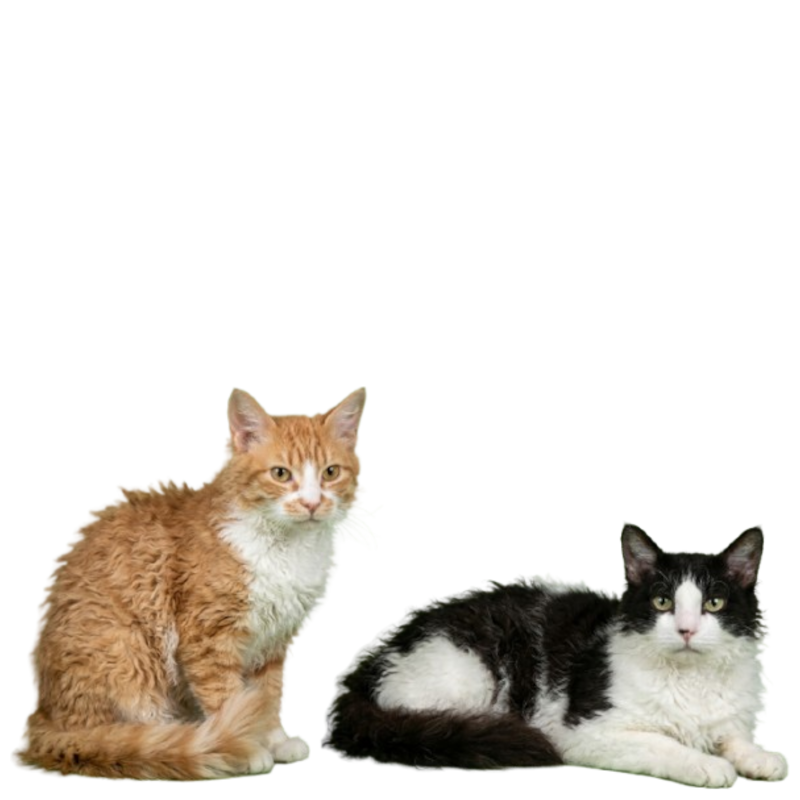
appearance
The LaPerm represents a unique study in feline structural aesthetics, characterized primarily by its distinct coat texture and moderate, semi‐foreign body type. Unlike more extreme breeds, the LaPerm maintains a balanced skeletal framework that facilitates high mobility and functional agility. The most significant anatomical hallmark is the pilary dysplasia which results in the characteristic curl; however, the underlying cranial and postcranial morphology follows a precise set of proportions that distinguish the LaPerm from other members of the Felis catus lineage.
Cranial and Facial Conformation
The cephalic structure of the LaPerm is a modified wedge with rounded contours. The muzzle is broad and strong, possessing a moderate pinch that emphasizes the whisker pads.
- Profile: When viewed laterally, the nasal bridge exhibits a slight dip just below the eye line, continuing to a straight plane toward the rhinarium.
- Aural Positioning: The pinnae are flared and cupped, placed to continue the lines of the modified wedge. They are often adorned with significant furnishings and ear tufts.
- Ocular Structure: The orbital apertures are almond—shaped and set at a slight slant toward the outer base of the pinnae.
Postcranial Skeletal and Muscular Alignment
The LaPerms exhibit a medium‐boned, semi‐foreign physique. The musculature is lean but firm, providing a tactile sense of strength without excessive bulk or hypertrophy.
| Feature | Anatomical Specification |
|---|---|
| Torso | Medium length with a slight rise in the dorsal line toward the pelvic girdle. |
| Pectoral Girdle | Shoulders are well‐defined and integrated into a deep, but not overly broad, thoracic cavity. |
| Pelvic Girdle | Slightly higher than the shoulders, facilitating powerful saltatory movement. |
| Caudal Vertebrae | Tapered from base to tip, proportional to the axial skeleton length. |
Integumentary and Pilary Morphology
The most distinctive feature of the LaPerm’s phenotype is the texture and formation of the pelage. The coat is not merely wavy; it is composed of individual hairs that exhibit a helical or “corkscrew” growth pattern.
Coat Texture and Density
The density of the LaPerm coat varies based on the length variant (longhair versus shorthair), yet both share a “crisp” tactile quality. The coat does not lie flat against the dermis but stands away due to the structural rigidity of the curls.
Anatomical Ratios
The relationship between the cranial length () and the width across the zygomatic arches () can be expressed as a ratio that maintains the moderate wedge shape:
LaPerm Head Shape Balance Ratio
- : The Cranial Ratio, which measures the ideal proportions for a balanced, wedge-shaped head.
- : The Cranial Length, measured from the back of the skull to the bridge of the nose.
- : The Zygomatic Width, which is the width of the face across the cheekbones.
- : The target constant for the LaPerm, indicating a head that is slightly longer than it is wide.
A judge evaluates a show-quality LaPerm. The head length () is cm and the cheekbone width () is cm. By dividing by , the result is . This measurement perfectly matches the anatomical ratio needed for the breed’s signature alert expression without the face looking too pointed or too round.
Extremities and Appendicular Structure
The legs of the LaPerm are medium‐long, reflecting the semi‐foreign classification. This length allows for a fluid, “leggy” gait.
- Manus and Pes: The paws are rounded and proportional to the limb thickness.
- Stifles and Hocks: Well‐angulated, providing the necessary leverage for the breed’s active movement.
- Digital Arrangement: Standard pentadactyl front and tetradactyl rear configuration, with firm, well‐padded metacarpal and metatarsal pads.
behavior
The behavioral repertoire of the LaPerm is defined by high levels of environmental engagement and a sophisticated system of tactile communication. As an active, semi‐foreign phenotype, the LaPerm exhibits a high frequency of exploratory behaviors and social facilitation, often seeking proximity to conspecifics or human counterparts to initiate complex interaction chains. Their ethogram reveals a predator–prey drive that is highly focused and methodical, characterized by prolonged stalking phases followed by rapid kinetic bursts. These actions are not merely random movements but are structured responses to environmental stimuli, reflecting an advanced cognitive map of their immediate territory.
Social Dynamics and Interaction Strategies
LaPerms demonstrate a pronounced preference for allogrooming and physical contact, which serves as a primary mechanism for social bonding and group cohesion.
- Tactile Affiliation: The LaPerm frequently employs “paw‐patting” as a solicitation gesture. This tactile reaching is a form of active environmental testing and social signaling.
- Proximity Seeking: High rates of following behavior (social shadowing) suggest a strong reliance on social cues for environmental navigation.
- Allomarking: Frequent rubbing of the perioral glands against social partners reinforces the communal scent, reducing intra‐group aggression.
Activity Cycles and Exploratory Drive
The activity budget of the LaPerm is typically polyphasic, with significant peaks during crepuscular periods.
| Behavioral State | Description of Manifestation | Frequency Index |
|---|---|---|
| Active Exploration | Vertical climbing, investigative sniffing, and manipulation of novel objects. | High |
| Object Play | Solitary play involving batting, carrying, and “fetching” small items. | Moderate–High |
| Quiescence | High‐perch resting sites chosen for maximum visual surveillance. | Moderate |
| Social Play | Wrestling and chasing involving inhibited biting and pawing. | High |
Vocalization and Acoustic Signaling
The vocal repertoire of the LaPerm is moderately diverse, though often utilized with lower amplitude than more vocal oriental breeds.
- Chirping and Trilling: Utilized primarily during social facilitation or when prey is sighted but inaccessible (frustration‐induced vocalization).
- Solicitation Purr: A high‐frequency acoustic signal used to maintain proximity or encourage resource delivery.
- Mewing Variants: Varied in pitch and duration to signal specific internal states, often paired with direct ocular contact.
Prey‐Drive and Hunting Sequences
The hunting ethogram of the LaPerm follows the standard feline sequence but with an emphasis on manual dexterity.
- Detection: Utilization of acute auditory and olfactory senses.
- Stalking: Low‐posture movement with 10–15 second pauses for assessment.
- The Pounce: A high‐velocity strike, often utilizing the forepaws to "hook" or manipulate the target before the killing bite.
- Retrieval: A high propensity to transport "prey" (or toys) to a designated "safe zone" or nesting area.
Mathematical Modeling of Social Proximity
The probability of a LaPerm initiating a social interaction () relative to the distance from a social partner () can be modeled as a decay function where represents the individual’s specific sociability constant:
LaPerm Social Interaction Likelihood
- : The probability of initiating interaction, representing how likely the cat is to move toward a person or another pet.
- : Euler’s number, a mathematical constant used to calculate natural growth or decay.
- : The Sociability Constant. For the LaPerm, a lower value means their social interest remains high even when they are further away.
- : The distance in meters between the cat and its human or feline companion.
A LaPerm is resting on a cat tree meters away from its owner. Because this breed is highly social, we use a low constant (). The calculation results in a probability of . This 55% chance shows that even at a significant distance, the LaPerm feels a strong desire to get up and join the action.
In the LaPerm, is typically low, indicating that the probability of interaction remains high even as distance increases up to 3–5 meters.
color
The chromatic expression of the LaPerm is a complex interplay of melanin distribution within a uniquely structured pilary matrix. Unlike breeds with smooth, flat hair shafts, the helical morphology of LaPerm’s fibers affects how light interacts with the deposited pigment granules. The visual phenotype is governed by the concentration of eumelanin (producing black and brown shades) and phaeomelanin (producing red and cream tones), alongside varying degrees of white spotting or “depigmentation” resulting from inhibited melanocyte migration during embryogenesis. This results in a spectrum of saturation and tonal depth that can appear subtly different across the crests and troughs of the curly pelage.
Melanic Classification and Distribution
The primary pigments in LaPerms are categorized by their chemical structure and the density of their deposition within the hair cortex and medulla.
| Pigment Type | Visual Manifestation | Saturation Characteristics |
|---|---|---|
| Dense Eumelanin | Ebony, Seal, Chocolate | High concentration of spherical pigment granules. |
| Dilute Eumelanin | Blue, Lilac, Fawn | Clumped granules creating increased light scattering. |
| Phaeomelanin | Red, Flame | Elongated granules resulting in warm, rufous tones. |
| Dilute Phaeomelanin | Cream, Apricot | Reduced density of phaeomelanic granules. |
Patterns of Depigmentation and Inhibition
In the LaPerm, the absence of pigment occurs through distinct biological mechanisms, often manifesting as localized or systemic white regions.
- Melanocyte Migration Arrest: White spotting occurs when melanoblasts fail to reach specific dermal regions during development, leaving the hair follicles devoid of pigment.
- Ticking and Agouti Shading: Individual hair shafts may exhibit bands of eumelanin alternating with phaeomelanin, a phenomenon characterized by a temporal “switch” in pigment synthesis within the hair bulb.
- Ghost Markings: In juvenile LaPerms, residual “shadow” patterns may be visible due to incomplete pigment suppression, though these often clarify as the specimen matures.
Optical Physics of the LaPerm Pelage
The perceived hue of a LaPerm is not solely a product of chemistry but also of physics. The curvature of the hair shaft alters the angle of incidence () of light, affecting the Reflectance () of the surface.
The intensity of the observed color () can be modeled relative to the pigment concentration () and the light scattering coefficient () determined by the curl geometry:
LaPerm Coat Color Vibrancy Model
- : The observed intensity, which is how vibrant or saturated the coat color looks to the human eye.
- : The pigment concentration, or the actual amount of color-producing melanin in the hair.
- : The light scattering coefficient, which is determined by the unique curl pattern and hair structure of the LaPerm.
- : The angle of incidence, or the angle at which light hits the curved surface of the curls.
- : The math function that adjusts how light interacts with the coat based on the slope of the hair’s wave.
A lavender LaPerm sits under a bright lamp where light hits its curls at a angle. With a pigment level () of and a scattering effect () from the tight ringlets of , the resulting intensity is . This explains why the coat color often looks softer or more shimmering than a straight-haired cat with the exact same genetics.
Chromatic Variations and Shading
Within the LaPerm population, specific shading effects are observed based on the depth of pigment penetration.
Rufism and Tonal Warmth
In specimens expressing phaeomelanin, the degree of “rufism” determines the vividness of the red. High levels of rufic polygenes produce a deep mahogany, whereas low levels result in a pale, sandy yellow.
Inhibitory Gradients
Silver and smoke phenotypes occur when pigment production is inhibited at the base of the hair shaft. In a LaPerm, this creates a dramatic visual effect as the “smoke” or “silver” undercoat is revealed through the partings of the curls, leading to a high–contrast kinetic appearance during movement.
Bi‐color and Tri‐color Distribution
When eumelanic and phaeomelanic patches coexist with white areas, the boundaries are typically well‐defined. However, the textural nature of the LaPerm coat can cause a “blurring” effect at the margins where curls of different colors interlock.
compatibility
Ease of Maintenance
Rating: 4/5
Child Friendly
Rating: 5/5
Annual Cost
Rating: 4/5
Lifetime Cost
Rating: 5/5
Adaptability
Rating: 5/5
Velcro Factor
Rating: 5/5
Quietude
Rating: 4/5
Apartment Suitability
Rating: 4/5
Hypoallergenic
Rating: 3/5
Handling Tolerance
Rating: 5/5
Hardiness/Longevity
Rating: 5/5
Prey Drive
Rating: 2/5
genetics
The genetic profile of the LaPerm is defined by a specific spontaneous mutation that governs its unique integumentary development. Unlike many other curly‐coated feline populations that rely on recessive alleles, the LaPerm is distinguished by a dominant mode of inheritance. From a molecular perspective, this involves a specific locus that regulates the keratinization of the hair shaft. Understanding the genomic landscape of the LaPerm requires a focus on the segregation of these alleles and the polygenic modifiers that influence the expressivity of the primary mutation across different lineages.
Primary Mendelian Inheritance Patterns
The core characteristic of the LaPerm is governed by a single autosomal dominant gene, often symbolically designated as . This dominance implies that a single copy of the allele is sufficient to manifest the phenotype, though homozygous individuals may exhibit subtle variations in the intensity of the trait.
| Genotype | Phenotypic Expression | Inheritance Classification |
|---|---|---|
| Lp / lp | Homozygous; full manifestation of the trait. | Autosomal Dominant |
| Lp / lp | Heterozygous; full manifestation of the trait. | Autosomal Dominant |
| lp / lp | Wild‐type; no manifestation of the trait. | Recessive Wild‐type |
Allelic Interaction and Expressivity
While the primary gene is dominant, the degree of its manifestation is subject to variable expressivity. This is often influenced by a background of polygenetic modifiers that act upon the protein structures within the hair follicle.
- Incomplete Penetrance Concerns: While rare in the LaPerm, researchers monitor for instances where the genotype does not perfectly correlate with the expected phenotype.
- Epistatic Interactions: The locus operates independently of the loci governing pigment or length, though it interacts with the gene (the Longhair locus) to determine the structural stability of the pilary waves.
Statistical Probability in Breeding Selection
When modeling the outcome of a heterozygous cross (), the probability of producing a phenotypically wild‐type offspring can be calculated using a standard Punnett square derivation:
LaPerm Chance of Straight-Haired Kittens
- : The statistical probability that a kitten will be born with a straight coat rather than curls.
- : The dominant gene responsible for the signature curly or “permed” coat of the LaPerm.
- : The recessive gene which results in a straight-haired coat if the kitten inherits it from both parents.
- : The standard Mendelian ratio seen when both curly parents carry the hidden straight-hair gene.
A breeder pairs two curly-coated LaPerms that both carry the straight-hair gene. To find the risk of having straight-haired kittens, the calculation shows a chance per kitten. In a typical litter of four, the breeder can expect one kitten to express the straight “wild-type” coat instead of the usual breed curls.
Conversely, the probability of producing an offspring that carries at least one dominant LaPerm allele is:
LaPerm Likelihood of Curly-Coated Kittens
- : The probability that a kitten will have the dominant curly coat. The underscore means the second gene can be either curly or straight.
- : The total population (100%) of the potential litter.
- : The chance of a kitten being born with a straight coat.
- : The dominant gene that creates the iconic permed look.
- : The recessive gene for a straight coat.
A breeder matches two curly parents that both carry the straight-hair gene. To predict the number of curly kittens, they subtract the chance of a straight coat from the total. This leaves a likelihood for each kitten to be curly, meaning in a litter of four, three are mathematically expected to have the classic LaPerm coat.
Molecular Regulation of the Pilary Cycle
The mutation in LaPerms affects the follicle during the anagen (growth) phase. The biochemical signaling within the dermal papilla is altered, causing an asymmetrical deposition of cortical cells. This asymmetry results in the structural torque of the hair shaft.
The Role of Keratin Genes
Current research into the LaPerm’s genome focuses on the KRT (Keratin) family of genes. It is hypothesized that the mutation causes a structural shift in the disulfide bridges between keratin molecules.
Variation in Allelic Density
- Homozygous Vitality: Unlike some dominant mutations in other species that are lethal in the homozygous state (), the LaPerm mutation shows no evidence of such genomic instability.
- Genetic Diversity: Because LaPerms are often part of outcrossing programs, their genomic profile maintains high heterozygosity across non‐target loci, preventing the fixation of deleterious alleles.
health
The clinical profile of the LaPerm is generally characterized by the absence of breed‐specific monogenic pathologies, a result of a broad genetic base and regular outcrossing practices within the feline population. However, like all members of the Felis catus species, LaPerms remain susceptible to common feline infectious and non‐infectious disease processes. Veterinary assessment focuses on monitoring the structural integrity of the integumentary system alongside systemic screenings for cardiac and renal function. Understanding the physiological baseline of the LaPerm is essential for early intervention in chronic conditions that typically manifest in the senior life stages of the domestic feline.
Cardiovascular and Renal Functionality
While no specific predisposition to Hypertrophic Cardiomyopathy (HCM) has been documented in LaPerms, periodic echocardiographic monitoring is recommended as a standard prophylactic measure.
- HCM Monitoring: Evaluation of the left ventricular posterior wall (LVPW) thickness to detect idiopathic muscular hypertrophy.
- Renal Filtration: Monitoring of serum creatinine and symmetric dimethylarginine (SDMA) levels to assess the Glomerular Filtration Rate (GFR).
The relationship between mean arterial pressure () and systemic vascular resistance () in a feline patient can be represented by the following physiological ratio:
LaPerm Average Blood Pressure Model
- : The Mean Arterial Pressure, or the average blood pressure in the arteries during one heartbeat cycle.
- : The Cardiac Output, which is the volume of blood the heart pumps every minute.
- : The Systemic Vascular Resistance, which is the amount of force the heart must overcome to push blood through the body.
A veterinarian monitors a senior LaPerm during a dental cleaning. The heart is pumping liters per minute () against a resistance () of . Multiplying these gives a pressure result of mmHg. This is in a healthy range, ensuring the cat’s vital organs are receiving enough oxygen.
Maintaining these parameters within homeostatic ranges is critical for preventing secondary renal insufficiency.
Integumentary Health and Follicular Dynamics
The unique pilary structure of the LaPerm requires specific dermatological attention to ensure the barrier function of the epidermis remains intact.
| Pathological Condition | Clinical Presentation | Diagnostic Approach |
|---|---|---|
| Folliculitis | Inflammation of the hair follicles, occasionally secondary to sebum accumulation. | Skin scrapings and cytology. |
| Allergic Dermatitis | Type I hypersensitivity reactions to environmental allergens or ectoparasites. | Intradermal testing or elimination trials. |
| Otitis Externa | Inflammation of the external ear canal, often exacerbated by dense aural furnishings. | Otoscopic examination and aural swabs. |
Immunological and Metabolic Considerations
LaPerms exhibit standard feline metabolic rates, though nutritional requirements must be adjusted based on activity levels to prevent obesity‐related comorbidities.
Glucose Homeostasis
In specimens with sedentary lifestyles, the risk of Type II Diabetes Mellitus increases. This involves a decrease in insulin sensitivity within the peripheral tissues, which can be modeled by the Homeostatic Model Assessment (HOMA) index:
LaPerm Insulin Efficiency (HOMA-IR) Index
- : The insulin resistance score, used to check how effectively the cat’s body is using insulin to manage blood sugar.
- : The fasting blood sugar level, measured in mmol/L.
- : The fasting insulin level, measured in mU/L.
- : A constant used to balance the numbers for a clear clinical assessment.
A vet performs a checkup on an older, less active LaPerm. Blood tests show a sugar level of and an insulin level of . Dividing their product by results in a score of . This suggests the cat is becoming less sensitive to insulin, prompting the owner to increase playtime and watch the cat’s diet to prevent diabetes.
Infectious Disease Prophylaxis
Standard immunization protocols for Feline Viral Rhinotracheitis, Calicivirus, and Panleukopenia (FVRCP) are vital. Due to the high investigative behavior of the LaPerm, exposure to environmental pathogens may be more frequent compared to more sedentary breeds.
Oral and Dental Pathology
The LaPerm’s oral health is susceptible to periodontal disease and Feline Oral Resorptive Lesions (FORL).
- Gingivitis: Chronic inflammation of the gingival margins.
- Resorptive Lesions: Odontoclast‐mediated destruction of the tooth structure, often requiring radiographic staging () for appropriate surgical intervention.
longevity
The longitudinal study of the LaPerm reveals a survival profile consistent with robust, medium‐framed domestic felines. As a population, LaPerms exhibit a standard mammalian aging trajectory characterized by a prolonged period of physiological stability followed by a gradual increase in mortality pressure during the second decade of life. Statistical modeling of their life expectancy suggests that the absence of deleterious homozygous traits contributes to a stabilized survival curve. The transition into senescence is typically identified through subtle biomarkers of metabolic deceleration rather than abrupt systemic failure, allowing for a high quality of life through the advanced geriatric stages.
Mortality Rates and Survival Probability
The probability of a LaPerm surviving to a specific age () can be modeled using the Gompertz‐Makeham law of mortality, which accounts for both age‐independent and age‐dependent factors:
LaPerm Aging and Vitality Risk Function
- : The hazard rate, which represents the risk of health issues or mortality at a specific age.
- : The current age of the LaPerm in years.
- : The baseline vulnerability, representing the natural health risks at the start of adulthood.
- : Euler’s number, the base used for calculating how risks grow over time.
- : The rate of aging, which measures how fast the cat’s biological clock is ticking.
- : The Makeham term, which accounts for external risks like accidents that don’t depend on age.
For a -year-old LaPerm, we look at their natural risk, environmental factors, and a typical aging rate. The calculation shows that despite their age, the LaPerm’s healthy biological clock keeps their mortality risk relatively low compared to other breeds in their senior years.
For the LaPerm, remains relatively low until the post‐maturation phase.
Longitudinal Aging Stages
The LaPerm’s life cycle is categorized into distinct cohorts based on cellular turnover and physiological resilience.
| Life Stage | Chronological Range (Years) | Biological Characteristics |
|---|---|---|
| Developmental | 0–2 | High cellular regeneration; completion of skeletal ossification. |
| Mature Adult | 3–10 | Physiological plateau; optimal metabolic homeostasis. |
| Senior Transition | 11–14 | Initial biomarkers of senescence; decline in regenerative capacity. |
| Geriatric | 15+ | Significant increase in mortality hazard; terminal phase of survival curve. |
Senescence Indicators and Rate of Aging
The rate of biological aging in LaPerms is influenced by the progressive shortening of telomeres and the accumulation of oxidative stress.
- Metabolic Deceleration: A measurable shift in the basal metabolic rate () is observed during the senior transition.
- Immune Senescence: The gradual decline in T‐cell diversity, which increases vulnerability to opportunistic pathogens in the late geriatric stage.
- Organ Reserve: The “functional residual capacity” of the renal and hepatic systems remains high in LaPerms compared to more genetically bottlenecked populations, extending the median lifespan.
Survival Function Estimates
The Kaplan–Meier estimator provides a non‐parametric statistic used to estimate the survival function () from lifetime data in LaPerm cohorts:
LaPerm Probability of Reaching a Specific Age
- : The survival function, which is the probability that an individual cat will live from birth to a specific age.
- : The product symbol, meaning we multiply the survival chances for each year together.
- : A specific milestone year where health data was recorded.
- : The number of cats that passed away at that specific age.
- : The number of cats still alive and being tracked just before that age.
In a study following LaPerms, cats are still healthy at the -year mark. If cats pass away that year, the chance of surviving that specific year is . When combined with previous years, the result shows a total probability of a LaPerm reaching or surpassing the age of 15.
Data suggests that LaPerms maintain a high value well into the 12–15 year range.
Factors Influencing Survivorship Bias
While the LaPerm demonstrates inherent biological longevity, the statistical “mean age of death” is significantly impacted by environmental variables. Indoor-only cohorts show a starkly different survival distribution compared to those with uncontrolled environmental exposure, primarily due to the elimination of the (extrinsic) factor in the Gompertz equation.
maintenance
Effective husbandry of the LaPerm necessitates a specialized approach that addresses the high metabolic turnover and unique integumentary requirements of the phenotype. Maintenance is not merely a matter of routine care but a systematic optimization of the specimen’s biological environment. Because the LaPerm’s dermal surface produces specific sebum levels that interact with a coiled pilary structure, grooming protocols must prevent follicular occlusion while preserving the hair shaft’s structural integrity. Furthermore, nutritional engineering must align with a high Resting Energy Requirement (RER) to support thermoregulation and active environmental engagement.
Nutritional Bioengineering and Caloric Requirements
The LaPerm requires a nutrient‐dense profile rich in omega–3 and omega–6 fatty acids to maintain the lipid barrier of the epidermis.
Metabolic Calculation
The Resting Energy Requirement (RER) for a LaPerm specimen is calculated using the standard metabolic body weight formula:
LaPerm Daily Resting Calorie Needs
- : The Resting Energy Requirement, or the total calories burned for basic functions like breathing and digestion while at rest.
- : A standard metabolic constant used for mammals.
- : The weight of the LaPerm in kilograms.
- : A scaling factor that accounts for the fact that energy needs don’t increase perfectly in line with body weight.
A healthy adult LaPerm weighs kg. To find its baseline needs, we calculate raised to the power of , which equals roughly calories. For an active cat, we multiply this by , meaning the cat needs about calories total to sustain its playful personality and curly coat.
To determine the Daily Energy Requirement (DER) for an active adult LaPerm, a multiplier of is applied to the RER to account for physical activity and thermoregulatory costs.
Macronutrient Distribution
| Nutrient | Target Percentage (Dry Matter) | Functional Objective |
|---|---|---|
| Crude Protein | 35%–45% | Maintenance of lean muscle mass and keratin synthesis. |
| Crude Fat | 15%–20% | Epidermal lipid support and high‐density energy. |
| Omega Fatty Acids | 1.5%–2.5% | Sebum regulation and pilary elasticity. |
Integumentary Maintenance and Grooming Logistics
The LaPerm’s coat requires a non‐disruptive grooming cadence to manage sebum production levels without causing mechanical damage to the helical hair fibers.
- Sebum Management: A weekly tactile assessment is required to monitor for lipid accumulation at the base of the follicles.
- Grooming Implementation: Use of a revolving‐tooth comb is recommended to detangle without straightening the natural waves.
- Aural Hygiene: Due to high sebum production and dense furnishings, the LaPerm requires bi‐weekly ceruminolytic cleaning to prevent otic occlusion.
- Periodontal Prophylaxis: Daily mechanical plaque removal or the use of enzymatic dentifrice is mandatory to mitigate the risk of chronic gingivostomatitis.
Environmental Enrichment Standards
The environmental parameters for LaPerms must satisfy high hygroscopic and cognitive demands.
Atmospheric and Physical Parameters
- Hygroscopic Needs: Relative humidity should be maintained between 40%–60% to prevent desiccation of the pilary cortex, which can lead to brittle hair shafts.
- Vertical Stratification: The environment must provide tiered elevation zones (1.5–2.5 meters) to facilitate natural surveillance and muscular conditioning.
- Olfactory and Tactile Stimuli: Rotation of varied textures and pheromonal enrichment helps stabilize the specimen’s neurochemical homeostasis.
Hydration Dynamics
Adequate hydration is critical for metabolic detoxification and integumentary health. The minimum daily water intake () should follow the ratio:
LaPerm Minimum Daily Water Needs
- : The minimum daily water intake needed to keep the cat’s cells and organs hydrated.
- : The standard hydration range for domestic cats per kilogram of body weight.
- : The total weight of the LaPerm in kilograms.
- : The approximation symbol, because factors like room temperature or wet food can change how much water a cat needs to drink.
An active adult LaPerm weighs kg. Using the upper end of the scale ( ml) to account for exercise, the calculation is . The result is milliliters of water per day, ensuring the cat stays healthy and keeps its unique curly skin and coat in top condition.
measurements
| Measurement | Female | Male | ||
|---|---|---|---|---|
| Metric | Imperial | Metric | Imperial | |
height | 23 – 28 centimeters | 9 – 11 inches | 25 – 33 centimeters | 10 – 13 inches |
length | 33 – 41 centimeters | 13 – 16 inches | 38 – 46 centimeters | 15 – 18 inches |
weight | 2.3 – 4.1 kilograms | 5 – 9 pounds | 3.6 – 5.4 kilograms | 8 – 12 pounds |
• Height: Refers to the measurement at the withers (shoulders).
• Length: Measured from the tip of the nose to the base of the tail.
origin
The historical emergence of the LaPerm represents a significant event in the anthropogenic selection of feline phenotypes within the North American continent. Unlike many established breeds that trace their lineage to ancient geographic isolation or distinct landrace populations of the Old World, the LaPerm is a product of a documented spontaneous mutation within a localized population of domestic farm cats. This lineage originated within a non‐controlled breeding environment, where the initial founder effect occurred in the late 20th century. The transition from a spontaneous rural population to a recognized phylogenetic clade involved a systematic process of stabilization and pedigree documentation, marking a shift from naturally occurring biological anomaly to a standardized domestic lineage.
Chronological Timeline of Lineage Development
The establishment of the LaPerm follows a clear trajectory from the initial identification of the founder specimen to formal recognition by international feline registries.
| Era | Phase of Development | Key Historical Markers |
|---|---|---|
| 1982 | Initial Founder Event | Spontaneous mutation observed in a litter in Oregon, USA. |
| 1982–1992 | Population Proliferation | Natural expansion within a semi‐isolated farm environment. |
| 1992 | Formal Classification | Intentional breeding programs initiated to stabilize the trait. |
| 1995–2003 | Global Dissemination | Exportation of specimens to international markets for lineage diversification. |
| 2008 | Registry Acceptance | Full recognition by major feline associations (e.g., CFA, TICA). |
Geographic Context and Founder Dynamics
The geographic origin of LaPerms is centered in the Dalles region of Oregon. This localized environment provided the necessary conditions for a founder effect, where a single mutated individual could contribute significantly to the local gene pool.
The Founder Effect Model
The initial establishment of the LaPerm’s lineage can be modeled as a population bottleneck followed by rapid expansion. If represents the effective population size and the mutation rate, the probability of the fixation of the new trait within the localized group was influenced by the high degree of interbreeding within the initial colony.
The probability () of an allele reaching fixation in a small, closed population is often represented as:
LaPerm Genetic Foundation Success Rate
- : The probability of fixation, or the chance that a new trait (like the curly coat gene) will eventually be shared by every cat in the population.
- : The single origin of the trait, since the entire breed began with one original cat named “Curly.”
- : The total number of gene copies in the breeding group, where is the number of cats contributing to the next generation.
- : A constant because every cat carries two copies of each gene.
In the original farm colony where the first LaPerm appeared, there were only about breeding cats. The chance of the curly gene becoming the standard for the whole group was in , or . While that seems small, it is a very high chance for a new mutation, explaining how the “Founder Effect” allowed this unique coat to take hold so quickly.
Anthropogenic Selection and Breed Stabilization
Following the first decade of natural proliferation, the LaPerm underwent a transition toward anthropogenic selection. Feline historians categorize this period by the implementation of outcrossing strategies designed to preserve the structural health of the lineage while maintaining the distinctive mutation.
- Outcrossing Strategies: To avoid the deleterious effects of extreme inbreeding, the LaPerm was historically crossed with various domestic longhair and shorthair landrace populations.
- Lineage Diversification: Historical records show that the LaPerm was introduced to international registries at a time when consumer demand for “rexed” (curly‐coated) phenotypes was increasing, facilitating its rapid global spread.
Phylogenetic Divergence from Other Rexed Lineages
It is a critical historical distinction that the LaPerm represents a unique phylogenetic divergence. It is historically unrelated to the Cornish Rex, Devon Rex, or Selkirk Rex lineages, which emerged from distinct geographic and temporal points in the United Kingdom and Montana, respectively.
Comparative Lineage Emergence
- Cornish Rex: Cornwall, UK (circa 1950)
- Devon Rex: Devon, UK (circa 1960)
- Selkirk Rex: Montana, USA (circa 1987)
- LaPerm: Oregon, USA (circa 1982)
The temporal proximity of the LaPerm and Selkirk Rex origins highlights a unique period in North American feline history where multiple distinct curly‐coated mutations achieved stabilization nearly simultaneously within different regions of the Pacific Northwest and Mountain West.
temperament
The temperament of the LaPerm is characterized by a high degree of emotional resilience and an expansive social orientation. In the context of feline psychobiology, LaPerms exhibit a unique combination of low environmental neophobia and high gregariousness, distinguishing them from more cautious or territorial domestic lineages. This dispositional profile is rooted in a stable nervous system that maintains a low threshold for positive social reinforcement while exhibiting high sensory adaptability. Their inherent nature is defined by an active engagement with the immediate environment, driven by a persistent exploratory drive that is modulated by an intense need for intra‐species and inter‐species affiliation.
Quantitative Analysis of Dispositional Traits
The following table categorizes the primary psychological markers observed in the LaPerm phenotype using a standardized feline temperament scale.
| Psychometric Marker | Degree of Expression | Clinical Description |
|---|---|---|
| Gregariousness | High | Pronounced tendency toward social proximity and group cohesion. |
| Environmental Neophobia | Low | Minimal anxiety response when introduced to novel stimuli or habitats. |
| Emotional Reactivity | Moderate–Low | High threshold for stress; rapid return to homeostatic baseline after arousal. |
| Cognitive Flexibility | High | Rapid habituation to changing routines and social dynamics. |
| Affiliative Drive | Very High | Persistent seeking of physical contact and social interaction. |
Sensory Thresholds and Arousal Regulation
The LaPerm’s psychological framework is supported by a sophisticated mechanism of arousal regulation. Unlike breeds that may experience sensory overstimulation, the LaPerm demonstrates a high tolerance for auditory and tactile input.
Social Facilitation and Bonding
The LaPerm exhibits an inherent preference for social facilitation, where the presence of a social partner (human or conspecific) acts as a powerful buffer against psychological stressors. This trait is often referred to in ethology as “active dependency,” where the individual’s sense of security is directly correlated with social proximity.
Exploratory Drive vs. Inhibition
In a novel environment, the LaPerm typically bypasses the inhibitory “freeze” phase common in many felines. Instead, they proceed directly to investigative patrolling, a sign of high confidence and low cortisol responsiveness during environmental challenges.
Behavioral Modeling of Social Interaction
The probability of a LaPerm specimen engaging in an affiliative social interaction () relative to the intensity of external stimuli () and the individual’s baseline sociability () can be modeled as:
LaPerm Friendliness and Response Likelihood
- : The probability of social interaction, or how likely the cat is to respond to a friendly gesture.
- : A function used to model how a cat’s decision-making shifts from shy to active.
- : The sociability constant, representing the natural friendliness of an individual LaPerm.
- : The intensity of the social stimulus, such as a human calling the cat’s name or offering a toy.
- : The sensory threshold, or the minimum amount of attention the cat needs before it decides to engage.
- : Euler’s number, used here to create a smooth curve of behavioral response.
A social LaPerm sees its owner reaching out with a toy (). Because this breed has a low threshold for social interaction (), it needs very little encouragement. The math results in a probability of interaction, confirming the LaPerm’s reputation as a “people-oriented” cat that rarely ignores a chance to play.
Data suggests that LaPerms possess a lower for social cues compared to the median domestic population, meaning they require less “invitation” to initiate a social bond.
Intra‐species Sociability and Conflict Resolution
The LaPerm’s disposition is notably non‐confrontational. Their psychological strategy for conflict resolution favors displacement or social appeasement over aggressive signaling.
- Affiliative Priming: LaPerms are often observed “priming” their social environment through subtle tactile signals, which serves to reduce tension before it escalates.
- Inherent Docility: While active and curious, their disposition lacks the “high‐strung” reactivity seen in some oriental breeds, resulting in a temperament that is both engaging and remarkably steady.