Korat Cat
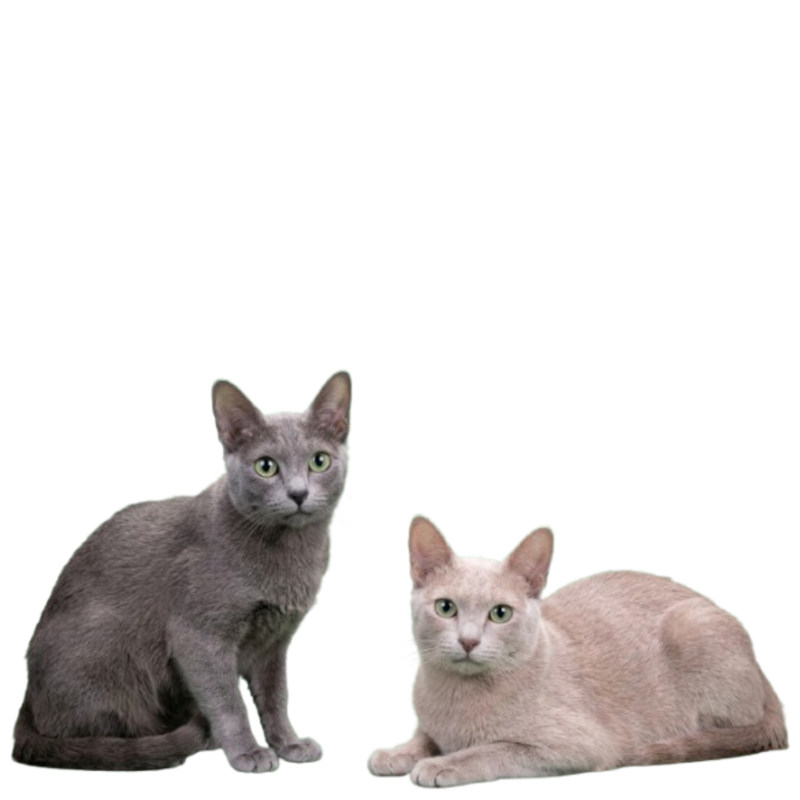
appearance
The Korat presents a singular anatomical profile characterized by a semi‐cobby physical frame that emphasizes muscular density and structural fluidity. Unlike more extreme feline phenotypes, the Korat’s skeletal architecture maintains a balance between lithic power and lithe agility. This profile examines the specific cranial, axial, and appendicular features that constitute the distinctive physical identity of Korats, focusing on the specialized development of the musculoskeletal system and the unique integumentary properties that define the taxon.
Cranial and Facial Conformation
The cranial structure of the Korat is defined by a series of intersecting curves that form a heart‐shaped perimeter when viewed from the anterior aspect. This morphology is not merely superficial but is supported by a broad, flat forehead and well‐developed zygomatic arches.
- Frontal and Maxillary Region: The supraorbital ridges are prominent, contributing to the upper curvature of the heart shape. The muzzle is neither pointed nor excessively blunt, maintaining a soft, curved transition from the cheekbones.
- Aural Positioning: The pinnae are set high and wide, characterized by large bases and rounded apices. The orientation is alert, with the interior concha being well‐exposed.
- Ocular Morphology: The globes are exceptionally large and luminous, possessing a prominent convexity. They are set wide apart, with an aperture that appears disproportionately large relative to the facial plane.
Axial and Appendicular Skeletal Structure
The torso of the Korat is characterized by a high degree of muscular hypertrophy, particularly across the pectoral and pelvic girdles. Despite a compact appearance, the biological density is significant.
Thoracic and Abdominal Region
The rib cage is wide and deep, providing a broad base for the attachment of powerful thoracic musculature. The dorsal line exhibits a slight arch, indicating a flexible and reactive vertebral column capable of rapid kinetic discharge.
Appendages and Caudal Vertebrae
The thoracic and pelvic limbs are proportional to the torso, with the pelvic limbs being slightly longer to facilitate powerful saltatory movements.
- Paws: The manus and pes are oval in shape, with a compact dactyl arrangement.
- Caudal Structure: The tail is of medium length, possessing a heavier diameter at the proximal base and tapering toward a rounded distal terminus.
The Power-to-Height Body Balance Guide
- : Body Shape Score, the number that shows the balance between how long and how tall the cat is.
- : Body Length, measured from the center of the chest to the back of the hip.
- : Shoulder Height, the vertical distance from the top of the shoulder blade to the floor.
In a breed conformation study of a Korat, the torso length () is measured at cm, and the shoulder height () is cm. The calculation defines the compact, semi-cobby power of the breed. This proportionality allows for the pelvic limbs to be slightly longer, providing the mechanical advantage needed for powerful saltatory movements like jumping.
Integumentary System and Coat Texture
The Korat’s coat is a primary morphological marker, distinguished by its lack of a secondary undercoat. This results in a single‐layer integument that lies close to the dermal surface.
- Follicular Density: The hair shafts are fine and satin‐like in texture.
- Structural Alignment: Because there is no downy undercoat, the fur does not break or stand away from the body during movement—instead, it emphasizes the underlying muscular ripples.
- Tactile Properties: The coat possesses a high degree of sheen and a tactile quality described as silky, a direct result of the specific keratinous structure of the individual hairs.
Geometric Proportions
The anatomical balance of the Korat can be expressed through the relationship of the cranial width to the total facial length, where the breadth across the eyes often equals the distance from the top of the forehead to the base of the chin.
The structural essence of Korats lies in the transition of curves; from the rounded pinnae to the curved musculature of the flanks, every transition is fluid rather than angular.
behavior
The behavioral repertoire of the Korat is distinguished by a high degree of sensory sensitivity and a sophisticated system of social facilitation. As a species‐typical expression, Korats exhibit intense environmental monitoring and a specialized reliance on tactile and acoustic feedback loops. This profile delineates the observable ethogram of the Korat, focusing on the specific motor patterns and communication strategies that define their interaction with both conspecifics and the physical environment.
Social Dynamics and Inter-specific Interaction
The Korat demonstrates a robust preference for stable social hierarchies. Within a multi‐cat environment, the Korat’s behavior is often characterized by proximity‐seeking and allogrooming, which serves as a primary mechanism for group cohesion.
- Affiliative Behaviors: High frequency of “head‐butting” (bunting) and tail‐wrapping during social greetings.
- Territorial Monitoring: Frequent patrolling of the perimeter of the primary living space, often utilizing elevated vantage points for scanning.
- Social Facilitation: Korats often mirror the activity cycles of their human or feline companions, synchronizing periods of rest and predatory play.
Predatory Motor Patterns and Play
The prey‐drive manifestation in the Korat is acute and exhibits a high level of persistence. Their play behavior is not merely random activity but a structured sequence of appetitive and consummatory motor patterns.
| Behavioral Phase | Observable Action | Frequency |
|---|---|---|
| Appetitive | Silent stalking; ocular fixation on moving stimuli. | High |
| Capture | Rapid acceleration followed by a precise pounce. | High |
| Manipulation | Tactile investigation of the ‘prey’ using front paws. | Moderate |
Locomotor Activity Cycles
Korats typically exhibit a polyphasic sleep–wake cycle, with peaks of intense locomotor activity occurring during crepuscular hours (dawn and dusk). During these bursts, vertical exploration is a dominant strategy, involving the scaling of shelving or furniture to achieve a comprehensive field of view.
Communication Modalities
The Korat utilizes a diverse range of vocalizations and non‐verbal signals to regulate social distances and express physiological states.
Acoustic Signaling
The vocalizations of the Korat are notably varied in pitch and duration. Unlike the repetitive meowing seen in some breeds, Korats employ a chirping or “talking” sound during environmental exploration or when soliciting attention.
Tactile and Olfactory Signaling
Tactile communication is a critical component of the Korat’s ethogram.
- Allorubbing: Transferring pheromones via the temporal and perioral glands to mark social partners.
- Pressure Seeking: A distinct tendency to maintain physical contact with a preferred social partner during resting periods—often referred to as “velcro‐cat” behavior in ethological observations.
Environmental Exploration Strategies
When introduced to a novel environment, the Korat employs a cautious but thorough investigation protocol.
- Olfactory Scan: Low‐to‐ground sniffing of all new surfaces and objects.
- Acoustic Triangulation: Frequent ear rotation to map sounds within the 20–65,000 Hz range.
- Physical Testing: Using the vibrissae and paws to gauge the dimensions and stability of new structures.
The Friendly vs. Protective Choice Rule
- : Connection Odds, the chance the cat will choose to play or cuddle instead of hiding.
- : Friendly Signs, the total of all happy cues like purring, slow-blinking, or rubbing against you.
- : Safety Instincts, the total of protective moves like scent-marking or looking for a hiding spot.
A Korat enters a novel room containing a new person. If the cat exhibits units of Social Affiliation (approaching with a vertical tail and bunting) but only units of Territorial Defense (a brief olfactory scan), the calculation is . This high ratio indicates the Korat’s strong tendency to prioritize social engagement once the initial investigation is complete.
The Korat exhibits a level of focus during predatory play that suggests a highly refined neuro‐muscular feedback system, prioritizing precision over chaotic movement.
color
The chromatic profile of the Korat is defined by a highly specific distribution of eumelanin within the medullary and cortical layers of the hair shaft. This phenotype is characterized by a uniform dilution of black pigment, resulting in a distinct blue‐grey spectrum that lacks any significant phaeomelanin (red/yellow) interference. The optical properties of the Korat’s coat are further enhanced by a unique follicular structure where the absence of pigment at the distal terminus allows for maximum light refraction, creating a shimmering or halo‐like effect across the dorsal and lateral surfaces.
Eumelanin Distribution and Density
The primary pigment present in the Korat is a diluted form of eumelanin. Unlike dense black pigmentation where melanocytes are packed tightly, the Korat exhibits a “maltese” dilution effect where pigment granules are clumped, allowing more light to pass through and scatter.
Shaft Stratification
The pigmentation of an individual hair follicle in Korats is not static; it follows a specific gradient from the proximal root to the distal tip.
- Proximal Region: The base of the hair typically displays a lighter, more translucent blue tone.
- Medial Region: The mid‐section of the shaft contains the highest concentration of pigment granules, establishing the core “slate” or “silver‐blue” hue.
- Distal Region: The tip of the hair shaft is frequently devoid of pigment, appearing clear or translucent.
| Pigment Zone | Descriptive Hue | Concentration Level |
|---|---|---|
| Root | Pale Blue/Lavender | Low |
| Mid‐Shaft | Deep Silver‐Grey | High |
| Tip | Silver/Transparent | Zero |
Refractive Optical Phenomena
The silver sheen characteristic of the Korat is a result of structural coloration working in tandem with pigment dilution. The clear tips of the hair act as microscopic prisms. When light hits these non‐pigmented ends, it undergoes Tyndall scattering, which intensifies the perception of a metallic or silver luster.
The luminosity of the coat can be modeled by the refractive index () of the keratin shaft relative to the pigment density ():
The Silver Glow Shine Formula
- : Glow Intensity, how bright and silvery the coat looks to the human eye.
- : Room Light, the total amount of light shining on the cat’s fur.
- : Prism Effect, how well the clear outer layer of the hair scatters light like a crystal.
- : Color Thickness, the amount of blue-grey pigment in the hair; less pigment makes the silver tips shine more.
In a brightly lit show hall, the incident light () is units. The keratin of the Korat’s coat has a refractive index () of . If the pigment density () is a dilute , the Luminosity is . This high luminosity value explains the metallic luster and silver halo effect that is unique to the Korat compared to other solid blue cats.
Ocular and Dermal Pigmentation
Pigment expression in the Korat extends beyond the integumentary system to the ocular globes and the glabrous skin (rhinarium and digital pads).
Ocular Chromaticity
The iris pigmentation in Korats undergoes a significant maturation process. While neonatal specimens often display a transient blue or amber hue, the adult phenotype stabilizes into a high‐intensity luminous green. This is caused by the gradual accumulation of crystalline purines in the iris stroma over a period of 2–4 years.
Dermal Surfaces
The visible skin on the nose and paw pads serves as a diagnostic marker for the breed–specific pigment concentration:
- Rhinarium: A dark lavender or wilted‐rose hue, indicating deep eumelanin dilution.
- Digital Pads: Range from dark lavender to a deep blue‐grey, often matching the intensity of the mid‐shaft fur.
Ghost Markings and Pigment Uniformity
In the early stages of melanocyte migration, Korat kittens may exhibit “ghost markings” or faint tabby striae. These are vestigial patterns where the eumelanin density varies slightly in a circular or striped formation. However, as the specimen reaches physiological maturity, the pigment distribution typically homogenizes, resulting in a solid, unpatterned appearance that is free from white spotting or rufism (reddish oxidation of the blue pigment).
The brilliance of the Korat is not merely in the blue hue itself, but in the silver tipping that creates a secondary layer of visual depth—a phenomenon directly tied to the cessation of melanogenesis at the hair tip.
compatibility
Ease of Maintenance
Rating: 5/5
Child Friendly
Rating: 4/5
Annual Cost
Rating: 4/5
Lifetime Cost
Rating: 4/5
Adaptability
Rating: 3/5
Velcro Factor
Rating: 5/5
Quietude
Rating: 3/5
Apartment Suitability
Rating: 5/5
Hypoallergenic
Rating: 3/5
Handling Tolerance
Rating: 5/5
Hardiness/Longevity
Rating: 5/5
Prey Drive
Rating: 3/5
genetics
The genetic architecture of the Korat is defined by a high degree of homozygosity at specific loci that govern both structural and integumentary traits. Unlike many modern composite breeds, the Korat’s genomic signature is one of ancestral stability, characterized by the fixation of recessive alleles that have been maintained through centuries of geographic isolation. This technical analysis focuses on the Mendelian inheritance and polygenetic interactions that dictate the biological blueprint of Korats, specifically examining the mutations responsible for aural and caudal morphology as well as the specialized dilution of melanin.
Key Genetic Loci and Allelic Expression
The Korat genome contains several critical mutations that are inherited in predictable patterns. The interaction between these autosomal markers determines the primary phenotypic expressions seen in the breed.
The Dense/Dilute Locus (D Locus)
The most defining genetic feature of the Korat is the fixation of the recessive d allele at the Melanophilin (MLPH) gene. This autosomal recessive trait causes the clumping of pigment granules.
| Genotype | Phenotypic Expression | Breed Status |
|---|---|---|
| DD | Non‐dilute (dense) | Absent |
| Dd | Carrier of dilution | Rare/Incidental |
| dd | Full blue dilution | Fixed Standard |
The Polydactyly and Aural Mutation Loci
In certain lineages related to the broader Highlander/ Korat classification, the Cu (Curled) and Pd (Polydactyly) loci show specific dominance patterns. The curled ear trait is governed by an autosomal dominant gene with variable expressivity, meaning the degree of the trait can vary even with the same genotype.
- Autosomal Dominance: A single copy of the Cu allele is sufficient to express the trait.
- Incomplete Dominance: In some polygenetic contexts, the interaction between modifier genes can alter the curvature degree.
Caudal Vertebrae and Brachyury Genetics
The reduction of caudal vertebrae in Korats is often linked to the H (Hairy/Tail) complex or similar homeobox gene mutations. These genes regulate the axial skeletal development during embryogenesis.
The probability of offspring inheriting specific tail lengths can be modeled using the following ratio, where represents the dominant truncated allele and represents the ancestral long‐tail allele:
The Tail Length Odds Chart
- : Genetic Chance, the probability of a kitten having a specific tail type.
- : Short-Tail Gene, the instruction for a bobbed or kinked tail.
- : Long-Tail Gene, the instruction for a standard, full-length tail.
- : Double Short-Gene, a combination that usually prevents a kitten from developing.
- : The Bobtail Mix, the gene pairing that creates the unique short or kinked tail.
- : Standard Pairing, the combination that results in a normal, long tail.
If two Korats both carrying the heterozygous () trait are bred, the Punnett square predicts the outcomes. Out of a theoretical litter of four, kitten () would be (potentially non-viable), kittens () would be (exhibiting the unique caudal reduction), and kitten () would be (possessing a standard long tail). This genetic ratio is why tail length can vary even within a single lineage.
Polygenetic Modifiers and Environmental Interaction
Beyond simple Mendelian traits, the Korat exhibits complex polygenetic inheritance regarding the intensity of ocular pigmentation and coat sheen.
Ocular Chromacity Modifiers
The transition from neonatal yellow to adult green in Korats is controlled by polygenes that regulate the density and placement of stromal melanocytes. This is not a single‐gene trait but a cumulative effect of multiple quantitative trait loci (QTLs).
The Agouti Factor (A Locus)
The Korat is genetically solid, meaning it carries the recessive non‐agouti allele (aa) at the ASIP gene. This suppresses the banded hair pattern (tabby), allowing the diluted eumelanin to appear as a continuous, solid hue across the entire hair shaft.
The genetic purity of the Korat is maintained through the strict selection for the recessive dd and aa genotypes, ensuring that the ancestral “blue” phenotype remains undistorted by dominant agouti or dense pigment alleles.
health
The clinical profile of the Korat is characterized by a robust physiological constitution, yet the breed remains predisposed to specific metabolic and cardiac pathologies. As a naturally occurring landrace with a condensed gene pool, Korats exhibit a notable vulnerability to lysosomal storage disorders and certain idiopathic conditions. Understanding the pathophysiology of these conditions requires a granular look at the cellular and systemic stressors that impact the Korat’s metabolic pathways and cardiovascular stability. This guide delineates the primary health concerns, diagnostic markers, and physiological vulnerabilities relevant to veterinary practitioners.
Lysosomal Storage Disorders: Gangliosidosis
The most significant clinical concern within Korats is the presence of GM1 and GM2 gangliosidosis. These are neurodegenerative conditions resulting from a deficiency in specific lysosomal enzymes, leading to the toxic accumulation of lipids (gangliosides) within the central nervous system.
- GM1 Gangliosidosis: Caused by a deficiency of ‐galactosidase.
- GM2 Gangliosidosis: Resulting from a deficiency in ‐hexosaminidase A and B.
Clinical Progression of Gangliosidosis
The pathophysiology involves progressive neuronal dysfunction. Initial symptoms often manifest as pelvic limb tremors, followed by dysmetria and eventual quadriplegia.
| Disease Stage | Clinical Markers | Physiological Impact |
|---|---|---|
| Early Phase | Head tremors; hypermetria. | Impaired signal transduction in the cerebellum. |
| Intermediate | Generalized ataxia; nystagmus. | Significant lipid accumulation in the grey matter. |
| Advanced | Seizures; blindness. | Cortical atrophy and profound demyelination. |
Cardiovascular Health and Hemodynamics
While not as prevalent as in some other feline taxa, the Korat can be susceptible to Hypertrophic Cardiomyopathy (HCM). This condition is characterized by the idiopathic thickening of the left ventricular wall, which reduces the diastolic volume and increases atrial pressure.
Hemodynamic Modeling
The impact of myocardial hypertrophy on cardiac output () can be approximated by the relationship between stroke volume () and heart rate ():
The Heart Pumping Volume Guide
- : Blood Flow Rate, the total amount of blood the heart moves through the body every minute.
- : Pump Amount, the amount of blood squeezed out of the heart with every single beat.
- : Heart Beats, how many times the heart beats in one minute.
In a healthy Korat, the Stroke Volume () might be mL and the Heart Rate () BPM, resulting in a Cardiac Output () of mL/min. However, if myocardial hypertrophy occurs, the ventricular wall thickening reduces the to mL. To maintain the same , the Heart Rate must increase to BPM (). This chronic elevation in puts strained pressure on the cardiovascular system.
In the Korat, the reduction in due to ventricular wall thickening must be compensated by an increased , leading to potential congestive heart failure.
Respiratory and Upper Airway Vulnerabilities
Due to the specific cranial anatomy of the Korat, certain individuals may exhibit a predisposition to upper respiratory infections (URIs). While not brachycephalic, the mucosal immunity in Korats can be highly reactive to environmental allergens and viral pathogens such as Feline Herpesvirus‐1 (FHV‐1).
- Rhinosinusitis: Chronic inflammation of the nasal passages.
- Ocular Chemosis: Swelling of the conjunctiva, often secondary to viral irritation.
Renal and Metabolic Homeostasis
In geriatric specimens of the Korat, the onset of Chronic Renal Insufficiency (CRI) is a primary concern. The pathophysiology involves the progressive loss of functional nephrons, leading to a decreased Glomerular Filtration Rate (GFR).
Diagnostic Ratios
Veterinary clinicians monitor the Urine Protein:Creatinine (UPC) ratio to assess the severity of glomerular damage:
The Kidney Waste-Balance Score (UPC)
- : Kidney Health Score, a simple ratio used to check if the kidneys are leaking too much protein.
- : Leaked Protein, the amount of helpful protein found in a urine sample.
- : Waste Marker, a natural waste product used to help measure the protein accurately.
A clinician performs a urinalysis on a senior Korat. The results show a Urine Protein level of mg/dL and a Urine Creatinine level of mg/dL. The calculation results in a value exceeding 0.4. This positive UPC confirms significant proteinuria, signaling the need for immediate renal supportive therapy to manage glomerular damage.
Values exceeding in the Korat indicate significant proteinuria and the need for immediate renal supportive therapy.
The clinical management of Korats necessitates a proactive screening protocol for metabolic enzyme deficiencies—early identification is the only method to manage the irreversible neurodegeneration associated with gangliosidosis.
longevity
The longevity profile of the Korat is characterized by a significant deviation from standard feline mortality curves, often exhibiting an extended plateau in the mature adult phase. From a biostatistical perspective, the Korat’s life expectancy is influenced by a slow rate of physiological senescence, provided that early‐onset metabolic stressors are absent. This analysis examines the survival probability, life‐stage transitions, and the statistical factors that define the aging process in Korats, utilizing actuarial data to model the typical decline in homeostatic reserve.
Actuarial Life Expectancy and Survival Curves
Data collected from domestic feline populations suggest that Korats frequently occupy the upper decile of longevity within the Felis catus species. The survival function, representing the probability of an individual surviving from birth to time , tends to remain stable well into the second decade of life.
| Life Stage | Age Range (Years) | Statistical Description |
|---|---|---|
| Developmental | 0–2 | High metabolic rate; completion of skeletal ossification. |
| Mature Adult | 3–10 | Peak homeostatic stability; lowest mortality risk. |
| Senior Transition | 11–15 | Initial onset of cellular senescence; gradual decline in GFR. |
| Geriatric | 16+ | Accelerated senescence; high vulnerability to multi‐organ failure. |
Modeling the Rate of Senescence
The rate of aging in the Korat can be modeled using the Gompertz‐Makeham law of mortality, which describes the increase in the age‐dependent mortality rate (). For Korats, the aging constant () is often lower than the feline average, indicating a slower accumulation of molecular damage over time.
The Natural Aging and Health Risk Rule
- : Yearly Health Risk, the chance of a health issue occurring at a specific age.
- : Starting Risk, the very small chance of health problems for a young, healthy adult.
- : Natural Growth Base, a math number used to show how risks increase over time.
- : Aging Speed, how quickly the natural wear-and-tear of aging adds up each year.
- : Current Age, the cat’s actual age in years.
- : Outside Risk, the chance of accidents or environmental issues that have nothing to do with age.
For a mature Korat at age (), we calculate its mortality risk. If the aging constant () is and the rate of senescence () is a stable , with a random risk () of , the calculation is . This results in a hazard rate of approximately , illustrating that the Korat maintains a slower accumulation of molecular damage compared to the feline average.
In this model, represents the rate of senescence, while represents age‐independent mortality factors. Observations suggest that the Korat maintains a lower value, extending the duration of the mature adult phase.
Factors Influencing Geriatric Transition
The transition into the geriatric phase for a Korat is marked by a measurable shift in biomarkers. Biostatistical monitoring of these shifts allows for the prediction of the remaining life expectancy ().
Cognitive and Sensory Decline
Senescence in Korats often manifests first in sensory degradation rather than locomotor failure.
- Aural Sensitivity: A statistical decline in high‐frequency sound reception is typically observed between ages 12–14.
- Metabolic Deceleration: A measurable reduction in resting energy expenditure () often correlates with the shift into the senior category.
Mortality Probability Density
The probability of a Korat reaching the age of 18–20 is statistically higher than that of many contemporary synthetic breeds. This is attributed to the low incidence of polygenetic late‐life malignancies.
Statistical Significance of Longevity
The median life expectancy for the Korat is estimated at 15–19 years, with documented outliers exceeding 22 years. This longevity is statistically significant when compared to the broader feline population ().
The survival trajectory of the Korat suggests a unique biological resilience—the mortality curve remains remarkably flat during the first fifteen years, indicating a highly efficient cellular repair mechanism.
maintenance
The maintenance of the Korat requires a rigorous adherence to specific nutritional bioengineering and environmental optimization to sustain its high metabolic efficiency and integumentary health. Because Korats possess a unique physiological profile characterized by high muscular density and a single‐layer coat, their husbandry must prioritize precise caloric titration and specialized dermatological care. This guide establishes the baseline technical requirements for the long‐term care of the Korat, focusing on the biochemical demands of their diet and the structural necessities of their immediate habitat.
Nutritional Bioengineering and Caloric Management
The Resting Energy Requirement (RER) for a Korat must be calculated with precision to avoid adipose accumulation while supporting lean muscle mass. The baseline formula for is based on the specimen’s metabolic body weight () in kilograms:
The Daily Minimum Fuel Goal (RER)
- : Resting Calories, the energy needed just to keep the heart beating and lungs breathing at rest.
- : The Energy Multiplier, a standard number used to start the calorie count for all mammals.
- : Weight, the cat’s weight in kilograms.
- : Metabolic Scale, a math rule that adjusts for the fact that larger bodies use energy more slowly.
For a muscular adult Korat weighing kg, the calculation is . Since is approximately , the calories per day. This is the absolute minimum energy needed before accounting for the high activity levels typical of this ancient Thai lineage.
Macronutrient Distribution
For the Korat, the diet should prioritize high‐biological‐value proteins and specific fatty acids to maintain the sebum production levels necessary for a healthy sheen.
| Nutrient Category | Target Percentage (Dry Matter) | Functional Objective |
|---|---|---|
| Crude Protein | 35%–45% | Maintenance of high muscular hypertrophy. |
| Crude Fat | 15%–20% | Support for follicular integrity and lipid barrier. |
| Taurine | >0.2% | Essential amino acid for cardiac and retinal function. |
Hydration and Hygroscopic Needs
Given the feline tendency toward low thirst drive, the Korat’s environment should facilitate voluntary hydration. The daily water requirement () is approximately:
The Daily Water Goal Formula
- : Total Water Need, the total amount of fluid the cat needs to stay hydrated every day.
- : Water Multiplier, the standard amount of water needed for every kilogram of body weight.
- : Weight, the cat’s weight in kilograms.
For an active Korat weighing kg, the daily hydration goal is . If this cat consumes wet food containing of moisture, it only needs to drink an additional of free water to meet its hygroscopic needs.
Integumentary and Periodontal Maintenance
The Korat possesses a single coat, which significantly alters the standard feline grooming protocol. Without a secondary undercoat, the primary focus of maintenance is the regulation of dermal oils and the prevention of tactile stress.
Grooming Protocols
- Integumentary Stimulation: Use of a soft‐bristled brush or chamois cloth is recommended to distribute natural oils without causing mechanical damage to the fine hair shafts.
- Sebum Regulation: Minimal bathing is required, as excessive detergents can disrupt the natural lipid balance of the skin.
- Periodontal Prophylaxis: Daily mechanical plaque removal is essential. Due to the Korat’s high mineral intake, they are predisposed to rapid calculus formation if preventative measures are not strictly enforced.
Environmental Enrichment Standards
To prevent the development of stereotypic behaviors, the Korat’s habitat must be engineered to provide both vertical and cognitive stimulation.
Vertical and Spatial Architecture
The Korat utilizes three‐dimensional space more aggressively than many other breeds. The environmental design should include:
- Elevated Perches: Placed at heights exceeding 1.5 meters to satisfy scanning instincts.
- Complex Foraging Stations: Implementation of puzzle feeders to simulate appetitive motor patterns.
- Thermal Regulation: The lack of an undercoat makes Korats more susceptible to ambient temperature fluctuations; micro‐climates within the home should be maintained between 21°C–24°C.
Acoustic and Sensory Shielding
Because of their acute sensory perception, the Korat requires an environment with low decibel (dB) variance. Exposure to persistent high‐frequency noise can lead to elevated cortisol levels and systemic stress.
The fundamental principle of Korat husbandry is the balance between high‐density protein intake and the provision of a structured, vertically‐complex environment that mitigates the risk of psychological stagnation.
measurements
| Measurement | Female | Male | ||
|---|---|---|---|---|
| Metric | Imperial | Metric | Imperial | |
height | 20 – 25 centimeters | 8 – 10 inches | 23 – 28 centimeters | 9 – 11 inches |
length | 30 – 38 centimeters | 12 – 15 inches | 36 – 43 centimeters | 14 – 17 inches |
weight | 2.7 – 4.1 kilograms | 6 – 9 pounds | 3.6 – 5 kilograms | 8 – 11 pounds |
• Height: Refers to the measurement at the withers (shoulders).
• Length: Measured from the tip of the nose to the base of the tail.
origin
The Korat represents one of the most stable landrace populations in the feline phylogenetic record, originating from the high‐altitude regions of Southeast Asia. Unlike many contemporary breeds that resulted from recent anthropogenic selection, the Korat’s lineage is the product of long‐term geographic isolation within the Khorat Plateau. This isolation allowed for the stabilization of a specific ancestral clade that has remained phenotypically consistent for centuries. As an indigenous taxon of the Ayutthaya Kingdom, the Korat occupied a unique ecological and cultural niche, where its preservation was facilitated by its status as a biological signifier of prosperity and environmental harmony.
Phylogenetic Divergence and Southeast Asian Clades
The divergence of the Korat from the broader Asian ancestral pool is estimated to have occurred following the stabilization of the tropical rainforest ecosystems in the post‐Pleistocene era.
Geographic Isolation and Speciation
The Khorat Plateau provided a natural barrier that limited gene flow with other regional feline populations. This lack of introgression resulted in the fixation of specific traits within the local landrace.
| Period | Estimated Event | Evolutionary Significance |
|---|---|---|
| 14th–18th Century | Tamra Maew Manuscripts | Earliest documented records of the Korat lineage. |
| Late 19th Century | Initial Western Exposure | First documented migratory exit from the Khorat region. |
| 1959 | North American Introduction | Establishment of a standardized breeding program outside Asia. |
Anthropogenic Selection and Cultural Documentation
The historical trajectory of the Korat is intrinsically linked to the Ayutthaya period (1350–1767). The Tamra Maew (The Cat‐Book Poems) serves as a critical primary source for tracking the chronological consistency of the lineage.
The Tamra Maew Records
Historical analysis of these manuscripts suggests that the Korat was categorized among the “high‐status” cats, which were preserved through non‐commercial exchange. This practice of gifting specimens rather than trading them effectively maintained a closed gene pool, preventing the dilution of the ancestral lineage through random mating with feral populations.
Migratory Routes and Global Expansion
The transition of the Korat from a regional landrace to a globally recognized taxon involved specific migratory vectors.
- Regional Core: The Khorat Plateau and surrounding Siamese provinces.
- Transcontinental Vector: Diplomatic and personal transport of breeding pairs to the Western Hemisphere in the mid‐20th century.
- Lineage Fixation: The 1966 recognition by major feline registries, which formalized the historical landrace into a managed breed.
The population bottleneck during this transition can be modeled by the following probability of genetic drift () over generations:
The Small Group Genetic Change Guide
- : Trait Shift, how much a specific look (like the blue coat) changes within a small group over time.
- : Starting Amount, how common the gene was when the first cats arrived in a new place.
- : Opposite Genes, how common the other versions of that gene were at the start.
- : Active Parents, the number of cats actually having kittens and passing on their genes.
- : Total Gene Pool, the total number of gene slots available in that breeding group.
During the mid-20th century, a small founding group of Korats was introduced to the West. If the effective population size () was only cats and a specific trait () had a frequency of , the drift is . This high drift value shows how a population bottleneck can rapidly fix or lose certain traits compared to the original Siamese landrace.
Where represents the effective population size of the founding specimens introduced to the West.
Chronological Synthesis
The antiquity of the Korat is further supported by linguistic markers in ancient Thai dialects, where the cat is referred to as the “Si‐Sawat.” This nomenclature reflects a deep‐seated historical presence that predates the modern era of feline hybridization.
The Korat is a living fossil of the Ayutthaya period; its lineage reflects a rare instance where anthropogenic cultural value acted as a primary driver for the preservation of a pure landrace population over seven centuries.
temperament
The dispositional profile of the Korat is characterized by an exceptionally low sensory threshold and a high degree of social gregariousness. From a psychobiological perspective, Korats exhibit a specialized emotional reactivity that prioritizes stable social bonds over autonomous exploration. This temperament is defined by a high level of neuroplasticity in early development, leading to an adult phenotype that is acutely attuned to its primary social group. This analysis examines the inherent psychological nature of the Korat, focusing on their cognitive engagement, environmental neophobia, and the intra‐species sociability that dictates their dispositional stability.
Primary Dispositional Traits
The Korat’s temperament can be categorized using a multi‐dimensional scale of feline personality, where they typically score high in sociability and active engagement, while maintaining a moderate score in emotional reactivity.
| Temperament Dimension | Trait Intensity | Psychobiological Basis |
|---|---|---|
| Gregariousness | Very High | Strong reliance on social facilitation and bonding. |
| Environmental Neophobia | Moderate–High | Low tolerance for sudden acoustic or visual stimuli. |
| Activity Level | High | High demand for cognitive and sensory stimulation. |
| Affective Attachment | Extremely High | Preferential attachment to specific individuals. |
Sensory Processing and Emotional Reactivity
The Korat possesses an acute sensitivity to environmental changes. This high sensory awareness is a core component of their temperament, often resulting in a cautious disposition when faced with novel stimuli.
Acoustic Sensitivity and Reactivity
Korats exhibit a lower threshold for acoustic disturbance compared to many other domestic lineages. This manifests as a dispositional preference for tranquil environments; sudden, loud percussive sounds can lead to a prolonged state of heightened cortisol and physiological arousal.
Cognitive Engagement and Task Orientation
The Korat’s psychological nature is marked by an intense focus. They are highly observant and demonstrate a level of persistence in cognitive tasks that suggests a sophisticated reward‐processing system in the brain.
Social Dynamics and Attachment Theory
The intra‐species and inter‐species sociability of the Korat is rooted in a fundamental need for proximity. Their temperament is significantly less solitary than the ancestral feline baseline.
- Affiliative Dominance: In a multi‐cat hierarchy, the Korat often occupies a dominant social position, not through aggression, but through persistent social presence and the solicitation of allogrooming.
- Separation Anxiety Vulnerability: Due to their high level of affective attachment, the Korat is dispositionally prone to stress when social bonds are disrupted or when they are subjected to prolonged periods of isolation.
The probability of an affiliative response () versus an avoidant response () in the presence of a known social partner can be modeled by:
The Wanting to Connect Probability
- : Connection Chance, the likelihood the cat will choose to snuggle or stay close to you.
- : Social Drive, the natural urge this breed feels to be part of the family group.
- : Fear Factor, the feeling of caution or stress caused by a new or loud environment.
- : The Quiet Time Chance, which is simply the leftover probability of the cat choosing to be alone ().
In a stable home environment where environmental fear () is minimal () and the Korat’s social drive () is a robust , the calculation is . This high probability confirms the breed’s fundamental need for proximity and explains why they often solicit allogrooming to maintain social bonds.
Environmental Neophobia
While Korats are highly engaged with familiar figures, they often exhibit a marked degree of neophobia toward strangers or unfamiliar environments. This is not indicative of a “timid” personality but rather a protective dispositional trait that prioritizes the safety of the established territory.
The Korat temperament is defined by a paradox of intensity—they are fiercely devoted to their established social circle while remaining acutely sensitive, and sometimes dismissive, of the world beyond it.