Khao Manee Cat
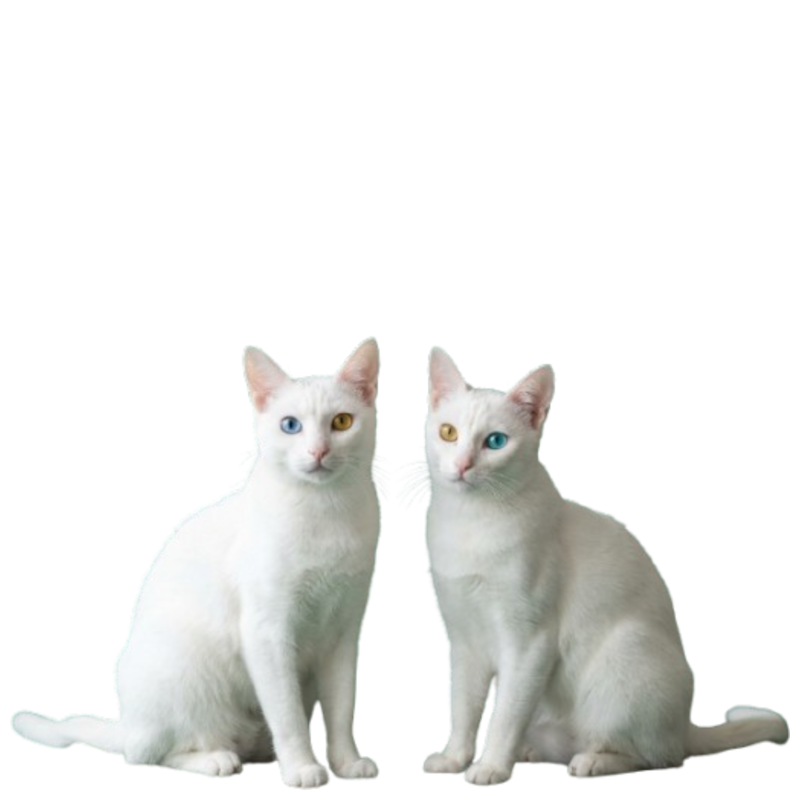
appearance
The Khao Manee represents a refined example of the oriental semi‐foreign phenotype, characterized by a lithe yet robust musculoskeletal frame that emphasizes agility and structural economy. From an anatomical perspective, Khao Manees display a balanced symmetry between the appendicular skeleton and the axial core, resulting in a feline that is neither overly tubular nor excessively compact. This profile examines the specific topographical markers and biomechanical configurations that define the Khao Manee’s physical essence.
Cranial Conformation and Facial Topography
The cephalic structure of the Khao Manee is defined by a modified wedge shape, where the width across the zygomatic arches serves as the primary anchor for the facial geometry. Unlike the extreme dolichocephalic profiles seen in some oriental breeds, this cat maintains a more moderate cranial ratio.
- Frontal Bone and Profile: The forehead is flat, transitioning into a gentle convex curve toward the occiput. The lateral profile reveals a slight break at the nasal bridge, avoiding a perfectly straight line while maintaining a clean, aristocratic flow.
- Muzzle and Mandible: The muzzle is of medium length and width, terminating in a blunt wedge that lacks any hint of a pronounced pinch. The chin is firm and vertically aligned with the rhinarium, indicating a strong mandibular symphysis.
- Aural Positioning: The pinnae are large, set high on the cranium, and oriented with a slight outward flare. They are broad at the base with slightly rounded apices, contributing to an alert, inquisitive expression.
Ocular Geometry and Orbital Alignment
The orbits are of significant anatomical importance, situated with a slight oblique tilt toward the base of the ears. The aperture is large and luminous, possessing an almond shape that is neither fully round nor excessively slanted.
The Almond-Eye Shape Rule
- : Orbital Ratio, the number that defines the signature almond shape of the eye.
- : Eye Width, the horizontal distance between the inner and outer corners of the eye.
- : Eye Height, the vertical distance of the eyelid opening at its widest point.
In a breed standard assessment of a Khao Manee, a judge measures a palpebral width () of mm and a palpebral height () of mm. The resulting Orbital Ratio is . This specific ratio confirms the almond shape is neither fully round (which would be closer to ) nor excessively slanted, maintaining the luminous appearance of the breed.
The ratio of the palpebral fissure ensures maximum light intake while protecting the globe, a characteristic feature of its ancestral lineage.
Axial and Appendicular Skeletal Structure
The Khao Manee possesses a medium‐sized torso that is muscular and supple. The pectoral girdle is well‐knit, providing a seamless transition from the neck to the ribcage.
| Structural Component | Anatomical Description |
|---|---|
| Cervical Spine | Medium in length, providing significant rotational flexibility. |
| Thoracic Cavity | Moderate breadth with well‐sprung ribs, allowing for efficient respiratory capacity. |
| Pelvic Girdle | Level and firm, supporting powerful hindquarters. |
| Caudal Vertebrae | The tail is medium in length, tapering evenly toward a fine point; it must be free of any palpable kinks or skeletal deviations. |
Appendages and Locomotory Apparatus
The limbs are long and slender, yet they possess a dense muscular hypertrophy that suggests explosive kinetic energy.
- Hind Limbs vs. Forelimbs: The pelvic limbs are slightly longer than the thoracic limbs, creating a subtle forward cant to the topline when the animal is in a neutral standing position.
- Digital Anatomy: The paws are oval in shape and medium in size. The digital pads are resilient, providing necessary cushioning for the metacarpal and metatarsal joints during high‐impact landings.
Integumentary System and Coat Texture
The Khao Manee’s coat is its most distinctive tactile feature. It is a single coat, meaning it lacks a dense, insulating undercoat, which highlights the underlying muscular definition.
- Fiber Density: The hair follicles are spaced to produce a close‐lying, sleek appearance that follows the contours of the body with precision.
- Tactile Quality: The texture is smooth and exceptionally soft to the touch—though never woolly or coarse. This lack of bulk ensures that the cat’s aerodynamic silhouette remains undisturbed during locomotion.
Geometric Proportions
Khao Manees can be evaluated through the lens of feline architectural balance, where the height at the shoulder is roughly equivalent to the length from the sternum to the ischium, forming a near‐perfect square when excluding the neck and tail.
The Khao Manee’s morphology is a study in functional elegance—a physical form where every skeletal angle and muscular insertion serves the purpose of graceful, efficient movement.
behavior
The behavioral repertoire of the Khao Manee is characterized by high levels of environmental engagement and complex social facilitation strategies. As an active, orientally‐derived breed, their ethogram reflects a high metabolic demand for physical and cognitive stimulation, manifesting in sustained predatory play and intricate tactile communication. This analysis focuses on the observable motor patterns and interactive sequences that define the Khao Manee’s daily activity budget and social hierarchy within a domestic or colony setting.
Social Dynamics and Conspecific Interaction
Khao Manees exhibit a strong tendency toward pro‐social behaviors, frequently utilizing allorubbing and allogrooming to maintain group cohesion. Their social structure is often non‐linear, relying on fluid interactions rather than rigid dominance hierarchies.
- Affiliative Signaling: High frequency of the vertical tail posture during approach, indicating a low‐arousal, friendly intent.
- Tactile Communication: Extensive use of the “head‐butt” or bunting behavior against both conspecifics and human caretakers to deposit semiochemicals from the sebaceous glands.
- Social Facilitation: The presence of one Khao Manee engaged in a specific activity—such as feeding or exploration—often triggers a mirrored response in others, increasing the probability of synchronized group behavior.
The Copy-Cat Social Logic
- : Social Likelihood, the chance of one cat doing an action because they see a friend doing it.
- : Independent Likelihood, the chance of the cat doing that same action all by themselves.
- : Greater Than, showing that being together makes the activity much more likely to happen.
In a household with two Khao Manees, Cat i has a baseline probability () of (20%) to begin grooming at any given moment. However, when Cat j starts allogrooming, the conditional probability () jumps to (75%). This statistical increase confirms the breed’s strong drive for synchronized group behavior and social facilitation.
Vocalization Patterns and Acoustic Signaling
The acoustic ethogram of the Khao Manee is notably diverse, featuring a wide range of frequencies and intensities. Unlike more sedentary breeds, their vocalizations are often context‐specific and utilized for distance‐regulation and solicitation.
| Vocalization Type | Behavioral Context | Acoustic Properties |
|---|---|---|
| Chirp/Trill | Greeting or play invitation | High‐frequency, ascending tone |
| Mew | Individual solicitation | Mid‐range, varied duration |
| Growl/Hiss | Agonistic or defensive | Low‐frequency/Aperiodic noise |
| Caterwaul | High‐arousal or reproductive | Long‐duration, rhythmic |
Environmental Exploration and Predatory Manifestation
The Khao Manee’s search strategies are characterized by high verticality and intensive investigation of novel stimuli. Their prey‐drive is often redirected into sophisticated play sequences.
- Vertical Stratification: A distinct preference for high‐altitude perching sites to conduct visual surveillance of their territory.
- Object Manipulation: High dexterity in the thoracic limbs allows for the manipulation of small objects, often involving “fetching” or carrying items in the mandible.
- Predatory Sequence: The full sequence involves stalking, pouncing, and the “kill‐bite,” though in domestic Khao Manees, the consumption phase is typically replaced by further play manipulation.
Activity Cycles and Circadian Rhythmicity
Khao Manees typically follow a polyphasic sleep pattern, yet they show increased crepuscular activity peaks. Their energy expenditure is often concentrated in short, high‐intensity bursts.
- Dawn Peak: Intensive exploratory behavior and vocal signaling.
- Diurnal Rest: Multiple short sleep cycles (typically 20–50 minutes).
- Dusk Peak: Peak predatory play and social interaction sequences.
- Nocturnal Activity: Sporadic environmental patrolling and grooming.
Stereotypic and Maintenance Behaviors
Maintenance behaviors such as grooming and scratching are performed with high frequency to ensure integumentary health and scent marking.
- Self‐Grooming: Utilized both for hygiene and as a displacement behavior during moments of mild social conflict or frustration.
- Scratching Patterns: Preference for vertical substrates to facilitate full stretching of the musculoskeletal frame while depositing pedal pheromones.
The Khao Manee’s behavioral complexity suggests a high level of neuroethological plasticity—allowing the animal to rapidly adapt its social and exploratory strategies to a wide variety of environmental contingencies.
color
The Khao Manee represents the pinnacle of feline depigmentation, where the visual manifestation is defined not by the presence of pigment, but by its absolute exclusion. In this phenotype, the dermal and follicular landscapes are characterized by a total lack of active melanocytes, resulting in a coat that reflects the entire visible spectrum. This pristine white state is not merely a surface color but a structural optical effect occurring at the microscopic level of the hair shaft. Unlike other varieties that may show evidence of ghost markings or residual rufism, the Khao Manee’s integument is typically devoid of any eumelanistic or phaeomelanistic granules, achieving a level of achromatic saturation that is rare in the feline world.
Biochemical Basis of Total Depigmentation
The white coloration of the Khao Manee is categorized as a dominant masking effect. While the cat may possess the biochemical potential for other colors, the migration of melanocytes is halted during embryonic development.
Melanocyte Migration and Follicular Vacuity
In the Khao Manee, the hair follicles are essentially empty of pigment granules. The resulting “color” is actually the reflection of light off the air pockets and keratin structures within the medulla and cortex of each hair. This can be expressed by the simplified light reflectance ratio:
The Pure White Shine Formula
- : Reflectance Ratio, the percentage of light that bounces off the fur to create that bright white look.
- : Bounced Light, the intensity of light that reflects off the hair and hits your eyes.
- : Incoming Light, the total amount of light shining on the Khao Manee’s coat.
In a high-glare environment, if units of incident light () hit the coat of a Khao Manee, and units are bounced back () due to the lack of melanin, the Reflectance Ratio is . This reflectance is what creates the brilliant white appearance, as there is almost no photon absorption by the empty follicles.
Pigment Distribution and Optical Characteristics
The following table categorizes the specific pigmentation zones found in the Khao Manee, highlighting the transition from total depigmentation to the specialized coloration found in the iris.
| Pigment Zone | Manifestation Type | Technical Description |
|---|---|---|
| Follicular Shaft | Total Achromatosis | Complete absence of eumelanin and phaeomelanin granules within the keratin matrix. |
| Epidermal Layer | Non‐Pigmented Pink | The soft pink hue of the skin is a result of vascular visibility through a translucent, melanin‐free epidermis. |
| Ocular Iris | Heterochromatic / Monochromatic | Specialized pigment distribution involving varying densities of stroma melanocytes. |
| Rhinarium and Paw Pads | Depigmented Flesh | High concentration of capillaries visible through thin, unpigmented squamous epithelium. |
Ocular Pigmentation and Iridescent Shimmer
The iris of the Khao Manee provides the only significant site of pigment concentration. The striking “Diamond Eye” effect is a result of the interaction between stromal pigment density and the physical structure of the eye.
The Mechanics of Heterochromia
When heterochromia occurs in Khao Manees, it demonstrates two distinct pathways of pigment development:
- Cyanic Depigmentation: The blue eye lacks stromal pigment entirely. The color is a result of Tyndall scattering—the same physical phenomenon that causes the sky to appear blue.
- Xanthic/Chloric Concentration: The gold or green eye contains varying levels of eumelanin and lipochrome. The concentration of these granules determines the saturation of the hue.
The density of pigment granules in the iris () can be modeled as a function of the absorption coefficient () and the path length () of light through the stroma:
The Jewel-Eye Color Density
- : Eye Color Density, the final intensity of the eye color we see.
- : Natural Base, a math constant used to calculate how light fades or changes through a surface.
- : Absorption Power, how effectively the eye’s pigment soaks up light (zero for blue eyes).
- : Iris Thickness, the depth of the eye tissue that light has to travel through.
In an odd-eyed Khao Manee, the blue eye has an absorption coefficient () of nearly . Therefore, , indicating zero absorption and total Tyndall scattering. Conversely, the gold eye may have an of and a path length () of . The calculation shows a reduced density of escaping light, resulting in a deep xanthic (gold) concentration.
Ghost Markings and Transient Pigmentation
In the developmental stage of the Khao Manee–specifically in kittens–small smudges of eumelanin may be visible on the cranium. These are known as “ghost markings.” These clusters of pigment granules are typically transient; as the cat matures, the biological mechanism for pigment suppression usually completes its cycle, leading to the eventual disappearance of these melanistic remnants.
Summary of Integumentary Luster
The “glow” often associated with Khao Manees is an optical byproduct of their unique pigmentation. Because there is no melanin to absorb UV or visible light, the photons bounce between the translucent hairs before reflecting back. This creates a high‐intensity visual output that differs significantly from the flat white seen in cats with high levels of white spotting but some underlying pigment. The Khao Manee remains a masterclass in the beauty of biological absence.
compatibility
Ease of Maintenance
Rating: 5/5
Child Friendly
Rating: 5/5
Annual Cost
Rating: 4/5
Lifetime Cost
Rating: 4/5
Adaptability
Rating: 5/5
Velcro Factor
Rating: 5/5
Quietude
Rating: 2/5
Apartment Suitability
Rating: 3/5
Hypoallergenic
Rating: 2/5
Handling Tolerance
Rating: 5/5
Hardiness/Longevity
Rating: 5/5
Prey Drive
Rating: 2/5
genetics
The genomic profile of the Khao Manee is defined by several distinct loci that govern structural and ocular divergence through specific allelic interactions. As an experimental breed, the Khao Manee’s genetic landscape is characterized by the presence of both autosomal dominant and incomplete dominant mutations, which necessitate careful selective breeding to maintain the desired homozygous or heterozygous states. This guide delineates the molecular markers and inheritance probabilities that underpin the Khao Manee’s unique biological blueprint.
Polydactylism and the Pd Locus
One of the primary genetic signatures of the Khao Manee is the presence of preaxial polydactyly, which is governed by the locus located on chromosome . This trait follows an autosomal dominant inheritance pattern with variable expressivity.
- Allelic Interaction: The presence of a single dominant allele () results in the manifestation of supernumerary digits, though the total count can vary significantly across siblings.
- Genotypic Probability: A cross between two heterozygous Khao Manees () yields a Mendelian ratio for the presence of the trait:
| Genotype | Percentage | Phenotypic Outcome |
|---|---|---|
| Pd / Pd | 25% | Homozygous Dominant (Polydactyl) |
| Pd / pd | 50% | Heterozygous (Polydactyl) |
| pd / pd | 25% | Homozygous Recessive (Non‐polydactyl) |
Auricular Chondrodysplasia and the Cu Allele
The distinctive ear shape of the Khao Manee is a result of a specific mutation at the (Curled) locus. This mutation affects the fibrocartilage within the pinna during the early stages of postnatal development.
- Mode of Inheritance: This trait is typically inherited as an autosomal dominant. Unlike the mutation found in the Scottish Fold, the allele in Khao Manees has not been linked to systemic osteochondrodysplasia in homozygous individuals.
- Incomplete Dominance Considerations: While essentially dominant, the degree of curvature often suggests a polygenetic influence, where secondary modifier genes determine the final tightness of the arc.
Caudal Vertebrae Suppression and the Manx Gene Analogue
The reduction in caudal vertebrae length in the Khao Manee is managed through a complex interaction at the locus or a similar suppressive marker. This involves the truncation of the sacral and caudal spinal segments.
The Tail Length Probability Rule
- : Tail Shortness Probability, the likelihood or extent of a tail being shortened or bobbed.
- : The Total Build-Up, the combined effect of all small helper genes working together.
- : Helper Genes, small genetic factors that decide if the tail will be straight, kinked, or very short.
- : Main Tail Gene, the primary genetic switch that triggers a shorter tail in the first place.
In a litter of Khao Manees, one kitten inherits the primary allele (). However, its modifier genes () vary. If the sum of modifiers is high, the truncation probability () results in a stumpy tail. If the sum is low, the kitten may exhibit a longer, kinked tail. This explains why a single litter can show a spectrum of caudal phenotypes despite having the same major gene.
The modeling of this trait suggests that while a major gene initiates the truncation, the specific length of the tail is subject to polygenetic inheritance, creating a spectrum of caudal phenotypes within Khao Manee litters.
Epistatic Interactions and Pigmentation Control
While the Khao Manee incorporates various phenotypic markers, the underlying genetics of its coat involves the interaction between the (Color) locus and the (White) locus.
- Dominant White Epistasis: The allele is epistatic to all other color genes. If a Khao Manee carries the allele, it masks the expression of all other pigments at the (Agouti) or (Black) loci.
- Ocular Influence: The locus is also pleiotropic, influencing the migration of melanoblasts to the iris during embryonic development, which often results in iris bicolor variations.
Genomic Diversity and Hybrid Vigor
Because the Khao Manee is a composite breed, its genome possesses a higher degree of heterozygosity compared to older, more closed gene pools. This genetic diversity is a result of the systematic crossing of divergent lineages to stabilize the and markers without increasing the coefficient of inbreeding ().
The Khao Manee’s genetic matrix serves as a complex model of how multiple dominant mutations can be stabilized through controlled selection and the monitoring of epistatic modifiers—ensuring the structural integrity of the genome remains intact.
health
The clinical management of the Khao Manee necessitates a comprehensive understanding of feline internal medicine, with a particular focus on hereditary sensory deficits and cardiovascular monitoring. While Khao Manees possess a robust physiological constitution, their specific biological lineage introduces unique vulnerabilities within the auditory and metabolic systems. This technical guide delineates the primary health concerns and pathological mechanisms that clinicians must monitor to ensure the systemic integrity of the Khao Manee’s health.
Auditory Pathology and Congenital Sensorineural Deafness
A primary clinical concern in Khao Manees is the high incidence of congenital sensorineural deafness, which arises from the degeneration of the stria vascularis within the cochlea. This condition is often bilateral or unilateral and is linked to the suppression of melanocyte migration during embryonic development.
- Pathogenesis: The absence of melanocytes in the inner ear leads to the collapse of the cochlear duct, typically occurring between 1–3 weeks post‐parturition.
- Clinical Diagnostic: The Brainstem Auditory Evoked Response (BAER) test remains the gold standard for quantifying auditory function.
The Hearing Strength Test (BAER)
- : Total Nerve Signal, the total electrical energy measured from the cat’s hearing response.
- : Wave Total, the sum of the 5 to 7 specific electrical jumps a healthy ear makes.
- : Wave Height, how strong each electrical signal is when the cat hears a sound.
- : Reaction Time, how many milliseconds it takes for the brain to react to a sound.
During a BAER test on a white-coated Khao Manee, the clinician records five distinct waves (). If the summed amplitudes () show clear, high-voltage peaks at standard latencies (), the cat is confirmed hearing. However, if the summation results in a flat line (), it indicates congenital sensorineural deafness caused by the degeneration of the stria vascularis.
Cardiovascular Surveillance and Hypertrophic Cardiomyopathy
Like many oriental semi‐foreign breeds, Khao Manees require screening for Hypertrophic Cardiomyopathy (HCM), a condition characterized by the idiopathic thickening of the left ventricular myocardium.
| Clinical Marker | Diagnostic Tool | Pathological Threshold |
|---|---|---|
| Left Ventricular Wall Thickness | Echocardiography | > 6.0 mm |
| Left Atrial/Aortic Root Ratio | Ultrasonography | > 1.5 |
| Cardiac Troponin I | Serum Assay | Elevated levels indicate myocardial stress |
Renal Function and Chronic Kidney Disease (CKD)
As Khao Manees age, monitoring the glomerular filtration rate (GFR) is essential for the early detection of renal insufficiency. The pathophysiology typically involves progressive interstitial fibrosis and tubular atrophy.
- Symmetric Dimethylarginine (SDMA): This biomarker is utilized for earlier detection of CKD compared to traditional creatinine monitoring, as it increases when there is as little as a 25% loss in renal function.
- Proteinuria Management: Quantitative analysis of the Urine Protein‐to‐Creatinine (UPC) ratio is critical for staging renal health.
Dermatological Vulnerabilities and Squamous Cell Carcinoma
Due to the lack of protective pigmentation in the epidermis, Khao Manees are highly susceptible to actinic keratosis and subsequent Squamous Cell Carcinoma (SCC), particularly on the pinnae and nasal planum.
- Cellular Progression: Chronic ultraviolet radiation leads to DNA damage in keratinocytes—manifesting as erythematous, crusting lesions that can become invasive.
- Prophylactic Protocols: Clinical recommendations focus on the limitation of diurnal solar exposure to mitigate the risk of malignant transformation.
Metabolic Homeostasis and Dental Health
The Khao Manee often exhibits a predisposition toward periodontal disease, which can have systemic implications for cardiac and renal health through the mechanism of chronic bacteremia.
- Gingivitis and Stomatitis: Chronic inflammatory responses can lead to severe oral pain and decreased caloric intake.
- Resorptive Lesions: Odontoclastic resorptive lesions (FORLs) are frequently observed during routine oral examinations.
The clinical maintenance of Khao Manees demands a multidisciplinary approach—integrating rigorous auditory screening with proactive cardiovascular and dermatological monitoring to manage their inherent biological vulnerabilities.
longevity
The longitudinal study of Khao Manee survivability reveals a robust aging profile typical of many landrace‐derived feline populations. From a gerontological perspective, the transition into senescence is characterized by a gradual decline in physiological reserve, with mortality rates typically following a Gompertzian distribution. This profile examines the statistical distribution of lifespan within the Khao Manee population, identifying the critical thresholds of the geriatric transition and the mathematical modeling of survival probabilities across the domestic life cycle.
Actuarial Life Table and Mortality Statistics
Statistical data suggests that Khao Manees possess a median life expectancy that exceeds the general domestic feline average. The survival function, denoted as , represents the probability that an individual Khao Manee will survive from birth to time .
The Long-Life Probability Tracker
- : Survival Function, the odds that a cat will live to reach a specific age ().
- : Probability, the percentage chance of a specific outcome happening.
- : Actual Lifespan, the total number of years a specific cat actually lives.
- : Target Age, the specific birthday we are checking (like 15 years old).
- : Greater Than, the requirement that the cat outlives the target age.
If we look at mortality statistics for a cohort of Khao Manees, we want to find the probability of a kitten reaching senior status at years (). If the data shows that of the breed reaches this age, then . This high survival probability highlights the breed’s robust median life expectancy compared to the general domestic average.
| Life Stage | Age Range (Years) | Statistical Description |
|---|---|---|
| Developmental | 0–1 | High initial survival post‐weaning. |
| Mature Adult | 2–10 | Minimal age‐specific mortality rates. |
| Senior Transition | 11–14 | Accelerating rate of physiological senescence. |
| Geriatric Phase | 15–20+ | Maximum mortality risk; potential for exceptional longevity. |
Quantitative Modeling of Senescence
The rate of aging in Khao Manees can be modeled using the Gompertz‐Makeham law of mortality, which accounts for both age‐independent mortality and the exponential increase in the death rate as the animal ages.
The Natural Aging and Risk Formula
- : Total Yearly Risk, the chance of a health problem happening at a specific age ().
- : Starting Risk, the very low baseline risk a healthy young adult cat starts with.
- : Growth Constant, a math base used to show how things (like aging) increase over time.
- : Aging Speed, the rate at which health risks naturally increase as the years go by.
- : Current Age, how old the cat is right now.
- : Random Risk, the chance of an accident or unexpected event that has nothing to do with age.
For a senior Khao Manee at age (), we calculate the force of mortality. If the baseline risk () is and the rate of senescence () is a stable , with a random risk () of , the calculation is . This results in a hazard rate of approx , confirming that the Khao Manee maintains a low risk profile even as it enters its second decade of life.
In this model, represents the rate of senescence. Observations indicate that the Khao Manee maintains a relatively stable value until the second decade of life, suggesting a delayed onset of severe geriatric decline compared to more highly inbred oriental lineages.
Determinants of Survival Probability
The probability of a Khao Manee reaching the 90th percentile of its lifespan is influenced by a combination of environmental variables and biological robustness.
- Hazard Function (): The instantaneous rate of mortality is significantly lower in the middle years of the Khao Manee’s life cycle.
- Senescence Deceleration: Certain individuals within the Khao Manees population exhibit markers of slow aging, where cellular repair mechanisms appear to maintain homeostasis longer than average.
- Chronic Condition Intersection: The primary cause of mortality shifts from acute events to chronic, age‐related systemic failure during the late senior phase.
Aging Phenotypes and Biological Age
The biological age of a Khao Manee often diverges from its chronological age. Gerontologists utilize several biomarkers to assess the functional status of a geriatric individual.
- Metabolic Efficiency: The rate at which the basal metabolic rate (BMR) declines during the 12–15 year range.
- Cognitive Preservation: The maintenance of environmental engagement levels into the late geriatric stage.
- Physical Frailty Index: A cumulative measure of physiological deficits that predicts the remaining life expectancy.
The actuarial data for Khao Manees highlights a significant potential for longevity—provided the transition from mature adult to senior status is managed through precise clinical monitoring of age‐related biomarkers.
maintenance
The management of Khao Manees requires a specialized approach to feline husbandry that accounts for their high metabolic throughput and specific integumentary characteristics. Effective maintenance centers on a calibrated nutritional strategy designed to support lean muscle mass and an environmental configuration that facilitates species‐specific kinesthetic expression. This guide provides the technical parameters for the dietary, hygienic, and spatial requirements necessary to optimize the physiological homeostasis of the Khao Manee.
Nutritional Bioengineering and Caloric Management
The Resting Energy Requirement (RER) for a Khao Manee serves as the baseline for all dietary formulations. Given the high activity levels typical of this lineage, a Maintenance Energy Requirement (MER) multiplier is often applied to prevent adiposity while supporting thermoregulation.
The Daily Minimum Energy Goal (RER)
- : Base Daily Calories, the minimum energy needed just for the heart to beat and lungs to breathe.
- : Energy Constant, a standard number used to start the calorie calculation for all mammals.
- : Body Weight, the cat’s weight measured in kilograms.
- : Size Adjustment, a math rule used because larger bodies use energy slightly more efficiently.
For a mature Khao Manee weighing kg, the calculation is . Since is approximately , the calories per day. To calculate the Maintenance Energy Requirement (MER) for this high-activity breed, a multiplier of is applied: total daily calories to support its athletic physique.
The Active Life Daily Calorie Goal (MER)
- : Total Daily Food, the total calories a cat needs based on how active their life is.
- : Quiet Life Multiplier, the setting for cats that prefer lounging and napping.
- : Busy Life Multiplier, the setting for this active breed that loves playing and exploring.
- : Base Daily Calories, the starting floor of calories needed for basic life.
For an athletic Khao Manee with a calculated RER of calories, the Maintenance Energy Requirement is determined by its lifestyle. If the cat is highly active and exploratory, the calculation is daily calories. If the same cat becomes sedentary or less active, the requirement shifts toward the lower bound of calories to prevent unwanted weight gain.
| Component | Target Percentage (Dry Matter) | Rationale |
|---|---|---|
| Crude Protein | 35%–45% | Support of lean musculoskeletal hypertrophy. |
| Crude Fat | 15%–20% | Essential fatty acids for sebum production. |
| Omega‐3/6 Fatty Acids | 1.5%–3.0% | Maintenance of integumentary barrier function. |
| Moisture Content | > 70% (Wet Food) | Support of renal filtration and hydration. |
Integumentary Maintenance and Sebum Control
Due to the single‐layered nature of the Khao Manee’s coat, grooming protocols focus on the regulation of epidermal oils and the prevention of dander accumulation.
- Sebum Regulation: Weekly utilization of a soft bristle brush or chamois cloth is required to distribute natural lipids across the hair shaft, ensuring the coat remains sleek and luminous.
- Aural Hygiene: Periodic inspection of the large pinnae is necessary; however, excessive cleaning should be avoided to prevent disrupting the delicate microbiome of the ear canal.
- Periodontal Prophylaxis: Daily mechanical plaque removal through specialized feline dentifrice is critical to prevent the progression of gingival inflammation.
Environmental Enrichment Standards
The Khao Manee demands an environment that supports complex exploratory strategies and vertical stratification.
- Kinesthetic Outlet: Installation of high‐altitude perching systems is a mandatory requirement for Khao Manees to satisfy their innate need for territorial surveillance.
- Thermal Management: Because they lack a dense undercoat, Khao Manees have specific hygroscopic and thermal needs; ambient temperatures should be maintained between 21°C–26°C to prevent cold‐induced metabolic stress.
- Cognitive Complexity: Implementation of food‐puzzles and olfactory enrichment tools is recommended to prevent stereotypic behaviors resulting from boredom.
Hydration and Metabolic Turnover
The hydration status of the Khao Manee is a primary factor in metabolic turnover. Use of a circulating water fountain is preferred over static bowls to encourage voluntary fluid intake.
The successful maintenance of the Khao Manee is predicated on a precision‐driven husbandry model—one that prioritizes metabolic fuel quality and environmental verticality over traditional sedentary confinement.
measurements
| Measurement | Female | Male | ||
|---|---|---|---|---|
| Metric | Imperial | Metric | Imperial | |
height | 23 – 28 centimeters | 9 – 11 inches | 25 – 30 centimeters | 10 – 12 inches |
length | 33 – 41 centimeters | 13 – 16 inches | 38 – 46 centimeters | 15 – 18 inches |
weight | 2.7 – 4.1 kilograms | 6 – 9 pounds | 3.6 – 5 kilograms | 8 – 11 pounds |
• Height: Refers to the measurement at the withers (shoulders).
• Length: Measured from the tip of the nose to the base of the tail.
origin
The Khao Manee represents a distinct branch of the Southeast Asian landrace populations, specifically emerging from the geographic isolation of the Chao Phraya River basin. Unlike many modern feline breeds characterized by recent anthropogenic selection, the Khao Manee’s lineage is rooted in a deep historical clade that coevolved with Siamese urban civilization. This guide examines the phylogenetic divergence of the Khao Manee from ancestral wildcats and its subsequent establishment as a high‐status biological artifact within the Ayutthaya and Rattanakosin periods.
Phylogenetic Divergence and Ancestral Clades
The origins of the Khao Manee are inextricably linked to the migration of Felis lybica lybica and Felis lybica ornata into the Indochinese peninsula. Genomic modeling suggests that the Khao Manee’s ancestors diverged from these primary clades due to the ecological pressures of a tropical, riparian environment.
The Ancient Roots Separation Clock
- : Separation Time, how many generations ago this breed became its own distinct group.
- : Genetic Distance, the amount of DNA differences that have built up between two cat groups.
- : Mutation Speed, how fast small changes naturally happen in cat DNA over time.
- : Combined Speed, the total rate of change happening in both groups at the same time.
To calculate the point of divergence between the Khao Manee and Mediterranean populations, researchers measure a genetic distance () of . If the feline mutation rate () is per generation, the calculation is . This suggests the Khao Manee has maintained regional endemism for at least generations, reinforcing its unique status as an ancient Thai landrace.
Current data indicates that the Khao Manee maintains one of the highest degrees of genetic distance from Mediterranean populations, signifying a long period of regional endemism.
Chronological Timeline of Lineage Establishment
The history of the Khao Manee is documented through classical literature and archaeological contexts, notably the Tamra Maew (Cat‐Book Manuscripts).
| Era | Approximate Dates | Historical Context |
|---|---|---|
| Sukhothai Period | 1238–1438 | Initial localization of landrace populations. |
| Ayutthaya Period | 1350–1767 | Recognition as a distinct royal lineage; early mentions in manuscripts. |
| Thonburi Period | 1767–1782 | Preservation of core breeding stock during regional conflict. |
| Rattanakosin Period | 1782–Present | Formalization of the Khao Manee’s status and global expansion. |
Anthropogenic Selection and Royal Patronage
The stabilization of Khao Manees as a recognizable type was heavily influenced by the cultural preferences of the Siamese monarchy. Historical records indicate that Khao Manees were restricted to the royal court and high‐ranking clergy, which served as a form of controlled isolation.
- Manuscript Evidence: The Tamra Maew manuscripts characterize the Khao Manee (historically referred to as the Khao Plort) as a symbol of prosperity. These documents represent some of the earliest forms of breed standards in human history.
- Geographic Bottlenecking: The concentration of Khao Manees within palace walls created a significant genetic bottleneck, which paradoxically helped to fix the morphological traits that define the Khao Manee today.
Migratory Routes and Global Integration
Until the late 20th century, the Khao Manee remained almost entirely localized within Thailand. The transition from an endemic landrace to an internationally recognized breed began with targeted export programs.
- Phase I: Local Endemism: Centuries of restricted breeding within the Thai central plains.
- Phase II: Initial Exportation (1999): The first documented transfer of Khao Manees to North America, marking the end of regional isolation.
- Phase III: Global Taxonomic Recognition: The inclusion of the Khao Manee in western registries, necessitating the formalization of its historical lineage through archival research.
The historical trajectory of the Khao Manee is a rare example of a landrace population that transitioned into a status symbol through centuries of cultural isolation—preserving a unique Indochinese genomic signature that is distinct from all other oriental clades.
temperament
The temperament of the Khao Manee is characterized by a low threshold for environmental neophobia and a high degree of gregariousness, distinguishing it as an exceptionally active and socially engaged feline. Psychobiologically, Khao Manees exhibit an advanced capacity for sensory processing and high levels of investigative motivation, which suggests a neurochemical profile primed for frequent environmental interaction. This dispositional analysis examines the core psychological facets that define the Khao Manee’s inherent nature, focusing on emotional reactivity and the structural components of their intra‐species and inter‐species sociability.
Dimensions of Emotional Reactivity and Neophobia
Khao Manees demonstrate a distinctive orientation toward novel stimuli, favoring exploration over avoidant or defensive mechanisms. Their psychological profile suggests a significant reduction in the typical feline stress response when encountering unfamiliar environmental variables.
- Environmental Investigation: High investigative drive characterizes the Khao Manee, with individuals displaying a rapid latency to approach novel objects.
- Neophilic Index: Unlike more sedentary lineages, Khao Manees possess a high neophilic index, meaning they actively seek out change within their immediate territory.
- Threshold for Startle Response: The auditory and tactile startle thresholds are notably high, indicating a psychological resilience that allows for rapid recovery following unexpected sensory input.
Gregariousness and Social Attachment Scales
The Khao Manee is defined by an intense requirement for social affiliation, manifesting as an almost obligate need for proximity to conspecifics or human surrogates.
| Temperament Trait | Description | Clinical Assessment |
|---|---|---|
| Inter‐species Sociability | Tendency to engage with non‐feline entities. | High; persistent solicitation. |
| Affiliative Motivation | Drive to maintain physical or vocal contact. | High; low tolerance for isolation. |
| Emotional Resilience | Capacity to adapt to social flux or changes. | Moderate to High. |
| Intra‐species Cooperative Drive | Propensity for group integration with other cats. | High; low agonistic tendency. |
Cognitive Engagement and Arousal States
The Khao Manee’s psychobiological state is often one of high tonic arousal, where the animal is constantly scanning for opportunities for cognitive engagement.
The Playtime Brain-Energy Sum
- : Total Brain Energy, the total mental workout the cat gets during an activity.
- : Total Time Sum, a math way to add up all the excitement from start to finish.
- : Sensory Fun, the amount of sights, sounds, and smells (like toys) the cat is noticing.
- : Curiosity Drive, a multiplier for how much the cat actually wants to figure things out.
- : Passing Moments, the tiny slices of time as the play session continues.
During a -minute play session ( seconds), a Khao Manee receives constant sensory input (). Because their investigative motivation () is a consistently elevated , the Arousal State is the integral of over seconds. The result, units of engagement, demonstrates why the Khao Manee requires significant mental stimulation to avoid boredom-induced stress.
In this conceptual model, the arousal state () is a function of sustained sensory input () multiplied by the investigative motivation () over a given time interval. For Khao Manees, remains consistently elevated throughout the diurnal cycle.
Vocal Expression and Communicative Intent
The disposition of the Khao Manee is inherently communicative, utilizing vocalization not merely as a survival tool but as a primary method for regulating social distance and expressing psychological needs.
- Assertive Solicitation: A dispositional tendency to use persistent vocal cues to influence the environment or direct social attention.
- Affective Signaling: The use of varied acoustic frequencies to reflect shifting internal emotional states, from contentment to moderate frustration during social deprivation.
Adaptability and Learning Propensity
Khao Manees possess a psychological plasticity that makes them highly receptive to operant conditioning. Their learning propensity is driven by a combination of high food motivation and a desire for social reinforcement.
- Psychological Plasticity: The ability to modify dispositional responses based on positive environmental feedback loops.
- Constraint Frustration: A notable sensitivity to physical or social confinement, which can lead to transient states of high psychological arousal.
The Khao Manee’s temperament represents an evolutionary departure from the solitary hunter archetype—moving instead toward a highly integrated, socially dependent, and neophilic psychological model.