Japanese Bobtail Cat
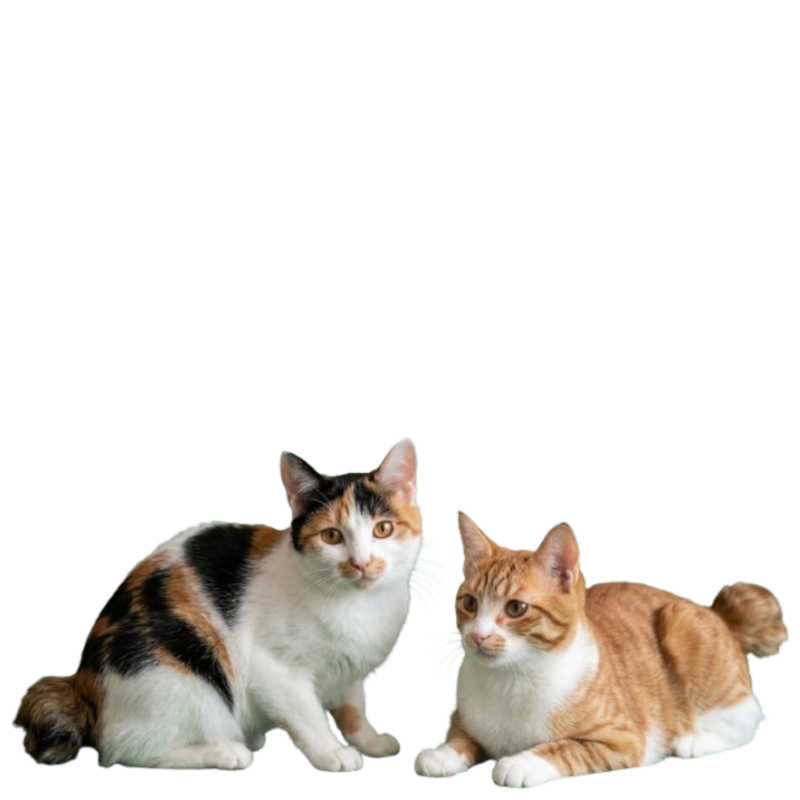
appearance
The structural composition of Japanese Bobtail is characterized by a refined balance between muscularity and svelte elongation. Unlike the cobby or substantial frames found in other Oriental breeds, the feline morphology here is centered on a long, clean-lined torso and highly specialized caudal anatomy.
Cranial and Facial Conformation
The cephalic region of Japanese Bobtails exhibits a distinct equilateral geometry when viewed from the anterior perspective. This is not achieved through a broad skull, but rather through the alignment of high cheekbones and a gently curving muzzle.
- Facial Planes: The profile reveals a discernible break at the nasal bridge—a transition between the forehead and the nose—avoiding the continuous straight line of the Siamese.
- Pinna Orientation: The ears are large, expressive, and set wide apart. They are held at a perpendicular angle to the skull rather than flaring outward, contributing to the breed’s characteristic alert expression.
- Ocular Aperture: The eyes are pronouncedly oval and set at an oblique tilt. This palpebral slant is a defining feature of Japanese Bobtail’s cranial aesthetics.
Appendicular and Axial Skeletal Structure
The skeletal framework is designed for agility and explosive leaping capability. The hindquarters are significantly more developed than the forequarters in terms of both length and muscular density.
| Feature | Anatomical Description |
|---|---|
| Torso | Long and lean, exhibiting a level back that does not slope toward the haunches. |
| Thoracic Cavity | Moderate in breadth, transitioning into a firm, tucked abdomen. |
| Pelvic Limbs | Long and powerfully muscled; the angulation of the hock is deep, providing significant leverage. |
| Thoracic Limbs | Straight and slender, though proportionate to the overall body mass. |
| Paws | Oval in shape with five digits anteriorly and four posteriorly. |
Caudal Morphology: The Pom-pon Structure
The most significant anatomical deviation in Japanese Bobtails is the structure of the caudal vertebrae. The tail is not merely short; it is a complex arrangement of fused, kinked, and curved segments.
The total length of the caudal vertebrae rarely exceeds a few inches, and the structure is often rigid, though it may be flexible at the base. The hair on the tail grows in a radial pattern—diverging from the center—to create the visual illusion of a pom-pon or “bunny tail.”
The “Pom-Pon” Tail Size Rule
- : “Tail-to-Body Ratio,” the percentage of the cat’s total length made up by its tail.
- : “Tail Length,” the actual measurement of the tail bones, including all the zig-zags and curls.
- : “Full Length,” the total distance from the tip of the nose to the start of the tail.
- : “The Bobtail Limit,” the maximum ratio allowed for a cat to be considered a true bobtail.
If a Japanese Bobtail has a “total body length” () of cm and a “pom-pon tail” () that measures cm when fully extended, the ratio is . Since , this cat meets the unique “caudal standard” for the breed.
Integumentary Characteristics and Texture
The coat of Japanese Bobtail exists in both short and long iterations, though both share a specific textural quality. The absence of a dense undercoat is a primary marker of the breed’s morphology.
Coat Density and Layering
The fur is exceptionally silky and lies flat against the muscular contours of the body. Because there is little to no downy undercoat, the silhouette remains sharp and well-defined. In the long-haired variety, the fur may form a ruff around the neck and “britches” on the hind legs—a thickening of the hair follicles without a change in the underlying skin structure.
Dermal Alignment
The skin is supple and fits closely over the musculature. This lack of subcutaneous bulk ensures that the rippling of the and other major muscle groups is visible during locomotion, emphasizing the breed’s athletic phenotype.
behavior
The behavioral repertoire of Japanese Bobtail is defined by high-intensity metabolic cycles and complex social signaling. Observation of the species reveals a predilection for vertical environmental exploration and a highly communicative vocal frequency.
Activity Cycles and Environmental Exploration
The Japanese Bobtail exhibits a polyphasic activity pattern with pronounced bursts of crepuscular hunting—play behaviors. Their exploration strategy is characterized by “high-vantage monitoring”—a consistent drive to utilize the vertical dimension of any given territory.
- Exploratory Drive: Upon introduction to a novel environment, Japanese Bobtails engage in systematic olfactory and tactile mapping.
- Locomotor Patterns: High-frequency leaping and climbing are primary modes of movement. The species demonstrates a specialized “fetching” behavior—a form of object-oriented play that involves the retrieval and transport of non-prey items to a central nesting or social area.
- Object Manipulation: Japanese Bobtail’s dexterity allows for advanced tactile interaction with the environment, often using the thoracic limbs to manipulate latches, water sources, or concealed objects.
Social Dynamics and Conspecific Interaction
Social facilitation is highly evident in Japanese Bobtails. They tend to form cohesive “clans” where individual behaviors are often mirrored or reinforced by the group.
| Behavioral Category | Frequency | Functional Context |
|---|---|---|
| Allogrooming | High | Maintenance of social bonds and group scent—marking. |
| Allorubbing | Moderate | Tactile communication during greeting sequences. |
| Play-Fighting | High | Refinement of predatory motor patterns and social hierarchy. |
| Cooperative Exploration | Moderate | Investigation of environmental stimuli as a collective unit. |
The probability of a positive social interaction between two familiar Japanese Bobtails can be modeled based on the duration of mutual tactile contact:
The “Friendship Building” Success Chance
- : “Friendship Probability,” the likelihood that two cats will have a peaceful and happy interaction.
- : “Together Time,” the total amount of time the cats spend interacting.
- : “Social Speed,” how quickly the cats give each other friendly signals (which is very fast for this breed).
- : “Natural Comfort,” a math constant used to show how social tension naturally fades away over time.
- : “Touch Time,” the moments spent grooming or sitting close together.
If two Japanese Bobtails engage in “mutual grooming” where the reinforcement rate () is and they remain in contact for minutes (), the probability of a “harmonious outcome” is , which is approximately . This high “success rate” reflects the breed’s natural “clannish” and “cooperative” disposition.
Vocalization and Auditory Signaling
A primary ethological marker of Japanese Bobtail is the complexity of its vocalizations. Unlike many domestic felines that rely on a limited range of phonemes, Japanese Bobtail’s vocal repertoire is described as “chirping” or “singing.”
- Tonal Variation: Use of multi-tonal vocalizations to signal intent, ranging from soft trills for social solicitation to sharper, staccato notes for environmental alerts.
- Solicitation Chirping: A specific frequency used to initiate social play or food—seeking behaviors, often accompanied by direct ocular contact with the social partner.
- Response Latency: Japanese Bobtails exhibit a low latency period in vocal responses—frequently “answering” auditory stimuli provided by humans or conspecifics.
Predatory Manifestation and Play
The prey—drive in Japanese Bobtail is intensely focused on aerial and high—speed terrestrial targets. Their play—hunt sequence often bypasses the “stalk” phase in favor of immediate “ambush and pounce” tactics.
- Pounce Accuracy: Due to specialized hind—limb morphology, the explosive power during the “launch” phase of predation is significantly higher than the domestic feline average.
- Carry-Behavior: Post—capture, Japanese Bobtails frequently exhibit a strong drive to relocate the “prey” to an elevated or secluded location, reflecting a protective strategy against opportunistic scavengers in a wild—state simulation.
- Aquatic Interest: A notable subset of Japanese Bobtails displays a tactile interest in moving water, involving repetitive paw—dipping and splashing—a deviation from the standard feline aversion to moisture.
color
The phenotypic expression of color in Japanese Bobtail is defined by high—contrast pigment distribution and a diverse array of melanin concentrations. The breed is historically and biologically recognized for its “mi-ke” (tri-color) presentation, though it encompasses a wide spectrum of eumelanic and phaeomelanic expressions.
Melanin Variants and Chromatic Intensity
The visual palette of Japanese Bobtail’s integument is derived from two primary chemical forms of melanin. The density and arrangement of these pigment granules within the medullary and cortical layers of the hair shaft dictate the observed hue.
- Eumelanin Expression: Observed as dense, deep black pigment granules. In Japanese Bobtails, eumelanin presents with high saturation, ideally lacking any “rusting” or browning at the distal ends of the hair fibers.
- Phaeomelanin Expression: Presenting as red or cream hues. The intensity of this pigment is often modified by polygenic rufism—a factor that determines whether the red appears as a vibrant flame or a muted apricot.
- Dilution Phenotypes: Lowered pigment density results in blue (dilute eumelanin) or cream (dilute phaeomelanin), where granules are clumped and distributed unevenly, allowing for increased light scattering.
Pigment Distribution and Patterning
The most striking feature of Japanese Bobtail pigmentation is the high—white spotting, which creates a canvas for isolated islands of color.
| Color Category | Pigment Characteristics | Shading Nuance |
|---|---|---|
| Solid | Uniform distribution of granules from root to tip. | Lacks “ghost markings” or residual tabby barring. |
| Bicolor | Sharply defined eumelanic or phaeomelanic patches. | Patches are typically saturated and clear—edged. |
| Tri-color | Simultaneous expression of eumelanin and phaeomelanin. | Deep black and vibrant red patches on a white ground. |
| Tabby | Agouti—signaled banding of pigment on individual hairs. | Ground color contrast is dry for pattern clarity. |
Pigment Density Formula
The perceived darkness of a specific patch can be modeled by the concentration of pigment granules per unit of hair volume ():
The “Bold Color” Fur Intensity Formula
- : “Color Thickness,” how packed and intense the color looks inside a single hair.
- : “Total Color-Makers,” the sum of all cells creating dark pigment while the hair grows.
- : “Hair Space,” the amount of room inside the hair shaft to hold that color.
In a “Mi-Ke” (calico) Japanese Bobtail, a black patch has a very high relative to the “cortical volume,” resulting in a high . Because the surrounding white areas have a of effectively zero, the “visual boundary” between the black and white fur remains “crisp” and “defined” rather than appearing “smudged” or “diluted.”
In Japanese Bobtails, a higher in colored patches leads to the characteristic “sharp” look where the color does not bleed into the surrounding white areas.
Refractive Qualities and Surface Luster
The texture of the Japanese Bobtail coat influences how light interacts with the underlying pigment. Because the hair fibers are smooth and lack a dense, fuzzy undercoat, light refraction is minimized, enhancing the depth of the color.
- Luster: The tight alignment of the hair cuticles allows for specular reflection, giving the eumelanic patches a “patent leather” sheen.
- White Ground Clarity: The non—pigmented areas are devoid of melanocytes, resulting in a “pure white” that lacks yellowing or ticking, providing maximum chromatic contrast.
- Tipping and Shading: In certain varieties, pigment is restricted to the distal portion of the hair shaft. This creates a shimmering effect—often referred to as silver or smoke—where the basal portion of the hair remains devoid of visible pigment granules.
Ghost Markings and Residual Pigment
In juvenile Japanese Bobtails, “ghost markings” (faint tabby patterns in supposedly solid patches) are often visible. As the cat matures and pigment density increases, these markings typically recede as the granules fill the hair shaft more completely, though they may persist in the phaeomelanic regions where the agouti signaling is more difficult to suppress.
compatibility
Ease of Maintenance
Rating: 5/5
Child Friendly
Rating: 5/5
Annual Cost
Rating: 4/5
Lifetime Cost
Rating: 5/5
Adaptability
Rating: 5/5
Velcro Factor
Rating: 5/5
Quietude
Rating: 2/5
Apartment Suitability
Rating: 3/5
Hypoallergenic
Rating: 2/5
Handling Tolerance
Rating: 4/5
Hardiness/Longevity
Rating: 5/5
Prey Drive
Rating: 2/5
genetics
The genetic profile of Japanese Bobtail is defined by a specific suite of autosomal mutations that diverge significantly from other short—tailed lineages—such as the Manx or the American Bobtail. This profile is characterized by high genetic stability and a lack of lethal homozygous expressions.
The Caudal Mutation (JB Locus)
The hallmark of Japanese Bobtail’s genomic structure is a spontaneous mutation occurring on an autosomal chromosome. Unlike the Manx allele, which is a semi—dominant lethal gene, the mutation in Japanese Bobtails is autosomal dominant with complete penetrance but variable expressivity.
- Autosomal Dominance: A single copy of the mutated allele is sufficient to express the truncated caudal phenotype.
- Variable Expressivity: While the gene always triggers a reduction in vertebrae, the specific number of fused or kinked segments varies due to secondary polygenetic modifiers.
- Absence of Lethality: Breeding two heterozygous or homozygous Japanese Bobtails does not result in the spontaneous abortion of embryos—a critical distinction in feline genetics.
Inheritance Patterns and Zygosity
Because the caudal trait is dominant, the inheritance follows a predictable Mendelian pattern. However, the exact morphology of the tail remains polygenetic in its final manifestation.
| Genotype | Phenotypic Expression | Genetic Outcome |
|---|---|---|
| JB / JB | Homozygous Dominant | All offspring will inherit the truncated caudal trait. |
| JB / jb | Heterozygous | 50% to 100% chance of offspring expressing the trait, depending on the mate. |
| jb / jb | Homozygous Recessive | Standard feline caudal length; absence of the Japanese Bobtail mutation. |
The probability of an offspring expressing the bobbed tail when crossing a heterozygote () with a homozygous recessive () can be calculated as:
The “Short-Tail” Inheritance Odds
- : “Bobtail Chance,” the 50/50 probability that a kitten will be born with the signature short tail.
- : “The Bobtail Gene,” the strong (dominant) instruction that creates the short, kinked tail.
- : “The Long-Tail Gene,” the standard instruction for a full-length tail.
- : “The Coin Flip,” representing the 50% chance a parent passes the bobtail trait to their kitten.
If a heterozygous Japanese Bobtail () is bred with a long-tailed domestic cat (), each kitten has a of . In a litter of kittens, statistically, would be expected to have the signature “pom-pon tail,” while would have “full-length tails.”
Pelage and Texture Loci
The genomic profile of Japanese Bobtails also includes the (Length) locus, which dictates the hair fiber dimensions.
- Short-Hair Variant: Driven by the dominant allele , which produces the standard close—lying coat.
- Long-Hair Variant: Resulting from the recessive allele. When homozygous (), the cat expresses a semi—longhair phenotype.
- Modifier Genes: A specialized set of polygenes influences the “silky” texture of the fiber, specifically by reducing the density of the undercoat—an inherited trait that prevents matting.
Pigment Suppression and Spotting (S Locus)
While specific colors are outside the scope of this genetic profile, the mechanism for pigment distribution in Japanese Bobtails is governed by the (White Spotting) locus. This allele exhibits incomplete dominance.
- High-Grade Spotting: Individuals with genotypes typically show 50% to 90% pigment suppression.
- Melanocyte Migration: The mutation affects the migration of melanoblasts from the neural crest during embryonic development. In Japanese Bobtails, this migration is halted prematurely—leading to the distinct “van” or “bi—color” patterns frequently observed in the breed.
Genomic Diversity and Hybridization
The Japanese Bobtail genome has remained remarkably isolated from Western feline lineages, resulting in a distinct phylogenetic cluster. This high degree of homozygosity in certain alleles contributes to the consistency of the breed type without the deleterious effects of inbreeding depression commonly seen in closed gene pools with lethal mutations.
health
The clinical landscape of Japanese Bobtail is characterized by a high degree of robust health, primarily due to the absence of the deleterious skeletal anomalies associated with other short—tailed feline lineages. However, like all domestic felids, they exhibit specific physiological vulnerabilities that require veterinary monitoring.
Caudal Vertebral Integrity and Spinal Health
Unlike the Manx, where the tail mutation is often linked to “Manx Syndrome”—a complex of spina bifida and neurological deficits—the Japanese Bobtail’s caudal mutation is localized. Clinical examination typically reveals that the fusion and kinking of the vertebrae do not extend into the sacral or lumbar regions.
- Nerve Impingement: While rare, the irregular folding of the tail can occasionally lead to localized sensitivity. Palpation must be performed with clinical care to ensure no underlying stenosis is present.
- Skeletal Alignment: The significant length of the pelvic limbs relative to the thoracic limbs alters the biomechanical loading on the hock and stifle joints, though there is no statistically significant predisposition to luxating patella in the breed.
Cardiovascular and Metabolic Considerations
While Japanese Bobtails are not uniquely predisposed to specific breed—specific cardiac pathologies, they remain subject to the general feline risk of Hypertrophic Cardiomyopathy (HCM).
| Condition | Pathological Indicator | Clinical Manifestation |
|---|---|---|
| Hypertrophic Cardiomyopathy | Left ventricular concentric hypertrophy. | Systolic murmur, gallop rhythm, or lethargy. |
| Renal Insufficiency | Elevation in SDMA and creatinine levels. | Polyuria, polydipsia, and decreased glomerular filtration. |
| Gingivitis/Stomatitis | Lymphocytic—plasmacytic inflammation. | Oral discomfort and ptyalism. |
The relationship between cardiac output () and systemic vascular resistance () in a feline patient can be modeled as:
The Heart and Circulation Pressure Guide
- : “Average Blood Pressure,” the healthy middle-ground pressure in the arteries.
- : “Heart Output,” the total amount of blood the heart is pumping every minute.
- : “Vessel Resistance,” how hard the blood vessels push back against the flow of blood.
If an aging Japanese Bobtail under anesthesia has a “cardiac output” () of L/min and a “vascular resistance” () of mmHg/min/L, the would be mmHg. If the drops due to “bradycardia,” the will fall, potentially compromising “organ perfusion” to the kidneys.
Where is the Mean Arterial Pressure. Clinicians should monitor during surgical procedures to ensure adequate perfusion, particularly in aging Japanese Bobtails showing early signs of renal decline.
Integumentary and Gastrointestinal Health
The specialized coat of Japanese Bobtail offers a unique physiological advantage regarding trichobezoar (hairball) formation. Due to the lack of a dense, woolly undercoat, the volume of ingested fiber during grooming is significantly lower than in other breeds.
Dermatological Resilience
The skin of Japanese Bobtail typically exhibits high elasticity and low sebum—related complications. However, the lack of an insulating undercoat may increase susceptibility to environmental temperature fluctuations—specifically hypothermia in clinical settings—requiring proactive thermal support during anesthesia.
Nutritional Metabolism
Japanese Bobtails maintain a high metabolic rate, which can mask the early stages of weight loss associated with hyperthyroidism or gastrointestinal malabsorption. Veterinary assessment should prioritize body condition scoring (BCS) over raw weight measurements to account for their naturally lean, muscular phenotype.
longevity
The demographic profile of Japanese Bobtail is characterized by a robust survival curve and a delayed onset of clinical senescence. In the context of feline gerontology, the species demonstrates a high degree of physiological resilience, often exceeding the median life expectancy of the broader domestic cat population.
Survival Probability and Mortality Rates
The mortality rate within a population of Japanese Bobtails follows a typical Gompertz—Makeham law of mortality, where the risk of death increases exponentially after the maturation phase. However, the initial hazard rate remains lower than many other pedigreed lineages.
The probability of an individual Japanese Bobtail reaching age can be expressed by the survival function :
The Long-Life Probability Tracker
- : “Survival Odds,” the chance that a cat will reach a specific age ().
- : “Natural Longevity,” a math constant used to track how things last over time.
- : “Total Life Risk,” the sum of all health challenges from birth to the target age.
- : “Daily Risk,” the tiny chance of a health problem happening at any given moment.
- : “Passing Time,” the measurement of time as the cat ages.
If a Japanese Bobtail has a very low “initial hazard rate” due to its robust genetics, the negative exponent remains small for many years. For instance, if the “cumulative hazard” () at age is only , then . This indicates an “probability of survival” to age , reflecting the breed’s “noted longevity.”
where represents the force of mortality at time . For Japanese Bobtails, the curve remains relatively flat until the post—decadal transition.
Geriatric Transition and Life Stages
The aging process in Japanese Bobtails is categorized by distinct physiological milestones. While individual variation exists, the statistical mean for the onset of the “geriatric” phase is typically identified later than in cobby or heavy—boned feline phenotypes.
| Life Stage | Age Interval (Years) | Biological Characteristics |
|---|---|---|
| Developmental | 0 to 2 | Rapid skeletal maturation and metabolic peak. |
| Mature Adult | 3 to 10 | Peak physiological homeostasis; stable weight. |
| Senior Transition | 11 to 14 | Gradual decline in metabolic rate; initial cellular senescence. |
| Geriatric Phase | 15+ | Increased probability of multi—organ system decline. |
Factors Influencing Senescence Rates
The rate of senescence in Japanese Bobtail is influenced by both intrinsic biological factors and extrinsic environmental variables. Biostatistical analysis suggests that the breed’s high level of metabolic activity during the mature years correlates with sustained muscle mass retention into the senior phase.
- Metabolic Homeostasis: Japanese Bobtails tend to maintain a lean body condition score (BCS) longer than many other breeds, which statistically mitigates the risk of obesity—related mortality.
- Cellular Repair Mechanisms: Data—driven observations indicate that Japanese Bobtail’s transition into the geriatric phase is often “compressed”—meaning they maintain high functional capacity until a very late chronological age.
- Environmental Impact: While the genetic ceiling for longevity is high, the realized lifespan () is heavily dependent on the prevention of infectious disease and oxidative stress:
The “Actual Lifespan” Calculation
- : “Actual Age,” the real number of years the cat lives.
- : “Potential Age,” the maximum lifespan the cat could reach based on its perfect genetics.
- : “Total Subtraction,” the sum of all the years lost to outside health problems.
- : “Life Hardships,” things like bad food, stress, or missed vet visits that shorten a cat’s life.
If a Japanese Bobtail has a genetic “potential” () of years, but suffers from “chronic oxidative stress” due to poor diet (equivalent to years) and “untreated dental disease” (equivalent to years), the “realized lifespan” () is years.
Mortality Distributions
Statistical outliers within the Japanese Bobtail population frequently reach the age of 18 to 20 years, placing them in the upper decile of feline longevity. The distribution of mortality is typically skewed toward the right, indicating that once a Japanese Bobtail survives the pediatric and early adult phases, the probability of reaching advanced age is significantly elevated—a testament to the breed’s inherent constitutional vigor.
maintenance
The management of Japanese Bobtail requires a sophisticated approach to nutritional bioengineering and specialized husbandry. Due to their high metabolic turnover and unique integumentary structure, maintenance protocols must be calibrated to support lean tissue preservation and epidermal health.
Nutritional Bioengineering and Caloric Regulation
The dietary strategy for Japanese Bobtails is centered on a high—protein, moderate—fat macronutrient profile. Their Resting Energy Requirement (RER) is often at the upper threshold of feline metabolic scales, necessitating nutrient—dense formulations to prevent muscle catabolism.
The calculation for the Daily Energy Requirement (DER) for an active, intact adult Japanese Bobtail is modeled as:
The Daily “Active Cat” Calorie Goal
- : “Total Daily Calories,” the amount of food energy (kcal) the cat needs to eat every day.
- : “The High-Activity Factor,” a multiplier for this specific breed because they are so playful and busy.
- : “The Basal Constant,” the starting number used to calculate calories for all mammals.
- : “Weight,” how heavy the cat is in kilograms.
- : “The Efficiency Rule,” a math adjustment because larger bodies use energy more slowly.
For an active, intact Japanese Bobtail weighing kg (), we first calculate the : kcal. We then apply the “active coefficient”: kcal. This ensures the cat receives enough energy to prevent “muscle catabolism” during their frequent periods of high-intensity play.
| Nutrient Category | Requirement | Biological Rationale |
|---|---|---|
| Crude Protein | >35% DM | Supports high muscular hypertrophy and turnover. |
| Animal—Derived Taurine | >0.2% DM | Japanese Bobtail’s cardiac and retinal homeostasis. |
| Omega—3 Fatty Acids | >0.5% DM | Modulates sebum production and follicular strength. |
| Hydration Target | 60 mL/kg/day | Essential for renal flushing and metabolic transport. |
Integumentary Maintenance and Grooming Protocols
The Japanese Bobtail’s coat is structurally distinct, characterized by a lack of a true undercoat. This results in lower sebum accumulation compared to double—coated breeds, but necessitates specific interventions to maintain the lipid barrier.
- Sebum Management: A weekly mechanical de—shedding session using a soft—bristled brush is sufficient to redistribute natural oils. Because the coat is hygroscopic (absorbing moisture from the air), high—humidity environments may require more frequent grooming to prevent the “clumping” of fine guard hairs.
- Periodontal Prophylaxis: Due to the high—protein diet typically required by the breed, the accumulation of plaque can be rapid. A daily mechanical cleaning protocol is prescriptive to prevent the progression from gingivitis to systemic inflammation.
- Ungual Care: Given the high—frequency climbing activities of Japanese Bobtails, claw maintenance is critical. Bi—weekly trimming of the distal tips prevents snagging on vertical enrichment structures.
Environmental Enrichment Standards
The husbandry environment for Japanese Bobtail must be designed as a three—dimensional habitat. Failure to provide adequate verticality can lead to maladaptive stress responses.
Verticality and Spatial Complexity
The environment should maximize the “high—vantage utilization ratio” ():
The “High-Ground” Space Density Ratio
- : “Vertical Score,” how much climbing space is available compared to the size of the floor.
- : “Climbing Space,” the total square footage of all cat trees, shelves, and window perches.
- : “Walkable Floor,” the actual size of the room’s floor.
In a room with sq ft of “floor space,” a Japanese Bobtail environment should provide at least sq ft of “vertical surfaces.” If you install a large cat tree ( sq ft), three staggered shelves ( sq ft each), and a windowsill perch ( sq ft), your is .
A is recommended for Japanese Bobtails. This is achieved through the installation of staggered shelving and high—point nesting sites that allow for unimpeded jumping arcs.
Tactile and Olfactory Stimulation
Maintenance of cognitive health requires high—variability enrichment.
- Tactile Variation: Providing a variety of substrate densities (e.g., sisal, cork, soft textiles) facilitates natural scent—marking through the digital pads.
- Olfactory Refreshing: Periodic rotation of environmental scents or the introduction of safe botanical stimuli prevents olfactory habituation, a common issue in indoor—only Japanese Bobtail management.
measurements
| Measurement | Female | Male | ||
|---|---|---|---|---|
| Metric | Imperial | Metric | Imperial | |
height | 18 – 25 centimeters | 7 – 10 inches | 20 – 28 centimeters | 8 – 11 inches |
length | 25 – 33 centimeters | 10 – 13 inches | 30 – 38 centimeters | 12 – 15 inches |
weight | 2.3 – 3.2 kilograms | 5 – 7 pounds | 3.2 – 4.5 kilograms | 7 – 10 pounds |
• Height: Refers to the measurement at the withers (shoulders).
• Length: Measured from the tip of the nose to the base of the tail.
origin
The establishment of Japanese Bobtail as a distinct lineage is a result of prolonged geographic isolation and subsequent anthropogenic selection within the Japanese archipelago. The phylogenetic divergence of this population from mainland Asian felids represents a significant case study in island—based landrace development.
Migratory Routes and Ancestral Clades
The ancestral progenitors of Japanese Bobtails are theorized to have originated from the broader Southeast Asian feline pool. The primary migratory vector was not natural dispersal, but rather maritime transport—a result of the feline’s utility in protecting silkworm cocoons and sacred manuscripts from rodent predation.
- Continental Origin: Initial clades likely transitioned from the Asian mainland (modern—day China and Korea) via maritime trade routes.
- Geographic Sequestration: Upon arrival in Japan, the population underwent a period of genetic "bottlenecking" followed by stabilization within the island's unique ecosystem.
- Selection Pressure: The survival of Japanese Bobtail was heavily influenced by their symbiotic relationship with Buddhist monastic traditions and the silk industry, where their presence was mandated by imperial decree.
Chronological Timeline of Lineage Development
The history of Japanese Bobtails spans over a millennium, transitioning from a functional working animal to a culturally significant icon.
| Period | Estimated Timeline | Anthropological Significance |
|---|---|---|
| Introductory Phase | 6th to 7th Century | Arrival of continental felids via Buddhist missions. |
| Landrace Stabilization | 1000 — 1600 CE | Emergence of the distinct bobbed tail as a dominant regional trait. |
| Imperial Proclamation | 1602 CE | Decree mandating the release of all restricted felines to combat rodent infestations. |
| Edo Period Proliferation | 1603 — 1867 CE | Integration into urban folklore and the “Maneki—neko” iconography. |
| Western Recognition | 1968 CE | Systematic export and formalization of the breed standard in North America. |
Population Modeling and Demographic Shift
The transition of Japanese Bobtail from a localized landrace to a recognized breed can be modeled through the coefficient of inbreeding within isolated temple populations versus the broader urban population ().
The probability of maintaining the ancestral trait in a closed population over generations is modeled as:
The “Island Isolation” Genetic Uniformity Model
- : “Similarity Score,” the probability that a cat has inherited the exact same genes from both sides of its family.
- : “Total Matching,” a theoretical 100% where every cat has the exact same genes.
- : “Breeding Group Size,” the number of cats actually having kittens in an isolated group (like a temple).
- : “Steps in Time,” the number of generations that have passed since the group was isolated.
If an early “temple population” of Japanese Bobtails was isolated with an of only breeding pairs (), after generations (), the “inbreeding coefficient” would be . This high “probability of identity” explains how the “recessive-like” dominant tail mutation could reach “fixation” so rapidly within these small, closed groups.
In the case of Japanese Bobtails, the high frequency of the truncated caudal trait suggests that was sufficiently small within early monastic enclaves to allow the mutation to reach fixation before the 17th—century expansion.
Cultural Anthropogenic Selection
Unlike many Western breeds that were developed through intentional cross—breeding, the Japanese Bobtail is a product of "passive selection." The cultural reverence for the breed—specifically its association with good fortune—provided a protective social niche that ensured the continued propagation of the lineage.
The Monastic Influence
Early records indicate that Japanese Bobtails were often sequestered within temple grounds. This created a high—density environment where the specific landrace traits could stabilize without significant genetic influx from mainland feral populations.
Urban Expansion
Following the 1602 imperial decree, the lineage underwent a massive demographic expansion. The subsequent intermingling of temple cats with the general street population did not dilute the specific markers of the Japanese Bobtail, as the dominant nature of the primary mutations allowed the lineage to persist as a recognizable "type" across the archipelago for centuries.
temperament
The temperament of Japanese Bobtail is characterized by a low threshold for environmental neophobia and a high degree of gregariousness. Unlike more sedentary or reactive feline phenotypes, Japanese Bobtails exhibit a dispositional profile centered on active engagement and high sensory curiosity.
Core Dispositional Traits and Emotional Reactivity
The affective state of Japanese Bobtail is typically governed by a proactive rather than reactive coping style. This psychological framework allows for rapid habituation to novel stimuli and a sustained level of exploratory motivation throughout the geriatric transition.
- Low Environmental Neophobia: Japanese Bobtails demonstrate a robust resilience when introduced to unfamiliar spatial or social configurations—a trait that facilitates their integration into complex multi—species households.
- High Sensory Thresholds: The species typically requires significant environmental input to reach a state of sensory overstimulation, leading to a disposition that is often described as “confident” or “bold” in clinical assessments.
- Affective Attachment: The internal state of Japanese Bobtail is marked by a strong orientation toward social proximity, specifically regarding inter—species bonding.
Intra—species Sociability and Hierarchy
In a colonial or multi—cat environment, Japanese Bobtails display a highly structured social disposition. Their temperament is predisposed toward communal cohesion rather than solitary territoriality.
| Trait Dimension | Spectrum Level | Psychobiological Basis |
|---|---|---|
| Gregariousness | High | Propensity for social facilitation and allostatic regulation through proximity. |
| Assertiveness | Moderate—High | Tendency to initiate social contact and control environmental resources. |
| Adaptability | High | Flexibility in adjusting to changes in social hierarchy or domestic routine. |
| Vigilance | Moderate | Balanced state of environmental awareness without chronic hyper—arousal. |
The probability of a proactive social approach versus a withdrawal response in the presence of a novel social stimulus can be modeled using the following temperament ratio:
The “Outgoing Personality” Approach Chance
- : “Hello Probability,” the likelihood that the cat will walk up to a new person to say hi.
- : “Drive to Explore,” how much the cat naturally wants to check out new things.
- : “The Fear Brake,” the natural feeling of caution that makes a cat hide.
If a “bold” Japanese Bobtail has a “Curiosity Factor” of and a very low “Inhibitory Anxiety” of , the probability of an approach is . This “likelihood of interaction” explains why the breed is often described as “extroverted” and “fearless” compared to more “cautious” lineages.
In Japanese Bobtails, the numerator consistently outweighs the denominator, resulting in an approach—oriented dispositional baseline.
Communication Disposition and Auditory Engagement
The psychological nature of Japanese Bobtail is intrinsically linked to auditory interaction. This is not merely an observable behavior but a fundamental aspect of their temperament—an inherent drive to engage in reciprocal signaling.
- Interactive Valence: The species possesses a high valence for vocal exchange, using tonal variation to express internal states ranging from contentment to inquisitive frustration.
- Problem—Solving Persistence: When faced with a cognitive challenge or a blocked environmental goal, the temperament of Japanese Bobtail is defined by persistence rather than frustration—induced apathy. They exhibit a high “frustration tolerance” when engaged in object—oriented tasks.
Cognitive Engagement and Play Disposition
The psychobiological profile of Japanese Bobtail suggests a high requirement for cognitive enrichment. Their disposition is characterized by an active search for “mental work,” a trait that is often observed in working canine breeds but is less common in the general feline population.
Task Orientation
Japanese Bobtails possess a dispositional focus that allows for sustained attention during interactive sessions. This cognitive “stickiness” makes them highly amenable to training protocols, as their internal reward system is strongly activated by successful task completion and social reinforcement.
Emotional Stability
Despite their high activity levels, the Japanese Bobtail temperament is notably stable. They lack the “fragile” emotional reactivity seen in some oriental—type breeds—maintaining a level—headed and pragmatic approach to environmental stressors. This emotional stability is a primary factor in their reputation for being “steadfast” domestic companions.