Highlander Shorthair Cat
appearance
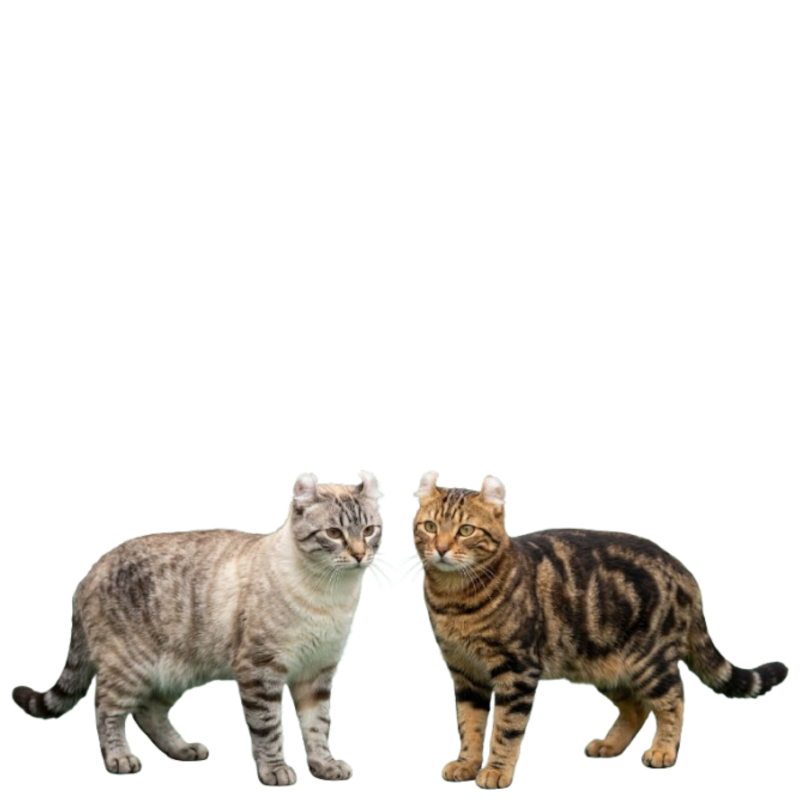
The Highlander Shorthair is a medium to large cat, distinguished primarily by its unique ear shape and naturally short tail. Its overall conformation suggests a powerful, athletic build.
Cranial Features and Head Structure
The head of the Highlander Shorthair is a modified wedge with a blunt muzzle and prominent whisker pads.
Ear Morphology
The most defining characteristic of the Highlander Shorthairs is the ear structure. The ears are set wide and high on the head. They are firm at the base with a distinct curve at the tips, which fold backward toward the center of the skull.
Ocular and Facial Profile
Highlander Shorthair’s eyes are large, expressive, and slightly hooded. They are set wide apart and possess an oval or walnut-like shape. When viewed from the side, the profile shows a slight curve from the forehead to the nose bridge.
Torso and Limb Conformation
The body of the Highlander Shorthair is substantial and muscular, emphasizing strength rather than sleekness.
Body and Legs
The torso is rectangular and deep-chested. The back is straight, leading to a powerful hindquarter. Highlander Shorthair’s legs are medium in length but heavily boned and thick with muscle. The hind legs are slightly longer than the forelegs.
Paws
The paws are large and round. A notable feature in many Highlander Shorthairs is polydactylism — extra toes — though the standard emphasizes a broad, sturdy foot structure regardless of the number of digits.
Tail Morphology
The tail of the Highlander Shorthair is a significant distinguishing mark. Unlike the long tails of most domestic cats, Highlander Shorthair’s tail is naturally short.
| Tail Characteristic | Description |
|---|---|
| Length | Typically ranges from a minimum of 2 inches to hock length. |
| Structure | The tail is thick and muscular, often appearing “kinked” or articulated at the end. |
| Appearance | It is carried low or slightly curved when the cat is in motion. |
Coat and Texture
As the name implies, the Highlander Shorthair possesses a short, dense coat.
Fur Characteristics
The fur is short to medium-short. The coat is resilient and firm to the touch. It lies relatively flat against the body but has enough density to provide a “plush” feel.
Luster
The coat typically exhibits a healthy sheen that highlights the underlying musculature of the Highlander Shorthair.
behavior
The Highlander Shorthair exhibits distinct behavioral patterns that involve high levels of physical activity, complex problem-solving, and specific social interaction styles.
Physical Activity and Locomotion
The movement and energy expenditure of the Highlander Shorthair are centered around athletic engagement with its environment.
Vertical Exploration
Highlander Shorthairs frequently seek out elevated positions. They utilize their muscular hindquarters to reach high perches, bookshelves, or the tops of refrigerators.
Retrieval Instincts
Many Highlander Shorthairs engage in fetching behaviors, where they will repeatedly bring objects back to a human or another animal to continue a cycle of play.
Water Interaction
The Highlander Shorthair often displays a fascination with running water. This involves pawing at faucets, sitting near showers, or dipping paws into water bowls to observe the ripples.
Cognitive and Problem-Solving Behaviors
The cognitive engagement of the Highlander Shorthair is reflected in how it manipulates its surroundings to achieve specific goals.
Object Manipulation
Due to their dexterous nature, Highlander Shorthairs often use their paws to open cabinet doors, turn door handles, or move small items to investigate what is underneath.
Interactive Play
Highlander Shorthair’s play style is often characterized by a focus on structured games and the mastery of puzzles that dispense rewards.
Social and Vocal Interaction Patterns
The way the Highlander Shorthair communicates and integrates into a household is characterized by consistent presence rather than passive observation.
Vocalization Styles
While not typically prone to excessive noise, the Highlander Shorthair uses a range of vocalizations to signal needs or acknowledgment.
- Trilling and Chirping: Used frequently during play or when greeting inhabitants of the home.
- Directed Vocalization: Using specific tonal shifts when requesting access to a room or indicating a desire for engagement.
Interaction with Occupants
The Highlander Shorthair tends to follow its human companions from room to room — a behavior often referred to as “shadowing.”
| Interaction Type | Behavioral Manifestation |
|---|---|
| Greeting | Meeting occupants at the door upon their arrival. |
| Shadowing | Maintaining a physical presence in the same room as activity. |
| Co-habitation | Actively seeking the company of other domestic animals for communal play. |
color
The Highlander Shorthair displays an extensive range of colors and complex coat patterns. Because the focus is on the diversity of the feline coat rather than specific genetic lineages, the visual presentation varies from solid tones to intricate multi-colored arrangements.
Solid and Basic Pigmentation
In solid-colored Highlander Shorthairs, the pigment is distributed evenly from the root to the tip of the hair shaft across the entire body.
Saturated Tones
This includes dense blacks and rich chocolates.
Dilute Tones
This includes softer tones such as blue (grey), lilac, and cream.
Achromatic Presentation
Pure white Highlander Shorthairs may appear, where the absence of visible pigment covers the entire coat.
Tabby Patterns and Markings
The tabby pattern is frequently observed in the Highlander Shorthair, characterized by specific contrast between the ground color and the marking color.
Classic and Mackerel Patterns
The classic tabby pattern features bold, swirling “butterfly” markings on the shoulders and circular “oysters” on the flanks. The mackerel pattern consists of vertical, continuous or broken stripes running down Highlander Shorthair’s sides, resembling a fish skeleton.
Spotted and Ticked Patterns
- Spotted: These Highlander Shorthairs exhibit distinct oval or round spots across the torso.
- Ticked: This involves “agouti” hair where individual strands have multiple bands of color, resulting in a flecked appearance without distinct stripes or spots on the body.
Specialized Color Distributions
Beyond standard patterns, the Highlander Shorthair may exhibit specific regional color concentrations.
Pointed and Sepia Patterns
Pointed Highlander Shorthairs have a pale body color with darker pigmentation concentrated on the extremities — the ears, face, paws, and tail. Sepia and mink variations provide a more subtle, lower-contrast version of this distribution.
Parti-color and Tortoiseshell
- Tortoiseshell: A mottled mix of black and red (or their dilute versions, blue and cream).
- Calico and Bi-color: Highlander Shorthairs that feature white spotting in addition to other colors or patterns. This can range from a small white “medallion” on the chest to a nearly entirely white coat with small patches of color (Van pattern).
Surface Effects and Tipping
Visual depth in Highlander Shorthair’s coat is often enhanced by how the pigment interacts with the hair tip.
| Effect Type | Visual Description |
|---|---|
| Smoke | A solid color coat where the undercoat is significantly lighter (often silvery white). |
| Shaded | Pigment is restricted to the outer portion of the hair shaft, creating a shimmering effect. |
| Chinchilla | Only the very tips of the hair contain pigment, giving the Highlander Shorthair a sparkling, translucent appearance. |
compatibility
Ease of Maintenance
Rating: 3/5
Child Friendly
Rating: 5/5
Annual Cost
Rating: 3/5
Lifetime Cost
Rating: 4/5
Adaptability
Rating: 5/5
Velcro Factor
Rating: 5/5
Quietude
Rating: 3/5
Apartment Suitability
Rating: 2/5
Hypoallergenic
Rating: 2/5
Handling Tolerance
Rating: 4/5
Hardiness/Longevity
Rating: 4/5
Prey Drive
Rating: 2/5
genetics
The genetic profile of the Highlander Shorthair is defined by a combination of spontaneous mutations and polygenetic influences that govern specific morphological traits. The genomic landscape of Highlander Shorthairs involves both dominant and recessive alleles that deviate from the standard feline wild-type.
Genetics of Ear Curvature
The distinctive ear shape of the Highlander Shorthair is attributed to a dominant genetic mutation that affects the ear cartilage.
Inheritance Patterns
The trait for curled ears is autosomal dominant. If represents the allele for curled ears and represents the wild-type straight-ear allele, the following genotypes result in the curled phenotype:
- Heterozygous (): The cat expresses the curled ear trait.
- Homozygous (): The cat expresses the curled ear trait.
In breeding programs, crossing a curled-ear Highlander Shorthair with a straight-ear individual follows Mendelian inheritance:
The “Curled Ear” Genetic Chance
- : “Kitten Curl Chance,” the probability that a kitten in the litter will have the signature curled ears.
- : “The Curl Gene,” the strong (dominant) instruction that causes the ear to flip back.
- : “The Straight Gene,” the natural instruction for standard straight ears.
- : “Single-Gene Parent,” a cat with one curl gene and one straight gene.
- : “Double-Gene Parent,” a cat with two curl genes.
In a breeding pair where one parent is a straight-eared domestic cat () and the other is a heterozygous Highlander Shorthair (), the formula dictates that approximately of the kittens will have curled ears, while the remaining will have straight ears.
Genetics of the Tail Length
The truncated tail seen in the Highlander Shorthair is a result of a polygenetic complex or a specific mutation set that differs from the Manx () lethal allele.
Variable Expressivity
The genetic mechanism governing Highlander Shorthair’s tail length exhibits variable expressivity. This means that even with the presence of the required alleles, the actual phenotypic length of the tail can vary significantly between individuals in the same litter. Unlike some other short-tailed mutations, the genetic markers in Highlander Shorthairs are not associated with a homozygous lethal gene, allowing for homozygous breeding without the risk of Manx Syndrome-like spinal issues.
Polydactylism Genetics
Polydactylism in the Highlander Shorthair is governed by the gene, an autosomal dominant trait with high penetrance.
The Pd Gene
The gene causes the development of extra digits on the preaxial side of the limb.
- Mechanism: The mutation occurs in the (Zone of Polarizing Activity Regulatory Sequence), which is a long-range enhancer for the (Sonic Hedgehog) gene.
- Phenotypic Variation: While the gene is dominant, the number of extra digits and the specific limbs affected — forelimbs vs. hindlimbs — are influenced by modifiers within the Highlander Shorthair’s genome.
Summary of Major Genetic Traits
| Trait | Gene Symbol | Inheritance | Effect |
|---|---|---|---|
| Curled Ears | Cu | Autosomal Dominant | Alteration of ear cartilage rigidity and direction. |
| Polydactylism | Pd | Autosomal Dominant | Production of supernumerary digits. |
| Short Tail | Varied | Polygenetic/Non-Lethal | Premature termination of caudal vertebrae. |
| Coat Length | L | Dominant (L) | $Highlander Shorthair’s Shorthair status is maintained by the dominant L allele. |
health
The biological health of the Highlander Shorthair is generally robust, characterized by a lack of breed-specific hereditary syndromes often found in older, more established lineages. Monitoring and clinical care for Highlander Shorthairs focus primarily on anatomical predispositions and standard feline preventative medicine.
Auditory Canal Hygiene and Maintenance
Due to the unique structure of the ears, Highlander Shorthair’s auditory health requires specific attention. The curvature of the cartilage can sometimes result in a narrower or more convoluted ear canal.
Cerumen Accumulation
There is a clinical tendency for the Highlander Shorthair to accumulate cerumen (earwax) more rapidly than cats with straight ears. If not monitored, this buildup can obstruct the canal and create a moist environment conducive to secondary infections.
Otitis Externa Risk
While not a primary disease, the anatomical shape of the ear in the Highlander Shorthair can make Highlander Shorthairs more susceptible to otitis externa — inflammation of the outer ear — if debris and moisture are trapped within the folds.
Skeletal and Structural Integrity
The skeletal health of the Highlander Shorthair is a critical area of clinical focus, particularly regarding the distal spine and the extremities.
Distal Spinal Development
The truncated tail of the Highlander Shorthair is a result of a mutation that affects the caudal vertebrae. In clinical examinations, it is important to ensure that this truncation does not extend into the sacral or lumbar regions, which could impact nerve function or bowel control. Unlike some other breeds with tail mutations, Highlander Shorthair’s spinal health typically remains stable.
Digital and Joint Health
For Highlander Shorthairs that possess supernumerary digits, the alignment of the weight-bearing joints must be evaluated.
- Claw Health: Extra digits may have claws that do not make contact with the ground, preventing natural wear. These must be trimmed to avoid ingrown claws.
- Joint Stress: The increased surface area of the paws in the Highlander Shorthair generally distributes weight effectively, but clinicians monitor for early signs of osteoarthritis in the carpal and tarsal joints.
Cardiovascular and Internal Health
Internal health parameters for the Highlander Shorthair align with general feline medical standards, though specific screening is recommended to maintain baseline data.
Hypertrophic Cardiomyopathy (HCM) Screening
Although the Highlander Shorthair is not currently identified as a high-risk group for HCM, periodic echocardiograms are recommended. HCM is a condition where the heart muscle — the myocardium — becomes abnormally thick, potentially leading to heart failure. The probability of maintaining a healthy heart can be viewed as a function of environmental factors and baseline physiological status.
Renal Function
Standard monitoring of kidney function is essential for the Highlander Shorthair. Veterinarians typically utilize the Symmetric Dimethylarginine (SDMA) test to detect early declines in renal health before traditional markers like creatinine show elevation.
Preventative Medical Schedule
The following table outlines the standard clinical monitoring recommended for the Highlander Shorthair:
| Focus Area | Clinical Procedure | Frequency |
|---|---|---|
| Auditory | Otoscopic Examination | Bi-annually |
| Cardiac | Auscultation and Echocardiography | Annually |
| Orthopedic | Digital and Spinal Palpation | During routine exams |
| Metabolic | Complete Blood Count (CBC) and Chemistry Panel | Annually |
longevity
The temporal span of the Highlander Shorthair typically mirrors that of other medium-sized domestic felines developed through outcrossing. Because the population remains relatively diverse, individual lifespans are influenced primarily by environmental conditions and standard biological aging processes.
Statistical Life Expectancy
On average, the Highlander Shorthair is expected to reach a biological age ranging from 10–15 years. However, with optimal environmental controls, many Highlander Shorthairs have been documented reaching the late teens.
Comparative Survivability
The survivability of the Highlander Shorthair can be modeled using a basic survival function , representing the probability that an individual will survive from birth to at least time :
The Long-Life Survival Map
- : “Survival Odds,” the chance that a cat is still healthy and alive at a specific age ().
- : “Total Lifespan,” the actual age the cat eventually reaches.
- : “Target Age,” the specific birthday (in years) we are looking at.
- : “The Probability,” the likelihood that the cat’s final age () is higher than our target age ().
In a longitudinal study of Highlander Shorthairs, if the probability of a cat reaching age is , then . This indicates a survival rate for the population up to that specific year before the mortality rate begins its gradual increase.
In a controlled longitudinal setting, the Highlander Shorthair demonstrates a stable survival curve through the first decade of life, with a gradual increase in mortality rates occurring after year 12.
Factors Influencing Temporal Span
The duration of Highlander Shorthair’s life is significantly impacted by the setting in which the individual exists.
Indoor vs. Outdoor Environments
The disparity in life expectancy between indoor and outdoor individuals is substantial.
- Indoor Lifestyle: Highlander Shorthairs maintained exclusively indoors face fewer external risks, often extending their lifespan toward the upper deciles of the average range.
- Outdoor Lifestyle: Exposure to external hazards can reduce the statistical mean lifespan of the Highlander Shorthair by several years.
Life Stages and Classifications
The life of the Highlander Shorthair is generally categorized into distinct chronological phases:
| Life Stage | Age Range (Years) | Biological Status |
|---|---|---|
| Kitten | 0–1 | Rapid physiological development |
| Junior/Adult | 1–6 | Peak physical vitality |
| Mature/Senior | 7–11 | Gradual deceleration of metabolic processes |
| Geriatric | 12+ | Significant increase in age-related monitoring requirements |
Mortality and Aging Processes
As the Highlander Shorthair advances into the geriatric stage, cellular senescence begins to impact organ efficiency.
Biological Aging
The aging process in the Highlander Shorthair involves the progressive accumulation of cellular damage. While Highlander Shorthair’s chronological age is a fixed linear measurement, the biological age may vary based on nutritional history and environmental stressors.
End-of-Life Considerations
For the Highlander Shorthair, the transition into the final life stage is typically marked by a reduction in metabolic rate and changes in hydration retention. Managing the quality of life during this terminal phase is the primary focus of long-term care for Highlander Shorthairs.
maintenance
The routine care of the Highlander Shorthair involves a structured approach to hygiene, environmental enrichment, and nutritional management. Due to the specific physical attributes of the Highlander Shorthair, certain aspects of the maintenance protocol require more frequent intervention than the standard domestic shorthair.
Integumentary System Maintenance
Despite having a short coat, the Highlander Shorthair requires consistent grooming to manage dander and natural oils.
Coat Brushing
A weekly brushing session is sufficient for Highlander Shorthairs. Utilizing a soft-bristle brush or a rubber grooming mitt helps in:
- Removing dead hair follicles.
- Distributing skin oils across the epidermis.
- Reducing the volume of ingested hair during self-grooming.
Bathing Requirements
Bathing the Highlander Shorthair is generally unnecessary unless the coat becomes soiled with external contaminants. If a bath is required, it is essential to use a pH-balanced feline shampoo to avoid disrupting the natural acid mantle of Highlander Shorthair’s skin.
Specialized Anatomical Care
The unique cranial and distal features of the Highlander Shorthair necessitate a specialized maintenance schedule.
Auditory Hygiene
The most critical aspect of Highlander Shorthair’s maintenance is ear care. The internal structure of the ears can trap debris more easily than straight-eared breeds.
- Inspection: Conduct a visual check of the ears twice weekly.
- Cleaning: Use a veterinarian-approved ear cleaning solution and a soft cloth to gently wipe the visible portion of the ear canal. Cotton swabs should never be inserted into the canal.
Digital Maintenance (Pedicure)
For Highlander Shorthairs, especially those with polydactyl feet, nail maintenance is vital for mobility and comfort.
- Trimming Frequency: Nails should be trimmed every 10–14 days.
- Supernumerary Digits: Particular attention must be paid to the claws on extra digits, as they may not contact scratching surfaces and can become overgrown or ingrown.
Nutritional and Metabolic Management
Maintenance of the Highlander Shorthair includes precise caloric monitoring to prevent obesity-related strain on the joints and spine.
Caloric Calculation
The Resting Energy Requirement (RER) for the Highlander Shorthair can be estimated using the following formula, where is the weight in kilograms:
The Daily “Resting” Calorie Guide
- : “Base Calories,” the energy (kcal) the cat burns per day just by resting and breathing.
- : “The Energy Multiplier,” a standard number used for mammals to start the calorie count.
- : “Weight,” the cat’s body weight measured in kilograms.
- : “The Efficiency Factor,” a math adjustment because bigger bodies use energy slightly more efficiently.
For a Highlander Shorthair weighing kg, the RER is calculated as kcal/day. To find the Total Energy Requirement (TER) for a typical neutered adult, multiply by : kcal/day.
The Total Energy Requirement (TER) is then adjusted based on the individual’s activity level, typically using a multiplier of 1.2 to 1.4 for neutered adults.
Feeding Schedule
| Food Type | Recommendation | Purpose |
|---|---|---|
| Wet Food | Daily | Ensures adequate hydration and protein intake. |
| Dry Kibble | Controlled portions | Can assist in mechanical dental cleaning. |
| Fresh Water | Available 24/7 | Essential for renal maintenance. |
Environmental and Dental Upkeep
Oral Hygiene
To maintain the periodontal health of the Highlander Shorthair, daily brushing with feline-specific toothpaste is recommended. If daily brushing is not feasible, a minimum of three times per week is necessary to prevent plaque calcification.
Sanitary Maintenance
The litter environment for Highlander Shorthairs must be kept strictly clean. Due to the size of the paws in the Highlander Shorthair, a large, open litter box is often preferred to allow for natural scratching and burying movements without restriction.
measurements
| Measurement | Female | Male | ||
|---|---|---|---|---|
| Metric | Imperial | Metric | Imperial | |
height | 25 – 36 centimeters | 10 – 14 inches | 30 – 41 centimeters | 12 – 16 inches |
length | 41 – 56 centimeters | 16 – 22 inches | 46 – 61 centimeters | 18 – 24 inches |
weight | 4.1 – 6.4 kilograms | 9 – 14 pounds | 5.4 – 10 kilograms | 12 – 22 pounds |
• Height: Refers to the measurement at the withers (shoulders).
• Length: Measured from the tip of the nose to the base of the tail.
origin
The lineage of the Highlander Shorthair represents a modern addition to the feline fancy. This population emerged from a focused breeding initiative in the United States designed to produce a domestic cat with a forest-dwelling aesthetic without the introduction of wild felid DNA.
Initial Foundations
The formal development of the Highlander Shorthair commenced in 1993. The primary goal for early enthusiasts was to establish a unique domestic feline lineage by merging two specific experimental populations.
The Highland Lynx Ancestry
A foundational component of Highlander Shorthair’s ancestry was a group of cats referred to as the Highland Lynx. Despite the nomenclature, these were entirely domestic animals. This group contributed the specific ear and tail characteristics that became the baseline for the Highlander Shorthair.
The Desert Lynx Contribution
The second foundation group involved in creating the Highlander Shorthair was the Desert Lynx. Similar to the Highland Lynx, the Desert Lynx consisted of domestic composites selected for specific skeletal traits. The hybridization of these two distinct groups established the core ancestral pool.
Registry Recognition and Name Evolution
The path to formal recognition involved several shifts in nomenclature and registry status to distinguish the Highlander Shorthair from other phenotypically similar domestic lineages.
The Rare and Exotic Feline Registry (REFR)
Early in Highlander Shorthair’s history, these cats were primarily documented with the REFR. During this period, they were often categorized under the broader “Highland Lynx” umbrella alongside other experimental crosses.
Transition to TICA
In May 2005, the breed underwent a formal transition to gain recognition from The International Cat Association (TICA). At this juncture, the name was officially designated as Highlander Shorthair to confirm that the lineage was fully domestic and genetically separate from any wild “Lynx” species.
Timeline of Recognition Stages
The Highlander Shorthair progressed through the standard TICA hierarchy for new breeds as follows:
| Year | Recognition Status | Milestone |
|---|---|---|
| 2005 | Registration Only | Preliminary acceptance into the TICA system. |
| 2008 | Preliminary New Breed (PNB) | Authorization to be shown in the PNB class at sanctioned events. |
| 2015 | Advanced New Breed (ANB) | Advancement based on population growth and trait consistency. |
| 2022 | Championship Status | Full recognition allowing Highlander Shorthairs to compete for titles. |
Development of the Shorthair Variety
While the initial foundation included individuals with varying hair lengths, the Highlander Shorthair was specifically refined as a distinct variety. Breeders utilized outcrossing to established domestic shorthair populations to ensure a broad gene pool. This process was strictly monitored to ensure the Highlander Shorthair remained distinct from the long-haired version of the same lineage.
temperament
The internal disposition of the Highlander Shorthair is defined by a high degree of emotional resilience and an expansive social capacity. Unlike more reserved feline lineages, Highlander Shorthair’s temperament is characterized by an active engagement with the environment and a foundational need for interpersonal connection.
Core Affective Traits
The underlying nature of the Highlander Shorthair is centered on a stable, confident, and highly gregarious personality.
Social Extraversion
The Highlander Shorthair is naturally inclined toward high-intensity social interaction. This is not merely a preference but a fundamental aspect of the Highlander Shorthair’s psychological makeup. Highlander Shorthairs typically exhibit a “people-oriented” focus, often seeking to be the focal point of household activity.
Emotional Resilience
One of the most notable aspects of the Highlander Shorthair is an adaptability to changing stimuli. While many felines are prone to stress during environmental shifts, the Highlander Shorthair tends to maintain a composed and curious outlook, displaying a high threshold for sensory input.
Interactional Dynamics
The way the Highlander Shorthair perceives and responds to other beings is governed by a lack of inherent territorial aggression and a strong inclination toward cooperation.
Interspecies Compatibility
The temperament of the Highlander Shorthair is exceptionally conducive to multi-pet environments. The internal state of the Highlander Shorthair is generally one of peaceful coexistence rather than dominance, making Highlander Shorthairs well-suited for households with other domestic animals.
Human-Centric Attachment
The Highlander Shorthair forms deep, almost canine-like bonds with human inhabitants. This attachment is characterized by:
- Attentiveness: A constant awareness of human presence and emotional state.
- Affability: A consistent willingness to engage in social exchanges.
- Patience: A tolerant disposition that makes Highlander Shorthairs particularly compatible with various household demographics.
Cognitive and Emotional Complexity
The Highlander Shorthair possesses a high level of intellectual curiosity, which manifests as a persistent desire to investigate and understand its surroundings.
Confidence Levels
The Highlander Shorthair is internally secure, rarely displaying the skittishness or hyper-vigilance seen in more primitive or high-strung breeds. This confidence allows the Highlander Shorthair to approach new situations with interest rather than fear.
Temperamental Consistency
The emotional baseline of the Highlander Shorthair is remarkably stable. The following table illustrates the typical temperamental markers observed in the Highlander Shorthair:
| Trait | Intensity Level | Description |
|---|---|---|
| Sociability | High | Constant seeking of proximity and interaction. |
| Adaptability | High | Rapid adjustment to new environments or routines. |
| Independence | Low to Moderate | Prefers companionship over prolonged isolation. |
| Aggression | Very Low | Inherent pacifism in social and territorial contexts. |
| Curiosity | High | Strong internal drive to explore and monitor activity. |
Sensitivity and Receptivity
While the Highlander Shorthair is resilient, it is also highly receptive to the emotional tone of its environment. Highlander Shorthair’s mood often mirrors the general energy of the home, reinforcing its status as a highly empathetic domestic companion. This receptivity means that while Highlander Shorthairs are sturdy, they are most psychologically fulfilled in active, engaged, and positive social settings.