Highlander Cat
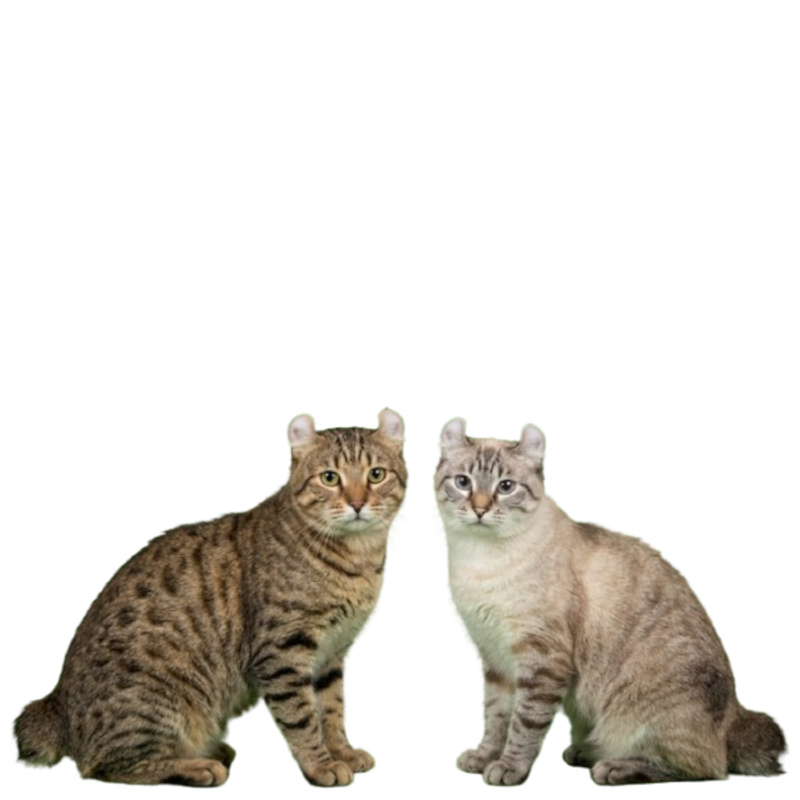
appearance
The Highlander is a heavy-bodied, muscular feline defined by several “big cat” attributes. The physical silhouette of Highlanders is sturdy and powerful, characterized by a long, rectangular frame and unique anatomical features.
Facial Structure and Cranial Features
The head shape of the Highlander resembles a modified inverted wedge with high, prominent cheekbones. The muzzle is exceptionally wide and blunt, contributing to a wild appearance.
Ear Morphology
The most recognizable trait of Highlanders is the unique ear structure.
- Position: The ears are situated high on the head and set wide apart.
- Shape: They feature a firm base with a distinct backward curl at the tips.
- Texture: The ear leather is typically thick and resilient.
- Embellishments: Prominent ear tufts and “lynx-like” tips frequently decorate the ear edges.
Ocular Traits
The eyes of the Highlander are notably large and expressive.
- Alignment: They are positioned with a wide set and a subtle upward slant.
- Contour: The eye shape is an asymmetrical oval, often likened to a softened diamond.
- Brow Ridge: A heavy, overhanging brow provides Highlander’s gaze with a deep-set and hooded intensity.
Profile and Muzzle Definition
When viewed from the side, Highlanders show a gentle curve or break at the bridge of the nose. The nose itself is broad with a large leather. The chin is strong and deep, aligning vertically with the nose tip to form a square, robust muzzle.
Body Composition and Frame
The Highlander is built for strength, possessing a dense skeletal structure and highly visible musculature.
Torso and Neck
The neck is thick and powerful, transitioning into a broad, deep chest. Highlander’s back is straight, though the hindquarters are often slightly elevated compared to the shoulders, creating a low-slung, prowling movement.
Extremities and Paws
The legs of Highlanders are medium in length but possess very heavy bone density.
- Paws: The feet are large and round with prominent knuckles.
- Polydactylism: It is common for the Highlander to be polydactyl—meaning they possess extra toes. This is a standard and accepted physical trait for the breed.
Tail Specifications
The tail is a primary identifying mark for the Highlander:
- Length: It is naturally short and bobbed.
- Structure: The tail may be straight, have minor kinks, or be slightly curled.
- Proportions: Generally, the tail length does not extend past the hock of the rear leg.
The “Hock-Height” Tail Rule
- : “Tail Length,” the measurement from the base of the tail to the very tip.
- : “Must Be Shorter Than or Equal To,” the rule ensuring the tail stays bobbed.
- : “Hock Height,” the distance from the ground to the cat’s “ankle” joint on its back leg.
For a Highlander cat with a measured hock height () of cm, a tail length () of cm satisfies the breed standard because . If the tail were cm, it would exceed the hock and fall outside the ideal phenotypic specification for this bobbed breed.
Coat Variations and Texture
The Highlander is recognized in two different coat lengths. In both versions, the tactile quality of the fur is a key part of the physical standard.
| Coat Variety | Texture and Appearance |
|---|---|
| Shorthair | Thick, springy, and slightly rough to the touch. |
| Longhair | Silky and semi-long with a shaggy, layered look. |
In the long-haired variety, Highlanders often display a “belly cape” of longer fur along the underside and “britches” on the upper thighs.
behavior
The behavioral repertoire of the Highlander is defined by high kinetic energy, advanced problem-solving skills, and a notable affinity for environmental interaction. Highlanders exhibit specific physical actions and engagement strategies that distinguish their daily activity.
Activity Levels and Locomotion
The Highlander demonstrates a high frequency of movement. Unlike many sedentary domestic cats, Highlanders prioritize vertical and horizontal exploration throughout their waking hours.
Vertical Exploration
Highlander’s jumping capability is significant. It is a standard behavior for the Highlander to seek the highest available vantage points in a room—such as the tops of cabinets or specialized shelving. This “prowling” behavior often involves silent, calculated movements across elevated surfaces.
Fetching and Retrieval
A common behavioral trait in the Highlander is the natural inclination to retrieve objects. This includes:
- Object Carrying: Picking up toys in the mouth and transporting them to different locations.
- Repetitive Retrieval: Bringing a toy back to a human or another animal to initiate further movement.
Interaction with the Environment
Highlanders are highly tactile and use their paws extensively to manipulate their surroundings.
Manual Dexterity
Due to their physical structure, Highlander’s use of paws is more frequent and complex than in other breeds. Behavioral observations include:
- Opening Mechanisms: Using paws to turn doorknobs, slide cabinets open, or lift lids.
- Water Manipulation: Dipping paws into water bowls to “fish” or splashing water before drinking.
- Object Investigation: Prodding and moving new items to understand their weight and texture.
Aquatic Interest
The Highlander frequently displays a lack of the typical feline aversion to water. Behaviorally, this manifests as:
- Following humans into bathrooms or showers.
- Actively playing with running faucets.
- Patting or sitting in shallow water sources.
Vocalization and Communication
While the Highlander is not typically loud, their communication methods are diverse and specific to their immediate needs.
| Interaction Type | Observed Behavior |
|---|---|
| Greeting | Short, soft chirps or trills upon human or animal arrival. |
| Hunting/Play | Intense focus accompanied by a “chattering” jaw movement when observing prey or toys. |
| Solicitation | Direct eye contact combined with a “head-butt” (bunting) against objects or individuals. |
Social Engagement Dynamics
The Highlander maintains a “shadowing” behavior, where the cat consistently remains in the same room as its companions.
Collaborative Play
Highlanders often engage in wrestling or chasing behaviors with other household pets. These interactions are characterized by a high degree of physical contact and are often initiated by Highlander’s use of a “pounce-and-release” tactic.
Learning and Mimicry
The Highlander is an observational learner. By watching the actions of others, Highlanders often replicate behaviors to achieve a goal—such as observing how a food container is accessed and attempting the same physical sequence.
The “Copycat” Learning Chance
- : “Success Chance,” the likelihood the cat figures out how to do a trick or task.
- : “Grows With,” meaning as one side goes up, the other follows.
- : “Total Watch Time,” the number of times the cat has watched a human or pet do the task.
If a Highlander watches its owner turn a door lever five times, the increases, which directly raises the of the cat replicating the physical sequence to open the door itself.
color
The Highlander is recognized in an extensive spectrum of hues and markings. Unlike some specialized breeds with restrictive palettes, Highlanders may exhibit nearly any genetically possible feline coloration, with a particular emphasis on those that accentuate a feral or “wild” aesthetic.
Tabby Patterns
Tabby markings are the most frequent and preferred patterns for the Highlander, as they align with the desired exotic appearance.
Classic and Spotted Tabbies
- Spotted Tabby: This is highly favored. The markings should be distinct, circular or oval spots scattered across the torso.
- Classic Tabby: Features bold, swirling “butterfly” patterns on the shoulders and “bullseye” marks on the flanks.
- Mackerel Tabby: Defined by continuous vertical stripes that branch out from the spine along the body.
Ticked and Patched Tabbies
In ticked Highlanders, the individual hair shafts are banded with different colors, resulting in a shimmering effect without distinct body stripes. Patched tabbies—often called torbies—show tabby markings overlaid on tortoiseshell coloring.
Solid and Parti-Color Variations
While tabby patterns are prevalent, Highlanders also appear in non-agouti (solid) and multi-color forms.
| Category | Description |
|---|---|
| Solid | Uniform color from root to tip (e.g., Black, Blue, Chocolate, Lilac, Cinnamon, Fawn, Red, Cream, White). |
| Bicolor | Any color or pattern combined with white. This includes “van,” “harlequin,” and “tuxedo” distributions. |
| Tortoiseshell | A mottled mix of black and red (or their dilute versions, blue and cream). |
Silver and Smoke Series
The silver and smoke varieties provide a dramatic contrast to Highlander’s base colors by inhibiting pigment at the base of the hair.
- Silver Tabby: The ground color is a clear, pale silver, while the tabby markings provide a dark, sharp contrast.
- Smoke: A solid-colored Highlander with a white undercoat that is only visible when the fur is parted or the cat is in motion.
Pointed and Sepia Coloration
Highlanders are also accepted in “pointed” patterns, where the extremities are darker than the body.
Colorpoint and Mink
- Colorpoint: High contrast between a pale body and dark points—face, ears, paws, and tail.
- Mink: A specialized “in-between” pattern resulting in softer contrast and often aquamarine eye color.
- Sepia: The least amount of contrast, with the body color nearly as dark as the points.
Eye Coloration
Eye color in the Highlander is generally independent of coat color, with the exception of specific pointed patterns.
- Standard Colors: Gold, copper, green, and hazel are typical.
- Pointed/Mink Requirements: Pointed Highlanders must have blue eyes, while mink varieties typically possess aqua eyes.
- Odd-Eyed: Occurs primarily in white Highlanders or those with high-white bicolor patterns.
The distribution of pigment intensity can be modeled by the following relationship:
The Extremity Color Contrast Model
- : “Point Color,” the darkness of the fur on the ears, paws, face, and tail.
- : “Is Darker Than,” showing the contrast between the ends of the cat and its middle.
- : “Body Color,” the lightness of the fur on the cat’s main torso.
In a pointed Highlander, the enzyme responsible for coat color is temperature-sensitive. At the cooler extremities, the pigment intensity () is high, while the warmer core () remains pale, mathematically satisfying the relationship seen in the breed’s distinct contrast.
Where represents the intensity of the melanin concentration within the hair follicle across different regions of the Highlander’s frame.
compatibility
Ease of Maintenance
Rating: 3/5
Child Friendly
Rating: 5/5
Annual Cost
Rating: 3/5
Lifetime Cost
Rating: 4/5
Adaptability
Rating: 5/5
Velcro Factor
Rating: 5/5
Quietude
Rating: 3/5
Apartment Suitability
Rating: 2/5
Hypoallergenic
Rating: 2/5
Handling Tolerance
Rating: 4/5
Hardiness/Longevity
Rating: 4/5
Prey Drive
Rating: 2/5
genetics
The genetic profile of the Highlander is defined by a polygenic architecture combined with specific dominant and incomplete dominant mutations. These markers govern the structural divergence from the standard feline phenotype.
Chondrodysplastic and Morphological Alleles
The skeletal structure of Highlanders is influenced by genes affecting cartilage and bone development, particularly within the cranial and caudal regions.
The Ear Curvature Mutation
The distinctive ear shape in the Highlander is governed by a dominant gene (). This allele affects the placement and rigidity of the ear cartilage.
- Genotype : Results in the characteristic backward curl seen in most Highlanders.
- Genotype : Produces a straight-eared phenotype, though these individuals remain genetically part of the Highlander pool.
Tail Length Suppression
The abbreviated tail of the Highlander is a result of the Manx () or similar localized Brachyury mutations. This is typically inherited as an autosomal dominant trait with variable expressivity.
- Phenotypic Variance: The length of Highlander’s tail is determined by the specific interaction of the dominant suppressor and modifier genes.
- Lethality Considerations: In many bobtailed lineages, the homozygous dominant state () is associated with embryonic lethality, necessitating a heterozygous breeding strategy ().
Polydactylism and Limb Development
The Highlander frequently carries the gene, a dominant mutation responsible for preaxial polydactyly.
Sonic Hedgehog (SHH) Pathway
The mutation in Highlanders occurs within the (ZPA regulatory sequence), a cis-regulator for the Sonic Hedgehog gene. This alteration causes an ectopic expression of , leading to the development of additional digits on the paws.
Inheritance Probability
The inheritance of extra digits follows a standard Mendelian dominant pattern:
| Parental Genotype | Offspring Probability (Polydactyl) | Offspring Probability (Non-Polydactyl) |
|---|---|---|
| Pd pd × pd pd | 50% | 50% |
| Pd pd × Pd pd | 75% | 25% |
Coat Length and Texture Genetics
Highlander’s coat length is determined by the Fibroblast Growth Factor 5 () gene.
- Short Hair: Governed by the dominant allele ().
- Long Hair: Governed by the recessive allele ().
The “shaggy” texture often found in Highlanders suggests the presence of modifier genes that influence the ratio of guard hairs to undercoat, though these have not yet been isolated to a single locus.
Population Genetics and Diversity
The Highlander utilizes an open-pedigree strategy to maintain a broad gene pool. This genetic diversity is quantified using the Coefficient of Inbreeding ().
The probability of an individual Highlander inheriting two identical alleles from a common ancestor can be expressed as:
The Family Tree Similarity Score (COI)
- : “Inbreeding Score,” the percentage chance that a kitten gets the exact same gene from both parents.
- : “Father’s Side Steps,” how many generations back the common ancestor is on the dad’s side.
- : “Mother’s Side Steps,” how many generations back that same ancestor is on the mom’s side.
- : “Ancestor’s Own Score,” how inbred that shared ancestor was (usually 0).
- : “Total Sum,” adding up the scores if there is more than one shared relative in the family tree.
If a Highlander is the result of a half-sibling mating where the sire and dam share one grandfather () who is not inbred (), the calculation for that single path is , or .
Regular outcrossing within the Highlander’s breeding program ensures that the remains low, preventing the fixation of deleterious recessive alleles.
health
The physiological well-being of the Highlander is generally robust, though specific anatomical features necessitate targeted clinical monitoring. Vigilance regarding aural hygiene and musculoskeletal integrity is paramount for maintaining the systemic health of Highlanders.
Otic Health and Auditory Canal Integrity
Due to the unique structural configuration of Highlander’s ears, the auditory system requires specific medical attention to prevent complications.
Cerumen Accumulation and Ventilation
The curvature of the ear cartilage can occasionally restrict natural airflow within the vertical ear canal. This enclosed environment may predispose the Highlander to certain conditions:
- Otitis Externa: Inflammation of the external ear canal often occurring when moisture or debris is retained.
- Ceruminous Gland Hyperplasia: Overactivity of the wax-producing glands resulting from chronic irritation or lack of airflow.
Parasitic and Fungal Proliferation
The intricate folds in Highlander’s ears can provide a sanctuary for Otodectes cynotis (ear mites) or fungal organisms like Malassezia. Clinical screening should involve regular otoscopic examinations to ensure the tympanic membrane remains unobstructed and healthy.
Distal Limb and Paw Maintenance
The prevalence of polydactyly in Highlanders introduces specific orthopedic and integumentary considerations that owners and veterinarians should address.
Ungual Pathologies
In Highlanders with extra digits, the nail beds—especially those located in the narrow interdigital spaces—may grow at unusual angles.
- Ingrown Talons: If the accessory claws do not make contact with scratching surfaces, they can curl back into the paw pad, leading to localized infection or paronychia.
- Sheath Retention: A failure to shed the outer husk of the nail can lead to digital discomfort and potential snagging.
Weight Distribution and Joint Stress
The increased surface area of Highlander’s paws alters the biomechanical distribution of force during movement. The pressure exerted on the digital pads can be expressed as:
The Big-Paw Weight Distribution Model
- : “Foot Pressure,” the amount of stress or “weight” felt on each spot of the cat’s paw.
- : “Total Weight,” the downward force of the cat’s body weight.
- : “Paw Surface Area,” the total size of the bottom of the paws touching the ground.
For a Highlander weighing kg (exerting a force of approximately Newtons) with a total paw surface area () of cm², the pressure is N/cm². If the cat has polydactyl paws that increase the area to cm², the pressure drops to N/cm², illustrating how larger paws distribute weight more efficiently.
While the increased area generally lowers the pressure on individual pads, it is vital to monitor for any secondary stress on the carpal and tarsal joints due to the wider stance.
Cardiac Screening and Monitoring
As with many robust domestic feline populations, the Highlander should be monitored for Hypertrophic Cardiomyopathy (HCM)—a common cardiac condition characterized by the thickening of the heart walls.
| Screening Method | Clinical Objective |
|---|---|
| Echocardiogram | To measure the thickness of the left ventricular wall and detect obstructive blood flow. |
| NT-proBNP Test | A biomarker blood test used to assess the stretching and stress levels of the heart muscle. |
| Auscultation | Regular veterinary checks to identify heart murmurs or irregular gallop rhythms. |
Nutritional and Metabolic Management
Maintaining an optimal Body Condition Score (BCS) is critical for the Highlander. Excessive adipose tissue can exacerbate stress on the unique skeletal structures of the Highlander—particularly the joints and the shortened caudal vertebrae.
Renal Function
Routine urinalysis and blood chemistry panels—specifically monitoring SDMA and Creatinine levels—are recommended to track the renal health of Highlanders. Ensuring adequate hydration is a key preventative measure against feline lower urinary tract disease (FLUTD).
Immunization and Prophylaxis
The Highlander requires a standard protocol of core vaccinations (FVRCP) and non-core vaccinations based on individual lifestyle risk. Periodic fecal flotation tests are necessary to manage internal parasitic loads that could otherwise compromise gastrointestinal health.
longevity
The life expectancy of the Highlander typically mirrors that of robust medium-to-large domestic felines. While individual outcomes vary based on environmental factors and preventative care, Highlanders generally navigate a standard feline aging trajectory.
Expected Lifespan Range
Statistical observations of the Highlander population indicate a primary survival window.
| Environment | Typical Lifespan Range |
|---|---|
| Indoor Primary | 12–16 Years |
| Indoor/Outdoor Hybrid | 8–12 Years |
While many Highlanders reach their mid-teens, exceptional cases have been documented where individuals surpass the 18-year mark, provided they receive optimal geriatric support.
Biological Aging Phases
The maturation and senescence of the Highlander can be categorized into distinct chronological stages.
Developmental Maturity
Unlike smaller breeds that may reach full physiological maturity by 12 months, the Highlander often experiences a prolonged maturation period. True biological “adulthood” is typically achieved between 3 and 4 years of age.
Senior and Geriatric Classification
The transition into the senior phase for a Highlander generally begins at approximately 7 to 10 years. Post-11 years, the Highlander is clinically classified as geriatric, requiring more frequent monitoring of metabolic stability.
Quantitative Survival Modeling
The probability of a Highlander reaching a specific age can be modeled using a survival function, , which represents the probability that the individual’s age of death is greater than a specified time .
In a simplified population model for Highlanders, this is expressed as:
The Long-Life Probability Model
- : “Survival Chance,” the probability that a cat is still healthy and alive at a certain age.
- : “Target Age,” the specific birthday (in years) we are checking for.
- : “Actual Lifespan,” the total number of years the cat eventually lives.
- : “The Odds,” the likelihood that the cat’s final age () is higher than our target age ().
For a healthy population of Highlanders, if the probability of reaching age is , then . As increases toward the breed’s biological limit of years, the value of will approach , reflecting the natural decline in survival probability over time.
As approaches the upper limit of the Highlander’s biological threshold (approx. 20 years), moves toward zero. Actuarial data suggests that the hazard rate, the instantaneous rate of mortality, increases exponentially after the first decade of life.
Environmental Impact on Survivability
The longevity of the Highlander is heavily influenced by external variables that mitigate or accelerate the aging process.
Controlled Indoor Environments
Residing strictly indoors is the most significant contributor to maximum longevity for the Highlander. This eliminates exposure to:
- Pathogenic transmission from local fauna.
- Physical trauma from vehicular accidents.
- Predation and inter-species conflict.
Prophylactic Intervention
Regular diagnostic screening during the Highlander’s senior years allows for the early identification of age-related shifts in physiology. Maintaining an appropriate Body Condition Score throughout the Highlander’s life is a proven method for extending the functional years of the skeletal and renal systems.
maintenance
Systematic care routines for the Highlander are essential to manage their distinct physical traits and active metabolism. Effective management ensures the physiological integrity of Highlanders through consistent environmental and physical interventions.
Integumentary and Coat Management
Grooming requirements for the Highlander fluctuate based on the specific coat length variant, requiring structured attention to prevent matting and minimize shedding.
Brushing Frequency and Technique
- Short-Haired Highlanders: Weekly sessions using a rubber curry tool or soft bristle brush suffice to extract loose fur and circulate natural skin oils.
- Long-Haired Highlanders: Bi-weekly maintenance with a stainless-steel comb or slicker brush is necessary to manage the dense undercoat and inhibit the formation of hairballs.
Bathing Requirements
While Highlanders typically exhibit meticulous self-grooming habits, periodic bathing every 8 to 12 weeks can assist in managing the shaggy texture of the coat. Utilizing a pH-balanced feline cleanser ensures the protective acid mantle of the skin remains undisturbed.
Specialized Aural and Digital Care
The atypical ear and paw anatomy of the Highlander necessitates a more rigorous hygiene schedule than that of standard domestic feline populations.
Otic Hygiene
The curvature of the ear cartilage in the Highlander can trap excess wax and moisture.
- Inspection: Conduct weekly visual checks for debris or localized inflammation.
- Cleaning: Apply a veterinarian-approved otic solution to a cotton ball to gently wipe the pinna, ensuring the internal ear canal remains untouched.
Digital and Ungual Maintenance
Since many Highlanders possess extra digits, the management of accessory claws is a critical maintenance task.
- Nail Trimming: Claws on extra toes often lack contact with the ground and do not wear down naturally. These require trimming every 10 to 14 days to prevent them from curling into the soft digital pads.
- Interdigital Inspection: Regularly examine the spaces between the extra toes for trapped litter or debris to prevent the onset of localized dermatitis.
Nutritional and Metabolic Upkeep
The maintenance of an ideal metabolic state is fundamental for Highlander’s structural support and energy levels.
Caloric Titration
The caloric requirements for the Highlander can be calculated using the Resting Energy Requirement (RER) formula:
The Daily “Resting” Calorie Goal
- : “Base Calories,” the energy the cat burns just by breathing and resting.
- : “The Mammal Constant,” a standard number used for most mammals to start the calorie count.
- : “Weight in Kilos,” the cat’s weight measured in kilograms.
- : “The Efficiency Factor,” a math adjustment because bigger bodies use energy slightly more efficiently.
For a muscular Highlander weighing kg, the RER is calculated as kcal/day. To find the Total Daily Energy Expenditure (TDEE) for an active adult, this baseline is multiplied by , resulting in approximately kcal/day.
This baseline is typically adjusted by an activity multiplier (often 1.2 to 1.4 for active adults) to establish the Total Daily Energy Expenditure (TDEE).
Hydration Management
Providing various water sources is necessary to support renal function. Due to the high activity levels characteristic of Highlanders, recirculating water fountains are often preferred to encourage consistent fluid intake.
Environmental and Sanitary Maintenance
Sustaining the cleanliness of the Highlander’s surroundings is as vital as direct physical care.
Litter Box Protocols
Given the larger physical footprint of the Highlander and the potential for extra digits to carry substrate, the following is recommended:
- Dimensions: Utilize extra-large or high-sided receptacles to accommodate the size of the Highlander.
- Substrate: Low-tracking, dust-free litter helps maintain paw hygiene and prevents irritation within the interdigital spaces.
Structural Enrichment
To preserve the musculoskeletal tone of the Highlander, the habitat should include vertical territory. Scratching surfaces must be sufficiently tall to allow the Highlander to fully extend its spine during stretching and marking behaviors.
measurements
| Measurement | Female | Male | ||
|---|---|---|---|---|
| Metric | Imperial | Metric | Imperial | |
height | 25 – 36 centimeters | 10 – 14 inches | 30 – 41 centimeters | 12 – 16 inches |
length | 41 – 56 centimeters | 16 – 22 inches | 46 – 61 centimeters | 18 – 24 inches |
weight | 3.6 – 6.4 kilograms | 8 – 14 pounds | 5.4 – 9.1 kilograms | 12 – 20 pounds |
• Height: Refers to the measurement at the withers (shoulders).
• Length: Measured from the tip of the nose to the base of the tail.
origin
The development of the Highlander resulted from intentional feline husbandry aimed at creating a domestic cat with a distinct, wild-inspired aesthetic without incorporating non-domesticated species. The lineage constitutes a composite of established breeds and localized feline populations.
Initial Development and Hybridization
The primary foundation of the Highlander began in the early 2000s, specifically around 2004. The lineage was initially referred to as the Highland Lynx, though it was later refined and renamed to distinguish it within the domestic feline community.
Foundation Breeds
The Highlander was established by crossing two specific domestic feline populations:
- The Desert Lynx: A domestic breed developed to emulate the look of North American lynx species.
- The Jungle Curl: A crossbreed involving the American Curl and various domestic cats.
By integrating these specific lineages, breeders were able to stabilize the unique physiological traits that define the Highlander today while ensuring the population remained entirely within the Felis catus species.
Evolution of the Breed Name
The nomenclature of the Highlander underwent a significant transition to facilitate formal recognition by major feline registries.
| Period | Primary Name | Context |
|---|---|---|
| 2004–2005 | Highland Lynx | Initial development phase; primarily used by independent breeders. |
| 2005–Present | Highlander | Adoption of the current name to remove “Lynx” and avoid confusion with wild hybrids. |
This shift allowed Highlanders to be evaluated as a unique, independent domestic breed rather than a subset of the Lynx-style domestic groups.
Formal Recognition and Registry Status
The Highlander’s path to official status involved rigorous documentation of the breeding population and the establishment of a standardized pedigree.
The International Cat Association (TICA)
The Highlander was officially recognized by TICA for registration purposes starting in May 2008.
- Preliminary New Breed Status: This was the initial milestone where the Highlander was allowed to be exhibited in a non-competitive capacity.
- Advanced New Breed Status: Following the stabilization of Highlander’s traits across multiple generations, the breed moved closer to Championship status.
Breeding Logic and Selection
The development of the Highlander relies on a mathematical distribution of ancestral traits. If we denote the foundation breeds as (Desert Lynx) and (Jungle Curl), the early generation Highlander progeny () can be represented as:
The Breed Mix Percentage Formula
- : “The First Kitten,” the very first generation of the new breed.
- : “Desert Lynx Side,” the traits inherited from the Desert Lynx parent.
- : “Jungle Curl Side,” the traits inherited from the Jungle Curl parent.
- : “The Half-and-Half Rule,” showing that every kitten gets exactly 50% of its blueprint from each parent.
In the initial creation of the Highlander, a cross between a Desert Lynx and a Jungle Curl produces a kitten that carries exactly of the phenotypic traits (such as ear shape and coat pattern) from each foundation lineage.
Subsequent generations involve backcrossing or sibling-crosses to reinforce specific structural markers while maintaining a wide enough gene pool to support the population’s viability as a distinct domestic entity.
Geographic Proliferation
Although the Highlander originated in North America, its presence has expanded globally. The initial breeding programs were concentrated in the United States, where the majority of the foundation stock remains. The expansion into international registries has led to a more diverse community of breeders committed to the specific heritage of the Highlander.
temperament
The internal disposition of the Highlander is characterized by a high degree of emotional intelligence and a stable, outgoing nature. Unlike many domestic felines that may exhibit a wary or solitary internal state, the Highlander possesses a temperament that is fundamentally centered on social engagement and environmental curiosity.
Social and Interpersonal Disposition
The core of Highlander’s temperament is a profound need for inclusion within the domestic social structure.
Affiliative Tendencies
Highlanders possess an exceptionally high “Affiliation Index.” In psychological terms, this refers to their internal drive to seek out and maintain proximity to human companions. Their internal state is often described as “dog-like,” signifying a devotion that is proactive rather than reactive.
Tolerance and Adaptability
The Highlander exhibits a high threshold for sensory input, contributing to a resilient and unflappable temperament. This baseline of calm allows Highlanders to process changing household dynamics—such as the introduction of new occupants or environmental shifts—without experiencing significant cortisol spikes or emotional distress.
Cognitive and Emotional Traits
The mental life of the Highlander is defined by an active, problem-solving orientation and a lack of predatory or defensive aggression toward familiar subjects.
Confidence and Fearlessness
A defining trait of the Highlander’s psyche is a lack of innate timidity. While some breeds may have a “flight-first” instinct in the presence of strangers, the Highlander typically maintains a steady, confident internal state. This is not merely a lack of fear but a positive presence of “active investigative interest.”
Emotional Reciprocity
Highlanders are highly attuned to the emotional atmosphere of their environment. They possess a capacity for empathy that allows them to mirror or respond to the human emotional state, often seeking interaction specifically when they perceive a shift in the household’s emotional “baseline.”
Temperament Classification Matrix
The following table categorizes the primary temperamental attributes of the Highlander across various psychological dimensions.
| Dimension | Characteristic | Intensity Level |
|---|---|---|
| Gregariousness | High | Deeply social; seeks constant interaction. |
| Resilience | Very High | Adapts quickly to new stimuli and environments. |
| Aggression Baseline | Very Low | Minimal instinctual drive toward defensive hostility. |
| Curiosity | Extreme | Driven by an internal need to investigate all surroundings. |
Quantitative Analysis of Social Engagement
If we model the Highlander’s social engagement as a function of environmental complexity and social availability , the relationship can be approximated as:
The “Quality Time” Happiness Score
- : “Total Wellbeing,” the cumulative happiness and mental health of the cat.
- : “Social Time,” how much time is spent playing or snuggling with people.
- : “Toy & Environment Quality,” how many puzzles, trees, and fun things are in the house.
- : “Duration,” the amount of time these factors have been present.
- : “The Accumulator,” a symbol showing that happiness builds up over time.
If a Highlander has high social availability () and a complex environment () over a weekend ( hours), the integral represents the high “area under the curve” of satisfaction. Conversely, if drops to due to owner absence, the total engagement collapses regardless of how complex the environment remains.
This suggests that the Highlander’s internal satisfaction is maximized when both social interaction and environmental stimuli are high over a given duration of time . A deficiency in often leads to a measurable decline in the Highlander’s emotional well-being, as their temperament is not evolved for prolonged isolation.