Havana Cat
appearance
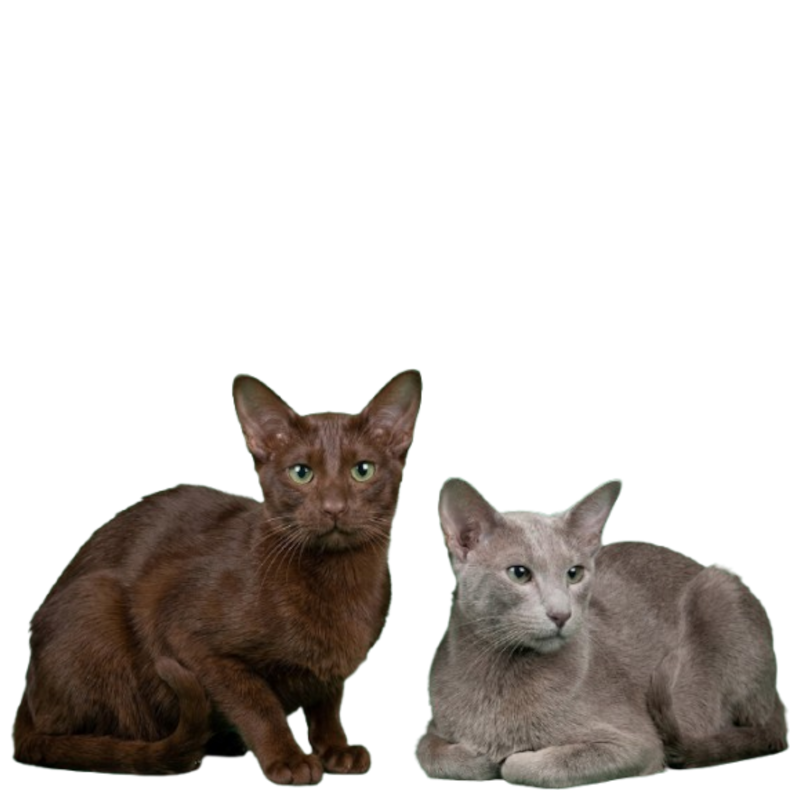
The Havana is characterized by a “semi-foreign” body type, displaying a precise equilibrium between a sleek, elongated frame and a sturdy, muscular build. The structural hallmark of Havanas is a series of distinct angles, particularly within the cranial region.
Cranial Architecture and Facial Geometry
The head of the Havana is longer than its width, tapering toward a uniquely shaped muzzle that is often compared to a lightbulb or a cob of corn.
Muzzle and Profile
- The Muzzle: Havanas possess a highly defined muzzle with a significant break behind the whisker pads. This anatomical feature results in a squared-off, blunt tip rather than a pointed one.
- The Stop: When viewed from the side, a clear “stop” or indentation is visible at the bridge of the nose between the eyes, separating the forehead from the bridge.
- Chin Dynamics: The chin of the Havana is firm and well-developed. In a profile view, the tip of the chin aligns vertically with the tip of the nose.
Ocular and Auricular Features
- Eye Shape: Havanas feature medium-sized, oval-shaped eyes. They are positioned with significant width between them and sit at a slight aperture, giving them a perpetually focused expression.
- Ear Morphology: The ears are notably large and broad at the base, ending in rounded tips. They are set wide apart and exhibit a forward-leaning tilt, suggesting an alert posture. The hair on the ears is naturally sparse.
Body Structure and Frame
The torso of the Havana is medium in length, exhibiting a firm, hard muscularity without appearing bulky or overly dainty.
Skeletal Proportions
The skeleton of Havanas is composed of medium-diameter bone. The neck is proportionate to the body length, carrying the head in a graceful, upright manner that emphasizes the breed’s angularity.
Limbs and Tail
- Legs: The legs of the Havana are straight and slender. The posterior legs are slightly longer than the anterior legs—this provides the Havana’s back with a level or slightly ascending line toward the rear.
- Paws: Havanas have compact, oval-shaped paws.
- Tail: The tail is medium in length and slender in diameter, tapering naturally to a fine point in harmony with the torso’s dimensions.
Morphological Summary
| Physical Attribute | Description |
|---|---|
| Cranial Profile | Prominent stop at the eye line; squared muzzle |
| Muzzle Shape | Distinct whisker break; “corncob” appearance |
| Frame Type | Semi-foreign; balanced muscularity |
| Ear Set | Large, rounded, and tilted forward |
| Eye Shape | Open oval; wide-set placement |
behavior
The behavioral repertoire of the Havana is defined by high levels of physical activity, complex problem-solving abilities, and a distinct method of tactile environmental exploration. Havanas exhibit specific action patterns that distinguish them from other domestic felines, particularly in their use of appendages and vocalizations.
Tactile Engagement and Environmental Interaction
A primary behavioral trait of the Havana is the frequent and deliberate use of the paws to investigate surroundings.
Manual Investigation
Havanas often utilize their front paws to touch, tap, or move objects to assess texture, weight, and stability.
Tactile Solicitation
To initiate interaction with humans or other animals, the Havana frequently uses a single paw to gently tap a person’s arm or shoulder.
Object Manipulation
The Havana’s dexterity allows for the manipulation of latches, cabinet doors, and small items, demonstrating a high degree of motor control.
Locomotion and Play Dynamics
The kinetic energy of the Havana manifests in specific play behaviors and locomotive styles.
High-Intensity Activity
Havanas participate in vigorous play sessions that involve rapid acceleration and climbing. They frequently seek high vantage points, utilizing their muscular frame to reach vertical heights that provide a panoramic view of their territory.
Retrieval and Interactive Play
Many Havanas naturally engage in retrieval behaviors, carrying objects in their mouths and returning them to a specific location. This suggests a behavioral inclination toward cooperative play and the tracking of moving targets.
Vocalization and Communication
The communicative behavior of the Havana is frequent but modulated in intensity.
| Communication Type | Context and Execution |
|---|---|
| Vocal Frequency | High; Havanas utilize vocalizations to signal needs or transitions. |
| Acoustic Quality | Soft to moderate; typically less resonant than other Oriental-influenced breeds. |
| Non-Verbal Cues | Heavy reliance on tail positioning and direct ocular contact to convey intent. |
Social Integration and Proximity Seeking
The Havana displays a marked preference for physical proximity. Behaviorally, this is observed through:
- Shadowing: The Havana will follow individuals from room to room to remain within the same immediate environment.
- Communal Rest: Havanas frequently seek out the warmth of other animals or humans, often positioning themselves in direct contact with their companions during periods of inactivity.
- Active Greeting: Havanas typically move toward the entrance of a dwelling when they detect the arrival of familiar individuals, rather than remaining stationary.
color
The chromatic identity of the Havana is restricted to a specific palette of solid, monochromatic tones. The defining requirement for Havanas is a total saturation of pigment extending from the hair tip down to the follicular root, without any residual markings or white spotting.
Primary Pigmentation Categories
While the breed name is associated with a specific hue, Havanas are officially recognized in two distinct color classifications.
Mahogany and Chocolate Tones
The most prevalent color for the Havana is a deep, warm brown. This shade is often described as possessing a reddish-brown cast rather than a black-brown base.
- Tonal Depth: The color should be level throughout the entire body of the Havana.
- Reflective Properties: The coat often exhibits a glossy sheen that can cause the deep brown to appear more vibrant under direct light.
Lilac and Lavender Tones
A secondary recognized color for Havanas is a warm-toned frost or lavender.
- Shade Characteristics: This is a dilute version of the primary brown, resulting in a greyish-pink or dove-grey hue.
- Warmth Requirements: Unlike the blue or cool-grey found in other breeds, the lilac Havana must maintain a warm, pinkish undertone.
Ancillary Surface Pigmentation
The color of the Havana extends beyond the fur to include the integumentary surfaces of the face and extremities.
Dermal and Mucosal Coloring
The pigmentation of the paw pads and the nasal leather must harmonize with the primary coat color of the Havana.
| Feature | Chocolate Havana Pigment | Lilac Havana Pigment |
|---|---|---|
| Nose Leather | Brown with a rose-toned undertone | Lavender-pink or mauve |
| Paw Pads | Rose-toned brown | Lavender-pink |
Ocular Pigmentation
A critical component of the Havana’s color standard is the contrast provided by the eyes.
- Hue: The eyes are exclusively green.
- Saturation: A deeper, more vivid saturation of green is considered more representative of the breed standard.
Pigment Distribution and Constraints
The integrity of the color in Havanas is measured by its uniformity across several specific zones:
Markings and Uniformity
- Ghost Markings: While young kittens may show faint tabby patterns, the mature Havana must demonstrate a completely solid coat devoid of any tabby bars or ticking.
- White Spotting: The presence of any white lock or “locket” on the chest, groin, or paws is absent in a standard Havana.
- Whisker Color: For the chocolate variant, the whiskers (vibrissae) should match the brown tone of the coat, further emphasizing the monochromatic nature of Havanas.
compatibility
Ease of Maintenance
Rating: 5/5
Child Friendly
Rating: 4/5
Annual Cost
Rating: 4/5
Lifetime Cost
Rating: 4/5
Adaptability
Rating: 4/5
Velcro Factor
Rating: 5/5
Quietude
Rating: 3/5
Apartment Suitability
Rating: 4/5
Hypoallergenic
Rating: 2/5
Handling Tolerance
Rating: 5/5
Hardiness/Longevity
Rating: 4/5
Prey Drive
Rating: 3/5
genetics
The genetic profile of the Havana is centered on the interaction between eumelanin-regulating loci and the inhibition of pattern-forming genes. Specifically, the Havana’s genotype is defined by the fixed presence of recessive alleles at the Brown locus and the maintenance of a non-agouti state.
Primary Loci and Allelic Configuration
The genomic structure of the Havana relies on specific markers within the (Tyrosinase-related protein 1) gene and the (Agouti signaling protein) gene.
The Brown Locus ()
The primary determinant for the Havana is the allele. To exhibit the standard phenotype, Havanas must be homozygous recessive for the chocolate mutation ().
- Allelic Interactions: The allele is recessive to the wild-type black allele () but dominant over the cinnamon allele ().
- Molecular Action: This mutation alters the shape of eumelanin granules within the hair shaft, shifting light absorption to produce brown rather than black tones.
The Agouti Locus ()
Havanas are genetically non-agouti, meaning they possess the homozygous recessive configuration () at the locus. This prevents the production of agouti signaling protein, which would otherwise create alternating bands of pigment on individual hairs. This genotype is what ensures the Havana’s coat remains a solid, uniform color.
Dilution and Secondary Variations
Variation within the Havana population is introduced via the (Melanophilin) gene, known as the Dilute locus.
The Dilute Locus ()
While the primary Havana is non-dilute ( or ), a subset of the population possesses the recessive dilute mutation ().
- Impact of : When combined with the brown locus (), the resulting phenotype is lilac.
- Granular Distribution: The allele causes pigment granules to cluster or clump, which changes light refraction and reduces the visual intensity of the Havana’s coloration.
Genetic Tabulation of Phenotypes
The following table illustrates the Mendelian combinations found within the Havana population:
| Genotype | Locus Configuration | Resulting Phenotype |
|---|---|---|
| Chocolate | aa bb DD | Homozygous Brown, Non-dilute |
| Chocolate (Carrier) | aa bb Dd | Homozygous Brown, Dilute-carrier |
| Lilac | aa bb dd | Homozygous Brown, Homozygous Dilute |
Absence of Masking and Patterning Genes
The Havana genome is distinct for the absence or suppression of several common feline genetic markers:
Metabolic and Pattern Suppression
- Inhibition of the Locus (Colorpoint): Unlike related breeds, the Havana is generally fixed for the full-color allele (). The presence of Siamese alleles () would cause temperature-sensitive pigment distribution, which is not characteristic of Havanas.
- Suppression of the Locus (White Spotting): The Havana lacks the dominant allele. The genotype is homozygous recessive (), preventing the migration of cells that create white patches.
- The Locus (Dominant White): Havanas do not carry the mutation, which would otherwise override all underlying pigment through the suppression of melanocyte survival.
health
The physiological well-being of the Havana is generally characterized by a robust biological constitution typical of diverse outcrossed populations. While the Havana does not exhibit high frequencies of breed-specific syndromes, its health management focuses on respiratory, renal, and oral pathologies common to feline physiology.
Respiratory and Upper Airway Considerations
Due to the specific cranial structure of the Havana, certain vulnerabilities in the upper respiratory tract may be observed.
Respiratory Sensitivity
Havanas may exhibit a higher sensitivity to environmental allergens or viral pathogens that affect the pulmonary system.
- Clinical Observation: Increased incidence of sneezing or nasal discharge when exposed to poor air quality.
- Pathogenic Vulnerability: Like many active breeds, the Havana is susceptible to Feline Upper Respiratory Infection (URI) complexes, particularly if the immune system is stressed.
Calcium Oxalate Urolithiasis
Studies in feline urology suggest that Havanas may have a statistically higher predisposition toward the development of calcium oxalate stones in the urinary tract compared to the general feline population.
Metabolic and Internal Pathologies
Internal health monitoring for the Havana involves screening for conditions that impact the filtration and metabolic organs.
Renal Function
While not explicitly linked to polycystic kidney disease (PKD) as often as some long-haired breeds, the Havana’s renal health should be monitored via regular blood chemistry panels to track urea and creatinine levels.
Periodontal Health
The Havana is noted for a predisposition to early-onset dental issues.
- Gingivitis: Inflammation of the gum tissue is common in Havanas if oral hygiene is not managed.
- Resorptive Lesions: Havanas may develop odontoclastic resorptive lesions, where the body begins to break down the tooth structure.
Preventative Health Metrics
Standard health maintenance for the Havana involves a rigorous vaccination and diagnostic schedule.
| Assessment Category | Recommended Frequency | Objective |
|---|---|---|
| Cardiac Screening | Annual | Monitoring for hypertrophic cardiomyopathy (HCM) via echocardiogram. |
| Dental Prophylaxis | 12 to 18 Months | Prevention of tooth loss and systemic infection from oral bacteria. |
| Renal Panel | Annual (Post-Mature) | Early detection of chronic kidney disease (CKD) through SDMA testing. |
Weight Management and Endocrine Balance
The high metabolic rate of the Havana necessitates a careful balance of caloric intake to prevent secondary health complications.
Obesity Prevention
While Havanas are naturally lean, sedentary lifestyle changes can lead to rapid weight gain. Excess adipose tissue in the Havana increases the risk of:
- Diabetes Mellitus: Insulin resistance linked to weight gain.
- Hepatic Lipidosis: Acute liver dysfunction occurring if an overweight Havana ceases caloric intake suddenly.
- Joint Stress: Excess weight can exacerbate degenerative joint disease in the Havana’s extremities.
longevity
The temporal lifespan of the Havana is categorized by a multi-stage progression from developmental maturity to senescence. Statistical data indicates that Havanas generally possess a life expectancy that aligns with other medium-sized, outcrossed domestic feline populations.
Expected Lifespan Parameters
The duration of the Havana’s life is typically measured in years, with variations based on environmental control and preventative biological monitoring.
Statistical Range
Most Havanas reach a chronological age within the following parameters:
- Average Lifespan: 12 to 15 years.
- Extended Longevity: It is not uncommon for a Havana to exceed 18 to 20 years when maintained in a strictly controlled indoor environment.
Developmental Timeline and Life Stages
The aging process of the Havana can be modeled to compare biological markers with chronological years.
Juvenile and Adolescent Phases
The initial growth phase of the Havana is rapid, with physical maturity usually occurring by the end of the first year.
- Kittenhood: 0 to 6 months.
- Junior Stage: 7 months to 2 years.
Adult and Mature Phases
The plateau of the Havana’s physical vitality occurs during the prime adult years.
- Prime Adult: 3 to 6 years.
- Mature: 7 to 10 years. At this stage, the Havana enters a period where metabolic shifts begin to occur.
Senior and Geriatric Phases
The final stages of the Havana’s life require increased frequency of physiological assessment.
- Senior: 11 to 14 years.
- Geriatric: 15+ years.
Mathematical Aging Correlations
Using a standard feline-to-human age conversion model, the biological age of a Havana can be approximated based on its chronological age:
The Cat-to-Human Age Bridge
- : “Human Years,” the age the cat would be if it were a person.
- : “Cat Birthdays,” the actual number of years the cat has lived (for cats age 2 and up).
- : “The Adult Milestone,” the human age a cat reaches by its 2nd birthday.
- : “The Aging Step,” the 4 human years added for every 1 actual year the cat ages after age 2.
For a mature cat aged years, the human age equivalent is calculated by taking the base of years for the first two years and adding years for each of the remaining years: human years.
| Havana Chronological Age | Human Biological Equivalent |
|---|---|
| 1 year | 15 years |
| 2 years | 24 years |
| 5 years | 36 years |
| 10 years | 56 years |
| 15 years | 76 years |
| 20 years | 96 years |
Factors Influencing Temporal Duration
While the Havana has a set biological potential, specific external factors determine the achievement of maximum longevity.
Environmental Impact
- Indoor vs. Outdoor Access: Statistical evidence shows that a Havana kept exclusively indoors has a significantly higher probability of reaching the geriatric phase compared to those with outdoor access, primarily due to the elimination of external trauma and pathogen exposure.
- Caloric Regulation: The maintenance of a stable body condition score is a primary predictor of the Havana’s ability to reach the 15+ year cohort.
maintenance
The maintenance of the Havana involves a systematic approach to hygiene and environmental management designed to preserve the physical condition and external physiological integrity of the animal.
Integumentary Maintenance
The coat and skin of the Havana require minimal yet specific intervention to manage dander and sebaceous secretions effectively.
Grooming Frequency and Technique
Due to the structure of the Havana’s pelage, mechanical removal of dead hair is best achieved through friction-based methods rather than invasive combing.
- Weekly Maintenance: A soft rubber curry brush or a dampened chamois cloth should be utilized once per week to facilitate the removal of loose keratin and surface debris.
- Polishing: The use of a silk or velvet cloth is often employed to maintain the textural smoothness and natural sheen of the Havana’s exterior.
Oral and Aural Hygiene
Maintaining the sensory and masticatory systems is a primary component of Havana care and long-term vitality.
Dental Care Procedures
Havanas benefit from a consistent oral care schedule to prevent the accumulation of plaque and the subsequent formation of calculus.
- Frequency: Daily or bi-weekly brushing using a feline-specific enzymatic paste is recommended.
- Inspection: Monthly checks for gingival inflammation or significant tartar buildup on the posterior molars ensure early detection of oral issues.
Aural Cleansing
The large ear structure of the Havana requires periodic inspection for the accumulation of cerumen (earwax) and environmental particulates.
- Cleaning Technique: A cotton ball moistened with a pH-balanced feline ear cleaner should be used to wipe the visible inner surface of the pinna.
- Constraint: Cotton swabs should never be inserted into the ear canal to avoid impaction or internal trauma.
Ungual and Ocular Management
The maintenance of the extremities and ocular region ensures the comfort and mobility of the Havana.
Claw Trimming
The fast-growing claws of the Havana necessitate regular shortening to prevent overgrowth, snagging, or accidental injury.
- Schedule: Every 10 to 14 days is the standard interval for assessment.
- Procedure: Trimming the translucent tip of the claw while strictly avoiding the vascularized quick ensures a safe and painless process.
Ocular Clearance
Havanas may occasionally accumulate moisture or discharge at the medial canthus of the eye.
- Maintenance: Gentle wiping with a soft, lint-free cloth dampened with distilled water helps keep the orbital area clear of buildup.
Environmental and Nutritional Maintenance
Supporting the physiological demands of the Havana involves technical regulation of its surroundings and metabolic intake.
Sanitization Requirements
| Maintenance Task | Recommended Frequency | Objective |
|---|---|---|
| Litter Box Cleansing | Daily Scoop / Weekly Wash | Prevention of bacterial proliferation and odor management. |
| Water Fountain Maintenance | Bi-weekly | Elimination of biofilm and mineral deposits. |
| Bedding Laundering | Monthly | Reduction of environmental dander and allergens. |
Nutritional Density and Hydration
The metabolic maintenance of the Havana is supported through a diet high in animal proteins and a consistent hydration source.
- Hydration Management: Due to a naturally low thirst drive, the Havana should have access to multiple water stations or circulating fountains to encourage fluid intake and support renal function.
measurements
| Measurement | Female | Male | ||
|---|---|---|---|---|
| Metric | Imperial | Metric | Imperial | |
height | 20 – 25 centimeters | 8 – 10 inches | 23 – 28 centimeters | 9 – 11 inches |
length | 30 – 38 centimeters | 12 – 15 inches | 38 – 46 centimeters | 15 – 18 inches |
weight | 2.7 – 4.5 kilograms | 6 – 10 pounds | 3.6 – 5.4 kilograms | 8 – 12 pounds |
• Height: Refers to the measurement at the withers (shoulders).
• Length: Measured from the tip of the nose to the base of the tail.
origin
The lineage of the Havana is the result of a deliberate mid-twentieth-century breeding program in the United Kingdom, designed to isolate specific phenotypic traits through a precise hybridization of established lineages.
Ancestral Foundations and Early Documentation
The historical record for the Havana begins with documentation from the late 1800s, though the modern iteration was not formalized until the post-war era.
Pre-Modern Documentation
Historical accounts from the 1880s and 1890s describe animals in the United Kingdom that shared similarities with the Havana, often referred to under various regional names. However, these early populations were largely assimilated into other breed registries or lost during the early 20th century.
Post-War Restoration
The modern Havana was resurrected in the early 1950s by a group of British enthusiasts. This collective sought to recreate a specific mahogany-toned cat that had vanished from the competitive circuit. The foundational cross involved a chocolate-point Siamese and a black domestic shorthair carrying the chocolate gene.
Geographic Migration and Recognition
The Havana’s trajectory from a British experiment to an internationally recognized entity involved significant geographic and institutional shifts.
The British Branch
In the United Kingdom, the Havana was initially registered under the name “Chestnut Brown Foreign Shorthair.” It eventually became part of the wider Oriental breed classifications in the British registry systems, leading to a divergence in the historical development of the Havana compared to the North American population.
North American Introduction
The Havana was exported to the United States in the mid-1950s. The first Havana arrived in North America in 1956, leading to the establishment of the Havana’s own independent registry and breed standard in the United States by 1959.
Institutional Milestone Timeline
The following table outlines the key dates in the formalization of the Havana:
| Year | Milestone |
|---|---|
| 1952 | First recorded mating of the modern Havana foundation in England. |
| 1956 | Exportation of the first Havana to North America. |
| 1958 | Recognition by the Governing Council of the Cat Fancy (GCCF) in the UK. |
| 1959 | The Havana achieved recognition by the Cat Fanciers’ Association (CFA). |
| 1964 | Formal separation of the Havana’s North American and European registry standards. |
Breed Nomenclature and Etymology
The naming of the Havana has been a subject of historical debate, with two primary theories regarding the origin of the moniker.
The Tobacco Theory
One prevalent historical theory suggests that the Havana was named after the Havana tobacco leaf; specifically the shade of the wrappers found on high-quality Cuban cigars.
The Leporid Theory
An alternative historical account posits that the Havana was named after the Havana rabbit; a breed that predates the feline Havana and shares a similar monochromatic palette. Regardless of the specific inspiration, the name was solidified by 1960 to distinguish Havanas from the wider Oriental Shorthair category.
temperament
The internal disposition of the Havana is characterized by a high degree of emotional sensitivity and a multifaceted social orientation. Unlike more aloof domestic lineages, the Havana’s temperament is defined by a profound psychological requirement for interpersonal engagement and a cognitively active nature.
Social Orientation and Interpersonal Dynamics
The Havana possesses a temperament that is fundamentally centered on the formation of strong, singular bonds and a consistent presence within its social hierarchy.
Affiliative Drives
Havanas exhibit an intense desire for companionship, often manifesting as a psychological necessity for proximity. This drive is not merely opportunistic but is rooted in a temperament that prioritizes social stability and emotional reciprocity.
- Human-Centric Focus: The Havana often develops a specific affinity for one or two primary individuals, displaying a temperament that is more akin to canine social structures than the stereotypical feline independence.
- Social Resilience: While sensitive, the Havana’s disposition is generally resilient in multi-pet environments, provided the social structure remains predictable and inclusive.
Emotional Sensitivity
The temperament of the Havana is notably perceptive. They are highly attuned to the emotional state of their human counterparts, often adjusting their own internal state in response to perceived stress or tranquility within the household environment.
Cognitive and Exploratory Temperament
Beyond social traits, the Havana’s temperament includes a significant investigative component, driven by a high level of mental alertness.
Intellectual Curiosity
The Havana is defined by an inquisitive nature. This is not just a drive for physical exploration but a psychological requirement for mental stimulation and engagement with their surroundings.
- Investigative Nature: A Havana possesses a temperament that compels it to be involved in the minutiae of daily household operations.
- Problem-Solving Propensity: Their temperament favors challenges; they are cognitively active and find psychological satisfaction in tasks that require focus or interaction.
Adaptability and Confidence
The Havana typically maintains a confident and outgoing disposition. While they may be cautious with sudden environmental changes, their baseline temperament is one of assurance rather than anxiety.
Comparative Temperament Analysis
The following table categorizes the primary temperamental vectors of the Havana using a relative scale of intensity ():
| Temperament Vector | Intensity ($I$) | Description |
|---|---|---|
| Social Dependence | High | Pronounced requirement for frequent interpersonal contact. |
| Inquisitiveness | High | Persistent drive to investigate and understand environmental stimuli. |
| Adaptability | Moderate | Capable of adjusting to new social dynamics with gradual introduction. |
| Emotional Intensity | High | Strong internal reactions to social cues and environmental atmosphere. |
Psychological Well-being and Stimulation
To maintain the temperamental equilibrium of the Havana, specific psychological conditions must be met to satisfy their inherent internal drives.
Social Equilibrium
Isolation is often detrimental to the Havana’s temperament. They possess a socially oriented disposition that can lead to psychological distress if they are deprived of interaction for extended periods.
Mental Homeostasis
The relationship between environmental complexity () and the psychological satisfaction () of the Havana can be conceptually modeled as a direct correlation where:
The “Happy Cat” Happiness Equation
- : “Happiness Level,” the mental well-being and satisfaction of the cat.
- : “Grows With,” meaning as the right side of the formula goes up, the cat’s happiness goes up too.
- : “Home Fun,” the variety of things to do, like climbing trees, window perches, and food puzzles.
- : “Together Time,” how often the cat plays and snuggles with humans or other pets.
For an intelligent and social cat, increasing the environmental complexity () by adding a high cat tree and increasing the daily Social Interaction through active play will result in a directly proportional increase in the cat’s overall psychological satisfaction ().
A Havana requires an environment that caters to its high intellectual and social baseline to prevent temperamental stagnation or frustration.