Exotic Shorthair Cat
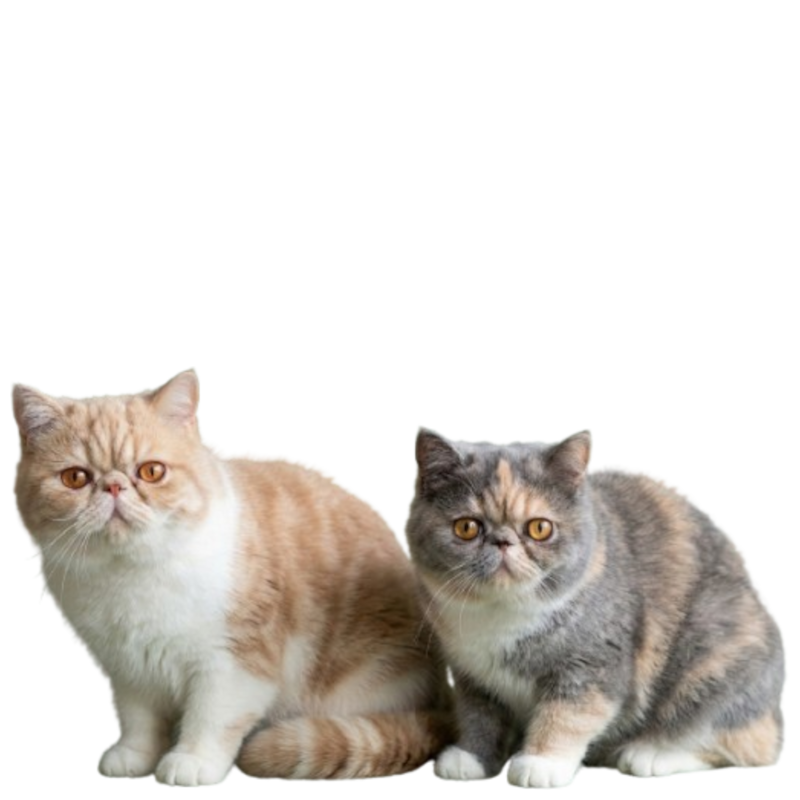
appearance
The Exotic Shorthair is defined by a cobby, low-slung powerhouse build, emphasizing a silhouette of rounded contours and significant physical substance. Often likened to a short-haired variant of the Persian, Exotic Shorthairs possess a sturdy skeletal structure enveloped in a dense, plush coat.
Cranial and Facial Architecture
The head of the Exotic Shorthair is its most recognizable trait, presenting a massive, spherical skull that creates a soft, open facial expression.
Skull and Muzzle
- Skull Structure: The cranium is broad and significantly rounded. The underlying bone is smooth to the touch, lacking any flat planes or depressions.
- The Break: Positioned directly between the eyes is a pronounced “stop” or indentation. This serves as the structural center where the forehead, nose, and chin align on a vertical plane.
- Muzzle: The face features full, prominent cheeks that transition into a broad, heavily developed muzzle.
Ocular and Aural Features
- Eyes: Exotic Shorthair’s eyes are notably large, circular, and set wide apart. Their prominence and clarity are essential to the breed’s characteristic alert appearance.
- Ears: The ears are small with rounded apices. They are positioned low on the skull and tilted slightly forward, preserving the uninterrupted circular line of the head.
Nasal and Mandibular Structure
- Nose: The nose is short and broad with a snubbed appearance, located level with the center of the eyes.
- Chin and Jaw: The lower jaw is wide and exceptionally strong. The chin is deep and well-defined, aligning perpendicularly with the tip of the nose.
Body Composition and Proportions
The physical frame of the Exotic Shorthair is compact and “square,” supported by heavy bone density and powerful musculature.
Torso
The body of the Exotic Shorthair is medium-to-large, featuring a deep, broad chest and a level topline. The frame maintains a consistent breadth from the shoulders through to the hindquarters.
Extremities
- Legs: The limbs are short and thick, providing a low center of gravity. The heavy boning is a requirement for supporting the mass of the torso.
- Paws: Exotic Shorthairs have large, firm, and round paws with toes that are carried closely together.
- Tail: The tail is short and thick, proportionate to the body length. It is typically carried straight and ends in a slightly rounded tip.
Integument and Coat Density
While the skeletal frame mirrors that of long-haired ancestors, the Exotic Shorthair’s coat is its most distinct tactile feature.
Texture and Length
The fur is short, though notably longer than the average domestic shorthair. It is characterized by a soft, luxurious, and incredibly dense texture.
The Stand-off Effect
Due to the extreme thickness of the undercoat, the fur does not collapse against the skin. Instead, it stands outward, creating a “stand-off” effect that gives Exotic Shorthairs a padded, soft-edged appearance—effectively masking the hard muscular angles beneath.
Morphological Overview
The following table summarizes the primary physical proportions of the Exotic Shorthair:
| Anatomical Feature | Structural Expectation |
|---|---|
| Cranial Shape | Massive, broad, and spherical |
| Neck | Short, thick, and muscular |
| Body Symmetry | Cobby, level, and substantial |
| Bone Quality | Heavy and robust throughout |
| Coat Quality | Plush, dense, and resilient |
behavior
The daily conduct of the Exotic Shorthair is defined by specific modes of environmental interaction, social engagement, and distinctive communication habits. These observable actions characterize how the feline navigates its domestic space.
Social Dynamics and Interactive Habits
The Exotic Shorthair demonstrates a consistent preference for physical closeness, utilizing subtle methods to maintain a connection with household members.
Following and Proximity
Exotic Shorthairs frequently exhibit a “sentinel” behavior, tracking the movements of humans by moving from one room to another. Rather than seeking high-altitude vantage points, the Exotic Shorthair generally opts for lower surfaces—such as the floor or the cushions of a sofa—to remain within the immediate social circle.
Tactile Engagement Methods
- Contact Seeking: A primary behavioral trait is the tendency to occupy a human’s lap or lean against their feet during periods of inactivity.
- Manual Signaling: To garner attention, the Exotic Shorthair often employs a gentle tapping motion with a forepaw.
- Scent Marking: Exotic Shorthairs engage in frequent facial rubbing against furniture and individuals, an action used to establish a secure and familiar territorial perimeter.
Play Mechanics and Energy Cycles
The activity profile of the Exotic Shorthair is generally measured, with a preference for grounded play over aerial maneuvers.
Focused Play Style
Exotic Shorthairs typically interact with objects through calculated, low-impact movements. They favor “stalking” behaviors where they observe a toy for an extended duration before engaging in a short, controlled pounce.
Brief High-Intensity Intervals
While generally sedentary, the Exotic Shorthair will occasionally experience sudden, short-lived phases of rapid locomotion. During these “sprints,” the feline may traverse the length of a hallway at high speed before immediately returning to a state of repose.
Auditory and Visual Communication
Communication within the Exotic Shorthair is largely non-verbal, relying on a repertoire of soft sounds and specific body language.
Vocalization Frequency
The Exotic Shorthair is rarely insistent with its voice. Auditory signals are typically limited to faint, melodic chirps or soft trills. These sounds are most frequently observed when the feline is anticipating a meal or requesting access to a closed space.
Ocular Signaling
A significant portion of Exotic Shorthair’s communication occurs through sustained, soft eye contact. The “slow blink” is a recurring behavioral cue used to signal a state of relaxation and trust toward others in the environment.
Behavioral Responses to Domestic Variables
The table below details how the Exotic Shorthair typically conducts itself when encountering specific environmental shifts:
| Variable | Typical Behavioral Action |
|---|---|
| Unknown Individuals | Initial visual assessment followed by a calm, non-aggressive approach. |
| Acoustic Disturbance | Generally maintains a composed posture; rarely exhibits a flight response. |
| Household Transitions | Displays high resilience; quickly establishes new preferred resting spots. |
| Interspecies Interaction | Tends toward passive observation and peaceful coexistence with other residents. |
color
The Exotic Shorthair is distinguished by a vast array of coat pigmentations and marking styles. These variations are categorized by the depth of pigment on the hair shaft, the presence of specific patterns, and the distribution of white space.
Monochromatic and Solid Classifications
In the solid category, the Exotic Shorthair’s coat must exhibit a single, consistent hue from the base of the hair to the tip.
Standard Solid Tones
- Pure White: A stark, luminous white. The nose and paw leather generally display a pink tone.
- Deep Black: A dense, soot-colored black that lacks any reddish oxidation or pale undercoat.
- Blue: An even, muted gray with a bluish cast; lighter, silvery tones are typically favored over darker charcoal shades.
- Red: A vibrant, saturated orange-red that is uniform across the body without ghost markings.
- Cream: A soft, pale buff hue that remains consistent without transitioning into darker ginger tones.
Smoke and Shaded Variations
These categories are defined by “tipping,” where the pigment is restricted to the outer portion of the hair fiber, creating a dynamic visual effect during movement.
The Smoke Variant
A smoke-colored Exotic Shorthair appears to be a solid color when stationary, but reveals a high-contrast white undercoat when the fur is disturbed or the feline is in motion. Common variations include Black Smoke (black over white) and Blue Smoke (blue-gray over white).
Chinchilla and Shaded Tones
These patterns involve delicate degrees of pigment at the hair tips.
- Chinchilla Silver: The undercoat is a snowy white, with very light black tipping on the back and flanks that produces a shimmering, crystalline effect.
- Shaded Silver: Features a more significant concentration of black tipping, resulting in a darker, mantle-like appearance over the torso.
Tabby and Particolor Arrangements
The tabby pattern in the Exotic Shorthair is categorized by specific geometric arrangements of darker pigment against a lighter ground color.
Primary Tabby Motifs
| Motif Type | Visual Arrangement |
|---|---|
| Classic | Features broad, swirling markings, including a butterfly-shaped design on the shoulders and circular “oysters” on the sides. |
| Mackerel | Characterized by thin, vertical lines resembling a skeletal structure, extending from the spine downward. |
| Spotted | The standard lines are fractured into distinct, individual dots or “rosettes” across the torso. |
Bi-Color and Calico
- Bi-Color: This involves any recognized solid or tabby color interspersed with white patches.
- Calico: Exotic Shorthairs with this pattern display a tri-color coat consisting of white, black, and red patches that are clearly delineated rather than blended.
Pointed and Himalayan Styles
In pointed Exotic Shorthairs, the dense pigment is restricted to the extremities—the face, ears, limbs, and tail—while the torso remains a pale, contrasting shade.
Common Point Classifications
- Seal Point: A warm, creamy body paired with deep, dark-brown extremities.
- Blue Point: A cold, white-gray body with slate-blue extremities.
- Flame Point: A bright white body with vivid orange-red extremities.
- Tortie Point: Extremities that feature a mottled blend of red and a base color like seal or blue.
Correlation of Eye and Integumentary Pigment
The coloration of the eyes and leather in Exotic Shorthairs is functionally linked to the coat’s pigment category.
Ocular Pigmentation Standards
- Copper to Deep Orange: The standard ocular hue for the majority of solid, tabby, and smoke coats.
- Emerald or Blue-Green: Specifically required for silver and golden shaded varieties.
- Deep Blue: The characteristic eye color for pointed and certain pure white Exotic Shorthairs.
- Heterochromia (Odd-Eyed): Occasionally seen in white Exotic Shorthairs, where one eye is blue and the other is copper.
compatibility
Ease of Maintenance
Rating: 4/5
Child Friendly
Rating: 5/5
Annual Cost
Rating: 4/5
Lifetime Cost
Rating: 2/5
Adaptability
Rating: 4/5
Velcro Factor
Rating: 5/5
Quietude
Rating: 5/5
Apartment Suitability
Rating: 5/5
Hypoallergenic
Rating: 2/5
Handling Tolerance
Rating: 5/5
Hardiness/Longevity
Rating: 3/5
Prey Drive
Rating: 5/5
genetics
The genomic profile of the Exotic Shorthair is defined by the interaction of specific loci that govern skeletal morphology and hair follicle cycling. As a breed of hybrid origin, its DNA is a mosaic of traits derived from the Persian and various shorthaired lineages.
Craniofacial and Skeletal Genetics
The most significant morphological characteristic of the Exotic Shorthair is its brachycephalic skull structure—resulting from selective pressure on specific craniofacial developmental pathways.
Brachycephaly Loci
Current genomic research indicates that the distinct facial compression in Exotic Shorthairs is a complex polygenic trait. A primary driver of this morphology is a mutation within the DCHS2 gene, which alters the development of the midface and nasal bone structure during embryogenesis.
Cobby Morphotype
The dense, heavy-boned body type is governed by an array of polygenic modifiers. Unlike the specific FGFR3 mutations associated with certain types of dwarfism, the Exotic Shorthair’s stature is achieved through the selection of genes that limit the elongation of the long bones while simultaneously increasing cortical bone density.
Hair Length and Texture Alleles
The primary genomic divergence between the Persian and the Exotic Shorthair is located at the Fibroblast Growth Factor 5 (FGF5) locus—which serves as the master regulator for the feline hair cycle.
The Dominant Short Hair Allele
The Exotic Shorthair carries the dominant wild-type allele () for short hair. Because this allele exerts dominance over the recessive long-hair mutation (), a Exotic Shorthair may possess either a homozygous () or heterozygous () genotype.
| Genotype | Phenotypic Expression |
|---|---|
| LL | Homozygous Shorthair (incapable of producing long-haired progeny) |
| Ll | Heterozygous Shorthair (asymptomatic carrier of the long-hair gene) |
| ll | Longhair (phenotypically a Persian, despite Exotic Shorthair pedigree) |
Density Modifiers
The resilient, “stand-off” quality of the Exotic Shorthair’s coat is attributed to a high follicle count per square millimeter and an increased ratio of secondary undercoat hairs to primary guard hairs. This is controlled by secondary genetic modifiers that densify the coat without extending the anagen (growth) phase of the follicle.
Pigmentation and Pattern Loci
The genomic map of Exotic Shorthairs incorporates standard feline loci that dictate melanin synthesis and pattern distribution.
Primary Color Loci
- B Locus (Eumelanin): Dictates the shape and density of black pigment granules ( for black, for chocolate, for cinnamon).
- D Locus (Dilution): Regulates the transport of pigment into the hair shaft. The recessive allele causes pigment clumping, creating “dilute” hues.
- C Locus (Tyrosinase): Governs temperature-sensitive albinism (), which restricts pigment production to the cooler extremities in pointed Exotic Shorthairs.
Tabby and Inhibitor Genes
The interaction between the Agouti () and Tabby () loci produces the various patterned coats. Additionally, the Inhibitor gene () is responsible for silver and smoke varieties by halting the production of pheomelanin (yellow-red pigment) within the hair shaft.
Inheritance Probabilities
The probability of a mating between two heterozygous () individuals producing a long-haired offspring is represented by the following equation:
The “Hidden Longhair” Kitten Chance
- : “The Longhair Chance,” the 25% probability that a kitten will actually have long fur.
- : “The Longhair Gene,” the hidden (recessive) instruction for long hair inherited from Persian ancestors.
- : “The Shorthair Gene,” the strong (dominant) instruction that keeps the coat short.
- : “The Parent’s Toss,” the 50/50 chance that a shorthaired parent passes on their hidden longhair gene.
- : “The One-in-Four Rule,” the total chance of a kitten getting the longhair gene from both parents.
When breeding two shorthaired cats that both carry the longhair gene (), each parent has a chance of passing the allele. The probability of a kitten receiving an from both is , meaning there is a chance for a long-haired “Exotic Longhair” to appear in the litter.
In a standard cross, the expected phenotypic distribution is:
- 75% Exotic Shorthair (Shorthair)
- 25% Persian (Longhair)
health
The biological health of the Exotic Shorthair is defined by specific vulnerabilities resulting from its unique cranial architecture and certain hereditary systemic conditions. Clinical management primarily addresses respiratory mechanics, renal integrity, and ocular surface health.
Craniofacial and Respiratory Dynamics
The compressed facial skeletal structure of the Exotic Shorthair frequently impacts the efficiency of the upper respiratory tract—a condition medically identified as Brachycephalic Airway Obstructive Syndrome (BAOS).
Airway Resistance and Obstruction
In the Exotic Shorthair, stenotic nares and an overlong soft palate create significant airflow resistance. This physiological strain can be expressed through the relationship between pressure differential () and flow rate ():
The Easy-Breathing Effort Score
- : “Breathing Resistance,” how much effort the cat must use to move air through its nose and throat.
- : “Breathing Pressure,” the difference between the air outside and the air in the lungs.
- : “Airflow Speed,” how much air actually moves in or out every second.
For a cat exhibiting a pressure drop () of cm and a measured airflow () of L/s, the airway resistance is calculated as cm . A higher value indicates greater physiological effort required for breathing.
An increase in resistance () forces the Exotic Shorthair to utilize greater muscular effort for inhalation, often resulting in audible stertor or respiratory distress during periods of high ambient temperature.
Thermoregulatory Limitations
Because Exotic Shorthairs have a reduced surface area within their nasal passages, the heat-exchange capacity of the turbinates is compromised. This makes the Exotic Shorthair particularly susceptible to thermal stress, as their primary cooling mechanism—evaporative cooling through the nasal mucosa—is less effective than in breeds with longer muzzles.
Renal and Systemic Pathologies
The most critical internal health concern for the Exotic Shorthair is a genetic cystic disorder that affects the kidneys.
Polycystic Kidney Disease (PKD)
In affected Exotic Shorthairs, fluid-filled clusters known as cysts develop within the renal tissue from birth. As these cysts expand over time, they displace functional nephrons, eventually leading to a decline in kidney filtration.
| Stage of Progression | Physiological Indicators | Pathological Status |
|---|---|---|
| Early Phase | Typically subclinical | Formation of microscopic cysts |
| Mid-Stage | Elevated thirst and urination | Detectable renal enlargement via palpation |
| Advanced Phase | Significant uremia | Substantial loss of excretory function |
Ocular and Nasolacrimal Integrity
The depth and shape of the Exotic Shorthair’s orbit directly influence the health of the eye and the drainage of tears.
Lacrimal Drainage Obstruction
The pronounced facial “stop” in the Exotic Shorthair can cause the nasolacrimal ducts to become misaligned or pinched. This leads to chronic epiphora (tear overflow), which may cause secondary skin irritation within the facial folds if they are not kept dry.
Corneal Exposure and Sensitivity
Due to the prominent positioning of the globes, the Exotic Shorthair is at an increased risk for corneal sequestrum and ulcerative lesions. Incomplete eyelid closure (lagophthalmos) may also lead to localized drying of the central cornea, weakening the epithelial barrier.
Cardiovascular Health
The primary cardiac concern within the Exotic Shorthair population is Hypertrophic Cardiomyopathy (HCM).
Myocardial Thickening
This pathology involves the unexplained thickening of the left ventricular myocardium. The reduction in ventricular volume and the subsequent impact on blood flow can be modeled by the cardiac output formula:
Heart Pumping Volume and Efficiency
- : “Total Blood Flow,” the total amount of blood the heart pumps every minute.
- : “Squeeze Volume,” the amount of blood pushed out with every single heartbeat.
- : “Heart Rate,” the number of times the heart beats in one minute (BPM).
In a feline with a thickened heart wall, the Stroke Volume () might drop to mL due to reduced chamber space. To maintain a standard Cardiac Output () of mL/min, the Heart Rate () must increase: BPM.
As the heart wall thickens, the stroke volume () decreases because the chamber cannot fill adequately during diastole—which can eventually lead to heart failure or systemic thromboembolism.
Dental and Maxillofacial Health
The shortened jaw structure of the Exotic Shorthair often results in dental crowding and malocclusion.
Periodontal and Resorptive Risks
- Accelerated Periodontal Issues: Overcrowded teeth create crevices that easily trap organic material, leading to rapid tartar accumulation.
- Tooth Resorption: Exotic Shorthairs may exhibit a higher incidence of odontoclastic resorptive lesions, where the internal or external tooth structure is gradually absorbed by the body.
longevity
The chronological duration of the Exotic Shorthair’s life is influenced by various biological and environmental variables. Statistical data typically categorizes this feline within a standard range for domesticated breeds of similar lineage.
Statistical Lifespan Distribution
The majority of Exotic Shorthairs reach a biological maturity that extends through several distinct life stages.
Mean Survival Rates
Current data indicates that the average lifespan of the Exotic Shorthair is between 12 and 15 years. However, individuals within the population frequently exceed these parameters, with some reaching the late teens or early twenties under optimal conditions.
| Life Stage | Age Range (Years) | Classification |
|---|---|---|
| Junior | 0.5-2 | Developmental Phase |
| Prime | 3-6 | Physiological Maturity |
| Mature | 7-10 | Established Adult |
| Senior | 11-14 | Advanced Chronology |
| Geriatric | 15+ | Extended Longevity |
Mathematical Modeling of Feline Aging
The aging process in Exotic Shorthairs does not follow a linear 1:7 ratio relative to human years. The initial years involve rapid physiological advancement, followed by a plateau.
Aging Acceleration Formula
A more accurate representation of the Exotic Shorthair’s age in human equivalents () based on its chronological age in years () can be modeled as:
The Cat-to-Human Age Calculator
- : “Human Age,” the equivalent age if the cat were a person.
- : “Cat Years,” how many birthdays the cat has actually had (for cats 2 years or older).
- : “The Head Start,” the human age a cat reaches by its 2nd birthday.
- : “The Aging Speed,” the number of human years added for every 1 year the cat ages after age 2.
For an adult cat aged years, the human equivalent age is calculated by taking the initial years for the first two years of life and adding four years for each of the remaining six years: human years.
This indicates that after the initial two-year developmental period—equivalent to 24 human years—each subsequent year adds approximately four years to the Exotic Shorthair’s biological age.
Environmental Factors Influencing Duration
The specific environment in which the Exotic Shorthair resides is a primary determinant of its survival probability over time.
Indoor vs. Outdoor Survival Probability
There is a statistically significant difference in the longevity of indoor Exotic Shorthairs compared to those with outdoor access.
- Controlled Environments: Restricting the Exotic Shorthair to indoor living significantly reduces exposure to external hazards—often increasing the probability of reaching the geriatric stage.
- External Exposure: Access to the outdoors introduces variables that can drastically shorten the lifespan, shifting the median age downward.
Historical Longevity Records
While the average remains consistent, certain Exotic Shorthairs have been documented reaching exceptional ages. These outliers are often used to study the upper limits of the Exotic Shorthair’s biological potential. These records suggest that the maximum biological ceiling for the Exotic Shorthair can extend to approximately 22-25 years in rare instances.
maintenance
The systemic upkeep of the Exotic Shorthair involves a structured approach to integumentary hygiene, lacrimal management, and oral prophylaxis. While the coat length is abbreviated compared to ancestral lineages, the density of the undercoat necessitates specific intervention to manage sebum and follicular debris.
Integumentary and Coat Management
Physical maintenance of the Exotic Shorthair’s dense coat is required to facilitate the removal of necrotic hair and to regulate the distribution of cutaneous lipids.
Mechanical Grooming and Instrumentation
Regular mechanical intervention is essential to maintain coat aeration and prevent the compaction of fibers at the base of the hair follicles.
| Tool Category | Functional Application | Recommended Frequency |
|---|---|---|
| Fine-Toothed Steel Comb | Deep undercoat penetration to extract loose fibers | Twice Weekly |
| Soft-Pinned Slicker Brush | Alignment of the primary guard hairs | Weekly |
| Silicone Grooming Mitt | Distribution of natural skin oils | Monthly |
Aqueous Cleansing
Periodic bathing is necessary for the Exotic Shorthair to address the lipid content of the skin. Utilizing a degreasing agent followed by a pH-neutral feline cleanser ensures the hair cuticle remains resilient and free of environmental particulates.
Ocular and Facial Hygiene
The specific cranial architecture of the Exotic Shorthair dictates a consistent facial care routine to manage the byproduct of restricted lacrimal drainage.
Lacrimal Area Maintenance
Daily cleaning is required to remove moisture and accumulated pigment from the infraorbital region.
- Saturation: Apply a specialized ocular solution to a lint-free substrate.
- Debridement: Gently clear the periocular area while avoiding direct contact with the globe.
- Desiccation: Thoroughly drying the facial folds after cleaning is critical to inhibit the growth of opportunistic micro-organisms.
Aural and Digital Care
Routine inspection of the peripheral systems prevents the accumulation of external debris and ensures mechanical comfort for the Exotic Shorthair.
Otic Hygiene
The aural canals should be evaluated weekly for cerumen buildup. A vertical canal flush with a ceruminolytic solution can be utilized when necessary, followed by careful drying of the pinna.
Ungual Management
The claws of the Exotic Shorthair generally require shortening every 10 to 14 days. Trimming should be performed distal to the vascularized quick to prevent hemorrhage and discomfort.
Nutritional and Oral Prophylaxis
Monitoring the oral cavity and managing energy intake are fundamental aspects of the Exotic Shorthair’s maintenance schedule.
Oral Hygiene Regimen
The gold standard for preventing plaque mineralization in Exotic Shorthairs involves daily mechanical brushing using a feline-appropriate enzymatic paste.
Metabolic Energy Calculation
To calculate the maintenance energy requirement (MER) for an adult Exotic Shorthair with moderate activity, the following metabolic equation is utilized:
The Daily “Healthy Weight” Calorie Goal
- : “Daily Calories,” the total energy (kcal) the cat needs per day to stay at its current weight.
- : “The Activity Factor,” a standard multiplier for an average, fixed adult cat.
- : “The Basal Number,” a scientific constant used to calculate energy for basic survival.
- : “Weight,” how heavy the cat is in kilograms.
- : “The Metabolic Rule,” a math adjustment because larger bodies use energy more efficiently than tiny ones.
For an adult cat weighing kg, the MER is calculated by first finding the basal requirement () and then applying the activity multiplier: kcal/day.
This calculation assists in aligning the caloric volume with the Exotic Shorthair’s metabolic needs to prevent excessive weight gain.
measurements
| Measurement | Female | Male | ||
|---|---|---|---|---|
| Metric | Imperial | Metric | Imperial | |
height | 23 – 28 centimeters | 9 – 11 inches | 25 – 30 centimeters | 10 – 12 inches |
length | 33 – 41 centimeters | 13 – 16 inches | 36 – 43 centimeters | 14 – 17 inches |
weight | 3.2 – 5.4 kilograms | 7 – 12 pounds | 4.5 – 6.8 kilograms | 10 – 15 pounds |
• Height: Refers to the measurement at the withers (shoulders).
• Length: Measured from the tip of the nose to the base of the tail.
origin
The establishment of the Exotic Shorthair as a distinct entity within the feline fancy was the result of mid-century breeding initiatives centered in North America. Its creation was not a singular event but an iterative process of cross-breeding designed to introduce specific morphological traits into existing populations.
Initial Hybridization and Experimental Phase
The lineage of the Exotic Shorthair began in the 1950s when breeders of the American Shorthair sought to incorporate the heavy bone structure and rounded contours of the Persian into their lines.
Early Cross-Breeding Initiatives
During this period, several influential breeders began outcrossing American Shorthair individuals with Persians. The resulting progeny were initially viewed with controversy by established breed registries. These early hybrids paved the way for what would eventually be recognized as the Exotic Shorthair.
Diversification of Source Stock
While the Persian was the primary contributor to the Exotic Shorthair’s foundation, other shorthaired breeds were utilized in the developmental stages to stabilize the coat length.
- Russian Blue: Employed in some early programs to enhance bone density.
- Burmese: Used by certain breeders to reinforce the compact body structure.
Formal Recognition and Breed Stabilization
As the population of these hybrids grew, the necessity for a formal breed classification became apparent.
Cat Fanciers’ Association (CFA) Involvement
In 1966, Jane Martinke—a prominent CFA judge—proposed the creation of a new breed class for these hybrids. The goal was to provide a venue for the unique offspring that were neither strictly American Shorthairs nor Persians.
Evolution of Outcrossing Policies
The rules governing Exotic Shorthair’s outcrosses have shifted over the decades. Initially, a wide range of shorthaired breeds were permitted. However, as the breed matured, registries tightened these parameters.
| Decade | Outcrossing Status | Primary Breeding Focus |
|---|---|---|
| 1950s | Experimental | Unofficial American Shorthair and Persian crosses |
| 1960s | Provisional | Recognition of the Exotic Shorthair as a new class |
| 1970s | Stabilizing | Standardization of the breeding pool |
| 1980s+ | Restricted | Primary outcrossing limited to the Persian |
Ancestral Distribution and Legacy
The Exotic Shorthair serves as a historical bridge between traditional shorthaired working cats and the high-ancestry longhair breeds.
Pedigree Integration
In modern registration systems, the Exotic Shorthair remains closely linked to the Persian. In many associations, the Exotic Shorthair is managed as a shorthaired division of the Persian breed group—allowing for back-crossing to maintain the specific skeletal requirements of the standard.
Global Proliferation
Following its North American inception, the Exotic Shorthair was exported to Europe and Asia. Each regional registry adapted the breeding requirements to fit local standards, though the fundamental origin remains rooted in the mid-century American hybridization programs.
temperament
The internal disposition of the Exotic Shorthair is defined by an exceptional degree of emotional equilibrium and a consistently low-arousal baseline. In contrast to more reactive feline varieties, the Exotic Shorthair’s psychological constitution is founded upon a serene and accommodating nature.
Emotional Volatility and Stress Response
The Exotic Shorthair typically demonstrates a high tolerance threshold for environmental stressors. Their temperament is distinguished by an absence of histrionics and a distinct preference for predictable social atmospheres.
Resilience and Adaptability
The Exotic Shorthair’s personality allows for seamless integration into various household dynamics. Their innate composure translates to a high level of patience—which makes them psychologically compatible with environments featuring fluctuating noise levels.
| Temperamental Trait | Intensity Level | Characteristic |
|---|---|---|
| Emotional Reactivity | Low | Minimal response to sudden environmental changes |
| Social Dependence | Moderate | Values proximity without demanding constant attention |
| Curiosity | Low-Moderate | Observational rather than physically invasive |
| Assertiveness | Low | Prefers passive engagement over social dominance |
Social Orientation and Affectional Bonds
The Exotic Shorthair possesses a deeply loyal and companionable spirit. Their internal drive for social connection is generally steady and profound rather than frantic or intrusive.
Interpersonal Dynamics
In social settings, Exotic Shorthairs are recognized for their non-confrontational attitude. They tend to form deep, quiet attachments to their human counterparts, expressing their devotion through a consistent, calming presence.
Tolerance for Co-habitation
Because the Exotic Shorthair is fundamentally peaceful, their temperament supports a harmonious relationship with other household members. They generally lack the competitive drive often found in more territorial breeds—maintaining a philosophy of quiet coexistence.
Cognitive and Attentional Disposition
The Exotic Shorthair’s mental focus is primarily observational. Their temperament inclines them toward a contemplative and stationary state of being.
Attentional Focus
While the Exotic Shorthair remains fully aware of their surroundings, their mental state is rarely one of hyper-vigilance. Instead, they possess a relaxed alertness that allows them to process sensory information without immediate physical or emotional activation.
Temperamental Quantization
Using a simplified scale of feline energy and temperament (), where a lower value represents a more sedentary and placid disposition, the Exotic Shorthair can be modeled relative to the average domestic cat population:
The “Mellow Breed” Energy Comparison
- : “Breed Energy,” the typical activity and playfulness score of the Exotic Shorthair.
- : “Is Lower Than,” the symbol showing this breed is calmer than others.
- : “Average Cat,” the typical energy level found across all different types of cats.
- : “Feline Energy Scale,” the range of scores from very lazy to very active.
If the average domestic cat energy score () is on a -point scale, and a specific placid breed scores an of , the formula mathematically confirms its status as a more sedentary and mellow breed relative to the general population.
This mathematical representation emphasizes the consistent finding that the Exotic Shorthair’s temperament is significantly more tranquil than the general feline mean.