Cymric Cat
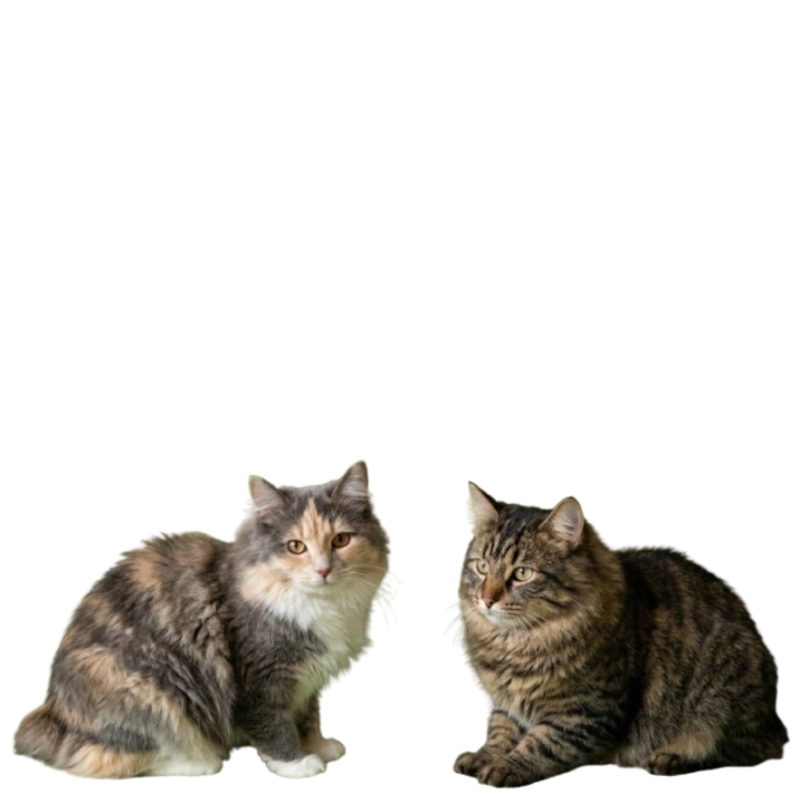
appearance
The Cymric (pronounced kum-rik) is a medium-sized feline distinguished by a rounded frame and a characteristic absence of a standard tail. Its muscular, cobby structure is supported by a substantial skeletal frame—creating an overall impression of sturdiness.
Cranial Structure and Facial Features
The head of the Cymric presents a broad, circular shape. Prominent cheekbones contribute to a full-faced look, which is often more pronounced in mature males of the Cymrics.
The Muzzle and Chin
- Muzzle: The muzzle is strongly defined and slightly longer than its width, marked by a distinct break at the whiskers.
- Chin: Cymric’s jaw is firm, aligning with the nose to create a profile that dips gently from the brow.
Eyes and Ears
- Eyes: Large, globular eyes are set at a subtle upward angle toward the outer ear base.
- Ears: Medium in size and wide at the attachment point, the ears taper toward rounded tips. They are positioned far apart and typically feature internal hair growth known as “furnishings.”
Body Composition and Posture
The torso of the Cymric is compact and thick-set, terminating in a deep, wide rump. The spine follows a continuous upward curve starting from the shoulder blades and peaking at the haunches.
Skeletal Alignment
Because Cymrics lack a traditional tail, the posterior is physically higher than the forequarters. This elevation of the rear creates a specific anatomical angle:
The “Rising Back” and Rump Height Comparison
- : “Rump Angle,” the height and tilt of the cat’s back end.
- : “Is Higher Than,” the symbol showing the back is taller than the front.
- : “Shoulder Angle,” the height of the cat’s front shoulders.
To evaluate the “rumpy” conformation of a show-quality Cymric, a judge measures the cat’s topline in a standing profile. If the forequarters sit at an angle of relative to the horizontal, the Cymric’s deep flanks and long hind legs must result in a posterior angle of at least . Since , the cat exhibits the correct “rabbit-like” gait and rising topline. If the angles were equal (), the cat would be penalized for having a level back, which is a disqualifying deviation for the Cymric standard.
Limbs and Paws
- Forelegs: The front legs are short and positioned wide apart to accommodate a voluminous chest.
- Hind Legs: The rear legs are notably longer and possess heavy musculature.
- Paws: Cymrics have neat, circular feet with robust pads.
Tail Types (Caudal Variations)
While the breed is famous for being tail-less, the presence of caudal vertebrae can vary among individual Cymrics.
| Type | Description |
|---|---|
| Rumpy | Entirely lacks a tail; a small indentation is often found at the end of the spine. |
| Rumpy-Riser | Features a minor protrusion of bone that does not obstruct the hand during a stroke. |
| Stumpy | Possesses a short, mobile tail segment that may be curved or knotted. |
| Longy | Features a tail shorter than average but significantly longer than a stump. |
Pelage and Coat Texture
The coat of the Cymric is a hallmark of the variety, consisting of a “double coat” that feels dense and padded.
Texture and Distribution
- Texture: The fur is silky and soft, draping smoothly across the body.
- Undercoat: A thick, short inner layer provides the lift that allows the outer guard hairs to stand away from the skin.
- Frontage and Breeches: Increased hair length is found around the neck, the abdomen, and the upper rear legs.
- Tufting: Cymrics often display visible hair tufts between the toes.
behavior
The behavioral repertoire of the Cymric is defined by specific locomotor mechanics and interactive tendencies. These actions are observable across various environments and social contexts.
Locomotion and Physical Activity
Due to the unique skeletal structure of the hindquarters, Cymrics exhibit a distinct method of movement.
Gait and Jumping
- Rabbit-like Gait: When moving at higher speeds, Cymrics often display a hopping motion rather than a traditional feline trot.
- Vertical Propulsion: The power in the rear limbs allows the Cymric to execute significant vertical leaps from a stationary position. It is common to find the Cymric occupying high-altitude perches—such as the tops of doors or refrigerators.
Investigation of Water
The Cymric frequently demonstrates a fascination with moisture. Behaviorally, this manifests as:
- Pawing at the surface of water bowls.
- Intentional proximity to running faucets.
- Patting at droplets on shower curtains or damp surfaces.
Environmental Interaction and Problem Solving
Cymrics engage with their surroundings through tactile exploration and high levels of cognitive engagement.
Manipulative Skills
Cymrics often utilize their paws to manipulate objects in a manner similar to primates. This includes:
- Opening cabinet latches or interior doors.
- Retrieving hidden objects from confined spaces.
- Carrying items in the mouth from one location to another.
Defensive and Alertness Behaviors
The Cymric often acts as a biological alarm system within a domestic setting.
- Acoustic Monitoring: Upon hearing an unfamiliar sound, the Cymric will typically orient its body toward the source and may emit a distinct trilling sound.
- Sentry Posture: It is common for the Cymric to take up a seated position near entry points when visitors are detected.
Social Engagement and Interaction Style
The social behavior of the Cymric is characterized by close proximity to inhabitants and specific vocalizations.
Human-Centric Proximity
The Cymric tends to follow individuals from room to room—a behavior often described as “shadowing.”
- Physical Contact: Cymrics frequently initiate head-butting (bunting) or leaning their weight against a person’s leg.
- Lap Utilization: The Cymric will actively seek out a lap the moment a person becomes stationary.
Vocalization Dynamics
Unlike many other long-haired varieties, the Cymric primarily utilizes non-standard vocalizations.
| Vocalization Type | Contextual Usage |
|---|---|
| Trill | Used during greetings or when leading a person to a specific object. |
| Chirp | Often observed when the Cymric is tracking insects or birds through a window. |
| Murmur | Low-frequency sound used during physical affection or relaxation. |
Play Mechanics
The hunting and play behaviors of the Cymric are intense and focused.
- Retrieval: Cymrics are known to participate in games of fetch, bringing toys back to the thrower repeatedly.
- Tactical Ambush: During play with other household animals, the Cymric utilizes its jumping ability to launch aerial maneuvers rather than traditional ground-based stalking.
color
The Cymric displays a diverse spectrum of officially recognized hues and intricate markings. These are classified based on the distribution of pigment along the individual hair shafts and the overall topographic layout of the coat.
Solid Color Classifications
In solid-colored Cymrics, pigment is spread evenly from the follicle to the end of each hair. There are no visible ghost markings or tabby patterns in these varieties.
Primary Solid Tones
- White: A brilliant, pure white across the entire body. The nose leather and paw pads are generally pink.
- Black: A deep, coal-like black that remains consistent to the roots—lacking any reddish tint.
- Blue: An even shade of slate-grey, with a preference for lighter, silver-toned variations.
- Red: A vibrant, deep red without shading or lighter ticking.
- Cream: A soft, pale buff-cream that remains uniform without dark red highlights.
Tipped and Shaded Patterns
Cymric’s coat may also exhibit “tipping,” a condition where only the outer portion of the hair contains color. The specific visual effect is determined by the ratio of the colored tip to the white or silver base.
| Pattern | Pigment Ratio | Visual Effect |
|---|---|---|
| Chinchilla | of hair tip | A delicate, sparkling silver shimmer. |
| Shaded | of hair tip | A darker veil of color draped over the upper body. |
| Smoke | to of hair tip | Appears solid when still, but reveals a white base during movement. |
Tabby Patterns
Tabby markings are frequently seen in Cymrics and are characterized by a sharp contrast between the darker patterns and the lighter background color.
Classic Tabby
This variety features broad, swirling markings. On the sides of the Cymric, these form large, solid circular shapes resembling “oysters,” which are bordered by concentric rings.
Mackerel Tabby
This pattern consists of narrow, parallel stripes that descend from the spine toward the belly. This creates a vertical, rib-like appearance across the torso.
Spotted Tabby
The linear stripes found in other patterns are broken into distinct, non-connected spots. These can appear as circular, oval, or rosette-shaped markings.
Particolor and Bi-Color Variations
These categories involve specific combinations of established colors with areas of white.
Pattern Distributions
- Bi-Color: A mixture of one solid color and white. White is usually localized on the muzzle, chest, undercarriage, and limbs.
- Calico: A tri-color arrangement of white, black, and red—or the dilute blue and cream versions. In Cymrics, white typically serves as the primary base color on the lower body.
- Tortoiseshell: A mottled blend of black and red (or blue and cream) distributed randomly. White may be included in “Tortie and White” classifications.
Eye Coloration and Correlation
In most breed standards, Cymric’s eye color is closely linked to the specific coat color.
Common Pairings
- Solid White: These cats may have deep blue, brilliant copper, or “odd” eyes—one of each color.
- Silver Patterns: These varieties typically feature green or hazel irises.
- Standard Colors: Most other coat types are accompanied by brilliant copper or gold eyes.
compatibility
Ease of Maintenance
Rating: 2/5
Child Friendly
Rating: 5/5
Annual Cost
Rating: 4/5
Lifetime Cost
Rating: 2/5
Adaptability
Rating: 5/5
Velcro Factor
Rating: 4/5
Quietude
Rating: 4/5
Apartment Suitability
Rating: 5/5
Hypoallergenic
Rating: 2/5
Handling Tolerance
Rating: 4/5
Hardiness/Longevity
Rating: 3/5
Prey Drive
Rating: 2/5
genetics
The genetic architecture of the Cymric is defined by an autosomal dominant mutation that alters the formation of the spinal column. While the Cymric represents the long-haired physical expression of the Manx, the biological mechanisms governing skeletal development are identical.
The Manx Gene (Symbol: )
The primary genetic driver in Cymrics is the gene. This locus is responsible for the truncation of the tail and various modifications to the posterior skeletal structure.
Allelic Interaction and Zygosity
The gene functions through a system of incomplete dominance. The various genotypes and their biological consequences for the Cymric are outlined below:
| Genotype | Status | Biological Outcome |
|---|---|---|
| mm | Homozygous Recessive | Normal spinal development; the cat possesses a full-length tail. |
| Mm | Heterozygous | The standard Cymric genotype; results in various degrees of tail shortening. |
| MM | Homozygous Dominant | A lethal combination; embryos fail to survive the gestation period. |
The Lethal Factor
The genotype is inherently non-viable. Because the mutation interferes with the earliest stages of neural tube and vertebral growth, inheriting two dominant alleles results in a cessation of development in the womb. Consequently, all living Cymrics are heterozygous () for this specific trait.
Inheritance Probability and Probability Analysis
In breeding scenarios involving two Cymrics, the statistical distribution of the offspring is dictated by the loss of the zygotes.
Theoretical Cross ()
When two Cymrics are mated, the potential genetic combinations are modeled by the following equation:
The “No-Tail” Gene and Survival Odds
- : “The Manx Gene,” the instruction for a tail-less look.
- : “The Tail Gene,” the standard instruction for a full tail.
- : “Double Manx Gene,” a combination that is too strong for a kitten to survive before birth.
- : “The Cymric Look,” the healthy kittens (about 67%) that are born tail-less or with a tiny stump.
- : “The Full Tail,” the kittens (about 33%) born with standard long tails.
If a breeder mates two “Rumpy” Cymrics (both ), the Punnett square initially suggests outcomes. However, because is a lethal combination that results in spontaneous resorption, the denominator for live kittens shifts from to . In a theoretical pool of conceived embryos, would be (non-viable), would be (curly-tailed or tail-less Cymrics3mm6/966.7\%25\%$ smaller than those of standard domestic cats.
Since individuals do not survive to birth, the ratio of the resulting litter is adjusted to a third-based scale:
- Two-thirds (66.7%) Cymrics (): Individuals exhibiting the mutated phenotype with varying tail lengths.
- One-third (33.3%) Tailed individuals (): Individuals with standard, full-length tails.
Expressivity and Polygenic Modifiers
The gene is characterized by high penetrance but extreme variable expressivity. This implies that while the presence of a single allele almost always causes a change in the tail, the specific nature of that change is not uniform.
Modifying Influence
The final caudal phenotype—ranging from a complete lack of vertebrae to a shortened tail segment—is controlled by a complex system of polygenic modifiers. These secondary genes interact with the allele to determine the precise number of tail vertebrae that will ultimately develop during embryogenesis.
Pelage Genetics
The long-haired coat of the Cymric is regulated by the recessive allele at the Fibroblast Growth Factor 5 () locus.
The Long-Hair Allele ()
This trait is inherited in an autosomal recessive manner. To display the long-haired phenotype, a Cymric must be homozygous recessive () at this specific locus.
Distinction from the Manx
Genetically, Cymrics are indistinguishable from the Manx at the locus. However, they differ at the locus, as the Manx carries at least one dominant allele which produces a short-haired coat.
health
The medical profile of the Cymric is fundamentally defined by the development of the vertebral column. Most health-related observations for Cymrics stem from how an abbreviated spine interacts with the nervous system and internal organ function.
Spinal Morphology and Associated Syndromes
The primary clinical focus for Cymrics involves a group of developmental irregularities often categorized as “Manx Syndrome.” These issues relate to varying degrees of spinal dyspraphism—or the incomplete closure of the neural tube.
Vertebral Malformation and Structural Defects
In certain Cymrics, the lower vertebrae fail to develop or fuse properly during the gestational period. This can result in:
- Spina Bifida: A condition where the spinal canal remains partially open, potentially exposing or compressing nerve tissue.
- Sacral Agenesis: The total or partial absence of the lower spinal segments, which can interfere with the structural integrity of the pelvic region.
Neurological Impact
Because the spinal cord may be significantly shorter than the surrounding bone or tethered to adjacent tissue, Cymrics may exhibit specific neurological impairments. Common signs include:
- Pelvic Limb Ataxia: A lack of coordinated movement in the rear legs.
- Hind-Quarter Weakness: Reduced motor control or partial loss of sensation in the back half of the body.
- Modified Locomotion: A distinctive “bunny hop” movement used to compensate for restricted spinal flexibility.
Gastrointestinal and Urinary Systems
The nerves that regulate the bladder and the lower digestive tract emerge from the sacral region of the spine. In Cymrics with extreme spinal shortening, these neural pathways may be underdeveloped or obstructed.
Secondary Functional Challenges
The disruption of neural signaling to the pelvic organs can lead to several chronic conditions:
| Condition | Biological Mechanism | Clinical Observation |
|---|---|---|
| Megacolon | Insufficient muscular contractions in the large intestine. | Chronic backup of waste and abnormal stretching of the colon. |
| Urinary Dysfunction | Loss of sphincter control or inability to contract the bladder. | Persistent leaking or difficulty in standard voiding. |
| Fecal Incontinence | Impaired nerve control over the anal muscles. | Unintentional passing of waste. |
Orthopedic and Sensory Health
The specialized skeletal structure of the Cymric shifts the physical demands placed on the joints and the skin.
Mechanical Joint Strain
The shortened vertebral column typically results in the hind legs being noticeably longer than the front legs. This anatomical tilt increases the weight-bearing load on the hocks and stifles, which may predispose Cymrics to early degenerative joint changes or osteoarthritis.
Nerve Sensitivity in the Sacrocaudal Region
The area where the tail would normally originate contains a high density of nerve endings. In Cymrics, especially those with a complete lack of tail vertebrae, this region is often extremely sensitive to touch. Without the protection of a bony tail, the terminal nerves are more vulnerable to external pressure—which can cause significant discomfort.
General Feline Pathologies
While spinal concerns are the hallmark of the Cymric, they remain susceptible to health conditions common to the broader domestic cat population.
- Hypertrophic Cardiomyopathy (HCM): A thickening of the heart walls that can impact circulation.
- Renal Health: Periodic monitoring of kidney function is recommended as part of standard geriatric care.
- Dental Stability: Like most cats, Cymrics require monitoring for periodontal inflammation and tooth resorption.
Diagnostic Monitoring and Screening
Effective health management for the Cymric relies on early and consistent evaluation of the spinal and neurological state.
Clinical Evaluation Methods
- Manual Palpation: Veterinary assessment of the spine to detect gaps, protrusions, or areas of localized pain.
- Diagnostic Imaging: The use of X-rays to visualize the extent of vertebral shortening and to check for early signs of colonic distension.
- Reflex Evaluation: Regular testing of hind-limb reflexes and proprioception to identify any progressive changes in nerve function.
longevity
The temporal progression of the Cymric’s life cycle generally aligns with the patterns observed in other medium-sized domestic felines. Various environmental and biological factors dictate the specific duration of each life stage.
Average Life Span Statistics
Statistical observations regarding the survival of Cymrics provide a standard expectancy range. These metrics are frequently utilized for population modeling and actuarial assessments within feline demographics.
| Environment | Median Duration (Years) | Observed Range (Years) |
|---|---|---|
| Indoor Cymrics | ||
| General Population |
Life Cycle Stages and Chronological Markers
The maturation of the Cymric can be categorized into several distinct chronological segments. These phases monitor the transition from early growth to the terminal stage of the life cycle.
Juvenile Phase (0–2 Years)
Throughout this initial window, the Cymric experiences significant biological growth. Full physical maturity is typically reached by the conclusion of the second year.
Adult Phase (2–10 Years)
This interval comprises the bulk of the life span. During this time, the Cymric generally maintains a steady physiological state.
Senior and Geriatric Phase (10+ Years)
Upon entering the second decade of life, the Cymric is categorized as senior. Reaching the higher end of the expectancy spectrum—often surpassing years—is largely contingent on the stability of the feline’s environment during this period.
External Variables Influencing Survival Time
The total number of years a Cymric remains part of the living population is heavily influenced by environmental management and external conditions.
Habitat Impact
Data indicates a strong correlation between strictly indoor living and increased longevity. Cymrics residing indoors are protected from external hazards that typically lower the mean survival age of the broader population.
Nutritional Consistency
The availability of essential nutrients and stable caloric intake across the life cycle are fundamental factors in reaching the maximum potential life span for the Cymric.
Population Longevity Extremes
While the median age is well-documented, specific Cymrics have been known to reach or exceed years. These instances represent the upper extremity of the longevity distribution curve:
Odds of a Long and Healthy Life
- : “Long Life Probability,” the chance the cat lives past a certain age ().
- : A math constant used to track natural changes over time.
- : “Health Risk Score,” a number affected by genetics and lifestyle.
- : “Target Age,” the specific birthday (in years) we are looking at.
To calculate the probability of a Cymric reaching the “extreme” age of years (), we first determine the hazard constant . If the average mortality rate for this population is (reflecting the historical data for the breed), the calculation is . This simplifies to , which is approximately . This result indicates there is roughly a chance for an individual Cymric to reach or exceed years of age. Owners can influence this by lowering the hazard constant through early detection of spinal issues, which mathematically “stretches” the curve and increases the probability of reaching the upper extremity.
In this formula, denotes the age in years, while represents the mortality rate within that specific Cymric population.
Mortality and Survivorship Curves
The survivorship of Cymrics generally follows a Type I curve. This is defined by high survival rates during the early and middle portions of the life cycle, followed by a more rapid decline as the population enters the geriatric phase.
maintenance
The upkeep of the Cymric centers primarily on the systematic management of its thick, dual-layered coat and the preservation of hygiene surrounding its unique posterior anatomy. Regular intervention is necessary to prevent the entrapment of debris and the development of severe matting.
Pelage Management and Grooming
The Cymric’s coat necessitates a structured routine to address the dense undercoat and the longer exterior guard hairs.
Maintenance Requirements and Equipment
To preserve the integrity and cleanliness of the fur, specific implements are used to penetrate both layers of the coat.
- Stainless Steel Comb: Critical for resolving tangles in the long guard hairs without damaging the hair shaft.
- Slicker Brush: Utilized to extract loose fur from the thick undercoat, particularly during seasonal transitions.
- Routine Frequency: A minimum of two to three sessions per week is required to avoid physical discomfort for the animal and the formation of knots.
Shedding Cycles
The quantity of loose fur varies in response to environmental temperature and light exposure. During peak shedding periods, daily brushing is advisable to control the accumulation of dead hair within the living space.
Hygiene and Sanitary Upkeep
Because of the absent tail and the presence of long fur in the rear quarters, the Cymric requires specialized sanitary care to ensure skin health.
Sanitary Trimming
Periodically shortening the fur in the perianal region—a practice often termed a “sanitary clip”—is a standard maintenance task. This reduces the risk of waste materials becoming entangled in the long fur.
Cleansing Procedures
Should the rear quarters become contaminated, immediate cleaning with feline-safe wipes or localized washing is essential. This prevents secondary skin inflammation in the sacrocaudal area.
Cranial and Dental Care Standards
Standard maintenance for the Cymric includes the regular monitoring and cleaning of the ears and mouth to ensure general cleanliness.
Dental Hygiene
Managing plaque is achieved through consistent mechanical cleaning. The application of feline-specific enzymatic paste is the recommended protocol.
| Procedure | Frequency | Goal |
|---|---|---|
| Brushing | Daily or 3x Weekly | Minimizing the buildup of tartar. |
| Professional Cleaning | Based on clinical assessment | Extraction of subgingival deposits. |
Aural Maintenance
The ears should be checked weekly for the buildup of wax or debris. If cleaning becomes necessary, a pH-balanced ear solution should be applied using a soft cotton pad.
Environmental and Physical Maintenance
Preserving the physical condition of the Cymric involves the careful regulation of activity levels and external intake.
Nutritional Oversight
Caloric consumption must be strictly regulated to prevent the development of excess body fat. Since the Cymric lacks a tail to assist with balance, significant weight gain can alter the center of gravity and increase the mechanical stress on the spinal column.
Ungual Care
Trimming the claws every 10 to 14 days is necessary to prevent the nails from catching on household surfaces and to ensure proper foot alignment.
measurements
| Measurement | Female | Male | ||
|---|---|---|---|---|
| Metric | Imperial | Metric | Imperial | |
height | 15 – 23 centimeters | 6 – 9 inches | 18 – 25 centimeters | 7 – 10 inches |
length | 30 – 41 centimeters | 12 – 16 inches | 36 – 46 centimeters | 14 – 18 inches |
weight | 3.6 – 4.5 kilograms | 8 – 10 pounds | 4.5 – 5.4 kilograms | 10 – 12 pounds |
• Height: Refers to the measurement at the withers (shoulders).
• Length: Measured from the tip of the nose to the base of the tail.
origin
The history of the Cymric is fundamentally tied to the maritime culture and isolated ecosystems found within the Irish Sea. While its formalization as a specific category occurred in North America, the foundational population emerged from the naturally occurring feline inhabitants of Northern Europe.
Insular Beginnings and the Isle of Man
The ancestral lineage of the Cymric is shared with the Manx cat, originating on the Isle of Man. Because of the island’s geographic seclusion, certain morphological traits became prevalent within the local feline population over many centuries.
Historical Introduction Theories
The presence of the original population on the Isle of Man is explained by several different historical narratives:
- Spanish Armada (1588): Regional folklore suggests that felines from foundered Spanish ships reached the island’s coast, establishing the unique tailless trait in the local gene pool.
- Norse Exploration: Alternative accounts propose that Viking explorers and merchants moved these cats to the island from other Northern European or Russian regions during the 8th and 9th centuries.
- Ancient Trade Routes: Some records suggest that Phoenician maritime traders may have introduced the cats to the British Isles during antiquity.
Development of the Long-Haired Variety
While the short-haired Manx has been recognized for centuries, the Cymric emerged as a distinct long-haired counterpart much later through focused breeding efforts and the expansion of feline registries.
Evolution in North America
The formal development of Cymrics took place largely in Canada and the United States. During the mid-20th century, enthusiasts noted the occasional birth of long-haired kittens within Manx litters and began to cultivate them as a separate division.
Milestones in Formal Recognition
The transition from a regional variation to a recognized category involved several critical steps:
| Period | Milestone |
|---|---|
| 1960s | Canadian breeders began the formal documentation and selection of long-haired kittens born to Manx parents. |
| 1970s | The variety appeared more frequently in North American feline exhibitions under various provisional titles. |
| 1980s | Major registries granted the Cymric full championship status, officially distinguishing it from the short-haired parent stock. |
Etymology and Nomenclature
The designation of the Cymric was a conscious choice to honor the Celtic heritage of its ancestral homeland while providing a unique identity for the long-haired variety.
The Welsh Connection
The name “Cymric” comes from Cymru—which is the Welsh term for Wales. Although the cat’s primary geographic origin is the Isle of Man—where the native tongue is Manx Gaelic—North American breeders chose the name to evoke a broader Celtic or Brythonic association.
Registry Classifications
Depending on the specific feline organization, the Cymric’s classification has shifted over time:
- Independent Category: Certain registries recognize the Cymric as a standalone entity with a separate history.
- Sub-Variety Status: Other organizations classify Cymrics as the “Long-haired Manx,” treating them as a specific division within a single ancestral group.
temperament
The internal disposition of the Cymric is defined by a sophisticated level of emotional intelligence and a consistent inclination toward social connectivity. Their mental state generally reflects a harmonious balance between inquisitive engagement and a composed, observant nature.
Cognitive Orientation and Focus
The Cymric’s mental framework is rooted in a fundamental drive for environmental mastery and exploration. This cognitive orientation manifests as a dedicated interest in the structural and social rhythms of their habitat.
Attentiveness and Perceptive Capacity
Cymrics demonstrate a refined sensitivity to the emotional fluctuations of their human companions. This perceptive ability allows the animal to calibrate its presence based on the detected psychological requirements of those within its immediate social circle.
Problem-Solving Aptitude
The cognitive profile of the Cymric includes a distinct capacity for recognizing patterns and logical sequences. Their mental strategy when navigating obstacles involves persistence and tactical assessment rather than reactive or impulsive behavior.
Social Temperament and Interpersonal Dynamics
In communal settings, the Cymric manifests a gregarious nature that is welcoming of diverse species and various personality types.
Affiliative Tendencies
The Cymric is characterized by a strong affiliative instinct. Their temperament is anchored by a profound loyalty that typically encompasses the entire household rather than being restricted to a single individual. For the Cymric, an internal sense of security is closely linked to the proximity and stability of the social group.
Compatibility Metrics
The following table outlines the typical social responsiveness of the Cymric across various interpersonal scenarios:
| Social Variable | Temperamental Response | Degree of Adaptability |
|---|---|---|
| Multi-pet environments | Cooperative and communal | High |
| Novel surroundings | Analytical and investigative | Moderate to High |
| Social isolation | Limited tolerance | Low |
| Human engagement | Proactive and seeking | High |
Emotional Resilience and Stability
The Cymric is noted for maintaining a predictable and stable emotional baseline. Their temperament is not characterized by volatility or high-strung reactivity to external stimuli.
Adaptability and Stress Response
When encountering modifications to the domestic routine, the Cymric maintains a composed disposition. They process environmental changes with a steady, analytical focus, which facilitates a smooth integration into new circumstances with minimal psychological strain.
Tranquility vs. Playfulness
While the Cymric possesses a vibrant spirit, their internal state remains grounded in serenity. They frequently display a “gentle” persona, where even their most energetic periods are moderated by a controlled and non-aggressive temperament.
Comparative Temperamental Distribution
The psychological composition of the Cymric can be represented by the distribution of fundamental personality traits. If the total temperamental energy is viewed as a closed system, the allocation of specific attributes often follows a predictable model:
The “Dog-Like” Personality Score
- : “Total Personality,” the complete behavioral mix of the Cymric.
- : “The Helper Factor,” the cat’s drive to explore and supervise your chores.
- : “Devotion,” how strongly the cat bonds to its favorite humans.
- : “Calmness,” the cat’s ability to stay patient and unbothered.
To profile a typical Cymric, we can assign values on a -point scale for each trait. Given the breed’s “dog-like” reputation, a specimen might score a high (constantly following the owner to “help” with chores) and an (intense devotion), balanced by a steady (remaining unbothered by loud noises or children). The resulting . If a Cymric displayed a sudden drop in to , the would shift to , mathematically signaling to the owner that environmental stressors or health issues are overriding the breed’s naturally high and coefficients.
In this specific model, the coefficients for Cymrics typically indicate high values for both and , which are stabilized by a consistent value for .