Cornish Rex Cat
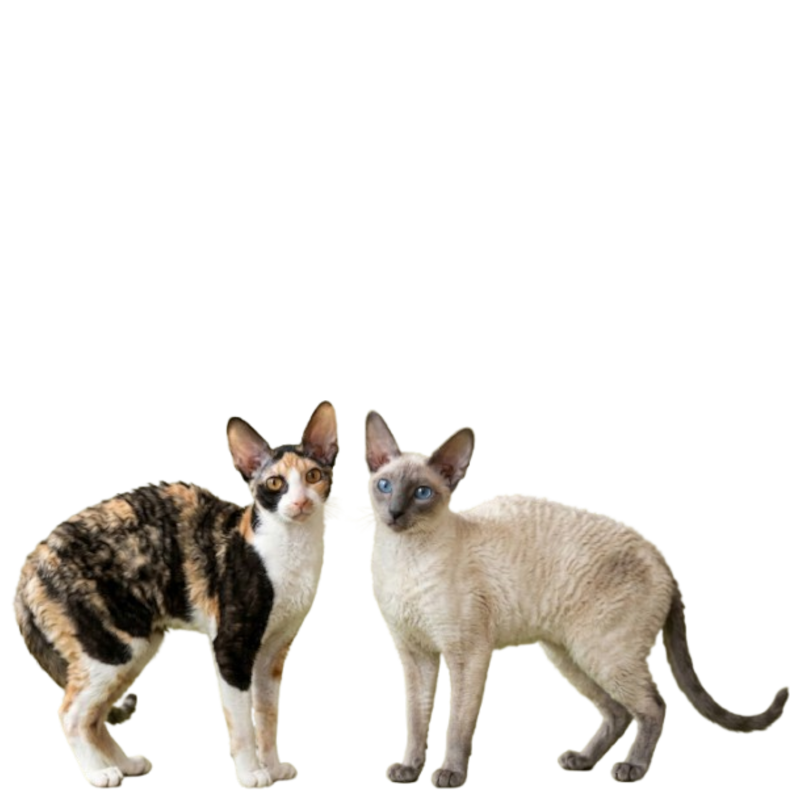
appearance
The Cornish Rex is among the most visually striking felines in the domestic world. Often likened to a Greyhound due to its slender, aerodynamic build, Cornish Rexs possess a delicate bone structure and a coat texture that is entirely unique to their lineage.
Distinctive Coat and Texture
The most recognizable attribute of the Cornish Rex’s anatomy is its fur. Unlike the majority of feline breeds that possess a triple-layered coat consisting of guard, awn, and down hairs, the Cornish Rex lacks the protective outer guard hairs entirely.
The Marcel Wave
The fur consists of extremely short, fine down hair that forms tight, consistent ripples across the body.
Tactile Quality
The absence of coarse hair results in a texture reminiscent of crushed velvet or high-quality silk.
Specialized Follicles
The mutation also affects the facial hair; the whiskers and eyebrows of the Cornish Rex are typically stunted and possess a distinct curl or crinkle.
Coat Genetics
The genetic mutation responsible for the unique Cornish Rex’s coat is autosomal recessive. In a controlled breeding environment involving two heterozygous carriers (), the statistical probability of producing a phenotype with the curly coat follows standard Mendelian inheritance:
Odds of Having a Curly-Haired Kitten
- : “Kitten Outcome,” the final chance of a kitten having the curly coat.
- : The “One-in-Four” rule (25%) for when two carrier parents have a litter.
- : “The Curly Gene,” the special hidden instruction for a wavy coat.
- : “The Straight Gene,” the standard instruction for a normal cat coat.
If a breeder crosses two straight-haired cats that are both known heterozygous carriers () of the Cornish Rex mutation, the Punnett square predicts four genotypes: , , , and . According to the formula , only the genotype will lack guard hairs and possess the signature “Marcel wave”. In a litter of kittens, while the statistical average suggests kitten will be a Cornish Rex, each individual kitten independently has a chance of being curly and a chance of appearing like a standard domestic cat while potentially carrying the gene.
Physical Stature and Conformation
The Cornish Rex is a medium-sized cat characterized by an elegant, “racy” silhouette. Despite their dainty appearance, they are surprisingly heavy and muscular for their size.
Body Structure
| Feature | Description |
|---|---|
| Torso | Long and slender with a prominent, high-tucked abdominal line. |
| Skeleton | Fine-boned and delicate, yet anchored by strong musculature. |
| Legs | Very long and thin, ending in small, oval-shaped paws that allow for high agility. |
| Tail | A whip-like, tapering tail that is highly flexible and covered in fine waves. |
Facial Features and Head Shape
The head of the Cornish Rex is relatively small and maintains a distinct egg-like (ovoid) shape. The length of the head is approximately one-third greater than its maximum width.
Profile and Muzzle
The profile shows a smooth, continuous curve from the forehead to the nose, often featuring a Roman bridge.
Ocular Set
The eyes are large and almond-shaped, positioned at a slight upward angle to give an alert expression. Eye color is typically vibrant and harmonizes with the dominant coat shade.
Auricular Structure
The ears are a primary hallmark of the breed—they are exceptionally large, set high on the skull, and resemble the ears of a bat. This contributes to the Cornish Rex’s inquisitive and perpetually attentive look.
Colors and Patterns
There are few restrictions on the color palettes for the Cornish Rex. Because the fur is so thin, the underlying skin pigmentation is frequently visible, which adds a unique depth to the cat’s overall color.
Common Varieties
- Solid Tones: Includes deep blacks, crisp whites, blues, reds, and creams.
- Tabby Variations: Common patterns include mackerel, classic, and spotted varieties.
- Parti-Color: Calico and tortoiseshell patterns are frequent and highly prized in Cornish Rexs.
- Pointed Patterns: Color-point variations, where the extremities are darker than the body, are also recognized within the breed standard.
behavior
The Cornish Rex is defined by an extraordinary level of physical engagement, cognitive sharpness, and a total disregard for vertical limits. Unlike more sedentary domestic cats, Cornish Rexs interact with their surroundings through a lens of perpetual motion and tactile exploration.
Patterns of Movement and Agility
The Cornish Rex’s physical conduct is often compared to that of a sighthound, characterized by a light, springy gait and the capacity for sudden, explosive acceleration. Their elongated, powerful rear limbs drive several breed-specific behaviors:
Verticality
Cornish Rexs are natural “mountaineers.” They habitually seek out the highest vantage points in a home—such as the tops of refrigerators, open doors, or tall cabinetry—utilizing a series of precise, high-impact leaps.
Locomotive Bursts
They frequently engage in rapid circuits of their environment, using their slender tails as effective rudders to maintain balance during high-speed cornering.
Aerial Acrobatics
During play, it is typical for the Cornish Rex to perform complex mid-air maneuvers, including flips and twists, to intercept moving targets.
Environmental Interaction and Manual Dexterity
A standout trait of the Cornish Rex’s behavior is the sophisticated use of their paws. They exhibit a level of digital control that far exceeds that of the average domestic feline.
Practical Manipulation
Cornish Rexs do not merely strike at objects; they utilize their long, flexible toes to actively manipulate their environment:
- Opening Mechanisms: They frequently learn to hook their claws into gaps to pull open drawers or unlatched cabinets.
- Object Retrieval: They are known to grasp and carry small items in their mouths or paws to move them across the house.
- Exploratory Probing: They use their paws to “fish” for items in narrow cracks or underneath furniture.
Thermal Regulation Strategies
Due to the lack of a thick insulating coat, the Cornish Rex displays specific behaviors aimed at maintaining body heat. You will often observe the Cornish Rex:
- Tucking themselves deep inside blankets or fresh laundry.
- Resting on heat-generating appliances like routers or laptops.
- Seeking out direct sunlight or “piling” with other household pets to conserve energy.
Social Communication and Attachment
The Cornish Rex is an intensely social creature that uses a combination of physical proximity and unique vocal cues to engage with its human companions.
Proximity-Seeking Tendencies
Cornish Rexs are often described as “shadow-like” due to their insistence on being near their owners. This includes:
- Perching: A preference for sitting on shoulders or draping themselves across a person’s neck.
- Interactive Play: Many Cornish Rexs instinctively learn to play fetch, returning thrown objects to ensure the continuation of the game.
Vocalization Styles
The Cornish Rex’s voice is generally soft and melodic rather than demanding. They use a range of chirps and trills to:
- Greet residents as they enter a room.
- Signal dissatisfaction with closed doors or inaccessible spaces.
- Coordinate social interactions with other feline housemates.
Problem-Solving and Cognitive Ability
The Cornish Rex possesses a high degree of “operational intelligence,” allowing them to navigate complex challenges and learn household routines with ease.
Intelligence Observations
| Behavior Category | Typical Observation |
|---|---|
| Object Permanence | High; they will monitor a hidden toy’s location for extended periods. |
| Tool Usage | Will pull on rugs or strings to move an out-of-reach toy closer. |
| Mimicry | They often observe human actions to figure out how to operate simple latches. |
Foraging and Metabolic Drive
The Cornish Rex’s rapid metabolism influences a highly motivated approach to food acquisition.
Scavenging
Cornish Rexs are notorious for investigating countertops or attempting to sample food during human meal times.
Energy Consumption
Because they expend significant energy on thermoregulation and high-intensity activity, their caloric requirements are often higher than those of other breeds with a similar body mass.
color
The Cornish Rex is celebrated for its remarkably diverse palette, encompassing nearly every color and pattern found in the feline world. Because the Cornish Rex’s coat is exceptionally fine and lacks the outer guard hairs, the clarity of the hues and the subtle visibility of the skin beneath create a visual depth that is unique to this lineage.
Solid Color Classifications
In the solid category, the Cornish Rex must exhibit a uniform shade from the follicle to the tip of the hair. The characteristic “Marcel Wave” of the fur interacts with light to produce a shimmering effect, often making solid coats appear more dynamic than those of flat-coated breeds.
Solid Variations
| Color | Visual Characteristics | Peripheral Pigmentation |
|---|---|---|
| White | A pristine, glistening white; devoid of any yellowing or ticking. | Pink nose and pads |
| Black | A deep, soot-like black; consistent through the undercoat. | Black or dark coal |
| Blue | An even, dilute grey-blue ranging from light to medium tones. | Blue-grey |
| Red | A saturated, warm orange-red; ideally free of tabby ghosting. | Brick red |
| Cream | A soft, pale buff-yellow; a dilute version of the red pigment. | Pink |
Tabby and Patterned Variations
Tabby markings in Cornish Rexs are defined by the sharp contrast between the base ground color and the darker pattern overlays. The tight curling of the fur can sometimes cause these intricate lines to appear slightly diffused or “broken” visually.
Tabby Patterns
- Classic Tabby: Features bold “target” or “oyster” markings on the sides and a butterfly-shaped pattern across the shoulder blades.
- Mackerel Tabby: Defined by vertical, continuous stripes that branch out from a dark spine line, resembling the ribs of a fish.
- Spotted Tabby: The traditional lines are fragmented into distinct circular or oval spots distributed across the torso.
Parti-Color and Bi-Color
- Tortoiseshell: A complex mingling of black and red (or their dilute versions, blue and cream), which occurs almost exclusively in female Cornish Rexs.
- Calico: A tri-color pattern featuring a white base with well-defined patches of solid color.
- Bi-Color: A combination of white and any other established solid color—such as Blue and White or Black and White.
Pointed and Mink Categories
The Cornish Rex also displays pointed genetics, where the concentrated pigment is limited to the points—the face, ears, legs, and tail.
Pattern Contrast
- Colorpoint: Characterized by a significant contrast between a very pale body and dark extremities. These Cornish Rexs are distinguished by their striking blue eyes.
- Mink: A specialized pattern offering a softer contrast than traditional points, frequently paired with aqua or turquoise eye color.
Pigmentation and Light Physics
The observable color of the Cornish Rex is a result of light interacting with the melanin density within the hair shaft. Because the coat is structured into waves, the angle of incidence of light hitting the surface varies constantly.
Reflectance Model
The intensity of the reflected light can be viewed as a function of the pigment’s absorption properties and the physical path the light takes through the fine down hairs :
How Quickly Body Heat Escapes the Coat
- : “Heat Retention,” how well the fur keeps the cat warm.
- : A math constant used for natural fading or loss.
- : “Cooling Speed,” which is higher in the Cornish Rex because they lack thick outer fur.
- : “Coat Thickness,” the combined density of the soft under-fur layers.
To understand why a Cornish Rex is so sensitive to drafts, we can calculate its thermal resistance compared to a standard cat. If a Cornish Rex’s lack of guard hairs results in a high decay constant of and a thin coat density of , the resistance is . In contrast, a domestic cat with a thicker coat () and lower decay () would have . This mathematical difference of nearly explains why the Cornish Rex feels like a “warm hot water bottle” to the touch—their body heat () is rapidly escaping the coat rather than being trapped by it.
This specific interaction is what provides the Cornish Rex’s coat with its signature velveteen or silken luster.
Eye Color Correlation
For the Cornish Rex, eye color is generally required to complement the dominant coat shade, though specific rules apply to certain patterns.
Color Mapping
- Gold to Copper: The standard for the majority of solid, tabby, and bi-color Cornish Rexs.
- Blue: Required for all colorpoint variations and common in pure white cats.
- Odd-Eyed: Occurs when a white Cornish Rex possesses one blue eye and one gold or green eye.
- Green or Hazel: Typically found in silver tabbies or cats with shaded and smoke patterns.
compatibility
Ease of Maintenance
Rating: 5/5
Child Friendly
Rating: 5/5
Annual Cost
Rating: 3/5
Lifetime Cost
Rating: 4/5
Adaptability
Rating: 5/5
Velcro Factor
Rating: 5/5
Quietude
Rating: 3/5
Apartment Suitability
Rating: 3/5
Hypoallergenic
Rating: 4/5
Handling Tolerance
Rating: 5/5
Hardiness/Longevity
Rating: 4/5
Prey Drive
Rating: 2/5
genetics
The genetic identity of the Cornish Rex centers on a spontaneous biological mutation that fundamentally reorganizes the structure of the hair follicle. Unlike many modern breeds developed through the intentional crossbreeding of existing traits, the Cornish Rex descends from a single founder animal that possessed a unique and naturally occurring genotype.
The r Gene Mutation
The distinctive undulating coat seen in Cornish Rexs is caused by a specific mutation at the rex locus. In genetic nomenclature, this is identified as the r gene (the Cornish rex gene). It is important to note that this is functionally and genetically distinct from the re gene associated with the Devon Rex; breeding these two types together results in offspring with straight hair.
Inheritance Patterns
The Cornish Rex’s coat is governed by an autosomal recessive mode of inheritance. This means the trait is not sex-linked, and a kitten must inherit the recessive allele from both the maternal and paternal lines to display the curly phenotype.
| Genotype | Resulting Phenotype |
|---|---|
| RR | Homozygous dominant; the cat has straight hair and does not carry the mutation. |
| Rr | Heterozygous; the cat has straight hair but acts as a “carrier” for the Cornish Rex trait. |
| rr | Homozygous recessive; the cat displays the signature wavy Cornish Rex coat. |
Probability of Phenotype Expression
When mating two heterozygous carriers (), the statistical distribution of the litter’s coat types follows a classic Mendelian 3:1 ratio:
Likelihood of Straight vs. Curly Fur
- : “Straight Chance,” the 75% probability of a kitten having normal-looking fur.
- : “Curly Chance,” the 25% probability of a kitten having the unique wavy coat.
- : The “Three-out-of-Four” odds for the standard look.
- : The “One-out-of-Four” odds for the special Cornish Rex look.
In a breeding program aimed at preserving the Cornish Rex’s unique texture, a breeder mates two “variant” cats—straight-haired individuals that both carry the recessive mutation (). If the litter size is kittens, the formula predicts that kittens will actually display the curly coat. Conversely, kittens will likely have straight hair. This mathematical reality highlights the challenge for Cornish Rex breeders: while of the litter appears standard, some of those straight-haired kittens are carriers () and some are not (), requiring test-mating or genetic sequencing to identify future breeding stock.
Alterations in Hair Morphology
The genetic shift in Cornish Rexs causes the nearly total suppression of the protective guard hairs. The remaining fibers—the down and awn hairs—undergo significant structural modification.
Follicular Curvature
The follicles of the Cornish Rex are physically curved, forcing the hair to emerge in a rhythmic, undulating pattern known as the Marcel wave.
Reduction of Layers
While standard felines possess a triple-layered coat, the Cornish Rex essentially lacks the stiff outer layer, leaving only the soft undercoat.
Vibrissae Impact
The mutation extends to the whiskers and eyebrows, which are typically brittle, shortened, and crinkled in appearance.
Diversity and Outcrossing Strategies
To maintain the vitality of the Cornish Rex and prevent the accumulation of deleterious traits through inbreeding, registries have historically permitted outcrossing with specific external breeds to broaden the gene pool.
Common Outcross Partners
Historically, genetic diversity has been maintained by introducing:
- American Shorthair: Utilized to improve bone structure and overall physical stamina.
- British Shorthair: Often introduced to diversify the available color variations.
- Havana Brown: Used to refine specific pigment distributions.
Restoring the Phenotype
Because the Cornish Rex trait is recessive, the first generation () of any outcross will consist entirely of straight-haired carriers (). A subsequent backcross to a homozygous recessive () individual is required to restore the wavy phenotype in the generation.
Metabolic Genetics and Thermoregulation
The Cornish Rex’s genetic profile also influences its internal physiology, specifically a high basal metabolic rate (). This is an adaptive response to the lack of thermal insulation provided by a standard coat.
Radiative Cooling Model
The heat loss can be modeled using a variation of the Stefan–Boltzmann law to describe the radiative cooling the cat faces:
Total Heat Radiating from the Body
- : “Heat Power,” the amount of energy the cat loses to the air.
- : “Skin Exposure,” which is nearly 1.0 for the Cornish Rex due to their thin fur.
- : A standard physics constant for heat radiation.
- : “Surface Area,” the total skin area (high for this slender, long-legged breed).
- : The cat’s “Internal Heat” level.
- : The “Room Temperature” level.
To calculate the heat loss for a Cornish Rex in a () room, we use its high surface-to-mass ratio () and an emissivity . With an internal temp , the formula becomes: . This results in approximately of constant heat radiation. Because this value is significantly higher than that of a fluffy breed with lower and , the Cornish Rex must consume more calories to fuel its “metabolic furnace” and maintain homeostasis, which is why they often feel hot to the touch.
Where represents the rate of heat loss and is the surface area. Because is effectively higher relative to insulation in Cornish Rexs, they must maintain a higher caloric intake to sustain their internal body temperature against environmental cooling.
Health and Screening
While generally a healthy breed, the Cornish Rex’s gene pool is monitored for specific hereditary conditions that can emerge in pedigreed populations.
Hypertrophic Cardiomyopathy (HCM)
HCM is a primary concern for breeders. Though not exclusive to the Cornish Rex, genetic monitoring and regular echocardiograms are used to identify potential thickening of the heart walls before affected individuals are used in breeding programs.
Patellar Luxation
The slender, “racy” anatomy of the Cornish Rex can occasionally be paired with a genetic tendency toward kneecap displacement. Modern breeding focuses on selecting for strong joint alignment to preserve the high-performance agility that defines the Cornish Rex.
health
The Cornish Rex is generally recognized as a hardy and energetic feline, frequently enjoying a lifespan that extends from 12 to 15 years. Nevertheless, the unique physical blueprint of the Cornish Rex—characterized by a high-set metabolism and a minimal, fine coat—creates specific biological vulnerabilities and a predisposition toward certain hereditary conditions that require attentive care.
Dermatological and Environmental Considerations
The most defining feature of the Cornish Rex, its lack of substantial guard hairs, means the skin lacks the traditional feline barrier against the elements.
Thermoregulation and Caloric Expenditure
Because Cornish Rexs lack insulating fur, they lose body heat to their surroundings much faster than other cats. To compensate and maintain a stable internal temperature, the Cornish Rex possesses a significantly elevated basal metabolic rate (). This physiological demand requires a nutrient-dense diet. The cooling process can be analyzed through Newton’s Law of Cooling:
How Fast a Cat Cools Down
- : “Cooling Rate,” how many degrees of body heat the cat loses per hour.
- : “The Chill Factor,” which is much higher in the Cornish Rex because they lack insulation.
- : “Current Body Temp,” usually around 39°C.
- : “Environment Temp,” the temperature of the room.
To calculate the rapid cooling of a Cornish Rex moved to a cold room, assume an initial body temp and an ambient temp . For a standard cat, might be , but for the nearly hairless Cornish Rex, . The initial rate of heat loss is per hour. This high value of explains why the Cornish Rex must consume significantly more calories per gram of body weight than a thick-coated breed; they are essentially running their metabolism at a higher “burn rate” just to counteract this steep cooling curve.
In this model, represents the Cornish Rex’s body temperature and is the ambient temperature. The cooling constant is notably higher for Cornish Rexs, necessitating constant access to warmth and high-quality fuel.
Cutaneous Care and UV Protection
- Solar Sensitivity: The thinness of the Cornish Rex’s coat offers little defense against ultraviolet radiation. This makes them highly susceptible to sunburn and solar dermatitis.
- Lipid Management: In standard cats, skin oils (sebum) are wicked away by the hair shafts. In the Cornish Rex, these oils remain on the skin surface. Without routine, gentle bathing, this accumulation can lead to follicular clogging, ear infections, or “greasy” skin textures.
Hereditary Health Profiles
While outcrossing has maintained a diverse genetic pool, specific conditions remain a focus for responsible Cornish Rex enthusiasts.
Hypertrophic Cardiomyopathy (HCM)
HCM is a primary cardiac concern where the heart’s muscular walls thicken, potentially obstructing blood flow or causing clots. Regular screening is vital for the Cornish Rex.
Diagnostic Benchmarks
| Condition | Nature of the Ailment | Primary Screening |
|---|---|---|
| HCM | Cardiac wall thickening | Annual Echocardiogram |
| Patellar Luxation | Knee joint instability | Manual orthopedic exam |
| PRA | Retinal degeneration | Genetic DNA profiling |
Orthopedic Integrity
The fine-boned, “hare-like” feet and slender limbs of the Cornish Rex can be prone to patellar luxation. This occurs when the patella shifts out of the femoral groove. Breeders prioritize selecting individuals with deep grooves and strong ligamentation to preserve the Cornish Rex’s famous leaping ability.
Metabolic and Nutritional Management
Cornish Rexs are famous for their intense interest in food—a direct byproduct of their high energy usage.
Weight and Skeletal Stress
Despite their high appetites, Cornish Rexs must remain lean. Their delicate bone structure is not adapted for carrying excess weight; obesity in a Cornish Rex puts disproportionate stress on the joints and can exacerbate minor respiratory or cardiac issues.
Digestive Efficiency
The Cornish Rex often benefits from a diet rich in animal proteins and fats with minimal fillers. This supports their lean muscle mass and provides the dense energy required for thermoregulation.
Pharmacological and Anesthetic Caution
A critical factor in Cornish Rex health is their unique reaction to anesthesia. Because they possess very little subcutaneous fat, the way their bodies process and redistribute fat-soluble medications differs from heavier breeds.
Volume of Distribution
The volume of distribution () for many common anesthetics is lower in the Cornish Rex:
Medicine Spread and Safety in a Lean Body
- : “The Spread Space,” the total volume where a drug can hide in the body.
- : “The Dose,” how much medicine is given (in mg).
- : “Blood Strength,” how much drug is actually in the bloodstream (in mg/L).
When sedating a Cornish Rex, a vet must account for the lack of body fat, as lipophilic drugs (like certain anesthetics) have a smaller in lean animals. If of a drug is administered and the desired safe plasma concentration is , the formula shows . However, in a fatty cat of the same weight, the might be because the drug hides in adipose tissue. In the lean Cornish Rex, that same dose would result in a plasma concentration of (safe), whereas a dose meant for a distribution () would spike the Cornish Rex’s plasma levels to a toxic .
A dosage calculated for a typical domestic cat may reach toxic or overwhelming levels in a Cornish Rex more quickly. Veterinary teams should utilize monitoring equipment and tailor dosages to the Cornish Rex’s specific lean body mass.
Oral Hygiene
Like many refined pedigreed cats, the Cornish Rex can be susceptible to early-onset gingivitis and periodontal disease. Regular dental intervention is required to prevent bacteria from entering the bloodstream and affecting the Cornish Rex’s kidneys or heart valves.
longevity
The Cornish Rex is a notably long-lived feline, frequently surpassing the average life expectancy of many other purebred domestic cats. While the typical age range for a Cornish Rex is between 12 and 15 years, it is not uncommon for well-cared-for individuals to reach 18 to 20 years of age. Their high energy levels and athletic nature contribute to a robust cardiovascular system that supports this extended lifespan.
Factors Influencing Cornish Rex’s Lifespan
The duration of a Cornish Rex’s life is a multifactorial result of genetics, environmental management, and physiological maintenance.
Genetic Heritage and Diversity
Because the Cornish Rex has a history of controlled outcrossing with breeds like the American Shorthair and British Shorthair, the lineage enjoys a degree of genetic vigor. This diversity helps mitigate some of the “inbreeding depression” that can shorten the lives of more closed-pedigree breeds.
Indoor vs. Outdoor Environments
The Cornish Rex’s lack of a protective guard coat makes them exceptionally vulnerable to environmental hazards. Statistical data shows a significant correlation between indoor living and increased longevity for Cornish Rexs.
| Environment | Risks to Longevity | Impact on Life Expectancy |
|---|---|---|
| Indoor | Obesity, lack of mental stimulation | High (15+ years) |
| Outdoor | Hypothermia, UV damage, predation, infection | Low (Under 5 years) |
Physiological Maintenance and Aging
The aging process in the Cornish Rex is unique due to their high basal metabolic rate (). To ensure longevity, the caloric intake must remain high throughout their life, but it must be adjusted during the senior years to prevent metabolic strain.
Metabolic Efficiency as a Function of Age
As Cornish Rexs age, their ability to regulate body temperature may decrease. The energy required for thermoregulation () can be viewed as a vital component of their total daily energy expenditure ():
Total Daily Calorie Burn
- : “Total Calories,” the amount of food energy the cat burns in a day.
- : “Resting Power,” the energy used just to keep organs running.
- : “Exercise Energy,” the calories burned playing and jumping.
- : “Warmth Energy,” the extra calories used to stay warm without thick fur.
To manage the diet of a senior Cornish Rex, we calculate the impact of environmental warmth on . If the cat has a of and a low senior activity level , the becomes the deciding factor. In a cold room, the Cornish Rex might expend just to stay warm, resulting in . However, by providing a heated bed and a sweater, the owner can reduce to , lowering the to . This reduction significantly lowers “metabolic stress,” allowing the senior Cornish Rex’s body to divert that energy toward preserving organ function and immune health instead of just fighting off the cold.
In senior Cornish Rexs, maintaining through heated beds and sweaters reduces the internal metabolic stress — effectively “preserving” organ function over time.
Common Age-Related Health Transitions
To maximize a Cornish Rex’s lifespan, owners must monitor for specific transitions that occur as the cat enters the senior phase — typically around age 10.
Renal Function
Like many aging felines, the Cornish Rex can experience a decline in kidney efficiency. Early detection of Chronic Kidney Disease (CKD) through SDMA testing can add years to their life by allowing for dietary interventions.
Cardiac Longevity
While Hypertrophic Cardiomyopathy (HCM) is a concern, Cornish Rexs that reach age 10 without signs of cardiac thickening often possess very strong hearts. Regular veterinary auscultation is essential to detect heart murmurs that may develop in later years.
Promoting Longevity Through Care
Maximum longevity is achieved when the Cornish Rex’s unique physical needs are met with a consistent wellness protocol.
Dental Hygiene
Periodontal disease is a major factor in feline longevity. Chronic oral inflammation can lead to systemic bacteria affecting the heart and kidneys.
Weight Optimization
Maintaining the Cornish Rex’s slender, “tucked” profile is essential. Even a 10% increase in body weight can put significant stress on their fine-boned joints and metabolic systems.
Thermal Consistency
Keeping the Cornish Rex in a warm environment reduces the physiological workload required to maintain their core temperature, thereby reducing cellular oxidative stress.
Survival Probability Model
The probability of a Cornish Rex reaching a certain age can be modeled using a Weibull distribution, where is the scale parameter and is the shape parameter representing the increasing failure rate over time:
The Odds of a Healthy Long Life
- : “Health Probability,” the chance of reaching age without major health issues.
- : A math constant for tracking steady change over time.
- : “Current Age,” the cat’s age in years.
- : “Expected Life,” the typical lifespan for the breed (usually around 15 years).
- : “Risk Factor,” how much the health risk increases as the cat gets older.
To calculate the probability of a -year-old Cornish Rex reaching its th birthday without major health complications, we use the breed’s statistical parameters (). At , . This means there is a probability of reaching age in good health. By age , the probability drops to . This mathematical steepening of the curve after age reinforces why owners of senior Cornish Rexs should increase the frequency of veterinary screenings as they approach the “characteristic” life expectancy ().
For Cornish Rexs, the “survival curve” remains relatively flat until the early teens, indicating that if they survive kittenhood and early hereditary screens, they have a very high probability of reaching a ripe old age.
maintenance
The Cornish Rex is a high-energy, low-shedding companion that requires a specialized maintenance routine due to its unique coat structure and elevated physiological needs. Because Cornish Rexs lack the protective guard hairs found in most domestic felines, their care focuses heavily on skin health and thermal regulation.
Dermatological Care and Grooming
While Cornish Rexs do not require traditional brushing to prevent mats, their skin and coat require consistent attention to manage sebum production.
Sebum Management
In standard cats, skin oils are distributed along the hair shaft. For the Cornish Rex, these oils accumulate directly on the skin and within the tight waves of the fur.
- Bathing: Periodic gentle baths are necessary to prevent the coat from becoming “greasy” or developing a yellowed tint on white areas.
- Ear Hygiene: Cornish Rexs often have large, open pinnae that accumulate wax more rapidly than other breeds. Weekly cleaning with a veterinarian-approved solution is recommended.
- Nail Bed Cleaning: Oils can collect around the nail folds, leading to a dark, waxy buildup. This should be wiped away during routine claw trimming.
UV Protection and Skin Integrity
The thinness of the Cornish Rex’s coat leaves the epidermis vulnerable to environmental damage.
- Solar Dermatitis: Owners must restrict access to direct, unfiltered sunlight to prevent sunburn, particularly in pale-colored Cornish Rexs.
- Winter Dryness: In low-humidity environments, the skin can become flaky. Specialized feline conditioners may be required to maintain skin elasticity.
Thermal Regulation and Environmental Setup
Maintaining a consistent ambient temperature is critical for Cornish Rex’s wellness. Their lack of insulation means they lose body heat at a rate significantly higher than standard breeds.
The Heat Loss Constant
The rate of heat loss () for a Cornish Rex can be approximated by considering the lack of fur as a reduction in thermal resistance ():
Heat Loss vs. Sweater Insulation
- : “Heat Flow Rate,” how much warmth the cat is currently losing.
- : “Cat Temp,” the internal temperature of the cat (around 38.6°C).
- : “Room Temp,” the temperature of the air around the cat.
- : “The Coat Guard,” the insulation power of the fur (very low in this breed).
To determine why a Cornish Rex requires a sweater, we can calculate the heat loss () in a room at (). If a standard cat has an -value of but the thin-coated Cornish Rex has an -value of only , the formula yields: . By adding a fleece sweater that increases the -value back to , the heat loss drops to . This reduction in heat loss explains why the Cornish Rex can relax and stop shivering once “insulated” by external apparel, significantly lowering their daily metabolic demand.
To compensate for a low -value, Cornish Rexs require:
- Heated Resting Areas: Thermal beds or radiator-mounted hammocks are essential.
- Apparel: Many Cornish Rexs tolerate or even enjoy wearing sweaters during colder months to maintain their core temperature without excessive metabolic strain.
Nutritional Maintenance
The Cornish Rex’s high basal metabolic rate () necessitates a specific approach to feeding to support energy levels and skin health.
Caloric Requirements
A Cornish Rex typically requires more calories per pound of body weight than a sedentary shorthair. The Resting Energy Requirement () should be used as a baseline, but often requires a multiplier ( to ) depending on activity levels.
The Calorie Calculator for Resting Energy
- : “Resting Energy,” the minimum calories needed just to sit still.
- : A standard math constant for animal metabolism.
- : “Cat Weight,” how much the cat weighs in kilograms.
- : “Metabolic Factor,” a math rule that adjusts for body size and surface area.
To determine the base fuel needs for a adult Cornish Rex, we first calculate the : . Since , the . However, because the Cornish Rex has a higher heat loss constant, a multiplier is applied. For a typically active Cornish Rex, we multiply the by , resulting in a daily target of . If your chosen kibble is , this specific Cornish Rex would require approximately cups per day to maintain its lean, athletic frame without losing core body heat.
| Nutrient | Requirement Level | Purpose |
|---|---|---|
| Protein | High | Maintains lean, “racy” muscle mass. |
| Omega Fatty Acids | Supplemented | Supports skin barrier function and coat luster. |
| Carbohydrates | Low/Moderate | Prevents unnecessary adipose accumulation. |
Physical and Mental Stimulation
Cornish Rexs are often described as “dog-like” or “perm-clowns” due to their intelligence and desire for interaction.
Athletic Outlets
Due to their long, powerful hind legs, Cornish Rexs are exceptional jumpers.
- Vertical Space: Floor-to-ceiling cat trees or wall-mounted shelves allow them to exercise their natural climbing instincts.
- Interactive Play: Daily sessions with “fishing pole” toys are necessary to deplete their high energy reserves.
Cognitive Engagement
Because the Cornish Rex is highly intelligent, they are prone to destructive behaviors if bored.
- Puzzle Feeders: Utilizing foraging toys for dry kibble provides mental enrichment.
- Clicker Training: Cornish Rexs excel at learning tricks and can often be trained to fetch or walk on a leash.
Veterinary Maintenance
Regular health screenings are the final pillar of Cornish Rex maintenance.
- Dental Scaling: Proactive dental care is vital — as the breed can be prone to early-onset gingivitis.
- Cardiac Auscultation: Annual vet visits should prioritize listening for murmurs, given the breed’s known risk for HCM.
- Weight Monitoring: Because the Cornish Rex has a fine bone structure, even minor obesity can cause significant joint stress.
measurements
| Measurement | Female | Male | ||
|---|---|---|---|---|
| Metric | Imperial | Metric | Imperial | |
height | 25 – 30 centimeters | 10 – 12 inches | 28 – 35 centimeters | 11 – 14 inches |
length | 35 – 43 centimeters | 14 – 17 inches | 41 – 46 centimeters | 16 – 18 inches |
weight | 2.3 – 3.6 kilograms | 5 – 8 pounds | 3.6 – 4.5 kilograms | 8 – 10 pounds |
• Height: Refers to the measurement at the withers (shoulders).
• Length: Measured from the tip of the nose to the base of the tail.
origin
The history of the Cornish Rex represents a singular event in feline genetics, originating from a spontaneous natural mutation in the mid-twentieth century. Unlike many breeds that result from centuries of regional isolation, the Cornish Rex’s lineage can be traced back to a specific individual and a specific geographical location.
The Discovery at Bodmin Moor
The Cornish Rex first appeared in July 1950 at Lower Ennors Farm in Cornwall, England. A tortoiseshell domestic cat named Serena, owned by Nina Ennismore, birthed a litter of five kittens. Among them was a male with an unusual cream-colored coat that lacked the straight, stiff guard hairs typical of the domestic cat.
Kallibunker: The Founder
This kitten, named Kallibunker, possessed a fine, velvet-like coat that grew in tight, rhythmic waves. Ennismore, who had previously bred Rex rabbits, recognized the similarity between the kitten’s fur and the “Rex” mutation in lagomorphs. This prompted the naming of the new type as the Cornish Rex.
Genetic Foundation and the r Gene
The Cornish Rex’s phenotype is the result of a recessive mutation. To establish the breed, Ennismore consulted with geneticists who recommended backcrossing Kallibunker to his mother, Serena. This mating successfully produced more curly-coated kittens — confirming the hereditary nature of the trait.
Mendelian Inheritance Pattern
The mutation is located on the r gene (the Cornish rex gene). For the curly phenotype to be expressed, the individual must be homozygous recessive (). If a Cornish Rex is crossed with a standard straight-haired cat (), the first generation () will consist entirely of straight-haired carriers ().
| Parental Genotypes | Offspring Phenotypes |
|---|---|
| rr x rr | 100% Cornish Rexs |
| Rr x rr | 50% Cornish Rexs, 50% Carriers |
| Rr x Rr | 25% Cornish Rexs, 75% Straight-haired |
Early Breed Development and Outcrossing
The early gene pool for Cornish Rexs was dangerously shallow. To ensure the health and vitality of the line, breeders utilized outcrossing.
Influence of Other Breeds
Because the original stock was limited, several other breeds were introduced to diversify the DNA while maintaining the “racy” foreign body type:
- Siamese: Introduced to refine the bone structure and lengthen the limbs and tail.
- British Shorthairs: Used initially for health, though they were later phased out to avoid a cobby body type.
- Burmese: Contributed to the muscle tone and eye shape.
Migration to North America
The Cornish Rex reached the United States in 1957, when Frances Blancheri of California imported Lamorna Cove, a descendant of Kallibunker. At this time, the breed was still often confused with the Devon Rex — another curly-coated mutation discovered in 1960.
The Cornish vs. Devon Distinction
It was eventually discovered through test matings that the two mutations were genetically distinct. When Cornish Rexs were bred to Devon Rexes, they produced only straight-haired kittens — proving that the mutations occurred at different loci.
Formal Recognition
By the early 1960s, the Cornish Rex achieved official status across major registries.
- 1960: The Governing Council of the Cat Fancy (GCCF) in the UK granted recognition.
- 1964: The Cat Fanciers’ Association (CFA) in the United States granted the Cornish Rex championship status.
Today, the Cornish Rex is celebrated not just for its unique woolly coat, but for a silhouette that geneticists and historians view as a “natural” mutation refined through careful, scientific selection.
temperament
The temperament of the Cornish Rex is a distinct departure from the stoic or independent nature often associated with domestic felines. Psychologically, Cornish Rexs are characterized by an intense need for social proximity, high cognitive engagement, and a persistent, kitten-like playfulness that lasts well into their senior years.
Social Orientation and Attachment Theory
The Cornish Rex’s temperament is fundamentally “pro-social.” They do not merely tolerate human presence; they actively seek out physical and emotional synchrony with their owners.
Human-Centric Bonding
Unlike breeds that may prefer a “solitary hunter” mental state, the Cornish Rex possesses a temperament more akin to highly social primates or certain working dog breeds.
- Physical Contact: They have an innate drive for warmth, which manifests as a temperamental desire for “velcro-like” attachment.
- Emotional Sensitivity: Cornish Rexs are highly tuned to the emotional state of their household, often responding to human distress with increased proximity and vocalization.
Gregariousness with Other Species
The Cornish Rex generally lacks the territorial aggression found in more primitive lineages. Their temperament is inclusive, allowing them to integrate into multi-pet households with ease, provided their need for hierarchy and play is met.
Intellectual Vitality and Curiosity
A core pillar of the Cornish Rex’s temperament is an unrelenting intellectual curiosity. This is not merely a search for food, but a psychological requirement for environmental data.
Cognitive Intensity
The Cornish Rex views every change in the environment as a puzzle to be solved. This temperament can be modeled as a high “Exploration Constant” () within their psychological framework:
The “Curiosity Score” and Need for Play
- : “Curiosity Score,” a number showing how meddlesome or brave the cat is.
- : “New Stuff,” the number of new toys or objects in the room.
- : “Reaction Time,” how many seconds it takes for the cat to touch the new stuff.
To measure the cognitive intensity of a Cornish Rex, an owner introduces novel stimuli: a crinkle tunnel, a robotic mouse, and a shopping bag (). While a standard cat might watch from a distance for minutes, the Cornish Rex typically initiates physical contact in just seconds (). Applying the formula: . A higher value indicates the “meddlesome” nature of the Cornish Rex; a lower value would represent a more cautious or sedentary breed. This high coefficient mathematically explains why Cornish Rexs require frequent rotation of puzzle toys to prevent the behavioral frustration that occurs when remains at zero for too long.
For the Cornish Rex, is significantly higher than the domestic average, leading to a temperament that is often described as “investigative” or “meddlesome.”
| Trait | Temperamental Expression | Impact on Ownership |
|---|---|---|
| Persistence | Will attempt to bypass obstacles repeatedly. | Requires “feline-proofing” of the home. |
| Adaptability | Quickly recovers from changes in routine. | Excellent for travelers or active families. |
| Trainability | Views human interaction as a rewarding challenge. | Capable of learning complex retrieval tasks. |
Resilience and Affective Disposition
The Cornish Rex’s disposition is overwhelmingly “sunny” and resilient. They rarely exhibit the “brooding” or “aloof” temperaments seen in some long-haired or northern breeds.
The “Permanent Kitten” Construct
Psychologically, Cornish Rexs seem to exist in a state of arrested developmental exuberance.
- Low Neophobia: They possess a low fear of the new, making them adventurous and bold in unfamiliar settings.
- High Affective Playfulness: Even when physically limited by age, the Cornish Rex’s temperament remains focused on play and interaction.
Communication and Vocal Temperament
While not as persistently loud as the Siamese, the Cornish Rex’s temperament includes a strong desire to “converse.”
Intentionality in Vocalization
Their vocal temperament is one of intentional communication. They use a varied repertoire of chirps, trills, and meows to express specific emotional states or needs. This reflects an underlying psychological profile that views the human-cat relationship as a two-way dialogue rather than a passive coexistence.
Summary of Temperamental Traits
The Cornish Rex is best suited for an environment where its psychological needs for warmth, social validation, and intellectual labor are satisfied. To leave a Cornish Rex alone for long periods is to ignore the fundamental requirements of its social temperament.