Chausie Cat
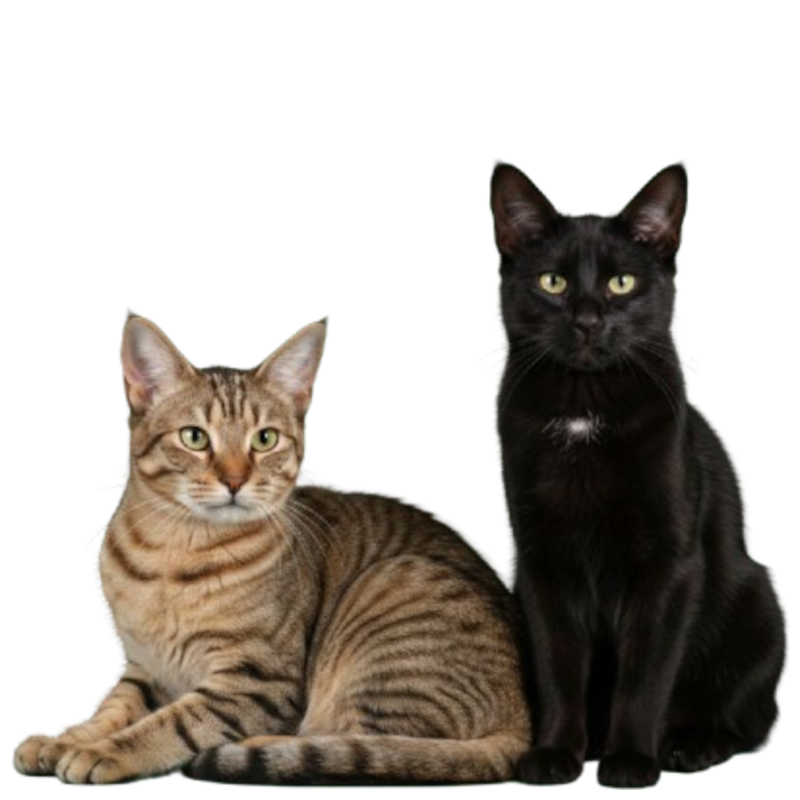
appearance
The Chausie is a medium-to-large feline engineered for extreme athletic capability and refinement. Arising from the cross-breeding of the domestic cat (Felis catus) and the wild Jungle Cat (Felis chaus), Chausies possess a primitive, forest-dwelling aesthetic paired with a predictable, social nature.
Body Structure and Conformation
The frame of the Chausie is defined by length and lean power. Their architecture is built for the explosive vertical leaps characteristic of their wild ancestors.
- Torso: The body is elongated and firm, featuring a prominent, deep ribcage. Unlike more compact domestic breeds, Chausies display a lithe, “tucked-up” silhouette.
- Scale: They are notably larger than most household cats, possessing a substantial, rectangular presence.
- Extremities: The legs are long with heavy bone density. The rear legs are slightly longer than the front, providing the mechanical leverage for jumping.
- Tail: A defining trait of the Chausie is the tail length, which often appears slightly truncated—roughly 3/4 the length of a standard tail—ending just above the hock.
Facial Features and Head Shape
The head of the Chausie is a modified wedge, characterized by high, flat cheekbones and a long, sturdy muzzle that emphasizes its exotic heritage.
Key Facial Characteristics
| Feature | Description |
|---|---|
| Ears | Tall, broad at the base, and positioned upright. Tufted tips (lynx tipping) are a signature aesthetic. |
| Eyes | Sized moderately with a distinct shape: the upper lid is flattened while the lower lid follows a rounded curve. |
| Muzzle | Squared and robust, conveying a sense of strength. The chin is deep and aligns vertically with the nose. |
| Profile | The forehead slopes gently toward the nose without a sharp break or “stop” at the bridge. |
Coat, Color, and Patterns
Chausie’s fur is dense and slightly coarse to the touch, providing a resilient layer that stands slightly away from the body. Three specific colorations define the breed’s visual standard.
Recognized Colors
- Brown Ticked Tabby: Features a warm, sandy base coat. Each individual hair is marked with multiple dark bands (ticking), resulting in a “wild” camouflaged look.
- Black Grizzled Tabby: A rare pattern unique to Chausies. This involves a black base where individual hairs are tipped with white or silver, creating a shimmering, frosted effect.
- Solid Black: A uniform, coal-black coat that highlights the breed’s muscular definition and sleek movements.
Proportions and Mathematical Symmetry
The visual balance of the Chausie relies on a specific ratio between height and length. This ensures the cat maintains a “rangy” rather than “cobby” appearance. If we denote as the shoulder height and as the length from chest to rump:
Body Shape and Rectangle Balance Ratio
- : The “Shape Score” that shows how long and athletic the cat looks.
- : “Body Length,” measured from the cat’s chest to its rump.
- : “Shoulder Height,” measured from the floor to the top of the shoulders.
In the Chausie, the ideal “rangy” look requires a significantly greater than . If a high-generation Chausie specimen has a shoulder height () of cm and a body length () of cm, the symmetry ratio is . This value of mathematically confirms a rectangular, aerodynamic frame. If the ratio were closer to , the cat would appear “cobby” or square, which would be a deviation from the athletic, jungle-cat-derived standard required for this breed’s unique morphology.
In Chausies, the value of is consistently greater than , ensuring the body remains rectangular and aerodynamic.
Summary of Distinguishing Traits
- Expression: Due to the high ear set and almond-shaped eyes, the Chausie maintains a perpetually alert and focused expression.
- Movement: Chausie’s gait is fluid and purposeful, mimicking the rhythmic, low-slung walk of a jungle predator.
behavior
The behavioral profile of the Chausie is defined by high-intensity physical output and sophisticated cognitive processing. Unlike more sedentary domestic breeds, Chausies exhibit a range of actions more closely aligned with active working animals or small wild felines.
Locomotion and Vertical Exploration
Movement for the Chausie is characterized by an exceptional drive for verticality and sudden, high-velocity bursts of speed.
- Elevation Seeking: Chausies possess an innate urge to occupy the highest vantage points within their territory. This is an active patrol behavior rather than a passive resting state.
- Vertical Propulsion: Utilizing powerful hindquarters, a Chausie is capable of clearing heights exceeding six feet from a stationary position.
- Rhythmic Pacing: In states of anticipation or high arousal, the Chausie may demonstrate a fluid, rhythmic gait that mirrors the movement patterns of larger wild predators.
Tactile Manipulation and Cognitive Engagement
The Chausie displays significant manual dexterity and a persistent drive to interact with the physical environment through touch.
Interactive Patterns
| Behavior | Description |
|---|---|
| Prying and Testing | Chausies utilize their paws to investigate the weight and resistance of objects, often mimicking digging or aquatic hunting motions. |
| Environmental Solving | It is common for a Chausie to independently learn the mechanics of lever-style handles or cabinet latches to access restricted spaces. |
| Systematic Retrieval | Chausies exhibit a natural inclination to retrieve items, carrying specific objects back to a central hub for repeated interaction. |
Foraging Instincts and Water Affinity
The ancestral predatory drive of the Chausie manifests in specific interactive rituals that occur independently of nutritional needs.
- Object Caching: Some Chausies engage in “hoarding” behaviors, where they secrete toys or small household items beneath furniture or rugs, reflecting a vestigial hunting instinct.
- Hydro-Activity: Diverging from typical feline aversion to water, the Chausie often seeks out moisture, frequently splashing in basins or attempting to join inhabitants in showers.
Social Communication and Interaction
While the temperament remains domestic, the social behavior of the Chausie is intensive and requires a high volume of daily engagement.
- Vocal Range: Chausie’s vocalizations vary from standard domestic chirps to a more resonant, guttural “huff” or short bark when overstimulated.
- Engagement Intensity: The energy expenditure during interaction can be modeled as a function of time and intensity . The Chausie sustains a higher for a significantly longer period than standard breeds:
Total Energy Burned During Playtime
Variable Breakdown- : “Total Energy Used,” the sum of all physical and social effort during play.
- : “Play Duration,” the clock time from the start to the end of a session.
- : “Activity Intensity,” how fast or loud the Chausie is at any exact moment.
- : A math tool used to track tiny, constant changes in energy throughout the game.
Practical ExampleTo determine the required engagement for a high-energy Chausie, we model a -minute play session ( to minutes). If the intensity is a constant high-output of units/min, then units. However, because the Chausie typically exhibits “interval” bursts, if (intensity increasing as they get excited), units. An owner uses this to see that even a “ramping” intensity session requires significant mental cooling time, as the cumulative social “load” () is nearly double that of a standard domestic breed.
- Observational Following: The Chausie usually exhibits “shadow” behavior, trailing human inhabitants to observe and “assist” in household tasks—indicating high social curiosity.
Activity Cycle Summary
- Phasic Wakefulness: Chausies tend to have frequent, intense bursts of wakefulness distributed throughout a 24-hour period, rather than the consolidated sleep cycles found in lower-energy breeds.
- Environmental Novelty: Without constant enrichment, Chausie’s behavior can evolve into destructive curiosity as they attempt to self-stimulate through structural exploration.
color
The chromatic requirements for the Chausie are meticulously defined to preserve the aesthetic of its wild ancestor, the Jungle Cat, within a domestic framework. Unlike typical household cats that exhibit a vast array of hues, the Chausie’s registry is strictly limited to three phenotypes that emphasize the complex “ticking” and unique grizzled markers of the lineage.
Official Phenotypic Classifications
Registries recognize a specific triad of colorations. The presence of white “locket” spots or non-sanctioned colors generally excludes a Chausie from championship status.
Brown Ticked Tabby
The brown ticked tabby is the traditional representation of the Chausie, engineered to replicate natural arid-land camouflage.
- Ground Color: The base ranges from a muted sandy beige to a vibrant, warm gold.
- Banding: Each hair shaft features multiple distinct dark bands, a result of the agouti gene.
- Marking Restrictions: Traditional tabby stripes are largely suppressed, appearing only as subtle “necklace” lines or bars on the inner limbs and hocks.
- Visual Highlights: Pale “spectacle” markings usually surround the eyes, contrasting with a brick-red or dark nose leather.
Black Grizzled Tabby
Exclusive to Chausies, this pattern creates a shimmering, “frosted” effect that is found in no other domestic hybrid.
- The Grizzling Mechanism: This involves a charcoal-to-black base where the hair tips are devoid of dark pigment, appearing silver or white.
- Direct Heritage: This trait is a specific genetic legacy from the Felis chaus progenitor.
- Texture and Light: The pattern produces a high-contrast, salt-and-pepper appearance that shifts dynamically as the Chausie moves.
Solid Black
The solid black variety emphasizes the structural elegance and muscularity of the Chausie.
- Pigmentation: A uniform, deep obsidian coat that covers the body from root to tip.
- Ghost Markings: Younger Chausies may show faint underlying tabby patterns, though these typically vanish as the adult coat matures.
- Sheen: The solid variety often possesses a high-gloss finish, accentuating the breed’s lithe, athletic silhouette.
Optics and Pigment Distribution
The visual depth of the Chausie’s coat is a product of light refraction against multi-banded hairs. The perceived richness of the “ticked” effect () can be modeled by the density of the pigment bands () and the level of light scattering ():
Daily Exploration Distance and Territory
- : “Daily Range,” the total distance the cat travels around its home or enclosure.
- : “Average Trip Distance,” how far the cat goes during one active burst.
- : “Session Frequency,” how many times a day the cat gets up to explore.
To calculate the daily environmental enrichment needs for a Chausie, we look at their innate drive. If a high-energy Chausie has a drive constant of sessions per day, and each session involves an average traversal distance of meters of vertical and horizontal space, the total range is meters. This result of kilometers of daily movement mathematically demonstrates why the Chausie requires a “Catio” or large indoor space; a standard domestic cat with would only require meters, making the Chausie’s needs nearly four times greater than average.
In Chausies, maximizing the number of bands per hair shaft results in a more “saturated” and wild-looking coat—reducing the visibility of domestic-style patterns.
Eye and Skin Pigmentation
- Eye Color: Standards favor gold, yellow, or hazel tones, though shades of green are occasionally observed.
- Paw Pads: In the black and grizzled varieties, the leather of the paws is typically solid black or dark charcoal. In brown ticked Chausies, the pads may be a deep rose or chocolate tone.
compatibility
Ease of Maintenance
Rating: 5/5
Child Friendly
Rating: 3/5
Annual Cost
Rating: 2/5
Lifetime Cost
Rating: 3/5
Adaptability
Rating: 4/5
Velcro Factor
Rating: 4/5
Quietude
Rating: 2/5
Apartment Suitability
Rating: 1/5
Hypoallergenic
Rating: 2/5
Handling Tolerance
Rating: 2/5
Hardiness/Longevity
Rating: 4/5
Prey Drive
Rating: 1/5
genetics
The genomic landscape of the Chausie is defined by interspecific hybridization, merging the chromosomal architecture of the domestic cat (Felis catus) with that of the Jungle Cat (Felis chaus). This biological synthesis results in a feline that retains domestic social traits while expressing distinct wild-type phenotypic markers.
Interspecific Hybridization and Phylogeny
Chausies are categorized by their filial generation, a system used to denote the ancestral distance from the original wild Felis chaus progenitor.
- Filial Generations (F1 through F4+): An F1 Chausie has one direct Felis chaus parent. Subsequent generations (F2, F3, and beyond) are produced by breeding Chausies back to other Chausies or approved domestic outcrosses.
- Calculation of Genetic Heritage: The theoretical percentage of wild DNA within a specific Chausie can be determined by a simple averaging of the parental genetic contributions:
Wild Ancestry Percentage in Kittens
Variable Breakdown- : “Kitten’s Wild DNA,” the average amount of Jungle Cat heritage.
- : The wild DNA percentage of the first parent.
- : The wild DNA percentage of the second parent.
- : A constant representing that every kitten gets exactly half of its DNA from each parent.
Practical ExampleTo calculate the genetic makeup of an F2 Chausie, we look at the parents. If the mother is an F1 Chausie () and the father is a high-generation Chausie or domestic outcross (), the calculation is . This theoretical wild blood defines the F2 generation. If a breeder then mates that F2 () back to an F1 (), the resulting kittens would have . This math is vital for Chausie breeders to balance the “wild” look of the Jungle Cat with the manageable temperament of a domestic companion.
- Biological Compatibility: Because both progenitor species belong to the same taxonomic tribe and possess 38 chromosomes, the Chausie is a viable hybrid. However, biological hurdles—such as early-generation male sterility—are common.
Inherited Phenotypic Traits
The physical presentation of the Chausie is dictated by specific alleles inherited from the Jungle Cat lineage, particularly those influencing skeletal structure and coat pigmentation.
Key Genetic Markers
| Trait | Genetic Influence | Expression in Chausies |
|---|---|---|
| Grizzled Pattern | Dominant or Incomplete Dominant | Results in alternating bands of light and dark pigment on the hair shaft—a trait exclusive to this lineage. |
| Agouti Ticking | Agouti (A) Locus | Favors uniform hair banding over traditional tabby striping, creating a camouflaged appearance. |
| Skeletal Development | Polygenic Inheritance | Produces an increased frame size and superior muscle density compared to standard domestic cats. |
The Grizzled Allele
The most distinct genetic signature of the Chausie is the “grizzled” coat. This unique mutation, sourced from wild Felis chaus populations, has been systematically integrated into the Chausie’s gene pool.
- Pigmentation Mechanism: This trait involves a unique interaction at the Agouti locus that inhibits the full expression of black pigment, resulting in a silver-tipped or “frosted” look.
- Selective Breeding: Cultivating this trait allows breeders to distinguish the Chausie from other spotted or marbled hybrid breeds.
Health and Genetic Diversity
While Chausies generally benefit from “hybrid vigor,” maintaining a sustainable population requires a diverse genetic foundation through regulated outcrossing.
- Approved Outcrosses: To prevent inbreeding depression, specific breeds—historically including the Abyssinian and the domestic shorthair—have contributed to the Chausie’s genetic diversity.
- Metabolic Adaptation: Some Chausies appear to inherit a shorter intestinal tract from their wild ancestors. This genetic predisposition often necessitates a diet focused on high-protein absorption and minimal plant-based fillers.
- Hybrid Sterility: In line with Haldane’s Rule, F1 through F3 Chausie males are typically infertile due to meiotic disturbances. Fertility usually stabilizes by the F4 generation, allowing the breed to self-sustain.
Summary of Genetic Standards
- Cytogenetics: 38 Chromosomes (Diploid).
- Formal Recognition: Classified as a “Championship Breed” by major registries, requiring a specific generational distance to ensure a stable, domestic temperament.
- Morphological Conservation: The primary goal of Chausie’s genetic management is to preserve the wild morphology of the Jungle Cat while selecting for domestic behavioral alleles.
health
Health and Physiological Profile of the Chausie
The biological constitution of the Chausie is defined by high physical resilience and robust vitality, largely stemming from the genetic diversity provided by its interspecific background. Nonetheless, the influence of the Jungle Cat lineage requires owners and veterinarians to account for specific deviations in digestive anatomy and reproductive biology.
Digestive Specialization and Dietary Management
A primary health consideration for the Chausie involves a unique gastrointestinal adaptation inherited from its wild ancestors.
- Intestinal Morphology: Some Chausies possess a shorter intestinal tract than typical domestic felines. This anatomical trait can hinder the efficient processing of complex carbohydrates and plant-based fibers.
- Sensitivity to Additives: Diets heavy in grains or vegetable-based fillers may trigger chronic digestive inflammation or malabsorption issues.
- Nutritional Modeling: Optimal health is maintained through a diet where the majority of caloric intake () is derived from animal-sourced proteins () and fats (), while keeping the carbohydrate fraction () as low as possible:
Meat-Based Protein and Fat Balance
- : “Total Daily Calories,” the energy the cat needs from food.
- : Calories coming strictly from animal protein (meat).
- : Calories coming strictly from animal fats.
- : A math instruction to “add up” all the meat-based calories.
- : The “Zero-Carb Rule,” meaning carbohydrates should be as close to zero as possible.
To manage the sensitive digestion of a adult Chausie, an owner selects a high-protein diet. If the cat requires per day, the formula dictates that should account for nearly the entire sum. If the food provides from protein and from fat, the carbohydrate contribution is . Since is only of the total , the condition is satisfied, mathematically minimizing the risk of intestinal inflammation often seen in Chausies fed grain-heavy commercial diets.
Reproductive Challenges in Hybrid Lineages
The Chausie’s health profile is uniquely influenced by the complexities of cross-species genetics, particularly within the early filial generations.
Developmental and Fertility Observations
| Category | Clinical Summary |
|---|---|
| Male Fertility | Following the patterns of Haldane’s Rule, males in the F1 through F3 generations are almost universally sterile. Normal reproductive capacity typically emerges at the F4 generation. |
| Gestation Window | The Chausie may require a slightly longer pregnancy period than standard cats, reflecting the 63–66 day average of the Felis chaus. |
| Hybrid Vigor | Chausies often exhibit “heterosis,” where the blending of two distinct gene pools reduces the immediate expression of recessive domestic disorders. |
Metabolic Intensity and Structural Wellness
The Chausie operates at a significantly higher basal metabolic rate than most sedentary breeds, which impacts its long-term physical maintenance.
- Musculoskeletal Demands: Due to the Chausie’s propensity for extreme vertical leaping and high-velocity movement, joint support is a priority. Diets enriched with Omega-3 fatty acids help maintain connective tissue health.
- Activity-Dependent Health: For the Chausie, physical exertion is a physiological requirement. A lack of stimulation can lead not only to behavioral stress but also to rapid loss of muscle tone and diminished cardiovascular efficiency.
Preventative Medical Standards
- Cardiac Monitoring: Regular screening for Hypertrophic Cardiomyopathy (HCM) is advised. While no breed-specific link is currently established, the Chausie’s high-energy lifestyle makes cardiac health a critical baseline.
- Renal and Blood Panels: Annual diagnostic tests to monitor kidney function and glucose levels are essential to ensure the long-term wellness of the Chausie.
- Environmental Safety: Because of the Chausie’s advanced manual dexterity, they are more prone to accessing and accidentally ingesting household hazards or restricted substances.
longevity
The typical lifespan of the Chausie generally aligns with that of other large, athletic domestic felines, frequently ranging from 12 to 16 years. As a product of interspecific hybridization, the duration of a Chausie’s life is influenced by the genetic robustness of the founding Jungle Cat lineage combined with the health profiles of the domestic outcrosses used in its development.
Primary Determinants of Lifespan
The longevity of the Chausie is a dynamic result of genetic diversity, environmental management, and the maintenance of a high-functioning metabolism.
Heterosis and Genetic Resilience
Chausies often benefit from “hybrid vigor,” or heterosis. This genetic phenomenon occurs when the merging of two distinct species’ gene pools helps to suppress the expression of harmful recessive mutations often found in more established, closed-registry breeds. This diversity tends to bolster the immune system and reduce the likelihood of early-onset hereditary conditions.
Metabolic Influence on Aging
The basal metabolic rate () of the Chausie is notably higher than that of more sedentary domestic cats. While this fuels the Chausie’s high energy levels, it also requires careful nutritional management to mitigate cellular oxidative stress. The relationship between nutrient efficiency () and biological aging () in these active hybrids can be expressed as:
Biological Aging and Nutrition Quality
- : “Aging Speed,” how fast the cat’s cells are getting older.
- : “Is Related To,” showing how aging changes based on the following factors.
- : The “Wear and Tear” on the body caused by a fast metabolism.
- : “Nutrition Efficiency,” how well the cat’s body uses its high-quality food.
To manage the longevity of an active Chausie, a specialist compares two dietary plans. In Plan X, a high-carbohydrate diet results in an Oxidative Stress value of and a low nutrient efficiency of , making . In Plan Y, a species-appropriate raw-protein diet reduces oxidative stress to and increases efficiency to , making . By switching to Plan Y, the owner mathematically reduces the biological aging rate () of the Chausie by over , effectively mitigating the “burnout” associated with the breed’s high-intensity jungle cat metabolism.
Life Stages of the Chausie
Monitoring the developmental milestones of the Chausie allows for age-specific care that can help extend its senior years.
| Life Stage | Age Range | Health Priority |
|---|---|---|
| Kittenhood | 0-12 Months | Focus on skeletal growth and foundational immunity. |
| Young Adult | 1-4 Years | Maintaining peak muscle mass and metabolic equilibrium. |
| Mature Adult | 5-10 Years | Monitoring for cardiac health and weight stability. |
| Senior | 11+ Years | Preserving renal function and joint flexibility. |
Environmental and Psychological Factors
The physical and mental environment plays a critical role in the survivability and wellness of the Chausie.
- Controlled Environments: Statistics indicate that Chausies residing in indoor-only environments or secure outdoor enclosures (catios) live significantly longer. This protection minimizes exposure to infectious diseases, territorial conflicts, and traumatic accidents.
- Cognitive Wellness: Due to their high intelligence, Chausies require substantial mental stimulation. Chronic boredom can lead to stress-induced physiological issues; therefore, an enriched environment is essential for maintaining long-term health.
Enhancing Senior Vitality
As the Chausie advances into its second decade, proactive veterinary care becomes the most important factor in sustaining quality of life.
- Renal Support: Hydration is vital for aging Chausies. Utilizing water fountains or transitioning to moisture-rich diets can help protect the kidneys, as renal decline is a frequent limitation in feline longevity.
- Cardiovascular Monitoring: Since the Chausie remains active well into its senior years, regular heart screenings are recommended to identify early signs of cardiomyopathy or murmurs.
- Dietary Refinement: Older individuals may benefit from highly digestible proteins to accommodate an aging digestive system, particularly in Chausies that inherit the shorter intestinal tract characteristic of the lineage.
maintenance
Facilitating the long-term wellness of the Chausie necessitates a specialized approach to their biological and cognitive requirements. Inheriting the high-octane energy of the Jungle Cat, Chausies require a more structured maintenance regimen than most domestic lineages to ensure they remain physically fit and mentally balanced.
Nutritional Management and Metabolic Support
The Chausie’s digestive physiology is finely tuned for high-bioavailability nutrients, often necessitating a departure from standard commercial feline diets.
Dietary Precision
Many Chausies demonstrate a marked sensitivity to the plant-based additives found in generic kibble. Maintenance should prioritize:
- Protein Bioavailability: Grain-free, meat-centric diets or professionally balanced raw protocols are often the most compatible with their metabolism.
- Elimination of Fillers: Ingredients such as corn, soy, or fibrous vegetable pulps can lead to gastrointestinal inflammation in the Chausie.
- Hydration Strategy: Given their high activity levels, the use of circulating water fountains is recommended to encourage consistent fluid intake.
Calculating Caloric Flux
Maintaining the lean, muscular profile of the Chausie requires precise energy monitoring. The Daily Energy Requirement () for a high-activity Chausie can be calculated based on body weight () in kilograms:
Daily Calorie Goal for High-Energy Cats
- : “Daily Energy Needed,” the total calories required to stay fit.
- : The “Active Boost,” an extra multiplier for the Chausie’s high-speed lifestyle.
- : A standard math constant for basic cat energy.
- : The cat’s “Weight” in kilograms.
- : A math factor that adjusts calorie needs based on body size.
To determine the feeding schedule for a highly active male Chausie, we first calculate the base metabolic rate: (Resting Energy Requirement). Applying the high-activity flux multiplier, . If the owner provides a high-protein wet food at , they would need to measure out exactly of food per day. This ensures the Chausie has enough fuel for its characteristic “jungle cat” jumping and sprinting without gaining adipose tissue that would soften its rectangular silhouette.
Environmental Enrichment and Physical Output
The Chausie thrives in an environment that serves as a functional gymnasium, accommodating their instinctual need for movement and exploration.
Verticality and Athleticism
- Elevated Pathways: Chausies are famous for their vertical leaps. Integrating wall-mounted perches or ceiling-high climbing trees is essential for their physical maintenance.
- Simulated Predation: Daily high-intensity engagement with lure toys or fetch cycles is necessary to satisfy the Chausie’s high-drive hunting instincts.
Cognitive Development
Intelligence is a hallmark of the Chausie, making mental “work” a vital part of their daily care.
- Foraging Challenges: Utilizing puzzle feeders encourages the Chausie to solve problems in exchange for food, reducing boredom-induced stress.
- Operant Conditioning: Chausies excel at clicker training, which provides a structured channel for their curiosity and enhances the bond with their caregiver.
Routine Hygiene and Grooming
While the Chausie’s coat is short and sleek, regular maintenance ensures skin health and minimizes the presence of allergens in the home.
| Procedure | Frequency | Objective |
|---|---|---|
| Coat Brushing | Weekly | Stimulates skin oils and removes loose fur. |
| Claw Maintenance | Bi-weekly | Prevents injury and protects household surfaces during sprints. |
| Oral Hygiene | 2-3 times weekly | Reduces the formation of tartar and maintains gingival health. |
| Ear Inspection | Monthly | Monitors for debris within their prominent, upright pinnae. |
Veterinary Surveillance and Safety
Proactive medical maintenance is the foundation of a healthy life for the Chausie.
- Immunization Protocols: Core vaccinations (FVRCP and Rabies) are fundamental to the Chausie’s preventative health plan.
- Parasite Prevention: Because many owners take Chausies on leashed walks, consistent protection against fleas, ticks, and heartworm is critical.
- Domestic Safety: Due to the manual dexterity of the Chausie, owners should install child-proof latches on cabinets containing hazardous materials, as these cats are proficient at opening doors.
measurements
| Measurement | Female | Male | ||
|---|---|---|---|---|
| Metric | Imperial | Metric | Imperial | |
height | 30 – 41 centimeters | 12 – 16 inches | 35 – 46 centimeters | 14 – 18 inches |
length | 46 – 56 centimeters | 18 – 22 inches | 51 – 61 centimeters | 20 – 24 inches |
weight | 5 – 9.1 kilograms | 11 – 20 pounds | 6.8 – 11.3 kilograms | 15 – 25 pounds |
• Height: Refers to the measurement at the withers (shoulders).
• Length: Measured from the tip of the nose to the base of the tail.
origin
The emergence of the Chausie is the result of a purposeful endeavor to recreate the aesthetic of the ancient wild felines of the Nile Valley within a domestic companion. This lineage is defined by the strategic hybridization of the Jungle Cat (Felis chaus) with select domestic breeds, producing a cat that balances a primitive, regal appearance with a social personality.
The Progenitor: Felis chaus
The biological foundation of the Chausie lies with the Jungle Cat, a species whose natural habitat spans a vast territory from the Middle East through South Asia.
- Historical Context: Evidence from the Nile Delta suggests that the Felis chaus lived in close proximity to early human civilizations. Ancient Egyptian iconography and mummified remains indicate that these wild cats may have been integrated into human society even before the widespread domestication of the African Wildcat.
- Biological Adaptations: Adapted for life in marshlands and reed beds, the Jungle Cat possesses long limbs, a powerful frame, and a distinctive ticked coat. These specific morphological traits serve as the blueprint for the modern Chausie’s physical standard.
Foundation and Modern Breed Development
Although natural crossbreeding likely occurred intermittently over millennia, the structured development of the Chausie as a formal registry entity gained momentum in the late 20th century.
Early Breeding Initiatives
During the 1960s and 1970s, enthusiasts in the United States initiated experimental crosses between the Felis chaus and various domestic shorthairs. The objective was to capture the “grizzled” agouti coat pattern of the wild ancestor while stabilizing a temperament suitable for a home environment.
Breed Standardization and Outcrossing
Refining the Chausie required the careful selection of domestic partners to diversify the gene pool and ensure a consistent disposition.
| Contribution | Source Lineage | Role in Chausie Development |
|---|---|---|
| Agouti Ticking | Abyssinian | Intensified the depth and clarity of the banded coat. |
| Structural Integrity | Domestic Shorthair | Provided a predictable health baseline and physical robustness. |
| Social Temperament | Selective Breeding | Transformed wild survival instincts into high-energy curiosity. |
Genetic Classification and Filial Generations
The Chausie is categorized by its proximity to the original wild ancestor; this is a factor that influences both its physical traits and its eligibility for exhibition.
- F1 Generation: The direct first-cross offspring (50% wild genetics).
- F2 through F4 Generations: Subsequent levels where the wild genetic percentage typically decreases, allowing for phenotypic stabilization.
- Championship Status: To compete in the Championship class within major registries like TICA, Chausies must achieve “SBT” (Studbook Tradition) status, meaning they are at least three generations removed from the wild ancestor.
The theoretical retention of wild phenotype traits () across generations () can be modeled by the following expression:
Odds of Keeping Wild Jungle Cat Traits
- : “Trait Probability,” the chance of a kitten inheriting a specific wild gene.
- : “Generations Removed,” how many steps the kitten is from its wild ancestor.
- : The 50% chance of passing on a specific gene in each new generation.
To determine the genetic “wildness” of an SBT (Studbook Tradition) Chausie qualifying for championship status at generation , we calculate . This results in , or . If a breeder is trying to maintain the iconic “tufted ears” trait, this formula shows that without selective backcrossing (breeding a to a instead of a domestic), the probability of that specific wild allele appearing by chance in an F4 kitten is only . This mathematically justifies why breeders must use “type-to-type” breeding rather than random outcrossing to keep the Chausie’s jungle cat appearance as increases.
Note: Skilled breeders often use specific backcrossing techniques to maintain higher levels of wild phenotypic expression than the basic mathematical model suggests.
Recognition and Global Status
The Chausie was first granted registration status in 1995 and eventually earned full Championship recognition in 2013. Today, Chausies are regarded as a premier example of “wild-look” domestic cats. The Chausie’s combination of large size, extreme intelligence, and an ancestral connection to the Nile makes them a unique presence in modern felinology.
temperament
The inner disposition of the Chausie is a complex intersection of primitive vigilance and modern domestic sociality. Unlike more sedentary domestic lineages, Chausies possess a high-intensity psychological constitution that requires a dedicated and interactive partnership with their human companions.
Cognitive Intensity and Intellectual Drive
A defining characteristic of the Chausie is an acute mental presence. Their temperament is characterized by a restless curiosity and a natural aptitude for problem-solving.
Intellectual Engagement
Chausies possess a fundamental requirement for mental labor. They are psychologically compelled to investigate the mechanics of their surroundings; this includes anything from the operation of door handles to the discovery of hidden objects.
Persistent Concentration
When a Chausie focuses on a specific objective, they demonstrate a level of persistence and intent that reflects their wild ancestry. This single-mindedness is a core pillar of the Chausie’s personality.
Modeling Cognitive Demand
The relationship between environmental complexity () and the psychological equilibrium () of the Chausie can be mathematically modeled:
Brain Happiness and Environment Variety
- : “Mental Stability,” how calm and satisfied the cat feels.
- : “Changes With,” showing the connection between happiness and toys.
- : “The Diminishing Returns Rule,” showing that after a while, more toys don’t add much extra happiness.
- : “Enrichment Score,” the amount of puzzles, perches, and social games available.
- : A math constant that keeps the formula working even if there are zero toys.
For a high-intelligence Chausie, we can calculate the impact of increasing environmental complexity (). If an owner provides points of enrichment (e.g., perches, puzzle feeders, and training sessions), the stability is . If the owner doubles the enrichment to , the stability only doubles to . This logarithmic relationship shows that while the Chausie requires a high initial to avoid the “behavioral frustration” of , owners reach a point where adding more “stuff” provides less psychological benefit than increasing the quality of specific, high-intensity social interactions.
NOTE: A lack of environmental stimulation () typically results in a sharp decline in stability (), which may manifest as behavioral frustration.
Social Architecture and Bond Formation
While many felines are valued for their independence, the Chausie’s temperament is deeply rooted in social connection and group cohesion.
Loyalty and Human-Centric Orientation
Chausies are frequently noted for their dog-like devotion. They do not merely inhabit a space; they form profound, specific attachments to their primary caregivers. This disposition leads them to seek active participation in household activities, often following their humans from room to room to maintain social proximity.
Interaction and Interspecies Dynamics
The social temperament of the Chausie generally flourishes in the company of other high-energy animals.
| Social Dynamic | Temperamental Response |
|---|---|
| With Dogs | Usually assertive and playful; they often prefer canine companions that match their physical intensity. |
| With Other Cats | Highly gregarious; they thrive in multi-cat environments but often assume a dominant role. |
| With Strangers | Typically characterized by a “guarded curiosity”; they observe from a distance before offering acceptance. |
Emotional Resilience and Sensitivity
Despite their athletic and rugged exterior, the Chausie’s emotional makeup is surprisingly sensitive to the household atmosphere.
Affectionate Expression
Chausies are deeply devoted, though they usually express affection through shared activity and proximity rather than passive lap-sitting.
Solitude Intolerance
Perhaps the most significant temperamental trait of the Chausie is a marked aversion to isolation. They are highly susceptible to psychological distress if deprived of social interaction for extended periods.
Energy Thresholds and Psychological Balance
The temperament of the Chausie is permanently calibrated to a higher state of arousal than that of the average house cat.
Vitality and Enthusiasm
There is a distinctive “vibrancy” to the Chausie’s personality. They approach daily life with an energetic zest that requires an outlet through structured play.
Play as a Psychological Requirement
For the Chausie, play is a vital component of mental health. Their temperament remains stable only when their high physical drive is channeled into constructive engagement.
Adaptability and Environmental Temperament
The Chausie is psychologically hardy but requires an environment that rewards their inquisitive nature. Their temperament is best suited for homes where their intelligence is viewed as an asset. They adjust well to new routines, provided those changes include a consistent and high volume of human interaction and mental challenges.