Chartreux Cat
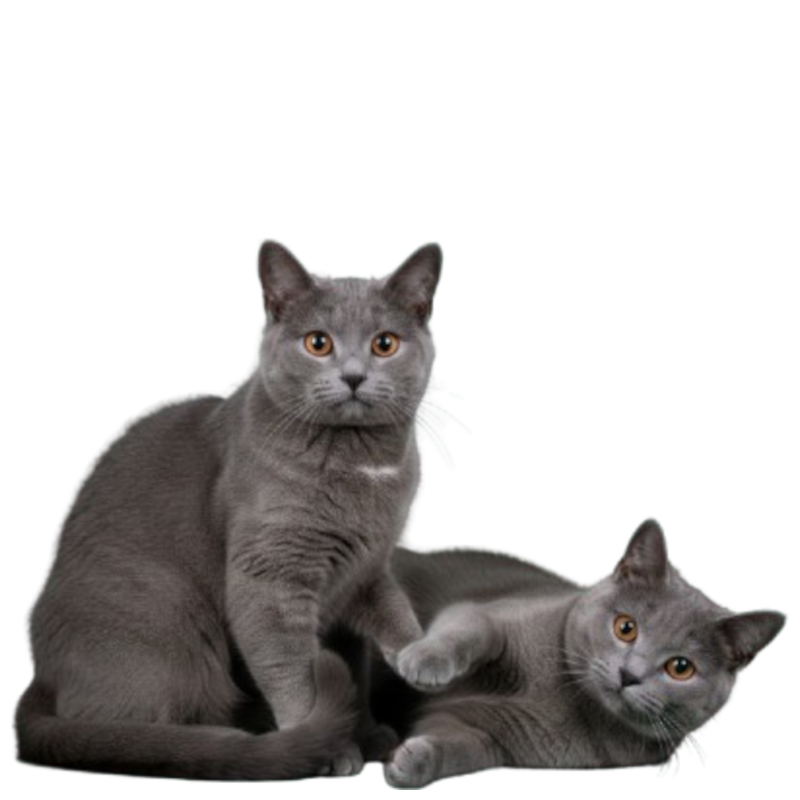
appearance
The Chartreux is a rare and historic French feline, distinguished by a robust, “primitive” silhouette and a notably quiet, pleasant facial expression. Often colloquially described as a “potato on toothpicks,” the Chartreux possesses a heavy, sturdy torso supported by relatively slender limbs, creating a unique physical profile among shorthaired blue cats.
General Body Structure and Build
Chartreuxs are medium-to-large cats defined by a powerful and muscular frame. This breed displays significant sexual dimorphism—mature males are notably larger and heavier than females, frequently developing prominent jowls that broaden the lower face.
- Torso: The trunk is solid and substantial with a broad, deep chest. Despite their heavy-set nature, they remain remarkably agile and physically strong.
- Limbs: The legs of the Chartreux are relatively short and fine-boned in contrast to the massive body. They terminate in small, rounded paws that can appear dainty given the cat’s overall mass.
- Tail: The tail is of moderate length, thick at the attachment point and tapering slightly toward a rounded extremity.
Cranial and Facial Features
The head of the Chartreux is a primary identifying mark, possessing a trapezoidal geometry that is wide at the base and tapers toward the top.
The Characteristic “Smile”
Due to the specific structure of the muzzle and the high, rounded placement of the whisker pads, the Chartreux naturally appears to be smiling, contributing to its gentle reputation.
Key Facial Components
| Feature | Description |
|---|---|
| Muzzle | Relatively narrow compared to the head width, though never pointed; it is contoured to emphasize the “smiling” look. |
| Eyes | Large and rounded with an expressive quality. The outer corners are set with a slight upward tilt. |
| Ears | Medium in size; positioned high on the skull, giving the cat a perennially alert and attentive look. |
| Nose | Straight and medium-width, featuring leather that matches the slate-grey tone of the fur. |
The Iconic Coat
The fur is the most distinctive attribute of the Chartreux. It consists of a “double” layer: a dense, woolly undercoat and a water-resistant outer protector.
Texture and Density
The coat is often described as “breaking” like sheep’s wool because it is so thick it stands away from the body rather than lying flat. When running a hand through Chartreux’s fur, one should feel a distinct resistance and a soft, plush texture.
Coloration
The Chartreux is strictly a monochromatic blue breed. Under formal standards, no variations in pattern—such as tabby stripes or white markings—are permitted.
- Shades: The blue can vary from a light ash-grey to a saturated slate-blue.
- Uniformity: The color should remain consistent from the hair root to the tip.
- Sheen: A subtle, silvery iridescence is frequently visible on the tips of the fur, particularly on the extremities and the face.
Eye Coloration and Standards
Eye color in the Chartreux is a critical breed characteristic, required to be clear, bright, and vivid.
The acceptable color spectrum is defined by the depth of copper and gold tones:
- Gold/Yellow: Within the acceptable range, though less preferred in show standards.
- Orange: The standard preferred hue.
- Copper/Amber: The most desirable and intense color.
A mature Chartreux’s eyes must never show any traces of green.
Summary of Physical Dimensions
While individual cats vary, the typical mass () of the Chartreux follows a general distribution based on sex:
Weight Ranges for Males vs. Females
- : “Body Weight,” the expected healthy range for the Chartreux.
- : “Roughly,” allowing for differences in height and bone structure.
- : “Biological Sex,” whether the cat is male or female.
- : The “Big Boy” range (about 11 to 16.5 lbs) for adult males.
- : The “Dainty Girl” range (about 6.5 to 11 lbs) for adult females.
When evaluating a -year-old Chartreux for show quality, a judge first identifies the sex (). If the cat is a male (), the formula dictates a target interval of . A male weighing falls perfectly within the “muscular” tier, confirming the breed’s “primitive” robust morphology. Conversely, a female () weighing is considered ideal, whereas that same weight in a male would indicate he is significantly underweight for the breed’s dimorphic standards.
behavior
The behavior of the Chartreux is defined by a high level of situational awareness and a calculated approach to movement. Far from being hyperactive, Chartreuxs generally move with a sense of intention, choosing to be efficient in both their recreational activities and their social engagements.
Vocalization and Communication Patterns
The manner in which Chartreuxs communicate is exceptionally subtle. They are recognized as a remarkably quiet breed, preferring non-verbal signals or specialized vocalizations over persistent noise.
Chirping and Trilling
Instead of the typical feline meow, the Chartreux frequently utilizes high-pitched chirps or gentle trills to signal interest or to greet their human companions.
Physical Presence
They often convey their needs through proximity—shadowing an owner from room to room or leaning against a person’s leg—rather than relying on auditory cues.
Muted Vocal Range
When the Chartreux does choose to vocalize, the resulting sound is often surprisingly small and thin, contrasting sharply with their powerful physical stature.
Hunting and Play Mechanics
Reflecting their ancestral background as working cats, the Chartreux’s play style is deeply rooted in predatory instincts, characterized by patience and sudden bursts of energy.
Strategic Engagement
Rather than pursuing a toy relentlessly, Chartreuxs usually adopt a tactical approach. They will sit motionless, tracking a target with unwavering focus, before launching a precise and explosive strike.
Athletic Capabilities
Despite their heavy-set, rounded appearance, the Chartreux is capable of impressive physical feats. Notable behaviors include executing high vertical leaps to snatch toys from the air and utilizing superior manual dexterity to manipulate objects.
Observational Intelligence and Problem Solving
The Chartreux is often noted for its intellectual depth, specifically regarding how it interprets and interacts with its surroundings.
| Behavioral Trait | Manifestation |
|---|---|
| Environmental Memory | A strong capacity to recall the exact location of hidden items or favorite toys. |
| Tool and Barrier Logic | The ability to figure out mechanical operations—such as turning door handles or opening cupboard latches—through observation. |
| Passive Monitoring | A preference for watching human activities intently to understand the household routine. |
Social and Environmental Interaction
In the home, Chartreuxs typically exhibit a social style that is affectionate yet unobtrusive. They enjoy companionship without being overly demanding of constant attention.
Proximity Preference
While the Chartreux is loyal, it often prefers to stay within arm’s reach on a sofa rather than sitting directly on a lap, valuing a balance of closeness and independence.
Composure and Adaptability
They generally meet environmental changes with a stoic and steady attitude, making them adaptable to different living situations. Their social baseline is one of calm tolerance, rarely initiating friction with other household pets.
Activity Cycle Modeling
The daily activity patterns () of the Chartreux are defined by long periods of restful observation interrupted by brief, high-intensity energy expenditures (). The likelihood of these active phases () occurring at a specific time () follows a crepuscular model:
Energy Levels at Dawn and Dusk
- : “Energy Prediction,” how likely the cat is to be zooming around.
- : The “Twilight Times” when the sun is rising or setting.
- : The “Nap Times” when the sun is highest or it is the middle of the night.
To optimize a Chartreux’s exercise routine, an owner tracks their cat at two time points. At (midday), the formula predicts , which correlates to the cat’s choice to observe from a high perch. However, as approaches (e.g., ), shifts to . During this window, the Chartreux will exhibit its “explosive” energy, successfully engaging in heavy-duty play or “pounce” training that would have been ignored during the midday rest interval.
This biological rhythm allows the Chartreux to conserve energy effectively, maintaining its muscular condition while remaining ready for immediate action.
color
The Chartreux is defined by a strictly monochromatic appearance, specifically limited to shades of blue. This coloration is a fundamental requirement of the breed standard, with no exceptions for patterns, spots, or non-blue hues in adult specimens.
The Blue Palette and Tonal Variations
While the Chartreux is consistently described as a “blue” cat, this term encompasses a specific spectrum of grey tones. The visual depth of the coat is influenced by the density of the fur and the lighting of the environment.
Shade Spectrum
The permissible range extends from a delicate, pale ash-grey to a saturated, deep slate-blue.
Uniformity
Ideal Chartreuxs possess a coat that is perfectly even in tone across the entire body. A significant standard requirement is that the hair must be “blue to the roots,” meaning the color does not fade or change as it nears the skin.
Iridescence
A hallmark of the Chartreux’s coat is a silvery sheen. This is caused by the tipping of the guard hairs, which catch the light and create a metallic, shimmering effect—particularly noticeable on the face, ears, and paws.
Developmental Color Changes
The coloration of the Chartreux is not static and undergoes a transition from kittenhood to maturity.
Ghost Markings in Kittens
It is common for Chartreux kittens to be born with “ghost markings”—faint tabby-like rings on the tail or spots on the torso. These are ancestral remnants and typically disappear as the cat reaches adulthood, usually by the age of one to two years, leaving a solid blue finish.
Maturity and Environmental Factors
The coat of a mature Chartreux may occasionally show slight browning or “rusting.” This is generally attributed to oxidation from excessive sunlight, humidity, or specific dietary factors affecting melanin production.
Peripheral Pigmentation
The blue coloration of the Chartreux extends beyond the fur to the visible skin and pads.
| Feature | Pigmentation Description |
|---|---|
| Nose Leather | Solid slate-grey with no pink or black spots. |
| Paw Pads | Slate-grey to rose-grey (often described as “lavender-grey”). |
| Lip/Eye Rims | Deep blue-grey or slate-grey. |
Relationship Between Light and Perceived Color
The perceived luminance () of the Chartreux’s coat can be modeled based on the reflective properties of the silver-tipped guard hairs. In a controlled lighting environment, the reflectance () of the fur can be expressed as a function of the angle of incidence ():
The “Silver Shimmer” Light Reflection Score
- : “Total Shine,” how much light bounces off the coat at a certain angle.
- : “Base Blue Intensity,” the darkness of the underlying gray fur.
- : “Viewing Angle,” the position you are standing in compared to the light.
- : “Silver Glow,” the unique Chartreux shimmer on the tips of the fur.
To evaluate a Chartreux’s “silvering” for a breed standard, a judge views the coat under a light at an angle of (where ). If the base pigment absorption is and the breed-specific silver luster is , the reflectance is . If the judge moves to a side angle of (where ), the reflectance drops to . This mathematical shift explains why the Chartreux appears to “shimmer” or change depth as it moves through a room, a direct result of the constant maintaining a baseline glow even as the angular light changes.
Summary of Disqualifying Color Traits
In competitive standards, any departure from the solid blue palette is considered a major fault. Disqualifying traits include:
- White lockets (spots of white on the chest or belly).
- Any color other than the blue-grey spectrum—such as black, cream, or lilac.
- Permanent tabby stripes or “tipping” of a different hue in adult Chartreuxs.
compatibility
Ease of Maintenance
Rating: 3/5
Child Friendly
Rating: 4/5
Annual Cost
Rating: 4/5
Lifetime Cost
Rating: 4/5
Adaptability
Rating: 4/5
Velcro Factor
Rating: 3/5
Quietude
Rating: 5/5
Apartment Suitability
Rating: 5/5
Hypoallergenic
Rating: 2/5
Handling Tolerance
Rating: 4/5
Hardiness/Longevity
Rating: 5/5
Prey Drive
Rating: 2/5
genetics
The genetic blueprint of the Chartreux is responsible for its iconic physical traits, most notably the blue-grey coat and deep copper eyes. Historically, the breed emerged from a restricted gene pool, which has resulted in a high degree of phenotypic consistency across generations.
The Genetics of Coat Coloration
The most defining genetic feature of the Chartreux is the “dilute” gene. While the base pigment of the Chartreux is black (eumelanin), it manifests as blue due to a specific genetic modification.
The Dilute Gene ()
The blue coloration is governed by the melanophilin (MLPH) gene, commonly referred to as the Dilute gene. This is an autosomal recessive trait. For a Chartreux to display its signature blue coat, it must be homozygous recessive ().
- Mechanism: This mutation results in an uneven distribution and clumping of pigment granules within the hair shaft.
- Visual Result: The light is refracted differently by these clumps, causing the black pigment to appear as the characteristic slate-grey or blue.
The Solid Color Gene ()
Chartreuxs are genetically “solid” or “self-colored” felines. This is controlled by the non-agouti gene ().
- Genotype: They carry the genotype, which suppresses the agouti (tabby) banding that would otherwise appear on individual hairs.
- Ghost Markings: In kittens, this suppression is occasionally incomplete, allowing ancestral tabby patterns to remain visible until the adult coat matures.
Ocular Pigmentation and Inheritance
The vivid eye color of the Chartreux is the result of polygenetic inheritance, which determines the density and distribution of melanocytes within the iris.
Pigment Density Spectrum
The intensity of the copper hue is related to the concentration of melanin. This can be conceptually modeled by the relationship between the number of pigment-intensifying alleles () and the resulting ocular saturation ():
Eye Color Deepness and Orange Saturation
- : “Saturation,” how deep the orange/copper eye color appears.
- : “The Total,” adding up the power of several different genes.
- : “Gene Strength,” how much each specific gene changes the color.
- : “Gene Presence,” a 1 if the cat has the gene and a 0 if they don’t.
In the Chartreux, the goal is a deep copper eye color. Suppose there are three primary intensifying genes () with weights of , , and . If a specimen possesses all three genes (), the saturation score is proportional to , resulting in the “brilliant orange” standard. If a cat lacks the secondary modifier (), the score drops to , mathematically explaining a “gold” rather than “copper” eye, even though the primary “blue coat” genetics remain stable.
Unlike many other blue breeds, the Chartreux genetic profile strictly selects against the “inhibitor” genes that would produce green or yellow eyes in adulthood.
Coat Texture and Structural Genetics
The unique “breaking” woolly texture of the Chartreux’s fur is a structural attribute rather than a color trait. This is a result of the specific ratio between guard hairs and the dense undercoat.
| Genetic Component | Phenotypic Expression |
|---|---|
| Short-hair Gene (L) | Chartreuxs carry the dominant L allele, ensuring the coat remains short and dense. |
| Undercoat Density | Polygenetic factors contribute to a high follicle density per square centimeter (Df). |
Genetic Diversity and Health
The Chartreux has maintained a relatively stable genome due to focused and careful breeding practices.
Blood Type Distribution
One notable genetic characteristic of the Chartreux is the prevalence of Blood Type B. In many feline populations, Type A is dominant, but Chartreuxs show a significant frequency of Type B.
Odds of Having Type B Blood
- : “Type B Chance,” the likelihood a specific Chartreux has this blood type.
- : The “Risk Window,” showing that between 25% and 60% of these cats are Type B.
- : The “Lower Odds” for cats from more varied family lines.
- : The “Higher Odds” for cats from very traditional, closed family lines.
In a cattery specializing in the Chartreux, a breeder has a population where the local frequency is . If the breeder selects a random queen, there is a chance she is Type B. If she is then mated to a Type A tom, the risk of Neonatal Isoerythrolysis (NI) in the kittens is high. Mathematically, in a litter of kittens from such a cross, the breeder must prepare for the statistical likelihood that dictates nearly half the population may require immediate intervention to prevent the ingestion of anti-A antibodies in the colostrum.
This distribution is critical for breeders to understand to prevent Neonatal Isoerythrolysis (NI)—which occurs when a Type B queen is bred to a Type A tom.
Hereditary Considerations
The Chartreux is generally robust, but the limited ancestral pool means breeders monitor for specific hereditary traits:
- Patellar Luxation: A polygenetic structural trait affecting the stability of the kneecap.
- Polycystic Kidney Disease (PKD): While rare in the Chartreux, genetic testing is used to ensure the mutation is not present in breeding lines.
health
The Chartreux is a robust and historically resilient natural breed. Originating from France, Chartreuxs were historically prized for their hardy constitutions and “working cat” status. While they are generally considered a healthy and long-lived breed, their unique morphology and genetic history predispose them to specific conditions.
Genetic and Hereditary Conditions
Despite their strength, Chartreuxs are susceptible to a few inherited disorders. Strategic breeding and genetic screening are essential for maintaining Chartreux’s health.
Patellar Luxation
This is the most common orthopedic issue found in the Chartreux. It occurs when the patella (kneecap) slips out of its femoral groove. In Chartreuxs, this is often due to the unique “potato on toothpicks” body structure, where a heavy muscular frame is supported by relatively fine legs.
- Symptoms: Intermittent limping, “bunny hopping” during runs, or sudden lifting of a hind leg.
- Grading: Ranges from Grade I (manual luxation) to Grade IV (permanent luxation).
Polycystic Kidney Disease (PKD)
Though less common in Chartreuxs than in Persians, PKD has been documented in the breed. This condition involves the formation of fluid-filled cysts in the kidneys, which grow over time and can lead to renal failure.
Genetic Kidney Disease (PKD) Probability
- : “Health Danger,” the chance of developing kidney cysts.
- : “Scales With,” meaning if the gene is there, the risk goes up.
- : “The DNA Marker,” which is 1 if the cat has the PKD mutation and 0 if they are clear.
In a clinical screening of the Chartreux, a veterinarian uses DNA sequencing to determine . If a specimen tests positive for the PKD1 mutation (), the shifts from a baseline near zero to a near-certainty () of cyst development. For a Chartreux breeder, if one parent has (heterozygous) and the other is clear (), the formula predicts that of the offspring will inherit the mutation, mathematically necessitating the removal of the affected parent from the breeding program to reduce the population-wide .
Most reputable breeders now use DNA testing to ensure their breeding stock is negative for the PKD1 gene mutation.
Blood Type Compatibility (Type B)
One of the most critical aspects of Chartreux’s health is their blood type frequency. The Chartreux has an exceptionally high incidence of Type B blood compared to the general feline population.
| Blood Type | Frequency in Chartreuxs | Clinical Significance |
|---|---|---|
| Type A | 40%–75% | Standard; common in most breeds. |
| Type B | 25%–60% | High risk for transfusion reactions. |
| Type AB | Rare | Extremely rare; universal recipient. |
Neonatal Isoerythrolysis (NI)
NI is a life-threatening condition for kittens. If a Type B Chartreux female is bred to a Type A male, her colostrum will contain anti-A antibodies. When Type A kittens nurse, these antibodies destroy their red blood cells.
Blood Type Conflict Risk for Newborn Kittens
- : “Kitten Danger Chance,” the odds of a dangerous blood type mismatch.
- : “Mother’s Type,” the chance the mom is Type B.
- : “Father’s Type,” the chance the dad is Type A.
In a Chartreux population where the frequency of Type B is () and Type A is (), we can calculate the random risk of an NI-compatible mating. If a breeder selects a pair at random, the probability is . This means there is a chance that any given random pairing in this Chartreux colony will result in a Type B queen nursing Type A kittens. Since the maternal antibodies in the colostrum would then attack the kittens’ red blood cells, the breeder uses this risk factor to justify mandatory blood typing for all breeding pairs.
Urinary Tract Health
Chartreuxs, particularly neutered males, have a predisposition toward the development of urinary crystals and stones (Urolithiasis)—specifically struvite or calcium oxalate stones.
- Risk Factors: Low water intake, high-magnesium diets, and sedentary lifestyles.
- Prevention: Encouraging hydration via water fountains and utilizing wet food diets to maintain a healthy urinary pH.
Obesity and Metabolic Management
The Chartreux is “cobby” and naturally heavy-boned. It is easy to mistake a Chartreux’s muscular density for fat—or conversely, to overlook obesity due to their thick, woolly double coat.
Body Condition Scoring (BCS)
The Resting Energy Requirement (RER) for a Chartreux should be strictly managed to prevent joints from bearing excess weight, which exacerbates patellar luxation.
Daily “Napping” Calories for Basic Life
- : “Resting Calories,” the energy needed just to stay alive while sleeping.
- : A standard math constant for cat metabolism.
- : The weight of the Chartreux in kilograms.
- : “Size Adjustment,” a math rule used to account for body surface area.
Consider a mature male Chartreux with a robust frame weighing . To find his baseline caloric needs, we calculate . Using the exponent, . Therefore, . If this Chartreux shows signs of early patellar luxation, a veterinarian might limit his intake strictly to this baseline (avoiding the “active” multiplier) to ensure his weight does not exceed the structural limits of his knee joints.
Dental and Periodontal Health
Like many domestic cats, Chartreuxs are prone to periodontal disease. However, because the Chartreux is known for its “smile”—caused by a narrowing muzzle and prominent jowls—their teeth can sometimes be crowded, leading to plaque buildup.
- Gingivitis: Inflammation of the gums.
- Resorptive Lesions: A painful condition where the body breaks down the tooth structure.
Lifespan and Preventive Care
With proper indoor care, a high-quality diet, and regular veterinary checkups, the Chartreux is a long-lived companion.
- Average Lifespan: 12–15 years, with many reaching 18+.
- Annual Screenings: Recommended annual blood work—focusing on renal and hepatic markers—and cardiac ultrasounds to screen for Hypertrophic Cardiomyopathy (HCM), which is seen occasionally in the breed.
longevity
The Chartreux is traditionally recognized as a hardy and robust feline with a life expectancy that aligns with—and often exceeds—the average for medium-to-large domestic breeds. Their longevity is a result of a historically natural selection process combined with modern, controlled breeding practices.
Statistical Lifespan Overview
On average, a healthy Chartreux can be expected to live between 12 and 15 years. However, with optimal indoor environments and advanced veterinary care, it is not uncommon for Chartreuxs to reach the late teens or even exceed 20 years.
Survival Probability Modeling
The probability of a Chartreux reaching a specific age () can be modeled using a survival function, , which represents the likelihood that the feline’s lifespan () is greater than :
Probability of Reaching a Specific Age
- : “Survival Chance,” the odds of the cat living longer than age .
- : “Probability,” the likelihood of the event happening.
- : “Actual Lifespan,” how long the cat ends up living.
- : “Target Age,” the specific birthday (in years) we are looking at.
In a longitudinal study of the Chartreux, the survival probability at age is found to be , meaning there is a chance a healthy individual reaches their first decade. However, for the transition into the geriatric phase at age , the probability might shift to . If a veterinarian is assessing a -year-old Chartreux, they use this drop in the survival curve ( to ) to mathematically justify more frequent screenings for age-related conditions like chronic kidney disease or cardiac thickening.
For Chartreuxs, this curve typically remains high through the first decade, with a gradual decline beginning around age 11—reflecting the onset of geriatric physiological changes.
Factors Influencing Chartreux’s Longevity
Several variables contribute to the total lifespan of the Chartreux. These range from genetic heritage to environmental management.
Environmental Management
- Indoor Lifestyle: Chartreuxs kept exclusively indoors face significantly fewer risks from trauma, infectious diseases, and predation, which statistically extends their mean lifespan.
- Weight Regulation: Due to their stocky build, Chartreuxs are prone to obesity. Maintaining an ideal Body Condition Score (BCS) is critical, as excess adipose tissue can lead to metabolic complications that truncate life expectancy.
Genetic Health and Vitality
Because the Chartreux was developed from a robust landrace population in France, they possess a strong “natural” constitution. Breeders today focus on maintaining this vitality by screening for the few hereditary conditions that could impact their long-term health.
Life Stages and Physiological Aging
The aging process of the Chartreux is generally gradual. Their physical maturity is slow, often taking up to 3–4 years to reach full muscular development—which correlates to a stable adult phase.
Maturity and Growth
| Life Stage | Age Range (Years) | Characteristics |
|---|---|---|
| Kittenhood | 0–1 | Rapid growth; development of the dense “double” coat. |
| Young Adult | 1–6 | Peak physical condition; maintenance of high muscle-to-fat ratio. |
| Mature Adult | 7–10 | Onset of metabolic slowing; requires closer nutritional monitoring. |
| Senior | 11–14 | Increased risk of chronic conditions such as renal insufficiency. |
| Geriatric | 15+ | Requires specialized palliative care and frequent veterinary screening. |
Common Health Considerations in Aging Chartreuxs
While generally healthy, as Chartreuxs enter their senior years, certain biological systems require monitoring to ensure continued longevity.
Renal Function
Like many domestic cats, aging Chartreuxs may face a decline in the Glomerular Filtration Rate (). The relationship between age and renal efficiency can be viewed as an inverse correlation where:
Kidney Filter Speed vs. Aging
- : “Drop in Filtering,” how much slower the kidneys clean the blood.
- : “Follows,” meaning as one goes up, the other goes down.
- : “Getting Older,” the cat’s increasing age in years.
In a clinical assessment of a -year-old Chartreux, a veterinarian observes a increase in Symmetric Dimethylarginine (SDMA) levels compared to the cat’s baseline at age . Following the model, this rise in SDMA mathematically indicates a corresponding drop in the Glomerular Filtration Rate. By identifying this proportional decline early, the owner can switch to a renal-support diet to reduce the workload on the remaining nephrons, effectively slowing the “velocity” of the before the cat shows outward clinical symptoms of kidney disease.
Early detection through symmetric dimethylarginine (SDMA) testing is a primary factor in extending the life of senior Chartreuxs.
Cardiac and Orthopedic Health
- Hypertrophic Cardiomyopathy (HCM): Regular screenings ensure that cardiac muscle remains functional throughout the cat’s life.
- Joint Maintenance: Because of their heavy bodies, providing joint supplements in the “Mature Adult” phase can prevent mobility issues that affect quality of life in the “Geriatric” phase.
Summary of Longevity Optimization
To maximize the lifespan of the Chartreux, a proactive approach is required. This includes annual geriatric blood panels starting at age 7, a diet precisely calibrated for their activity level, and consistent dental care to prevent systemic inflammation.
maintenance
Caring for the Chartreux necessitates a specialized routine that accounts for their distinctive physical traits, specifically their water-resistant, dense fur and their powerful, muscular anatomy. Although they are relatively low-maintenance compared to long-haired varieties, their unique double coat and dental health require consistent management.
Grooming and Coat Care
The most prominent feature of the Chartreux is its thick, woolly blue coat. Unlike many other feline varieties, the Chartreux’s fur should not be over-brushed, as aggressive grooming can pull out the essential undercoat.
Brushing Techniques
A steel comb is the preferred tool for navigating the dense texture of the fur rather than a standard soft brush.
- Frequency: Routine combing once or twice a week is typically sufficient for maintaining coat health.
- Seasonal Shedding: During the spring and autumn months, Chartreuxs shed their heavy undercoats. Daily combing during these transition periods is vital to prevent matting and minimize the formation of hairballs.
Bathing Requirements
Due to the naturally water-repellent oils in the fur, bathing is seldom necessary. If a bath is required, owners should be aware that the density of the coat makes it difficult to saturate the fur down to the skin level, requiring a thorough and patient soaking process.
Nutritional Management and Weight Control
Chartreuxs are susceptible to weight gain due to their calm disposition and significant interest in food. Because their natural silhouette is “cobby” and sturdy, excess weight can quickly manifest as obesity, leading to secondary health issues.
Caloric Calculation
To sustain a healthy physique, the Resting Energy Requirement (RER) can be calculated based on the cat’s mass () in kilograms:
Energy Needed for a Muscular Metabolism
- : “Energy Base,” the calories burned just sitting still.
- : “Times,” the multiplication sign.
- : “Body Weight,” the weight of the Chartreux in kilograms.
- : “Metabolic Factor,” used to calculate energy needs across different body sizes.
Suppose you have a neutered adult male Chartreux with a muscular frame weighing . First, we calculate the RER: . To find his Daily Energy Requirement (DER) for a standard activity level, we apply the multiplier: . This calculation ensures the Chartreux’s high muscle-to-fat ratio is maintained without exceeding the caloric threshold that leads to obesity.
For a standard neutered adult Chartreux, the Daily Energy Requirement (DER) is generally estimated at .
Dietary Composition
| Nutrient | Requirement Level | Purpose |
|---|---|---|
| Protein | High | Supports the substantial muscle mass inherent to the breed. |
| Fiber | Moderate | Facilitates the movement of ingested fur through the digestive tract. |
| L-Carnitine | Supplemental | Frequently included in specialized diets to assist in metabolic fat burning. |
Dental and Hygiene Protocols
The Chartreux is particularly vulnerable to gingivitis and various stages of periodontal disease, which can cause systemic health problems if neglected.
Oral Hygiene
- Brushing: Implementing a daily brushing routine with feline-safe enzymatic toothpaste is the most effective preventative measure.
- Professional Cleaning: Yearly dental evaluations by a veterinarian are advised to identify potential resorptive lesions early.
Ear and Nail Care
- Ear Cleaning: Perform weekly checks for wax accumulation or inflammation. Use a pH-balanced feline ear solution as needed.
- Nail Trimming: Claws should be clipped every two to three weeks to prevent overgrowth and potential injury.
Physical and Mental Stimulation
While Chartreuxs are known for their quiet and observant nature, they still require consistent physical activity to maintain muscle tone and mental acuity.
Interactive Play
Chartreuxs often display a dog-like affinity for games such as fetch. Engaging them in at least two 15-minute active play sessions daily is recommended.
- Vertical Space: Providing cat trees or shelving allows them to exercise their strong climbing muscles.
- Cognitive Engagement: Food puzzles are excellent for stimulating their innate problem-solving abilities and hunting instincts.
Veterinary Maintenance Schedule
Consistent preventative medicine is a cornerstone for the health of the Chartreux.
Preventive Care Milestones
| Frequency | Action | Focus Area |
|---|---|---|
| Annual | Physical Examination | Includes heart auscultation and checks for Patellar Luxation. |
| Annual | Vaccinations | Standard core vaccines such as FVRCP and Rabies. |
| Bi-Annual | Senior Screening | Recommended after age 7, focusing on blood chemistry and renal function. |
measurements
| Measurement | Female | Male | ||
|---|---|---|---|---|
| Metric | Imperial | Metric | Imperial | |
height | 20 – 25 centimeters | 8 – 10 inches | 23 – 28 centimeters | 9 – 11 inches |
length | 41 – 51 centimeters | 16 – 20 inches | 46 – 56 centimeters | 18 – 22 inches |
weight | 2.7 – 4.1 kilograms | 6 – 9 pounds | 4.5 – 7.3 kilograms | 10 – 16 pounds |
• Height: Refers to the measurement at the withers (shoulders).
• Length: Measured from the tip of the nose to the base of the tail.
origin
The chronicle of the Chartreux represents a blend of ancient folklore, religious tradition, and verified natural history. Recognized as one of the most senior natural breeds in Europe, the Chartreux’s heritage is linked to a hardy landrace population that traveled from the mountainous Near East to the regions of France.
Ancient Near Eastern Roots
Although closely identified with French heritage, the biological and historical ancestors of the Chartreux likely originated in the elevated terrains of ancient Persia and Syria.
High-Altitude Adaptation
The signature thick and water-resistant double coat of the Chartreux is a biological response to the freezing, high-altitude climates of the Zagros Mountains. This environmental pressure favored the development of the dense undercoat that remains a definitive trait of the Chartreux today.
The Silk Road Migration
Historians widely believe that Chartreuxs were introduced to Europe by returning Crusaders during the 13th century. These felines were highly prized for their superior hunting abilities—specifically their role in safeguarding monastery grain supplies from rodents.
The Carthusian Connection
The nomenclature of the Chartreux is traditionally linked to the Carthusian Order of monks. Popular legends suggest these cats lived alongside the monks at the Grande Chartreuse monastery located in the French Alps.
Monastic Legends
Folk tradition claims that Chartreuxs were selectively bred by these monks to mirror their own quiet and meditative lifestyle. This supposed association is frequently used to explain the Chartreux’s exceptionally soft voice and unique chirping sounds.
The Etymology of “Chartreux”
While the monastic link is a popular story, many researchers propose that the name actually refers to a high-quality Spanish wool known as pile de Chartreux. The soft and woolly feel of the Chartreux’s coat so closely resembled this textile that the term was eventually used to identify the cats themselves.
Documentation in Natural History
The Chartreux began to be formally categorized in scientific texts during the 1700s, which helped differentiate them from other European short-haired varieties.
Classification by Linnaeus
During the 18th century, the renowned botanist Carl Linnaeus recognized the Chartreux as Catus coeruleus (Blue Cat), identifying it as a specific and separate variety within the domestic cat species.
Buffon’s Observations
Georges-Louis Leclerc, Comte de Buffon, a prominent French naturalist, provided extensive descriptions of the Chartreux in his work Histoire Naturelle. He highlighted their distinct slate-grey coat and dense fur—separating their lineage from the common domestic cats of the era.
Survival Through the World Wars
The 20th century was the most precarious period for the Chartreux’s continued existence, as the population suffered massive losses during both World War I and World War II.
The Leger Sisters and Belle Île
After the First World War, two sisters named Christine and Suzanne Leger came across a natural colony of Chartreuxs on Belle Île—an island off the coast of Brittany. They initiated a structured breeding effort to maintain the breed’s specific physical type, creating the influential “de Guerveur” bloodline.
Post-War Restoration
To save the breed from vanishing after World War II, a small number of outcrosses were necessary. The mathematical recovery of the dilute gene () within the population can be represented by the following model:
Fixing the Traditional “Blue” Coat Over Generations
- : “Next Gen Gene Rate,” how common the non-blue gene is in the next group.
- : “Current Gene Rate,” how common the non-blue gene is right now.
- : “Adjustment Factor,” used to show how the population changes with breeding choices.
Post-WWII, if a foundation group of the Chartreux was restored using outcrosses where the recessive “dilute” blue allele frequency was (), breeders would apply strict selection to fix the trait. Using the formula, the frequency in the next generation becomes . After another generation of selecting only for the traditional Chartreux phenotype, the frequency shifts to . This mathematical progression demonstrates how quickly the Chartreux’s unique genetic identity was stabilized by reducing competing alleles through successive generations of controlled breeding.
In this context, signifies the frequency of the recessive blue allele. While Russian Blues and British Shorthairs were briefly used to sustain genetic health, breeders eventually focused on returning strictly to the traditional Chartreux standards.
Modern Recognition and Global Expansion
The Chartreux received formal status from European cat registries in the 1930s, though it took until the 1970s for the breed to establish a presence in North America.
Historical Milestones
| Year | Milestone |
|---|---|
| 1931 | First Chartreux presented at a Parisian cat exhibition. |
| 1970 | Chartreuxs officially imported to the United States. |
| 1987 | The Chartreux attained full Championship status in the CFA. |
Currently, the Chartreux is honored as the national cat of France. Modern breeders strive to preserve the breed’s “primitive” appearance—characterized by a powerful, muscular frame, a pleasant facial expression, and striking copper-colored eyes.
temperament
The inner nature of the Chartreux is defined by a compelling duality: they are intensely observant and devoted companions who nevertheless retain a sense of refined autonomy. Often characterized as possessing a canine-like loyalty combined with a meditative tranquility, the Chartreux’s fundamental disposition is one of constant, unshakable composure.
The Stoic Disposition
The defining attribute of the Chartreux temperament is their inherent stoicism. Unlike breeds that are highly reactive or demanding, Chartreuxs maintain a high threshold for environmental stimuli and demonstrate a notable capacity for staying relaxed even in busy settings.
Emotional Stability and Resilience
The Chartreux is seldom inclined toward nervousness or flighty behavior. Their internal emotional state remains remarkably level, which makes them excellent partners for families with evolving lifestyles. This psychological endurance can be viewed as a foundational emotional baseline () that resists external disruptions ():
Stability of the Famous “Calm Smile” Personality
- : “Final Personality,” how the cat actually behaves at a stressful show.
- : “Ideal Temperament,” the perfect, stoic Chartreux baseline.
- : “Stress Factor,” the amount of noise or chaos bothering the cat.
- : “Much Smaller Than,” meaning the stress is tiny compared to the cat’s patience.
- : “Breaking Point,” the limit where a cat would lose its cool.
In the context of the Chartreux’s famous “smile” and calm temperament, suppose the ideal emotional baseline is . During a loud, high-stress cat show, environmental disruptions (noise, travel) create a deviation of . If the breed’s “show quality” threshold for temperament is , then holds true. Consequently, , and the cat remains composed and stoic. Mathematically, this confirms that the Chartreux possesses a high resistance to psychological flux, ensuring the observed phenotype remains consistent with the historic standard regardless of external chaos.
The Silent Observer
From a cognitive standpoint, Chartreuxs are analytical spectators. Their temperament is rooted in a “contemplate-then-act” strategy. They generally opt to evaluate their surroundings from a quiet vantage point before participating, exhibiting a significant degree of mental patience.
Social Bonding and Attachment Style
While the Chartreux is deeply affectionate, their method of connecting with humans differs from the “clingy” behavior seen in other felines. They prioritize being near their companions rather than engaging in intrusive physical contact.
Selective Devotion
A Chartreux often establishes a primary bond with one or several key household members, yet they remain courteous and hospitable toward visitors. Their faithfulness is deep but never burdensome; they are happy to simply inhabit the same space as their favorite person without needing constant handling.
Inter-species Compatibility
Because of their self-assured and non-confrontational personality, Chartreuxs typically exhibit a very inclusive social temperament.
| Relationship Type | Temperamental Response |
|---|---|
| With Children | Exceptionally tolerant; they prefer to walk away rather than act with aggression. |
| With Dogs | Self-collected; frequently forms a stable and peaceful coexistence. |
| With Other Cats | Highly adaptable; they rarely initiate conflict over territory. |
Sensory Sensitivity and Vocalization
The Chartreux’s temperament is reflected in how they communicate. They are famously quiet—a characteristic frequently linked to their historical presence in silent monastic environments.
Communication Style
The Chartreux rarely employs a loud meow to gain attention. Instead, their internal state is conveyed through gentle chirps, trills, or subtle body language. If a Chartreux does choose to vocalize, it is generally a soft suggestion of a need rather than an abrasive demand.
Adaptability to Solitude
Thanks to their independent spirit, the Chartreux manages periods of being alone better than many highly social breeds. They do not typically experience separation distress as long as they have a consistent home environment—as their temperament is naturally self-contained.
Playfulness and Cognitive Drive
The play temperament of the Chartreux is heavily influenced by their heritage as a working hunter. Their focus is intense and methodical rather than frantic or disorganized.
Purposeful Play
The Chartreux views play as a form of “productive labor.” They are strongly motivated by tasks involving problem-solving and toys that challenge their intellect. Their temperament during these activities is one of quiet, unwavering determination.
Social Awareness and Humor
Despite their serious and dignified look, Chartreuxs often display a subtle, playful sense of humor. They may perform “clownish” antics to amuse their owners, revealing a complex level of social intelligence that exists beneath their stoic surface.
Summary of Temperamental Traits
| Trait | Description |
|---|---|
| Patience | Exceptionally high; thrives in diverse or multi-animal environments. |
| Activity Level | Balanced; alternates between focused exercise and deep relaxation. |
| Vocal Level | Minimal; relies on chirping and non-verbal cues. |
| Intelligence | High; enjoys mental puzzles and interactive challenges. |
| Affection | Loyal and steady; prefers proximity to being physically carried. |