Burmilla Longhair Cat
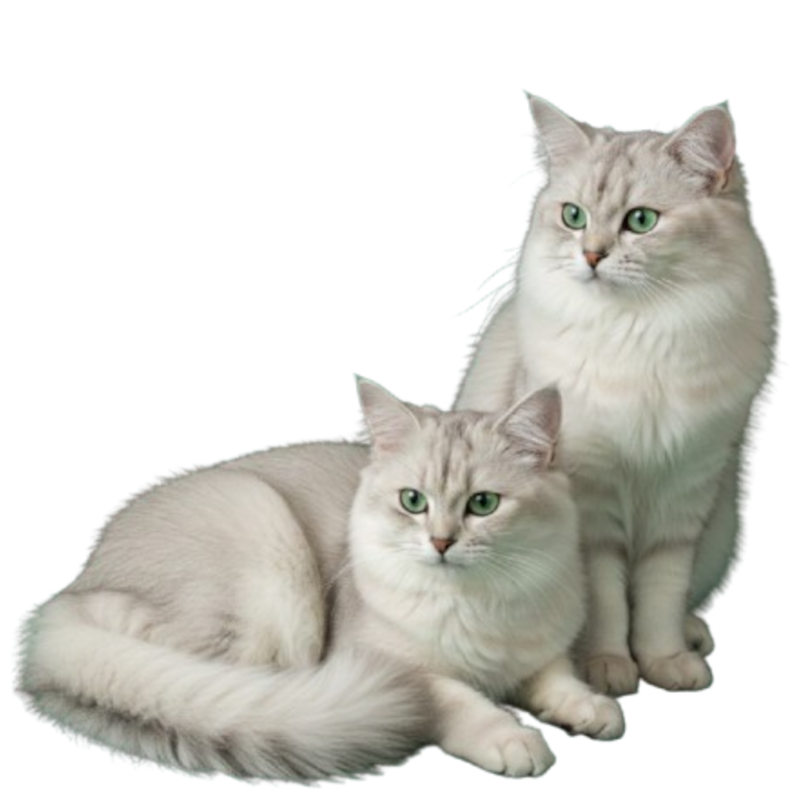
appearance
The Burmilla Longhair, sometimes referred to as the Tiffanie in specific feline registries, represents a sophisticated medium-sized domestic cat. It embodies a “foreign” physical type, merging the substantial, athletic bone structure of the Burmese with the ethereal, shimmering coat characteristics of the Chinchilla Persian. Burmilla Longhairs are defined by their soft, rounded contours and a distinctive glowing appearance created by their unique coat tipping.
Body Structure and Athleticism
The physical build of the Burmilla Longhair is deceptively powerful — they possess a firm, muscular weight that often surprises those who lift them.
- Trunk: Features a medium length with a well-rounded chest and a level topline from shoulder to hip.
- Mass: Typically falls within a range of 3kg to 6kg, maintaining a balance between elegance and sturdiness.
- Limbs: The legs are slender but supported by high-density bone. To facilitate an agile gait, the rear legs are slightly more elevated than the front.
- Feet: Small, neat, and oval in shape.
Cranial and Facial Morphology
The facial expression of the Burmilla Longhair is one of its most captivating traits, highlighted by specific “cosmetic” markings and a gentle “sweet” look.
Head Shape
- Contour: A short, blunt wedge characterized by a rounded cranium and prominent, wide-set cheekbones.
- Profile View: A visible indentation or “stop” is present at the nasal bridge, where the forehead transitions into the muzzle.
- Muzzle: Short and relatively broad, ending in a firm, well-defined chin.
Sensory Features
- Eyes: These are large, expressive, and positioned with a wide aperture. They possess an aesthetic slant toward the nose.
- Ocular Pigmentation: Luminous green is the gold standard for adults, though amber or golden hues are frequently observed during the developmental stages of Burmilla Longhairs.
- Eye Lining: A crucial breed hallmark is the dark “mascara” lining the eyelids, which matches the specific pigmentation of the coat’s tips.
- Ears: Medium-to-large in scale, these are broad at the base with soft, rounded tips and a forward-facing orientation.
Coat Characteristics and Texture
Unlike its shorthaired counterpart, the Burmilla Longhair’s fur is semi-long, fine, and exceptionally soft.
- Feel: The coat possesses a silky, delicate texture that sits close to the skin rather than standing out.
- Distribution: While the body fur is medium-long, there is a pronounced ruff around the throat and a luxurious, feathery plume on the tail.
- Volume: There is enough undercoat to provide a slight lift to the fur, but it remains thin enough to prevent heavy matting or a woolly appearance.
Pigmentation and Tipping Patterns
The Burmilla Longhair is classified as a “shaded” or “tipped” feline. The base of every hair is a pristine, silvery-white, while the outermost portion carries the pigment.
Recognized Color Variations
| Variety | Tipping Appearance |
|---|---|
| Black Silver | Stark black contrast against a bright silver base. |
| Blue Silver | Soft, slate-grey tips. |
| Chocolate Silver | Warm, cocoa-toned pigmentation. |
| Lilac Silver | Pale, dove-grey tips with a subtle lavender undertone. |
| Red / Cream | Warm apricot or ginger tipping (often termed Cameo). |
Tipping Ratios
The visual depth of the Burmilla Longhair’s coat is determined by how much of the hair shaft is colored. This can be mathematically represented as the ratio of the pigmented tip to the total hair length :
Fur Color Darkness and Tip Strength
- : “Color Power,” how dark or concentrated the fur color looks.
- : “Tip Length,” the actual amount of the hair that has color on it.
- : “Full Hair Length,” the total length of the hair from the skin to the tip.
In the Burmilla Longhair, the longer coat means is significantly higher than in the shorthair variety. If a Burmilla Longhair has a hair length of and the enzyme activity produces a pigmented tip of , the intensity is . This tipping ratio identifies the cat as a “Chinchilla” silver. If the tipping were to increase to on the same hair, the would rise to , mathematically reclassifying the coat as “Shaded”.
Color Characteristics
- Chinchilla (Tipped): Roughly of the hair is colored, resulting in a very light, sparkling effect.
- Shaded: Between and of the hair is colored, creating a darker “mantle” across the cat’s back and flanks.
Extremities and Finishing Details
- Tail: Flowing and long, tapering slightly to a rounded end. In the Burmilla Longhair, this is adorned with long, silky decorative hairs.
- Nose Leather: Typically a brick-red or dusky pink, bordered by a dark line that corresponds to the tipping color.
- Paw Pads: These match the genetic color of the cat — for example, charcoal for Black Silver, or a muted lavender for Burmilla Longhair’s Lilac Silver.
behavior
The Burmilla Longhair demonstrates a sophisticated behavioral profile that merges the inquisitive, high-energy traits of the Burmese with the more serene, observant nature of the Chinchilla Persian. Their actions are characterized by a balanced approach to domestic life, showing high adaptability and a preference for interactive environments.
Activity Cycles and Energy Regulation
Unlike high-intensity breeds that remain in constant motion, Burmilla Longhairs demonstrate a rhythmic approach to their daily energy expenditure.
- Interactive Play: They engage in vigorous play sessions, often initiating games of “fetch” or “chase.” Their movements are agile and precise, frequently involving vertical leaps.
- Settling Patterns: After a period of high activity, the Burmilla Longhair is known for a rapid transition into a sedentary state, seeking out high-contact proximity with their human companions.
- Nocturnal Tendencies: While largely diurnal, Burmilla Longhairs may exhibit the “zoomies” — sudden bursts of acrobatic running — during early morning or late evening hours.
Social Interaction and Communication
The social behavior of the Burmilla Longhair is marked by a strong desire for inclusion in household activities without being overly demanding.
Vocalization Habits
The Burmilla Longhair’s voice is generally soft and melodious. They use vocalization strategically rather than incessantly:
- Greeting Chirps: Short, high-pitched trills used when a familiar person enters a room.
- Conversational Meows: Soft utterances used to “answer” when spoken to, reflecting their Burmese ancestry.
Human-Feline Bonding Behaviors
- Shadowing: It is common for the Burmilla Longhair to follow owners from room to room, preferring to observe tasks from a nearby vantage point.
- Lapping: While they enjoy being “lap cats,” they often prefer sitting “next to” or “leaning against” their human rather than being strictly restrained.
- Retrieval: Many Burmilla Longhairs exhibit a natural instinct to carry small toys or household items in their mouths to present them to their owners.
Environmental Interaction and Intelligence
The intelligence of the Burmilla Longhair manifests in their problem-solving abilities and spatial awareness.
- Vertical Exploration: They possess a strong drive to occupy high ground. A Burmilla Longhair will often map out a path to the highest shelf or cupboard in a room.
- Tactile Investigation: They are “hands-on” cats, frequently using their paws to scoop water, open cabinet doors, or investigate the texture of new objects.
- Training Aptitude: Due to their social motivation, Burmilla Longhairs respond well to clicker training and can learn complex tasks, such as sitting on command or navigating small agility circuits.
Group Dynamics and Multi-Pet Behavior
In households with multiple animals, the Burmilla Longhair typically adopts a diplomatic role.
| Interaction Type | Observed Behavior |
|---|---|
| With Other Cats | Generally non-confrontational; they often seek out “grooming buddies.” |
| With Dogs | Usually bold and curious; they tend to stand their ground rather than flee. |
| Solitary Periods | While social, they can tolerate moderate periods of solitude if provided with “puzzle feeders” or window views. |
Hunting and Predatory Play
The predatory drive in the Burmilla Longhair is refined. They often display a “wait and pounce” strategy rather than a sustained pursuit.
The probability of a successful “pounce” () during play can be modeled as a function of the feline’s focus () and the stillness of the target ():
Odds of a Successful Toy Pounce
- : “Success Chance,” the probability of the cat catching its target.
- : “Skill Score,” the natural hunting focus and agility of the Burmilla Longhair.
- : A math constant used to show how success naturally fades in tough conditions.
- : “Distraction Level,” how much noise or chaos is in the room.
- : “Stillness Score,” how still the target is (1 is perfectly still).
- : “Movement Gap,” how much the target is wiggling or escaping.
Imagine a Burmilla Longhair stalking a feather toy. The cat has a high focus coefficient . If the toy is moving slightly () in a room with low distraction (), the success probability is . This calculates to . There is a chance of a successful catch. However, if the environment becomes chaotic (), the probability drops sharply to , illustrating why the Burmilla Longhair prefers a quiet, “refined” play environment for its decisive strikes.
In a home setting, Burmilla Longhairs show remarkable focus, often remaining motionless for several minutes before a single, decisive strike on a toy.
color
The visual hallmark of the Burmilla Longhair is its shimmering, ethereal coat, which is defined by a contrasting relationship between a pure silvery-white undercoat and delicate pigmentation at the hair tips. This specific coloration is the result of the Inhibitor gene () and the wide-band effect, creating a “sparkling” aesthetic unique to this lineage.
The Fundamental Silver-White Undercoat
Regardless of the tipping color, the base of every hair on the Burmilla Longhair must be a clean, cool silver-white.
- Clarity: Any presence of “tarnishing” — yellowish or brownish patches on the silver — is considered a deviation from the standard.
- Uniformity: The silver undercoat extends to the skin, providing a high-contrast backdrop for the pigmented tips.
Tipping and Shading Classifications
Burmilla Longhairs are categorized by the depth of color deposited on the hair shaft. This distribution determines the overall “darkness” of the cat’s appearance.
Tipped (Chinchilla)
In this variation, only the extreme tips of the hair are colored. This results in an almost white appearance with a faint, sparkling “dusting” of color.
- Ratio: Approximately of the hair shaft is pigmented.
Shaded
The color extends further down the hair, creating a more pronounced mantle of color over the back, flanks, and head.
- Ratio: Between and of the hair shaft is pigmented.
Recognized Color Palettes
The Burmilla Longhair’s color varieties are divided into specific groups based on the genetic pigment present.
Non-Red Series (Self Colors)
| Color Variety | Description of Pigmentation |
|---|---|
| Black Silver | Deep, charcoal-black tipping that provides the highest contrast against the silver base. |
| Blue Silver | Soft, slate-blue tipping with a cool, muted tone. |
| Chocolate Silver | Warm, milk-chocolate brown tipping; often appears as a rich bronze. |
| Lilac Silver | Delicate dove-grey tipping with a distinct pinkish or lavender hue. |
Red and Tortie Series
- Red Silver (Cameo): Rich apricot to deep red tipping.
- Cream Silver: Pale, cool-toned buff or cream tipping.
- Tortoiseshell Silver: A patched or mingled distribution of black/red, blue/cream, etc., over the silver base.
Facial and Peripheral Pigmentation
A defining feature of the Burmilla Longhair is the concentration of color on the face and extremities, often referred to as “makeup.”
- Eye Rims: The skin surrounding the eyes is heavily pigmented with the same color as the tipping, creating a natural eyeliner effect.
- Nose Leather: Typically a brick-red or salmon pink, but it is always outlined with the specific tipping color.
- Paw Pads: The color of the pads corresponds directly to the genetic color of the Burmilla Longhair — for example, black pads for Black Silver, or lavender-pink for Burmilla Longhair’s Lilac Silver.
- Tail Tip: The very end of the Burmilla Longhair’s tail usually carries the most concentrated pigment, matching the tipping color.
Genetic Mathematical Representation of Shading
The intensity of the perceived color can be represented by the relationship between the pigmented length and the total length of the hair :
Coat Shading Balance Score
- : “Shading Index,” a final number that describes how dark the coat is.
- : “The Total,” adding up measurements from several different hairs.
- : “Dark Part,” the length of the colored tip on a single hair.
- : “Total Length,” the full length of the white undercoat hairs.
To determine if a Burmilla Longhair is a “Chinchilla” or a “Shaded” variety, we sample three hairs from the flank. If the guard hair pigmentation is consistently and the undercoat length is , each ratio is . The summation for these samples is . In the Burmilla Longhair, a per-hair average below (th) confirms the lighter Chinchilla status, whereas an average near (th) would mathematically categorize the cat as Shaded.
In Burmilla Longhairs, this value remains significantly low compared to solid-colored cats, ensuring the “silver” identity remains the dominant visual characteristic.
compatibility
Ease of Maintenance
Rating: 3/5
Child Friendly
Rating: 5/5
Annual Cost
Rating: 3/5
Lifetime Cost
Rating: 3/5
Adaptability
Rating: 5/5
Velcro Factor
Rating: 4/5
Quietude
Rating: 4/5
Apartment Suitability
Rating: 5/5
Hypoallergenic
Rating: 2/5
Handling Tolerance
Rating: 5/5
Hardiness/Longevity
Rating: 4/5
Prey Drive
Rating: 3/5
genetics
The genetic makeup of the Burmilla Longhair is a complex interplay of dominant and recessive traits inherited from its foundation breeds: the Burmese and the Chinchilla Persian. The resulting phenotype is defined by a semi-longhair coat, a silver undercoat, and a specific pattern of pigment distribution known as “tipping.”
The Silver Undercoat: The Inhibitor Gene
The most significant genetic component of the Burmilla Longhair’s appearance is the dominant Inhibitor gene (). This gene suppresses the development of pigment in the basal part of the hair shaft.
- Genotype or : Produces the silver-white undercoat.
- Genotype : Results in a non-silver, “golden” or solid-colored cat.
- Function: In Burmilla Longhairs, the gene stops the production of phaeomelanin or eumelanin at the base of the hair, while the Wide Band () gene determines the width of the silver band.
Coat Length and Texture
The semi-longhair trait in the Burmilla Longhair is a recessive characteristic inherited from the Persian lineage.
- Locus: The Fibroblast Growth Factor 5 () gene.
- Mechanism: To manifest the longhair phenotype, a Burmilla Longhair must be homozygous recessive ().
- Carriers: Shorthair varieties (Burmillas) may carry the recessive “l” gene (), making them “variants” that can produce Burmilla Longhairs when bred together.
Pigment Distribution: Tipping and Shading
The Burmilla Longhair is characterized by the Agouti signaling protein () and its interaction with the Wide Band polygenes.
The Agouti Gene ()
Burmilla Longhairs are genetically Agouti ( or ), which allows for the expression of patterns. However, the selective breeding for “Wide Band” polygenes pushes the pattern to the very tips of the hair.
Mathematical Model of Color Intensity
The visual darkness of the coat is determined by the polygenic interaction affecting the “shading” factor (). The resulting pigment length over the total hair length is governed by:
Silver-to-Color Ratio in Long Fur
- : “Silver Fraction,” the percentage of the whole hair that actually has color.
- : “The Pigment Count,” adding up all the color from the tip down to where it stops.
- : How thick or dark the color is at any exact point.
- : “Total Hair Length,” the full measurement from root to tip.
Imagine a Burmilla Longhair with a total hair length . The pigment density is not uniform; it is darkest at the tip and fades toward the base, modeled by . If the pigmented length , we calculate the numerator: units of pigment. The Silver Fraction is then . This low value mathematically confirms the “Wide Band” effect, where the vast majority of the hair ( of its length) remains unpigmented silver-white.
In Burmilla Longhairs, the polygenes for Wide Band maximize , keeping the color restricted to the distal ends of the fiber.
Color Inheritance and the Burmese Gene
Because Burmilla Longhairs descend from Burmese stock, they often carry the Burmese Restriction gene ().
| Allele Combination | Phenotypic Effect |
|---|---|
| CC | Full color; the tipping appears saturated and dark. |
| Ccb | Full color carrier; often maintains deep pigmentation. |
| cbcb | Sepia / Burmese restriction; results in lower contrast between tipping and silver base. |
Summary of Key Alleles
The following table summarizes the typical genetic profile required for a cat to be a Burmilla Longhair:
| Trait | Symbol | Required State |
|---|---|---|
| Silver Undercoat | I | Dominant(I_) |
| Coat Length | l | Homozygous Recessive (ll) |
| Pattern | A | Dominant (A_) |
| Wide Band | Wb | Present (Polygenic) |
Eye Color Genetics
The striking green eyes of the Burmilla Longhair are a polygenic trait. While the silver gene () often correlates with green eyes in Chinchilla lineages, the Burmese background () tends toward yellow or gold. Breeding selection for Burmilla Longhairs focuses on polygenes that suppress yellow/gold tones in favor of high-intensity green pigmentation.
health
The Burmilla Longhair is generally a robust and healthy feline, benefiting from the genetic diversity provided by its foundation ancestry. However, as with any specific lineage, there are certain hereditary conditions and physiological predispositions that owners and breeders must monitor to ensure the longevity of the Burmilla Longhair.
Hereditary and Genetic Screenings
Because Burmilla Longhairs are a derivative of the Burmese and Chinchilla Persian, they are susceptible to specific autosomal recessive disorders associated with those parent breeds.
Polycystic Kidney Disease (PKD)
PKD is a significant concern inherited from the Persian side of the lineage. It involves the formation of numerous fluid-filled cysts in the renal parenchyma.
- Mechanism: Cysts are present from birth but grow over time, eventually leading to kidney failure.
- Detection: DNA testing or ultrasound of the kidneys is essential for breeding stock.
- Status: Most reputable breeders now provide a PKD-negative status for the Burmilla Longhair.
Hypokalemia (Familial Episodic Hypokalaemic Polymyopathy)
Inherited from the Burmese side, this condition is characterized by low serum potassium levels.
- Symptoms: Muscle weakness, particularly in the neck and forelimbs, often manifesting as an inability to hold the head upright.
- Genetics: It is an autosomal recessive trait; a Burmilla Longhair must inherit the gene from both parents to show clinical signs.
Physiological and Structural Considerations
The physical conformation of the Burmilla Longhair influences its day-to-day health requirements.
Dental Health and Jaw Structure
Burmilla Longhairs may occasionally inherit a slightly shortened muzzle. This can lead to dental overcrowding.
- Periodontal Disease: Due to potential overcrowding, plaque accumulates more rapidly.
- Prevention: Regular dental cleanings and high-quality abrasive diets are recommended for the Burmilla Longhair.
Dermatological and Coat Care
The semi-longhair coat of the Burmilla Longhair is fine and silky, lacking the dense woolly undercoat of a full Persian, which reduces—but does not eliminate—the risk of skin issues.
With regards to coat care, the probability of hairball formation—also known as a Trichobezoar—relative to grooming frequency and fiber length can be conceptually modeled as:
Hairball Risk Based on Fur Length and Brushing
- : “Hairball Risk,” the chance of a blockage in the stomach.
- : “Fur Length,” the average length of the cat’s silky coat.
- : “Brushing Count,” how many times a week the owner brushes the cat.
- : The “Tangle Factor,” showing that long hair tangles much faster than short hair.
For a Burmilla Longhair with a coat length of , the numerator is . If the owner grooms the cat only once a week (), the risk factor is . However, by doubling the grooming frequency to twice a week (), the risk is mathematically halved to . This illustrates why, despite the silky texture of the Burmilla Longhair’s coat, the squared length of the fibers requires a linear increase in owner intervention to keep the gastric risk low.
Weekly brushing is required to maintain Burmilla Longhair’s skin health, prevent matting and reduce the frequency of hairball formation.
Standard Health Indicators
Monitoring the baseline vitals of the Burmilla Longhair is the first step in preventative care.
| Indicator | Normal Range for the Burmilla Longhair | Notes |
|---|---|---|
| Body Temperature | 38.1°C – 39.2°C | Slightly higher than humans. |
| Heart Rate | 140 – 220 bpm | Higher when stressed at a clinic. |
| Respiratory Rate | 20 – 30 breaths/min | Should be effortless and quiet. |
| Life Expectancy | 12 – 15+ years | Many undefined reach their late teens with proper care. |
Weight Management and Metabolic Health
Burmilla Longhairs have a moderate activity level but can be prone to obesity if sedentary.
- Body Condition Scoring: It is vital to feel for the ribs beneath the Burmilla Longhair’s long fur; the coat can easily hide weight gain.
- Diabetes Mellitus: Obesity significantly increases the risk of insulin resistance. Maintaining a lean body mass is the most effective preventative measure for the Burmilla Longhair.
Allergies and Sensitivities
While not documented as a breed-specific trait, some Burmilla Longhairs may show sensitivities to specific environmental allergens or dietary proteins.
- Symptoms: Over-grooming, skin redness, or gastrointestinal distress.
- Management: Elimination diets or hypoallergenic environments are typically effective for the Burmilla Longhair.
longevity
The Burmilla Longhair is recognized for its notable durability, frequently exceeding the typical lifespan of many other long-haired domestic varieties. This extended vitality is largely credited to hybrid vigor—a result of the foundational pairing between the Burmese, a breed renowned for its long life, and the Chinchilla Persian.
Average Lifespan Statistics
Typically, a healthy Burmilla Longhair has a life expectancy ranging from 12 – 15 years. Nevertheless, it is quite common for well-cared-for Burmilla Longhairs to attain ages of 18 or even 20 years.
| Age Category | Human Equivalent (Approx.) | Developmental Phase |
|---|---|---|
| 0 – 2 Years | 0 – 24 Years | Growth and Social Maturity |
| 3 – 10 Years | 28 – 56 Years | Prime Adult Years |
| 11 – 14 Years | 60 – 72 Years | Senior Stage |
| 15+ Years | 76+ Years | Geriatric Stage |
Factors Influencing Burmilla Longhair’s Longevity
Various elements determine if a Burmilla Longhair will reach its maximum potential age, spanning from genetic factors to lifestyle management.
Genetic Inheritance and Hybrid Vigor
The Burmilla Longhair gains an advantage from a broad genetic base. By merging the robust physical nature of the Burmese with the Persian line, many of the extreme respiratory difficulties associated with brachycephalic features in Persians are reduced—fostering better breathing and a longer life.
Indoor vs. Outdoor Lifestyle
Data indicates that Burmilla Longhairs residing exclusively indoors tend to have much longer lifespans.
- Risk Reduction: Remaining indoors removes dangers such as vehicle accidents, predators, and contagious illnesses like FIV or FeLV.
- Environmental Stimuli: To avoid the physical decline associated with a sedentary lifestyle and obesity, the Burmilla Longhair needs regular mental engagement.
Aging and Physiological Decline
As the Burmilla Longhair progresses into its geriatric phase ( years), certain internal biological functions begin to slow down. This progression can be illustrated by a standard feline metabolic decline model, where the metabolic rate drops as the age increases:
Metabolic Slowdown with Age
- : “Current Metabolism,” the cat’s energy level at a certain age.
- : “Baseline Energy,” the high energy level of a young, fit adult cat.
- : A math constant for tracking how things naturally fade over time.
- : “Aging Rate,” how quickly the cat’s body naturally slows down.
- : “Years Passed” since the cat reached adulthood.
Suppose a healthy Burmilla Longhair has a baseline metabolic activity score of at age . If the breed-specific aging constant is , we can predict its metabolic efficiency at age ( years later): . This simplifies to . This result indicates that by age , the Burmilla Longhair’s metabolic rate has dropped to less than half of its youthful peak, mathematically justifying the transition to highly digestible, calorie-dense geriatric nutrition.
In this formula, represents the basal metabolic rate at physical maturity, while is the aging constant relative to the Burmilla Longhair’s specific activity level and diet.
Common Age-Related Conditions
- Chronic Kidney Disease: This remains the primary cause of death among aging Burmilla Longhairs.
- Degenerative Joint Disease: Although the Burmilla Longhair is naturally graceful, their semi-longhair fur can mask signs of muscle loss or joint inflammation in their later years.
- Cognitive Decline: Elderly Burmilla Longhairs may show behavioral shifts—such as altered sleep cycles or increased vocalization.
Proactive Longevity Management
To ensure a Burmilla Longhair lives as long as possible, a focus on geriatric prevention is vital.
Frequent Senior Checkups
Once the Burmilla Longhair reaches 10 years of age, medical screenings should occur twice a year to track thyroid and kidney performance.
Dietary Adjustments
Moving to a senior-specific diet that manages phosphorus levels while providing high-quality protein supports the Burmilla Longhair’s renal health.
Hydration Promotion
Motivating the Burmilla Longhair to drink more via water fountains or by providing wet food is essential for avoiding dehydration-related issues common in older cats.
maintenance
Proper upkeep of the Burmilla Longhair ensures the preservation of its distinctive “shimmering” coat and overall physiological health. While the Burmilla Longhair is less demanding than its Persian ancestors, its semi-longhair status requires a structured regimen of grooming, dental hygiene, and environmental enrichment.
Coat Maintenance and Grooming
The Burmilla Longhair’s coat is fine, silky, and semi-long, lacking the dense, woolly undercoat that causes severe matting in other longhair breeds. However, regular intervention is necessary to manage shedding and prevent trichobezoars—more commonly known as hairballs.
Brushing Frequency and Tools
- Weekly Routine: A minimum of two thorough brushings per week is recommended to remove dead hair.
- Shedding Seasons: During bi-annual shedding cycles, daily grooming may be required.
- Recommended Equipment: Use a stainless steel comb with medium-to-fine teeth, a soft slicker brush for finishing, and a bristle brush to distribute natural skin oils.
The Physics of Matting
Matting occurs when loose hair fibers become entangled with the growing coat. The force required to detangle a mat () increases exponentially with the hair’s surface friction coefficient () and the density of the knot ():
Tangle Complexity and Knot Force
- : “Detangling Effort,” the force needed to pull a knot apart safely.
- : A symbol meaning “is related to.”
- : A math constant showing how knots get much harder to fix as they grow.
- : “Friction Score,” how “grabby” or oily the fur is.
- : “Knot Density,” how many hairs are caught in the tangle.
In a Burmilla Longhair, the silkiness of the coat usually keeps the friction coefficient low (e.g., ). However, if grooming is neglected and the distribution of loose hairs reaches a density of , the force required to safely remove the mat () scales by . If the density doubles to due to seasonal shedding, the force required doesn’t just double—it scales to . This mathematical jump explains why a small tangle in a Burmilla Longhair’s fine coat can transform into a painful, solid mat almost overnight if the exponential threshold is crossed.
Regular grooming keeps and low, ensuring the Burmilla Longhair’s comfort.
Hygiene and Sanitation
Beyond the coat, several secondary maintenance areas require attention to support the health of Burmilla Longhairs.
Ocular and Aural Care
Due to the Chinchilla Persian heritage, some Burmilla Longhairs may experience mild tearing.
- Eyes: Gently wipe the corners of the eyes with a damp, lint-free cloth to prevent staining.
- Ears: Check weekly for wax buildup or redness. Clean only the outer ear using a veterinarian-approved solution.
Dental Hygiene
The Burmilla Longhair is prone to periodontal issues if dental care is neglected.
- Daily Brushing: Use feline-specific toothpaste to prevent tartar accumulation.
- Professional Cleaning: Annual veterinary dental assessments are essential for every Burmilla Longhair.
Nutritional Management
Maintenance of the Burmilla Longhair includes caloric monitoring to prevent obesity, which can be obscured by their voluminous fur.
| Nutrient Type | Importance for the Burmilla Longhair | Recommendation |
|---|---|---|
| Protein | Tissue repair and coat luster | High-quality animal-based sources |
| Omega-3/6 | Skin barrier health | Supplemented fish oils |
| Fiber | Hairball passage | Moderate levels for gastrointestinal motility |
Environmental and Behavioral Upkeep
Burmilla Longhairs are highly social and intelligent; their maintenance includes mental “grooming” through play and interaction.
Vertical Space
Provide cat trees to satisfy their climbing instincts.
Scratching Surfaces
Maintain claw health and protect furniture by providing both vertical and horizontal sisal posts.
Nail Trimming
Trim the tips of the claws every 2 – 3 weeks to prevent snagging on the Burmilla Longhair’s long leg furnishings.
Maintenance Schedule Summary
The following table provides a quick-reference guide for Burmilla Longhair’s care:
| Task | Frequency | Objective |
|---|---|---|
| Coat Brushing | 2 – 3 times weekly | Prevent mats and reduce shedding |
| Teeth Brushing | Daily / Every other day | Prevent gingivitis |
| Nail Clipping | Every 14 – 21 days | Prevent overgrowth |
| Ear Inspection | Weekly | Early detection of infections |
| Weight Check | Monthly | Ensure stable Body Condition Score |
measurements
| Measurement | Female | Male | ||
|---|---|---|---|---|
| Metric | Imperial | Metric | Imperial | |
height | 23 – 28 centimeters | 9 – 11 inches | 25 – 30 centimeters | 10 – 12 inches |
length | 40 – 46 centimeters | 16 – 18 inches | 45 – 51 centimeters | 18 – 20 inches |
weight | 2.7 – 4.5 kilograms | 6 – 10 pounds | 4 – 6.4 kilograms | 9 – 14 pounds |
• Height: Refers to the measurement at the withers (shoulders).
• Length: Measured from the tip of the nose to the base of the tail.
origin
The emergence of the Burmilla Longhair is a compelling example of accidental felinology and the subsequent cultivation of recessive genetic traits. Unlike ancient naturally occurring breeds, the history of Burmilla Longhairs began in the United Kingdom during the early 1980s.
The Foundational Event
The lineage of the Burmilla Longhair originated from a single unplanned mating in 1981 between two high-pedigree cats owned by Baroness Miranda von Kirchberg. The participants in this pivotal genetic intersection were:
- Sanquist: A Chinchilla Persian male.
- Faberge: A Lilac Burmese female.
While the primary result of this cross was the shorthaired Burmilla, the Burmilla Longhair emerged as a distinct variety because the Burmese parent happened to carry the recessive longhair gene from earlier, undocumented ancestors.
Genetic Segregation and the Longhair Phenotype
The appearance of the Burmilla Longhair is entirely dependent on the inheritance of the recessive longhair allele (). In the initial filial () generation, all offspring possessed short hair because the shorthair gene () is dominant. However, these individuals were carriers of the longhair trait.
Mendelian Inheritance Pattern
When two carriers are bred, the probability of producing a Burmilla Longhair—the homozygous recessive phenotype—is described by the standard Mendelian ratio of , or .
Odds of Having a Longhair Kitten
- : “Kitten Outcome,” the final chance of a kitten having long fur.
- : “Carrier Chance,” the 50% odds a parent passes on their hidden longhair gene.
- : The math way of saying “half” or “50%.”
- : The 25% (or 1 in 4) total chance for a longhair kitten.
In a breeding program for the Burmilla Longhair, suppose you mate two shorthaired Burmillas that are both known carriers of the longhair gene (). According to the formula, each parent has a probability of passing the allele to any given kitten. By multiplying these independent probabilities (), we find that . In a typical litter of kittens, this statistical model predicts that kitten will be a Burmilla Longhair (), while the remaining () will have short hair, though statistically of those will remain hidden carriers () of the longhair trait.
Breed Recognition and Development
Following the initial accidental litter, enthusiasts recognized the unique aesthetic appeal of the Burmilla Longhair’s silver-tipped, semi-long coat. The development of the breed focused on retaining the social temperament of the Burmese while highlighting the ethereal “tipping” effect inherited from the Persian.
Formal Timeline of Recognition
The transition from an accidental cross to an established pedigree was relatively rapid:
| Year | Milestone |
|---|---|
| 1981 | The first foundational cross-breeding occurs in London. |
| 1984 | The Burmilla Cat Club is established to represent both coat lengths. |
| 1990 – 1999 | International governing bodies begin to categorize the semi-longhair variety. |
| 2000 – 2009 | Major registries, such as FiFe, formally acknowledge the Burmilla Longhair. |
Distinctive Heritage Traits
The Burmilla Longhair is often referred to as a “Tiffanie” in various international registries—though it should not be confused with the American Tiffany or Chantilly breeds. Its origin is structurally defined by the “foreign” body type of the Burmese rather than the “cobby” build typical of the Persian.
The Burmese Legacy
This lineage provided the breed’s muscularity, high intelligence, and sociable personality.
The Persian Legacy
This provided the silver inhibitor gene (), the semi-long coat texture, and the characteristic sweet facial expression.
Evolution of the Gene Pool
While Burmilla Longhairs began as a crossbreed, modern breeding programs now focus on closed registries to stabilize the specific type. Current standards ensure that the Burmilla Longhair’s coat remains silky and fine. Unlike the modern Persian, it lacks a dense, mat-prone undercoat—which preserves the original appearance of the 1980s foundation cats.
temperament
The Burmilla Longhair possesses a psychological profile that is often described as a “harmonious midpoint” between its foundational ancestors. While it inherits the profound intelligence and sociability of the Burmese, it also embodies the placid, gentle serenity of the Chinchilla Persian. This blend results in a cat that is emotionally intuitive and significantly more centered than many other active breeds.
Core Temperamental Attributes
Unlike mere behavioral traits—which describe what a cat does—the temperament of the Burmilla Longhair describes the underlying nature of how it perceives and reacts to its environment.
Emotional Intelligence and Intuition
The Burmilla Longhair is notably “seismographic” in its sensitivity to the emotional atmosphere of a household. They possess a high degree of empathy, frequently seeking out their human companions specifically when they sense a change in the owner’s mood. This trait makes the Burmilla Longhair an exceptionally supportive and comforting presence.
The “Golden Mean” of Activity
The temperament of the Burmilla Longhair is defined by a balanced energy level. They do not possess the frenetic, relentless drive for movement seen in the purebred Burmese, nor do they share the extreme sedentary nature of the Persian.
- Self-Possession: They are comfortable in their own skin, capable of spending hours in quiet contemplation.
- Mischievous Undercurrent: There remains a lingering “impish” quality in their nature; they are curious and enjoy problem-solving, yet they approach life with a quiet grace rather than chaotic energy.
Social Orientation and Bonding Patterns
Burmilla Longhairs are fundamentally people-oriented, yet they maintain a distinct level of individual dignity and independence.
Multi-Member Bonding
While many cats bond exclusively with a “primary” person, the Burmilla Longhair tends to distribute its affection across the entire family unit. They view themselves as integral members of the social circle, often participating in family gatherings by sitting nearby—observing rather than demanding center stage.
Tolerance and Patience
The Burmilla Longhair is characterized by a remarkable level of patience. This makes Burmilla Longhairs exceptionally suited for households with other animals and children, as they are less likely to react with aggression or fear to the unpredictable movements of others.
| Feature | Burmilla Longhair Temperament |
|---|---|
| Sociability | High; enjoys company but respects boundaries. |
| Vocalization | Moderate; softer and more melodic than a Burmese. |
| Adaptability | Excellent; thrives in both quiet and active homes. |
| Intelligence | Very High; requires mental stimulation to avoid boredom. |
Psychological Maturity and Aging
The temperament of the Burmilla Longhair is often described as “perpetually youthful.” Even as they transition into the senior stage of life, they retain a kitten-like curiosity and a willingness to engage in play.
Cognitive Processing and Training
The Burmilla Longhair’s high intelligence combined with an eager-to-please nature means they process new information quickly. They are less “stubborn” than many breeds, often showing a willingness to learn routines or even simple tasks through positive reinforcement. This can be modeled by a simple learning curve function where the mastery of a task increases over repetitions :
Learning Mastery and Trick Success
- : “Mastery Level,” the probability the cat has learned the trick (0 to 1).
- : “Total Success,” or 100% mastery.
- : A math constant for tracking steady learning progress.
- : “Smartness Factor,” how fast the cat learns from a single lesson.
- : “Lesson Count,” the number of times you have practiced the trick.
Suppose you are training a Burmilla Longhair to “fetch” a toy. Due to their high intelligence, they have a learning constant of . To find the probability of mastery after repetitions (), we calculate: . Since , the probability of mastery is . This mastery rate after just five sessions highlights why the Burmilla Longhair is considered one of the more trainable semi-longhair breeds compared to those with a lower (e.g., would only yield a mastery in the same timeframe).
In this context, the learning constant for a Burmilla Longhair is typically higher than that of more aloof varieties.
Temperamental Suitability
Because of their specific internal makeup, Burmilla Longhairs are most fulfilled in environments where their social needs are met.
Solitude Sensitivity
The Burmilla Longhair does not thrive in isolation. Their temperament is geared toward interaction; long periods of daily solitude can lead to a quiet despondency.
Atmospheric Preference
While they are adaptable, they flourish most in homes where they are treated with the same respect and gentleness that they offer to their owners.