Burmilla Cat
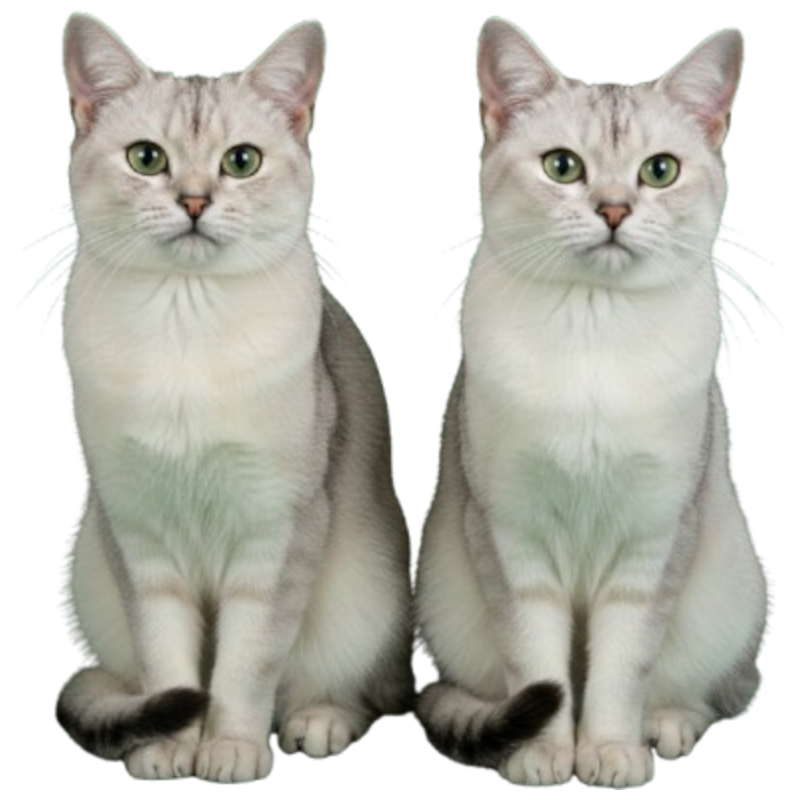
appearance
The Burmilla is a cat of striking elegance, possessing a physical stature that is often described as semi-foreign yet muscular. Its appearance is a refined blend of the athletic, compact frame of the Burmese and the luxurious, shimmering coloration of the Chinchilla Persian.
Body Structure and Stature
The Burmilla is a medium-sized feline that often carries surprising weight for its dimensions—a result of its dense bone structure and firm musculature. The Burmilla’s bodily features can be summarized as follows:
- Torso - The body is sturdy and solid with a level back and a slightly rounded chest. It typically feels much heavier than it appears to the eye.
- Limbs - The legs are slender but possess strong bone density. The rear legs are slightly longer than the forelegs, aiding in a powerful gait.
- Paws - Neat and oval-shaped, typically featuring dark paw pads that harmonize with the specific color of the coat tipping.
- Tail - Medium to long with a tapered, rounded tip, usually carried with poise.
Head and Facial Features
The facial structure of the Burmilla is one of its most defining characteristics, specifically the distinct pigment around the eyes and nose that mimics the look of cosmetic enhancement.
Cranial Geometry
The head features a gently rounded dome with ample width between the ears. When viewed in profile, there is a visible curve where the forehead meets the nose—a trait inherited from its Persian ancestry, though it is significantly less pronounced and never flat.
The Eyes and Distinctive Rimming
Burmillas are famous for their large, luminous eyes. They are set wide apart and slightly slanted. While various shades of green are the most sought-after adult eye colors, golden tones are frequently observed in kittens and younger individuals. A critical aesthetic feature is the dark pigmentation around the eyelids, which creates a look similar to being outlined in kohl.
Ears and Muzzle
The ears are medium to large, broad at the base, and finished with rounded tips. The muzzle is short and wide with a well-developed chin and a blunt finish, avoiding both the extreme flatness of the Persian and the sharp wedge of other oriental breeds.
Coat and Coloration
The Burmilla’s coat is its crowning glory, characterized by a shimmering, silvered effect that catches the light.
Coat Texture
The coat is typically short, exceptionally fine, and silky to the touch. It lies close to the body with a minimal undercoat that provides a subtle lift. A semi-longhair variant also exists, which features a more decorative, plume-like tail and a light neck ruff.
The Silver Shading and Tipping
The foundation color of the Burmilla is a pure, sparkling silver-white. The actual color is limited to the very ends of the hair shafts—a genetic trait known as tipping.
| Variety | Tipping Depth | Visual Effect |
|---|---|---|
| Shaded | Roughly 1/4 of the hair shaft | A deeper, more mantle-like color concentrated over the back. |
| Tipped (Shell) | Roughly 1/8 of the hair shaft | A delicate, sparkling shimmer distributed across the coat. |
Recognized colors for this tipping include black, blue, chocolate, lilac, red, and cream.
Quantitative Morphological Modeling
The physical balance of the Burmilla can be represented by the ratio of its body length (L) to its height at the shoulder (H). A well-proportioned Burmilla typically adheres to a ratio that maintains a sturdy yet athletic silhouette:
Body Shape and Balance Ratio
- : “Body Score,” a number showing how well-proportioned the cat’s frame is.
- : “Body Length,” measured from the shoulder to the base of the tail.
- : “Shoulder Height,” measured from the floor to the top of the shoulders.
- : The “Golden Number” for a perfectly rectangular Burmilla build.
To evaluate a show-prospect Burmilla, a breeder measures a shoulder height () of . To meet the ideal of , the target length () is calculated as . If the cat actually measures in length, its ratio becomes , mathematically indicating the cat is “too long in the back” and lacks the compact, elegant power required by the Burmilla’s breed standard.
This ratio ensures the cat retains its athletic build rather than appearing overly stocky or excessively elongated.
Distinctive Breed Markings
Beyond the tipping, Burmillas often display specific markings that signify their lineage:
- Frontal Markings - A faint, ghostly “M” marking may be visible on the forehead.
- Nose Leather - Usually a brick-red or terracotta color, outlined with a dark rim that matches the primary coat tipping.
- Pencil Lines - Delicate dark lines extending from the outer corners of the eyes toward the ears.
behavior
The behavior of the Burmilla encompasses a specific set of observable actions and habits that arise from its unique lineage. While temperament refers to their internal personality, their behavior is defined by physical activities, social interaction styles, and how they engage with their surroundings.
Activity Levels and Movement Patterns
Burmillas demonstrate a balanced activity profile, alternating between energetic athletic displays and long intervals of quiet relaxation.
Athleticism and Verticality
Retaining the agile nature of their ancestors, the Burmilla remains nimble throughout its adult life. They frequently participate in climbing and jumping, showing a distinct preference for high perches. This inclination toward vertical spaces is a hallmark of the Burmilla’s physical confidence and muscular coordination.
Play Sequences
The instinctual play cycle—including tracking, pouncing, and capturing—is very active in this breed. They are especially sensitive to moving targets and often engage in solo play by batting small objects or launching toys into the air to mimic the movement of prey.
Social and Communicative Behaviors
The way a Burmilla interacts with people and other animals reveals high social intelligence and a nuanced range of vocal expressions.
Proximity and Shadowing
A frequent behavior among Burmillas is the tendency to follow their human companions from room to room. Rather than simply being in the same house, they actively try to maintain a close physical distance. This often includes rhythmic kneading with their paws when settling down for a rest nearby.
Vocalization Patterns
While they are not as persistently loud as some other oriental varieties, the Burmilla utilizes a diverse vocabulary of sounds to signal their needs.
- Greeting Chirrups: High–pitched, short trills used to acknowledge a person’s arrival.
- Instructional Meows: A more focused, mid–range sound often used near food bowls or closed doors.
- Contentment Purring: A strong, low–frequency vibration that indicates deep relaxation and security.
Environmental Interaction and Intelligence
The Burmilla’s relationship with its physical environment shows a combination of tactile curiosity and analytical thinking.
Tactile Investigation
Burmillas often use their paws as tools to examine new textures or solve mechanical puzzles. It is quite common for a Burmilla to discover how to slide open cabinet doors or manipulate light switches through careful observation of human behavior.
Response to Direct Engagement
Because they are highly observant, Burmillas frequently exhibit behaviors such as coming when called by name or retrieving thrown items. These actions are typically motivated by the desire for social engagement rather than just food rewards.
Grooming and Maintenance Behaviors
The Burmilla is a dedicated self–cleaner. Their daily routine generally involves a comprehensive grooming session shortly after eating or following a high–energy play session.
| Behavior Category | Frequency | Functional Purpose |
|---|---|---|
| Allogrooming | Moderate | Strengthening social ties with other pets. |
| Scent Marking | High | Rubbing the face on objects to define their territory. |
| Scratching | Daily | Conditioning the claws and marking through paw glands. |
Circadian Rhythm and Sleep Patterns
The daily movement of the Burmilla follows a bimodal pattern, with activity levels peaking during the dawn and dusk hours. If we represent activity intensity as a function of time in hours, the behavior usually aligns with a specific distribution:
Daily Energy Waves and “Zoomie” Peaks
- : “Current Energy Level” at a specific hour of the day.
- : “The Total,” adding up the morning and evening activity bursts.
- : “Peak Power,” the maximum intensity of the cat’s energy burst.
- : “Peak Time,” the exact hour (like dawn or dusk) when the cat is most active.
- : “Current Hour” being measured (0 to 24).
- : “Burst Duration,” how long the high-energy window lasts.
- : A math constant used to create the natural “bell curve” of an energy spike.
Suppose a Burmilla has a dawn peak () at : AM () with an intensity and a tight window . To find the activity level at : AM (), we calculate: . If the same cat has a dusk peak () at : PM (), the sum effectively models why the Burmilla transitions from a deep mid-day nap (where ) to intense “zoomies” as the clock approaches these specific values.
In this model, identifies the peak times, typically (early morning) and (early evening). During these windows, the Burmilla is most likely to display rapid running or intense investigative behavior.
Foraging and Dietary Behaviors
In the home, Burmillas generally show a measured approach to eating, although they may develop “soliciting” behaviors if they learn that human presence in the kitchen leads to treats. They typically drink with care and often show a fascinating behavioral preference for moving water sources—such as a dripping tap—over stationary water bowls.
color
The chromatic hallmark of the Burmilla is its distinctive silver and golden shading. This visual effect is produced by a genetic interaction where the base of each hair is devoid of heavy pigment, while the tips carry a specific color—a phenomenon known as the inhibitor gene () at work.
The Foundation Colors
While the Burmilla is most famous for its silver appearance, the actual color refers to the “tipping” or “shading” found at the ends of the hair shafts.
Silver Series
In the silver variety, the undercoat is a pure, sparkling silver–white. This is the most common and recognizable version of the breed.
- Black Silver: The tipping is a dense, dramatic black.
- Blue Silver: A soft, slate–blue tipping that provides a muted, ethereal look.
- Chocolate Silver: Tipping in a warm, rich cocoa tone.
- Lilac Silver: A delicate, dove–grey tipping with pinkish undertones.
- Red and Cream Silver: Also known as “Cameo” varieties, these feature warm orange or pale apricot tipping.
Golden Series
The golden Burmilla possesses a warm, apricot or honey–colored undercoat instead of silver. The tipping colors remain the same as the silver series, but the overall effect is much warmer and sun–kissed.
Tipping and Shading Classifications
The Burmilla’s coat is classified into two primary categories based on the distribution of pigment along the hair shaft ().
Chinchilla (Shell)
In the shell or tipped variety, only the very tip of the hair contains pigment. This results in a coat that looks almost entirely white with a faint, shimmering veil of color.
Shaded
In the shaded variety, the pigment extends further down the hair shaft, creating a more defined “mantle” of color over the back, flanks, and tail.
| Variety | Pigment Ratio (P/L) | Visual Description |
|---|---|---|
| Chinchilla | ≈ 1/8 | A light, sparkling dusting of color. |
| Shaded | ≈ 1/4 to 1/3 | A distinct cloak of color over the spine. |
Facial Markings and Contrast
A critical component of the Burmilla’s color standard is the contrast provided by specific facial markings, often referred to as “makeup.”
The Eyeliner Effect
Regardless of the coat color, the skin around the eyes should be rimmed with the same color as the hair tipping. This creates a dramatic contrast against the green or golden iris.
Nose Leather and Paw Pads
The nose leather is typically a brick–red or terracotta color, but it must be outlined with a dark margin that matches the tipping. Paw pads should also correspond to the tipping color—for example, black pads for a Black Silver Burmilla.
Genetic Pigment Intensity
The intensity of the color in Burmillas can be modeled by the density of melanin granules in the hair tip. If is the density of pigment, the perceived darkness of the coat can be simplified as:
Total Color Depth in Shaded Fur
- : “Visual Darkness,” the total amount of color seen on the hair tip.
- : “The Accumulation,” adding up pigment from the very tip down to the white base.
- : “Color Density,” how thick the pigment granules are at any point.
- : “Tipping Length,” how far down the hair the color actually goes.
- : The math rule for measuring tiny changes along the hair shaft.
Compare two Burmillas: a “Chinchilla” and a “Shaded”. For both, let the pigment density be constant at units. In the Chinchilla, the tipping is very light (), so units of darkness. In the Shaded Burmilla, the tipping extends further (), so units. This four-fold increase in mathematically explains why the Shaded variety looks significantly darker despite having the exact same genetic color.
represents the length of the tipped portion of the hair. In a Chinchilla Burmilla, is minimal, whereas in a Shaded Burmilla, is significantly larger, leading to a higher value.
Disqualifying Color Traits
To maintain the purity of the breed’s aesthetic, certain color characteristics are considered faults in the Burmilla:
- Rufism: Unwanted brown or yellowish patches that appear in a silver coat, muddying the clear silver–white appearance.
- Lockets: The presence of solid white patches on the chest or groin area.
- Barring: Ghostly tabby stripes visible on the legs or tail. While these are common in kittens, they should disappear as the Burmilla reaches maturity.
compatibility
Ease of Maintenance
Rating: 5/5
Child Friendly
Rating: 5/5
Annual Cost
Rating: 4/5
Lifetime Cost
Rating: 3/5
Adaptability
Rating: 5/5
Velcro Factor
Rating: 4/5
Quietude
Rating: 4/5
Apartment Suitability
Rating: 5/5
Hypoallergenic
Rating: 2/5
Handling Tolerance
Rating: 5/5
Hardiness/Longevity
Rating: 4/5
Prey Drive
Rating: 3/5
genetics
The genomic profile of the Burmilla is a complex tapestry resulting from the accidental hybridization of the Burmese and the Chinchilla Persian. Its unique appearance—specifically the silver shaded coat—is governed by the interaction of several key loci that control pigment distribution and intensity.
The Inhibitor Gene (I)
The most defining genetic feature of the Burmilla is the Inhibitor gene, symbolized as . This is a dominant trait that suppresses the production of phaeomelanin (yellow/red pigment) in the hair shaft, leaving the base of the hair a sparkling silver–white.
- Genotype or : Produces the silver effect by inhibiting pigment at the hair base.
- Genotype : Results in a non–silver (golden or solid) coat.
In the Burmilla, the presence of the allele ensures that color is restricted to the tips of the fur, creating the “shimmer” effect.
Coat Color and Pattern Loci
The specific hue and distribution of the tipping in the Burmilla are determined by the interaction between the Agouti, Extension, and Dense loci.
The Agouti Gene (A)
The Burmilla is genetically an Agouti cat ( or ). The Agouti gene allows for the expression of the “tipped” or “shaded” pattern. In a non–agouti () cat, the coat would appear solid, though the Inhibitor gene might still produce a “smoke” effect.
The Wideband Gene (Wb)
While not yet fully mapped, the Wideband polygenetic effect is responsible for the length of the silver–white band at the base of the hair.
- In Chinchilla Burmillas, the Wideband effect is maximized, pushing the pigment to the very tip ( of the hair).
- In Shaded Burmillas, the Wideband effect is less intense, allowing pigment to occupy to of the hair shaft.
The Burmese Restriction Allele ()
One of the most significant contributions to the Burmilla’s genetics is the color restriction gene inherited from the Burmese. This is part of the albino series at the C Locus.
The Burmilla typically carries one copy of the Burmese gene (). Because the Persian ancestor usually contributes the full color allele (), the Burmilla is often . This genotype results in:
- Increased depth of eye color (intensifying the green).
- High contrast in the tipping color.
Dilution and Melanin Density
The “Dense” gene () controls the distribution of pigment granules. The Burmilla can appear in both dense and dilute forms:
| Locus | Genotype | Resulting Tipping |
|---|---|---|
| Dense | DD or Dd | Black, Chocolate, or Red |
| Dilute | dd | Blue, Lilac, or Cream |
The probability of a kitten expressing a dilute coat from two heterozygous () parents is calculated via a standard Mendelian ratio:
Probability of Having a “Dilute” (Lighter) Kitten
- : The “25% Chance” of a kitten showing a lighter color (like Blue or Lilac).
- : The “Dilute Gene,” a hidden trait for softer colors.
- : The “Double Recessive” state needed for the kitten to actually look lighter.
- : The 1-in-4 odds when both parents carry the hidden gene.
In a Burmilla breeding program, suppose you mate two “Black Tipped” parents that both carry the hidden dilute gene (). Using the Punnett square, each kitten has a in chance of being . If the litter consists of kittens, the statistical expectation suggests that kitten will express the “Blue Tipped” (dilute) phenotype, while the other () will remain “Black Tipped”, though two of those will likely continue to carry the allele for future generations.
Polygenic Modifiers and Eye Color
Eye color in the Burmilla is polygenetic, influenced by the C Locus and the selection for Chinchilla Persian traits. The goal is a vivid green, which is mathematically related to the concentration of stromal melanin and the structural scattering of light within the iris.
Rufism Modifiers
Rufism refers to polygenes that cause “tarnishing” (brownish or yellowish patches) in silver cats. Selection in Burmilla breeding aims to minimize these modifiers to maintain a clean, high–contrast silver–white undercoat.
Genetic Summary Table
| Feature | Gene/Locus | Required Alleles |
|---|---|---|
| Silver Undercoat | Inhibitor (I) | I- (Dominant) |
| Tipped Pattern | Agouti (A) | A- (Dominant) |
| Silver Base Width | Wideband (Wb) | Polygenic Influence |
| Color Intensity | Dense (D) | D- for Black/Brown; dd for Blue/Lilac |
health
The Burmilla is generally regarded as a robust and healthy feline, benefiting from the genetic diversity introduced by its foundation cross between the Burmese and the Chinchilla Persian. However, like all specialized varieties, Burmillas are predisposed to certain hereditary conditions and general feline health concerns that require proactive management.
Hereditary and Genetic Predispositions
Because of its Persian ancestry, the Burmilla carries a specific risk profile for certain renal and cardiac conditions.
Polycystic Kidney Disease (PKD)
PKD is a condition where fluid-filled cysts form in the renal parenchyma, eventually leading to kidney failure. In Burmillas, this is typically inherited as an autosomal dominant trait.
- Screening: Responsible breeders utilize DNA testing to ensure breeding pairs are negative.
- Progression: Cysts are present from birth but typically result in clinical symptoms between 7 and 10 years of age.
Hypertrophic Cardiomyopathy (HCM)
HCM is the most common heart disease in domestic cats, characterized by the thickening (hypertrophy) of the left ventricular wall. This reduces the heart’s efficiency and can lead to sudden cardiac events.
The probability of a healthy heart versus one affected by HCM can be modeled by the wall thickness over time :
Heart Wall Thickening Over Time
- : “Current Thickness,” the measurement of the heart wall (mm) right now.
- : “Starting Thickness,” the measurement from the very first check-up.
- : A math constant for tracking continuous biological growth.
- : “Growth Speed,” how fast the heart wall is thickening.
- : “Time Elapsed,” measured in years between check-ups.
Imagine a Burmilla has an initial screening at age with a healthy wall thickness . If a genetic predisposition causes a growth constant , we can predict the thickness years later (): . Since a thickness exceeding is a clinical indicator for HCM, this mathematical progression highlights why a Burmilla that appears healthy at age still requires biennial echocardiograms to catch silent changes before they become symptomatic.
Routine echocardiograms are the primary method for monitoring Burmilla’s cardiac health.
Breed-Specific Physical Considerations
The physical structure of the Burmilla influences its long-term health requirements, particularly regarding its respiratory and dental systems.
Brachycephalic Airway Syndrome
While Burmillas have a more moderate muzzle than their Persian ancestors, some individuals may exhibit shorter facial structures. This can lead to increased sensitivity to heat and occasional tear duct overflow (epiphora) due to shallow eye sockets.
Dental Health and Malocclusion
Due to the Burmilla’s slightly shortened jaw, dental crowding can occur. This increases the risk of periodontal disease.
| Condition | Frequency | Prevention/Management |
|---|---|---|
| Gingivitis | High | Daily brushing and professional scaling. |
| Resorptive Lesions | Moderate | Annual dental X-rays. |
| Plaque Accumulation | High | Dental-specific diets and water additives. |
Allergies and Sensitivities
Burmillas are known to occasionally suffer from dermatological sensitivities or neurological discomfort.
Feline Orofacial Pain Syndrome (FOPS)
Inherited likely from the Burmese side, FOPS is a condition characterized by exaggerated grooming and pawing at the mouth, often triggered by stress or teething. It is believed to be a neuropathic pain disorder involving the trigeminal nerve.
Food and Environmental Allergies
Some Burmillas may develop atopy (allergic skin disease), manifesting as miliary dermatitis. Common triggers include specific proteins or environmental pollens.
Preventive Care and Longevity
The average lifespan of a Burmilla ranges from 12 to 15 years, though many reach their late teens with proper intervention.
Weight Management
The Burmilla has a tendency toward obesity if its caloric intake is not strictly monitored, especially after neutering. Maintaining an ideal Body Condition Score (BCS) is vital to prevent secondary issues such as Diabetes Mellitus.
Age-Related Screening
As Burmillas enter their senior years (8+ years), the following diagnostic panel is recommended annually:
- SDMA Testing: For early detection of renal decline.
- Blood Pressure Monitoring: To screen for systemic hypertension.
- Thyroid Panel (T4): To check for hyperthyroidism.
longevity
The Burmilla is recognized for its notable durability, frequently surpassing the life expectancy of many other pedigree cats. This endurance is largely credited to the hybrid vigor established by its foundational crossbreeding, which merged the hardy constitution of the Burmese with the refined genetic traits of the Chinchilla Persian.
Average Lifespan Statistics
On average, a healthy Burmilla typically enjoys a life of 12 to 15 years. However, with attentive care, it is quite common for Burmillas to reach their late teens or even enter their early twenties.
| Life Stage | Age Range (Years) | Physiological Focus |
|---|---|---|
| Kitten | 0 to 1 | Physical growth and bone development |
| Young Adult | 1 to 6 | Muscle maintenance and oral hygiene |
| Mature Adult | 7 to 10 | Metabolic health and weight regulation |
| Senior | 11 to 15 | Kidney function and joint flexibility |
| Geriatric | 15+ | Cognitive function and organ preservation |
Factors Influencing Burmilla’s Longevity
Various elements determine whether a Burmilla will achieve the upper limits of its natural life. These variables span from inherited biological advantages to specific environmental management choices.
Genetic Heritage and Hybrid Vigor
The Burmilla gains an advantage from a more diverse gene pool than breeds with more restricted lineages. The original unplanned mating produced a heterosis effect, resulting in offspring with heightened vitality. By avoiding the extreme facial flattening seen in some modern Persian lines, the Burmilla maintains better respiratory function, which supports long-term health.
Indoor Lifestyle and Safety
Data suggests that Burmillas residing exclusively indoors tend to live significantly longer. This lifestyle removes many external threats, including:
- Exposure to infectious viruses.
- Traffic accidents or attacks from predators.
- Heavy parasite loads that can exhaust the immune system.
Biological Modeling of Feline Aging
The process of aging in Burmillas is not a straight line. To calculate a biological “human equivalent” age for a Burmilla that has passed its second year (), the following equation is frequently utilized:
Cat Years to Human Years Calculation
- : “Human Age,” how old the cat is in human terms.
- : The “Maturity Base,” the human age equivalent reached by the cat’s 2nd birthday.
- : “Actual Age,” the cat’s real age in calendar years.
- : “Adult Years,” the years lived after the initial 2-year growth spurt.
- : The “Steady Aging” multiplier (4 human years for every 1 cat year).
Consider a senior Burmilla that is years old (). To find its human biological equivalent, we subtract the first two years of rapid growth: . We then multiply these “adult” years by the aging constant: . Finally, we add the base maturity value: . This calculation reveals that a -year-old Burmilla is biologically comparable to a -year-old human, highlighting why diagnostic screenings for kidney function and joint health become mathematically imperative at this stage.
Based on this model, a 15-year-old Burmilla is biologically similar to a 76-year-old human, emphasizing the necessity for specialized geriatric attention during the final third of their life.
Common Late-Life Challenges
As Burmillas grow older, their natural resilience begins to fade, leading to typical age-related conditions that can influence their quality of life.
Renal Decline
Chronic Kidney Disease (CKD) stands as the primary cause of mortality among senior Burmillas. Tracking the Glomerular Filtration Rate (GFR) and monitoring urine protein levels are critical as they advance in age.
Cognitive Dysfunction
Geriatric Burmillas may develop signs of feline cognitive dysfunction, which mirrors dementia in humans. Typical indicators include increased vocalization during the night, general disorientation, and shifts in social behavior.
Strategies for Extending Life Quality
To help a Burmilla reach its maximum potential age, owners should prioritize three main pillars of wellness:
- Nutritional Precision: Implementing diets designed for seniors with restricted phosphorus levels protects renal health and manages metabolic shifts.
- Hydration Management: Promoting water consumption through fountains lowers the risk of urinary crystals and supports vital kidney perfusion.
- Twice-Annual Senior Screenings: Detecting changes in blood chemistry and systemic health before physical symptoms become apparent is crucial for early intervention.
maintenance
The Burmilla is a medium-maintenance feline that balances the silky, low-tangle properties of the Burmese coat with the density of the Persian. While they do not require the intensive daily grooming of a longhaired breed, their unique silver-tipped coat and structural heritage necessitate a consistent care regimen to maintain optimal health and appearance.
Coat Care and Grooming
The primary goal of Burmilla’s grooming is the removal of dead hair from the dense undercoat to prevent matting and reduce the ingestion of fur during self-grooming.
Brushing Frequency and Technique
Because the Burmilla possesses a short but thick double coat, it requires a minimum of one to two thorough brushings per week. During seasonal shedding periods, this frequency should increase to daily sessions.
- Tools: A stainless steel comb or a soft slicker brush is ideal for penetrating the undercoat without damaging the delicate silver tipping.
- Technique: Brush in the direction of hair growth, paying close attention to the “trousers” (hind legs) and the base of the tail where the fur is densest.
Bathing Requirements
Under normal conditions, Burmillas rarely require bathing. However, a bath every few months can help maintain the clarity and “shimmer” of the silver coat by removing accumulated skin oils that can cause the fur to look dull or “tarnished.”
Ocular and Facial Hygiene
Due to the Burmilla’s heritage, some individuals may have slightly shortened tear ducts or shallow eye sockets, leading to tear staining or debris accumulation.
Eye Cleaning
Daily inspection of the eyes is recommended. If discharge is present, it should be gently wiped away using a soft, damp cloth or a saline-saturated cotton round. This prevents the oxidation of tears, which can stain the white undercoat of the face.
Dental and Aural Maintenance
Routine maintenance of the teeth and ears is essential for preventing systemic inflammatory issues.
Oral Hygiene Regimen
The Burmilla can be prone to gingivitis. A daily brushing routine is the gold standard, but a minimum of three times per week is necessary to significantly reduce plaque index ().
Plaque Reduction Calculation
If is the initial plaque level and is the reduction rate per cleaning, the remaining plaque after cleanings can be modeled as:
Plaque Removal and Dental Health Progress
- : “Final Plaque,” the amount left after a week of cleaning.
- : “Starting Plaque,” the buildup before any brushing or treatment.
- : “Cleaning Efficiency,” the percentage of plaque removed in one session.
- : “The Remainder,” the plaque that survives a single cleaning.
- : “Number of Sessions,” the total count of daily cleanings.
Consider a Burmilla with a moderate plaque score of units. If a enzymatic dental gel and brushing routine provides a reduction rate of () per session, we can calculate the remaining plaque after one week (): . This simplifies to . After 7 days, the plaque level is reduced to approximately units. This demonstrates that for the Burmilla, consistency in is more effective for long-term oral health than a single high-intensity cleaning.
Ear Cleaning
Check ears weekly for wax buildup or redness. Clean only the visible part of the ear canal using a veterinarian-approved cleanser if debris is present.
Physical Activity and Environmental Enrichment
Burmillas are intelligent and moderately active. Their maintenance includes “mental grooming” to prevent boredom-induced behaviors.
| Activity Type | Frequency | Benefit |
|---|---|---|
| Interactive Play | 15–20 mins daily | Cardiovascular health and weight management |
| Puzzle Feeders | Constant access | Mental stimulation and slowed ingestion |
| Vertical Space | Perching areas | Stress reduction and security |
Nutritional and Weight Management
Maintaining a lean body condition is critical for the Burmilla. They have a moderate metabolism but can become sedentary as they age.
Caloric Titration
The Resting Energy Requirement (RER) for a Burmilla can be calculated based on body mass () in kilograms:
Resting Energy Requirement (RER)
Daily Calorie Needs for Rest and Play
- : “Baseline Calories,” the energy needed just to stay alive while napping.
- : A standard math constant for animal metabolism.
- : “Body Weight” in kilograms (kg).
- : “Metabolic Factor,” a rule that accounts for how body size affects energy.
For an elegant adult Burmilla weighing , we first calculate the baseline RER: . Since , the RER is . To find the Total Daily Energy Requirement (DER), we apply an Activity Factor (). Because the Burmilla is known for playful “zoomies” interspersed with Persian-like relaxation, an of is common: . If a standard cup of kibble provides , this cat requires approximately cups per day to maintain its athletic silhouette.
Caregivers should adjust the total daily intake based on an Activity Factor (), typically ranging from 1.0 for sedentary cats to 1.4 for active adults.
Hydration Support
Given the potential for renal concerns in lineages with Persian influence, providing multiple water sources—preferably circulating fountains—is a vital part of daily maintenance to encourage high fluid throughput.
measurements
| Measurement | Female | Male | ||
|---|---|---|---|---|
| Metric | Imperial | Metric | Imperial | |
height | 20 – 25 centimeters | 8 – 10 inches | 25 – 30 centimeters | 10 – 12 inches |
length | 36 – 46 centimeters | 14 – 18 inches | 41 – 51 centimeters | 16 – 20 inches |
weight | 2.7 – 4.5 kilograms | 6 – 10 pounds | 3.6 – 5.4 kilograms | 8 – 12 pounds |
• Height: Refers to the measurement at the withers (shoulders).
• Length: Measured from the tip of the nose to the base of the tail.
origin
The history of the Burmilla stands as a compelling chapter in feline genetics, arising not from a calculated breeding strategy, but from a chance encounter in the United Kingdom during the early 1980s. This serendipitous event produced a feline that merged the muscular grace of the Burmese with the ethereal, silver-tipped aesthetics of the Chinchilla Persian.
The Serendipitous Meeting of 1981
The foundation of the Burmilla’s lineage occurred in the London residence of Baroness Miranda von Kirchberg. The breed’s origin is traced back to an unplanned mating between two specific cats:
- Sanquist: A male Chinchilla Persian.
- Faberge: A female Lilac Burmese.
In 1981, while both cats were awaiting their intended partners, they were accidentally permitted to occupy the same area. The resulting litter consisted of four female kittens, each displaying a striking and previously unseen look: a short, dense coat characterized by a shimmering silver undercoat and dark, delicate tipping.
Genetic Analysis of the Foundation Cross
The initial pairing between a Burmese and a Persian represents a significant synthesis of two distinct feline morphotypes. The resulting generation manifested specific genetic characteristics that defined the early Burmillas.
Phenotypic Expression
The kittens displayed a “shaded” or “tipped” coat pattern, which functions as a genetically dominant trait. In the Burmilla, this is controlled by the Inhibitor gene (), which actively suppresses phaeomelanin. The mathematical likelihood of these traits emerging in the first generation of such a cross is high due to the dominance of the allele:
Guaranteeing the Silver Color Trait
- : “Trait Certainty,” the 100% chance of silver kittens.
- : Total genetic certainty (100%).
- : “Pure Silver DNA,” when a parent has two copies of the silver gene.
- : The “Inhibitor Gene,” which blocks yellow color to create the silver look.
In the history of the Burmilla, consider the foundational cross between a Chinchilla Persian and a Burmese. If the Chinchilla parent is homozygous dominant for the Inhibitor gene () and the Burmese parent is non-silver (), every single kitten in the litter inherits one allele. Mathematically, , meaning of the first-generation (F1) kittens will express the signature silver-white undercoat of the Burmilla, regardless of the other parent’s color.
Structural Synthesis
The Burmilla inherited a structural compromise between its two parent breeds:
- From the Burmese: A sturdy, athletic physique and a well-rounded chest.
- From the Persian: A broader cranial structure and more substantial bone density.
Developmental Milestones and Breed Recognition
Following the birth of the inaugural litter, Baroness von Kirchberg identified the potential for a formal new variety. The transition of Burmillas from an accidental occurrence to a standardized breed happened rapidly.
| Year | Milestone |
|---|---|
| 1981 | Birth of the foundational accidental litter in London. |
| 1983 | Establishment of the Burmilla Cat Club to promote the new variety. |
| 1984 | Preliminary recognition granted by the Governing Council of the Cat Fancy (GCCF). |
| 1990 | The Burmilla achieved Championship status in various international registries. |
| 1994 | Official recognition by the Fédération Internationale Féline (FIFe). |
Establishing the Breed Standard
To ensure the Burmilla remained distinct from its ancestors, early enthusiasts focused on stabilizing the “sparkle” of the fur and the characteristic “eyeliner” effect—a dark pigment outlining the eyes, nose, and lips.
The Role of Selective Breeding
Unlike the initial hybrids, later generations of Burmillas were bred to harmonize their temperaments. Breeders aimed for the social and demanding nature of the Burmese while softening it with the calm, easygoing personality of the Persian. This created a social feline that is less vocal than a pure Burmese but considerably more active than a typical Persian.
Color Expansion
While the first Burmillas were silver shaded blacks, the breed now includes various colors inherited from its Burmese lineage, such as chocolate, blue, lilac, and red. All of these variations are strictly maintained within the specific tipped or shaded silver pattern.
temperament
The temperament of the Burmilla represents a psychological fusion derived from its two foundational ancestors. It occupies a distinctive middle ground in feline personality theory, possessing a disposition that is neither as hyper-stimulated as the Burmese nor as sedentary as the Chinchilla Persian.
The Hybrid Personality Matrix
The Burmilla’s internal nature is frequently characterized as a state of active equanimity. This suggests that the cat maintains a high threshold for environmental stress while simultaneously preserving a curious and engaged intellect.
| Temperamental Trait | Source Influence | Manifestation |
|---|---|---|
| Social Affiliation | Burmese | Deep-seated desire for human proximity and bonding |
| Emotional Stability | Persian | Significant resistance to startling; composed in new settings |
| Intellectual Curiosity | Burmese | Strong investigative drive without destructive habits |
| Adaptability | Combined | High tolerance for multi-pet homes and children |
Psychological Equilibrium and Emotional Tone
The emotional frequency of Burmillas is defined by a sense of gentle playfulness. Unlike more demanding breeds, the Burmilla does not typically utilize persistent vocalization to influence its environment; instead, its temperament is marked by a quiet and observant presence.
The Concept of Social Threshold
In behavioral psychology, the social threshold refers to the specific point at which an animal becomes overstimulated or chooses to retreat from interaction. For Burmillas, this threshold is mathematically higher than many other pedigree breeds. We can represent the probability of a positive social response () as a function of environmental stimuli () and the breed’s intrinsic resilience constant ():
Social Confidence and Environment Stress
- : “Confidence Level,” the probability the cat stays calm and friendly (0 to 1).
- : The goal for a 100% stable and happy interaction.
- : A math constant used to create the “S-curve” of behavioral comfort.
- : “Resilience,” the cat’s natural ability to handle noise or handling.
- : “Stress Level,” the amount of noise or chaos in the environment.
- : “The Comfort Gap,” how far the environment is from the cat’s limit.
Consider a Burmilla with a high resilience constant . In a busy household with a stimulus score of , the probability of a positive social response is . This means there is a chance the Burmilla remains engaged and relaxed. In contrast, a more timid breed with a facing the same environment would have a . The Burmilla’s higher value mathematically ensures they thrive in active family environments where other cats might retreat.
In this model, the substantial value of the Burmilla ensures that remains elevated even when environmental stimuli—such as a bustling or loud household—increase.
Affectionate Disposition without Neediness
A hallmark of the Burmilla’s temperament is the balanced manner in which it expresses affection. While the Burmese heritage provides a desire to remain in the same vicinity as their human companions, the Persian influence grants a comfortable degree of independence.
Relational Dynamics
- The Observer Nature: Burmillas often prefer to monitor household activities from a nearby vantage point rather than insisting on being the absolute center of attention.
- Quiet Devotion: Their temperament is defined by a constant, steady companionship rather than sporadic or intense bursts of attention-seeking behavior.
Resilience and Stress Tolerance
Burmillas are recognized for their psychological robustness. They are rarely characterized as flighty or anxious. This stable temperament makes them particularly well-suited for families where the home environment might be busy or unpredictable.
Interaction with Other Species
The Burmilla’s non-confrontational nature allows it to integrate smoothly into existing social groups. Their internal hierarchy is generally fluid; they do not typically seek dominance, nor are they easily intimidated, making them excellent companions for households with dogs or other cats.
Cognitive Profile
While temperament is distinct from raw intelligence, the two are linked in how the Burmilla processes its surroundings. Their temperament is characterized by a problem-solving calm. When faced with a closed door or a hidden toy, the Burmilla tends to approach the obstacle with methodical patience rather than immediate frustration.
Developmental Consistency
The temperament of the Burmilla tends to remain remarkably stable from adolescence through the senior years. While their physical energy levels may decline according to standard feline aging models, their core disposition—that signature blend of curiosity and serenity—remains the hallmark of the breed.