Burmese Cat
appearance
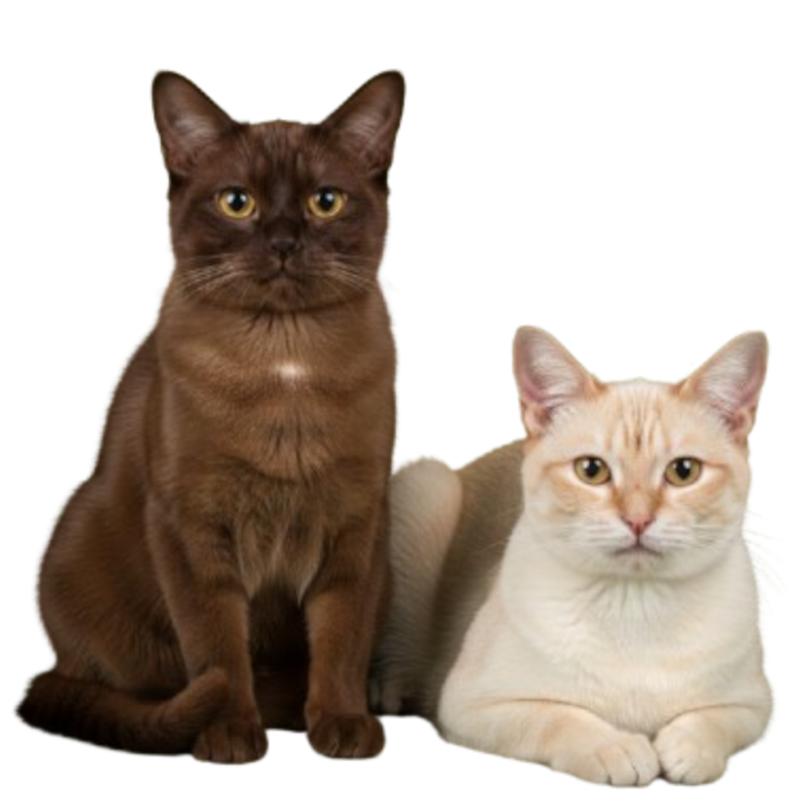
The Burmese is famously characterized by a physical paradox—it possesses a dense, heavy body hidden beneath a delicate, shimmering coat. This combination gives the Burmese its reputation for being far weightier than its medium-sized frame would initially suggest.
Body Structure and Conformation
The physical build of the Burmese emphasizes strength and balance. It is a compact animal with a sturdy skeletal system and highly developed muscle groups.
Weight and Density
While Burmeses are not oversized in terms of height or length, their physical density is remarkable. When lifted, the Burmese feels solid and substantial—a trait that is considered a primary hallmark of the breed’s quality.
Torso and Limbs
- Chest: The rib cage is wide and rounded, providing a powerful appearance to the Burmese’s front profile.
- Back: The topline remains straight from the shoulders down to the hips.
- Legs: The limbs are proportional to the body’s length, with the rear legs being marginally longer than the forelegs.
- Paws: The feet are compact and oval-shaped.
- Tail: The tail is straight, of moderate length, and concludes in a rounded tip.
Head and Facial Features
While regional variations exist between American and European breeding lines, all Burmeses share a specific facial geometry that conveys an open and alert expression.
Skull and Muzzle
The skull of the Burmese is noticeably rounded, lacking any flat surfaces or sharp angles. The muzzle is short and broad, blending smoothly into the full contours of the cheeks. A visible “break” or indentation in the bridge of the nose is a defining characteristic of the profile.
Eyes and Ears
- Eyes: These are set wide apart and are quite large. The bottom of the eye follows a rounded curve, while the top has a slight slant toward the nose. Shades range from a soft yellow to a deep, luminous gold.
- Ears: The ears are medium in size and positioned toward the sides of the head. They are wide at the bottom and rounded at the top, typically tilting slightly forward.
The Coat and Texture
The fur of the Burmese is unique among domestic felines for its extreme brevity and close-lying nature.
- Texture: The hair is very fine and feels similar to satin or silk when touched.
- Sheen: A healthy Burmese exhibits a natural luster that highlights the underlying muscle movement.
Coloration and Shading
The unique coat color of the Burmese is produced by the Burmese gene, a specific mutation that limits pigment production in warmer areas of the body while intensifying it at the extremities.
This temperature-dependent pigmentation can be modeled as a function of the enzyme tyrosinase, which becomes more active as the body surface temperature decreases:
How Skin Heat Controls Fur Color
- : “Color Power,” the speed at which the cat’s body makes dark pigment.
- : The “Flip Rule” (as the skin gets cooler, the color power gets stronger).
- : “Skin Temperature,” measured in degrees Celsius.
In a Burmese, the color-making enzyme is heat-sensitive. On the cat’s warm belly (°C), the “Flip Rule” keeps the color power low, leading to a lighter “sable” body. However, on the cool ears (°C), the power jumps up, creating dark pigment. This is why the Burmese’s face and paws are much darker than its back, even though the DNA instructions are the same everywhere.
The face, ears, and tail exhibit slightly darker shading than the main torso.
Primary Color Varieties
| Variety | Visual Description |
|---|---|
| Sable | A deep, warm espresso brown with rich undertones. |
| Champagne | A soft, warm beige reminiscent of honey. |
| Blue | A cool, medium gray with subtle pewter shading. |
| Platinum | A delicate pale gray with hints of cream or fawn. |
Summary of Physical Standard Characteristics
| Feature | General Standard |
|---|---|
| Size | Medium-sized frame |
| Build | Muscular and cobby |
| Eye Color | Various shades of Gold/Yellow |
| Coat Length | Extremely short and fine |
| Weight | Significant for its size (8-15 lbs) |
behavior
The behavior of the Burmese is defined by extreme physical vitality, intricate social structures, and an atypical level of engagement with its surroundings. Unlike many domestic felines that exhibit sedentary tendencies, the Burmese maintains a high-functioning, interactive behavioral profile throughout its life.
Social and Interpersonal Behaviors
The social ethology of the Burmese is driven by a profound need for physical proximity and interpersonal connection, manifesting in consistent daily rituals.
Proximity Seeking and Shadowing
Burmeses frequently engage in “shadowing,” a behavior where they maintain a tight radius around their primary human caregiver. This is an active form of companionship; the Burmese will often interrupt stationary human tasks to demand direct tactile interaction.
Allogrooming and Communal Resting
In a home with multiple animals, the Burmese usually acts as the social anchor. They frequently start allogrooming sessions—mutual cleaning—with other residents. When resting, the Burmese rarely chooses isolation, preferring to sleep in physical contact with other Burmeses or their human family.
Locomotion and Predatory Play
The Burmese is a kinetic animal whose behavioral repertoire emphasizes speed, agility, and a preference for high-altitude vantage points.
Vertical Exploration
The Burmese possesses a biological drive to seek height. Observations indicate that Burmeses will prioritize the highest available surface in a room—such as door frames or cabinet tops—to survey their environment.
Object Retrieval and Interactive Play
Distinct from many breeds that prefer solitary hunting simulations, the Burmese often initiates “fetch” cycles. They will bring specific items to their owners to prompt a toss-and-retrieve sequence. This cycle often repeats for long durations () until the human participant ends the interaction.
Vocal Communication and Signalization
Vocalization in the Burmese is a functional tool used for environmental manipulation rather than a simple reflexive response to stimuli.
- Request Vocalization: A signature raspy, mid-range tone used to signal specific needs like food or assistance with a closed door.
- Chirping and Trilling: These sounds are typically reserved for moments of predatory excitement or when observing outdoor stimuli.
- Greeting Staccatos: Short, rhythmic sounds delivered immediately upon a human entering the Burmese’s immediate space.
Investigative and Cognitive Behaviors
The high intelligence of the Burmese results in investigative techniques that mirror basic engineering principles.
Tactile Probing
The Burmese uses its front paws with a degree of dexterity similar to hands. They probe gaps, test the weight of objects by nudging them, and explore textures to satisfy their sensory curiosity.
Replicative Problem Solving
Burmeses are known for observing human behaviors and attempting to copy them to achieve a goal. This often results in the Burmese learning to depress levers, rotate knobs, or manipulate cupboards.
Behavioral Energy Expenditure
The daily cycle of the Burmese involves explosive bursts of activity followed by periods of deep recuperation. The metabolic energy expenditure () during one of these high-intensity activity bursts can be modeled over time ():
Total Energy Burned During a “Zoomie” Burst
- : “Total Energy,” the total amount of fuel (Joules) used during playtime.
- : “The Tally,” adding up every bit of effort from the start to the end of the run.
- : “Instant Power,” how hard the cat is pushing at any exact second.
- : “Time Slice,” the tiny moments that make up the whole activity.
Consider a Burmese engaging in a “zoomie” session lasting seconds. If their power output follows the function , the total energy is the area under that curve. Calculating from start to finish: . Burning over in just one minute explains why a Burmese often goes from high-speed sprinting to a deep, floppy nap in seconds.
Behavioral Summary Table
| Behavior Category | Frequency | Typical Manifestation |
|---|---|---|
| Social Proximity | Constant | Shadowing and constant lap-seeking. |
| Verticality | High | Persistent climbing of furniture and doors. |
| Object Retrieval | Frequent | Spontaneous games of fetch with owners. |
| Vocal Signaling | Persistent | Direct, raspy communication of desires. |
| Manual Dexterity | High | Manipulation of latches and household objects. |
Environmental Impact on Behavior
Due to the active nature of the Burmese’s mind, a lack of stimulation can lead to displacement behaviors—such as over-vocalization. To maintain the Burmese’s psychological health, owners must provide a complex environment featuring vertical structures, cognitive puzzles, and frequent social engagement.
color
The pigmentation of the Burmese is a subject of significant biological interest. It is characterized by a unique form of partial albinism known as the sepia pattern, which creates a rich, saturated appearance with subtle, temperature-dependent variations in tone.
The Genetic Foundation of Burmese Color
The specific color distribution in Burmeses is controlled by the Burmese gene, represented by the symbol . This gene exists as an allele at the albino locus; it is recessive to the gene for full color () but shares a codominant relationship with the Siamese gene ().
Temperature-Sensitive Pigment Expression
The allele is responsible for producing a version of tyrosinase—the enzyme essential for creating melanin—that is sensitive to heat. This enzyme becomes more active in cooler environments and less active in warmer ones.
The density of melanin () across the Burmese’s body is inversely related to the skin’s surface temperature ():
Temperature vs. Fur Darkness
- : “Darkness Level,” how much black or brown pigment is in each hair.
- : The “Scaling Rule,” which decides how fast the pigment grows.
- : The “Cooling Factor” (a higher number means a cooler surface).
- : The “Surface Heat” of the skin at a specific spot on the body.
In a Burmese, let’s compare the warm torso (°C) to the cool ear tip (°C). On the torso, the “Cooling Factor” is small (), leading to a lighter “sable” color. On the ear, the factor is larger (). Because the pigment rule responds to this higher number, the Burmese’s ear produces much more color, making the extremities look darker.
This biochemical process ensures that the “points”—the cooler areas of the body such as the face, ears, paws, and tail—develop the darkest pigment, while the warmer torso remains a lighter shade.
Primary Color Varieties
Modern breed standards recognize four central color divisions. Each variety is valued for its depth and the absence of any tabby markings or white spotting.
Sable
Sable is the foundational color for the Burmese. It appears as a deep, warm espresso. In this variety, the darker points blend almost imperceptibly into the slightly lighter, dark-brown coat of the main body.
Champagne
The Champagne Burmese presents as a warm honey-beige. The dorsal area usually displays a soft cocoa-tan hue, which transitions into a lighter cream on the underside. The extremities are shaded with a distinct chocolate-brown.
Blue
Distinct from the cool, steely blue seen in other breeds, the Blue Burmese is characterized by a medium gray coat featuring warm fawn undertones. This warmth is a direct result of the specific sepia genetic background.
Platinum
The Platinum variety is a delicate, pale silvery-gray. The main body remains a light cream, while the points exhibit a slightly darker, frosty lavender-gray tone.
Physical Characteristics of the Coat
The appearance of the Burmese’s color is enhanced by the physical properties of its fur. Because the hair is remarkably short and lies flat against the skin, the pigment appears exceptionally smooth and radiant.
Shading Gradient
The transition between the darker extremities and the body color is much more gradual in Burmeses than in other pointed breeds.
Ocular Harmony
To meet breed standards, the coat color is typically paired with eye colors that range from yellow to a deep, luminous gold.
Comparative Color Intensity Table
The following table details the specific pigment characteristics for the four primary varieties:
| Variety | Torso Tone | Point Tone | Nose Leather | Paw Pads |
|---|---|---|---|---|
| Sable | Deep Brown | Espresso | Dark Brown | Brown |
| Champagne | Golden Tan | Chocolate | Cinnamon | Warm Pink-Tan |
| Blue | Warm Gray | Slate Gray | Slate Gray | Slate Gray |
| Platinum | Pale Silver | Lavender-Gray | Lavender-Pink | Lavender-Pink |
Maturation and Color Development
It is a notable trait that Burmese kittens are born with much lighter coats than they will have as adults. As a Burmese grows, its pigment darkens and the contrast between the points and the body often softens. The final, rich “sepia” look usually takes between 1 and 2 years to fully develop.
compatibility
Ease of Maintenance
Rating: 5/5
Child Friendly
Rating: 5/5
Annual Cost
Rating: 4/5
Lifetime Cost
Rating: 3/5
Adaptability
Rating: 4/5
Velcro Factor
Rating: 5/5
Quietude
Rating: 2/5
Apartment Suitability
Rating: 4/5
Hypoallergenic
Rating: 2/5
Handling Tolerance
Rating: 5/5
Hardiness/Longevity
Rating: 5/5
Prey Drive
Rating: 3/5
genetics
The biological makeup of the Burmese is defined by a rare allelic series at the albino locus, which produces the hallmark “sepia” phenotype. This genetic blueprint determines not only the saturation of the coat but also the structural development and specific health profiles of the breed.
The C Locus and the Burmese Allele
The most defining genetic characteristic of the Burmese is the allele, located at the Color (C) locus. This region regulates the production of tyrosinase, the primary enzyme required for synthesizing melanin.
Hierarchy of Dominance
Within the feline C locus, the allele occupies a specific position in the hierarchy:
- (Full Color): Completely dominant; results in total pigment expression.
- (Burmese): Recessive to , but shares a codominant relationship with .
- (Siamese): Responsible for the pointed pattern; codominant with .
- (Albino): The most recessive allele; results in a complete lack of pigment.
The Tonkinese Genotype
When a Burmese () is bred with a Siamese (), the resulting offspring inherit one allele from each parent (). This specific genetic combination creates the “Mink” phenotype, which is the standard for the Tonkinese breed.
Thermolability and Pigment Synthesis
The allele encodes a thermolabile form of tyrosinase. In Burmeses, this enzyme functions optimally at lower temperatures, which causes pigment to concentrate at the cooler extremities of the body.
Mathematical Model of Enzyme Activity
The relationship between ambient temperature () and enzyme functionality () can be described by a decay function where represents the point of enzyme denaturation:
The Heat Limit for Making Color
- : “Current Color Production,” how much pigment is being made right now.
- : “Maximum Darkness,” the darkest the fur could possibly get.
- : A math constant used to show how biology naturally fades or grows.
- : “Fade Speed,” how quickly color disappears as the cat gets warmer.
- : “Base Heat,” the normal temperature of the surrounding skin.
- : “The Cutoff,” the high temperature where the color-maker stops working entirely.
In a Burmese, the color-maker is quite tough (). At a warm °C, it still works at of its max power. This is why the Burmese looks mostly solid-colored. In contrast, a Siamese has a much higher “Fade Speed” (), meaning its color-maker drops to just power at the same heat. This math explains why the Burmese is dark all over while the Siamese is creamy-white on its warm body.
Because the tyrosinase in the Burmese is more heat tolerant than the Siamese version, the resulting contrast between the torso and the points is much softer, creating the characteristic solid appearance of the Burmese’s coat.
The Dilution Gene (D Locus)
The specific color varieties of the Burmese are determined by the interaction between the primary pigment genes and the dilution gene ().
- Sable and Champagne: These varieties carry the dominant allele, allowing for dense pigment distribution.
- Blue and Platinum: These varieties are the result of the recessive genotype, which causes pigment granules to clump, creating a lighter, “diluted” visual effect.
Genetic Combinations for Standard Colors
| Phenotype | B Locus (Brown) | D Locus (Dilution) |
|---|---|---|
| Sable | B/B or B/b | D/D or D/d |
| Champagne | b/b | D/D or D/d |
| Blue | B/B or B/b | d/d |
| Platinum | b/b | d/d |
Morphological Genetics
The muscular, “cobby” frame of the Burmese is a polygenic trait, meaning it results from the cumulative effect of various genes governing bone density and muscularity.
Craniofacial Development
Differences in head shape among different lines of Burmeses are the result of selective breeding for specific skeletal structures. In certain populations, a craniofacial abnormality known as the “Burmese Head Defect” can occur. This is inherited as an autosomal recessive trait, meaning a kitten must inherit the mutant allele from both parents to express the condition.
Hereditary Health Profiles
Breeders utilize genetic screening to manage several recessive conditions that can occur within Burmese populations.
Hypokalemia
A condition involving periodic muscle weakness due to low potassium levels, linked to a mutation in the WNK4 gene.
GM2 Gangliosidosis
A rare lysosomal storage disorder caused by mutations in the HEXB gene.
Blood Groups
While the majority of the population is Type A, the presence of the allele requires careful management of breeding pairs to prevent neonatal complications.
Summary of Genetic Markers
| Trait | Genetic Locus | Inheritance Mode |
|---|---|---|
| Sepia Phenotype | C (Color) | Homozygous Recessive (cbcb) |
| Dilute Colors | D (Dilute) | Homozygous Recessive (dd) |
| Hypokalemia | WNK4 | Autosomal Recessive |
| Craniofacial Traits | ALX1 (associated) | Autosomal Recessive |
health
The Burmese is typically a resilient and long-lived companion, with many individuals reaching 15 to 20 years of age. However, the unique developmental history of the Burmese has resulted in a predisposition toward certain hereditary conditions that require specialized veterinary awareness.
Hereditary and Genetic Conditions
Modern breeding practices emphasize genetic transparency, using DNA screening to manage and reduce the occurrence of ancestral health issues within the Burmese population.
Hypokalemic Polymyopathy
Commonly referred to as Burmese Hypokalemia, this is an autosomal recessive ailment that causes serum potassium levels to fluctuate. Affected Burmeses experience intermittent muscle weakness. A frequent clinical sign is the inability to support the head, a condition known as ventroflexion.
This disorder is traced to a mutation in the gene. Through genetic testing, breeders can identify carriers to prevent the birth of symptomatic kittens.
Craniofacial Development Issues
Found in specific ancestral lines, this condition involves significant malformation of the skull during embryonic development. It follows an autosomal recessive inheritance pattern linked to the gene. Since affected offspring are not viable, the focus remains on using molecular testing to ensure carrier Burmeses are not paired together.
GM2 Gangliosidosis
This is a lysosomal storage disorder where the absence of the hexosaminidase enzyme causes harmful lipids to build up in the nervous system. This leads to a steady decline in neurological function, with signs often appearing during the early months of the Burmese’s life.
Metabolic and Endocrine Health
The Burmese is known to have specific metabolic requirements and is statistically more prone to certain endocrine disorders than other domestic cats.
Diabetes Mellitus
There is a documented genetic susceptibility in Burmeses toward Type 2 diabetes. Management of this risk involves:
- Weight Control: Maintaining a lean physique is the most effective way to prevent onset.
- Nutritional Strategy: Providing diets high in protein and low in simple carbohydrates supports the Burmese’s unique insulin response.
The likelihood of clinical progression () is often linked to the animal’s body condition score ():
Diabetes Risk Based on Weight and DNA
- : “Health Risk,” the chance of developing blood sugar issues.
- : “Body Score,” a 1-to-9 scale where 5 is fit and 9 is very overweight.
- : “DNA Score,” the risk inherited from the cat’s parents.
- : The “Risk Curve,” which shows how danger spikes as weight goes up.
- : A symbol meaning “goes up and down along with.”
Consider a Burmese with a high-risk DNA marker. If this cat stays fit (), their risk score is a low . However, if the same cat becomes obese (), the risk “Risk Curve” spikes to . This jump shows that for this breed, being overweight “unlocks” a hidden genetic danger, making them much more likely to need insulin.
Ocular and Respiratory Health
While the large, expressive eyes of the Burmese are a hallmark of the variety, they can be subject to specific physiological challenges.
Primary Glaucoma
The Burmese is among the few feline breeds with a known predisposition to primary glaucoma. This involves an increase in intraocular pressure () that can damage the optic nerve. Monitoring is crucial to prevent the risk of permanent blindness.
Brachycephalic Considerations
In individuals with a more pronounced “Contemporary” facial structure, the shortened nasal passages may lead to respiratory snoring or issues with tear drainage, resulting in staining around the eyes.
Cardiovascular Monitoring
Hypertrophic Cardiomyopathy (HCM) involves the thickening of the heart’s ventricular walls. While not as common in this group as in some other pedigrees, regular cardiac screening for Burmeses is recommended to detect early signs of heart muscle changes or potential heart failure.
Summary of Health Screenings
| Condition | Diagnostic Method | Inheritance Mode |
|---|---|---|
| Hypokalemia | DNA Screening (WNK4) | Autosomal Recessive |
| Craniofacial Defect | DNA Screening (ALX1) | Autosomal Recessive |
| GM2 Gangliosidosis | DNA Screening (HEXB) | Autosomal Recessive |
| HCM | Cardiac Ultrasound | Polygenic / Variable |
| Diabetes | Glucose Monitoring | Complex Genetic |
Preventative Care Strategies
Maintaining the vitality of the Burmese requires a consistent and proactive approach to wellness.
Muscle Maintenance
Diets should favor high-quality animal proteins to support the heavy muscular build of the Burmese.
Oral Health
Burmeses are frequently prone to dental issues like gingivitis; regular cleanings are essential for systemic health.
Senior Wellness
Routine blood panels starting in middle age are recommended to monitor renal function and glucose levels.
longevity
The Burmese is celebrated among feline enthusiasts for its remarkable life expectancy. It is frequently categorized as one of the most long-lived domestic cat varieties, with many individuals surpassing their late teens or entering their early twenties. This impressive lifespan is attributed to a sturdy physical constitution, though it remains dependent on genetic health and diligent environmental care.
Statistical Life Expectancy
While a typical domestic cat may live between 12 and 15 years, Burmeses often exceed these benchmarks significantly.
- Average Lifespan: 15 to 18 years.
- Extended Lifespan: It is relatively common for a well-maintained Burmese to reach 20 to 22 years.
- Record Longevity: Documented instances exist of Burmeses reaching 24 years of age or more.
Modeling the Feline Aging Process
The progression of a Burmese’s life can be estimated in human years () using a non-linear calculation where represents the cat’s age in years:
Cat Years to Human Years Converter
- : “Human Age,” how old the cat is in human terms.
- : “Actual Age,” the cat’s real age in calendar years.
- : The “Big Jump” for the very first year of life.
- : The “Base Age” a cat reaches by its second birthday.
- : The “Steady Aging” of 4 human years for every 1 cat year after age two.
To find the human age for a senior Burmese that is years old (), we use: . This becomes . This means a -year-old Burmese is physically like a -year-old person, showing why they need senior checkups even if they still act like kittens.
Under this formula, a 20-year-old Burmese has reached a life stage comparable to a 96-year-old human.
Biological Factors Influencing Longevity
The survival advantage of the Burmese is deeply rooted in its physiological traits and historical development.
Genetic Resilience
Despite descending from a narrow foundational stock, the breed’s health has been preserved through strategic outcrossing and modern molecular screening. By identifying carriers of hereditary conditions, breeders ensure the continued vitality of the Burmeses population.
Body Composition and Vitality
Burmeses are known for a high ratio of muscle to body fat, which often persists into their senior years. This substantial muscularity supports skeletal integrity and metabolic function, provided that owners prevent the onset of obesity.
Life Stages of the Burmese
Recognizing the specific phases of the Burmese’s life allows for targeted care that supports a longer life.
| Life Stage | Age Range | Physical and Behavioral Characteristics |
|---|---|---|
| Kitten | 0 to 1 year | Intense growth; high activity levels; building immune defenses. |
| Young Adult | 1 to 6 years | Optimal physical health; maintenance of characteristic muscle density. |
| Mature Adult | 7 to 10 years | Subtle metabolic deceleration; weight management becomes critical. |
| Senior | 11 to 14 years | Elevated monitoring for renal or endocrine changes. |
| Geriatric | 15+ years | Cognitive and sensory changes; requires intensive senior support. |
Environmental Impact on Lifespan
The conditions in which a Burmese lives are a primary determinant of whether it achieves its maximum biological potential for age.
Indoor Lifestyle Benefits
Statistics consistently indicate that Burmeses residing exclusively indoors enjoy longer lives. An indoor environment removes several life-limiting factors:
- Exposure to infectious viruses like FIV or FeLV.
- The risk of trauma from predators or vehicles.
- The physiological stress of heavy parasitic burdens.
The Role of Geriatric Nutrition
As Burmeses enter their twilight years, their efficiency in processing proteins and fats can decline. A diet centered on highly bioavailable animal proteins is vital to combat sarcopenia — the age-related loss of muscle mass — which serves as a key indicator of health in very old Burmeses.
Common Age-Related Transitions
Extending the life of a Burmese requires vigilance during the senior and geriatric transitions.
Renal Health Monitoring
Chronic Kidney Disease (CKD) is a frequent concern for aging felines. Routine screening of creatinine and symmetric dimethylarginine (SDMA) levels allows for early dietary and medical interventions that can add years to a Burmese’s life.
Sensory Maintenance
While many Burmeses remain mentally active late in life, they may experience a gradual decline in hearing or vision after age 15. Keeping a stable home layout helps a geriatric Burmese maintain confidence and safety.
Summary of Longevity Strategies
The likelihood of a Burmese reaching an advanced age is improved through several key health strategies:
- Biannual Senior Exams: Comprehensive blood panels starting at approximately age 8.
- Consistent Dental Care: Mitigating systemic inflammation by preventing periodontal disease.
- Hydration Management: Promoting water intake through fountains or wet food to protect renal function as the Burmese ages.
maintenance
The Burmese is a low-maintenance companion regarding grooming but requires high-intensity care concerning social engagement and dietary management. Their athletic build and high intelligence necessitate a structured care routine to ensure physical and psychological well-being.
Coat Care and Hygiene
The Burmese’s coat is very short, satin-like, and lacks a significant undercoat, which simplifies topical maintenance.
Grooming Frequency
Because Burmeses are meticulous self-groomers and have minimal shedding, a weekly brushing is generally sufficient. Using a rubber curry brush or a chamois cloth helps remove loose hairs and maintains the characteristic gloss of the fur.
Nail and Ear Maintenance
- Nail Trimming: Claws should be trimmed every 10–14 days. Since Burmeses are highly active, maintaining short nails prevents snagging during climbing.
- Aural Hygiene: Ears should be checked weekly for wax buildup or redness. A gentle wipe with a damp cotton ball is usually adequate.
Nutritional Maintenance
Proper nutrition is vital for maintaining the lean, muscular “cobby” frame of the Burmese. They are prone to obesity, which can quickly lead to metabolic complications.
Caloric Requirements
The metabolic rate of a Burmese is typically higher than that of more sedentary breeds. However, caloric intake () should be strictly monitored based on body weight () and activity level ():
Daily Calorie Count for a Muscular Frame
- : “Daily Food,” the total calories needed every day.
- : “Lifestyle Multiplier” (e.g., for a normal adult, higher for a playful kitten).
- : A standard math constant for animal metabolism.
- : “Body Weight” in kilograms (kg).
- : The “Efficiency Factor,” which adjusts for the cat’s size.
For an active adult Burmese weighing (), the “Base Energy” is . To get the final “Daily Food” , we multiply by : . If a can of wet food has , this cat needs about cans a day to keep its famous “brick wrapped in silk” muscles strong.
Diet Composition
To support muscle density, the diet should prioritize:
- High Bioavailable Protein: Essential for preventing muscle wasting.
- Low Carbohydrates: Reduces the risk of Type 2 Diabetes, to which Burmeses are genetically predisposed.
- Hydration: Wet food or water fountains are recommended to support renal health.
Environmental Enrichment and Exercise
The Burmese is an extrovert among felines. Their maintenance involves a significant time commitment for play and mental stimulation.
Vertical Space
Burmeses are proficient climbers and jumpers. Maintenance of their physical health requires access to vertical territory.
- Cat Trees: Should be tall and sturdy to accommodate their powerful leaps.
- Shelving: Wall-mounted walkways allow the Burmese to observe their environment from a height, reducing stress.
Interactive Play
A bored Burmese can become destructive. Maintenance of their temperament involves at least two 15-minute sessions of vigorous play per day using wand toys or puzzle feeders that mimic hunting behaviors.
Dental Maintenance
Burmeses have a higher-than-average predisposition to gingivitis and periodontal disease. Dental care is the most critical aspect of their daily hygiene routine.
| Maintenance Task | Frequency | Objective |
|---|---|---|
| Tooth Brushing | Daily | Prevent plaque calcification. |
| Dental Treats/Gel | 2-3 times weekly | Reduce bacterial load in the oral cavity. |
| Professional Cleaning | Annually | Scale subgingival tartar under veterinary supervision. |
Social and Emotional Maintenance
Unlike more independent breeds, the Burmese does not thrive in isolation. Their emotional maintenance is a core component of their overall health.
Interaction with Owners
Burmeses often follow their owners from room to room. They require significant attention — and vocal interaction — to remain content.
Conspecific Companionship
If the owner is away for long periods, providing a second Burmese or another compatible companion is highly recommended to prevent separation anxiety.
Preventive Healthcare Schedule
Routine maintenance includes regular clinical assessments to catch breed-specific issues early.
Clinical Evaluations
Biannual exams are recommended for Burmeses over the age of seven to monitor kidney function and glucose levels.
Vaccinations and Parasite Control
- Vaccination: Standard core vaccines (FVRCP) and Rabies, tailored to the Burmese’s lifestyle.
- Parasite Control: Monthly prevention for fleas, heartworm, and intestinal parasites, even for strictly indoor individuals.
measurements
| Measurement | Female | Male | ||
|---|---|---|---|---|
| Metric | Imperial | Metric | Imperial | |
height | 25 – 30 centimeters | 10 – 12 inches | 30 – 36 centimeters | 12 – 14 inches |
length | 51 – 58 centimeters | 20 – 23 inches | 56 – 64 centimeters | 22 – 25 inches |
weight | 3.2 – 5.4 kilograms | 7 – 12 pounds | 4.1 – 7.7 kilograms | 9 – 17 pounds |
• Height: Refers to the measurement at the withers (shoulders).
• Length: Measured from the tip of the nose to the base of the tail.
origin
The lineage of the Burmese represents a fascinating intersection of ancient Southeast Asian culture and modern Californian genetic research. Rather than emerging through accidental selection, the Burmese was developed via a systematic breeding program initiated in the early 20th century.
Ancient Roots in Southeast Asia
The foundational ancestors of the modern Burmese are indigenous to the regions once known as Siam (now Thailand) and Burma (Myanmar).
The Tamra Maew
Historical evidence of Burmese’s progenitors is found in the Tamra Maew, or The Cat-Book Poems. These manuscripts, composed during the Ayutthaya period between the 14th and 18th centuries, describe copper-toned felines referred to as the Thong Daeng. Legend suggests these cats were protected residents of temples and palaces, serving as symbols of prosperity and spiritual favor.
The Foundational Matriarch: Wong Mau
The formal history of the Burmese began in 1930 with the arrival of a single cat in San Francisco. Dr. Joseph Thompson imported a small, dark brown female named Wong Mau from Burma.
Genetic Discovery and Hybridization
While many observers initially dismissed Wong Mau as a dark-coated Siamese, Dr. Thompson hypothesized that she represented a distinct genetic variety. To investigate this, he mated Wong Mau with a seal-point Siamese cat named Tai Mau.
The resulting litters provided the first empirical data for the Burmese:
- Kittens with traditional Siamese markings.
- Kittens resembling Wong Mau’s specific coloring.
- Kittens possessing a deep, uniform chocolate-brown coat.
Dr. Thompson’s findings confirmed that Wong Mau was a hybrid of the Siamese and a separate, darker variety, which laid the groundwork for establishing the Burmese as a standalone pedigree.
Genetic Modeling of the Burmese Coat
The hallmark “sepia” appearance of the Burmese is determined by the Burmese allele () located at the C-locus. While this gene is temperature-sensitive like the Siamese gene (), it results in much lower contrast between the body and the extremities.
The genetic profile for a purebred Burmese is defined as:
The DNA Recipe for “Sepia” Fur
- : “Color Profile,” the final look of the cat’s coat.
- : The “Sepia” gene (the special Burmese mutation).
- : “Double Sepia,” meaning the cat got the gene from both its mom and dad.
If you breed two Burmeses that are both “Double Sepia” (), then of the kittens will also be “Double Sepia.” This keeps the rich, dark coat the same every time. However, if a Burmese () breeds with a Siamese (), the kittens get one of each (). This creates the “Tonkinese” look, which mathematically sits right in the middle between the two parent breeds.
Crossing a Burmese with a Siamese () produces the Tonkinese phenotype (), which exhibits a blend of both parental traits.
Formal Recognition and Breed Divergence
The Burmese gained official recognition from the Cat Fanciers’ Association in 1936. Over time, however, selective breeding led to a notable split in the physical standards of the variety.
Contemporary and Traditional Standards
Two distinct interpretations of the Burmese emerged by the mid-1900s, primarily differentiated by cranial structure and facial geometry.
| Feature | Traditional (European) | Contemporary (American) |
|---|---|---|
| Skull Structure | Elegant, wedge-shaped contours | Broad, rounded bone structure |
| Muzzle Length | Short and blunt | Extremely short (brachycephalic) |
| Eye Shape | Rounded base with slanted top | Fully circular and large |
| Body Build | Muscular but lithe | Compact and cobby |
Global Expansion and Color Variations
The original Burmese was recognized only in the “Sable” (dark brown) shade. By the 1940s and 1950s, additional genetic lines allowed for the introduction of dilute colors.
Recognized Color Dilutions
- Blue: A cool-toned dilute version of Sable.
- Champagne: A warm, honey-toned beige.
- Platinum: A pale, silvery-grey with lavender hues.
In European registries, the Burmese spectrum has been further widened to include red, cream, and tortoiseshell variations, though North American standards typically remain more restrictive.
Summary of the Burmese’s Lineage
The evolution of the Burmese highlights a rare journey from temple guardian to scientific marvel. By combining the natural resilience of Southeast Asian cats with modern Mendelian principles, breeders have successfully preserved the Burmese’s unique personality — often described as people-oriented and dog-like — throughout the decades.
temperament
The temperament of the Burmese is the most distinctive trait of the variety, frequently characterized by enthusiasts as a “dog-like” disposition. While behavior encompasses specific actions, the underlying temperament of the Burmese is defined by a powerful emotional need for social proximity, high cognitive engagement, and a persistent confidence that borders on fearlessness.
Core Psychological Traits
The internal nature of the Burmese is defined by a lack of typical feline aloofness, replaced instead by a profound psychological dependency on companionship.
Extreme Social Dependency
The Burmese possesses a “velcro” temperament. This is not merely a preference for proximity but an inherent requirement for social validation. Unlike more solitary breeds, Burmeses derive their emotional security from active participation in the daily lives of their human counterparts.
Confidence and Fearlessness
A primary component of the Burmese’s temperament is an unwavering self-assurance. They rarely exhibit the “flight” instinct common in domestic felines when introduced to new environments or strangers. Instead, their natural state is one of bold curiosity and immediate territorial integration.
Cognitive and Emotional Dynamics
The Burmese is intellectually demanding, with a temperament that requires constant mental stimulation to remain balanced.
Inquisitive Nature
The Burmese maintains a state of perpetual inquiry. This cognitive trait means they do not simply observe their environment; they seek to understand and manipulate it. This trait is often quantified by feline behaviorists as a high exploratory drive ():
The “Curiosity Score”
- : “Curiosity Score,” how many things the cat explores per hour.
- : “Busy Moments” (like opening a cupboard, fetching, or meowing for attention).
- : How long you watched the cat, measured in hours.
Imagine watching a Burmese for hours. During that time, the cat opens cabinets, bats at toys, and asks for pets times, totaling “Busy Moments.” The score is . While a lazier breed might have a score of , the Burmese’s high score of proves they are “forever curious” and need lots of toys to stay happy.
In Burmeses, remains consistently high even into their geriatric years.
Emotional Sensitivity and Vocalization
The Burmese’s temperament includes a high degree of emotional sensitivity. They are known to be empaths who react to the moods of their owners. This emotional state is expressed through a diverse range of vocalizations, which are used not just for requests, but for conversational exchange.
Temperament Variability by Gender
While the core traits remain consistent across the variety, subtle nuances in temperament are often observed between males and females.
| Trait | Male Burmese | Female Burmese |
|---|---|---|
| Social Focus | Generally more relaxed and “lap-oriented.” | Focused on active supervision and play. |
| Engagement Style | Passive affection seekers. | Highly demanding and “in charge” of the home. |
| Stability | Predictable and consistent moods. | More complex and emotionally nuanced. |
Social Compatibility and Integration
The extroverted temperament of the Burmese makes them uniquely suited for complex households.
Compatibility with Children and Other Pets
Because the Burmese possesses a resilient and forgiving temperament, they are exceptionally tolerant of the unpredictable movements of children. Their lack of defensive aggression makes them ideal for multi-pet environments, provided the other animals can accommodate the Burmese’s assertive social style.
Solitude Intolerance
The most critical aspect of the Burmese’s temperament is a significant aversion to being alone. Sustained isolation can lead to emotional distress — and separation anxiety. The Burmese temperament is optimized for a lifestyle where quality time is a constant, rather than an occasional occurrence.
Summary of the Burmese’s Disposition
The Burmese is not a “background” pet. Their temperament is characterized by:
- Assertiveness: A drive to lead and participate.
- Affection: A deep, almost physical need for touch.
- Intelligence: A requirement for complex mental challenges.
- Loyalty: A profound, lifelong bond with their human family.