British Shorthair Cat
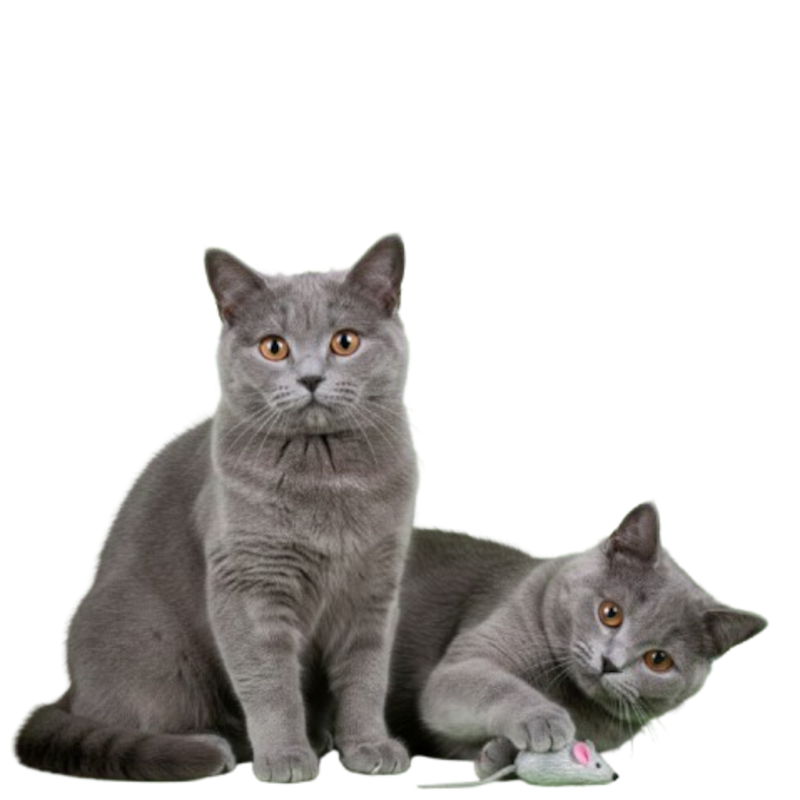
appearance
The British Shorthair is a feline of significant physical presence, frequently identified by its compact and muscular build. Their aesthetic is defined by a series of soft, rounded contours that result in a sturdy and substantial silhouette.
General Body Structure and Conformation
The frame of the British Shorthair is classified as cobby, meaning it features a level topline supported by a deep and expansive chest.
Torso and Bone Structure
British Shorthairs possess a powerful physique underpinned by heavy bone structure. In contrast to the slender, angular profiles seen in many other breeds, the British Shorthair exhibits significant breadth across the shoulders and hindquarters.
Limbs and Paws
The legs are short to medium in length and exceptionally strong, terminating in thick, rounded paws. This low-set, powerful stance is a hallmark of the British Shorthair’s grounded and resilient nature.
Features of the Head and Face
The head of the British Shorthair is perhaps its most recognizable trait, appearing massive and spherical from every perspective.
Cranium and Muzzle
A broad skull leads to a firm, strong chin. The muzzle is notably wide with prominent, rounded whisker pads, which often creates the illusion that the British Shorthair is wearing a permanent smile.
Eyes and Ears
The eyes are large, perfectly round, and set far apart to emphasize the width of the face. While copper or deep orange is traditional for many varieties, color varies by coat type. The ears are small and rounded, positioned to follow the circular contour of the head.
The Coat and Texture
The coat of the British Shorthair is a functional legacy of its development within the cold and damp environment of the British Isles.
Density and Feel
The fur is short and remarkably dense, possessing a distinctively crisp texture. Rather than feeling silky or soft, the British Shorthair’s coat should be resilient enough to break or part over the muscles as the cat moves.
Colors and Patterns
Although the solid blue variety remains the most iconic, British Shorthairs are recognized in a wide spectrum of visual styles.
| Category | Common Varieties | Typical Eye Color |
|---|---|---|
| Solid | Blue, Black, White, Cream | Copper or Orange |
| Tabby | Classic, Spotted, Mackerel | Green or Hazel |
| Parti-color | Tortoiseshell, Bi-color | Copper |
| Tipped | Silver, Golden | Green or Blue-Green |
Proportional Balance of the British Shorthair
To maintain the ideal silhouette, the physical proportions of the British Shorthair emphasize a compact rather than elongated shape.
Body Proportions
The length of the torso is only slightly greater than the height at the shoulder.
Balance
No single feature should appear out of proportion with the rest of the rounded, heavy-set frame — every element must contribute to a cohesive, powerful appearance.
The Tail
The tail of the British Shorthair is thick at its origin and tapers only slightly toward a rounded point. It is medium in length, generally extending to about two-thirds of the torso length, and is typically carried in a manner that complements the level line of the back.
behavior
While temperament refers to the underlying nature of the animal, behavior encompasses the specific, observable actions and habits that define how the British Shorthair engages with the world. The behavioral repertoire of British Shorthairs is distinguished by a preference for environmental stability, grounded movement, and understated communication.
Movement and Physical Activity
The British Shorthair demonstrates a specific style of physical engagement that is heavily influenced by its muscular, heavy-set anatomy.
Grounded Preference
A central behavioral hallmark of the British Shorthair is a marked preference for staying at floor level. Unlike more arboreal felines that instinctively seek out high shelves or the tops of refrigerators, British Shorthairs are much more inclined to lounge on the floor, a low footstool, or a sturdy chair. This tendency likely stems from their substantial mass and bone density, which makes frequent high-altitude jumping less natural for them.
Low-Energy Bursts
Although often viewed as sedentary, British Shorthairs do participate in regular physical activity. Their play behavior typically manifests as brief, high-intensity intervals — often described as the “zoomies” — followed by extended periods of relaxation. During these active windows, they display surprising speed and power considering their bulky frames.
Feeding and Foraging Behaviors
The British Shorthair’s ancestry as a working feline has left a significant mark on its relationship with hunting and nutrition.
Methodical Hunting Style
When interacting with toys, a British Shorthair does not usually engage in the frantic, haphazard chasing seen in more slender breeds. Instead, their hunting behavior is calculated: they will remain motionless, tracking the target with their eyes for several minutes before delivering a single, decisive pounce.
Dietary Motivation
British Shorthairs are notably driven by food. This can manifest as persistent hovering near the kitchen or staying close to their bowls during meal times. Because they have a lower metabolism than more active breeds, this specific behavior necessitates careful management to ensure they maintain a healthy weight.
Communication and Vocalization Habits
The British Shorthair is not a particularly talkative cat, preferring to convey its needs through body posture and subtle physical proximity.
Silent Interaction
A British Shorthair rarely employs its voice to demand attention from its owners. Instead, it utilizes a “shadowing” behavior — following a person from room to room to remain in their presence without necessarily seeking direct physical contact. When they do choose to speak, the sound is usually a soft, high-pitched chirp or a faint trill that seems incongruous with their large size.
Physical Boundary Setting
One notable behavioral trait of the British Shorthair is the way it establishes personal space. If the British Shorthair feels overstimulated or is held in a way it finds uncomfortable, it will typically stiffen its body or simply walk away with composure rather than resorting to aggressive vocalizations or scratching.
Resting and Sleep Patterns
The daily schedule of the British Shorthair is largely dictated by a structured cycle of rest.
| Behavioral Phase | Duration (Approximate) | Description |
|---|---|---|
| Deep Sleep | 12-16 hours | Usually spent in a secure, quiet corner or under furniture. |
| Dozing | 4-6 hours | A light sleep state while monitoring household sounds. |
| Active Alertness | 2-4 hours | Reserved for grooming, eating, and brief play sessions. |
Grooming and Hygiene
Maintaining the dense coat is a primary behavioral task for the British Shorthair. Because the fur is so thick, British Shorthairs dedicate a significant portion of their waking hours to self-care.
Self-Maintenance
They perform methodical cleaning to manage the plush texture and remove loose undercoat.
Social Bonding
While primarily independent, a British Shorthair may occasionally groom a companion pet as a sign of social acceptance, though this is less frequent than in more gregarious breeds.
Response to Environmental Change
The British Shorthair is a creature of deep habit. Their behavior when faced with change — such as the arrival of new furniture or an unfamiliar visitor — is usually one of detached, stoic observation. They will often withdraw to a safe vantage point to process the new information before eventually resuming their routine as though nothing had been altered.
color
The British Shorthair displays one of the most diverse ranges of accepted colors and markings in the cat fancy. While the traditional blue hue is central to the British Shorthair’s legacy, official breed standards recognize an extensive palette of solid, patterned, and shaded types.
Solid and Self Colorations
In solid varieties, the pigment must be uniform and consistent from the root of the hair to the tip, lacking any tabby ghost markings or stray white hairs.
The Traditional Blue
The blue British Shorthair remains the most celebrated variety. The coat should be a light to medium shade of lavender-blue, maintaining a consistent tone across the entire body without shading or spotting.
Additional Solid Hues
- Black: A rich, coal-black tone that is free from any reddish or rusty discoloration.
- White: A pristine, snowy white. These British Shorthairs are unique for their potential to have blue, orange, or copper eyes, or even one of each.
- Red: A deep, vibrant orange-red that is ideally free from heavy tabby markings.
- Cream: A soft, cool-toned shade of pale fawn.
Tabby Pattern Variations
Tabby markings on British Shorthairs must be vividly defined and dense against the background color. Three primary styles are recognized within the breed.
Classic Tabby
This pattern is characterized by intricate markings, including a “butterfly” shape across the shoulders and large, unbroken circular “oysters” on the flanks.
Mackerel Tabby
This style features thin, vertical stripes that run down the sides of the British Shorthair’s body. Ideally, these stripes are continuous and resemble a fish skeleton.
Spotted Tabby
These British Shorthairs exhibit many small, distinct spots. The spots may be round, oval, or rosette-shaped, but they must be clearly separated rather than appearing as broken stripes.
Shaded, Tipped, and Smoke Categories
These categories involve a lack of pigment on the lower portion of the hair shaft, with the color appearing only at the ends.
Silver and Golden Shaded
In these cats, the undercoat is either a bright white (silver) or a warm apricot (golden). The pigmentation is limited to the tips of the fur, creating a shimmering, iridescent effect when the British Shorthair moves.
Smoke Varieties
A smoke-colored British Shorthair appears to be a solid color while sitting still. However, as the cat moves, the white base of the hair becomes visible. This effect is produced by a specific distribution of pigment:
Fur Color Split for “Smoke” Shimmer
- : The overall look of the fur’s depth.
- : The top part of the hair that holds the dark color.
- : The bottom part of the hair near the skin that stays white.
- : A symbol meaning “about,” since hair length varies on different parts of the cat.
In a “Black Smoke” British Shorthair, an average guard hair measures in length. Following the ratio, the top of the hair is saturated with dense black pigment, while the bottom near the skin is devoid of color (pure white). When the British Shorthair is stationary, the pigmented sections overlap entirely, making the cat look solid black. However, when the cat stretches or runs, the hairs separate to reveal the white bases, creating the dramatic “shimmer” or “smoke” effect characteristic of the breed.
Parti-color and Bi-color Combinations
Parti-color British Shorthairs consist of any mix involving two or more distinct colors or patterns.
| Variety | Description |
|---|---|
| Bi-color | A combination of a solid color and white patches. |
| Tortoiseshell | A mingled pattern of black and red, or blue and cream. |
| Tricolor (Calico) | A mix of white with black and red (or their diluted versions). |
The Science of Color Dilution
The variety in British Shorthair’s coat colors is largely governed by genetics. Many popular shades are diluted versions of primary pigments. For instance, blue is the dilute form of black, while cream is the dilute form of red.
Dense Pigmentation
Black and Red are the primary dense pigments.
Dilute Pigmentation
Blue and Cream are the dilute forms of the primary pigments — these results occur when the pigment granules are distributed less densely along the hair shaft.
Relationship Between Coat and Eye Color
For the British Shorthair, eye color is strictly linked to the coat variety. Most solid and tabby types require deep copper or brilliant orange eyes. However, specific exceptions are standard:
- Silver Varieties: Often feature green or hazel eyes.
- Pointed Patterns: Always possess deep blue eyes.
- White Varieties: May exhibit blue, orange, or odd eyes — a condition known as heterochromia.
compatibility
Ease of Maintenance
Rating: 4/5
Child Friendly
Rating: 4/5
Annual Cost
Rating: 4/5
Lifetime Cost
Rating: 3/5
Adaptability
Rating: 5/5
Velcro Factor
Rating: 2/5
Quietude
Rating: 5/5
Apartment Suitability
Rating: 5/5
Hypoallergenic
Rating: 2/5
Handling Tolerance
Rating: 3/5
Hardiness/Longevity
Rating: 4/5
Prey Drive
Rating: 4/5
genetics
The genetic profile of the British Shorthair involves a complex interplay of dominant and recessive traits that dictate its robust anatomy and various coat appearances. As an established pedigreed cat with a vast ancestral background, British Shorthairs possess specific hereditary markers that define their standard physical characteristics.
The Genetics of Coat Color and Dilution
The most iconic coloration found in the British Shorthair is the result of a specific interaction between the Black gene and the Dilution gene.
The Dense and Dilute Relationship
In feline genetics, the locus regulates the density of pigment granules within the hair shaft. The dominant allele () produces full, dense color, whereas the recessive allele () causes these granules to cluster, resulting in a lighter, “diluted” shade.
- Black () + Dense (): Results in a Black British Shorthair.
- Black () + Dilute (): Produces the signature Blue British Shorthair.
- Red () + Dilute (): Results in a Cream British Shorthair.
The Orange Gene and Sex Linkage
The gene responsible for red (orange) pigment is located on the X chromosome ( or ). This sex-linked inheritance pattern explains why tortoiseshell British Shorthairs are almost exclusively female; they require two X chromosomes to express both black and red alleles at the same time ().
Coat Texture and Length Inheritance
The unique “crisp” feel of the British Shorthair’s fur is a polygenic trait, meaning it is governed by several genes working together rather than a single genetic switch.
Short Hair Dominance
The gene for short hair () is dominant over the gene for long hair (). Although British Shorthairs are categorized as shorthaired, many individuals carry the recessive longhair gene () latently. If two shorthaired British Shorthairs that both carry this recessive allele are paired, they can produce longhaired offspring, which are often classified as the British Longhair.
Density and Resilience
The exceptional density of the British Shorthair’s coat is linked to a high ratio of hair follicles relative to the surface area of the skin. This quality is not managed by simple Mendelian logic but has been reinforced through generations of selective breeding to maintain the weather-resistant coat quality historical to the British Shorthair’s environment.
Morphology and Skeletal Genetics
The cobby body structure and rounded facial features of the British Shorthair result from selective pressure on genes that control bone development and muscle growth.
Heavy Bone Structure
While researchers have not isolated a single “heavy bone” gene, the British Shorthair displays a phenotype associated with high expression of growth factors that favor bone width and density over length. This genetic leaning produces the characteristic thick limbs and wide chest.
Facial Structure
The spherical head of the British Shorthair represents a moderate form of brachycephaly. Genetic pathways, such as those involving signaling, influence the broadening of the skull and the shortening of facial bones, giving the British Shorthair its significant cranial mass and full cheeks.
Blood Group Genetics
Monitoring blood types is a vital genetic task for those breeding British Shorthairs because of the risk associated with Neonatal Isoerythrolysis (NI).
| Blood Type | Genetic Frequency in British Shorthairs | Description |
|---|---|---|
| Type A | High | The most prevalent feline blood type; dominant over B. |
| Type B | Significant | Found more frequently in British Shorthairs than in many other breeds. |
| Type AB | Very Rare | Results from a distinct, rare allele (aab). |
The prevalence of Type B blood in British Shorthairs is a major genetic consideration. If a Type B mother gives birth to Type A kittens, her initial milk can contain antibodies that destroy the kittens’ red blood cells.
Hereditary Health Markers
Modern genetic testing allows for the identification of specific health vulnerabilities within the British Shorthair population.
Hypertrophic Cardiomyopathy (HCM)
Although often polygenic, certain mutations in the gene are tracked in British Shorthairs to manage heart health.
Polycystic Kidney Disease (PKD1)
Once a major concern due to historical outcrossing with Persians, the majority of modern British Shorthairs are now screened to ensure they do not carry the dominant mutation.
health
The British Shorthair is generally recognized as a hardy and robust feline with a significant lifespan, often reaching 12–15 years or more. However, its specific physiology and genetic history necessitate focused attention on certain hereditary conditions and lifestyle-related health risks.
Cardiovascular Health
Cardiovascular issues represent a primary area of concern for the British Shorthair, particularly those with a history of specific lineage outcrossing.
Hypertrophic Cardiomyopathy (HCM)
HCM is the most prevalent heart disease in British Shorthairs. It is characterized by the thickening (hypertrophy) of the left ventricular wall, which reduces the heart’s efficiency and can lead to heart failure or systemic thromboembolism.
The progression is often monitored via the ejection fraction ():
Heart Pump Power and Efficiency Score
- : “Ejection Fraction,” the percentage of blood the heart successfully pumps out with each beat.
- : “Full Tank,” the amount of blood in the heart when it is totally relaxed and full.
- : “Leftover Amount,” the blood still sitting in the heart after it finishes a squeeze.
- : “The Push,” the actual amount of blood sent out to the body.
In a healthy British Shorthair, an echocardiogram might show an of and an of . The calculation is (). If that same British Shorthair develops HCM, the thickened heart wall reduces the chamber’s capacity. If the drops to and the heart struggles to pump, leaving an of , the new (). This sharp decline from to indicates significant cardiac dysfunction and a high risk for heart failure.
A significant decrease in this ratio may indicate advancing cardiac dysfunction.
Renal and Urinary System
The British Shorthair’s ancestry includes historical crosses with other pedigreed cats, which introduced specific renal vulnerabilities.
Polycystic Kidney Disease (PKD)
PKD is an inherited condition where fluid-filled cysts form in the renal tissue, eventually leading to kidney failure. While modern breeding practices and DNA screening have significantly reduced its prevalence, it remains a critical health marker.
Feline Lower Urinary Tract Disease (FLUTD)
Due to their sedentary nature and specific mineral metabolism, British Shorthairs can be prone to cystitis or urolithiasis (bladder stones). Ensuring high moisture intake is a vital preventative measure for the British Shorthair.
Metabolic and Nutritional Management
The muscular, cobby frame of the British Shorthair makes it highly susceptible to metabolic imbalances if diet and activity are not strictly regulated.
Obesity and Weight Governance
Obesity is the most common preventable health issue for the British Shorthair. Excess adipose tissue exacerbates joint stress and increases the risk of Type 2 Diabetes.
| Condition | Risk Factor | Impact on British Shorthair |
|---|---|---|
| Diabetes Mellitus | High | Insulin resistance linked to sedentary lifestyle. |
| Hepatic Lipidosis | Moderate | Risk during rapid weight loss or prolonged anorexia. |
| Osteoarthritis | High | Increased load on the British Shorthair’s joints due to heavy mass. |
Hereditary Blood Disorders
The British Shorthair has a notable distribution of blood types that differs from the average domestic cat population.
Neonatal Isoerythrolysis (NI)
A significant percentage of British Shorthairs possess Type B blood. If a Type B queen is bred with a Type A male, her Type A kittens may suffer from NI. This occurs when the kittens ingest colostrum containing anti-A antibodies, leading to the destruction of their red blood cells.
Respiratory and Ocular Considerations
The moderate brachycephalic structure of the British Shorthair influences its upper respiratory and ocular health.
Brachycephalic Airway Syndrome
While less severe than in extremely flat-faced breeds, some British Shorthairs may experience narrowed nostrils or elongated soft palates, which can cause snoring or breathing difficulties during exertion or high heat.
Epiphora (Excessive Tearing)
The large, round eyes of the British Shorthair can sometimes lead to blocked tear ducts or irritation. Regular cleaning of the eye area is necessary to prevent staining and secondary skin infections in the facial folds.
Skeletal and Joint Health
The heavy bone structure of the British Shorthair provides its signature appearance but requires support during the growth phase.
Hip Dysplasia
Though more common in larger canine breeds, hip dysplasia is occasionally observed in British Shorthairs. This malformation of the hip socket can lead to painful inflammation and reduced mobility as the British Shorthair ages.
Growth Rate Monitoring
British Shorthairs are slow-maturing cats, often not reaching full physical maturity until 3–5 years of age. Providing age-appropriate nutrition during this extended growth period is essential to ensure proper skeletal development and muscle attachment.
longevity
The British Shorthair is celebrated for its remarkable durability and overall health, typically enjoying a long life. On average, British Shorthairs live between 12 and 15 years, though it is quite frequent for well-maintained individuals to reach their late teens or even enter their twenties. Their extended life expectancy is largely a result of a sturdy genetic makeup paired with a safe, indoor lifestyle that minimizes exposure to external dangers.
Statistical Life Expectancy
While every cat’s life is unique, the statistical lifespan of the British Shorthair generally follows a bell curve, with the majority of the population reaching their early to mid-teens.
Influences on a Long Life
The number of healthy years a British Shorthair enjoys is typically determined by several intersecting factors:
- Hereditary Health: The absence of genetic predispositions such as HCM or PKD.
- Environmental Safety: Keeping British Shorthairs exclusively indoors drastically reduces the chance of accidents or contracting contagious illnesses.
- Regular Veterinary Care: Consistent check-ups allow for the early identification of age-related changes in organ function.
Developmental Stages and Aging
Because the British Shorthair is a slow-maturing variety, their progression through life stages differs slightly from more lean or active cat breeds.
Youth and Maturity (0-7 Years)
A British Shorthair often requires 3 to 5 years to reach full physical development. During these formative years, longevity is supported through proper immunization and nutrition that accommodates their heavy skeletal structure.
Senior and Geriatric Phases (7-12+ Years)
Upon entering the senior years, the metabolic rate of the British Shorthair often decreases. This period is a vital window for weight management — preventing obesity is key to avoiding secondary health complications that could shorten the British Shorthair’s life.
Comparative Data on Aging
The British Shorthair consistently ranks among the longer-lived pedigreed cats because they lack the extreme physical exaggerations that can lead to chronic health struggles in other breeds.
| Life Phase | Age Range | Longevity Priorities |
|---|---|---|
| Kitten | 0-12 Months | Proper growth nutrition and foundational vaccines. |
| Adult | 1-7 Years | Consistent exercise and oral hygiene. |
| Senior | 7-12 Years | Monitoring kidney function and heart health. |
| Geriatric | 12+ Years | Managing joint comfort and cognitive function. |
Biological Markers of Aging
The internal age of a British Shorthair can be assessed by clinicians using specific biological indicators. For instance, monitoring the glomerular filtration rate () helps track the natural aging of the kidneys:
Kidney Filter Speed for Health Tracking
- : “Filter Speed,” how much fluid the kidneys clean per minute.
- : “Waste in Urine,” the concentration of creatinine the kidneys successfully removed.
- : “Urine Flow,” how much urine is produced per minute.
- : “Waste in Blood,” the creatinine left behind that hasn’t been cleaned out yet.
- : A symbol meaning “is related to.”
Consider a senior British Shorthair undergoing a renal checkup. If the lab finds a plasma creatinine () of and a urinary creatinine () of with a flow rate () of , the clearance is . If the same British Shorthair’s plasma creatinine later spikes to while other factors stay the same, the effectively halves to . This mathematical drop signaling that the kidneys are only filtering half as efficiently as before, often requiring a shift to a renal-support diet.
Preserving stable kidney function through proper hydration is a pillar of senior care for the British Shorthair.
Supporting Quality of Life in Senior Years
To help a British Shorthair reach its maximum potential lifespan, certain environmental changes are beneficial as the cat enters its final life stages.
Dietary Refinement
Switching to diets with high-quality, easily digestible proteins helps maintain the British Shorthair’s muscle mass. Incorporating supplements like Omega-3 fatty acids can assist in managing age-related inflammation.
Home Modifications
As British Shorthairs age, mobility can become a challenge. Utilizing low-entry litter boxes and providing steps to reach elevated sleeping areas ensures the British Shorthair remains comfortable and active within the home.
Dental Care as a Longevity Strategy
Persistent dental disease is a significant hurdle to feline longevity, as it can cause chronic inflammation that stresses the internal organs. Regular professional dental cleanings are essential for protecting the British Shorthair’s heart and kidney health as they age.
maintenance
Proper maintenance of the British Shorthair requires a consistent routine that addresses their unique coat texture, substantial physical build, and specific metabolic needs. Due to their dense fur and sedentary tendencies, proactive care is essential for the long-term health of the British Shorthair.
Coat Care and Grooming
The British Shorthair’s coat is often described as “crisp” and exceptionally dense. Unlike breeds with silky fur, the British Shorthair has a high volume of undercoat that requires regular removal to prevent matting and reduce the ingestion of loose fur.
Brushing Requirements
While British Shorthairs are technically shorthaired, their hair density necessitates at least one thorough brushing per week. During seasonal shedding periods, this frequency should increase to daily sessions to manage the sheer volume of dead hair.
Bathing and Skin Health
Bathing is rarely required for the British Shorthair unless the coat becomes soiled. Because their fur is water-resistant, a thorough wetting requires patience. If bathing is necessary, use a degreasing shampoo formulated for felines to penetrate the thick layers of the British Shorthair’s coat.
Dental and Hygiene Protocols
Hygiene for the British Shorthair extends beyond the coat to include dental, ocular, and aural care.
Oral Hygiene
The British Shorthair is prone to gingivitis. Daily brushing with feline-specific toothpaste is the gold standard for maintenance.
Ocular Maintenance
Due to the rounded skull shape of the British Shorthair, some individuals may experience minor tear duct drainage. Wiping the corners of the eyes with a damp, lint-free cloth prevents staining and skin irritation.
Nail and Ear Care
- Claw Trimming: Should be performed every 2–3 weeks.
- Ear Cleaning: Check ears weekly for wax buildup or debris. Use a vet-approved cleaner only if necessary.
Nutritional Management and Weight Control
The British Shorthair has a natural tendency toward obesity. Because of their heavy-set frame, excess weight puts significant strain on the British Shorthair’s joints and cardiovascular system.
Caloric Calculation
To maintain an ideal body condition, the Resting Energy Requirement () should be calculated and adjusted based on the British Shorthair’s activity level:
Daily “Napping” Calories for Basic Life
- : “Resting Calories,” the energy needed just to stay alive while sleeping.
- : A standard math constant used for cat metabolism.
- : The cat’s actual “Body Weight” in kilograms.
- : A “Scaling Factor” that accounts for how energy needs change as animals get bigger.
For a sturdy adult British Shorthair weighing , we first calculate the RER: . Using the exponent, . Multiplying by the constant gives . This represents the calories burned at total rest. To find the Total Daily Energy Requirement (DER) for an inactive indoor British Shorthair, we apply a multiplier: . If a standard 3oz can of food provides , this cat requires approximately cans per day to maintain its “cobby” physique without gaining excess fat.
For an inactive adult British Shorthair, the Total Daily Energy Requirement () is often calculated as 1.0 × RER to 1.2 × RER.
Dietary Composition
A high-protein, moderate-fat diet is recommended to preserve lean muscle mass.
| Nutrient | Recommended Level | Purpose for the British Shorthair |
|---|---|---|
| Protein | >35% (Dry Matter) | Maintains muscular cobby frame. |
| Fiber | 3%–5% | Aids in the passage of ingested hair. |
| Omega Fatty Acids | Supplemented | Supports the density and sheen of the coat. |
Environmental Enrichment and Exercise
While British Shorthairs are famously “low-energy,” physical activity is a requirement for their maintenance.
Encouraging Movement
Because the British Shorthair is a floor-dwelling hunter by nature, they prefer “ground-level” play. Interactive wand toys that mimic the movement of rodents are highly effective. Vertical space, such as sturdy cat trees, should be provided to encourage climbing, which helps maintain muscle tone in the British Shorthair’s hindquarters.
Mental Stimulation
The British Shorthair is highly intelligent but can become bored with repetitive tasks. Food puzzles and foraging toys are excellent for keeping the British Shorthair mentally engaged while simultaneously slowing down their eating pace.
Veterinary Maintenance Schedule
Regular clinical oversight is a pillar of the British Shorthair’s care plan.
Annual Health Screenings
- Cardiac Ultrasound: Recommended for the British Shorthair to monitor for early signs of HCM.
- Renal Blood Panels: Essential for tracking kidney function as the British Shorthair ages.
- Weight Checks: Professional body condition scoring () should be conducted during every visit.
measurements
| Measurement | Female | Male | ||
|---|---|---|---|---|
| Metric | Imperial | Metric | Imperial | |
height | 25 – 30 centimeters | 10 – 12 inches | 30 – 36 centimeters | 12 – 14 inches |
length | 51 – 58 centimeters | 20 – 23 inches | 56 – 64 centimeters | 22 – 25 inches |
weight | 3.2 – 5.4 kilograms | 7 – 12 pounds | 4.1 – 7.7 kilograms | 9 – 17 pounds |
• Height: Refers to the measurement at the withers (shoulders).
• Length: Measured from the tip of the nose to the base of the tail.
origin
The story of the British Shorthair is a narrative of profound transformation, tracing its lineage from the utilitarian farm cats of the Roman Empire to its current status as a premier pedigreed companion. Its development is inextricably linked to the history of the British Isles and the eventual birth of the formal cat fancy.
Roman Ancestry and Early Migration
The primitive ancestors of the British Shorthair were not indigenous to the British Isles. They were introduced to the region by invading Roman legions nearly two thousand years ago.
Utility in the Roman Empire
Originally, these cats were prized for their predatory instincts. The Romans utilized them to safeguard food supplies from rodents in both military outposts and on transport vessels. Over the following centuries, these imported felines interbred with local wild cats. This resulted in a robust, hardy population capable of thriving in the damp, cold climate of the United Kingdom.
The Victorian Era and Harrison Weir
For much of history, the British Shorthair was viewed simply as a common “working” cat. It was not until the late 19th century that a movement began to standardize the type and acknowledge it as a distinct and noble breed.
The Father of the Cat Fancy
Harrison Weir, an artist and naturalist, is recognized as the person who formalized the British Shorthair. He held a deep admiration for the resilience and quiet beauty of the “ordinary” alley cat. In 1871, Weir organized the first official cat show at the Crystal Palace in London. At this landmark event, a 14-year-old blue tabby British Shorthair was awarded “Best in Show.”
Genetic Challenges and the World Wars
The survival of the British Shorthair was severely jeopardized by the global conflicts of the 20th century. During World War I and World War II, breeding programs were largely abandoned, and food scarcity significantly reduced the population.
Post-War Restoration and Outcrossing
To prevent the extinction of the British Shorthair after 1945, breeders engaged in strategic outcrossing with other varieties. These crosses were carefully selected to maintain the signature cobby frame and dense fur of the British Shorthair.
| Breed Used for Outcrossing | Purpose of Cross | Resulting Influence on British Shorthair |
|---|---|---|
| Persian | Restore bone density | Introduction of the rounder head and plush fur texture. |
| Russian Blue | Reintroduce blue color | Reinforced the classic “British Blue” pigmentation. |
| Chartreux | Maintain size | Stabilized the heavy muscularity of the British Shorthair. |
The Standardization of the “British Blue”
While British Shorthairs currently appear in a wide spectrum of colors and patterns, the “British Blue” variant remains the historical benchmark for the breed. The genetic prevalence of the dilute “blue” (gray) gene in early breeding stock established this specific color as the most iconic trait of the British Shorthair.
Modern Recognition and Global Spread
During the late 1970s and early 1980s, major international feline registries — including the Cat Fanciers’ Association (CFA) and The International Cat Association (TICA) — officially recognized the British Shorthair.
Evolution of Phenotype
The contemporary British Shorthair is the product of selective breeding focused on a specific “round” aesthetic. Breeders use geometric proportions to evaluate the British Shorthair’s head shape, typically aiming for a circular ratio. We can evaluate this using the following formula:
Face Roundness Score for the “Teddy Bear” Look
- : “Roundness Score,” where a score of is a perfect circle.
- : “Face Width,” measured from cheek to cheek.
- : “Face Height,” measured from the jaw to the top of the skull.
- : The goal for a perfectly rounded British Shorthair face.
When evaluating a show-quality British Shorthair, a judge looks for a “round” head. If the measured head width () is and the vertical height () is , the ratio is . This near-perfect ratio mathematically confirms the “apple-head” aesthetic required by the breed standard. In contrast, an ancestral or more athletic feline might have a width of and a height of , resulting in an of , which would be considered too narrow or “wedgy” for a modern British Shorthair.
The target ratio () for a high-quality British Shorthair often approaches a perfect circle. This modern emphasis on roundness — from the paws to the whisker pads — distinguishes the current British Shorthair from its leaner, more athletic ancestors of the Roman era.
temperament
The temperament of the British Shorthair is characterized by a dignified, easy-going, and emotionally stable nature. Unlike more demanding or reactive varieties, the British Shorthair’s psychological profile centers on calm observation and quiet companionship, making it a cornerstone of the domestic “shorthair” lineages.
Stoicism and Emotional Resilience
The core of the British Shorthair’s temperament is its remarkable stoicism. These cats are known for their high threshold for stress and their ability to remain unruffled by household changes.
The Philosophical Reserve
British Shorthairs possess a psychological independence that is often mistaken for aloofness. In reality, their temperament is one of self-assuredness; they do not require constant reassurance from their human companions. This emotional autonomy allows the British Shorthair to thrive in environments where owners may work long hours, provided they have a stable home base to return to.
Social Dynamics and Affection Style
The way a British Shorthair interacts with others is governed by a temperament that values proximity over physical intrusion.
Passive Companionship
While highly affectionate, the British Shorthair expresses its bond through shadowing rather than lap-sitting. Their temperament dictates a preference for being in the same room as their owners — often resting just out of reach — rather than being physically restrained or held.
Compatibility with Others
Due to their non-confrontational nature, British Shorthairs generally exhibit a high degree of tolerance toward other pets and children. Their temperament is characterized by a “live and let live” attitude, which reduces the likelihood of territorial aggression or anxiety-driven reactivity.
| Aspect | Temperamental Quality | Description |
|---|---|---|
| Activity Level | Sedentary / Moderate | Preference for intellectual over physical exertion. |
| Vocalness | Reticent | Rarely uses voice to demand attention. |
| Adaptability | High | Quickly settles into new routines or living spaces. |
| Patience | Exceptional | High tolerance for the unpredictable nature of children. |
Intelligence and Psychological Engagement
The British Shorthair possesses a quiet, calculating intelligence. Their temperament is not one of frantic curiosity but rather one of methodical analysis.
Cognitive Processing
When faced with a new object or situation, the British Shorthair’s temperament leads it to observe from a distance before engaging. This “think-before-acting” approach is a defining trait that separates it from more impulsive feline varieties.
The degree of Ease of Training () in the British Shorthair can be viewed as a function of their Motivation () versus their Independence () as follows:
Training Success Based on Treats vs. Stubbornness
- : “Training Speed,” how fast the cat learns a new trick.
- : “Motivation,” how much the cat wants the reward (like a favorite snack).
- : “Independence,” the British Shorthair’s natural desire to do its own thing.
- : A symbol meaning “is determined by.”
Consider a British Shorthair with a high intrinsic Independence () score of . If you attempt to teach it to “sit” using only verbal praise (), the training ease is , resulting in a very slow response. However, if you switch to a high-value piece of freeze-dried chicken, the Motivation () jumps to . Now, . Even with the same independent nature, the -fold increase in the ratio makes the British Shorthair significantly more likely to engage with the task immediately.
Because is naturally high in the British Shorthair, their temperament requires positive reinforcement and high-value incentives to bridge the gap between their autonomous nature and human-directed tasks.
The Gentle Giant Archetype
Despite their imposing physical presence, the British Shorthair’s temperament is intrinsically gentle. They are famously “four-on-the-floor” cats, meaning their psychological comfort is highest when they have their paws on a solid surface. This groundedness is reflected in their calm, non-destructive temperament, as they rarely feel the need to leap onto high cabinets or engage in frantic activity characteristic of more high-strung breeds.
Summary of the British Shorthair’s Spirit
Ultimately, the British Shorthair is the diplomat of the cat world. Its temperament is a balanced mix of reserve and unwavering loyalty. They provide a grounding presence in a home, offering a steady, predictable emotional climate that is both soothing and unobtrusive.