Bombay Cat
appearance
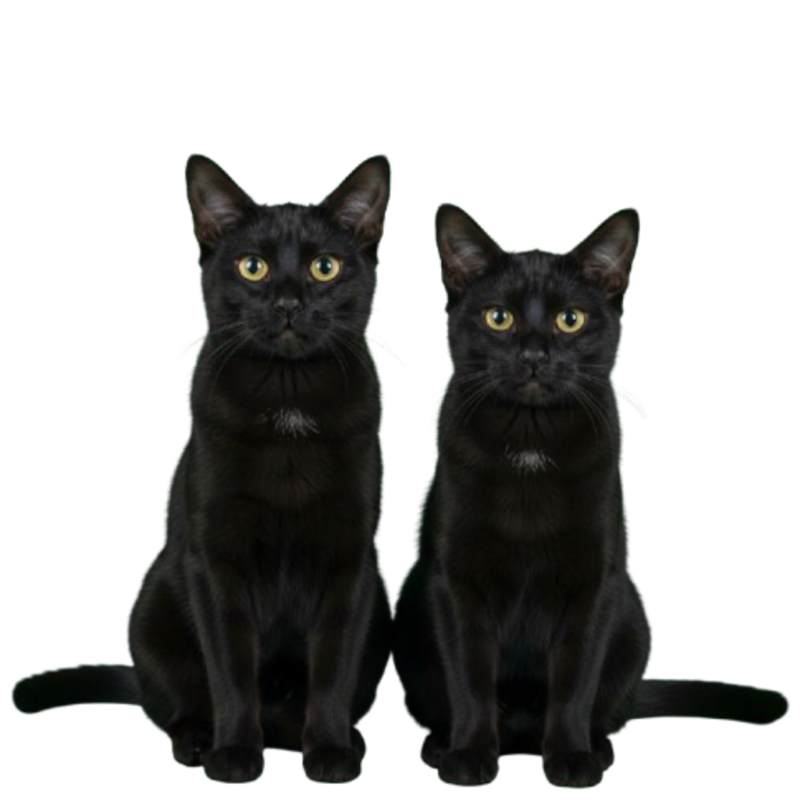
The Bombay is defined by its striking resemblance to a miniature black panther. This aesthetic is achieved through a combination of a muscular, cobby body type, a high-gloss jet-black coat, and vivid, contrasting eye color. The breed standard emphasizes a rounded morphology, where almost every physical feature—from the head to the paws—exhibits a curved, substantial quality.
The Head and Facial Structure
The head of the Bombay is a hallmark of the breed, emphasizing roundness and breadth without any sharp angles.
Cranial Features
The face is pleasingly full with a short, well-developed muzzle. There is a visible moderate stop—the transition from the forehead to the nose—when viewed in profile, though it is not as extreme as a break seen in other brachycephalic breeds.
- Ears: Medium in size and set wide apart on the rounded skull. They are broad at the base with slightly rounded tips, tilting slightly forward to give the Bombay an alert expression.
- Muzzle: Short and broad, ending in a firm, well-rounded chin that reflects a proper bite.
The Eyes
Often compared to the color of a freshly minted copper coin, the ocular traits of the Bombay are its most captivating feature.
- Shape: Large, round, and set far apart.
- Color: Range from a deep gold to a brilliant copper. The deeper the copper hue, the more desirable the specimen is considered in breed standards.
Body Composition and Stature
Despite its medium size, the Bombay is deceptively heavy due to its dense bone structure and high muscle mass.
Physical Density
The Bombay possesses a compact, muscular torso known as a cobby body. The chest is broad and the frame is sturdy. If represents the mass and represents the volume, the Bombay’s density is notably higher than many other domestic breeds:
Body Density and the "Lead Brick" Feel
- : The "Solidness" or density of the Bombay.
- : "Body Weight," the total mass of the cat in kilograms.
- : "Body Size," the actual physical space (volume) the cat takes up in liters.
A Bombay is often described as a “lead brick wrapped in silk.” If a Bombay has a volume () of but a surprising mass () of , its density is . In contrast, a more “rangy” or fine-boned breed might have the same volume but weigh only , resulting in a density of only . This increase in explains why people are often startled by how heavy a Bombay feels when they first pick one up.
Limbs and Tail
- Legs: In proportion to the body and well-muscled.
- Paws: Neat and round. Both the paw pads and the nose leather must be solid black.
- Tail: Straight and medium in length, tapering slightly toward a rounded tip.
Coat and Pigmentation Awareness
The coat of the Bombay is its most distinctive identifier, specifically designed to emulate the shimmering sheen of a wild melanistic leopard.
Texture and Length
The fur is very short, fine, and lies extremely close to the body. Its texture is satiny, which contributes to its ability to reflect light with a finish similar to polished leather.
Color Standards
Bombays are monochromatic. The only acceptable color is jet-black, extending from the hair tip down to the root.
| Feature | Requirement |
|---|---|
| Primary Color | Jet-Black (solid) |
| Texture | Satiny / Glossy |
| Nose Leather | Coal Black |
| Paw Pads | Black or Charcoal |
Sexual Dimorphism in Appearance
While both sexes maintain the same panther-like proportions, there are slight differences in the scale of the Bombay.
- Males: Generally larger, weighing between 8 and 12 pounds, with more pronounced jowls and broader chests.
- Females: Typically weigh between 6 and 9 pounds, maintaining the same muscular density but with a slightly more refined silhouette.
behavior
While temperament refers to the underlying personality, the behavior of the Bombay encompasses the observable actions, physical habits, and environmental interactions that define their daily lives. These behaviors are a manifestation of their high intelligence and specific physiological needs inherited from their Burmese and American Shorthair ancestors.
Interaction with the Physical Environment
The Bombay interacts with its surroundings with a level of intensity and physical capability that is often compared to wild felines.
Vertical and Horizontal Navigation
Bombays are highly athletic and exhibit a preference for verticality. They are proficient climbers and will often be found on top of refrigerators, cabinets, or high shelves.
- Leaping Ability: Due to their powerful hindquarters, a Bombay can leap several times its own height from a standing position.
- Exploration: They use their paws almost like hands to manipulate objects—often testing the weight and movement of items on tables or desks.
Heat-Seeking and Nesting
A primary behavioral marker of the Bombay is its constant search for thermal comfort.
- Physical Proximity: They will actively seek out heat sources, including laptop keyboards, sunny patches, and specifically, the bodies of their human companions.
- Burrowing: It is a common behavior for Bombays to burrow deep under blankets or bed covers to sleep, regardless of the ambient room temperature.
Activity Cycles and Play Mechanics
The Bombay maintains a high level of activity that persists well into their senior years.
Predatory Play
Bombays exhibit a robust play drive that mirrors hunting patterns. They prefer stalk-and-pounce games and are known for their speed and agility during play sessions.
- Object Retrieval: Many Bombays naturally engage in fetching behavior, carrying toys back to their owners to initiate further interaction.
- Toy Manipulation: Unlike more sedentary breeds, a Bombay will often carry its favorite toys from room to room.
Activity Modeling
The energy expenditure of a Bombay over a 24-hour period can be modeled as a bimodal distribution, with peaks during the crepuscular hours (dawn and dusk):
Daily Energy Peaks and Playtime Bursts
- : "Energy Level," how active the cat is at a specific time .
- : "Peak Power," how intense the dawn or dusk play session is.
- : "Peak Time," the exact hour when the cat is most active (like 6 AM).
- : "Burst Duration," how long the high-energy "zoomies" actually last.
- : A math constant used to show how energy naturally fades after a workout.
Suppose a Bombay has two primary activity peaks (). The dawn peak () occurs at (6:00 AM) with an intensity . The dusk peak () occurs at (6:00 PM) with an intensity . If we calculate the energy at (5:00 PM), the influence from the dawn peak is nearly zero, so we focus on the second peak: . This shows the Bombay is rapidly ramping up to its maximum evening “panther-like” play intensity of as the sun begins to set.
Vocal and Social Signaling
The Bombay uses a complex array of behavioral signals to communicate with its social group.
Communication Patterns
Bombays are communicative without being excessively piercing. Their vocalizations are often context-specific:
- The Chirp: Used when they are excited or have spotted prey—often a toy.
- The Greeting: A soft meow or trill when an owner returns home.
- The Demand: A more insistent, repetitive vocalization typically centered around feeding or the desire for lap time.
Social Grooming and Alloparenting
In multi-pet households, the Bombay often takes on the role of the social glue. They frequently engage in allogrooming—the act of grooming other animals—which is a behavioral sign of bonding and group cohesion.
Training and Cognitive Tasks
The cognitive behavior of the Bombay allows for a level of training rarely seen in domestic felines.
| Behavior Type | Description | Training Potential |
|---|---|---|
| Leash Walking | Walking on a harness and lead. | High; they are naturally curious and bold. |
| Operant Conditioning | Learning tricks via positive reinforcement. | High; they respond well to food and praise. |
| Puzzle Solving | Navigating food puzzles or latches. | Very High; they enjoy the mental challenge. |
Elimination and Hygiene Habits
Bombays are typically fastidious regarding their personal hygiene and the state of their environment.
- Grooming Frequency: They spend a significant portion of their waking hours maintaining their short, satiny coats.
- Litter Habits: They generally require a clean environment and may exhibit digging behaviors that are more vigorous than other breeds.
color
The Bombay is uniquely defined by a monochromatic color standard that is among the most stringent in the feline world. Often described through the metaphor of a parlor panther, the Bombay’s coloration is not merely black, but a deep, iridescent pigmentation that extends across the entire anatomy of the animal.
The Coat: Jet-Black and Satin Finish
The most recognizable feature of the Bombay is the coat color, which must be a solid, uniform jet-black. Unlike many other black domestic cats, the Bombay is bred to eliminate any trace of underlying tabby patterns or white spotting.
Depth of Pigment
In high-quality specimens, the black pigment is required to be solid to the roots. This means that if the fur is parted, no gray, white, or brown undercoat should be visible. The intensity of the color is amplified by the texture of the fur; because the hairs are very short and lie close to the skin, they create a reflective surface.
Light Reflection and Sheen
The Bombay’s coat is often compared to polished leather because of its high-gloss finish. This sheen is a physical property of the hair’s cuticle, which is exceptionally smooth, allowing for a high degree of specular reflection :
Coat Shine and "Patent Leather" Glow
- : "Glossiness," the visible shimmer on the black fur.
- : "Room Light," how much light is hitting the cat.
- : "Fur Smoothness," a score of how flat and silky the Bombay’s hair is.
- : "Light Angle," the direction the light hits the cat's body.
Imagine a Bombay sitting under a lamp with an incident light intensity () of . Because the Bombay has a uniquely smooth hair cuticle, its reflectance coefficient () is high, say . If the light hits the curved surface of the cat’s shoulder at an angle () of , the reflection is . Calculating this (), we get approximately of reflected light. This high value is what creates the “patent leather” look; a breed with a rougher hair cuticle () under the same conditions would reflect only , appearing matte or dull by comparison.
Ocular Pigmentation: Copper and Gold
The eyes of the Bombay provide a stark, dramatic contrast to the dark coat. According to breed standards, the color must be rich and vivid.
- Preferred Hue: A deep, brilliant copper is the ideal for the breed.
- Acceptable Range: Colors can range from a golden yellow to a dark orange-copper.
- Undesirable Traits: Green or greenish-yellow eyes are considered a significant fault in show-quality Bombays—as they detract from the intended aesthetic.
Integumentary Details
The requirement for black pigmentation extends beyond the fur to the skin and peripheral features.
Nose Leather and Paw Pads
Consistency in pigmentation is a hallmark of the Bombay. Every visible part of the cat’s skin must conform to the dark palette.
| Feature | Required Coloration |
|---|---|
| Nose Leather | Coal Black |
| Paw Pads | Black or Charcoal Grey |
| Lip Pigment | Solid Black |
Developmental Color Changes
It is important to note that the Bombay is not always born with its final adult coloration.
Juvenile Transition
Kittens may be born with what are known as ghost stripes—faint tabby markings that are visible in certain lighting. As the Bombay matures and the adult coat comes in, these markings typically disappear, leaving a solid black finish. Similarly, eye color may take up to several months or even a year to reach its full, deep copper saturation.
Environmental and Health Factors
A reddening of a Bombay’s coat can occur due to prolonged sun exposure—leading to UV degradation of the melanin—or nutritional deficiencies in the amino acid tyrosine, which is a precursor to melanin production. Maintaining the jet-black integrity of the Bombay requires both genetic excellence and environmental management.
compatibility
Ease of Maintenance
Rating: 5/5
Child Friendly
Rating: 5/5
Annual Cost
Rating: 4/5
Lifetime Cost
Rating: 3/5
Adaptability
Rating: 4/5
Velcro Factor
Rating: 5/5
Quietude
Rating: 3/5
Apartment Suitability
Rating: 5/5
Hypoallergenic
Rating: 2/5
Handling Tolerance
Rating: 5/5
Hardiness/Longevity
Rating: 4/5
Prey Drive
Rating: 2/5
genetics
The genetic blueprint of the Bombay is a deliberate synthesis of specific traits derived from its foundation breeds: the Burmese and the American Shorthair. The primary goal of Bombay’s genetic development was to create a cat with the structural morphology of the Burmese but with the jet-black pigmentation of the American Shorthair.
Pigmentation and Coat Color Genetics
The defining characteristic of the Bombay is its solid black coat, which is governed by the interaction of several specific gene loci.
The B Locus (Black)
The Bombay must carry the dominant black allele () at the locus. This allele produces eumelanin, which is responsible for the black pigment. Because the Burmese foundation breed carries the chocolate allele (), some Bombays may be heterozygous (), though only the dominant black phenotype is acceptable for the breed standard.
The D Locus (Dense Pigmentation)
To maintain the intense jet-black color, the Bombay must possess the dominant dense allele (). If a Bombay were homozygous for the recessive dilute allele (), the black would be diluted to blue—effectively a charcoal gray.
The C Locus (Colorpoint and Burmese Restriction)
The most complex aspect of Bombay’s genetics involves the locus, which manages the distribution of pigment across the body.
- Full Color (): Inherited from the American Shorthair, this allele permits deep, solid pigmentation throughout the entire hair shaft.
- Burmese Restriction (): Inherited from the Burmese, this allele is slightly sensitive to temperature.
- Genotypic Interaction: Many Bombays carry the genotype. While they look solid black, the allele can occasionally produce a subtle brownish or sable undertone when viewed in bright, direct sunlight.
Morphology and Skeletal Structure
The physical stature of the Bombay is influenced by polygenetic factors that determine bone density and muscle mass.
The Cobby Body Type
The muscular, compact frame results from selective breeding for a specific somatotype. The inheritance of the cobby structure follows a complex pattern where multiple genes influence the length and thickness of the long bones. If represents the length of the femur and represents the cortical thickness, the ratio for a Bombay is typically optimized for density:
Bone Strength and Sturdy Frame Index
- : A score showing how "thick-set" or "sturdy" the cat's skeleton is.
- : "Bone Thickness," how wide the walls of the leg bones are.
- : "Bone Length," the total length of the leg bone (femur).
- : A symbol meaning "is roughly equal to."
In a show-quality Bombay, breeders look for a “surprising weight” for the cat’s size. If a Bombay has a femur length () of and a cortical bone thickness () of , its Density Index is . Conversely, a more elongated and finer-boned breed, such as a Siamese, might have a longer femur () but thinner bone walls (), resulting in a much lower index of . This higher density index in the Bombay is what creates that signature “miniature panther” feel of solid muscle and bone.
Facial Structure and Brachycephaly
Bombays exhibit a moderately brachycephalic skull. This is a result of genes that regulate the development of the midface and muzzle. Unlike the extreme brachycephaly seen in some Persian lineages, the Bombay is bred for a moderate stop—a genetic middle ground between the rounder Burmese head and the slightly longer American Shorthair muzzle.
Hereditary Health and Genetic Diversity
Because the Bombay was established through outcrossing, it generally benefits from a degree of hybrid vigor, though certain ancestral markers remain.
Craniofacial Defect
Due to the close relationship with the Burmese, a small percentage of Bombay lineages may carry the recessive allele for the Burmese craniofacial defect. This is a lethal developmental anomaly governed by an autosomal recessive inheritance pattern.
| Allele State | Phenotype Result |
|---|---|
| NN (Clear) | Normal development; does not carry the mutation. |
| Nn (Carrier) | Normal development; can pass the gene to offspring. |
| nn (Affected) | Lethal developmental abnormalities. |
Genetic Summary Table
| Locus | Allele(s) | Effect on Bombay |
|---|---|---|
| A (Agouti) | aa | Non-agouti; ensures a solid color without tabby stripes. |
| B (Brown) | B— | Ensures black eumelanin production. |
| C (Color) | Ccb | Full color expression with Burmese influence. |
| D (Dense) | DD or Dd | Prevents dilution of the black pigment. |
| S (Spotting) | ss | Absence of white spotting or “lockets.” |
Juvenile Genetic Expression: Ghost Markings
During the kitten stage, the (non-agouti) genotype may not be fully penetrant in its visual expression. This leads to the appearance of ghost stripes—remnants of the underlying tabby pattern that is genetically present but phenotypically suppressed as the Bombay reaches adulthood and the coat thickens.
health
The Bombay is generally recognized as a robust and hardy feline with a life expectancy typically ranging from 12 to 16 years, and occasionally reaching into the early 20s. However, due to its specialized lineage—combining the genetics of the Burmese and the American Shorthair—the breed is predisposed to specific hereditary conditions and physiological vulnerabilities.
Hereditary and Genetic Conditions
Selective breeding for the Bombay’s distinct morphology has introduced a few primary genetic concerns that owners and breeders must monitor.
Craniofacial Anomaly (Burmese Head Defect)
As noted in the genetic profile, some Bombay lines carry the recessive mutation for the Burmese craniofacial defect. This is a severe developmental issue affecting the structure of the skull and facial features in utero. It follows an autosomal recessive pattern.
Clinical presentation usually involves kittens being stillborn or euthanized immediately due to incompatible-with-life deformities.
Hypertrophic Cardiomyopathy (HCM)
HCM is the most prevalent heart disease in domestic cats, including Bombays. It is characterized by the thickening (hypertrophy) of the left ventricular wall, which reduces the heart’s efficiency. The thickening of the myocardium leads to a decrease in the volume of the ventricular chamber, modeled by the relationship:
Heart Space and Muscle Health Balance
- : "Pump Space," the room inside the heart for blood to fill.
- : "Total Heart Size," the outside measurement of the heart.
- : "Muscle Thickness," the amount of space taken up by the heart muscle itself.
In a healthy Bombay, the total ventricular structure might have a of , with a muscle wall volume () of , leaving a functional of . If Hypertrophic Cardiomyopathy (HCM) occurs, the muscle thickens significantly. If increases to while the overall heart size remains , the is restricted to just . This reduction in filling capacity means the heart must work much harder to pump the same amount of blood, illustrating why even small increases in wall thickness are clinically significant for the Bombay.
As increases, the stroke volume decreases, potentially leading to heart failure or thromboembolism.
Annual echocardiograms are recommended for breeding Bombays to detect early structural changes.
Respiratory and Ocular Health
The moderately brachycephalic (short-faced) structure of the Bombay influences its respiratory and ocular well-being.
Brachycephalic Airway Syndrome
While not as extreme as in some other breeds, the Bombay’s short muzzle can lead to narrowed nares or an elongated soft palate. Symptoms often include heavy snoring, snorting, or occasional difficulty breathing during periods of high heat or intense exertion. Maintaining a lean body weight is critical to prevent exacerbating respiratory stress.
Epiphora (Excessive Tearing)
The large, rounded eyes of the Bombay are prone to excessive tearing because the facial structure can inhibit proper drainage through the nasolacrimal ducts. Brownish staining may appear at the inner corners of the eyes. Daily cleaning with a soft, damp cloth is necessary to prevent skin irritation or secondary bacterial infections.
Metabolic and Nutritional Management
The Bombay’s sedentary tendencies and high food motivation make metabolic health a primary concern for long-term care.
Obesity and Weight Distribution
Bombays have a natural “cobby” build, which can easily mask the onset of obesity. Because they are heavy-boned, excess adipose tissue puts significant strain on their joints. Owners should utilize a 9-point scale to monitor the Bombay’s silhouette.
The Resting Energy Requirement (RER) for a Bombay can be calculated as follows:
Basal Calories for Napping and Breathing
- : "Resting Calories," the energy needed just to stay alive while resting.
- : A standard math constant for cat metabolism.
- : The cat's actual weight in kilograms.
- : A "Metabolic Curve" factor that adjusts for body size.
Consider a typical adult Bombay weighing . To find their baseline caloric needs, we calculate . Using the exponent, . Thus, . If this Bombay is neutered and leads a sedentary indoor life, their Total Daily Energy Requirement might only be (). Feeding them even daily—a mere surplus—could lead to significant fat accumulation on their compact, cobby frame within a few months.
Caloric intake must be strictly managed to match their actual activity levels to prevent metabolic issues.
Diabetes Mellitus
Closely linked to obesity, Bombays may show a higher predisposition to Type II Diabetes. Behavioral signs include polydipsia (increased thirst) and polyuria (increased urination).
Common Health Screenings and Preventative Care
To maintain the health of a Bombay, the following clinical schedule is typically advised:
| Screening Type | Frequency | Target Condition |
|---|---|---|
| Echocardiogram | Annual / Bi-annual | Hypertrophic Cardiomyopathy |
| Dental Prophylaxis | Annual | Gingivitis and Periodontitis |
| Blood Chemistry Panel | Annual | Renal and Hepatic Function |
| Ophthalmic Exam | As needed | Corneal health and tear duct patency |
Dental Health Considerations
The Bombay is prone to periodontal disease, likely due to the crowding of teeth within their shorter jaw structure. Chronic inflammation in the mouth—gingivostomatitis—can have systemic effects on the heart and kidneys if left untreated. Regular brushing and professional scaling are essential components of Bombay’s healthcare.
longevity
The Bombay is categorized as a long-lived feline, frequently surpassing the average lifespan of many other domestic breeds. On average, a healthy Bombay can be expected to live between 12 and 16 years. However, with optimal indoor environments and diligent veterinary care, it is not uncommon for Bombays to reach 18 to 20 years of age.
Factors Influencing Lifespan
The duration of a Bombay’s life is determined by a combination of genetic inheritance, environmental conditions, and preventative healthcare measures.
Genetic Resilience and Hybrid Vigor
Because the Bombay was originally developed by crossing the Burmese and the American Shorthair, it benefits from a diverse genetic pool. This outcrossing often results in “hybrid vigor”—which can contribute to a more robust immune system and a lower incidence of certain breed-specific terminal illnesses compared to highly inbred lineages.
Indoor Lifestyle and Safety
The lifespan of the Bombay is significantly extended when kept as an exclusively indoor pet. Indoor Bombays are protected from common external threats such as vehicular accidents, predation, and exposure to infectious diseases like Feline Leukemia Virus (FeLV).
Life Stages and Aging Transitions
Understanding the physiological transitions of the Bombay helps in managing their health as they age.
| Life Stage | Age Range | Physiological Focus |
|---|---|---|
| Kitten | 0—1 Year | Rapid growth and skeletal development. |
| Young Adult | 1—6 Years | Peak muscle mass and metabolic activity. |
| Mature Adult | 7–10 Years | Weight management and early dental care. |
| Senior | 11–14 Years | Renal monitoring and joint health. |
| Geriatric | 15+ Years | Cognitive support and palliative comfort. |
Mortality and Aging Models
The probability of survival for the Bombay can be modeled using a Gompertz-Makeham distribution, which accounts for both age-independent mortality and the exponential increase in mortality as the animal undergoes biological aging. The mortality rate at age is often expressed as:
Aging Speed and Life Expectancy Risk
- : "Health Risk," the probability of health issues at age .
- : "Starting Health," the basic risk level for the breed in early adulthood.
- : A math constant used to track natural aging curves.
- : "Aging Speed," how quickly the cat's internal systems age over time.
- : The cat's current "Age" in years.
- : "Safety Factor," risks that don't depend on age (like indoor vs. outdoor living).
Suppose a Bombay has a genetic aging rate and an initial mortality . If the cat is strictly indoors, we can set a low environmental risk . At age , the mortality rate is . However, by age , the exponential term dominates: . This shows the probability of mortality jumps from at age 5 to at age 15, illustrating why the Bombay’s health monitoring must shift from basic wellness to intensive geriatric care as increases.
Age-Related Health Maintenance
To maximize Bombay’s longevity, owners must address the specific degenerative changes that occur in later life.
Renal and Hepatic Function
As Bombays enter their senior years, the efficiency of the kidneys may decline. Regular blood panels to monitor Creatinine and Symmetric Dimethylarginine (SDMA) levels are essential for early detection of Chronic Kidney Disease (CKD).
Nutritional Calibrations
The metabolic rate of a Bombay decreases with age. To prevent obesity—which can shorten the lifespan by inducing secondary conditions like diabetes or joint failure—caloric intake must be adjusted.
The Daily Energy Requirement (DER) for a senior Bombay is typically calculated with a lower multiplier like so:
Senior Calorie Goals for Older Cats
- : "Senior Calories," the total food needed daily for an older cat.
- : A symbol meaning "is roughly."
- : The "Senior Multiplier," which is lower because older cats move less.
- : "Resting Calories," the baseline energy needed for life.
Suppose a senior Bombay has an of . While they may have required () in their youth, their new requirement is . If the owner continues to feed the “young adult” portion of , the Bombay will face a daily surplus of . At this rate, the cat would gain roughly of fat every days, which is a massive weight increase for a cat, significantly stressing their aging joints.
Cognitive and Sensory Decline
Geriatric Bombays may experience Feline Cognitive Dysfunction Syndrome (CDS). Signs include vocalization at night, disorientation, or changes in social interaction. Providing a stable environment and omega-3 fatty acid supplementation can help maintain cognitive function in the Bombay’s final years.
maintenance
Maintaining the pristine appearance and physical health of the Bombay requires a consistent regimen tailored to their unique coat texture and metabolic needs. Despite their low-maintenance reputation, specific attention to their grooming, dental hygiene, and activity levels is essential for their well-being.
Coat Care and Grooming
The hallmark of the Bombay is its “patent leather” coat—a short, satin-like fur that lies close to the body. Because Bombays have very little undercoat, they are minimal shedders, but their dark pigmentation highlights any dander or dust.
Brushing and Shine Enhancement
Weekly brushing is typically sufficient to remove loose hairs and distribute skin oils. Using a rubber curry brush or a soft-bristle brush is recommended to avoid irritating their sensitive skin. To achieve the signature Bombay’s gloss, many owners finish the grooming session by buffing the coat with a chamois cloth or silk scarf.
Bathing Requirements
Bombays rarely require full baths unless they have encountered a specific irritant. If a bath is necessary, use a high-quality feline shampoo formulated for dark coats to maintain the depth of the black pigment. Ensure the water temperature is maintained at approximately 38°C (100°F) to prevent thermal stress.
Hygiene and Physical Upkeep
Beyond the coat, several other physical areas require routine monitoring to prevent common feline ailments.
Ocular and Aural Hygiene
Due to their large, round eyes and slightly shortened facial structure, Bombays may experience mild tear duct overflow.
- Eyes: Wipe the corners of the eyes daily with a soft, lint-free damp cloth to prevent “tear staining” or crusting.
- Ears: Inspect ears weekly for wax buildup or debris. Use a vet-approved ear cleaner and a cotton ball; never insert swabs into the ear canal.
Dental Maintenance
The Bombay is predisposed to gingivitis due to its dental alignment. A daily brushing routine using feline-specific enzymatic toothpaste is the gold standard for care.
Nutritional and Weight Management
The Bombay’s muscular frame and “cobby” body type can easily shift toward obesity if caloric intake is not strictly monitored.
Calculating Caloric Needs
The maintenance energy requirement (MER) for an indoor, neutered Bombay of average activity can be estimated using the following formula:
Daily Food Balance for Indoor Cats
- : "Daily Calories," the amount of food needed to stay at a healthy weight.
- : The "Standard Multiplier" for a typical indoor, neutered cat.
- : The baseline "Resting Calories" (RER).
- : The cat's actual weight in kilograms.
Let’s take a typical neutered Bombay weighing . First, calculate the RER: . Then, apply the maintenance multiplier: . If the owner provides a food with a caloric density of , they should feed approximately cups per day to keep the Bombay’s weight stable and prevent the cobby frame from becoming obese.
Feeding Schedule
It is advisable to avoid “free-feeding”—leaving food out all day. Instead, provide two to three measured meals daily. High-protein, low-carbohydrate diets are preferred to maintain lean muscle mass and prevent the development of Type II diabetes.
| Maintenance Task | Frequency | Objective |
|---|---|---|
| Coat Brushing | Weekly | Remove loose hair; distribute oils. |
| Nail Trimming | Every 2-3 Weeks | Prevent overgrowth and snagging. |
| Teeth Brushing | Daily / 3x Weekly | Prevent periodontal disease. |
| Eye Cleaning | Daily | Remove discharge; prevent irritation. |
Exercise and Environmental Enrichment
Bombays are highly social and intelligent, requiring mental stimulation to prevent destructive behaviors.
Active Play and Simulation
Because they are grounded “hunters,” Bombays enjoy interactive play that mimics the pursuit of prey. Aim for at least 20-30 minutes of active play daily. Utilizing vertical space—such as cat trees and wall shelves—is vital for Bombay’s physical health, allowing them to utilize their powerful hindquarters for jumping and climbing.
Cognitive Engagement
Since the Bombay is often described as “dog-like,” many can be trained to fetch, walk on a leash, or solve food puzzles. This cognitive maintenance is just as important as physical grooming for this specific breed.
measurements
| Measurement | Female | Male | ||
|---|---|---|---|---|
| Metric | Imperial | Metric | Imperial | |
height | 20 – 23 centimeters | 8 – 9 inches | 23 – 25 centimeters | 9 – 10 inches |
length | 25 – 33 centimeters | 10 – 13 inches | 30 – 36 centimeters | 12 – 14 inches |
weight | 2.7 – 4.1 kilograms | 6 – 9 pounds | 3.6 – 5.4 kilograms | 8 – 12 pounds |
• Height: Refers to the measurement at the withers (shoulders).
• Length: Measured from the tip of the nose to the base of the tail.
origin
The Bombay is a unique anthropogenic feline lineage, purposefully engineered to resemble a “miniature black panther.” Unlike many ancient breeds that evolved through natural selection in specific geographic pockets, the Bombay is the result of a precise mid-20th-century breeding program in the United States.
The Vision of Nikki Horner
The creation of the Bombay is credited to Nikki Horner, a breeder from Louisville, Kentucky, who began her work in the late 1950s. Her objective was to produce a cat with the sleek, copper-eyed aesthetic of the Indian black leopard, but with the affectionate temperament of a domestic lap cat.
Initial Breeding Experiments
The first attempts to establish the breed involved crossing black American Shorthairs with Burmese cats. Early results were largely unsuccessful, as the offspring did not consistently meet Horner’s strict morphological standards. It was not until the mid-1960s that the selective breeding process yielded the consistent phenotype known today.
Genetic Foundation and Breed Components
The Bombay’s genetic identity is established through the hybridization of two distinct recognized breeds. This combination was intended to merge the muscularity of the Burmese with the robust health and deep pigmentation of the American Shorthair.
| Component Breed | Contributed Characteristics |
|---|---|
| Burmese | Compact musculature, short muzzle, social temperament, and satin coat texture. |
| American Shorthair | Sturdy bone structure, larger frame, and the intense black coat color. |
Inheritance of the Non-Agouti Gene
The striking obsidian coat of the Bombay is the result of the recessive non-agouti gene (), which suppresses the tabby patterning found in the ancestral wildcat. When combined with the dominant black gene (), the result is a solid, uniform coloration.
The probability of a kitten manifesting the solid black phenotype from two heterozygous parents—those carrying one solid and one tabby allele—can be expressed via the basic Mendelian ratio:
Odds of Having a Solid Black Kitten
- : The "Statistical Chance" of a kitten being born solid black.
- : The 25% odds when both parents carry one hidden "tabby" gene.
Suppose a breeder crosses two Bombays that both carry a hidden recessive tabby gene (genotype ). According to the formula , only of the resulting kittens are expected to be homozygous recessive () and show the deep black coat. The remaining would either be homozygous dominant () or heterozygous (), both of which would manifest “ghost” tabby stripes or full patterns. In a typical litter of kittens, this math suggests only would meet the “midnight” standard required for a Bombay.
Formal Recognition and Breed Standards
By 1970, the Bombay achieved formal recognition, marking its transition from an experimental hybrid to an established pedigree.
Milestones in Breed Acceptance
- 1970: The Bombay was granted registration status by the Cat Fanciers’ Association (CFA).
- 1976: The breed achieved Championship status, allowing Bombays to compete for top titles in cat shows.
- 1979: The International Cat Association (TICA) recognized the breed upon its formation.
Geographic and Nomenclature Origins
Despite its name, the Bombay has no biological link to the city of Bombay—now Mumbai—India. Nikki Horner chose the name as a thematic tribute to the black leopards found in the Indian subcontinent.
Distinction Between Types
Today, two variations of the Bombay are recognized globally, though they share the same origin:
- American Bombay: Follows Horner’s original vision with a more compact, Burmese-style head.
- British Bombay: Developed later in the United Kingdom by crossing Burmese cats with black domestic shorthairs, often possessing slightly different ocular traits. American standards strictly require copper or gold eyes, whereas British standards may permit green.
temperament
The Bombay is defined by a distinct psychological makeup that separates it from other domestic shorthairs. Often described as having a “dog-like” personality, the Bombay’s temperament is a synergistic blend of the active, social nature of the Burmese and the adaptable, laid-back disposition of the American Shorthair.
Primary Temperamental Traits
The internal disposition of the Bombay is characterized by high levels of social dependence and an inherent lack of feline aloofness.
Social Integration and Gregariousness
The Bombay is an intensely social creature that views itself as an integral part of the family unit. Unlike breeds that may bond with a single individual, Bombays typically exhibit a “universal” affection, seeking interaction from all household members. They are predisposed to “shadowing”—a state where the cat follows the owner from room to room to maintain proximity.
Emotional Intelligence and Sensitivity
Bombays possess a high degree of emotional sensitivity. They are remarkably perceptive of human moods and often adjust their proximity and interaction style based on the emotional state of their caregivers. This trait makes the Bombay an excellent companion for those seeking a deeply connected and empathetic pet.
Comparative Temperament Analysis
When evaluating the Bombay’s temperament against its progenitor breeds, the resulting profile shows a balanced emotional equilibrium.
| Trait | Burmese Influence | American Shorthair Influence | Bombay Synthesis |
|---|---|---|---|
| Activity Level | High / Demanding | Moderate / Calm | Energetic but Controlled |
| Social Need | Constant | Independent | High / Participatory |
| Vocalization | Frequent / Loud | Rare / Quiet | Moderate / Communicative |
| Adaptability | Moderate | High | High |
Cognitive Disposition and Play Drive
The Bombay is intellectually curious and possesses a “working” temperament that requires regular mental engagement.
Predatory Simulation and Focus
While the Bombay is calm indoors, its temperament includes a focused drive for predatory play. This is not merely behavioral but rooted in a temperament that seeks out problem-solving and tactical engagement.
Tolerance and Compatibility
Due to their confident and stable temperament, Bombays are exceptionally tolerant. They typically adapt well to the presence of children and other pets—including dogs—provided their social needs are met. Their lack of “flight” instinct in social situations is a hallmark of the Bombay’s inherent confidence.
Quantifying Social Engagement Levels
While temperament is qualitative, feline behavioral scientists often model social attachment using various scales. For the Bombay, the “Affiliation Index” () can be modeled as a function of environmental stability () and social interaction frequency ():
Cumulative Activity Integral
Friendship Growth and Social Bond Strength
- : "Friendship Score," the strength of the bond between the cat and the owner.
- : "Love Factor," a genetic trait for how quickly the breed bonds (very high for the Bombay).
- : "Time Together," the frequency of playing and petting.
- : "Home Stability," how calm and consistent the cat's environment is.
- : "Time Passing," showing that bonds grow stronger the longer you are together.
Suppose a Bombay has a high genetic constant . Over a period of hours, the owner provides a consistent interaction frequency (interactions per hour) in a stable environment . The integral simplifies to , resulting in an Affiliation Index of . In contrast, a more independent breed with under the same conditions would only reach an of . This explains why the Bombay forms an intense, “dog-like” bond much faster and more deeply than the average domestic cat.
In the Bombay, is significantly higher than the domestic average, indicating that even with lower , the remains elevated.
Vocal and Communicative Disposition
The Bombay is not as vocally demanding as Oriental breeds, but it is far from silent. Their temperament leads them to use soft, chirping vocalizations to “converse” with their owners. This is indicative of a temperament that seeks active, two-way communication rather than passive coexistence.
Adaptability and Environmental Resilience
A key component of the Bombay’s temperament is its resilience to change. Once a secure bond is established, Bombays tend to be less prone to stress-induced anxiety compared to more high-strung breeds, provided their “human-centric” world remains intact.