Bengal Longhair Cat
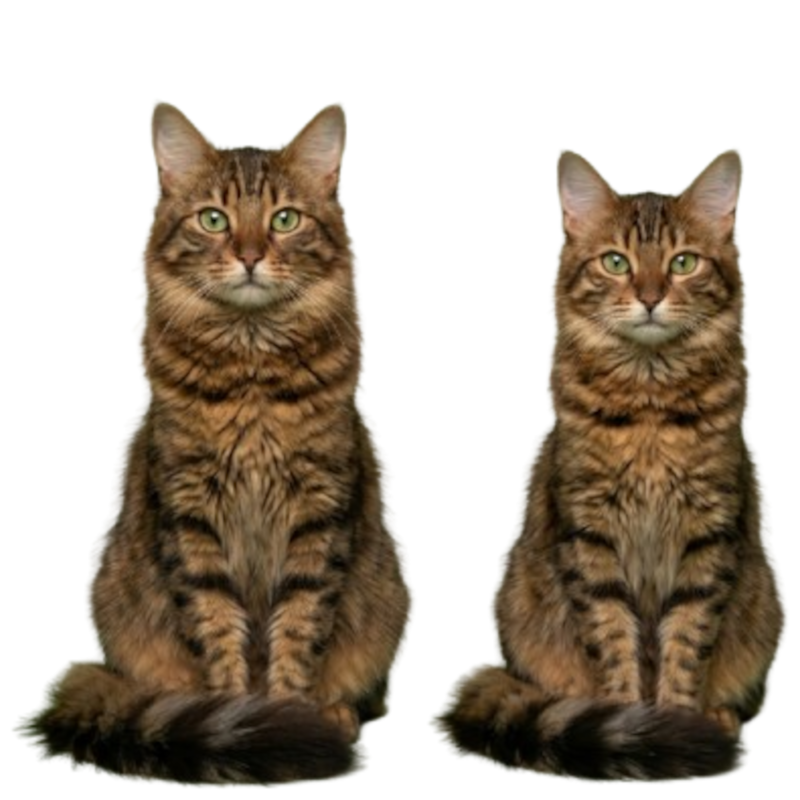
appearance
The Bengal Longhair presents a striking visual harmony between its wild lineage and its domestic nature. It is defined by a powerful, elongated physique and a semi-long coat that preserves the clarity of its ancestral markings. This variety is essentially a luxurious, longer-haired expression of the standard Bengal silhouette—maintaining the same athletic prowess and exotic allure.
Texture and Quality of the Coat
The most significant distinction of the Bengal Longhair lies in its fur. Unlike the dense, woolly undercoats found in many northern domestic breeds, the Bengal Longhair’s coat is designed to be sleek and luminous.
Silky Composition
The fur of the Bengal Longhair is exceptionally fine and has a distinctively soft, pelt-like feel. It flows smoothly over the body’s contours, typically lacking the heavy ruff or “mane” associated with other longhaired felines.
- The Shimmer Effect: Many Bengal Longhairs exhibit a rare genetic trait known as “glitter,” where the hair tips lack traditional pigment and instead reflect ambient light. This creates an effect similar to gold or pearl dust scattered across the coat.
- Minimal Maintenance Needs: Because the coat is single-layered and lacks a thick, downy undercoat, the Bengal Longhair is less prone to the severe matting often seen in traditional longhaired breeds.
Patterns and Visual Depth
The Bengal Longhair’s markings are categorized by extreme clarity and horizontal flow, mimicking the camouflage of forest-dwelling felines.
Rosetted and Spotted
These patterns feature high-contrast shapes that are randomly placed or aligned horizontally. High-quality rosettes often display two distinct shades within a darker outline, providing a three-dimensional depth to the fur.
Marbled Aesthetics
This pattern consists of flowing, swirling ribbons of color. To meet the aesthetic ideal for the Bengal Longhair, these swirls should stretch across the body rather than forming symmetrical “bullseye” shapes.
Structural Build and Athleticism
The physical frame of the Bengal Longhair is built for explosive movement and agility. Its skeletal structure is substantial and firm, supporting a high volume of lean muscle.
Balance and Proportion
The Bengal Longhair is characterized by a long, substantial torso that remains agile rather than bulky.
- Hindquarter Strength: A notable trait of the Bengal Longhair is that its rear legs are slightly longer than its front legs. This anatomical tilt provides the cat with remarkable jumping power.
- The Tail: The tail is typically thick and of medium length, ending in a dark, rounded tip. In the Bengal Longhair, the tail fur is often more voluminous than the body fur—resembling a plush plume.
In terms of physical dynamics, the ratio of the Bengal Longhair’s stride length to its body mass during a sprint can be conceptually expressed through the following relationship:
Jumping Power and Athletic Agility Rule
- : “Stride Distance,” how far the cat flies in one big jump.
- : A symbol meaning “is determined by.”
- : “Leg Power,” the explosive push from the cat’s long, muscular back legs.
- : “Body Weight,” the total mass of the cat.
- : The “Square Root,” showing that doubling your power doesn’t just double your distance—it’s a more complex physical curve.
Imagine a Bengal Longhair weighing with a thrust force of . Their stride factor is . If that same cat gains weight and reaches without gaining muscle, their stride factor drops to . This 21% decrease in relative stride length illustrates why maintaining the lean, “wild” silhouette of the Bengal Longhair is vital; even a small increase in mass () without a corresponding increase in hindquarter power () significantly hampers their trademark aerial agility.
Cranial Structure and Expression
The head of the Bengal Longhair is a modified wedge with soft, rounded edges, appearing slightly small when compared to the powerful neck and shoulders.
Facial Features
The facial structure is designed to project a “nocturnal” and alert expression, reminiscent of a wild predator.
| Feature | Detailed Description |
|---|---|
| Eyes | Large and oval-shaped, set with a slight tilt toward the ears. They appear in deep shades of gold, green, or aqua. |
| Ears | Relatively short with a broad base and rounded tops, following the natural curve of the face. |
| Muzzle | Broad and full, featuring very prominent whisker pads and high, defined cheekbones. |
| Nose | Large and wide, often possessing a “puffed” nose leather that adds to the exotic profile. |
Profile and Chin
When viewed from the side, the Bengal Longhair’s profile shows a very slight, nearly straight concave curve. The chin is remarkably strong and aligns vertically with the tip of the nose, completing a powerful jawline.
Weight and Physical Scale
As a sexually dimorphic breed, the Bengal Longhair shows a significant size difference between the genders.
- Male Bengal Longhairs: Generally reach a weight between 4.5 and 8.2 kg, exhibiting heavy musculature and broader jowls.
- Female Bengal Longhairs: Usually weigh between 3.6 and 5.4 kg, maintaining a more refined but still highly athletic appearance.
The density of the Bengal Longhair’s bone structure ensures that even a smaller-looking cat will feel surprisingly heavy and solid when lifted.
behavior
The observable actions of the Bengal Longhair represent a sophisticated blend of primal instincts and highly developed domestic social skills. Unlike many longhaired varieties that tend toward a more sedentary existence, the Bengal Longhair is defined by its relentless energy, complex environmental engagement, and a profound need for social interaction.
Foraging Instincts and Predatory Drive
A direct inheritance from its wild ancestor—the Asian Leopard Cat—the Bengal Longhair possesses an exceptionally high predatory drive (). This is not merely a hunting reflex but a comprehensive behavioral framework that influences every interaction with its environment.
Simulated Hunting and Play Sequences
For the Bengal Longhair, play is a rigorous reenactment of the predatory cycle: stalking, pouncing, and securing prey.
- Retrieval Instincts: Many Bengal Longhairs show a natural penchant for fetching, bringing objects back to their companions to restart the “hunt.”
- Vertical Agility: Utilizing their dense muscle and elongated hindquarters, Bengal Longhairs often engage in aerial intercepts, leaping significantly higher than average domestic cats to catch moving targets.
- Resource Securing: It is common for the Bengal Longhair to “cache” prized items—such as dropping favorite toys into water bowls or hidden corners to keep them safe for future “consumption.”
Interaction with Water
One of the most atypical behavioral traits of the Bengal Longhair is an intense attraction to water—a stark contrast to the general feline aversion to moisture.
| Water-Related Activity | Behavioral Description |
|---|---|
| Tactile Exploration | The Bengal Longhair will frequently use its paws to stir or splash water in its bowl prior to drinking. |
| Mechanical Learning | Many Bengal Longhairs observe and eventually master the operation of lever-style faucets to access fresh streams. |
| Communal Bathing | It is remarkably common for the Bengal Longhair to attempt to join its owners in showers or basins. |
Social Cognition and Communication
The Bengal Longhair is an exceptionally expressive and present animal. They do not merely reside in a household; they actively participate in its social fabric through constant interaction.
Complex Vocalizations
The vocal repertoire of the Bengal Longhair is extensive and rarely involves a simple “meow.” Instead, they utilize a range of multi-syllabic chirps, trills, and deep-toned vocalizations to communicate specific needs or emotional states. This varied language is a direct indicator of the Bengal Longhair’s high level of social intelligence.
Attachment and Interaction
The Bengal Longhair typically forms an intense, almost shadow-like bond with its primary caregivers, often referred to as “velcro” behavior.
- Active Observation: The Bengal Longhair often follows its human companions from room to room—not out of hunger, but out of a genuine desire to monitor and participate in household activities.
- Manipulative Intelligence: Their behavior frequently involves “assisting” with tasks—such as investigating the contents of a shopping bag or interacting with a keyboard during use.
Spatial Awareness and Environmental Engagement
The Bengal Longhair views its territory in three dimensions. They are seldom found resting on the floor, as their instincts drive them toward high-altitude vantage points for security and surveillance.
Verticality and Potential Energy
A Bengal Longhair is most comfortable when perched atop high cabinets or shelves. The potential energy that the cat seeks at a specific height is modeled by:
High-Perch Energy and Tactical Advantage
- : “Stored Energy,” the potential energy the cat has while sitting up high.
- : The “Weight” of the cat in kilograms.
- : “Gravity,” the natural pull of the Earth (fixed at 9.81).
- : “Height,” how many meters the shelf or cat tree is above the floor.
If a Bengal Longhair with a mass of climbs to the top of a bookshelf that is high, the potential energy is calculated as . This results in of potential energy. For Bengal Longhairs, reaching this state of high is a psychological necessity; it represents the “tactical high ground” from which they can safely observe their environment, a behavior deeply rooted in their wild ancestry.
Where represents the Bengal Longhair’s mass and is the acceleration due to gravity. This drive for height allows them to survey their territory with a sense of security and dominance.
Dexterity and Problem Solving
Because of their observant nature and physical dexterity, the Bengal Longhair is often capable of opening doors, cabinets, and even latch-based security devices. This high-level problem-solving behavior requires owners to maintain a “Bengal-proof” environment to ensure the safety of the Bengal Longhair.
Circadian Activity and Energy Bursts
While they generally synchronize with the household’s rhythm, Bengal Longhairs often experience periods of intense crepuscular activity. During these intervals, the Bengal Longhair may perform high-speed navigational sprints—using walls and furniture to pivot and maintain momentum—a physical expression of its deep-seated need for kinetic release.
color
The visual identity of the Bengal Longhair is defined by a vivid spectrum of base tones and high-definition markings. Because the variety possesses a semi-long coat, the preservation of color clarity is vital to ensure the intricate patterns do not become blurred or muddy against the background.
Traditional Brown and Rufous Tones
The brown tabby represents the foundational color group for the Bengal Longhair, designed to emulate the natural camouflage of forest-dwelling wild felines.
Ground Color Variation
The base hue—often referred to as the ground color—should display a warm, radiant quality.
- Tonal Diversity: These shades range from soft honey and toasted gold to a deep, vibrant orange-red known as rufous.
- Contrast Intensity: To maintain the Bengal Longhair’s exotic look, the markings must be significantly darker than the base, appearing in deep charcoal, espresso, or dark mahogany.
- Ventral Contrast: A desirable trait in the Bengal Longhair is a lighter, creamy white underbelly and chin, which provides a sharp break from the saturated colors of the flanks and back.
Silver and Inhibited Pigmentation
The Silver Bengal Longhair is the result of a specific genetic inhibitor that prevents warm yellow or red pigments from developing in the hair shaft, leaving a monochromatic finish.
Purity and Shimmer
In high-quality silver Bengal Longhairs, the ground color is a crisp, cool white that remains free of “tarnish”—the brownish tint that can occasionally appear in lesser-quality coats.
- Pattern Definition: Markings on a silver background are typically a dense, obsidian black, creating the most aggressive contrast found in the breed.
- Structural Brilliance: On these cool-toned coats, the characteristic “glitter” appears as a silvery, diamond-like dusting rather than the golden glow seen on warm-toned cats.
The Snow Complex
The “Snow” varieties of the Bengal Longhair trace their origins to the introduction of recessive genes from pointed breeds, resulting in a look that mirrors the camouflage of alpine predators.
| Color Category | Base Tone | Marking Hue | Ocular Pigmentation |
|---|---|---|---|
| Seal Lynx | Ivory or Off-White | Soft to Dark Brown | Intense Blue |
| Seal Mink | Warm Cream / Tan | Medium Chocolate | Aqua or Blue-Green |
| Seal Sepia | Light Beige | Deep Earthy Brown | Gold or Emerald |
Uncommon and Specialized Shading
Beyond the primary categories, the Bengal Longhair may manifest in several unique and rarer colorations that are gaining recognition for their distinct aesthetics.
Blue and Charcoal Variations
- Blue: This involves a dilute gene that turns the ground color a soft slate-grey, with markings appearing in a darker navy or denim tone.
- Charcoal: This is characterized by a “Zorro-style” facial mask and a dark, shadowy cape along the spine—which significantly increases the visual density of the Bengal Longhair’s pattern.
Melanistic Expression
Melanistic Bengal Longhairs possess a coat so saturated with dark pigment that they appear solid black. However, their patterns are often visible as “ghost markings” when viewed under specific lighting conditions—such as direct ultraviolet exposure.
Structural Color and Light Refraction
The perceived depth of Bengal Longhair’s coloration is partially a result of the physical structure of the hair. The “Glitter” phenomenon occurs because the tips of the fur are translucent and lack pigment, allowing light to refract through the hair shaft. The intensity of this reflected light can be expressed as a function of the angle of incidence :
Coat “Glitter” and Light Reflection Intensity
- : “Sparkle Brightness,” how much glitter you see at a certain angle.
- : “Max Glow,” the brightest the fur can shine when light hits it perfectly straight.
- : “Light Angle,” the slant of the light hitting the hair.
- : The “Spread Factor,” a math rule that explains how light softens as the cat moves or curves.
Imagine a Bengal Longhair standing under a single overhead LED ( lumens). On the flat of the cat’s back, the light hits at an angle of . Since , the glitter intensity is lumens. However, along the curved flank where the angle of incidence shifts to , the intensity becomes lumens. This mathematical drop-off is why the Bengal Longhair’s metallic “glow” appears to roll across their body like liquid as they move, constantly shifting the values for the observer.
This physical attribute ensures that even a darker-colored Bengal Longhair will appear to possess a metallic or glowing quality as it moves through a brightly lit environment.
compatibility
Ease of Maintenance
Rating: 3/5
Child Friendly
Rating: 3/5
Annual Cost
Rating: 2/5
Lifetime Cost
Rating: 2/5
Adaptability
Rating: 3/5
Velcro Factor
Rating: 3/5
Quietude
Rating: 2/5
Apartment Suitability
Rating: 1/5
Hypoallergenic
Rating: 3/5
Handling Tolerance
Rating: 2/5
Hardiness/Longevity
Rating: 3/5
Prey Drive
Rating: 1/5
genetics
The genomic profile of the Bengal Longhair is a sophisticated intersection of wild-derived traits and domestic mutation selections. The primary genetic distinction of the Bengal Longhair is the presence of the longhair gene within the established Bengal framework—a result of specific recessive inheritance patterns.
The Longhair Mutation and FGF5 Logic
The semi-long coat of the Bengal Longhair is governed by the Fibroblast Growth Factor 5 (FGF5) gene. In the context of this variety, long hair is typically an autosomal recessive trait.
Recessive Allele Interaction
For a Bengal Longhair to manifest the longhair phenotype, it must inherit two copies of the recessive allele (). The probability of phenotypic expression when breeding two heterozygous (carrier) parents follows a standard Mendelian distribution:
| Parental Gametes | L (Shorthair Allele) | l (Longhair Allele) |
|---|---|---|
| L | LL (Homozygous Shorthair) | Ll (Heterozygous Carrier) |
| l | Ll (Heterozygous Carrier) | ll (Phenotypic Bengal Longhair) |
The allele was historically introduced into the lineage through early domestic outcrosses. In a contemporary Bengal Longhair, this gene results in a fine, silky texture that lacks the dense, woolly undercoat characteristic of other longhaired domestic cats.
Hybridization and Interspecies Introgression
The ancestry of the Bengal Longhair involves the successful hybridization of the Asian Leopard Cat (Prionailurus bengalensis) and the domestic cat (Felis catus).
Chromosomal Compatibility
Both ancestral species possess chromosomes, which facilitates the production of fertile offspring—particularly in later filial generations ( and beyond). The introgression of wild DNA contributes to the unique pelt structure and the presence of the “glitter” modifier.
The Physics of the Glitter Gene
The shimmering effect seen on the Bengal Longhair is a recessive modifier that alters the physical structure of the hair tip. By removing pigment from the translucent tip, the hair maximizes light reflection. The reflectance can be modeled by the refractive indices of the hair shaft () and the air ():
Hair Tip Shine and Sparkle Coefficient
- : “Reflectance,” the percentage of light that bounces off the hair to create a sparkle.
- : The “Hair Index,” how much the specialized, hollow hair tip of the Bengal Longhair bends light.
- : The “Air Index,” the standard value for the air around the cat (usually 1.0).
- : A math squaring rule used to calculate how light moves between the air and the hair.
If a Bengal Longhair has a specialized “glitter” hair structure with a refractive index () of and is standing in a room (air ), the calculation is . This simplifies to . This means roughly 4.65% of all light hitting the hair tips perpendicularly is reflected back as a metallic sparkle. Without the “glitter” gene, would be lower due to pigment absorption, significantly reducing the value and resulting in a “flat” coat appearance.
Coat Pattern Genetics and the Tabby Locus
The markings of the Bengal Longhair are managed by the Tabby () locus and various polygenetic modifiers that determine the visual flow of the coat.
The Agouti () Gene
The Agouti gene () regulates the distribution of black pigment. In Bengal Longhairs, the dominant allele allows the pattern to be expressed by cyclically “switching” pigment production during the growth of the hair shaft.
Pattern Alleles: Spotted vs. Marbled
The specific arrangement of the coat is determined by the interaction of the Laped () and blotched () alleles:
- Rosetted Patterns: These are driven by dominant alleles and influenced by modifiers that expand solid spots into rosettes—creating a dark perimeter with a lighter internal color.
- Marbled Patterns: This is a recessive trait () that results in a swirled, horizontally oriented aesthetic that lacks the vertical orientation of standard tabby stripes.
The Snow Complex and Color Inhibition
The “Snow” varieties of the Bengal Longhair are governed by the C-locus (Tyrosinase gene), which manages temperature-sensitive albinism.
| Genetic Combination | Phenotype Name | Ancestral Origin |
|---|---|---|
| cs cs | Seal Lynx Point | Siamese-derived recessive |
| cb cb | Seal Sepia | Burmese-derived recessive |
| cb cs | Seal Mink | Heterozygous intermediate |
Additionally, the Silver Bengal Longhair is produced by the dominant Inhibitor gene (). This gene suppresses phaeomelanin (warm pigments) while allowing eumelanin (dark pigments) to remain, resulting in a stark, monochromatic contrast.
Genomic Health and Selection Criteria
Breeding the Bengal Longhair involves rigorous DNA screening to identify and eliminate specific hereditary pathologies:
- PK-Def (Pyruvate Kinase Deficiency): An autosomal recessive condition causing hemolytic anemia.
- PRA-b (Bengal Progressive Retinal Atrophy): A recessive mutation that leads to early-onset retinal degeneration.
By carefully monitoring the coefficient of inbreeding (), breeders ensure that the Bengal Longhair maintains biological vigor while expressing the complex aesthetic traits encoded in its hybrid genome.
health
The health profile of the Bengal Longhair is generally robust, benefiting from the genetic diversity introduced through its hybrid ancestry. However, like all specialized varieties, the Bengal Longhair is predisposed to specific hereditary conditions that require proactive genomic screening and clinical monitoring to ensure longevity.
Cardiovascular Health
The most significant concern for the Bengal Longhair involves the integrity of the cardiac muscle, specifically regarding structural thickening that can impede blood flow.
Hypertrophic Cardiomyopathy (HCM)
HCM is a condition characterized by the progressive thickening of the left ventricular walls. In Bengal Longhairs, this is typically regarded as a polygenic trait where multiple genetic markers influence the speed and severity of the condition.
- Screening Protocol: Since a definitive DNA marker has not yet been isolated for this specific lineage, annual echocardiograms performed by a veterinary cardiologist remain the only reliable method for Bengal Longhair’s health surveillance.
- Clinical Indicators: The condition often remains hidden until advanced stages, making regular ultrasound imaging essential for detecting changes in cardiac wall density before the onset of heart failure.
Hereditary Metabolic and Ocular Disorders
Targeted genetic research has identified specific recessive mutations within the Bengal Longhair population. Ethical breeding programs utilize DNA mapping to prevent these pathologies from being expressed in offspring.
Pyruvate Kinase Deficiency (PK-Def)
PK-Def is an inherited metabolic disorder involving an enzyme deficiency that is vital for red blood cell energy production.
- Genetic Mechanics: This is an autosomal recessive trait. While a Bengal Longhair carrier (heterozygous) will not show symptoms, a Bengal Longhair with two copies of the mutation will suffer from intermittent hemolytic anemia.
- Symptomatic Presentation: Affected Bengal Longhairs may demonstrate chronic lethargy, pale gums, and an enlarged spleen (splenomegaly).
Progressive Retinal Atrophy (PRA-b)
The “b” variant of PRA is a specific mutation that targets the photoreceptor cells within the Bengal Longhair’s eyes.
- Pathological Progression: This condition leads to the gradual degeneration of the retina. It often begins as night blindness in the Bengal Longhair before culminating in total vision loss.
- Prevention: Although there is no clinical cure, the disease is entirely avoidable through DNA screening of the parental stock.
Gastrointestinal and Nutritional Physiology
The Bengal Longhair often retains a shorter digestive tract relative to its body mass—a morphological trait inherited from its wild progenitors.
Dietary Sensitivity and Absorption
Many Bengal Longhairs have difficulty processing high-carbohydrate fillers or plant-based proteins found in generic commercial foods. A diet focused on high-quality animal proteins is typically required to maintain healthy gut flora and prevent chronic digestive upset.
Susceptibility to Protozoal Infection
While not a genetic defect, Bengal Longhairs are statistically more vulnerable to Tritrichomonas foetus, a parasite that causes persistent large-bowel inflammation. Because of the high metabolic rate of the Bengal Longhair, the resulting dehydration can become critical if not addressed rapidly.
Anesthetic Safety and Pharmacological Response
Clinical evidence suggests that the Bengal Longhair may possess a unique sensitivity to certain anesthetic agents, most notably Ketamine.
Metabolic Dosage Modeling
The way the Bengal Longhair processes medication is influenced by its low body fat percentage and high metabolic velocity. When determining a safe dosage , practitioners must account for the relationship between metabolic speed and total mass:
Metabolic Speed and Medicine Processing Rate
- : “Effective Dose,” how much medicine actually stays working in the cat’s body.
- : A symbol meaning “is related to.”
- : “Metabolic Speed,” how fast the cat’s athletic body burns through energy and chemicals.
- : The total weight of the cat in kilograms.
Consider a Bengal Longhair with a highly athletic build () and a mass of . Their ratio is . Compare this to a sedentary domestic cat with a slower metabolism () and the same mass (), which yields a ratio of . Because the Bengal Longhair’s ratio is 50% higher, a standard “by-the-book” weight-based dose may be metabolized too quickly, potentially requiring a veterinarian to adjust the value or use a more precise delivery method like constant rate infusion (CRI) to maintain therapeutic levels.
Owners should ensure that their veterinarian utilizes modern, volatile anesthetic gases like Isoflurane or Sevoflurane to enhance the surgical safety of the Bengal Longhair.
Skeletal Integrity and Joint Longevity
The intense athletic maneuvers performed by the Bengal Longhair—including high-velocity sprints and vertical leaps—place significant demand on its skeletal framework.
| Condition | Physiological Description | Management Strategy |
|---|---|---|
| Patellar Luxation | Instability or displacement of the kneecap | Maintaining an athletic weight to minimize joint load |
| Hip Dysplasia | Improper fit of the femoral head in the hip socket | Radiological screening of breeding pairs |
| Degenerative Joint Disease | Wear of protective cartilage over time | Supplementation with joint-supportive nutrients |
By providing the Bengal Longhair with adequate vertical space and high-impact play areas, owners can help maintain the muscle mass required to stabilize these vital joints.
longevity
The Bengal Longhair typically enjoys a long and active life, with an average lifespan ranging between 12 and 16 years. Some individuals, supported by optimal genetics and meticulous indoor care, have been known to reach their late teens or early twenties. The longevity of the Bengal Longhair is a product of its hybrid vigor, though it remains influenced by environmental stressors and hereditary health management.
Factors Influencing Longevity
Several variables determine the total years and the quality of life an individual Bengal Longhair will experience.
Environmental Safety and Indoor Lifestyle
Statistically, Bengal Longhairs kept exclusively indoors live significantly longer than those allowed to roam freely.
- Risk Mitigation: Indoor environments protect the Bengal Longhair from viral infections—such as FeLV and FIV—territorial conflicts with local fauna, and vehicular accidents.
- Cognitive Enrichment: Because of the Bengal Longhair’s high intelligence, a lack of mental stimulation can lead to stress, which may suppress the immune system. A long-lived Bengal Longhair is typically one provided with ample vertical space and interactive challenges.
Nutritional Impact on Biological Aging
The metabolic demands of the Bengal Longhair require a diet that supports lean muscle mass without inducing obesity, which is a known catalyst for feline diabetes and joint degradation.
- Renal Support: In the later years of a Bengal Longhair’s life, maintaining kidney function is paramount. Diets with controlled phosphorus levels can extend the duration of the geriatric stage.
The Aging Process and Physiological Decline
The Bengal Longhair undergoes distinct life stages, each requiring different veterinary and domestic interventions to maximize remaining life expectancy.
| Life Stage | Age Range | Focus Areas |
|---|---|---|
| Kittenhood | 0–12 Months | Immunizations and high-protein growth support |
| Prime/Adult | 1–7 Years | Weight management and dental prophylaxis |
| Mature | 7–11 Years | Early screening for cardiac changes and metabolic shifts |
| Senior/Geriatric | 12+ Years | Renal monitoring and mobility assistance |
Mathematical Modeling of Feline Aging
To better understand the biological progress of the Bengal Longhair, aging can be compared to human years. While the first two years involve rapid maturation, the subsequent years follow a more linear progression. A common approximation for the human-equivalent age based on the chronological age of the Bengal Longhair () after the age of two is:
Cat-to-Human Age Comparison Calculator
- : The cat’s age in “Human Years.”
- : The cat’s “Real Age” in actual calendar years (must be at least 2).
- : The human years a cat “earns” by its 2nd birthday (finishing its “teen” years).
- : The “Adult Aging Factor,” where every 1 cat year equals 4 human years.
- : The number of years the cat has been a full adult.
If a Bengal Longhair is currently years old, we calculate their biological maturity as follows: . This becomes , which equals , resulting in a human-equivalent age of . For a high-energy breed like the Bengal Longhair, this -year-old equivalent is a critical benchmark where a veterinarian might suggest transitioning from a standard high-protein diet to one that supports kidney longevity (Renal-Supportive nutrition) to match their aging internal physiology.
This model illustrates that every year of a Bengal Longhair’s adult life is roughly equivalent to four human years, emphasizing the importance of semi-annual veterinary checkups in the senior years.
Preventive Medicine and Long-Term Survivability
The longevity of the Bengal Longhair is directly linked to early detection of the “silent” conditions common to the lineage.
Dental Health and Systemic Longevity
Chronic dental issues—such as resorptive lesions or gingivitis—are common in Bengal Longhairs. If left untreated, bacteria from the oral cavity can enter the bloodstream, potentially causing secondary damage to the heart and kidneys. Regular professional cleanings are essential for extending the Bengal Longhair’s functional lifespan.
Weight and Joint Preservation
The Bengal Longhair is an exceptionally athletic animal. However, as they age, the cumulative impact of high-energy leaping can lead to osteoarthritis.
- Weight Correlation: Every kilogram of excess adipose tissue significantly increases the load on the Bengal Longhair’s joints, accelerating mobility decline.
- Supportive Care: The use of glucosamine and chondroitin, alongside low-impact exercise, helps maintain a high quality of life into the Bengal Longhair’s late senior years.
End-of-Life Quality and Geriatric Care
In the final stages, Bengal Longhairs often require environmental modifications—such as heated beds to soothe aging joints and low-entry litter boxes. By focusing on palliative comfort and metabolic stability, owners can ensure that the Bengal Longhair remains a vibrant member of the household for as long as biologically possible.
maintenance
Providing proper maintenance for the Bengal Longhair requires a balanced approach that addresses their specialized coat texture, high metabolic demands, and intense cognitive requirements. Unlike the shorthaired variety, the Bengal Longhair necessitates a specific grooming cadence to prevent the semi-long fur from losing its characteristic silkiness.
Coat Care and Grooming Protocols
The Bengal Longhair’s coat is considered a “low-maintenance” longhair variety because it lacks a dense, woolly undercoat. However, regular intervention is required to manage shedding and preserve the “glitter” effect.
Brushing Frequency and Tools
To prevent matting and minimize the ingestion of fur during self-grooming, a consistent schedule is essential.
- Weekly Maintenance: A stainless steel comb or a soft slicker brush should be used at least twice weekly. This removes loose guard hairs before they can weave into the coat.
- Seasonal Shedding: During the transition between spring and autumn, Bengal Longhairs may experience increased shedding. Daily brushing during these periods reduces the risk of trichobezoars—commonly known as hairballs.
- Glitter Preservation: Avoid over-using heavy oils or silicone-based sprays, which can cause the translucent hair tips of the Bengal Longhair to clump and lose their light-refractive properties.
Hygiene and Bathing
While many Bengal Longhairs exhibit a unique fascination with water, frequent bathing is generally unnecessary unless the coat becomes soiled.
- Water Exposure: If a bath is required, use a high-quality, residue-free feline shampoo.
- Drying: Due to the fine texture of the Bengal Longhair’s fur, air drying in a warm room is often sufficient, though a low-heat blow dryer can be used if the cat is desensitized.
Nutritional Maintenance and Metabolic Support
The Bengal Longhair possesses an exceptionally high activity level, necessitating a caloric intake that supports lean muscle mass without promoting adipose tissue accumulation.
Macronutrient Ratios
The Bengal Longhair’s diet should prioritize animal-based proteins over plant-based fillers. A common target for the Daily Energy Requirement () can be calculated using the following formula for an active adult Bengal Longhair:
Daily Calorie Goals for High-Energy Cats
- : “Daily Calories,” the total energy (kcal) the cat needs to eat every day.
- : The “Bengali Bonus,” an extra energy multiplier for this very active breed.
- : The “Nap-Time Baseline,” the energy needed just to stay alive while resting.
- : The cat’s weight in kilograms.
- : A “Scaling Factor” that adjusts calorie needs based on body size.
To calculate the dietary needs for a Bengal Longhair, we first find the : . We then apply the activity multiplier for this energetic breed: . If your specific Bengal Longhair’s high-protein food contains , you would divide by to determine that they require exactly cups of food per day to maintain their athletic silhouette.
Hydration Management
Because Bengal Longhairs are prone to renal issues later in life, maintaining high hydration levels is critical. Utilizing a circulating water fountain often appeals to the Bengal Longhair’s natural instinct for running water.
Environmental Enrichment and Behavioral Needs
Maintenance of the Bengal Longhair extends beyond the physical; their mental health is inextricably linked to their physiological well-being.
Vertical Space and Exercise
Bengal Longhairs are proficient climbers and require vertical territory to feel secure.
- Climbing Apparatus: Floor-to-ceiling cat trees and wall-mounted shelving are vital for the Bengal Longhair’s musculoskeletal health.
- Interactive Play: Dedicated play sessions simulating “the hunt”—using wand toys or laser pointers—should occur at least twice daily to expend the Bengal Longhair’s significant energy reserves.
Cognitive Stimulation
The Bengal Longhair is highly intelligent and can become destructive if bored.
| Enrichment Type | Examples | Benefit |
|---|---|---|
| Puzzle Feeders | Treat mazes, food eggs | Mimics foraging behavior |
| Clicker Training | Sitting, fetching, walking on a leash | Strengthens the human-cat bond |
| Olfactory | Silvervine, catnip, valerian | Provides sensory variety |
Routine Health Maintenance
Proactive veterinary care is the final pillar of Bengal Longhair’s maintenance.
- Dental Hygiene: Due to a predisposition for gingivitis, daily teeth brushing with feline-specific enzymatic toothpaste is recommended.
- Claw Maintenance: Trim the Bengal Longhair’s claws every two to three weeks. Providing varied scratching surfaces—sisal, wood, and cardboard—will help the Bengal Longhair manage their own nail sheaths.
- Auricular Cleaning: Periodically check the ears for wax buildup or debris, especially since the Bengal Longhair’s active lifestyle can lead to increased dirt accumulation.
measurements
| Measurement | Female | Male | ||
|---|---|---|---|---|
| Metric | Imperial | Metric | Imperial | |
height | 20 – 28 centimeters | 8 – 11 inches | 25 – 36 centimeters | 10 – 14 inches |
length | 36 – 46 centimeters | 14 – 18 inches | 43 – 56 centimeters | 17 – 22 inches |
weight | 3.6 – 5.4 kilograms | 8 – 12 pounds | 4.5 – 8.2 kilograms | 10 – 18 pounds |
• Height: Refers to the measurement at the withers (shoulders).
• Length: Measured from the tip of the nose to the base of the tail.
origin
The development of the Bengal Longhair is a narrative of genetic persistence—an accidental discovery that evolved into a deliberate breeding program. While the shorthaired Bengal is widely recognized for its hybrid wild ancestry, the longhaired variety represents the emergence of a recessive trait that was carried silently through generations of the lineage.
The Foundation of Hybridization
The primary ancestry of the Bengal Longhair begins with the successful crossbreeding of the wild Asian Leopard Cat (Prionailurus bengalensis) and domestic cats (Felis catus).
The Jean Mill Influence
In the 1960s and 1980s, Jean Mill was instrumental in establishing the foundation of the Bengal breed. To achieve the desired wild aesthetic and stable temperament, Mill utilized various domestic outcrosses, including the Egyptian Mau and the Abyssinian. It was during these early outcrossings that the longhair gene was inadvertently introduced into the Bengal Longhair’s genetic reservoir.
The Science of the Recessive Longhair Trait
The longhair phenotype in Bengal Longhairs is governed by the Fibroblast Growth Factor 5 (FGF5) gene. Because this trait is autosomal recessive, it remained hidden for decades within the population.
Mendelian Inheritance Patterns
For a Bengal Longhair to express a semi-long coat, both parents must carry the allele. If two carriers are bred, the probability of the offspring’s phenotype can be modeled as:
Odds of Having a “Cashmere” (Longhair) Kitten
- : The 25% “Statistical Chance” of a kitten having long hair.
- : The standard odds when both parents carry one hidden long-hair gene.
- : The “Short-Hair Gene” (Dominant).
- : The “Long-Hair Gene” (Hidden/Recessive).
Imagine a breeding program for standard Bengals where both the sire and dam are shorthaired but happen to be “carriers” of the recessive longhair gene (). In a litter of 4 kittens, we use the formula to predict the outcome: , or . This means, statistically, one kitten will be a homozygous recessive Bengal Longhair (), two kittens will be shorthaired carriers (), and one will be a homozygous dominant shorthair (). This chance is exactly how the Bengal Longhair originally surfaced as a “surprise” in traditional Bengal litters.
Historically, longhaired kittens born into shorthair litters were considered “non-standard” and were often placed as pets. It was not until breeders recognized the unique, silk-like quality of the Bengal Longhair’s fur—which differs significantly from the woolly coats of other longhaired breeds—that a movement began to recognize them as a distinct variety.
| Parent 1 (Carrier) | L (Shorthair) | l (Longhair) |
|---|---|---|
| L (Shorthair) | LL (Homozygous Shorthair) | Ll (Heterozygous Carrier) |
| l (Longhair) | Ll (Heterozygous Carrier) | ll (Phenotypic Bengal Longhair) |
Formal Recognition and Breed Evolution
The path to formal acceptance for the Bengal Longhair involved rigorous evaluation by feline registries to ensure that the variety maintained the core characteristics of the Bengal breed, such as the rosetted or marbled pattern and the athletic morphology.
TICA Recognition
The International Cat Association (TICA) eventually granted the variety full championship status. Unlike some other registries that gave the variety a separate name (such as “Cashmere”), TICA recognized it as the longhaired division of the Bengal breed.
Distinguishing Characteristics
The Bengal Longhair is distinguished from other longhaired cats by several key ancestral markers:
| Feature | Bengal Longhair Attribute | Ancestral Influence |
|---|---|---|
| Coat Texture | Silky, single-layered, pelt-like | Wild Asian Leopard Cat |
| Patterning | High-contrast rosettes or marbling | Prionailurus bengalensis |
| Glitter | Translucent hair tips | Domestic Outcross Selection |
The Contemporary Bengal Longhair
Today, the Bengal Longhair is bred specifically to showcase the marriage of the wild hybrid look with a luxurious, flowing coat. Modern DNA testing allows breeders to identify carriers of the allele with 100% accuracy, moving the breed away from accidental discovery toward a precise and ethical selection process. This ensures that the Bengal Longhair remains a healthy, vibrant, and genetically diverse member of the feline fancy.
temperament
The temperament of the Bengal Longhair is a sophisticated intersection of wild intensity and domestic sociality. Unlike many longhaired breeds that exhibit a sedentary or “lap-cat” disposition, the Bengal Longhair possesses a high-voltage psyche that demands engagement. Their internal world is defined by high cognitive transparency—their emotional states are usually vivid and easily read by their human counterparts.
Core Temperamental Pillars
The Bengal Longhair’s personality is built upon three primary psychological drivers: curiosity, social confidence, and tenacity.
High-Intensity Curiosity
The Bengal Longhair does not merely observe their environment; they investigate it. This is a fundamental trait inherited from their wild ancestors, where survival depended on an acute awareness of environmental changes.
- Environmental Analysis: A Bengal Longhair will often spend hours analyzing the mechanics of a door handle or the flow of water.
- Novelty Seeking: They have a high threshold for boredom and an insatiable appetite for new stimuli, making them highly adaptable to changes in the household, provided they are mentally stimulated.
Social Confidence and Gregariousness
Bengal Longhairs are rarely “wallflowers.” They tend to meet visitors at the door and involve themselves in every household activity, from culinary preparation to administrative tasks.
- Human-Centric Bonding: The Bengal Longhair forms intense, almost “dog-like” bonds. They do not just seek affection; they seek partnership.
- Inter-species Compatibility: Due to their fearless nature, Bengal Longhairs often integrate seamlessly with other high-energy pets—such as dogs—viewing them as playmates rather than threats.
Emotional Intelligence and Communication
The Bengal Longhair is an exceptionally vocal breed, though their communication is not limited to sound. They use a complex array of body language and vocalizations to express their internal state.
Vocal and Physical Expression
The Bengal Longhair’s vocabulary is vast, ranging from soft chirps and trills to guttural “growls” of excitement.
- Vocal Assertiveness: When a Bengal Longhair desires interaction or feels a routine has been missed, they are unapologetically communicative.
- Tactile Engagement: They often use their paws—which are remarkably dexterous—to tap their owners, “fetch” items, or lead humans toward their areas of interest.
Intellectual Tenacity and Problem Solving
The intelligence of the Bengal Longhair is not just passive; it is active and often described as tenacious.
Cognitive Persistence
If a Bengal Longhair determines that an object is of interest, they will utilize multiple strategies to obtain it. This persistence can be modeled as a function of their motivation level () and their problem-solving capacity ():
Problem-Solving Success and Persistence Score
- : The “Success Chance” of the cat opening a door or solving a puzzle.
- : A symbol meaning “is driven by.”
- : “Motivation,” how badly the cat wants that treat or toy.
- : “Brain Power,” the cat’s natural ability to learn and solve problems.
Imagine a Bengal Longhair trying to open a child-proof cabinet containing treats. If their motivation () is a (due to a high-value snack) and their capacity () is an (having previously mastered door handles), their effectiveness score is . Compare this to a standard domestic cat with the same capacity () but low motivation (); their score is only . The Bengal Longhair’s score of suggests they will not only attempt to pull the handle but will likely shift to sliding, prying, or using their weight to bypass the latch until they succeed.
Training Receptivity
Because of their desire for engagement and high cognitive capacity, the Bengal Longhair is highly receptive to operant conditioning. They view training sessions as a form of play and mental work—which is essential for their emotional stability.
Summary of Temperamental Traits
The following table categorizes the key temperamental differences between the Bengal Longhair and more traditional longhaired domestic cats:
| Trait | Bengal Longhair Disposition | Typical Longhair Disposition |
|---|---|---|
| Activity Level | Hyper-active / Athletic | Sedentary / Relaxed |
| Social Approach | Proactive and Intrusive | Reactive or Passive |
| Problem Solving | Analytical and Persistent | Low to Moderate Engagement |
| Response to Water | High Fascination / Attraction | Traditional Aversion |
| Vocal Profile | Complex and Frequent | Simple and Occasional |
The “Wild” vs. “Domestic” Equilibrium
The most distinctive aspect of the Bengal Longhair’s temperament is the equilibrium they maintain between their wild lineage and their domestic reality. While they possess the predatory drive and focus of the Asian Leopard Cat, this is tempered by a deep-seated need for human companionship. This results in a cat that is fiercely independent in thought yet emotionally dependent on its social structure.