Balinese Cat
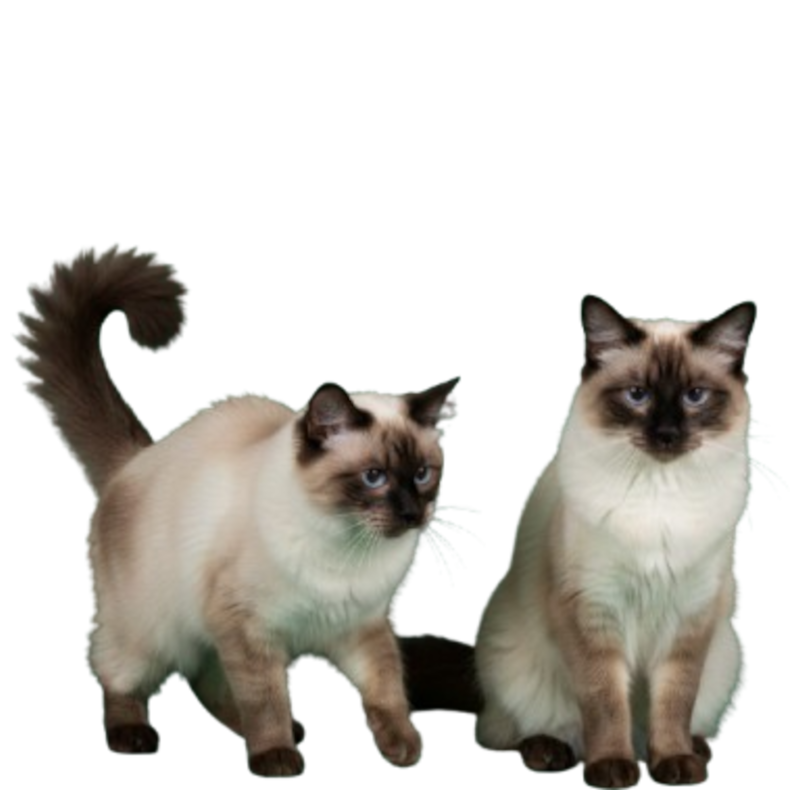
appearance
The Balinese is distinguished by a silhouette of extreme refinement, possessing a lithe, tubular frame and a glossy, flowing coat. While genetically sharing the blueprint of the Siamese, Balinese’s physical form is characterized by a unique combination of elongated lines and a silky texture that avoids the bulk seen in many other long-haired varieties.
Anatomical Composition and Build
The physical framework of the Balinese adheres to the elegant “Oriental” standard, where every anatomical feature is defined by length and tapering symmetry.
Torso
The body is remarkably long and slender. Balineses maintain a tight abdominal line and firm, lean musculature, presenting an athletic profile that remains graceful in motion.
Limbs
The legs are slim and elongated, with the posterior legs being taller than the anterior ones. This structural imbalance facilitates a high-seated, dignified posture.
Paws
The feet are dainty and oval-shaped, finishing the long lines of the legs with five toes on the front paws and four on the rear.
Facial Architecture and Features
The head serves as a focal point of Balinese’s sophisticated heritage, appearing as a perfectly balanced wedge.
Cranial Wedge
A continuous triangle is formed from the nose extending to the outer tips of the ears, lacking any narrowing or “pinch” at the muzzle.
Profile Symmetry
When viewed from the side, a Balinese exhibits a straight, unbroken line from the forehead down to the tip of the nose, without a nasal break or dip.
Auricular Structure
The ears are notably large and pricked, featuring a broad base and sharp tips that align with the triangular geometry of the face.
Ocular Characteristics
The eyes are almond-shaped and set at an aesthetic slant toward the nose. In every specimen, the eye color must be a vibrant and saturated blue.
Coat Composition and Texture
The most identifying trait of the Balinese is its specialized fur. Unlike the majority of long-haired felines, the Balinese is a single-coated cat.
Absence of Undercoat
Due to the lack of a thick, downy underlayer, the fur remains flush against the body. This unique trait ensures that the long hair does not mask the athletic definition of the Balinese—providing a streamlined look.
The Tail Plume
The tail represents the most decorative aspect of Balinese’s appearance. It is long and whippy, decorated with fine, spreading hair that forms a distinct fringe or plume.
Point Distribution and Visual Contrast
Balineses are defined by their “pointed” pattern, where the pigment is concentrated on the cooler areas of the body.
| Region | Appearance |
|---|---|
| Mask | Covers the central face and whiskers, linked to the ears via delicate color tracings. |
| Extremities | Consistent coloration across the mask, ears, legs, and tail plume. |
| Main Body | A pale, even background that provides a sharp contrast to the darker points. |
The aesthetic success of a Balinese is often measured by the clarity of the boundary between the body and the points. This relationship of light intensity () can be mathematically modeled to evaluate the sharpness of the pattern:
Point Color Contrast and Sharpness Score
- : The “Contrast Score” (from 0 to 1) showing how much the face and paws stand out.
- : The “Body Brightness” (the light cream or white color of the torso).
- : The “Point Brightness” (the dark color of the ears, face, paws, and tail).
- / : The math symbols used to compare the difference in light between the two areas.
In the Balinese, the beauty of the coat lies in the “crispness” of the points. This model () quantifies that visual impact. Because the Balinese is a long-haired variant of the Siamese, maintaining a high is a challenge for breeders; the longer fur can sometimes “smudge” the boundary. A high value ensures that the elegant, silky body color remains distinct from the deep pigment of the points, highlighting the breed’s graceful silhouette.
It is important to note that a high will indicate that the specimen has a striking, high-contrast look which is favored in the breed standard.
Proportions and Mass
Despite their substantial length, Balineses are remarkably light. Their fine-boned structure means they often feel lighter than their visual size suggests when handled.
Males
Typically exhibit more substantial muscle tone while maintaining a sleek, tubular geometry.
Females
Usually more delicate, emphasizing the breed’s characteristic fragility and refinement.
behavior
The conduct of the Balinese is distinguished by a combination of vigorous physical exertion, investigative curiosity, and a profound degree of social participation. While personality traits define their inner nature, their behavioral profile focuses on the specific physical actions, vocal methods, and environmental engagement that occupy their waking hours.
Locomotion and Vertical Navigation
Balineses exhibit a natural inclination for high—energy movement and a consistent drive to occupy elevated spaces. Their physical architecture allows for remarkable precision and speed during navigation.
Elevated Vantage Points
It is a primary behavioral impulse for the Balinese to ascend to the highest available points within a home. This tendency serves as a method for territorial monitoring. It is typical for a Balinese to transition from the ground to the top of a cabinet or door frame with a single, coordinated leap.
Kinetic Agility
The energy profile of a jumping Balinese can be viewed through the lens of kinetic energy (), where represents the cat’s mass and represents its velocity:
Jumping Power and Speed Energy Model
- : The “Leap Energy” generated when the cat jumps or sprints.
- : The “Weight” (mass) of the Balinese.
- : The “Speed” (velocity) of the cat’s movement.
- : “Speed Squared,” showing that moving just a little faster creates a huge boost in jumping power.
The Balinese is an “aerial” breed, known for its svelte, tubular body and long, tapering limbs. Because their mass () is kept low and lean, they can convert muscular power into high velocity () with incredible efficiency. This mathematical relationship () explains how the Balinese can reach the top of a bookshelf with a seemingly effortless flick of their hindquarters—they are built for acceleration rather than brute force.
Because Balinese’s skeletal structure is fine and their mass is lean, they achieve higher rates of acceleration during play than many heavier, broader feline breeds.
Communication and Vocal Strategies
A central behavioral pillar for the Balinese is the use of frequent and varied vocalizations to manipulate their surroundings and maintain contact with their social group.
Reciprocal Dialogue
Rather than limiting vocalization to physical necessities like hunger, Balineses engage in what owners describe as “reciprocal conversation.” They frequently answer when addressed, utilizing specific tonal shifts to acknowledge human interaction.
Spectrum of Vocal Interaction
| Category | Behavioral Context | Occurrence |
|---|---|---|
| Introductory Trill | A brief, ascending sound used to acknowledge a human’s arrival. | Frequent |
| Insistent Vocalization | A harsher, louder tone employed to secure immediate resources. | Occasional |
| Subvocal Murmuring | Low—volume, rhythmic noises made during solitary investigation. | Frequent |
Interpersonal Engagement and Cooperative Habits
Balineses demonstrate a collaborative approach to domestic life that differs significantly from more independent breeds.
Shadowing and Household Involvement
The habit of following a human companion closely is a defining trait of the Balinese. Rather than observing from a distance, they seek to be physically involved in human activities. Whether an owner is working at a desk or performing household maintenance, the Balinese often attempts to touch or investigate the objects being used.
Object Manipulation and Fetching
Many Balineses possess the cognitive ability to retrieve thrown objects—a behavior that combines their predatory instincts with a need for social play. Furthermore, they are adept at using their paws to solve mechanical puzzles, such as operating lever—style door handles or prying open storage containers.
Predatory Simulation and Play
The hunting behaviors of the Balinese are characterized by high focus and rapid execution. In a home environment, these instincts are channeled into play.
Strategic Observation
Balineses often engage in prolonged periods of stationary tracking before committing to a pounce, indicating high levels of patience and focus.
Cognitive Mapping
They exhibit strong spatial memory, frequently returning to the exact location where a toy was previously stowed or hidden.
Requirement for Enrichment
Due to their intelligence, Balineses require varied stimuli to prevent the development of compulsive or destructive behavioral outlets.
Rest and Bonding Rituals
When not in a state of high activity, Balineses demonstrate “velcro” behaviors regarding sleep. They have a strong preference for maintaining physical contact with their human companions or other animals during rest periods. This physical proximity is a critical component of Balinese’s social bonding strategy.
color
The visual identity of the Balinese is defined by temperature—sensitive albinism, a trait dictated by the Himalayan gene. This genetic mechanism produces the “pointed” aesthetic, where pigment is concentrated on the extremities while the main body remains a contrasting lighter shade.
Genetic Foundations of Pointed Pigmentation
The specific distribution of color in the Balinese is controlled by the recessive allele at the color locus. This mutation renders the enzyme tyrosinase heat—labile, meaning it only functions effectively at temperatures lower than the feline core body temperature.
In Balineses, melanin production () is a variable dependent on the surface temperature () of the skin. This relationship can be modeled as:
Body Heat and Color Production Rule
- : The “Color Amount” (melanin) created based on how warm the skin is.
- : A symbol meaning “changes along with.”
- : The “Color Speed,” or how fast the cat’s skin reacts to cold.
- : The “Magic Temperature” (about 100°F) where color stops forming.
- : The “Actual Skin Temperature” of a specific part of the cat.
In the Balinese, this piecewise function dictates the entire aesthetic. At the core, where , melanin production drops to zero, resulting in the creamy body color. However, at the extremities (the “points”), the temperature falls below the critical threshold, triggering the linear increase in pigment. This is why Balinese kittens are born white—the uniform warmth of the womb keeps above the threshold across the entire body until birth.
As a result, the cooler regions—including the facial mask, ears, paws, and tail—develop deep coloration, while the warmer torso maintains a pale, ivory, or cream appearance.
Traditional Point Classifications
Standard breed registries typically recognize four primary color categories for the Balinese, each defined by a specific tonal relationship between the points and the body.
| Point Color | Torso Hue | Extremity Pigmentation |
|---|---|---|
| Seal Point | Pale fawn to warm cream | Dark, rich brownish-black |
| Chocolate Point | Clear ivory | Warm, milk-chocolate brown |
| Blue Point | Cold, silvery white | Deep, slate-grey blue |
| Lilac Point | Glacial white | Pinkish, frosty grey |
Diversified Color Variations
Beyond the foundational four, many Balineses exhibit a wider spectrum of patterns, often referred to in specific circles as Colorpoint Longhairs or Javanese variations.
Lynx Points
These individuals display tabby—like stripes on their points, often accompanied by the iconic “M” marking on the forehead.
Tortie Points
This pattern features a mottled blend of red or cream patches interspersed within the base point color.
Flame and Cream Points
These variations present warm apricot or bright orange tones on the extremities.
Maturation and Environmental Influence
Balineses are born entirely white because the uniform warmth of the womb prevents tyrosinase from activating melanin.
Pigment Development
Color begins to manifest on the coolest parts of the body—usually the ear margins—within the first few weeks of life. The full intensity of Balinese’s point color is a gradual development, often taking up to two years to reach peak saturation.
Climate and Aging Effects
The sharpness of the contrast is not static. Balineses residing in colder environments may experience a darkening of the torso fur as skin temperatures drop. Furthermore, as a Balinese matures, the body color often deepens or “muddies”—which can diminish the high—contrast look seen in younger cats.
Ocular Pigmentation and the Tyndall Effect
The striking blue eyes of the Balinese are a direct consequence of the point gene. The iris lacks substantial pigment in its stroma; the blue appearance is actually the result of light scattering, similar to the physics that color the Earth’s sky. Enthusiasts look for a deep sapphire brilliance that provides a vivid focal point against the darker facial mask.
compatibility
Ease of Maintenance
Rating: 4/5
Child Friendly
Rating: 4/5
Annual Cost
Rating: 3/5
Lifetime Cost
Rating: 3/5
Adaptability
Rating: 3/5
Velcro Factor
Rating: 5/5
Quietude
Rating: 1/5
Apartment Suitability
Rating: 4/5
Hypoallergenic
Rating: 5/5
Handling Tolerance
Rating: 4/5
Hardiness/Longevity
Rating: 4/5
Prey Drive
Rating: 2/5
genetics
The biological profile of the Balinese is defined by the interaction of specific autosomal recessive mutations that dictate both the length of the fur and the distribution of pigment. Fundamentally, Balineses are the result of a precise genetic synergy between the Longhair gene and the Himalayan point mutation.
The Longhair Gene ()
The primary morphological difference between the Siamese and the Balinese is the expression of the longhair trait. This is controlled by a recessive mutation in the fibroblast growth factor 5 () gene.
Patterns of Inheritance
To manifest the characteristic flowing coat, a Balinese must possess two copies of the recessive allele (). Because this trait is hidden in heterozygous individuals, it can be passed through generations of short—haired cats before appearing in a phenotype.
- Homozygous Dominant (): Produces a short—haired phenotype.
- Heterozygous (): Produces a short—haired phenotype; the individual is a “carrier.”
- Homozygous Recessive (): Produces the long—haired phenotype essential to the Balinese.
When two Balineses are bred together, the probability of the offspring possessing the long—haired genotype is absolute:
Probability of Inheriting a Long, Silky Coat
- : The “Probability” or chance of a certain trait appearing in kittens.
- : The “Long-Hair Gene” (a recessive instruction in the DNA).
- : The “Double Long-Hair” state needed for the cat to actually look fluffy.
- : A symbol meaning “results in.”
- : The “Guaranteed Chance” that two long-haired parents will have long-haired kittens.
In the early development of the Balinese, this Mendelian principle was key. While the Siamese ancestors carried the “hidden” allele, it was only when two carriers () were paired—or eventually two homozygous recessive () cats—that the signature long, plume-like tail and silky coat appeared. Because the Balinese is defined by this state, breeding two Balineses together acts as a genetic lock, ensuring every kitten in the litter inherits the elegant, single-layer coat without exception.
Tyrosinase Sensitivity and Point Coloration
The “pointed” mask and extremities of the Balinese are caused by the Himalayan allele (), located at the color () locus. This mutation alters the enzyme tyrosinase, which is a critical catalyst in the production of melanin.
Thermal Regulation of Pigment
The mutation makes tyrosinase heat—sensitive. At the standard feline core temperature—approximately 38.5°C—the enzyme is structurally unstable and fails to produce pigment. However, in cooler areas where the surface temperature drops below a specific threshold, the enzyme becomes functional.
The intensity of melanin synthesis () can be viewed as a function of the skin’s surface temperature ():
Enzyme Activity and Color Pattern Boundary
- : The “Pigment Intensity” (how dark the fur gets at temperature T).
- : The “Enzyme Efficiency” (how well the body’s color-maker works).
- : The “Temperature Line” (about 38°C) where the color gene turns on or off.
- : The “Surface Temperature” of the cat’s skin.
- : No color is produced (the fur stays light/ivory).
In the Balinese, this function is the biological engine behind their “pointed” look. Because the mutation makes tyrosinase structurally unstable at core temperatures, the body remains ivory (). However, on the extremities where drops below the threshold, the function activates. This creates a linear increase in pigment: the cooler the “point” (like the tip of the tail), the more intense the color synthesis becomes.
Genetic Mapping of Breed Characteristics
The following table summarizes the primary loci that define the physical standard of the Balinese:
| Characteristic | Genetic Locus | Allele | Expression Type |
|---|---|---|---|
| Coat Length | FGF5 | l | Autosomal Recessive |
| Point Pattern | TYR | cs | Autosomal Recessive |
| Blue Eye Color | TYR | Linked to cs | Epistatic Influence |
Ocular Genetics and Visual Properties
The sapphire eyes of the Balinese are not produced by blue chemical pigments. Instead, the allele causes a lack of pigmentation in the iris stroma. The blue color is an optical phenomenon known as Tyndall scattering—the same physics responsible for the blue appearance of the sky.
Because Balineses lack the typical pigment in the tapetum lucidum (the reflective layer behind the retina), their eyes often reflect a red hue in direct light rather than the green or gold “eyeshine” found in non—pointed cats.
Genomic Health and Hereditary Monitoring
While the Balinese is a naturally vigorous variety, their shared ancestry with the Siamese requires breeders to monitor for specific hereditary markers:
Systemic Amyloidosis
A metabolic concern where amyloid proteins may accumulate in visceral organs, particularly the liver.
Hypertrophic Cardiomyopathy (HCM)
A condition involving the thickening of the cardiac walls; though infrequent, it is a point of focus for genetic screening.
Progressive Retinal Atrophy (PRA)
A degenerative condition of the retina linked to the mutation. Contemporary DNA testing is used to identify carriers and maintain the health of the Balinese lineage.
health
The Balinese is generally recognized as a robust and long—lived feline, frequently reaching ages between 15 and 20 years. However, due to its shared ancestry with the Siamese, the Balinese is predisposed to certain hereditary and congenital conditions that require proactive veterinary management.
Cardiovascular Health
The most significant cardiac concern for Balineses involves the structural integrity of the heart muscle, specifically regarding hypertrophic conditions.
Hypertrophic Cardiomyopathy (HCM)
HCM is a condition characterized by the thickening of the muscular walls of the heart, particularly the left ventricle. This thickening reduces the volume of the heart chamber and impairs the muscle’s ability to relax and fill with blood.
The efficiency of cardiac output () can be expressed by the formula:
Heart Pumping Power and Blood Flow Model
- : “Heart Output,” the total blood pumped every minute.
- : “Heart Rate,” how many times the heart beats in a minute.
- : “Full Tank,” the blood in the heart right before it squeezes.
- : “Leftover Amount,” the blood left in the heart after it finishes a beat.
- : “Stroke Volume,” the actual amount of blood pushed out in one beat.
In a Balinese affected by Hypertrophic Cardiomyopathy (HCM), the muscular walls of the heart thicken inward. This pathologically reduces the space available for blood, causing a sharp drop in the End-Diastolic Volume (). Even if the Heart Rate () increases to compensate, the overall Cardiac Output () may fall because the “pump” simply cannot hold enough blood to maintain healthy systemic perfusion.
In a Balinese suffering from HCM, the End—Diastolic Volume () decreases significantly due to the wall thickness, leading to reduced systemic perfusion and potential congestive heart failure.
Metabolic and Internal Organ Health
Specific metabolic disorders have been documented within the Balinese lineage, often linked to irregular protein folding and deposition.
Systemic Amyloidosis
This condition involves the extracellular deposition of an insoluble protein called amyloid in various organs. In Balineses, the liver is the primary site of accumulation. Over time, these deposits interfere with normal organ function and can lead to hepatic failure or internal hemorrhaging. Early indicators often include lethargy, decreased appetite, and increased thirst.
Ocular and Neurological Conditions
The same genetic markers that produce Balinese’s striking blue eyes are occasionally associated with neurological and visual anomalies.
Progressive Retinal Atrophy (PRA)
PRA is a genetic disorder that leads to the gradual degeneration of the photoreceptor cells in the retina. In Balineses, this is typically caused by the mutation. The condition is progressive, usually starting with night blindness and eventually leading to total loss of vision.
Strabismus and Nystagmus
Due to the specific neurological pathways of the optic nerves in pointed cats, some Balineses may exhibit involuntary rapid eye movement (nystagmus) or “crossed eyes” (strabismus). While these conditions may appear unusual, they typically do not significantly impair the quality of life for a domestic Balinese.
Gastrointestinal and Lifestyle Considerations
Balineses are prone to specific behavioral—health crossovers regarding their digestive habits and physical maintenance.
Esophageal Dilation
Megaesophagus is a congenital condition where the esophagus becomes abnormally dilated, losing its ability to move food into the stomach effectively. Owners may notice the Balinese regurgitating undigested food shortly after consumption.
Weight Management and Body Composition
Because the Balinese possesses a fine—boned, svelte frame, even minor weight gain can place disproportionate stress on their joints. Maintaining a Body Condition Score (BCS) of 4 or 5 on a 9—point scale is essential for long—term mobility.
| Health Metric | Optimal Range / Status | Monitoring Frequency |
|---|---|---|
| Average Lifespan | 15–20 years | N/A |
| Cardiac Screening | Normal sinus rhythm / No thickening | Annual Echocardiogram |
| Retinal Health | rdAc Negative (via DNA) | Once (if breeder tested) |
| Dental Hygiene | Clean gingival margins | Daily brushing / Annual prophy |
Preventive Care and Longevity
To maximize the lifespan of a Balinese, a focus on preventive medicine is paramount.
Genomic Screening
DNA testing for the mutation allows breeders and owners to identify risks for PRA before clinical symptoms manifest.
Periodontal Maintenance
Like many Oriental breeds, Balineses are prone to dental disease. Regular cleanings are necessary to prevent systemic infections stemming from oral bacteria.
Psychological Stimulation
Given their high intelligence, the mental health of the Balinese is closely tied to their physical well—being. A lack of environmental enrichment can lead to stress—induced behaviors like psychogenic alopecia.
longevity
The Balinese is distinguished in the feline world not only for its elegance but also for its remarkable endurance. Classified as a long—lived variety, Balineses frequently surpass the average domestic cat lifespan through a combination of genetic resilience and an active metabolic profile.
Statistical Life Expectancy
On average, a healthy Balinese can be expected to live between 15 and 20 years. It is not uncommon for well—managed individuals to reach the lower twenties, placing them in the upper decile of feline longevity.
The survival probability of a Balinese over time can be modeled using a Weibull distribution, where represents the scale parameter (related to life expectancy) and represents the shape parameter (related to the aging rate):
Aging Speed and Survival Probability
- : The “Survival Chance” that the cat reaches a certain age.
- : A math constant used for tracking natural growth and aging.
- : The “Age” of the cat in years.
- (Lambda): The “Typical Lifespan” (the age most cats in this group reach).
- : The “Aging Rate” (how fast health risks increase as time passes).
The Balinese is renowned for its exceptional lifespan, often reaching 15–20 years. In this Weibull model, the Balinese’s shape parameter () stays relatively small for a longer duration compared to other breeds. This mathematical trend reflects their “prolonged vitality” phase, where the probability of survival () remains high and the physiological decline associated with aging is deferred until the very late stages of their second decade.
For the Balinese, the parameter tends to remain low until very late in life, indicating a prolonged period of vitality before the onset of geriatric decline.
Factors Influencing Balinese’s Lifespan
Several variables contribute to the extended years of the Balinese, ranging from their physical architecture to their domestic environment.
| Factor | Impact on Longevity | Management Strategy |
|---|---|---|
| Genetics | High | Selection of lines free from Amyloidosis. |
| Metabolism | High | Maintaining a lean body mass to prevent diabetes. |
| Indoor Status | Critical | Elimination of trauma and infectious disease risk. |
| Dental Health | Moderate | Regular scaling to prevent systemic organ stress. |
Physiological Aging and Vitality
Unlike heavier, more sedentary breeds, the Balinese maintains a high degree of kinetic energy well into its senior years. This sustained activity level helps maintain muscle tone and supports cardiovascular efficiency.
Metabolic Efficiency
Balineses possess a metabolic rate that facilitates a svelte physique. This reduced “biological load” on the skeletal system and internal organs often translates to fewer age—related mobility issues compared to larger, broader breeds.
The Role of Mental Engagement
Cognitive decline in aging Balineses is often mitigated by their highly social nature. Continuous interaction with human companions and environmental stimuli acts as a form of neurological enrichment, which has been shown to correlate with increased longevity in domestic felines.
Common Age—Related Transitions
As a Balinese enters its geriatric phase (typically after 12—14 years), certain physiological shifts become more prevalent:
Renal Function Monitoring
Chronic Kidney Disease (CKD) is a primary consideration for aging Balineses. Monitoring the Glomerular Filtration Rate (GFR) is essential. A simplified representation of the clearance of creatinine () used to assess this is:
Kidney Filtration and Health Clearing Model
- : “Kidney Score,” how well the kidneys are cleaning the blood.
- : The “Waste in Urine” (creatinine amount found in pee).
- : The “Urine Speed” (how much pee is produced over time).
- : The “Waste in Blood” (creatinine amount found in blood).
For the aging Balinese, this formula is the gold standard for monitoring internal health. As they enter their second decade, the kidneys may lose efficiency. By tracking , veterinarians can detect if is rising relative to what is being cleared (). Early detection through this model allows owners of the Balinese to transition to renal-support diets, effectively managing the workload on the kidneys and preserving the breed’s trademark longevity.
Where is urine concentration, is flow rate, and is plasma concentration. Regular screening allows for dietary interventions that can extend life by several years post—diagnosis.
Sensory Maintenance
While Balinese’s hearing remains sharp, some may experience a gradual dimming of their sapphire eye clarity due to nuclear sclerosis—a normal aging of the lens that should not be confused with cataracts.
Maximizing the Senior Years
To ensure the Balinese reaches its full biological potential, the focus must shift from growth to maintenance in the final third of its life. This includes increasing the bioavailability of proteins in their diet and ensuring easy access to elevated “safe zones” that the Balinese instinctively craves, even as joint flexibility decreases.
maintenance
The upkeep of the Balinese is specialized due to its distinct coat architecture and high cognitive demands. Unlike many other long—haired varieties, the Balinese lacks a woolly undercoat, which fundamentally changes its grooming requirements and thermal regulation.
Coat Care and Dermatological Maintenance
The Balinese’s coat is silky and single—layered. Because there is no downy undercoat to trap shed hair, Balineses are significantly less prone to severe matting than many other long—haired breeds.
Grooming Frequency
Regular brushing is required primarily to distribute skin oils and remove loose guard hairs. A stainless—steel comb or a soft slicker brush is generally sufficient for a Balinese.
- Routine: 2–3 times per week.
- Shedding Cycles: Increased frequency during seasonal transitions—specifically Spring and Autumn.
Bathing Requirements
Bathing is rarely necessary unless the Balinese has soiled its coat. Over—bathing can strip the fur of essential oils, leading to a brittle texture and skin irritation. If a bath is required, a pH—balanced feline shampoo should be utilized.
Nutritional Management and Metabolic Balance
Maintaining the svelte, muscular silhouette of the Balinese is critical for its long—term skeletal health. Their high activity levels require a diet rich in high—quality animal proteins.
Caloric Requirements
Minimum Calories for Survival (At Rest)
- : “Resting Calories,” the energy needed just for breathing and heartbeats while napping.
- : A standard number used for a cat’s resting metabolism.
- : The “Weight” of the Balinese in kilograms.
- : A “Scaling Factor” that adjusts calorie needs based on body size.
The Balinese is a highly active, “talkative” breed with a notably high metabolic rate. While the provides the baseline, the Balinese’s high activity levels often require a Maintenance Energy Requirement (MER) multiplier of 1.4 to 1.6 times this value. Because they are naturally svelte and tubular, calculating the exact ensures they receive enough fuel to maintain their lean muscle mass without overfeeding, which could obscure their elegant, fine-boned silhouette.
is the body weight in kilograms. Balineses tend to have a higher metabolism, so caloric intake should be adjusted based on individual activity levels and age.
Estimated Daily Food and Energy Needs
- : “Daily Calories,” the total food energy recommended per day.
- : A symbol meaning “is roughly.”
- : The “Activity Bonus” for a normal, playful adult cat.
- : “Resting Calories,” the base energy needed before any playing or talking.
For the Balinese, maintaining a lean body condition is essential to prevent stress on their fine-boned skeletal structure. While the baseline keeps their organs functioning, the accounts for their interactive and playful nature. Because the Balinese is more vocal and socially active than many other breeds, they often burn through energy faster; however, starting with a multiplier provides a safe baseline to prevent the “middle-age spread” that can occur even in active oriental breeds.
The Daily Energy Requirement (DER) for a moderately active adult Balinese can be calculated based on its Resting Energy Expenditure (REE):
Dental Hygiene and Periodontal Care
Like many Oriental breeds, the Balinese is genetically predisposed to dental issues, including gingivitis and early—onset periodontal disease.
| Procedure | Tool | Frequency |
|---|---|---|
| Brushing | Feline-specific enzymatic toothpaste | Daily |
| Water Additives | VOHC-approved solutions | Continuous |
| Professional Cleaning | Veterinary ultrasonic scaling | Every 12-24 months |
Environmental and Cognitive Enrichment
The Balinese is an exceptionally intelligent and social animal. Maintenance of their mental health is as important as their physical upkeep.
Vertical Space Utilization
Balineses are natural climbers and “tree—dwellers.” Providing vertical territory—such as cat trees or wall—mounted shelves—is essential for their psychological well—being. This allows the Balinese to observe its environment from a position of security.
Interactive Stimulation
Because of their Siamese heritage, Balineses require significant “time—on—task” with their human companions.
- Puzzle Feeders: Keeps the Balinese mentally sharp during solo hours.
- Fetch and Training: Many Balineses can be trained to fetch or walk on a harness due to their high “dog—like” trainability.
Auricular and Ocular Upkeep
Ear Cleaning
The large ears of the Balinese can accumulate wax. They should be checked weekly for debris or redness. Use a damp cotton ball—never a cotton swab—to gently wipe the outer ear canal.
Tear Staining
While not as common as in flat—faced breeds, Balineses may occasionally have clear discharge from their eyes. A soft, damp cloth can be used to keep the corners of the eyes clean, preventing the buildup of crusts that could irritate the skin.
measurements
| Measurement | Female | Male | ||
|---|---|---|---|---|
| Metric | Imperial | Metric | Imperial | |
height | 18 – 25 centimeters | 7 – 10 inches | 20 – 28 centimeters | 8 – 11 inches |
length | 33 – 41 centimeters | 13 – 16 inches | 38 – 46 centimeters | 15 – 18 inches |
weight | 2.3 – 4.1 kilograms | 5 – 9 pounds | 3.6 – 5.4 kilograms | 8 – 12 pounds |
• Height: Refers to the measurement at the withers (shoulders).
• Length: Measured from the tip of the nose to the base of the tail.
origin
The development of the Balinese represents a significant chapter in feline fancy, specifically involving the natural mutation of the Siamese breed and its subsequent refinement into a distinct variety. Unlike many modern breeds, the Balinese was not created through crossbreeding with other species, but rather through the selective stabilization of a recessive trait.
The Longhair Mutation in Siamese Lineages
The genetic foundation of the Balinese lies in the longhair gene (), which appeared spontaneously within purebred Siamese litters in the early 20th century. For decades, these long-haired kittens were considered “faults” in the Siamese breeding programs and were typically placed in pet homes without registration.
Spontaneous Mutation Theory
The prevailing scientific consensus is that the longhair trait was a spontaneous mutation within the Siamese gene pool. The probability of a long-haired phenotype appearing from two short-haired carriers (heterozygotes) follows Mendelian inheritance:
Odds of “Surprise” Long-Haired Kittens
- : The “Probability” or chance of a certain look appearing.
- : The “Short-Hair Gene” (the dominant instruction).
- : The “Long-Hair Gene” (the hidden, recessive instruction).
- : A “Carrier Parent” (looks short-haired but carries the fluffy gene).
- : A “Long-Haired Kitten” (has two copies of the fluffy gene).
This formula explains the historical “surprise” of the Balinese appearing in Siamese litters. When two short-haired Siamese carrying the hidden long-hair gene () are bred, there is a statistical 25% chance for an kitten to be born. This spontaneous expression of the recessive trait is what allowed early breeders to isolate the gene and establish the Balinese as a distinct, long-haired variety of the oriental type.
The British Influence
Records from the mid-1920s in the United Kingdom mention “Long-haired Siamese,” though they were not recognized as a separate breed at that time. It was not until the mid-20th century in the United States that focused breeding began.
Formal Breed Development and Nomenclature
The transition from “Long-haired Siamese” to the Balinese occurred primarily through the efforts of two American breeders: Marion Dorsey of California and Helen Smith of New York.
Establishing the Standard
In the 1950s, Dorsey and Smith began the first dedicated breeding programs to stabilize the long-haired trait while maintaining the elegant, svelte body type and sapphire blue eyes characteristic of the Siamese ancestors.
Etymology of the Name
The name “Balinese” was coined by Helen Smith. It was intended to reflect the grace and fluid movements of the traditional dancers of Bali, Indonesia. This name was chosen for its exotic and graceful connotations, despite the Balinese having no direct geographical link to the island of Bali.
Recognition by Major Feline Registries
The path to official status involved overcoming resistance from Siamese traditionalists who viewed the Balinese as a threat to the established Siamese standard.
| Organization | Year of Recognition | Status Granted |
|---|---|---|
| Cat Fanciers’ Association (CFA) | 1961 | Championship Status |
| The International Cat Association (TICA) | 1979 | Championship Status |
| Fédération Internationale Féline (FIFe) | 1972 | Full Recognition |
Structural Evolution of the Balinese
Over time, the physical standard of the Balinese diverged into two distinct aesthetic styles, mirroring the evolution of the Siamese:
Traditional (Applehead) Balineses
These cats retain a rounder head shape and a heavier bone structure, closely resembling the original Siamese cats of the early 20th century.
Contemporary (Extreme) Balineses
Characterized by a highly wedge-shaped head, large ears, and a more elongated, tubular body. This style is currently the more common sight in competitive cat shows.
Summary of Lineage Path
The ancestral progression of the Balinese can be visualized as a transition from the native cats of Siam (Thailand) to the refined long-haired variant we see today:
- Siamese Foundation - Importation of pointed cats from Thailand to the West.
- Recessive Expression - Occasional appearance of long-haired kittens in Siamese litters.
- Selective Breeding - Isolation of the genotype to create a true breeding population.
- Refinement - Development of the Balinese’s unique silky, single-layered coat.
temperament
The temperament of the Balinese is a complex intersection of high emotional intelligence, intense social dependency, and an inquisitive nature. While sharing the extroverted profile of its Siamese ancestors, the Balinese often exhibits a slightly more refined and sensitive emotional cadence.
Social Intelligence and Interpersonal Bonds
The Balinese is fundamentally defined by its people-oriented psyche. They do not merely tolerate human presence; they actively seek out deep, meaningful emotional integration with their chosen family members.
Attachment Theory and Shadow Tendencies
In feline psychology, Balineses are often categorized as having a highly attached personality. This manifests as a desire to participate in every household activity. The Balinese typically forms a primary bond with one individual, though they remain affectionately inclusive of the entire household.
Empathic Sensitivity
Balineses are noted for their high level of empathy. They are remarkably adept at sensing the emotional state of their human companions, often responding to distress or illness with increased physical proximity and vocal comforting behaviors.
Cognitive and Exploratory Disposition
The mental temperament of the Balinese is characterized by a relentless drive to understand their environment. This is not merely curiosity, but a structured intellectual requirement for stimulation.
The Need for Cognitive Equilibrium
If a Balinese is denied mental engagement, they may experience psychological boredom, which can lead to stress. Their temperament requires a balance of problem solving and social play. We can represent the relationship between stimulation () and psychological well-being () as a function where under—stimulation leads to a deficit in :
Happiness and Brain Stimulation Total
- : “Total Well-being,” the cumulative happiness of the Balinese.
- : A way to add up mental health over “Time” (from start to finish).
- : “Real Playtime,” the actual amount of attention and puzzles given.
- : “Needed Playtime,” the high amount of mental stimulation this smart breed craves.
The Balinese is not merely a “lap cat”; they are highly intelligent problem-solvers. This model demonstrates that well-being isn’t a static snapshot, but a cumulative result over time. Because the Balinese has a high value due to their Siamese ancestry, if the daily (interactive play, puzzle feeders, social “chatting”) falls short, the negative value accumulates. Over several days (), this results in a “well-being deficit,” manifesting as the restless or vocal anxiety sometimes seen in under-stimulated oriental breeds.
When , the Balinese’s temperament may shift from calm and affectionate to restless or anxious.
Communication and Vocal Temperament
While Balineses are vocal, their temperament regarding communication is often described as conversational rather than demanding.
| Feature | Temperamental Expression |
|---|---|
| Vocal Tone | Softer and more melodic than the piercing Siamese cry. |
| Frequency | Highly frequent; the Balinese “talks” to narrate its day. |
| Intent | Primarily social; used to maintain a constant “acoustic link” with humans. |
Emotional Resilience and Sensitivity
The Balinese possesses a sensitive soul that does not respond well to harsh environments or stern discipline.
Reaction to Household Dynamics
The Balinese’s temperament is highly reflective of the home’s atmosphere. In a chaotic or loud environment, the Balinese may become high-strung. Conversely, in a nurturing and interactive home, they display a profound sense of security and playfulness.
Compatibility with Other Species
Because of their confident and social disposition, Balineses generally view other pets—specifically cat-friendly dogs and other felines—as potential social assets rather than threats. Their temperament is inclusive, provided the other animals respect the Balinese’s need for social hierarchy and interaction.
Summary of Temperamental Traits
- Affectionate: Deeply devoted and physically expressive.
- Inquisitive: Intellectually driven to explore and “help” with tasks.
- Sensitive: Highly attuned to human moods and household tone.
- Extroverted: Thrives on interaction; poorly suited for long periods of solitude.
- Playful: Maintains a kitten-like spirit well into their senior years.