Australian Mist Cat
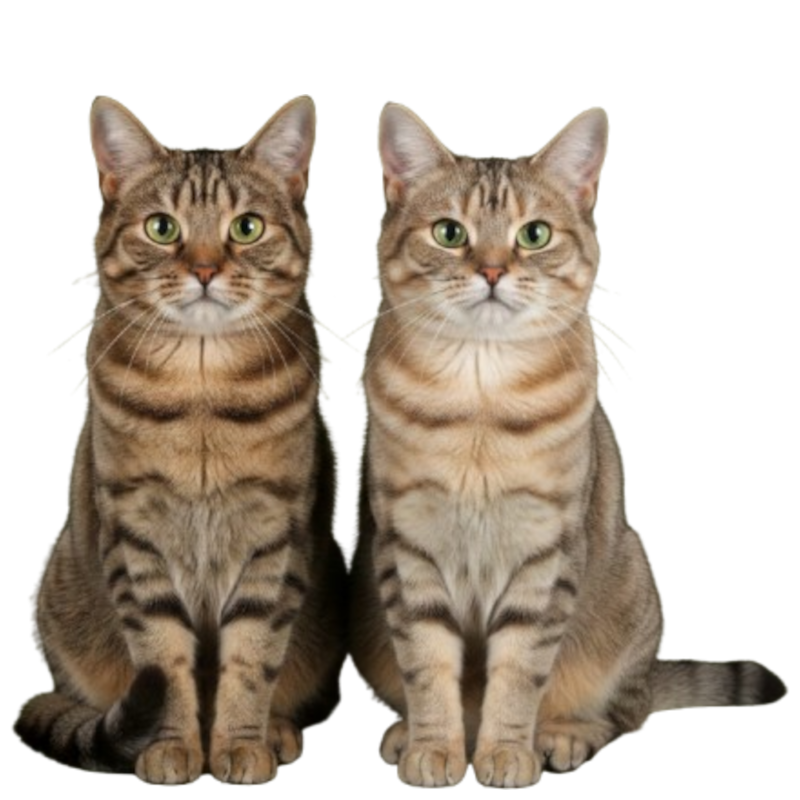
appearance
The Australian Mist is a medium-sized feline of balanced, moderate type, avoiding any extreme physical features. Its silhouette is a functional integration of its ancestral heritage—merging the substantial feel of the Burmese with the athletic poise of the Abyssinian and the structural reliability of the Australian domestic shorthair.
Cranial Structure and Facial Profile
The head of the Australian Mist is a broad, blunt wedge characterized by soft, rounded contours. Its facial layout is intended to convey an open and welcoming expression, mirroring the Australian Mist’s famously social disposition.
Ocular Features
The eyes are large, lustrous, and positioned wide apart. The upper eyelid shows a slight slant toward the nose, while the lower lid follows a fuller curve. They are consistently green, with shades varying from delicate chartreuse to deep aquamarine.
Aural Characteristics
The ears are medium to large with broad bases and rounded tips. They are set low on the skull and tilt slightly forward, contributing to an inquisitive and alert appearance.
Muzzle and Jaw
The muzzle is broad and relatively short, accented by well-defined whisker pads and a firm, deep chin. In profile, the nose exhibits a gentle concave dip between the eyes.
Body Composition and Musculature
The Australian Mist possesses a hard, muscular torso that often feels surprisingly heavy when lifted. This “deceptive” weight is a hallmark of the Australian Mist’s high muscle density and solid bone structure.
Anatomical Proportions and Frame
The body is medium in length with a broad, rounded chest. The back maintains a slight arc over a rounded rump. The limbs are proportionately strong, with the hind legs being slightly taller than the forelegs, and they terminate in neat, oval-shaped paws.
| Metric | Typical Descriptor for the Australian Mist |
|---|---|
| Torso | Solid, muscular, and of medium length. |
| Tail | Thick at the base with minimal tapering; well-furred. |
| Neck | Defined and in proportion to the muscular frame. |
Proportional Symmetry
The physical balance of the Australian Mist can be mathematically modeled to highlight its moderate build. If represents the height at the shoulder and represents the length from the chest to the rump, a typical Australian Mist conforms to:
Body Shape and Balance Rule
- : The length of the cat from chest to rump.
- : A symbol meaning “is about the same as.”
- : The “Rectangular Multiplier” that gives the cat its elegant, slightly long shape.
- : The height of the cat measured at the shoulder.
The Australian Mist is the epitome of moderate conformation. This proportionality model () captures their balanced “Goldilocks” physique—neither cobby nor svelte. This 1.4 ratio ensures the Australian Mist maintains the lithe movement inherited from its Abyssinian and Burmese ancestors while supporting the sturdy, medium-boned frame that is a hallmark of this Australian-developed breed.
This ratio prevents the Australian Mist from appearing either too short-coupled or overly elongated, maintaining a versatile, athletic look.
The Signature Misted Coat
The most distinctive physical trait of the Australian Mist is its short, dense, and resilient coat. It feels smooth and silky to the touch and possesses a natural luster that reflects a healthy constitution.
The Three-Layer Visual Effect
The Australian Mist’s unique “misted” appearance is not a single color, but a complex layering of visual elements:
- Foundation Ground: A warm, pale base color that remains visible beneath the pattern.
- Primary Marking: A darker pattern (either spotted or marbled) that sits atop the ground color.
- The Misted Veil: A fine layer of ticking (the agouti gene) that blurs the edges of the markings, creating a soft, hazy appearance.
Markings and Pigmentation
While the torso patterns are softened by ticking, the extremities of the Australian Mist often display clearer definition.
Detailed Patterning
The face of the Australian Mist typically features a prominent “M” on the forehead and lines extending over the skull. The legs and tail show distinct bars or rings, with the tip of the tail being the darkest point of the body.
Recognized Variations
Australian Mists are traditionally recognized in two primary patterns:
- Spotted Pattern: Symmetrical spots of varying shapes and sizes distributed across the flanks and underside.
- Marbled Pattern: Intricate, flowing swirls and streaks that create a texture reminiscent of polished marble.
In both instances, the underparts are significantly paler than the rest of the body, emphasizing the “misty” quality that gives the Australian Mist its name.
behavior
While temperament describes the internal nature of the Australian Mist, its behavior involves the tangible actions and social habits displayed in a domestic setting. Developed for high-level companionship, the Australian Mist’s daily conduct is defined by an active desire for social inclusion and a strategic use of the vertical environment.
Social Engagement and Interactive Rituals
The most observable behavior of the Australian Mist is its tendency to act as a “shadow” to its owners. Unlike many more solitary feline breeds, Australian Mists frequently coordinate their movements to remain in the same vicinity as human activity.
Communication Styles
The Australian Mist is a moderate communicator, preferring melodic chirps and soft trills over loud vocalizations. These sounds are typically utilized for:
- Acknowledging a human’s presence when they enter a room.
- Signaling a desire for shared play or nutritional rewards.
- Responding to the specific tone of an owner’s voice.
Affectionate Tactile Habits
Australian Mists frequently engage in rhythmic pawing and scent-marking through facial rubbing. These actions are deliberate social signals used to establish a bond. Most Australian Mists will actively seek out physical contact, often positioning themselves on a lap or shoulder to maximize skin-to-fur proximity.
Play Mechanics and Intellectual Stimulation
The Australian Mist maintains a youthful curiosity throughout its adult life. Their play style is an integrated mix of athletic prowess and cognitive inquiry.
Interactive Play Behavior
Reflecting their Abyssinian lineage, Australian Mists are highly proficient at object manipulation. Common behaviors include:
- Retrieval: The Australian Mist will often carry toys back to an owner, requesting a repeat of the game.
- Tactile Investigation: Using paws to probe or move static objects to observe their reaction.
- Calculated Bursts: Engaging in high-speed, controlled sprints followed by precision pouncing on interactive lures.
Observational Learning
The Australian Mist possesses a high capacity for learning through observation. It is not unusual for a Australian Mist to figure out the mechanics of household hardware—such as cabinet latches or lever-style handles. Owners must often provide puzzles or rotating toys to satisfy this need for mental complexity.
Spatial Navigation and Territory Use
The Australian Mist views its living space in three dimensions, showing a marked preference for elevated vantage points.
Vertical Preference
Australian Mists are instinctively drawn to high ground. They will often seek out the tops of cupboards, shelving units, or tall climbing structures. This allows the Australian Mist to monitor its environment from a position of security.
Environmental Monitoring
The way the Australian Mist moves through its territory can be viewed as a series of regular inspections. If represents the total accessible home area and represents the frequency of visitation, the Australian Mist’s spatial coverage can be modeled as:
Home Inspection and Awareness Score
- : The “Total Coverage” (how much of the home the cat keeps track of).
- : The sum of all the different rooms and corners in your house.
- : The “Check-in Frequency” (how often the cat walks through a specific room).
- : The “Room Size” (the actual space or complexity of that area).
The Australian Mist is an exceptionally attentive indoor companion. This model () quantifies their systematic patrolling behavior; unlike more sedentary breeds, the Australian Mist maintains high values for every room in the house. This constant monitoring ensures they are always the first to notice a new grocery bag or a moved chair, reflecting the high social intelligence and “involved” personality that breeders have cultivated in the Australian Mist since its inception.
This systematic patrolling behavior ensures that any change in the household is quickly noticed and investigated by the Australian Mist.
Maintenance and Grooming Behaviors
The Australian Mist is diligent regarding self-care, which helps maintain the unique quality of its short, dense coat.
| Behavior Category | Relative Frequency | Social/Functional Purpose |
|---|---|---|
| Allogrooming | High | Grooming humans or other pets to strengthen communal ties. |
| Self-Grooming | Regular | Thermoregulation and maintaining the “misted” coat luster. |
| Visual Marking | Moderate | Using scratching surfaces to stretch and leave scent markers. |
Circadian Rhythm Adaptation
Although felines are biologically crepuscular—most active at dawn and dusk—Australian Mists are remarkably adept at synchronizing their activity cycles with the schedules of their human family members.
Activity Synchronization
The energy output of a Australian Mist during a 24-hour cycle tends to align with human presence :
Daily Routine and Social Energy Match
- : The cat’s Energy Level at any given time.
- : A symbol meaning “changes along with.”
- : Human Activity (when people are awake, moving, and playing).
- : The “Natural Nap Cycle” (the cat’s internal biological clock).
The Australian Mist is specifically bred to be an indoor companion, leading to a unique behavioral adaptation where their activity spikes () are not strictly crepuscular, but rather socially driven. This model () explains why the Australian Mist is often awake and “ready to assist” when you arrive home from work, while their internal function allows them to settle into a deep, harmonious rest when the household is quiet.
This behavioral alignment makes the Australian Mist an exceptionally harmonious housemate, as their periods of highest engagement usually coincide with the times their owners are available for interaction.
color
The visual allure of the Australian Mist is derived from its complex and nuanced coat pigmentation. The breed standard recognizes seven specific colorations, each resulting from the interaction of dense and dilute genetic modifiers inherited from its foundation ancestors. These hues are defined by a warm, pale foundation tone that is aesthetically softened by the signature agouti ticking.
Categorization of Official Hues
The color varieties of the Australian Mist are organized into dense pigmentations and their corresponding dilute versions. Regardless of the specific shade, the concentration of pigment is consistently most intense on the points—specifically the facial mask, the limbs, and the tail.
| Group | Color Designation | Visual Characteristics |
|---|---|---|
| Dense | Brown | A deep, warm seal-brown pattern set against a creamy base. |
| Dense | Blue | A slate-grey pattern over a cool mushroom or oatmeal ground. |
| Dense | Chocolate | A rich, copper-toned brown overlaying a pale ivory foundation. |
| Dilute | Lilac | A soft dove-grey with distinct pinkish undertones on a mushroom base. |
| Dilute | Gold | A bright, warm honey or old-gold pattern on a cream ground. |
| Dilute | Peach | A delicate salmon or pinkish-beige hue over a light cream base. |
| Modified | Caramel | A brownish-grey with a unique metallic luster found in specific lines. |
Theoretical Layering of the Misted Effect
The multidimensional depth of the Australian Mist’s coat is a product of selective breeding for the agouti gene. This creates a visual phenomenon where the base color and the pattern appear to be viewed through a translucent veil.
Mathematical Distribution of Pigment
If represents the perceived color intensity, it can be modeled as a relationship between the foundation ground , the pattern pigment , and the ticking coefficient :
The “Misty” Coat Blur Effect
- : The final “Misty Look” of the cat’s coat.
- : The “Ground Color” (the lightest base layer of the fur).
- : The “Pattern Color” (the darker spots or marble swirls).
- : The “Ticking Level” (the salt-and-pepper banding on each hair).
- : The “Blur Filter” (how much the ticking softens the lines between the spots and the base color).
The “misty” look of the Australian Mist is a result of complex pigment layering. Unlike a Bengal where contrast is maximized, the Australian Mist utilizes a high ticking coefficient (). In this model, as ticking increases, the term effectively diffuses the boundaries between the ground color () and the pattern (). This creates the illusion of the markings being viewed through a fine veil or “mist,” which is the defining aesthetic requirement of the breed.
In this model, the ticking () functions as a diffusing element, reducing the sharp contrast between the markings and the base to produce the ethereal, hazy quality that defines the Australian Mist.
Genetic Heritage and Pigment Distribution
The diverse color palette of the Australian Mist is a direct consequence of integrating Burmese and Abyssinian genetic markers.
Sepia-Series Influence
The Burmese contribution introduced the sepia gene, which creates a subtle temperature-sensitive gradient. In Australian Mists, this ensures the torso remains lighter than the extremities—providing a luminous quality to the coat even in darker color varieties.
Agouti Banding
The Abyssinian lineage contributed the dominant ticking gene. This ensures that each individual hair on the Australian Mist contains multiple bands of color. This genetic trait causes the coat to shimmer and appear to shift in tone as the cat moves through varying light sources.
Harmony of Auxiliary Pigmentation
To maintain the breed’s aesthetic balance, the secondary physical features of the Australian Mist must align with its primary coat color.
Ocular Pigmentation Standards
All Australian Mists must possess green eyes, though the specific saturation often correlates with the coat:
- Brown and Blue: Typically display a vibrant, deep forest green.
- Chocolate and Gold: Frequently show a warmer, chartreuse or golden-green.
- Peach and Lilac: Often exhibit a softer, aquamarine or sea-foam green.
Dermal Tones
The color of the nose leather and paw pads serves as a definitive marker of the Australian Mist’s genetic base. For instance, a Blue Australian Mist will feature blue-grey dermal pigment, while a Gold Australian Mist will show brick-pink or warm tan leather.
Maturation of Coat Color
It is a specific biological characteristic of the breed that Australian Mists are not born with their adult intensity.
Neonatal Stage
Kittens are usually born with very pale coats where the pattern is only faintly visible.
Adolescence
The misting effect begins to emerge as the kitten fur is shed and the ticked adult hair grows in.
Full Maturity
The final depth of the ground color and the complexity of the “veil” often take up to two years to reach their peak in the Australian Mist.
compatibility
Ease of Maintenance
Rating: 5/5
Child Friendly
Rating: 5/5
Annual Cost
Rating: 4/5
Lifetime Cost
Rating: 4/5
Adaptability
Rating: 5/5
Velcro Factor
Rating: 5/5
Quietude
Rating: 4/5
Apartment Suitability
Rating: 5/5
Hypoallergenic
Rating: 2/5
Handling Tolerance
Rating: 5/5
Hardiness/Longevity
Rating: 4/5
Prey Drive
Rating: 4/5
genetics
The Australian Mist is a biological masterpiece of intentional breeding, representing a calculated integration of three distinct feline lineages. The genetic architecture of the Australian Mist was specifically engineered to stabilize a predictable temperament while maintaining a diverse yet controlled aesthetic range.
Ancestral Genetic Contribution
The Australian Mist’s genome is a precise composite, traditionally following a percentage-based foundation established during its development in the 1970s and 1980s.
| Ancestral Breed | Genetic Contribution | Primary Traits Contributed |
|---|---|---|
| Burmese | ~50% | Conformation, “sepia” color restriction, and high-density musculature. |
| Abyssinian | ~25% | The agouti (ticking) gene and athletic metabolic traits. |
| Domestic Shorthair | ~25% | Genetic vigor (heterosis), eye color intensity, and pattern clarity. |
The Agouti and Pattern Complex
The most defining genetic feature of the Australian Mist is the interaction between the agouti gene and the underlying tabby patterns.
The Ticking Gene ()
The Australian Mist relies on the Abyssinian-derived ticking gene to create the “mist.” This gene causes individual hair shafts to be banded with different colors. In the Australian Mist’s genotype, this acts as a modifier rather than a dominant mask—allowing the spotted or marbled patterns to remain visible but aesthetically softened.
Pattern Phenotypes
Australian Mists express one of two primary tabby genotypes:
- Spotted (): Derived from the mackerel tabby gene, modified through selective breeding to produce distinct, symmetrical spots.
- Marbled (): The recessive classic tabby gene, which produces swirling, thick-lined patterns.
Color Inheritance and Dilution
The Australian Mist operates on a genetic “Dense/Dilute” binary, managed primarily by the melanophilin () gene.
The Dilution Equation
The phenotypic expression of color in Australian Mists can be modeled as a product of the base pigment and the dilution allele (). If is the primary pigment (Eumelanin), the resulting color is determined by:
Color Softening and Dilution Rule
- : The final color you see on the cat (like Peach or Lilac).
- : The “Starting Pigment” (like Chocolate or Cinnamon).
- : The “Softening Function” (the effect of the dilution gene).
- : The “Dilute Gene” itself (which spreads out color particles to make them look lighter).
In the Australian Mist, the dilution equation () is responsible for half of the breed’s recognized palette. When the dilution function is active, it causes the pigment granules to clump together, leaving gaps that reflect more light. This transforms a dense Chocolate base into a delicate Lilac, or a Cinnamon base into the signature “Peach” unique to the Australian Mist—essential for achieving that soft, “misty” aesthetic.
In this context, represents the recessive homozygous state () that causes pigment granules to clump, creating the dilute colors such as Blue, Lilac, and Peach.
The Sepia Series ()
Inherited from the Burmese, the allele is part of the albino series. It provides a temperature-sensitive pigment restriction. This explains why the Australian Mist’s torso remains paler (the ground color) while the cooler extremities—the points—exhibit more concentrated color.
Health and Genetic Diversity
One of the primary goals in the Australian Mist’s creation was the promotion of “hybrid vigor.” By incorporating non-pedigreed domestic shorthairs, the founders effectively widened the gene pool, reducing the coefficient of inbreeding ().
Genetic Resilience Modeling
The probability of avoiding deleterious recessive traits in the Australian Mist can be estimated by the diversity of its founder alleles. Increased heterozygosity correlates with the overall fitness of the population:
Genetic Health and Strength Total
- : The overall Health and Vigor of the breed.
- : A symbol meaning “is powered by.”
- : “Heterozygosity” (the variety of different genes in the cat’s DNA).
- : The “Founder Pool” (the original mix of Burmese, Abyssinian, and house cats).
- : The “Summation” (adding up all that diversity over many generations).
The Australian Mist benefits from a “moderate” genetic blueprint. By integrating a diverse range of founder alleles () from Burmese, Abyssinian, and domestic shorthair lineages, the breed maximizes its heterozygosity (). This mathematical relationship () explains why Australian Mists are exceptionally hardy; their lack of extreme morphological features means they avoid the “genetic bottlenecks” that often reduce the fitness () of more specialized breeds.
Because Australian Mists are not “extreme” in their morphology—lacking the brachycephalic features of Persians or the skeletal elongation of Siamese—they suffer from fewer structural genetic defects.
The Seven-Color Genetic Matrix
The interaction between the Black/Brown locus () and the Dilution locus () results in the standard color palette recognized in the Australian Mist.
Genetic Color Table
| Genotype | Resulting Phenotype in Australian Mists |
|---|---|
| B_ D_ | Brown (Seal) |
| bb D_ | Chocolate |
| B_ dd | Blue |
| bb dd | Lilac |
Rufus Polygenes
The “Gold” and “Peach” variations involve additional modifiers at the Rufus polygene level, which enhances the warm, reddish-yellow tones in the phaeomelanin.
health
The Australian Mist is widely recognized as an exceptionally sturdy and resilient feline—a direct result of the “hybrid vigor” prioritised during its original development. Because the breed was established by merging several distinct lineages rather than through extreme physical selection, Australian Mists generally enjoy a high quality of life with very few breed-specific hereditary pathologies.
Average Lifespan and Vital Statistics
The Australian Mist is a long-lived companion, with many individuals frequently reaching their mid-teens. Their metabolic health is typically stable, provided they maintain an appropriate activity level consistent with their energetic nature.
| Health Metric | Typical Range for the Australian Mist |
|---|---|
| Average Lifespan | undefined–15+ years |
| Activity Level | High / Energetic |
Genetic Resilience and Hybrid Vigor
The Australian Mist’s health profile is strengthened by its diverse genetic foundation. The intentional inclusion of domestic shorthairs in the foundation breeding programs served to dilute harmful recessive alleles that are more common in highly inbred pedigreed populations.
Heterosis Modeling
The overall vitality of the Australian Mist can be attributed to heterosis—hybrid vigor—where the crossbreeding of varied lines produces offspring with enhanced functional traits. If represents the biological fitness of the offspring and represents the average fitness of the parent breeds:
Hybrid Vigor and Ancestor Strength
- : The Health and Vitality of the Australian Mist.
- : The average health of the Burmese ancestors.
- : The average health of the Abyssinian ancestors.
- : The average health of the hardy house cat ancestors.
- : A symbol meaning “is better than.”
The Australian Mist is a “composite” breed, strategically developed to capture the best traits of its ancestors. This model () illustrates heterosis: by combining the social nature of the Burmese, the intelligence of the Abyssinian, and the rugged health of the Domestic Shorthair, the Australian Mist achieves a level of vitality higher than any of its source breeds in isolation. This manifests as a robust immune system and a balanced anatomy free from the structural limitations of more extreme, “ultra-typed” breeds.
This increased biological fitness manifests as a robust immune system and an absence of the structural complications often seen in ultra-typed or brachycephalic breeds.
Common Preventative Health Considerations
While Australian Mists are naturally healthy, their domestic lifestyle and specific ancestry require certain proactive care measures.
Dental Wellness
Following its Burmese heritage, the Australian Mist can be susceptible to gingivitis if oral hygiene is overlooked. Regular veterinary check-ups and at-home dental care are recommended to prevent periodontal disease—which can otherwise lead to more serious systemic health issues.
Weight Management and Obesity
Due to their high muscle density and strong appetite, Australian Mists can easily become overweight if their caloric intake is not carefully managed.
- Metabolic Rate: They possess a high resting metabolic rate but may become sedentary if they lack environmental stimulation.
- Body Condition Scoring: Owners should ensure that the Australian Mist’s ribs are easily felt under a thin layer of fat and that a distinct waistline is visible.
Screening and Hereditary Monitoring
Reputable breeders of the Australian Mist utilize contemporary diagnostic tools to maintain the health of the population.
Hypertrophic Cardiomyopathy (HCM)
HCM is a common heart condition in domestic cats. While the Australian Mist is not specifically predisposed to it, responsible breeding practices involve regular heart scans of breeding cats to ensure the condition does not appear within certain lineages.
Pyruvate Kinase (PK) Deficiency
Linked to their Abyssinian ancestry, PK Deficiency is a hereditary form of anemia. Most Australian Mists undergo DNA screening to manage this trait. The inheritance follows a simple Mendelian recessive pattern:
- Clear (): The cat is free of the mutation.
- Carrier (): The cat carries a single copy but remains healthy.
- Affected (): The cat may experience bouts of anemia.
Environmental and Life-Stage Health
The Australian Mist is primarily kept as an indoor cat, which significantly lowers the risk of contracting infectious diseases or suffering physical trauma from outdoor hazards.
Renal Health in Senior Australian Mists
As Australian Mists reach their geriatric stage—typically after age ten—monitoring kidney function is essential. Early detection of Chronic Kidney Disease (CKD) through specialized blood testing allows for dietary adjustments that can significantly extend the Australian Mist’s lifespan.
Nutritional Requirements for Coat Health
The signature “misted” coat of the Australian Mist is an indicator of its internal well-being. A diet high in Omega-3 and Omega-6 fatty acids is vital for preserving the shine and skin health that defines a healthy Australian Mist.
longevity
The Australian Mist is distinguished by its impressive lifespan and sustained vitality well into its senior years. As a breed developed through a deliberate blending of varied genetic stocks, Australian Mists benefit from a constitutional robustness that frequently allows them to exceed the average life expectancy observed in many other pedigreed felines.
Statistical Overview of Lifespan
The typical longevity of the Australian Mist is characterized by a gradual aging process and a high degree of health maintenance.
| Lifecycle Stage | Age Range | Physical Status |
|---|---|---|
| Active Adult | 2 – 9 years | Peak metabolic efficiency and muscular density. |
| Mature Adult | 10 – 12 years | Stable health; beginning of specialized senior requirements. |
| Senior | 13 – 15 years | Typical age range for most Australian Mists. |
| Geriatric | 16 – 20+ years | Exceptional longevity reached by well-managed individuals. |
Factors Influencing Australian Mist’s Longevity
The duration of a Australian Mist’s life is a result of both its genetic foundation and the environmental management provided by the owner.
Genetic Heterosis and Mortality Risk
The Australian Mist was founded on the principle of genetic diversity, which helps minimize the inbreeding depression often linked to shorter lifespans in purebred cats. We can express the probability of survival to a specific age using a simplified survival function:
Lifespan and Aging Probability
- : The chance of the cat reaching a specific age.
- : A mathematical number used to track natural aging and time.
- (Lambda): The “Health Risk” (which is very low for this sturdy breed).
- : The age of the cat in years.
In the Australian Mist, the value of remains remarkably low throughout the middle years of their life. Because they were developed with a wide genetic base and lack the structural extremes found in other purebreds, the “wear and tear” factor that typically accelerates is minimized. This results in a much flatter survival curve, meaning a higher probability well into their early teens, often reaching 15 to 18 years of age with proper care.
For the Australian Mist, the hazard rate remains lower during the middle years—roughly ages five to twelve—compared to more specialized or extreme breeds. This is largely due to the absence of structural defects that would otherwise accelerate physiological decline.
Impact of the Indoor Lifestyle
Because Australian Mists are bred specifically for indoor companionship, their longevity is significantly protected from external hazards. Statistics indicate that indoor-only Australian Mists have a mortality risk reduction of over 60% compared to cats with outdoor access, primarily by avoiding infectious pathogens, territorial conflict, and vehicular accidents.
Physiological Decline and Aging Patterns
While Australian Mists are hardy, they undergo specific age-related transitions that require monitoring to ensure maximum longevity.
Renal and Metabolic Efficiency
As the Australian Mist ages, the glomerular filtration rate () in the kidneys naturally decreases. Longevity is maximized when the diet is adjusted to maintain renal health:
Glomerular Filtration Rate (Clearance)
Kidney Health and Cleaning Power
- : The “Kidney Cleaning Rate” (how well the kidneys filter the blood).
- : A symbol meaning “depends on.”
- : “Hydration Level” (the amount of water moving through the system).
- : The waste found in the urine.
- : The waste found in the blood.
In the aging Australian Mist, maintaining a stable is the cornerstone of longevity. Because the Australian Mist is an active, indoor-centric cat, metabolic waste must be cleared efficiently to prevent renal strain. This model shows that by increasing hydration—thereby supporting —owners can help balance the ratio and ensure that the kidneys aren’t overworked, allowing the cat to maintain its trademark vitality well into its senior years.
Senior Australian Mists benefit significantly from increased hydration and high-quality, easily digestible proteins to support this biological balance.
Maintaining Mobility
The Australian Mist is naturally athletic. Longevity in the senior years is often determined by joint health. Unlike heavier breeds, the moderate frame of the Australian Mist puts less stress on the skeletal system; however, regular play into old age is essential for preventing muscle atrophy and maintaining metabolic health.
The Role of Preventative Diagnostics
The exceptional longevity of the Australian Mist is often a partnership between biology and veterinary science.
Early Detection
Annual blood panels starting at age seven allow for the management of thyroid and kidney levels before clinical symptoms appear.
Dental Integrity
Preventing systemic inflammation through consistent dental care is a major factor in allowing the Australian Mist to reach its late teens.
Nutritional Optimization
Transitioning to senior-specific formulas that balance phosphorus and sodium levels helps preserve the Australian Mist’s organ function during the final quartile of life.
maintenance
Proper care for the Australian Mist involves a balanced approach to grooming, environmental enrichment, and nutritional management. Because of their short, dense coats and high intelligence, maintenance is focused more on social and mental engagement than intensive physical primping.
Grooming and Coat Care
The Australian Mist’s coat is low-maintenance but benefits from regular attention to minimize shedding and maintain its signature luster.
Brushing Requirements
Since Australian Mists have very little undercoat, they do not require daily brushing. A weekly session with a rubber grooming mitt or a soft bristle brush is sufficient to remove loose hairs and distribute natural skin oils.
Ear and Eye Hygiene
- Eyes: Inspect the corners of the eyes for minor discharge. Wipe gently with a soft, damp cloth if necessary.
- Ears: Check ears weekly for wax buildup or debris. Use a vet-approved cleanser and a cotton ball; never insert swabs into the ear canal.
Physical and Mental Enrichment
The Australian Mist is a highly social and active animal that requires consistent interaction to prevent boredom-induced behaviors.
Environmental Stimulation
Because Australian Mists are indoor-only cats, the environment must provide vertical and horizontal complexity.
| Requirement | Description |
|---|---|
| Vertical Space | Cat trees or wall shelves to satisfy their climbing instinct. |
| Interactive Play | At least 20–30 minutes of active play daily using wand toys or puzzles. |
| Social Contact | Australian Mists do not thrive in isolation; they need several hours of human or feline company. |
Exercise and Weight Modeling
To prevent obesity, the Australian Mist’s caloric expenditure must match its intake. We can model the Daily Energy Requirement () based on the cat’s weight () in kilograms:
Daily Calorie Goals and Weight Control
- : The total calories the cat should eat in a day.
- : The “Active Housecat” multiplier (extra energy for daily play).
- : A standard number for a cat’s resting metabolism.
- : The cat’s weight in kilograms.
- : A scaling factor used to calculate calorie needs based on body size.
The Australian Mist is a “people-oriented” indoor cat, which can sometimes lead to a more sedentary lifestyle. This formula () is the primary tool for preventing the weight gain common in the breed after desexing. While 1.2 is the standard multiplier, owners of a particularly relaxed Australian Mist may need to scale this down to 1.0 or 1.1 to ensure their cat maintains the “moderate” and lithe silhouette required by the breed standard.
Adjusting the multiplier (1.2) is necessary if the Australian Mist becomes sedentary—as they are prone to weight gain following desexing.
Nutritional Management
A high-quality diet is the cornerstone of Australian Mist’s health. Their diet should prioritize protein density to support their lean muscle mass.
Feeding Schedule
- Kittens: Require 3–4 small meals per day.
- Adults: 2 measured meals per day are recommended to avoid “grazing,” which leads to overconsumption.
Hydration
Adequate water intake is critical for renal health. Providing a recirculating water fountain can encourage the Australian Mist to drink more—as they are often attracted to moving water.
Claws and Dental Maintenance
Nail Trimming
Australian Mists should have their claws trimmed every 2–3 weeks. Providing multiple scratching surfaces—such as sisal, cardboard, and wood—is essential to help them shed the outer nail sheaths naturally.
Oral Health
Daily tooth brushing is the gold standard for preventing periodontal disease. If daily brushing is not possible, dental treats and water additives can serve as secondary support, but they do not replace manual cleaning.
Veterinary and Preventative Care
Consistent medical oversight ensures the Australian Mist remains in peak condition throughout its life.
Vaccinations
Maintain a regular schedule for FVRCP and other locally recommended vaccines.
Parasite Control
Even for indoor Australian Mists, monthly flea and heartworm prevention is vital—as insects can enter the home.
Annual Check-ups
Senior Australian Mists (10+ years) should move to bi-annual exams to monitor blood chemistry and organ function.
measurements
| Measurement | Female | Male | ||
|---|---|---|---|---|
| Metric | Imperial | Metric | Imperial | |
height | 20 – 25 centimeters | 8 – 10 inches | 23 – 28 centimeters | 9 – 11 inches |
length | 25 – 33 centimeters | 10 – 13 inches | 30 – 38 centimeters | 12 – 15 inches |
weight | 3.2 – 5 kilograms | 7 – 11 pounds | 4.5 – 6.3 kilograms | 10 – 14 pounds |
• Height: Refers to the measurement at the withers (shoulders).
• Length: Measured from the tip of the nose to the base of the tail.
origin
The development of the Australian Mist represents a significant milestone in felinology as the first pedigreed cat to originate entirely within Australia. Unlike many ancient breeds whose histories are steeped in folklore, the Australian Mist’s lineage is meticulously documented—stemming from a scientific breeding program initiated in the late 1970s.
Foundational Vision and Dr. Truda Straede
The Australian Mist was conceptualized by Dr. Truda Straede in 1976. Her objective was to engineer a unique short-haired cat that possessed a tractable temperament suitable for indoor living, combined with a distinctively “misted” coat pattern.
The program was officially accepted into the Royal Agricultural Society of NSW (RAS) Cat Control in 1980. Originally, the breed was known as the “Spotted Mist” due to its exclusive spotted pattern; however, the name was changed to Australian Mist in 1998 when marbled patterns were formally accepted into the breed standard.
Genetic Composition and Parent Lineages
The Australian Mist’s genetic blueprint is a precise integration of three specific feline groups. Each was chosen to contribute specific phenotypic and behavioral traits.
| Ancestral Group | Percentage | Primary Contribution |
|---|---|---|
| Burmese | ~50% | Contributed the four base colors, the compact musculature, and the social, “people-oriented” personality. |
| Abyssinian | ~25% | Introduced the agouti (ticking) gene, providing the ticking and the characteristic “misty” look. |
| Domestic Shorthair | ~25% | Enhanced the gene pool with “hybrid vigor,” improved kidney health, and stabilized the eye color. |
Development of the “Misted” Phenotype
The aesthetic hallmark of the Australian Mist is the interaction between its coat pattern and the ticking gene. This produces a look described as seeing a pattern through a fine veil.
The Pattern Equation
The visual depth of the Australian Mist’s coat can be represented as a layered composite of three distinct elements:
- Ground Color: The palest version of the base color.
- Pattern: Darker spots or marbled swirls.
- Ticking (): The overlay of agouti banding that softens the contrast.
We can conceptually model the visual intensity () of the pattern as a function of the contrast between the base pigment and the ticking modifier:
Pattern Depth and Visibility Score
- : How clear the coat markings look to the eye.
- : The combination of all three coat layers.
- : How dark and solid the spots or marble patterns are.
- : The “Misty Layer” (the ticked hairs that act like a veil).
The hallmark of the Australian Mist is its “layered” look. Unlike other spotted breeds where the pattern is designed to “pop,” the Australian Mist uses a subtraction-based visual model. The ticking () acts as a diffusing mask over the pattern pigment (). This mathematical subtraction ensures the markings remain legible enough for identification while achieving the ethereal, hazy quality that gives the Australian Mist its name.
Where is the underlying tabby pattern and is the density of the Abyssinian-derived ticking. This results in the “misty” effect where the pattern is clearly visible but never harsh.
Chronology of Recognition
The journey of the Australian Mist from a local experimental project to an internationally recognized breed followed a strict regulatory path:
Early Foundation
Initial crosses were made between 1977 and 1980 to stabilize the spotted phenotype. Breeders focused on ensuring Australian Mists maintained the high-density bone structure of the Burmese while gaining the athletic refinement of the Abyssinian.
Championship Status
The breed achieved full championship status in Australia in 1986. At this stage, Australian Mists were exclusively spotted.
Diversification and Global Expansion
With the introduction of the marbled pattern in 1998, the name was updated to reflect the broader aesthetic. Australian Mists began to be exported to the United Kingdom and later to the United States and Europe.
The breed is now recognized by several major international registries, including:
- GCCF (Governing Council of the Cat Fancy)
- TICA (The International Cat Association)
- WCF (World Cat Federation)
Geographical Influence on Temperament
The “Australian” part of the Australian Mist’s name is not merely a marker of geography but also of philosophy. Because of Australia’s unique ecology and the subsequent push for indoor-only feline ownership to protect native wildlife, Australian Mists were specifically bred to thrive in confined, domestic environments. This selective pressure resulted in a cat that is exceptionally tolerant of handling and lacks the intense “roaming” instinct found in more feral-derived breeds.
temperament
The temperament of the Australian Mist is a sophisticated psychological profile that distinguishes it from more reactive or independent feline breeds. While behavior describes what the cat does, its temperament defines the underlying emotional predispositions—the “inner landscape”—that drive those actions.
Psychological Core and Emotional Stability
The Australian Mist possesses an exceptionally stable and “bomb-proof” emotional core. This psychological resilience is a direct result of selective pressure during the breed’s inception, favoring individuals with a high threshold for stress and a low propensity for fear-based aggression.
| Temperamental Trait | Description | Intensity Level |
|---|---|---|
| Adaptability | The internal ease with which the cat processes environmental changes. | Very High |
| Gregariousness | The innate drive for social proximity and interspecies connection. | Extreme |
| Placidity | The depth of the cat’s calm and its lack of high-strung reactivity. | High |
| Vigilance | The degree of alertness to external stimuli; Australian Mists are observant but rarely anxious. | Moderate |
Socio-Emotional Intelligence
The Australian Mist’s temperament is defined by a high degree of empathy and social intuition. Unlike more solitary ancestral lines, Australian Mists possess a psychological need for belonging.
The “People-Centric” Orientation
The Australian Mist does not merely tolerate human presence; it is temperamentally “tethered” to its human companions. This is not a clingy anxiety, but rather a profound sense of social confidence. They view humans as an extension of their social unit, leading to a temperament often described as “canine-like” in its loyalty and focus.
Tolerance and Forgiveness
A hallmark of the Australian Mist’s psyche is its incredible tolerance. In psychological terms, the Australian Mist has a very wide “window of tolerance,” allowing it to remain regulated during loud noises, clumsy handling by children, or the presence of other animals.
We can conceptually model this emotional regulation () as a ratio of the cat’s inherent calm () against external stressors ():
Patience and Stress Recovery Score
- : The cat’s “Balance” (how calm it stays).
- : The “Stoic Nature” (the cat’s natural high level of patience).
- : “Household Noise” (kids, dogs, or loud sounds).
- (Epsilon): “Surprises” (unexpected changes in the home).
The Australian Mist is legendary for its “forgiving” nature. In this model, stays high because the Australian Mist’s —a result of careful selection for a tolerant, Burmese-like temperament—is exceptionally large. Even when a household becomes chaotic (high ), the numerator is so substantial that the cat remains regulated (), making them the ideal choice for families with small children or multiple pets.
For the Australian Mist, the value of is significantly higher than the baseline for most domestic felines, ensuring that even when —unexpected variables—increases, the emotional state remains in equilibrium.
Cognitive Temperament: Curiosities and Confidence
The intellectual temperament of the Australian Mist is one of inquisitive confidence. This is not the nervous curiosity of a flighty cat, but a bold, investigative drive.
Confidence Levels
Australian Mists possess a high level of “social courage.” In a new environment, the Australian Mist’s instinct is to investigate rather than hide. This stems from an internal belief in their own safety, a trait carefully cultivated by breeders who prioritized “trusting” personalities.
Playfulness as a Mental State
Even into adulthood, the Australian Mist maintains a “neotenous”—or kitten-like—mental state. This suggests a temperament that remains open to learning and engagement throughout its entire lifespan, rather than becoming aloof with maturity.
Interaction with the “Indoor” Philosophy
The Australian Mist’s temperament is perfectly aligned with the philosophy of indoor living.
Lack of Roaming Drive
While many cats feel a psychological “pull” toward the outdoors, the Australian Mist is temperamentally satisfied with the boundaries of the home.
Low Frustration Levels
Because they are less prone to frustration than more “wild” hybrids, Australian Mists rarely develop the neuroses or compulsive behaviors sometimes seen in high-energy breeds kept in confined spaces.
Summary of Emotional Disposition
The Australian Mist is, at its heart, an optimist. Its temperament is characterized by a fundamental trust in its environment and its companions. Whether resting or engaging in activity, the underlying emotional state of the Australian Mist is one of secure attachment and peaceful engagement.