American Wirehair Cat
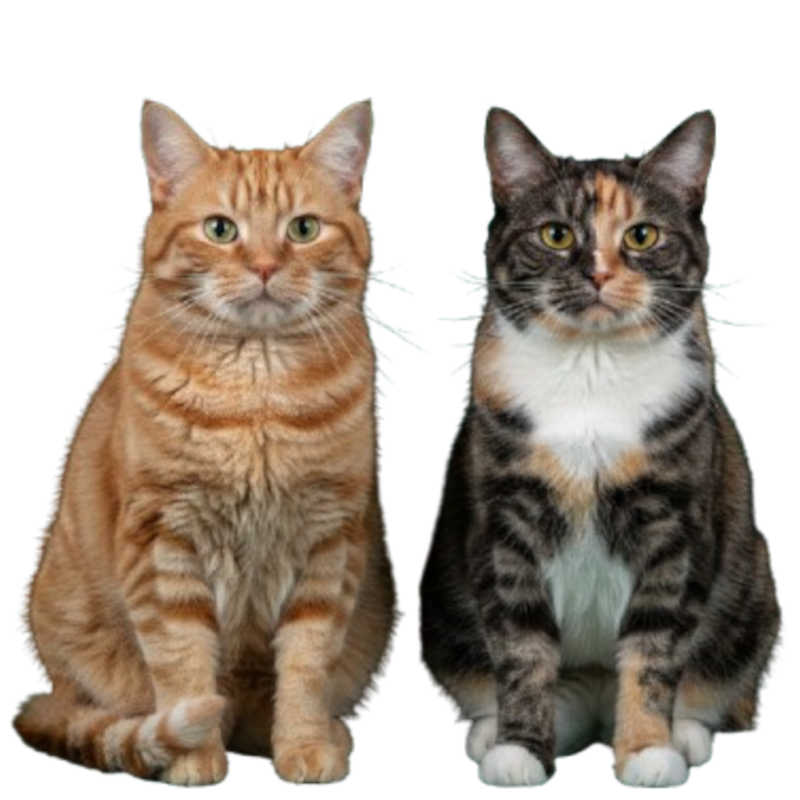
appearance
The American Wirehair is distinguished by a powerful, well-proportioned physique that conveys a sense of agility and strength. While its muscular build is a hallmark of the breed, its most defining characteristic is the unique, springy coat that is found in no other feline breed.
The Signature Wirehair Coat
The texture of the American Wirehair’s coat is the result of a spontaneous genetic mutation that affects all three types of hair: the guard hairs, the awn hairs, and the down hairs.
Structural Characteristics
Unlike the soft curls of a Rex breed, the coat of the American Wirehair is coarse, dense, and resilient.
- The “Wire” Effect: Each individual hair is crimped, hooked, or bent, creating a springy feel when touched.
- Density: The fur is exceptionally thick, providing a protective layer that historically shielded the breed’s ancestors from harsh weather.
- Whiskers: Even the tactile hairs (vibrissae) of the American Wirehair are typically curly or kinked.
Coarseness Variance
The degree of “wiriness” can vary between individual American Wirehairs. Breeders often evaluate the coat based on its “break”—the way the fur separates when the cat moves. A coat that remains crinkled and springy regardless of movement is considered the ideal standard.
Body Structure and Conformation
The American Wirehair is a medium-to-large cat with a “semi-cobby” build, indicating a sturdy, rectangular torso that is neither overly elongated nor excessively compact.
| Feature | Description |
|---|---|
| Torso | Well-rounded with a level back and a full chest. |
| Legs | Medium in length, muscular, and proportionate to the body. |
| Paws | Firm, full, and rounded with heavy pads. |
| Tail | Tapering slightly from the base to a rounded tip; never blunt or “bobbed.” |
Allometric Scaling
The physical proportions of the American Wirehair follow standard feline allometric growth. The relationship between body mass () and limb bone diameter () can be generalized by the power law:
Body Strength and Bone Thickness Model
- : Bone diameter, representing how thick and sturdy the American Wirehair’s legs are.
- : A symbol showing that the first value grows in relation to the second.
- : Total body weight.
- : The mathematical rule that ensures bones get thick enough to support a heavier body.
The American Wirehair is a medium-to-large cat with a muscular, well-rounded build. This scaling model reflects their robust skeletal structure; to maintain their “hard” and sturdy feel, their limb diameter () scales efficiently with their mass (), ensuring they remain powerful athletes rather than delicate or lanky.
In American Wirehairs, the robust bone structure often places them at the higher end of the expected diameter for their specific body mass—contributing to their reputation as “hardy” cats.
Cranial and Facial Features
The head of the American Wirehair is an important aspect of its breed type, harmonizing with its muscular body.
The Head Shape
The head is a modified wedge with prominent cheekbones and a well-developed muzzle.
- The Profile: There is a gentle concave curve at the bridge of the nose.
- The Chin: Firm and well-developed, forming a vertical line with the tip of the nose.
Eyes and Ears
- Eyes: Large, rounded, and set well apart. They are tilted slightly upward at the outer corners, giving the American Wirehair an alert and intelligent expression.
- Ears: Medium-sized with slightly rounded tips. They are set wide apart on the skull and are not unduly large at the base.
Coloration and Patterns
Because the American Wirehair is closely related to the American Shorthair, it is recognized in a vast array of colors and patterns.
- Tabby Patterns: Including Classic, Mackerel, and Spotted variations.
- Solid Colors: Such as White, Black, Blue, Red, and Cream.
- Parti-Colors: Including Calico, Tortoiseshell, and various “and white” combinations.
The only colors generally excluded from the breed standard are those indicating hybridization—such as chocolate, lavender, or the pointed (Himalayan) pattern. In all cases, the coat color should be clear and the markings (if present) should be distinct, though the wiry texture may cause patterns to appear slightly more “broken” than on a smooth-coated cat.
behavior
The behavior of the American Wirehair is a reflection of its ancestry as a working cat. While temperament describes their personality, their behavior encompasses their physical actions, activity cycles, and interaction patterns within a domestic environment.
Activity Cycles and Energy Expenditure
American Wirehairs typically exhibit a “bimodal” activity pattern, common to many domestic felines but influenced by their muscular build. They balance periods of intense physical exertion with long durations of rest.
Hunting and Play Mechanics
The predatory behavior of the American Wirehair is highly focused. They are known for “still-hunting”—a technique where they remain motionless for extended periods before a sudden burst of speed.
- Object Manipulation: American Wirehairs often use their paws to “bat” or “hook” toys, a behavioral trait that may be linked to their coarse, grippy paw pads.
- Jump Mechanics: Due to their powerful hindquarters, the American Wirehair is an accomplished jumper, often preferring high vantage points to survey their “territory.”
Energy Balance Equation
The daily energy expenditure () of an active American Wirehair can be modeled by considering their resting metabolic rate () and the thermic effect of activity ():
Daily Burned Calories (Energy Use)
- : Total Energy Expenditure (all calories burned in 24 hours).
- : “Nap-time Energy” (calories burned just by resting and breathing).
- : “Play-time Energy” (calories burned while climbing, hunting toys, and exploring).
Known for their keen interest in their surroundings, the American Wirehair often has a higher than more sedentary breeds. Their “quietly busy” nature means they are frequently on the move, investigating household changes, which keeps their elevated and helps maintain their lean muscle mass.
Given American Wirehair’s high muscle-to-fat ratio, their is often higher than more sedentary breeds—necessitating consistent daily play to prevent behavioral frustration.
Social and Communicative Behaviors
The American Wirehair uses a sophisticated range of non-verbal cues to communicate with both humans and other animals.
Vocalization Patterns
Unlike more “talkative” oriental breeds, the American Wirehair is behaviorally quiet.
- Chirping: They often emit a high-pitched “chirp” or “trill” when excited or during greeting.
- Purring: American Wirehairs are known for deep, resonant purring, often used as a self-soothing mechanism or to signal contentment.
Territorial Marking
While American Wirehairs are generally social, they maintain clear territorial boundaries within the home.
- Facial Rubbing: They frequently use the scent glands on their cheeks to mark “safe” objects and family members—a behavior often called bunting.
- Scratching: This behavior is both a physical stretch and a scent-marking ritual. Providing vertical and horizontal scratching surfaces is essential for American Wirehair’s behavioral health.
Environmental Interaction and Adaptability
American Wirehairs are observant and often “learn by watching.” Their behavior in a household is characterized by a high degree of situational awareness.
| Behavioral Domain | Typical Observation |
|---|---|
| Water Interaction | Many American Wirehairs show a fascination with running water, often “patting” at faucets. |
| Problem Solving | High; they are known to figure out how to open cabinets or doors. |
| Social Hierarchy | Generally adaptable; they usually find a “peaceful co-existence” niche in multi-pet homes. |
Sleep and Rest Patterns
As a breed with a robust constitution, the American Wirehair prioritizes deep recovery sleep.
Sleep Distribution
An American Wirehair will typically spend 12 to 16 hours a day sleeping. Their behavior during rest involves:
- Cat Napping: Light sleep where the senses remain alert to environmental sounds.
- REM Sleep: Deep sleep characterized by whisker twitching and paw movement, indicating high neural activity.
Nesting Behavior
The American Wirehair often seeks out textured surfaces that mimic the friction of their own coat. They may “knead” on wool blankets or soft upholstery more frequently than other breeds—a juvenile behavior that persists into adulthood as a sign of extreme comfort.
color
The American Wirehair is a versatile feline in terms of aesthetics, recognized in nearly every color and pattern known to domestic cats. While its texture is its primary identifier, the visual presentation of these colors is often influenced by the unique, crimped structure of the coat, which can diffuse light differently than a smooth-coated cat.
Understanding Feline Pigmentation
The vast array of American Wirehair’s colors is derived from two primary pigments: eumelanin (black-based) and phaeomelanin (red-based). The concentration and distribution of these pigments are determined by various genetic loci.
The Genetics of Color Dilution
Diluted colors, such as blue (gray) or cream, occur when the (Density) gene is mutated to the recessive . This causes the pigment granules to clump together, allowing more light to pass through the hair shaft.
The intensity of light reflection () on the American Wirehair’s coat can be represented by a simplified reflectance model:
Coat Shine and Light Reflection Model
- : The final brightness or “glow” seen on the American Wirehair’s fur.
- : The brightness of the light in the room.
- : The “Reflectivity Factor” (how much color and texture are packed into the hair).
- : The angle of the light hitting the unique “hooked” or “crimped” hair strands.
Because of the unique kinking and hooking of the American Wirehair’s hair, light hits the coat at various angles (). This creates a distinct light-scattering effect where the coat appears less “glossy” and more “matte” or textured compared to the American Shorthair, even in identical colors.
NOTE: represents the reflectivity coefficient of the specific pigment concentration and is the angle of the light relative to the crimped hair shaft.
Because American Wirehairs have hooked and bent hairs, the light scatters at multiple angles, often giving the colors a softer, more matte appearance than seen in the American Shorthair.
Recognized Color Categories
The following table outlines the primary color classifications for the American Wirehair as recognized by major registries like the CFA.
| Category | Typical Colors | Description |
|---|---|---|
| Solid | White, Black, Blue, Red, Cream | A uniform color from the root to the tip of every hair. |
| Tabby | Silver, Brown, Red, Blue, Cream | Includes classic, mackerel, spotted, and patched patterns. |
| Parti-Color | Tortoiseshell, Blue-Cream | Mixtures of two or more distinct colors, often sex-linked. |
| Bicolor | Black/White, Blue/White, etc. | Any recognized color or pattern combined with white. |
| Shaded/Smoke | Black Smoke, Blue Shaded | Colored tips with a contrasting white or silver undercoat. |
Common Patterns and Markings
The Tabby Group
The tabby pattern is the most frequent among American Wirehairs.
- Classic Tabby: Characterized by wide, swirling “butterfly” markings on the shoulders and “bullseyes” on the flanks.
- Mackerel Tabby: Narrow, continuous penciling lines running vertically down the body.
- Spotted Tabby: Markings broken into distinct oval or round spots.
The Smoke and Shaded Effect
In American Wirehairs with the Inhibitor () gene, the base of the hair remains white while the tip carries the pigment. In a American Wirehair with a “Smoke” coat, the cat appears solid when still, but the white undercoat is revealed as the wiry fur “breaks” during movement.
Eye Color Integration
The color of a American Wirehair’s eyes is generally expected to harmonize with its coat color.
- Green/Gold: Most common in tabbies and solid colors.
- Blue/Odd-Eyed: Primarily seen in solid white American Wirehairs or those with significant white spotting (van patterns).
- Copper/Brilliant Orange: Often found in solid black or red American Wirehairs, providing a striking contrast to the dense fur.
Prohibited Colors and Hybridization
While the American Wirehair is highly diverse, certain colors are traditionally excluded because they suggest hybridization with breeds possessing the “Himalayan” (pointed) gene. These include:
- Chocolate and Cinnamon
- Lavender (Lilac) and Fawn
- Pointed Patterns—such as Seal Point or Blue Point.
These restrictions ensure that the American Wirehair maintains its identity as a naturally occurring American mutation, preserved through careful outcrossing with the American Shorthair rather than exotic imports.
compatibility
Ease of Maintenance
Rating: 5/5
Child Friendly
Rating: 5/5
Annual Cost
Rating: 4/5
Lifetime Cost
Rating: 4/5
Adaptability
Rating: 5/5
Velcro Factor
Rating: 3/5
Quietude
Rating: 5/5
Apartment Suitability
Rating: 5/5
Hypoallergenic
Rating: 2/5
Handling Tolerance
Rating: 4/5
Hardiness/Longevity
Rating: 5/5
Prey Drive
Rating: 1/5
genetics
The American Wirehair is a biological phenomenon defined by a spontaneous genetic mutation that first appeared in a domestic cat population in upstate New York. Unlike many breeds that result from centuries of intentional selective breeding, the American Wirehair’s unique traits stem from a single dominant gene that fundamentally reshapes the structure of the feline coat.
The Wh Gene: A Dominant Mutation
The defining characteristic of the American Wirehair is governed by the (Wirehair) gene. This gene is autosomal dominant, which means a kitten only needs to inherit one copy of the allele from a single parent to display the wirehair phenotype.
Allele Interaction and Inheritance
In Mendelian genetics, the inheritance of the wirehair trait can be predicted through a Punnett square. If we denote the dominant wirehair allele as and the recessive straight-hair allele as :
| Gametes | Wh (Wirehair) | wh (Straight) |
|---|---|---|
| wh | Wh wh (Wirehair) | wh wh (Straight) |
Because the mutation is dominant, American Wirehairs can be either homozygous () or heterozygous (). To preserve a diverse gene pool and maintain robust health, breeders frequently outcross American Wirehairs with American Shorthairs (). This practice typically results in litters that are evenly split between wirehaired and straight-haired offspring.
Cellular Impact on Hair Morphology
The gene influences the keratinization process of the hair shaft during the anagen—or growth—phase.
Physical Distortion of the Shaft
In American Wirehairs, the follicles produce hair shafts that lack a smooth, cylindrical form. Instead, the individual hairs are:
- Crimped: The shaft bends at sharp, jagged angles.
- Hooked: The ends of the hair often form a microscopic hook.
- Bent: The overall structure lacks the linear uniformity found in other breeds.
Mathematical Representation of Shaft Curvature
The curvature () of a hair shaft can be described as the magnitude of the rate of change of the tangent vector () relative to the arc length ():
Hair Kinking and Hooking Measurement
- (Kappa): The “Curvature” (how sharply an individual hair bends or curls).
- : The direction the hair is pointing at any one spot.
- : The tiny change in length along a single strand of hair.
The signature of the American Wirehair is the gene, which increases the (curvature) of every hair type (guard, awn, and down). This isn’t a soft wave like a Rex; it is a sharp, springy kink that makes the coat feel like steel wool or a coarse brush.
In a typical domestic cat, remains near zero for the majority of the shaft. In the American Wirehair, fluctuates rapidly and significantly across the guard, awn, and down hairs—resulting in the signature dense and “springy” texture.
Outcrossing and Genetic Health
To maintain the long-term vitality of the breed, registries permit outcrossing—primarily with the American Shorthair. This strategy helps prevent the “inbreeding depression” that can occur within isolated genetic groups.
Hybrid Vigor
The American Wirehair thrives due to a high level of heterozygosity. Breeders maintain genetic health by screening for conditions common across the broader domestic cat population—such as Hypertrophic Cardiomyopathy (HCM).
| Genetic Metric | Status in American Wirehairs |
|---|---|
| Mutation Type | Spontaneous, Autosomal Dominant |
| Outcross Ratio | High (Primary outcross: American Shorthair) |
| Genetic Diversity | Robust due to inclusive outcross standards |
| Lethal Alleles | No known lethal associations with the Wh gene |
Comparison with Other Coat Mutations
It is essential to distinguish the gene from the mutations found in Rex breeds—such as the Devon Rex or Cornish Rex.
- Rex Mutations: These are generally recessive ( or ) and typically cause a thinning of the coat or the complete absence of guard hairs.
- Wirehair Mutation: This is dominant () and creates an exceptionally dense coat where all hair types—guard, awn, and down—are present but structurally distorted.
Unlike Rex cats, which may occasionally have thin patches or fragile fur, the American Wirehair’s coat is notably hardy and coarse. This suggests the mutation does not diminish the protective capabilities of the skin and fur.
health
The American Wirehair is widely regarded as one of the heartiest domestic feline breeds, largely due to its origin as a spontaneous natural mutation rather than a product of intensive human-directed structural changes. Because the breed standard encourages outcrossing with the American Shorthair, American Wirehairs maintain a diverse gene pool that mitigates many common hereditary ailments found in more isolated breeds.
Dermatological Considerations
The most significant health considerations for the American Wirehair are related to its unique integumentary system. The same genetic mutation that creates the wirehair texture can occasionally lead to specific skin requirements.
Sebum Regulation and Skin Sensitivity
The coarse, crimped hairs of the American Wirehair can sometimes be less efficient at distributing natural skin oils (sebum) along the hair shaft compared to straight-haired breeds.
- Oil Accumulation: In some individuals, sebum may collect on the skin surface, potentially leading to greasy fur or localized dermatitis.
- Cleaning Sensitivity: Due to the “hooked” nature of the hair, the American Wirehair’s skin can be sensitive to vigorous brushing. Gentle grooming is required to avoid breaking the hair or irritating the follicle.
External Environmental Impact
Because the coat is dense and springy, it provides excellent insulation. However, the skin beneath may be sensitive to environmental allergens or harsh chemical cleaners. Owners must monitor for redness or inflammation within the “breaks” of the wiry fur.
Hereditary and Genetic Screening
While American Wirehairs are generally robust, they are susceptible to conditions prevalent in the broader domestic cat population—particularly those shared with their American Shorthair relatives.
Hypertrophic Cardiomyopathy (HCM)
HCM is the most common cardiac disease in cats, characterized by the thickening of the left ventricular wall. The probability of cardiac health can be monitored via regular echocardiograms.
The relationship between wall thickness and cardiac efficiency can be broadly related to the reduction in ventricular volume ():
Heart Space and Muscle Thickness Check
- : The “Blood Room” (the space inside the heart for blood to fill).
- : The total size of the entire heart structure.
- : The thickness of the actual heart muscle.
In American Wirehairs, monitoring is important to ensure the heart remains healthy. If the heart muscle thickens abnormally (displacing ), it can reduce cardiac efficiency. Regular screenings help ensure that the robust physical vigor of the breed is supported by a healthy ratio.
As increases, the stroke volume decreases, forcing the heart to work harder. Responsible breeders screen their American Wirehairs to ensure this trait is not passed through the lineage.
Renal Health
Polycystic Kidney Disease (PKD) is another condition that breeders monitor. Although more common in Persian-influenced breeds, the open outcrossing of American Wirehairs necessitates vigilance to ensure the renal system remains clear of cysts.
Life Expectancy and Physiological Milestones
With proper nutrition and indoor living, the American Wirehair frequently enjoys a long lifespan—often reaching the mid-to-late teens.
| Life Stage | Age Range | Health Focus |
|---|---|---|
| Kitten | 0–1 Year | Initial vaccinations, monitoring coat development, and dental eruption. |
| Adult | 1–10 Years | Weight management and annual cardiac auscultation. |
| Senior | 10+ Years | Renal function screening and joint health monitoring. |
Nutritional and Metabolic Health
The American Wirehair is a muscular, medium-to-large cat with a moderate-to-high energy level. Maintaining an ideal Body Condition Score (BCS) is vital to prevent secondary health issues.
Weight Management
Obesity can lead to feline diabetes and exacerbate joint stress. The Daily Energy Requirement (DER) for a neutered adult American Wirehair can be estimated using the following formula:
Daily Calorie Needs for Adult Cats
- : Daily Energy Requirement (the total calories to eat per day).
- : The “Active Multiplier” (extra energy for an average active pet).
- : The weight of the cat in kilograms.
While the American Wirehair is athletic, the neutering multiplier of 1.2 ensures they don’t lose their defined silhouette to unnecessary weight gain. Because they are often “food motivated,” sticking to this calculation prevents metabolic stress.
Adjusting caloric intake based on this metabolic scaling helps maintain the American Wirehair’s agile and powerful physique.
Dental Hygiene
Like many domestic felines, American Wirehairs are prone to periodontal disease if dental care is neglected.
- Gingivitis: Inflammation of the gums can occur if plaque is allowed to mineralize into tartar.
- Resorptive Lesions: Regular veterinary checkups are necessary to identify “neck lesions” that may be hidden beneath the gum line—ensuring the American Wirehair remains free from chronic oral pain.
longevity
The American Wirehair is distinguished by a robust constitution that often translates into significant longevity. As a naturally occurring mutation refined through deliberate outcrossing with the American Shorthair, American Wirehairs generally avoid the genetic bottlenecks that often shorten the lifespans of more restricted feline populations.
Expected Lifespan Parameters
On average, a healthy American Wirehair can be expected to live between 14 and 18 years. However, many individuals reach their early twenties when they are kept exclusively indoors and provided with high-quality veterinary attention.
Survival Probability Modeling
The survival probability of the American Wirehair over time can be conceptually modeled using a Weibull distribution, which accounts for the increasing hazard rate as the feline ages:
Healthy Aging and Survival Odds
- : The mathematical chance of reaching a specific age ().
- : The “Expected Life” (the typical healthy lifespan of this breed).
- : The “Aging Rate” (how the risk of health issues changes over time).
The American Wirehair is a naturally hardy breed with a high . Their origins as resilient farm cats in New York have endowed them with a survival curve that remains remarkably stable into their early teens, reflecting their overall genetic health and “tough” constitution.
For American Wirehairs, the value is typically higher than that of many purebred cats, indicating a statistically greater chance of reaching advanced seniority.
Factors Influencing Life Duration
The lifespan of the American Wirehair is a multifactorial outcome involving genetics, environment, and preventative medicine.
Genetic Diversity and “Hybrid Vigor”
The American Wirehair’s longevity is bolstered by the practice of outcrossing. By introducing genetic material from the American Shorthair, breeders reduce the concentration of harmful recessive alleles.
- Low Inbreeding Coefficient: This genetic variety supports a more resilient immune system.
- Structural Integrity: The medium-sized, muscular frame of the American Wirehair is less prone to the orthopedic issues that can plague larger or more extreme-bodied breeds in their later years.
Environmental and Lifestyle Impact
The environment plays a critical role in reaching the upper limits of the American Wirehair’s life expectancy.
| Variable | Impact on Longevity |
|---|---|
| Indoor vs. Outdoor | Indoor American Wirehairs avoid trauma, predation, and infectious diseases, significantly extending average life. |
| Sterilization | Neutering or spaying reduces the risk of reproductive cancers and wandering behaviors. |
| Weight Control | Prevention of obesity reduces the incidence of Type II diabetes and joint degradation. |
Developmental Milestones and Aging
The Senior Transition
As American Wirehairs enter their second decade, physiological shifts require specialized management to preserve quality of life.
- Renal Function: Monitoring the Glomerular Filtration Rate (GFR) is essential, as chronic kidney disease is a primary limiting factor in feline longevity.
- Cognitive Health: Some American Wirehairs may show signs of feline cognitive dysfunction; maintaining an enriched environment helps sustain neural plasticity.
Metabolic Scaling in Aging
The metabolic rate of a senior American Wirehair may fluctuate. The Resting Energy Requirement (RER) for a geriatric cat is calculated as:
Basal Calories (Resting Energy Baseline)
- : The minimum calories needed for survival while resting.
- : A standard number used for mammal metabolism.
- : The weight of the American Wirehair in kilograms.
As a American Wirehair reaches their senior years, the remains the fundamental floor for their nutrition. Monitoring their weight () ensures that as their activity levels naturally dip, their caloric intake is adjusted to avoid placing extra strain on their sturdy joints.
While younger American Wirehairs may require higher multipliers for activity, senior American Wirehairs often require precise caloric restriction combined with highly digestible proteins to maintain muscle mass—preventing sarcopenia—without overtaxing the kidneys.
Common End-of-Life Considerations
While the American Wirehair is exceptionally hardy, the eventual cessation of life is typically linked to age-related systemic failure rather than breed-specific defects.
- Cardiac Resilience: Due to proactive HCM screening in the American Wirehair community, many cats maintain strong cardiac output well into their teens.
- Sensory Maintenance: Though vision and hearing may dim, the American Wirehair’s tactile nature and unique coat provide continued sensory feedback, helping them stay oriented in their environment during their twilight years.
maintenance
Proper care for the American Wirehair requires a specialized approach, particularly regarding its unique coat structure. Unlike many other breeds, the American Wirehair’s coarse and crimped fur necessitates a “less is more” philosophy to maintain its distinctive texture and skin health.
Coat and Skin Management
The defining characteristic of the American Wirehair is its wire-like coat. Maintaining this texture without causing damage to the individual hairs or irritating the skin is the primary maintenance priority.
Grooming Technique and Frequency
Because American Wirehairs have hairs that are hooked or bent, traditional feline grooming tools can be counterproductive.
- Minimal Brushing: Frequent brushing or coming can straighten the unique crimp or cause the fragile hairs to snap.
- Tool Selection: A soft-bristle brush or a wide-toothed comb should only be used during seasonal shedding periods.
- Hand Grooming: Often, simply running damp hands over the American Wirehair’s coat is sufficient to remove loose fur while preserving the “wire” feel.
Bathing and Sebum Control
The American Wirehair can occasionally develop a greasy feel due to oil buildup at the base of the hair follicles.
- Bathing Frequency: Regular bathing is generally unnecessary unless the skin becomes excessively oily.
- Product Choice: Use mild, hypoallergenic shampoos to avoid stripping the skin of essential moisture, which can lead to flaking.
Auricular and Ocular Hygiene
Due to the texture of the fur around the head, American Wirehairs may require more frequent attention to their ears and eyes.
Ear Cleaning
The small, crimped hairs inside the ear canal can trap wax and debris more easily than smooth-coated breeds.
- Inspection: Check the ears weekly for signs of redness or a yeasty odor.
- Cleaning: Use a veterinarian-approved ear cleaner and a cotton ball—never a swab—to gently wipe the outer canal.
Tear Duct Maintenance
Occasional discharge may accumulate in the corners of the eyes. Wiping these areas with a soft, damp cloth prevents staining and keeps the American Wirehair comfortable.
Nail and Dental Care
Standard feline maintenance routines apply to the American Wirehair to ensure long-term mobility and systemic health.
Claw Maintenance
American Wirehairs should have their nails trimmed every two to three weeks. This prevents painful snags in furniture and reduces the risk of ingrown claws, especially in senior American Wirehairs.
Periodontal Health
Daily tooth brushing is the gold standard for preventing gingivitis. The surface area of the teeth () requiring cleaning is significant, and the accumulation rate of plaque () over time () can be viewed as:
Tooth Plaque Growth Over Time
- : The total amount of soft plaque on the teeth.
- : The amount of time between tooth brushings.
- : The “Bacterial Growth Speed” (based on the cat’s unique mouth chemistry).
- : The amount of bacteria already present in the mouth.
Because the American Wirehair is a “relaxed” patient, dental care is usually straightforward. However, if (existing calculus) is allowed to build up, the rate of new plaque formation () accelerates. Regular brushing maintains a low value for a lifetime of healthy chewing.
Regular mechanical cleaning disrupts this process.
Environmental Requirements
The American Wirehair is an active and intelligent companion that requires mental and physical stimulation to prevent boredom-related behaviors.
| Category | Requirement | Description |
|---|---|---|
| Exercise | Moderate to High | Interactive play sessions to maintain muscle tone and cardiovascular health. |
| Scratching | Vertical and Horizontal | Provide various textures (sisal, cardboard) to allow for natural marking and nail shedding. |
| Mental | Puzzle Feeders | Encourages the American Wirehair’s natural hunting instincts during mealtime. |
Seasonal Maintenance Adjustments
The American Wirehair’s coat density can fluctuate slightly with the seasons.
Spring and Autumn Transitions
During these periods, American Wirehairs may shed more than usual. Increasing the frequency of hand-grooming helps manage the volume of loose hair in the home. It is also a critical time to monitor for “stud tail”—an overactive sebaceous gland at the base of the tail—which can be more prevalent in this breed during hormonal or seasonal shifts.
measurements
| Measurement | Female | Male | ||
|---|---|---|---|---|
| Metric | Imperial | Metric | Imperial | |
height | 20 – 25 centimeters | 8 – 10 inches | 23 – 28 centimeters | 9 – 11 inches |
length | 25 – 33 centimeters | 10 – 13 inches | 30 – 38 centimeters | 12 – 15 inches |
weight | 3.6 – 5.4 kilograms | 8 – 12 pounds | 5.4 – 6.8 kilograms | 12 – 15 pounds |
• Height: Refers to the measurement at the withers (shoulders).
• Length: Measured from the tip of the nose to the base of the tail.
origin
The American Wirehair is a uniquely American feline, distinguished by its spontaneous genetic divergence from standard domestic cat populations. Unlike many contemporary breeds that were engineered through complex crossbreeding programs, the American Wirehair’s lineage began with a single, naturally occurring mutation in a rural setting.
The Council Rock Farm Mutation
The history of the American Wirehair traces back to 1966 at Council Rock Farm in Vernon, New York. A domestic shorthair barn cat gave birth to a litter of five kittens, one of which exhibited a strikingly different coat texture characterized by wiry, crimped fur and crinkled whiskers.
Adam of Council Rock
The progenitor of all American Wirehairs was a red-and-white male kitten named Adam. His appearance was a biological anomaly, as both parents were standard domestic shorthairs with straight coats.
Genetic Discovery and Validation
The farm owners contacted a local breeder, Joan O’Shea, who recognized the potential significance of the mutation. To determine the inheritance pattern of the trait, O’Shea engaged in controlled breeding trials. It was discovered that the wirehair trait was governed by a dominant gene, denoted here as .
If represents the dominant wirehair allele and represents the recessive straight-hair allele, the initial breeding between Adam () and a straight-haired female () followed this distribution:
| Parental Genotypes | Wh (Adam) | wh (Adam) |
|---|---|---|
| wh (Female) | Wh wh (American Wirehair) | wh wh (Straight) |
| wh (Female) | Wh wh (American Wirehair) | wh wh (Straight) |
Breed Development and Recognition
Following the successful identification of the gene, the development of the American Wirehair focused on establishing a stable population while maintaining the health and temperament of the original farm cats.
Establishing the Standard
Breeders utilized the American Shorthair as a primary outcross to ensure genetic diversity. This decision influenced the American Wirehair’s physical structure—resulting in a medium-to-large, muscular cat with a broad chest and rounded head.
Official Registry Timeline
The path to formal recognition was relatively swift due to the stability of the dominant mutation.
| Year | Milestone |
|---|---|
| 1966 | Discovery of Adam at Council Rock Farm. |
| 1967 | The Cat Fanciers’ Association (CFA) grants the American Wirehair registration status. |
| 1978 | The American Wirehair achieves full Championship status within the CFA. |
Comparison with International Mutations
While other “rexed” or “wire” mutations have appeared globally—most notably in Cornwall and Devon, England—the American mutation is genetically distinct.
Structural Differences
The gene affects all three types of feline hair (guard, awn, and down), whereas European Rex mutations often result in the absence or significant reduction of guard hairs.
The density of the coat can be modeled by the hair count per square millimeter (), where the American Wirehair’s density remains high despite the structural distortion ():
Coat Texture and Springiness Score
- : How “wire-like” or springy the fur feels to the touch.
- : “Thickness” (how many hairs are packed into a tiny area).
- : “The Kink Factor” (how much each hair is bent, crimped, or hooked).
The American Wirehair’s unique texture is a result of high —every hair is crimped or hooked. This “wire” effect is most intense when density () is high, creating a springy, resilient coat that bounces back immediately when touched, a trait that appeared as a spontaneous mutation in 1966.
This distinction ensures that American Wirehairs possess a much hardier and more resilient coat than their European counterparts, reflecting the rugged farm-cat ancestry from which they emerged.
temperament
The internal disposition of the American Wirehair is defined by a characteristic equilibrium, blending the rugged self-reliance of their lineage with a sophisticated, gentle nature. Rather than being defined by overt demands for attention, American Wirehairs offer a presence that is both grounded and profoundly observant.
Core Temperamental Framework
The following table outlines the intrinsic psychological markers of American Wirehairs:
| Attribute | Level | Dispositional Impact |
|---|---|---|
| Adaptive Resilience | High | Maintains composure during environmental shifts or household noise. |
| Observational Intelligence | High | Prefers analyzing surroundings before engaging with new stimuli. |
| Social Devotion | Deep | Forms strong, quiet bonds without excessive vocalization. |
| Interactive Energy | Balanced | Enjoys intellectual challenges but values rest and autonomy. |
Psychological Profile: Stability and Cognitive Flexibility
The American Wirehair’s mental state is rooted in a high threshold for overstimulation. Unlike breeds that react impulsively to change, American Wirehairs display a notable “emotional stoicism.” This ability to process environmental variables can be modeled as a ratio of their innate curiosity against their reactive tendencies:
Emotional Intelligence and Calmness Score
- : The “Chill Factor” (overall social smarts and calmness).
- : How much the cat wants to explore and investigate.
- : How well the cat handles loud noises or new changes.
- : How quickly the cat gets scared or impulsive.
The American Wirehair is known for a very high . Their high stability and curiosity combined with very low reactivity (low denominator) makes them incredibly adaptable. They are the “stoics” of the cat world—interested in everything but rarely rattled by anything.
In practice, the American Wirehair maintains a high (Emotional Quotient), allowing them to remain a calming influence within the home. They are participants in the household’s social fabric, yet they respect the personal boundaries of their human companions.
Intellectual Engagement and Insight
A defining facet of American Wirehair’s temperament is a contemplative curiosity. These cats are not merely passive inhabitants; they are active watchers. They often choose elevated vantage points to oversee their domain, demonstrating a thoughtful approach to their territory.
- Measured Patience: They possess a remarkable ability to wait, making them excellent companions in multi-pet homes.
- Methodical Problem Solving: When faced with a puzzle or a hidden object, the American Wirehair utilizes a systematic approach rather than frantic persistence.
- Inherent Confidence: Their self-assured nature means they rarely feel the need to compete for the spotlight.
Communication and Presence
The communication style of the American Wirehair is subtle and nuanced. They rarely rely on audible calls to express their needs, preferring a language of proximity and focus.
- Proximal Loyalty: American Wirehairs often express their bond simply by choosing to stay in the same room as their owners—a behavior known as “companionable silence.”
- Visual Interaction: They use steady, blink-oriented eye contact to signal trust and affection.
- Tactile Subtlety: While they enjoy physical contact, they often prefer a gentle lean or a quiet seat next to a person rather than demanding to be carried.
Conclusion
The temperament of the American Wirehair is one of harmonious autonomy. They offer a sophisticated companionship that values depth over volume. For those who appreciate a feline partner with a strong sense of self and a resilient, loving heart, the American Wirehair provides a unique and stabilizing influence on the domestic environment.