American Shorthair Cat
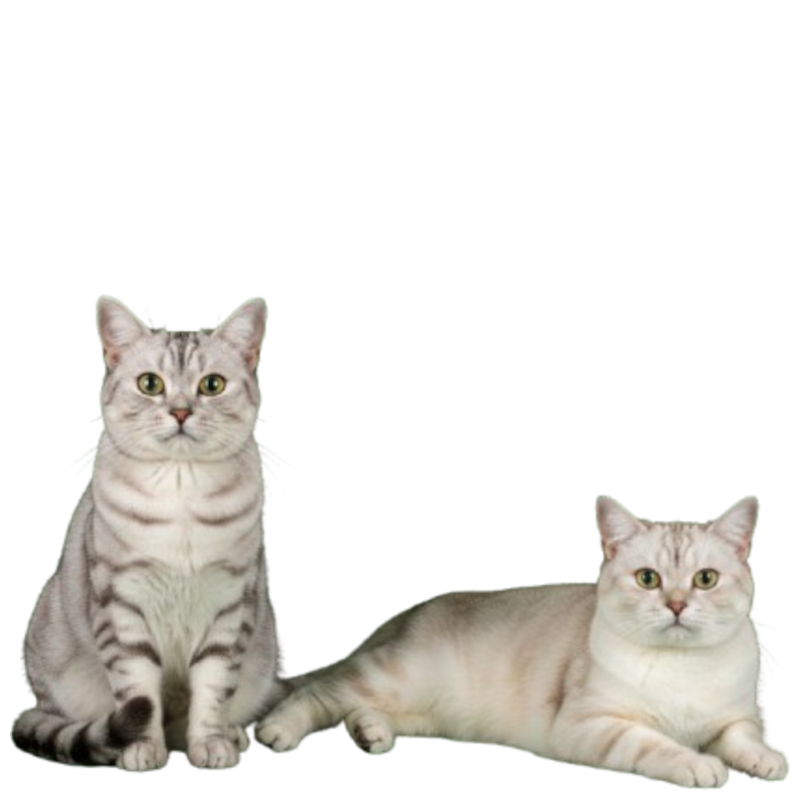
appearance
The American Shorthair is a quintessential working feline, characterized by a “square” physique that prioritizes strength, stamina, and nimble movement. Its physical form conveys a sense of equilibrium and power, lacking the extreme features or delicate structures found in more ornamental breeds.
Body Structure and Frame
The skeletal and muscular frame of the American Shorthair’s body is notably substantial. This cat is classified as a medium-to-large animal built for practical, athletic performance.
- Torso: The midsection is compact and sturdy, featuring a wide chest and highly developed musculature across both the shoulders and the rear.
- Backline: A straight, level spine is a primary trait, ending in a rump that curves slightly downward.
- Proportions: In terms of geometry, the American Shorthair is typically longer than it is tall. This relationship can be expressed by the following ratio:
Body Shape and Rectangle Proportion
- : The “Rectangle Score” that defines the cat’s side view.
- : The length of the cat from the chest to the back of the hip.
- : The height of the cat from the floor to the top of the shoulder.
- : The ideal “long-body” number (meaning the cat is about 20% longer than it is tall).
The American Shorthair is defined by its powerful, rectangular build. Unlike the cobby structure of a Persian or the tubular frame of a Siamese, the American Shorthair maintains a ratio () of approximately 1.2. This specific proportion ensures the cat has the leverage and stability required for its heritage as a rugged working breed, balancing a broad chest with a well-developed hindquarter.
Cranial and Facial Morphology
The skull of the American Shorthair is substantial with full cheeks, resulting in a facial expression that appears both pleasant and resolute.
Head Geometry
- Contour: The head is slightly longer than its width, presenting a soft, oblong silhouette.
- Muzzle: A prominent, squared-off muzzle serves as a reminder of its lineage as an effective predator.
- Chin: The jawline is strong, with the chin and upper lip aligning vertically to create a firm profile.
Ocular and Aural Features
- Eyes: Positioned wide apart, American Shorthair’s eyes are quite large. They feature a rounded lower half and a more curved, almond-shaped upper lid.
- Ears: These are medium in size with rounded tips. They are placed broadly on the head and do not appear excessively flared at the bottom.
Fur Quality and Density
The outer layer of the American Shorthair is a standout feature, having adapted over generations to offer defense against varying weather conditions.
- Texture: The hair is short and consistently thick. Unlike breeds with a silky coat, the fur of the American Shorthair feels somewhat coarse or “hard” to the touch.
- Protection: The density of the coat serves as an insulator against cold and dampness. Depending on the environment, American Shorthairs may grow a significantly heavier coat during the winter season.
Limbs, Paws, and Tail
The appendages of the American Shorthair are engineered for balance and rapid acceleration.
| Anatomical Feature | Description |
|---|---|
| Legs | Heavily muscled and of moderate length, maintaining a straight alignment when viewed from any angle. |
| Paws | Large, sturdy, and circular with substantial padding for traction. |
| Tail | Thick at the root and of moderate length, narrowing toward a blunt, rounded end. |
Assessment of Structural Balance
For American Shorthairs to meet the ideal physical standard, specific anatomical proportions are observed. If represents the height at the shoulders, the vertical depth of the chest should follow this approximation:
Chest Depth and Power Ratio
- : The depth of the chest (how far down the ribcage reaches).
- : The “Halfway” marker (meaning the chest should reach halfway to the floor).
- : The total height of the cat from the floor to the shoulder.
A hallmark of the American Shorthair is its “well-sprung” ribs and deep chest. This model () quantifies the breed’s power; a chest that reaches approximately halfway to the ground provides ample room for heart and lung capacity. This thoracic depth is essential for the American Shorthair’s historical endurance, distinguishing its silhouette from more shallow-chested or extreme-typed breeds.
This specific build ensures that the American Shorthair keeps the low center of gravity and mechanical advantage that were essential for its historical duties—guarding grain and property.
behavior
While temperament describes the inherent nature of the American Shorthair, its behavior encompasses the observable actions and instinctive patterns that define its daily life. These actions are deeply rooted in the American Shorthair’s history as a working cat and efficient predator.
Predatory Drive and Hunting Patterns
Even in a modern domestic setting, the American Shorthair exhibits highly refined predatory behaviors. This drive is often channeled into structured “play-hunting” sequences that mirror wild survival tactics.
The Hunting Sequence
The typical behavioral loop of the American Shorthair follows a precise progression:
- Detection: Visual or auditory identification of a target—such as a toy or an insect.
- Stalking: A low-profile approach characterized by stealthy, calculated movement.
- Execution: A sudden burst of kinetic energy culminating in a pounce.
- Capture Interaction: A characteristic shaking or biting gesture performed on the object to simulate a successful hunt.
Vertical and Horizontal Spatial Use
American Shorthairs are versatile in their navigation of a home. While many active breeds prefer high altitudes, the American Shorthair is an opportunistic user of both ground-level space and elevated perches. They often select a “sentry position”—an elevated spot with a clear vantage point—to monitor all household activity.
Activity Cycles and Energy Regulation
The American Shorthair is an expert at energy conservation, a trait inherited from ancestors that needed to remain ready for physical exertion at a moment’s notice.
Crepuscular Activity Patterns
In alignment with their lineage, American Shorthairs often show increased activity during the twilight hours of dawn and dusk. This is known as crepuscular behavior. If represents the energy needed for a hunting burst and is the energy stored during rest, the American Shorthair’s metabolic strategy optimizes for maximum readiness:
Daily Energy and Weight Balance
- : The Net Energy (leftover calories that could become body fat).
- : “Energy In” (all the calories eaten from food and treats).
- : “Energy Out” (all the calories burned by breathing, staying warm, and playing).
For the American Shorthair, managing is a delicate balance. Because they are naturally efficient hunters with a moderate metabolic rate, an (a caloric surplus) quickly leads to adipose storage. This breed is famously prone to obesity if their intake () exceeds their requirement (), especially when their “working” role is replaced by a sedentary indoor lifestyle. Maintaining a net-zero balance is key to preserving their powerful, muscular silhouette.
Play Preferences
Play behavior in the American Shorthair is generally grounded and tactical. They gravitate toward toys that replicate the erratic movement of small prey. Unlike more flighty breeds, the American Shorthair is known for its analytical play style—such as using its paws to manipulate objects or retrieve toys from beneath furniture.
Social and Communicative Behaviors
The social interaction of the American Shorthair is best defined as “companionable independence.”
- Scent Marking: The American Shorthair frequently engages in allorubbing—pressing its head and body against human companions or furniture. This behavior establishes a shared communal scent within its territory.
- Subtle Communication: American Shorthairs are not typically vocal demanders. They communicate through nuanced body language, such as the “slow blink” or a controlled tail twitch, rather than through constant vocalization.
Grooming and Self-Maintenance
The American Shorthair is exceptionally fastidious regarding its physical condition. Their short, dense fur requires consistent self-grooming to ensure it remains an effective protective layer.
| Behavior Type | Frequency | Primary Purpose |
|---|---|---|
| Self-Grooming | High | Body temperature regulation and scent management. |
| Kneading | Occasional | Seeking comfort and activating scent glands in the paws. |
| Scratching | Moderate | Territorial marking and maintaining claw health. |
Adaptation to Routine
The American Shorthair thrives on consistency and develops a strong internal clock regarding feeding and household transitions. Any significant disruption to this daily routine can lead to “displacement behaviors”—such as temporary hiding or an increase in grooming—while the American Shorthair recalibrates to its environment.
color
The American Shorthair is celebrated for its vast spectrum of hues and markings, a testament to the diverse genetic pool of its working ancestors. While the “Silver Classic Tabby” remains the most recognizable variant, official standards recognize more than 80 distinct combinations.
The Genetics of Pigmentation
The visual appearance of American Shorthairs results from the interaction between base pigments—specifically eumelanin (black-based) and phaeomelanin (red-based)—and various modifier genes. A significant factor is the dense pigment gene () versus its recessive dilute counterpart ().
The expressed phenotype () can be viewed as a result of the base color () and the presence of a dilution factor ():
Coat Hardness and Protection Level
- : The total “Toughness” of the coat (how well it protects the cat).
- : The “Density” score (how many hairs are packed into every square inch).
- : The “Thickness” factor (how thick and stiff each individual hair is).
The American Shorthair is renowned for its “hard” coat, a survival trait from its history as an all-weather working cat. This model () distinguishes the breed from the soft-coated American Curl; by maximizing both density () and hair thickness (), the American Shorthair’s fur becomes a protective barrier. A proper coat should feel crisp and resilient to the touch, providing insulation and protection from brambles and dampness.
Primary Color Groups
The American Shorthair displays several fundamental colors, ranging from deep saturations to softer, diluted tones.
Solid Hues
These cats possess a uniform color across the entire body, free from any stripes or shading.
- White: A pristine, snowy coat; the nose and paw pads are typically pink.
- Black: A deep, coal-like shade without rust-colored undertones; features black leather on the nose.
- Blue: An even, slate-grey tone; the skin on the nose and paws matches the fur.
- Red: A vibrant, saturated orange-red; characterized by brick-red nose leather.
Dilute Variations
These occur when the pigment is “clumped,” resulting in softer colors like Cream (diluted Red) or Blue (diluted Black).
Pattern Classifications
The American Shorthair is perhaps most distinguished by its high-contrast patterns, especially within the tabby group.
Tabby Markings
For American Shorthairs, these markings should be sharp, bold, and clearly separated from the background color.
- Classic Tabby: Noted for “butterfly” shapes across the shoulder blades and circular “bullseye” markings on the sides.
- Mackerel Tabby: Features vertical, thin stripes resembling a fish skeleton, extending from the spine downward.
- Patched Tabby: Often referred to as a “Torbie,” this involves a base tabby pattern interspersed with patches of cream or red.
Tipped and Shaded Varieties
These patterns occur when the color is restricted to the upper portion of the hair shaft.
- Chinchilla Silver: A white undercoat where the tips of the fur on the head, back, and tail are lightly dusted with black, creating a sparkling effect.
- Black Smoke: Appears to be a solid black cat until movement reveals a stark white undercoat at the base of the hairs.
Bi-Color and Calico Patterns
White spotting is a frequent and accepted trait among many American Shorthairs.
| Category | Visual Description |
|---|---|
| Bi-Color | Any recognized color or pattern paired with white patches. |
| Calico | A white base featuring distinct, unblended patches of black and red. |
| Van | A predominantly white coat where color is limited only to the head and tail. |
Coordination of Eye Color
In the American Shorthair, the color of the eyes is frequently a genetic requirement that must harmonize with the coat.
- Silver Patterns: Almost exclusively paired with green or hazel eyes.
- Brown Tabbies: Usually showcase brilliant gold or copper irises.
- White Individuals: May have blue, gold, or “odd-eyes”—where one eye is blue and the other is gold.
Summary of Aesthetic Standards
Regardless of the specific shade, the American Shorthair’s coat is defined by clarity and saturation. Because the fur is “hard” and short, patterns do not bleed into one another, allowing for the precise, intricate detailing that makes the American Shorthair a standout in the feline world—a visual legacy of its practical, hardy origins.
compatibility
Ease of Maintenance
Rating: 5/5
Child Friendly
Rating: 5/5
Annual Cost
Rating: 5/5
Lifetime Cost
Rating: 4/5
Adaptability
Rating: 5/5
Velcro Factor
Rating: 3/5
Quietude
Rating: 5/5
Apartment Suitability
Rating: 5/5
Hypoallergenic
Rating: 2/5
Handling Tolerance
Rating: 4/5
Hardiness/Longevity
Rating: 5/5
Prey Drive
Rating: 1/5
genetics
The genetic profile of the American Shorthair is a narrative of natural selection meeting intentional preservation. Unlike breeds characterized by specific genetic mutations—such as the folded ears of the Scottish Fold—the American Shorthair represents a “natural” genotype optimized for survival, vitality, and structural balance.
Ancestral Genomic Diversity
The American Shorthair’s genome is remarkably diverse due to its origins as a landrace population. Brought to North America by European settlers, the ancestors of the American Shorthair underwent centuries of “functional selection,” where only the hardiest individuals with the most efficient hunting phenotypes survived to reproduce.
Coat and Color Genetics
The vast array of colors in American Shorthairs is governed by a series of well-documented loci. The interaction between these genes determines the visual “phenotype” of the American Shorthair.
The Agouti and Tabby Loci
The most iconic American Shorthair patterns are controlled by the interaction of the Agouti gene () and the Tabby gene ().
- Agouti (): Determines whether the tabby pattern is expressed () or masked (), resulting in a solid color.
- Classic Tabby (): The American Shorthair is particularly noted for the recessive “blotched” or classic tabby allele (), which creates the signature whorls and bullseyes.
Pigment Intensity and Dilution
The intensity of the American Shorthair’s coat is managed by the Dense pigment gene (). The mutation to the recessive dilute form () transforms Black into Blue and Red into Cream.
If we represent the probability of a dilute offspring from two heterozygous parents () using Mendelian inheritance:
Odds of “Soft” Colors like Blue or Cream
- : The 25% chance of a kitten having a “softened” color.
- : The 50/50 chance of getting the “soft-color” gene from one parent.
- : The “Soft-Color” gene (recessive dilute allele).
- : The 1-in-4 probability that a kitten gets the gene from both parents.
In the American Shorthair, color clarity is a major component of the breed standard. This model explains how two “dense” colored parents—such as two Black Silver Tabbies—can produce a “dilute” Blue Silver Tabby kitten. For the dilute phenotype to manifest, the kitten must inherit the allele from both parents. While the American Shorthair is famous for its striking “dense” colors, the 25% probability of dilute offspring allows for the beautiful variety of smoke and cream patterns seen in the breed today.
Structural and Health Genetics
The American Shorthair is genetically predisposed to a robust physical structure, often referred to as “orthopedic soundness.”
Polygenic Inheritance of Build
The “square” and muscular build of the American Shorthair is not controlled by a single “muscle gene” but is rather a polygenic trait. This means multiple genes contribute incrementally to the final physical form. Breeders select for these traits to maintain the traditional working-cat silhouette.
Hereditary Health Monitoring
While American Shorthairs are generally healthy, two specific genetic conditions are monitored within the breeding pool:
| Condition | Genetic Description | Impact on American Shorthair |
|---|---|---|
| Hypertrophic Cardiomyopathy (HCM) | Likely polygenic / variable penetrance | Thickening of the heart muscle; monitored via screening. |
| Polycystic Kidney Disease (PKD1) | Autosomal Dominant | A remnant of past outcrosses; largely eliminated via DNA testing. |
The “Natural Breed” Genetic Advantage
Because American Shorthairs were not founded on a narrow genetic bottleneck or a deleterious mutation, they benefit from a phenomenon known as “hybrid vigor” within their closed registry. This results in a statistically longer lifespan and a lower incidence of the restrictive respiratory or skeletal issues found in highly specialized breeds.
Mathematical Modeling of Selection
Breeders use a “Selection Index” () to maintain the American Shorthair’s standard. This can be simplified as a weighted sum of various phenotypic traits () and their respective heritability ():
Breeding Quality and Trait Importance Score
- : The “Perfect Match” index for a specific cat’s lineage.
- : The “Priority” (how much a breeder cares about a specific trait like eye color).
- : The “Pass-Down Rate” (how likely the trait is to be inherited by kittens).
- : The “Trait Value” (how good the trait actually looks on the cat).
Selecting for the perfect American Shorthair involves balancing multiple variables simultaneously. Because traits like “temperament” might have a different heritability () than “eye color,” breeders use a weighted index to prioritize what matters most. For the American Shorthair, the weight () for the ‘classic tabby pattern’ is often high, but it must be balanced against the heritability of ‘bone density’ to ensure the cat remains a robust representation of the breed rather than just a pretty coat.
By focusing on high heritability for structural traits, the American Shorthair maintains its distinct, historical appearance across generations.
health
The American Shorthair is widely recognized as one of the most resilient and constitutionally sound feline breeds. Its health profile is a direct result of its evolution as a working animal, where physical endurance and an absence of debilitating genetic traits were vital for survival.
General Vitality and Lifespan
In a supportive environment, American Shorthairs typically enjoy an extended life. While the life expectancy for domestic felines varies, the American Shorthair frequently surpasses the average due to its diverse and sturdy genetic heritage.
- Average Lifespan: 15 to 20 years.
- Health Strategy: Consistent preventive medical care and strict weight regulation are the primary factors in sustaining the American Shorthair’s long-term vitality.
Hereditary and Genetic Considerations
Although the American Shorthair is a natural breed developed through environmental selection, certain conditions are monitored within the population to maintain the integrity of the lineage.
Hypertrophic Cardiomyopathy (HCM)
HCM represents the most prevalent cardiac disorder across all domestic cats, including the American Shorthair. This condition involves an abnormal thickening of the heart’s muscular walls. If represents the thickness of the ventricular wall and represents the internal chamber volume, the progression of the disease generally follows this relationship:
The Hair-to-Muscle Visibility Rule
- : A longer or fluffier coat length.
- : A logical rule meaning “leads to.”
- : A decrease in how clearly you can see the cat’s muscle and bone structure.
In the American Shorthair, “shorthair” isn’t just a label—it is a functional requirement for judging conformation. This inverse model () dictates that as the length of the coat () increases, the ability to observe the underlying muscular structure and “square” frame () diminishes. For a breed defined by its powerful anatomy, a coat that is too long or “plush” acts as a filter, obscuring the hard-earned physical definition that characterizes a high-quality American Shorthair.
This reduction in internal volume impairs the heart’s ability to circulate blood efficiently. Ethical breeders utilize periodic echocardiograms on American Shorthairs within their programs to identify and screen out this trait.
Polycystic Kidney Disease (PKD1)
PKD1 is a hereditary condition characterized by the development of fluid-filled cysts within the renal tissue. While this was historically introduced through outcrossing with other breeds, modern DNA testing has enabled breeders to largely purge this from American Shorthair’s family lines.
Physical Maintenance and Metabolic Health
The American Shorthair’s muscular frame and generally moderate activity levels require careful monitoring of its nutritional balance.
Obesity Management
Because of its composed temperament and efficient metabolic rate, the American Shorthair is susceptible to becoming overweight if caloric intake is not regulated. Excessive weight can trigger several secondary health complications:
- Diabetes Mellitus: A decrease in the body’s sensitivity to insulin.
- Hepatic Lipidosis: A condition where the liver accumulates excessive fat.
- Osteoarthritis: Accelerated joint wear caused by supporting unnecessary mass.
The Body Condition Score (BCS) for a healthy American Shorthair should typically align with a 5 on a 9-point scale, meaning the ribs can be easily felt even if they are not visible to the eye.
Dental Wellness
As with many domestic cats, the American Shorthair is vulnerable to periodontal disease. Frequent dental assessments and cleanings are essential to prevent bacterial infections that can travel through the bloodstream and damage internal organs.
Preventative Care Schedule
To maximize the well-being of the American Shorthair, a standardized medical timeline is recommended:
| Procedure | Frequency | Purpose |
|---|---|---|
| Veterinary Exam | Annually | Overall physical assessment and early symptom detection. |
| Vaccinations | Per Protocol | Immunization against FVRCP and Rabies. |
| Cardiac Screening | Periodic | Diagnostic monitoring for HCM, especially in breeding lines. |
| Blood Chemistry | Senior Years (7+) | Evaluating renal and hepatic function (BUN/Creatinine). |
Environmental Impact on Health
The American Shorthair flourishes in an indoor setting where the dangers of physical trauma, infectious agents, and parasitic outbreaks are minimized. Their short, dense coat offers sufficient protection against minor temperature changes but does not require the intensive maintenance associated with long-haired breeds. This characteristic makes them less prone to serious gastrointestinal obstructions caused by hairballs—a visual legacy of its practical, hardy origins.
longevity
The American Shorthair is celebrated for its impressive lifespan, frequently outliving many other pedigreed felines. This longevity is primarily attributed to its development as a working cat—a process that favored physical endurance and genetic resilience over aesthetic extremes.
Typical Lifespan Parameters
While the general domestic cat typically lives between 12 and 15 years, the American Shorthair often exceeds these figures under proper care.
- Expected Lifespan: 15 to 20 years.
- Exceptional Longevity: It is not uncommon for healthy American Shorthairs to reach 22 years or more.
Factors Influencing Longevity
The total lifespan of the American Shorthair can be modeled as a function of genetic health (), environmental quality (), and medical intervention ():
Long Life and Health Outcome Formula
- : The total number of happy, healthy years a cat lives.
- : The “Healthy Balance” (how all factors work together).
- : Genetic Luck (the health and strength passed down from parents).
- : Environment (love, play, and a safe home).
- : Weight Management (keeping the cat lean and fit).
The impressive lifespan of the American Shorthair—often reaching 15 to 20 years—is a product of this multifactorial function. While their robust genetic foundation () provides the baseline, it is the interaction with metabolic management () that proves most critical. Because the American Shorthair is prone to weight gain, the is maximized only when a high-quality environment () and caloric discipline are maintained to protect their heart and joints over the long term.
Genetic Stability
Unlike “man-made” breeds that may rely on narrow genetic bottlenecks, the American Shorthair’s heritage as a landrace population provides a broad genetic base. This diversity minimizes the risk of early-onset hereditary failure.
Environmental Safety
The single most significant impact on American Shorthair’s longevity is the indoor-versus-outdoor lifestyle.
- Indoor Environment: Protects the American Shorthair from predation, vehicle accidents, and communicable diseases.
- Mental Enrichment: Prevents cognitive decline in senior American Shorthairs by maintaining neurological pathways through play.
Aging Phases and Physiological Transitions
The aging process in the American Shorthair is generally gradual, with specific physiological milestones.
| Life Stage | Age Range | Physiological Focus |
|---|---|---|
| Prime Adult | 3 to 10 years | Maintaining muscle mass and metabolic equilibrium. |
| Senior | 11 to 14 years | Monitoring renal function and joint mobility. |
| Geriatric | 15+ years | Managing cognitive health and sensory acuity. |
Sustaining Longevity Through Nutrition
Metabolic health is the cornerstone of a long life for the American Shorthair. Because American Shorthairs have a propensity for weight gain, caloric restriction in later years is essential to prevent systemic strain.
The Resting Energy Requirement () for a senior American Shorthair can be calculated as:
Basal Calorie Needs (Survival Energy)
- : The minimum calories needed just for the heart to beat and lungs to breathe.
- : A standard number used for mammal metabolism.
- : The cat’s body weight in kilograms.
- : A scaling factor that accounts for how body size affects energy burn.
The is the starting point for any nutritional plan for the American Shorthair. Because this breed has a sturdy, muscular frame, their body mass () can be deceptively high compared to more slender cats. However, since the ASH has a tendency toward a lower active metabolic rate as they age, calculating this baseline is the most effective way to prevent the “creeping weight gain” that often plagues this otherwise hardy breed.
Adjusting the caloric intake based on this value ensures the American Shorthair does not develop obesity-related complications that could truncate its natural lifespan.
Common Late-Life Considerations
To ensure the American Shorthair reaches its full chronological potential, owners must manage age-related conditions:
- Renal Preservation: Encouraging hydration to support kidney longevity.
- Arthritis Mitigation: Utilizing orthopedic bedding and joint supplements to keep the American Shorthair active.
- Cardiac Vigilance: Regular screening to detect late-onset heart changes early.
Conclusion of the Life Cycle
The American Shorthair’s journey from a rugged farm cat to a long-lived household companion is a testament to its hardy constitution. By combining its natural biological advantages with modern veterinary science, the American Shorthair remains a paragon of feline longevity.
maintenance
The American Shorthair is favored by many enthusiasts due to its reputation for being a low-maintenance companion. However, keeping the American Shorthair in peak physical condition requires a consistent regimen of grooming, nutritional oversight, and environmental enrichment to honor its heritage as an active, working feline.
Coat Care and Dermatological Health
The American Shorthair’s coat is dense, short, and lustrous. Because the fur is thick, it requires more attention during seasonal transitions when shedding increases.
Brushing Frequency
A weekly session with a rubber curry brush or a fine-toothed comb is generally sufficient to remove dead hair and distribute skin oils.
Shedding Cycles
During the spring and autumn, American Shorthairs may require more frequent grooming to manage the heavier release of the undercoat.
Bathing
Baths are rarely necessary unless the American Shorthair becomes exceptionally soiled, as they are fastidious self-groomers.
Nutritional Maintenance and Weight Control
Proper feeding is the most critical aspect of American Shorthair’s maintenance. Their efficient metabolism can lead to rapid weight gain if caloric intake is not strictly managed.
Caloric Calculation
To maintain an ideal weight, the Daily Energy Requirement () should be calculated based on the cat’s activity level and weight ( in kg). For a neutered adult American Shorthair with moderate activity:
Daily Calorie Goals for Weight Control
- : The total calories a cat needs per day to stay at its current weight.
- : The “Indoor Active” multiplier (extra energy for daily walking and playing).
- : The basic “Resting Energy” needed just to exist.
- : The cat’s body weight in kilograms.
While the covers the basics of life, the accounts for the American Shorthair’s daily movement. For a neutered adult, we use a coefficient of 1.2 to reflect a balanced indoor lifestyle. Because the American Shorthair is a naturally efficient “easy keeper,” this model is critical; even a small increase in this coefficient (to 1.4 or 1.6) can lead to rapid weight gain if the cat isn’t actively working or playing to justify the extra fuel.
Dietary Composition
A diet high in protein and moderate in fats supports the muscular frame of the American Shorthair.
| Nutrient | Recommended Proportion | Purpose |
|---|---|---|
| Protein | 35% – 45% | Muscle maintenance and tissue repair. |
| Fats | 12% – 18% | Skin health and energy. |
| Fiber | 2% – 5% | Digestive health and hairball prevention. |
Oral and Aural Hygiene
Preventative maintenance of the mouth and ears prevents long-term systemic health issues in American Shorthairs.
Dental Care
Daily brushing with feline-specific toothpaste is the gold standard. At a minimum, dental treats or water additives should be used to reduce plaque accumulation.
Ear Cleaning
Check the ears weekly for wax buildup or debris. Use a pH-balanced feline ear cleaner and a cotton ball; avoid inserting swabs into the ear canal.
Physical and Mental Enrichment
The American Shorthair is an intelligent, capable hunter. Without adequate stimulation, American Shorthairs may become lethargic, which contributes to obesity.
Active Play
Engage the American Shorthair in at least two 15-minute play sessions daily using “fishing pole” toys or laser pointers to simulate hunting.
Vertical Space
Providing cat trees or wall-mounted shelves satisfies the American Shorthair’s instinctual desire to monitor their territory from a height.
Claw Maintenance
Supply both vertical and horizontal scratching surfaces—such as sisal or cardboard—to help the American Shorthair shed the outer sheaths of their claws.
Veterinary Maintenance Schedule
Routine professional oversight ensures that the American Shorthair remains in top health throughout its life.
Annual Exams
Essential for early detection of heart murmurs or changes in organ function.
Parasite Prevention
Monthly administration of flea, tick, and heartworm preventatives is necessary, even for indoor American Shorthairs.
Senior Screening
Once the American Shorthair reaches age seven, bi-annual exams with comprehensive blood panels are recommended to monitor renal and thyroid levels.
measurements
| Measurement | Female | Male | ||
|---|---|---|---|---|
| Metric | Imperial | Metric | Imperial | |
height | 20 – 30 centimeters | 8 – 12 inches | 25 – 35 centimeters | 10 – 14 inches |
length | 25 – 33 centimeters | 10 – 13 inches | 30 – 38 centimeters | 12 – 15 inches |
weight | 3.6 – 5.4 kilograms | 8 – 12 pounds | 5 – 6.8 kilograms | 11 – 15 pounds |
• Height: Refers to the measurement at the withers (shoulders).
• Length: Measured from the tip of the nose to the base of the tail.
origin
The history of the American Shorthair is inextricably linked to the maritime expansion of Europe and the subsequent colonization of North America. Unlike many contemporary breeds defined by aesthetic artifice, the American Shorthair evolved through functional necessity and environmental pressure.
European Foundations and Maritime Utility
The lineage of the American Shorthair traces back to the domestic cats of Europe, particularly those from Great Britain. These cats were not pets in the modern sense; they were essential crew members on merchant and explorer vessels.
The Role of “Ship’s Cats”
During the trans-Atlantic voyages of the 17th century—including the historic 1620 journey of the Mayflower—the ancestors of the American Shorthair were employed as vermin controllers. Their biological primary function was to protect the ship’s food stores from rodents, which also served to mitigate the spread of diseases.
Adaptation to the New World
Upon arrival in North America, these cats transitioned from maritime vessels to colonial farms and settlements. This shift initiated a centuries-long process of natural selection that defined the American Shorthair’s phenotype.
Environmental Selection Pressures
Survival in the frontier required specific physical attributes. Over generations, the population developed:
- Dense Coats: Protection against harsh North American winters.
- Powerful Jaws and Muscular Build: Efficiency in hunting diverse prey.
- Large Stature: Capability to handle larger vermin compared to their European counterparts.
Transition from Landrace to Pedigree
For nearly three hundred years, the ancestors of the American Shorthair existed as a “landrace”—a locally adapted, semi-wild population. It was not until the late 19th century that efforts began to formalize the breed.
Early Breed Formalization
The American Shorthair was among the first five breeds recognized by the Cat Fanciers’ Association (CFA) at its inception in 1906. Initially, the breed was categorized under broader labels:
| Year | Primary Designation | Context |
|---|---|---|
| 1900 | Shorthair | General classification at the first American cat shows. |
| 1906 | Domestic Shorthair | Official recognition as a registered breed. |
| 1966 | American Shorthair | Renamed to distinguish the pedigree breed from non-pedigree “alley cats.” |
Genetic Diversity and the “Silver Tabby”
While the American Shorthair is recognized in over eighty colors and patterns, the Silver Tabby has become the quintessential representative of the breed. This pattern was meticulously preserved by early breeders like Jane Cathcart and John Nation, who recognized the beauty in the American Shorthair’s natural markings.
The probability of expressing a specific tabby pattern can be modeled via Mendelian genetics. For instance, if represents the dominant Tabby allele and represents the polygenic influence on silvering intensity, the phenotypic frequency across a population can be estimated by:
Trait Popularity and Diversity Model
- : The frequency (commonness) of a specific look, like the Silver Tabby pattern.
- : The total count of cats that have that specific look.
- : The total number of cats in the entire group being studied.
In the world of the American Shorthair, helps us track how specific traits dominate or recede over time. For instance, while the Silver Classic Tabby is the most iconic phenotype of the American Shorthair, calculating its frequency against the total population () allows breeders to maintain genetic diversity. By monitoring these frequencies, the community ensures that the “working cat” hallmarks—like the specific bone density and muzzle shape—don’t become diluted by a singular focus on coat color.
Modern Recognition and Legacy
Today, the American Shorthair stands as a living historical monument. It is no longer a “working cat” in a literal sense, but it retains the balanced temperament and rugged health that allowed its ancestors to colonize a continent. The American Shorthair remains a popular choice for those seeking a cat that embodies the “all-American” spirit of resilience and reliability.
temperament
The temperament of the American Shorthair is best characterized as a harmonious balance between self-sufficiency and social engagement. Historically shaped by its role as a productive worker, the American Shorthair’s internal disposition remains unflappable, composed, and remarkably capable of adjusting to various household environments.
Core Psychological Traits
Unlike breeds that demonstrate high-intensity emotional requirements or extreme passivity, the American Shorthair occupies a middle ground of feline psychology.
Emotional Stability and Composure
The American Shorthair is widely recognized for its level-headed nature. It rarely shows signs of anxiety or excessive reactivity to changes in its surroundings. In many ways, the American Shorthair’s psychological resilience can be viewed as a constant:
Emotional Calmness and Resilience Score
- : How consistent and calm the cat’s behavior is during stress.
- : A symbol meaning “is about the same as.”
- : The “Coolness Constant” (the breed’s naturally high level of zen and relaxation).
The American Shorthair is celebrated for its unflappable nature. This model () suggests that their temperament remains a near-constant, unaffected by the presence of children, dogs, or busy environments. Unlike more reactive breeds whose stability might fluctuate based on stress, the American Shorthair maintains a high value, making them the “gold standard” for adaptable, even-tempered companionship.
The “Social Observer” Disposition
While American Shorthairs are affectionate, they do not function as “velcro cats.” Their temperament leans toward companionable presence rather than total dependency.
- Proximity over Contact: The American Shorthair often prefers to occupy the same room as its human companions—observing from a short distance—rather than demanding constant physical touch.
- Quiet Confidence: There is an inherent lack of “neediness” in the American Shorthair’s personality, making it a perfect companion for individuals who value a respectful, non-intrusive bond.
Adaptability and Inter-species Relations
The American Shorthair’s psychological makeup is inclusive, allowing it to integrate effortlessly into diverse family structures.
| Relationship Type | Temperamental Alignment | Key Characteristic |
|---|---|---|
| With Children | High Tolerance | Patient and rarely prone to defensive aggression. |
| With Dogs | Cooperative | Unfazed by canine energy; often establishes a peaceful hierarchy. |
| With Strangers | Cautious but Polite | Typically curious about visitors without being overly bold. |
Intellectual Temperament
The American Shorthair possesses a practical form of intelligence. Rather than the frantic curiosity seen in more active breeds, the American Shorthair’s intellect is focused on environmental awareness and logical problem-solving.
Patience and Strategy
Reflecting its hunting heritage, the American Shorthair has a remarkably patient temperament. This manifests as an ability to wait for interaction or play, rather than vocalizing or causing disruption to gain attention. The American Shorthair is a thinker, often processing its surroundings with a steady, unblinking gaze before deciding to engage.
Independence vs. Affection
A common misconception is that the American Shorthair’s independence equates to being aloof. In reality, the American Shorthair possesses a deeply loyal temperament, though its expression of that devotion is subtle.
Non-Vocal Communication
American Shorthairs are generally quiet. They do not use their voices to demand attention, relying instead on a “quiet presence” to signal their needs or affection.
Boundaries
The American Shorthair has a strong sense of personal space and respects the boundaries of its owners, expecting the same in return.
Summary of the Temperamental Equilibrium
The American Shorthair represents a psychological archetype of the balanced feline. By avoiding the extremes of high-strung anxiety or total apathy, the American Shorthair’s temperament provides a grounding influence within the home—a steady, reliable, and affectionate presence that honors its rugged, self-reliant ancestors.