American Curl Longhair Cat
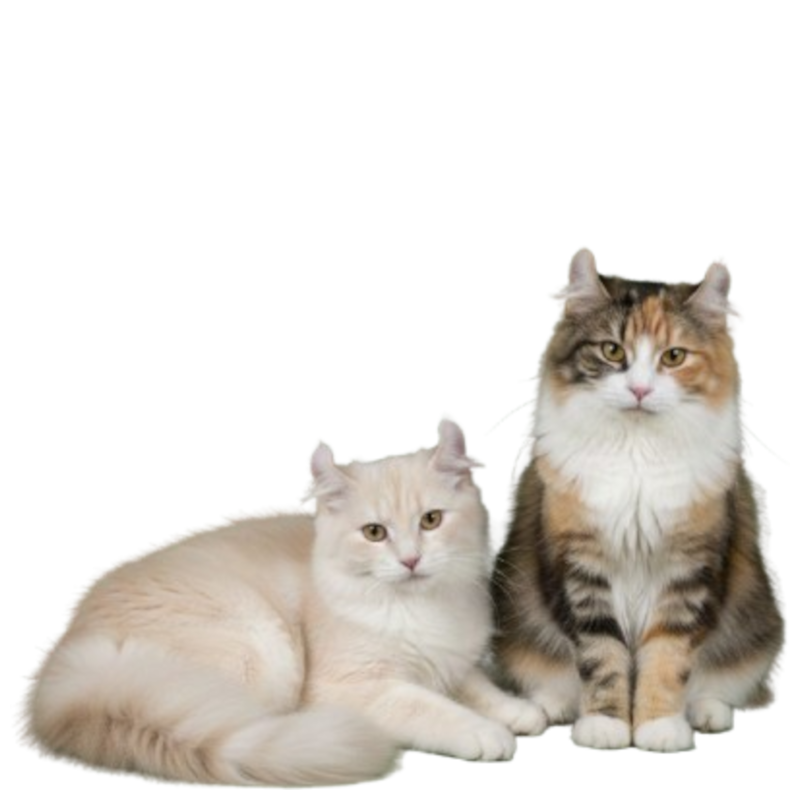
appearance
The American Curl Longhair is defined by its trademark ear structure and a balanced, graceful physique. Often categorized as a medium-sized feline with a semi-foreign build, its look combines athletic strength with an elegant silhouette, complemented by a satiny coat and a remarkably alert facial expression.
The Signature Ears
The most recognizable trait of the American Curl Longhair is the ear set, which arches backward in a smooth curve. This physical characteristic stems from a spontaneous genetic variation that alters the ear’s cartilage.
Ear Structure and Degree of Curl
The ears are relatively large and broad at the base. The cartilage feels rigid from the bottom up to at least one-third of the total height, at which point it begins to sweep backward.
- Degrees of Curl: Show-standard American Curl Longhairs generally display a “third-degree” curl, which forms a vivid crescent shape.
- The Arc of Curvature: Ideally, the tips point toward the center of the base of the skull. This geometric arc can be represented as , where for competition standards.
- Ear Furnishings: American Curl Longhairs possess noticeable tufts of hair emerging from the inner ear, known as furnishings, which accentuate the unique backward flare.
Body and Physical Conformation
The American Curl Longhair’s frame is rectangular and medium in size. It avoids both the heavy-set “cobbiness” found in some traditional breeds and the extreme, whip-like thinness of more modern Oriental varieties.
Proportions and Muscularity
The American Curl Longhair features moderate bone density and supple muscle tone.
- Torso: The total body length is roughly one and a half times the height measured at the shoulder.
- Legs and Paws: The limbs are proportionate to the trunk, ending in medium-sized, circular paws.
- Tail: The tail is exceptionally flexible, tapering from a wide base to the tip, and is typically equal to the length of the body.
Facial Features and Expression
The head of the American Curl Longhair is shaped like a modified wedge, appearing slightly longer than it is wide.
| Feature | Description |
|---|---|
| Profile | A straight nose bridge with a gentle rise from the eye line to the forehead. |
| Muzzle | Rounded and smooth with no sharp indentation at the whiskers. |
| Eyes | Shaped like a walnut (curved on the bottom and oval on top); positioned with moderate spacing. |
| Eye Color | Intense and clear; color is independent of the coat except in pointed cats, where blue is mandatory. |
Coat and Texture (Longhair Division)
The American Curl Longhair’s fur is one of its most distinctive sensory attributes. Because it lacks a dense undercoat, the hair lies flat against the skin, highlighting the cat’s natural contours.
Texture and Length
The fur is semi-long, fine, and exceptionally silky. This lack of a downy secondary layer makes the coat resistant to tangling and gives it a fluid, “flowing” motion as the cat walks.
- Plume Tail: The tail is fully decorated with long, plumelike hair.
- Ruff: A subtle ruff may frame the neck, though it lacks the heavy volume seen in breeds like the Persian.
Color and Pattern Variation
Due to the breed’s foundation in a diverse domestic population, American Curl Longhairs are permitted in every color and pattern recognized by major cat registries. This includes:
- Solids: Such as Black, White, Blue, Red, and Cream.
- Patterns: Various Tabbies—Classic, Mackerel, Spotted, Ticked—Tortoiseshell, and Bi-color.
- Pointed: Patterns featuring Siamese-style color on the extremities with high body contrast.
Light Reflection on the Silk Coat
The characteristic “shimmer” of the American Curl Longhair’s coat is a result of the specific structure of the hair fibers. With a silkiness coefficient and incident light intensity , the reflection is optimized because the hair lies flat:
Fur Shine and Reflection Score
- : The visible “shimmer” or glow seen on the cat’s fur.
- : The brightness of the light hitting the cat (like a lamp or the sun).
- : The “Silkiness Factor” (how smooth and thin the fur is without a heavy undercoat).
- : The angle of the hair (since the fur lies flat, it reflects light better like a mirror).
The American Curl Longhair possesses a semi-long coat that is remarkably silky and lies flat against the body due to a lack of a dense undercoat. This physical structure increases the specular reflection (), giving the fur a characteristic “shimmer” rather than a matte appearance. Because the hair is fine and resilient, it captures light efficiently, highlighting the cat’s athletic contours even in low-light environments.
In this equation, represents the angle of the hair fibers. This physical alignment provides the American Curl Longhair with a naturally sleek, polished aesthetic even with infrequent grooming.
behavior
The American Curl Longhair is recognized for its harmonious and inquisitive personality, frequently maintaining a youthful enthusiasm well into its mature years. Its behavioral profile consists of a sophisticated mix of high intellect, social reliance, and steady energy levels—making it a highly compatible companion for diverse living environments.
Social Dynamics and Human Interaction
The American Curl Longhair is a deeply gregarious feline that perceives its human caretakers as vital components of its social structure. Distinguishing itself from more detached breeds, the American Curl Longhair actively pursues the company of its family.
The Interaction Habit
A defining trait of the American Curl Longhair’s personality is the tendency to accompany owners throughout the home. This behavior is rarely a demand for resources like food; instead, it is a display of genuine curiosity regarding household happenings.
- Observation Preferences: They generally choose elevated vantage points to stay at eye level with human residents.
- Active Involvement: It is typical for a American Curl Longhair to participate in daily tasks—such as work or cleaning—by interacting with objects using their paws.
Receptivity to Guests and Other Animals
The American Curl Longhair typically lacks the cautious or fearful response often found in domestic cats when encountering new people.
- Welcoming Nature: They are known to greet visitors at the entrance rather than retreating to a hiding spot.
- Compatibility: Because of their self-assured and peaceful temperament, American Curl Longhairs usually integrate seamlessly into homes with multiple pets, frequently establishing close ties with cat-friendly dogs.
Intellectual Traits and Problem-Solving
The cognitive abilities of the American Curl Longhair are often noted for being both investigative and dexterous. They possess a high degree of skill in utilizing their paws to manipulate their surroundings.
Physical Ingenuity
American Curl Longhairs are quite capable of mastering the mechanics of doors, cupboards, and even water fixtures. This ingenuity arises from a combination of an adventurous mind and the fine motor skills required for such complex actions.
Learning and Training
Due to their social drive and responsiveness to rewards, American Curl Longhairs are among the most trainable feline breeds.
- Interactive Games: Many American Curl Longhairs show a natural inclination for playing fetch.
- Harness Acclimation: Their flexible nature allows them to adapt to leash walking with far less resistance than more high-strung breeds.
Activity Patterns and Play Styles
The American Curl Longhair maintains a balanced activity level—remaining more energetic than a sedentary Persian while being less demanding than a high-intensity Abyssinian.
| Behavior Category | Intensity Level | Typical Expression |
|---|---|---|
| Playfulness | High | Retains exuberant “zoomies” even in senior stages. |
| Vocalization | Low | Uses quiet trills and bird-like chirps instead of loud meowing. |
| Verticality | High | Seeks out the highest points in a room, such as cabinets or tall trees. |
| Affection | Moderate/High | Shows love through close proximity and head-rubbing. |
Communication and Vocalization Patterns
The American Curl Longhair is not considered a loud or talkative breed. Their verbal communication is predominantly subtle, relying on a unique trilling sound that falls between a purr and a meow. This sound is generally reserved for greeting others or expressing excitement during play.
Behavioral Modeling: The Activity Cycle
The daily rhythm of the American Curl Longhair’s activity can be represented by a periodic function where engagement fluctuates over time . In contrast to breeds that experience erratic spikes in energy, the American Curl Longhair displays a more consistent and sustainable oscillation:
Daily Playfulness and Energy Cycles
- : How active or playful the cat is at any specific moment.
- : The “Always Ready” baseline (the high natural energy level this breed always has).
- : The “Zoomie Intensity” (how high the energy peaks during a play session).
- : How many times a day the cat cycles between napping and playing.
- : The timing of the peaks (usually lining up with sunrise and sunset).
The American Curl Longhair exhibits a rhythmic engagement pattern that rarely hits zero. Because of their “Peter Pan” nature, the baseline constant () is significantly higher than in sedentary breeds. Even during rest, the American Curl Longhair remains alert and easily triggered into a high-amplitude () play state by environmental stimuli, reflecting their desire for constant human interaction and mental enrichment.
Requirements for Psychological Well-being
To ensure the American Curl Longhair remains mentally healthy and avoids boredom-related issues, certain environmental features are necessary.
- Cognitive Stimulation: Puzzle-based feeders and interactive scent games are highly beneficial.
- High Vantage Points: Access to vertical space is a psychological requirement for the American Curl Longhair, as they feel most comfortable surveying their territory from above.
- Social Presence: Because they are so people-centric, American Curl Longhairs can experience distress if left alone for long periods without the company of humans or other compatible animals.
color
The American Curl Longhair is a genetically diverse breed that exhibits a vast spectrum of colors and patterns. Because the breed originated from a domestic cat population with a broad gene pool, major registries recognize the American Curl Longhair in every possible feline color and pattern—including the pointed patterns often associated with specific specialized breeds.
Spectrum of Solid Colors
Solid colors in the American Curl Longhair are expected to be consistent from the base of the hair to the tip of the shaft.
- White: A clean, snowy white free from any yellowish discoloration.
- Black: A deep, coal-like black throughout the coat; it should be devoid of any rusty or reddish shading.
- Blue: A uniform shade of slate or blue-gray; lighter tones are typically favored in competition.
- Red: A saturated, vibrant, and clear red that lacks significant shading or ghost markings.
- Cream: A soft, pale buff-cream color that remains even across the body without red highlights.
Tabby Patterns and Markings
Tabby markings are frequently observed among American Curl Longhairs. These patterns are defined by the sharp contrast between the lighter background color and the darker decorative markings.
Common Tabby Varieties
| Pattern Type | Visual Characteristics |
|---|---|
| Classic Tabby | Distinctive, swirling markings on the shoulders and a bullseye-shaped pattern on the sides. |
| Mackerel Tabby | Thin, vertical lines resembling a fish skeleton that extend from a central line along the spine. |
| Spotted Tabby | A pattern made of individual, clear spots rather than stripes or swirls. |
| Ticked Tabby | Each hair contains multiple bands of color, resulting in a speckled appearance with very few body stripes. |
The Pointed and Particolor Divisions
Due to the inclusive nature of the breed standard, American Curl Longhairs may also display the colorpoint pattern as well as various particolor arrangements.
Pointed Patterns (Colorpoint)
In a pointed American Curl Longhair, the core body color is much lighter than the points—which include the ears, tail, legs, and facial mask. In genetic terms, the intensity of the point pigmentation compared to the body pigmentation is expressed as:
Personality vs. Appearance Balance
- : The intensity of the “Kitten-at-Heart” personality and social playfulness.
- : A symbol meaning “is much greater than.”
- : The amount of “Diva Behavior” or high-maintenance physical needs.
In the American Curl Longhair, we see a fascinating divergence (). While their elegant, plumed tails and silky coats might suggest a high-maintenance “fancy” cat (), their personality () is overwhelmingly focused on active, kitten-like engagement. This model illustrates that the breed’s social value far outweighs any perceived behavioral fragility, making them rugged adventurers in a glamorous package.
Commonly seen colors in this division include Seal, Blue, Chocolate, and Lilac. It is a requirement that all pointed American Curl Longhairs have bright, distinct blue eyes.
Particolor and Bi-Color
This category covers any accepted color or pattern when it is combined with white patches. This includes:
- Bi-Color: A mix of a solid color or tabby pattern with white.
- Van: A mostly white cat with color restricted primarily to the head and the tail.
- Calico and Tortoiseshell: Complex mottled or tri-color combinations, which are almost exclusively seen in female American Curl Longhairs.
Genetics of Pigmentation
The variety found in the American Curl Longhair’s coat is governed by multiple genetic loci. For example, the Dense/Dilute () gene dictates whether a cat appears Black () or its diluted version, Blue (). The likelihood of offspring inheriting a particular shade can be modeled using Mendelian genetics. For a pairing of two heterozygous dense parents ():
Chance of Rare Pastel Coat Colors
- : The 25% chance of a kitten having a “soft” color (like blue/grey or cream).
- : The “Strong Color” gene (like black or bright red).
- : The “Soft Color” gene (the dilute version).
- : A kitten getting the “soft” gene from both parents, making them a dilute color.
In the American Curl Longhair, color diversity is vast. This formula explains how two “Dense” colored parents (like two Black Curls) can produce a “Dilute” kitten (like a Blue Curl). Since the dilute gene is recessive, both parents must carry the allele. Statistically, 25% of their offspring will inherit the combination, resulting in the softer, pastel-toned coat often seen in the longhair variety.
Texture and Color Perception
The specific coat of the American Curl Longhair—which is silky, lies close to the skin, and lacks a thick undercoat—greatly influences the visual impact of its color. Because the fur is flat, light reflects off the surface with very little diffusion, resulting in colors that appear particularly vivid. This effect is especially striking in “smoke” or “shaded” varieties, where a hidden under-color is momentarily visible as the American Curl Longhair changes position.
compatibility
Ease of Maintenance
Rating: 2/5
Child Friendly
Rating: 5/5
Annual Cost
Rating: 3/5
Lifetime Cost
Rating: 4/5
Adaptability
Rating: 5/5
Velcro Factor
Rating: 5/5
Quietude
Rating: 4/5
Apartment Suitability
Rating: 4/5
Hypoallergenic
Rating: 2/5
Handling Tolerance
Rating: 4/5
Hardiness/Longevity
Rating: 4/5
Prey Drive
Rating: 3/5
genetics
The genetic makeup of the American Curl Longhair provides a compelling look at how spontaneous mutations can be preserved through selective breeding. While the breed is defined by a specific autosomal dominant gene that shapes the ear cartilage, its vitality is supported by a diverse genetic base inherited from its domestic ancestors.
The Cu Locus and Ear Curvature
The primary genetic marker for the American Curl Longhair is the Curl gene, represented by the symbol . This particular mutation affects only the ear pinna, causing it to sweep backward without impacting other skeletal or cartilaginous structures within the cat.
Inheritance Patterns
The gene operates under a standard Mendelian autosomal dominant framework. Unlike the mutation found in the Scottish Fold (), the gene is not pleiotropic—meaning it does not appear to trigger unintended secondary physical defects in cats that are homozygous for the trait.
The likelihood of kittens possessing curved ears is determined by the genetic status of the parents:
- Heterozygous () paired with Straight Ear (): Results in a probability of American Curl Longhair offspring.
- Homozygous () paired with Straight Ear (): Results in a probability of American Curl Longhair offspring.
- Two Heterozygous parents (): Results in a probability of American Curl Longhair offspring.
Phenotypic Development
The gene dictates the presence of the curl, but the intensity of the arc is likely influenced by various polygenic modifiers. Interestingly, all American Curl Longhairs are born with straight ears; the transformation begins shortly after birth.
- Initial Curvature: The ears start to move backward between two and seven days of age.
- Final Set: The arc can shift for several months, eventually firming into a permanent position by the time the cat is roughly four months old.
Coat Length and Texture Genetics
As a longhair cat, the American Curl Longhair carries the recessive longhair allele (). To display the longhair phenotype, the individual must be homozygous recessive () at the genetic locus.
| Genotype | Phenotype | Texture Characteristic |
|---|---|---|
| LL | Shorthair | Dominant expression |
| Ll | Shorthair | Carrier of the recessive longhair trait |
| ll | Longhair | The American Curl Longhair’s characteristic silky, flat coat |
The specific feel of the American Curl Longhair’s fur is linked to a minimal undercoat. This suggests that while the genotype accounts for the length, other genetic modifiers reduce the density of the secondary downy hairs, creating the breed’s famous silky, low-maintenance texture.
Genetic Diversity and Outcrossing
The American Curl Longhair is notable for its historically open gene pool. Because the foundation of the breed rested on a domestic cat of unknown lineage, registries have traditionally permitted outcrossing with non-pedigreed domestic cats that align with the breed’s physical type.
Population Genetics and Equilibrium
Maintaining a broad outcross pool helps the American Curl Longhair avoid the accumulation of harmful recessive conditions. The frequency of the gene within a breeding population can be tracked using the Hardy-Weinberg principle:
Gene Pool Balance and Ear Shape Diversity
- : How common the “Curled Ear” gene is in the whole group.
- : How common the “Straight Ear” gene is in the whole group.
- : The percentage of cats with two curl genes.
- : The percentage of cats with one curl and one straight gene.
- : The percentage of cats with two straight genes.
Applying the Hardy–Weinberg principle to the American Curl Longhair allows breeders to estimate carrier frequency. Even if most individuals exhibit the curled phenotype, the value represents the hidden reservoir of straight-ear genes. For this variety, maintaining equilibrium is essential to prevent the genetic bottlenecks often found in more restrictive breeds.
Since the gene is dominant and outcrossing remains a common practice, the straight-ear allele () stays prevalent, ensuring high levels of genetic variation.
Health and Hereditary Considerations
From a genetic standpoint, the American Curl Longhair is regarded as one of the most resilient feline breeds. Research by geneticists has shown that the mutation is restricted entirely to the ear cartilage.
Absence of Skeletal Defects
Unlike the mutation in some other breeds that causes a general defect in cartilage, the gene does not result in joint issues or bone deformities. The base of the American Curl Longhair’s ear is firm to the touch, but the remainder of the cat’s physiology develops normally.
Vision and Auditory Health
There is no genetic link between the gene and a lack of hearing. While white American Curl Longhairs may carry the (Dominant White) or (White Spotting) genes—which can occasionally be associated with deafness—this is a separate biological event and not a consequence of the ear mutation itself.
health
The American Curl Longhair is widely recognized as one of the most robust and physically resilient domestic cat breeds. Because its ancestry is rooted in a diverse domestic gene pool rather than a restricted lineage, the American Curl Longhair is generally free from the hereditary pathologies often found in more ancient or highly specialized feline breeds.
Ear Health and Structural Integrity
The most identifying characteristic of the American Curl Longhair is also the central focus of its health maintenance. While the mutation itself is harmless, the unconventional shape of the ear necessitates specific care routines.
Cartilage Firmness and Sensitivity
The cartilage within the American Curl Longhair’s ear is quite rigid at the base and must be handled with great caution.
- Handling Precautions: Attempting to manually straighten the ear or handling it roughly can fracture the cartilage, which may cause permanent deformity or physical discomfort for the cat.
- Hygiene: Because the ear canal is somewhat narrow and curved, some American Curl Longhairs may experience a faster accumulation of cerumen (earwax). Weekly check-ups and light cleaning using a veterinarian-recommended solution are advised to maintain health.
Genetic Health and Absence of Systemic Effects
In contrast to other breeds with ear-altering mutations—such as the Scottish Fold—the gene in the American Curl Longhair does not carry pleiotropic risks, meaning it does not lead to broader skeletal issues.
Comparative Skeletal Analysis
Extensive radiological evaluations have confirmed that the American Curl Longhair typically maintains standard bone density and joint health throughout its life. The genetic mutation is localized entirely to the ear pinna.
| Feature | American Curl Longhair Status | Health Implication |
|---|---|---|
| Joint Flexibility | Normal | No heightened risk of arthritis compared to standard domestic cats. |
| Bone Structure | Standard | No evidence of shortened limbs or thickened tail vertebrae. |
| Cartilage | Localized | The mutation does not impact joints or respiratory cartilage. |
Preventive Health and Weight Management
Like all domestic felines, the American Curl Longhair is susceptible to common health challenges. Keeping the cat at an ideal body weight is essential for the prevention of metabolic disorders.
Metabolic Rate and Caloric Needs
The American Curl Longhair typically maintains a moderate activity level. The daily caloric requirement for a neutered adult American Curl Longhair can be estimated with the following calculation:
Active Cat Daily Calorie Needs
- : The total calories the cat needs to eat per day to stay healthy.
- : The “Peter Pan Multiplier” (extra calories for being highly active and playful).
- : The “Sleepy Energy” (calories burned just by resting).
- : The cat’s weight in kilograms.
The American Curl Longhair is characterized by its high activity level, even into adulthood. While a sedentary cat might use a multiplier of 1.0, the “Peter Pan” nature of this breed necessitates a higher coefficient (1.2) to account for their constant engagement. For a typical 4kg American Curl Longhair, this model ensures they receive enough caloric fuel to support both their metabolic needs and their signature playful energy.
Overfeeding often leads to feline obesity, which significantly raises the probability of:
- Diabetes Mellitus: Chronic insulin resistance caused by the accumulation of adipose tissue.
- Hepatic Lipidosis: Potential liver failure that can occur if the cat undergoes rapid weight loss or stops eating.
Lifespan and Age-Related Considerations
The typical lifespan of a American Curl Longhair falls between 12 and 16 years, though many individuals live well into their late teens when provided with consistent preventive veterinary care.
Hypertrophic Cardiomyopathy (HCM)
While not a breed-specific condition for the American Curl Longhair, HCM remains the most frequently diagnosed heart disease across all domestic cats. It involves an abnormal thickening of the left ventricular wall.
- Diagnostic Screening: Regular veterinary check-ups including cardiac auscultation are essential.
- Observation: The disease is often hidden until it reaches advanced stages; owners should be alert for signs of lethargy or unusual breathing patterns.
Environmental Enrichment and Mental Well-being
The psychological state of the American Curl Longhair is closely tied to its physical condition. Being a social and highly intelligent animal, it requires consistent mental engagement to prevent stress-related issues like psychogenic alopecia (compulsive over-grooming).
- Vertical Enrichment: Tall cat trees are vital, allowing the American Curl Longhair to satisfy its instinctual urge to climb and survey its territory.
- Interactive Play: Frequent engagement helps maintain cardiovascular fitness and can help delay cognitive decline in aging American Curl Longhairs.
- Social Stability: Due to their people-oriented nature, steady social contact is necessary to mitigate the risk of separation anxiety.
longevity
The American Curl Longhair is noted for its impressive life expectancy, frequently outlasting the average lifespan of many other purebred feline varieties. This enduring vitality is largely credited to the breed’s origin from a hardy foundation of domestic cats, which established a diverse and vigorous genetic framework.
Average Lifespan and Survival Rates
On average, the American Curl Longhair enjoys a life spanning between 12 and 16 years. Nevertheless, when kept in an optimal indoor setting with consistent, proactive veterinary oversight, it is quite common for American Curl Longhairs to thrive well into their late teens or even reach 20 years of age.
Comparative Life Expectancy Data
The table below details the typical age milestones for the American Curl Longhair in relation to general domestic feline statistics:
| Milestone | American Curl Longhair Average | General Domestic Cat |
|---|---|---|
| Median Lifespan | 15 Years | 13–14 Years |
| Senior Phase Begins | 10 Years | 10 Years |
| Geriatric Phase Begins | 15 Years | 15 Years |
Biological Markers and Aging Models
The aging trajectory of the American Curl Longhair can be analyzed by monitoring physiological upkeep. As a cat matures, its basal metabolic rate () typically slows down. For an aging American Curl Longhair, the maintenance energy requirement () can be calculated to help maintain a stable weight—a primary indicator of continued health:
Body Size and Energy Burn Rate
- : The total calories needed to maintain the cat’s current weight.
- : The “Energy Setting” (which is higher for kittens and active Curls).
- : The cat’s body weight in kilograms.
- : A math constant that accounts for how body size affects energy burn.
This model provides the framework for calculating the caloric intake of the American Curl Longhair. Because this breed is known for its “Peter Pan” personality, the value of remains higher for longer compared to more sedentary breeds. For a neutered adult, typically sits around 1.2 to 1.4, but for an active American Curl Longhair that spends its day fetching and climbing, this constant must be adjusted upward to prevent weight loss and maintain their silky coat quality.
Key Factors Influencing American Curl Longhair’s Longevity
Various essential elements dictate whether a American Curl Longhair will achieve its maximum potential lifespan.
Genetic Robustness
Since the mutation defining the American Curl Longhair (the gene) is not associated with systemic physical ailments, the breed avoids the early-onset degenerative issues that often curtail the lives of other breeds with structural mutations.
Lifestyle and Environmental Safety
The life expectancy of American Curl Longhairs is greatly improved by remaining strictly indoors. This lifestyle choice shields them from:
- Pathogenic Diseases: Minimized risk of contracting feline immunodeficiency virus (FIV) or feline leukemia (FeLV).
- External Trauma: Protection from vehicular accidents and encounters with local wildlife.
Nutritional Precision
Tailored nutrition throughout the different life phases of the American Curl Longhair helps prevent the development of chronic kidney disease (CKD) and feline diabetes—two conditions that frequently reduce the lifespan of geriatric cats.
The Impact of Senior Care on Life Extension
As American Curl Longhairs enter their second decade of life, specific medical interventions become the main catalyst for extended longevity.
Early Detection Screenings
Standard medical protocols for maturing American Curl Longhairs involve:
- Bi-annual Blood Panels: Monitoring creatinine levels and symmetric dimethylarginine (SDMA) to catch the earliest signs of kidney decline.
- Hypertension Monitoring: Checking for high blood pressure to prevent secondary damage to the brain, heart, and retinas.
Cognitive Longevity
The American Curl Longhair is famous for a “Peter Pan” temperament, often keeping its youthful curiosity and playfulness as a senior. Preserving this mental sharpness is crucial. Environmental enrichment via social interaction and puzzle feeders helps stave off Feline Cognitive Dysfunction (FCD), ensuring the American Curl Longhair maintains a high quality of life during its final years.
Statistical Probability of Seniority
Within a stable community of American Curl Longhairs, the likelihood of any single individual living to age can be estimated using a survival function. Because of the favorable health profile of the breed, this curve typically stays flat until the cat reaches advanced seniority:
Lifespan and Survival Probability
- : The mathematical chance of a cat reaching a specific age ().
- : A mathematical number used to track natural growth or aging.
- : The “Health Risk” score (which stays very low for this healthy breed).
- : The age of the cat in years.
Within a stable community of American Curl Longhairs, the likelihood of any single individual living to age can be estimated using this survival function. Because of the favorable health profile of the breed, this curve typically stays flat until the cat reaches advanced seniority. For the American Curl Longhair, the value of remains notably lower during the first twelve years of life compared to many other pedigreed cat populations, reflecting their robust genetic health.
Here, represents the annual mortality rate. For the American Curl Longhair, the value of remains notably lower during the first twelve years of life compared to many other pedigreed cat populations.
maintenance
Caring for the American Curl Longhair necessitates a specialized approach, particularly regarding its distinctive ear structure and fine coat. While the breed is often celebrated for its “wash-and-wear” ease of care, following specific protocols is essential for the long-term physical and mental health of American Curl Longhairs.
Aural Care and Hygiene
The ears of the American Curl Longhair are its most identifying trait and demand the highest level of care. Because the cartilage is rigid and lacks flexibility, it is highly susceptible to trauma if handled roughly.
Handling and Inspection
It is crucial that owners never attempt to force the American Curl Longhair’s ears into a straight position or fold them forward—as such actions can lead to fractured cartilage.
- Weekly Examinations: Regularly check the ears for signs of redness, unusual odors, or dark wax, which may indicate infections or parasitic activity.
- Gentle Cleaning: If cleaning is necessary, use a cotton pad lightly moistened with a veterinarian-approved ear cleanser. Avoid inserting cotton swabs into the canal; the unique curve of the American Curl Longhair’s ear makes it easy to accidentally cause internal injuries.
Coat and Skin Management
Despite the longhair classification, the American Curl Longhair possesses a very thin undercoat. This genetic trait significantly minimizes the risk of matting compared to other long-haired feline varieties.
Grooming Frequency
The silky, flat-lying nature of the American Curl Longhair’s fur allows for a relatively simple grooming routine:
- Brushing: Using a high-quality stainless steel comb twice a week is generally enough to keep the coat in top condition.
- Shedding Cycles: While they shed less than many other breeds, American Curl Longhairs do experience seasonal changes—where daily brushing helps manage loose hair.
- Bathing: Due to the low oil content and lack of dense undercoat, baths are only needed occasionally—usually every few months or in preparation for a show.
| Tool Type | Primary Use | Recommended Frequency |
|---|---|---|
| Fine-toothed Comb | Clearing loose hair and preventing mats | Weekly |
| Slicker Brush | Smoothing the coat and removing surface debris | Bi-weekly |
| Grooming Spray | Managing static and adding luster | As needed |
Physical Activity and Weight Control
The American Curl Longhair is a moderately active cat that famously retains a youthful, curious temperament well into its senior years.
Nutritional Maintenance
Strict dietary monitoring is necessary to prevent the American Curl Longhair from becoming overweight. The resting energy requirement () can be used as a baseline to calculate specific caloric needs:
Resting Calorie Baseline
- : The minimum calories needed just to keep the heart beating and lungs breathing.
- : A standard number used to calculate mammal metabolism.
- : The cat’s body weight in kilograms.
- : A scaling factor that accounts for how larger bodies burn energy more efficiently.
The is the physiological baseline for the American Curl Longhair. Because this breed is moderately sized and athletic, maintaining an accurate weight measurement () is essential for calculating their fundamental caloric floor. While their active “Peter Pan” personality usually requires a total energy intake higher than this baseline, the provides the critical starting point for clinical nutrition and weight management for the American Curl Longhair.
- Interactive Stimulation: Providing at least 15–20 minutes of daily play is vital for maintaining American Curl Longhair’s cardiovascular health.
- Vertical Space: As natural climbers, American Curl Longhairs require vertical enrichment—such as sturdy cat trees or shelving—to satisfy their physical instincts and keep their muscles toned.
Routine Health and Veterinary Maintenance
Consistent professional oversight is the cornerstone of American Curl Longhair’s wellness and longevity.
Dental Hygiene
Like many domestic felines, American Curl Longhairs are vulnerable to periodontal issues. Brushing their teeth daily with feline-specific toothpaste is the most effective way to maintain oral health.
- Professional Care: Annual dental check-ups and cleanings by a veterinarian are recommended to prevent gingivitis and tooth decay.
Nail Trimming
Claws should be clipped every 10 to 14 days. Regular trimming prevents the nails from catching on household fabrics and ensures the American Curl Longhair does not inadvertently scratch its own ears during grooming.
Vaccination and Parasite Control
- Core Vaccinations: Routine administration of FVRCP and Rabies vaccines is essential for preventative health.
- Preventative Treatments: Even for American Curl Longhairs that live strictly indoors, year-round protection against heartworm, fleas, and ticks is highly encouraged.
measurements
| Measurement | Female | Male | ||
|---|---|---|---|---|
| Metric | Imperial | Metric | Imperial | |
height | 20 – 25 centimeters | 8 – 10 inches | 23 – 30 centimeters | 9 – 12 inches |
length | 41 – 46 centimeters | 16 – 18 inches | 46 – 51 centimeters | 18 – 20 inches |
weight | 2.3 – 3.6 kilograms | 5 – 8 pounds | 3.2 – 4.5 kilograms | 7 – 10 pounds |
• Height: Refers to the measurement at the withers (shoulders).
• Length: Measured from the tip of the nose to the base of the tail.
origin
The history of the American Curl Longhair stands as a unique example of a modern feline variety that emerged from a single spontaneous genetic mutation within a domestic population. Unlike ancient breeds with legendary backgrounds, the American Curl Longhair’s beginning is thoroughly documented, dating back to the early 1980s.
The Foundation of the Breed (1981)
Every American Curl Longhair in existence today shares a common ancestor: a stray black female kitten with long hair and unusual ears that swept backward. This cat arrived at the home of Joe and Grace Ruga in Lakewood, California, in June 1981.
Shulamith: The Matriarch
The Rugas gave the kitten the name “Shulamith.” When she later gave birth to her first litter, it was discovered that her distinctive ear shape was a heritable trait. Of the four kittens born, two exhibited the same backward-curving ears as their mother.
Genetic Analysis of the Mutation
The breeding data was examined by renowned geneticists, including Roy Robinson, who concluded that the physical trait resulted from an autosomal dominant gene. Consequently, any cat inheriting at least one copy of the “curl” allele would manifest the physical characteristic.
The mathematical probability of a kitten inheriting curved ears from a heterozygous () parent and a straight-eared () parent is defined by:
50/50 Inheritance Odds for Curled Ears
- : The percentage chance a kitten will inherit the unique curled ear.
- : The one copy of the curl gene the parent has to give.
- : The two possible genes the parent can pass down (curl or straight).
- : The “coin-flip” odds of the trait appearing in each kitten.
Because the unique ear shape of the American Curl Longhair is governed by a single autosomal dominant gene, inheritance follows a clean binary path. In a mating between a heterozygous American Curl Longhair () and a straight-eared cat (), each kitten has a chance of inheriting the allele. This 50/50 split is the mathematical foundation of the breed’s outcrossing program, ensuring genetic health while reliably producing the signature curled phenotype.
Developmental Milestones and Formal Recognition
Once it was confirmed that the trait was a dominant mutation, a structured breeding program was initiated to establish the American Curl Longhair as a formal variety.
Early Breed Timeline
The transition from a domestic anomaly to a recognized show-quality feline occurred quickly, aided by the breed’s aesthetic appeal and stable health profile.
| Year | Event | Significance |
|---|---|---|
| 1981 | Discovery of Shulamith | The establishment of the American Curl Longhair foundation line. |
| 1983 | First Public Exhibition | American Curl Longhairs were introduced to the public at a cat show in Palm Springs, California. |
| 1986 | CFA Registration | The Cat Fanciers’ Association granted the breed official registration status. |
| 1993 | Championship Status | The American Curl Longhair achieved full CFA Championship status for both longhair and shorthair divisions. |
The “Peter Pan” of the Feline World
The American Curl Longhair is frequently referred to as the “Peter Pan” of cats due to its specific personality and physical growth patterns. Historically, enthusiasts have noted that American Curl Longhairs maintain a kitten-like sense of wonder and playfulness throughout their adult lives.
Aural Metamorphosis
A fascinating part of the American Curl Longhair’s development is the physical change that takes place shortly after birth.
- At Birth: All American Curl Longhairs are born with ears that appear straight.
- Initiation: The ears start to curve backward between 2 and 10 days of age.
- Stabilization: The ears go through a period of shifting curvature—tightening and relaxing—until they reach a permanent set at roughly 4 months of age.
Maintaining Genetic Diversity
Since the American Curl Longhair descended from a non-pedigreed domestic cat, the initial breed standards highlighted the necessity of outcrossing with domestic cats that fit the physical type. This approach was vital for creating a broad gene pool and preventing the “founder effect”—a phenomenon where limited genetic variety causes hereditary health problems.
The Open Gene Pool Policy
Unlike many breeds with restricted lineages, the American Curl Longhair’s foundation was built on a philosophy of diversity. This has produced a breed that is notably healthy and lacks the skeletal or respiratory complications found in some other breeds with structural mutations. This dedication to genetic integrity has enabled the American Curl Longhair to remain a sturdy and energetic companion for more than forty years.
temperament
The American Curl Longhair is widely celebrated for its balanced and highly social disposition. Often described as the “Peter Pan” of the feline world, American Curl Longhairs maintain a youthful, energetic, and inquisitive nature that persists well into their senior years. This breed is noted for its lack of aloofness, preferring active participation in the daily lives of its human companions.
Social Behavior and Interpersonal Dynamics
The American Curl Longhair is intensely people-oriented. Unlike more solitary breeds, the American Curl Longhair thrives on proximity and social interaction.
Affinity for Human Companionship
American Curl Longhairs are often referred to as “soulmate” cats because of their deep attachment to their owners.
- Following Behavior: It is characteristic for a American Curl Longhair to follow its owner from room to room—not out of demand for food, but out of a genuine desire for involvement.
- Greeting Rituals: Many American Curl Longhairs develop specific greeting behaviors, such as light head-butting (bunting) or trills, to acknowledge their humans upon their return.
- Affection Style: While they enjoy being near their people, they are typically “companion cats” rather than strictly “lap cats,” often choosing to sit beside a person or on the back of a chair nearby.
Interaction with Children and Other Pets
The adaptable nature of the American Curl Longhair makes it an ideal candidate for multi-pet households and families with children.
- Tolerance: Due to their non-aggressive and stable temperament, American Curl Longhairs tend to be very patient with the unpredictable movements of children.
- Gregariousness: They generally integrate well with other cats and are famously compatible with cat-friendly dogs.
Intelligence and Cognitive Engagement
The American Curl Longhair is highly intelligent and displays a level of problem-solving ability that requires consistent mental stimulation.
Curiosity and Exploration
The curiosity of the American Curl Longhair is boundless. They are natural explorers who will investigate every corner of a new environment.
- Dexterity: American Curl Longhairs are known for their “busy paws,” often using them to open cabinets, turn on faucets, or retrieve toys from difficult spots.
- Vertical Preference: Being athletic and agile, they often satisfy their curiosity by climbing to the highest point in a room to survey their “territory.”
Trainability and Play
Because of their high cognitive capacity and desire to please, American Curl Longhairs are remarkably easy to train compared to many other domestic felines.
- Fetch: Many American Curl Longhairs naturally learn to play fetch without formal training.
- Leash Training: Their adaptable and courageous temperament allows many to be successfully harness-trained for outdoor walks.
Activity Levels and Vocalization
The energy of the American Curl Longhair is best described as moderate-to-high, but it is typically channeled into play rather than destructive behavior.
Energy Distribution Model
The activity level of a healthy American Curl Longhair can be viewed as a series of energetic bursts followed by social rest. We can model the daily activity duration as a function of environmental enrichment :
Environment and Playtime Connection
- : How long the cat stays actively playing and busy.
- : A symbol meaning “changes directly with.”
- : The “Fun Level” of the home (toys, cat trees, and interaction with owners).
For the American Curl Longhair, activity is not merely an internal drive but a response to their surroundings. Because of their high intelligence and “Peter Pan” playfulness, their activity duration () is directly proportional to the complexity of their environment (). Providing vertical spaces and interactive puzzles significantly extends their engagement time, preventing the boredom that can occur in under-stimulated environments.
High levels of environmental enrichment (climbing trees, interactive toys) lead to a more satisfied and behaviorally stable American Curl Longhair.
| Trait | Rating | Description |
|---|---|---|
| Activity Level | High | Retains kitten-like playfulness throughout life. |
| Playfulness | Exceptional | Enjoys interactive games and complex toys. |
| Vocalization | Low/Medium | Not overly loud; uses soft chirps and trills to communicate. |
| Independence | Low | Prefers constant company; may suffer if left alone too long. |
Emotional Resilience and Adaptability
One of the most prized aspects of the American Curl Longhair’s temperament is its emotional stability.
Stress Response
American Curl Longhairs are remarkably level-headed. They tend to handle changes in the household—such as moving to a new home or the introduction of a new family member—with significantly less stress than more sensitive breeds. Their confidence allows them to remain calm in new situations, making them excellent travel companions for owners who move frequently.
The “Peter Pan” Factor
The defining characteristic of the American Curl Longhair’s temperament is the persistence of play. While most cats become more sedentary as they age, the American Curl Longhair remains mentally “kitten-like,” seeking out games and interaction even as a geriatric cat. This specific trait ensures that the bond between the American Curl Longhair and its owner remains dynamic and engaging throughout the cat’s entire life.