American Curl Cat
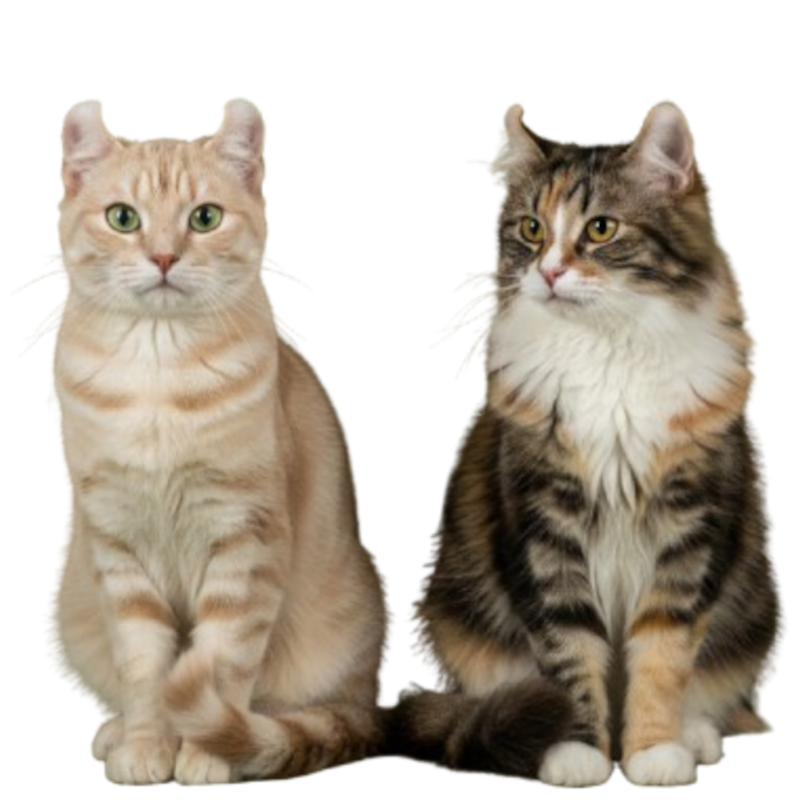
appearance
American Curl is a medium-sized feline distinguished primarily by its unique ears, which curl backward in a graceful arc. Beyond the ears, American Curls possess a well-balanced, rectangular body and an elegant expression that reflects their alert and active nature.
The Signature Ears
The most defining characteristic of American Curl is the ear structure. The ears are moderately large, wide at the base, and open, curving back from the face toward the center of the back of the skull.
Degrees of Curvature
The curve of American Curl’s ears is categorized into three distinct degrees for show standards:
- First Degree: A slight, decorative curve.
- Second Degree: A more pronounced curve, often preferred for breeding.
- Third Degree: A full crescent curve, considered the ideal “show-quality” arc, representing a minimum of 90 degrees.
Anatomical Constraints
The cartilage in the lower portion of the ear is firm to the touch—similar to human ear cartilage. According to breed standards, the tips must be rounded and flexible, and the curve must not exceed an arc of 180 degrees.
Required Ear Curl Angle
- : The measurement of the ear tip’s backward curve.
- : The minimum curve needed for a top-quality show cat.
- : The maximum curve allowed; the tip must not touch the back of the head.
In the American Curl, the ears are the defining feature. While kittens are born with straight ears, the cartilage begins to firm and curl between 2 to 10 days after birth. For an American Curl to meet the highest show standards, the angle should be a graceful arc of at least but must never exceed , as the tip must remain free and not touch the head.
Body Structure and Conformation
American Curls exhibit a semi-foreign body type that is elegant and somewhat rectangular.
- Torso: The body is medium-sized and moderate in strength and tone. It is neither cobby nor extremely svelte.
- Head: The head is a modified wedge, slightly longer than it is wide, with a straight nose and a firm chin.
- Eyes: Large, walnut-shaped—oval on top and rounded on the bottom—set at a slight angle between the base of the ear and the tip of the nose.
- Tail: The tail is flexible, wide at the base, and tapers toward the end; in longhair varieties, it carries a full plume.
Coat and Texture
American Curls come in two distinct coat lengths: longhair and shorthair. A notable feature of the breed is the minimal undercoat, which allows the fur to lie flat against the body.
| Feature | Shorthair Variety | Longhair Variety |
|---|---|---|
| Texture | Soft, silky, and resilient. | Fine, silky, and laying flat. |
| Undercoat | Minimal; coat is not “double.” | Minimal; very little seasonal shedding. |
| Tail Fur | Short and uniform. | Long and plume-like. |
Size and Proportions
While American Curl is a medium-sized cat, there is a significant dimorphism between genders.
| Gender | Typical Weight (lbs) | Typical Weight (kg) |
|---|---|---|
| Male | 7–10 | 3.2–4.5 |
| Female | 5–8 | 2.3–3.6 |
Overall Balance and Symmetry
The aesthetic appeal of American Curl relies on balance. The ears should be placed symmetrically on the head, and the body should appear lithe and muscular. The youthful look is achieved through the combination of the alert ear set and the wide, expressive eyes, giving American Curls a perpetually inquisitive and youthful appearance.
behavior
The behavioral profile of American Curl is frequently described by the “Peter Pan” analogy, which highlights a personality that remains energetic and juvenile throughout the cat’s adult years. American Curls are distinguished by their high emotional intelligence, versatile nature, and strong social bonds.
Social Dynamics and Human Interaction
American Curl is an exceptionally people-centric feline. In contrast to more solitary breeds, American Curls actively pursue human engagement as their main form of mental stimulation.
The Greeting Habit
A characteristic trait of American Curl’s personality is the tendency to meet owners at the entrance of the home. They frequently employ soft head-butting or gentle nudging to start a social interaction, showing none of the detachment often attributed to domestic cats.
Constant Companionship
American Curls are identified as “proximity seekers.” They seldom choose to be alone, preferring to remain in the same vicinity as their human family. This trait is typically not overbearing—they are usually satisfied just watching daily chores or activities from a close distance.
Cognitive Ability and Problem Solving
The mental capacity of American Curl is expressed through intense curiosity and the physical exploration of their surroundings.
Manual Dexterity
Owners often observe that American Curls have remarkable control over their paws. They regularly figure out how to pull open cupboards or turn handles. This exploratory drive is a direct result of their elevated inquisitive nature.
Learning and Retrieval Games
Because of their social drive and sharp minds, American Curls respond well to rewards and training. They are one of the few breeds known to engage in games of fetch instinctively—often without needing specific instruction from their owners.
Playfulness and Energy Levels
While American Curl is an active cat, their energy tends to be steady rather than frantic. They show a lasting playfulness that stays consistent even as they grow older.
Vertical Interests
American Curls are instinctive climbers. They find satisfaction in monitoring their territory from high spots, such as the tops of tall furniture or cabinets. This reflects their desire to investigate every corner of their home.
Communication Style
American Curls are expressive without being noisy. Rather than using loud meows, they communicate through a variety of quiet trilling and chirping sounds to signal their feelings.
| Behavioral Trait | Intensity Level (1–10) | Description |
|---|---|---|
| Playfulness | 9 | Keeps a juvenile spirit for its entire lifespan. |
| Activity Level | 7 | Balanced; needs active play sessions mixed with social downtime. |
| Affection | 9 | Very high; prefers to stay close to household members. |
| Intelligence | 8 | Capable of solving puzzles and opening obstacles. |
| Vocalness | 4 | Uses quiet, musical tones instead of demanding vocalizations. |
Environmental Adaptability
A notable aspect of American Curl’s behavior is their ability to handle change. They are remarkably calm when introduced to new living spaces or unfamiliar residents.
Life-Long Adaptability and Calmness
- : The steady emotional strength and stability of the cat.
- : The observation of the cat as it grows from a kitten into an adult.
- : Any change in how the cat acts or reacts to stress.
- : The amount of change happening in the cat’s home or life.
The American Curl is famously known as the “Peter Pan” of cats because they retain their kitten-like curiosity throughout their lives. This model shows that as approaches infinity, the American Curl’s behavior remains remarkably stable () even when the environment changes. This high makes American Curls exceptionally well-suited for busy households or families that travel frequently.
In this theoretical framework, American Curls exhibit a high degree of stability, meaning their core behavior remains steady even when their surroundings change. This makes them well-suited for busy families or homes with other animals.
Summary of Daily Routine
A standard day for an American Curl usually follows a pattern of social connection and active discovery:
- Morning Routine: Interacting with the owner and following them through their early tasks.
- Mid-day Exploration: Investigating high-up shelves and playing with found objects.
- Evening Engagement: Engaging in active games followed by resting in physical contact with their humans.
color
One of the most remarkable aspects of American Curl is the vast diversity found in its coat. Because the foundation of the breed relied on a wide genetic pool of domestic cats to ensure health and vigor, American Curls are accepted in virtually every color and pattern known to the feline world.
Genetic Color Theory
The expression of color in American Curl follows standard feline genetic principles. Whether the cat is the longhair or shorthair variety, the pigments eumelanin—the basis for black tones—and phaeomelanin—the basis for red tones—determine the primary palette.
Primary Color Categories
The following table categorizes the common color groups seen in American Curls:
| Category | Typical Colors | Genetic Basis |
|---|---|---|
| Solid | Black, White, Blue, Red, Cream | Uniform pigment distribution throughout the hair. |
| Tabby | Classic, Mackerel, Spotted, Ticked | The agouti gene allowing pattern expression. |
| Parti-color | Tortoiseshell, Blue-Cream | Sex-linked inheritance of red and black pigments. |
| Bi-color | Any color with White | Presence of the white spotting gene. |
| Pointed | Seal Point, Blue Point, Lynx Point | Temperature-sensitive albinism traits. |
Pattern Diversity
American Curl’s patterns are as varied as their colors. The lack of a restrictive “breed color” means that American Curls can exhibit intricate markings that highlight their lithe body structure.
The Tabby Pattern
Tabby is perhaps the most common pattern found in the breed. The contrast between the ground color and the markings should be distinct.
- Classic Tabby: Features “butterfly” markings on the shoulders and “bullseye” whorls on the sides.
- Mackerel Tabby: Displays narrow vertical stripes resembling a fish skeleton.
Calico and Tortoiseshell
In American Curls, these patterns are almost exclusively found in females due to the chromosome linkage. The “Tortie” pattern consists of patched or intermingled black and red, while the Calico adds significant white spotting to the mix.
Shaded and Smoke Varieties
These “tipped” colors occur when only the ends of the hair shafts are pigmented.
- Smoke: A solid color with a white undercoat that is only visible when American Curl is in motion.
- Shaded: Approximately of the hair tip is colored.
- Chinchilla: Only the very tip—about —is colored, giving American Curl a sparkling appearance.
Eye Color and Relationship to Coat
In many breeds, eye color is strictly linked to coat color. However, in American Curl, there is significant flexibility, except in specific cases.
The Color Relationship Model
We can represent the relationship between coat and eye color as a conditional set:
Approved Eye Color Options
- : The specific eye color of an individual cat.
- : A symbol meaning “must be one of the following.”
- : The list of all colors allowed by official breed rules.
In the American Curl, eye color is not strictly tied to coat color, except in the case of colorpoint patterns where blue eyes are a requirement. This set () represents the diverse palette found in the breed, reflecting the American Curl’s alert and walnut-shaped expression. Whether an American Curl has deep copper or vivid green eyes, the clarity and richness of the color are what judges prioritize.
For most American Curls, eye color is independent of coat color. The primary exception is the Pointed variety—such as the Lynx Point—where the genetics of the Siamese-type dilution require blue eyes:
Pointed Pattern and Blue Eye Rule
- : A cat having the “pointed” coat pattern (darker face, paws, and tail).
- : A logical rule meaning “if this is true, then that must also be true.”
- : The requirement that the eyes must be blue.
While the American Curl standard allows for a wide spectrum of eye colors across various coat patterns, the colorpoint variety is the exception. This logical implication () dictates that if an American Curl is pointed, it must possess blue eyes. This correlation is a hallmark of the breed’s diverse but specific aesthetic requirements, ensuring the striking contrast typical of the pointed American Curl’s expression.
Aesthetic Impact of Color on the Ears
The color and pattern of American Curl often extend into the interior of the ears. American Curls frequently possess “ear tufts” or “furnishings”—fine hairs that grow from the inner ear and curl outward.
Contrast and Visual Appeal
On darker American Curls, lighter furnishings can create a striking visual halo around the curled tips.
Muzzle and Mask Markings
In pointed or bicolor American Curls, the facial markings often draw the eye upward toward the signature arc of the ears, emphasizing the alert expression of the breed.
Summary of Acceptance
Because American Curl’s origins are rooted in the “natural” domestic cat population of California, registry standards are inclusive. Whether a American Curl is a deep solid ebony or a delicate lilac-silver lynx point, the emphasis remains on the quality of the ear curl and the silkiness of the coat rather than a specific color requirement.
compatibility
Ease of Maintenance
Rating: 3/5
Child Friendly
Rating: 5/5
Annual Cost
Rating: 4/5
Lifetime Cost
Rating: 4/5
Adaptability
Rating: 5/5
Velcro Factor
Rating: 5/5
Quietude
Rating: 4/5
Apartment Suitability
Rating: 4/5
Hypoallergenic
Rating: 2/5
Handling Tolerance
Rating: 4/5
Hardiness/Longevity
Rating: 4/5
Prey Drive
Rating: 3/5
genetics
The defining physical trait of American Curl—the backward-curving ear—is the result of a specific genetic mutation. Unlike many other feline mutations that can carry deleterious health effects, the genetics of American Curls are remarkably stable and localized to the ear cartilage.
The Cu Gene
The mutation responsible for the signature look of American Curl is identified as the Cu gene. This mutation occurred spontaneously in the domestic cat population and is distinct from the mutations that cause the folded ears of the Scottish Fold or the hairlessness of the Sphynx.
Autosomal Dominance
The Cu gene is an autosomal dominant trait. This means that a kitten only needs to inherit the gene from one parent to exhibit curled ears.
- Heterozygous (): American Curl possesses one curl gene and one straight-ear gene. These cats will have curled ears and can pass the trait to approximately 50% of their offspring when bred to a straight-eared cat.
- Homozygous (): American Curl possesses two copies of the curl gene. These cats will always produce curled-ear kittens, even when bred to non-curl mates.
Probabilistic Inheritance Model
We can model the expected distribution of the curl trait using a Punnett square calculation. For a mating between two heterozygous () American Curls:
Chance of Having Curled Ears
- : The total probability that a kitten will have curled ears.
- : The dominant gene that causes the ears to curl.
- : The normal gene for straight ears.
- : The 25% chance of getting the curl gene from both parents.
- : The 50% chance of getting one curl gene and one straight gene.
In the American Curl, the curl gene is autosomal dominant. When two heterozygous () parents are mated, the Punnett square predicts that 75% of the litter will have curled ears. Unlike some other ear mutations (like the Scottish Fold), the gene is not known to be deleterious in its homozygous () form, allowing breeders to safely produce American Curls that will always pass the trait to their offspring.
Chance of Having Straight Ears
- : The probability that a kitten will be born with normal, straight ears.
- : The recessive “hidden” gene for straight ears.
- : The 25% chance of inheriting the straight-ear gene from both parents.
- : The 1-in-4 statistical likelihood of this happening in a specific cross.
Even in a mating between two American Curls, there is a 25% chance of producing straight-eared kittens if both parents carry the recessive allele. These “straight-eared Curls” are genetically important for maintaining diversity. While they lack the signature arc, they retain the American Curl’s distinct personality and walnut-shaped eyes, serving as a reminder of the Mendelian mechanics behind the breed’s unique look.
Developmental Genetics
One of the most fascinating aspects of American Curl’s genetics is that the trait is not immediately visible at birth.
Postnatal Transformation
Kittens are born with straight ears. The “curling” process typically begins within 2 to 7 days after birth. The ears undergo a period of rapid change, tightening and unfurling until the permanent set is established at approximately 16 weeks of age.
Cartilage Composition
The mutation affects the collagen structure within the ear pinna. In American Curl, the cartilage is firm from the base to at least one-third of the height of the ear, transitioning to a flexible tip. Unlike the Scottish Fold mutation, which affects cartilage throughout the entire body—often leading to osteochondrodysplasia—the Cu gene is localized strictly to the ear.
Genetic Diversity and Outcrossing
To maintain the health and vigor of the breed, American Curl’s registration rules allow for extensive outcrossing with non-pedigreed domestic cats that meet the breed’s structural standards.
| Genetic Factor | Impact on American Curl | Breeding Significance |
|---|---|---|
| Outcrossing | Increases the gene pool size. | Reduces the risk of hereditary diseases and “founder effect.” |
| Lethal Alleles | None identified. | Homozygous (CuCu) individuals do not suffer from health defects. |
| Coat Variety | Polygenic. | Allows for the wide array of colors and lengths seen in the breed. |
Comparison with Other Ear Mutations
It is vital to distinguish the genetics of American Curl from other phenotypically similar breeds to understand their unique health profile.
American Curl vs. Scottish Fold
While both involve ear cartilage, the genetic mechanisms are fundamentally different:
- American Curl (): A “thickening” and curving of the cartilage that is benign and localized.
- Scottish Fold (): An incomplete dominant gene that causes a systemic cartilage defect, which can lead to painful joint issues.
Genetic Health and Safety Comparison
- : The classification of whether the ear shape affects the rest of the body.
- : The healthy “Curl” gene which only changes the ear shape without health issues.
- : The “Fold” gene from other breeds that can cause painful joint problems.
This function highlights a critical distinction in feline genetics. While both genes affect ear cartilage, the gene of the American Curl is remarkably stable. Unlike the gene, which causes degenerative joint issues even in heterozygous form, the American Curl’s mutation only affects the ear cartilage. This allows American Curls to maintain a high quality of life and structural integrity without the skeletal complications seen in other ear-mutation breeds.
Summary of Genomic Health
Because the foundation of American Curl was a single stray cat named Shulamith and the breed has remained open to the domestic gene pool, American Curls lack the “inbred” complications often found in older, more restricted breeds. The Cu gene remains a purely aesthetic, healthy mutation that defines the essence of American Curl.
health
Because American Curl was developed from a diverse genetic base of hardy domestic cats, the breed is remarkably healthy and lacks the complex hereditary disorders often seen in more isolated pedigrees. Their robust constitution is a hallmark of the breed, provided they receive standard feline preventative care.
The Ear and Auricular Health
The most notable anatomical feature of American Curl is the ear, which requires specific attention due to its unique structure.
Cartilage Integrity
Unlike the Scottish Fold, the mutation in American Curls affects only the ear cartilage and not the skeletal system. The base of the ear should be firm but never brittle. Owners must handle the ears with care—never forcing them into different positions—to avoid fracturing the cartilage.
Ear Canal Hygiene
Due to the narrow and curved nature of the pinna, American Curl’s ear canals can sometimes have restricted airflow. This can lead to a buildup of cerumen (earwax).
- Inspection: Weekly checks for redness or discharge are recommended.
- Cleaning: Use a veterinarian-approved cleanser; avoid cotton swabs which can damage the internal structure.
Genetic Stability and Lifespan
American Curl is considered one of the most genetically diverse purebred cats. This diversity is reflected in their longevity.
Average Life Expectancy
With proper nutrition and indoor living, American Curls typically live between 12 and 16 years, though many exceed this range.
Absence of Osteochondrodysplasia
It is medically significant that the gene responsible for the “curl” does not lead to the joint degradation seen in other ear-mutation breeds. We can denote the health coefficient as a function of the mutation :
Breed Health vs. Common House Cat
- : The overall health and strength of an American Curl.
- : A symbol meaning “about the same as.”
- : The health of a standard, non-pedigreed house cat (known for being very hardy).
The American Curl is often cited as one of the healthiest pedigree breeds because it originated from a diverse “natural” gene pool. This equivalence () demonstrates that the mutation does not compromise the immune system or structural integrity. Unlike breeds with high levels of inbreeding, American Curls maintain the hardy, disease-resistant nature of their street-cat ancestors, making them low-maintenance and long-lived companions.
General Feline Health Considerations
While American Curl has no breed-specific systemic diseases, they are susceptible to common feline ailments that require monitoring.
Hypertrophic Cardiomyopathy (HCM)
HCM is the most common heart disease in all cats, characterized by the thickening of the left ventricular wall. While not prevalent in American Curls, responsible breeders screen their cats using echocardiograms to ensure the trait is not introduced.
Renal Health
Maintaining kidney function is vital as American Curl ages. Ensuring a diet high in moisture and monitoring for signs of Polyuria (excessive urination) or Polydipsia (excessive thirst) is recommended.
| Health Metric | Status | Recommendation |
|---|---|---|
| Skeletal Health | Excellent | No known congenital bone issues. |
| Ear Sensitivity | High | Handle with care; do not “uncurl” the ear. |
| Obesity Risk | Moderate | Monitor caloric intake; American Curls enjoy food. |
| Genetic Diversity | Very High | Continue outcrossing to maintain vigor. |
Summary of Care Requirements
To maximize the health of American Curl, owners should focus on a preventative healthcare model:
- Routine Medical Maintenance: Annual exams are crucial for routine veterinary visits, dental checks, and blood chemistry panels.
- Preventative Measures: Standard core vaccines (FVRCP) and Rabies shots should be administered based on local laws.
- Nutritional Support: High-quality protein sources are necessary to maintain the lithe, muscular frame characteristic of American Curl.
longevity
The American Curl is celebrated for its impressive lifespan, which is often credited to the breed’s significant genetic variation. Unlike many purebred felines that experience the “founder effect,” American Curls benefit from a history of crossbreeding with various domestic cats. This results in a sturdy constitution that typically lasts well into their senior years.
Statistical Life Expectancy
On average, American Curl can be expected to live between 12 and 16 years. However, it is quite common for well-maintained individuals to reach the age of 18 or even 20.
Survival Probability Model
The longevity of American Curl can be conceptualized through a simplified survival function , representing the probability that a cat will survive to age :
Lifespan and Survival Odds
- : The probability that a cat will reach a certain age ().
- : A mathematical constant used to calculate natural aging processes.
- : The mortality risk factor (which is very low for this healthy breed).
- : The age of the cat in years.
The American Curl is celebrated for its health and “Peter Pan” longevity. In this exponential decay model, the value of is minimized due to the breed’s robust genetic diversity and lack of hereditary diseases. For an American Curl, the survival probability remains statistically high well into their second decade, with many individuals comfortably reaching 15 to 18 years of age.
In this model, the decay constant for American Curls is notably lower than that of breeds with known congenital defects, indicating a higher statistical probability of reaching an advanced age.
Factors Influencing Longevity
Several critical factors determine the actual lifespan of American Curl, ranging from environmental conditions to biological maintenance.
Genetic Vigor and Outcrossing
Because American Curl’s registry standards permit breeding with non-pedigreed cats, the breed avoids the accumulation of harmful recessive alleles. This genetic “heterosis,” or hybrid vigor, is a primary driver of their long-term health and survival.
Environmental Impact
Lifestyle choices made by the owner play a quantifiable role in the cat’s survival and quality of life.
| Factor | Impact on Lifespan | Notes |
|---|---|---|
| Indoor Living | Significant Increase | Protects American Curl from physical trauma, predators, and infectious diseases. |
| Nutrition | High | Prevention of obesity preserves vital organ function and joint health. |
| Dental Care | Moderate | Prevents systemic bacteria from affecting the heart and kidneys. |
The “Peter Pan” Phenotype and Aging
American Curl is famously nicknamed the “Peter Pan” of the cat world. This refers not only to their personality but also to a physical vitality that persists as they age.
Sustained Activity Levels
While many cats become sedentary in their senior years, American Curls typically maintain a moderate activity level well into their second decade. This activity helps prevent muscle atrophy and supports metabolic health.
Senior Care Milestones
As American Curl enters the geriatric phase—typically after age 10—specific physiological changes require monitoring:
- Kidney Function: Regular screenings for Chronic Kidney Disease (CKD) become essential to monitor renal health.
- Ear Sensitivity: Monitoring the hardened cartilage for any signs of discomfort or changes in the skin of the pinna is recommended.
- Metabolic Rate: Adjusting caloric intake to match the slowing metabolism of the senior American Curl helps prevent weight-related complications.
Summary of Life Stages
The progression of life for American Curl is categorized by a long period of maturity followed by a relatively stable senior phase:
- Juvenile Phase (0–2 Years): This stage includes the rapid development of the ear curl and the display of high energy levels.
- Prime Maturity (2–10 Years): This represents peak health with minimal medical intervention required beyond standard preventative care.
- Seniority (10–15+ Years): There is an increased focus on organ health and joint maintenance, while American Curl often retains the playful spirit characteristic of the breed.
maintenance
Maintaining American Curl requires a consistent routine that accounts for their unique anatomical features and their energetic personality. Because American Curls come in both longhair and shorthair varieties, grooming needs can vary, but their overall care remains straightforward due to their resilient nature.
Ear Care and Handling
The hallmark of American Curl is the curled ear, which consists of firm cartilage. This area is the most critical aspect of their maintenance.
Handling Precautions
The cartilage of the ear is firm at the base and should never be forcibly bent or manipulated. Doing so can cause permanent damage or pain.
- The Golden Rule: Always handle American Curl’s ears with extreme gentleness.
- Cleaning Technique: Use a cotton ball or soft cloth dampened with a vet—approved ear cleaner. Wipe only the visible parts of the outer ear.
Monitoring for Infections
Because the pinna is curved, airflow into the canal can be slightly restricted. Owners should inspect American Curl’s ears weekly for:
- Redness or inflammation.
- Excessive dark wax (cerumen).
- Unpleasant odors.
Coat Grooming and Skin Health
American Curls have very little undercoat, which means they shed significantly less than many other breeds and are less prone to matting.
Longhair vs. Shorthair Requirements
The frequency of grooming depends on the specific coat length of American Curl.
| Coat Type | Grooming Frequency | Primary Tools |
|---|---|---|
| Shorthair | Once weekly | Fine-tooth comb or rubber curry brush. |
| Longhair | Twice weekly | Stainless steel comb or slicker brush. |
Bathing
American Curl rarely requires a full bath unless they become exceptionally dirty. Their silky coat texture tends to repel dirt naturally. If a bath is necessary, ensure the ears are kept dry to prevent moisture from being trapped in the curved canal.
Physical and Mental Stimulation
American Curl is often referred to as a “Peter Pan” cat because they retain a kitten—like playfulness throughout their lives.
Activity Levels
Daily play sessions are required to maintain American Curl’s muscular tone and prevent boredom—induced behaviors. They are highly intelligent and often enjoy:
- Fetch: Many American Curls naturally retrieve toys.
- Puzzle Feeders: Excellent for mental engagement.
- Vertical Space: American Curl loves to climb and survey their surroundings from high perches.
Exercise Calculation
We can estimate the daily energy expenditure based on metabolic body weight :
Energy Needs and Body Size Balance
- : The basic amount of energy (calories) the cat burns while resting.
- : A number that accounts for the cat’s specific activity level.
- : The total body weight of the American Curl.
- : A scaling number that relates the cat’s skin surface area to its body size.
As a medium-sized cat with an athletic build, the American Curl follows the standard scaling laws for heat dissipation and energy needs. Because American Curls are highly active and playful—the “Peter Pan” of cats—their actual caloric requirements often exceed the baseline predicted by weight alone. For the Shorthair variety, the lack of a dense undercoat means the surface area ratio () plays a direct role in how they regulate temperature in various climates.
For an active American Curl, the constant is higher than that of sedentary breeds, necessitating consistent interactive play.
Hygiene and Preventative Care
Standard feline maintenance applies to American Curl to ensure their long—term wellness.
Dental Hygiene
Like all domestic cats, American Curls are prone to periodontal disease. Brushing their teeth several times a week with feline—specific toothpaste is recommended to prevent tartar buildup.
Nail Trimming
Claws should be trimmed every 2 to 3 weeks. This is especially important for indoor American Curls to prevent snagging on furniture or carpets, which could lead to torn claws.
Maintenance Summary
Successful care of American Curl is defined by a balance of physical grooming and emotional engagement:
- Ear Safety: Respect the rigidity of the cartilage.
- Minimal Grooming: Enjoy the low—maintenance, low—undercoat fur.
- Social Interaction: American Curl thrives on human companionship and should not be left alone for extended periods.
measurements
| Measurement | Female | Male | ||
|---|---|---|---|---|
| Metric | Imperial | Metric | Imperial | |
height | 20 – 25 centimeters | 8 – 10 inches | 23 – 30 centimeters | 9 – 12 inches |
length | 41 – 48 centimeters | 16 – 19 inches | 46 – 53 centimeters | 18 – 21 inches |
weight | 2.3 – 3.6 kilograms | 5 – 8 pounds | 3.2 – 4.5 kilograms | 7 – 10 pounds |
• Height: Refers to the measurement at the withers (shoulders).
• Length: Measured from the tip of the nose to the base of the tail.
origin
The lineage of American Curl represents a rare instance in the feline world where a breed was established based on a natural genetic mutation found in a single individual. Unlike many ancient breeds with obscured histories, the beginnings of American Curls are meticulously documented, starting in the early 1980s in Southern California.
The Foundational Discovery
The narrative of American Curl began in June 1981 in Lakewood, California. Joe and Grace Ruga found two stray kittens on their property, both of which possessed unusual, backward—curling ears. While one kitten eventually wandered off, the other—a black, long—haired female named Shulamith—became the matriarch of the entire breed.
Shulamith’s Genetic Contribution
In December 1981, Shulamith produced her first litter. Of the four kittens, two displayed the same curled—ear trait as their mother. This was a defining moment for American Curl’s history, as it indicated that the trait was hereditary and likely dominant rather than recessive.
Establishing the Breed Standard
After realizing the trait was transmissible, the Rugas collaborated with geneticists and feline experts to develop American Curl into a recognized formal breed.
Early Selective Breeding
By 1983, enthusiasts launched breeding programs designed to preserve the unique ear shape while maintaining a broad and healthy genetic base. Geneticist Solveig Pflueger played a vital role in verifying the inheritance mechanism. Through Mendelian analysis, it was confirmed that the “Curl” gene () operates as a simple autosomal dominant trait.
The probability of a kitten inheriting curled ears from a mating between a heterozygous curled parent () and a straight—eared parent () is represented by:
Inheritance Odds for Mixed Parents
- : The final probability of a kitten having curled ears.
- : A possible gene combination for a kitten.
- : The curl-ear gene.
- : The straight-ear gene.
- : The 50% (half) chance that a kitten will inherit the curled trait in this specific cross.
By moving from a simple percentage to a set-theory notation, we can see exactly how the American Curl’s traits are distributed. In an outcross mating, the set of possible outcomes is . Since the presence of at least one allele triggers the curling mechanism, the cardinality of our “curled” set is 2, resulting in a 2/4 or 50% probability. This mathematical certainty is why the American Curl is a favorite among geneticists studying dominant mutations.
Formal Recognition
The transition from a neighborhood stray to a championship—level breed occurred with remarkable speed for American Curl.
| Year | Milestone |
|---|---|
| 1981 | Shulamith is discovered in Lakewood, California. |
| 1983 | The first structured breeding efforts are launched. |
| 1986 | The International Cat Association (TICA) accepts the breed for registration. |
| 1993 | The Cat Fanciers’ Association (CFA) grants the breed full Championship status. |
Genetic Diversity and the Outcrossing Legacy
A vital element of American Curl’s background is the intentional decision to keep the breed open to outcrossing with non—pedigreed cats.
Avoiding the Founder Effect
To prevent the hereditary health problems often caused by narrow gene pools, American Curls were frequently mated with domestic cats that shared a similar physical structure. This method ensured the breed maintained the robust, hardy nature of its domestic ancestors.
Evolution of Varieties
While Shulamith was a long—haired cat, the frequent outcrossing with diverse domestic felines led to the emergence of shorthaired American Curls. In the modern era, both coat lengths are celebrated as legitimate versions of the breed’s unique heritage.
Summary of Breed Genesis
The emergence of American Curl illustrates a successful partnership between a natural mutation and intentional feline husbandry:
- Spontaneous Appearance: The curling trait was a natural occurrence without human manipulation.
- Dominant Inheritance: The gene allowed for the rapid and stable establishment of the breed.
- Inherent Vitality: By remaining rooted in the general domestic gene pool, American Curl enjoys a level of health and vigor rarely seen in highly specialized breeds.
temperament
The temperament of American Curl is frequently characterized by the “Peter Pan” moniker within the feline community. This title highlights the breed’s unique capacity to maintain a youthful, kitten—like curiosity and spirited playfulness throughout its adult and senior years. Rather than becoming sedentary, American Curls are defined by their active participation in their surroundings and their profound emotional attachment to their human families.
Social Dynamics and Human Interaction
The American Curl is an exceptionally people—centric feline. They do not merely coexist with humans but actively pursue their company, often following family members from room to room to observe or join in on household tasks.
Affinity for Companionship
While many felines are valued for their independence, American Curl’s personality is centered on a desire for inclusion. They are often described as “dog—like” because they tend to greet their owners at the entrance and show a remarkable willingness to be handled and cuddled.
Affection Style
They offer steady affection without becoming overly demanding or intrusive.
Vocalization
American Curls are generally soft—spoken. Instead of loud persistent meowing, they typically communicate using gentle trills and chirps to signal their interest or contentment.
Compatibility with Children and Pets
Due to their flexible and mild—mannered nature, American Curls usually integrate seamlessly into homes with multiple pets.
| Category | Compatibility Level | Behavior Note |
|---|---|---|
| Children | High | Patient with respectful handling; enjoys interactive games. |
| Dogs | High | Often develops close friendships with cat—friendly dogs. |
| Other Cats | High | Typically non—confrontational and socially receptive. |
Intelligence and Problem—Solving
American Curl exhibits a high degree of cognitive ability, paired with a physical nimbleness that allows them to engage with their environment in sophisticated ways.
Exploratory Behavior
The inquisitiveness of American Curl is nearly limitless. They are known for a highly “investigative” approach to unfamiliar objects or household changes. It is quite frequent for American Curl to figure out how to manipulate cabinet handles or doors simply by watching their owners.
Trainability
Because of their social orientation and sharp minds, American Curls are very responsive to training methods based on positive reinforcement. Many owners successfully teach American Curl to:
- Retrieve small toys in a game of fetch.
- Walk comfortably using a leash and harness.
- Respond to basic commands like “sit” or “stay.”
Energy Levels and Play Patterns
While American Curl is an energetic cat, their movement is typically purposeful rather than chaotic. They find a balance between high—energy play and quiet, observant relaxation.
Vertical Orientation
American Curls are instinctive climbers. They often prefer to survey their home from elevated spots, such as the top of a bookshelf or a high cat tower. This preference for height is a core component of American Curl’s environmental requirements.
The Playfulness Constant
The playfulness of American Curl over time can be modeled against the average domestic cat. While most felines experience a sharp decline in playfulness after reaching maturity, American Curl’s playfulness remains consistently elevated:
“Peter Pan” Energy Level Over Time
- : The playfulness level of the American Curl at age .
- : The energy level of a normal cat at that same age.
- : The age of the cat in years.
- : A symbol showing that the American Curl stays more active than most cats after they grow up.
The American Curl is famously nicknamed the “Peter Pan” of the feline world. While most cats show a decline in playfulness () after reaching social maturity at 2 years, the American Curl’s activity levels remain high. This inequality persists throughout their life, as American Curls maintain a kitten-like curiosity and zest for life well into their senior years, effectively defying the standard feline aging curve.
Summary of Personality Traits
The general disposition of American Curl is built upon three fundamental pillars:
- Perpetual Youth: American Curls preserve a vibrant, questioning spirit throughout every stage of their life cycle.
- High Adaptability: An American Curl manages transitions—such as moving to a new house or meeting strangers—with a calm and steady self-assurance.
- Gentle Nature: Despite their high activity levels, American Curls are recognized for their soft touch and lack of defensive aggression, making them superb companions for those seeking a harmonious pet.