American Bobtail Shorthair Cat
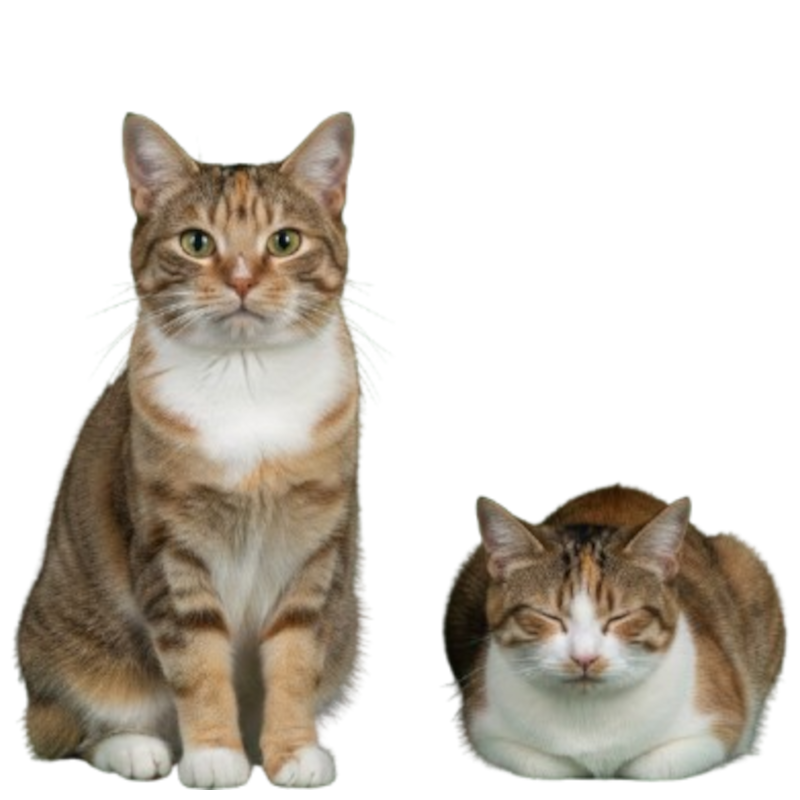
appearance
The American Bobtail Shorthair is a medium-to-large feline distinguished by a rugged, natural aesthetic that mirrors the look of a wild lynx. This breed is noted for its powerful, athletic build and its hallmark shortened tail, which together create an impression of strength and survivalist agility.
General Body Structure and Conformation
The frame of the American Bobtail Shorthair is rectangular and substantial. Because it is a slow-maturing breed, a American Bobtail Shorthair may require up to three years to reach its full physical dimensions and muscular density.
Musculature and Bone Density
American Bobtail Shorthairs possess a heavy bone structure and a deep, broad chest. Their hind legs are noticeably longer than their front legs, which results in a slightly sloped topline and a powerful, rolling gait that mimics the movement of a wild forest predator.
Size and Weight
Weight varies significantly by sex, though both maintain a dense, solid feel when lifted.
- Males: Generally range between 12 and 16 lbs (5.4 to 7.3 kg).
- Females: Generally range between 7 and 11 lbs (3.2 to 5.0 kg).
The Signature Tail
The tail of the American Bobtail Shorthair is its most famous trait, resulting from a natural genetic mutation that is entirely distinct from other bobtailed breeds.
Tail Characteristics
Unlike breeds that may be completely tailless, American Bobtail Shorthairs almost always possess a visible tail that is highly expressive and unique to each individual.
- Length: The tail is typically long enough to be seen above the back when the cat is alert, but it should not reach the hock.
- Shape: It can be straight, curved, or possess slight kinks and bumps along the vertebrae.
- Flexibility: Despite being shortened, the tail remains mobile and serves as a primary tool for communicating the American Bobtail Shorthair’s emotional state.
Head and Facial Features
The facial structure of the American Bobtail Shorthair is a broad, modified wedge designed to support its wildcat appearance.
Eyes and Gaze
The eyes are large, almond-shaped, and set at an angle that enhances the American Bobtail Shorthair’s alert and intelligent expression. This intense “hunting gaze”—a defining characteristic of the breed’s personality and appearance—is often what first draws enthusiasts to the breed. Eye color can vary across a wide spectrum and is not strictly tied to the color of the coat.
Ears and Muzzle
- Ears: These are medium-sized and wide at the base, frequently featuring lynx-like tufts at the tips and thick hair growth inside the ear canal.
- Muzzle: The muzzle is strong and nearly as wide as it is long, featuring prominent whisker pads and a well-developed chin.
Coat and Coloration
While labeled a shorthair, the American Bobtail Shorthair’s fur is actually medium-short and notably dense.
Coat Texture
The American Bobtail Shorthair has a double coat consisting of a thick undercoat and a resilient outer layer.
- Feel: The texture is somewhat coarse and stands away from the body rather than lying flat against the skin.
- Function: This all-weather coat is a legacy of the American Bobtail Shorthair’s heritage—providing protection against various environmental elements.
Color and Pattern Varieties
American Bobtail Shorthairs are accepted in all feline colorations. However, patterns that emphasize a wilder look—such as tabbies—are frequently seen.
| Pattern Type | Description |
|---|---|
| Tabby | Mackerel, spotted, or classic; highlights the bobcat aesthetic. |
| Solid | Consistent coloration across the entire body. |
| Parti-color | Includes tortoiseshell and calico variations. |
| Pointed | Pigment is concentrated on the mask, ears, and tail. |
Geometric and Proportional Standards
Proportional balance is essential for the breed standard. If Lbody represents the length of the torso and Ltail represents the tail length, the relationship is generally observed as:
Tail-to-Body Length Ratio
- : The length of the cat’s body from the neck to the start of the tail.
- : The actual length of the tail from start to tip.
- : The “Longest Allowed” marker (where the tail is the same length as the body).
- : The “Shortest Allowed” marker (where the tail is about one-third the length of the body).
For the American Bobtail Shorthair, the tail must be clearly visible above the back when the cat is alert. If a American Bobtail Shorthair’s body length is 15 inches, the tail length should typically fall between 5 and 10 inches to stay within the ideal phenotypic range. This ratio ensures that the American Bobtail Shorthair maintains its distinctive “bobbed” appearance without being completely tailless.
The tail must be at least one inch in length to meet breed requirements, but it should never be so long as to hinder the specialized look of the American Bobtail Shorthair.
The American Bobtail Shorthair represents a unique intersection of domesticity and the wild, offering the visual appeal of a forest cat within a sturdy and balanced domestic frame.
behavior
The behavioral profile of the American Bobtail Shorthair is defined by a blend of high emotional intelligence and a remarkably steady, self-assured nature. These cats are recognized for their versatility, demonstrating an ability to pivot from energetic play to calm, observant companionship with ease.
Social Interaction and Bonding Patterns
As a deeply communal animal, the American Bobtail Shorthair tends to integrate itself fully into the daily lives of its human companions. Their social framework is built upon a foundation of mutual interaction and shared space.
Emotional Intuition
Owners frequently observe that American Bobtail Shorthairs possess a keen ability to detect the psychological state of those around them. This sensitivity often results in the American Bobtail Shorthair offering silent support by staying close to a person who is feeling stressed or unwell, providing a soothing presence without becoming intrusive.
Integration with Other Animals
Navigating the social dynamics of a home with multiple pets is typically a seamless process for the American Bobtail Shorthair. Their innate confidence usually prevents the development of territorial friction.
- Compatibility with Dogs: Frequently described as having a personality similar to a canine, American Bobtail Shorthairs often establish strong friendships with the family dog.
- Feline Social Groups: Within a group of cats, they usually participate in communal behaviors such as mutual grooming and organized play.
Cognitive Capability and Problem-Solving
The mental life of the American Bobtail Shorthair is marked by an intense curiosity and a persistent drive to understand its surroundings. Their predatory heritage is often expressed through a constant need for mental challenges.
Play and Retrieval Habits
A standout behavioral trait of the American Bobtail Shorthair is its spontaneous inclination toward games like fetch. While most cats require training for such tasks, American Bobtail Shorthairs frequently initiate these interactions on their own by presenting objects to their owners for play.
Analytical Curiosity
Thanks to their advanced cognitive skills, American Bobtail Shorthairs are often adept at figuring out how to bypass physical barriers. It is common for them to learn the mechanics of lever-style door handles, cabinets, or even plumbing fixtures by carefully watching human behavior and mimicking the movements to achieve a specific result.
Communication and Vocalization Styles
The vocal habits of the American Bobtail Shorthair are varied and distinct, generally favoring subtle sounds over the loud, repetitive vocalizations seen in some Oriental breeds.
Distinctive Vocal Range
While the American Bobtail Shorthair can meow, they usually prioritize a series of trills and chirps to express themselves.
- Greetings: Utilizing soft trills to acknowledge a person entering their space.
- Engagement: Producing rhythmic chirping when focusing on outdoor stimuli like birds.
- Invitations: Using short, chirruping sounds to signal a desire for playtime.
The Expressive Nature of the Tail
The unique tail of the American Bobtail Shorthair is a primary vehicle for non-verbal communication. Even with its limited length, it remains highly mobile and informative.
- The Greeting Wag: American Bobtail Shorthairs often swing their tails back and forth to signal excitement or joy.
- The Affectionate Quiver: A fast, vibrating motion of the tail often indicates a peak state of happiness or anticipation.
Adaptation to Travel and New Environments
The American Bobtail Shorthair is widely considered one of the most resilient travelers in the feline world. Their behavioral baseline remains remarkably consistent even when moved between different geographic locations or living spaces.
Exploration and Leash Training
Many American Bobtail Shorthairs adapt to wearing a harness and walking on a lead with very little hesitation. Their outdoor behavior is typically characterized by bold, focused investigation rather than the fearful or defensive reactions common in other breeds. This makes them suitable companions for those who enjoy taking their pets on road trips or nature walks.
Modeling Activity Levels
The daily activity cycle of the American Bobtail Shorthair can be viewed as a series of engagement peaks. If A(t) represents the activity level over time t, their behavior follows a frequent rhythmic pattern:
Daily Energy and Social Connection Cycle
- : The cat’s total energy or friendliness level at any given time.
- : The “Ups and Downs” of the day (switching between nap time and playtime).
- : The “Best Friend Constant” (the baseline level of affection the cat shows even when it’s sleepy).
The American Bobtail Shorthair is unique in that its value is significantly higher than that of more independent breeds. Even when the sine wave () reaches its trough—meaning the American Bobtail Shorthair’s energy is low—the cat remains socially engaged with its human family. This model explains why American Bobtail Shorthairs are often described as “velcro cats” that follow their owners from room to room.
In this model, k represents the frequency of their energetic bursts, while C represents their steady baseline of social presence. Unlike more sedentary cats, American Bobtail Shorthairs prefer several short, high-energy play intervals throughout the day.
| Behavioral Trait | Intensity Level | Observation |
|---|---|---|
| Playfulness | High | Shows a constant appetite for interactive toys. |
| Independence | Medium | Capable of solo play but prefers a social audience. |
| Docility | High | Known for a gentle touch during physical handling. |
| Adaptability | Very High | Maintains composure in cars and unfamiliar buildings. |
The defining aspect of the American Bobtail Shorthair’s behavior is a sense of unshakable poise—an animal that remains as composed during a cross-country journey as it does during a quiet afternoon at home.
color
The American Bobtail Shorthair is recognized for its extraordinary range of coat colors. Since the breed originated from a broad genetic foundation involving various domestic and feral lineages, American Bobtail Shorthairs are permitted in every color and pattern recognized in the feline world. This variety reinforces the breed’s reputation for having a rugged and natural look.
Tabby Patterns and Natural Camouflage
Tabby markings are among the most frequent for the American Bobtail Shorthair, as they enhance the wildcat aesthetic that many owners admire. These specific patterns help accentuate the powerful muscle structure and athletic frame of the American Bobtail Shorthair’s body.
Common Tabby Variations
- Brown Mackerel Tabby: Features narrow, vertical stripes that create a classic forest-cat appearance.
- Spotted Tabby: Characterized by broken lines that appear as distinct spots, providing a look similar to a bobcat.
- Classic Tabby: Known for circular markings on the sides and a butterfly-shaped pattern across the shoulder blades.
Genetic Expression of Pattern
The visual clarity of a pattern in the American Bobtail Shorthair is often determined by the presence of the Agouti gene alongside various polygenetic modifiers m. The probability of a specific pattern manifesting can be modeled as:
Coat Color and Pattern Probability
- : The final chance of a kitten having a specific coat look.
- : The total combined effect of all different color genes (like stripes or spots).
- : The specific “Genetic Code” at each location in the DNA.
- : The “Intensity Multiplier” (how much one gene shows up or hides another).
For the American Bobtail Shorthair, the coat is a “blank canvas” where multiple genes interact. Because the breed standard allows all colors and patterns, the phenotype is the result of this complex summation. While the Shorthair variant has a denser, hard coat, the underlying remains a diverse calculation, often resulting in the classic “wild” tabby look favored in American Bobtail Shorthairs.
In this equation, G represents the primary gene for the pattern, while m represents the modifiers that dictate the depth and richness of the American Bobtail Shorthair’s coat.
Solid and Parti-Color Groups
Beyond the wilder patterns, American Bobtail Shorthairs are also seen in striking solid colors or mixed combinations with white.
Solid Colorations
For a solid American Bobtail Shorthair, the pigmentation should be consistent from the base of the hair to the tip.
- Black: Appears as a dense, dark tone that is particularly vibrant in the shorthair variety.
- Blue: A muted, slate-gray version of black that provides a softer aesthetic.
- White: A clean, snowy hue that makes the American Bobtail Shorthair’s expressive eyes stand out.
Parti-Colors and Bi-Colors
These American Bobtail Shorthairs combine white fur with another specific color or pattern.
- Van: Color is mostly limited to the head and the short tail.
- Harlequin: Features large, irregular patches of color against a primarily white coat.
- Tuxedo: A specific black-and-white combination that gives the American Bobtail Shorthair a sharply defined, formal appearance.
Shaded, Smoke, and Pointed Varieties
The structure of the American Bobtail Shorthair’s double coat allows for intricate color transitions where the hair shaft holds different tones.
Smoke and Shaded Patterns
In these instances, the color is concentrated at the hair tips, while the roots and undercoat remain a pale cream or white.
- Smoke: Most of the hair is colored, only revealing the pale undercoat when the American Bobtail Shorthair is in motion.
- Shaded: Only the very tips are pigmented, which creates a light, shimmering effect across the American Bobtail Shorthair’s back.
Pointed Varieties
While less frequent than tabbies, American Bobtail Shorthairs can express pointed patterns. This results in a lighter body color with darker “points” found on the ears, mask, legs, and tail.
| Color Category | Examples | Typical Eye Colors |
|---|---|---|
| Natural/Wild | Brown Tabby, Silver Tabby | Gold, Green, Copper |
| Dilute | Blue, Cream, Lilac | Various |
| Pointed | Seal Point, Blue Point | Typically Blue |
| Torbie | Tortoiseshell + Tabby | Various |
Skin Pigmentation and Points
The coloration of the American Bobtail Shorthair is also reflected in the skin leather of the nose and paws.
- Nose Leather: Usually mirrors the dominant coat color—such as black for solids or brick-red for tabbies.
- Paw Pads: American Bobtail Shorthairs generally have pads that harmonize with their markings, completing the animal’s balanced appearance.
Because every American Bobtail Shorthair is unique in both its shortened tail and its specific coat tone, the breed standard values the overall harmony of the individual—ensuring the American Bobtail Shorthair remains a distinctive tribute to its diverse heritage.
compatibility
Ease of Maintenance
Rating: 5/5
Child Friendly
Rating: 5/5
Annual Cost
Rating: 4/5
Lifetime Cost
Rating: 4/5
Adaptability
Rating: 5/5
Velcro Factor
Rating: 5/5
Quietude
Rating: 4/5
Apartment Suitability
Rating: 4/5
Hypoallergenic
Rating: 2/5
Handling Tolerance
Rating: 5/5
Hardiness/Longevity
Rating: 4/5
Prey Drive
Rating: 2/5
genetics
The genetic profile of the American Bobtail Shorthair represents a compelling study in feline inheritance. Unlike many pedigreed cats that result from intensive line-breeding within a restricted founder group, American Bobtail Shorthairs emerged from a diverse population of domestic and feral cats carrying a natural mutation. This lineage has produced a robust, genetically sound population with an extensive variety of physical traits.
The Bobtail Mutation: Dominant Inheritance
The primary genetic driver for the American Bobtail Shorthair is the gene that dictates its shortened tail. Scientific observation indicates that this mutation follows an autosomal dominant inheritance pattern, which distinguishes it from the genetic mechanisms found in the Manx or the Japanese Bobtail.
Expression of the Tail Gene
Because the trait is dominant, a American Bobtail Shorthair only needs to inherit the mutation from one parent (heterozygous state) to display the bobtail phenotype. If we let represent the dominant bobtail allele and represent the recessive long-tail allele, the genetic makeup of the population generally follows this distribution:
- Tt (Heterozygous): The standard American Bobtail Shorthair with a shortened, mobile tail.
- tt (Homozygous Recessive): A cat with a standard full-length tail. While these individuals may be part of the American Bobtail Shorthair’s ancestry, they do not meet the visual criteria for the bobtail phenotype in show standards.
- TT (Homozygous Dominant): While genetically possible, breeders often utilize outcrossing to maintain a broad gene pool, typically resulting in a heterozygous population.
Absence of Health Defects
Notably, the dominant gene in the American Bobtail Shorthair is not linked to the skeletal abnormalities or lethal homozygous complications seen in other short-tailed breeds. There is no evidence suggesting that the American Bobtail Shorthair’s genetic structure causes spinal issues or “Manx Syndrome,” which allows for a much healthier breeding environment.
Polygenetic Modifiers and Tail Phenotypes
While the primary gene determines that the tail will be short, the specific measurements, curves, and bone structure of the tail are influenced by polygenetic modifiers—a collection of minor genes that shape the final physical outcome.
Phenotypic Variance
The length of the American Bobtail Shorthair’s tail can be viewed as a continuous variable , which is influenced by a set of modifiers :
Sturdy Body Build and Muscle Strength
- : The “Substantial Look” (how powerful and heavy-set the cat appears).
- : The “Torso Shape” (how deep the chest is and how broad the stance is).
- : The total muscle mass across all the legs and shoulders.
- : The number of strong, heavy bone points in the skeleton.
In the American Bobtail Shorthair, structural robustness is a primary breed requirement. Unlike more delicate breeds, the American Bobtail Shorthair’s frame is built on a heavy bone structure () and a rectangular torso (). This summation () results in the powerful, athletic appearance that defines American Bobtail Shorthairs, particularly the Shorthair variety where the musculature is more visibly defined due to the close-lying coat.
In this model, represents the baseline reduction in length caused by the primary mutation, while the sum of accounts for the unique variations seen in every individual American Bobtail Shorthair. This explains why the tails of American Bobtail Shorthairs are as unique as a human fingerprint.
Coat and Pigmentation Genetics
The American Bobtail Shorthair utilizes a standard array of feline genetic markers, which allows for the vast diversity of patterns and colors permitted by breed registries.
The Agouti and Tabby Complex
A majority of American Bobtail Shorthairs carry the Agouti gene (), which enables the expression of tabby markings. The interaction between the Agouti locus and the Tabby locus determines whether the American Bobtail Shorthair displays mackerel, classic, or spotted patterns.
The Shorthair Locus
The specific coat length of the American Bobtail Shorthair is controlled by the locus. The dominant allele results in the short-to-medium coat, while the recessive allele is responsible for the longhaired version of the breed.
- Genotype LL or Ll: American Bobtail Shorthair (Shorthair).
- Genotype ll: American Bobtail Longhair.
Genetic Diversity and Resilience
One of the most vital aspects of the American Bobtail Shorthair’s genetic history is the concept of hybrid vigor. Since the original breeding stock consisted of non-pedigreed cats from various regions, the breed maintains a very low coefficient of inbreeding.
| Genetic Factor | Impact on the American Bobtail Shorthair |
|---|---|
| Mutation Type | Autosomal Dominant |
| Inbreeding Coefficient | Low compared to most pedigrees |
| Health Risks | No breed-specific genetic disorders identified |
| Founder Effect | Minimized by diverse outcrossing practices |
Selective Breeding and Outcrossing Standards
To protect the health of the American Bobtail Shorthair, official registries frequently permit outcrossing with domestic shorthairs or longhairs that do not belong to other established breeds. This strategy ensures the American Bobtail Shorthair’s gene pool remains vibrant and prevents the genetic bottlenecks that often plague more isolated feline populations.
The genetics of the American Bobtail Shorthair stand as evidence of the strength of natural mutations when they are maintained through breeding practices that prioritize diversity and physical well-being.
health
The American Bobtail Shorthair is widely recognized as one of the most durable and physically resilient breeds in the feline world. Because its development relied on a broad and natural genetic foundation rather than a restricted group of ancestors, American Bobtail Shorthairs benefit from a high level of genetic variation. This diversity has largely insulated the breed from many hereditary conditions that often impact more localized or inbred feline populations.
General Vitality and Lifespan
The typical life expectancy for the American Bobtail Shorthair is between 13 and 15 years, though it is common for well-cared-for individuals to reach their late teens. Their strong physical makeup is a direct result of the American Bobtail Shorthair’s history as a naturally occurring mutation refined by responsible breeding.
Developmental Phases and Maturity
In contrast to many domestic cats that finish growing by their first birthday, the American Bobtail Shorthair is considered a slow-maturing variety.
- Physical Growth: Their heavy-boned frame and muscular density continue to develop for up to three years.
- Nutritional Management: Since they mature over a longer period, it is important to provide a diet that supports steady bone development without causing the American Bobtail Shorthair to become overweight in its early years.
Genetic Wellness and the Tail Mutation
A primary health benefit for the American Bobtail Shorthair is the biological nature of its shortened tail. While other breeds like the Manx carry a tail-loss gene often associated with significant spinal defects, the dominant gene in American Bobtail Shorthairs does not appear to compromise internal physiological functions.
Neurological and Spinal Integrity
The genetic mutation that creates the unique look of the American Bobtail Shorthair is localized to the caudal (tail) vertebrae. Medical observations indicate that American Bobtail Shorthairs are not prone to “Manx Syndrome”—a condition involving spina bifida or neurological issues affecting the bowels and bladder—because the mutation generally does not impact the lumbar or sacral sections of the spine.
Low Frequency of Hereditary Disease
At present, there is no evidence to suggest that the American Bobtail Shorthair is predisposed to specific genetic disorders like Polycystic Kidney Disease (PKD) or Hypertrophic Cardiomyopathy (HCM) at rates higher than the general domestic cat population.
Key Health Management Areas
Despite their overall heartiness, the specific physical traits of American Bobtail Shorthairs require owners to be mindful of certain health aspects.
Spinal and Tail Sensitivity
Since the tail is a functional extension of the vertebral column, it must be treated with care.
- Vertebral Variations: In rare instances where the tail is exceptionally short or features sharp kinks, the American Bobtail Shorthair may experience sensitivity at the site of the mutation.
- Handling Techniques: It is important to always support the American Bobtail Shorthair’s rear when picking them up to prevent unnecessary pressure on the lower back and pelvic region.
Weight Control and Physical Condition
The naturally thick and muscular build of the American Bobtail Shorthair can sometimes mask the early stages of obesity. Maintaining a healthy weight is the most critical factor in the American Bobtail Shorthair’s long-term health, as excess mass can lead to joint stress or spinal issues.
The ideal weight for an adult can be calculated relative to the cat’s frame size and an established muscle density constant :
Ideal Muscle and Bone Weight Calculation
- : The perfect total weight for a healthy, fit cat.
- : The total length of the cat’s body.
- : The “Thickness Factor” (how dense the muscles and bones are at any spot).
- : The “Size Factor” (how wide the body is at any cross-section).
- : Each tiny segment of the cat from front to back that adds up to the whole.
This integral perfectly describes the “substantial” feel of the American Bobtail Shorthair. Because the breed possesses a broad chest and a rectangular torso, the cross-sectional area remains high throughout the length . For the American Bobtail Shorthair, the value of is naturally higher than in other breeds of similar length due to the high tissue density () required for their heavy-boned, muscular build.
In this equation, represents the total body length and represents the cross-sectional area at any given point. Regular assessment of the American Bobtail Shorthair’s body condition score is vital for preserving its natural agility.
| Health Category | Target Status | Prevention Strategy |
|---|---|---|
| Dental Health | Healthy gums | Periodic cleanings and dental-focused treats. |
| Weight Status | Visible waist | Monitoring calorie density and encouraging exercise. |
| Coat Health | Dense and glossy | Brushing to prevent matting in the undercoat. |
| Mental State | High engagement | Providing puzzle toys and social interaction. |
Routine Maintenance and Prevention
Ensuring the longevity of the American Bobtail Shorthair involves a consistent preventative health routine.
Grooming as a Diagnostic Tool
Brushing the American Bobtail Shorthair’s double coat is not only necessary for aesthetics but also serves as a regular health screening. During grooming, owners should look for:
- Skin Irritations: Checking for redness or lumps that might be hidden by the thick fur.
- External Parasites: Looking for signs of fleas or ticks within the dense undercoat layers.
- Physical Comfort: Noting if the American Bobtail Shorthair shows signs of discomfort when the spine or hips are touched.
The American Bobtail Shorthair serves as an excellent example of feline vitality, merging the aesthetics of a wild predator with the stable health of its domestic forebears. Through consistent weight monitoring and routine veterinary visits, owners can enjoy many active years with these intelligent companions.
longevity
The American Bobtail Shorthair is a sturdy and enduring companion, gaining significant health advantages from its origins as a naturally occurring breed. Unlike many pedigreed felines that suffer from shortened lifespans due to restricted gene pools, American Bobtail Shorthairs possess a vigorous constitution that promotes a long and high-quality existence.
Statistical Lifespan Expectations
The typical life expectancy for a American Bobtail Shorthair generally falls between 13 and 15 years. However, it is quite frequent for individuals to reach 18 to 20 years of age when provided with a safe indoor environment and high-quality nutrition.
Factors Influencing Longevity
The total lifespan of a American Bobtail Shorthair can be modeled as a result of genetic health , environmental safety , and preventative medical intervention :
Lifespan and Vitality Equation
- : The total number of healthy years the cat lives.
- : The “Life Balance” (how well all factors work together).
- : Genetic Luck (the inherited health and strength from parents).
- : Environment (safety, love, and a stress-free home).
- : Medical Care (checkups, vaccines, and early screenings).
In this model, represents the complex “biological algorithm” where the variables interact. For the American Bobtail Shorthair, a robust (genetics) provides the foundation, but the function determines the final outcome (); for instance, high-quality (environment) can amplify genetic vitality, while (medical care) can mitigate hereditary risks. Because American Bobtail Shorthairs are slow-maturing, the way processes these inputs over their first three years is critical to their long-term structural and cognitive health.
For American Bobtail Shorthairs, the factor is exceptionally high because they lack breed-specific hereditary ailments. Consequently, (keeping the cat indoors) and (consistent veterinary checkups) become the most influential variables in determining their survival into their senior years.
Developmental Milestones and Aging Phases
Recognizing the distinct life stages of the American Bobtail Shorthair is vital for maintaining their well-being throughout the aging process.
The Extended Maturity Period
As a slow-maturing variety, the American Bobtail Shorthair’s youth is more prolonged than that of many other domestic cats.
- Kittenhood (0–12 months): A phase of rapid physical growth and intense social learning.
- Young Adult (1–3 years): The timeframe during which the American Bobtail Shorthair completes the development of its muscular frame and heavy bone structure.
- Prime Adulthood (3–10 years): A period of peak physical fitness and high cognitive engagement.
- Seniority (11+ years): A stage marked by a gradual decline in metabolic speed and overall activity levels.
Comparative Longevity Data
The table below illustrates how American Bobtail Shorthair’s years translate to human equivalents, showing the shift in biological aging over time.
| American Bobtail Shorthair Age (Years) | Human Equivalent Age | Life Stage Category |
|---|---|---|
| 1 | 15 | Adolescent |
| 3 | 28 | Mature Adult |
| 7 | 44 | Middle-Aged |
| 12 | 64 | Senior |
| 15 | 76 | Geriatric |
Strategies for Extending Senior Vitality
To help the American Bobtail Shorthair achieve its maximum lifespan potential, specific attention must be directed toward geriatric maintenance.
Nutritional Adaptation
As American Bobtail Shorthairs enter their later years, their dietary needs change. While younger cats require high protein for muscle mass, seniors benefit from highly digestible ingredients that reduce the workload on kidney function.
Environmental Enrichment and Cognitive Health
Since American Bobtail Shorthairs are highly social and intelligent, mental boredom can negatively impact their health. Keeping a consistent schedule of interactive play helps maintain the American Bobtail Shorthair’s mental acuity deep into their teens.
Monitoring the Aging Spine
In the American Bobtail Shorthair’s senior years, mobility should be closely monitored. Although they are largely free from the specific spinal deformities seen in other short-tailed cats, they remain susceptible to age-related arthritis.
The longevity of the American Bobtail Shorthair stands as a testament to the durability of their natural heritage—proper care ensures that these distinctive, wild-looking companions remain a vital part of the household for nearly two decades.
maintenance
Caring for a American Bobtail Shorthair involves a structured routine that addresses their dense coat, high level of intelligence, and powerful physical frame. Because American Bobtail Shorthairs mature slowly and are exceptionally social, their maintenance requirements shift throughout their extensive three-year developmental period.
Coat Care and Grooming Standards
Although labeled as a shorthair, the American Bobtail Shorthair’s coat is actually a double-layered system consisting of a thick undercoat protected by somewhat coarser guard hairs. This unique texture gives the breed its signature shaggy look but requires consistent attention to prevent tangles and mats.
Brushing Frequency and Tools
Grooming for the American Bobtail Shorthair should be performed at least twice a week. During heavy shedding seasons—typically in the spring and autumn—daily brushing is advised to manage the volume of loose hair.
- Undercoat Rake: Vital for thinning out the dense secondary layer of fur.
- Slicker Brush: Best for clearing away surface debris and maintaining the smoothness of the guard hairs.
Bathing and Skin Health
American Bobtail Shorthairs usually do not need frequent bathing because their fur has a natural resistance to water. If a bath becomes necessary due to significant soiling, utilize a mild feline shampoo that preserves the essential natural oils of the American Bobtail Shorthair’s skin.
Physical Activity and Environmental Needs
The American Bobtail Shorthair is an exceptionally athletic and energetic cat. Unlike more languid breeds, American Bobtail Shorthairs need vigorous daily exercise to keep their muscles toned and to avoid health complications related to a sedentary lifestyle.
Interactive Exercise
Due to the American Bobtail Shorthair’s high cognitive capacity, they often enjoy games usually associated with dogs, such as fetch. They respond best to toys that simulate the unpredictable movements of prey.
- Daily Duration: Aim for a minimum of two 15-minute sessions of high-intensity play every day.
- Vertical Enrichment: Offer tall cat trees or wall perches, as American Bobtail Shorthairs instinctively prefer to watch their surroundings from high vantage points.
Cognitive Enrichment
To avoid boredom-related behaviors, incorporate puzzle feeders into the daily routine. The difficulty of the puzzle should be adjusted based on the American Bobtail Shorthair’s maturity and problem-solving experience:
Training Progress and Consistency Score
- : The total monthly score for how well the cat is learning a new trick or habit.
- : Each individual day of the month.
- : How many times the cat correctly performed the behavior that day.
- : The number of days in the month (used to find the average).
Because the American Bobtail Shorthair is highly intelligent and “dog-like,” they excel in clicker training and leash walking. This formula allows a American Bobtail Shorthair’s owner to track the of a new behavior. Given their slow maturation, maintaining a high success rate through consistent daily reinforcement () ensures that the behavior becomes a permanent part of the American Bobtail Shorthairs repertoire by adulthood.
In this formula, represents a constant based on the specific American Bobtail Shorthair’s learning pace.
Nutritional Oversight and Weight Management
Because of their naturally heavy bone structure, owners can easily mistake an overweight American Bobtail Shorthair for one that is simply sturdy. Strict nutritional oversight is essential to prevent excess weight from straining the American Bobtail Shorthair’s joints and spine.
| Maintenance Category | Requirement | Objective |
|---|---|---|
| Caloric Intake | High-protein, age-specific diet | Support lean muscle growth throughout the 3-year maturity cycle. |
| Feeding Routine | Measured portions rather than free-feeding | Prevent excessive weight gain in adult American Bobtail Shorthairs. |
| Hydration | Multiple clean water sources | Support kidney function and overall metabolic health. |
Dental, Nail, and Ear Hygiene
Standard hygiene practices are mandatory for the American Bobtail Shorthair, and starting these routines early is beneficial due to their independent nature.
Dental Maintenance
Oral health issues can have a systemic impact on the American Bobtail Shorthair. Try to brush their teeth three to four times a week. If the American Bobtail Shorthair is resistant to brushing, dental rinses or specialized water additives can provide a secondary layer of protection.
Nail Trimming and Scratching
Claws should be clipped every two to three weeks. Since American Bobtail Shorthairs are enthusiastic climbers, providing a variety of scratching textures—such as wood, sisal, and corrugated cardboard—helps them naturally maintain their nail health.
Preventative Veterinary Care
Consistent medical checkups form the final component of American Bobtail Shorthair maintenance. Even as a hardy, naturally derived breed, preventative care is the key to their long-term vitality.
Routine Healthcare Schedule
- Annual Wellness Exams: Essential for checking the American Bobtail Shorthair’s cardiac health and weight trends.
- Immunizations: Standard vaccines should be kept current and tailored to the American Bobtail Shorthair’s specific lifestyle and exposure risks.
- Parasite Control: Year-round preventatives for fleas, ticks, and heartworms are necessary, particularly for American Bobtail Shorthairs with access to enclosed outdoor spaces or “catios.”
By following this detailed maintenance protocol, the American Bobtail Shorthair will remain a vigorous, mentally sharp, and aesthetically impressive companion for many years.
measurements
| Measurement | Female | Male | ||
|---|---|---|---|---|
| Metric | Imperial | Metric | Imperial | |
height | 20 – 25 centimeters | 8 – 10 inches | 23 – 28 centimeters | 9 – 11 inches |
length | 43 – 48 centimeters | 17 – 19 inches | 46 – 51 centimeters | 18 – 20 inches |
weight | 3.2 – 5 kilograms | 7 – 11 pounds | 5.4 – 7.3 kilograms | 12 – 16 pounds |
• Height: Refers to the measurement at the withers (shoulders).
• Length: Measured from the tip of the nose to the base of the tail.
origin
The history of the American Bobtail Shorthair is a unique narrative of natural selection and chance discovery. Unlike many breeds that were created through the artificial cross-breeding of established pedigrees, American Bobtail Shorthairs began as a naturally occurring population of domestic cats possessing a unique genetic mutation.
Discovery and the Founder Lineage
The foundation of the American Bobtail Shorthair’s lineage is widely attributed to a specific kitten discovered in the late 1960s.
Yodie: The Progenitor
The breed traces its ancestry back to a short-tailed brown tabby kitten named Yodie. Found in Arizona near a Native American reservation by John and Brenda Sanders, Yodie’s origins were shrouded in local folklore, including unverified theories that his bobbed tail resulted from a cross between a domestic cat and a wild bobcat.
The First Breeding Programs
When Yodie reached maturity, he was bred with a non-pedigreed colorpoint female. This union produced a litter that included kittens with the same distinct shortened tail, confirming that the trait was a dominant genetic mutation. These early offspring formed the primary gene pool from which the American Bobtail Shorthair was developed.
Genetic Foundation and Natural Selection
The American Bobtail Shorthair is defined by its “natural” look, which is a direct result of the diverse genetic material used during its stabilization phase.
Dominant Mutation Mechanics
The genetic driver for the American Bobtail Shorthair’s tail length is an autosomal dominant gene. This means that if represents the bobtail allele and represents the standard long-tail allele, the probability of a bobtail phenotype appearing in a heterozygous cross is:
Bobtail Gene Inheritance Odds
- : The statistical chance that a kitten will be born with a short tail.
- : The 3 out of 4 chance when both parents carry the bobtail gene.
- : The percentage likelihood of the bobtail trait showing up in a litter.
When two American Bobtail Shorthair parents are both heterozygous for the dominant bobtail gene, the laws of Mendelian genetics suggest a 75% probability that any given kitten will be born with the signature short tail. In the American Bobtail Shorthair Shorthair, this result manifests as a variety of lengths—from “stumpy” to “longy”—all within the same litter, showcasing the unique genetic diversity of the American Bobtail Shorthair’s lineage.
However, to maintain health and avoid potential skeletal issues, breeders focused on outcrossing with varied domestic shorthairs, ensuring the American Bobtail Shorthair’s genetic foundation remained broad and robust.
Comparison with Other Short-Tailed Breeds
It is essential to distinguish the American Bobtail Shorthair from other breeds with similar appearances but different genetic histories.
| Breed | Origin | Genetic Type | Physical Marker |
|---|---|---|---|
| American Bobtail Shorthair | North America | Dominant | 1/3 to 1/2 length, flexible |
| Japanese Bobtail | Japan | Recessive | “Pom-pom” or kinked look |
| Manx | Isle of Man | Dominant (Lethal) | Often completely tailless |
Breed Recognition and Standardization
While the foundation was laid in the 1960s, the American Bobtail Shorthair underwent significant refinement before achieving formal recognition.
Transition to the Modern Standard
By the 1980s, breeders moved away from the initial “shaggy” look toward a more specific standard that emphasized a feral appearance combined with a domestic temperament. This included selecting for the American Bobtail Shorthair’s substantial bone structure and hunting-style gait.
Formal Acceptance
The journey of the American Bobtail Shorthair through major registries followed a steady path of validation:
- Initial Development: 1960s—1970s
- TICA Recognition: The International Cat Association (TICA) accepted the American Bobtail Shorthair for registration in 1989.
- Championship Status: The breed achieved full championship status in TICA and other major registries like the CFA by the mid-2000s.
Evolution of the Shorthair Variety
Although the early American Bobtail Shorthair’s ancestors often displayed longer fur, the shorthair variety became a distinct focus for many enthusiasts. The shorthair American Bobtail Shorthair highlights the muscular build and the specific articulation of the tail more clearly than its longhaired counterpart.
Today, the American Bobtail Shorthair stands as a living testament to the resilience of natural feline mutations, preserved through careful breeding practices that honor its wild-looking, North American heritage.
temperament
The American Bobtail Shorthair is frequently likened to the “Golden Retriever” of the cat world. This comparison arises from a personality that is profoundly loyal, emotionally perceptive, and highly capable of adjusting to various domestic environments. Unlike many cats that maintain a certain level of detachment, American Bobtail Shorthairs actively pursue human companionship and often synchronize their moods with those of their owners.
Social Dynamics and Human Interaction
A hallmark of the American Bobtail Shorthair is the intense attachment it forms with its family. These cats are rarely exclusive to a single person; instead, they typically distribute their affection across all members of the household.
Emotional Intuition
American Bobtail Shorthairs are celebrated for their ability to sense human feelings. Numerous keepers have observed that the American Bobtail Shorthair will offer quiet support when a person is feeling low or unwell—a trait that has made them popular choices for therapy work in both private and professional settings.
Interaction with Children and Other Pets
The American Bobtail Shorthair’s steady and patient temperament makes it an excellent fit for families with energetic children. Furthermore, their self-assured yet non-combative attitude helps American Bobtail Shorthairs blend easily into multi-pet homes, often forming strong friendships with dogs.
Intelligence and Trainability
The mental capacity of the American Bobtail Shorthair is among its most impressive features. They demonstrate a natural aptitude for solving problems and require consistent mental challenges to remain satisfied.
Canine-like Behaviors
Several behavioral patterns in the American Bobtail Shorthair are more commonly associated with dogs:
- Retrieval Games: They frequently start games of fetch, bringing toys back to their owners to keep the interaction going.
- Harness Training: Their flexible and adventurous nature means American Bobtail Shorthairs can often be taught to walk on a leash with minimal difficulty.
- Environmental Manipulation: Their cleverness often leads them to figure out how to operate door levers or access secured cabinets.
Quantifying Learning Efficiency
The speed of habit formation in the American Bobtail Shorthair can be viewed as a function of positive reinforcement and the difficulty of the objective :
Bond Strength and Friendship Total
- : The total strength of the friendship between the cat and its human.
- : The “Good Times” rate (daily play, petting, and treats).
- : The “Neediness Factor” (how much attention this specific breed needs to feel happy).
- : Every little moment spent together.
- to : The total time from the first day you meet until the current day.
The American Bobtail Shorthair is renowned for its high emotional intelligence and “therapy-cat” temperament. In this model, the integral represents how social bonds aren’t built in a single moment but are the sum of consistent, positive interactions (). Because American Bobtail Shorthairs have a high constant, they require more frequent social integration to reach a state of equilibrium (), making them ideal for households that desire a highly interactive and devoted companion.
For American Bobtail Shorthairs, the value of is typically significantly higher than that of many other domestic felines, provided the training involves social engagement.
Activity Levels and Vocalization
While the American Bobtail Shorthair is physically capable and athletic, its energy is usually controlled and purposeful rather than chaotic.
Play Style
The American Bobtail Shorthair’s approach to play is inherently social. They generally favor activities that involve a human partner over playing by themselves. Despite their sturdy and muscular frames, they are remarkably gentle when engaging in play with their companions.
Vocal Communication
The American Bobtail Shorthair is not known for being loud or disruptive. Instead of typical meowing, they communicate through a distinctive palette of sounds:
- Chirps and Trills: Common sounds used for greetings or to show excitement.
- Clicking: Frequently heard when the American Bobtail Shorthair is intensely focused on something out of reach, such as birds or a moving toy.
Adaptability and Travel
One of the most notable traits of the American Bobtail Shorthair’s personality is its calm response to new situations.
| Scenario | Behavior of American Bobtail Shorthair | Adaptability Level |
|---|---|---|
| Relocation | Generally explores and acclimates to new spaces quickly. | High |
| Transportation | Usually stays composed during car trips and in carriers. | High |
| New People | Typically welcoming and inquisitive toward guests. | Moderate—High |
Behavioral Summary
In essence, the American Bobtail Shorthair provides a unique combination of a rugged, wild appearance and a gentle, affectionate spirit. Because they require significant social interaction and mental stimulation, they thrive best in homes where they are treated as an integral part of the family’s daily activities.