American Bobtail Cat
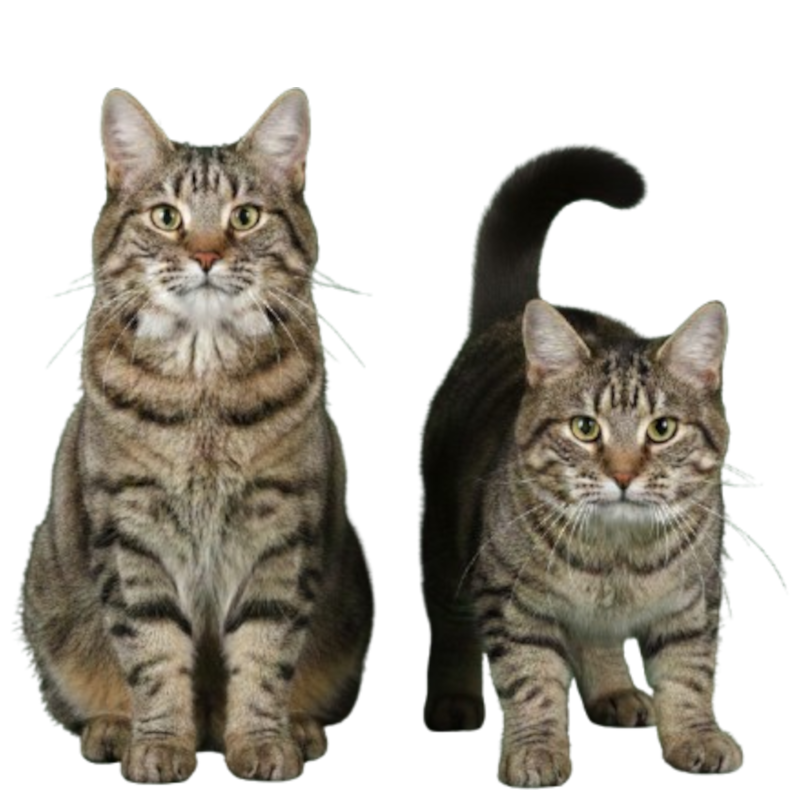
appearance
The American Bobtail is a medium-to-large, athletic feline that possesses a distinctive wild look. Its appearance is characterized by a sturdy, rectangular body, a naturally shortened tail, and a broad, wedge-shaped head that conveys an expression of alert intelligence.
Cranial Structure and Facial Features
The head of the American Bobtail is a crucial component of its breed type, designed to look rugged yet balanced.
Head and Muzzle
The head is a broad, modified wedge with gently curving contours. It features a prominent brow and a full, strong muzzle with well-developed whisker pads. When viewed in profile, there is a slight concave curve between the nose and the brow—avoiding the sharp "stop" seen in other breeds.
Eyes and Ears
- Eyes: They are large, almond-shaped, and set deep under the brow. The eye color is independent of the coat color, except in pointed patterns.
- Ears: Medium-sized and wide at the base, the ears are set equally on the top and side of the head. Many American Bobtails exhibit desirable lynx tips—tufts of hair on the pinnas—that enhance their feral appearance.
Body Composition and Stature
The American Bobtail is built for power and agility, possessing a noticeably muscular and heavy-boned frame.
Torso and Bone Structure
The body is moderately long and rectangular. The chest is full and broad, supported by substantial boning that makes the American Bobtail feel heavier than it appears. The hips are typically broad and the flank is deep.
The Hindquarters and Gait
A defining characteristic of the American Bobtail’s silhouette is the length of its legs. The hind legs are slightly longer than the front legs, resulting in a slight slope toward the shoulders and a rolling, hunter-like gait.
Back Leg Height Advantage
- : The length of the back leg from the hip down to the paw.
- : A symbol showing that the first value is larger than the second.
- : The length of the front leg from the shoulder down to the paw.
In the American Bobtail, this inequality is a defining morphological trait. The longer hind limbs relative to the forelimbs create the American Bobtail’s characteristic “hunting trot” and slightly sloped topline. This skeletal geometry provides the explosive power needed for the leaping ability that American Bobtails are known for.
The Signature Tail
The tail is the most famous attribute of the American Bobtail—the result of a natural genetic mutation.
Tail Characteristics
Unlike the Manx, which may be completely tailless, the American Bobtail must always have a tail. The tail is flexible and expressive.
- Length: Typically ranges from 1 to 4 inches (2.5 to 10 cm).
- Shape: It can be straight, curved, kinked, or have bumps along its length, provided it does not hinder the cat’s comfort.
- Standard: The tail should be long enough to be visible above the backline when the cat is alert—but generally should not extend past the hock.
Coat and Coloration
The American Bobtail is accepted in two coat lengths: shorthair and longhair.
Coat Texture and Density
Both varieties possess a double coat that is resilient and designed for protection against the elements.
- Shorthair: A medium-short, slightly coarse coat with a soft undercoat.
- Longhair: A medium-long, shaggy coat with a slight ruff around the neck and britches—long fur on the hind legs—for a wilder appearance.
Accepted Patterns
The American Bobtail is a natural breed, and as such, all colors and patterns are recognized.
| Pattern Category | Common Examples |
|---|---|
| Tabby | Classic, Mackerel, Spotted, Ticked |
| Solid | Black, White, Blue, Red |
| Parti-color | Tortoiseshell, Calico, Bi-color |
| Pointed | Lynx Point, Seal Point |
Summary of Physical Standards
- Maturation: Slow—it can take up to 3 years to reach full physical development.
- Overall Impression: A powerful, shaggy, and naturally occurring bobtailed cat with a feral expression but a domestic disposition.
behavior
The American Bobtail is widely celebrated for its high emotional intelligence and adaptable nature. Often described by enthusiasts as dog-like, the American Bobtail’s temperament is a unique blend of wild-looking confidence and domestic devotion. They are famously steady-tempered, making them suitable for a wide range of living environments and family structures.
Social Dynamics and Human Interaction
The American Bobtail is a deeply social creature that thrives on companionship. Unlike more aloof breeds, American Bobtails are active participants in their household’s daily activities.
The Utility Player Concept
This moniker is frequently applied to the American Bobtail due to its tendency to follow owners from room to room. They are not merely demanding of attention; rather, they enjoy being utility players—individuals who observe and participate in whatever the human family is doing.
Interpersonal Intuition
American Bobtails are noted for their uncanny ability to mirror or react to human emotions. Many owners report that the American Bobtail will seek out a distressed family member to provide quiet, physical comfort. This empathetic quality has led to their frequent use as therapy animals in clinical and educational settings.
Cognitive Engagement and Play Behavior
Intelligence in American Bobtails is often manifested through problem-solving and interactive play rather than nervous energy.
Playful Intelligence
Their play style is robust and interactive. Common behavioral traits include:
- Retrieval: Many American Bobtails will naturally learn to play fetch—bringing toys back to their owner’s feet in a remarkably canine fashion.
- Dexterity: They use their paws with a high degree of control, often hooking toys or opening doors and cabinets.
- Hide-and-Seek: They enjoy games that challenge their hunting instincts—such as stalking moving toys under blankets.
Activity Level Modeling
While active, the American Bobtail is not hyperactive. Their energy expenditure can be viewed as a function of environmental enrichment . In a low-stimulation environment, the cat may become lethargic, whereas optimal stimulation leads to a balanced temperament:
Lifetime Happiness and Bonding Total
- : The total amount of happiness and health a cat feels over its whole life.
- to : The time span from the day the cat is born until the end of its life.
- : The “Social Joy Score,” which measures how much love and attention the cat gets from its humans.
- : The tiny moments of time that add up to make a full life.
This integral demonstrates that for the American Bobtail, long-term health is not just about physical maintenance, but the summation of social enrichment over time. Because American Bobtails are noted for their “dog-like” devotion, a consistent —achieved through daily bonding—is required to maximize the area under the curve for their total life experience.
Adaptability and Environmental Resilience
One of the most defining traits of the American Bobtail’s temperament is its remarkable even-keeled nature when facing change.
Travel and New Situations
American Bobtails are famously good travelers. Historically, they were popular companions for long-haul truck drivers because they handle the vibration and confinement of a vehicle with minimal stress. This adaptability extends to moving to new homes or meeting strangers.
Multi-Pet Compatibility
Their confident nature means they are rarely intimidated by other animals.
- Dogs: American Bobtails usually integrate seamlessly with cat-friendly dogs.
- Other Cats: They tend to be socially dominant but not aggressive—often taking on a nanny role with younger kittens.
Communication Styles
The American Bobtail is communicative without being vocally demanding. They prefer subtle auditory cues over persistent meowing.
The Vocal Repertoire
Instead of the standard feline meow, American Bobtails are known for:
- Chirping and Trilling: High-pitched sounds used to greet owners or show excitement.
- Clicks: Rapid vocalizations often seen when observing birds through a window.
- Purr Volume: They possess a resonant, deep purr used to signal contentment and bond with humans.
Non-Verbal Cues
The American Bobtail’s tail—though short—is highly expressive. A quivering or wagging bobtail often indicates high levels of excitement or joy—a behavior that further reinforces their canine-like reputation.
Behavioral Summary Table
| Trait | Rating (1–10) | Notes |
|---|---|---|
| Affection Level | 10 | Extremely devoted and physically affectionate. |
| Friendliness (Strangers) | 8 | Generally welcoming to guests. |
| Trainability | 9 | High; responds well to clicker training and fetch. |
| Independence | 4 | Prefers company; may struggle with long isolation. |
| Noise Sensitivity | 3 | Very steady; rarely spooked by household sounds. |
color
The American Bobtail is a naturally occurring breed, which is reflected in the wide acceptance of nearly all coat colors and patterns. Because the breed focuses on a rugged, wild aesthetic, the emphasis is often placed on how the color enhances the American Bobtail’s substantial musculature and shaggy coat texture.
Recognition of Colors and Patterns
Unlike breeds with restricted palettes, American Bobtails are permitted in any color or pattern, including those with white spotting. The classification is typically divided into several major categories.
Solid and Self-Colors
Solid colors should be uniform from the root to the tip of the hair. Common solids include:
- Ebony (Black): Deep, coal-black with black nose leather and paw pads.
- White: Pure, glistening white; eye colors can be blue, copper, or odd-eyed.
- Blue: A soft, slate-grey tone, often appearing more prominent in the longhaired variety.
- Red: A deep, vibrant orange, often referred to as marmalade.
Tabby Patterns
Tabby is perhaps the most frequent pattern found in the American Bobtail, as it contributes to the desired feral appearance.
- Classic Tabby: Large, swirling oyster markings on the flanks.
- Mackerel Tabby: Narrow, vertical fishbone stripes.
- Spotted Tabby: Distinctive spots across the torso—which are highly prized for mimicking wild bobcats.
- Ticked Tabby: Individual hairs are banded with different colors, creating a salt-and-pepper effect.
Specialized and Dilute Colorations
Beyond the standard primary colors, American Bobtails exhibit a variety of complex genetic expressions.
The Silver and Smoke Series
In these varieties, the base of the hair shaft is devoid of pigment, creating a shimmering effect.
- Silver Tabby: The ground color is a pale, clear silver, with contrasting dark tabby markings.
- Smoke: A solid-colored cat with a white undercoat—visible only when the American Bobtail is in motion.
Pointed and Sepia Variations
Though less common than the traditional tabby, pointed patterns are fully recognized.
- Lynx Point: Features tabby markings on the points—face, legs, and tail—with a pale body.
- Colorpoint: Solid point colors similar to the Siamese.
Pigmentation and Light Reflectance
The visual perception of a American Bobtail’s color is influenced by the hair’s structure. For dilute colors like blue or cream, the pigment granules are clumped differently. The intensity of light reflectance can be modeled as a function of the pigment density and the hair diameter :
Health Strength and Risk Balance
- : The overall chance of a cat developing a health problem.
- : The “Gene Variety” score (having a wide mix of healthy DNA).
- : The “Sturdy Build” factor (the cat's natural physical strength and bone density).
- : A symbol meaning “roughly equal to.”
For the American Bobtail, maintaining a high through careful breeding is essential to keep the health risk () low. Because the American Bobtail’s stout, muscular “d” (structural density) is a natural hallmark of their physiology, any decrease in genetic diversity would disproportionately increase , highlighting the importance of outcrossing and health screening within American Bobtails populations.
This explains why the dense double coat of the American Bobtail often gives colors a softened, smudged appearance—a stark contrast to sleek, single-coated breeds.
Eye and Leather Pigmentation
The color of the eyes, nose leather, and paw pads typically complements the primary coat color, though breed standards allow for flexibility.
Eye Color Consistency
| Coat Color | Typical Eye Color |
|---|---|
| Solid White | Blue, Copper, or Gold |
| Pointed Patterns | Deep Blue |
| Silver/Smoke | Green or Hazel |
| Tabby/Solid | Any color from gold to green |
Peripheral Pigmentation
Nose leather and paw pads generally match the coat’s dominant hue. For example, a chocolate American Bobtail will possess cinnamon or brown leather, while a blue American Bobtail will have slate-grey leather.
Summary of Color Standards
- Diversity: No color or pattern is preferred over another in show standards.
- Texture Interaction: The shaggy nature of the coat may cause patterns to appear less distinct—especially in the longhaired variety.
- White Spotting: Any amount of white—from a small locket to a mostly white "van" pattern—is acceptable for the American Bobtail.
compatibility
Ease of Maintenance
Rating: 4/5
Child Friendly
Rating: 5/5
Annual Cost
Rating: 4/5
Lifetime Cost
Rating: 4/5
Adaptability
Rating: 5/5
Velcro Factor
Rating: 5/5
Quietude
Rating: 4/5
Apartment Suitability
Rating: 4/5
Hypoallergenic
Rating: 2/5
Handling Tolerance
Rating: 5/5
Hardiness/Longevity
Rating: 4/5
Prey Drive
Rating: 2/5
genetics
The genetic profile of the American Bobtail is rooted in its development from a naturally occurring mutation found in North American domestic felines. Unlike breeds shaped by intensive selective breeding for specific aesthetic exaggerations, the American Bobtail’s genome retains the robustness of its shaggy, feral ancestors—primarily characterized by a unique dominant mutation affecting the caudal vertebrae.
The Shortened Tail Mutation
The most recognizable trait of the American Bobtail is its truncated, flexible tail. Scientific observation indicates that this trait is genetically distinct from the mutations observed in other tailless or short-tailed feline populations.
Dominant Inheritance Pattern
The genetic marker for the American Bobtail’s tail follows an autosomal dominant inheritance pattern. This implies that a kitten only needs to inherit the specific allele from one parent to display a bobbed tail.
Likelihood of a Specific Trait in a Litter
- : The total chance that at least one kitten in the litter will show the trait.
- : The chance that a single kitten will inherit the trait (for example, 25% or 0.25).
- : The number of kittens in the litter.
- : The math used to find the chance of “at least one” by subtracting the chance of “none at all.”
In American Bobtail breeding, if both parents carry a recessive trait (making ) and the litter size () is 4, the probability of at least one kitten expressing the trait is . This helps American Bobtails breeders understand the statistical likelihood of specific phenotypes appearing within a single generation.
In practical breeding, if a heterozygous American Bobtail is paired with a cat possessing a standard long tail, approximately half of the resulting litter will likely inherit the shortened tail phenotype.
Differentiation from Other Tail Mutations
It is vital to distinguish the American Bobtail mutation from those found in the Manx or Japanese Bobtail:
- The Manx Gene: This is a dominant gene with semi-lethal effects; homozygous individuals () typically perish in utero. The American Bobtail does not carry this lethal factor.
- The Japanese Bobtail Gene: This trait is autosomal recessive, meaning a cat must inherit the gene from both parents to exhibit the short tail.
- The American Bobtail Gene: This is a benign dominant mutation that lacks the spinal health complications or skeletal deformities historically associated with the Manx gene.
Coat and Fiber Genetics
The American Bobtail is presented in two distinct coat lengths, both of which are governed by variations in the Fibroblast Growth Factor 5 (FGF5) gene.
Shorthair vs. Longhair Expression
The allele for a short coat () is dominant over the allele for a long coat ().
- Shorthair American Bobtails: These individuals may be either homozygous dominant () or heterozygous ().
- Longhair American Bobtails: These cats are always homozygous recessive ().
Because many shorthaired American Bobtails carry the recessive longhair gene, it is common for two shorthaired parents to produce longhaired offspring.
Polygenic Variation and Health
The original gene pool of the American Bobtail was formed from a diverse array of non-pedigreed cats across the United States. This foundation has resulted in high levels of genetic heterozygosity, promoting overall physical resilience.
The Wild Appearance Phenotype
The signature “feral” look of the American Bobtail is a polygenic trait—a result of multiple genes acting in concert rather than a single mutation. This complex influences several physical markers:
- Deeply recessed, almond-shaped eyes.
- Distinct, heavy brow ridges.
- Substantial skeletal density and muscle mass.
Genetic Health and Hybrid Vigor
By avoiding the extreme inbreeding often found in early breed development, American Bobtails maintain a broad genetic foundation. This diversity serves as a natural defense against many of the autosomal recessive health conditions that frequently plague more restricted breeds.
| Genetic Category | Status in American Bobtail | Notes |
|---|---|---|
| Tail Mutation | Dominant | Non-lethal with variable phenotypic expression. |
| Coat Length | Autosomal | Both shorthair and longhair varieties are recognized. |
| Genetic Diversity | High | Derived from a broad, natural geographic base. |
| Lethal Alleles | Absent | Free from the semi-lethal markers found in the Manx. |
Statistical Variance in Tail Length
Even within a single litter of American Bobtails, tail length can vary significantly. This suggests that while one major gene triggers the shortening, various modifier genes determine the specific number of caudal vertebrae. If represents tail length and is the vertebrae count, the phenotype is modeled by:
Tail Length and Shape Calculation
- : The final, visible length of the tail.
- : The total number of tail bones (vertebrae) the cat was born with.
- : The length of each individual tail bone.
- : The “Unique Factor” (random small changes that cause curves, bumps, or kinks).
In the American Bobtail, the tail length is highly variable but must remain within breed standards (typically 1 to 4 inches). Because the number of vertebrae () is reduced, any variation in the length of individual segments () or the presence of a “kink” () creates the unique, expressive tail for which American Bobtails are famous. This summation ensures that no two American Bobtail’s tails are exactly alike.
In this equation, signifies the length of individual vertebrae, while accounts for minor developmental or epigenetic variations during gestation.
Summary for Breeders
- Trait Retention: Maintaining the signature tail requires at least one parent to carry the dominant American Bobtail mutation.
- Health Oversight: While the breed is naturally healthy, conscientious breeders monitor for structural issues like hip dysplasia, which can occasionally affect larger, heavy-boned feline breeds.
- Diversity Preservation: Breed standards encourage the maintenance of the “natural” aesthetic, which helps prevent the narrowing of the gene pool that often leads to hereditary illness.
health
The American Bobtail is widely recognized as a robust and hearty breed with few known hereditary health issues. This vitality is largely attributed to its development from a diverse gene pool of domestic cats, which has instilled a level of natural resilience—often referred to as “hybrid vigor”—within the American Bobtail’s lineage.
General Health Profile and Life Expectancy
On average, the American Bobtail enjoys a lifespan of 13 to 15 years, with many individuals reaching their late teens when provided with optimal nutrition and veterinary care. Because the breed was established using a wide variety of non-pedigreed cats, American Bobtails typically lack the restrictive genetic bottlenecks that affect many more ancient or highly specialized breeds.
Structural and Skeletal Health
While the American Bobtail’s shortened tail is a defining feature, it is important to distinguish its health implications from those of other tailless breeds.
Spinal Integrity
Unlike the Manx, whose taillessness is linked to a semi-lethal gene that can cause severe spinal deformities, the mutation found in the American Bobtail is benign. There is no evidence suggesting that the American Bobtail’s tail length is associated with nerve damage or digestive issues. However, breeders remain vigilant for:
- Fused Vertebrae: Occasionally, the shortened tail may have fusions that do not impact the cat’s health but may be sensitive to rough handling.
- Hip Dysplasia: As a large, heavy-boned breed, American Bobtails may be predisposed to hip dysplasia. This occurs when the hip joint does not fit perfectly into the socket, potentially leading to arthritis.
Musculoskeletal Maintenance
To assess the physical condition of the American Bobtail, veterinarians often utilize a Body Condition Score (BCS). Given their muscular build, maintaining an ideal weight is crucial to prevent unnecessary stress on the joints.
Metabolic and Internal Health
While generally healthy, American Bobtails are subject to common feline metabolic conditions that require monitoring.
Weight Management and Obesity
The American Bobtail has a sturdy, substantial build, which can sometimes mask the onset of weight gain. Excessive weight can exacerbate joint issues and increase the risk of secondary conditions. The caloric requirement for a netuered adult American Bobtail can be estimated using the following metabolic formula:
Daily Calories for Weight Maintenance
- : The total calories a cat needs to eat every day to stay at the same weight.
- : The “Activity Bonus” (extra energy used by a typical active pet).
- : The “Resting Energy” (calories burned just by existing and sleeping).
- : The cat's weight measured in kilograms.
For a sturdy American Bobtail weighing 5 kg, the RER is approximately kcal. Applying the activity multiplier of 1.2, the becomes roughly 281 kcal per day. This caloric baseline helps American Bobtails owners maintain the substantial, muscular “substantial” build of the American Bobtail’s frame without leading to obesity.
Hypertrophic Cardiomyopathy (HCM)
HCM is the most common form of heart disease in all domestic cats, characterized by the thickening of the heart walls. While not specifically overrepresented in American Bobtails, it is a condition that conscientious breeders screen for using echocardiograms to ensure the long-term health of their lines.
Preventive Care and Maintenance
Maintaining the health of the American Bobtail involves a combination of routine clinical visits and at-home care.
Dental Health
Like many domestic felines, American Bobtails can be prone to periodontal disease. Regular dental cleanings and at-home tooth brushing are recommended to prevent gingivitis and resorptive lesions.
Common Health Screening Table
| Condition | Screening Method | Recommended Frequency |
|---|---|---|
| Hypertrophic Cardiomyopathy | Echocardiogram | Every 1–2 years (for breeding cats) |
| Hip Dysplasia | X-ray / Physical Exam | Once in early adulthood |
| Kidney Function | Blood Panel (SDMA/Creatinine) | Annually after age 7 |
| Dental Disease | Oral Inspection | At every annual wellness exam |
Summary of Breed Resilience
- Broad Genetic Base: The American Bobtail’s history of outcrossing with domestic cats has minimized the prevalence of recessive genetic disorders.
- Tail Health: The dominant tail mutation is considered structurally sound and is not linked to the neurological deficits seen in some other short-tailed breeds.
- Activity Level: Their moderate to high activity level helps maintain cardiovascular health, provided they have enough environmental enrichment to prevent sedentary behavior.
longevity
The American Bobtail is distinguished by a resilient constitution and a significant lifespan, which generally falls between 13 and 15 years. With diligent care, some individuals have been documented reaching their late teens or even entering their twenties. This extended life expectancy is largely credited to the American Bobtail’s inclusive genetic ancestry, which draws from a varied pool of domestic shorthair and longhair felines, thereby reducing the prevalence of harmful homozygous recessive conditions.
Factors Influencing Lifespan
The duration of a American Bobtail’s life depends on an interplay of inherited genetic traits, environmental variables, and preventative medical interventions.
Genetic Resilience and Heterosis
Since American Bobtails developed from a natural mutation found in a wide-ranging population of non-pedigreed cats, they possess the advantages of “hybrid vigor”—or heterosis. This high level of genetic variation serves as a biological safeguard against many hereditary illnesses that often affect more inbred feline lineages.
Environmental Impact
The surroundings in which a American Bobtail resides profoundly affect its mortality rate. Statistically, indoor American Bobtails live much longer than those with unsupervised outdoor access, primarily due to the elimination of specific threats:
- Traffic accidents and encounters with predators.
- Contraction of incurable viral infections such as FIV or FeLV.
- Chronic stress on the immune system caused by heavy parasite loads.
Modeling Feline Aging
Visualizing the progression of a American Bobtail’s life involves translating feline developmental milestones into human equivalents. While feline aging is non-linear, the adult phase of the American Bobtail can be approximated using a mathematical model. For an adult American Bobtail aged two years or older (), the human equivalent age is calculated as:
Cat-to-Human Age Converter
- : The equivalent age if the cat were a human.
- : The human age a cat reaches by its 2nd birthday.
- : The actual number of years the cat has been alive (must be 2 or older).
- : The number of “human years” a cat ages for every 1 calendar year after age two.
For a American Bobtail that is 5 years old (), the human equivalent age is years. While this formula provides a standard baseline, it is important to note that American Bobtails are a slow-maturing breed, often retaining a kitten-like temperament and continuing their physical filling out until they reach the 3-year mark.
This formula demonstrates that following the rapid maturation of the first two years, every subsequent year of a American Bobtail’s life is roughly comparable to four years of human aging.
Life Stages of the American Bobtail
The biological journey of the American Bobtail is generally divided into four distinct phases of maturation and aging.
| Life Stage | Age Range (Years) | Characteristics |
|---|---|---|
| Junior | 0 — 2 | Intensive physical growth, high metabolic activity, and immune system priming. |
| Prime | 3 — 6 | Full skeletal maturity and peak physical performance. |
| Mature | 7 — 10 | Gradual metabolic deceleration; increased importance of dental health. |
| Senior | 11+ | Heightened vulnerability to chronic conditions; focus on comfort and monitoring. |
Health Preservation for Maximum Longevity
To ensure the American Bobtail achieves its full biological potential, targeted care is necessary at various intervals of its life.
Nutritional Management
As the American Bobtail ages, its Resting Energy Requirement (RER) must be carefully balanced to avoid obesity—a major contributor to premature feline mortality. The RER for a American Bobtail can be determined by the following power function:
Basal Calorie Needs (Survival Energy)
- : The minimum calories needed for basic life functions (breathing, heart beating).
- : A standard mathematical number used for mammal metabolism.
- : The weight of the cat in kilograms.
- : A scaling factor that accounts for how body surface and size affect energy use.
For a American Bobtail weighing 6 kg, the RER is calculated as kcal. This figure represents the absolute minimum energy needed for the American Bobtail’s basic bodily functions—such as breathing and circulation—before accounting for the high activity levels typical of American Bobtails.
By maintaining an optimal Body Condition Score through high-quality proteins, owners can help safeguard the American Bobtail’s kidney function and joint mobility into old age.
Diagnostic Screening in Senior Years
For American Bobtails surpassing ten years of age, biannual veterinary checks become essential for early intervention. These diagnostic reviews prioritize:
- Renal Health: Monitoring for Chronic Kidney Disease, where early dietary adjustments can significantly prolong life.
- Mobility: Assessing the American Bobtail’s substantial bone structure for signs of arthritis or inflammation.
- Cardiovascular Function: Checking for changes in heart rhythm or blood pressure.
Summary of Longevity Standards
- Inherent Vitality: The American Bobtail is not naturally predisposed to early-onset organ failure or lethal hereditary defects.
- Proactive Interventions: Longevity is most consistently achieved through strict weight control and regular dental hygiene.
- Habitat Safety: An indoor-only lifestyle remains the single most effective way for a American Bobtail to exceed the 15-year life expectancy benchmark.
maintenance
The American Bobtail is a hearty and relatively low-maintenance feline, but its shaggy coat and substantial muscular build require consistent attention to preserve its health and rugged appearance. Effective care focuses on coat management, dental hygiene, and activity levels.
Coat Care and Grooming
While American Bobtails are not excessive shedders, their double coat—consisting of a dense undercoat and a resilient outer coat—can mat if neglected.
Grooming Requirements by Coat Length
- Shorthair American Bobtails: These cats possess a medium-length, slightly coarse coat that generally requires a weekly brushing with a stainless steel comb or slicker brush to remove loose hair.
- Longhair American Bobtails: Featuring a shaggy, semi-long coat with a ruff around the neck and “britches” on the hind legs, these individuals require brushing two to three times per week to prevent tangles.
Shedding Cycles
Shedding intensity for the American Bobtail often fluctuates with the seasons. During the spring and fall, a more frequent grooming schedule is necessary to manage the increased volume of dead hair. The surface area of the cat can be estimated relative to its weight to understand the scale of grooming required:
Surface Area to Body Mass Relationship
- : The estimated total body surface area.
- : The Meeh constant (specific to the feline body type).
- : The body weight (mass) of the American Bobtail.
- : The geometric scaling factor relating volume to surface area.
Given the American Bobtail’s large frame, the total grooming surface is higher than that of an average domestic cat.
Hygiene and Physical Upkeep
Beyond the coat, maintaining the American Bobtail’s extremities is vital for its overall well-being.
Nail and Paw Maintenance
Because the American Bobtail is active and muscular, its claws grow quickly. Trimming the nails every two to three weeks prevents painful overgrowth and snagging on furniture. Additionally, the tufted paws of the American Bobtail should be checked for debris or litter trapped between the toes.
Dental and Aural Care
- Dental Hygiene: Periodontal disease is a common feline health issue. Ideally, the American Bobtail’s teeth should be brushed daily—or at minimum three times per week—using feline-specific toothpaste.
- Ear Cleaning: The American Bobtail’s ears should be inspected weekly for redness or wax buildup. Use a pH-balanced ear cleaner and a cotton ball—never a swab—to gently wipe the outer ear canal if it appears dirty.
Activity and Environmental Enrichment
The American Bobtail is highly intelligent and socially active, often described as “dog-like” in its temperament. Maintenance of its mental health is just as critical as its physical upkeep.
Interactive Play
American Bobtails enjoy games of fetch and are often capable of being leash-trained. Daily interactive play sessions of at least 20–30 minutes are recommended to prevent boredom and destructive behaviors.
Climbing and Scratching
To support the American Bobtail’s powerful musculature, provide sturdy, tall scratching posts and vertical climbing trees. Their substantial weight requires stable furniture that will not tip during high-energy play.
Maintenance Summary Table
| Task | Frequency | Purpose |
|---|---|---|
| Brushing (Shorthair) | Weekly | Removes loose hair; prevents minor mats. |
| Brushing (Longhair) | 2–3 times weekly | Prevents matting in ruffs and britches. |
| Nail Trimming | Every 2–3 weeks | Maintains mobility; protects surfaces. |
| Dental Brushing | 3+ times weekly | Prevents gingivitis and tooth loss. |
| Ear Inspection | Weekly | Checks for mites or infections. |
| Active Play | Daily | Mental stimulation; weight management. |
Environmental Stability
The American Bobtail is adaptable but thrives best in a consistent environment. Sudden changes to their routine can cause stress—which may manifest in changes to their grooming habits or appetite. Providing a dedicated space for their litter box and feeding station helps the American Bobtail feel secure in its territory.
measurements
| Measurement | Female | Male | ||
|---|---|---|---|---|
| Metric | Imperial | Metric | Imperial | |
height | 20 – 25 centimeters | 8 – 10 inches | 23 – 28 centimeters | 9 – 11 inches |
length | 43 – 48 centimeters | 17 – 19 inches | 46 – 51 centimeters | 18 – 20 inches |
weight | 3.2 – 5 kilograms | 7 – 11 pounds | 5.4 – 7.3 kilograms | 12 – 16 pounds |
• Height: Refers to the measurement at the withers (shoulders).
• Length: Measured from the tip of the nose to the base of the tail.
origin
The American Bobtail is a uniquely North American feline, distinguished by its rugged, “wild” aesthetic and a naturally occurring shortened tail. Unlike many modern breeds that were developed by cross-breeding established pedigrees, the American Bobtail’s lineage emerged from a broad genetic foundation of domestic cats carrying a spontaneous, non-detrimental mutation.
The Foundation Legend: Yodi and the 1960s
The recorded history of the American Bobtail began in the late 1960s in Arizona. While visiting a Native American reservation, John and Brenda Sanders came across a feral-looking kitten with a short, upright tail.
The Progenitor Cat
This kitten, named Yodi, is traditionally cited as the patriarch of the American Bobtail. Yodi was a brown tabby with a distinctive bobbed tail—initially suspected to be the result of a physical injury, but later confirmed through breeding to be a natural genetic trait.
Initial Breeding Efforts
Upon returning to Iowa, Yodi was bred with a Siamese female named Mishi. This cross was pivotal as it revealed the inheritance pattern of the tail mutation. The resulting kittens possessed the same shortened tail, demonstrating that the gene responsible for the bobbed appearance was dominant.
Genetic Development and Outcrossing
To establish the American Bobtail as a stable and healthy population, early developers intentionally avoided intensive inbreeding. Instead, they utilized a strategy of extensive outcrossing with various domestic cats across the United States and Canada.
Diversification of the Gene Pool
Early breeders prioritized cats that shared Yodi’s substantial, shaggy look and heavy-boned structure. This selection process included:
- Domestic Longhairs and Shorthairs: Integrated to strengthen the coat texture and overall physical resilience.
- Colorpoint Varieties: These contributed to the diversity of coat patterns and eye colors that remain visible in American Bobtails today.
The Dominance of the Mutation
The genetic marker for the American Bobtail’s tail is biologically distinct from those found in the Manx or the Japanese Bobtail. While the Manx gene is associated with semi-lethal outcomes in its homozygous form (), the mutation in the American Bobtail does not carry these associated health risks. The probability of an offspring displaying the tail phenotype when one parent is heterozygous () and the other has a standard long tail () is:
Chances of Inheriting a Bobtail
- : The mathematical probability (chance) of a kitten having a short tail.
- : The 50/50 chance that occurs when one parent passes on the dominant bobtail gene.
In the breeding of the American Bobtail, the short tail is governed by a dominant gene with incomplete penetrance. When a heterozygous American Bobtail is bred to a cat with a standard tail, each kitten has a chance of inheriting the unique bobtail. This statistical reality is why American Bobtails litters often contain a diverse variety of tail lengths and types.
Recognition and Breed Standardization
The progression from an informal group of similar cats to a registered pedigree required years of selective refinement to ensure a predictable phenotype while maintaining health.
Key Milestones in Recognition
The American Bobtail moved through several formal stages of acceptance by major international feline organizations:
| Era | Milestone | Significance |
|---|---|---|
| 1970s | First Breed Standards | Established the “feral” look and short tail as the primary goals. |
| 1989 | TICA Recognition | The International Cat Association granted official breed status. |
| 2006 | CFA Championship | The Cat Fanciers’ Association granted full championship status. |
Evolution of the Aesthetic
While originally envisioned as a very long-haired cat, the breed standard eventually evolved to recognize two distinct varieties:
- Longhair American Bobtails: Notable for a dense neck ruff and shaggy “britches” on the hindquarters.
- Shorthair American Bobtails: Possessing a medium-length, resilient, “all-weather” coat.
Comparison of Short-Tailed Mutations
It is historically important to differentiate the origin of the American Bobtail from other geographically separate mutations.
| Breed | Geographic Origin | Inheritance Type | Known Skeletal Impact |
|---|---|---|---|
| American Bobtail | North America | Dominant | Minimal to none |
| Japanese Bobtail | Southeast Asia | Recessive | Restricted to the tail |
| Manx | Isle of Man | Dominant (Semi-Lethal) | Potential spinal health issues |
Contemporary Status
Today, the American Bobtail is celebrated for its genetic diversity and a “feral” appearance that contrasts with its social and adaptable personality. Because the American Bobtail’s origin is firmly rooted in the broad “domestic pool” of North American cats rather than a closed, ancient pedigree, the population maintains a level of physical vigor and longevity that is often missing in more highly specialized breeds.
temperament
The American Bobtail is widely celebrated for its balanced, social, and highly adaptable personality. Often described as having a “dog-like” disposition, this feline is characterized by its deep devotion to its human companions and its remarkable emotional intelligence.
Social Dynamics and Human Interaction
At the core of the American Bobtail’s temperament is a profound desire for companionship. Unlike more aloof breeds, American Bobtails thrive on interaction and often integrate themselves into the daily activities of the household.
Attachment and Loyalty
The American Bobtail typically forms strong bonds with all family members rather than attaching to a single person. They are known to greet their owners at the door and may follow them from room to room—a behavior that highlights their pack-oriented nature.
Emotional Sensitivity
These cats are particularly noted for their sensitivity to human emotions. Many owners report that the American Bobtail can detect distress or illness, often responding with quiet companionship or tactile comfort. This trait has led to the successful use of American Bobtails as therapy animals in clinical and educational settings.
Intelligence and Cognitive Abilities
The American Bobtail possesses a high degree of “working intelligence,” allowing it to learn tricks, solve puzzles, and adapt to complex environments with ease.
Problem Solving and Play
American Bobtails are enthusiastic players who enjoy interactive games. They are frequently observed:
- Playing Fetch: Carrying toys back to their owners to initiate play.
- Opening Latches: Utilizing their dextrous paws to manipulate doors or cabinets.
- Leash Training: Walking comfortably on a harness—a task they often master more quickly than other domestic breeds.
Adaptability and Travel
Due to their confident nature, American Bobtails are exceptionally adaptable to change. They are often the preferred choice for frequent travelers or “RVers,” as they tend to adjust to new environments and moving vehicles without the significant stress responses typical of the species.
Compatibility with Other Pets and Children
The confident yet gentle nature of the American Bobtail makes it an ideal candidate for multi-pet households and families with young children.
Interaction with Children
American Bobtails are generally patient and tolerant of the clumsy handling associated with children. Their sturdy build allows them to handle physical play, provided the children are taught to respect the animal’s boundaries.
Multi-Pet Households
The American Bobtail is non-territorial and usually welcomes the company of other animals.
- Feline Peers: They enjoy the social hierarchy of a multi-cat home.
- Canine Companions: Because of their “dog-like” traits, American Bobtails often communicate well with dogs and may engage in wrestling or communal sleeping with them.
Vocalization and Communication Style
While the American Bobtail is communicative, it is not typically vocal in a loud or demanding manner. Instead, it utilizes a unique range of sounds to express its needs.
| Sound Type | Meaning | Frequency |
|---|---|---|
| Trills/Chirps | Greeting or excitement | High |
| Soft Purrs | Contentment or self-soothing | High |
| Standard Meow | Direct request (food/attention) | Moderate |
| Clicking | Observation of prey (birds/bugs) | Moderate |
Activity Levels and Energy Distribution
The energy level of the American Bobtail can be modeled as a moderate-to-high distribution, characterized by “bursts” of intense activity followed by periods of calm observation.
The American Bobtail’s activity pattern often reflects a series of peaks during morning and evening (crepuscular behavior).
Owners should provide ample vertical space and “hunting” toys to satisfy these energy peaks.
Summary of Temperament Standards
- Inquisitive: American Bobtails are natural explorers who must investigate every new object brought into the home.
- Gentle: Despite their “feral” look, the American Bobtail is rarely aggressive and prefers to walk away from conflict.
- Devoted: The American Bobtail’s primary motivation is social inclusion within the family unit.