Abyssinian Cat
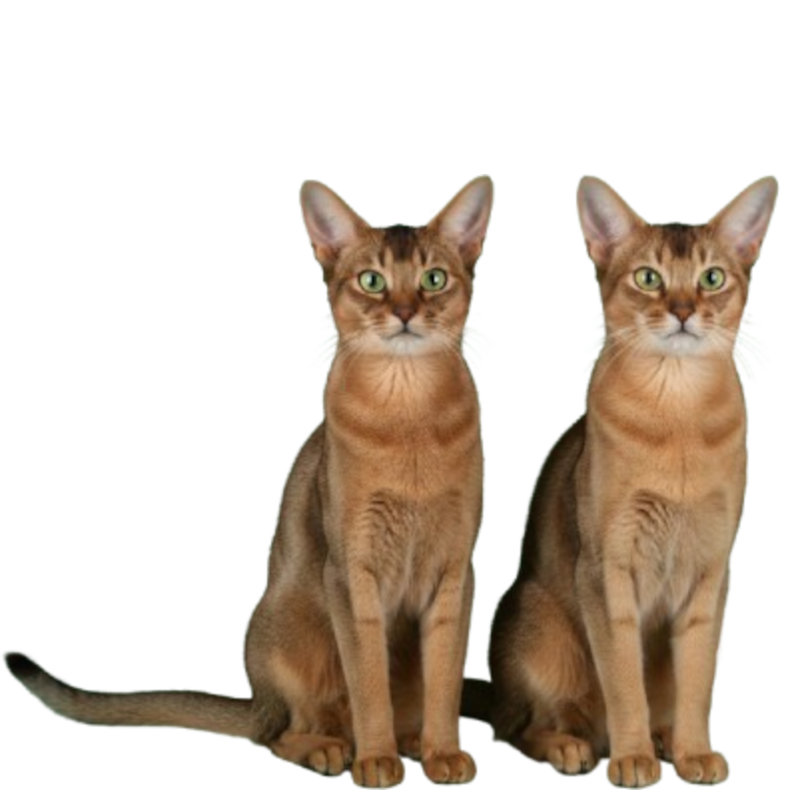
appearance
The Abyssinian is a feline of medium proportions, characterized by a regal and attentive posture that evokes the silhouette of a wildcat. Its physical identity is defined by a muscular, “semi-foreign” physique and a shimmering, “ticked” coat that creates a vibrant depth of color as the cat moves.
Cranial Structure and Facial Detail
The head of the Abyssinian is a modified wedge with rounded contours, avoiding sharp angles or flat surfaces. The entire facial structure suggests an animal that is perpetually alert.
Ears and Eyes
- Ears: Noticeably large and flared at the base, the ears are set wide apart as if the Abyssinian is constantly scanning for sound. Small tufts of hair at the tips—reminiscent of a lynx—are highly prized.
- Eyes: Large and almond-shaped, the eyes possess an intense, expressive quality. They are outlined by a dark “mascara” line of pigment, which is further framed by a lighter area of fur.
- Permitted Shades: Radiant gold, deep copper, vibrant green, or hazel.
Muzzle and Profile
The muzzle follows the gentle curves of the skull rather than ending in a sharp point. In profile, there is a subtle transition at the bridge of the nose—avoiding a perfectly straight line or a dramatic “stop.”
Physical Conformation and Stature
The Abyssinian’s frame represents a middle ground in feline morphology—more athletic than a stocky British Shorthair, yet sturdier than a delicate Oriental Shorthair.
Torso and Muscle Tone
The body is medium-long, displaying a lithe and graceful quality underpinned by significant muscular power. A healthy Abyssinian feels surprisingly heavy and solid for its size—reflecting a “hard” physical condition rather than a soft or heavy build.
Limbs and Tail
- Legs: The legs are slender and long in proportion to the body. This length, combined with the way Abyssinians stand on their small, oval-shaped paws, creates the impression that the cat is walking on its tiptoes.
- Tail: The tail is substantial at the base, possessing a length that balances the body, and tapers smoothly toward a dark-colored tip.
The Agouti Ticked Coat
The most iconic attribute of the Abyssinian is the agouti ticking of the fur. Instead of traditional stripes or rosettes, each individual hair shaft carries a sequence of distinct color bands.
Texture and Quality
The fur is fine and silky, yet it possesses a dense, resilient texture that snaps back into place when stroked. It lies close to the Abyssinian’s skin, emphasizing the underlying muscle definition.
Ticking Mechanics
A well-defined Abyssinian coat typically exhibits between three and six bands of color on a single hair. The pigment is lightest at the skin and reaches its deepest saturation at the very tip.
Ticking Intensity Score
- : The final score representing how bold and visible the coat pattern appears.
- : The total number of dark and light stripes found on a single strand of hair.
- : The measurement of how much the dark stripes stand out against the light stripes.
If an Abyssinian hair has 4 distinct pigment bands and a contrast rating of 0.8 (on a scale of 0 to 1), the calculation would be . This numerical value allows breeders to objectively compare the “vibrancy” of the ticking across different specimens.
Standard Color Variations
| Variety | Coat Description | Extremities (Nose and Paws) |
|---|---|---|
| Ruddy | A burnt-sienna base with dark brown or black ticking. | Black or dark brown leather. |
| Blue | A soft, warm mushroom base with slate-blue ticking. | Mauve-toned leather. |
| Cinnamon | A bright coppery-red base with chocolate-brown ticking. | Pink or rose-toned leather. |
| Fawn | A delicate rose-beige base with light cocoa-brown ticking. | Salmon-pink leather. |
Summary of Physical Proportions
The essence of the Abyssinian’s beauty lies in balance. No single anatomical feature should appear exaggerated; the cat should present a harmonious blend of elegance and strength.
| Characteristic | Attribute |
|---|---|
| Average Weight | 6–10 lbs (2.7–4.5 kg) |
| Build | Semi-foreign / Athletic |
| Posture | High on toes / Tiptoeing |
| Overall Vibe | Miniature Cougar |
Visual Note: Beyond the ticking, the Abyssinian often displays dark lines extending from the eyes toward the ears—mimicking the Eye of Horus and reinforcing its ancient, storied aesthetic.
behavior
The Abyssinian is widely recognized as one of the most intelligent and inquisitive members of the feline world. Often described as a perpetual motion machine, the Abyssinian’s temperament is defined by a relentless drive to explore, a high level of physical activity, and a profound need for human companionship.
Activity Levels and Physicality
Unlike breeds that prefer a sedentary lifestyle, the Abyssinian is defined by its constant movement and superior athletic capability.
Exploration and Verticality
Abyssinians possess an inherent attraction to high altitudes. They are frequently discovered atop the highest reachable points in a home—such as the crown molding or the top of a refrigerator.
- Arboreal Instinct: Their behavior mirrors that of forest-dwelling ancestors; they prefer to monitor their surroundings from an elevated vantage point.
- Agility: The Abyssinian is capable of startlingly precise leaps, using its muscular hindquarters to navigate vertical spaces with ease.
Play Predisposition
For the Abyssinian, play is a vital cognitive outlet rather than a simple distraction.
- Retrieval Instinct: It is common for Abyssinians to engage in fetch, returning objects to their human companions for hours.
- Manual Dexterity: Due to their inquisitive nature and nimble paws, a Abyssinian may learn to manipulate household hardware—such as doorknobs or faucet handles.
Social Interaction and Temperament
The Abyssinian is an intensely social creature that develops strong attachments to its household, though it carries itself with a certain independent grace.
Human Companionship
While the Abyssinian is deeply affectionate, it is rarely a typical lap cat. Instead, the Abyssinian’s preferred form of affection is active participation.
- Shadowing Behavior: They often act as a silent partner—following their owners through the home to monitor every chore or activity.
- Helping Hand: Whether you are working at a desk or preparing a meal, the Abyssinian will likely be present, attempting to assist with the task at hand.
Interaction with Other Pets
Abyssinians generally integrate well into multi-pet households, provided their energetic nature is accommodated.
| Interaction Type | Compatibility Level | Notes |
|---|---|---|
| With Other Cats | High | Best paired with other high-energy breeds. |
| With Dogs | Moderate to High | Typically enjoys the company of calm, cat-friendly canines. |
| With Small Pets | Low | Their sharp predatory instincts make them unsuitable companions for rodents or birds. |
Cognitive Capabilities and Training
The mental acuity of the Abyssinian is often compared to that of a working dog breed.
Learning and Problem Solving
The Abyssinian’s mind requires regular challenges to prevent the development of destructive habits born from boredom.
- Positive Reinforcement: Abyssinians are excellent candidates for clicker training and can master a variety of commands.
- Environmental Enrichment: They excel at solving complex food puzzles and will persist until they have mastered the mechanism.
Vocalization
The Abyssinian is not generally a clamorous breed. Their communication is usually subtle and melodic, consisting of:
- Chirps and Trills: Short sounds used for greetings or expressing curiosity.
- Quiet Purring: A sign of contentment often reserved for mealtimes or specific bonding moments.
Behavioral Requirements for Owners
To maintain a balanced psychological state, the Abyssinian needs an environment that respects its high-octane personality.
Cat Happiness and Enrichment Score
- : The overall mental health and satisfaction level of the cat.
- : The number of high climbing spots like cat trees or wall shelves available.
- : The daily minutes spent playing with toys controlled by a human.
- : Brain exercise provided by food puzzles, new tricks, or exploring new items.
To maximize the well-being of an Abyssinian, an owner might provide three tall cat trees (Vertical Space), engage in 30 minutes of wand-toy play daily (Interactive Play), and hide kibble in a treat-dispensing ball (Cognitive Challenge). This holistic approach prevents the boredom to which this highly intelligent breed is susceptible.
Managing Boredom
A bored Abyssinian will invent its own entertainment—which may involve exploring the contents of your cupboards. Owners should provide a rotating selection of toys to keep the environment feeling fresh.
The Importance of Routine
Despite their adventurous spirit, Abyssinians benefit from a structured daily schedule. Consistent times for feeding and vigorous play help manage their energy spikes and ensure a peaceful co-existence.
Behavioral Summary: The Abyssinian is a participant cat. They are ideally suited for families who want a dynamic, interactive companion—rather than a quiet, ornamental pet.
color
The defining visual characteristic of the Abyssinian is its agouti ticked coat. This complex pattern provides a depth of color that mimics the appearance of wild felines. Rather than possessing solid patches or stripes, each individual hair shaft on the Abyssinian’s body displays multiple bands of contrasting pigment.
The Mechanism of Ticking
The agouti gene governs the distribution of pigment along the hair. In Abyssinians, the standard requires at least three to four bands of color on every hair—alternating between light and dark shades.
Anatomy of a Hair Shaft
The base of the hair, closest to the skin, should be a clear, warm ground color. The hair then progresses through several dark bands, culminating in a dark tip.
Ticking Distribution
- Primary Areas: The ticking should be uniform across the back, flanks, and tail.
- Unmarked Areas: The underside, chest, and the insides of the legs should remain unticked—displaying the clear, warm base color without any spotting or barring.
- The Dorsal Line: A darker shading along the spine and extending to the tip of the tail is a common and accepted trait.
Recognized Color Varieties
While the Abyssinian is most famous for its original ruddy hue, several other colors are officially recognized by major registries. Each variation must maintain a high degree of contrast between the ground color and the ticking.
Standard Color Table
| Color Variety | Base (Ground) Color | Ticking Color | Appearance Description |
|---|---|---|---|
| Ruddy | Burnt Sienna / Orange | Black | A vibrant, warm, toasted brown look. |
| Blue | Warm Beige / Mushroom | Slate Blue | A soft, cool, steely gray-blue effect. |
| Cinnamon | Radiant Copper | Chocolate Brown | A bright, warm, reddish-orange glow. |
| Fawn | Rose-Beige | Light Cocoa | A delicate, creamy, antique-rose finish. |
Specific Pigmentation Details
The color of the nose leather and paw pads is genetically linked to the coat variety:
- Ruddy: Tile red nose leather; black or dark brown paw pads.
- Blue: Dark pink nose leather; mauve paw pads.
- Cinnamon: Rosy pink nose leather; pinkish paw pads.
- Fawn: Salmon pink nose leather; pinkish paw pads.
Optical Properties and Contrast
The visual impact of the Abyssinian’s coat is often described as a shimmer or a glow. This is due to the high contrast between the bands of pigment.
Contrast Ratios
To evaluate the quality of a coat, breeders often look at the Ticking Contrast Ratio (), which can be conceptually represented as:
Coat Contrast Ratio
- : The final Contrast Score (ranging from 0 for blurry to 1 for perfect sharpness).
- : How bright or light the pale sections of the hair appear.
- : How dark or intense the pigmented sections of the hair appear.
If the light band of an Abyssinian’s hair has a luminance value of 80 and the dark band has a value of 20, the calculation is . A higher indicates a more distinct and “crisp” ticking pattern, which is a desirable trait in show-quality specimens.
A higher value results in the shimmering, living quality associated with top-tier Abyssinians.
Silver Variations
In addition to the traditional warm-toned varieties, many registries recognize Silver versions of each color. In these instances, the warm base color is replaced by a shimmering, icy white.
Silver Mechanics
The inhibitor gene suppresses the production of yellow and red pigment—leaving the base of the hair clear white while the ticking remains the standard color.
Visual Effect
This creates a high-contrast, metallic appearance that makes the Abyssinian look as though it has been dipped in silver.
Appearance Faults and Disqualifications
Maintaining a clean coat is essential for the breed standard.
- Ghost Markings: Genetic ghost markings—such as necklaces on the throat or rings on the tail—are considered faults in the show ring.
- Ground Color: The goal for a Abyssinian is a clean, unbroken ground color on the chest and belly.
compatibility
Ease of Maintenance
Rating: 4/5
Child Friendly
Rating: 3/5
Annual Cost
Rating: 3/5
Lifetime Cost
Rating: 3/5
Adaptability
Rating: 4/5
Velcro Factor
Rating: 4/5
Quietude
Rating: 2/5
Apartment Suitability
Rating: 1/5
Hypoallergenic
Rating: 2/5
Handling Tolerance
Rating: 2/5
Hardiness/Longevity
Rating: 4/5
Prey Drive
Rating: 1/5
genetics
The genetic framework of the Abyssinian represents one of the most thoroughly documented lineages in feline biology. This is due largely to the presence of the specific “ticked” pattern and the breed’s historical significance. The physical appearance of the Abyssinian is the result of a precise interplay between dominant and recessive alleles that regulate how pigment is distributed across the individual hairs.
The Agouti (Ticked) Locus
The primary genetic signature of the Abyssinian is the Ticked () allele found at the Agouti locus. This specific gene dictates the rhythmic application of melanin as the hair grows—effectively preventing the formation of traditional tabby stripes or spots.
Hierarchy of Pattern Dominance
The allele typically overrides other tabby expressions. The standard dominance order at this locus is as follows:
- : Ticked pattern (characteristic of the Abyssinian)
- : Mackerel or striped pattern
- : Classic or blotched pattern
Ticking Dynamics and Banding
In a high-standard Abyssinian, the Agouti gene enables the creation of multiple pigment bands on every hair. This biological process can be modeled by looking at the rate of melanocyte activity () in relation to the speed of hair growth ():
Hair Stripe Frequency Calculation
- : The total number of stripes created on a single hair shaft.
- : The “Color Switch” Speed (how quickly the body flips between making dark and light pigment).
- : The total amount of time the hair spends actively growing.
- : The Hair Growth Speed (how quickly the hair moves out of the skin).
If an Abyssinian’s hair follicle switches pigment production at a high frequency () during a long growth cycle, the resulting hair will exhibit a higher density of bands. Conversely, if the hair growth velocity () increases without a matching increase in switching frequency, the bands will appear elongated and less distinct.
Pigmentation Genetics and Melanin Variants
The foundation color of the Abyssinian is managed by the Primary Color Locus (), which determines the density and shape of eumelanin granules.
The Eumelanin Locus ()
- Ruddy: This phenotype arises from the dominant (Black) allele.
- Cinnamon: This reddish-brown hue is produced by the recessive (Light Brown) allele.
The Dilution Locus ()
The Dilute gene () alters the distribution of pigment granules. When a Abyssinian inherits two recessive dilution alleles (), the visual color shifts significantly:
- Blue: A muted version of the Ruddy base—– combined with .
- Fawn: A softened version of the Cinnamon base— combined with .
| Resulting Phenotype | Color Genotype | Dilution Genotype | Visual Characteristics |
|---|---|---|---|
| Ruddy | B / – | D / – | Golden-brown base with black ticking |
| Blue | B / – | d / d | Warm beige base with slate-blue ticking |
| Cinnamon | bl / bl | D / – | Coppery base with chocolate ticking |
| Fawn | bl / bl | d / d | Pale mushroom base with cocoa ticking |
The Silver Inhibitor Gene ()
Silver-colored Abyssinians possess the dominant Inhibitor allele (). This gene works by halting the production of phaeomelanin (yellow or red tones) while allowing eumelanin (darker tones) to remain.
Functional Change
The inhibitor gene results in a clear white hair base, while the tips remain dark.
Aesthetic Result
This genetic interaction replaces the warm, golden ground colors with a high-contrast, metallic white.
Hereditary Health and Genomic Health
Beyond aesthetic traits, the Abyssinian’s genome includes markers for specific health conditions that require careful management by breeders.
Pyruvate Kinase Deficiency (PK Def)
This is a critical concern for the Abyssinian—an autosomal recessive disorder that can lead to intermittent anemia.
- Clear: (Two normal alleles)
- Carrier: (One mutation; no symptoms)
- Affected: (Two mutations; symptomatic)
Progressive Retinal Atrophy (PRA)
Two genetic variants of PRA are known to affect Abyssinians, eventually leading to vision loss:
- rdAc: A late-developing recessive mutation found in the CEP290 gene.
- Rdy: A rarer, early-onset dominant mutation.
Genetic Health Metrics
While Abyssinians enjoy a storied history, maintaining genetic variation is essential. Breeders use the Coefficient of Inbreeding () to monitor the genetic health of their litters.
Inbreeding and Genetic Diversity Percentage
- : The total percentage chance that a cat inherited the exact same gene from both parents.
- : The sum of calculations for every shared relative in the family tree.
- : The number of generations between the father and a shared ancestor.
- : (Used in the calculation) The number of generations between the mother and that same ancestor.
- : The inbreeding score of the shared ancestor (if they were also inbred).
In an Abyssinian’s pedigree, if a common ancestor is found to be the grandfather of both the sire and the dam, a breeder calculates the COI to ensure genetic health. A lower COI percentage typically indicates a higher level of genetic diversity within the Abyssinian lineage, reducing the risk of inheriting recessive health issues.
Genetic Summary
The genomic ideal for the Abyssinian is a feline that is genetically a ticked tabby without spotting or point-restricted patterns—enhanced by high-intensity rufous polygenes that provide warmth to the coat.
health
The Abyssinian is typically characterized as a vigorous and high-energy feline, often enjoying a lifespan of twelve to fifteen years. While they are fundamentally sturdy, the Abyssinian’s specific lineage carries predispositions for certain inherited conditions. Maintaining their well-being involves a strategic focus on genetic screening, rigorous dental care, and metabolic support.
Inherited Pathologies and Genetic Risks
Modern veterinary science has identified specific genetic markers within the Abyssinian population. Responsible management of the breed requires utilizing DNA diagnostics to mitigate these risks.
Erythrocyte Pyruvate Kinase Deficiency (PK Def)
This condition involves a lack of the pyruvate kinase enzyme, which is vital for the energy metabolism of red blood cells.
- Process: Without this enzyme, red blood cells cannot sustain themselves, leading to premature destruction and resulting in hemolytic anemia.
- Clinical Signs: Affected Abyssinians may exhibit periodic fatigue, pale gums, and an enlarged spleen.
- Inheritance Pattern: This is an autosomal recessive trait. If we denote as the frequency of the mutant allele, the probability of a Abyssinian being affected () can be predicted through the Hardy-Weinberg principle:
Gene Distribution Balance
- : The percentage of cats with two dominant genes (e.g., Short Hair only).
- : The percentage of cats that look dominant but carry a hidden recessive gene (e.g., Short Hair carrying Long Hair).
- : The percentage of cats with two recessive genes (e.g., Abyssinian with Long Hair).
- : The total percentage of dominant gene versions in the whole group.
- : The total percentage of recessive gene versions in the whole group.
- : The entire population (100%).
If a population of Abyssinians is being studied for the recessive longhair gene, and 4% of the cats express the longhair trait (), we can determine that . This allows breeders to estimate that approximately 32% of the population () are carriers of the gene, even if they appear to have the standard short coat.
Progressive Retinal Atrophy (PRA)
Vision health is a known concern for the Abyssinian—specifically regarding the degeneration of photoreceptors in the retina.
- rdAc: A recessive mutation of the CEP290 gene. It usually manifests as a slow loss of sight—often beginning with night blindness.
- Rdy: A rarer, dominant mutation that causes a much more rapid, early-onset loss of vision in kittens.
Systemic Renal Amyloidosis
In this disorder, an insoluble protein called amyloid accumulates within the kidneys. This buildup eventually disrupts normal organ function. While a hereditary link is strongly suspected in Abyssinians, the exact genetic trigger is complex—it has not yet been reduced to a single testable gene.
Physiological Tendencies and Clinical Care
Beyond their genetic blueprint, the physical build and lifestyle of the Abyssinian lead to specific clinical priorities.
Periodontal and Oral Health
The Abyssinian is famously susceptible to oral inflammation—particularly gingivitis and rapidly progressing periodontal disease.
- Standard of Care: Because of this sensitivity, daily oral hygiene and professional scaling are more critical for the Abyssinian than for many other breeds.
- Complications: Untreated oral issues in Abyssinians can lead to chronic pain and potential systemic infections affecting the heart or kidneys.
Patellar Luxation
This orthopedic issue occurs when the kneecap shifts out of its femoral groove during movement.
- Physical Impact: It can cause a characteristic skipping gait. While weight management helps stabilize the joint, severe displacement in an active Abyssinian may require surgical correction.
Preventative Wellness and Environmental Needs
The high metabolic rate of the Abyssinian necessitates a lifestyle that supports both their physical and psychological needs.
Nutritional Strategy
Due to their lean muscle mass and constant activity, Abyssinians thrive on diets with high biological value proteins. Monitoring their body condition score is vital, as excess weight places undue strain on joints—joints that are already prone to luxation.
Summary of Health Screening Priorities
| Condition | Diagnostic Method | Recommended Frequency |
|---|---|---|
| PK Deficiency | Genomic Sequencing | Once (as a kitten or before breeding) |
| Retinal Atrophy | DNA Analysis | Once (prior to breeding) |
| Oral Examination | Visual and Tactile Inspection | Every six months |
| Renal Function | Chemistry Profile / Urinalysis | Annually for senior cats |
The Intersection of Activity and Behavioral Health
For the Abyssinian, physical health cannot be separated from mental stimulation.
- Stress Manifestation: A lack of vertical space or interactive play can lead to stress-induced behaviors—such as over-grooming (psychogenic alopecia).
- Enrichment as Medicine: High-climbing opportunities and cognitive puzzles are essential components of a preventative health plan for the Abyssinian’s nervous system.
Health Overview Summary
While the Abyssinian is a resilient athlete, their long-term vitality depends on the owner’s dedication to preventative dental hygiene and the selection of kittens from DNA-cleared parents to avoid preventable recessive disorders.
longevity
The Abyssinian is widely recognized for its enduring energy and youthful disposition, often retaining its playful nature well into its senior years. On average, a healthy Abyssinian maintains a lifespan between twelve and fifteen years. However, with modern veterinary advancements and diligent care, many Abyssinians comfortably reach eighteen to twenty years of age. This longevity is the result of a synergy between the Abyssinian’s resilient genetic foundation and a protective living environment.
Factors Influencing Life Span
The biological duration of the Abyssinian’s life is shaped by several internal physiological traits and external management choices.
Genetic Foundation and Survival
The most significant baseline for longevity in the Abyssinian is the absence of inherited recessive disorders. When a Abyssinian is cleared of metabolic conditions like Pyruvate Kinase Deficiency through DNA testing, its potential for a full life expectancy increases dramatically.
Metabolic Vitality and Physical Conditioning
The Abyssinian is characterized by a high basal metabolic rate (BMR). Their natural inclination toward constant activity serves as a biological defense against obesity, which is a primary contributor to shortened lifespans in domestic cats. Maintaining the equilibrium between energy intake (E_in) and physical output (E_out) is essential for preserving the lean muscle mass of the Abyssinian:
Body Weight and Energy Balance
- : The amount of weight the cat gains or loses over time.
- : “Follows the trend of” (if energy goes up, weight goes up).
- : Total Energy In (calories eaten through food and treats).
- : Total Energy Out (calories burned through rest, staying warm, and exercise).
Because the Abyssinian is exceptionally active, its is significantly higher than that of more sedentary breeds. To maintain a stable of zero, the must be calibrated to account for their high-energy play and metabolic demands, preventing the “hard” muscle tone from wasting.
Life Stages of the Abyssinian
The aging trajectory of the Abyssinian can be categorized into four distinct physiological periods, each requiring a tailored approach to wellness.
The Developmental Phase (0–2 Years)
During this stage, the Abyssinian focuses on rapid physical growth and the solidification of its immune system. High-density protein sources are required to build the sleek, muscular physique that defines the Abyssinian.
The Prime Adult Phase (2–10 Years)
This represents the longest segment of the Abyssinian’s life. Longevity during these years is largely maintained through preventative dental hygiene and consistent weight management to avoid early-onset metabolic stress.
The Senior Transition (10–14 Years)
As Abyssinians enter their second decade, their internal chemistry begins to shift. While they may appear as active as ever, bi-annual diagnostic screenings become vital for identifying subtle changes in organ efficiency, particularly regarding the kidneys.
The Geriatric Phase (15+ Years)
Abyssinians in this category require specialized attention to hydration and mobility. At this age, the goal shifts toward preserving quality of life and supporting the Abyssinian’s cognitive functions.
Longevity Statistics and Comparison
The Abyssinian typically mirrors or exceeds the life expectancy of the general domestic cat population, largely because they are often kept by enthusiasts who prioritize preventative medical care.
| Life Stage | Age Range | Human Equivalent (Approx.) | Health Priority |
|---|---|---|---|
| Kitten / Junior | 0–2 years | 0–24 years | Immunization & Development |
| Adult | 3–10 years | 28–56 years | Oral Hygiene & Weight Control |
| Senior | 11–14 years | 60–72 years | Renal & Cardiac Monitoring |
| Geriatric | 15+ years | 76+ years | Joint Support & Metabolic Stability |
Environmental Impact on Life Expectancy
The specific conditions in which a Abyssinian lives can dictate whether it reaches the upper limits of its genetic age potential.
The Safety of Indoor Living
Statistical data suggests that an indoor-only Abyssinian lives significantly longer than one with unsupervised outdoor access. An indoor environment removes the hazards of predation, vehicular accidents, and exposure to viral pathogens common in the wild.
Cognitive Health and Stress Reduction
Because the Abyssinian’s physical health is deeply connected to its mental state, environmental complexity acts as a life-extender. A stimulating home reduces the production of chronic stress hormones like cortisol, which can accelerate the aging process by weakening the immune response over time.
Summary of Longevity
The Abyssinian is a notably long-lived feline when provided with a proactive health strategy. By focusing on the prevention of dental decay and monitoring renal health, owners can ensure the Abyssinian remains a vibrant part of the household for many years.
maintenance
The Abyssinian is a high-energy, intelligent companion that is physically low-maintenance regarding coat care but requires a high level of environmental and mental investment. Keeping the Abyssinian in peak condition involves a holistic approach that balances hygiene, cognitive stimulation, and metabolic oversight.
Coat and Integumentary Care
Because the Abyssinian possesses a short, resilient, and fine-textured coat, its grooming needs are considerably less demanding than those of long-haired varieties.
Grooming Routine
The Abyssinian’s fur is not prone to matting or tangling. A weekly session with a high-quality stainless-steel comb or a rubber grooming tool is typically all that is required to extract loose hairs and encourage the natural distribution of skin oils.
- Regular Schedule: Once a week is sufficient for most of the year.
- Shedding Transitions: During seasonal changes, increasing this to twice weekly helps manage the heavier turnover of the coat.
Hygiene and Bathing
While Abyssinians are meticulous self-groomers, an occasional bath can assist in removing dander during high-shedding periods. Many members of the breed demonstrate a characteristic fascination with water—a trait that often makes the bathing process less stressful than with other domestic felines.
Fundamental Hygiene and Wellness
The most vital aspects of Abyssinian’s maintenance are often the most overlooked—specifically the teeth, ears, and claws.
Dental Stewardship
The Abyssinian is genetically inclined toward oral sensitivity, particularly gingivitis.
- Daily Maintenance: Implementing a daily habit of brushing with feline-specific toothpaste is the most effective way to prevent periodontal issues.
- Professional Scaling: Annual veterinary dental evaluations are a necessity to ensure that oral bacteria do not lead to systemic inflammation or organ stress.
Auxiliary Care: Ears and Claws
- Aural Inspection: Examine the Abyssinian’s ears weekly for signs of debris or irritation. If necessary, use a pH-balanced feline ear cleaner and a soft cloth.
- Claw Management: To prevent snagging during high-speed play, trim the tips of the claws every two to three weeks—a vital safety measure given the Abyssinian’s athletic nature.
Environmental Enrichment and Physical Activity
For the Abyssinian, maintenance is as much a psychological task as a physical one. An under-stimulated Abyssinian can develop stress-related behaviors or become sedentary.
Horizontal and Vertical Territory
Abyssinians are natural climbers that find security in high vantage points. Integrating floor-to-ceiling cat trees or dedicated wall shelving is a fundamental requirement for their domestic well-being.
Cognitive Engagement and Training
To maintain the Abyssinian’s sharp intellect and lean muscle, owners should provide:
- Puzzles and Foraging: Utilizing food puzzles forces the Abyssinian to engage their problem-solving instincts.
- Directed Play: Engaging in at least twenty minutes of daily interactive play using feathered wands or chase toys.
- Advanced Learning: Abyssinians excel at clicker training and can be taught to fetch or perform complex tasks to satisfy their mental curiosity.
Metabolic and Nutritional Maintenance
Maintaining the distinctive, athletic silhouette of the Abyssinian requires a precise balance of nutrients and calories.
Energy Expenditure Calculation
The daily energy requirement () for a typically active Abyssinian can be estimated using the following metabolic scaling formula:
Daily Calorie Needs for Active Cats
- : The total calories needed per day to stay healthy.
- : The activity multiplier (used for active, healthy adult cats).
- : A standard number used to calculate basic energy needs for mammals.
- : The “Metabolic Weight” (a specialized way to measure body size that accurately reflects energy use).
For an athletic Abyssinian weighing 4 kg, the metabolic body weight is approximately . The calculation results in roughly 277 kcal per day. This ensures the Abyssinian maintains its lean muscle mass without becoming overweight.
Dietary Composition
The diet must be centered on high-quality animal proteins to support the dense muscle mass of the Abyssinian. Furthermore, because Abyssinians are often attracted to running water, using a fountain can help ensure they stay properly hydrated.
| Task | Frequency | Objective |
|---|---|---|
| Coat Brushing | Weekly | Remove dander and enhance shine |
| Oral Care | Daily | Prevent inflammation and tooth loss |
| Claw Trimming | Bi-weekly | Ensure safety during climbing |
| Active Play | Daily | Manage weight and mental health |
| Ear Checks | Weekly | Monitor for infections or wax |
Maintenance Overview
Effective care for the Abyssinian centers on a strategy of prevention. By prioritizing daily dental hygiene and creating a living space that caters to their innate desire for height and exploration, the Abyssinian will remain a vibrant and engaged member of the household.
measurements
| Measurement | Female | Male | ||
|---|---|---|---|---|
| Metric | Imperial | Metric | Imperial | |
height | 20 – 25 centimeters | 8 – 10 inches | 25 – 30 centimeters | 10 – 12 inches |
length | 38 – 43 centimeters | 15 – 17 inches | 40 – 46 centimeters | 16 – 18 inches |
weight | 2.7 – 3.6 kilograms | 6 – 8 pounds | 3.6 – 4.5 kilograms | 8 – 10 pounds |
• Height: Refers to the measurement at the withers (shoulders).
• Length: Measured from the tip of the nose to the base of the tail.
origin
The lineage of the Abyssinian represents a complex tapestry woven from ancient legends, 19th-century military movements, and modern genomic sequencing. While traditional stories often link Abyssinians to the felines of the Nile, contemporary scientific research offers a different geographical perspective.
The Mythological Link to Ancient Egypt
For generations, the Abyssinian has been colloquially referred to as the “Cat from the Blue Nile.” This enduring association is primarily due to the uncanny physical correspondence between the modern Abyssinian and the artistic representations found in Egyptian tomb paintings and bronzes.
- Phenotypic Parallels: The prominent, flared ears, expressive almond eyes, and athletic, lithe stature of the Abyssinian closely mimic the “Mau” archetype revered in Pharaonic culture.
- Symbolic Heritage: Many enthusiasts believe that Abyssinians are the living legacy of temple cats that served as physical incarnations of the goddess Bastet.
Colonial Discovery and the Zula Narrative
The formal introduction of the Abyssinian to Western society is generally traced back to the aftermath of the Abyssinian War in the mid-1800s.
The Introduction of Zula
In 1868, following a British military campaign in Abyssinia (modern-day Ethiopia), an officer’s spouse transported a cat named Zula back to the United Kingdom.
- Foundational Impact: Zula is widely recognized in historical records as the primary individual that sparked interest in the Abyssinian among British fanciers.
- Early Pedigree Status: By 1882, the Abyssinian had achieved formal recognition in England, solidifying its place as one of the earliest established pedigree cats in the modern hobby.
Genomic Insights and the Indian Ocean Corridor
Although the name “Abyssinian” points toward an Ethiopian birthplace, modern phylogeographic research using mitochondrial DNA has complicated this narrative.
Southeast Asian Origins
Evidence from genetic mapping suggests that the true ancestors of the Abyssinian likely populated the coastal regions of the Indian Ocean, particularly within the Indonesian archipelago and parts of Southeast Asia.
- Maritime Transport: It is highly probable that merchants from the British or Dutch East India companies carried these cats from ports like Calcutta or Singapore to East Africa and eventually to European shores.
- The Ticked Gene Marker: The high prevalence of the (ticked) allele—the specific mutation responsible for the Abyssinian’s distinctive agouti coat—is found in much higher frequencies in feline populations along the Indian Ocean than in those native to the African continent.
Development of the Agouti Pattern
The defining hallmark of the Abyssinian is its “ticked” coat, where each individual hair displays multiple bands of contrasting pigment. This biological phenomenon can be modeled through the periodic distribution of melanin along the hair shaft:
Daily Activity Cycle Chart
- : The predicted energy level at any specific time of day.
- : The total of all different activity “waves” added together.
- : The height of the energy peak (how intense the “zoomies” are).
- : The 24-hour internal clock (the natural rhythm of the day).
- : The specific timing of the burst (e.g., sunrise energy vs. sunset energy).
By modeling the activity of the Abyssinian using this Fourier-style sum, we can visualize their crepuscular nature. While the base rhythm () is 24 hours, the harmonics () represent the high-intensity bursts of energy typically seen at dawn and dusk. For a highly active Abyssinian, the amplitudes () for these periods are much larger than those of more placid breeds.
In this simplified model, represents the length of the hair, while the alternating bands of color result from the rhythmic production of eumelanin and phaeomelanin during the growth cycle.
Historical Milestones in the Breed’s Evolution
| Era | Key Event | Resulting Impact |
|---|---|---|
| Late 19th Century | Initial Breed Standard | Codified the “Ruddy” coloration as the quintessential breed type. |
| Early 20th Century | North American Expansion | The Abyssinian was officially registered with the CFA in 1906. |
| Post-1945 | Genetic Recovery | Dedicated breeders used selective outcrossing to revive Abyssinians after their numbers were decimated in the war. |
Summary of the Abyssinian’s Heritage
The Abyssinian remains a captivating biological mystery. Whether it is a direct descendant of the cats of the Pharaohs, a highland traveler from Ethiopia, or a maritime voyager from the East Indies, the Abyssinian has emerged as a refined and genetically distinct feline. Today, the Abyssinian’s legacy is preserved through its striking, wild-type appearance and its vibrant, multi-banded coat.
temperament
The Abyssinian is widely recognized as one of the most intellectually driven and observant members of the feline community. Far from being a sedentary lap cat, the Abyssinian is defined by an insatiable appetite for discovery and a profound psychological need for active participation in the lives of its human family.
The Analytical Mind of the Abyssinian
The primary driver of the Abyssinian’s personality is an intense, almost scientific curiosity. Rather than viewing its environment as a place for rest, the Abyssinian perceives its home as a series of puzzles to be solved.
Cognitive Mapping and Environmental Audits
A Abyssinian does not merely inhabit a space; it conducts a thorough investigation of its surroundings. They are known for creating complex mental maps of their territory, often testing the boundaries of their physical world.
- Mechanical Problem Solving: It is typical for a Abyssinian to decipher the function of light switches, manipulate cabinet latches, or learn to open sliding doors through observation and repetition.
- Vertical Orientation: Their temperament is intrinsically linked to height. A Abyssinian feels most secure and confident when it can oversee household activities from a high-altitude vantage point.
Social Architecture and Human Bonds
While Abyssinians are deeply affectionate, their devotion is expressed through companionship rather than physical clinging. They are often described as “busy” felines that prefer to work alongside their owners.
The Collaborative Companion
The Abyssinian is frequently referred to as a “people-oriented” cat. They tend to shadow their human counterparts from room to room, acting more like a supervisor or an assistant than a quiet observer.
- Vocal Expression: While they are not as loud as other shorthaired breeds, the Abyssinian’s communication is nuanced. They utilize a variety of soft trills, chirps, and bell-like sounds to express interest or initiate play.
- Social Dependency: Because of their high emotional intelligence, Abyssinians generally do not cope well with extended periods of isolation. They thrive best in homes where they receive consistent mental engagement or have the company of other active pets.
Sustained Vitality and Playfulness
The energy levels of the Abyssinian are remarkably consistent, frequently persisting into their senior years. Their play style is characterized by athletic precision and acrobatic speed.
Perpetual Youthfulness
A notable aspect of the Abyssinian’s temperament is a lifelong commitment to play. This tireless enthusiasm suggests that the intensity of their play () remains stable even as their age () increases:
Social Interaction Limit
- : What happens when the size of the house or area () gets bigger and bigger.
- : How often the cat interacts with its favorite human based on the size of the room.
- : Means the interaction stays the same (the cat follows you no matter how big the house is).
This model illustrates that the Abyssinian is a “people cat” rather than a solitary explorer. Even if given a vast estate, the intensity of interaction () does not drop to zero; instead, the Abyssinian will consistently seek out the human companion’s location, maintaining a steady baseline of social engagement regardless of total square footage.
Interspecies Compatibility
The adaptable and confident nature of the Abyssinian allows it to integrate well into diverse households, provided the environment is stimulating.
| Social Scenario | Compatibility | Behavioral Dynamic |
|---|---|---|
| Active Children | High | Enjoy the movement; prefer interactive play over being carried. |
| Canine Residents | High | Usually establish a dominant but playful rapport with dogs. |
| Other Felines | Moderate to High | Best paired with energetic breeds; may overwhelm timid cats. |
| Solitary Living | Low | High risk of developing “boredom-induced” behavioral issues. |
Summary of the Abyssinian’s Disposition
The Abyssinian is a highly evolved intellectual wrapped in a sleek, athletic frame. Living with a Abyssinian means sharing a home with a constant investigator who demands vertical territory, mental challenges, and deep social connectivity. Their personality is a refined mix of primitive curiosity and sophisticated loyalty.